Safe Bottle Lamp: Life-saving bright idea wins World Challenge 2009

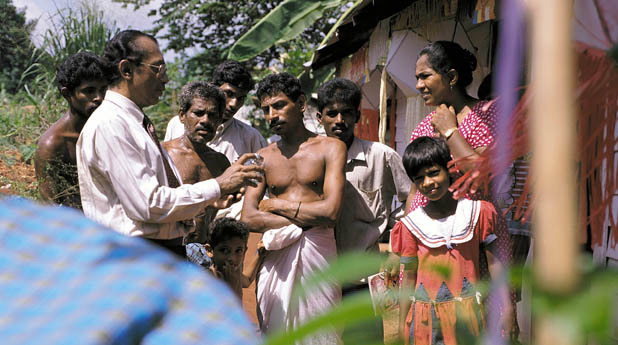
Dr Wijaya Godakumbura holding his invention - Photo courtesy Rolex Awards/Tomas Bertelsen

It’s easy to curse the darkness, and many among us regularly do. Only a few actually try to light even a small candle to fight it. Dr Wijaya Godakumbura of Sri Lanka is one of them – he literally lights lamps, thousands of them, against the darkness of ignorance and poverty.

But his lamps are different, and a great deal safer compared to normal lamps and kerosene, which can start fires risking life and property of users. The design is simple yet effective, inspired in part by the Marmite bottle known the world over: it’s small and squat, with two flat sides – equipped with a safe metal screw cap to hold the wick. It’s quite stable and hard to topple.

Surgeon turned inventor and social activist, Dr Godakumbura founded and runs the Safe Bottle Lamp Foundation which distributes safe, virtually unbreakable kerosene lamps to those who can’t afford electricity. For these untiring efforts that have saved hundreds of lives, the good doctor and his organisation have just been selected the overall global winner in the 5th annual World Challenge awards conducted jointly by BBC World News and Newsweek, together with Shell.

The Safe Bottle Lamp Foundation received a $20,000 grant from Shell to invest in the future of the project. The winner and runners-up were felicitated at an awards ceremony in the City of The Hague on 1 December 2009.

Now in its fifth year, World Challenge 2009 is a global competition aimed at finding projects or small businesses from around the world that have shown enterprise and innovation at a grass roots level. World Challenge is brought to you by BBC World News and Newsweek, in association with Shell, and is about championing and rewarding projects and business which really make a difference.

A record breaking 900 plus nominations were received this year and from these, twelve finalists were chosen by a panel of expert judges. BBC World News viewers and Newsweek readers then selected their favourite from these dozen unique and inspiring entries by casting more than 127,800 votes at http://www.theworldchallenge.co.uk.

Watch short film featuring the Safe Bottle Lamp when it emerged a finalist this year:

Dr Godakumbura and his foundation have been recognised many times before. Notable among these honours is the Rolex Award for Enterprise in 1998. Read Rolex profile about him and his continuing work.

BBC/Shell World Challenge series producer is my former colleague Robert Lamb, who has blazed many new trails in broadcast television and development communication. He specialises in telling complex environmental stories in engaging terms using moving images, and now runs his own independent film production company One Planet Pictures in the UK.

At the beginning of the World Challenge 2009 process, Robert wrote in the producer’s blog: “World Challenge is now in its fifth year. Over that time we have received thousands of nominations. Sadly, we have only been able to film a small selection. But it’s enough to know that there are millions of points of light out there. Watching the news is easy to forget that the vast majority of people go about their lives peacefully and productively.

“Our aim In World Challenge is briefly to bring stories of modest scale sustainable enterprise to the screens. Every year has thrown up big surprises. The diverse ways that ordinary people go about making a living without taxing the Earth’s resources is uplifting. This year we feature the most diverse crop of stories yet…And the really good news is that they are still going strong and proving that ‘sustainable’ is a term with a lot of meaning.”

Read Dr Wiyaya Godakumbura biography

Inventor Godakumbura promotes his safe bottle lamp

Channel News Asia at 10: Making of a pan-Asian news channel

Asian voice in a global village
“We’re the messenger for all the stories that might not have been told…that’s our job,” says Glenda Chong, the Shanghai-based China correspondent (and former anchor) of Channel NewsAsia (CNA), the Singapore-based Asian regional news broadcaster that just turned 10.

For a decade, CNA has covered Asia for Asians and the rest of the world. It has uncovered stories missed – or ignored – by other, global news channels. Just as important, it has also found the Asian voices and angles in mega stories originating from Asia that gripped the world’s attention — such as the outbreak of SARS, Indian Ocean tsunami, earthquakes in Sichuan and Kashmir.

Started on 1 March 1999 and owned by Singapore’s MediaCorp, CNA is now a major Asian news broadcaster with programmes telecast to more than 20 Asian countries and territories. Visit CNA’s 10th anniversary website for a look back…and forward.

“In the early days, when we talked about a news channel from Singapore, you could cut the cynicism with a knife,” said Woon Tai Ho, managing director of MediaCorp News.

That was inevitable for any media venture anchored in Singapore, ranked currently at 144 out of 173 countries in the World Press Freedom Index. But CNA has shown that geography need not be destiny.

Asians telling their own story
In 10 years, it has emerged as a primary source of news in Asia, and along the way, has picked up a plethora of high-profile awards — including two silver medals at the New York Festivals 2009 and three awards at Asia Television Awards 2008.

Channel News Asia turns 10 – article in Today newspaper, Singapore: 2 March 2009

Started as a business news channel at the tail end of the Asian financial crisis of 1997, CNA later evolved into a fully-fledged news and current affairs channel covering all facets, aspects and territories of Asia – the world’s largest region, home to half of humanity. Map showing CNA geographical coverage

Ironically, CNA enters double-digits chronicling the region once again in the midst of a financial crisis, this time of global proportions and repercussions.

Unlike Al Jazeera English (AJE), the global news channel launched from Qatar in November 2006, CNA has relied on Asian talent for anchoring and reporting. While AJE has shamelessly and desperately tried to ape the BBC, CNA has forged its own identity in offering a world class product.

Whereas AJE tries so hard to please its audiences in Europe and North America (is it so anxious for western acceptance?), CNA has focused its energies in telling the myriad stories of emerging Asia primarily for Asia’s upwardly mobile, burgeoning middle classes.

For example, when an interviewee gives his/her views in a language other than English, Channel NewsAsia does not voice-over the original audio with an anglo-saxon voice like other major news channels do. Instead, an English subtitle appears, preserving and complementing the original audio.

At TVE Asia Pacific, we have had a positive experience of engaging this regional broadcaster. In late 2005, we were looking for a broadcast partner to co-produce a documentary looking back at the first year after the Indian Ocean tsunami through the eyes of eight survivor families – in India, Indonesia, Sri Lanka and Thailand – that we had tracked on video under the Children of Tsunami project. We had a mass of professionally and ethically filmed material, and a unique collection of stories we were keen to be amplified to the world.

When we approached Channel NewsAsia through a friend, they immediately welcomed the collaboration. They invested their time, resources and talent to edit Children of Tsunami: No More Tears, a half hour that distilled some of the stories that we had painstakingly captured for a year. No money changed hands. Legalities were kept to a minimum. CNA saw we had a story that was relevant and important for their viewers. They found the story authentic, as captured by local crews who spoke the language in each country and who lived through the traumas of the tsunami themselves (no ‘parachute film crews’ were involved). So CNA just did it — with none of the airs of pomposity and self importance that so characterise the BBC in any collaboration.

CNA producer Joanne Teoh Kheng Yau shared her experience in telling this story at a regional event we organised in December 2006. The full experience is now documented in a chapter in our book, Communicating Disasters: An Asia Pacific Resource Book.

Children of Tsunami: No More Tears was first broadcast globally on Channel NewsAsia in the last week of December 2005 to mark the tsunami’s first anniversary with this intro: “Young survivors of the Asian tsunami let us into their lives to personalise the mass of statistics, aid pledges and recovery plans. ‘Children of Tsunami’ is a tapestry of intimate stories, woven by voices of individual and collective resilience, heroism and recovery.”

Children of Tsunami: No More Tears Part 1:

Sharing archives: Will broadcasters (finally) put planet before profit?

I have long wondered if both radio and TV broadcasters store their archival material in black holes – into which everything disappears and nothing ever comes out. And certainly, nothing is shared with anyone else.

In a widely reproduced and commented op ed essay written for SciDev.Net in November 2008, titled Planet before profit for climate change films, I noted:
“It isn’t just climate-related films that are locked up with copyright restrictions. Every year, hundreds of television programmes or video films — many supported by public, corporate or philanthropic funds — are made on a variety of development and conservation topics.

“These are typically aired once, twice or at best a few times and then relegated to a shelf somewhere. A few may be released on DVD or adapted for online use. But the majority goes into archival ‘black holes’, from where they might never emerge again. Yet most of these films have a long shelf life and could serve multiple secondary uses outside the broadcast industry.”

Escape from the Southern 'black hole'?
Well, it seems things are changing, albeit very slowly. Last month, we welcomed the announcement from Al Jazeera sharing their news footage online through a Creative Commons license — the first time that video footage produced by a news broadcaster is released for commercial and non-commercial use.

Now comes the news that Australia’s public broadcaster ABC is releasing selected content from its vast archives for non-commercial use by others. And we must thank Charles Darwin for that.

On 12 February 2009, to celebrate Charles Darwin’s 200th birthday, ABC started releasing some archival materials, all based loosely around the theme of evolution and mutation. This Australian first was achieved through ABC’s collaborative media site, Pool.

In an imaginatively named effort called Gene Pool, ABC started off with a recording from its archives of genetics professor Steve Jones talking about Darwin’s life and work.

The next offering to Gene Pool would be a clip from ABC’s Monday Conference in 1971 featuring Stanford entomologist Paul Ehrlich talking about climate change (yes, it’s from 38 years ago!).

These materials are being released under the Creative Commons 3.0 licence allowing people to reuse or remix them in any way they like — as long as it’s for non-commercial use.

On Gene Pool website, ABC said: “You can also create your own work exploring the themes of evolution and mutation in lateral ways, and share them back into the Gene Pool.”

A framework for sharing...
As Creative Commons Australia explained: “This means that people can tweak, twist and remix the files to create their own creative interpretation of the themes of evolution and mutation, and share these results with the rest of the world. The idea is to build a whole community up around the project, remixing and reusing the ABC archival material in new and previously unthought of ways. This all culminates in a public exhibition of Gene Pool pieces at Melbourne’s RMIT on November 24th – the 150th anniversary of the publication of Darwin’s book The Origin of Species.”

They added: “Just imagine what gems might be hidden away in ABC filing cabinets, waiting to be discovered and put to good use by the population that payed for them in the first place.”

That’s precisely what I’ve been saying for a long time – the taxpayer-funded broadcasters like BBC, NHK or ABC (and their equivalents in other countries) have no moral right to lock away their archives on legal or technical grounds. And to think that some of the content thus held up could actually help us in winning history’s eternal race between education and catastrophe!

Nothing escapes this one...for now
Nothing escapes from this one...for now
The BBC – hailed as a model public broadcaster worldwide – is among the worst offenders on this count. It holds one of the largest archives on environment, natural history and wildlife filmed all over the planet for several decades, yet it stubbornly refuses to share this material with anyone, even when it’s only for strict non-commercial, educational use. Read one example in my July 2007 blog post, The Lawyers who locked up the Butterfly Tree.

This myopic selfishness is contrasted (and put to shame) by exceptional film-makers like Richard Brock (who worked with BBC Natural History Unit for 35 years before leaving it unhappy over its rights management) who have decided to open up their personal video archives for non-commercial use especially in the majority world where such material is in short supply.

We can only hope that ABC’s move would build up pressure on the stubborn old Auntie BBC to finally relent. In fact, this might be a chance for all those public broadcasters – many of them now ‘Aunties without eyeballs’ – to redeem themselves at last, ending decades of copyrights tyranny. (And if that puts their inhouse lawyers out of a job, they can join greedy bankers now lining up for public forgiveness!)

ABC says about its tentative steps to the world of open archives: “It’s a small offering to start but there’ll be a lot more to come. We’re working madly behind the scenes getting clearance to release more more more.”

Watch this space…and keep an eye on that Gene Pool!

The quest for next David Attenborough continues…

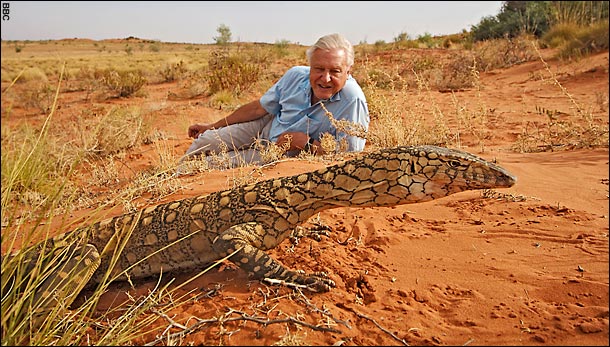
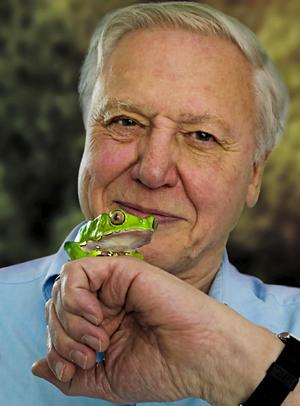
Human Ambassador to the natural world...David Attenborough

I spent most of today at the Wildscreen film festival being held at the British Council Colombo. Naturalist and broadcaster Sir David Attenborough featured prominently in two films screened: Can We Save Planet Earth? (2006) and Life in Cold Blood: Armoured Giants (2008).

For me, it was more than a fascinating journey to far corners of our endangered planet in the company of the world’s best known broadcaster, and Britain’s most trusted public figure. I recalled how in this very venue, as an eager teenager growing up in the simpler, pre-web days of the 1980s, I watched his pioneering series Life on Earth (1979) and The Living Planet (1984). These path-breaking series redefined how natural history documentaries were made, and inspired a whole new generation of film-makers and nature lovers. A quarter century later, I’m still hooked.

Over the last 25 years, Attenborough has established himself as the world’s leading natural history programme maker with more landmark series: The Trials of Life (1990), The Private Life of Plants (1995), The Life of Birds (1998), The Life of Mammals (2002) and Life in the Undergrowth (2005). The final chapter in the ‘Life’ series is Life in Cold Blood (2008).

As fellow broadcaster Jeremy Paxman noted in a Time magazine tribute to Attenborough: “Life After Death is almost the only natural-history series yet to be made by Attenborough. In a career that has taken him to every corner of the world, he has explored life in all its richness — from mammals and birds to plants and reptiles. No living person has done more to make the people of Planet Earth aware of the world around them.”

Close encounters?
Close encounters?
But as I wrote in May 2007, “like all creatures big and small in the great Circle of Life that Sir David has so avidly told us about, he too is mortal. At 81, it’s time for the world to look for the next David Attenborough.”

In his Time tribute, Paxman noted that what distinguishes Attenborough is “that boundless, schoolboyish enthusiasm, the infectious joy of discovering the infinite variety of life”. Yet as the popular song goes, dragons live forever, but not so little boys – so the quest for the next Attenborough has quietly preoccupied the minds of many practising or following the world of natural history and environmental film making.

I’m not obsessed with this question (and I wish Sir David many more years of life on Earth and life on the airwaves), but I today popped it to Jeremy Bristow, a producer of environmental programmes at BBC Television, at the end of his fascinating master class on The role of films in Environmental Conservation. Jeremy’s most recent project has been two films hard-hitting films on Climate Change with Sir David Attenborough for BBC1 and the Discovery Channel.

The bad news is that despite searching far and wide – even some competitions – the David Attenborough has yet to be discovered.

“There are many talented, passionate natural history film makers and some of them also have good screen presence — but none to match Sir David,” said Jeremy Bristow. “I know many in the natural history film world have kept their eyes open for a potential successor.”

Perhaps Sir David is a unique product of his time and circumstances, Jeremy speculated. Certainly, there weren’t too many getting into this business in the early days of television broadcasting. The first major programme series to feature Sir David was BBC’s Zooquest, which ran from 1954 to 1963. And then, one thing led to another…and more than 50 years later, he’s still in the business.

To me, it’s the voice – authoritative without at all being pompous or pontificating – that gives Sir David enduring and endearing appeal. Time called it ‘the voice of the environment’.

Now is the time when that voice of reason, moderation and passion is needed more than ever. A time when the natural world is under siege from human-induced accelerated climate change even as the world of science takes daily beatings from assorted fundamentalist forces.

At 82, Sir David still remains not just our most versatile ambassador to the natural world, but also one of the best spokespersons for the rigors of science and intellectual curiosity.

Here’s a recent example of Sir David – taking us on a quick, animated guide to evolution of life on Earth, in a 2009 documentary called Charles Darwin and the Tree of Life to mark 150 years since Charles Darwin published his famous Origin of the Species:

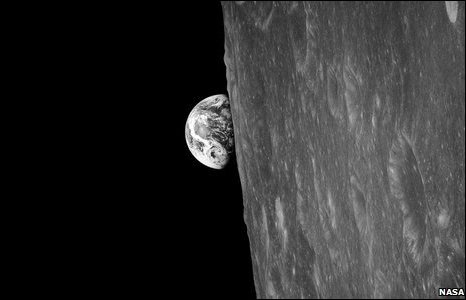
Earthrise at 40: The accidental first snap-shot of our home planet

Apollo 8's enduring legacy (image courtesy NASA)
Earthrise: Apollo 8's enduring legacy (image courtesy NASA)

I can never have enough of this photo — the first ever snapshot of Earth.

This photo of “Earthrise” over the lunar horizon was taken by the Apollo 8 crew on Christmas eve 1968, showing Earth for the first time as it appears from deep space. It forever changed how humans look at – and feel about – their home planet.

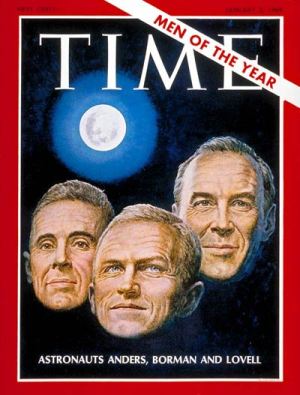
And here’s the best part: this image was captured by accident! In all the meticulous planning for the Apollo 8 mission, no one had anticipated or thought about it. All attention was on the Moon itself, which humans would be viewing at such close range for the first time. None of the astronauts on board Apollo 8 – Mission Commander Frank Borman, Command Module Pilot James Lovell and Lunar Module Pilot William Anders – were ready for the opportunity to witness their own Earthrise.

And if they had stuck to the mission plan, and not acted spontaneously, this image might never have been captured at the time it was.

Frozen in TIME...
Earth's photographers frozen in TIME...
As Apollo historian and film-maker Dr Christopher Riley recalled on the 40th anniversary of this remarkable event a few days ago:

For the first three orbits, preoccupied by the Moon and their latest TV broadcast, the spacecraft was not orientated to give them a chance to see the Earth. But as Apollo 8 nosed its way back from the far side of the Moon for the fourth time, one of the crew spotted the view by chance from a window, his reaction captured by the on board tape recorder.

“Oh, my God! Look at that picture over there!” he exclaimed. “Isn’t that something…”

After a quick joke about the fact that it was not in their flight plan to photograph it, the crew abandoned protocol and scrambled to get a snap of the occasion with their stills camera.

The Hasselblad only had a black and white film magazine in, resulting in the image (below) – the first photograph of Earthrise taken by a human as he watched it happen.

The first Earthrise ever photographed; a colour photograph followed minutes later

But this first historic picture is rarely reproduced. Not content with this first monochromatic image, the astronauts rushed to find a colour film, and Bill Anders managed to snap two more frames which became the choice of photo editors for the rest of history.

Read the rest of Christopher Rileyreminiscences on BBC Online.

Apollo 8 was an important prelude to actually landing on the Moon (which took place in July 1969). It achieved many firsts — including the first manned launch from NASA’s new Moonport, first manned mission to leave the earth’s gravitational field and reenter the earth’s atmosphere at tremendous speeds, first pictures taken by humans of the Earth from deep space, and first live TV coverage of the lunar surface. A Christmas Eve reading from the book of Genesis from Apollo 8 was heard by an estimated 2 billion people, the biggest TV audience in history.

Here are the highlights of that broadcast, also known as Apollo 8 Genesis reading:

And this is how BBC’s James Burke talked about it live on air with astronomer Patrick Moore:

Some might consider Apollo 8 as no more than a technological rehearsal to the eventual landing on the Moon, by astronauts of Apollo 11, but the images of Earthrise have had far-reaching implications. The rise of the global environmental movement in the 1970s was partly inspired by this new perspective of our planet. In his Oscar-award winning film An Inconvenient Truth, Al Gore acknowledges this as he sets the stage with a series of images of Earth in space, helping us to appreciate the beauty and fragility of our planet in distress.

In an op ed essay to mark the 40th anniversary, Oliver Morton wrote in the New York Times on 24 December 2008: “The photograph of that earthrise by the astronaut Bill Anders forms part of the Apollo program’s enduring legacy — eclipsing, in many memories, any discoveries about the Moon or renewed sense of national pride. It and other pictures looking back at the Earth provided a new perspective on the thing that all humanity shares. As Robert Poole documents in his history, ‘Earthrise: How Man First Saw the Earth‘, that perspective had deep cultural effects, notably in the emotional resonance it offered the growing environmental movement. Seen from the Moon, the Earth seemed so small, so isolated, so terribly fragile.”

He goes on to argue that the planet is not as fragile or vulnerable as some suggest. But he ends with these words: ““Earthrise” showed us where we are, what we can do and what we share. It showed us who we are, together; the people of a tough, long-lasting world, shot through with the light of a continuous creation.”

The lessons of Earthrise images have been on other people’s minds as the anniversary passed. On his informative blog Dot Earth, New York Times reporter Andrew C. Revkin recently asked his readers to share what the Earthrise images meant to them. He has received a wide range of comments from people as diverse as former astronauts, scientists, school teachers and children.

Watch Jim Lovell & Apollo 8: Christmas Eve Heard Round the World – WGN (Chicago)’s producer Pam Grimes takes a look back at the 1968 Apollo mission through the eyes of astronaut Jim Lovell:

And here is how NASA Television looked back at their historic mission, 40 years later. In this video Astronauts Frank Borman, James Lovell and Bill Anders recount man’s first voyage around the moon:

One final comment: The world is grateful to NASA, America’s space agency, for adopting from the early days of space exploration a far-sighted, public spirited policy that all its space images are made available free of copyrights to anyone, anywhere on the planet. This is what enables me to use space images on my blog – and keeps tens of thousands of such images in the public domain. Space agencies of other countries, also funded by tax-payer money, have been far less generous when it comes to sharing copyrights. The Heavens may be free, but some images of it are not.

Read my October 2007 blog post: No copyright on this planet – thank Heavens (and NASA) for that!

To Whom It May Concern, a.k.a. Tell Me Lies: In memory of Adrian Mitchell (1932-2008)

I was run over by the truth one day.
Ever since the accident I’ve walked this way
So stick my legs in plaster
Tell me lies about Vietnam…

With these lines opened the bitterly sarcastic reaction to the televised horrors of the Vietnam War by British poet, playwright and performer Adrian Mitchell.

He first read his best-known poem, called To Whom It May Concern (also known as Tell Me Lies), to thousands of anti-war protesters who flocked into London’s Trafalgar Square on the afternoon of Easter Monday 1964. As Mitchell delivered his lines from the pavement above in front of the National Gallery, angry demonstrators in the square below scuffled with police.

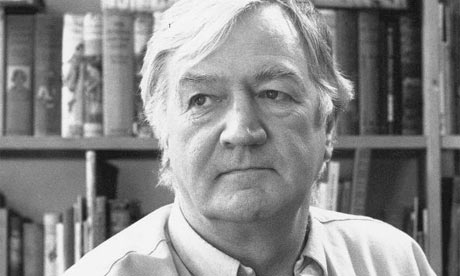
Adrian Mitchell (1932 - 2008)
Mitchell, who died on 20 December 2008 aged 76, occasionally updated the poem to take into account the subsequent wars and resulting tragedies in places as far apart as Iraq, Burma, Afghanistan and Israel/Palestine.

“It is about Vietnam, But it is still relevant,” Mitchell said in 2001. “It’s about sitting faithfully in England while thousands of miles away terrible atrocities are being committed in our name.”

As Michael Kustow wrote in an obituary in The Guardian: “Mitchell’s original plays and stage adaptations, performed on mainstream national stages and fringe venues, on boats and in nature, add up to a musical, epic and comic form of theatre, a poet’s drama worthy of Aristophanes and Lorca. Across the spectrum of his prolific output, through wars, oppressions and deceptive victories, he remained a beacon of hope in darkening times. He was a natural pacifist, a playful, deeply serious peacemonger and an instinctive democrat.”

The one time journalist and television critic was fired by The Sunday Times (UK) for reviewing Peter Watkins’ 1965 anti-nuclear TV film The War Game. Its depiction of the impact of Soviet nuclear attack on Britain had caused such dismay within the BBC and British government that the public broadcaster cancelled its scheduled transmission on 6 August 1966 (the 21 anniversary of the Hiroshima attack). It was finally broadcast in 1985, with the corporation stating that “the effect of the film has been judged by the BBC to be too horrifying for the medium of broadcasting”.

But Auntie Beeb and the rest of the Establishment couldn’t stop Mitchell, whose satirical poems continued to demolish myths emanating from the propaganda mills of the military-industrial complex and their allies in the mainstream media.

As Kustow recalled: “To Whom It May Concern, a riveting poem against bombs and cenotaphs and the Vietnam war, with which he stirred a capacity audience in Mike Horovitz’s pioneering Poetry Olympics at the Albert Hall in 1965, has lasted through the too many wars since: a durable counting-rhyme to a rhythm and blues beat.”

Watch Adrian Mitchell recite/sing his poem in 1965 (black and white film):

As Jan Woolf wrote in another tribute: “To watch Adrian Mitchell…prepare his body for a performance of To Whom It May Concern – chin cupped in hand, eyes focused, back tense, ‘I got run over by the truth one day…’ – was to see a great poet steadying himself with all the focus and tension of a warrior. When those blue suede shoes got moving, the poem came alive. He breathed it, lived it, became it. It was as if he were dancing with language to get at the truth.”

Woolf recalls that Mitchell’s reading of Tell Me Lies at a City Hall benefit just before the 2003 invasion of Iraq was electrifying. “Of course, he couldn’t stop that war, but he performed as if he could.”

Watch Mitchell read what he called the 21st-century remix of his protest poem ‘To Whom It May Concern (Tell me lies about Vietnam)’.

The 21st century re-mix ends with these words:

“You put your bombers in, you put your conscience out
You take the human being, and you twist it all about
So scrub my skin with women
So chain my tongue with whisky
Stuff my nose with garlic
Coat my eyes with butter
Fill my ears with silver
Stick my legs in plaster
Tell me lies about –
Iraq
Burma
Afghanistan
BAE Systems
Israel
Iran

Tell me lies Mr Bush
Tell me lies Mr Blairbrowncameron

Tell me lies about Vietnam

For some strange reason that has nothing to do with Adrian Mitchell’s recent departure, these words and the whole poem keep turning in my mind over and over again.

Burmese television: Meet Asia’s model public broadcaster!

Photo courtesy Associated Press

In the wake of Cyclone Nargis that wreaked havoc in Burma, the world has once again realised the brutality and ruthlessness of the military regime that runs the country.

And as the United Nations and aid agencies struggle with the incredibly uncaring Burmese bureaucracy to get much needed emergency relief for the affected Burmese people, the media outside Burma are having great difficulty accessing authentic information and images.

Despite the massive disaster and resulting tragedy, Burma remains closed to foreign journalists, especially the visual media. No doubt the memories of the monk-led pro-democracy protests of late 2007 are still fresh in the minds of the ruling junta and their propagandists. The few courageous foreign reporters who managed to get in at the time ran enormous personal risks, and Japanese photojournalist Kenji Nagai was shot dead by a Burmese soldier while filming demonstrations.

Unable to report from the multiple scenes of disaster, and lacking a wide choice of reliable local sources willing to go on the record, international news agencies and broadcasters have been forced to quote the government-owned Burmese television station, MRTV.

Global news leaders like Al Jazeera, BBC and CNN have all used MRTV visuals to illustrate their news and current affairs reportage. A recent example from Al Jazeera, posted on 8 May 2008:

The image monopoly by MRTV wouldn’t have mattered so much if they at least provided an accurate account of the unfolding events in its own country. But that seems far too much to expect of this mouthpiece of the Rangoon regime. In Burma’s darkest hour in recent memory, MRTV would much rather peddle the official propaganda – never mind the millions made homeless by the recent disaster.

Here’s an insight from the Inter Press Service, the majority world’s own news agency, reporting from their Asia Pacific headquarters in Bangkok, Thailand:

BURMA: Cyclone Nargis Exposes Junta’s Anti-People Attitude
By Larry Jagan, IPS

Worse, there is evidence emerging that the military authorities had ample warning of a storm brewing in the Bay of Bengal but chose to ignore, or even suppress, it.

The Indian Meteorological Department (IMD) which keeps a close track of geo-climatic events in the Bay of Bengal and releases warnings not only to provinces on the Indian east coast but also to vulnerable littoral countries said it warned Burmese authorities of Cyclone Nargis’ formation and possible approach as early as on Apr. 26.

“We continuously updated authorities in Myanmar (as Burma is officially called) and on Apr. 30 we even provided them a details of the likely route, speed and locations of landfall,’’ IMD director B.P. Yadav told IPS correspondent in New Delhi, Ranjit Devraj.

Burma’s meteorology department did post a warning on its official website on Apr. 27 but no effort was made to disseminate information to the people, much less to carry out evacuations along the coastline or from the islands on the Irrawaddy Delta.

By the time state-run media, which has been continuously spewing propaganda and exhorting the public to vote ‘yes’ to Saturday’s constitution referendum, issued its first cyclone alert on Friday afternoon it was too late for the hapless residents of Rangoon.

courtesy Reuters

Elsewhere in the report, IPS says:

Pictures of soldiers removing fallen trees and clearing roads in Rangoon on the state-run television have further infuriated many in the city. “This is pure propaganda and it’s far from the truth,” e-mailed a Burmese journalist, asking not to be identified for fear of the consequences. “Why do foreign broadcasters show them too –Burmese government propaganda is a disgrace enough to journalism,” he fumed.

“I saw some soldiers getting onto a truck yesterday,” said a 50-year-old resident. “They had no sweat on their shirts, despite what was shown on TV!”

“My wife saw three truckloads of soldiers parked in front of a fallen tree, none of them got down to remove it,” he added.

And here is what Dinyar Godrej has to say on the website of New Internationalist, another pro-South, liberal media outlet. In a post titled ‘Seeing but not believing’, he says:

“Burma is shut off from foreign journalists (unless they are invited in by the military regime to cover specific showpiece events). Western news channels have had to rely on state run television for their moving images.

“So while the death toll is now officially 22,000 (unofficially up to 50,000), with 40,000 people missing and a million homeless; and while the regime is coming in for bitter criticism for its foot-dragging over opening up to international aid and the utter incompetence of its own relief effort so far (which has reached only a tiny fraction of the people affected), we are watching on our television screens soldiers handing over food parcels. We can see nothing of the grief or rage of the people going hungry and thirsty (many water sources are too contaminated to use). They do not talk on camera. Instead they sit obediently in the state TV images, taking what’s given to them. And we watch them, while listening to the numbers and being told of the heightening crisis.”

Appalling as these revelations are, they don’t surprise us. Indeed, MRTV is not alone in this kind of shameless abuse and prostitution of the airwaves, a common property resource. A vast majority of the so-called ‘public’ broadcasters in Asia behave in exactly the same callous manner. This is why I don’t use the term ‘public broadcaster’ to describe these government propaganda channels – because, whatever lofty ideals their founding documents might have, most of them are not serving the public interest any more (if they ever did).

As I commented in Feb 2008: “In developing Asia, which lacks sufficient checks and balances to ensure independence of state broadcasters, the only thing public about such channels is that they are often a drain on public money collected through taxes. Their service and loyalties are entirely to whichever political party, coalition or military dictator in government. When the divide between governments and the public interest is growing, most ‘public’ channels find themselves on the wrong side. No wonder, then, that discerning views have abandoned them.”

Read Feb 2008 post: Why do development Rip van Winkles prefer ‘Aunties’ without eyeballs?

I don’t hold a grudge against the hapless staff of MRTV, who simply must remain their Masters’ Voice at all times to stay alive. Those working for government channels in countries with greater levels of democratic freedom can’t take refuge in this excuse. They must be held accountable for their continuing propagandising and the disgusting pollution of the airwaves.

And the incredibly naive and sycophantic UN agencies – especially UNESCO – also share the blame for their feeble yet persistent defence of the so-called public broadcasters. Years ago, I stopped attending meetings discussing public service broadcasting (PSB) in Asia, which these agencies equate with what the government channels are doing. I see yet another of these exercises in futility being lined up as part of the Asia Media Summit 2008 coming up in a few days in Kuala Lumpor.

As I wrote in February, if these development agencies are seriously interested in broadcasting that serves the public interest, they must engage the privately-owned, commercially operated TV channels, which are the market leaders in much of Asia.

Except, that is, in tightly controlled, closed societies like Burma, where government channels are the only terrestrial TV available for the local people.

Images courtesy AP and Reuters, as published by The New York Times online

Release Ozzy Ozone held prisoner by brand guardians!

In September 2007, I wrote about Ozzy Ozone, an energetic, cheerful little ozone molecule – part of the ozone layer in the upper atmosphere that prevents the Sun’s harmful ultra-violet rays from coming through and causing skin cancer, cataract and other health problems.

Ozzy Ozone is part of a global public education effort by the UN Environment Programme (UNEP) to tell everyone how harmful UV rays are to our health, and how Ozzy and his fellow ozone molecules are literally protecting life on earth from being zapped out.

I called Ozzy the little molecule on a big mission — to tell all humans to soon phase out using certain chemicals that, when released to the air, go up and destroy his kind.

Last week, while attending a UNEP meeting in Bangkok to plan the next ozone communication strategy for Asia Pacific, I heard some disturbing news: little Ozzy has become a prisoner of his brand guardians. As a result, he is not as free as he could be to roam the planet, spreading the vital ozone message.

Anne Fenner, Information Officer of UNEP’s OzonAction Programme revealed how she routinely turns down requests to produce toys and other material using the popular character.

“I have had so many requests from companies, but we cannot allow commercial exploitation of this brand,” Anne said.

I was stunned. Here is one of the more popular communication products to emerge from the UN, not generally known for such successful engagement of popular culture. And there we were, brainstorming on ways to get the ozone message to large, scattered (and distracted) audiences.

Ozzy was created by a graphic artist in Barbados, as part of a government-supported campaign to raise public awareness on ozone layer thinning. This cartoon character served as a “mascot” and was very effective in raising awareness in Barbados. The cartoon series was printed in local newspapers. Additionally, promotional items produced for local public awareness and education campaigns using the Ozzy graphic include posters, key rings, rulers, erasers, refrigerator magnets, mouse pads, pens, pencils, stickers, and envelopes.

The character was so popular that UNEP struck a deal with Barbados to ‘globalize’ Ozzy. An animated video was produced, along with a dedicated website, comic strips and other media adaptations.

Ozzy has been a run-away success, giving UNEP a high profile, widely popular character — and a great deal of media coverage and interest. The kind of media engagement that is typically enjoyed by Unicef, the most media-savvy of all UN agencies.

But we now know that Ozzy’s brand guardians don’t allow him to go as far as he could. They may be playing by the rules, but do they realise that huge opportunities are being lost?

There we were, a small group of journalists, communicators, scientists and government officials discussing for three days how to get the biggest bang for our collectively limited buck where ozone messaging is concerned.

It was frustrating to know that the best brand ambassador has been locked up in brand integrity and copyright restrictions.

I suggested to Anne Fenner that protecting the brand integrity need not be so rigidly pursued. For example, careful franchising could be undertaken based on a set of guidelines — and the royalty could go into a trust fund that supports ozone communication work.

Indeed, the challenge for development communicators everywhere is to find the common ground between the public interest and the commercial interest. In this era of globalised media and CSR, the two interests are no longer mutually exclusive. Some might argue they never were.

The long-established copyright regimes themselves are being questioned, challenged and bypassed by a growing number of research, advocacy and activist groups. Many now publish their academic or artistic work under Creative Commons licenses, that enable their creators to be acknowledged and retain some control — and yet allow many types of uses without excessive restriction.

When TVE Asia Pacific recently released an Asian regional book called Communicating Disasters, our co-publisher UNDP Regional Centre in Bangkok proposed that the book be under Creative Commons Attribution 3.0 license. We were happy to go along.

UNEP has some catching up to do. Turning the pages of lavishly illustrated Ozzy Ozone comic story books (of which 3 titles have come out so far), I found that UNEP has the standard copyright restriction. However, they add a line: “This publication may be reproduced in whole or part and in any form for educational or non-profit purposes without special permission from the copyright holder, provided acknowledgement of the source is made.”

That’s encouraging – but not good enough. What happens if a commercially operated media organisation wants to use this content for public interest? Will they qualify under ‘educational or non-profit purposes’?

Probably not. And that’s when the dreaded copyright lawyers could come marching out.

It’s the assorted lawyers and over-cautious officials who are keeping Ozzy Ozone a virtual prisoner.

And sadly, little Ozzy is not alone. Everywhere in the publishing and media world, we can find many examples of how creative works are being held back – usually by over-protective lawyers or accountants. Sometimes that’s the case even if the artistes or media professionals themselves would much rather let go of the rights.

In July 2007, I wrote a blog post called ‘The lawyers who locked up the butterfly tree’ — which revealed how lawyers working for the publicly-funded BBC had systematically blocked a multi-award winning African documentary film from being used for environmental education, awareness and advocacy. All because the BBC had partly funded its production, and therefore had a claim on its copyright.

So here’s our plea to Ozzy’s brand guardians in UNEP: let him roam free, taking the vital message to millions. And while at it, let him make some money (from franchisees) which can suppot the rest of UNEP’s ozone communication work.

And if some spoilsport of a copyright lawyer gets in the way, tell him/her to take a beach vacation — without sunblock.

Related links:
Sep 2006: Make poverty a copyright free zone

May 2007: TVEAP renews call for poverty as a copyright free zone

Road to Bali: Beware of ‘Bad weather friends’!

unfcccnew-c.jpg

All the environmental roads — well, actually flights — seem to lead to Bali in the coming days.

The Indonesian ‘Island of the Gods’, famed as a tourist resort, will play host to the 13th United Nations Climate Change Conference from 3 to 14 December 2007.

The Conference, hosted by the Government of Indonesia, brings together representatives of over 180 countries together with observers from inter-governmental and non-governmental organizations, and the media. The two week period includes the sessions of the Conference of the Parties to the UN Framework Convention on Climate Change (UNFCCC), its subsidiary bodies as well as the Meeting of the Parties of the Kyoto Protocol.

The Bali meeting will be a turning point in the global response to climate change, an issue which has moved above and beyond being a simple ‘green’ concern to one with economic, security and social implications. The annual meeting returns to Asia after five years, since New Delhi, India, hosted the 8th meeting in November 2002.

In the build up to Bali, a new report released on 19 November 2007 says that without immediate action, global warming is set to reverse decades of social and economic progress across Asia, home to over 60 per cent of the world’s population.

Up in Smoke? Asia and the Pacific – with a foreword by Dr Rajendra K Pachauri, Chairman of the Nobel prize-winning Inter-governmental Panel on Climate Change (IPCC) – is the most extensive and concluding chapter of a unique, four-year long exercise by the Up in Smoke coalition, an alliance of the UK’s major environment and development groups.

The report shows “how the human drama of climate change will largely be played out in Asia, where almost two thirds of the world’s population live, effectively on the front line of climate change.”

When our friends at the International Institute for Environment and Development (IIED) in London sent me the press release about the report last week, something caught my eye. Among the several accompanying quotes was this one concerning the media:

“In many Asian countries climate change stories don’t make it into the media, so the public are left out of the debate. The challenge for decision-makers and the media is to stimulate interest in their work and translate the complex issues into stories that capture the public’s imagination. Climate change above all requires the engagement of everyone in creating the changes required.”

This sweeping statement is attributed to Rod Harbinson, Head of Environment, Panos London.

I know Panos London well, and am surprised to read an official remark of this nature emerging from that organisation which, until recently, has tried to relate to the majority world media as a friend and supporter. In fact, the first time I had one of my own pieces internationally syndicated was by Panos Features, back in 1989.

Come to think of it, the second article I wrote for Panos Features concerned how the low-lying, Indian Ocean island nation of Maldives was preparing for adverse impacts of climate change. That was years before the web, so there’s no link I can provide.

As a development writer and journalist who has covered global climate change among other issues for two decades, I have problems with Mr Harbinson’s remark.
Drik/Majorityworld
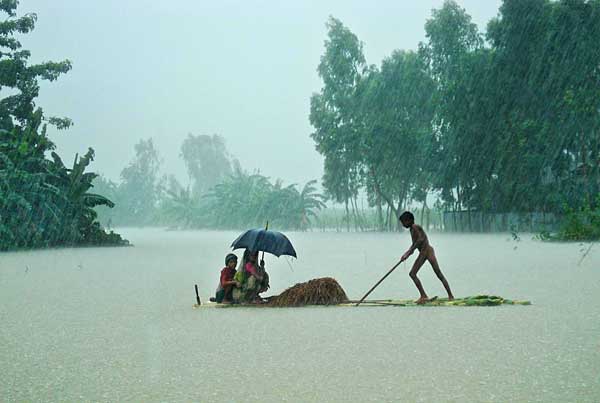
Photo: A family looks for shelter using a raft made of banana trees during the last Monsoon: 31 July 2007: Gaibandha, Bangladesh © Quddus Alam/DrikNews Linked from Shahidul News

I’m in full agreement on the need to ‘translate the complex issues into stories that capture the public’s imagination’. There is also no argument that climate change requires the engagement of everyone.

But I would be very interested to know on what statistical or analytical basis he says “in many Asian countries climate change stories don’t make it into the media, so the public are left out of the debate’.

Asia, as Mr Harbinson should surely know, is not just China, India and Indonesia. It is large and highly diverse region, containing five sub-regions as defined by the UN. It is home to nearly two thirds of humanity, who live in over three dozen independent states or dependent territories.

Living in Asia and trying to work at regional level, I know how difficult it is to make any generalisations about this rich and constantly changing assortment of economies, cultures and societies branded as Asia (which, taken together with the small island nations of the South Pacific, is known as the Asia Pacific). In fact, it’s wise not to speak about Asia as a whole, for there is little in common, say, between Japan and Laos, or between China and Maldives.

The Asian media are as diverse as the region, and have been undergoing rapid change in recent years. Unshackled from the state’s crushing grip in most countries, the broadcast media (radio, TV) have proliferated and emerged as the primary source of information for a majority of Asians. New media – web, mobile devices and multimedia combinations – are now changing the way many Asia’s communicate and access information.

I have always been curious how Panos London, perched at its cosy home in London’s White Lion Street, assesses what goes on in the majority world. In this case, how much of Asia does Mr Harbinson know and is really familiar with? How many Asian media outlets has he or Panos monitored, assessed and sampled before coming to this sweeping and damning conclusion about the lack of climate change stories in the Asian media?

And how many of these outlets are radio and TV, and in languages other than English? I would really like to know.

If Panos London believes in evidence-based analysis, then it owes us in Asia an explanation as to on what basis its head of environment makes such statements about an entire continent, whose media output is predominantly in Asian languages, not English. And whose principal media are broadcast, not print.

And what constitutes a climate story? Tracking the endless array of inter-governmental babble in the name of working out some compromised partial solution to the major problem? Or reporting on campaigns to clean up polluting industries or sectors (such as transport) that generate most of the greenhouse gases? Or focusing on how humble communities in remote corners of the world are finding how their lifestyles and livelihoods are suddenly threatened by something they hardly understand?

To me, it’s all of the above — and a lot more. Climate change is akin to a prism through which many, many development issues and topics can be analysed. Just as HIV/AIDs long ago ceased to be a simple medical or health story, climate change has moved well beyond being an environmental story.

The more angles, perspectives and topics that are covered in the media, the better. And all of it need not be in that staid, cautiously balanced style of The Guardian or BBC that Panos London must be more familiar with.

Panos London, in its statement of beliefs, says ‘Freedom of information and media pluralism are essential attributes of sustainable development’. Surely, then, they realise that media pluralism includes speaking in a multitude of tongues, and analysing from many different perspectives — as happens in the Asian media 24/7, if Mr Harbinson and his colleagues care to spend more time in the region and keep their eyes and ears open.

But instead, they seem more like a group of well-meaning people with a solution in search of a problem. For the past many months, Panos London has been crying wolf about the allegedly poor coverage of climate issues in the majority world media.

That was the main thrust of a report they published in late 2005, titled Whatever the weather – media attitudes to reporting climate change.

According to Panos London website that I have accessed today, “…the survey found that there is little knowledge among journalists about these important choices and they are rarely discussed. The dramatic impacts of extreme weather events, for example, rarely feature in relation to climate change and the topic remains low on editors’ story sheets.”

The survey was based on ‘interviews conducted with journalists and media professionals in Honduras, Jamaica, Sri Lanka and Zambia’ and claimed to ‘give insights into the attitudes of journalists and the status of the media in these countries.’

Well, I was one of those majority world journalists covered by the survey — and I had major reservations about how they used my responses. Being cautious, I had used email (and not the phone) to respond to their survey questions – I therefore have a complete record of everything I said. When the draft report was shared on my request, I found some of my responses being distorted or taken out of context. I had to protest very strongly before some accuracy was restored. I later regretted having agreed to be part of this dubious survey.

It was flawed in many ways. The questionnaire was very poorly conceived and structured. I actually declined to answer some questions which were worded in such a way as to elicit just the kind of response that Panos London wanted — to make a case that journalists in the majority world are so incompetent that they need help.

A glaring omission in the final report was that it carried no list of journalists interviewed. I had to ask several times before I could even find out how many others participated in the survey (apparently some three dozen). But my requests for a list of other survey respondents were repeatedly declined by Panos London, who said it was privileged information. They later took the position that European data protection laws did not allow them to disclose this information!

In an email sent to Rod Harbinson on 22 Feb 2006, I said: “I would argue that Panos London had pre-conceived notions that it wanted to present in this report, and used superficial and largely unprofessional interview surveys with a few scattered journalists as a rubber-stamping exercise to publish what it wanted to say anyway. This is further borne out by the fact that some of my more outspoken responses have been completely ignored.”

I have seen or heard nothing since to change the above view. And the contents of Whatever the weather – media attitudes to reporting climate change are consistent with what Rod Harbinson says in the IIED press release that prompted me to make this comment.

Yes, climate change is the Big Issue of our times that needs everyone to rally around and search for ‘common but differentiated’ solutions and responses. But no issue or global threat is too big to warrant the willing suspension of time-honoured journalistic or academic values of honesty, integrity and balance. Issuing lop-sided ‘survey reports’ and making sweeping negative statements do not help the cause of improving public discussion and debate on climate change.

The road to Bali and beyond is going to be an arduous journey. On that treacherous road, we in the majority world need to beware of ‘bad weather friends’ who come bearing bad surveys and self-serving offers of ‘help’.

— Nalaka Gunawardene

Note: In the spirit of communication for development and media pluralism, I invite Panos London to respond to the above critique, and offer to publish their response in full.

I remain a critical cheer-leader of the global Panos family, and serve on the Board of Panos South Asia, an entirely independent entity that has excellent relations with Panos London. Like all families, we don’t always agree – and that’s part of media pluralism!

Related blog posts:

Nov 2007: True ‘People Power’ needed to fight climate change
Nov 2007: Beyond press release journalism: Digging up an environmental business story
Oct 2007: The Al and Pachy Show: Climate Change gains public momentum

Aug 2007: Arthur Clarke’s climate friendly advice: Don’t commute; communicate!
June 2007: Sex and the warming planet: A tip for climate reporters
April 2007: Can journalists save the planet?
April 2007: Beware of Vatican Condoms and global warming
April 2007: Pacific ‘Voices from the Waves’ on climate change
April 2007: Wanted – human face of climate change!

Taking it personally: Anita Roddick’s Arabian Nights

“I am overwhelmed by the potential of the web to link like-minded people and move them to mass-action,” the late Anita Roddick once wrote. “We are excited to experiment in other media too — perhaps subversive billboards, or a television program, or other print projects. As someone once said, we are only limited by our imaginations.”

In my personal tribute to Anita, written shortly after her untimely death on 10 September 2007, I touched on her extraordinary skills as an activist-communicator. It was in connection with a global television series that I last met Anita in person.

In the summer of 2003, I was invited to join a small group of people at Anita’s country home, Highfield House, in Arundel, Somerset, England. It was a one-day brainstorming on the future of Hands On, a global TV series that she’d been hosting for three years.

Hands On stood out as a beacon of hope amidst so much doom and gloom on television -– it featured environmentally-friendly technologies, business ideas and processes that have been tried out by someone, somewhere on the planet.

It covered a broad range of topics, from renewable energies, waste management and information technology to food processing and transport. The aim was to showcase good news and best practices so they could inspire others — entrepreneurs, communities or even governments — to try these out.

The series was first broadcast on BBC World and was redistributed to dozens of TV channels worldwide through my own organisation, TVE Asia Pacific, and others. It was backed by the reputed development agency Intermediate Technology (now called Practical Action).

Watch a typical Anita introduction of Hands On and a sample story in capsule form:

Anita brought her usual passion and dynamism to our discussion, energising the development and communications professionals enjoying her hospitality. Covering good news was already going against the media’s grain, but it was harder to keep at it year after year, especially when the media landscape was changing rapidly. It was a challenge to stay engaged and relevant to viewers across Africa, Asia Pacific, Latin America and Europe.

During the meeting, Anita asked me to sum up the World Summit on the Information Society (WSIS) which was coming up in a few months. Putting aside all the ‘developmentspeak’ of UN agencies, I described it as an attempt to put new information and communication technologies (ICTs) to work for the poor and disadvantaged of our world. Or get the geek tools to work for the meek. (I still think my phrase ‘Geek2Meek’ sounds better than the official ICT4D, where D stands for development.)

We agreed that civil society had to seize the opportunities offered by these new media tools. (A few months later, Anita presented two Hands On editions called ‘Communicating for Change’ on BBC World that profiled some initiatives doing just this.)

Always fond of analogies, I likened Hands On to Arabian Nights, which, according to legend, a young woman had spun from her rich imagination for 1,001 nights to save her life from an evil king. In Hands On, I suggested, we are telling stories to save not one life, but all life on Earth.

Read my July 2007 post: Telling stories to save ourselves…and the planet

Anita quite liked my analogy. She was always a good story teller, and had so many good stories to tell (A favourite opening line from her biography, Body and Soul: “There I was, with my panty down to my knees.” You’ll never guess why until you read that story…)

She challenged everyone at that meeting to make Hands On more interesting to younger viewers in different cultures. We recognised that offering one media product to a global audience was a tough sell: most people prefer a home-made, local story.

But then, she’d built the entire Body Shop chain with a largely common product offering, even if raw materials were sourced from different parts of the globe. She never imposed the Body Shop experience on our meeting, but it was sometimes instructive to look at how a globally available product could still be localised.

hands-on-in-asia.jpg hands-on-in-asia.jpg

This is just what we did in the months and years following the Arundel brainstorming. We rolled out the ‘Localising Hands On in Asia’ project, which saw several dozen Hands On stories being versioned into local languages and distributed through broadcast and narrowcast means in Cambodia, India, Laos and Nepal. The two-year project, generously supported by Toyota, was hugely successful in delivering the Hands On stories to millions of people who would never have been exposed to it in original English.

We were thrilled when our localising work inspired similar local TV shows in three countries (Cambodia, Nepal and Laos). Yet it was the narrowcast outreach that was more rewarding.

Read about one narrowcast experience in my April 2007 blog post: Anita Roddick, Angkor Wat and the development pill

Coming soon: Who killed Hands On, one of the most successful multimedia initiatives in recent years to communicate development?