Anil Gupta’s Advice: Unleash Sri Lanka’s Grassroots Innovators!

This is the full text of an article I have written in The Nation Sunday newspaper today, 18 Dec 2011, with more images, embedded weblinks and in a better searchable format. It is based on the inaugural Ray Wijewardene Memorial Lecture delivered by Prof Anil K Gupta on 13 Dec 2011 and my conversations with him in Colombo.
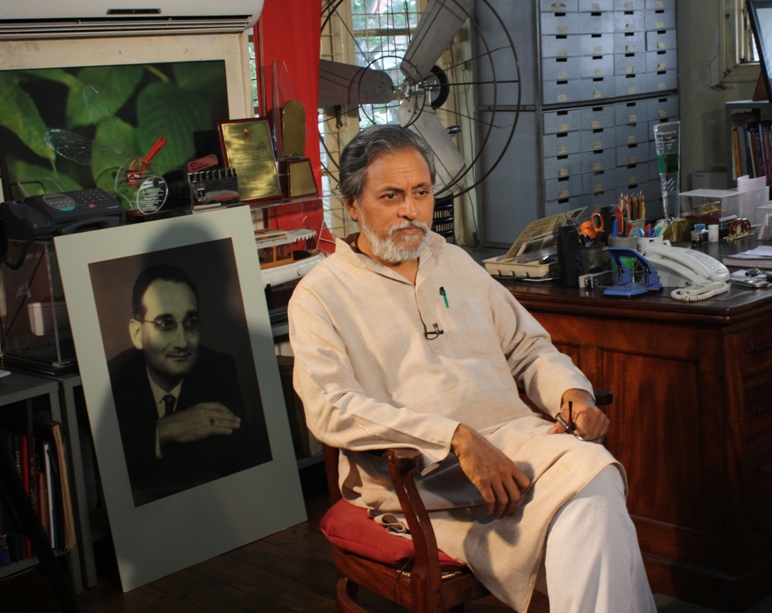
Prof Anil Gupta sits in the Colombo study of late Dr Ray Wijewardene - photo by Anisha Gooneratne

What does an inventor look like?

A nerdy kid in glasses and a white coat, tinkering perilously in a lab? Or a tightly-focused technician toiling away in a greasy workshop?

Perhaps. But most innovators are ordinary people moving among us. For the most part, they are unnoticed and unsung as they try to crack problems that have engaged their attention — or frustrated them for too long.

At one level, many of us improvise everyday for personal gain — to save money, lighten our workload or boost yields. Only a few take it to a higher level. They are unhappy with the status quo. They probe how things work and speculate how it can improve. They tackle problems that daunt most.

Spotting them isn’t easy. Such innovators may come from any social, educational or cultural background but they all march to the beat of a different drum. While education and training help, some of the most successful inventors in history were entirely self-taught.

The late Ray Wijewardene was one quintessential ‘tinkerer’ who led a life-long quest to solve practical problems and improve the quality of life – for himself, those around him, and society at large. He left his mark in agriculture, engineering design, renewable energy, transport and aviation. Just as importantly, he nurtured other innovators to go after nagging problems. A firm believer in trial and error, he encouraged constant experimentation.

Ray’s spirit of enquiry and enterprise was rekindled this week when one of the world’s leading innovation-spotters delivered the inaugural Ray Wijewardene Memorial Lecture in Colombo.

Dr Anil Kumar Gupta, a Professor at the Indian Institute of Management (IIM) in Ahmedabad, India, and Founder of the Honey Bee Network, spoke on “Grassroots Innovation for Inclusive Development: From Rhetoric to Reality” at the Institution of Engineers on 13 December 2011.

With inspiring examples and illustrations, Gupta emphasized that grassroots innovations can provide a new ray of hope – if we let them grow.

Speaking of his own country’s experience, he said: “Outside of India’s major cities, unsung heroes of the country are solving, or trying to solve, local problems in spite of the structures that have bypassed them so far. Creativity, compassion and collaboration are the key characteristics of these voices from grassroots. Let’s listen to them and resonate with them!”

And it isn’t just an Indian phenomenon. At the outset, Gupta listed a dozen recent innovations made by Lankans. Some, like the safe kerosene bottle lamp, are widely known but most remain obscure. Yet, all have been authenticated, and many granted patents.

Home-grown inventions

Few among the packed Colombo audience of over 200 seemed to recognise these home-grown innovations — just the point the professor was making.

“You get innovators all over Sri Lanka, but most are not known or recognised even in their own communities,” he said.

To make matters more challenging, most innovators tend to be loners: they are day-dreamers who don’t follow the pack.

“They don’t come to meetings or speak up much. We have to reach out to them, make them feel comfortable and valued,” Gupta added.

His suggestion: Sri Lanka should launch a national effort to discover its own innovators — both technological and social. The media can play a big role in spotting and promoting innovators, as can schools, universities and state agencies with relevant mandates.

But Gupta also had a strong word of caution: “Whatever we do, we must never try to convert these precious ‘odd-balls’ into conformists.”

Ray would surely have applauded. He was an accomplished non-conformist, or maverick, who didn’t fit into the stereotyped academic or engineering circles. Now the Ray Wijewardene Charitable Trust (RWCT), set up to promote his legacy, wants to nurture innovation in Sri Lanka.

The Trust made an auspicious start by inviting Anil Gupta to deliver the first lecture in Ray’s memory. Gupta and Wijewardene were kindred spirits who stayed in touch over the years across the Palk Strait.

Gupta himself defies the standard notion of an academic. He is an unusual professor who walks his talk — and walks through the villages and slums of India in search of innovation. His mission for the past two decades has been to ensure that grassroots innovators receive due recognition, respect and reward for their bright ideas. He also seeks to embed an innovative ethic in educational policy and institutions.

He founded the Honey Bee Network in 1986-87 “to promote a fair and responsible knowledge ecosystem”, where innovators can benefit by sharing their ideas. In the 1990s, he set up the Society for Research and Initiatives for Sustainable Technologies and Institutions (SRISTI) and Grassroots Innovation Augmentation Network (GIAN) both of which support the Honey Bee Network to scale up and convert grassroots innovations into viable products.

The man doesn’t sit in his campus; he goes innovator-scouting all over India. “In our walks, we move from village to village spotting grassroots innovations and honouring them. We have come across very simple modifications make life easier for people, and also help save natural resources,” Gupta said.

A simple example: at a rural location, he found someone had fitted six tapes on to the outlet of a single water pump. It allowed that many to draw water at the same time, and also reduced pumped up water going waste.

The bicycle is another invention that has been adapted for multiple purposes across India. Genius improvisers are using it for moving on land (and water), generating electricity, helping with the cooking, and even in washing clothes.

The popular Hindi film 3 Idiots featured a pedal-powered washing machine, which was inspired by the invention of a 20-year-old woman from Kerala, Remya Jose. It has since been showcased on Discovery Channel as part of the ‘Indian Innovators’ series of short films.
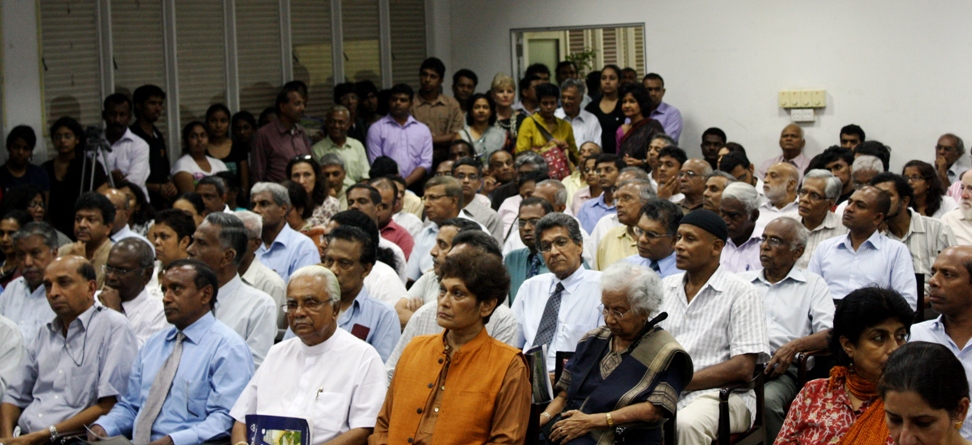
Part of audience at Ray Wijewardene Memorial Lecture in Colombo, 13 Dec 2011 - photo by Anisha Gooneratne

Benefit sharing

One defining characteristic of such grassroots innovation is that those tinkering are also immediate benefits of any improvements. As Gupta puts it: “From agricultural innovations to the gas-powered iron or pressure-cooker-driven coffee maker, we find that solutions developed by producers who are also users reflect the concerns of both the production and consumption environments.”

Not all inventions need to be earth-shattering. In fact, many aren’t – and that is perfectly fine, says Gupta.

“Even basic improvements in a water pump, for example, can make life easier for millions of people. When we look for design improvements, we should consider not only the benefits to humans, but even to domesticated animals.”

How can society ensure that grassroots innovators not just receive accolades but also get paid for their creative ideas?

Much of innovation related knowledge is ‘open source’ – meaning it has been developed by a number of people collaboratively and non-secretively. But that doesn’t mean their knowledge rights should be trampled with.

Taking out patents is one way to ensure such rights. The Honey Bee network has successfully obtained over 550 patents for grassroots innovations – more than some well-funded laboratories in India! This was made possible by mobilising pro bono lawyers and other volunteers.

The spirit of volunteerism common in Asian cultures can do much to nurture innovation and safeguard intellectual property rights at the same time, Gupta said.

His hope: “The Ray Wijewardene Trust should be able to find public-spirited lawyers in Sri Lanka to emulate the Indian experience.”

And what about glaring gaps that often exist between inventive minds and the ruthless market?

Don’t try to turn every innovator into businessman, Gupta said. “Most innovators are not good entrepreneurs because they are incorrigible improvisers. In many cases, we try to persuade and counsel innovators to work on their products. There are some who do very well, while others take time.”

Instead of trying to turn every inventor into an entrepreneur, we have to create institutions, schemes and networks that bring these two types together – the one who tinker and those who market.

We have to find ways to link innovation with investment and enterprise. Together, these three elements form what Gupta calls the ‘golden triangle’ for grassroots creativity.

Science writer Nalaka Gunawardene is a trustee of the Ray Wijewardene Charitable Trust, and has been profiling Lankan innovators for 25 years.

Titus Thotawatte (1929 – 2011): The Final Cut

Also published on Groundviews.org on 20 Oct 2011

Titus Thotawatte: The Magician

Emmanuel Titus de Silva, who was better known as Titus Thotawatte, was the finest editor in the six decades of the Lankan cinema. He was also a great assimilator and remixer – a ‘builder of bridges’ across cultures, media genres and generations.
Titus straddled the distinctive spheres of cinema and television with a technical dexterity and creativity rarely seen in either one. Both spheres involve playing with sound and pictures, but at different levels of scale, texture and ambition. Having excelled in the craft of making movies in the 1960s and 1970s, Titus successfully switched to television in the 1980s and 1990s. There, he again blaze his own innovative trail in Sri Lanka’s nascent television industry. As a result, my generation remembers him for his television legacy whereas my patents’ generation recall more of his cinematic accomplishments.

Titus left an indelible mark in the history of moving images. The unifying thread that continued from 16mm and 35mm formats in the cine world to U-matic and Betacam of the TV world was his formidable genius for story telling.

Titus de Silva, as he was then known, was a member of the ‘three musketeers’ who left the Government Film Unit (GFU) in the mid 1950s to take their chances in making their own films. The other two were director Lester James Peries and cinematographer Willie Blake. Lester recalls Titus as “an extraordinarily talented but refreshingly undisciplined character” who had been shunned from department to department at GFU “as he was by nature a somewhat disruptive force”!

The trio would go on to make Rekava (Line of Destiny, 1956) – and make history. In his biography by A J Gunawardana, Lester recalls how they were full of self-confidence, “cocky as hell” and determined to overcome the artificiality of studio sets. “We were revolutionaries, shooting our enemies with the camera, and set on changing the course of Sinhala film. In our ignorance, we were blissfully unaware of the hazards ahead – seemingly insurmountable problems we had to face, problems that no book on film-making can ever tell you about!”

In the star-obsessed world of cinema, the technical craftsmen who do the real magic behind the cameras rarely get the credit or recognition they deserve. Editors, in particular, must perform a very difficult balancing task – between the director, with his own vision of how a story should be told, and the audience that fully expects to be lulled into suspending their disbelief. Good editors distinguish themselves as much for what they include (and how) as for what they leave on the ‘cutting room floor’.

The tango between Lester and Titus worked well, both in the documentaries they made while at GFU, and the two feature films they did afterward: Rekava was followed by Sandeshaya (The Message, 1960).

They also became close friends. At his own expense, Titus also accompanied Lester to London where they re-edited and sub-titled Rekava (into French) for screening at the Cannes festival of 1957. As Lester recalls, “Titus was a great source of moral and technical strength to me; his presence was invaluable during sub-titling of the film”.

Titus Thotawatte - photo courtesy biography by Nuwan Nayanajith Kumara

In all, Titus edited a total of 25 Lankan feature films, nine of which he also directed. The cinematic trail that started with Rekava in 1956 continued till Handaya in 1979. While most were in black and white, typical of the era, Titus also edited the first full length colour feature film made in Sri Lanka: Ran Muthu Duwa (1962).

His dexterity and versatility in editing and making films were such that his creations are incomparable among themselves. In the popular consciousness, perhaps, Titus will be remembered the most for his last feature film Handaya – which he both directed and edited. Ostensibly labelled as a children’s film, it reached out and touched the child in all of us (from 8 to 80, as the film’s promotional line said). It was an upbeat story of a group of children and a pony – powerful visual metaphors for the human spirit triumphing in a harsh urban reality that has been exacerbated in the three decades since the film’s creation.

Handaya swept the local film awards at the Saravaviya, OCIC and Presidential film awards for 1979/1980. It also won the Grand Prix at the International Children and Youth Film Festival in Giffoni, Italy, in 1980. That a black and white, low-budget film outcompeted colour films from around the world was impressive enough, but the festival jury watched the film without any English subtitles was testimony to Titus’s ability to create cine-magic that transcended language.

Despite the accolades from near and far, a sequel to Handaya was scripted but never made: the award-winning director just couldn’t raise the money! This and other might-have-beens are revealed in the insightful Thotawatte biography written by journalist Nuwan Nayanajith Kumara. Had he been born in a country with a more advanced film industry with greater access to capital, the biographer speculates, Titus could have been another Steven Spielberg or Walt Disney.

Titus Thotawatte was indeed the closest we had to a Disney. As the pioneer in language versioning at Rupavahini from its early days in 1982, he not only voice dubbed some of the world’s most popular cartoons and classical dramas, but localised them so cleverly that some stories felt better than the originals! Working long hours with basic facilities but abundant talent, Titus once again sprinkled his ‘pixie dust’ in the formative years of national television.

In May 2002, when veteran broadcaster (and good friend) H M Gunasekera passed away, I called him the personification of the famous cartoon character Tintin. I never associated Titus personally, but having grown up in the indigenised cartoon universe that he created on our television, I feel as if I have known him for long. Therefore, Therefore, I hope Titus won’t mind my looking for a cartoon analogy for himself.

I don’t have to look very far. According to his loyal colleagues (and his biographer), Titus was a good-hearted and jovial man with a quick temper and scathing vocabulary. It wasn’t easy working with him. That sounds a bit like the inimitable Captain Haddock, the retired merchant sailor who was Tintin’s most dependable human companion. Haddock had a unique collection of expletives and insults, providing some counterbalance to the exceedingly polite Tintin. Yet beneath the veneer of gruffness, Haddock was a kind and generous man. It was their complementarity that livened up the globally popular stories, now a Hollywood movie by Steven Spielberg awaiting December release.

Perhaps that’s too simplistic an analogy for Titus. From all accounts, he was a brilliantly creative and multi-layered personality who embodied parts of Dr Dolittle (Dosthara Honda Hitha), Top Cat (Pissu Poosa), Bugs Bunny (Haa Haa Hari Haawa) and a myriad other characters that he rendered so well into Sinhala that some of my peers in Sri Lanka’s first television generation had no idea of their ‘foreign’ origins…

Titus was also a true ‘Gulliver’ whose restlessly imaginative mind traversed space and time — even after he was confined to one place during the last dozen years of his life.

A pity he spent too much time in Lilliput…

9/11 plus 10: Remembering the WTC Twin Towers from the movies…

In the end, movie memories are all that we are left with.

As we remember the 9/11 tragedy 10 years later, a cool compilation released online last month packs extracts from lots of movies that featured the World Trade Centre Twin Towers.

As the Los Angeles Times noted, Dan Meth — a New York animator and filmmaker who generally works creating humorous videos for the Web — has put together a deceptively simple, deeply moving tribute to the twin towers by creating a montage of their appearances on film.

Twin Tower Movie Cameos 1969 – 2001

The filmmaker says about this creation:
“From 1969 to 2001, the Twin Towers made countless cameos in Hollywood films. Sometimes featured prominently in the foreground, sometimes lurking in the distance. This montage celebrates the towers’ all-too-short film career with songs that capture the passing decades. Man, I miss them.”

Read the story behind this compilation in the Los Angeles Times

Wildlife and Natural History Film making: Are Darwinian Rules at play?

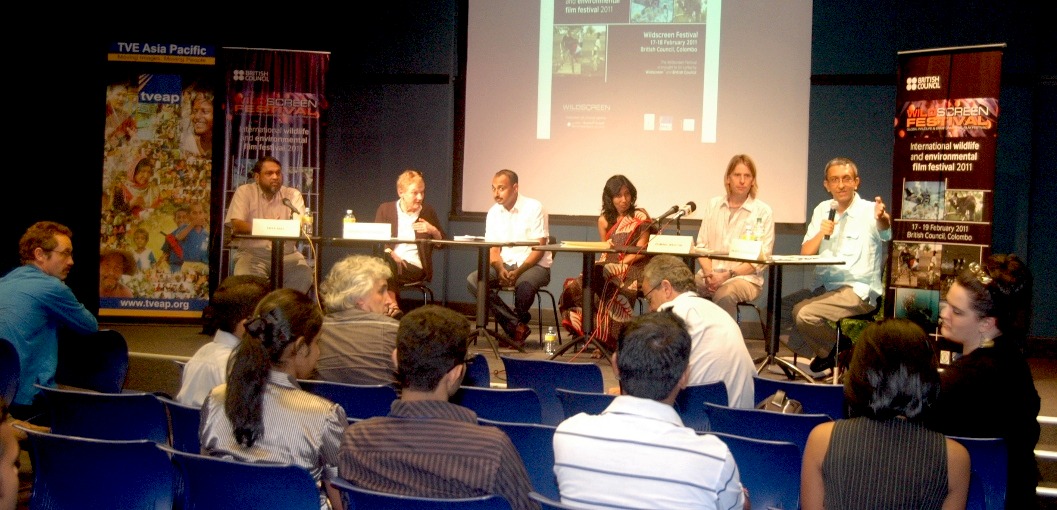
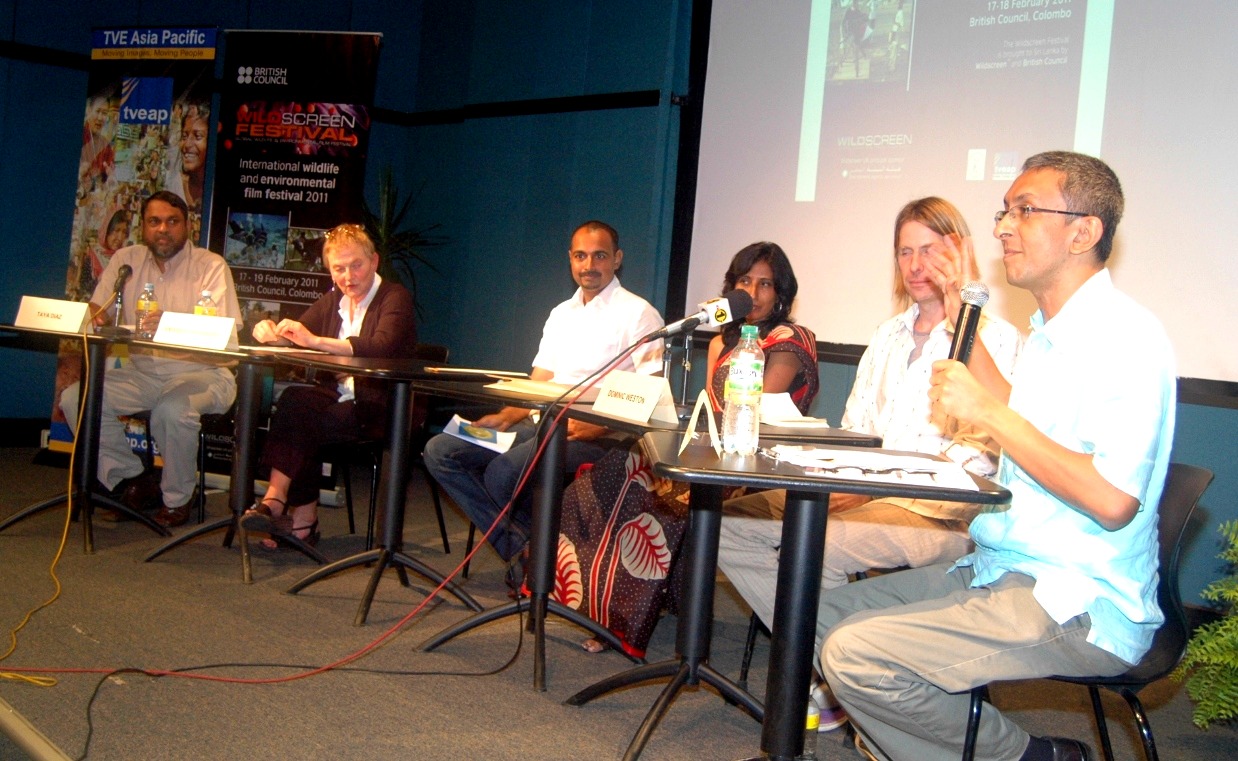
Wildscreen 2011 Colombo Panel: From L to R - Taya Diaz, Amanda Theunissen, Delon Weerasinghe, Anoma Rajakaruna, Dominic Weston and Nalaka Gunawardene

Is there an elite or ‘charmed’ circle of wildlife and natural history film makers in the world? If so, how does a new film maker break into this circle?

This is the question I posed to a group of visiting British film makers and their Sri Lankan counterparts during a panel discussion I moderated at the British Council Colombo on February 17 evening.

The panel, organised around the topic ‘Differences and mutual challenges in Asian, American and European productions/film making’, was part of the Wildscreen traveling film festival held hosted in Colombo, Sri Lanka, from 17 to 19 February 2011.

Amanda Theunissen, who has worked with the BBC Natural History Unit and National Geographic Television, gave a straight answer: yes, there is such a charmed circle.

And although she didn’t say it in so many words, it was clear from our overall discussions that the circle is jealously guarded, and it’s not easy for any newcomer to break into it. And the entry barrier becomes harder if the film maker is from the global South.

I opened the panel recalling the opening sentence of Our Common Future, the 1987 Report by the World Commission on Environment and Development: “The Earth is one but the world is not”. I said: “A similar disparity exists in wildlife and natural history film making. We are all covering the same planet Earth in all its splendour and diversity. But on this planet there are many different worlds of film making.”

I asked my five panelists — Amanda Theunissen and Dominic Weston from the UK, and Delon Weerasinghe, Anoma Rajakaruna, and Taya Diaz from Sri Lanka — to address three key challenges faced by all wildlife and natural history film makers everywhere: the art of effective story telling; fund raising to make films; and ensuring wide distribution of the films made.

The panel discussion was lively, wide-ranging and engaged the audience which comprised mostly aspiring film makers or film students. I didn’t want our discussion to scare any of them away from a career in environment and wildlife film making. But at the same time, we wanted to acknowledge the practical realities — and disparities — that exist within and across countries in this respect.

I’ve now written up a summary of the panel discussion for TVE Asia Pacific news. Its heading comes from a provocative question I asked during the panel: does wildlife film making operate on almost Darwinian rules?

Read the full story: Wildlife and Natural History Film making: Survival of the Fittest?

Wildscreen Colombo Panel: From L to R - Taya Diaz, Amanda Theunissen, Delon Weerasinghe, Anoma Rajakaruna, Dominic Weston, Nalaka Gunawardene

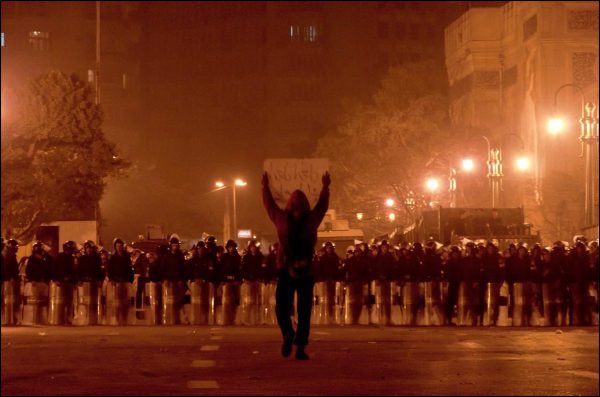
Revolution at the Bottom of the Pyramid: Egyptians want freedom – video

This short video is currently a high favourite online. Created by Tamer Shaaban. Another Egyptian who’s had enough.

Their blurb: “Violent clashes between police and demonstrators as over ten thousand gather on the streets of Cairo. The Egyptian people have endured a tyrant’s rule for far too long, millions struggle each day to find where their next meal is coming from. January 25th, 2011 marks the day when the people rise and take back what’s rightfully there’s. This isn’t the end, but hopefully the beginning to a long awaited regime change! Send to everyone and let them know.”

Song: “Into the Fire” – Thirteen Senses

Thanks to the following news sources for their footage
Daily News Egypt
The Guardian
CNN
New York Times
Al Masry Al Youm

The video was posted on reddit and has gained momentum!

#Facebook Link: Egypt’s Peaceful Revolution

Related blog post: Wanted: More courageous little ‘Mack’s to unsettle Yertle Kings of our times!

Revolution in the making...at the bottom of the pyramid

How do you measure progress? Say it in 3 min video!

How do you measure progress? Count simply the economic growth numbers? Or something more? Are people in richer countries necessarily happier? If not, what’s the key to real progress that makes people better economically, environmentally and socially?

The Organisation for Economic Co-operation and Development (OECD) wants to hear from young people about these issues through a video competition. To celebrate the OECD’s 50th Anniversary, young people worldwide are invited to create a short video describing their vision of Progress. In 3 mins, or 180 secs. The competition is open to young people (18-25 years) in every country worldwide.

Upload your video on YouTube and register online before MIDNIGHT (Paris time) on 1 March 2011. Details here. Promo video below:

Saving Biodiversity…from Evolution’s Most Dangerous Creature!

The United Nations designated 2010 as the International Year of Biodiversity (IYB). It is a celebration of biological diversity and its value for life on Earth, taking place around the world throughout the year 2010.

The 10th meeting of the Conference of the Parties (COP 10) of the Convention on Biological Diversity is being held in Nagoya, Aichi Prefecture, Japan, from 18 to 29 October 2010.

To mark these twin events, we feature some short videos on biodiversity found online.

Official video of the International Year of Biodiversity 2010

This video, produced by our friends at dev.tv in Geneva for the CBD Secretariat, is superbly crafted and engagingly presented. It visualises the core message of IYB 2010:
Biodiversity is life
Biodiversity is our life

Biodiversity Countdown 2010 video
In the puzzle of life each element is essential. Man has the power to do good, do bad, destroy or protect. What will you do?

Nature Our Precious Web: A photo montage

The exhibition is the result of a collaboration between Geo Magazine, GTZ, Countdown 2010, the Secretariat of the Convention on Biological Diversity and the United Nations Development Programme.

And finally, here’s an example of how not to produce a video on biodiversity. This 2006 film, made for the CBD Secretariat, has a good sound track and some excellent still photos. But it’s evidently been put together by a committee of UN agency officials and/or researchers who wanted to pack everything into 5 mins. The result – a wasted opportunity.

No Pressure, Just Plain Stupidity: UK climate film scores ‘own goal’ for campaigners

Still from No Pressure film: We do live in The Age of Stupid!
Shock therapy is known to work, when handled carefully. We can sometimes shock people out of apathy or indifference, for sure — but the same shock, if overdone, can also numb people or turn them off completely.

That’s certainly the case with a new climate advocacy video film called No Pressure, released on 1 October 2010 by the by the climate mitigation campaign named 10:10.

Written by Richard Curtis and Franny Armstrong (who made the acclaimed 2009 climate documentary, The Age of Stupid) and directed by Dougal Wilson, the film is a tragi-comic attempt to ridicule those who don’t share the same level of concern on global climate change as the climate activists do.

The four-minute film consists of a series of short scenes in which groups of people are asked if they are interested in participating in the 10:10 project to reduce carbon emissions. Those failing to show sufficient enthusiasm for the cause, including two schoolchildren, are gruesomely executed by being blown to pieces.

Well, see for yourself. Caution: this video contains violent scenes that can be offensive to most sensible people:

The normally balanced UK’s Guardian newspaper, which got the online exclusive, introduced the video on 30 September 2010 calling it “attention grabbing” and “pretty edgy.” There were a few others who found artistic or creative merit in the film, which has got high production values — no basement production, this.

But where it fails miserably is in winning any new friends for the climate cause, or at lease to influence people to change their high carbon lifestyles.

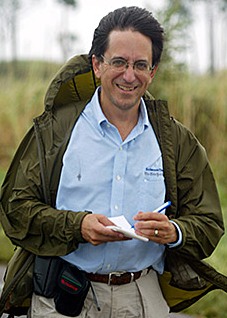
Amdrew Revkin
As Andrew Revkin, who writes the Dot Earth blog for the New York Times, wrote on 1 October: “If the goal had been to convince people that environmental campaigners have lost their minds and to provide red meat (literally) to shock radio hosts and pundits fighting curbs on greenhouse gases, it worked like a charm.”

He isn’t alone. Bill McKibben, author, educator and environmentalist — who founded the serious climate group 350.org — wrote on the same day: “The climate skeptics can crow. It’s the kind of stupidity that hurts our side, reinforcing in people’s minds a series of preconceived notions, not the least of which is that we’re out-of-control and out of touch — not to mention off the wall, and also with completely misplaced sense of humor.”

His group, 350.org, issued a statement that emphatically said they had nothing to do with this misplaced British climate extremism. McKibben added, more reflectively: “What makes it so depressing is that it’s the precise opposite of what the people organizing around the world for October 10 are all about. In the first place, they’re as responsible as it’s possible to be: They’ll spend the day putting up windmills and solar panels, laying out bike paths and digging community gardens. And in the second place, they’re doing it because they realize kids are already dying from climate change, and that many many more are at risk as the century winds on. Killing people is, literally, the last thing we want.”

Bill McKibben
Now contrast such concern with the initial reaction from British film maker Franny Armstrong, who wrote a half-hearted, almost defiant apology on the 10:10 UK website, saying: “With climate change becoming increasingly threatening, and decreasingly talked about in the media, we wanted to find a way to bring this critical issue back into the headlines whilst making people laugh. We were therefore delighted when Britain’s leading comedy writer, Richard Curtis – writer of Blackadder, Four Weddings, Notting Hill and many others – agreed to write a short film for the 10:10 campaign. Many people found the resulting film extremely funny, but unfortunately some didn’t and we sincerely apologise to anybody we have offended.”

Adding gross insult to injury, Armstrong signed off saying: “As a result of these concerns we’ve taken it off our website. We won’t be making any attempt to censor or remove other versions currently in circulation on the internet.”

Both the 10:10 UK campaign and its sponsors Sony have been more unequivocal in their apologies in the days that followed. But that’s too little, too late. Enough damage done — climate activists and campaigners worldwide will take months, if not years, to live down this one.

And nothing really goes away on the web — this video will be lurking somewhere for a long time. YouTube currently carries the video in several places, with the warning: “This video or group may contain content that is inappropriate for some users, as flagged by YouTube’s user community.”

Andrew Revkins has posted comments from those who condemned as well as those who found some merit in the offensive climate video. Some of these comments take a dispassionate view, which is to be welcomed.

This incident teaches all of us engaged in environmental communication some important lessons. Environmentalists have over-stated their case before, and every time, that did them (and their causes) far more harm than good. Crying wolf, and ridiculing the non-believers, are never good tactics in winning friends or influencing people.

As Bill McKibben noted: “There’s no question that crap like this (video) will cast a shadow, for a time, over our efforts and everyone else who’s working on global warming. We’re hard at work, as always, but we’re doing it today with a sunk and sad feeling.”

One more thing: even in this age of globalised media, humour doesn’t travel well across cultures and borders. As mainstream corporate media companies have often found out, British humour sometimes doesn’t even cross the Atlantic very well — let alone to other parts of the world. Perhaps this is a key point that this all-British team of film makers and campaigners simply missed.

The world is a bit bigger — and more diverse — than your little island, Ms. Armstrong. By failing to grasp that, and with your crude display of insensitivity, you have really proved the premise of your good climate film.

We do live in the Age of Stupid.

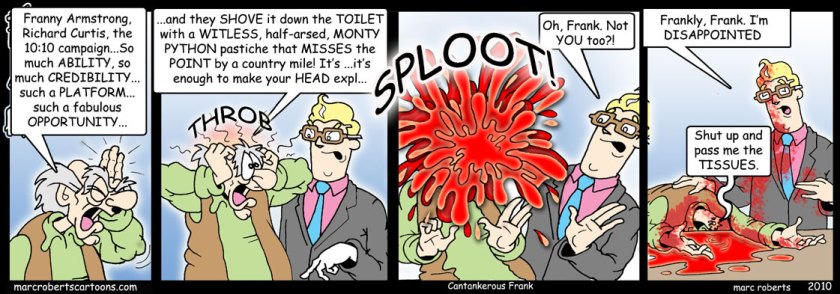
PS: Marc Roberts says it all in this cartoon:

Et tu, Armstrong?

From Michael Jackson to K’naan: Anthems for the Global Family?

A song that will outlive the games?

FIFA World Cup Football enters its final few days this week, culminating a month of international football at the highest level.

Played across 10 venues in South Africa, this is much more than a sporting tournament. It’s the ultimate celebration of the world’s most popular sport, held once every four years. More popular than the Olympics, it demonstrates the sheer power of sports and media to bring together – momentarily, at least – the usually fragmented and squabbling humanity.

And one upbeat song has characterised this World Cup more than any other: the FIFA World Cup Anthem, “Wavin’ Flag” (The Celebration Mix). Sung by K’naan (born Keinan Abdi Warsame) a Somali-Canadian poet, rapper, singer, songwriter, and instrumentalist.

It opens with these now famous words:

…Singing forever young, singing songs underneath that sun
Lets rejoice in the beautiful game,
And together at the end of the day.
We all say
When I get older I will be stronger
They’ll call me freedom, just like a wavin’ flag…

“Wavin’ Flag” is the third official single (eighth single overall) from K’naan’s Troubadour album. He specially recorded a version of the song for the tournament, hosted by South Africa. The remix of “Wavin’ Flag” is part of Coca-Cola’s global integrated marketing campaign “inspired by the joyous dance celebrations familiar to Africa.”

The song is popping up and pouring out from billions of radio and TV sets, mobile phones, websites and other devices. So much so that I wonder if it might as well be our planetary anthem — an idea that some social activists and artistes have dreamed about for decades?

Last year, shortly after Michael Jackson’s sudden death, I wrote a blog post that looked back at his songs that celebrated social and environmental themes. Referring to one, I said: “…the Earth Song had much wider and more lasting appeal, almost becoming an anthem for the global environmental movement in the past decade. But its real impact was not among the converted – with this song, Jackson took the green message to the heartland of the Facebook generation.”

We can argue about that (please do!). For now, here’s the celebrated song, currently the most popular on the planet:

FIFA Wold Cup Anthem “Wavin’ Flag” (The Celebration Mix) by K’naan

Wavin’ Flag lyrics (Celebration Mix) by K’naan

Ooooooh Wooooooh Ooooooh Wooooooh

Give me freedom, give me fire, give me reason, take me higher
See the champions, take the field now, unify us, make us feel proud
In the streets are, hands are liftin’, as we lose our inhibition
Celebration, its around us, every nations, all around us

Singin’ forever young, singin’ songs underneath that sun
Lets rejoice in the beautiful game
And together at the end of the day

WE ALL SAY

When I get older, I will be stronger
They’ll call me freedom
Just like a wavin’ flag

And then it goes back…And then it goes back…
And then it goes back…And then it goes…

When I get older, I will be stronger
They’ll call me freedom
Just like a wavin’ flag

And then it goes back…And then it goes back…
And then it goes back…And then it goes…

Ooooooh Wooooooh Ooooooh Wooooooh

Give you freedom, give you fire, give you reason, take you higher
See the champions, take the field now, unify us, make us feel proud
In the streets are, hands are lifting, every loser inhibition
Celebration, its around us, every nations, all around us

Singin’ forever young, singin’ songs underneath that sun
Lets rejoice in the beautiful game
And together at the end of the day

WE ALL SAY

When I get older, I will be stronger
They’ll call me freedom
Just like a wavin’ flag

And then it goes back…And then it goes back…
And then it goes back…And then it goes…

When I get older, I will be stronger
They’ll call me freedom
Just like a wavin’ flag

And then it goes back…And then it goes back…
And then it goes back…And then it goes….

Ooooooh Wooooooh Ooooooh Wooooooh

WE ALL SAY

When I get older, I will be stronger
They’ll call me freedom
Just like a wavin’ flag

And then it goes back…And then it goes back…
And then it goes back…And then it goes…

When I get older, I will be stronger
They’ll call me freedom
Just like a wavin’ flag

And then it goes back…And then it goes back…
And then it goes back…And then it goes…

Ooooooh Wooooooh Ooooooh Wooooooh

And everybody will be singin’ it

Ooooooh Wooooooh Ooooooh Wooooooh

And we are all singin’ it

Palitha Lakshman de Silva (1959 – 2010): Animator, stilled.

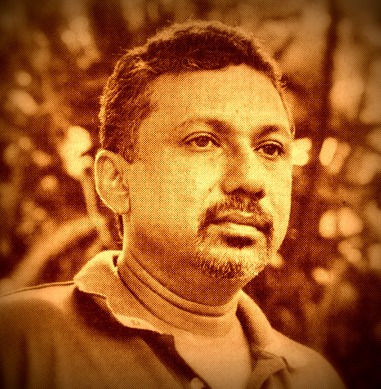
Palitha Lakshman de Silva, 1959-2010
For the second time in just over three months, I went to the Colombo general cemetery to bid farewell to a fellow traveller. This is becoming a worrying habit.

Those of us who’ve opted for the path less travelled don’t expect crowds or accolades. At least we have each other for company and inspiration. Suddenly it’s getting a bit lonely: long-standing friends and colleagues are dropping dead in the prime of their lives.

First, it was environmentalist, journalist and public intellectual Piyal Parakrama who left in early March. Now, it’s Palitha Lakshman de Silva — journalist, photographer, cartoonist, puppet animator and television professional among other pursuits and talents.

Uncannily, what I wrote upon hearing Piyal’s death applies – word by word – to Palitha too. I just have to change the name and date: Palitha died so suddenly and unexpectedly on the evening of June 11 that it’s hard to believe that he is no longer among us. Another public-spirited individual has left the public space all too soon…

Both men had just passed 50, and were leading active, productive and busy lives. They had no known ailments, and were in apparent good health. Yet in the end, it was the unseen, gradual clogging of the heart’s arteries that struck them both down: the first heart attack was swift and fatal. Neither man reached the nearest hospital alive.

I had known Palitha for twice as long as I worked with him (in the past decade). Although we weren’t close friends, we shared a passionate, life-long interest in using broadcast television and narrowcast video to communicate public interest messages. Some call it non-formal education, but we avoided the e-word for it reminds some people of school that they didn’t enjoy. We believed – and demonstrated too – that the audio-visual medium can blend information with entertainment in ways that make learning effortless and painless.

Having started his career as a reporter and photojournalist at a leading newspaper, Palitha later moved on to TV, where he blazed new trails in cartoon animation, puppetry and documentary making. He was part of Sri Lanka’s first generation of television and video professionals who experimented with the medium, and found new ways of combining education, information and entertainment.

All this made Palitha a natural ally and partner in my work at TVE Asia Pacific. I just wrote a more official tribute tracing our collaborations over a decade, which the TVEAP website published: Tribute to Palitha Lakshman de Silva (1959 – 2010): Photojournalist and cartoon animator

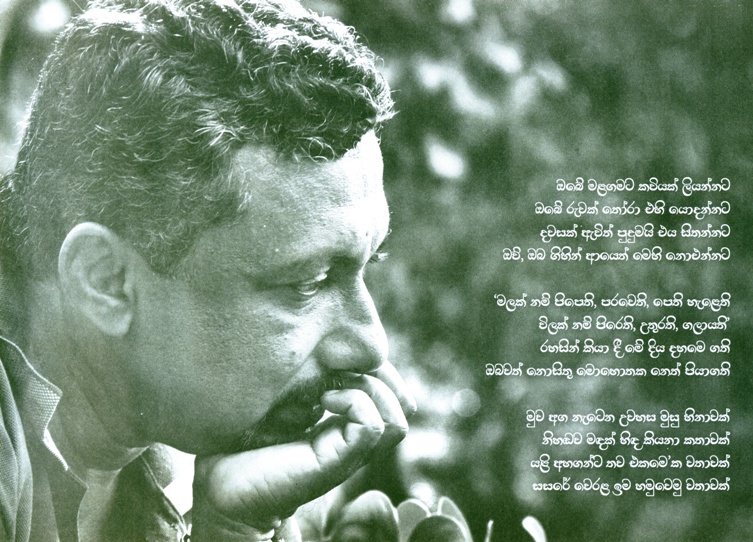
I’ll write more reflectively once I recover from the shock of another colleague signing off for good. For now, I can only echo the lyrical sentiments in this leaflet distributed at Palitha’s funeral by his artistically-inclined friends. The English approximation (below) is mine, and not particularly good (though bilingual, I’m a lousy translator). I’m glad, however, that the original verse captures one intrinsic quality of Palitha: his gentle, soft-spoken nature which often concealed the creative genius inside him.

Goodbye, Palitha Lakshman de Silva

The day has arrived
Suddenly and shockingly
When you’ve gone away
Leaving us alone
All by ourselves
To write a verse
And choose an image
In your fond memory.

Flowers bloom and wither
Lakes flourish and drain
Such is the Circle of Life
Which your hasty exit
Once again reminds us
With a soft, little whisper.

We’ll travel to the end of time
If can we see, just once more,
Your gentle and soothing smile,
And listen to your stories
That you told us so gently.

Just once more…