Asian Tsunami of December 2004: A moving moment frozen in time

An Indian woman mourns the death of a relative killed in the Asian Tsunami

An Indian woman mourns the death of a relative killed in the Asian tsunami. The picture was taken in Cuddalore, Tamil Nadu, on 28 December 2004 (REUTERS, Arko Datta)

From every disaster, conflict or tragedy emerges a single photograph that captures its essence in a way that becomes iconic. This image, showing the sheer haplessness of those who survived only just barely but lost everything they had, could well be that for the Asian tsunami of December 2004.

It was taken by Indian photojournalist Arko Datta, who won the 2004 World Press Photo Award for this image.

Indian journalist Max Martin (editor of indiadisasters.org) recently interviewed Arko Datta for a chapter in Communicating Disasters: An Asia Pacific Resource Book (co-edited by myself and Frederick Noronha, and just released). The chapter is titled ‘Stop All the Clocks! Beyond Text: Looking at the Pics’, which argues that disaster photography needs to break away from the constraints of time and space.

Excerpts from that interview:

On frames
I actually do not plan a frame. I am merely a messenger and do not try to bring in subjectivity or my priorities (in my photographs). I have to be very objective when I am covering any event. I leave the viewers to interpret the pictures according to their perspective. However, of course there are certain parameters I like to follow.

I do not like showing corpses or any (image of) morbidity unnecessarily. In natural disasters it is mostly unnecessary; however, in a war, one may need to show the victims as that may be the strongest way of making people aware of the fallout of wars.

In a natural disaster, the story is generally about the survivors — their struggle to cope with the loss of their near and dear ones, their struggle to get back to normalcy. It’s the story of their grit and determination to survive and live.

On emotions
The first viewer of my pictures is myself. When I am touched by a situation, I plan to capture it in my camera and show it to others too. So, definitely, as any other human being, I react to every situation too. However, while on work one has to control and restrain one’s emotions, as no productive work can emerge during an emotional state of mind.

Arko Datta
While covering an event, and covering several events over the years, these emotions keep getting suppressed and bottled up. One needs to know how to tackle this in the long run, or it can deeply effect one’s mind. And everyone has his or her own way of tackling it. I do so by talking to my family and very close friends about my experiences.

On interfacing with humanitarian workers
I feel, on the field, humanitarian workers have their own work to do and the press has its own. The humanitarian workers should not get concerned about the press, as definitely the victims will be their top priority. The press can surely manage on its own. In fact, the press should not come in the way of relief and rescue work.

Here’s his profile from World Press Photo:

Arko Datta started his professional photojournalistic career in an Indian dailies in Madras and Calcutta. He then worked at AFP, and joined Reuters in 2001. His awards include national photo competition prizes from the Indian government, a prize in the Canon International photo competition, a Publish Asia award in Malaysia, Best Photojournalist of the Year award from Asian Photography magazine in India, the Picture of the Year award in Bombay and awards in the General News and Daily Life categories of the Indian Express Photo Competition. His publications include “Lost Childhood”, a book on child labor sponsored by the International Labor Organization, and his pictures are featured in a coffee table book of the most memorable pictures of India in the last 100 years and in the Reuters picture book “On the Road”.

Download the full book chapter by Max Martin, titled: Stop All the Clocks! Beyond Text: Looking at the Pics

Read or download the full book’s contents at TVEAP website

Portraits of Commitment: New face of HIV/AIDS in Asia

Sabina Yeasmin Putul, photo by Shahidul Alam

Today, 1 December, is World AIDS Day — and this is the new face of HIV/AIDS in Asia.

Well, at least one of 50 faces that my friend Shahidul Alam captured during this year for a UNAIDS-published book titled ‘Portraits of Commitment: Why people become leaders in the AIDS response’.

It profiles men and women who are confronting HIV/AIDS in their lives, professions, work places and families in a variety of ways, each of them remarkable and courageous.

In August 2007, Shahidul held an exhibition in Colombo that featured the South Asians who were photographed for the book. Adorning the cover of the exhibition brochure was this 17-year-old Bangladeshi girl, Sabina Yeasmin Putul.

And this is what Karen Yap Lih Huey of Inter Press Service/TerraViva wrote about her and the exhibition:

Sabina Yeasmin Putul has a silent, determined look with her left fist clenched tight in front of her face – a vision of strength, grace, and resilience all in one.

The 17-year-old Bangladeshi has a lot going for her. Mature beyond her age, she had a good understanding of what she has been through, as a daughter of a sex worker, and of how society sees and judges her. And she probably doesn’t know this – that her struggles inspired respected Bangladeshi photographer, writer and activist Shahidul Alam.

“The way she tackles issues regarding her mother and the people around her is powerful. Of course, among other things, she did martial arts and I thought rather than showing child of a sex worker, I photographed her as this powerful woman who came across with powerful ideas,” said Alam, managing director and founder of the Dhaka-based Drik Photo Library.

Posters of her in a martial arts pose was the face for Shahidul’s photography exhibition, a project produced by a team from Pathshala, the South Asian Institute of Photography which is the education wing of the award-winning agency Drik.

Read the article in full on IPS/TerraViva

Read my Aug 2007 blog post on another Portrait of Courage: Rajiv Kafle of Nepal

Photograph by Shahidul Alam/Drik/Majorityworld

Protect journalists who fight for social and environmental justice!

In June 2007, I wrote about the late Joey R B Lozano, a courageous Filipino journalist and activist who fought for human rights and environmental justice at tremendous risk to his life.

For three decades, Joey survived dangerous missions to defend human rights using his video camera in the Philippines, a country known for one of the highest numbers of journalists killed in the line of duty. Joey went into hiding numerous times, and he dodged two assassination attempts.

Last week, a leading Filipino academic and social activist called for greater protection for local level journalists who cover social and environmental justice issues risking their life and limbs.

“Things are pretty savage at the grassroots level in some of our countries. Journalists who investigate and uncover the truth take enormous personal risks – the vested interests hire killers to eliminate such journalists,” said Professor Walden Bello, executive director of the Focus on the Global South (photo, below).

He was speaking at the Greenaccord Media Forum on 10 November 2007 in Frascati, Rome, where several dozen journalists covering environmental issues had gathered for a four-day meeting.

He delivered an insightful survey of social movements across Asia on environmental and public health issues
, where he questioned the role of elites in the global South in standing up for what is right and fair for all people.

During question time, I asked him how he saw the media playing a role in social movements that he’d just described. It varied from country to country, he said, and gave several examples.

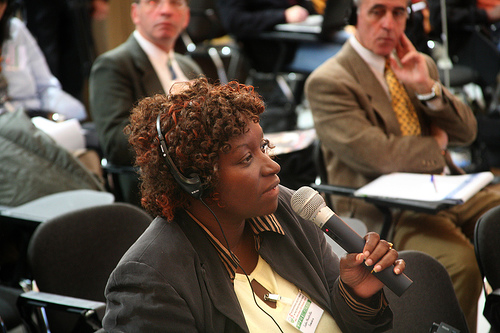
zadie-neufville-from-jamaica-makes-a-point.jpg

In China, most environmental exposes in recent years have been made by ‘very brave journalists’. Their investigations have compelled the local and central authorities to address the massive incidents of pollution and environmental degradation resulting from China’s economic march forward.

In South Asia, the record is uneven. Indian publications like The Hindu newspaper and Frontline magazine are at the forefront in reporting and analysing ‘almost exhaustively’ on environmental struggles in the world’s largest democracy.

In contrast, Singapore and Malaysia have no critical mass media to turn the spotlight on excesses or lapses, he said. In these countries, journalists as well as activists have turned to the web to express themselves — but even they are under pressure from their governments.

In Thailand, the two English language newspapers The Nation and Bangkok Post have both have a long tradition of covering environmental issues and supporting mass movements. A number of Thai language newspapers also have sustained coverage.

In his native Philippines, Prof Bello singled out the Philippine Daily Enquirer for persisting with environmental coverage and exposing environment related scandals. But that comes with its own risks.

“At the local levels, journalists who take up these issues face many threats, including the very real risk of extra-judicial killings. The Philippines is one of the most dangerous countries in the world today for independent journalists and human rights activists,” he added.

Journalists living in the provinces and reporting from the grassroots are more vulnerable than those based in the cities. This is precisely why local journalists need greater support and protection to continue their good work.

The local elites and officials would much rather silence such journalists. International solidarity for such journalists could make a big difference, Prof Bello said.

He had a suggestion for his hosts, Greenaccord, which annually organises what is now the world’s largest annual gathering of journalists and activists concerned about the environment: Invite and involve more local level journalists in the future forums.

That will give them a voice, and strengthen their resolve to continue the very important work they do.

Read April 2007 blog post: Can journalists save the planet?


Meeting photos courtesy Adrian Gilardoni’s Flickr account

New media anarchy is good for you!

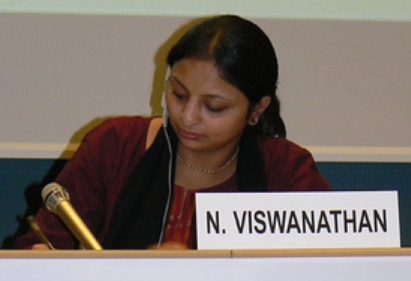
neha-viswanathan.jpg

“You people are too well mannered! I’ve never been to a conference where people are so properly dressed and so polite to each other!”

With these words, Neha Viswanathan made sure she had everyone’s attention. But it was not just a gimmick — she was contrasting the relatively more orderly, organised world of mainstream media (MSM) with the decidedly more anarchic world of new media — including blogs, wikis, YouTube and Second Life.

Neha, South Asia Editor of Global Voices, was speaking on a panel on ‘new media’ during the Global Symposium+5 on ‘Information for Humanitarian Action’ in Geneva this week (22 – 26 Oct 2007).

The panel topic itself showed the rapid change taking place in the humanitarian sector. As the panel premise said: “Within minutes of a disaster or conflict, the first images are seen on YouTube rather than CNN, and probably to a larger audience. YouTube, Flickr and blogging are bringing wars, disasters and their humanitarian consequences to the attention of the public, government and aid agencies more efficiently than ever. It’s now possible to keep watch on a Darfur village through satellite imagery, or take a virtual tour of a refugee camp.”

The panel was to discuss whether citizen journalism and new collaborative/ networking technologies are improving humanitarian response, and review how the humanitarian community is faring in this new environment.

My own views on this are found in another blog post: New media tsunami hits humanitarian sector – rescue operations now on!

Neha’s take was slightly different. She started reminding everyone that the new media activists were unruly and not always polite. The blogosphere is very much a contested and contentious space where arguments rage on. Not everything is moderate, balanced or ‘evidence-based’ (to use a new favourite phrase of the humanitarian community).

But in times of crisis or emergency – whether disasters or war – new media activists are increasingly the first responders. The anarchic nature actually provides them with an advantage: they are distributed, self-organising and motivated. There is no central newsroom or coordination point telling them what to do. In typical Nike style, they just do it.

As an example, she described World Wide Help, whose introduction reads: “Using the web to point help in the direction where it’s most needed”.

This blog was started by several founders and members of the SEA EAT (South East Asian Earthquake And Tsunami) blog, wiki and database, all of which gained worldwide attention at the time of the Indian Ocean earthquake and tsunami on 26 December 2004. The group, now calling themselves The World Wide Help Group, has since remobilised to aid in other relief efforts.

Read the whole story of the SEA EAT Blog: A Candle in My Window by Peter Griffin, one of its co-founders

As Sir Arthur C Clarke has also noted, the 2004 tsunami marked a turning point in how citizen journalists and other new media activists respond to emergencies. Since then, the power of new media has been unleashed on many public interest issues and humanitarian causes. As an example, Neha cited the online campaign against street sexual harassment in India.

In Neha’s view, new media can collate authentic testimonials of those directly affected by disasters or other crises, and keep the public attention (and thereby, political interest) on emergencies beyond the first few days.

Her advice to humanitarian aid agencies: keep looking at the new media, especially blogs, to find out what people at ground zero are saying about relief and recovery work.

“Bloggers are not objective – they talk openly, and express themselves freely,” she told the largely prim and proper Geneva audience, where some participants had referred to the meeting as ‘this august gathering’!

Finally, in situations where MSM (the formerly big media!) are shut down, restrained or intimidated into not carrying out their watchdog role, it’s the new media that fills the voice. Neha described the pro-democracy struggles in Nepal in 2005 – 2006 as an example where the people power struggles continued to be reported and commented on after the autocratic king clamped down on all print and broadcast media.

Read my August 2007 blog post: The Road from Citizen Kane to Citizen Journalist

Ram Bahadur Tamang: The face of Film South Asia

ram-bahadur-tamang.jpg ram-bahadur-tamang.jpg

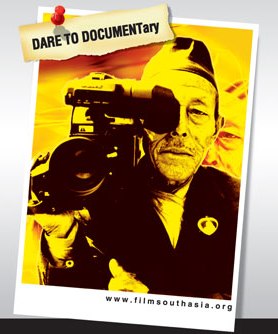
For ten years, this ordinary Nepali man’s photo has been a rallying call for documentary film-makers across South Asia, home to one fifth of humanity.

He has become the symbol, and the logo, of Film South Asia (FSA), a regional film festival organised every other year in Kathmandu since 1997. FSA, whose latest edition rolls out in the Nepali capital this week (11 – 14 October 2007) is the leading and most enduring film festival that brings together South Asian film-makers and film-lovers. It is a low-budget, high-energy festival organised by the non-profit Himal Association.

Having been associated with FSA from the beginning (I was on the first festival’s jury, and have hosted a couple of travelling festivals since), I was curious about who this old man was. On a visit to Kathmandu last month, I asked FSA Chairman and documentary champion Kanak Mani Dixit about it.

It turns out that the FSA logo is derived from this photo, taken of an ordinary Nepali called Ram Bahadur Tamang. Photocredit goes to Cory R Adams.

Courtesy Himal Southasian

Ram Bahadur belonged to the Tamang people, who are believed to have migrated to Nepal from Tibet. Today, the Tamangs reside mainly in the high hills north of Kathmandu.

Perhaps inspired by my query, Kanak has written up the story behind the photo/logo in his column On the Way Up in the latest issue of Himal Southasian which he edits.

He says: “The Tamang from Byabar served the Rana palaces as guards and porters. Ram Bahadur was one such. One day, he was caught by a photographer holding an early-model Sony video camera. He had a Sirdi Sai Baba badge on his left lapel. The image of Ram Bahadur is now the logo of the Film South Asia documentary film festival. He looks out over the world through his camera and his other, free, eye. The trophy given to the best film at the end of each FSA is known as the Ram Bahadur Trophy.”

Not much more is known about old Ram Bahadur. He had moved on shortly after this picture was taken. We don’t know, for example, if he ever actually used the Sony camera, or was just playing with what, at the time, seemed a high-tech curiosity. This was, after all, the early 1990s when video cameras were not quite ubiquitous.

Read Kanak Mani Dixit on Who’s Ram Bahadur Tamang in Himal South Asian October 2007

Read my July 2007 post: Himal Southasian – 20 years of celebrating South Asian diversity

India and Pakistan: Still struggling to grow up at 60!

See 23 March 2008 related story: Arthur C Clarke – Of Nukes and Impotent Nations (commentary on nuclear arms race in South Asia)

Today, 15 August 2007, India marked its 60th anniversary of political independence from the British. Pakistan, which was created by the British partitioning of India at the time of independence, marked their 60th birthday yesterday.

So here’s wishing the Indo-Pak combine a meaningful 60th.

For human beings, 60 is a landmark age. In some cultures, it marks the beginning of senior citizen stage. Wisdom, maturity and exemplary conduct are assumed and expected of those reaching 60.

When it comes to nation states, however, things don’t quite work that way. India and Pakistan at 60 are a good example.

Yes, they have made significant advances on many fronts in the past six decades. But before that progress can be celebrated, we have to take note of the political and socio-economic turmoil that these two nations — harbouring close to 1.5 billion human beings between them — find themselves in.

Those tensions are exacerbated by the bitter nuclear arms race between these two still-impoverished nations.

When it comes to geopolitics of nuclear weapons, India and Pakistan behave worse than two sill school boys. This is how my friends at Himal Southasian magazine summed it up brilliantly:

india-pakistan-nuclear-rivalry-as-seen-by-himal-magazine.jpg

And here’s another Himal cartoon which punctures the juvenile male obsession with weapons of mass destruction:

Image courtesy Himal Southasian

So let’s hope that the 60-year-olds will finally begin to act their age at least now!

Himal – 20 years of celebrating South Asian diversity

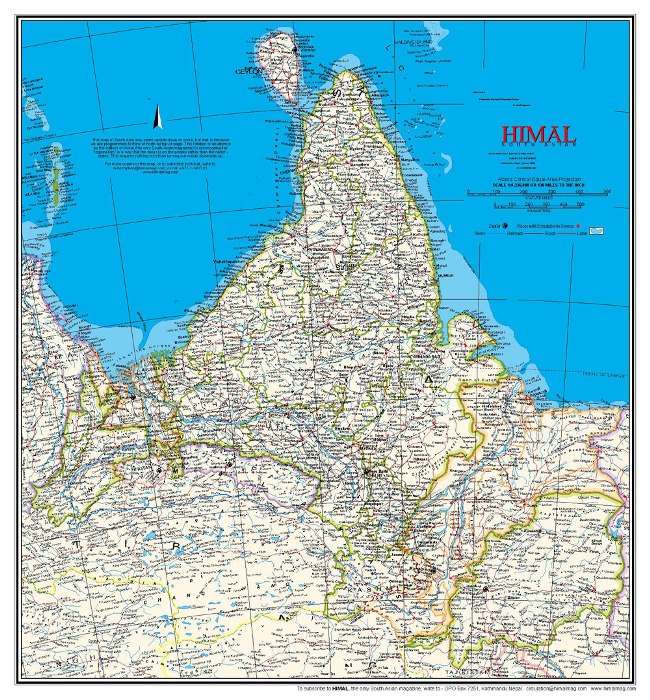
copy-2-of-southasian-map-by-himal.jpg

This is a map of South Asia, the sub-region where I live — along with over 1.5 billion other people, a quarter of humanity.

For sure it’s different: things look as if they have been turned upside down. But are they?

This map was published by Himal Southasian, our region’s one and only publication that really thinks and acts in genuinely South Asian terms.

Himal is celebrating 20 years of publication this month, and I join its many friends worldwide in congratulating and saluting this courageous, persistent citizen effort to evolve a regional mentality and identity for the currently divided and fragmented South Asia.

A note on their website reads:
“A friend just told us we had turned twenty. And so we counted the years and indeed it has been two decades since Himal began in 1987. That was the start of our Himalayan phase, and it has been ten years since Himal went Southasian. During the period, some of us have gone from black to grey, others grey to silver.”

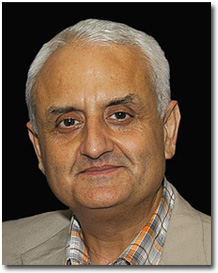
That sounds characteristic of Himal’s founder, editor in chief and publisher, Kanak Mani Dixit — one of the most senior journalists in South Asia. He and his journalist brother Kunda Dixit have kept Himal going for two decades.

Kanak Mani Dixit

As with the map, Himal has offered a different, sometimes defiant, perspective on issues of public and topical interest. Staying within the basic principles of journalism, it has challenged assorted tyrants and monopolies; questioned middle class complacency and lampooned South Asian idiosyncrasies.

Except for a short period when its soul was (temporarily) possessed by crusty intellectuals (my favourite definition: people educated beyond their intelligence), Himal has remained readable, passionate and credible — virtues that are not that common in a region that has an abundance of periodicals in English and many other local languages.

Before I get carried away, let me declare that:
1. I’m privileged to count Kanak and Kunda among my friends
2. I occasionally contribute articles to Himal that they are kind enough to print. In that respect, I’m part of the ‘Himal mafia’ and my praise is anything but objective!

But hey, who wants to peddle that cold and clinically detached objectivity that journalism schools continue to advocate? Himal is living proof that one can take a stand, vehemently if needed, and still do good journalism.

As Himal comes of age, I hope it will continue to kick ass, puncture inflated egos and remain outside the ‘mainstream’ for a long time to come. Never give up, guys — too much is at stake!

PS: On the ‘right side map’ itself, Himal explained:
This map of South Asia may seem upside down to some, but that is because we are programmed to think of north as top of page. This rotation is an attempt by the editors of Himal (the only South Asian magazine) to reconceptualise ‘regionalism’ in a way that the focus is on the people rather than the nation-states. This requires nothing less than turning our minds downside-up.

Read greetings to Himal from friends and fans all over the world!

Channel South Asia? Yes and No!

I wrote a few days ago about Ujala TV, a fledgling and entirely private, modest effort to operate a satellite TV channel carrying education and information for South Asian audiences — a quarter of the world’s total population.

This reminds me of discussions that have been around for years about setting up a South Asian TV network.

It’s one of those good ideas too dangerous to be mentioned frequently in public — in case our South Asian governments actually take it up! And that, as all South Asians know, will be the death of another good idea.

Two years ago, Himal Southasian, the only publication that truly thinks and acts at South Asian level (even if they spell it as one word: Southasian!) ran an interesting analysis on the prospects for a South Asian channel. It was written by Indian journalist Aman Malik.

The article’s premise was this:
Isn’t it time for a regional television network that ‘thinks Southasian’ and broadcasts via satellite and cable throughout the region? While Latin America’s incipient Telesur and West Asia’s energetic Al Jazeera might provide models, it is clear that we will have to go our own way.

Read Channel Southasia by Aman Malik in Himal Southasian, Nov – Dec 2005

Himal Southasian Cartoon courtesy Himal Southasian

It looked at the experience of Al Jazeera Arabic channel in the Middle East (launched in 1996), and the more recent initiative of Telesur, the pan Latin American television network founded by the Chavez administration of Venezuela in 2005.

Aman’s article was based on this premise:
“Regionalism in Southasia, which got a boost with the official sanction of the establishment of SAARC two decades ago, has been an increasingly important theme for civil society in each of the region’s countries. Over time, such groups have felt the need for print and electronic media that cover the region as a whole; the overwhelming presence of western satellite news has made analysts call for native channels. The spread of Indian channels, in particular the satellite footprints of Hindi and English broadcasts emanating from India, has again led people in other countries to call for a satellite channel that is uniquely Southasian, without allegiance to any national sensibility.”

Map courtesy www.safeer.info copy-of-southasian-map-by-himal.jpg

He also analysed the prevailing media mix accurately when he wrote:
Coverage of the Southasian neighbourhood is hampered by the fact that no television channels, beyond the few big Indian channels, keep correspondents (or even stringers) in the neighbouring countries. As a result, the news that is used is filtered through the medium of Western wire services and television channels. A region the size of the Subcontinent generates an enormous volume of news, but you would not know that ‘there is a region out there’ if you watched television in any of the countries of Southasia. The Indian channels that are able do so send camera units parachuting into nearby countries – if there is a bombing spree in Dhaka, for instance, a state of emergency in Kathmandu, or a tsunami disaster in Colombo. But they themselves have neither the wherewithal nor the interest to stay with a story to do follow-up.”

He then summed up the divided opinion on the timing for such a channel:
“Some believe that now is the perfect time for a Southasian channel; they tend to be the idealists who hanker for ‘soft borders’, Southasian camaraderie, peace and the prosperity that comes from peace. There are others who believe that the time is not right for such a channel; they tend to be the realists who point out, first, that the audiences are currently not present for a channel that tries to be all things to all audiences across seven nation states. They also point to the enormous costs of running a satellite channel in Southasia. Such an investment would be unlikely to be backed by bankers and investors – at least, not until the movement for Southasian regionalism evolves into a revolution.”

Among the key issues such a venture will have to address is language. There is no one South Asian language spoken and understood by all people — between Hindu and Urdu, a few hundred million may be covered but it still leaves out a sizeable number who don’t understand these. English, for the time being, is the language that cuts across political borders, even if it has its own cultural barriers: only a numerical minority speaks English, even if they are among the more influential in societies.

Other challenges for a Channel South Asia include:
* Given the enormous diversity among South Asian peoples, societies and economies, how would audience be defined for such a channel (no channel can be all things to all people).
* How to rise above the interests and perspective of a single country
* How to recruit and nurture staff who can think beyond and above their own nationalities
* Where in geographical terms can such a broadcaster be anchored, and yet stay beyond the crushing bureaucracy and political pressures of the physical location?
* Where to find the investors with deep enough pockets yet honourable enough not to meddle with the editorial aspects of such an operation

I agree fully with Aman when he writes:
The governments of Southasia clearly cannot be expected to back a Southasian television channel — neither by themselves, nor due to their lack of trust in each other. Such a channel would be an expensive project, from the hardware and satellite hook-ups, to region-wide networks of correspondence and marketing reach. But if not the government, then who would have the required cash to promote it? While a sense of regionalism may be developing, it is still incipient as far as the marketplace is concerned; investors are hardly going to come up at this time with the multimillion dollars that the project would need.

I, for one, am relieved that South Asian governments are unlikely to come together in such a venture – we’ve suffered long enough and hard enough with our state-owned, government-controlled, ruling party mouthpieces (both radio and TV) that pollute our airwaves (a public commons) every day and night. Euphemistically called ‘national television’, these conduits of governmental propaganda have progressively lost audience share — and influence — since private channels started operating in the early 1990s. They are today reduced to vanity channels for vane politicians and bureaucrats. The mass audience has long ago abandoned them.

I’d rather take chances with a South Asian Murdoch, than with our unaccountable, selfish governments.

Read the full article on Channel Southasia in Himal Southasian, Nov-Dec 2005
Enriching South Asian airwaves: Ujala TV is one year old – and counting

Satellites and South Asia: An overview by David Page and William Crawley published in Himal South Asian magazone, August 2000

Arthur C Clarke on ‘Satellites and Saris – 25 years later’ in Frontline Magazine, 28 April – 11 May 2001

Enriching South Asian airwaves: Ujala TV is one year and counting…

Some of us dream about doing great things. Other agitate for reform. A few among us just go ahead and do it.

This story is about one such group, and its inspirational leader, who took on the formidable challenge of setting up an educational television channel for South Asia.

Just thinking about it can scare away most people. Home to over 1.5 billion people, including the largest concentration of poor anywhere in the world, South Asia is in a region full of disparities, divisions and desperation. It is not only the most militarised region in the world, but also one of the most highly bureaucratised (the British invented bureaucracy and we in South Asia perfected it!). Starting a new venture of any kind is fraught with endless permissions and paperwork.

None of this deterred Rashid Latif from launching Ujala TV in mid 2006 as a free, 24-hour satellite television channel dedicated to education and information with focus on South Asia.

Ujala TV Ujala TV Ujala TV

Ujala TV is wholly owned and operated by a non-profit entity called the People’s Education Network (PEN) that Rashid founded.

As the channel’s website says: ”A refreshing new television alternative, Ujala does not belong to any nation – it belongs to South Asia. Showcasing both local and international programs our goal is to help ease the barriers placed between us and within our own minds.”

Ujala TV’s test transmissions started on 2 July 2006 from Dubai, where Latif assembled his small team of hard-working professionals at the Dubai Media City. This was a smart move: not to be anchored in any single country in South Asia itself when broadcasting to the region.

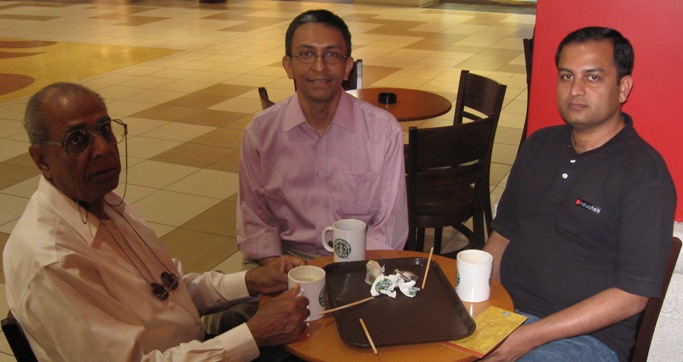
l-to-r-rashid-nalaka-sohail.jpg

Photo shows (L to R) Rashid Latif, Nalaka Gunawardene and Sohail Khan in Dubai, May 2006

As Sohail Khan, Director Operations of Ujala TV, recalled recently: “I still cherish the excitement when I was at Samacom (the Uplink Earth Station at Dubai) at around 2 am Dubai Time to press the button to air Ujala for the very first time at 00:00 GMT on 2 July 2007 (4 am Dubai Time) to start the Test Transmission.”

They had worked long and hard to get to that point. A few weeks earlier, in mid May 2006, I stopped over in Dubai specifically to meet Rashid and his team who were busy preparing to launch. At that time, they were working out of their office for 16 – 18 hours a day, every day, and sleeping a few hours at the office itself.

This was no multi-million dollar start up channel. The entire operation was being financed by Rashid Latif from personal funds. Although the channel’s aims were entirely in the public interest, he declined to seek funding from development donors or philanthropic foundations.

A Pakistan-born Canadian citizen, Rashid worked in the Pakistan government as a senior broadcast manager before heading west to work in the corporate sector. He started Ujala TV after formal retirement.

“I started working on ‘Ujala’ project (at the age of 75) when most of my contemporaries had either played their innings or were about to pack up and leave for the pavilion,” Rashid said in a recent letter.

Until this letter, I had no idea that Rashid was 75. He has the energy and drive of someone in his late 50s or early 60s!

Sohail looks back on the first year: “During this first year, we came across many difficulties, including, changing laws in India and Pakistan for Landing Rights with huge financial requirements, and increase in running costs due to change in different rentals here in Dubai. These problems, however, do not have any effect on our determination, and we are still trying to eliminate the darkness from our part of the world, and to spread Ujala.

nalaka-with-rashid-latif.jpg

The new channel still struggles to establish its brand identity and distribution networks — it’s not easy to compete with big corporations with their deep pockets.

But a modest start has been made. Now we need to sustain the momentum.

Meanwhile, Rashid is looking for a dynamic South Asian national to take over from him, so that he can fully retire. Now that’s going to be a tall order.

Declaration of interests:
1. I am on the honorary Board of Governors of People’s Education Network along with over a dozen academics, journalists and film-makers who share Rashid’s ideal for a South Asian public interest TV channel.
2. TVE Asia Pacific has supplied many development films to Ujala TV over the past few months.

Read Aman Malik’s article in Himal Southasian on Channel Southasia

Radio Sagarmatha: Kathmandu’s Beacon of hope on 102.4 MHz turns 10

Today, 23 May 2007 is a very special day for broadcasting in South Asia.

Radio Sagarmatha, the first independent community broadcasting station in South Asia, completes 10 years on the air today. It’s certainly a moment to reflect and rejoice for all of us concerned with broadcasting and the public interest in Asia.

Image courtesy Radio Sagarmatha

Here’s how the station introduces itself on its website:
Broadcasting daily from the center of the Kathmandu Valley on FM 102.4 MHz from 5 am to 11 pm, the pioneering radio station has earned a name as a free, independent and highly credible radio station in keeping with its objectives of producing a cadre of professional journalists, addressing the information needs of audiences, stimulating awareness and participation in public issues, and facilitating democratization and pluralism.

The Sagarmatha story is of particular interest to me personally.

Firstly, many involved in founding and running this station are good Nepali friends whose resolve and professionalism I salute on this 10th birthday.

Secondly, this radio station exposed to the whole world a persistent myth that was fabricated and distributed globally by Unesco and its local cronies: that community radio has been thriving in Sri Lanka from the early 1980s. I’ve lived all my life in Sri Lanka, and I’ve spent the past 20 years working in the media, but I have yet to find a single community radio station there — simply because no government has allowed any to be set up! I’ve been writing about this for years, but I’m a lone voice against Unesco’s well-funded ‘myth factory’ working overtime! Read my Panos Feature: Radio suffers as Colombo bosses callthe shots (October 2003).

But enough of that old hat. Today is Sagarmatha’s Day! Happy birthday to the courageous public radio station and everyone involved, past and present.

Recently, supporting the radio station’s nomination for an international media award (to be announced soon), I wrote a brief account about Sagarmatha. It has not been published until now, so here it is, with minor edits:

Kathmandu’s Silent Revolution

Almost a decade ago, a silent revolution started in the Nepali capital of Kathmandu. One day in May 1997, a senior official of the Ministry of Communications handed over a piece of paper to Raghu Mainali, representing a group of Nepali journalists and civil society organisations. It was the broadcast license permitting the first-ever citizen-owned, non-commercial, public interest radio broadcasting station anywhere in South Asia. Soon afterwards, Radio Sagarmatha (RS) was on the air, using the FM frequency 102.4 MHz.

The airwaves will never be the same again in the world’s most populous sub-region, where governments had a strict monopoly over broadcasting for decades.

The broadcast license did not come easily: it was under consideration for over four years, and entailed considerable lobbying by Nepali journalists and civil society groups. At the forefront in this quest was the Nepal Forum of Environmental Journalists (NEFEJ), a non-governmental organisation and a collective of journalists strongly committed to sustainable development, human rights and media freedom.

The senior and highly respected Nepali journalist Bharat Koirala provided advice and leadership for setting up RS, which was cited when he was awarded the Ramon Magsaysay Award — ‘Asia’s Nobel Prize’ — in 2002.

Read a brief history of Radio Sagarmatha on its website

As a long-standing partner of NEFEJ, we have had the opportunity to observe the evolution of RS from humble beginnings to what it is today. Remarkably, NEFEJ colleagues had laid the groundwork for the radio station in anticipation of the license: the hardware, manpower and institutional framework were ready to go on the air soon after official sanction. Beginning with an initial two hours of broadcasts, RS gradually increased its transmissions, providing a mix of music, news and current affairs, sports and cultural entertainment to the Kathmandu city and valley — home to nearly 2 million people. While broadcasting primarily in Nepali, it also carries programming in minority languages and English. In recent years, RS has also rebroadcast selected programmes from BBC World Service Nepali transmissions.

Image courtesy BBC Online Image courtesy Radio Sagarmatha

RS blazed a new trail in broadcasting in Nepal, and in its wake a large number of commercial FM stations and other community broadcasting stations have been set up. The Kathmandu valley’s hills are alive with a cacophony of voices, offering the people a greater choice than ever before. Across Nepal, RS has inspired a plethora of community-owned, community-based radio stations, who are enjoying different degrees of success. RS has also trained a significant number of radio professionals – from announcers and producers to technicians – some of who have moved on to employment with other channels. This commitment to capacity building continues.

In today’s multi-channel environment, RS retains its strong commitment to the public interest, good journalism and high production values. Among others, the following distinguishes this station:

• RS increases people’s participation in debating important day-to-day issues that directly affect their lives and jobs. Roaming producers talk to not just city dwellers but to people living in the most remote areas of Kathmandu.

• RS serves as a people’s forum to examine the merits and demerits of various development policies, efforts and approaches in Nepal, undertaken by government, development donors, civil society and others.

• RS has played its part to bridge Nepal’s digital divide. Suchana Prabidhi dot com (meaning ‘Information technology dot com’) is a popular programme that browses the Internet live on radio, connecting the unconnected radio listeners with information available online.

• In spite of being supported by a large number of development donors, including some UN agencies, RS has maintained its editorial independence, without allowing itself to become a propaganda outlet for any entity.

But it was in Nepal’s recent pro-democracy struggles that Radio Sagarmatha’s commitment to the public interest was truly tested and reaffirmed. The station joined human rights activists, progressive journalists and civil society groups in the mass movement for political reform, including the restoration of parliamentary democracy suspended by the King’s autocratic rule. The regime – seeking complete control over Nepalis’ access to information and independent opinions – imposed a blanket ban on private broadcasters carrying news. Soldiers were posted inside and around Radio Sagarmatha for eight days. Even after they withdrew, the spectre of absolute monarchy hung over all media for months.

Read BBC Online story: The Muzzling of Nepalese Radio (22 April 2005)

Read IPS story: Nepal plunged into the Dark Ages, cry dissidents

Soldier outside Radio Sagarmatha station - bad old days, now gone

That seige continued for much of 2005. On 27 November 2005, I was with some NEFEJ colleagues at a regional media workshop in Siem Reap, Cambodia, when the disturbing news reached us that RS had been forced off the air after police raided the station, seized its transmission equipment and arrested five journalists and technicians. The incident had happened while RS was relaying BBC Nepali Service live from London.

Fortunately, the judiciary intervened. Two days later, responding to a massive outcry from within and outside Nepal, the Supreme Court ordered the authorities to allow RS to continue its transmissions. The station started broadcasting news and current affairs again, and other stations soon found their courage.

The next few months leading to April 2006 were crucial for all associated with the pro-democracy movement. During this period, amidst various pressures, threats and obstacles, the managers and journalists at RS played a pivotal role in ensuring the free flow of information and plurality of views in Nepal. When broadcasting news was banned, RS resorted to innovative ways of getting information across while getting around the jack-boot of bureaucracy.

One method: singing the day’s news — as there was no restriction on broadcasting musical content!

The unwavering resolve of RS, other independent media and pro-democracy activists led to the restoration of parliamentary democracy in April 2006 and the subsequent marginalization of the monarchy. Now the pioneering radio station is working hard to ensure that Nepalis would make better use of their ‘second chance’ in democracy in less than two decades.

As Radio Sagarmatha now enters its second decade, there is much unfinished business: Nepal is one of the most impoverished countries in the world, held back by a decade of civil war. A free, independent and responsible media – epitomized by Radio Sagarmatha – will be essential for Nepal to break from the past and usher in a new era of peace, prosperity and equality.

Listen to Radio Sagarmatha Online

World Association of Community Broadcasters (AMARC) Asia Pacific website