Sri Lanka: What killer waves united, killer humans divided again…

Today is the third anniversary of the Indian Ocean tsunami, which left a trail of destruction in many countries in South and Southeast Asia.

Today we remember those who perished and salute those who survived and endured enormous hardships.

We thank everyone everywhere who donated to help, and curse those who plundered or squandered the outcome of that generosity.

As I wrote in my only published verse, When the Waves Came, written on 28 December 2004 – when the disaster’s full impact was dawning on the world:

When the waves came
Roaring and moving mightily,
Unleashing the power of
A million bombs exploding at once,
They didn’t care
And just didn’t discern
Who or what was in their way.

My basic premise was that the killer waves had been a brutal ‘equaliser’ of all men and women. It no longer mattered on which side of law, morality, economics or social class they stood. This was particularly apt for Sri Lanka, a land divided for a quarter of a century by an armed separatist struggle that has hardened fundamentalist positions at both Sinhalese and Tamil ends of our ethnic spectrum. Towards the end of the verse, I noted:

As we in the aftermath tiptoe
Through endless depressing scenes
Of death and utter devastation
Can we tell the difference
Between Sinhala and Tamil,
Or Muslim and Burgher,
Or soldier and rebel
Or policeman and prisoner
Or rich and poor?

For a few days after the tsunami, there was a flicker of hope that the lashing from the seas might finally convince everyone of the complete futility of war. Political cartoonists in Sri Lankan newspapers were among the first to make this point. One cartoon, appearing two days after the disaster, showed a government soldier and Tiger rebel swimming together in the currents, struggling to save their lives. (Indeed, there were some reports of them helping each other in the hour of need.)

The cartoonists and other media commentators asked a common question: what happened to the land, and the dividing border that both sides had fought so hard and long for?

Alas, what Nature proposed we humans (Sri Lankans) disposed. While the tsunami helped usher in a negotiated settlement to the long-drawn armed struggle in Aceh, Indonesia, it only created a temporary lull in the Sri Lankan conflict. As soon as both sides recovered from Nature’s blow, they were back at each others’ throats again. (This contrast has been studied by various groups – see, for example, the summary of a Worldwatch Institute study Beyond Disasters: Creating Opportunities for Peace).

Looking back three years later, all I can say is that the land killer waves temporarily and forcibly united, killer human beings have managed to divide again for petty political, communal and personal gains.
theeban-survived-the-tsunami-but-not-sri-lankas-conflict.jpg

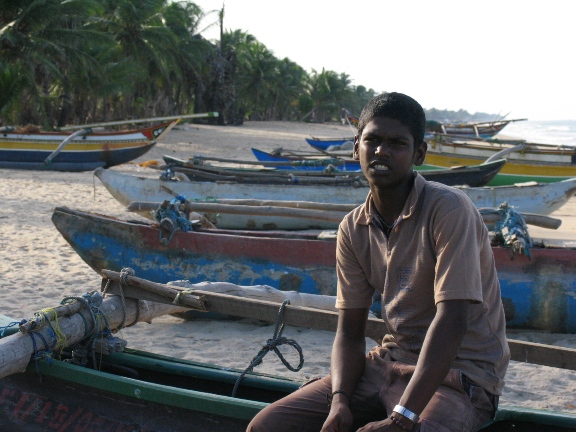
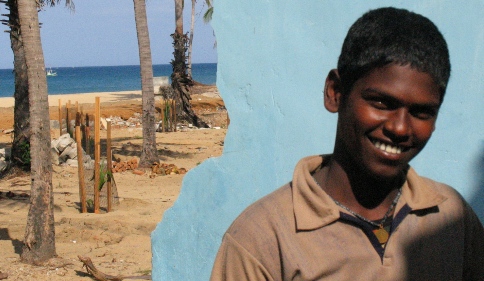
This boy, Thillainayagam Theeban, epitomizes that bigger tragedy. He survived the tsunami — but not the escalation of Sri Lanka’s ethnically driven civil war, which consumed his life in March 2007.

Theeban was one of eight surviving children – from India, Indonesia, Sri Lanka and Thailand – whose remaining families we tracked and filmed for a year in Children of Tsunami media project, a citizens’ media response to the Indian Ocean Tsunami.

Theeban was murdered by unidentified gunmen who stormed into his ‘temporary’ tsunami shelter on 3 March 2007. The death was linked to political violence that has engulfed Sri Lanka since 2006.
theeban.jpg

When the shocking news reached us three days later, our Sri Lankan camera team at Video Image and we at TVE Asia Pacific just couldn’t believe it. We were all in tears, and some of us were also angry. Theeban, who survived the killer waves 26 months earlier (but lost his mom and kid brother in the disaster) suffered many indignities in displacement. And now, he is gone.

We still don’t know who killed Theeban. He was abducted by an armed group sometime in 2006, from whom he escaped in early 2007. It is believed that Theeban was killed as a punishment for running away — and as a warning to all others.

He was 16 years at the time of his death. It is unlikely that his killers would ever face justice.

As I wrote in my personal tribute to Theeban in March 2007, published by UCLA’s Asia Media and MediaHelpingMedia, UK: “The disaster’s Sri Lankan death toll (close to 40,000 dead or missing) shocked the world when it happened within a few hours or days. Yet, at least twice as many people -– most of them unarmed and uninvolved civilians — have been killed in over a quarter century of fighting. That doesn’t always grab headlines.

“Thillainayagam Theeban has become another statistic in a ‘low-intensity conflict’ (as some researchers call it). And while this war lasts, it will continue to consume thousands of other young lives — a grim roll call of Sri Lanka’s Lost Generation.”

The third anniversary of the tsunami is a reminder – if any were needed – that man’s inhumanity to man is often worse than Nature’s fury.

March 2007 blog post: Remembering Theeban

April 2007 blog post: More memories of Theeban

Children of Tsunami: Documenting Asia’s Longest Year

Thillainayagam Theeban (1990 – 2007)

Protect journalists who fight for social and environmental justice!

In June 2007, I wrote about the late Joey R B Lozano, a courageous Filipino journalist and activist who fought for human rights and environmental justice at tremendous risk to his life.

For three decades, Joey survived dangerous missions to defend human rights using his video camera in the Philippines, a country known for one of the highest numbers of journalists killed in the line of duty. Joey went into hiding numerous times, and he dodged two assassination attempts.

Last week, a leading Filipino academic and social activist called for greater protection for local level journalists who cover social and environmental justice issues risking their life and limbs.

“Things are pretty savage at the grassroots level in some of our countries. Journalists who investigate and uncover the truth take enormous personal risks – the vested interests hire killers to eliminate such journalists,” said Professor Walden Bello, executive director of the Focus on the Global South (photo, below).

He was speaking at the Greenaccord Media Forum on 10 November 2007 in Frascati, Rome, where several dozen journalists covering environmental issues had gathered for a four-day meeting.

He delivered an insightful survey of social movements across Asia on environmental and public health issues
, where he questioned the role of elites in the global South in standing up for what is right and fair for all people.

During question time, I asked him how he saw the media playing a role in social movements that he’d just described. It varied from country to country, he said, and gave several examples.

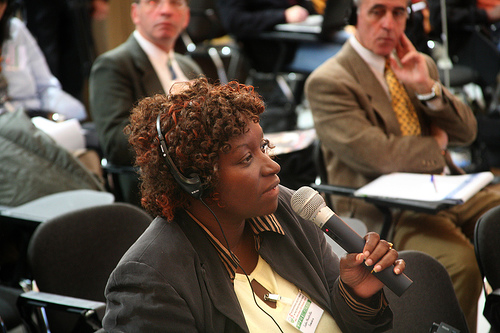
zadie-neufville-from-jamaica-makes-a-point.jpg

In China, most environmental exposes in recent years have been made by ‘very brave journalists’. Their investigations have compelled the local and central authorities to address the massive incidents of pollution and environmental degradation resulting from China’s economic march forward.

In South Asia, the record is uneven. Indian publications like The Hindu newspaper and Frontline magazine are at the forefront in reporting and analysing ‘almost exhaustively’ on environmental struggles in the world’s largest democracy.

In contrast, Singapore and Malaysia have no critical mass media to turn the spotlight on excesses or lapses, he said. In these countries, journalists as well as activists have turned to the web to express themselves — but even they are under pressure from their governments.

In Thailand, the two English language newspapers The Nation and Bangkok Post have both have a long tradition of covering environmental issues and supporting mass movements. A number of Thai language newspapers also have sustained coverage.

In his native Philippines, Prof Bello singled out the Philippine Daily Enquirer for persisting with environmental coverage and exposing environment related scandals. But that comes with its own risks.

“At the local levels, journalists who take up these issues face many threats, including the very real risk of extra-judicial killings. The Philippines is one of the most dangerous countries in the world today for independent journalists and human rights activists,” he added.

Journalists living in the provinces and reporting from the grassroots are more vulnerable than those based in the cities. This is precisely why local journalists need greater support and protection to continue their good work.

The local elites and officials would much rather silence such journalists. International solidarity for such journalists could make a big difference, Prof Bello said.

He had a suggestion for his hosts, Greenaccord, which annually organises what is now the world’s largest annual gathering of journalists and activists concerned about the environment: Invite and involve more local level journalists in the future forums.

That will give them a voice, and strengthen their resolve to continue the very important work they do.

Read April 2007 blog post: Can journalists save the planet?


Meeting photos courtesy Adrian Gilardoni’s Flickr account

Bretton Woods on fire: Hard times ahead for World Bank and IMF

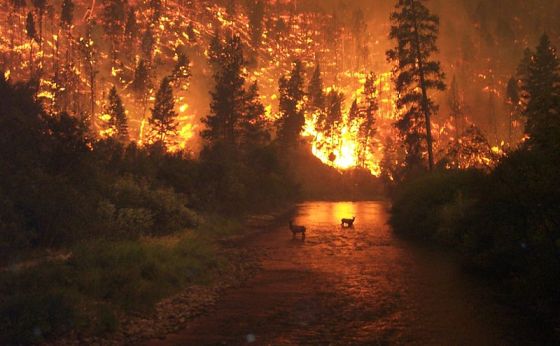
800px-deerfire_high_res.jpg

As the California forest fires raged over many days in October 2007, it dominated the US and some sections of the global media. Focus was on how the fires started and what factors contributed to their rapid spread.

Below the media’s radar, another kind of ‘fire’ has been building up over the past few months on the US East Coast. According to one leading intellectual-activist that I heard this week, this is a development whose reverberations will be felt right around the world, and for years to come.

The Bretton Woods are on fire. Actually, it’s the Bretton Woods institutions, namely the World Bank and International Monetary Fund (IMF).

Speaking at the Greenaccord Media Forum in Rome on 10 November 2007, Walden Bello, Filipino academic and executive director of the Focus on Global South, suggested that the World Bank and IMF are headed for turbulent times as countries in the global South (majority world) assert themselves economically.

Preparing to rebuild the international economic system as World War II was still raging, 730 delegates from all 44 Allied nations gathered at the Mount Washington Hotel in Bretton Woods, New Hampshire for the United Nations Monetary and Financial Conference. The delegates deliberated upon and signed the Bretton Woods Agreements during July 1944. That marked the birth of the World Bank and IMF.

The World Bank and IMF are essentially lenders of money to governments for development purposes. If these lending institutions run short of borrowers, they will be out of business.

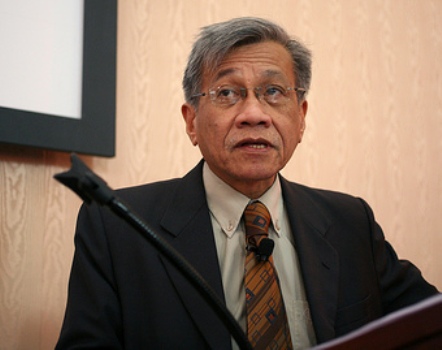
That hasn’t happened yet, but Bello (photo, below) identified several trends that must make the Bretton Woods duo worry about losing control.

professor-walden-bello.jpg

According to Bello, the resistance is led by countries of Latin America, a region where the twin lenders have long been controversial. In May 2007, Venezuela under President Hugo Chavez announced it would be leaving both the World Bank and IMF.

Venezuela has repaid its remaining debts to the World Bank five years ahead of schedule and paid off its debts to the IMF shortly after Mr Chavez first took office in 1999. Bello says the oil-rich country has sought to provide alternative forms of credit and financial support for countries in the region. One such project is the “Bank of the South”, which aims to financially help Latin American countries to pay off their IMF loans ahead of schedule.

In October 2007, Nobel prize-winning economist Joseph Stiglitz endorsed the Chávez plan to create a pan-regional bank for Latin America. Professor Stiglitz, a Washington insider and former World Bank chief economist, said the Bank of the South would benefit the region and give a welcome shakeup to western lending institutions.

Read March 2006 commentary by Mark Engler in Common Dreams: Latin America Unchained: Will the U.S. Lose its Influence Over Countries That Have Paid Off Their IMF Loans?

These trends, coupled with the rise of a new set of Southern countries willing and able to provide loans or grant aid to fellow countries of the South, are slowly but steadily eroding the domination and power the Bretton Woods twins have exercised for over half a century, Bello said.

Some of these alternative lenders are giving money with fewer conditions and restrictions. These include China, Saudi Arabia and Venezuela. This is what the editor of the influential US journal Foreign Policy called ‘rogue aid’ in an article he wrote in the journal’s March/April 2007 issue.

As the global South asserts itself and begins to exercise the power of their recent economic growth – which, ironically, is partly thanks to past borrowing from the Bretton Woods twins, the coming years will be crucial for the future World Bank and IMF.

The fire in the Bretton Woods is only just smouldering. But watch that smoke…

* * * * *

Walden Bello won the Right Livelihood Award (the Alternative Nobel) in 2003, for his decades of advocacy, activism and research. As the award foundation noted: “Walden Bello is one of the leading critics of the current model of economic globalisation, combining the roles of intellectual and activist. As a human rights and peace campaigner, academic, environmentalist and journalist, and through a combination of courage as a dissident, with an extraordinary breadth of published output and personal charisma, he has made a major contribution to the international case against corporate-driven globalisation.”

While campaigning on human rights he saw how the World Bank and IMF loans and grants were supporting the Marcos regime in power. To expose their role, he took the risk of breaking into the World Bank headquarters in Washington, and brought out 3,000 pages of confidential documents. These provided the material for his book Development Debacle (1982), which became an underground bestseller in the Philippines and contributed to expanding the citizen’s movement that eventually deposed Marcos in 1986.

Read full profile on Walden Bello on Right Livelihood Award website


Meeting photos courtesy Adrian Gilardoni’s Flickr account

New media anarchy is good for you!

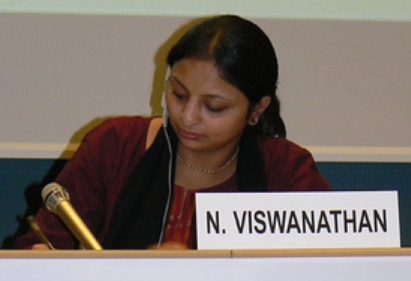
neha-viswanathan.jpg

“You people are too well mannered! I’ve never been to a conference where people are so properly dressed and so polite to each other!”

With these words, Neha Viswanathan made sure she had everyone’s attention. But it was not just a gimmick — she was contrasting the relatively more orderly, organised world of mainstream media (MSM) with the decidedly more anarchic world of new media — including blogs, wikis, YouTube and Second Life.

Neha, South Asia Editor of Global Voices, was speaking on a panel on ‘new media’ during the Global Symposium+5 on ‘Information for Humanitarian Action’ in Geneva this week (22 – 26 Oct 2007).

The panel topic itself showed the rapid change taking place in the humanitarian sector. As the panel premise said: “Within minutes of a disaster or conflict, the first images are seen on YouTube rather than CNN, and probably to a larger audience. YouTube, Flickr and blogging are bringing wars, disasters and their humanitarian consequences to the attention of the public, government and aid agencies more efficiently than ever. It’s now possible to keep watch on a Darfur village through satellite imagery, or take a virtual tour of a refugee camp.”

The panel was to discuss whether citizen journalism and new collaborative/ networking technologies are improving humanitarian response, and review how the humanitarian community is faring in this new environment.

My own views on this are found in another blog post: New media tsunami hits humanitarian sector – rescue operations now on!

Neha’s take was slightly different. She started reminding everyone that the new media activists were unruly and not always polite. The blogosphere is very much a contested and contentious space where arguments rage on. Not everything is moderate, balanced or ‘evidence-based’ (to use a new favourite phrase of the humanitarian community).

But in times of crisis or emergency – whether disasters or war – new media activists are increasingly the first responders. The anarchic nature actually provides them with an advantage: they are distributed, self-organising and motivated. There is no central newsroom or coordination point telling them what to do. In typical Nike style, they just do it.

As an example, she described World Wide Help, whose introduction reads: “Using the web to point help in the direction where it’s most needed”.

This blog was started by several founders and members of the SEA EAT (South East Asian Earthquake And Tsunami) blog, wiki and database, all of which gained worldwide attention at the time of the Indian Ocean earthquake and tsunami on 26 December 2004. The group, now calling themselves The World Wide Help Group, has since remobilised to aid in other relief efforts.

Read the whole story of the SEA EAT Blog: A Candle in My Window by Peter Griffin, one of its co-founders

As Sir Arthur C Clarke has also noted, the 2004 tsunami marked a turning point in how citizen journalists and other new media activists respond to emergencies. Since then, the power of new media has been unleashed on many public interest issues and humanitarian causes. As an example, Neha cited the online campaign against street sexual harassment in India.

In Neha’s view, new media can collate authentic testimonials of those directly affected by disasters or other crises, and keep the public attention (and thereby, political interest) on emergencies beyond the first few days.

Her advice to humanitarian aid agencies: keep looking at the new media, especially blogs, to find out what people at ground zero are saying about relief and recovery work.

“Bloggers are not objective – they talk openly, and express themselves freely,” she told the largely prim and proper Geneva audience, where some participants had referred to the meeting as ‘this august gathering’!

Finally, in situations where MSM (the formerly big media!) are shut down, restrained or intimidated into not carrying out their watchdog role, it’s the new media that fills the voice. Neha described the pro-democracy struggles in Nepal in 2005 – 2006 as an example where the people power struggles continued to be reported and commented on after the autocratic king clamped down on all print and broadcast media.

Read my August 2007 blog post: The Road from Citizen Kane to Citizen Journalist

A million video cameras to change the world!

Something remarkable is happening with online public video sharing platforms: progressive non-profit groups worldwide are seizing their power to do good.

YouTube started off more like the people’s version of funniest home videos. But it’s no longer confined to that category. Activist and social groups are increasingly uploading their videos. As broadband Internet rolls out around the world, more people are actually able to watch these videos online.

In response, YouTube, owned by search giant Google, is creating a special section for nonprofits to air their videos and link them to its Google Checkout online payment system to receive funds directly.

“Nonprofits understand that online video isn’t just a way to broadcast public service announcements on a shrunken TV set,” Reuters quoted Steve Grove, head of news and politics at YouTube, as saying. “It’s a way to get people to do more than just absorb your message but to engage with their user generated content as well.”

Pure Digital, maker of the Flip video camera, has said it plans to give away a million video cameras to non-profit organizations around the world to capture images and moments in places traditional media outlets might not be able to reach.

“Video has power and media has power but the challenge is that the media is limited to telling stories that are controlled by a very small number of people,” Jonathan Kaplan, chief executive of Pure Digital, told Reuters. “This program along with YouTube and other sites will expand the media universe for learning what’s really going on in the world,” he said.

Visit FlipVideo website on support for non-profit groups

Reuters quotes the recent example of the impact of clips of the Myanmar army’s confrontations with local protesters which were posted on YouTube and other Web sites. Some of the clips made their way to mainstream news media, which were blocked out of entering or covering events in Burma.

See an example of a YouTube video on what’s happening in Burma:

Our friends at Witness, an activist group founded by the musician Peter Gabriel in 1992, has long specialised in raising awareness of such previously unseen events through video. Sam Gregory, programme director at Witness, says online distribution has made it easier to put videos in front of the right people such as decision makers and others with a personal connection to the cause.

“It’s not necessarily about the size of the audience it’s about placing targeted video and turning ‘watching’ into action,” said Gregory.

Read the Reuters story on 19 Oct 2007: Nonprofits turn to YouTube to raise awareness, funds

My blog post on 1 Oct 2007: Shoot on sight: Rights Alert on Burma

My blog post on 30 Sep 2007: Kenji Nagai: Filming to the last moment

TVE Asia Pacific News story March 2007: TVEAP films now on YouTube

What’s happening with online video has a parallel in how activist groups seized the potential of the hand-held video camera. The handicam was invented in 1985 by Sony. Intended originally for entertainment and domestic documentation purposes only (ranging from family vacations and weddings), it did not take long to find new uses for this revolutionary technology.

The Handicam Revolution in media began when a video camera captured police beating Rodney King on a Los Angeles highway. The shocking amateur footage was broadcast on TV around the world. The acquittal of the police officers after their first trial sparked outrage, and riots erupted in a 20 block section of Los Angeles, leaving 54 people dead and over 2,000 injured.

Ever since Rodney King, broadcasters have been using amateur video to provide images of events that their own camera people have not captured. And human rights activists have started relying on the power of video images to capture the attention of the broadcasters to expose acts of human rights abuse and violation.

Stop that Traffick: ‘The Girl Next Door’ becomes ‘Trade’ the Movie

Image from Trade the Movie Image from Trade the Movie

When 13-year-old Adriana (played by Paulina Gaitan) is kidnapped by sex traffickers in Mexico City, her 17-year-old brother, Jorge (Cesar Ramos), sets off on a desperate mission to save her. Trapped by an underground network of international thugs who earn millions exploiting their human cargo, Adriana’s only friend throughout her ordeal is Veronica (Alicja Bachleda), a young Polish woman captured by the same criminal gang. As Jorge dodges overwhelming obstacles to track the girl’s abductors, he meets Ray (Kevin Kline), a Texas cop whose own family loss leads him to become an ally.

From the barrios of Mexico City and the treacherous Rio Grande border, to a secret internet sex slave auction and a tense confrontation at a stash house in suburban New Jersey, Ray and Jorge forge a close bond as they frantically pursue Adriana’s kidnappers before she is sold and disappears into a brutal underworld from which few victims ever return.

This is the synopsis of Trade, a feature film that opens across the United States on 28 September 2007.

Inspired by Peter Landesman’s chilling NY Times Magazine story on the U.S. sex trade, “The Girls Next Door,” (published in January 2004), TRADE is a thrilling story of courage and a devastating expose of one of the world’s most heinous crimes. The American debut of Marco Kreuzpaintner, one of Germany’s leading young directors, TRADE is produced by Roland Emmerich and Rosilyn Heller from a screenplay by Academy Award(R) nominee Jose Rivera (The Motorcycle Diaries).

Watch the trailer for Trade the movie

Image from Trade the Movie

Explaining the social context to this dramatised story, the movie’s website says:
“The practice of slavery in the US is something most people think ended with the 13th Amendment in 1865, but in recent years it has returned in an even more virulent form. Fueled by the collapse of the Soviet Union and other eastern European countries, new technologies like the internet, and sieve-like borders, the traffic in human beings has become an epidemic of colossal dimensions. The State Department estimates that as many as 800,000 people are trafficked over international frontiers each year, largely for sexual exploitation. Eighty percent are female and over fifty percent are minors. Many people in this country push this atrocity out of their minds, believing that it only occurs in faraway countries like Thailand, Cambodia, the Ukraine and Bosnia. The truth is that the United States has become a large-scale importer of sex slaves. Free the Slaves, America’s largest anti-slavery organization estimates that at least 10,000 people a year are smuggled or duped into this country by sex traffickers.”

Image courtesy Trade the Movie

The film’s makers, Roadside Attractions, says it will donate 5 per cent of the opening week box-office gross divided among four organisations participating in the release of the film; United Nations Office on Drugs and Crime (UNODC), Equality Now, International Justice Mission (IJM), and David Batstone’s Not For Sale Campaign.

On 19 September 2007, they held a benefit premiere at the United Nations headquarters in New York that included supper in the UN Delegates dining room. This marked the first film premiere event ever to take place at the United Nations, with the crusty UN officials mingling with film stars and artistes.

Read about the film-makers

Get involved in anti-traffick activism

Image courtesy Trade the movie

UN-ODC press release about Trade the movie

All images courtesy Trade the movie website

MTV Exit: Entertainment TV takes on human trafficking

mtv-exit.jpg

Television gets blamed for lots of things that go wrong in our world. This isn’t surprising, given it’s the world’s most powerful medium and the key role it plays in our cultural, social and political lives.

A sociological study some years ago said broadcast TV was partly responsible for the movement of millions of people from villages to cities in search of jobs, higher incomes and better living standards. The glitzy lifestyles dramatised on TV was creating illusions in the minds of rural women and men, especially the youth, it said.

Of course, such migrants soon discover a very different reality in the cities. But few want to go back to where they came from. As they hang on in the cities, some fall prey to human traffickers, always on the prowl for vulnerable people to trade in.

The United Nations estimates that the total market value of human trafficking is 32 billion dollars — one of the most lucrative illicit trades in the world. The International Labour Organisation (ILO) estimates that worldwide, about 2.5 million people are victims of trafficking.

If TV indirectly contributed to this human perversion, it can also help society stand up and fight against it. As Music Television (MTV) is now doing.

MTV, the most popular music channel in the Asia Pacific region, will be playing a different tune in the weeks to come. For half an hour at least, beginning 18 September 2007 for MTV Thailand, live and hip music will give way to the harrowing accounts of three victims of human trafficking. This is part of the MTV Exit campaign.

Trafficking of people in the region will be given a human face through the personal accounts of Anna, Eka and Min Aung. Anna was forced into prostitution in the Philippines, while Eka is an Indonesian who was an abused domestic worker in Singapore. Min Aung from Burma recounts his sad experiences working and being practically imprisoned in a factory in Thailand for two years.

Lynette Lee Corporal writing for Inter Press Service (IPS) quotes MTV Thailand campaign director Simon Goff as saying: “We worked with organisations and talked with experts to see what forms of trafficking we would focus on, the most prevalent forms that affect our audiences. We selected regions that would best represent the issue. Then, finally we brought in a production team, led by a Thai producer and a director from the UK.”

More extracts from her article:

Goff said that it took them six weeks of pre-production work, including research and sourcing, another six weeks to shoot the documentary, and six weeks more of post-production work. It took about four and a half months of “solid production,” he added.

Beyond the emotional and unsettling accounts of the trafficking survivors and the disturbing re-enactments of rape, beatings and abuse, the documentary also had interviews with a trafficker and a ‘client’ who openly admitted to the crime. In an interview with ‘The Chairman’, a Filipino recruiter who forces young girls into prostitution, revealed the horrific experiences young girls go through, and this was reinforced by what ‘Ama’ , a Chinese client who admitted to paying for sex with trafficked girls, narrated.

The challenge now, said Goff, is to break the people’s apathy and denial about human trafficking. “Ultimately, time will tell. We have launched the campaign and it’s already out there in the media. We hope that the show will make people realise that they are both a part of and a solution to the problem,” he said.

In Thailand’s case, he added that it is also important for Thais to realise that it is not just about Thai victims being trafficked abroad, but it’s also “necessary to look that we have other nationalities, such as Min Aung, who has been trafficked here”.

Read the full article on The Asian Eye website of IPS Asia Pacific

Watch or download the celebrity-presented MTV EXIT documentaries for Asia Pacific and South Asia

United Nations Office on Drugs and Crime website on human trafficking

More information on trafficking and how to fight it

Anita Roddick: “There was nothing like this dame”

Image courtesy Media is a Plural website

Citizen journalist, film-maker and media critic Rory O’Connor has written a moving tribute to extraordinary activist and entrepreneur Anita Roddick, whose premature death on 12 September 2007 has left her many admirers in shock and grief.

He recalls how colleague and fellow media-activist Danny Schechter and he first met Anita at a gathering of progressive business executives called the Social Ventures Network. Their shared background, vision and ideals soon turned them into friends and co-conspirators.

Rory recalls how their company Global Vision embarked on a new human rights-oriented TV newsmagazine in the mid 1990s: “Anita and her husband Gordon were key players in that series – ‘Rights & Wrongs: Human Rights Television’ – coming to fruition. They contributed their energy and enthusiasm, their ideas and information, their contacts and creativity (and oh yes, their capital!) and without all of it, the series would never have been born. But with their help, the award winning newsmagazine was broadcast weekly for four years, on more than 150 public television stations in the USA, as well as on channels and networks in sixty-one other countries. It remains the only regularly scheduled television program in history devoted exclusively to coverage of human rights.

Rory echoes my own point about how Anita was a communicator par excellence, driven more by intuition and inspiration than any textbookish theories:
“Although Anita wasn’t a media activist per se, she intuitively understood how media could be used for activism, and she did so shamelessly and in a cheerfully relentless manner. Whether she was supporting social and environmental causes through window displays, convincing American Express to pay her to appear in an ad promoting the Body Shop and its causes, working with Globalvision on its commercial and non-profit programming (or later writing books, blogging, running an activist website, contributing to the success of Mother Jones magazine, or working closely with — and donating millions to — media-savvy organizations such as Amnesty International,) Anita intrinsically ‘got’ the importance of characters and stories to selling anything—from cold cream to ideas and values – and she employed them cleverly and constantly in support of her principles.”

Watch Anita’s one minute on climate change for Friends of the Earth:

Watch QuantumShift.tv’s thoughtful tribute to Anita Roddick, better presented than the fleeting coverage of mainstream news channels:

Read the full tribute on Media is a Plural website.

Read my own tribute to Anita Roddick: We shall always remember you!

Read Danny Schechter on News Dissector website