Warning: Is climate change the new HIV of our times?

From www.sprattiart.com
From http://www.sprattiart.com


Is climate change the new HIV of our times?

I asked this question when addressing a group of television journalists and film-makers from the Asia Pacific last week. I was making introductory remarks to an Asia Pacific Workshop and Open Film Screening on ‘Changing Climate and Moving Pictures‘ held on 3 – 4 October 2008 in Tokyo, Japan. It was organised by TVE Japan in collaboration with TVE Asia Pacific, and supported by the Japan Fund for Global Environment.

I acknowledged that climate change was not just another environmental issue or even the latest planetary scare. “This time we’re in deep trouble – and still finding out how deep,” I said.

Climate change has brought into sharp focus the crisis in:
• how we grow economically;
• how we share natural resources and energy; and
• how we relate to each other in different parts of the world.

In that sense, I noted, climate change is acting like a prism — helping to split our worldly experience into individual issues, concerns and problems that combine to create it. Just like an ordinary prism splits sunlight into the seven colours (of the rainbow) that it’s made of.

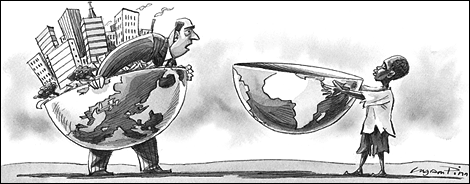
“Climate shows up the enormous development disparities within our individual societies and also between them. When this happens, we realise that climate is not just a scientific or environmental problem, but one that also has social, political, security, ethical and human rights dimensions,” I added.

Climate change in an uneven world

I then outlined some parallels between the current climate crisis and the HIV/AIDS pandemic that emerged some 25 years ago.

Consider these similarities:
• When HIV was first detected, it was considered a medical issue affecting specific sections of society.
• It took years for the wider societal, development and human rights aspects of HIV to be understood and then accepted.
• Some countries and cultures wasted precious years in HIV denial; a few are still in this mode.
• It took overwhelming impact evidence and mounting pressure from affected persons for states and international community to respond.
• Then…everybody jumped the bandwagon and HIV became a fundable, profitable enterprise.

I have been commenting in this blog about this ugly side of HIV/AIDS in my own country Sri Lanka, where some NGOs and charities have turned HIV activism into a self-serving, lucrative industry. There are fierce ‘turf wars’ to claim persons living with HIV as their institutional ‘property’. Some have appropriated HIV as their own virus, and would rather not allow others to work in this area.

And it’s not just NGOs who are riding the HIV gravy train. The United Nations programme for AIDS, or UNAIDS, created by the UN system in response to the global crisis, has evolved into a behemoth whose efficacy and relevance are now being widely questioned.

UNAIDS “is obsolete and an obstacle to improving healthcare in developing countries” claims Roger England, an international health expert. Writing in the British Medical Journal in May 2008, England pointed out that HIV causes 3.7 per cent of mortality and kills fewer people than pneumonia or diabetes, yet it received 25 per cent of all international healthcare aid and a big chunk of domestic expenditure. This has resulted in wasting vast sums of funding on esoteric disciplines instead of beefing up public health capacity. Despite this criticism, UNAIDS is calling for huge increases in its funding — from its current US$9 billion to US$54 billion by 2015.

All this makes me wonder: is climate the new HIV of our times? This is the question I raised in Tokyo.

I added: “If so, I sincerely hope it does not evolve in the same manner that HIV crisis did. There are worrying signs that the drive towards a low carbon economy is being exploited by various groups – including some in civil society – for self gain.”

Certain development agencies and ‘think tanks’ are clearly exploiting climate change to make money. Suddenly, everybody is ‘climate-proofing’ their activities — meaning they are talking about climate change no matter what they do, whether it is teacher training or micro-credit.

In the run up to the Bali climate conference in late 2007, I wrote a blog post titled ‘Beware of bad weather friends’ about a London-based NGO engaging in some media training on climate issues, but deriving its legitimacy from a dubious survey. This post apparently irked the party concerned a great deal.

In Tokyo, a workshop participant confirmed that this was already happening in his country.

“Every crisis today is being turned into a business opportunity – and not just by the corporate sector,” said Pradip Saha, associate director of the Centre for Science and Environment in India.

He added: “Consultancy companies and some NGOs have realised there is big money to be made in climate related areas like carbon offsets and the Clean Development Mechanism. They are already riding the climate bandwagon!”.

Read the full text of my introductory remarks to the Tokyo workshop.changing-climate-moving-images-nalaka-gunawardene-intro-3-oct-2008

Free us from our addiction to oil: New PSAs from Al Gore’s climate campaign

In July 2007, we had an interesting discussion on this blog on the shrinking durations of nature and environment films and TV programmes. The moving images community is divided on this, with some purists holding out that to pack complex, nuanced messages into a few minutes is akin to dumbing everything down. Noted film-makers like Neil Curry disagreed.

But there’s no argument of the sheer power of well produced public service announcements (PSAs) to move people with a specific, short message. Nothing can beat them for the economy of time and efficacy of delivery.

During August 2008, Al Gore’s ‘We’ campaign for climate change activism released two new PSAs, both appealing to Americans to change their energy habits, especially their addiction to oil. This follows and promotes the challenge Al Gore posed to America in July 2008 “to commit to producing 100 percent of our electricity from renewable energy and truly clean carbon-free sources within 10 years”.

Make the Switch, Repower America

Real change can happen real fast. We can strengthen our economy, lower fuel costs, free ourselves from our addiction to oil, and help solve the climate crisis. We can do this by switching to clean, free energy sources like the wind and sun — and to do it within 10 years. Meeting this ambitious goal would create millions of new jobs, lead to permanently lower energy costs for families and help America lead the fight against global warming. William H. Macy narrates in this ad which premiered on network TV in the US during the 2008 Beijing Olympics coverage.

To Our Leaders: Give Us 100% Clean Electricity in 10 Years

We must save our economy, lower fuel costs, free ourselves from our addiction to oil, and solve the climate crisis. To do this, we must demand that we Repower America with 100% clean electricity within 10 years.

The We Campaign is a project of The Alliance for Climate Protection — a nonprofit, nonpartisan effort founded by Nobel laureate former Vice President Al Gore. Its ultimate aim is to halt global warming

Calling Hydrocarbons Anonymous: Admitting my oil addiction…

Living with climate change
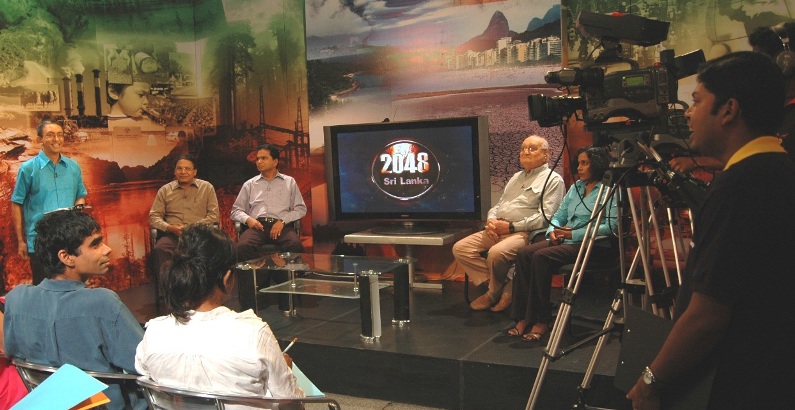
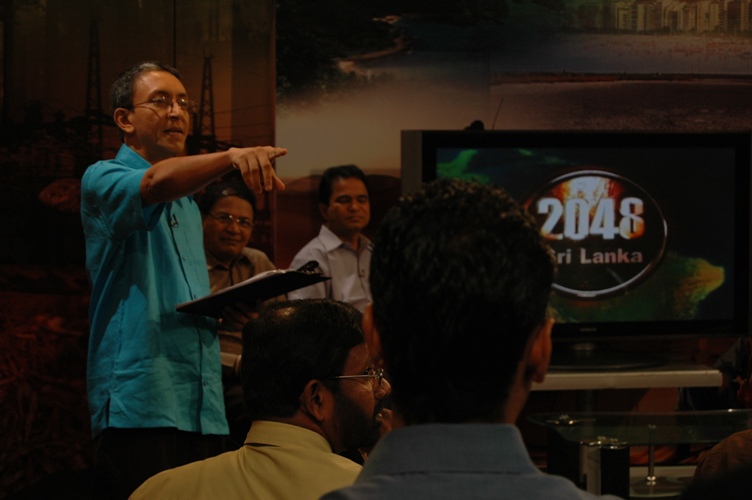
On the set of Sri Lanka 2048: Living with climate change

I have finally done it…and not a moment too soon!

There I was, moderating an hour-long TV debate on Saturday evening prime time television on Sri Lanka’s premier English language Channel One MTV. Our topic for this edition of Sri Lanka 2048 was living with climate change. After exploring its many facets, I was beginning to wind up.

But not before underlining the need for us to take personal responsibility for changing our lifestyles whose cumulative impact on the planet is significant.

The philosophical and political debates over climate change will continue for a long time, I said. Meanwhile, we have to live with climate change impacts that are already happening…and change how we use energy and resources so that we don’t make matters any worse.

This means we must consume less, share more, live simply and pursue smart solutions through green technologies. Of course, at the basis of all this is finding meaningful, practical ways of kicking our addiction to oil.

That’s when I put my hand up and admitted, on air, my own substance addiction: I am hooked on hydrocarbons, a.k.a. petroleum. I’m struggling to break free from it, but it’s not easy.

Of course, my individual addiction pales into insignificance when we look at how entire industries, sectors and countries are addicted to oil and stubbornly insist on continuing the status quo. But we must be the change we seek, so it’s never too late for me to work on my oil problem. When enough of us individuals do, countries and economies will follow.

But people with addictions often need expert guidance, as well as to keep the company of fellow addicts who are similarly trying to kick the habit. That’s why those having drinking problems find help in Alcoholics Anonymous.

We oil addicts could do with some organised help — environmental activist groups, please note. And Sir Arthur C Clarke has already suggested the perfect name for such a movement: Hydrocarbons Anonymous. Read his 2004 essay on Hydrocarbons Anonymous.

* * * * *

Race Against Time
Nalaka Gunawardene moderates Sri Lanka 2048: Race Against Time

Here’s what the promotional blurb for last weekend’s show said:

Sri Lanka 2048 looks at living with climate change: how challenges can become opportunities

Climate change is no longer a theory; it’s already happening. What awaits Sri Lanka – and how best can we adapt to live with extreme weather events, disrupted rainfall, sea level rise and other projected impacts? How can Sri Lanka play a meaningful role in mitigating further damage to the world’s climate?

These and related questions will be raised in this week’s Sri Lanka 2048, the series of TV debates exploring Sri Lanka’s prospects for a sustainable future in the Twenty First Century. The one-hour debate, in English, will be shown on Channel One MTV from 8 to 9 pm on Saturday, 26 July 2008.

Titled Race Against Time, this week’s debate brings together concerned Sri Lankans from academic, corporate, civil society and government backgrounds to discuss the many challenges of living with climate change. The debate looks at aspects such as promoting renewable energy to reduce our carbon emissions, and emerging opportunities for individuals, communities and businesses to adopt low carbon lifestyles and practices.

This week’s panel comprises: Dr. W. L. Sumathipala Director, National Ozone Unit, Ministry of Environment & Natural Resources; Dr. Suren Batagoda, CEO, Sri Lanka Carbon Fund; Dr Ray Wijewardene, Eminent engineer and specialist in renewable energies; and Darshani de Silva, Environmental Specialist, World Bank Office in Colombo. The debate is moderated by TVE Asia Pacific’s Director Nalaka Gunawardene.

The debate also seeks answers to questions such as: What niche can Sri Lanka occupy in the fast-growing global carbon market? How much money can we make from this market? What is the role of the recently established Sri Lanka Carbon Fund? Is the Clean Development Mechanism the right way forward?

The debate concludes with the recognition that climate Change is not just an environmental concern, but also has economic, social, political and security implications. While the philosophical and political debates over climate change will continue for a long time, everyone has to learn fast to live with it. This calls for consuming less, sharing more, living simply and pursuing smart solutions that reduce carbon emissions without compromising the quality of living.

Sri Lanka 2048 debates are co-produced by TVE Asia Pacific, an educational media foundation, and IUCN, the International Union for Conservation of Nature, in partnership with MTV Channel (Private) Limited. This editorially independent TV series is supported under the Raising Environmental Consciousness in Society (RECS) project, sponsored by the Government of the Netherlands.

Sri Lanka 2048
Sri Lanka 2048

Photos by Amal Samaraweera, TVE Asia Pacific

Al Gore’s challenge to America: kick the oil habit in a decade

Al Gore making Climate Challenge to America - courtesy New York Times

“There are times in the history of our nation when our very way of life depends upon dispelling illusions and awakening to the challenge of a present danger. In such moments, we are called upon to move quickly and boldly to shake off complacency, throw aside old habits and rise, clear-eyed and alert, to the necessity of big changes. Those who, for whatever reason, refuse to do their part must either be persuaded to join the effort or asked to step aside. This is such a moment. The survival of the United States of America as we know it is at risk. And even more – if more should be required – the future of human civilization is at stake.”

With these words, climate crusader Al Gore opened a powerful speech delivered in Washington DC on 17 July 2008, in which he issued what he called ‘A Generational Challenge to Repower America’ to take bold steps towards solving the climate crisis.

At one point he told fellow Americans: “We’re borrowing money from China to buy oil from the Persian Gulf to burn it in ways that destroy the planet. Every bit of that’s got to change.”

Having outlined the environmental, security and economic implications of America’s addiction to oil, Gore challenged his nation “to commit to producing 100 percent of our electricity from renewable energy and truly clean carbon-free sources within 10 years”.

I was immediately reminded of President Kennedy’s pledge to Congress on 25 May 1961 where he said:
“I believe that this nation should commit itself to achieving the goal, before this decade is out, of landing a man on the Moon and returning him back safely to the earth.”

In fact, later on in his speech Gore referred to this saying: “When President John F. Kennedy challenged our nation to land a man on the moon and bring him back safely in 10 years, many people doubted we could accomplish that goal. But 8 years and 2 months later, Neil Armstrong and Buzz Aldrin walked on the surface of the moon.”

Al Gore’s full speech, according to a video recording posted on YouTube, lasted 27 minutes — but the We Campaign has released the highlights of the speech running for 5 minutes:

Read the text of his full speech on the We Campaign website.

Read The New York Times coverage of Al Gore speech

The We Campaign is a project of The Alliance for Climate Protection — a nonprofit, nonpartisan effort founded by Nobel laureate and former Vice President Al Gore. Our ultimate aim is to halt global warming. Specifically we are educating people in the US and around the world that the climate crisis is both urgent and solvable.

Broadcasters and climate change: Turn off your lights, but not your minds!

Let there be darkness!

That could well be a message from your local radio this weekend. Radio channels across Asia would be asking their listeners to turn off their lights for an hour or two today, 21 June 2008.

The Asia Pacific Broadcasting Union (Abu), an alliance of (mostly government-owned) radio and television stations across Asia, has urged broadcasters to join a campaign to encourage listeners to “Turn off Your Lights” for one or two hours as a step to raise awareness of global warming.

According to Abu, the Tokyo Broadcasting System (TBS) made the suggestion at a meeting in Tehran in November 2007. The Japanese broadcaster hopes that the event will encourage the public “to not only to save energy but to give consideration to wider global warming issues.”

Global warming and resulting climate change are such major concerns that every action counts. So we hope the Abu-inspired campaign, although hardly original, will be successful.

It might have made more sense for the broadcast alliance to be part of the more widely observed Earth Hour — an annual international event created by The World Wide Fund for Nature (WWF), held on the last Saturday of March, that asks households and businesses to turn off their non-essential lights and electrical appliances for one hour to raise awareness towards the need to take action on climate change. It was pioneered by WWF Australia and the Sydney Morning Herald in 2007, and achieved worldwide participation in 2008.

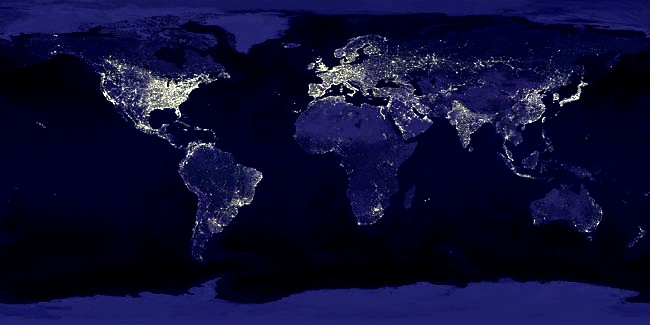
As this composite NASA image of the Earth at night shows, energy use is proportionate to the level of economic activity and social development. Asia accounts for a good deal of the world’s lights at night.

Earth at night - NASA composite image

But at the bigger picture level, broadcasters can and must do a great deal more than merely talk about the multi-faceted, rapidly-evolving issue. For a start, they need to take a closer look at their own industry, which is not known to be particularly efficient in its resource and energy use.

I’ve been writing and talking about the need for the TV broadcast and film-making industries to become more climate friendly (even if everybody can’t immediately become carbon-neutral). These industries are not particularly known for their energy or resource use efficiency.

At Asia Media Summit 2007 held in Kuala Lumpur, Malaysia, Abu’s secretary general himself chaired a session on climate change and the broadcsat media.

We heard passionate and articulate views from radio and television managers in Asia on how the airwaves can carry various messages that would sensitise governments, industry and individuals on the climate crisis — and how to live with its many impacts. But I was frustrated that the session was entirely on broadcasters carrying climate change related news and content.

All that’s necessary – but not sufficient. Surely, carrying relevant content is only one part of what broadcasters can do. When it was question time, I asked the more than 400 media managers in the audience: how can our own industries reorient core operations to become more climate friendly?

I noted that a good deal of carbon dioxide – the principal gas that warms up the planet – is emitted by the radio and TV production and broadcast processes, through the use of lights, cameras, transportation and transmitters, etc. Broadcast Television, in particular, is on a high energy mode with a fondness for dazzling lights, super-cooled studios and heavy production gear. The digital revolution has helped bring down size and weight, but it’s not yet a particularly light-weight business.

And energy is consumed not just at the production and transmission end, but when signals are received too. News from that front is not very encouraging: new plasma screens for High-definition Television (HDTV), the trendy new wave, gobble up more power at the viewing end too.

Have Asia Pacific companies engaged in the broadcast industry addressed these integral issues? How many of them calculate carbon dioxide emissions from their day-to-day operations and offset it by comparable investments in renewable energy or support for community-operated greening efforts?

I didn’t get clear answers to any of these questions from the dozens of movers and shakers in Asian broadcasting in the audience — which indicated that these concerns have not been given sufficient thought.

This was disappointing, but I can only hope it doesn’t stay that way for too long. Other players in the communication sector, such as telecom companies, have already started addressing industry-wide, smart contributions they can make in the pursuit of a more climate friendly society.

Lights, camera, action!

So here’s the challenge to radio and TV broadcasters across Asia: by all means, ask your audiences to turn unnecessary lights off every now and then, or even every day. But like charity, good climate conduct begins at home. It’s just not enough being a diligent distributor of climate messages or a mirror of contemporary society’s attempts to adopt climate-friendly lifestyles.

To confront climate change effectively and sincerely, broadcasters must turn those bright lights on to themselves — and adopt meaningful, lasting ways to contain and then reduce their own industry’s emissions.

That’s when they can switch from being part of the problem to part of the solution.

Message to the UN on World Environment Day: Kick your own CO2 habit!

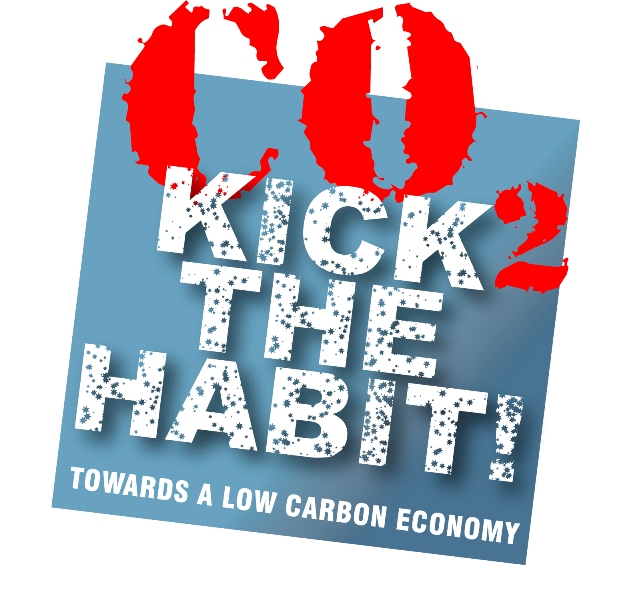
World Environment Day 2008 logo

The theme for this year’s World Environment Day (WED), being marked on 5 June 2008, is Kick the Habit! Towards a Low Carbon Economy.

Responding to worldwide concerns on climate change, the UN Environment Programme (UNEP) is asking countries, companies and communities to focus on greenhouse gas emissions and how to reduce them. UNEP says it plans to “highlight resources and initiatives that promote low carbon economies and life-styles, such as improved energy efficiency, alternative energy sources, forest conservation and eco-friendly consumption”.

UNEP has suggested 12 steps to help kick the CO2 habit. It also lists a series of examples of how groups or countries have reduced their carbon emissions. This emphasis on Carbon Dioxide is because it’s an important greenhouse gas that traps the Sun’s heat and warms up our planet.

All this is well and good — except that the United Nations does not practise what it preaches. UNEP or any other part of the UN system telling the world to kick the carbon habit is a bit like a heavily drunken person extolling the virtues of staying off liquor. It just doesn’t sound credible.

Let me explain. Having been a UN-watcher and critical cheer-leader of the UN system (though not always of individual agencies), I have personally seen how carbon thrift – or indeed, any kind of thrift – is not a strong point in that system.

Consider these well known facts.

The UN has long been known as a formidable ‘paper factory’ because of the millions of documents it cranks out every year. On an average, it produces over 700 million printed pages every year (2005 figures). The cost of printing documents in its New York and Geneva offices is over 250 million dollars annually.
IPS May 2005 story: World’s celebrated paper factory tries to save forests

And despite recent claims of trying to become carbon neutral, the UN system – including specialised agencies – convene thousands of international meetings every year. Only a few of them produce tangible outputs (some merely agree to meet again!) and even fewer are covered in the public media. But beneath media’s radar and public scrutiny, the UN officials and their buddies (mostly) in governments continue to huddle together in key world cities and some exotic locations.

A random example is Bali, Indonesia, which hosted a massive climate change conference in December 2007 that reportedly attracted over 12,000 participants from all over the world – most of who flew thousands of kilometres to get there. Yes, the meeting’s organisers claimed all their carbon emissions will be offset, and let us presume that they indeed kept their word (even if we question the measurable outcome of the mega-event for long-term climate change coping strategies).

But the mega talk shop in Bali (photo, below) did nothing to restore the UN’s already damaged credibility. How can the UN expect the ordinary people to adopt austere, low-carbon lifestyles when its own operations display such profligacy where resources and energy are concerned?

It would be worth investigating if the number and magnitude of numerous meetings convened by the UN system have shown any marked decrease since climate concerns rose to the top of the public agenda during the past couple of years.

Similarly, with the rise of electronic means of information storage and distribution, it would be interesting to find out if the UN’s endless churning out of paper-based documents has been reduced.

I doubt if either has happened, but we can keep looking for some evidence.

What I have noticed in recent months is the proliferation of meetings – convened or endorsed by the UN system – that address different aspects of climate change. That has become the latest excuse for the development set and its academic friends to have endless physical meetings.

The contradictions and incongruities reach dizzy heights when agencies like the International Telecommunications Union – keeping track of the world’s telecom and ICT developments – convene meeting after meeting to discuss how ICTs can help mitigate climate change.

Our regular readers know we’ve been pushing a simple yet effective slogan for this: Don’t commute; communicate!. Alas, that’s the very message that ITU and the world’s leading telecom/ICT companies managed to miss in Bali last December.

So what is to be done?

On this World Environment Day, let’s turn things around — and ask the United Nations secretariat and its specialised agencies (especially UNEP) to heed their own clarion call. Let change begin with them, and let’s see how (and if) the UN sets an example for the rest of the world.

So here’s a modest proposal that can have far-reaching benefits for the planet. Adopt and strictly observe for a year or two a moratorium on all large UN gatherings (no matter what they are called – Summits, conferences, symposia, meetings, etc.) that involve more than 500 persons. In this day and age of advanced telecommunications, it is possible to consult widely without always bringing people physically together.

It’s not just the carbon emissions of air travel that I’m talking about (aviation accounts for less than 5% of worldwide carbon emissions). Much more important is the message such UN austerity would send out to the world. Practising what you preach has a strong moral persuasive power — even if it goes against addictive habits formed for over 60 years of the UN’s history.

After all, the UN wants everyone on the planet to ‘kick the habit’. So let the ladies and gentlemen of the UN Secretariat and agencies lead by personal and institutional example — kicking their own addiction for meetings, more meetings and more paper.

PS: Don’t be too shy to turn up at Hydrocarbons Anonymous.

March 2007 blog post: Kicking the oil addiction: Miles to go

Declaration of interest: I have attended my share of UN meetings in the past 20 years, but the last mega event I joined was WSSD in Johannesburg in mid 2002. In 2007, I declined three sponsored invitations to go to Bali, and now selectively attend very few small meetings that promise clear focus and output.

Arthur C Clarke: My Vision for Sri Lanka in 2048

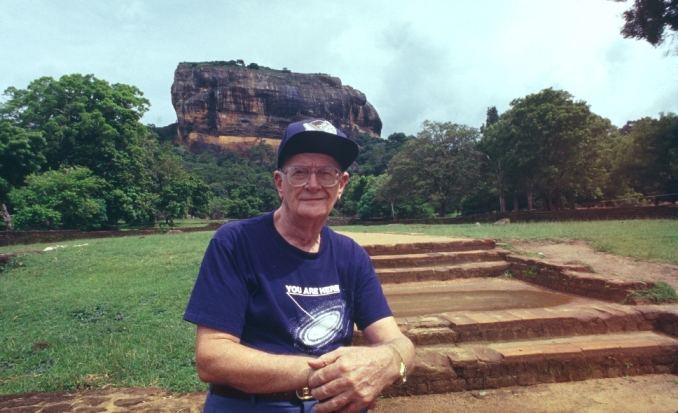
sir-arthur-clarke-with-sigiriya-in-background-photo-by-rohan-de-silva.jpg

Sir Arthur Clarke, who died last week, was buried at Colombo general cemetery at his request. That ended a 52-year-long association the author had with his adopted home.

His interest in diving and underwater exploration led him to Ceylon (now Sri Lanka), where he settled down in 1956. He pioneered diving and underwater tourism in Sri Lanka through his company Underwater Safaris, and played an active role as a public intellectual and as a patron of art, science and higher education. He served as Chancellor of Sri Lanka’s technological University of Moratuwa from 1979 to 2002.

Although he became the island nation’s first Resident Guest in 1975, Sir Arthur always remained a British citizen. The Sri Lankan government presented him the Lankabhimanya (‘Pride of Lanka’), the country’s highest civilian honour, in 2005. In December 2007, government officials, scientists, artistes and diplomats came together to felicitate Sir Arthur on his 90th birthday.

During the past few days, there was a good deal of coverage, editorialising and reminiscing in the Sri Lankan media about Sir Arthur, whom a former foreign minister once called a ‘one man cheering squad for Sri Lanka’. Most of this coverage looked back to recall the highlights and anecdotes of the sarong-clad, table tennis playing, myth-busting icon.

As Sir Arthur would have said, that was necessary – but not sufficient. His business was talking about the future and helping to shape it. So I dug up from my own archives a 1,100-word essay that I had written for The Sunday Observer in Sri Lanka a decade ago, for a series titled Sri Lanka in 2048. There, leading artistes, scientists and other public figures were asked to outline their personal vision for the year Sri Lanka would complete 100 years of political independence (the series marked the Golden Jubilee of this event).

Upon re-reading the essay, which was in Sir Arthur’s first person narrative, I found that it was still fully valid, and even more relevant a decade later than when it was first written. So I passed this on to Pramod de Silva, editor of The Daily News, the sister newspaper of the Observer, which ran it on 22 March 2008 – the day of Sir Arthur’s funeral. I found that quite appropriate – the physical remains were going on their final odyssey, but Sir Arthur’s vision would – hopefully – propel Sri Lanka to a better future for decades to come.

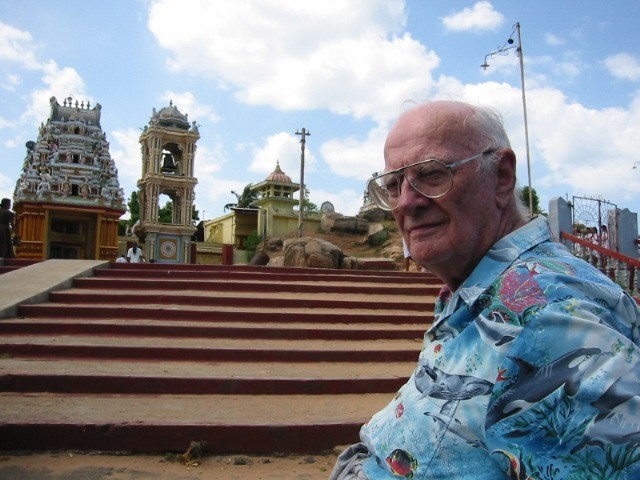
sir-arthur-clarke-at-swami-rock-trincomalee-sri-lanka-by-rohan-de-silva.jpg

Here’s how he opened the essay, My Vision for Sri Lanka in 2048:

“A guest must be careful about what he says of the host: contrary to popular perception, I am not a Sri Lankan citizen — only a resident guest. Yet, having lived here for 41 of my 80 years, I now regard this alone as home, and have visions and hopes for my adopted land.

“Half of all Sri Lankans alive today were not even born when, in December 1954, I had my first glimpse of the then Ceylon — when the P&O liner Himalaya carrying me to the Great Barrier Reef paused at the Colombo harbour for half a day. What I saw on a single afternoon tempted me to come back a year later to explore, and by the end of the 1950s, I had developed a life long love affair with the island.”

Taking stock of Sri Lanka’s already high human development indicators, Sir Arthur noted:
“It has been said that the biggest remaining challenge in terms of human health and welfare is not so much to add years to life, but to add life to years. For a country like Sri Lanka that has already achieved high levels of life expectancy and other impressive social indicators, this is indeed the next major challenge. The vision for the next fifty years should be to develop ways of improving the quality of life of all Sri Lankans. Difficult though it certainly is, such development will have meaning only if it is socially and environmentally sound.”

He then talked about two areas that were crucial for the socio-economic development of his adoptive land: energy and telecommunications. But he knew these physical improvements would not, by themselves, create a better society until and unless lasting peace could be achieved:
“The biggest challenge for all Sri Lankans in the coming century would be achieving better communications and understanding among the different ethnic, religious and cultural groups and sub-groups all of who call this their motherland. For material progress and economic growth would come to nothing if we allow the primitive forces of territoriality and aggression to rule our minds.

Read the full essay on the Daily News website

Related essay: Rebuilding after Tsunami: Sri Lanka’s challenges by Arthur C Clarke, January 2005

Photos by Rohan de Silva, Sir Arthur’s personal photographer

Little voices from the waves: Maldives too young to die!

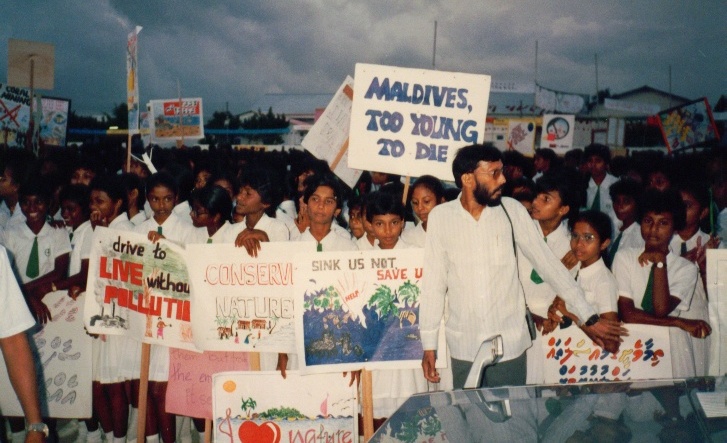
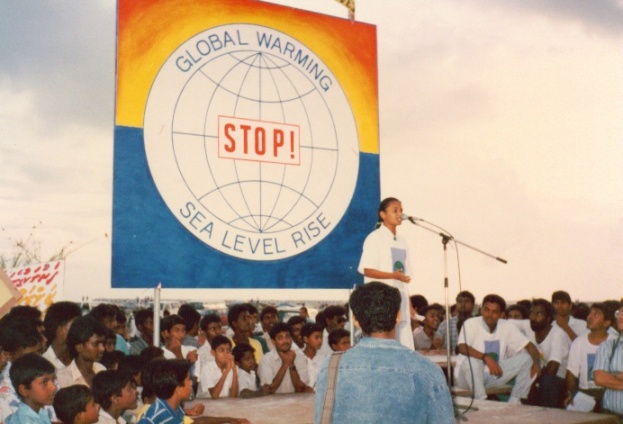
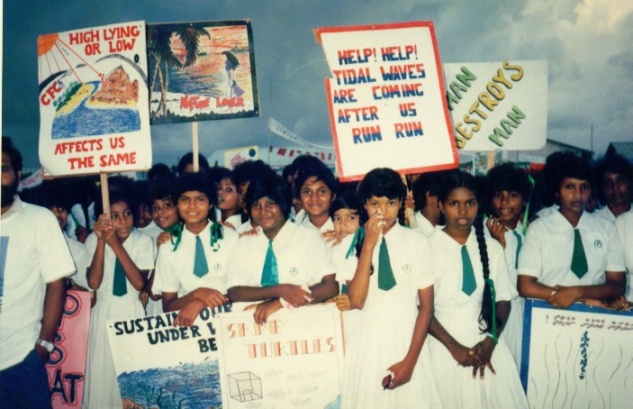
maldives-too-young-to-die-say-school-children-nov-1989.jpg

My post last week on the Maldives on the frontline of climate change reminds me that I have been covering this story for the better part of 20 years. I have just located this photo from the depths of my personal image collection.

I first visited the Maldives in 1988, which was within months of the Indian Ocean archipelago nation suffering from a massive storm surge in 1987. Although the damage was minimal, the experience was a forceful reminder of how vulnerable the Maldives can be to even a small rise in sea levels – this is what prompted the low lying nation to take up the issue internationally.

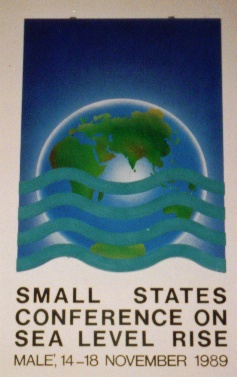
In November 1989, the Maldives hosted the first ever small states conference on sea level rise, held at the Kurumba island resort.

It was also one of the earliest international gatherings on this issue, which was to gain public interest and momentum in the years that followed. Among the participants were delegates from practically all the small states in different parts of the world (defined as those with less than 1 million population), and scientists from disciplines such as oceanography, climatology, meteorology and geology.

This was one of the first international scientific events that I covered as an eager young science journalist. I was then a roving South Asian correspondent for Asia Technology, a popular monthly on Asian science and technology published from Hong Kong (which, alas, folded up in 1991) – there’s nothing online as it was in the pre-web era!

The conference had technical sessions where experts debated scenarios and implications, and a political segment where delegations made their official statements. In the end, they issued the Malé Declaration on Global Warming and Sea Level Rise, which urged for inter-governmental action on the issue.

small-states-conference-on-sea-level-rise-logo.jpg small-states-conference-on-sea-level-rise-logo.jpg

Some 18 years later, I’m still eager but not so young – and I’ve covered more than my share of international environmental conferences to know that they can’t save the world. At least not on their own.

But many serve a useful function in rallying around concerned parties, helping them to agree on advocacy positions. Progress at inter-governmental level can be painfully slow and incremental. Sustaining public and media interest is one way to keep pressure on the endlessly bickering governments.

Following the November 1989 conference, small island states played a key role in negotiations that led to the UN Framework Convention on Climate Change adopted in 1992. This is the precursor to Kyoto, Bali and other processes that are now very much in the news.

The Maldivian hosts knew that scientists and officials alone could not send out a powerful message to the world on what climate change means to low lying islands of the world – many of them no more than a few feet above sea level.

So on the last day evening, we were all taken to the Maldivian capital of Male, where we saw a demonstration and meeting held by the school children and ordinary people. To me, at least, this was the most striking moment of the whole week.

Leading up to this, I had been listening to competent experts and concerned officials talk about impacts, scenarios and mitigation measures for several days. Based on my notes and interviews, I filed several stories that captured highlights.

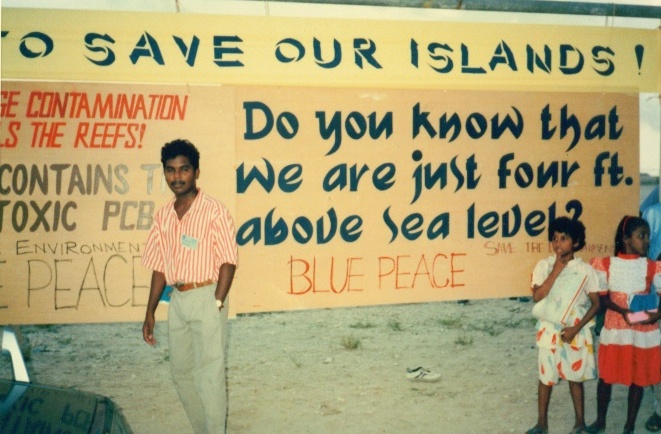
But unless I go back to my personal archives and look up those stories, I can no longer remember what I wrote. My lingering memories of this event are in these images, showing school children telling delegates – and the world – what it means to be living on the front lines of climate change impact.

listen-to-our-voice-from-the-waves-maldives-nov-1989.jpg

maldivian-school-children-worried-about-sea-level-rise-nov-1989.jpg

Then newly formed Maldivian environmental organisation Bluepeace was also part of the demonstration:

bluepeace-calls-for-global-attention.jpg

I worked for several years as a science and technology reporter. I was trained to gather, process and present facts and, preferably, expert opinion. But over the years I have realised that while hard facts and expert opinions are necessary, these tell only one part of complex stories we cover.

We need to bring in the human face of our stories — how ordinary children, women and men feel about issues and how they react to situations. This is why I now argue that we should not allow the human face of climate change to be lost in our well-meaning technical and economic discussions about climate change mitigation and adaptation.

We can cover carbon neutrality, zero emissions and common but differentiated responsibilities for all we like, but if we don’t pause to listen to these little voices from the waves – from the frontlines that are already feeling the heat – we will miss the bigger picture of what climate change is all about.

Dec 2007: Road to Bali – Beware of ‘Bad Weather Friends’

Photos by Nalaka Gunawardene, Male island, November 1989

Return to Paradise: Maldives on the frontline of climate change

Related blog post: 6 Jan 2008: Little voices from the waves: Maldives too young to die

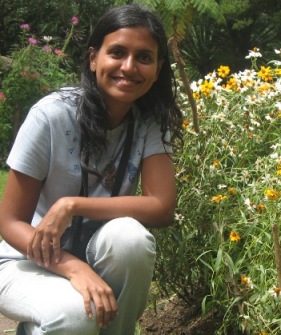
Mariyam Niuma - photo by TVEAP

All of us at TVE Asia Pacific are missing Mariyam Niuma.

This bubbly, happy-go-lucky intern returns to her native Maldives this week after working with us for over a year as a programme assistant. She plans to spend more time with her family, and explore work opportunities in the Indian Ocean archipelago nation of 370,000 people.

Niuma, in her early 20s, applied for a staff position in late 2006. Among other things, she came with skill and dexterity in graphic design, web research and English proficiency — always useful for a regional communication organisation like ourselves.

“I want to learn as much as I can how a non-profit organisation works,” she told as at the recruitment interview. She had plans of taking the knowledge and skills back to her home atoll, hoping to make life better for her people.

I hope she found what she was looking for. We found in her an energetic young person with good attitude – one who could be challenged to work on tough (and sometimes tedious) tasks on a regular basis.

“The last year has been a very challenging and fulfilling year for me, and being at TVEAP helped a lot,” she wrote in an email on her last day at work. “I will miss you all and being a part of you and will always remember the good times and everything I have learnt here both professionally and personally.”

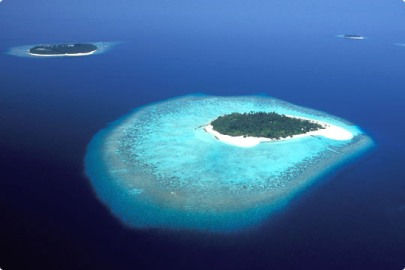
Some months into her internship, Niuma gave us a presentation on her home country, home atoll and life at home. To many outsiders, Maldives evokes images of palm-fringed sandy beaches, shallow seas of an exquisitely azure blue, high end resorts, crystal clear blue waters for diving…and plenty of sunshine all the year round. (Image shows Kurumba resort, Maldives.)

Well, all that’s true as widely advertised. But Maldives is a whole lot more – a history going back to at least 1,500 BC, distinctive island culture, and a nation that is struggling to reconcile tradition with modernity. Divehi, the Maldivian language, contributed the word “atoll” (a ring-shaped coral reef) to the English language.

The former British protectorate, which became independent in 1965 and a republic in 1968, has a pro-democracy movement sustained over the past few years. If such political turbulences create a sense of uncertainty in the minds of Maldivians about their future, it’s only one source of concern.

They also have to worry about whether their nation would have a collective future. That’s because of climate change that scientists now confirm are underway, aggravated by human action.

Most of the 1,200 islands in the Maldives are no more than 1m (3 feet) above sea level. Even a modest rise in sea levels could inundate these lands. Within 100 years the Maldives could become uninhabitable.

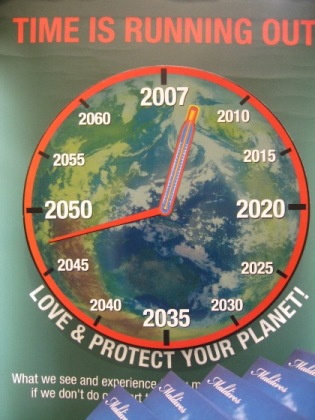
Time is indeed running out for Niuma and her country — as this poster produced by The Body Shop reminds us.

Time is running out...and not just for the Maldives

In 1987 and 1991 storm surges flooded a large number of islands, including one-third of the capital where one-quarter of the country’s population lives. Unusually high waves forced the international airport to be closed, causing great damage to tourism and constraining emergency relief operations. On 26 December 2004, the Asian tsunami battered the Maldives, forcing the evacuation of 13 of its 200 inhabited islands. These incidents indicate how vulnerable the islands are to wave action.

Maldives was among the first countries in the world to raise climate change as a serious issue at the United Nations. President Maumoon Abdul Gayoom raised the alarm back in 1987, when most people had not even realised the problem and scientific evidence was just beginning to come in.

The Maldives did more than raise the issue. The country played a lead role in rallying around other small island states worldwide that would be among the first to be impacted when sea levels rise due to thermal expansion and melting of polar ice.

In November 1989, the Maldives hosted the first ever small states conference on sea level rise, which was one of the first international scientific events that I covered as an eager young science journalist.

The conference issued the Malé Declaration on Global Warming and Sea Level Rise, which urged for inter-governmental action on the issue. The small island states played a key role in negotiations that led to the UN Framework Convention on Climate Change adopted in 1992. This is the precursor to Kyoto, Bali and other processes that are now very much in the news.

Just a few weeks ago, in mid November 2007, the Maldives once again hosted representatives from small island states to discuss climate change. Eighteen years after the original meeting, the subject is no longer a fringe concern; it’s now on everybody’s agenda.

Maldives from the air: tiny specs in the ocean
The meeting urged the the human dimension of global climate change to be included in the agenda of UN Climate Change Summit in Bali (December 2007), and sought the international community’s commitment “to protect people, planet and prosperity by taking urgent action to stabilize the global climate change”.

This time, the Male’ Declaration on the Human Dimension of Global Climate Change called for the UN High Commissioner for Human Rights to assess the human rights implications of climate change and “to conduct a study into the effects of climate change on the full enjoyment of human rights”. It requested the UN Human Rights Council to convene in March 2009 a debate on human rights and climate change.

I wasn’t at the November 2007 Male meeting, but was glad that the meeting stressed the need for adding a human face to the complex, nuanced challenge of climate change. This resonates very much with my own experience.

Read my April 2007 blog post: Wanted – human face of climate change

Mariyam Niuma takes me a bit closer to the realities of what climate change means to communities living on the frontline. Unlike Niuma, who is web savvy and connected with the wider world, many are blissfully unaware of the problem.

Our challenge is to bring their voices, stories and aspirations to the global news agenda and the myriad discussions now underway searching for solutions.

I hope someday we can work with Niuma again — perhaps amplifying her story in moving images.

Nov 2007 blog post: True people power needed to fight climate change

Related blog post: 6 Jan 2008: Little voices from the waves: Maldives too young to die

Photos of Mariyam Niuma courtesy Manori Wijesekera of TVEAP

From KL to Bali: Why were ICT and climate change debates worlds apart?

The timing of the Third Global Knowledge Conference or GK3 last week just couldn’t have been worse in terms of international media attention and coverage.

Some 1,700 people from all over the world – representing academia, civil society, governments and industry – gathered in the Malaysian capital of Kuala Lumpur from 9 to 13 December 2007 for this platform of events meant for everyone interested in using information and communications technologies (ICTs) for the greater good – to solve real world problems of poverty, under-development, illiteracy and various other disparities that afflict our world.

The organisers, a network called the Global Knowledge Partnership, called it ‘Event on the Future’. They had worked for almost two years on planning the event, and spent a huge amount of development funding to drum up global interest in the event.

As things turned out, GK3 was a complete non-event for the world’s media, whose attention was much more engaged by another event that was crucial for the future of all life on this planet – the UN Climate Change conference taking place in neighbouring Indonesia’s Bali island.

pic-iht-ad.jpg

That coincidence of events was very unfortunate, especially since GK3 also discussed and debated important issues that shape our common future. Yes, the substance at GK3 was immersed in — and sometimes buried under — massive volumes of hype and spin, but for the discerning participants there were occasional gem stones amidst the numerous gravel.

I have written up my impressions of GK3 as a series of missed opportunities. In my view, the biggest missed opportunity was GK3’s failure to position itself as part of the smart response to global climate change that scientists now confirm is happening and is largely human-induced.

After 20 years working in the media, I can understand why the news media ignored GK3. Yes, bad timing was one factor. But the bigger lapse was that the GK3 organisers and participants failed to find and articulate their common ground with the bigger global process that was unfolding in Nusa Dua, Bali island.

In the real world, Bali is not all that far from KL. But sadly, the two were worlds apart as parallel processes took place with little confluence.

It need not have been that way. There is much that ICTs can do in reducing carbon emissions that are warming up the planet.

The biggest ‘digital dividend’ from ICTs is how they can help reduce needless travel. Dependent as we still are on fossil fuels of oil and coal for most of our transport, even a few percentage points of travel that we can realistically cut down can yield major savings in emissions of carbon dioxide.

In a blog post written in August 2007, I cited Sir Arthur C Clarke’s slogan that sums this up very well: Don’t commute; communicate!

I quoted from an essay Sir Arthur had written for the UK’s Climate Group in 2005, included as part of a global exhibit on climate issues, where he noted: “….Meanwhile, other technologies enable us to adjust our work and lifestyles. For example, mobile phones and the Internet have already cut down a lot of unnecessary travel – and this is only the beginning. We should revive a slogan I coined in the 1960s: ‘Don’t commute – communicate!’”

My friend and academic colleague Dr Rohan Samarajiva, who heads the regional ICT research organisation LIRNEasia, has given this some further thought.

More and easier use of telecom should theoretically lead to less need to travel. But nothing is ever that simple, he says. “It is not realistic to think that improved telecom-based connectivity will immediately lead to a reduction in demand for transport and a reduction in greenhouse gases. But it is clearly a necessary action that will yield good results over time.”

For telecom to make a real contribution to reducing demand for transport, Rohan says several things need to happen:
• Most people need to have easy and convenient access to telecom, for sending as well as receiving messages and for retrieving as well as publishing information;
• All offices and business establishments must be reachable through telecom;
• They must change their business processes to reduce the need for people to physically come to their locations; and
• The ancillary infrastructures such as energy, payment and delivery systems must change accordingly.

These, then, are important goals that are worth pursuing not only for the achieving information societies but also for saving the planet from the current slow baking. That’s the message that GK3ers failed to grasp or convey to Bali.

Instead, we heard from the movers and shakers of the IT and ICT companies how they are working to achieve greater energy efficiency in the manufacture and use of their products. Their sincerity and commitment were not in question. But I didn’t hear anyone emphatically make the point that helping people to avoid needless transport use is the biggest climate benefit ICTs can deliver. (I was yearning to stand up and say ‘It’s avoided transport, stupid!’ in one plenary but we ran out of time.)

The industry mandarins were not alone. Even the International Telecommunications Union (ITU), which sets standards and keeps an eye on ICT trends and conditions, missed this point. In a statement delivered to the Bali climate conference, ITU talked about lots of small contributions that ICTs can make to find solutions to the climate crisis.

To quote from their 12 December 2007 press release:

“ITU pointed out that the proliferation of ICT products in homes and offices, and their deployment throughout the world, places an increasingly heavy burden on energy consumption. The late night glow in homes and offices emanating from computers, DVD players, TVs and battery chargers is all too familiar. And the move to “always-on” services, like broadband or mobile phones on standby, has greatly increased energy consumption compared with fixed-line telephones, which do not require an independent power source. Energy demands caused by high-tech lifestyles in some countries are now being replicated in others.”

It’s always good to improve energy efficiency, if only to keep the bills in check. But can ICT industry and ITU please stop apologising for the relatively minor contribution their sector makes to global warming — and instead become a much bigger part of the solution? In other words, stop rearranging chairs on the Titanic’s deck, and instead get in the engine room to help steer the planetary Titanic from heading straight into that iceberg looming large.

We don’t need further studies, expert groups or conferences to deliver this category of carbon-saving, climate-friendly benefits: just keep rolling out telecom coverage worldwide and also make the services affordable and dependable. The markets will do the rest.
earth-at-night-off-website.jpg

This point was also lost in Bali. Obsessed as they were with a mechanism to succeed the imperfect Kyoto Protocol, the delegates failed to fully appreciate tried and tested solutions that can begin to roll out now and here. Let the diplomats and lobbysts bicker for years to come, but don’t ignore what markets can do in the meantime.

Even some champions of climate change have yet to realise the ICT potential for their planet-saving crusade. Al Gore, being both ICT-savvy and green, is an exception. Sir Nicholas Stern is not.

In October 2006, the UK government published a 579-page report on the economics of climate change by Sir Nicholas Stern, a former chief economist at the World Bank. Despite the massive size, scope and authority of the report, the Stern Report had no reference to the role that the ICT sector could play in helping to reduce energy demand, mitigate CO2 emissions and help to save the planet.

Fortunately, as I wrote in August 2007, telecom operators are begining to taking note. Among them is the European Telecommunications Network Operators’ Association (ETNO), which issued a report — incidentally, in the same month as the Stern Report — titled Saving the climate @ the speed of light: ICT for CO2 reductions.

It was a joint publication with the World Wide Fund for Nature, WWF. Its introduction read: “A wider usage of ICT-based solutions can play an important role in reducing CO2 emissions. This joint WWF-ETNO road map proposes a concrete way forward for a better consideration and inclusion of ICT’s in EU and national strategies to combat climate change.

Read the full report here.

So it seems that part of the climate response answer is literally in the air – or the airwaves. The emergence of information societies — where more electrons (carrying information) are moved than atoms (people, goods) — can help the pursuit of climate-neutral or, even better, climate friendly lifestyles. To use a currently fashionable UN term, that’s a co-benefit!

For these co-benefits to be appreciated and seized, it’s essential that we look at the bigger picture and not just work in individual sectors such as ICT and sustainable development. The ITUs and UNEPs of this world have to meet and talk more often — and also listen to each other more seriously.

I chose to attend the ICT event of GK3 in KL in spite of receiving three separate (and sponsored) invitations to join various activities in Bali. After last week, I have mixed feelings about that choice, but there’s no doubt at all in my mind about the massive potential that ICTs hold for mitigating the worsening of climate change.

But the ICT sector has to put its money where its mouth is, and practise what it advocates. It’s not good enough to endlessly meet and talk about all things ‘e’. Just as the world has to kick its serious addiction to oil and coal, we in the development sector have to wean ourselves away from our obsession with paper. Lots and lots of it.

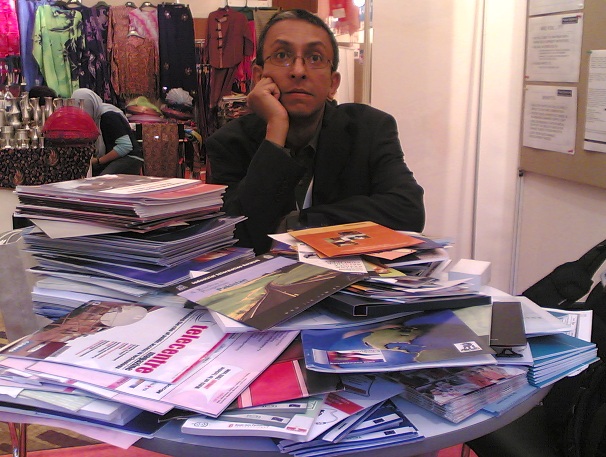
In the last hour of the final day, I walked around GK3’s exhibition area, with the ridiculous name MoO. I was stunned by the massive volumes of paper lying around everywhere. The week’s events were drawing to an end, and it was unlikely there would be too many more takers for all that paper. In that week, I saw very little digital media being used to peddle institutional messages or deliver their logos. It was 95% paper-based.

My colleague Manori captured on her mobile phone this image of an exasperated me surrounded by mountains of paper.
all-this-paper-at-the-end-of-an-ict-event.jpg

The MoO exhibitors were not alone in their profligacy and wastefulness – the GK3 secretariat easily wins the prize for producing the greatest volume of glossy, expensive paper-based promotional material for at least a year preceding the event.

Clearly both ICT and climate camps have some urgent rethinking to do. Together, we can find win-win, now-and-here solutions for slowing down processes of disruptive climate change already underway.

Or we can keep pushing bits of paper all around, all year round. The choice is ours – and the planet is at stake.

– Nalaka Gunawardene


Read my overall impressions of GK3: All geek but very little meek…and at what high cost?