Unseen women, unheard agonies

In January 2008, I wrote about Lakshmi and Me, a recent Indian documentary that portrayed a domestic worker woman whom my friend Kalpana Sharma aptly called an invisible superwoman.

A colleague who read my piece reminded me about a series of five short films on working women in Sri Lanka that I had executive produced in 1999-2000. Produced originally in Sinhala for a national audience, the series was titled Oba Nodutu Eya (The Unseen Woman). In fact, it featured not one but several women workers in two different sectors in the country’s informal economy: the coconut husk (coir) industry in the south and agricultural settlements in the Dry Zone in the north-central areas of the island.

The following is adapted from a story I wrote about this series for a book that TVE Asia Pacific published in 2002. I have not gone back to my sources to check how much – or how little – has changed in the past several years.
yasawathie-from-a-voice-without-a-sound.jpg

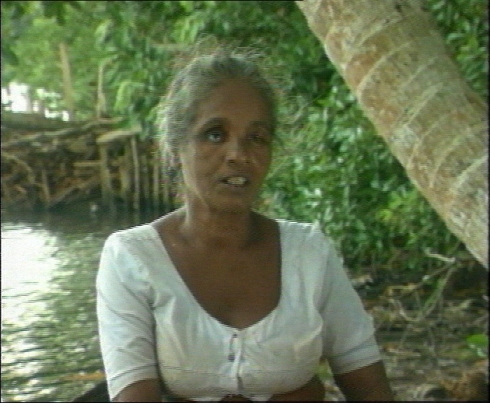
This is Yasawathie. She has suffered physical and mental abuse most of her adult life. Her alcoholic husband beat her regularly for years, but she dared not complain for fear of reprisal.

“He injured my head, stabbed me and once fractured my arm” she says, showing a scar of a healed wound.

As if this suffering was not enough, she lost sight in one eye a few years ago in a bizarre hospital accident. She had gone to the government hospital seeking treatment for a chest ailment. There were more patients than beds, so she was forced to sleep on the floor. While sleeping, a nurse carelessly dropped a saline stand on to Yasawathie’s face.

The entire incident was hushed up, and the poor woman was intimidated into silence. “Sometimes patients even die at our hands,” the nurse told her threateningly.

Injured by the healthcare system, battered by her own husband and pressurised by her family circles to keep quiet about, this middle aged Sri Lankan woman has run out of options. She was not aware she could claim damages for the accidental loss of her eye. She does not realise there is legal redress for domestic violence – her family and in laws wouldn’t allow it in any case.

Sadly, Yasawathie is not alone. There are tens of thousands of women like her who live on the margins of society, and whose suffering goes largely unnoticed. The island nation is often cited as a South Asian success story: its women were the first in Asia to vote; female literacy is nearly universal; and a higher percentage of girls and young women are in school than boys.

But hidden beneath these national accomplishments, there are huge gender-based disparities and gaps, especially in economic, labour, family and property related matters. Studies have found that many women, particularly the poorer ones, don’t know their human and legal rights.

And even women who do know their civil and political rights often do not assert their right to safeguard themselves from domestic violence or gender-based discrimination in family and society.

Yasawathie’s story was one of several that were featured in a television documentary series that probed how Sri Lankan women’s economic and legal rights operate in the real world. Produced in 1999-2000 by TVE Asia Pacific in collaboration with the Sri Lanka Environmental Television Project (SLETP), the series went beyond the oft-repeated claim of women’s emancipation in Sri Lanka. It uncovered a shocking reality of wide spread rights denial, physical abuse and gender-based violence.

The series used a mixture of short drama segments, interviews and background commentary. “These films don’t offer comprehensive surveys of the situation, but they provide useful glimpses of how economic and legal rights apply at the grassroots for women,” said accomplished fim-maker Inoka Satyangani, who directed the series. “We raise broader concerns, and point out changes that society needs to make to ensure that women can assert their rights.”

Violence against women is both a public and private matter in Sri Lanka, says the Committee on the Elimination of Discrimination against Women (CEDAW), a body of global experts which monitors whether governments are honouring their commitments to the 1981 United Nations’ Women’s Convention. Although violence affects women of every class and ethnicity, it is seldom reported.

In recent years, human rights abuses in Sri Lanka’s conflict ridden north and the east have received international scrutiny; both the government forces and Tamil Tiger rebels have committed atrocities. But violence against women is not confined to the war or the conflict-affected areas: as one rights activist has remarked, “everyone becomes part of the larger system of brutality”.

CEDAW has stressed that Sri Lanka needs specific legislation to address violence behind closed doors.
from-oba-nodutu-eya-tv-series.jpg

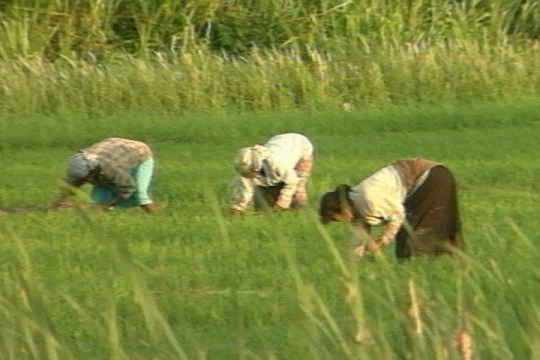
The TV series also found how women get paid less than men for agricultural manual labour, and how government-driven land development schemes favour men to inherit state land distributed among the landless. Government agricultural extension programmes help male farmers to obtain skills training, credit and subsidies while women farmers are constantly ignored. Women interviewed had stories that shattered the myth of women’s liberation and equality in Sri Lanka.

Read individual synopses of the five films in The Unseen Woman series

Read recent blog post: Half the sky, most of the suffering and seeking everyone’s attention

Half the sky, most of the suffering…and seeking everyone’s attention!

What’s one of the biggest reasons for suffering from violence?

Is it War? Racism? Extremism?

Or simply being born a woman?

One in 3 women is a victim of violence.

This is the powerful message in this one-minute-long public service announcement (PSA), which can be viewed here:

It was produced by the London-based advertising agency Leo Burnett for UNIFEM, the United Nations Development Fund for Women. With a striking series of images, it reveals that violence against women is one of the most common forms of violence in the world.

This PSA is part of a new global campaign on this scourge.

As UNIFEM says: “Violence against women and girls is a problem of pandemic proportions. At least one out of every three women around the world has been beaten, coerced into sex, or otherwise abused in her lifetime — with the abuser usually someone known to her. Perhaps the most pervasive human rights violation that we know today, it devastates lives, fractures communities, and stalls development.”

The campaign has elements on awareness raising as well as a call to action. The latter includes an online signature campaign that seeks to collect at least 100,000 signatures from those who oppose violence against women.

The online ‘signature book’ opened for signatures on 26 November 2007 with an appeal from actress and UNIFEM Goodwill Ambassador Nicole Kidman. She called the violence many women worldwide face “an appalling human rights violation that can be stopped”, and asked everyone to add their names to a growing number of supporters saying “NO” to violence against women at http://www.saynotoviolence.org.

She added: “The more names we collect, the stronger our case to make ending violence against women a top priority for governments everywhere.”

Watch her appeal on YouTube:

The UN Trust Fund to End Violence against Women , established in 1996, will receive US$ 100,000 from the United Nations Foundation for 100,000 signatures

I have just signed up, on this leap day 29 February 2008. Three months since the campaign was launched in New York, it has so far gathered a little over 58,500 signatures.

It’s certainly commendable – but not nearly enough, and still more than 40,000 needed to reach the modest target of 100,000.

Not that it’s just a numbers game, of course. The quality and sincerity of commitment matter a great deal. At the same time, UNIFEM and other UN agencies trying to engage the public through online interactive methods should study how successful activist groups do the same — with much better and faster results.

Avaaz.org is a leader among these. It is a new global web movement with a simple democratic mission: to close the gap between the world we have, and the world most people everywhere want. Set up in early 2007, it has quickly evolved into online community through which hundreds of thousands of concerned people are taking action together on urgent issues like climate change, poverty, human rights and the crises in the Middle East and Burma.

In October 2007, I joined Avaaz in its signature campaign to focus global attention on the political violence and gross abuse of human rights in Burma. In just four days, thousands of Avaaz members donated over $325,000 online to support the Burmese people’s efforts to peacefully promote political change and tell the world about their struggle.

The Burmese junta may not care for millions of people protesting or donating online, but the leaders of the democratic world – pondering their response to the atrocities in Burma – would find it hard to ignore this surge of public concern.

But it’s a long leap from Burma to the bed room or backyard. A major difficulty faced by those campaigning to focus on violence against women: they are countering actions that are widely distributed, pervasive and sustained over time. Much of it happens at personal and family level, necessarily beyond the public and media’s glare. Incidents flare up only occasionally to spill over to the public space to become news events or talking points.

So, as in many similar instances, out of sight often means out of mind.

The big challenge is how to raise public awareness on a wide-spread issue of violence that happens, to a large extent, in private. The facts and figures are compelling as they are alarming and depressing. The campaigners have lined up some of the biggest celebrities (like Nicole Kidman) and enlisted big guns like UN Secretary General Ban Ki-Moon.

All necessary, but not sufficient.

The campaign needs more than just star power or the UN’s clout to galvanize mass action. For a start, UN agencies need to get out of their fondness for coining and using endless acronyms. Even with my regular forays into the development community’s acronym jungle (read my post on the alphabet soup), I was recently puzzled when a film-maker colleague referred to GBV in an email without explaining it. It took me full five minutes to realise that she meant gender-based violence.

And some imaginative ways of raising the public profile would also help. Browsing on YouTube, I came across this video from Ireland. As one article described it:
“The ghosts and spirits of the millions of women who have been murdered, violated, oppressed, excluded, driven into exile, denied freedom of speech, denied participation in any decisions concerning their lives, because of war, religion, race, culture, age, disability, sexuality, poverty, bonded slavery, domestic violence or bureaucracy, glided in and out of the shoppers of Galway on 7 December 2007.”

Can Rambo take on the Burmese junta? Not quite in 90 minutes…

Hollywood’s attempts to support progressive causes in movies continue with Rambo 4, starring Sylvester Stallone.

In the fourth and latest installment of the violent adventures of John Rambo, the Vietnam veteran takes on the Burmese junta who have held the Southeast Asian country in its crushing, ruthless grip since 1962.

Inter Press Service (IPS) journalist Lynette Lee Corporal has just written an interesting article where she talked to Burmese exiles and others involved in Burma issues. Excerpts:

“In his latest caper, a bored-looking Rambo ekes out a living catching cobras in the jungles of Mae Sot in Thailand, near the border with Burma. But the arrival of a group of Christian missionaries, whose idealism and naivete literally led them to a slaughterhouse, changes Rambo’s zombie-like existence and brings back the days of gore and bloodbath.

“The film is unapologetic in its use of cliches. It’s the same tired story: Everything is black and white, good and evil, with lots of do-or-die moments thrown in for good measure.

“‘Rambo IV’ – which started showing in Asian cinemas in January and is due to open in mid-March in Thailand — is replete with stereotypes, especially when it comes to pointing out differences between the east and the west, symbolically played out in the kindness, idealism and determination of the Caucasian missionaries and the uncouth, barbaric bad guys in the form of the Burmese pirates and military.”

She says that while reports of the cruelty of the Burmese junta have been well-documented, the depiction of these stereotypes glosses over much more complex issues too deep to dig up in a 90-minute action movie.

Her article quotes freelance Burmese journalist Phyo Win Latt as saying: “The Burmese army in the movie is different from real-life. The film is filled with exaggeration and inaccuracies. Army officers, for example, don’t wear sunglasses while engaged in battle and although there are rape cases in remote ethnic villages, I’ve never heard of such things like ethnic women being forced to dance in front of the soldiers.”

Exiled Burmese appear to have given it some positive feedback. According to a report by the Norway-based Democratic Voice of Burma (DVB), about 600 Burmese who watched the film in Singapore became very emotional, chanted slogans and distributed political leaflets at the screening.

The crowd “clapped non-stop for 80 seconds to show respect to the movie audience gathered there and to show unity” in their fight for democracy, DVB reported.

Read her full article on Asia Media Forum

I’ll just take Lynette’s word for all this, because I’m not going to see this film – I can’t take a killing every few seconds.

Watch Rambo 4 official trailer on YouTube:
Caution: Extreme violence – but then, what else do you expect in Rambo?

Rambo may have discovered Burma’s long-drawn suffering only recently, but activist film-makers have been using moving images for many years to sustain international attention on Burma’s human rights and humanitarian issues.

Almost five years ago, in May 2003, TVE Asia Pacific website ran a feature titled ‘Documentaries keep Burma issues alive‘. It was written by Indian film-maker and journalist Teena Amrit Gill, who at that time was based in Chiang Mai, Thailand — where many Burma activists are concentrated.

Excerpts:

“Long drawn internal conflicts are often overlooked or completely ignored by the global media that often chase the latest stories as they unfold. It often takes a few dedicated activists and committed film-makers to sustain focus on conflicts that no longer grab headlines – but continue to affect hundreds of thousands of people.

“As Burma and the struggle of its people, especially its ethnic minorities, against four decades of military dictatorship begin to fade from international attention, a number of new television documentaries are attempting to keep the issue alive.

“Some have been made by television professionals for international broadcast. Others have used amateur or activist footage and aim at mobilising public concern and supporting campaigns to maintain pressure on the regime.”

Teena reviewed three new films that had been produced in 2001-2002 about the plight of minority groups like the Karen, Shan and Karenni who live along Burma’s borders with Thailand, China and Laos. These minorities are the target of repressive policies of the ruling military junta in Rangoon.

Read the full article, Documentaries keep Burma issues alive

Sep 2007 blog post: Kenji Nagai (1957 – 2007): Filming to the last moment

Another point of view: Entertainment the Burmese military way, by Ye Thu on DVB website

Suharto’s legacy: Mass grave Indonesia

“One death is a tragedy. A million deaths is just a statistic,” said Joseph Stalin — and he knew what he was talking about.

These words came to my mind as I followed the news coverage and commentary about the death on 27 January 2008 of Suharto, the former Indonesian military leader, and the second President of Indonesia, who was in office from 1967 to 1998.

Many western and globalised media reports touched on Suharto regime’s alleged mass-scale corruption, and the dizzy heights that crony capitalism reached under his watch.

But few talked about the genocide of unarmed, innocent civilians that took place in the years that brought him to power, 1965-67. Another blood bath took place in 1975 when Indonesian forces invaded and took over East Timor. Even those that touched on the subject used varying estimates of how many perished.

The Guardian (UK) obituary estimated the number killed in 1965-67 to be around 600,000. Others, such as BBC News, placed it at half a million, noting that “the bloodshed which accompanied his rise to power, after a mysterious coup attempt in 1965 which he blamed on Indonesia’s then-powerful Communist Party, was on a scale matched only in Cambodia in this region”.

In all probability, no one really knows the real number of Indonesians were slaughtered as the army – cheered by anti-communist west – cracked down on members and supporters of the Communist Party of Indonesia, at that time a legal political party. Genocidists don’t like to keep detailed records.

The New York Times, a long-standing cheer-leader of the ‘smiling general’, acknowledged that Suharto’s 32-year-long dictatorship was ‘one of the most brutal and corrupt of the 20th century’.

NYT added: “His rule was not without accomplishment; he led Indonesia to stability and nurtured economic growth. But these successes were ultimately overshadowed by pervasive and large-scale corruption; repressive, militarized rule; and a convulsion of mass bloodletting when he seized power in the late 1960s that took at least 500,000 lives.”

On the whole, however, the mainstream media has been far more preoccupied with the (admittedly important) issue of how much Suharto and family stole than how many people were killed extra-judicially during his regime.

In that respect, things haven’t changed all that much since Suharto was driven out of power by mass protests. American economist and media analyst Edward S Herman, who co-authored Manufacturing Consent with Noam Chomsky, wrote a commentary nearly 10 years ago titled Good and Bad Genocide: Double standards in coverage of Suharto and Pol Pot.

His opening para:
“Coverage of the fall of Suharto reveals with startling clarity the ideological biases and propaganda role of the mainstream media. Suharto was a ruthless dictator, a grand larcenist and a mass killer with as many victims as Cambodia’s Pol Pot. But he served U.S. economic and geopolitical interests, was helped into power by Washington, and his dictatorial rule was warmly supported for 32 years by the U.S. economic and political establishment. The U.S. was still training the most repressive elements of Indonesia’s security forces as Suharto’s rule was collapsing in 1998, and the Clinton administration had established especially close relations with the dictator (“our kind of guy,” according to a senior administration official quoted in the New York Times, 10/31/95).”

Suharto’s demise reminded me of a powerful short documentary I saw a few years ago. Titled Mass Grave Indonesia, it was directed by courageous young Indonesian journalist Lexy Junior Rambadeta (photos below).

Lexy Rambadeta

He works as a freelance TV journalist for international news agencies, and is a key member of the Jakarta-based media collective Off-Stream. It was started Off Stream in 2001 by journalists, filmmakers, photographers and multimedia artists “who have strong commitments and creativities on catering, promoting, covering, documenting and producing multiculturalism documentary video/film, photography and multimedia products”.

OffStream lists as its mission: To give a voice to “survivors of horror”; To tear down walls of “silence”; and To denounce “injustice” and “barbarism”.

One of their first productions was Mass Grave Indonesia, whose synopsis reads:
“Approximate between from 500 000 to 3 million of people in Indonesia have been killed by Soeharto’s regimes and buried somewhere in the wood distributed. A full and frank account of what happened in the reburial of 26 victims of horror in the 1965 mass killings. This documentary film weaves its story against the tide by presenting evidence of cruelties sponsored by the military in two regions of Central Java.”

I have just tracked down the 19-minute film on YouTube, presented in two parts:

Mass Grave – Indonesia: Part 1 of 2

Mass Grave – Indonesia: Part 2 of 2

This is no western film, filmed by visiting foreign journalists who might be accused of having one agenda or another. This is a film made by Indonesia’s own journalists who found their voice and freedom after the Suharto regime ended in 1998.

I have emailed Lexy this week asking how this film – and agitation by many human rights and democracy activists – have helped bring about belated justice to his own people. I await his reply, which will be published when received.

Engaging new media: prepare to lose control!

The development community never tires of talking about the value of participatory, two-way communication. Every workshop, report and discussion has a dose of this mantra sprinkled all over.

Yet when it comes to actually practising communication, most development agencies I know are so concerned with complete control – they want to edit endlessly, fine-tune their messages to the last letter and comma, and regulate how and where the message is disseminated.

There’s no harm in being organised and focused. But when communication officers are pushed into becoming publicity agents (or worse, spin doctors!) for their agencies, controlling the message becomes obsessive.

I’ve had more than my fair share of this. One example was when working on a documentary for a leading UN agency in Asia that my organisation, TVE Asia Pacific, was commissioned to produce. Now, films cannot be made by committees, but UN agencies never stop trying. At one point, over-zealous agency officials were tinkering with the post-shooting script so much that they edited even the interview clips included in the draft.

That only stopped when I pointed out that hey, those are transcribed verbatim from interviews we’d already filmed!

So imagine how hard it would be for such organisations to let go of the Complete Control over communications that they’ve aspired to perfect for so long.

And yet, as I told a small meeting convened by UNEP in Bangkok last week to plan their next ozone communication strategy for Asia Pacific, that’s not a choice, but an imperative with today’s new media.

In the four years since we worked on the last ozone communication strategy and action plan for the Asia Pacific, we have seen the emergence of web 2.0 – which is really a catch-all term that covers many second generation, interactive platforms and opportunities that have emerged using the global Internet.

Among these are blogs, wikis, social networking sites (e.g. MySpace, Facebook), social bookmarking (e.g. del.icio.us), video exchange platforms (e.g. YouTube), online games and mobile applications.

These and other new media tools enable development communicators to reach out to, and engage, many people – especially the youth who make up more than half of all Asians.

web-20-illustrationsvg.png

But that’s part of the challenge, I said, referring to what I call the ‘Other Digital Divide’ – one that separates (most members of) the development community from ‘Digital Natives’, young people who have grown up taking these digital media and tools completely for granted.

I referred to my remarks at the IUCN Asia Conservation Forum in Kathmandu in September 2007, where I stressed the urgent need for the conservation and development communities to cross this divide if they want to reach out to the dominant demographic group in our vast region, home to half of humanity.

Engaging new media is not just setting up a Facebook account, taking a YouTube channel or opening a blog that’s infrequently updated. All that’s useful, for sure, but they represent only the tentative first steps to the wide and varied new media world.

As with the more established print and broadcast media, development organisations need to have a strategy and a plan based on some research, analysis and reflection.

And willing to let go of that control – so cherished by so many development professionals – is an essential part of that adjustment to the new media reality.

Failure to adjust can result in future shocks – and in the very near future! Perhaps I should also have drawn their attention to what I wrote in October 2007: New media tsunami hits global humanitarian sector; rescue operations now on

We didn’t spend too much time talking about new media at the Bangkok meeting, but I did caution that there is a lot of digital hype out there. I’m no expert on this (is anyone, really?) but my team at TVEAP and I keep trying new ways of doing things with the new media. So here are a few quick insights I offered the UNEP meeting:

• New media lot more interactive, which means they demand a lot of time and effort to engage the audience – which in turn generates huge capacity requirements for any development organisation venturing into such media.

• You can’t always control your messages on new media! This unnerves many development agencies and professionals who are so used to exercising such control – in the new media world, they just have to learn to let go!

• A core value is user-generated content (USG). You need to find creative ways to allow your audiences to generate part of the content. Control lost again!

• Citizen journalists have now established themselves online as text and/or video bloggers. Governments and corporations have acknowledged their presence — serious bloggers have recently been granted media accreditation to the UN. What does this mean for future ozone media training and journalists engagement?

• There are many companies and agencies claiming to have cracked the new media challenge – and don’t believe them! Everyone is learning, some admittedly faster than others, but there’s no substitute to actually doing it.

• And there’s no road map to the new media world, which is being created every day and night by an army of geeks and enthusiasts. There are only a few rough guides and travellers’ tales from some like ourselves who have ventured into this realm.

Note: I am grateful to my colleagues at TVE Asia Pacific who have developed and/or tested out some ideas in this blog post: Manori Wijesekera, Indika Wanniarachchi and Nadeeja Mandawala. I stand on their shoulders, hopefully lightly!

Race to Save the Sky…by 2010

This is the opening segment of an Asian film that we at TVE Asia Pacific produced in 2006 for the UN Environment Programme (UNEP).

Called Return of the Ozone Layer: Are We There Yet? (30 mins, 2006), it tells the story of how the Asia Pacific – home to half of humanity – holds the key to saving the ozone layer…from man-made chemicals eating it up.

We presented it as a race…against time, and against many odds. Here’s how it opens.

You wouldn’t notice it even if you look carefully…but the Asia Pacific is running an important race.

It’s a race to phase out a group of chemicals used in industry, agriculture or consumer products.

When released to the atmosphere, these chemicals damage the Earth’s protective ozone layer. This ‘ozone shield’ protects all life from the Sun’s harmful ultraviolet rays.

These chemicals are used in refrigerators, air conditioners, fire fighting equipment, farming and a range of other products and processes.

The industrialised countries have already stopped producing these chemicals. This happened thanks to an international environmental treaty called the ‘Montreal Protocol on Substances that Deplete the Ozone Layer’. It was adopted in 1987 in response to the thinning of the ozone layer – or the ‘Ozone Hole’ –discovered two years earlier.

The Montreal Protocol sets time-bound, measurable targets for managing nearly 100 different chemicals.

These are closely tied to economic activity, public health and safety. Therefore, developing countries and economies in transition were given more time to reduce consumption — with the same goal of eventually phasing them out.

20 years on, the Montreal Protocol’s implementation has produced tremendous benefits to our health and environment.

But it’s a bit too early to celebrate.

Many challenges remain.

Developing countries now have to show they are making good use of the extra time and resources given to them.

It is the Asia Pacific that now produces and consumes most of the world’s Ozone Depleting Substances – or ODS. .

All production and use of CFCs in developing countries must stop in 2010.

But it’s easier said than done. The region has tens of thousands of small scale industries and farms that still use ozone damaging chemicals.

To accomplish the remaining phase-out targets, all
of them need to be engaged.

In this film, we look at key challenges the Asia Pacific region faces on the road to 2010. Meeting these challenges would ensure timely compliance of phase-out targets.

Clearly, governments alone cannot win this race. Millions of ordinary citizens have to join in.

Millions like the five we feature in this film.

Making this 30-minute documentary was a challenge. For a start, we had to grapple with complex scientific, economic and political issues and present them in a non-technical, accessible manner. We knew the average viewer was not interested in the intricacies of inter-governmental negotiations or atmospheric chemical reactions.

Talking about the ozone layer – which is out of sight, lying a few kilometers above the Earth’s surface – is never easy. It’s harder to get people to pay attention that sustained action is needed to remove man-made threats to the ozone layer.

Our challenge was to tell the story in a simple, engaging way — and UNEP wanted it to be different from many ozone layer documentaries already made. That’s when we decided to focus on five ordinary Asians who were doing their bit to save the ozone layer.

As our opening narration put it:

Five ordinary people, living and working in the Asia Pacific – the world’s largest and most diverse region.

Their actions will impact the future of life on our planet.

And there are millions more like them.

This is their story.

Watch the entire film (in several parts) on TVEAP’s YouTube channel.


September 2007 blog post: Ozzy Ozone: The Little molecule on a big mission

Rule of the Gun in Sugarland: A film by Joey R B Lozano

In June 2007, I did a belated tribute to Joey R B Lozano, a courageous Filipino journalist who crusaded for human rights and social justice. Armed with his video camera and laptop, he was one of the early citizen journalists long before that term – and practice – became fashionable.

From Seeing is Believing

As I wrote:
Joey used his personal video camera to assert indigenous land rights, and to investigate corruption and environmental degradation in his native Philippines. Joey was an independent human rights activist and also one of the country’s leading investigative reporters.

He freelanced for the Philippine Daily Inquirer, covering Indigenous peoples’ rights and the environment, considered the two most dangerous beats in the Philippines. But years earlier, he had moved out of the capital Manila, and committed his life and career to stories and issues at the grassroots that many of his city-based colleagues had no time or patience in covering on an on-going basis.

Trained as a print journalist, Joey mastered new media and technologies whose potential he quickly realised. He moved into television and video media with ease, and later became an active blogger.

I have just tracked down on YouTube one of his documentaries, Rule of the Gun in Sugarland (2001; 9 minutes; English). It’s a powerful documentary that tells the story of Manobo villagers’ efforts to claim their ancestral land in the Philippines, and the abuse they endured because of their claim. It contains both graphic and heart wrenching scenes.

Here’s some background on indigenous people’s rights in the Philippines, as compiled by Witness – the human rights activist group with which Joey worked closely.

Source: Witness nomination of Joey R B Lozano as a Hero on Universalrights.net

The history of the Philippines is a history of colonization, resettlement and battles over who will rule the land.

First the Spanish, then the Americans, then the Japanese, and now multinational corporations have at one time or another dominated the Filipino landscape. Each wave of colonization has forced people off more land, creating a domino effect across the 7,000 islands. Resettlement in turn, has created even more pressure on successive islands as settlers move in, pushing even more people out.

Today, despite continued widespread poverty across the Philippines, Indigenous tribe members remain the most marginalized sector of Philippine society.

In a country of 76.5 million people, almost 20 per cent are Indigenous peoples. They belong to at least 32 different ethnolinguistic groups. More than half are on Mindanao, the largest southern island.

Over the last century, Indigenous peoples have lost their traditional lands, as the logging industry, ranchers and large plantations have forcibly taken over lands, piece by piece.

Much like in other parts of the world, the land was won parcel by parcel. Original verbal agreements were made and often respected between individual ranchers and Tribe leaders to “borrow” land from the Tribe. But the agreements were quickly forgotten when the rancher died. Over the years, the land was then resold without the Tribes’ consent.

From Rule of the Gun in Sugarland

And then, under the Marcos regime, Indigenous people suffered along with farmers, as massive tracts of land were appropriated for the dictator and his cronies. When Marcos was finally thrown out by a people’s revolt, and flown out on a U.S. helicopter, successive democratic governments introduced multiple land reforms intended to redistribute the land justly, but none of these reforms ever really worked.

On the ground level, corruption and misuse of power prevented the land from being rationed and made accessible to the people the reforms were intended to help.

Meanwhile, the land reforms were intended to help the peasants and the fact that many of the lands in question were Indigenous Ancestral domains was never addressed.

Mindanao is rich in natural resources – some of the world’s last ancient rainforests, fertile soils, underground treasures of gold, an abundancy of fish — all now under the threat of overdevelopment.

In 1997, the Indigenous Peoples Rights Act was signed into law. The law is explicit on the Indigenous peoples’ right to ancestral lands. But this has not become operational to date. This fact is exacerbated by the present government’s industrialization thrust and commitment to globalization. Tribal lands, thus, are being continually opened for extractive business.

For more information, check Seeing is Believing website

Can Your Film Change the World? Find out on Pangea Day!

Here’s an extraordinary invitation to all who love to watch, create or critique moving images.

Either watch the above video, linked to PangeaDay YouTube channel, or (if your bandwidth does not allow easy playing of online video) read the text I have just transcribed off the video:

In this age
Images are powerful.
Powerful enough to divide…
…to spread fear…
…to remove hope.

Powerful enough to unite
to build trust, to inspire action.

Until now, images of the many
have been held in the hands of the few.

Finally, that is changing.

Millions of people around the world
are telling their own stories.

For the first time in history
we have a chance to see the world differently.
To see it through the eyes of each other.

Imagine if we could get inside
each other’s heads for a day!
What would we see?

We are about to find out.
A worldwide search has begun
to find films of unique power.

Films that provoke…
…entertain…
…inspire.

Films made by the world
for the world.

On May 10, 2008
millions of people across the globe
will gather to witness these films
in a spectacular event
broadcast live to the entire world.

Visionaries…
…and musicians
will join the celebration.

And it will continue afterwards in cyberspace
as a newly connected global community.

You can be part of it.

Pangea Day.

Here’s the blurb from the official website:

Pangea Day taps the power of film to strengthen tolerance and compassion while uniting millions of people to build a better future.

In a world where people are often divided by borders, difference, and conflict, it’s easy to lose sight of what we all have in common. Pangea Day seeks to overcome that – to help people see themselves in others – through the power of film.

On May 10, 2008 – Pangea Day – sites in Cairo, Dharamsala, Kigali, London, New York City, Ramallah, Rio de Janeiro, and Tel Aviv will be videoconferenced live to produce a 4-hour program of powerful films, visionary speakers, and uplifting music.

Lakshmi and Me: Filming an invisible superwoman

Seen but never noticed?
It’s so clichéd to say that behind every successful man stands a woman. With so many women being successful in so many spheres of activity on their own terms, this assertion is not particularly relevant or sensitive any longer.

But who stands behind some of these successful women? Writing in her regular Sunday column in The Hindu newspaper, my friend Kalpana Sharma suggests an answer: the unsung, unappreciated and often poorly paid housemaids or domestic workers.

Here’s how Kalpana opens her column, aptly titled ‘Invisible women’:

“They flit in and out of our homes like ghosts in the night. They sweep and swab, wash and cook, look after our children, care for the elderly. Yet we know little about them. Most of us just about know their first names. We don’t know where they ’re from, where they live, whether they are married, how many children they have, how many other homes they work in, what they earn — how they survive. They are virtually invisible.

“We usually wake up to their existence when they don’t turn up for work. And the first response is annoyance, because of the inconvenience caused to us. Many professional women don the title of being superwomen because they manage jobs and homes — work life balance. But in fact the real superwomen are these silent workers, without whom few professional women in India would be able to function. Yet, while those in formal employment get sick leave, casual leave, privileged leave and weekends, our domestic help is not entitled to any of this. If she rests too long, she’s lazy. If she doesn’t turn up for work, she’s a shirker. It would appear that these women don’t have the right to relax, to fall sick, to have some fun. And of course, no one acknowledges that when they’re done with our homes, they still have their own homes where they have to do the very same jobs, sweep and swab, wash clothes, cook and take care of children and elderly.

With this, Kalpana introduces a recently made Indian documentary, Lakshmi and Me (Nishtha Jain 59′, India, USA, Finland, Denmark, 2007), where the middle class film maker turns her camera on her 21-year-old part-time maid Lakshmi.

Superwoman at work...but who can see her?
As Kalpana says: “Nishtha Jain, a Mumbai-based documentary filmmaker has done what all of us need to do. She has not just acknowledged that this silent worker in her home has a name, but she’s followed her life so that we see the person behind the name — a person just like any of us. And instead of viewing the woman from a distance, the filmmaker has bravely placed herself in the frame, honestly dissecting her own relationship as an employer. “Lakshmi and Me” is a remarkably honest documentary about 21-year-old Lakshmi and the filmmaker, Nishtha.”

I haven’t yet seen the film, and after reading Kalpana’s review, I quite look forward to catching it. I hope it goes beyond the clichéd approach of offering glimpses of how the other half lives, which afflicts many documentaries of this kind made by well-meaning middle class film-makers who can’t quite break free from their own social framework.

Watch the trailer for Lakshmi and Me on IDFA festival website

About the film-makers: Nishtha Jain and Smriti Nevatia

Kalpana Sharma Column in The Hindu: 30 December 2007: Invisible Women

Director’s Note by Nishtha Jain, writer and director of Lakshmi and Me

Lakshmi and Me film website

Kalpana Sharma blog

Photos courtesy Lakshmi and Me film

Hard Times: Give us more cars and less traffic!

In July 2007, we featured an interesting new film called Faecal Attraction. It probed the link between sewage disposal and river water pollution in India — specifically, the River Yamuna, part of the massive Indo-Gangetic river system.

Now the intrepid film-maker Pradip Saha has taken on another big, messy subject that has even bigger vested interests: the auto industry and its contribution to worsening traffic congestion, air pollution and public health in metropolitan India, especially the capital Delhi.

The film couldn’t have come at a better (worse?) time. India’s Tata Motors will be unveiling their people’s car, priced at Indian Rupees 100,000 (US$ 2,600 approx) on 10 January 2008 at Auto Expo in New Delhi.

“A car priced at hundred thousand Indian Rupees means a lot in terms of urban planning, urban life,” says Pradip, who is also the editor of Down to Earth magazine on science and environment. “Roads are already clogged, winter air is thick with SOX and NOX, our cities will be swarming with small cars.”

He says a few gunfights have already taken place in Delhi between neighbours over claims on parking space. Automobile industry has made urban space pretty absurd.

Pradip Saha Courtesy CSE India
Courtesy CSE Down to Earth

Yet, he adds, any opposition to the introduction of these swarming small cars on account of increasing traffic congestion and pollution has been termed by the car maker and their friends as ‘elitist’. “This car maker has positioned itself as the agent of liberation, where we all have cars. Kink has no boundary.”

So Pradip decided to take the issue head on, making fun of a very serious situation.

Here’s the story behind the film, in Pradip Saha’s own words:

I was invited for an art residency by Khoj, an international artist’s association in Delhi. The brief was to create a public artwork with urban ecological concern.

I decided to do something on automobiles. My initial response was to respond to the way automobiles are sold, playing with desire. I also find certain policy issues related to automobile use pretty kinky. For example, when the auto bosses complain to highest financial authority about slump in auto sale, the highest financial authority calls the bank bosses to make car loans easy. Isn’t it kinky? I was thinking of pushing these kinks and business of desire a bit and create pornography that has automobiles as characters.

I made two. But wasn’t sure about putting them in public as kids will be seeing them too. I have been talking a few friends to create a website of automobile porns, mimicking standard porn site sensibilities.

So I turned to another format. I created a fake news TV channel called HARD TIMES, and went to the road interviewing drivers and riders in cars stuck in traffic jam in Delhi. The style is a take on News TV style, where they stick a microphone down your throat on any occasion, pretending a democratic format that generates peoples’ voice.

I did the same, with 2 basic questions: What is the reason of traffic jam? and How can we solve traffic jam? I edited 5.50 minutes video, and showed it as a loop in Connaught place, on the pavement on a large plasma screen. It also had an accompanying LED display board, a la, railway station information system, that went on giving out important numbers related to absurdity of automobile use in the city. This was a loop too.

Ultra low-cost small cars — such as the much-hyped models being planned by the Tatas and other carmakers — can mean big trouble for India, unless the country makes drastic policy changes. A new study by Centre for Science and Environment (CSE) , released in October 2007, said the influx of these cars would drive public transport and two-wheelers off the roads and greatly increase urban congestion and pollution.

Courtesy CSE Down to Earth

Read CSE’s Down to Earth cover story on 15 October 2007: Small car revolution: Who cares about congestion, pollution