Early Warning for Planet Earth: How to avoid mother of all Tsunamis!

Next tsunami could begin with this...

Today marks the 4th anniversary of the Indian Ocean Tsunami of December 2004.

The tsunami was triggered by a massive quake that erupted off the coast of Sumatra, and 6 miles deep under the Indian Ocean’s seabed. The estimated 9.1 to 9.3 magnitude earthquake was the strongest in 40 years and the fourth largest in a century. The U.S. Geological Survey later estimated that the amount of energy released was equivalent to the energy of 23,000 Hiroshima-type atomic bombs.

Despite a lag of up to several hours between the earthquake and the impact of the tsunami, nearly all affected people were taken completely by surprise. There were no tsunami warning systems in the Indian Ocean to detect tsunamis or to warn those living on the Indian Ocean rim areas. This cost the lives of over 225,000 people in 11 countries — many of who could have lived if only they had a timely warning to rush inland.

In the past four years, there have been various efforts to set up such early warning systems – as well as effective ways to deliver credible warnings to large numbers of people quickly. These are meant to provide 24/7 coverage to Indian Ocean countries in the same way the Pacific Tsunami Warning Centre has been covering Pacific Ocean countries for many years.

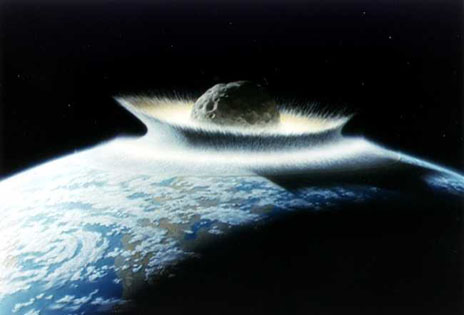
All this is necessary – but not sufficient – to guard ourselves against future tsunamis. For it’s not just earthquakes undersea that can trigger tsunamis. An asteroid impact could trigger the mother of all tsunamis that can impact coastal areas all over the planet.

An asteroid that struck the Earth 65 million years ago wiped out the dinosaurs and 70 per cent of the species then living on the planet. The destruction of the Tunguska region of Siberia in June 1908 – whose centenary was marked this year – is known to have been caused by the impact of a large extraterrestrial object.

Space artist David Hardy's vision...
When discussing the possible consequences of asteroid impacts on Earth, more attention has been given to the destruction it can cause by such a falling piece of the sky hitting inhabited areas of land. Some people seem to be comforted by the fact that two thirds of the planet’s surface is ocean — thus increasing changes that an impact would likely happen at sea.

In fact, we should worry more. Duncan Steel, an authority on the subject, has done some terrifying calculations. He took a modest sized space rock, 200 metres in diameter, colliding with Earth at a typical speed of 19 kilometres per second. As it is brought to a halt, it releases kinetic energy in an explosion equal to 600 megatons of TNT — 10 times the yield of the most powerful nuclear weapon tested (underground). Even though only about 10 per cent of this energy would be transferred to the tsunami, such waves will carry this massive energy over long distances to coasts far away. They can therefore cause much more diffused destruction than would have resulted from a land impact. In the latter, the interaction between the blast wave and the irregularities of the ground (hills, buildings, trees) limits the area damaged. On the ocean, the wave propagates until it runs into land.

Scientists have been talking about asteroid impact danger for decades. Arthur C Clarke suggested – in his 1973 science fiction novel Rendezvous with Rama – that as soon as the technology permitted, we should set up powerful radar and optical search systems to detect Earth-threatening objects. The name he suggested was Spaceguard, which, together with Spacewatch, has now been widely accepted.

In November 2008, a group of the world’s leading scientists urged the United Nations to establish an international network to search the skies for asteroids on a collision course with Earth. The spaceguard system would also be responsible for deploying spacecraft that could destroy or deflect incoming objects.

The group – which includes the Royal Society president Sir Martin Rees and environmentalist Sir Crispin Tickell – said that the UN needed to act as a matter of urgency. Although an asteroid collision with the planet is a relatively remote risk, the consequences of a strike would be devastating.

Not if, but when...
Not if, but when...
The International Panel on Asteroid Threat Mitigation, chaired by former American astronaut Russell Schweickart, urged: “The international community must begin work now on forging three impact prevention elements – warning, deflection technology and a decision-making process – into an effective defence against a future collision.”

Read more media coverage and commentary at:
The Guardian, 7 Dec 2008: UN is told that Earth needs an asteroid shield
World Changing, 10 Dec 2008: Giant asteroids and international security

This is exactly the message in an excellent documentary called Planetary Defence made by Canadian filmmaker M Moidel, who runs the Space Viz production company. Over the past many months, the film has been screened at the United Nations, on various TV channels and at high level meetings of people who share this concern.

Its main thrust: Scientists and the military have only recently awakened to the notion that asteroid impacts with Earth do happen. Planetary Defense meets with both the scientific and military communities to study our options to mitigate an impact. It makes the pivotal point: “Civilization is ill prepared for the inevitable. It’s not if an impact will happen with the Earth, it’s when!”

In such an event, the film asks, who will save Earth? The 48 minute documentary explores the efforts underway to detect and mitigate an impact with Earth from asteroids and comets, collectively known as NEO’s (Near Earth Objects).

Watch the trailer of Planetary Defence on YouTube:

Neil deGrasse Tyson, Astrophysicist and Director, American Museum of Natural History, in New York, says: “Planetary Defense, the film, is a documentary that explores how ill-prepared we are to prevent our own extinction from asteroid and comet impacts. Filmmaker M Moidel interviewed all the right people, asked them all the right questions, and leaves the viewer scared for our future, but empowered to do something about it.”

Read more about the film at Space Viz Productions website

Although we have never met, I have been in email contact with M Moidel for several years. I know how deeply committed he is to each of his documentary projects. Working on incredibly tight budgets and performing multiple tasks on his own, this brilliant Canadian has made some eminently accessible, timely and captivating documentaries on ‘big picture’ topics such as the search for intelligent life in the universe, the future of space exploration and, of course, coping with asteroid impacts.

Sir Arthur C Clarke, interviewed on some of Moidel’s films, including Planetary Defence, has highly commended his efforts.

Sir Arthur, whose Sri Lankan diving school was destroyed by the 2004 tsunami, wrote a few days after the disaster:

“Contrary to popular belief, we science fiction writers don’t predict the future — we try to prevent undesirable futures. In the wake of the Asian tsunami, scientists and governments are scrambling to set up systems to monitor and warn us of future hazards from the sea.

“Let’s keep an eye on the skies even as we worry about the next hazard from the depths of the sea.”
Iodised Salt: How to make the world smarter, faster?

A miracle powder?
A miracle substance to get smarter?
One of the earliest video films I helped distribute at TVE Asia Pacific, soon after it was set up in 1996, was called Ending Hidden Hunger.

This 20 minute film, made in 1992 by Bedford Films of UK and narrated by Sir Peter Ustinov, described how the UN children’s agency UNICEF was working toward eliminating micronutrient deficiencies from iron, vitamin A and iodine in different parts of the developing world. Examples are taken from Africa and Asia to both illustrate the extent of the problem as well as steps being taken to reduce these deficiencies that cause mass-scale disability and death.

The main premise of the film was simple: those lacking micro-nutrients in their regular diet often don’t show immediate signs of starvation. This deprivation builds up over time and causes slow – sometimes irreparable – damage.

Nicholas Kristof
Nicholas Kristof
I was reminded of this film — and its still very relevant message — when reading an excellent essay by Nicholas Kristof in International Herald Tribune a few days ago. He is a columnist for the New York Times who travels the world reporting from the various frontlines of survival and struggle.

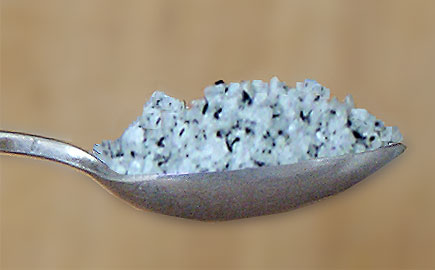
In Raising the World’s I.Q., dispatched from Rawalpindi, Pakistan, Kristof was talking about ‘a miracle substance that is cheap and actually makes people smarter’: iodised salt.

Here’s the context, as he put it:

“Almost one-third of the world’s people don’t get enough iodine from food and water. The result in extreme cases is large goiters that swell their necks, or other obvious impairments such as dwarfism or cretinism. But far more common is mental slowness.

“When a pregnant woman doesn’t have enough iodine in her body, her child may suffer irreversible brain damage and could have an I.Q. that is 10 to 15 points lower than it would otherwise be. An educated guess is that iodine deficiency results in a needless loss of more than 1 billion I.Q. points around the world.”

In nearly all countries, the best strategy to control iodine deficiency is iodisation of salt — one of the most cost-effective ways to contribute to economic and social development. Especially in these hard times, development professionals are looking for smart ways to get the biggest bang for their limited (and still shrinking) bucks. Investing in micronutrients – such as iodine – can provide some of the biggest bangs possible.

UNICEF Report 2008
UNICEF Report 2008
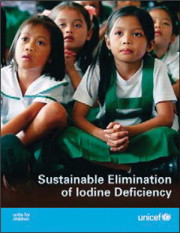
In June 2008, UNICEF published Sustainable elimination of iodine deficiency, a new report on progress since 1990 when the world’s governments set the target to eliminate iodine-deficiency disorders worldwide.

In October 2008, The Lancet, one of the world’s leading medical journals, published a report that noted: “Iodine deficiency is the most common cause of preventable mental impairment worldwide.”

The medical, public health and development communities have known and talked about iodine and other micronutrients for over 30 years. Significant progress has been made – for example, UNICEF says by 2006, more than 120 countries were implementing salt iodisation programmes, and 34 countries had managed to get rid of iodine deficiency among their people through this smart strategy.

But there still are major gaps — which continue to cause preventable damage to tens of millions of people including children.

Nicholas Kristof navigates through the heavy, jargon-ridden developmentspeak and churns out an eminently readable, accessible piece. It’s written in first person narrative from a part of the world where illiteracy, superstition – and their erstwhile companion, religious fanaticism – are trying to prevent people at risk from using iodised salt. This is science writing at its finest: anecdotal, personalised and purposeful.

And he’s absolutely right when he says iodised salt lacks glamour, doesn’t have too many stars or starlets singing its praise and (almost) no one writing about it despite its potential to improve lives for so many people.

I should know: one of the earliest topics I tackled as a young science reporter – getting started in the late 1980s – was salt iodisation. I struggled to put together a readable, engaging piece — which I then had to push through jaded editors who wondered what all this fuss was about.

I have only one (minor) bone to pick with Kristof. He pokes fun at Canada for hosting and supporting the Micronutrient Initiative, “an independent, not-for-profit organization committed to promoting simple cost-effective solutions for hidden hunger and developing innovative new solutions where needed.”

He calls Canada “earnest and dull, just like micronutrients themselves”. It’s a personal view – perhaps expressed with his tongue firmly in his cheek. Having travelled a fair amount in North America, and having good friends in both countries, I think that the nation north of the US-Canada border is a tad more civilised, certainly more caring and better engaged with the rest of the world.

But then, that too is a personal view. I’m darn lucky that I get enough iodine in my diet so that I can think for myself, keep asking lots of annoying questions…and occasionally even get some answers right.

Two billion people – almost a third of humanity – aren’t so lucky.

Read Raising the world’s I.Q. by Nicholas Kristof

Salt iodisation is not universally hailed. Read an alternative point of view that appeared in India’s Frontline magazine in 2006: Imposing iodine

Climate Neros: Films chained, unchained…

down-to-earth

“Twenty centuries ago, Emperor Nero fiddled while Rome burned. Today, some media companies are squabbling over copyrights while the planet is warming.”

These words, which I first uttered during an Asian workshop on moving images and changing climate in Tokyo in early October 2008, have resonated with many journalists, producers and activists concerned about climate change.

The latest outlet to carry my views is Down to Earth, the fortnightly magazine on science and environment published from New Delhi, India. They have included a condensed version of my remarks in their issue for 15 December 2008, under the heading: Films chained, unchained

It’s part of a special issue to mark the 14th Conference of Parties to the United Nations Framework Convention on Climate Change (UNFCCC) and the fourth meeting of Parties to the Kyoto Protocol, being held in the Polish city of Poznan from 1 to 12 December 2008.

In fact, Down to Earth editor Pradip Saha was part of our Tokyo workshop which called for climate change to be recognised as a copyright free zone.

When Down to Earth editors first mooted the idea of carrying my views, they suggested a catchy headline: Climate’s Niros. I rather liked that…but that didn’t survive their copyediting. Ah, well…

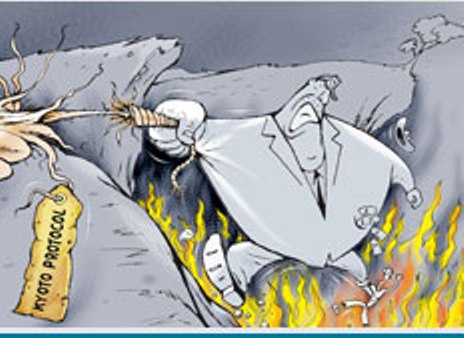
Last chance for Kyoto Protocol? Courtesy Down to Earth
Last chance for Kyoto Protocol?
In its preamble to the special climate change issue, Down to Earth editors say:
“Eleven years after the Kyoto Protocol was signed — only to be consigned to irrelevance over the subsequent decade — nations are meeting in Poland to negotiate post-2012 action.

“The realities of climate change are clearer than ever, and the cost of action is mounting. Rich countries, historically responsible for climate change, are proposing new mechanisms to share the burden. Leading developing countries such as India and China need to negotiate hard as well and make a big push for renewables…” Read full story

On 5 November 2008, SciDev.Net published my op ed essay:
Planet before profit for climate films

On 7 November 2008, Asia Media Forum published a longer version of this essay:
Climate Change or (c)limate (c)hange: Guarding copyrights on a warming planet

These have been linked to, or commented upon, by various blogs and websites. Interestingly, the big time TV/video production companies and broadcasters have been keeping quiet in this debate.

Perhaps they are too busy counting their money accruing from license fees?

Moji Riba: Capturing oral history in moving images

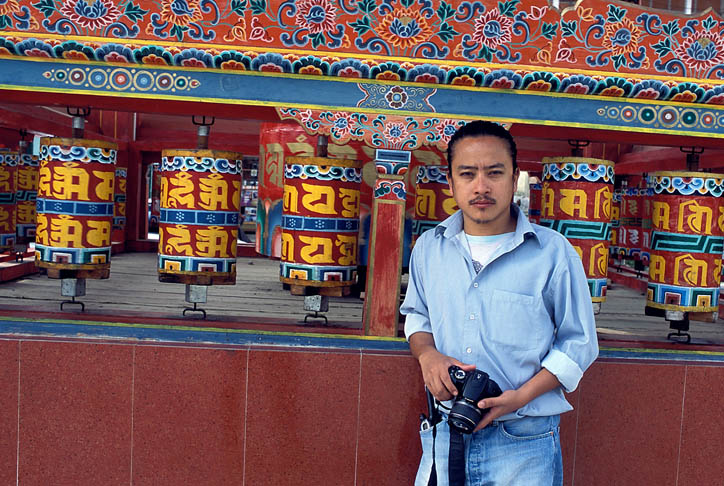
Moji Riba has been working since 1997 to document Arunachal Pradesh's rich cultural heritage. Image courtesy Rolex Awards

“I like to think of our heritage as an elastic band. I want to stretch this as much into the future generations as we can – till it reaches its edge and snaps. Each day I wake up and hope that this never happens. But that is sadly a finality we have to stare at – unless of course, there is a revolution of some kind!”

That’s how Moji Riba, Indian film-maker and cultural anthropologist, sums up the raison d’etre for his work.

He has reasons to worry. He lives and works in India’s north-eastern Arunachal Pradesh, which an isolated remote and sparsely populated part of the country that is home to 26 major tribal communities,. Each one has its own distinctive dialect, lifestyle, faith, traditional practices and social mores. They live side by side with about 30 smaller communities.

Today, a combination of economic development, improved communications, the exodus of the young and the gradual renunciation of animist beliefs for mainstream religions threatens Arunachal’s colourful traditions. “It is not my place to denounce this change or to counter it,” says Moji. “But, as the older generation holds the last link to the storehouse of indigenous knowledge systems, we are at risk of losing out on an entire value system, and very soon.”

Can anyone capture culture – a dynamic, hugely variable phenomenon – and preserve it in a museum or lab? Not quite. Preserving the communities as a living reservoir of culture is the best method. In addition, modern communication technologies can be used to record the myriad practices and memories – the indigenous knowledge and oral history of a people.

This is just what Moji Riba has been doing for over a decade. He founded and heads the Centre for Cultural Research and Documentation (CCRD) in Naharlagun, Arunachal Pradesh. The non-profit centre, established in 1997, focuses on audio-visual documentation of the folklore, ritual practices and oral histories of the diverse tribes that inhabit the north-eastern states of India and how the indigenous people are adapting to the processes of rapid change.

Moji, who holds a masters degree in mass communication from the prestigious Mass Communication Research Center (MCRC), Jamia Millia Islamia University, New Delhi, could easily have joined the exodus of talent from his state to the metropolitan centres in India. But he chosen to return to his roots with his enhanced skills and expanded worldview.

Over the past decade, he and the centre have made 35 documentaries for television stations and for government and non-governmental agencies. But the centre is more than just an archive or library: it is also a platform offering the tribal people an opportunity to voice their concerns and share experiences.

In 2004, Moji was instrumental in creating the diploma in mass communications at Itanagar’s Rajiv Gandhi University, to augment understanding of cultural values and local customs. He currently divides his time as head of the university’s communications department and running CCRD.

“CCRD has been using documentary films as a tool to document and understand the transitional tribal society and to share that experience through the medium of television,” says Moji. “In these 10 years, we have primarily produced television documentaries on linkages between issues of culture, environment and development and how one cannot be seen in isolation from the other.”

CCRD films have been showcased on Doordarshan, India’s national broadcaster, and various other national and international forums.

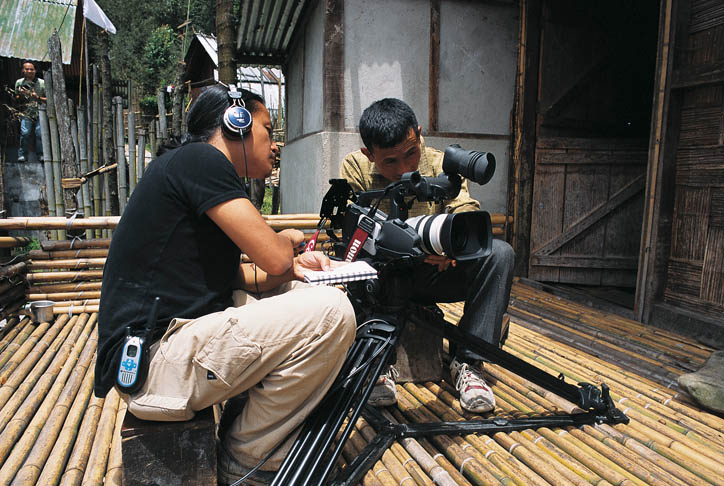
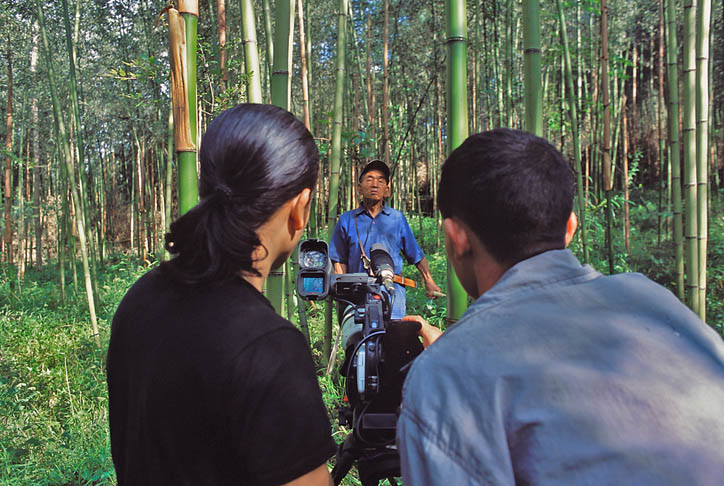
Riba teaches Hage Komo the basic camera skills that will allow the young Apatani to film an interview with his father and an animist priest, thus recording his tribe's oral history (Photo courtesy Rolex Awards)

Years of hard work and quiet persistence are beginning to pay off. Moji has just been selected as an Associate Laureate of Rolex Awards for Enterprise, a prestigious global honour. He is being recognised for ‘helping to preserve and document the rich cultural heritage of India’s Arunachal Pradesh tribes’.

He is among the 10 winners of the 2008 Rolex Awards for Enterprise, which for more than 30 years have supported pioneering work in science and medicine, technology and innovation, exploration and discovery, the environment and cultural heritage.

Read the full profile on Moji and his work on Rolex Awards website

I have known Moji for half a decade, in which time my admiration for him has continued to grow. We first met during a South Asian TV training workshop TVE Asia Pacific organised in Kathmandu in October 2003. Since then, Moji worked with us as a freelance film director and producer. In 2005, he directed Deep Divide, a half-hour, three-country documentary on the state of environmental justice in South Asia. In 2006, he filmed stories for TVEAP series Digita4Change (in Bhutan) and The Greenbelt Reports (in three locations in India).

Moji’s films have drawn the attention of film festivals and reviewers. My friend Darryl D’Monte, one of the most senior journalists in India, wrote in 2006 about one film titled When the Mist is Lifted: “As an insider, he (Moji) is able to draw out the contradiction between old and new lifestyles and practices. In remarks after the screening, he spoke about the difficulties of making films in the northeast, and understandably expressed his reluctance to make another film on Arunachal, which has been his staple over the years.”

rolex-awards-logoWith support from the Rolex Award, Moji and CCRD plan to implement in 2009 the Mountain Eye Project, an unconventional and ambitious initiative that aims to create a cinematic time capsule documenting a year in the life of 15 different ethnic groups. They will select and train young people from each community to do the filming. This gives him access to enough film-makers as well as access to people with an intimate understanding of village life.

According to Moji, the Mountain eye Project is the result of the learnings that have emerged from about a decade’s work on documentation of the folklore and cultural heritage of the tribal groups in northeast India. It seeks to involve local communities in extensively documenting the disappearing cultural practices and traditional knowledge and to build an audio-visual archive of this data.

It also proposes to activate a vast network of outreach activities through museums in order to inculcate in children and youth, an appreciation of traditional heritage and creating respect for cultural diversity.

Watch this space.

Hage Komo gets video instructions from Moji Riba, who is enlisting local young people to capture the oral histories, languages and rituals of their tribes for his project. Komo films his father gathering bamboo in a grove outside Hari Village. (Photo courtesy Rolex Awards)

Climate change and copyrights: What intellectual property on a dead planet?

Twenty centuries ago, Emperor Nero fiddled while Rome burned. Today, some media companies are squabbling over copyrights while the planet is warming.

This is the main thrust of my latest op ed essay, just published by the Science and Development Network (SciDev.Net) anchored in London, UK. It’s titled: Planet before profit for climate change films.

I have adapted for this commentary some of my ideas initially expressed on this blog – especially the post on 12 Oct 2008: Climate in Crisis and planet in peril – but we’re squabbling over copyrights!

Broadcasting on a warming planet

In writing this essay, I’ve also drawn on the excellent discussions we had last month during the Asia Pacific workshop on Changing Climate and Moving Images in Tokyo.

I’m challenging broadcasters to put their money where their mouth is.

Here’s an excerpt:

“Broadcast mandarins routinely support global struggles against poverty, HIV, corruption and climate change by offering free airtime to carry public interest messages. But few let go of their own products on these very subjects for non-broadcast uses.

“Making climate change a ‘copyright free zone’ for media products would increase the resource materials available to thousands of educators, social activists and trainers struggling to communicate this complex topic to audiences across the world. Moving images would make their task easier.

“The climate crisis challenges everyone to adopt extraordinary measures. Broadcasters and film-makers need to balance their financial interests with planetary survival.

“What use is intellectual property on a dead planet?”

Read my full essay on SciDev.Net: Planet before profit for climate change films.

In September 2006, speaking at the United Nations headquarters (photo below), I called for poverty to be recognised as a copyright free zone. The idea was to have broadcasters and other electronic publishers release copyrights on TV, video and online content relating to poverty and development issues -– at least until (MDG target year of) 2015.

The TV broadcast and film communities have reacted to this proposal with disdain or indifference, but I keep badgering on. If poverty didn’t motivate broadcasters to change business as usual, I hope, the planetary threat posed by climate change would.

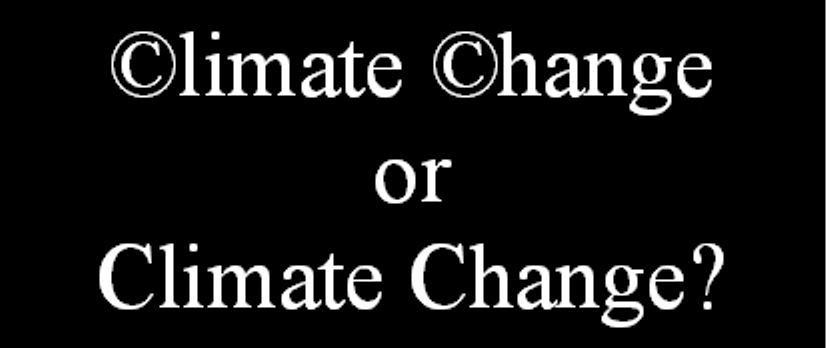
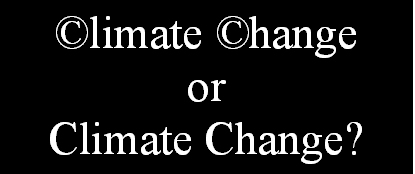
©limate ©hange or climate change? Copyrights on a warming planet

This is the real question!

OK, this is hot off my imaginative mind. I was writing an op ed essay today and turning phrases over in my mind when I came up with this…which neatly sums up what I’ve been saying for a while: confronted with the climate crisis, broadcasters and film-makers need to adopt a more liberal approach to copyrights on their creations.

For discussions on this, see my earlier blog posts:

15 Oct 2008: Standing on Al Gore’s Shoulders: Moving images in the climate debate

13 Oct 2008: ‘Climate Challenge’ marks turning point in Vietnam’s climate concerns

12 Oct 2008: India’s climate change NIMBYsm and middle class apathy

12 Oct 2008: Climate in Crisis and planet in peril – but we’re squabbling over copyrights!

See also these news items appearing on TVE Asia Pacific website:

6 Oct 2008:
Make climate change a ‘copyright free zone’: Asia Pacific TV and film professionals call

4 Oct 2008:
Climate coverage in media needs rational and emotional approaches

Standing on Al Gore’s Shoulders: Moving images in the climate debate

And the winner is...

Al Gore used to have a reputation as a very smart man who was very stiff and aloof especially in his public speaking.

I didn’t notice this the only time I listened to him in person, at an environmental journalists conference at MIT in Boston, Massachusetts, in the Fall of 1995. Perhaps because he was speaking to a group of over 200 journalists, Gore was especially charming. He delivered a well prepared speech passionately, and then took a dozen questions.

I still remember one incident during question time. A Bangladeshi participant lined up to ask him something and started addressing him as ‘Mr President’. Gore smilingly interjected: ‘Not yet!’. The journalist, not the least shaken by his slip of the tongue, said: ‘Well, I hope you will be one day!’.

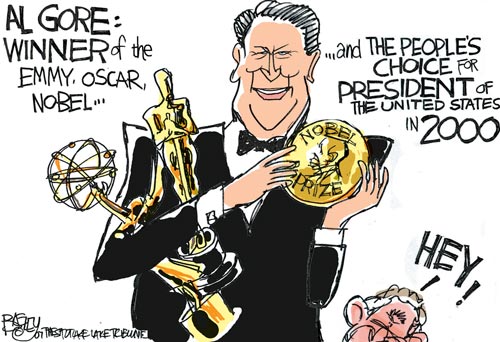
Well, that day came…and it was not to be. Gore won the popular vote in the 2000 presidential election but lost the presidency in a bizarre series of events that had the rest of the world gasping.

All that sounds so long ago, now that Gore has emerged as the world’s best known climate crusader. There are many who feel that he is more effective in his current role than as a politician.

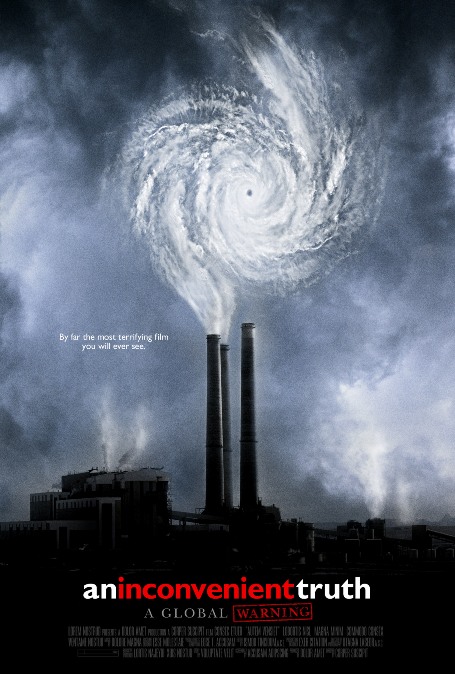
His 2006 film, An Inconvenient Truth, helped move the climate change debate forward in a decisive manner.

Whatever we might think about the film’s artistic and technical merits, I’m glad it has settled one question: can a single film make a difference in tipping public opinion about a matter of global importance?

The answer, where climate change is concerned, is a resounding yes!

For sure, the film arrived at a time when the climate change debate had been going on for nearly two decades. Scientific evidence was mounting for human responsibility for accelerated changes in our climate. Political and business leaders, in denial for years, were finally beginning to take note — perhaps sensing votes or dollars.

Official film poster
Coming in at the time it did — in the Summer of 2006 –- Al Gore’s film tipped the public opinion to agree that climate change was for real and responses were urgently needed.

“It is now clear that we face a deepening global climate crisis that requires us to act boldly, quickly and wisely,” says the former US Vice President introducing his film.

An Inconvenient Truth focuses on Al Gore and his travels in support of his efforts to educate the public about the severity of the climate crisis. Gore says, “I’ve been trying to tell this story for a long time and I feel as if I’ve failed to get the message across.”

The film closely follows a Keynote presentation (dubbed “the slide show”) that Gore presented throughout the world. It intersperses Gore’s exploration of data and predictions regarding climate change and its potential for disaster with Gore’s life story.

An Inconvenient Truth is not a particularly stunning or dramatic documentary. Some have called it a ‘dramatised PowerPoint presentation’ (although Gore actually uses Apple’s Keynote presentation software). There aren’t cuddly animals, deadly chemicals, forest infernos or gory animal hunts that make environmental films appeal to a mass audience.

In fact, it hangs together — and sustains for nearly an hour and a half — due to the sheer star power of Al Gore. And when we take a closer look, we see how hard Gore and his team at Participant Productions have tried to engage audiences.

The film, made on a budget of around US$1 million (modest by Hollywood standards) went on to earn US$49 million at the box office worldwide. As at late 2008, it ranks as the fourth-highest-grossing documentary film in the United States, after Fahrenheit 9/11, March of the Penguins and Sicko.

I first saw An Inconvenient Truth at a cinema in Virginia, USA, while it was still on its initial theatrical release in the Fall of 2006. I reviewed it in early 2007, and recently returned to discussing the film during a presentation I made to our Asia Pacific regional workshop on changing climate and moving images, held in Tokyo in early October 2008.

My thrust was: now that Al Gore and his film have helped turn the climate debate, how can we continue to use moving images in search of solutions? In other words, how do we stand on the shoulders of Al Gore?

Another excellent film on climate change
The Great Warming: Another excellent film on climate change

I looked back at Gore’s film and another excellent Canadian film that came out the same year, The Great Warming. Discussing their merits, I noted how both films appeal as much to our emotions as they do to our rational intellect. “Facts, figures and analysis alone cannot engage a diverse, sometimes sceptical or indifferent audience. That’s why they try a different approach: appealing to the emotions.”

Here are some excerpts from my remarks:

We often see environmental documentaries failing to engage audiences because they pack too much information, or worse, preach too heavily and directly. Some film-makers feel strongly that they must ‘inform and educate’ their viewers at all costs.

To engage people, both are needed
It’s story telling that works best with moving images –- and what better stories to tell than the personalised ones of real people dealing with real world problems and challenges?

With ‘moving images, moving people’ as our slogan, we at TVE Asia Pacific believe in the power of well-made films to reach out to people’s hearts and minds.

Our experience shows that moving images can indeed move people, but only when:
• They are used in the right context;
• They form part of a bigger effort or campaign;
• Audio-visual’s strengths are maximised; and
• Audio-visuals limitations are properly recognised.

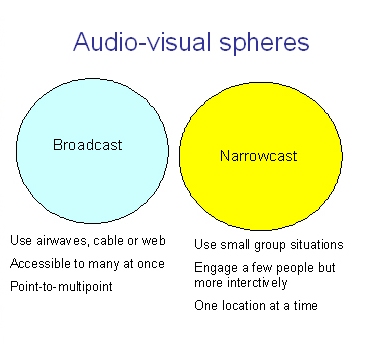
It’s the combination of broadcast and narrowcast spheres that has a better chance of changing people’s attitudes and, ultimately, their behaviour.

Read the full presentation here:
standing-on-al-gores-shoulders-nalaka-gunawardene-speech-in-tokyo-4-oct-20081

‘Climate Challenge’ marks turning point in Vietnam’s climate concerns

Seeking local solutions for a global problem
Climate Challenge TV series: Seeking local solutions for a global problem

Many media reports and documentaries on climate change tend to be scary. Even the most balanced and scientifically informed ones caution us about dire scenarios that can rapidly change the world as we know it.

But it’s not all doom and gloom. Like every crisis, climate change too presents humanity with formidable challenges that can become opportunities to do things differently — and better.

Climate Challenge is a rare TV series that adopts this positive attitude. The 6-part series co-produced by One Planet Pictures in the UK and dev.tv in Switzerland, links the global climate crisis with location action for both mitigation (trying to reduce further aggravation) and adaptation (learning to cope with impacts).

It also makes the point: in the fight against global warming, developed and developing countries must work hand-in-hand to find viable solutions for all.

The film-makers of Climate Challenge focus on some of the most promising approaches to turning down the global thermostat. Climate Challenge goes in search for solutions that won’t put a break on economic growth.

The series had its original run on BBC World News in April – May 2007. Shortly afterwards, TVE Asia Pacific (TVEAP) started distributing it to TV channels, educational institutions and civil society groups across the Asia Pacific region. It has been one of the more popular items on our catalogue of international TV films on sustainable development and social justice.

Our deal with Asia Pacific broadcasters is a barter arrangement. TVEAP clears copyrights for developing countries in our region (more than 30 countries or territories) and offers films free of license fee that normally prevent many southern broadcasters from using this content.

We offer a new set of titles every two months to our broadcast partners – now numbering over 40 channels. They select and order what interests them, and often pay for the cost of copying on to professional tape and dispatch by courier.

When they receive the tapes, accompanied by time-coded scripts, many TV stations version the films into their local language/s using sub-titles or voice-dubbing. They do this at their expense, and then assign a good time slot for airing the films once or several times. They are free to re-run the films as often as they want. The only expectation is that they give us feedback on the broadcasts, so that we can report to the copyright owners once a year.

This arrangement works well, and bilateral relationships have developed between TVEAP’s distribution team and programme managers or acquisition staff at individual TV stations across Asia. Everything happens remotely — through an online ordering system and by email. It’s rarely that we at TVEAP get to meet and talk with our broadcast colleagues in person.

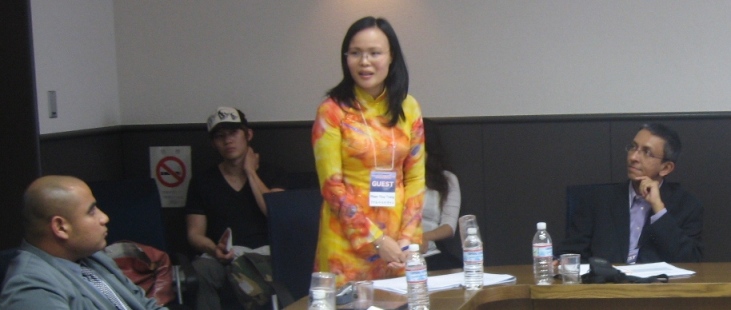
Pham Thuy Trang speaks in Tokyo

I was delighted, therefore, to meet one of our long-standing broadcast colleagues in Tokyo earlier this month when we ran a regional workshop on changing climate and moving images. Pham Thuy Trang, a reporter with news and current affairs department of Vietnam Television (VTV), was one of the participants. She turned out to be an ardent fan of our films.

She told the Tokyo workshop how the Climate Challenge series marked a turning point in Vietnam’s public discussion and understanding of climate change issues.

In mid 2007, VTV was one of many Asian broadcasters who ordered Climate Challenge. Having versioned it into Vietnamese, VTV broadcast the full series in December 2007 to coincide with the 13th UN climate change conference in Bali, Indonesia.

“This was the first time the issue received indepth coverage on TV,” Trang said. This was particularly significant because a 2007 survey had revealed low levels of interest in climate issues by the media in Vietnam.

Vietnam has a 3,000km long coastline
“In fact, the World Bank has identified Vietnam, with its 3,000 km long coastline, as among the countries most vulnerable to climate change impact. Our media has been reporting some developments – such as increased coastal erosion – as purely local incidents without making the climate link,” she noted.

The series, originally broadcast in the foreign documentaries slot, was noticed by the VTV senior management who then arranged for its repeat broadcast in the long-established environmental slot. The latter slot, well established for a decade, commands a bigger audience.

“Our Director General was impressed by our receiving such a good series on an important global issue,” Trang recalled. She added: “We need more films like this – that explain the problem and help us to search for solutions.”

Trang kept on thanking TVEAP for Climate Challenge and other films that bring international environment and development concerns to millions of Vietnamese television viewers. I said we share the credit with generous producers like One Planet Pictures and dev.tv, who let go of the rights to their creations for the global South.

If only more producers of TV content on climate and other development issues think and act as they do. That was also the call we made at the end of our workshop: recognise climate change as a copyright free zone.


Related blog post: Climate in crisis and planet in peril – but we’re squabbling over copyrights!

India’s climate change NIMBYsm and middle class apathy

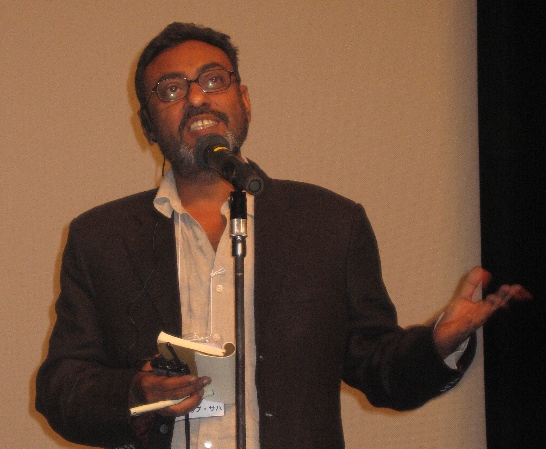
Pradip Saha in Tokyo

The global climate is indeed changing, but not everyone is equally affected by it – or bothered about it either. Take, for example, the majority of India’s 300 million+ middle class, which is roughly the size of the entire population of the United States.

According to environmental activist and independent film-maker Pradip Saha, it’s not a question of ignorance, but apathy.

“Our educated middle classes understand what’s happening, but they are also big contributors to the problem – with their frenzy to burn oil and coal. They look for any excuses for not acting on this issue,” Pradip said during a recent regional workshop in Tokyo, Japan.

The Asia Pacific workshop on ‘Changing Climate and Moving Images’, held in Tama New Town, Tokyo, was organised by TVE Japan in collaboration with TVE Asia Pacific and supported by Japan Fund for Global Environment.

Pradip, associate director of the Centre for Science and Environment – a leading research and advocacy organisation – has been tracking climate change issues for two decades. He sees this Big Issue in three ways: science of climate change, politics of climate change and feelings of climate change.

To fully understand how the complex Indian society perceives and responds to the climate crisis, all three dimensions need to be studied, he says. And particular attention must be paid to the plight of those who are already experiencing changes in their local climate.

From the Himalayan mountains to the small islands in the Bay of Bengal, millions of Indians are living and coping with climate change. “Large sections of our poor feel it, and are among the worse impacted.”

Many such affected people may never have heard of climate change. They are bewildered by rapid changes in rainfall, river flows, sunshine and other natural phenomena.

Pradip drew an example from the Sundarban delta region in the Bay of Bengal. With 10,000 square kilometres of estuarine mangrove forest and 102 islands, it is the world’s largest delta. Here, some islands are slowly being eroded and submerged by rising sea levels. Three small islands have already gone underwater. Others are experiencing problems of salt water intrusion, posing major difficulties for the local people.

Sundarban delta as seen from space

Analysis of surface data near Sagar island in the Sundarbans reveals a temperature increase of 0.9 degree celsius per year. Experts are of the opinion that this is one of the first regions bearing the brunt of climate change.

But the islanders – like most other poor people in India – don’t have enough or any voice to express their concerns to the policy makers, civil society groups and captains of industry. For these members of the middle class, the Sundarbans mean just one thing: the Royal Bengal Tiger.

And most of them probably have never heard of Sagar island. They might just shrug it off, saying: It’s Not In My Backyard (NIMBY).

During the past few months, Pradip has been filming on these islands trying to capture the unfolding human and environmental crisis. He was inspired by an investigative story that appeared in early 2008 in the Down to Earth science and environmental magazine where he is managing editor.

Pradip screened the 64-minute long film, aptly titled Mean Sea Level, at our workshop. The few of us thus became the first outsiders to see the film which I found both deeply moving and very ironic. With minimal narration, he allows the local people to tell their own story. There’s only one expert who quickly explains just what is going on in this particularly weather-prone part of the world.

Confronted with middle class apathy and indifference, activists and journalists like Pradip Saha face an uphill task. “Knowledge is not turning into action because those who know (about climate change causes and responses) are also the biggest culprits,” he says.

To make matters worse, government policies are not formulated with adequate public consultations. Sections of central and state governments in India have also started responding to individual effects of climate change without understanding the bigger picture. Such piecemeal solutions can do more harm than good.

Then there is India’s obsession with motor cars – a topic on which Pradip has already made a short film.

Pradip’s views on climate change activism in India resonates with those of the Filipino academic-activist Walden Bello. Speaking at the Greenaccord international media forum in Rome in November 2007, he called for a mass movement at the grassroots across the developing countries of the global South to deal with climate change – the biggest environmental threat faced by the planet today.

As I quoted him saying, such a movement might be unpopular not only with the Southern elite but also with sections of the urban-based middle class sectors that have been the main beneficiaries of the high-growth economic strategy that has been pursued since the early 1990s.

Read my April 2007 post: Fossil Fools in India

Climate in Crisis and planet in peril – but we’re squabbling over copyrights!

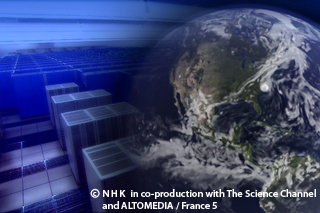
Climate in Crisis - a global documentary

On my recent visit to Tokyo for a regional workshop on changing climate and moving images, I watched a number of excellent documentary films on the subject. One of them was Crude: The Incredible Journey of Oil, the excellent Australian film that I wrote about in March.

Another was Climate in Crisis, an outstanding global documentary in two parts (2 x 52 mins) co-produced in 2006 by Japan’s public broadcaster NHK together with The Science Channel and ALTOMEDIA/France 5.

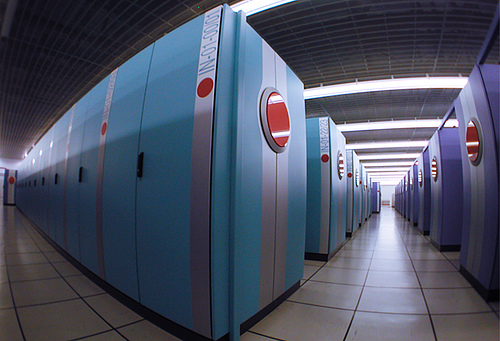
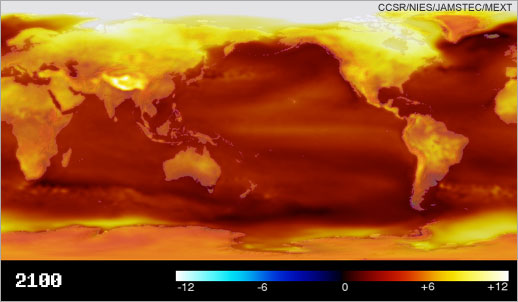
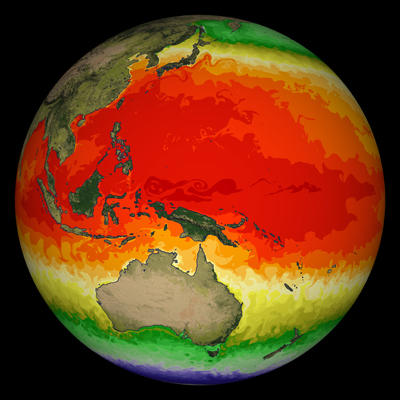
Directed by Fujikawa Masahiro, the film draws heavily on the Earth Simulator — one of the world’s most powerful supercomputers — which Japanese scientists used to project the climatic disasters in next 100 years. The system was developed in 1997 for running global climate models to evaluate the effects of global warming and problems in solid earth geophysics. It has been able to run holistic simulations of global climate in both the atmosphere and the oceans — down to a resolution of 10 km.

NEC Earth Simulator in Japan

The results, captured in this documentary, are truly mind-boggling. Atmospheric temperatures may rise by as much as 4.2 degrees Celsius, more hurricanes may attack and deserts may spread from Africa to southern Europe, and half of the Amazon rainforest may be gone. Climate in Crisis shows a severe projection on environmental destruction based on rigorous scientific data and considers whether humankind can avoid this.

This film, made in the same year as Al Gore’s Oscar-winning film An Inconvenient Truth, has won several awards including the Earth Vision Award at the 15th Earth Vision Tokyo Global Environmental Film Festival.

I was curious why this excellent film – in my view, better made than Al Gore’s one – hasn’t been more widely seen, talked about and distributed. To be honest, I’d not even heard of this one until my Japan visit — and I try to keep myself informed on what’s new in my field of endeavour.

The reasons soon became apparent: copyright restrictions! The co-producers are keeping the rights so tight that only the highest bidders will be allowed to acquire it on a license fee.

This is a standard broadcast industry practice that didn’t surprise me. But I was taken aback by how jealously the rights are guarded. All other films that were part of our event, including high budget commercial productions like Crude, were screened to the public at the Parthenon in Tama New Town in Tokyo.

Not so with Climate in Crisis, which we – the overseas participants to the workshop – had to watch at a theatre inside NHK’s Tokyo headquarters. No public screening was possible. As we later heard, NHK itself was willing to allow a public screening (after all, it draws a good part of its income from the Japanese public), but their international co-producing partners, especially the Science Channel, would simply not agree to it. Wow.

Twenty centuries ago, emperor Nero fiddled while Rome burned. Today, some people are squabbling over copyrights while the whole planet is in peril.

Earth in 2100 - as seen by Earth Simulator

Our workshop participants came from solid backgrounds in broadcasting or independent film-making, and we are not naive activists asking hard-nosed broadcasters to let go of their precious rights which generates vital income. But we would have expected them to allow films such as Climate in Crisis to circulate a bit more freely in everybody’s interest.

This reminded me of correspondence I had last year with the Canadian producers of another outstanding climate film titled The Great Warming. The initial discussions with its director were promising, but when the distribution people started talking about ‘revenue optimising’, our negotiations stalled.

It also reminded me of similar experiences of other environment and natural history film makers, such as South Africa’s Neil Curry. He had a long struggle with the BBC to clear the non-broadcast use rights of his own film that he wanted to take back to the locations in Botswana where it was filmed.

Many broadcast and production companies in the west don’t realise that TV broadcasters in developing Asia operate on a very different basis. Talking about broadcast ‘pre-sales’ or ‘commissions’ loses meaning when many stations are operating on tiny budgets — or in some cases, no budgets — for factual content. Many are struggling to survive in tough, emerging economies.

Is this our future?
Is this our future?

TVE Asia Pacific operates a regional film distribution service that brings environment and development films within reach of such broadcasters. We operate without getting mired in license fees or royalties.

Our 2-day workshop called for climate change to be recognised as a ‘copyright free zone’. This would enable audio-visual media content on the subject to move freely across borders and to be used widely for broadcast and narrowcast purposes.

Here’s the full reference from our statement of concern:

“Prevailing copyright regimes prevent the sharing and wider use of outstanding TV programmes and video films on climate and development issues. We are deeply concerned that even content developed partly or wholly with public funding (government grants, donor funds or lottery funds) remain unfairly locked into excessive copyright restrictions. Sometimes film-makers and producers themselves are willing but unable to allow their creations to be used for non-commercial purposes by educational, civil society and advocacy groups. We appreciate the media industry’s legitimate needs for intellectual property management and returns on investment. At the same time, the climate crisis challenges us to adopt extraordinary measures, one of which can and should be recognising climate change as a ‘copyright free zone’. Such agreement would encourage media organisations and independent producers to share content across borders, and with entities outside the media industry engaged in climate education, advocacy and activism.”

Here’s the simple question I raised during the workshop, which is worth being posed to all those who hesitate to even discuss this issue:

Can anyone manage their intellectual property rights on a dead planet?

This is the real question!