Would 2 billion recognise this?What’s the first image that comes to your mind when you hear the word ‘Internet’?
If you’re a techie or geek, you’ll probably come up with a detailed answer that is technically accurate or precise. But most of the 2 billion plus people who use the Internet worldwide are not techies. They don’t know – or care – about the back-end technicalities.
A good icon is simple, language-neutral, and can be understood across different cultures and by people with very different educational backgrounds. For example, telephones – both fixed and mobile – have established symbols or icons. Sure, the devices have evolved beyond the well known imagery, but everybody recognises these.
So what’s the equivalent for the Internet, never mind its multitudinous applications and delivery methods?
We’re currently editing a short video on LIRNEasia’s broadband quality of service experience (QoSE) in emerging Asian economies. We play with images to tell complex stories in non-technical terms. We wanted to use an icon for the Internet (broadband or otherwise) — and couldn’t immediately think of one visual that everybody knows and recognises unambiguously as representing the global Internet.
So we searched. Our usually reliable friend Google wasn’t of much help. Google image search for ‘internet icon’ brought up hundreds of results — but none that is a universally accepted or recognised. But the search itself was interesting and revealing.
Some images, like Microsoft’s Internet Explorer browser’s famous ‘e’, are well known but are branded to one product and company.
Others, like the ethernet cable’s plug pin, are widely used — but how many non-techies will recognise it? Besides, when broadband access is increasingly going wireless, do the cables matter as much as they used to?
The same goes for those colourful images of fibre optic cables — dazzling points of light, but how many Digital Immigrants (or even Digital Natives) will know what they are?
At least wireless Internet seems to have settled its iconography — or has it? The little antenna transmitting omni-directionally seems to pop up everywhere these days, at least where such coverage is available. But there too, we have more than one icon — even if their main visual symbols are similar.
Then there’s the ubiquitous @ sign — originally introduced for, and still an integral part of, email addresses. But hey, Internet is a lot more than emails!
Are we settled on this?We asked around IT industry friends and IT-watchers, but none could give us a definitive answer. The most that they could agree on was that the 3-letter formulation www (signifying the World Wide Web) comes close to a universally recognised sign for the Internet.
Hmm, that’s far from being a visually elegant design. And it’s decidedly biased to the roman alphabet too (ok, that’s the language of science).
But is there a better icon for the whole Internet, irrespective of delivery method and language-neutral? If not, isn’t it about time we agreed on one?
Designers, geeks and others with spare creative capacity, please take this up.
My DIY as POY: Famous at last?“All I can hear I me mine, I me mine, I me mine.
Even those tears I me mine, I me mine, I me mine.
No-one’s frightened of playing it
Ev’ryone’s saying it,
Flowing more freely than wine,
All thru’ your life I me mine…”
When George Harrison sang those words in the 1970 Beatles song ‘I-Me-Mine’, he was in two minds about expressing in the first person (or ego). He wasn’t alone: mainstream journalism has long had reservations about where ‘I’ fit in journalistic narratives.
“Never bring yourself into what you write,” we were told in journalism school 20 years ago. Journalists, as observers and chroniclers of events, write the first drafts of history – and without the luxury of time or perspective that historians and biographers take for granted. We often have to package information and provide analysis on the run. Bringing ourselves into that process would surely distort messages and confuse many, it was argued. We had to keep our feelings out of our reportage lest it affects our ‘objectivity’.
In other words, we were simply mirrors reflecting (and recording) the events happening around us. Mirrors can’t – and shouldn’t — emit light of their own.
Occasionally, if we felt the urge to express how we personally felt about such trends and events, we were allowed the luxury of an op-ed or commentary piece. Of course, as long as we ensured that it was a measured and guarded expression. And if we really wanted to bring ourselves into the narrative, we could use the archaic phrase ‘this writer…’ to refer to ourselves.
But never use I-Me-Mine! That would surely sour, taint and even contaminate good journalism – right?
Well, it used to be the ‘norm’ for decades — but mercifully, not any longer. Thanks largely to the new media revolution triggered by the Internet, writing in the I-Me-Mine mode is no longer frowned upon as egotistic or narcissistic. It sometimes is one or both these, but hey, that’s part of cultural diversity that our information society has belatedly learnt to live with…
We journalists are late arrivals to this domain. The first person narrative was always valued in other areas of creative arts such as literary fiction, poetry and the cinema. In such endeavours, their creators are encouraged to tell the world exactly how they feel and what they think.
Of course, some writers ignored orthodoxy and wrote in the first person all along. One example I know personally is the acclaimed writer of science fiction and science fact, Sir Arthur C Clarke. Shortly after I’d started working with him in 1987, Sir Arthur encouraged me to fearlessly use the first person narrative even in technical and business writing. A lot of writing ended up being too dull and dreary, he said, because their writers were afraid of speaking their minds.
Yet we had to wait for the first decade of the Twenty First Century to see I-Me-Mine being widely accepted in the world of journalism. Did the old guard finally cave in, or (as sounds more likely) did Generation Me just redefine the rules of the game?
Whatever it is, I-Me-Mine is now very much in vogue. And not a moment too soon!
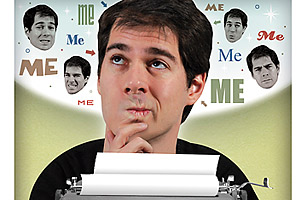
Joel Stein (Photo-illustration by John Ueland for TIME)As Time columnist Joel Stein, who often writes with his tongue firmly in his cheek, noted in a recent column: “All bloggers write in first person, spending hours each day chronicling their anger at their kids for taking away their free time. Every Facebook update and tweet is sophomoric, solipsistic, snarky and other words I’ve learned by Googling myself.”
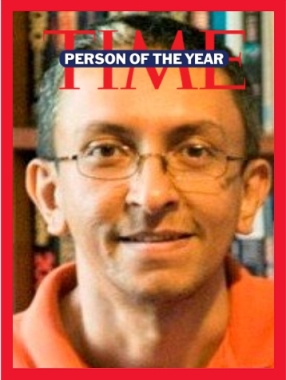
And look at what Time just tempted me to do: put myself on their cover, as the Person of the Year (POY), no less. While designating Facebook’s founder Mark Zuckerberg as its POY 2010, Time teamed up with the social media network to introduce a new application that allows anyone to become POY with just a few key strokes. Provided you have a Facebook account, of course.
Joel Stein quotes Jean M Twenge, professor of psychology at San Diego State University, as saying that we are living in the Age of Individualism, a radical philosophical shift that began with Sigmund Freud. It has exploded during the past decade with reality television, Facebook and blogging. “You’re supposed to craft your own image and have a personal brand. That was unheard of 10 years ago,” Twenge says.
What a difference a decade can make. Although trained in the pre-me era, I was never convinced as to why I had to keep myself out of what I write. However, my use of I-Me-Mine was done sparingly in the late 1980s (when I started my media work) and during the 1990s. It was only in the 2000s that I finally found both the freedom to speak my mind – and the ideal platforms for doing so: blogging and tweeting.
As my regular readers know, I blog about my family, friends, pet, travels, writing and conference speaking. I liberally sprinkle photographs of myself doing various things. I tell you more than you really want to know about my life. Ah yes, I’m self-referential too.
And not just on this blog. I’ve also been writing op ed essays for various mainstream media outlets for much of the past decade, and have never hesitated in expressing what I think, feel and even dream about. (Isn’t that what opinion pieces are meant to be?)
But the Digital Immigrant that I am, all my writing is shaped by my pre-Internet training. Even for a blog post or tweet, I still gather information, marshal my thoughts and agonise over every word, sentence and paragraph.
As my own editor and publisher on the blog, I don’t have gatekeepers who insist on any of this. My readers haven’t complained either. Yet I write the way I do for a simple reason. I may indulge in a lot of I-Me-Mine, but I don’t write just for myself. You, gentle reader, are the main reason why I strive for coherence and relevance.
(OK, if you really must know, it also ensures a joyful read when I occasionally go back and read my own writing…)
The Face of Facebook
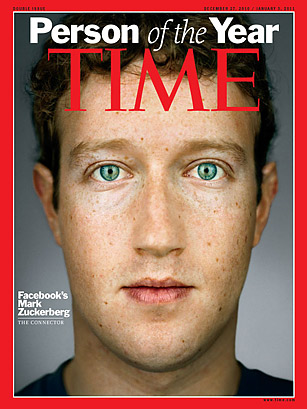
“For connecting more than half a billion people and mapping the social relations among them, for creating a new system of exchanging information and for changing how we live our lives, Mark Elliot Zuckerberg is TIME’s 2010 Person of the Year,” TIME magazine’s editors announced on 15 December 2010.
As if to support their choice, their profile of Facebook’s co-founder added: “One out of every dozen people on the planet has a Facebook account. They speak 75 languages and collectively lavish more than 700 billion minutes on Facebook every month. Last month the site accounted for 1 out of 4 American page views. Its membership is currently growing at a rate of about 700,000 people a day.”
As usual, TIME’s selection was eagerly awaited, and the most popular choice online was WikiLeaks founder Julian Assange. He ended as a runner-up as the next four newsmakers of 2010 — perhaps it was too controversial a choice for TIME’s editors considering the heavy polarisation of views at home about WikiLeaks?
I first read about this selection on Twitter. By coincidence, I was just finishing my latest essay, which was more about the challenges of living in the WikiLeakable world that we now find ourselves in. But Mark Zuckerberg and Facebook get honourable mentions in there.
“I’m not so sure what you might have made of this thing called Facebook. With more than 500 million active members, the social networking website is the largest of its kind (well ahead of its nearest rival Myspace, owned by your friend Rupert).
“Going by the sheer numbers, Facebook is behind only China and India in population terms. But those who compare it to a major league country don’t imagine far enough — it’s really becoming another planet…
An essential survival skill in this Info Age...“While Facebook’s high numbers are impressive, not everyone is convinced of its usefulness and good intentions. Can we trust so much power in the hands of a few very bright (and by now, very rich) twentysomethings? How exactly is Facebook going to safeguard our privacy when we (wittingly or unwittingly) reveal so much of our lives in there?
“I raise these concerns not only as a long-time ICT-watcher, but also as the father of a teenager who is an avid Facebooker. I once called Facebook co-founder Mark Zuckerberg a ‘Digital Pied Piper’: might we someday see Hamelin the sequel?”
PS: On 1 Oct 2010, when the movie The Social Network (based on the Facebook story) opened, I tweeted: “www.thesocialnetwork-movie.com Story of da world’s biggest Pied Piper. And his 500 million+ rats!”
Smart but fleeting mobs?‘Smart mobs’ is an interesting term for like-minded groups that behave intelligently (or just efficiently) because of their exponentially increasing network links.
The idea was first proposed by author Howard Rheingold in his 2002 book, Smart Mobs: The Next Social Revolution. It deals with the social, economic and political changes implicated by developing information and communications technology. The topics range from text-messaging culture and wireless internet to the impact of the web on the marketplace.
In the eight years since the book first appeared, we’ve seen a proliferation and evolution of smart mobs, fuelled by the growth web 2.0 tools and, more recently, the many and varied social media. In fact, author Rheingold is credited with inventing the term virtual communities.
But the reality is that smart mobs can also be very fickle — their attention can be easily distracted. A smart mob can disperse just as fast as it forms, even while its original provocation remains.
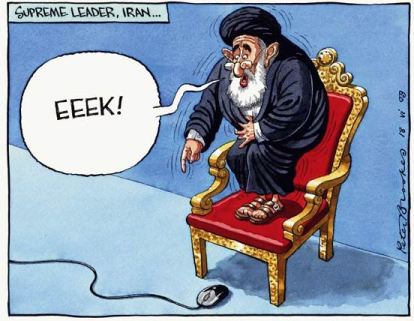
This was demonstrated in dramatic terms in June 2009. Following a hotly disputed presidential election in Iran, there was a surge of online support for pro-democracy activists there who launched a massive protest. A main point of convergence for online reporting and agitation was micro-blogging platform Twitter. Within a few days, mainstream media like TIME and Washington Post were all talking about this phenomenon in gushing terms.
As I wrote at the time: “I have no idea if the Ayatollahs are closet fans of Michael Jackson. But they must surely have thanked the King of Pop for creating a much-needed diversion in cyberspace precisely when the theocracy in Tehran needed it most.”
Other recent experiences have demonstrated how online interest can both build up and dissipate very fast. Staying with a single issue or cause seems hard in a world where news is breaking 24/7.
Here’s a current example. Following the massive oil spill in the Gulf of Mexico that started on 20 April 2010, local communities and environmental activists deployed various social media tools to track the unfolding disaster. BP, the giant oil company implicated in the disaster, has also tried to use social media to communicate its positions, but not too successfully. On Twitter, it was not BP’s official account but the satirical @BPGlobalPR that was dominating the online conversation. As one commentator wrote: “It is an object lesson in how social media can shape and control a company’s message during a crisis.”
Beyond PR?By early July 2010, however, there were already signs that online interest on the issue was already waning — even as the oil continued to leak from this largest offshore oil spill in US history. In a detailed analysis of main social media platforms’ coverage of the issue, Mashable noted last week: “An estimated 100 million gallons or more of oil have surged into the Gulf of Mexico…Yet on Twitter, Google, blogs and even YouTube, we’re already wrapping up our collective discussion of the oil spill and how to repair its damage.”
Riding the wave can be fun, but waves form and break quickly. Those who want to use social media tools for social activism still need to learn how to hitch a ride with the ocean current beneath the fickle waves.
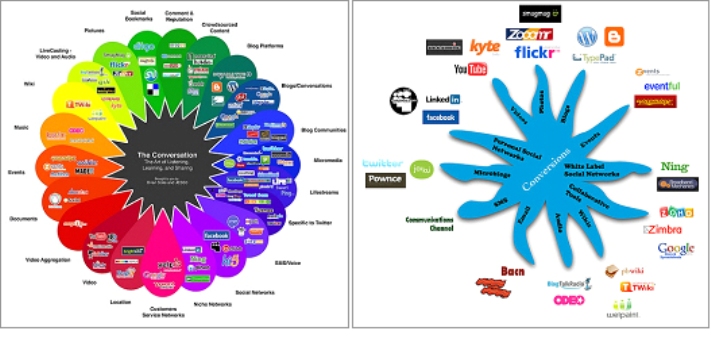
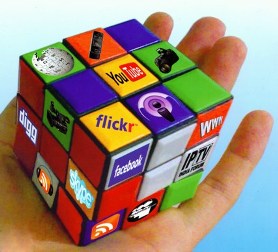
Depictions of social media: Conversations Prism (left) and Social Media Starfish
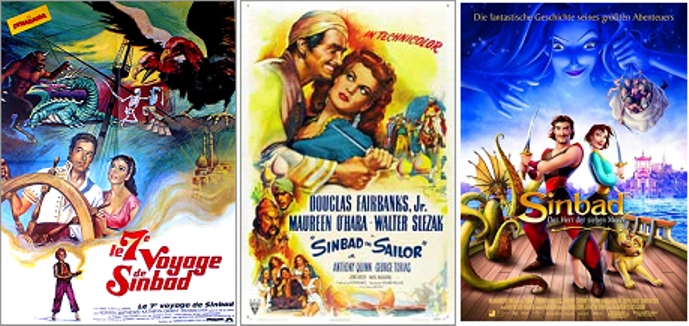
As I wrote in an earlier blog post, in the of social media, we need to be as daring and adventurous as Sinbad. Like the legendary sailor of Baghdad, we have to take our chances and venture into unknown seas. Instead of maps or GPS or other tools, we must rely on our ingenuity, intuition and imagination.
During his seven voyages in the Indian Ocean, Sinbad had fantastic adventures going to magical places, surviving assorted monsters, and encountering a host of supernatural phenomena. Armed simply with his guts, wits and wanderlust, he sailed to places where no man had gone before, and certainly none had returned alive from!
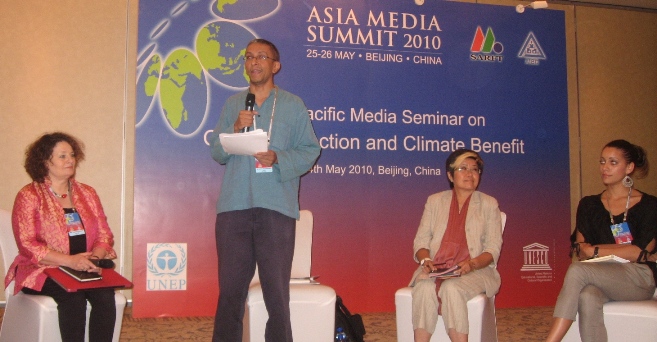
Preparing for my Beijing session last week on using social media to communicate in the public interest, I did a good deal of web browsing and online reading. I came across many attempts to map or visually depict the social media (including two shown above). I also found some interesting lists and guidelines – my favourite so far is 10 Things Your Grandmother can Teach You about Social Media.
This inspired me to come up with my own rough guide to get you started and keep you going. As a salute to Sinbad’s seven voyages, I call it the 7-‘ups’.
• Turn up. As Woody Allen famously remarked, eighty per cent of success is just…showing up. You won’t get anywhere by simply observing or critiquing from the sidelines. You have to wade in and set sail — for better or worse.
• Once we join the planetary conversation, we need to do some catch up. Find your feet – and niche – in the online world. The Internet turned 40 in 2009, and its graphical interface – the World Wide Web – is now 20. So much has happened in that time – and a lot has also been superseded. You need to know what’s on, and what’s not.
What's your winning combination?• After catching up, we also need to keep up — at least with the mega trends. Large companies like Google – as well as hundreds of individual geeks – keep releasing new applications frequently, many for free use. Popular websites (such as Wired, Mashable and their local equivalents) help us navigate through these depths and currents.
• Next one is harder. We have to give up our baggage of old habits and attitudes picked up over the years. For many Digital Immigrants, leaving the comfort zone of paper was scary enough. How can we let go of complete control over our communication products and processes? But that’s just what the social media demand. It’s not a choice, but an imperative.
• It’s also helpful – though not quite essential – if we are less glum, prim, exacting and academic in how we relate to others in social media. In short, ease up, mate! There are some basic norms for online behaviour, but crusty intellectuals or matronly bureaucrats don’t gain much traction. Keep things short, focused and simple. And hey, it’s okay to be funny, cheeky and irreverent…
• Conversations in this realm can last for weeks, months or longer. Some topics and discussions tend to have ‘long tails’. When we start something online, we have to be clear when to engage whom and how. Equally important is knowing when to shut up. (A bore is a bore, offline or online!).
• And if all this is making you feel dizzy…just cheer up: there are no real experts in this field. No one is an authority. Everything is ‘in beta’. We are all learning by doing. Neither is there a definitive road map to the social media world. In fact, in this partly Undiscovered Country, there is plenty of scope to explore, innovate and be original.
Are you a land-lubber who doesn’t trust any seas? Let me then offer you another metaphor. Think of this as hitchhiking or back-packing online. Take your chances. Be adventurous. Discover a whole new world!
We have some advantages over Sinbad. The virtual world poses no real danger to our lives. But beware: social media can be very time-consuming and even addictive.
You have been warned.
Here, for some edu-tainment, is an interesting video on social media that I found on…YouTube:
Sinbad: The legend endures, entertains...and inspires!
I have always been intrigued by the tales of Sinbad the legendary sailor. My interest is heightened by living in Serendib, destination of Sinbad’s sixth journey, which is modern-day Sri Lanka.
Being a professional story teller, I always try to connect the old world with the new. So in Beijing this week, I proposed: In the brave new world of social media, we need to be as daring and adventurous as Sinbad.
Like the legendary sailor of Baghdad, we have to take our chances and venture into unknown seas. Instead of maps or GPS or other tools, we must rely on our ingenuity, intuition and imagination.
And we have to be prepared for a potentially perilous journey where we may be lost, shipwrecked or even sunk. On the other hand, with careful planning, hard work and some luck, we may well sail into calmer seas and discover new lands and treasures – just like Sinbad did.
One thing is for sure: it’s not for the faint-hearted. There are no guarantees of success, and certainly no travel insurance…Are we ready to take the plunge?
Those of us working on development, humanitarian or social issues always have plenty of public interest messages to communicate. We are also keen to amplify grassroots voices so that policy-makers and business leaders would get a reality check.
The social media present many opportunities for all this. They offer us the potential for not just outreach, but sustained engagement. The development community has long wished for more interactive and participatory communications tools. The social media do precisely this! There’s no longer any excuse for not jumping in…
I then added the caution: It’s a big pond, and keeps getting bigger and deeper by the day. Social media is a basket that includes a lot more than (the more visible and controversial) Facebook and YouTube. According to the Wikipedia (itself an example), social media is a collective term to describe online media that is based on two key attributes: conversations, and interactions between people.
One of the many strange creatures that Sinbad encountered on his journeys was the Hydra — a many-headed serpent (or dragon). Chop one off, and two would grow instantly — a bit like how new social media applications are popping up these days!
Modern-day Sinbads have plenty of new horizons and uncharted waters to explore. Yes, it can be cacophonous, confusing, dizzy and even a bit frivolous at times. Hey, so is the real world! We need discernment in both worlds.
Social media started with the geeks, but soon spilled over to involve the rest of us. How can we — the non-geeks — come to terms with this new realm? How do we find our niche that makes us more effective communicators and agents of social change? The key to engaging this bewildering world of social media is to…just do it. And see what works.
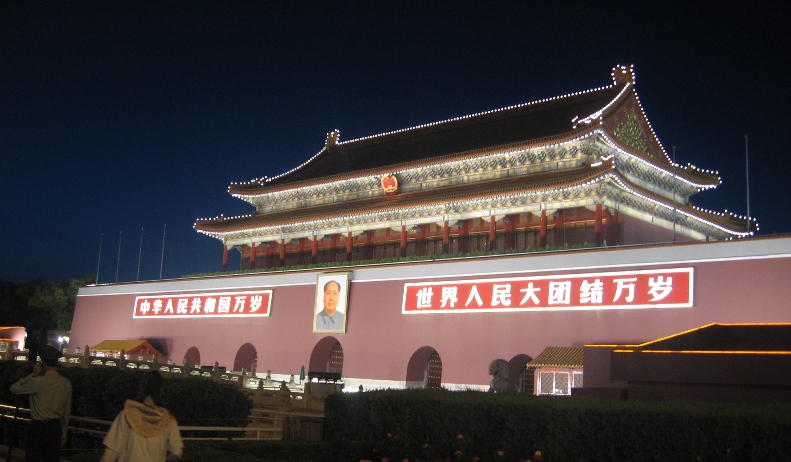
Tiananmen literally means Gate of Heavenly Peace...hmmm
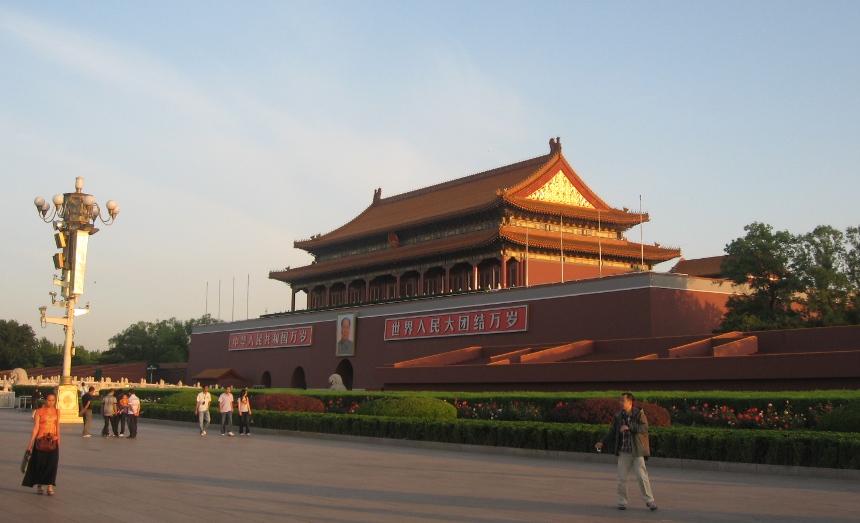
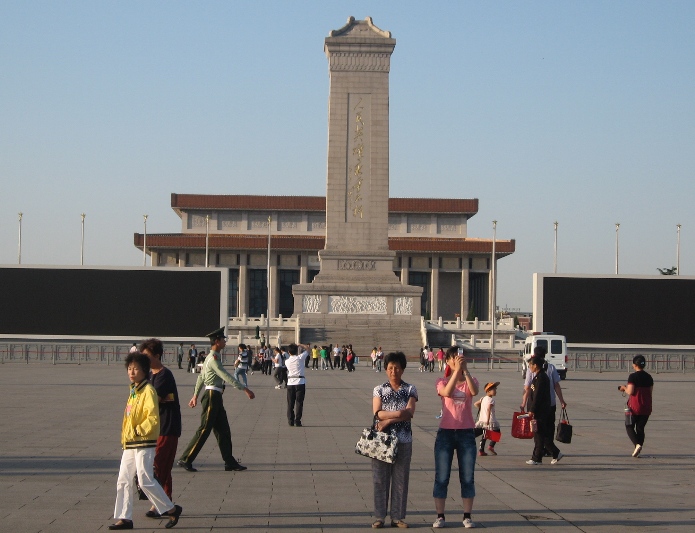
I spent several hours at the Tian’anmen Square in Beijing, China, this week, while attending a media conference. I was returning to this landmark, now a key tourist attraction in modernised and assertive China, after nearly a decade. And much has changed…
Measuring 880 metres by 500 metres, and covering a total area of 440,000 square metres, the Tiananmen Square is the largest city square in the world. But mere superlatives don’t impress me. It’s what goes on behind the claims, labels and stereotypes that interest me.
I’ve been to the square on a couple of previous Beijing visits. The first was in October 1996, during my very first visit to China. I was also taken in a group tour on a later visit. If I remember right, my last sighting of the Square was in 2002 – just before I acquired my first digital camera. (That makes a difference, because Before Digital, my analog photographs on travel were sparingly taken…and my own memory is not a very reliable storage medium.)
Day or night, he keeps vigil over Tiananmen Square...and 1.3 billion people
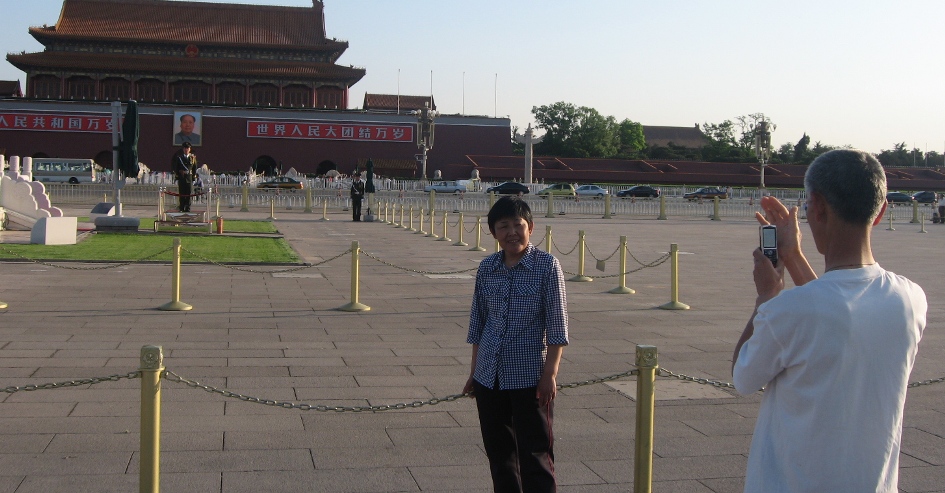
This time, I was armed with my digital camera and ample digital memory — and, it seemed, so were most other visitors! There were the obviously foreign tourists (including the loud and uninformed Americans), but it seemed most people thronging to the square were Chinese…many from out of town. For some, a visit to this centre of power is a rare occasion to be cherished and recorded.
I was impressed by just how many people were clicking away, using either digital cameras or mobile phone cameras. I shouldn’t be surprised by this, for China is the country with the largest number of mobile phones in use: by March 2010, there were some 780 million mobile subscribers, accounting for 58.5 per cent of all people in China.
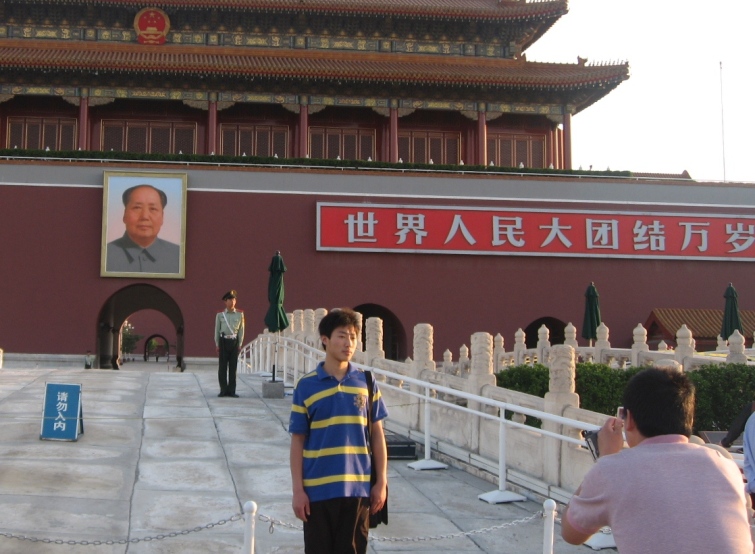
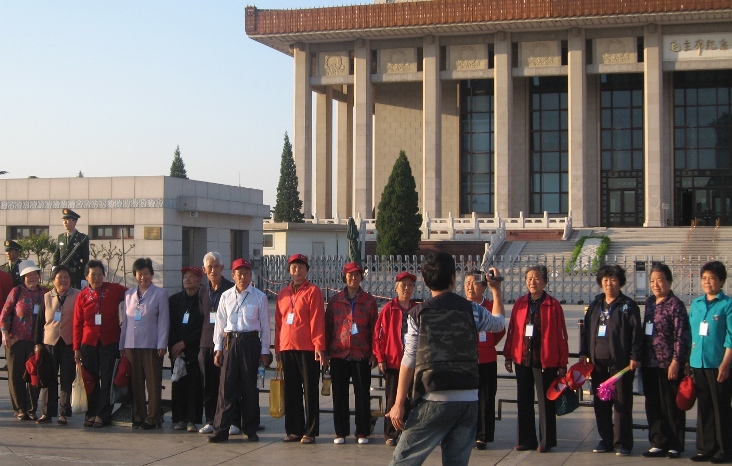
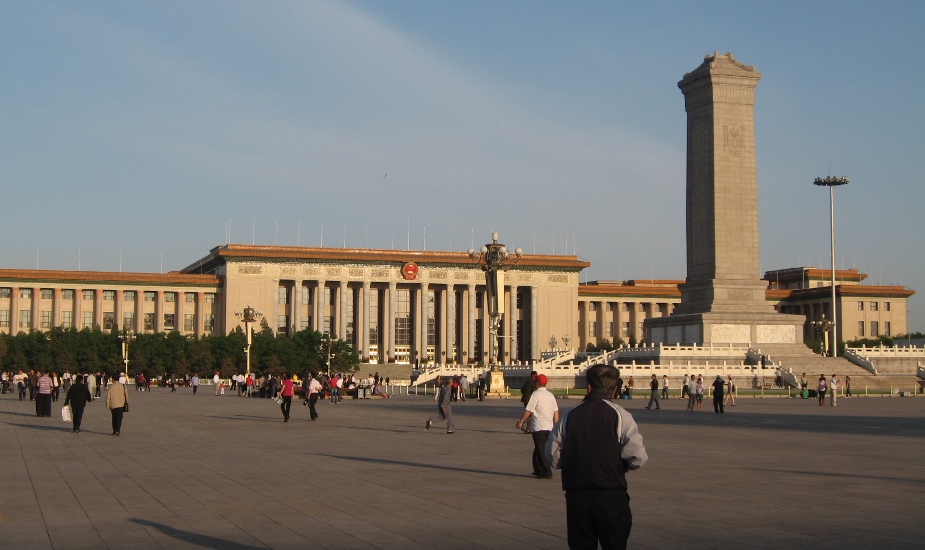
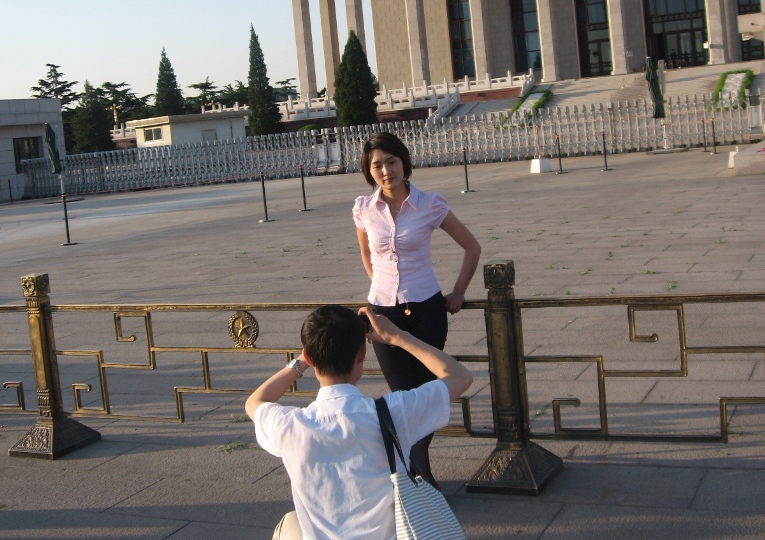
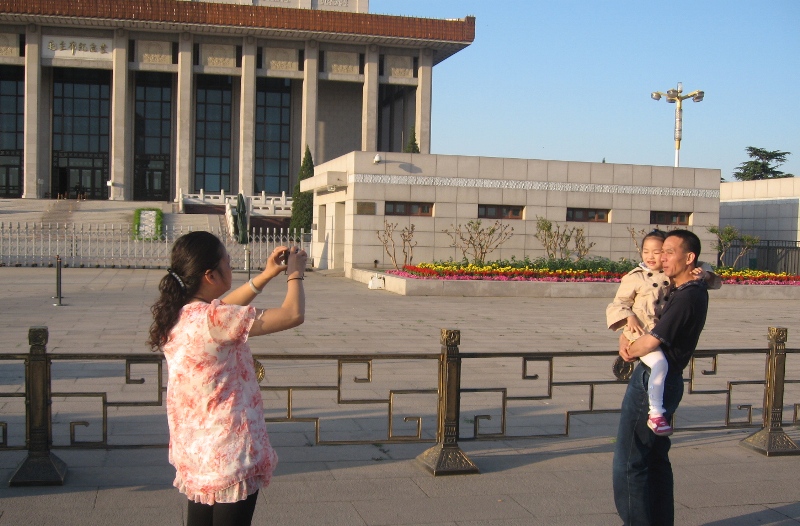
Keen to capture different scenes under varying kinds of daylight and night lights, I made three visits to the Square – including one at 5.30 in the morning to catch daybreak at the Gate of Heavenly Peace (literal meaning of Tiananmen). So here’s a sampling of my several dozen photos – this selection has a bias on people shooting each other, digitally speaking (a far cry from the kind of shooting that took place here 20 years ago).
Look serious, man - he's watching!Now bring out your best smiles, all!People milling about with Great Hall of the People in the backgroundClicking away at Monument to the People's Heroes
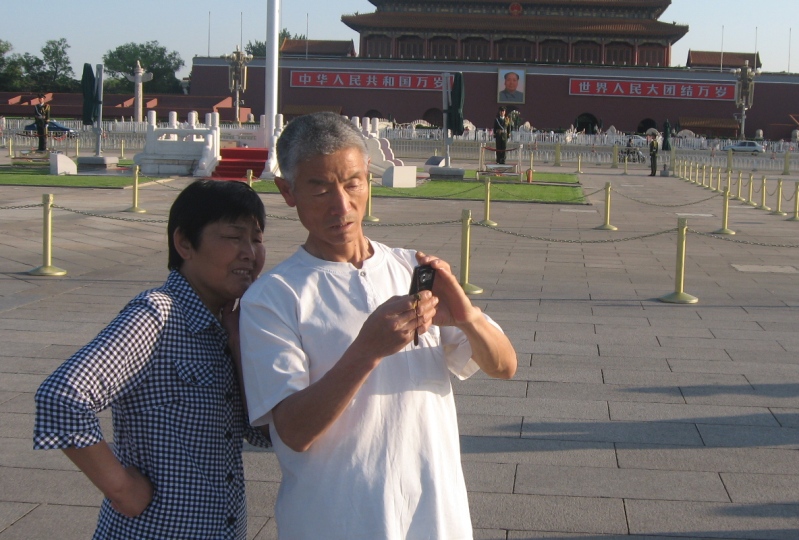
One of the most striking moments I captured was of this elderly couple, very dignified and sprightly in their outlook, as they were taking a stroll on the square early morning and capturing memories on their mobile phone. They are old enough to have known another reality, but this was now and here…
This Square, and we, have seen and heard much in our time...Did we get it alright?
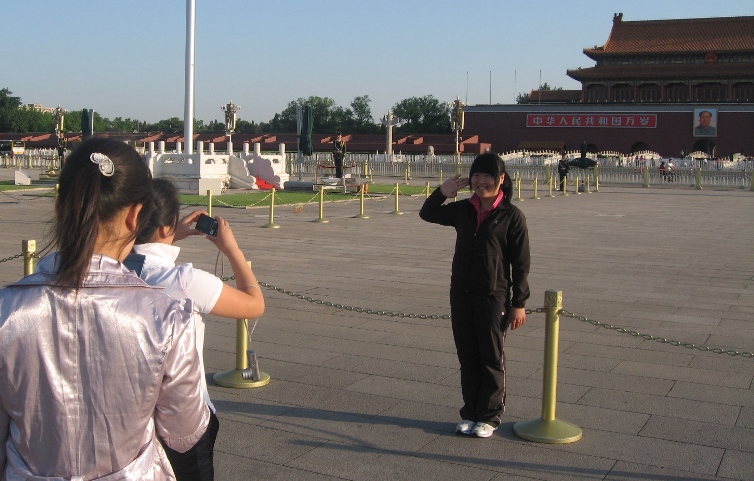
I also noticed how the younger visitors were clearly at ease with digital technologies, just like their fellow Digital Natives elsewhere in the world. There is also a discernible easing up (not only among unknown people in public places, but also noticeable among older and younger Chinese friends I have): maybe it’s the exuberance of youth, but the NextGen Chinese don’t seem to be as somber and serious as their parents.
Or perhaps the younger people in China today just have more things to smile about?
Would Chairman Mao approve this pose, eh?Heaven is in the eye of the beholder...Digital Natives capturing memories for the Next Gen
It was a rushed visit of four nights and three days, so all my impressions are fleeting. They don’t begin to do justice to the nuanced complexity that is modern China. But they tell me one thing: even in a land with a proud history of over 5,000 years, ten years can still make a difference.
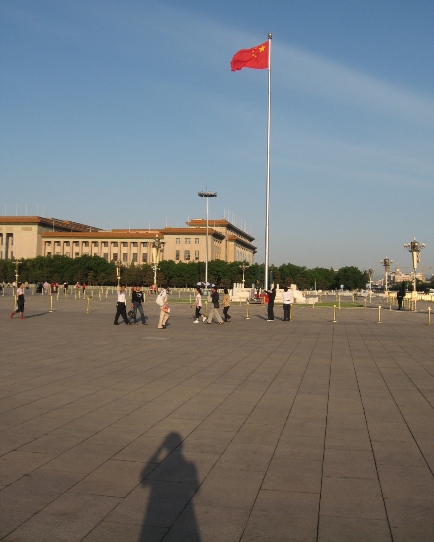
Bye for now: I take only photos, and leave only shadows behind...
Note: All photos were taken touristically for my own memory and personal archives, with no other intention.
“Good parents are sooo hard to find these days!” exclaimed my teen-aged daughter Dhara recently. She was talking with her tongue firmly in her cheek — I hope!
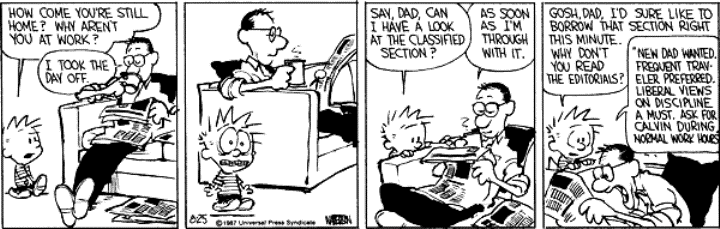
In recent days, she’s been re-reading our collection of Calvin and Hobbes books, where the world’s most cheeky six-year-old keeps making wisecracks about his own mom and dad (‘Your approval ratings among household six-year-olds are way down’, ‘When are you standing for re-election, dad?’, etc.).
But Dhara’s light comment rang true, generally speaking. As every parent discovers sooner or later, parenting is a 24/7 job that lasts for two decades or longer. There’s no help desk or emergency number we can call. It’s more an art than a science, for which there is no comprehensive, fail-proof guide — even though plenty of advice is available on TV and online (some of it better than others).
Generic advice is helpful but not sufficient. Every parent-child situation is unique, and every parent has to find what works for him or her…ideally, the two parents working in tandem.
Does parenting come naturally? If only it did! I don’t believe in this grandma-knew-best kinda romanticising. For sure, some in our grandparents’ generation got it right, but there were also many who never did.
For something so consequential for the future of our species, there’s no minimum age or entry level or qualification. (As Dhara occasionally asks me, “You didn’t have to take any exam for this job, did you, dad?”. Come to think of it, I didn’t — although, in my case, I did give it a lot of thought first. Honest!)
Dhara with her dad-for-life, Jan 2010Geeks express it a bit differently. “A human being is the best computer available to place in a spacecraft. . . It is also the only one that can be mass produced with unskilled labour,” said the German-American rocket scientist Wernher von Braun, the brains behind the Apollo project that landed men on the Moon.
Although I can’t vouch for its authenticity, a similar quote from the mid 1960s is attributed to the US space agency NASA: “Man is the lowest-cost, 150-pound, nonlinear, all-purpose computer system which can be mass-produced by unskilled labour.”
I don’t like their cynical analysis of something far more nuanced than their usual hardware and software. But they got a point there. Biomedical sciences have advanced much since the Moon landings, and today some medi-geeks are trying to ‘play God’ in creating life in a lab. I’d like to see how they can get a machine to mimic the 20+ year parenting process…
Making babies may be accomplished by unskilled humans in the right age, but raising babies is most decidedly a high skill, high intensity and highly demanding job. Especially in this day and age, when many kids are more tech savvy than their parents: the Digital Natives can easily run virtual rings around their Digital Immigrant parents.
We have to watch out, though, to listen carefully to what our children are saying to us — and also about us!
By the way, as one of my favourite authors, Roald Dahl, reminded us, “To children, all grown ups are like giants — who tell them what to do all the blooming time!”. (The worst parents in my mind are also created by Roald Dahl’s imagination: Mr and Mrs Wormwood, in his 1988 novel Matilda, which was adapted into a movie in 1996. In the movie, Papa Wormwood tells the precocious little Matilda: “Listen, you little wiseacre: I’m smart, you’re dumb; I’m big, you’re little; I’m right, you’re wrong; and there’s nothing you can do about it!”).
The bottomline: am I a good parent? It’s not for me to judge — but I try hard being one. It isn’t an easy act for anyone, and especially for a single parent that I now am.
Someday, I hope, the one-woman jury won’t be too harsh on me…and may she never need to advertise for a replacement.

 A good icon is simple, language-neutral, and can be understood across different cultures and by people with very different educational backgrounds. For example, telephones – both fixed and mobile – have established symbols or icons. Sure, the devices have evolved beyond the well known imagery, but everybody recognises these.
 Some images, like Microsoft’s Internet Explorer browser’s famous ‘e’, are well known but are branded to one product and company.
 Open Minds!