BBC Panorama, caught faking child labour footage, returns prestigious TV award

Primark: On the Rack
Two weeks after the BBC admitted that its journalists had partly faked child labour footage in India, the public broadcaster has returned a prestigious television award won by the controversial programme.

BBC had earlier won the Current Affairs Home Prize at the Royal Television Society awards for its show Primark: On The Rack, which was first broadcast on BBC 1 channel in June 2008.

In an internal investigation, the BBC Trust – an independent body which safeguards the values of the publicly funded corporation – found that it ‘more likely than not’ that certain footage in the Panorama programme was not authentic.

The implicated retailer, Primark, criticised the BBC for taking so long to find in its favour when evidence casting doubt on some of the video material has been in the corporation’s possession since before the documentary first aired in 2008.

BBC Panorama claims to be the world’s longest running investigative TV show, and has been on the air for more than 50 years. In that time, it has done some excellent exposures on matters of vital public interest.

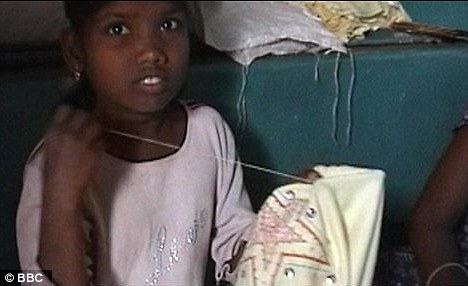
Yet hinting a decline in both editorial and ethical standards at the BBC, the reporting team was found to have taken liberties with certain visuals in this particular programme. It investigated Primark’s claims that it can deliver ‘cheap, fast fashion’ without breaking ethical guidelines, and included footage obtained in a Bangalore workshop of three boys carrying out an activity described in the programme as ‘testing the stitching’ on Primark garments.

According to the Daily Mail: “The BBC Trust’s Editorial Standards Committee examined evidence such as the unedited ‘rushes’ of the programme and emails to the production team from the freelance journalist Dan McDougall, who obtained the footage.”

BBC Trustee and Chair of the ESC Alison Hastings said after their investigations: “The BBC’s investigative journalism is rightly held in very high regard, and for more than fifty years Panorama has made a very significant contribution to that. But great investigative journalism must be based on the highest standards of accuracy, and this programme on Primark failed to meet those standards. While it’s important to recognise that the programme did find evidence elsewhere that Primark was contravening its own ethical guidelines, there were still serious failings in the making of the programme. The Trust would like to apologise on behalf of the BBC to Primark and to the audience at home for this rare lapse in quality.”

Read full report here.

Despite all these developments, the BBC Panorama official web page for this programme shows no indication of this turn of events. Accessed on at 01:30 GMT on 30 June 2011, the page says it was “last updated at 13:31 GMT, Wednesday, 18 June 2008 14:31 UK”. No apology, no correction, no link to the BBC Trust’s report.

The programme’s blurb still reads: “Panorama puts Primark’s claims that it can deliver cheap, fast fashion without breaking ethical guidelines to the test. Posing as industry buyers in India, the programme’s reporter Tom Heap and his team find some of India’s poorest people working long, gruelling hours on Primark clothes in slum workshops and refugee camps.”

So who puts the BBC Panorama to test? Are investigative journalists above the ethics of journalism because their work is hazardous, and is ultimately meant to be in the public interest?

Even Homer nods, and the best intended investigative journalists can – and do – make occasional mistakes. The important question is whether this was a bona fide error in judgement, or does it suggest a trend where the BBC’s investigative journalists and producers arrogantly believe that the end justifies the means?

Many documentaries rely on re-enactments for certain scenes, which are usually labelled as such. Does exposing child labour in supply chains give the license for do-gooding journalists to manipulate individuals and images to suit a preconceived notion of a corporation’s complicity? Could they not have resorted to other means – perhaps with less dramatic visuals, but more honest in their sourcing?

Does this rare admission of error on the part of the BBC also raise questions about the integrity of some other hard-hitting and controversial Panorama investigations over the years which have taken on some big-time targets such as the Vatican, the United Nations Peace Keepers or the CIA?

Hard questions indeed for the usually self-righteous Auntie Beeb.
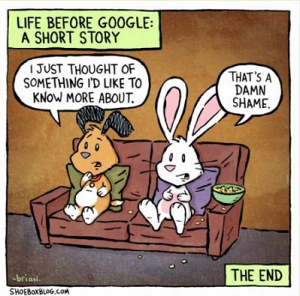
Was There Life Before Google (BG)? Sure, but try finding it!

Like many things, is Google a mixed blessing?

I now divide my life into two distinctive eras: Before Google (BG) and After Google (AG). The monumental ‘dividing event’ occurred somewhere in 1999 <em>Anno Domini (AD), when the now ubiquitous online phenomenon entered my life.

It was a good friend, photojournalist and new media activist Shahidul Alam, who first told me about this new kind of search engine with a funny-sounding name. Google. At that time, it was just a noun.

I was already weary of the simple, simplistic and yellow-page like listings offered by Yahoo, and welcomed this refreshing change. I immediately switched — and haven’t looked at another search engine in the past dozen years. And I also liked its cheerful, multi-coloured logo.

Things weren’t so slick or quick at the beginning, and even Google was learning by doing. We were still in the dial-up era, when 56 kbps Internet access speeds were still mostly an aspiration. Besides, there was far less content online, and far fewer ways to access and process it.

Where Google stood apart, from every other service, was in its better targeted search results. The research of any given quest was still in our hands, but narrowing down was helpful.

We’ve come a long way, and eons in Internet terms, since those early and murky days. With my always on, reasonably fast broadband connection, I now Google effortlessly many times day and night: I know I’m leaving a steady datastream of everything I look for, and that it can be traced, analysed and interpreted by anyone who can force Google to part with this back-end data (usually governments). But that’s the price I pay for Google’s versatile services.

I touched on this when I talked about ’21st Century Media: New Frontiers, New Barriers’ last month at Sri Lanka Press Institute on World Press Freedom Day, 3 May 2011. Here’s my PowerPoint:

A few weeks ago I tweeted “Was there life before Google?” My own tongue-in-cheek answer was: Sure, but I can’t easily locate anything from that period!

Not everyone appreciates Tweeted humour. I received a range of replies online and offline, mostly negative. Some cyber-skeptics faulted me for ‘deifying an American corporation like Google that is out take over the world’ (they haven’t heard the news!).

Others, school teachers and librarians among them, told me that Google has plenty to answer for. They lamented that many people have now forgotten the art and science of looking for a specific piece of information and imagery using well-organised information sources that combine physical and computer-based services. Professional information managers view Google as a superficial, hit-or-miss, much diluted version of their noble craft. Cyber take-away to be consumed on the run, as opposed to a gourmet meal to be partaken and enjoyed at leisure.

Sounds familiar?
I’m old enough to have used libraries diligently and regularly for several years of my working life. I still do, when I can’t easily locate something online — especially historical content that remains under-represented or non-existent on the web. For me, it’s not a question of either/or.

In fact, my frustration is that enough content from the pre-Internet period (much of history) is not yet available online in properly searchable ways. That includes my own personal archive. I’ve been producing journalistic output in the media for 25 years in print, radio and television outlets. The electronic media output is completely lost, and practically everything I wrote before 2000 AD (or Year 1 of my personal AG) is also not online. And my output in Sinhala, including my current Sunday column in the Ravaya newspaper, is not available online.

No, I don’t idolise Google as a global deity. But I thank Google a few times every day. Increasingly often, that includes times when I want to locate a specific reference to something I myself have written and published. This is what happens after writing several thousand pieces on a wide range of subjects and topics.

I envy those who can still recall precise details of their own vast bibliographies. As for me, I routinely turn to my usually reliable and well-informed friend Google. She rarely lets me down.

PS: One facility I stubbornly refuse to use is GMail. Google’s idea of a web-based email service never appealed to me, a Digital Immigrant who is not fully convinced about storing all my correspondence ‘in the cloud’. What really puts me off is how fleeting, erratic and often utterly incomprehensible GMail users are in their replies. There are a few honourable exceptions, but most GMailers I know are a confused and confusing bunch. I love you, Google, but when it comes to email, thanks but I’ll continue to operate my own accounts, branded on my own domain name.

A ‘Greek’ among Geeks and Greens…

Asking questions. Connecting the dots. Explaining matters.

These actions sum up what I have been doing in the spheres of communication and development for over 20 years. They form the cornerstone in my attempts to make sense of our globalised world and heady times.

As a journalist, I was trained to look for what’s New, True and Interesting (‘NTI Test’). Early on, I went beyond just reporting events, and probed the underlying causes and processes. With experience, I can now offer my audiences something more: perspective and seasoned opinion.

I look back (slightly) and look around (a lot) in a half-hour, in-depth TV interview with media researcher/activist and fellow citizen journalist Sanjana Hattotuwa. This was part of The Interview (third series) produced by Young Asia Television, and broadcast on two Sri Lankan TV channels, TNL and ETv on May 8 (with repeats).

Watch the full interview online: Sanjana Hattotuwa talks to Nalaka Gunawardene

Nalaka Gunawardene from Young Asia Television on Vimeo.

I have always worn multiple ‘hats’, and dabbled in multiple pursuits rather than follow narrow paths of enquiry. I see myself continuing to oscillate between the ‘geeks’ and greens, and where possible, bridging their worlds.

I sometimes feel a strange kinship with the ancient Greeks, who first asked some fundamental questions about the universe. They didn’t always get the answers right, and neither do I.

But it’s very important that we question and critique progress – I do so with an open mind, enthusiasm and optimism.

Note: I was also a guest in the first series of this show, in February 2009, which led to this blogpost.

Space Shuttle Challenger disaster, 25 years later: Communication Lessons

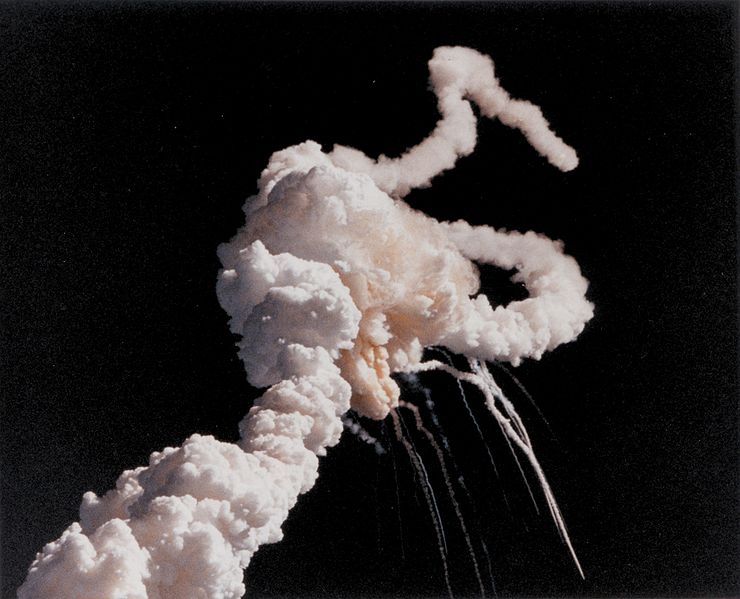
Space Shuttle Challenger's smoke plume after in-flight breakup that killed all seven crew members

Today marks the 25th anniversary of the Space Shuttle Challenger disaster. It was the worst accident in the history of manned space exploration up to that time. All seven crew members died in the disaster — among them was Christa McAuliffe, who was selected to be the first teacher in space, and the first strict civilian to go to space as part of the US space programme.

Challenger was destroyed as it broke up in mid-flight in the second minute of its 10th mission, on 28 January 1986 at 11:38:00 am Eastern Standard Time. The break-up was later found to have been due to the failure of an O-ring on its right solid-fuel rocket booster (SRB). The O-rings are used to seal the joints between the multiple segments of the SRBs.

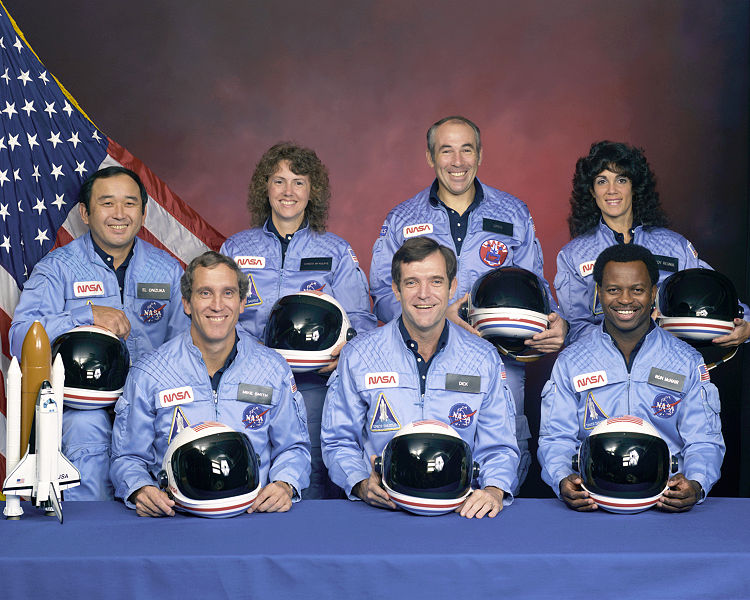
STS-51-L crew (front row) Michael J. Smith, Dick Scobee, Ronald McNair; (back row) Ellison Onizuka, Christa McAuliffe, Gregory Jarvis, Judith Resnik.

While the presence of Christa McAuliffe on the crew had provoked some media interest, shuttle launches had become commonplace by this time and there was little live broadcast coverage of the launch. The only live national TV coverage available publicly was provided by CNN.

Challenger Disaster Live on CNN

The accident was thoroughly investigated and has been well documented. What interests me are the communication lessons drawn from the incident – it continues to be cited as a case study in subjects as diverse as engineering safety, the ethics of whistle-blowing, effective communications, and the perils of group decision-making.

According to the Wikipedia, Roger Boisjoly, the engineer who had warned about the effect of cold weather on the O-rings, left his job at Morton Thiokol and became a speaker on workplace ethics. For his honesty and integrity leading up to and directly following the shuttle disaster, Roger Boisjoly was awarded the Prize for Scientific Freedom and Responsibility from the American Association for the Advancement of Science. Many colleges and universities have also used the accident in classes on the ethics of engineering.

Information designer Edward Tufte has used the Challenger accident as an example of the problems that can occur from the lack of clarity in the presentation of information. He argues that if Morton Thiokol engineers had more clearly presented the data that they had on the relationship between low temperatures and burn-through in the solid rocket booster joints, they might have succeeded in persuading NASA managers to cancel the launch.

To me, it was extraordinary how President Ronald Reagan handled the aftermath of the tragedy. On the night of the disaster, he was scheduled to give his annual State of the Union Address. He postponed it by a week and instead gave a national address on the Challenger disaster from the Oval Office. The speech, written by author Peggy Noonan who was the president’s primary speech writer, is a fine piece that combines grief, tribute and resolve in just the right proportions. No lofty intellectualisation or pontification. Just plain, short sentences that appeal to the hearts. Ably delivered by the Great Communicator, it remains an excellent study in how a national leader can counsel a nation in grief without descending into either despair or denial. Draw your own contrasts with other tragedies before and since.

Ronald Reagan’s speech to the nation after the Challenger Shuttle explosion

President Reagan spoke at 5 pm EST from the Oval Office at the White House. The address was broadcast live on nationwide radio and television. Here is the full text of his speech (emphasis is mine):


Address to the Nation on the Explosion of the Space Shuttle Challenger

January 28, 1986

Ladies and gentlemen, I’d planned to speak to you tonight to report on the state of the Union, but the events of earlier today have led me to change those plans. Today is a day for mourning and remembering. Nancy and I are pained to the core by the tragedy of the shuttle Challenger. We know we share this pain with all of the people of our country. This is truly a national loss.

Nineteen years ago, almost to the day, we lost three astronauts in a terrible accident on the ground. But we’ve never lost an astronaut in flight; we’ve never had a tragedy like this. And perhaps we’ve forgotten the courage it took for the crew of the shuttle. But they, the Challenger Seven, were aware of the dangers, but overcame them and did their jobs brilliantly. We mourn seven heroes: Michael Smith, Dick Scobee, Judith Resnik, Ronald McNair, Ellison Onizuka, Gregory Jarvis, and Christa McAuliffe. We mourn their loss as a nation together.

For the families of the seven, we cannot bear, as you do, the full impact of this tragedy. But we feel the loss, and we’re thinking about you so very much. Your loved ones were daring and brave, and they had that special grace, that special spirit that says, “Give me a challenge, and I’ll meet it with joy.” They had a hunger to explore the universe and discover its truths. They wished to serve, and they did. They served all of us. We’ve grown used to wonders in this century. It’s hard to dazzle us. But for 25 years the United States space program has been doing just that. We’ve grown used to the idea of space, and perhaps we forget that we’ve only just begun. We’re still pioneers. They, the members of the Challenger crew, were pioneers.

And I want to say something to the schoolchildren of America who were watching the live coverage of the shuttle’s takeoff. I know it is hard to understand, but sometimes painful things like this happen. It’s all part of the process of exploration and discovery. It’s all part of taking a chance and expanding man’s horizons. The future doesn’t belong to the fainthearted; it belongs to the brave. The Challenger crew was pulling us into the future, and we’ll continue to follow them.

I’ve always had great faith in and respect for our space program, and what happened today does nothing to diminish it. We don’t hide our space program. We don’t keep secrets and cover things up. We do it all up front and in public. That’s the way freedom is, and we wouldn’t change it for a minute. We’ll continue our quest in space. There will be more shuttle flights and more shuttle crews and, yes, more volunteers, more civilians, more teachers in space. Nothing ends here; our hopes and our journeys continue. I want to add that I wish I could talk to every man and woman who works for NASA or who worked on this mission and tell them: “Your dedication and professionalism have moved and impressed us for decades. And we know of your anguish. We share it.”

There’s a coincidence today. On this day 390 years ago, the great explorer Sir Francis Drake died aboard ship off the coast of Panama. In his lifetime the great frontiers were the oceans, and an historian later said, “He lived by the sea, died on it, and was buried in it.” Well, today we can say of the Challenger crew: Their dedication was, like Drake’s, complete.

The crew of the space shuttle Challenger honored us by the manner in which they lived their lives. We will never forget them, nor the last time we saw them, this morning, as they prepared for their journey and waved goodbye and “slipped the surly bonds of earth” to “touch the face of God.”

Anand Patwardhan: Film maker as perennial trouble-maker

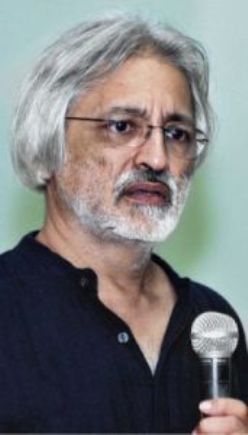
Anand Patwardhan

Anand Patwardhan is one of India’s best known and most outspoken documentary film makers. He has been making political documentaries for over three decades, pursuing diverse and controversial issues that are at the crux of social and political life in India. He epitomises the activist film maker and has inspired a generation of socially sensitive film makers.

In the world’s largest democracy that is India, and in a country with a vibrant and diverse media that is considered to be among the most free in the developing world, Anand has constantly run into problems getting his films seen on broadcast television. Many of his films were at one time or another banned by state television channels in India and became the subject of litigation by Anand, who successfully challenged the censorship rulings in court.

As his website notes, several of his films have also incurred the wrath of right wing fundamanentalists both in India and abroad. “In keeping with the uneven nature of India’s democratic institutions and its sharply divided polity, bouquets have been accompanied by brickbats.”

I came across a good interview with Anand Patwardhan in the Indian current affairs magazine Frontline, issue for 4 – 17 December 2010. Here are two questions concerning the censorship problems he has often faced:

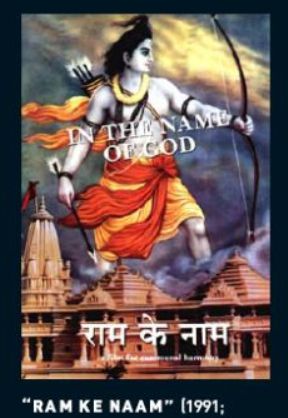
Ram Ke Naam (In the Name of God), 1991
Q: You have had problems getting clearance from the Central Board of Film Certification for almost all your films, and then later they were not allowed to be screened on Doordarshan. Your films are also not screened on private channels. How do you see this constant struggle with these forms of censorship?

A: Right from the first film, I faced censorship in some form or the other. Even the Janata Party after it came to power refused to screen Waves of Revolution though it was against the Emergency. L.K. Advani was the Information and Broadcasting Minister then. I had added an epilogue which said that the janata raj [people’s rule] that the film spoke about was not the same as [that of] the Janata Party now in power. I also drew attention to the political prisoners still being held in jail. Finally, after media pressure built up, the film was screened on Doordarshan.

Prisoners of Conscience also got into trouble with the censor board, and it took a letter from Satyajit Ray to the government saying that they must not stop a film like this to get the required clearance.

Ram Ke Naam followed the rath yatra of Advani and the violence in Ayodhya on October 30, 1990, when the Babri Mosque was attacked for the first time. It was meant to be a warning to the nation about the rise of Hindutva fundamentalism. I had trouble with the censors initially, but it finally got through in 1992 and then I had trouble with Doordarshan, which refused to show it. Finally, after the film won a national award for Best Investigative Documentary, I was able to go to court and argue that the government cannot give me a national award and yet say that I cannot show the film on Doordarshan, which it had been doing systematically. In fact, whenever any film of mine won a national award, I used it to go to court. I argued that not showing such a film on national TV was a denial of my right to freedom of expression and of the viewers’ right to information.

On these grounds I have won seven cases till now – five in the High Courts and two in the Supreme Court after the government went in appeal. Ram Ke Naam was finally shown on Doordarshan in 1997. The judge ordered that the film should be telecast at prime time.

Stills from Anand Patwardhan (courtesy his website)

Q: Why have you not approached private channels to screen your films?

A: The private media, including television, are not about giving people information. They are run by corporates more interested in providing entertainment. Their news and analysis are restricted to five and 10 second [sound] bites. Their clear mandate is commercial. They will ask, “Where are the advertisers who will endorse your product? Who is going to give the money to show this? Are we going to waste one and a half hours of TV time on issues?”

I have also discovered that even in the private domain there is political censorship. A few days before the Allahabad High Court verdict on [the] Ayodhya [title suit] was due, a private channel approached me to screen Ram Ke Naam. They paid me for three broadcasts but stopped after showing the film just once despite extremely positive feedback from viewers. On inquiring, I was told that the channel was pressured not to show the film by both the Information and Broadcasting Ministry and the TV Broadcasters’ Association. Anyone who watches Ram Ke Naam will realise that this censorship was done to protect the interests of unscrupulous politicians who had used the emotive appeal of Ram for financial and political gain.

The situation today is such that you cannot pinpoint where the censorship is coming from. During the Emergency you at least knew who the enemy was. But now what do you do when every wing of society – whether it’s the legal system, and so on – is complicit in a blanket suppression of facts.

Read the full interview in Frontline magazine, issue for 4 – 17 December 2010

Read TVE Asia Pacific profile and interview with Ananda Patwardhan in 2002

Television tops as Lankan public’s source of information on current affairs

Television leads in Asia, including Sri Lanka
Today, 21 November, is World Television Day. The United Nations declared this in 1996 recognising “the increasing impact television has on decision-making by alerting world attention to conflicts and threats to peace and security and its potential role in sharpening the focus on other major issues, including economic and social issues”.

A new survey that I was closely associated with has just confirmed that broadcast television is the most dominant and most trusted source of information on news and current affairs by Lankans of all walks of life.

The mass media are the major source of public information on current news and affairs for Lankans living in cities, towns and villages – and broadcast television leads among the different types of media, according to the survey on public perceptions on climate change in Sri Lanka 2010.

Broadcast television is the single most popular source, cited by the highest number of respondents (94%). It is followed by radio (74%), and newspapers and magazines (taken together, 70%). There was no significant urban/rural difference in these preferences.

By mid 2010, Sri Lanka had 19 terrestrial channels broadcasting free-to-air transmissions in English, Sinhala or Tamil languages. Meanwhile, close to 50 radio channels – mostly on the FM band – crowd the airwaves.

The next most widely cited information source was friends, neighbours and colleagues. But interestingly, while 52% of all respondents listed this category, only very few (2%) acknowledged it as a credible source. In contrast, the credibility factor was higher for TV (88%), radio (42%) and print media (33%).

Educational institutions (schools, universities and training centres) were assigned a very low rank as a source (7%) and even lower status as a credible source (3%).

Although only 9% of the respondents cited the Internet as a regular source of information for themselves, its perception as a credible source was considerably high (51%). This makes the Internet the second most trusted source for the sample, behind only TV.

The exact survey question that elicited these answers was: “What are your main sources of information for current affairs/events?”

Read more about the survey findings on TVE Asia Pacific website

Exploring our crowded planet, One Square Mile at a time…

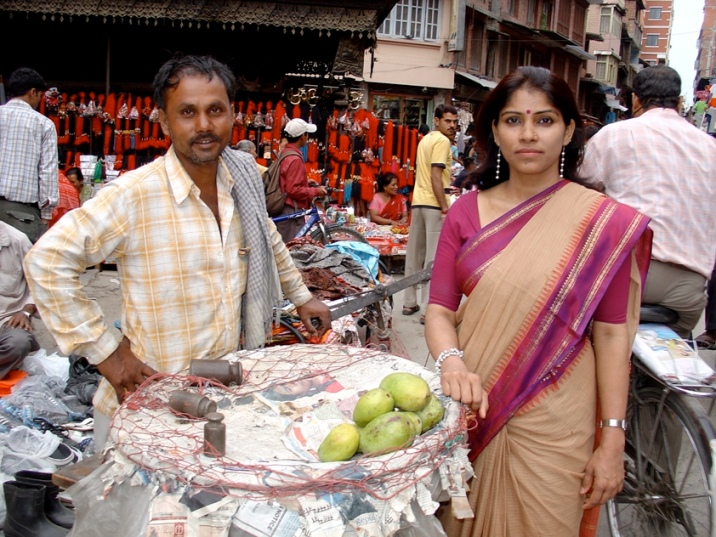
Vasanthi Hariprakash exploring One Square Mile in Kathmandu, Nepal

It’s funny how, more than a generation after most of the world adopted the metric system of measurements, relics of the earlier, ‘imperial’ units still linger in our language and popular culture.

Frequent flyers stlll accumulate air-miles, not kilometres. Disaster managers grapple with the challenges of communicating credible early warnings on that the crucial ‘last mile’ (it’s not yet the ‘last kilometre’). And many among us, including those who have grown up in a metric world, can better grasp a square mile than a square kilometre.

One Square Mile is also the name of an interesting new TV series produced by One Planet Pictures of the UK, and first airing this month on BBC World News. In this series, reporters visit a neighbourhood in different parts of the developing world and try and find out what the residents’ hopes and aspirations

Says its producer Robert Lamb: “One Square Mile is an experiment. So much in television is set up. In this series our reporters explore a small patch of a city with the aim of providing the viewer with an authentic slice of life.”

According to Robert, One Square Mile takes the lid off a neighbourhood. Reporters wander around a marked out section of a town and city and talk to the people they meet to find out what their everyday concerns are.

Of this months shows, two are presented by Zeinab Badawi . In one, she goes walkabout in Juba, capital of south Sudan which is on the verge of becoming an independent state. In the other, Badawi encounters murder on the streets in Guatemala City.

The other two are presented by my friend Vasanthi Hariprakash, whose day job is with India’s leading TV news network NDTV. These two are of particular interest to me as she travels to countries in Asia that are closer to me in distance and closer to my heart.

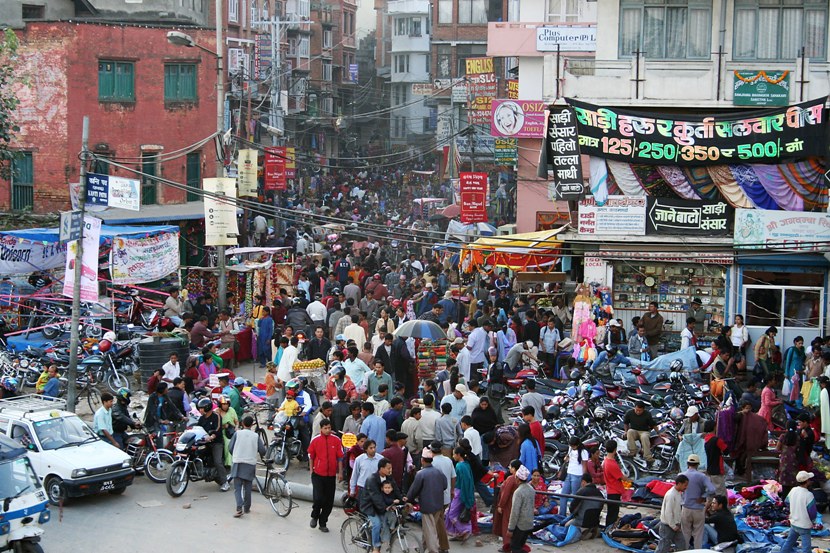
In one show, Vasanthi travels to Kathmandu, the capital of Nepal. The blurb says: “Despite a recent record of political instability that has seen a monarchy overthrown and an uneasy peace struck with the Maoist insurgents, reporter Vasanthi Hariprakash finds a city population surprisingly upbeat. But a long dawn queue outside the passport office tells a different story – young Nepali men are desperate to get out to find work in the Gulf and Southeast Asia.”

I’m familiar with that city having made multiple visits since 1995, and have shared the pains and anxieties of my Nepali friends as they went through political turmoil and a bloody insurgency. I saluted them when their ‘people power’ got rid of the despotic king in 2006.

Vasanthi did remarkably well in presenting her first-time appearance on a BBC-broadcast show. She came across as informed, eager and empathetic to the people and place she was exploring. Not once did I notice a hint of cynicism or condescension in her voice. This is quite in contrast to regular BBC reporters, many of who are far too judgemental and dismissive than good journalists should ever be. We can only hope vasanthi never aspires to those despicable professional levels…

Amidst political intrigue and uncertainties, life goes on in Kathmandu...

In her second show, Vasanthi travels to a small village in Laos next to the old Ho Chi Minh trail where the dominant concern is unexploded cluster bombs from the Vietnam war. The synopsis reads: “From the capital Vientiane it takes 10 hours for reporter Vasanthi Hariprakash to reach her square mile – a village next to the old Ho Chi Minh trail. Today it’s a peaceful highway for enterprising Vietnamese traders but during the war it was a target for the B 52 bombers with their deadly cargo of cluster bombs. 40% are live – called UXOs – Unexploded Ordinance – and Hariprakesh finds the villagers’ poverty leaves them no choice but to run the gauntlet of the unexploded munitions as they work in their paddy fields.”

This reminds me of a short film I saw in Cambodia many years ago about a poor, rural community who faced a similar dilemma living and working in a countryside littered with unknown and unexploded landmines. The Cold War conflicts in Southeast Asia may have ended decades ago, but local people still live in the shadow of their deadly legacies…

I can’t wait for more real-life stories in One Square Mile, and I hope Robert Lamb will send out his intrepid and charming reporters to far corners of the real world where real people are taking on life’s many challenges 24/7. These people’s resilience and resourcefulness inspire us all.

And that’s what good television is all about. Moving images, moving us all!

FIFA World Cup 2010: Media Conquering Planet Football!

Most Earthlings have just spent a month on this!

“If you’re an alien planning to invade the Earth, choose July 11. Chances are that our planet will offer little or no resistance.

“Today, most members of the Earth’s dominant species – the nearly 7 billion humans – will be preoccupied with 22 able-bodied men chasing a little hollow sphere. It’s only a game, really, but what a game: the whole world holds its breath as the ‘titans of kick’ clash in the FIFA World Cup Final.

“Played across 10 venues in South Africa, this was much more than a sporting tournament. It’s the ultimate celebration of the world’s most popular sport, held once every four years. More popular than the Olympics, it demonstrates the sheer power of sports and media to bring together – momentarily, at least – the usually fragmented and squabbling humanity.”

This is the opening of my latest op ed essay, which appears in several print and online outlets this weekend. It’s timed for the finals of the FIFA World Cup 2010 – the most widely followed sporting event in the world, which will be played in Soccer City, Johannesburg, South Africa today, 11 July 2010. The Netherlands will meet Spain in this culmination of international football that has been distracting a good part of humanity for a month.

This sporting event is tipped to be the most-watched television event in history. Hundreds of broadcasters are transmitting the World Cup to a cumulative TV audience that FIFA estimates to reach more than 26 billion people. Some TV channels offer high definition (HD) or 3-D quality images to enhance the mass viewing experience.

The essay was written a few days ago, after the FIFA World Cup 2010 had reached the semi-finals stage. To be honest, I’m not an ardent football fan. But as an observer of popular culture, I’ve gladly allowed myself to be caught up in the current football frenzy. I just love to watch people who watch the game…

It’s a light piece written to suit the current global mood, but I acknowledge that the World Cup is really more than just a ball game. The basic thrust of my essay is to comment on the powerful mix of fooball and live coverage: “For the past month, the winning formula for unifying the Global Family seemed to be: international football + live broadcasts + live coverage via the web and mobile phones.”

The Times of India, 11 July 2010: Planet Football: Sports unites a fragmented humanity

The Sunday Times, Sri Lanka, 11 July 2010: Conquering Planet Football

Groundviews.org: Beam Me Up to Planet Football

United Colours of Football, courtesy FIFA
The essay builds on themes that I’ve already explored on this blog – for example, how President Nelson Mandela used the 1995 World Cup Rugby championship to unite his racially divided nation, as told in the movie Invictus.

I also touch on FIFA being a wielder of formidable soft power in the world today, arguably more influential than the United Nations.

Here’s my parting thought, on which I invite reader comment: “On second thoughts, those invading aliens don’t need to worry too much about the Earth’s political leaders or their armies. Without firing a single shot, the globalised media have quietly taken over our Global Village — and now it’s too late to resist! We can argue on its merits and demerits, but the facts are indisputable.”

Palitha Lakshman de Silva (1959 – 2010): Animator, stilled.

Palitha Lakshman de Silva, 1959-2010
For the second time in just over three months, I went to the Colombo general cemetery to bid farewell to a fellow traveller. This is becoming a worrying habit.

Those of us who’ve opted for the path less travelled don’t expect crowds or accolades. At least we have each other for company and inspiration. Suddenly it’s getting a bit lonely: long-standing friends and colleagues are dropping dead in the prime of their lives.

First, it was environmentalist, journalist and public intellectual Piyal Parakrama who left in early March. Now, it’s Palitha Lakshman de Silva — journalist, photographer, cartoonist, puppet animator and television professional among other pursuits and talents.

Uncannily, what I wrote upon hearing Piyal’s death applies – word by word – to Palitha too. I just have to change the name and date: Palitha died so suddenly and unexpectedly on the evening of June 11 that it’s hard to believe that he is no longer among us. Another public-spirited individual has left the public space all too soon…

Both men had just passed 50, and were leading active, productive and busy lives. They had no known ailments, and were in apparent good health. Yet in the end, it was the unseen, gradual clogging of the heart’s arteries that struck them both down: the first heart attack was swift and fatal. Neither man reached the nearest hospital alive.

I had known Palitha for twice as long as I worked with him (in the past decade). Although we weren’t close friends, we shared a passionate, life-long interest in using broadcast television and narrowcast video to communicate public interest messages. Some call it non-formal education, but we avoided the e-word for it reminds some people of school that they didn’t enjoy. We believed – and demonstrated too – that the audio-visual medium can blend information with entertainment in ways that make learning effortless and painless.

Having started his career as a reporter and photojournalist at a leading newspaper, Palitha later moved on to TV, where he blazed new trails in cartoon animation, puppetry and documentary making. He was part of Sri Lanka’s first generation of television and video professionals who experimented with the medium, and found new ways of combining education, information and entertainment.

All this made Palitha a natural ally and partner in my work at TVE Asia Pacific. I just wrote a more official tribute tracing our collaborations over a decade, which the TVEAP website published: Tribute to Palitha Lakshman de Silva (1959 – 2010): Photojournalist and cartoon animator

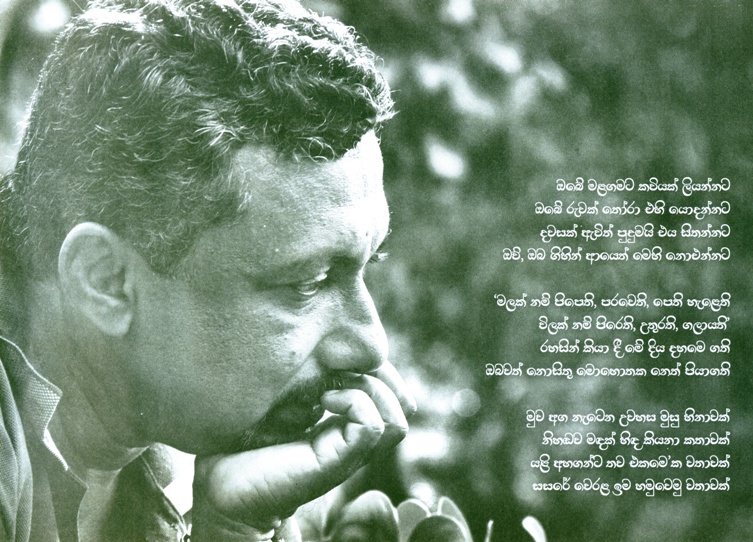
I’ll write more reflectively once I recover from the shock of another colleague signing off for good. For now, I can only echo the lyrical sentiments in this leaflet distributed at Palitha’s funeral by his artistically-inclined friends. The English approximation (below) is mine, and not particularly good (though bilingual, I’m a lousy translator). I’m glad, however, that the original verse captures one intrinsic quality of Palitha: his gentle, soft-spoken nature which often concealed the creative genius inside him.

Goodbye, Palitha Lakshman de Silva

The day has arrived
Suddenly and shockingly
When you’ve gone away
Leaving us alone
All by ourselves
To write a verse
And choose an image
In your fond memory.

Flowers bloom and wither
Lakes flourish and drain
Such is the Circle of Life
Which your hasty exit
Once again reminds us
With a soft, little whisper.

We’ll travel to the end of time
If can we see, just once more,
Your gentle and soothing smile,
And listen to your stories
That you told us so gently.

Just once more…

Remastered Star Trek – The Original Series (TOS): A treasure worth waiting for!

I haven’t been blogging much during April. One reason is that I’ve been travelling across space — and time.

I was in London for 10 days, and with its lovely Spring weather, I had every reason to be offline. I’ve also been spending a good deal of time back in 1966-67, and having a great deal of fun doing so. (The 1960s had a charm of their own that’s never been repeated…)

Let me explain. I’ve been watching the digitally remastered original Star Trek episodes, which had their first broadcast in that now far-away year — the same year I was born. And what an exhilerating experience to go back to these superbly crafted stories: they offer me both timeless mental stimulation and a sentimental journey to my own childhood/boyhood.

I’d heard of the digitally remastered DVDs’ release a couple of years ago, and was delighted when I found the last copy of Season 2 in a DVD store in Amsterdam in late March. The remastered episodes look and sound crisp, thanks to digitally restored imagery and audio. But the more daring work involved updating the shows’ visual effects with CGI to bring them more in line with the look and quality of later Trek efforts. That’s proving to be a real treasure – well worth waiting for…

As the promotional blurb reads on Amazon.com: “Star Trek, the NBC series that premiered on 6 September 1966, has become a touchstone of international popular culture. It struggled through three seasons that included cancellation and last-minute revival, and turned its creator, Gene Roddenberry, into the progenitor of an intergalactic phenomenon. Eventually expanding to encompass five separate TV series, an ongoing slate of feature films, and a fan base larger than the population of many third-world countries, the Star Trek universe began not with a Big Bang but with a cautious experiment in network TV programming. Even before its premiere episode (“The Man Trap”) was aired, Star Trek had struggled to attain warp-drive velocity, barely making it into the fall ’66 NBC lineup.”

To boldly go where no man has gone before...

As I’ve said before, I’m as old as Star Trek: we were born a few months apart in 1966 (I’m older by seven months). But because we grew up on opposite sides of planet Earth in the pre-Internet era, our worlds didn’t collide until we were both well into our teens.

I have vivid memories of that delightful first encounter, which changed the course of my life forever. In mid or late 1982, Sri Lanka’s newly launched national TV channel Rupavahini started airing a space adventure series called Star Trek. Although I was already familiar with Star Wars movies (of which two had been made by then), I’d not heard about Star Trek until the publicity accompanying the local broadcast.

Star Trek (the original series, now abbreviated as TOS) aired on my local TV – we had just two channels back then – on Wednesdays from 7 to 8 pm, which was prime time just before the evening news at 8. I remember the series ran for at least a year, during which time around 50 episodes were broadcast. I managed to watch most of them.

That wasn’t as easy as it sounds. Our household didn’t yet have a television set, so I had to go across to my aunt’s house next door to watch Star Trek. My school teacher parents took a long time to warm up to the new medium – we didn’t acquire a TV set until early 1983, almost four years after TV was introduced to Sri Lanka in April 1979. And because they placed such emphasis on studies, I was allowed only an hour of television per week. I have absolutely no regrets that while it lasted, I devoted my entire weekly TV quota for Star Trek.

So every week at the appointed time, the United Star Ship Enterprise and its intrepid crew took my young mind roaming around the universe, providing me a welcome escape from the dull and monotonous routine of my teenhood. Even today, hundreds of movies and many thousands of TV hours later, I can just close my eyes and instantly replay in my mind the evocative theme narration and music of Star Trek TOS:

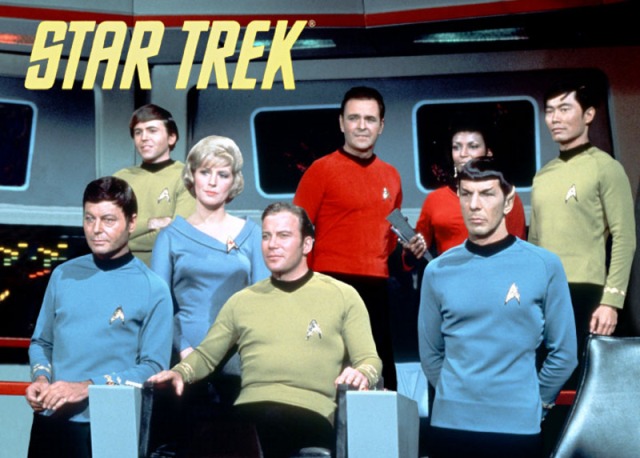
I sat awestruck by the adventures of Captain James T Kirk (played by William Shatner), First Officer Spock (Leonard Nimoy), chief engineer Lieutenant Commander Montgomery Scott (James Doohan), Dr. Leonard “Bones” McCoy (DeForest Kelley), Communications Officer Uhura (Nichelle Nichols) and others. The stories appealed to me as much for insights into the infinite possibilities (and combinations) of life, technology and power at a cosmic scale, as for the glimpses of the near-Utopian human society in the 23rd century.

See May 2009 blog post: Star Trek: Advocating a world of equality, tolerance and compassion

The series was already 15 years old, and it was showing signs of age. It had the faded Technicolor look and feel of films and TV programmes made in the 1960s and 1970s. The sets were basic and special effects appeared simple — computer-generated images (CGI) was not yet invented. On such technical merits, Star Trek TOS appears elementary when compared to the original Star Wars movie that would roll out just a decade later, in 1977. (A decade is a very long time in the entertainment industry.)

But what the series lacked in looks, the show more than made up in its brilliant story lines and rich imagination. Inadequacies in production values didn’t really matter to me — or to millions of other ‘Trekkies‘ scattered across the planet. The storylines were entertaining and mind-stretching, frequently carrying concepts distilled from the finest in science fiction literature (in fact, some of the genre’s accomplished writers were involved in writing stories for the series, e.g. Robert Bloch, Normal Spinrad, Harlan Ellison and Theodore Sturgeon). The characters were strong, diverse and played by actors who soon developed global fan clubs of their own.

And now, I can relive those journeys again — this time at my leisure, packing as many, or as few, into my private screening schedule. No broadcaster or parent holds me captive any more.

Here’s how the digitally remastered version of the same series opens (aficionados, please spot the differences):

And here are a couple of comparisons between the old and remastered versions that fans have done and released on YouTube:

Of course, remastering a series held in such awe and regard by millions of fans worldwide was a calculated risk.

As Wired noted in a December 2008 story: When Star Trek designer Mike Okuda began remastering the original Star Trek episodes for a series of DVD releases, there was a chance that the show’s more devoted fans would want him beamed to a Klingon prison planet for altering the 1960s classic. To guard against this, Okuda insisted that the new effects would have to be closely based on the originals to retain the visual spirit of the ’60s series.

Wired, December 2008: Star Trek Tweaker Talks Perils of Remastering Original Series

We’re grateful to Mike Okuda and everyone else on the remastering team for giving us the best of both worlds.

Star Trek designer Mike Okuda