Michael Jackson: A tale of two moonwalks (and a ‘Thank You’ from the Ayatollahs)

While Apollo astronauts conquered the Moon, Michael Jackson took over the Earth...

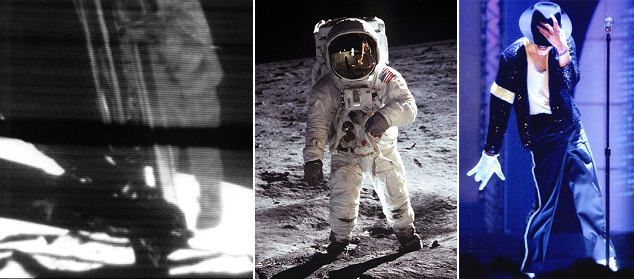
What a pity that Michael Jackson missed the 40th anniversary of the first Apollo moonwalk by only a few weeks.

He was only 10 when Apollo 11’s Neil Armstrong took that historic first lunar step on July 20, 1969 and was probably among the 500 million people — the largest TV audience the world had known at that time — who watched it live. Fourteen years later, Jackson would invent his own kind of ‘moonwalk’.

First performed for his song ‘Billie Jean’ on a U.S. TV show in March 1983, Jackson’s dance technique that gives the illusion of the dancer stepping forward while actually moving backward gained worldwide popularity and became his signature move.

Like that historic ‘moonwalk’ 40 years ago, Jackson’s untimely death on June 25, 2009 created ripples that was felt worldwide. News of his sudden death crashed some news or social networking websites, and stalled others. Even the mighty Google, now the world’s largest media operation, slowed down; Google News was inaccessible for a while.

This is the opening of my latest op ed essay, inspired by the media and public reactions to Michael Jackson’s sudden death. Titled ‘King of Pop Moonwalks to Online Immortality’, it has just been published by the Asian Media Forum website.

I must admit that I’m more a fan of the original Apollo moonwalk than Michael’s version. I was three and a half years when the first Moon landing happened, which remains my earliest childhood memory that can be traced to a specific date.

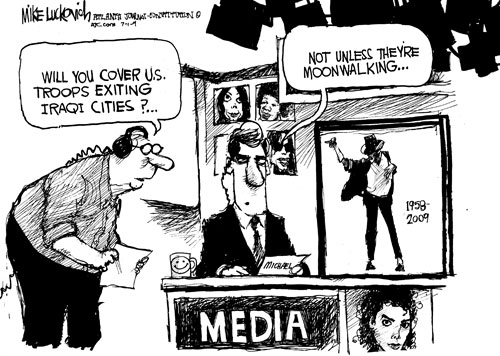
Moonwalking all over the news - Cartoon © 2009 Creators Syndicate
All the same, as an observer of media and popular culture trends, I have always been interested in the Michael Jackson phenomenon. The crux of my new essay is captured in this para: “He was not the world’s first mega-star — in the zenith of their careers, the Beatles and Elvis Presley were similar globalised cultural icons. But two waves of communication technology, arriving in quick succession, propelled Jackson to unprecedented heights in popular culture: satellite television and the Internet.”

I look back at how these twin technologies transformed far-away Jackson into a local icon across Asia. I also recall a 2001 documentary named Michael Jackson Comes to Manikganj. Directed by Indian journalist Nupur Basu, it probed how far and wide satellite television was influencing and impacting culture, society and even politics of South Asia. (Full disclosure: I was interviewed on the film, along with nearly two dozen other South Asians.)

Read Nupur Basu’s own recent recollections of how she came across Michael Jackson in remote parts of South Asia, courtesy satellite TV.

The essay ends noting how Jackson could not quite ride the Internet wave the way he did the satellite TV wave. I share my thoughts on how the world’s online population — now over 1.5 billion people according to one estimate — reacted to the news that King of Pop was no more.

The news created a data tsunami of its own on the web, which incidentally – and half the world away – provided a much need respite for the Ayatollahs of Iran…Read the full essay and find out why!

Read earlier blog post: 26 June 2009: Michael Jackson (1958-2009): Mixed celebrity, entertainment and good causes

Syeda Rizwana Hasan: Keeping a sharp eye when ships come to die…

Syeda Rizwana Hasan: Goldman Prize winner 2009
In Greek legend, Helen of Troy was the ‘face that launched a thousand ships’. Now meet Syeda Rizwana Hasan, a determined environmental activist who keeps dozens of ships from coming to die on the beaches of her native Bangladesh.

Rizwina is an environmental lawyer who is working hard to reduce the impact of Bangladesh’s exploitative and environmentally-devastating ship breaking industry. She has spearheaded a legal battle resulting in increased government regulation and heightened public awareness about the dangers of ship breaking. For this, she has just been honoured as the Asia winner of the prestigious Goldman Environmental Prize 2009.

Ship breaking is a lucrative yet highly hazardous business. Decommissioned ships from around the world are sent to Bangladesh, where they are dismantled by hand on the beaches by unskilled workers who are often paid less than one dollar per day. Lacking in sufficient mineral deposits for metal mining, Bangladesh relies on the iron and other materials from the ships for some of its metal. The scrap metal, along with other parts of the ships — including sinks, toilets, beds, appliances, and light bulbs — are resold in huge open markets lining the roads of Chittagong, the main ship breaking region.

Ship-breaking is done by around 20,000 workers – mostly young men, some as young as 14, who come from the northern parts of Bangladesh. They are paid very little, housed in the most basic of shelters, and provided with little or no medical care. It is estimated that, on average, one ship breaking worker dies at the yards in Bangladesh every week and every day one worker is injured.

Read the full profile on Rizwana Hasan on the Goldman Prize website

Watch short video film on Rizwana Hasan:

Rizwana Hasan, 40, is a lawyer and Executive Director of the Bangladesh Environmental Lawyers Association (BELA), a public interest law firm. Growing up in a politically-engaged family, Hasan committed herself to public service and, after receiving her master’s degree in law at age 24, joined BELA. She soon became one of the country’s leading voices for the environment. Today, she manages six offices with nearly 60 staff and is one of the leading young lawyers enrolled with the Supreme Court of Bangladesh.

The Goldman Environmental Prize, now in its 20th year, is awarded annually to grassroots environmental heroes from each of the world’s six inhabited continental regions and is the largest award of its kind with an individual cash prize of $150,000. This year’s prizes were awarded in San Francisco on 20 April 2009.

The 2009 Goldman Environmental Prize recipients are a group of fearless grassroots leaders taking on government and corporate interests and working to improve the environment for people in their communities. Other winners this year came from Gabon, Indonesia, Russia, Suriname and USA.

Watch all prize winners profiled on video

Photo and video courtesy of the Goldman Environmental Prize

Banishing poverty to a museum: The grand vision of Muhammad Yunus

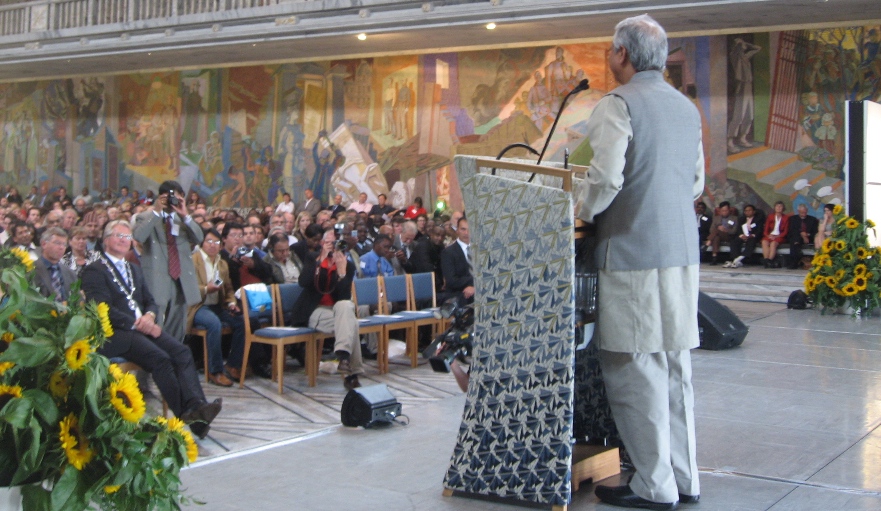
Muhammad Yunus speaking at Oslo City Hall on 4 Sep 2008

The celebrated Bangladeshi economist and anti-poverty activist Muhammad Yunus returned to Oslo’s City Hall today, more than one and a half years after he accepted the 2006 Nobel Peace Prize there. In a passionate, insightful talk to a full house of over 900 people, he revisited his favourite topic: how to banish poverty from our planet.

The occasion was 2008 North-South Forum, convened and hosted by Fredskorpset, the Norwegian peace corp, together with the city council of Oslo. I was among the 350 international participants who have come from 50 countries to participate in this event.

In his talk, the founder of the Grameen Bank reiterated the central message in his recent book, Creating a World Without Poverty: Social Business and the Future of Capitalism.

“We can and must chip away at poverty, and get rid of it – just like what they did to the Berlin Wall,” he said. “I’m dreaming of the day when there is no more poverty on this planet…the day when our future generations would have to visit a museum to see what it was like to live in poverty.”

Wistfully, he added: “I would then want to offer a million dollar prize to anyone who can find a poor person.”

He tempered this idealistic vision with the economist’s strong realism: to overcome poverty, we first need to understand and come to terms with factors that cause and sustain it.

“There is nothing intrinsically wrong with poor people,” Yunus said. “They are ordinary people like you and me – many of them talented and capable. But they have never had the opportunity to do well in life. Poverty is not created by poor people, but by the (social and economic) system we have created around us.”

Banishing poverty is not just a matter of social justice – it is also an ‘insurance’ against social disintegration and other major problems of our times like crime and terrorism.

Prof Yunus made the same points in this interview with the Nobel Prize website:

See full interview on Nobel website

For several years, Yunus has been voicing concerns about the so-called war on terror diverting much needed attention and resources away from the war on poverty. In his Nobel Prize lecture delivered in the same hall on 10 December 2006, he said: “I believe terrorism cannot be won over by military action. Terrorism must be condemned in the strongest language. We must stand solidly against it, and find all the means to end it. We must address the root causes of terrorism to end it for all time to come. I believe that putting resources into improving the lives of the poor people is a better strategy than spending it on guns.”

When Yunus speaks, he sounds far more like an amiable story teller than the professor of economics that he once was. He appeals to the heart and mind of his listeners, in that order. He did not dazzle his audience with endless facts and figures. There were no fancy Power Points or endless charts – the essential tools of poverty researchers. And, mercifully, he never once referred to the dubious millennium development goals or MDGs, the favourite mantra of assorted UN types. (They started off as a well-intended set of targets, but have become self-limiting, self-serving distractions for the development community.)

Instead, he drew from the practical, real life experiences of the Grameen Bank that he founded in 1976, when working as a professor at the University of Chittagong in Bangladesh. Grameen’s three decades of work providing small loans to the poorest of the poor is ample evidence, he said, that the vicious cycles of poverty, debt and misery can be broken by ‘tiny interventions, sustained over time’. Grameen started with 27 poor people in a single village. Today, it has over 7 million participating in its micro credit programes, 97 per cent of them women.

Read Shahidul Alam’s account of Grameen and its founder

Yunus offers a grand vision without grandiose claims or pomposity. He is fond of the word ‘tiny’ – using it to describe the various initiatives he and his team have been taking to attack poverty from many different fronts. The results are anything but tiny.

In his new book, Professor Yunus describes the role of business in promoting social reform and his vision for an innovative business model that would combine the power of free markets with a quest for a more humane, egalitarian world that could help alleviate world poverty, inequality, and other social problems. He calls it ‘social business’ – a hybrid of the profit-maximising corporate sector and charitable non-profit sector.

Listen to Muhammad Yunus speak at Google New York City campus on 10 January 2008 about ideas captured in his new book:

In 2006, the Nobel Peace Prize was awarded to Muhammad Yunus and Grameen Bank for their efforts to create economic and social development from below. In doing so, the Norwegian Nobel Committee noted: “Lasting peace can not be achieved unless large population groups find ways in which to break out of poverty. Micro-credit is one such means. Development from below also serves to advance democracy and human rights.” Read full statement

Watch an indepth interview with Yunus by the US journalist and doyen of TV interviewers, Charlie Rose:

TV Southasia: Nothing official about this, yipee!

TV South Asia

Nearly one year ago, I wrote a blog post titled: Channel South Asia? Yes and No!

My closing words at the time were:
“I, for one, am relieved that South Asian governments are unlikely to come together in such a venture – we’ve suffered long enough and hard enough with our state-owned, government-controlled, ruling party mouthpieces (both radio and TV) that pollute our airwaves (a public commons) every day and night. Euphemistically called ‘national television’, these conduits of governmental propaganda have progressively lost audience share — and influence — since private channels started operating in the early 1990s. They are today reduced to vanity channels for vane politicians and bureaucrats. The mass audience has long ago abandoned them. I’d rather take chances with a South Asian Murdoch, than with our unaccountable, selfish governments.”

Chevaan Daniel, head of Sri Lanka’s enterprising Channel One MTV, posted a comment soon afterwards, on 27 July 2007, saying: “Maharaja Channels have pioneered this for Sri Lanka, by joining together in an initiative involving media companies from India, Pakistan, Nepal and Bangladesh to launch ‘The SouthAsian’. This collaboration includes a weekly programme produced in Calcutta, aired at the same time in the region. The next step is indeed a SouthAsian Channel, which we are working towards.

Well, I’m delighted to find that over the past 12 months, they have indeed been investing time, creative effort and money in this venture. TV Southasia is now a reality!

It’s a collaborative venture of commercial broadcasters in five countries of South Asia, who have joined hands to produce and share content across their national borders. Mercifully, no governments are involved and certainly none of the state-owned broadcasters (Babu TVs) whose lack of vision and creativity is only matched by their depleting audiences these days.

TV Southasia

Indeed, there’s nothing official about TV Southasia (TVSA), and that’s to be celebrated on its own merit. And if they get it right, TVSA founders — Rtv of Bangladesh, TARANEWS of India, Image Channel of Nepal, Aaj TV of Pakistan and News 1st of Sri Lanka — can tap into an enviably large audience. Between them, their countries have more than 1.5 billion people, most of who have access to television.

TVSA founders are taking one step at a time, perhaps knowing very well that cross-border ventures in South Asia need to be nursed slowly and incrementally, while dealing with assorted historical hang-ups and tonnes of red tape (or these days the colour could well be saffron or khaki, depending on where you live!).

It all started when a group of broadcasters and activists from across South Asia came together in Kolkata in December 2006 and agreed to forge the Southasian initiative. They swapped content to start producing a half-hour magazine programme (containing news analysis, music, features and interviews) from April 2007. Called Southasian, it was produced by Taranewz drawing on content from the participating channels, who then broadcast it weekly and also made it available online.

Taking the next logical step, the five broadcasters decided in August 2007 to form a channel, branded as TV Southasia. It started being previewed on 19 April 2008.
Read more about TV Southasia on its own website

The channel is being distributed by Thailand’s ThaiCom5 satellite, and would be available through cable operators across South Asia. It’s an English language channel, based on the reality that English is the only link language shared and understood by all countries of South Asia.

TVSA says it’s concentrating on talk shows, interviews, lifestyle, music, short films, sports, cuisine and quiz — most of this content is already available through many national channels and occasionally from global channels too. But TVSA can bring in a trans-boundary, pan South Asian outlook which is largely missing in these channels. In fact, it would be refreshing to see a TV channel covering South Asia as a whole, without giving into the frequent pressures or temptations of national tribalism and geopolitical posturing that we see all the time on both BabuTVs and many commercial channels.

Click here for programme lineup on TV Southasia

I have so far only caught glimpses of their offering, when Channel One MTV shows the Southasian magazine show. Going by this limited exposure, I can confirm that the products of this collaboration are superior to what BabuTVs have been struggling to do for two decades through the very official (read: officious and unimaginative) framework of SAARC Audio-Visual Exchange, or SAVE.

Started in 1987, just two years after the South Asian governments formed the regional grouping called South Asian Association for Regional Cooperation or SAARC, SAVE brought together the so-called national broadcasters in radio and TV. Trapped in inter-governmental bureaucracies, they tried to share and carry each other’s broadcast content. The officially sanctioned programmes, often made by committees, completely failed to capture the diversity and vibrancy of what’s going on in each South Asian country that interests the rest of the sub-region. I have no idea if SAVE still exists, because I don’t watch BabuTV anymore (does anybody?). Even in its formative days, I could tell that SAVE was beyond saving…

TV Southasia

Enter TV Southasia – and not a moment too soon. As its website says: “It is for the first time in history that the private electronic media channels have come together and have formed a collaborative channel sharing the same view points on diversity, heritage, bondage and possibilities.”

Unlike many broadcast ventures, TVSA declares its agenda – and it’s a lofty one. It wants to promote highly desirable values like liberalism, scientific temperament, education, heritage and cultural diversity. Rather courageously, it also declares what it is explicitly opposed to, which includes superstition, fundamentalism, corruption, violence, cultural hegemony and communalism — the long and depressing list of evils that keeps hundreds of millions of South Asians in misery, fear and trapped at the bottom of the development ladder. Read TVSA’s vision, mission and ideals

This agenda resonates with the equally passionate, secular idealism of Ujala TV, another satellite broadcast venture aimed at beaming to South Asia since mid 2006. I have been cheering them from the beginning, while my organisation TVE Asia Pacific has been a regular supplier of factual programming for them. Read my July 2007 blog post on Ujala TV – Enriching South Asian airwaves

Well, we need as many idealists as we can find in South Asia. Encouragingly, TV Southasia has already involved Himal Southasian founder and editor Kanak Mani Dixit, a great champion of people-to-people collaboration in South Asia. Perhaps it’s due to Kanak’s influence that the brave new channel is spelling Southasia as one word, as Himal Southasian has been doing for some years now. It might seem an aberration in spelling to some, but in fact, it separates these entirely unofficial, people’s ventures from the many committees and initiatives of the official SAARC, which are endlessly meeting yet constantly failing to forge regional trust, cooperation and cohesion.

The official, officious and unproductive SAARC will be on parade once again at the next Summit due in late July 2008. My SAARCasm is shared by many journalists, intellectuals and activists across South Asia who have tracked the origins and evolution of this grouping since its founding in Dhaka in 1985. To put it charitably, at 23 years of age, SAARC has the mental development of a 3-year-old (if that). We only need to take a look at the People’s SAARC Declaration, adopted in Kathmandu in March 2007, to realise how much the official SAARC has failed to accomplish.

That’s in spite of its frequent and highly expensive meetings. Alas, this time they have chosen to meet in my city of Colombo, which means – after footing a massive Summit bill of LKR 2.8 billion (over USD 27 million) – we ordinary citizens will very likely be kept under virtual house arrest for its duration. All in the name of security, of course.

I hope I can catch a bit more of TV Southasia when the visiting SAARC-babus drive us off our own streets.

Photos and images all courtesy TV Southasia

Below – photos from TV Southasia launch

Portraits of Commitment: New face of HIV/AIDS in Asia

Sabina Yeasmin Putul, photo by Shahidul Alam

Today, 1 December, is World AIDS Day — and this is the new face of HIV/AIDS in Asia.

Well, at least one of 50 faces that my friend Shahidul Alam captured during this year for a UNAIDS-published book titled ‘Portraits of Commitment: Why people become leaders in the AIDS response’.

It profiles men and women who are confronting HIV/AIDS in their lives, professions, work places and families in a variety of ways, each of them remarkable and courageous.

In August 2007, Shahidul held an exhibition in Colombo that featured the South Asians who were photographed for the book. Adorning the cover of the exhibition brochure was this 17-year-old Bangladeshi girl, Sabina Yeasmin Putul.

And this is what Karen Yap Lih Huey of Inter Press Service/TerraViva wrote about her and the exhibition:

Sabina Yeasmin Putul has a silent, determined look with her left fist clenched tight in front of her face – a vision of strength, grace, and resilience all in one.

The 17-year-old Bangladeshi has a lot going for her. Mature beyond her age, she had a good understanding of what she has been through, as a daughter of a sex worker, and of how society sees and judges her. And she probably doesn’t know this – that her struggles inspired respected Bangladeshi photographer, writer and activist Shahidul Alam.

“The way she tackles issues regarding her mother and the people around her is powerful. Of course, among other things, she did martial arts and I thought rather than showing child of a sex worker, I photographed her as this powerful woman who came across with powerful ideas,” said Alam, managing director and founder of the Dhaka-based Drik Photo Library.

Posters of her in a martial arts pose was the face for Shahidul’s photography exhibition, a project produced by a team from Pathshala, the South Asian Institute of Photography which is the education wing of the award-winning agency Drik.

Read the article in full on IPS/TerraViva

Read my Aug 2007 blog post on another Portrait of Courage: Rajiv Kafle of Nepal

Photograph by Shahidul Alam/Drik/Majorityworld

Images from the Majority World: Global South telling its own stories

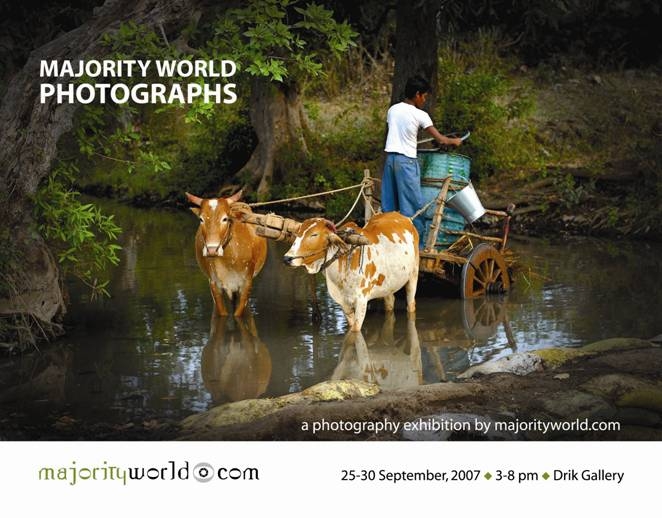
majority-world.jpg

This image captures a typical scene in a South Asian village. The invitation arrived from Suchit Nanda, a talented Indian photographer who shoots men, women and scenes from different cultures and societies as he moves around Asia and elsewhere.

Suchit’s work is being marketed by MajorityWorld.com, a new global initiative founded through the collaboration of The Drik Picture Library of Bangladesh and KijijiVision in the UK to champion the cause of indigenous photographers from the developing world and the global South – the Majority World!

“Very few published images of the South are taken by local photographers. They are invisible and don’t get a fair deal. This is what kijiji*Vision is campaigning to change,” says Colin Hastings of kijiji*Vision, a co-founder of Majorityworld.com.

Read more about Majority World

By coincidence, just this week I’m involved in buying some photographs from Drik Picture Library to illustrate an Asia Pacific resource book on Communicating Disasters that TVE Asia Pacific is compiling. It is being co-authored by Frederick Noronha and myself, and due for a December 2007 release.

Whether in photography or videography, the global South – or Majority World – has to speak for itself. Our still images and moving images must tell our own story.

But try doing this in the commercial worlds of publishing or mass media, and suddenly we are competing in an extremely unfair and uneven playing field. Astonishingly, many development agencies – including the UN – don’t commission or acquire the work of talented Southern photographers or film-makers. Talk about not practising what they preach!

Read my recent blog post: Wanted – Fair Trade in Film and Television

In an essay titled Communication rights and communication wrongs written in November 2005, I criticised the globalised media for persistently using stereotyped images of the South — captured mostly by northern photographers and camera crews.

I quoted Shahidul Alam as saying: “Invariably, films about the plight of people in developing countries show how desperate and helpless they are… Wide-angle black and white shots and grainy, high-contrast images characterise the typical Third World helpless victim.”

I added: “Media gatekeepers in the North often dismiss the better-informed and equally competent Southern professionals — saying, insultingly, that ‘they don’t have the eye’! And for years, I have resisted the widespread practice of Northern broadcasters and film-makers using the South’s top talent merely as ‘fixers’ and assistants.”

Read my full essay on SciDev.Net, which published it after Panos Features – the original commissioners – declined to carry it. Apparently my views were too outspoken for Panos London, which claims to champion communication for development…

Experience the visual treats offered by Suchit Nanda:
Suchit Nanda

Support Majority World photographers by using their work

The Daily Star (Dhaka) reviews the exhibition

Shimu: Bangladesh’s real life ‘Meena’ enthralls millions on TV

Meena’s uncle has arranged for his daughter Rita to marry Babu, a shopkeeper’s son. But Rita is only 15 and has not yet finished school. With Meena’s help, it comes to light that Babu, who is studying to be a doctor, does not want to get married yet, especially since he knows it is unsafe for young girls to become mothers. To everyone’s satisfaction, the marriage is postponed until Rita is 18 and has completed her education.

That’s the storyline in Meena: Too Young to Marry, which is part of the hugely successful cartoon animation series Meena, which Unicef produced with leading animation houses in South Asia during the 1990s. It was part of the Meena Communication Initiative.

Its central character is Meena: a spirited, nine-year-old girl, living in a typical South Asian village, facing all the usual challenges of growing up — whether in her efforts to go to school, or having enough to eat, or in fighting the stigma surrounding HIV/AIDS in her village. In a sub-region where many families still favour boys over girls, life is not easy for Meena, but she finds ways to not just cope but flourish.

Now comes the news of a real life Meena in Bangladesh.

Shimu - photo courtesy Washington Post

Alo Amar Alo is the name of a live action television drama series that promotes girls’ education in Bangladesh. Launched in July 2007, it is currently running on Bangladesh Television, BTV.

Alo Amar Alo (“Light My Light”) centers around a girl named ‘Alo’ who stops going to school when she completes Class V. Throughout 26 episodes, the story follows Alo as she struggles to overcome life’s challenges through the support and friendship of a renowned actress.

Playing the role of Alo is 13-year-old Shimu, who suddenly finds herself the star of the country’s most popular television series.

In an article profiling her, The Washington Post wrote on 14 September 2007: “Shimu, a youthful Bangladeshi version of Winona Ryder, is recognized across the country for her moving role as the spunky 11-year-old heroine Alo. On Wednesday nights, more than 10 million viewers tune in after the 8 p.m. news to see her character put through the gantlet of family entanglements and financial strains that afflict many of the young girls in this desperately poor, densely populated South Asian nation. Alo must fight to stay in the fifth grade while her uncle demands that she work in a garment factory and other family members urge her to marry so they will have one less mouth to feed.”

“Teachers say that Shimu’s photograph hangs in classrooms across the country on posters advertising the show and that her story has become a symbol of the struggle to keep girls in school.”

Elsewhere, the article notes:
“As in Latin America’s telenovelas and many African and South Asian TV dramas, story lines in Bangladeshi programs are often infused with messages decrying social ills such as child labor, domestic violence and early marriage. Many of the shows are low-budget productions funded by nonprofit organizations or the government. Shimu’s show…is funded by the Education Ministry and UNICEF; actors receive modest stipends.

Being a TV star has not changed Shimu’s life, says Washington Post writer Emily Wax. Even though Shimu is on television, her family does not own a TV set. She and her friends watch the show at the theater group’s center.

Her grandfather, Mohamed Siddiq, 61, is quoted saying he wants Shimu to stay in school but is worried that she may end up marrying or working, since their family is being evicted in a month and has no savings.

“We are illiterate. I really want Shimu to stay in classes,” Siddiq said. “It’s just so hard to survive here.”

Read the full article about Shimu in The Washington Post online

The Alo Amar Alo series is funded by Unicef and the Ministry of Education in Bangladesh. It’s part of a communication strategy which includes interactive popular theatre shows, folksong performances, wall paintings and Meena Communication Initiatives.

“These have been extremely effective in raising awareness on the value of education as well as reaching the remote corners of the country through the mass media. Parents have shown more willingness to send girls to school. The increase in the enrollment of girls has also been the impact of multiple awareness raising campaigns,” says Unicef Bangladesh.

But big challenges remain. The Washington Post article draws parallels between the character Alo and child actor Shimu.

“Sometimes I feel she should support me,” Shimu’s grandmother, Ayesha, 49, who was herself married at 12, is quoted as saying. “Boys want to marry her. They are always harassing her. Even though she is known for her acting, it’s very hard to make a living here. If she were married, we wouldn’t have to worry about feeding her.”

To which Shimu says, simply: “It’s better to stay in learning for the future. I want to try.”

One concern is I have why Unicef is exploiting a child actor without adequate pay. The article refers to actors receiving ‘modest stipends’. If Shimu was paid better for her natural talent as well as considerable time she doubtless spends on acting in Alo Amar Alo, surely that can make a difference in one child’s life? Or is that not statistically significant for Unicef?

Photo of Shimu courtesy The Washington Post

Meena image courtesy Unicef