Oz challenge to Japanese whaling – on YouTube!

Who said YouTube is only for activists and video enthusiasts to share their content?

The above appeal is by Australia’s Environment Minister Malcolm Turnbull, who’s using the popular new media platform to reach out to children and young adults in Japan in a campaign aimed at stopping Japan’s stubborn insistence on whaling.

The Australian Department of Environment has taken out a YouTube channel where this and several other videos are on offer.

This is very encouraging – to see a government putting aside diplomatic niceties and taking a campaign right to the heart of a society that is still culturally attached to whale meat. For sure, Australia is also active in inter-governmental negotiations to sustain the global ban on whaling, but addressing the issue from the demand side and future generation angle can make the anti-whaling positions stronger.

Here’s how Reuters reported the story this week:

CANBERRA, Oct 9 (Reuters) – Australia has taken its battle against Japanese whaling in the Antarctic to the Internet, with a new YouTube campaign unveiled on Tuesday that targets Japanese children.

“Can you imagine what life on Earth would be like without these magnificent creatures? Hundreds of years of whaling have nearly wiped them out,” Australia’s Environment Minister Malcolm Turnbull says in the video, subtitled in Japanese.

Japan plans for the first time to hunt 50 humpback whales in the Antarctic over the coming summer, with the endangered animals currently migrating south along the Australian coast. Japan also plans to hunt 935 minke whales for scientific research.

The Japanese whaling fleet, hampered by a fire on the factory processing ship Nisshin Maru last February which killed one crewman, was recently bolstered by the addition of a new chaser vessel.

Australia’s government, facing re-election in weeks, has dismissed as futile the opposition’s calls for legal action over Japanese whaling in Australia’s Antarctic Whale Sanctuary, which is not recognised by other nations.

Japan’s fisheries agency, confident its whaling rights will be confirmed, has challenged any country to take it to the International Court of Justice in The Hague

Turnbull said Canberra would fight in the court of public opinion.

Read the full story on Reuters AlertNet

Greenpeace anti-whaling website

Here’s an animated anti-whaling TV commercial I came across on YouTube that takes a different look at the same issue. It was produced by Saachi & Saachi Poland:

Geography lesson that saved many lives: The story of Tilly Smith and Asian Tsunami of 2004

ISDR image

Today, 10 October, is the International Day for Disaster Reduction. The theme this year is “Disaster Risk Reduction Begins at School”.

This year’s campaign, spearheaded by UN International Strategy for Disaster Risk Reduction aims “to inform and mobilize Governments, communities and individuals to ensure that disaster risk reduction is fully integrated into school curricula in high risk countries and that school buildings are built or retrofitted to withstand natural hazards.”

Buried beneath this development jargon that UN agencies are so fond of is something very important: sensitising the next generation about living with hazards can help make our societies better able to cope with disasters when they do happen.

And you never know when an informed and alert school kid could save the day — and many lives.

A good example came from Thailand when the Indian Ocean Tsunami arrived without any public warning on 26 December 2004.

ISDR BBC

Tilly Smith, an eleven-year-old British schoolgirl, was on holiday on Maikhao Beach in Thailand with her family when the tsunami hit. Just a few weeks earlier, she had studied tsunamis in school — and immediately recognized the signs of the receding sea as a sign of an impending disaster. She warned her parents, which led to all the hotel guests being rapidly moved from the beach.

This simple, timely action by a single schoolgirl saved the life of dozens of people. Tilly’s story highlights the critical importance of basic education in preventing the tragic impacts of natural disasters.

Watch her story on YouTube:

This 5 min video, produced by UN/ISDR in 2005, is available in English, French and Spanish. Watch the English version on their website, which is now hidden under all that bureaucratic babble:
Higher resolution WMV file – more suited for broadband Internet connections
Lower resolution WMV file – will play better on narrowband Internet connections

According to the Wikipedia, Tilly’s family have declined requests to be interviewed by commercial and national broadcasters, but Tilly has appeared at the United Nations in November 2005, meeting Bill Clinton the UN Special Envoy for Tsunami Relief, and at the first year anniversary in Phuket, as part of the campaign to highlight the importance of education.

In December 2005, Tilly was named “Child of the Year” by the French magazine Mon Quotidien. On the First Anniversary of the Official Tsunami Commemorations at Khao Lak, Thailand on December 26, 2005, she was given the honour of closing the ceremony with a speech to thousands of spectators which read in part:

National Geographic online: Tsunami Family saved by school girl’s geography lesson

BBC Online: Award for tsunami warning pupil

Stop that Traffick: ‘The Girl Next Door’ becomes ‘Trade’ the Movie

Image from Trade the Movie Image from Trade the Movie

When 13-year-old Adriana (played by Paulina Gaitan) is kidnapped by sex traffickers in Mexico City, her 17-year-old brother, Jorge (Cesar Ramos), sets off on a desperate mission to save her. Trapped by an underground network of international thugs who earn millions exploiting their human cargo, Adriana’s only friend throughout her ordeal is Veronica (Alicja Bachleda), a young Polish woman captured by the same criminal gang. As Jorge dodges overwhelming obstacles to track the girl’s abductors, he meets Ray (Kevin Kline), a Texas cop whose own family loss leads him to become an ally.

From the barrios of Mexico City and the treacherous Rio Grande border, to a secret internet sex slave auction and a tense confrontation at a stash house in suburban New Jersey, Ray and Jorge forge a close bond as they frantically pursue Adriana’s kidnappers before she is sold and disappears into a brutal underworld from which few victims ever return.

This is the synopsis of Trade, a feature film that opens across the United States on 28 September 2007.

Inspired by Peter Landesman’s chilling NY Times Magazine story on the U.S. sex trade, “The Girls Next Door,” (published in January 2004), TRADE is a thrilling story of courage and a devastating expose of one of the world’s most heinous crimes. The American debut of Marco Kreuzpaintner, one of Germany’s leading young directors, TRADE is produced by Roland Emmerich and Rosilyn Heller from a screenplay by Academy Award(R) nominee Jose Rivera (The Motorcycle Diaries).

Watch the trailer for Trade the movie

Image from Trade the Movie

Explaining the social context to this dramatised story, the movie’s website says:
“The practice of slavery in the US is something most people think ended with the 13th Amendment in 1865, but in recent years it has returned in an even more virulent form. Fueled by the collapse of the Soviet Union and other eastern European countries, new technologies like the internet, and sieve-like borders, the traffic in human beings has become an epidemic of colossal dimensions. The State Department estimates that as many as 800,000 people are trafficked over international frontiers each year, largely for sexual exploitation. Eighty percent are female and over fifty percent are minors. Many people in this country push this atrocity out of their minds, believing that it only occurs in faraway countries like Thailand, Cambodia, the Ukraine and Bosnia. The truth is that the United States has become a large-scale importer of sex slaves. Free the Slaves, America’s largest anti-slavery organization estimates that at least 10,000 people a year are smuggled or duped into this country by sex traffickers.”

Image courtesy Trade the Movie

The film’s makers, Roadside Attractions, says it will donate 5 per cent of the opening week box-office gross divided among four organisations participating in the release of the film; United Nations Office on Drugs and Crime (UNODC), Equality Now, International Justice Mission (IJM), and David Batstone’s Not For Sale Campaign.

On 19 September 2007, they held a benefit premiere at the United Nations headquarters in New York that included supper in the UN Delegates dining room. This marked the first film premiere event ever to take place at the United Nations, with the crusty UN officials mingling with film stars and artistes.

Read about the film-makers

Get involved in anti-traffick activism

Image courtesy Trade the movie

UN-ODC press release about Trade the movie

All images courtesy Trade the movie website

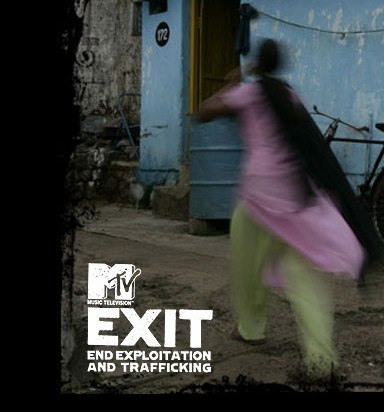
MTV Exit: Entertainment TV takes on human trafficking

mtv-exit.jpg

Television gets blamed for lots of things that go wrong in our world. This isn’t surprising, given it’s the world’s most powerful medium and the key role it plays in our cultural, social and political lives.

A sociological study some years ago said broadcast TV was partly responsible for the movement of millions of people from villages to cities in search of jobs, higher incomes and better living standards. The glitzy lifestyles dramatised on TV was creating illusions in the minds of rural women and men, especially the youth, it said.

Of course, such migrants soon discover a very different reality in the cities. But few want to go back to where they came from. As they hang on in the cities, some fall prey to human traffickers, always on the prowl for vulnerable people to trade in.

The United Nations estimates that the total market value of human trafficking is 32 billion dollars — one of the most lucrative illicit trades in the world. The International Labour Organisation (ILO) estimates that worldwide, about 2.5 million people are victims of trafficking.

If TV indirectly contributed to this human perversion, it can also help society stand up and fight against it. As Music Television (MTV) is now doing.

MTV, the most popular music channel in the Asia Pacific region, will be playing a different tune in the weeks to come. For half an hour at least, beginning 18 September 2007 for MTV Thailand, live and hip music will give way to the harrowing accounts of three victims of human trafficking. This is part of the MTV Exit campaign.

Trafficking of people in the region will be given a human face through the personal accounts of Anna, Eka and Min Aung. Anna was forced into prostitution in the Philippines, while Eka is an Indonesian who was an abused domestic worker in Singapore. Min Aung from Burma recounts his sad experiences working and being practically imprisoned in a factory in Thailand for two years.

Lynette Lee Corporal writing for Inter Press Service (IPS) quotes MTV Thailand campaign director Simon Goff as saying: “We worked with organisations and talked with experts to see what forms of trafficking we would focus on, the most prevalent forms that affect our audiences. We selected regions that would best represent the issue. Then, finally we brought in a production team, led by a Thai producer and a director from the UK.”

More extracts from her article:

Goff said that it took them six weeks of pre-production work, including research and sourcing, another six weeks to shoot the documentary, and six weeks more of post-production work. It took about four and a half months of “solid production,” he added.

Beyond the emotional and unsettling accounts of the trafficking survivors and the disturbing re-enactments of rape, beatings and abuse, the documentary also had interviews with a trafficker and a ‘client’ who openly admitted to the crime. In an interview with ‘The Chairman’, a Filipino recruiter who forces young girls into prostitution, revealed the horrific experiences young girls go through, and this was reinforced by what ‘Ama’ , a Chinese client who admitted to paying for sex with trafficked girls, narrated.

The challenge now, said Goff, is to break the people’s apathy and denial about human trafficking. “Ultimately, time will tell. We have launched the campaign and it’s already out there in the media. We hope that the show will make people realise that they are both a part of and a solution to the problem,” he said.

In Thailand’s case, he added that it is also important for Thais to realise that it is not just about Thai victims being trafficked abroad, but it’s also “necessary to look that we have other nationalities, such as Min Aung, who has been trafficked here”.

Read the full article on The Asian Eye website of IPS Asia Pacific

Watch or download the celebrity-presented MTV EXIT documentaries for Asia Pacific and South Asia

United Nations Office on Drugs and Crime website on human trafficking

More information on trafficking and how to fight it

Shimu: Bangladesh’s real life ‘Meena’ enthralls millions on TV

Meena’s uncle has arranged for his daughter Rita to marry Babu, a shopkeeper’s son. But Rita is only 15 and has not yet finished school. With Meena’s help, it comes to light that Babu, who is studying to be a doctor, does not want to get married yet, especially since he knows it is unsafe for young girls to become mothers. To everyone’s satisfaction, the marriage is postponed until Rita is 18 and has completed her education.

That’s the storyline in Meena: Too Young to Marry, which is part of the hugely successful cartoon animation series Meena, which Unicef produced with leading animation houses in South Asia during the 1990s. It was part of the Meena Communication Initiative.

Its central character is Meena: a spirited, nine-year-old girl, living in a typical South Asian village, facing all the usual challenges of growing up — whether in her efforts to go to school, or having enough to eat, or in fighting the stigma surrounding HIV/AIDS in her village. In a sub-region where many families still favour boys over girls, life is not easy for Meena, but she finds ways to not just cope but flourish.

Now comes the news of a real life Meena in Bangladesh.

Shimu - photo courtesy Washington Post

Alo Amar Alo is the name of a live action television drama series that promotes girls’ education in Bangladesh. Launched in July 2007, it is currently running on Bangladesh Television, BTV.

Alo Amar Alo (“Light My Light”) centers around a girl named ‘Alo’ who stops going to school when she completes Class V. Throughout 26 episodes, the story follows Alo as she struggles to overcome life’s challenges through the support and friendship of a renowned actress.

Playing the role of Alo is 13-year-old Shimu, who suddenly finds herself the star of the country’s most popular television series.

In an article profiling her, The Washington Post wrote on 14 September 2007: “Shimu, a youthful Bangladeshi version of Winona Ryder, is recognized across the country for her moving role as the spunky 11-year-old heroine Alo. On Wednesday nights, more than 10 million viewers tune in after the 8 p.m. news to see her character put through the gantlet of family entanglements and financial strains that afflict many of the young girls in this desperately poor, densely populated South Asian nation. Alo must fight to stay in the fifth grade while her uncle demands that she work in a garment factory and other family members urge her to marry so they will have one less mouth to feed.”

“Teachers say that Shimu’s photograph hangs in classrooms across the country on posters advertising the show and that her story has become a symbol of the struggle to keep girls in school.”

Elsewhere, the article notes:
“As in Latin America’s telenovelas and many African and South Asian TV dramas, story lines in Bangladeshi programs are often infused with messages decrying social ills such as child labor, domestic violence and early marriage. Many of the shows are low-budget productions funded by nonprofit organizations or the government. Shimu’s show…is funded by the Education Ministry and UNICEF; actors receive modest stipends.

Being a TV star has not changed Shimu’s life, says Washington Post writer Emily Wax. Even though Shimu is on television, her family does not own a TV set. She and her friends watch the show at the theater group’s center.

Her grandfather, Mohamed Siddiq, 61, is quoted saying he wants Shimu to stay in school but is worried that she may end up marrying or working, since their family is being evicted in a month and has no savings.

“We are illiterate. I really want Shimu to stay in classes,” Siddiq said. “It’s just so hard to survive here.”

Read the full article about Shimu in The Washington Post online

The Alo Amar Alo series is funded by Unicef and the Ministry of Education in Bangladesh. It’s part of a communication strategy which includes interactive popular theatre shows, folksong performances, wall paintings and Meena Communication Initiatives.

“These have been extremely effective in raising awareness on the value of education as well as reaching the remote corners of the country through the mass media. Parents have shown more willingness to send girls to school. The increase in the enrollment of girls has also been the impact of multiple awareness raising campaigns,” says Unicef Bangladesh.

But big challenges remain. The Washington Post article draws parallels between the character Alo and child actor Shimu.

“Sometimes I feel she should support me,” Shimu’s grandmother, Ayesha, 49, who was herself married at 12, is quoted as saying. “Boys want to marry her. They are always harassing her. Even though she is known for her acting, it’s very hard to make a living here. If she were married, we wouldn’t have to worry about feeding her.”

To which Shimu says, simply: “It’s better to stay in learning for the future. I want to try.”

One concern is I have why Unicef is exploiting a child actor without adequate pay. The article refers to actors receiving ‘modest stipends’. If Shimu was paid better for her natural talent as well as considerable time she doubtless spends on acting in Alo Amar Alo, surely that can make a difference in one child’s life? Or is that not statistically significant for Unicef?

Photo of Shimu courtesy The Washington Post

Meena image courtesy Unicef

Crossing the other Digital Divide: Challenge to conservation community

Digital Divide refers to the gap between those who have regular, easy access to modern information and communication technologies (ICTs) and those who don’t. In the past decade, the IT industry and development community have launched various initiatives to bridge this divide. The One Laptop Per Child project is among the better known examples.

As digital technologies and media gain momentum and wider coverage than ever before, another kind of digital divide has emerged. This week in Kathmandu, during the Fourth Asian Conservation Forum, some of us have been talking about this new divide — between the Digital Natives and Digital Immigrants.

This latter divide is mainly a product of age, not socio-economics. Market research and sociological studies now confirm that today’s younger people – raised on a diet of mobile phones, video games and mp3 (music) players – have radically different ways of accessing, receiving and coping with information.

Recognising this new Digital Divide is vital for communication and advocacy work of conservation groups, such as IUCN – The World Conservation Union, conveners of the Kathmandu forum.

For nearly 60 years, IUCN has been an effective platform for knowledge-based advocacy. Using scientific evidence and reasoning, it has influenced conservation policies, laws and practices at country and global levels. The world would be a worse place to live in if not for this sustained advocacy work by thousands of experts and activists who were mobilised by IUCN.

Much of that work has been accomplished through the classical advocacy tools: scientific papers, books, conferences and, in recent years, ‘policy dialogues’ — meetings where experts and activists would sit down and talk things through with those who make policy in governments and industry.

IUCN continues to pursue all these methods, with creditable impact. IUCN’s Red List of Threatened Species, whose latest edition is being released today (12 September 2007), is among the best known examples of how the Union’s work informs and inspires urgent action for saving the world’s animals and plants driven to the edge by human activity.

To remain similarly effective in the coming years, IUCN — and the rest of the conservation community — need to evolve and adapt to changing realities in human society. One such reality is the proliferation of ICTs in the past two decades.

The International Telecommunications Union (ITU) announced recently that the world’s telephone connections had passed four billion. Largely thanks to the explosion of mobile phones in the majority world, the total number of telephones (fixed and mobile) had quadrupled in the past decade.

While exact figures are hard to come by, it is estimated that around 1.17 billion people (almost 1 in 6 persons) have access to the Internet, even though varying levels of quality.

These are the more widely quoted figures, but the media mix keeps diversifying even as the size of the overall ‘ICT pie’ keeps increasing. For example, the 1990s saw a channel explosion in both FM radio and television across much of Africa, Asia Pacific and Latin America, hugely increasing viewers’ choice and enhancing the outreach of broadcasting. The popularity of video games (and now, online games) has spawned trans-boundary subcultures that were inconceivable even a decade ago.

It is this bewilderingly media-enriched world that IUCN’s members and experts are trying to engage, hoping to persuade everyone — from governments and industry to communities and individuals — to live and work as if the planet mattered.

In Kathmandu this week, I argued that scientific merit and rational (and often very articulate) reasoning alone won’t win them enough new converts to achieve significant changes in lifestyles, attitudes and practices. To be heard and heeded in the real world outside the charmed development and conservation circles, we need to employ a multitude of platforms, media and ICT tools. And we have to talk in the language of popular culture.

We have come a long way since the 1980s, with the new ICTs evolving parallel to our own understanding of sustainability.

When we were involved in processes leading up to the Earth Summit in Rio de Janeiro, back in 1992, most of us were still using fax and snailmail to exchange information. Email was confined to academic circles and the web was not even conceived.

By the time Johannesburg Summit was held a decade later, email had come into wide use and static websites were being used to disseminate information and opinions. E-commerce and music file sharing were gaining momentum.

Just five years on, the rapidly evolving web 2.0 offers us more tools and platforms to not just engage in one-way dissemination, but to truly communicate with a two-way flow. Wikis allow participatory document drafting. Web logs or blogs enable faster, easier expression and discussion. YouTube and other platforms have suddenly made sharing of moving images much simpler (assuming we have sufficient bandwidth).

In fact, connectivity is improving in many parts of the world, though there still are many gaps, frustrations and cost issues to be resolved. Young people, under 25 years, are leading the charge in entering and ‘colonising’ the new media. Social networking platforms such as MySpace and FaceBook are only the tip of this cyber iceberg. And virtual worlds — such as Second Life, with over 8 million online members — are moving in from the periphery to occupy a clear niche in our new digital world.

800px-web_20_mapsvg.png

Every indication is that these trends will continue. IUCN and other conservationists, with their rigorous scientific analysis expressed in technical papers, print publications and the occasional op ed article in a broadsheet newspaper, have to navigate in this whirlpool — and it’s not easy. But their choice is between engagement and marginalisation. The planet cannot afford the latter.

I’m not suggesting that conservation scientists and organisations must drop their traditional advocacy methods and rush to embrace the new ICT tools. But they need to survey the new media landscape with an open mind and identify opportunities to join the myriad global conversations.

A good part of that is what intellectuals might see as chatter, or tabloid culture. It’s precisely this mass tabloid audience that needs to be engaged for conservation.

There are inspiring examples of how other sections of the development spectrum are seizing new media opportunities:

* Some humanitarian groups now use Google Earth online satellite maps for their information management and advocacy work, for example in Darfur, Sudan, and the Central African Republic.

* In an attempt to name and shame offenders, human rights activists are using YouTube to post incriminating video evidence of human rights abuses worldwide. The influential Foreign Affairs journal recently called this the YouTube Effect.

Fortunately, at least a few Asian conservation leaders already appreciate this enormous new media potential. In Kathmandu, Surendra Shrestha, UNEP’s regional director for Asia Pacific, echoed my views.

“My young kids spend several hours each weekend in virtual worlds. We need to get in there and engage them with our content,” he said. “To do that, we have to get inside their minds, and speak their language.”

Shrestha mentioned how UNEP in Asia is attempting this with ICT-based projects for youth, such as e-generation which, according to him, has involved half a million young people.

Such initiatives are beginning to happen, thanks to a few conservationists who are pragmatic enough to exploit the inevitable. But much more needs to be done to make conservation ‘cool’ and hip for Asia’s youthful population, half of them under 35, and many of them Digital Natives.

For sustainability measures to have a chance of success, these upwardly mobile, spend-happy youth have to be reached, touched and persuaded. If it takes tabloid tactics to achieve this, so be it.

And given Asia’s growing economic clout and ecological impact – with China and India leading the way – the fate of the planet will be decided by what is done, or not done, in our region.

While they debate the finer points of conservation strategies and activities in Kathmandu, Bangkok and other cities across our massive region, Asia’s conservation community must quickly cross the new Digital Divide that currently separates them from Digital Natives.

Declaration of interest: I was part of IUCN Sri Lanka Secretariat (1992-1994), where I started its communication division, and have been a member of IUCN Commission on Education and Communication since 1991.

Read my April 2007 post: Do ICTs make a difference?

Rajiv Kafle: A ‘Portrait of Commitment’ against HIV

Photo by Shahidul Alam, Drik/Majority World

It was good to see Rajiv Kafle again — even if only in this photograph, where he is the grown up surrounded by children. This was taken by my friend Shahidul Alam, whose latest photo exhibition, Portraits of Commitment, I’ve just seen.

I immediately recognised Rajiv because he was a key character in a documentary film we at TVE Asia Pacific commissioned five years ago, in 2002. Love for a Longer Life, directed by Nepali film-maker Dhurba Basnet, was part of a package of Truth Talking films that probed how Asia Pacific societies were coping with rapid change or crises.

At that time, there were 50,000 Nepalis living with HIV. But Rajiv was the very first among them to publicly announce that he had HIV — it created ripples in the conservative Nepali society.

He is a former injecting drug user who contracted HIV through unsafe needles.

“I injected drugs for two years. I got infected with HIV when I used a contaminated syringe belonging to one of my friends. He was HIV positive and I used his syringe without sterilising it properly,” Rajiv described his case history on our film.

After coming to terms with his own HIV status, Rajiv turned activist. For the past few years, he has been a crusader to educate Nepalese youth to prevent them from contracting HIV through ignorance. He gives talks at schools and colleges about his experiences of living with HIV.

It has not been easy: his revelation shook the conservative Nepali society, where most people are still reluctant to talk about HIV, associating it directly with illicit sex.

“Stigma, discrimination — then death.” That’s the bleak future that many HIV positive people in Nepal face according to Rajiv. “There is a great deal of stigma and discrimination against HIV/AIDS sufferers. Because there is so much negative publicity, an HIV-positive person finds it difficult to reveal his condition. He will have heard only about stigma, discrimination and death.”

“If we create a favourable environment, people will definitely come out and let others know,” he says, adding: “It took me a couple of years before I was able to publicly announce that I was HIV positive.”

Change was happening even five years ago when the camera crew from Nepal Forum of Environmental Journalists (NEFEJ) followed him across Kathmandul Valley as he gave talks at schools and other public places.

“Now I see a change. Lots of young people understand the problem and are getting involved. The media and public are now more interested in this subject and they want to interact with people who have been through this.”

film-maker-dhurba-basnet.jpg

It wasn’t easy to produce Love for a Longer Life. As Dhurba Basnet (photo, above) reported at the time: “The major problem we faced during shooting, however, was that it was very difficult to get people living with HIV to talk naturally on camera. We had to first win their trust. This we achieved by behaving with them as normally as possible.”

After some shooting had been completed, Rajiv Kafle fell ill. “Since he was a major character in the film we had to wait a whole month while he recovered.”

Read more about Truth Talking films from across Asia Pacific

Shahidul Alam’s blog post on Portraits of Commitment photo exhibition featuring individuals making a difference in South Asia’s battle against HIV

Read my earlier blog post on HIV in Nepal: Ratomate’s best cup of tea (29 March 2007)

Rajiv Kafle photo by Shahidul Alam, Drik/Majority World

Making fun of HIV: Welcome to the Scenarios from Africa

General Assembly of Diseases: In the city of Contaminobo, assorted germs in an emergency session. Tuberculosis, Polio, Hepatitis and others are all angry and afraid because their favourite target – humans – are fighting back. Enter ‘His Royal Heinous, Overlord AIDS’. Hope at last! When he attacks the immune system of humans, other germs can still have a chance…The humans are so careless, that it’s easy for AIDS to quickly spread from one to many. But wait a minute – somebody has been listening into all their talk. Which means the secret of defending humans from HIV and his cronies is out.

Iron Will: Moussah is a young man with a healthy, or bubbling, interest in girls. His male friends advise him to be play it safe — carefree sex can easily expose him to HIV, for which there is no cure. They talk about condoms, and another strategy that is an alternative to using the rubber latex. But Moussah doesn’t quite understand the expression ‘iron will’. He interprets it differently, and gets custom made iron underpants made — much to the amusement of his friends, who remind him the most important sex organ is…the brain!

Just Once: A man returns from the field and feels like making love to his wife. She is living with HIV and insists that he uses a condom — but they’ve run out of stocks. So he cycles far and wide in search of condoms – where is a rubber when you need one? Finally he succeeds and rushes home, only to find that his wife did have one last, unused condom with her. So why didn’t you tell me, he asks in exasperation. Her answer is revealing….

Intrigued? There’s a lot more where they came from.

These three stories are part of Scenarios from Africa — a highly successful and popular pan-African initiative to use moving images to get young people talking and acting on HIV/AIDS. The decade-long project has been carried out with and for young people, with community mobilisation, education and media elements.

Integral to this communication effort are television drama vignettes about different scenarios involving HIV in everyday life.

Some are very funny while others are very moving. They cover many dimensions of the HIV epidemic, from preventing the virus spreading to taking care of persons living with HIV. Underlying themes include safe sex, removing social stigma from the epidemic and dispelling misconceptions about how HIV spreads or does not spread.

The project was started in 1997 and is coordinated by the non-profit Global Dialogues Trust. It gave African children and young adults an exciting opportunity to educate themselves and others about HIV/AIDS by inviting them to participate with internationally acclaimed directors in the production of these short films.

The films are based on ideas thought up by young people in a series of contests. So far, over 105,000 young people from 37 African countries have taken part in these contests. Over 1,000 local and international partner organisations have been involved in organising the contests and selecting the winning ideas.

The films range in duration from just under 2 minutes to almost 15 minutes. They were produced by top fiction film-makers and animation specialists in Africa.

All stories use African actors, locations and situations – and employ different story telling tactics.

Scenarios from Africa is a multi-media communication project that has been widely acclaimed by practitioners, activists and scholars worldwide. The films are supported by a user’s guide and online discussion points that help teachers, trainers and activists to make the best use of these stories in their work.

The films are all distributed on a non-commercial basis across Africa and beyond, for broadcast and narrowcast use. The Scenarios films have been broadcast on locally-based television stations in almost every country in sub-Saharan Africa. The films are also collected on compilation DVDs and video cassettes for use by organisations and schools. Some 60,000 copies of the films (DVDs and video cassettes) of the films have been distributed to date.

The films are now available in a wide and growing range of African and European languages, and are reaching tens of millions of people.

Says Daniel Enger of the Global Dialogues Trust: “Although the films were originally produced for the sub-Saharan African cultural context, we have been pleased to learn over the years that the films have proven useful as awareness-raising tools in many countries of the Asia Pacific area. Indeed, most of the HIV-related topics raised in the Scenarios from Africa collections have universal relevance, making the films useful discussion starters across the globe.”

TVE Asia Pacific has recently taken on the task of distributing all Scenarios films across the Asia Pacific region. As with all other films in its catalogue, TVEAP will distribute Scenarios on a non-exclusive, non-commercial basis to broadcast, civil society and educational. We have been promoting the Scenarios films since we screened them to packed houses during the 2004 AIDS Film Festival in Bangkok

Meanwhile, the 5th Scenarios contest will be held from 1 December 2007 to 15 March 2008. Please contact for more information.

Watch Scenarios films on the official website (RealPlayer required)

Scenarios from Africa now available from TVE Asia Pacific

All images used in this post are courtesy Global Dialogues Trust.

Read my other blog posts on HIV:
HIV: Stigma a bigger killer than the virus?
Three Amigos: Funny condoms with a serious mission
Beware of Vatican condoms!
50? In South African terms, you’re probably dead!
Ratomate’s best cup of tea
A girl named Nan-nan

Outsourcing with a heart: Cambodia’s success story

Today, 16 May 2007, was observed worldwide as World Information Society Day – it marks the establishment of the International Telecommunications Union (ITU) in 1865 and used to be called the World Telecommunication Day.

The UN-sponsored day was dedicated this year to making available the benefits of the digital revolution to young people everywhere. As the ITU noted in its media release:

The World Summit on the Information Society (WSIS) recognized the young as the future workforce and the earliest adopters of ICT, and called for their empowerment as key contributors to building an inclusive Information Society. World leaders stated their commitment at the Summit in Tunis to actively engage youth in innovative ICT-based development programmes and widen opportunities for them.

Yesterday I wrote about a TV service in Pasadena, California, outsourcing some of its reporting work to journalists in India.

Outsourcing is a worldwide trend, fuelled by the rolling out of Internet access and encouraged – at least in part – by the lower salaries that equally skilled persons still command in the less developed parts of the world. So much has been written and spoken about outsourcing in the IT industry, which has created multi-million dollar businesses in recipient countries such as India.

The outsourcing industry employs tens of thousands of young women and men in developing countries, especially in Asia, which receive the outsourced work. Most of them are from urban backgrounds with English-speaking ability and reasonable levels of education.

But this business-driven process can also benefit young people who haven’t had such advantages in life.

digits4change.jpg

A story in TVE Asia Pacific’s Digits4Change series illustrates this potential. It came from Cambodia, and we called it Compassionate Data.

digits4change-tv-series-cambodia.jpg

We went to Cambodia in late 2005 to find out how business process outsourcing (BPO) is benefiting one of the poorest countries in the world.

Emerging from decades of conflict, Cambodians are now trying to find their place in the global village. But lacking in English and computer skills, many find their opportunities limited.

Digital Divide Data is a non-profit organisation run like a business. Started in 2001, they outsource data processing work from the west.

As the world goes digital, thousands of old, paper-based documents need to be digitised. These tasks take time, effort and quality control. Digital Divide Data (DDD) provides this value added service.

Among its clients are universities, companies and organisations in North America.

But what’s special about DDD is their staff. They employ young men and women from disadvantaged backgrounds – orphans, those with disabilities, or from very poor, rural backgrounds. A few have been trafficked for the sex trade.

Sith Sophary Nhev, DDD’s then Cambodia manager told us: “Many companies outsource this kind of service to international clients by using educated and skillful people, but DDD use disadvantaged people who have low skill and low education but we still provide like a good service, quality, time turnaround and a competitive price for the clients.”

Young people come to DDD with a basic education and virtually no skills. The company trains them in computers and English. In fact, all staff are required to continue their education. The company provides scholarships – and pays them an above average salary.

In the hard-nosed ICT industry that’s usually driven by financial bottomlines, DDD has demonstrated that it is indeed possible to do well and do good at the same time. They are a social enterprise, a growing trend worldwide.

digits4change-compassionate-data.jpg

[

]

Watch the full story on TVEAP’s YouTube Channel

Digits4Change TV series website

Digital Divide Data website

Moving images moving heart first, mind next

“Film is a lousy medium to communicate information. It works best at the emotional level.”

Bruce Moir, one of Australia’s seniormost film professionals made this remark soon after I had presented TVE Asia Pacific’s Children of Tsunami experience to OUR Media 6 conference in Sydney last afternoon.

After more than 35 years in documentary and feature film production for both cinematic and broadcast industries, in different parts of the English speaking world, Bruce knows a thing or two about moving people with moving images.

I was delighted and privileged to have Bruce join my presentation. He’d come at my invitation to the conference happening in his city.

“We’ve got to remember that film appeals to people’s hearts more than their minds,” Bruce explained. “The way to people’s heads is through their hearts, from the chest upwards — and not the other way round.”

I hope this was an ‘Aha!’ moment to at least some in our audience. I’ve personally heard Bruce say this before, but it bears repetition – because many film professionals tend to overlook this. Especially those who are trying to ‘communicate messages’.

Even a few weeks ago, I quoted him in a review as saying: “Our fundamental job is to tell a story – one that holds an audience’s interest and moves their heart, regardless of language, cultural context or subject….I have always believed that film achieves its optimal impact by aiming to ‘get at the audience’s head via their heart’ rather than the other way around.”

Bruce Moir

Without Bruce’s involvement, Children of Tsunami would have turned out to be very different. He was our Supervising Producer for the entire effort, advising and guiding our national film production teams tracking the progress of Tsunami survivor families in India, Indonesia, Sri Lanka and Thailand for one year afer the Asian Tsunami.

As Bruce recalled, the four teams came with different backgrounds, skill levels and film-making traditions of their own – ranging from television news and current affairs to development film-making, the type usually commissioned by UN agencies. Bringing them to be ‘on the same page’ was no easy task.

Film-makers are not particularly known for their patience or people-skills. Many I know have a ‘just-get-on-with-it-never-mind-the-niceties’ attitude. Bruce is one of the most patient persons I know: he would spend days and weeks relating to our production teams – usually by email or phone – gently nudging them in certain directions.

For sure, there’s no one right way to make a film. But there are some tried and tested principles in good story telling, which is what Bruce excels in. And which he willingly shares with others.

The year-long, 4-country and 8-location Children of Tsunami project was the biggest logistical operation TVE Asia Pacific has mounted in its 11 years of existence. (We’re in no great hurry to top that one!). Our production teams – operating from Bangkok, Colombo, Ubud (Indonesia) and Chennai – related to our regional production team based in two cities: Colombo, where TVEAP office is currently anchored, and Sydney, where Bruce lives.

We only came together face to face just once, in Bangkok, early on in the process. That meeting agreed on styles and formats, and also helped build the human relationships.

The rest of the time it was all through communications technologies. As you can imagine, lots of tapes moved around, as did many Gigabytes of video over the web. (DHL should have become a sponsor – they had lots of business from us!)

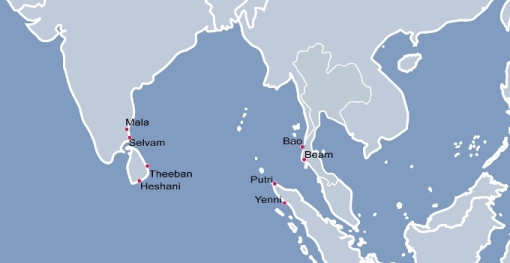
children-of-tsunami-locations.jpg

As I explained in my talk, Children of Tsunami was not just a film project. We published a monthly video report online on each of the eight families we were tracking, plus maintained a dedicated website with growing volumes of text, images and links. The monthly videos were edited and post-produced in the countries of filming, by our production teams themselves. It was distributed film-making, even if everyone worked to a common format.

With all that frenzy now behind us, the products of Children of Tsunami continue to be distributed, showcased and discussed at film festivals and conferences like OUR Media.

As I said yesterday to my predominantly academic audience: we’ve got a story telling and journalistic practice, and we now need a theory for it.

Related links:

Children of Tsunami: Documenting Asia’s longest year

Children of Tsunami revisited two years later