Mixing oil and water: Media’s challenges in covering human security

Talking to the last drop: All streams flow to Istanbul?

The 5th World Water Forum opens in Istanbul, Turkey, today. It will be held in the historic city – a bridge between the east and west – from 16 to 22 March 2009.

Held every three years, the World Water Forum is the main water-related event in the world. It seeks to put water firmly on the international agenda with a view to fostering collaboration – not confrontation – in sharing and caring for the world’s finite supplies of the life-giving liquid. The forums bring together officials, researchers, activists and media to a few days in which they can drown in their own cacophony…well, almost.

I haven’t been to one of these mega-events – I almost did in 2003, when it was hosted by Kyoto, Japan. That forum was almost entirely eclipsed – as far as the media coverage was concerned – by the United States deciding to invade Iraq during the same week. This inspired me to write an op ed essay on oil, water and media which was syndicated by Panos Features and widely reproduced at the time in newspapers, magazines and even in a few activist and development publications. But six years later, it’s hard to locate it online, so I’m publishing it here, unedited, exactly as I wrote in that eventful week in mid March 2003:

Oil on water: will the media get this Big Story?

By Nalaka Gunawardene: 20 March 2003

“If the wars of this century were fought over oil, the wars of the next century will be fought over water.” Ismail Serageldin, an eminent Egyptian architect and planner, made this remark in 1995 when he was vice president for sustainable development at the World Bank.

Well, we are in that new century now, but old habits die hard. The war in Iraq has been fuelled by oil interests, and – starting at the time it did, on March 20 –effectively sidelined global talks to secure freshwater for all.

Clean water, anyone?
Even as the United States launched its attack on the country that sits on the world’s second largest oil reserve, the Third World Water Forum was in progress at the Japanese cities of Kyoto, Shiga and Osaka. The event, running from March 16 to 23, is this year’s biggest international conference on a sustainable development issue and involved hundreds of government and civil society representatives trying to resolve one of the major survival issues of our time: equitably sharing the world’s finite freshwater resources for our homes, farms and factories.

The two processes cannot be more different. One aims to use force while the other seeks to foster co-operation among nations to cope with water scarcity. The increasingly isolated United States has abandoned the United Nations process in its single-minded determination to disarm Iraq, a nation it considers a major threat to peace and security. Meanwhile in Kyoto, the nations of the world – including, but not led by, the United States – were discussing an issue that is far more central to humanity’s security. It has the full blessings of the UN, which has designated 2003 the International Year of Freshwater.

Yet the water forum seems hardly newsworthy to the major news organisations that are preoccupied with war. For months, the global television networks were gearing up for Iraq war coverage. The first Gulf War helped globalise CNN, and this time around, there are other international and regional channels competing for the eye balls. Locked in a battle for dominant market share, CNN International and BBC World are trying to outdo each other in covering the conflict exhaustively — and to the exclusion of everything else. In the do-or-die media marketplace, ‘soft issues’ such as water are easily edged over by conflict. As cynical news editors will confirm, if it bleeds, it leads.

The notions of national and global ‘security’ – on which the Iraq war is being waged – are relics of the Cold War that are completely out of sync with today’s global realities. Who says we have entered the 21st century?

In the closing decade of the last century, as the world grappled with one crisis after another – ranging from famine and drought to global warming and HIV/AIDS – the notion of ‘security’ was radically redefined to include ecological and social dimensions. What is now termed ‘human security’ is concerned not so much with weapons as with basic human dignity and survival. As first articulated in the UN Development Programme’s Human Development Report in 1994, human security includes safety from chronic threats such as hunger, disease and repression, as well as protection from sudden and harmful disruptions in the patterns of daily life.

Mahbub ul Haq
Mahbub ul Haq
The rationale for this was brilliantly summed up by the late Mahbub ul Haq, former Finance Minister of Pakistan and architect of the Human Development Index: “If people are sleeping on pavements, ministers have no business shopping for modern jets and howitzers. While children suffocate in windowless classrooms, generals go about in their air-conditioned jeeps. Nations might accumulate all the weaponry they want, but they have no strength when their people starve…”

A world in which four out of every ten people live in areas of water scarcity is not secure. And if urgent action is not taken, this will increase to two thirds of humanity by 2005. Ensuring water quality is as important as basic access: preventable diarrhoeal diseases – including cholera and dysentery — kill more than seven million children every year. That is 6,000 deaths every day.
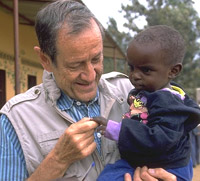
James P Grant
James P Grant
James Grant, former executive director of UNICEF, once used a powerful metaphor to describe this scandalous situation: it was as if several jumbo jets full of children were crashing everyday – and nobody took any notice.

If the media are obsessed with death and destruction, why aren’t these numbers registering on their radars? Why is it that silent emergencies forever remain ignored or are only superficially covered? Even statistics don’t set the media agenda: for example, according to the UN, twice as many people are still dying from diarrhoeal diseases as from HIV/AIDS in China, India and Indonesia. But the international donors and media assign far more importance to HIV than to clean water.

No other factor can distort reality as oil. Oil comes on top of water both in the physical world, and in the murky world of global politics. Our collective dependence on petroleum immediately ensures the Iraq war a disproportionately high rank in public and media concerns.

It’s not just the United States that is addicted to oil – we all are. Addicts tend to lose sight of the cost of their dependence, as we have. On 24 March 1989, the oil tanker Exxon Valdez ran aground on in Prince William Sound in Alaska and a fifth of its 1.2 million barrels of oil spilled into the sea, causing massive damage to over 3,800 km of shoreline. Investigations implicated its captain for grossly neglecting duty. Shortly afterwards, Greenpeace ran a major advertising campaign with the headline: “It wasn’t his driving that caused the Alaskan oil spill. It was yours.”
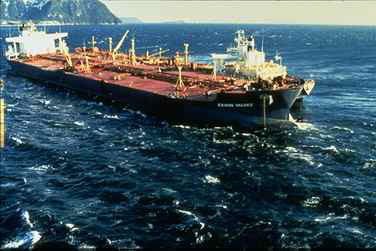
Exxon Valdez: Drunken driving!
Greenpeace continued: “It would be easy to blame the Valdez oil spill on one man. Or one company. Or even one industry. Too easy. Because the truth is, the spill was caused by a nation drunk on oil. And a government asleep at the wheel.”

A nation drunk on oil is waging a war that has more to do with oil than anything else. Our news media are behaving just like cheer-leaders.

War is undoubtedly a big story. But so should be water. One in six humans does not have safe drinking water, and one third of humankind lacks adequate sanitation. We may be living on the Blue Planet, but the waters are muddy and life-threatening to billions.

For sure, a bunch of people huddling together in three Japanese cities won’t solve this crisis overnight. But unless knowledge and skills are shared, and a political commitment is secured, safe water for all will forever remain a pipe dream.

Will it take a full-scale war over water in one of the flashpoints around the world for the military-industrial-media complex take sufficient interest in this survival issue? (That might happen sooner than we suspect.)

It’s ironic that the World Water Forum was undermined by the Iraq war breaking out in the very same week. Washington has now poured oil over everybody’s water.

[Nalaka Gunawardene is an award-winning Sri Lankan science writer, journalist and columnist. He heads TVE Asia Pacific, a regional media organisation working on sustainable development issues, and is on the board of Panos South Asia. The views expressed here are his own.]

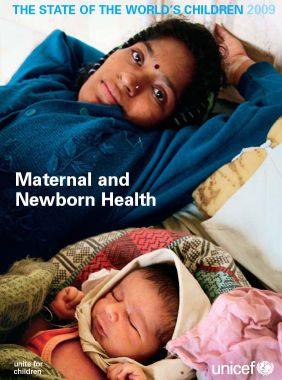
Missing Mothers: How acronyms and jargon can kill innocent women

iwd_5“This year alone, more than 500,000 women will die during pregnancy or childbirth. That’s one woman missing every minute of every day. We call these women ‘missing’ because their deaths could have been avoided. In fact, 80 per cent of maternal deaths could be averted if women had access to essential maternal health services.

“We know where and how these women are dying, and we have the resources to prevent these deaths. Yet, maternal mortality is still one of the most neglected problems internationally.”

This sobering message from Unicef is worth reflecting upon as we mark another International Women’s Day.

Unfortunately, critical issues like these often don’t make the news – or worse, are relegated to the background as inevitable. As Joseph Stalin said in a different context, one death is a tragedy; a million deaths a mere statistic.

The challenge to the development community is to go beyond simply counting deaths in cold, clinical terms. UNICEF has recently released a two minute video, “Missing Mothers” as a tool for international development professionals to use in raising awareness of the issue of mothers dying needlessly.

Having a baby is both a very natural process and a joyous occasion for the parents and extended family concerned. Yet having a baby still remains one of the biggest health risks for millions of women worldwide.

Time to make missing women count...
As Unicef’s 2009 State of the World’s Children report reminded us recently, 1,500 women die every day in the world due to complications arising during pregnancy and childbirth. The chances of a woman in developing countries dying before or during childbirth are 300 times greater than for a woman in an industrialised country like the United States. Such a gap does not exist in any other social indicator.

The largest number of maternal deaths in the world is in South Asia. In India alone, an estimated 141,000 women die each year during pregnancy or childbirth. Recently, my Indian journalist friend Kalpana Sharma wrote a perceptive column on this topic in The Hindu newspaper.

She noted: “The solution has been known for years. The problem is the will to make it work. We also know that the solution would benefit everyone, not just women. Yet, affordable and accessible health care, for instance, has not received the thrust that is needed.”

The Missing Women video suggests to activists and campaigners that action can start with five steps: 1. Educate girls, young women and yourself; 2. Respect their rights; 3. Empower them to participate; 4. Invest in maternal health; 5. Protect against violence and abuse. The Unicef website, meanwhile, lists 10 ways in which concerned individuals can make a difference.

All very commendable and necessary — but not sufficient. With all the good intentions in the world, Unicef’s experts and officials come across as, well, detached and geeky. They don’t connect well enough to the real world people whose needs and interests they are genuinely trying to serve. Their messages are lost somewhere in their precise terms, jargon and endless acronyms.

Just take, for example, the very phrase of maternal mortality itself. Precise but also very stiff and dry. Who outside the medical and development circles uses such terms in conversation? When I write or make films about the issue, I prefer to call it ‘mothers dying needlessly while having babies’. Yes, it’s more wordy and perhaps less exacting. But most ordinary people would get what I’m talking about.

If the jargon-ridden language reads dry in text, it completely puts off people when they watch such words being spoken on video. Such films may pander to the Narcissism of Unicef mandarins, but they completely flop in terms of public communication and engagement.

This is the same point I made in October 2008 when commenting on the Unicef-inspired first Global Handwashing Day: “Passion used to be the hallmark of UNICEF during the time of its legendary executive director James Grant, who strongly believed in communicating messages of child survival and well-being. He gave UNICEF a head start in working with the media, especially television.”

Jim Grant’s deputy, journalist Tarzie Vittachi, who came over to the UN children’s agency after a stint at the UN population fund, used to say: “Governments don’t have babies; people do”. We might extend that to: inter-governmental agencies don’t have babies; real women do. That may be why Unicef insists on delivering its life-saving messages so riddled in politically and scientifically correct, but so sterile language.

Unicef’s YouTube channel has a number of short videos related to what they insist on calling maternal mortality. Here’s an example where Unicef’s Chief of Health Dr. Peter Salama says it’s really an unconscionable number of deaths, and a human tragedy on a massive scale:


MDG5: Save Our Moms!
Reducing by three quarters the number of mothers dying needlessly while having babies is one of the Millennium Development Goals or MDGs, the holy grail in international development since the United Nations adopted these in 2000, setting 2015 as the target date.

We have now passed the half way mark, but progress has been patchy and unimpressive. And it will remain so as long as the UN agencies and other development players insist on peddling jargon and acronyms. Considering the issues of life and death involved here, we must view bad communication as a killer — joining the ranks of unsafe drinking water and violence against women and girls.

Writing an editorial for SciDev.Net in September 2005, I noted: “All development workers and UN officials should take a simple test: explain to the least technical person in your office the core message and relevance of your work. Many jargon-using, data-wielding, acronym-loving development workers would probably fail this test. But unless development-speak is translated into simpler language, the MDGs will remain a buzzword confined to development experts and activists.”

I don’t believe in ghosts, but it’s time to bring back the spirits of Jim Grant and Tarzie Vittachi to Unicef to again humanise the agency so mired in its own ‘geekspeak’. The intellectual rigours of evidence-based, scientific analysis must be balanced with clarity and accessibility. It’s fine to be informed by science, but learn to say it simply, clearly and concisely.

The lives of half a million women and millions of children depend on it.

Bill Gates and mosquitoes: World’s top geek now works for its meek

More bugs from Gates...
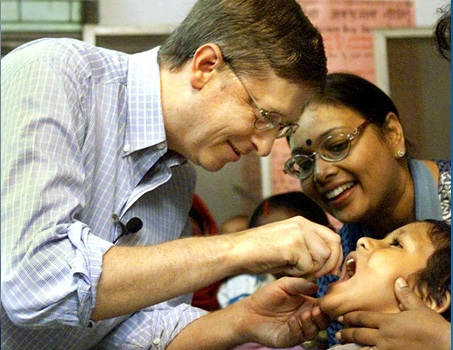
Bill Gates can’t seem to get enough of bugs.

On 4 February 2009, he let loose a swarm of mosquitoes at the TED 2009 technology, entertainment and design conference in California to highlight the dangers of malaria.

“Malaria is spread by mosquitoes,” he reminded his audience of leading scientists, designers, researchers and entrepreneurs. Turning to an upturned jar on stage, he announced: “I brought some. Here…I’ll let them roam around. There is no reason only poor people should be infected.”

Luckily, the mosquitoes were not carrying the disease. But it had the intended effect. Wired editor Chris Anderson, curator of the show, suggested a headline: “Gates releases more bugs into the world”.

Watch Bill Gates’s mosquito moment:

Watch the full 20-minute video of Bill Gates at TED 2009

As stunts go, this one was pretty mild and harmless. There are many shocking ways in which the harsh daily realities of the world’s poor can be brought into gatherings of the rich and famous. They could be served glasses of the contaminated, sludgy (and often smelly) water that tens of millions drink everyday. Or all the toilets could be locked up and the keys thrown away – for good. Or electricity supply could be cut off, or frequent ‘black-outs’ or ‘brown-outs’ could be staged. You get the idea…

Of course, few event organisers would dare try any of these, if only for health and safety considerations. Reminds me of a rare exception: when he was director of information with the UN’s population agency (UNFPA), journalist-turned-UN official Tarzie Vittachi once hosted delegates of a high level meeting to lunch which consisted soley of a bread roll and a glass water. He told his guests: the meal was better more than what most poor people in the global South on any given day.

Bill to the rescue...
Meanwhile, billions of poor and needy – and not just those in the majority world – are glad that Bill Gates caught the ‘development bug’ and has switched his formidable creative energies (not to mention his billions) to address their survival issues. The Bill & Melinda Gates Foundation – which carefully manages the giving away of Gates wealth – operates on the belief that all lives have equal value. “We think all people deserve the chance to have healthy, productive lives”.

They have set priorities such as improving health and reducing extreme poverty in the developing world, and improving high school education in the United States.

The New York Times columnist Nicholas Kristof recently described it as a paradox: “In these brutal economic times, one of the leading advocates for the world’s poorest people is one of the richest.”

He noted: “Mr. Gates ended his full-time presence at Microsoft last July and since then has thrown himself into work at his foundation. He is now trying to do to malaria, AIDS, polio and lethal childhood diarrhea what he did to Netscape, and he just may succeed.”

In his TED talk, Bill Gates addressed two questions that occupy much of his time these days: How do we stop Malaria? How do you make a teacher great?

Look, no computers!
Look, no computers!
He said: “The market does not drive scientists, thinkers, or governments to do the right things. Only by paying attention and making people care can we make as much progress as we need to.”

He called for greater distribution of insect nets and other protective gear, and revealed that an anti-malaria vaccine funded by his foundation and currently in development would enter a more advanced testing phase in the coming months.

“I am an optimist; I think any tough problem can be solved,” he said. That’s the geek in him talking: marshall all information, analyse problems, respond strategically — and keep at it.

A friend who now works with the Gates Foundation confirms how the charity seeks evidence and rigour in all its social investments. This is no bleeding-heart do-gooding or ‘social work’ for its CSR value. The new wave of geeks lining up to serve the meek bring business acumen to the development sector long under-served by unimaginative aid agencies and self-serving UN organisations.

As Kristof wrote: “Gates ended his full-time presence at Microsoft last July and since then has thrown himself into work at his foundation. He is now trying to do to malaria, AIDS, polio and lethal childhood diarrhea what he did to Netscape, and he just may succeed.”

Gates has announced that despite the economic crisis the Gates Foundation will increase spending by US$500 million this year.

In late January 2009, the billionaire philanthropist released the first ‘Annual Letter from Bill Gates‘ where he discussed his work at the foundation and spoke candidly about what has gone well, what hasn’t.

He compared his earlier work at Microsoft with the challenges he now tackles at the charitable foundation. “What I’ve found now is that really those same key elements are there. The opportunity for big breakthroughs is absolutely just as great–now it’s vaccines, it’s seeds that have better yield, it’s ways of sharing teaching practices…they will take the same kind of patience that we had for software breakthroughs.”

Just ahead of the letter’s release, Nicholas Kristof talked with Bill Gates about why aid to developing countries is more important during the economic downturn and vaccine breakthroughs on the horizon. Watch the interview:

Read: Bill Gates’s Next Big Thing by Nicholas D Kristoff, published in the New York Times on 24 January 2009

Moving images moving research…beyond academic circles!

Although I’ve dabbled in some media research at times, I don’t think of myself as a researcher. So when Sri Lanka’s Centre for Poverty Analysis (CEPA) invited me to speak at their 8th Annual Symposium on Poverty Research in Sri Lanka, I spoke on what I know a little bit about — communicating research using the audio-visual media.

My panel remarks, delivered on the morning of 30 November 2007, were on ‘alternative mediums of communication to influence change’. I opened with the provocative title “Hands up who is poor, speaks English – and looks good on TV!” (see separate blog post on media related aspects of my talk).

These days, so much of research in physical, biological and social sciences is justified in the name of poverty reduction. Yes, studying and understanding development problems is the essential first step of solving them. But without properly communicating this research, the results won’t help the poor — or anyone else.

We at TVE Asia Pacific are committed to covering Asia’s development issues using TV, video and web. Our small challenge is to capture the many and varied facets of how Asians are working for a better today and better tomorrow. Reducing and eventually eliminating poverty is a significant part of that process.

As Asia’s billions strive for better lives, there are millions of stories at the bottom of the income pyramid. But most mainstream media manage to miss these stories due to their ignorance, or arrogance, or both.

For us, one key source of information and analysis is researchers – people who study trends and conditions, and keep reflecting on how and why. Their knowledge and insights are invaluable for us to tell stories from and about the bottom of the pyramid.

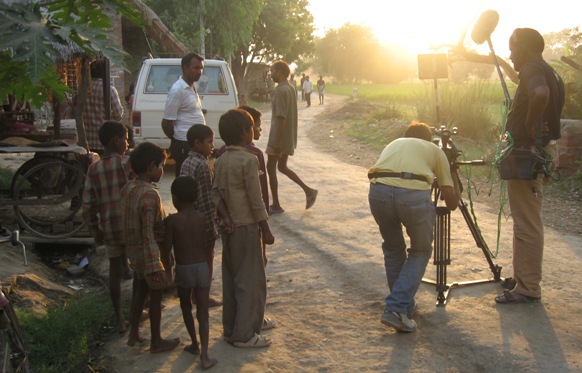
filming-living-labs-in-uttar-pradesh-india.jpg

As I told the researchers in my audience: “Part of our challenge is to know what you are studying — and then figure out the public interest and human interest angles of your work. As communicating research to those outside the scientific or research communities is more an art than a science.”

I cited three recent examples where we had produced engaging TV/video content to communicate research directly relevant or related to the poor.

Digits4Change
was our attempt to understand and document how information and communication technologies (ICTs) are changing the way Asians live, work and play. We covered technologies such as Internet, computers, mobile phones and satellite communications applied in education, healthcare and rural business development. The knowledge base for this 2006 series came from IDRC’s Pan Asia programme which supports action research that addresses specific problems.

Also in 2006, we produced The Greenbelt Reports to take a close look at the environmental lessons of the Indian Ocean tsunami. We visited a dozen locations in India, Indonesia, Sri Lanka and Thailand to find out how community and conservation interests can be balanced in relation to coral reefs, mangroves and sand dunes. In telling these stories, we worked with researchers from global agencies like IUCN the World Conservation Union and UNEP as well as national organisations like the M S Swaminathan Research Foundation in India.

The Greenbelt Reports

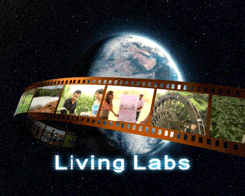
Living Labs is our most recent series, released in March 2007. Filmed in 9 countries in Africa, Asia, Europe and Latin America, it looked at how researchers are addressing different aspects of a major challenge in agriculture: how to grow more food with less water. We worked with a global action research project called the CGIAR Challenge Programme on Water and Food, which gave us exclusive access to their on-going field work and emerging findings in nine major river basins of the developing world.

living-labs-by-tveap.jpg

In telling these and other stories, we work within a certain framework we have defined for ourselves. Among its salient points:
• We don’t set out trying to communicate messages; we just want to tell good stories and development communication is a by-product.
• We look for under-reported/ignored development issues, or a less covered angle in a widely reported story.
• We don’t just talk to technical experts but to many other individuals involved or affected – women, men and children from all walks of life.
• We seek and accommodate different points of view, not allowing single-issue activists or one source to dominate/monopolise a story.
• Our finished products are informed by science but never immersed in science – we always keep in mind that our audience is non-specialsits.

All our stories cover real people dealing with real world issues and challenges. And since Asia has more people living in poverty than anywhere else in the world, most of the time our stories concern what’s happening at the bottom of the pyramid – or what can directly impact people living there.

And without exception, all these TV series and individuals films are available free of any license fees for broadcast, civil society and educational use. They are also available for online viewing at TVE Asia Pacific’s channel on YouTube.

Communicating research through moving images is not easy. Packing years of hard work into a few mins of engaging visuals and narration involves ruthless condensation which sometimes leaves some researcher egos bruised. When covering the work of large research organisations, we’ve also had deal with internal politics and hierarchies: for example, what to do when a junior researcher is more authentic and articulate than her supervisor?

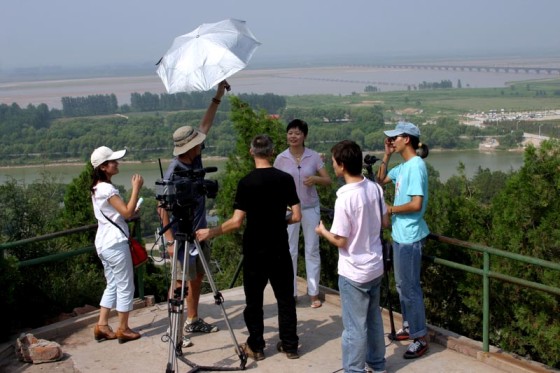
Producing Living Labs based on filming in 9 countries on 3 continents in just 5 months during 2006 was a challenge in both logistics and political negotiations. As editor-in-chief, I had to balance the public accessibility of our end product with researchers’ keenness to pack their stories with facts and figures.

living-labs-being-filmed-in-yellow-river-basin-china.jpg

We didn’t please everyone. One senior researcher told us that his multi-faceted, multi-year nad multi-million dollar was like an elephant — and we’d only glimpsed just one part of that big creature!

That’s just the point: we can never cover the whole elephant in a media product intended for non-specialists. So we choose which part of the elephant is most interesting and present it in a way that will make viewers realise — and hopefully, appreciate — that there’s a lot more that’s worth finding out.

Moving image products often act only as ‘teasers’ — communicating highlights of research, and directing those interested to online or offline sources that offer more information.

Because they act as a/v versions of executive summaries, these ‘teasers’ by themselves are a powerful way of reaching out those who are unlikely to look up the details: that includes many policy makers, government officials and business people.

Winston Churchill used to ask his staff to give him everything ‘on one page’. These days, he might have asked for everything to be summed up in a five minute video — as we often do.

Faecal Attraction: There’s no such thing as a convenient flush…

Out of sight is out of mind.

That’s how it works for most of us. Especially when the subject is what we do in the privacy of our toilets and then just flush away.

But there is no such thing as a Convenient Flush — it’s all linked to how waste, including sewage, is disposed of. Or not.

And what goes around, even out of our sight, comes around — turning up in the least expected ways! Like faecal matter in our drinking water.

A new film produced by the New Delhi-based research and advocacy organisation Centre for Science and Environment (CSE) probes the link between sewage disposal and river water pollution in India — specifically, the River Yamuna, part of the massive Indo-Gangetic river system.

The film by Pradip Saha is titled Faecal Attraction: Political Economy of Defecation. It is accompanied CSE’s latest publication Sewage Canal: How to Clean the Yamuna.

The book and the film expose the political economy of defecation, where the rich are subsidised to defecate in convenience and the poor pay for pollution with their ill health because of dirty water.

It begins by asking two simple questions: Where does your water come from? What do you do with your shit?

Watch the answers – some amusing, others absurd – in this 3-min trailer on YouTube:

Backed by scientific data, CSE shows how India’s 14 major rivers, as well as 55 minor and many small rivers have all been reduced to sewers. They receive millions of litres of sewage, industrial residue and agricultural waste from the cities and towns through which they flow.

Delhi and Agra together account for 90 per cent of the pollution in the River Yamuna, a major tributary of the Ganges. Yamuna is one of the most polluted rivers in the world, especially around New Delhi, the capital of India, which dumps about 57% of its waste into the river.

When Yamuna flows by Delhi, the city extracts gallons of fresh water for drinking and irrigation. What is given in return to the river is only excreta – sewage, and industrial and agricultural waste. This sewage is (supposed to be) collected, transported, and assembled for treatment (cleaning), and then flown back to the river. In reality, what goes back is far from clean… The irony is that the city has 40 per cent of the entire sewage treatment infrastructure in the country with only five per cent of the country’s population! And still, Yamuna is unclean.

Cartoon courtesy CSE India

Though numerous attempts have been made to clean it, the efforts have proven to be futile. Although the government of India has spent nearly $500 million to clean up the river, the river continues to be polluted with garbage while most sewage treatment facilities are underfunded or malfunctioning.

“As these rivers die a slow death, the sole blame for their pathetic condition lies with human beings who have always treated these water bodies as their personal dumping zones,” says CSE.

Anil Agarwal, founder director of CSE, believed that a “society is known by the water it keeps”. “The health of a river…reflects the very health of the human society, its ability to live harmoniously with its environment,”, he said.

In that sense, things are very seriously wrong with not just the Yamuna, but river systems across India.

Read CSE Director Sunita Narain’s presentation on the River Yamuna pollution and clean up options

Read CSE Press release on river pollution

A Silent Emergency: More television sets than toilets!

Read a later blog post: Faecal Attraction: There’s no such thing as a convenient flush…

It was September 2004. My daughter Dhara, eight years at the time (or ‘eight plus’ as she insisted on saying), had a complaint.

The toilets in her school were not clean enough. She was finding it squeamish to use them. So she was doing her best to avoid going to the loo: she’d drink less, and try to ‘hold back’ until she could rush home.

Like many sheltered middle class kids, she was still coming to terms with the wider world outside her home. And she attends a well endowed private school where, I am told, toilets are cleaned regularly by janitors engaged by the school.

Now we cut to eleven-year-old Susheela, a girl growing up in neighbouring India. I’ve never met her in person, but this sentence summed up her tragic story:
“I was always first in the class. I am very much interested in studies. I want to become a lawyer. But my mother stopped me from going to school after Class V as the middle school I was attending, 5 km from my house, had no toilet. Can someone help me?”

This was the opening of an article on water and sanitation written by Indian journalist Dr Asha Krishnakumar and published in the news magazine Frontline (part of The Hindu group) at the end of 2003. It was titled: A Silent Emergency.

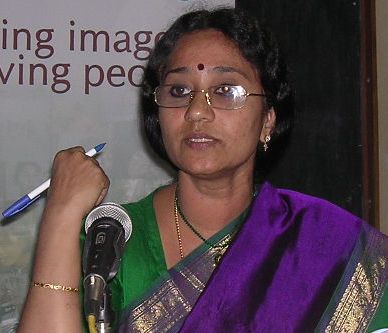
dr-asha-krishnakumar.jpg Image courtesy WSSCC

It was several months later that I actually read Asha’s article. By coincidence, my daughter was having her own ‘toilet issue’ at the time — and the contrast was striking.

Asha’s article continued:
Susheela’s anguish is shared by a large number of girls in India who drop out of school for what sounds like an absurd reason: want of a toilet in school. “Sanitation is closely linked to female literacy in India,” says a United Nations Children’s Fund (UNICEF) study. According to V. Balakrishnan, convener of the Tamil Nadu Primary Schools Improvement Campaign, the lack of proper toilet facilities in schools has a definite and significant bearing on the drop-out rate of girls, particularly around the time they reach Class VIII. In 2000, barely 10 per cent of Tamil Nadu’s 40,000 government schools had usable toilets; the figure is much lower for the country as a whole.

I’d been covering development issues in the media for over 15 years, but this stark reality had not occurred to me. In some developing countries, girls face a greater struggle in enrolling in school and staying on. There are cultural, social and economic factors working against educating girls.

And as Asha’s article revealed, there are other, less known factors adding to this burden.

I shouldn’t have been surprised. Indian census data had revealed in 2001 that, some parts of the country had more television sets than toilets.

Asha’s was one of three dozen excellent media articles on water and sanitation that I read that month as a judge in an international award scheme to recognise the best media reporting on the issue. Organised by the Water Supply and Sanitation Collaborative Council (WSSCC), it was meant to to encourage broader media coverage of water supply, sanitation and hygiene (WASH) issues in the developing world.

The initiative, first launched in 2002, is open to journalists from developing countries, who write or broadcast original investigative reports on WASH issues. The Collaborative Council seeks to use the WASH Media Awards as part of the broader goals of fostering sustainable relations with journalists in developing nations, and increasing media coverage of WASH issues.

WASH has recently announced the next media awards, covering print and broadcast media coverage from 1 July 2007 to 30 April 2008. This time around, it also involves the Stockholm International Water Institute (SIWI).

Winning entries will be presented at the World Water Week in Stockholm , Sweden in August 2008. Deadline for the submission of entries is on or before May 15, 2008. Read the announcement

In 2004, the recipient of the first WASH Media Award was Nadia El-Awady from Egypt for her outstanding article “The Nile and its People”. It illustrated the impacts of industrial pollution, sewage and solid waste management on people’s health and dignity along the River Nile.

We evaluated a large number of high quality entries and decided to give special recognition and Certificates of Appreciation to several other journalists. Asha was one of them.

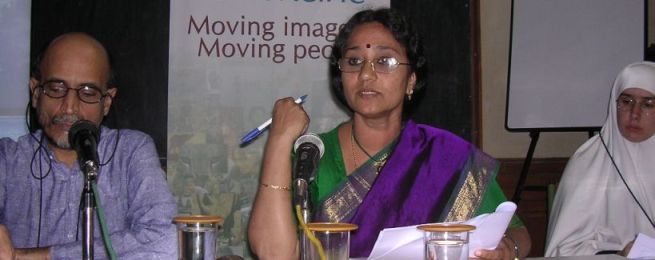
A few months later, it was my privilege to meet Asha in person at a workshop on media and sustainable development that TVE Asia Pacific organised as part of the Education for a Sustainable Future conference in Ahmedabad, India, in January 2005. The photo shows Asha addressing our workshop while Darryl D’Monte, fellow judge in WASH media awards looks on.

l-to-r-darryl-dmonte-asha-krishnakumar-and-nadia-el-awady.jpg

By another coincidence, the lady on the right is Nadia El-Awady who was overall winner of the WASH media award. At the time she was the Health and Science Page Editor of IslamOnline.net. She has since been promoted.

Either the world is smaller than we think, or our networks are larger than we imagine.

But I will always be grateful to Asha for opening my eyes on a silent emergency. One that I have since explained to my daughter. She no longer complains.

Read the WASH press release on 2004 media award winners

Read the publication on WASH Media Awards 2004

Read WASH media guide on The Biggest Scandal of the last 50 Years

Photos by Janaka Sri Jayalath, TVE Asia Pacific

Living Labs searching for solutions

Today, March 22, is World Water Day. TVE Asia Pacific’s latest TV series, Living Labs, was released in Colombo and Washington DC last week in time for this day of significance in the development calendar.

The series — filmed in nine countries in Africa, Asia, Europe and Latin America last year — looks at how researchers, farmers and local communities in different parts of the world are trying to grow more food with less water.

This year’s theme for World Water Day is ‘Coping with Water Scarcity’, which resonates fully with the content of Living Labs.

Between 70 and 90 per cent of all freshwater drawn in the developing world is used for growing crops. But this has to change fast: with water scarcity emerging as a global concern, agriculture cannot afford to remain so hooked on water.

Today’s crowded world needs to produce more food using both less water and land. This calls for smarter, thriftier methods of increasing water’s productivity in agriculture. And it must be achieved without damaging the environment, or threatening people’s food security, health and jobs.

Living Labs looks profiles a major global effort looking for solutions through action research: the CGIAR Challenge Program on Water and Food (CPWF).

Read TVEAP news item on Living Labs

See all 8 short films in Living Labs series on TVEAP’s channel at YouTube.

Kicking the oil addiction: Miles to go…

On Saturday 17 March, over 10,000 people coming from all over the United States marched on the Pentagon in Washington DC protesting the fourth anniversary of the war in Iraq.

They braved freezing temperatures – and lots of rain, sleet and snow. I could only admire the resolve of these people, some of whom I saw on my way to the Smithsonian National Museum of Natural History for an afternoon of film screenings.

As The Washington Post reported on Sunday: “The march, part of a weekend of protests that included smaller demonstrations in other U.S. cities and abroad, comes as the Bush administration sends more troops to Iraq in an attempt to regain control of Baghdad and Congress considers measures to bring U.S. troops home.”

Meanwhile, the DC Environmental Film Festival was taking a closer look at one major reason why the US went to war in Iraq: oil.

Addicted to Oil is the title of a new documentary on Discovery Channel. This one-hour documentary, reported by Pulitzer Prize-winning foreign affairs columnist Thomas L. Friedman of the New York Times, explores his ideas for a “geo-green alternative” — a multi-layered strategy for tackling a host of problems, from the funding of terrorist supporters through America’s gasoline purchases, to strengthening US economy through innovative technology.

See interview extracts on Discovery website

Watch the first few minutes of Addicted to Oil:

I missed his panel discussion because of exceedingly cold and damp weather on Friday evening. But this is a topic that will continue to dominate the environmental and security agendas for years to come.

And it’s something that I myself have written about. When the US and its ‘Coalition of the Willing’ were about to move into Iraq in March 2003, I wrote an op ed essay titled “Oil, Iraq & Water: Will The Media Get This Big Story?”. It was globally syndicated by Panos Features, and appeared in quite a number of newspapers, magazines and websites at the time.

The full essay is found online on, of all places, the Sri Lankan government’s official website! Here’s a short extract:

It’s not just the United States that is addicted to oil – we all are. Addicts tend to lose sight of the cost of their dependence, as we have. On 24 March 1989, the oil tanker Exxon Valdez ran aground on in Prince William Sound in Alaska and a fifth of its 1.2 million barrels of oil spilled into the sea, causing massive damage to over 3,800 km of shoreline. Investigations implicated its captain for grossly neglecting duty. Shortly afterwards, Greenpeace ran a major advertising campaign with the headline: ‘It wasn’t his driving that caused the Alaskan oil spill. It was yours.’

Greenpeace continued: ‘It would be easy to blame the Valdez oil spill on one man. Or one company. Or even one industry. Too easy. Because the truth is, the spill was caused by a nation drunk on oil. And a government asleep at the wheel.’

A nation drunk on oil is waging a war that has more to do with oil than anything else. Our news media are behaving just like cheer-leaders.

Read the full essay here.