Arthur C Clarke: Of Nukes and ‘Impotent Nations’

The past few days have been particularly hectic for me as I was Sir Arthur Clarke’s spokesman for the past decade, and remain so for the time being. While handling literally dozens of media queries and requests from all over the world, I somehow managed to find the time to write an op ed essay on Sir Arthur’s life-long crusade against nuclear weapons.

This essay is based on a feature I wrote in 2002 for the now defunct (and sorely missed) Gemini News and Feature Service, but I rewrote it completely before sending it off to my newspaper editor and senior journalist friends across South Asia. It has so far appeared in full in:
Daily News (Sri Lanka), 22 March 2008
New Age (Bangladesh), 23 March 2008
The Hindu (India), on 30 March 2008
The News (Pakistan), 30 March 2008
Excerpts have been carried on the website of Himal Southasian (Kathmandu).

Here’s the 900-word essay in full with the Gemini illustration that accompanied my original article.

Arthur C Clarke: Of Nukes and Impotent Nations
by Nalaka Gunawardene
Colombo, Sri Lanka: 22 March 2008
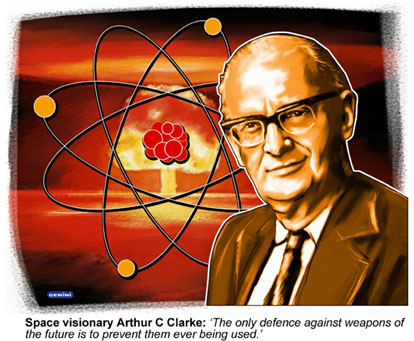
arthur-c-clarke-and-nuclear-weapons-pix-by-gemini-news-2002.jpg

“Do you know about the only man to light a cigarette from a nuclear explosion?” Sir Arthur C Clarke was fond of asking his visitors a few years ago.

Clarke, the celebrated science fiction writer and space visionary who died on March 19 aged 90, loved to ask such baffling questions.

In this instance, the answer was Theodore (Ted) Taylor, a leading American nuclear scientist who designed atomic weapons in the 1950s and 1960s. Apparently he just held up a small parabolic mirror during a nuclear test — the giant fireball was 12 miles away – and turned light into heat.

“The moment I heard this, I wrote to Taylor, saying ‘Don’t you know smoking is bad for your health?'” Clarke added with a chuckle.

In fact, he took an extremely dim view of both smoking and nuclear weapons, and wanted to see them outlawed. But he was aware that both tobacco and nukes formed strong addictions that individuals and nations found hard to kick.

Years ago, Clarke had coined the slogan ‘Guns are the crutches of the impotent’. In later years, he added a corollary: “High tech weapons are the crutches of impotent nations; nukes are just the decorative chromium plating.”

Living in the Sri Lankan capital Colombo, the author of 2001: A Space Odyssey was acutely aware of tensions between neighbouring India and Pakistan – both nuclear weapon states.

British-born and calling himself an “ethnic human”, Clarke offered a unique perspective on nuclear disarmament. His interest in the subject could be traced back to his youth, when he served in the Royal Air Force during Second World War. As a radar officer, he was never engaged in combat, but had a ringside view of Allied action in Europe.

Shortly after the nuclear bombs in Hiroshima and Nagasaki ended the War, he wrote an essay “The Rocket and the Future of Warfare”. In that essay, first published in the RAF Journal in 1946, he said: “The only defence against the weapons of the future is to prevent them ever being used. In other words, the problem is political and not military at all. A country’s armed forces can no longer defend it; the most they can promise is the destruction of the attacker….”

Arthur Clarke’s continued his advocacy against the weapons of mass destruction to the very end. The lure and folly of nuke addiction is a key theme in his last science fiction novel, The Last Theorem, to be published later this year. He completed working on the manuscript, co-written with the American author Frederik Pohl, only three days before his demise.

From his island home for over half a century, Clarke was a keen observer of the subcontinent’s advances in science and technology. He personally knew some of the region’s top scientists – among them Indian space pioneers Vikram Sarabhai and Yash Pal, and Pakistan’s Nobel Laureate Abdus Salam.

When India carried out nuclear weapons test in May 1998, Clarke issued a brief statement saying: “Hindustan should be proud of its scientists – but ashamed of its politicians.”

He chided the mass euphoria that seemed, for a while at least, to sweep across parts of the subcontinent. He signed the statement as “Arthur C Clarke, Vikram Sarabhai Professor, 1980”.

That was a reference to three months he spent at the Physical Research Laboratory (PRL) in Ahmedabd, in western India, lecturing about peaceful uses of outer space. It was the only time he held the title ‘professor’.

Clarke’s direct associations with India went back further. In the early 1970s, he advised the Indian Space Research Organisation on the world’s first use of communications satellites for direct television broadcasting to rural audiences. Preparations for the Satellite Instructional Television Experiment (SITE) Project were underway when India carried out its first “peaceful explosion” of an atom bomb in 1974.

“I can still remember Vikram telling me how Indian politicians pleaded with him to ‘build a teeny weeny (nuclear) bomb’,” Clarke recalled in an interview in 2002.

india-pakistan-nuclear-rivalry-as-seen-by-himal-magazine.jpg
Cartoon: Indo-Pak nuclear and missile rivalry as seen by Himal Southasian

He returned to the subject when delivering the 13th Nehru Memorial Address in New Delhi in November 1986, which he titled ‘Star Wars and Star Peace’. He critiqued the Strategic Defence Initiative (which President Reagan called ‘Star Wars’) – a nuclear ‘umbrella’ over the United States against missile attacks. Clarke argued that SDI was conceptually and technologically flawed, and that its pursuit could hurt America’s lead in other areas of space exploration.

Prime Minister Rajiv Gandhi rejoined from the chair: “Forty years ago, Dr Clarke said that the only defence against the weapons of the future is to prevent them from being used…. Perhaps we could add to that, we should prevent them from being built. It’s time that we all heed his warning….I just hope people in other world capitals also are listening…”

While campaigning against nuclear weapons, Clarke was equally concerned about all offensive weapons. “Let’s not forget the conventional weapons, which have been perfected over the years to inflict maximum collateral damage,” he said in a video address to the 50th anniversary celebrations of the Pugwash Movement in October 2007. “If you are at the receiving end, it doesn’t matter if such weapons are ‘smart’ or stupid…”

As tributes to Arthur C Clarke from all corners of the planet confirm, he commanded the world’s attention and respect. His rational yet passionate arguments against warfare were heard, though not always heeded in the corridors of power and geopolitics.

For such people, he had the perfect last words from his own hero, H G Wells: “You damn fools – I told you so!”

Pugwash Movement on the death of Sir Arthur C Clarke

Can Rambo take on the Burmese junta? Not quite in 90 minutes…

Hollywood’s attempts to support progressive causes in movies continue with Rambo 4, starring Sylvester Stallone.

In the fourth and latest installment of the violent adventures of John Rambo, the Vietnam veteran takes on the Burmese junta who have held the Southeast Asian country in its crushing, ruthless grip since 1962.

Inter Press Service (IPS) journalist Lynette Lee Corporal has just written an interesting article where she talked to Burmese exiles and others involved in Burma issues. Excerpts:

“In his latest caper, a bored-looking Rambo ekes out a living catching cobras in the jungles of Mae Sot in Thailand, near the border with Burma. But the arrival of a group of Christian missionaries, whose idealism and naivete literally led them to a slaughterhouse, changes Rambo’s zombie-like existence and brings back the days of gore and bloodbath.

“The film is unapologetic in its use of cliches. It’s the same tired story: Everything is black and white, good and evil, with lots of do-or-die moments thrown in for good measure.

“‘Rambo IV’ – which started showing in Asian cinemas in January and is due to open in mid-March in Thailand — is replete with stereotypes, especially when it comes to pointing out differences between the east and the west, symbolically played out in the kindness, idealism and determination of the Caucasian missionaries and the uncouth, barbaric bad guys in the form of the Burmese pirates and military.”

She says that while reports of the cruelty of the Burmese junta have been well-documented, the depiction of these stereotypes glosses over much more complex issues too deep to dig up in a 90-minute action movie.

Her article quotes freelance Burmese journalist Phyo Win Latt as saying: “The Burmese army in the movie is different from real-life. The film is filled with exaggeration and inaccuracies. Army officers, for example, don’t wear sunglasses while engaged in battle and although there are rape cases in remote ethnic villages, I’ve never heard of such things like ethnic women being forced to dance in front of the soldiers.”

Exiled Burmese appear to have given it some positive feedback. According to a report by the Norway-based Democratic Voice of Burma (DVB), about 600 Burmese who watched the film in Singapore became very emotional, chanted slogans and distributed political leaflets at the screening.

The crowd “clapped non-stop for 80 seconds to show respect to the movie audience gathered there and to show unity” in their fight for democracy, DVB reported.

Read her full article on Asia Media Forum

I’ll just take Lynette’s word for all this, because I’m not going to see this film – I can’t take a killing every few seconds.

Watch Rambo 4 official trailer on YouTube:
Caution: Extreme violence – but then, what else do you expect in Rambo?

Rambo may have discovered Burma’s long-drawn suffering only recently, but activist film-makers have been using moving images for many years to sustain international attention on Burma’s human rights and humanitarian issues.

Almost five years ago, in May 2003, TVE Asia Pacific website ran a feature titled ‘Documentaries keep Burma issues alive‘. It was written by Indian film-maker and journalist Teena Amrit Gill, who at that time was based in Chiang Mai, Thailand — where many Burma activists are concentrated.

Excerpts:

“Long drawn internal conflicts are often overlooked or completely ignored by the global media that often chase the latest stories as they unfold. It often takes a few dedicated activists and committed film-makers to sustain focus on conflicts that no longer grab headlines – but continue to affect hundreds of thousands of people.

“As Burma and the struggle of its people, especially its ethnic minorities, against four decades of military dictatorship begin to fade from international attention, a number of new television documentaries are attempting to keep the issue alive.

“Some have been made by television professionals for international broadcast. Others have used amateur or activist footage and aim at mobilising public concern and supporting campaigns to maintain pressure on the regime.”

Teena reviewed three new films that had been produced in 2001-2002 about the plight of minority groups like the Karen, Shan and Karenni who live along Burma’s borders with Thailand, China and Laos. These minorities are the target of repressive policies of the ruling military junta in Rangoon.

Read the full article, Documentaries keep Burma issues alive

Sep 2007 blog post: Kenji Nagai (1957 – 2007): Filming to the last moment

Another point of view: Entertainment the Burmese military way, by Ye Thu on DVB website

Sri Lanka: What killer waves united, killer humans divided again…

Today is the third anniversary of the Indian Ocean tsunami, which left a trail of destruction in many countries in South and Southeast Asia.

Today we remember those who perished and salute those who survived and endured enormous hardships.

We thank everyone everywhere who donated to help, and curse those who plundered or squandered the outcome of that generosity.

As I wrote in my only published verse, When the Waves Came, written on 28 December 2004 – when the disaster’s full impact was dawning on the world:

When the waves came
Roaring and moving mightily,
Unleashing the power of
A million bombs exploding at once,
They didn’t care
And just didn’t discern
Who or what was in their way.

My basic premise was that the killer waves had been a brutal ‘equaliser’ of all men and women. It no longer mattered on which side of law, morality, economics or social class they stood. This was particularly apt for Sri Lanka, a land divided for a quarter of a century by an armed separatist struggle that has hardened fundamentalist positions at both Sinhalese and Tamil ends of our ethnic spectrum. Towards the end of the verse, I noted:

As we in the aftermath tiptoe
Through endless depressing scenes
Of death and utter devastation
Can we tell the difference
Between Sinhala and Tamil,
Or Muslim and Burgher,
Or soldier and rebel
Or policeman and prisoner
Or rich and poor?

For a few days after the tsunami, there was a flicker of hope that the lashing from the seas might finally convince everyone of the complete futility of war. Political cartoonists in Sri Lankan newspapers were among the first to make this point. One cartoon, appearing two days after the disaster, showed a government soldier and Tiger rebel swimming together in the currents, struggling to save their lives. (Indeed, there were some reports of them helping each other in the hour of need.)

The cartoonists and other media commentators asked a common question: what happened to the land, and the dividing border that both sides had fought so hard and long for?

Alas, what Nature proposed we humans (Sri Lankans) disposed. While the tsunami helped usher in a negotiated settlement to the long-drawn armed struggle in Aceh, Indonesia, it only created a temporary lull in the Sri Lankan conflict. As soon as both sides recovered from Nature’s blow, they were back at each others’ throats again. (This contrast has been studied by various groups – see, for example, the summary of a Worldwatch Institute study Beyond Disasters: Creating Opportunities for Peace).

Looking back three years later, all I can say is that the land killer waves temporarily and forcibly united, killer human beings have managed to divide again for petty political, communal and personal gains.

theeban-survived-the-tsunami-but-not-sri-lankas-conflict.jpg

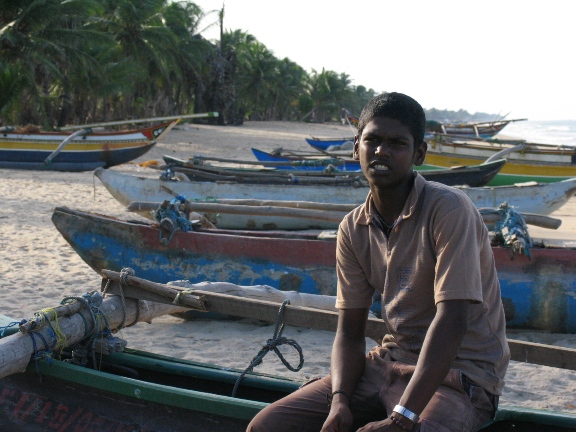
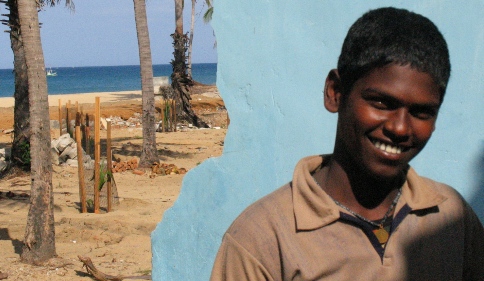
This boy, Thillainayagam Theeban, epitomizes that bigger tragedy. He survived the tsunami — but not the escalation of Sri Lanka’s ethnically driven civil war, which consumed his life in March 2007.

Theeban was one of eight surviving children – from India, Indonesia, Sri Lanka and Thailand – whose remaining families we tracked and filmed for a year in Children of Tsunami media project, a citizens’ media response to the Indian Ocean Tsunami.

Theeban was murdered by unidentified gunmen who stormed into his ‘temporary’ tsunami shelter on 3 March 2007. The death was linked to political violence that has engulfed Sri Lanka since 2006.

theeban.jpg

When the shocking news reached us three days later, our Sri Lankan camera team at Video Image and we at TVE Asia Pacific just couldn’t believe it. We were all in tears, and some of us were also angry. Theeban, who survived the killer waves 26 months earlier (but lost his mom and kid brother in the disaster) suffered many indignities in displacement. And now, he is gone.

We still don’t know who killed Theeban. He was abducted by an armed group sometime in 2006, from whom he escaped in early 2007. It is believed that Theeban was killed as a punishment for running away — and as a warning to all others.

He was 16 years at the time of his death. It is unlikely that his killers would ever face justice.

As I wrote in my personal tribute to Theeban in March 2007, published by UCLA’s Asia Media and MediaHelpingMedia, UK: “The disaster’s Sri Lankan death toll (close to 40,000 dead or missing) shocked the world when it happened within a few hours or days. Yet, at least twice as many people -– most of them unarmed and uninvolved civilians — have been killed in over a quarter century of fighting. That doesn’t always grab headlines.

“Thillainayagam Theeban has become another statistic in a ‘low-intensity conflict’ (as some researchers call it). And while this war lasts, it will continue to consume thousands of other young lives — a grim roll call of Sri Lanka’s Lost Generation.”

The third anniversary of the tsunami is a reminder – if any were needed – that man’s inhumanity to man is often worse than Nature’s fury.

March 2007 blog post: Remembering Theeban

April 2007 blog post: More memories of Theeban

Children of Tsunami: Documenting Asia’s Longest Year

Thillainayagam Theeban (1990 – 2007)

GlobalVision at 20: Insiders turned outsiders keep kicking


GlobalVision, the path-breaking media company anchored in New York with a truly global outlook and a strong commitment to social justice, completed 20 years this week.

It was launched in November 1987 out of one room in Soho (New York) as a mission-driven company with little money but a big idea: to improve news coverage of the world through an “inside-out” approach that would offer voices not usually heard on the air in the US.

The founders were Danny Schechter, who became, in his words, a “network refugee” from ABC News 20/20 and Rory O’Connor, then with CBS News 48 Hours.

As the company introduction says:

“The whole world is watching… From Baghdad to Beijing, from Madrid to Manhattan, information is moving at the speed of light. Media and communications technology are transforming our lives — and those of our six billion neighbors. But in the emerging global village, whose stories get told — and who gets to tell them?

“At Globalvision, we believe in telling stories from the inside out. That means working with other cultures — not at them –and helping people to tell their own stories in their own way, to a world that’s getting smaller every day.”

In an industry saturated with media companies known more for their style than substance, Global Vision has not only blazed new trails, but used moving images in ways that moved people towards social change, political reform and – just as importantly – constantly question and challenge conventional wisdom and traditional authority.

They have also never hesitated to challenge the fellow journalists and corporate media on their servility, acquiescence and willing suspension of journalistic norms in the United States, especially under the current Bush administration.

They have won numerous awards and professional recognition for its pioneering international newsmagazine South Africa Now, which first broke through censorship to smuggle footage out of what was once the land of apartheid — and later chronicled Nelson Mandela’s transition from prisoner to President.

The company followed up with another award winning series, Rights & Wrongs: Human Rights Television with Charlayne Hundter-Gault, which aired for four years in sixty-two countries around the world.

Danny and Rory have also directed and produced more than thirty hard-hitting documentaries, many involving controversial issues and investigations — some for the PBS “Frontline” series” and others for television systems worldwide. Current films deal with subjects such as America’s child farm workers, bridging the global digital divide, flawed media coverage of the War in Iraq, and the ongoing debt crisis that threatens the global economic system.

I met Danny in person only once – in the Fall of 1995, when I spent a few weeks in New York on a fellowship to study the United Nations. Danny was one of the more colourful people we met (besides lots of men in suits from the UN, only a few of whom I can now recall by name). Danny introduced himself as a (TV) ‘network refugee’ — and gave a workshop on television journalism in defence of the public interest and human rights that had a lasting influence on myself.

Ever since, I have followed his books, incisive NewsDissector blog and Global Vision output with much interest.

So here’s wishing Danny, Rory and team at GlobalVision many more years of kicking ass!

MediaChannel.org: Global Vision marks 20th anniversary

Read Danny Schechter on: The Days of Our Dominion: Global Vision celebrations 20 years in the trenches

Rory O’Connor’s tribute to the late Anita Roddick, a long-standing supporter of Global Vision

New media anarchy is good for you!

neha-viswanathan.jpg

“You people are too well mannered! I’ve never been to a conference where people are so properly dressed and so polite to each other!”

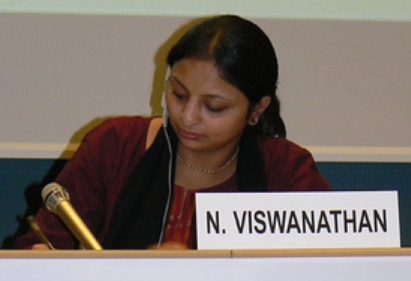
With these words, Neha Viswanathan made sure she had everyone’s attention. But it was not just a gimmick — she was contrasting the relatively more orderly, organised world of mainstream media (MSM) with the decidedly more anarchic world of new media — including blogs, wikis, YouTube and Second Life.

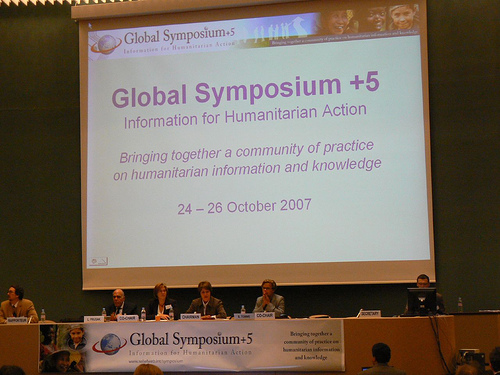
Neha, South Asia Editor of Global Voices, was speaking on a panel on ‘new media’ during the Global Symposium+5 on ‘Information for Humanitarian Action’ in Geneva this week (22 – 26 Oct 2007).

The panel topic itself showed the rapid change taking place in the humanitarian sector. As the panel premise said: “Within minutes of a disaster or conflict, the first images are seen on YouTube rather than CNN, and probably to a larger audience. YouTube, Flickr and blogging are bringing wars, disasters and their humanitarian consequences to the attention of the public, government and aid agencies more efficiently than ever. It’s now possible to keep watch on a Darfur village through satellite imagery, or take a virtual tour of a refugee camp.”

The panel was to discuss whether citizen journalism and new collaborative/ networking technologies are improving humanitarian response, and review how the humanitarian community is faring in this new environment.

My own views on this are found in another blog post: New media tsunami hits humanitarian sector – rescue operations now on!

Neha’s take was slightly different. She started reminding everyone that the new media activists were unruly and not always polite. The blogosphere is very much a contested and contentious space where arguments rage on. Not everything is moderate, balanced or ‘evidence-based’ (to use a new favourite phrase of the humanitarian community).

But in times of crisis or emergency – whether disasters or war – new media activists are increasingly the first responders. The anarchic nature actually provides them with an advantage: they are distributed, self-organising and motivated. There is no central newsroom or coordination point telling them what to do. In typical Nike style, they just do it.

As an example, she described World Wide Help, whose introduction reads: “Using the web to point help in the direction where it’s most needed”.

This blog was started by several founders and members of the SEA EAT (South East Asian Earthquake And Tsunami) blog, wiki and database, all of which gained worldwide attention at the time of the Indian Ocean earthquake and tsunami on 26 December 2004. The group, now calling themselves The World Wide Help Group, has since remobilised to aid in other relief efforts.

Read the whole story of the SEA EAT Blog: A Candle in My Window by Peter Griffin, one of its co-founders

As Sir Arthur C Clarke has also noted, the 2004 tsunami marked a turning point in how citizen journalists and other new media activists respond to emergencies. Since then, the power of new media has been unleashed on many public interest issues and humanitarian causes. As an example, Neha cited the online campaign against street sexual harassment in India.

In Neha’s view, new media can collate authentic testimonials of those directly affected by disasters or other crises, and keep the public attention (and thereby, political interest) on emergencies beyond the first few days.

Her advice to humanitarian aid agencies: keep looking at the new media, especially blogs, to find out what people at ground zero are saying about relief and recovery work.

“Bloggers are not objective – they talk openly, and express themselves freely,” she told the largely prim and proper Geneva audience, where some participants had referred to the meeting as ‘this august gathering’!

Finally, in situations where MSM (the formerly big media!) are shut down, restrained or intimidated into not carrying out their watchdog role, it’s the new media that fills the voice. Neha described the pro-democracy struggles in Nepal in 2005 – 2006 as an example where the people power struggles continued to be reported and commented on after the autocratic king clamped down on all print and broadcast media.

Read my August 2007 blog post: The Road from Citizen Kane to Citizen Journalist

‘Embedded’ or aloof: Media’s choice in covering emergencies

banner.jpg

In many disaster and conflict hot spots of the world, journalists and relief aid providers work closely together. There are times when journalists play good Samaritan and aid workers dabble as reporters. In the difficult field conditions of emergencies, this is understood and accepted.

But should journalists become ’embedded’ in humanitarian operations? If so, how impartial or independent would their coverage be?

This issue kept coming up during the Global Symposium+5 on ‘Information for Humanitarian Action’ in Geneva this week (22 – 26 Oct 2007). The majority aid officials and handful of journalists present didn’t always agree.

UN agencies and other humanitarian organisations increasingly recognise the power of media, especially broadcast television, to raise public awareness on emergencies. This, in turn, influences political commitments, aid donations and relief operations themselves.

But how close can the media get to aid agencies before they lose their sense of perspective and independent analysis? If journalists becoming embedded with the military in conflicts is frowned upon, what about media’s de facto embedding with humanitarian missions?

There was no consensus on the issue, but a few of us stressed on the need for independent media — independent of governments, aid agencies and other vested interests — to take stock of crisis situations and report, reflect and analyse on what they find.

The presence of nosy reporters might be an occasional irritant to some aid agencies, especially if they have things to hush up, but at the big picture level it can serve everyone’s interest — especially those of affected groups.

Alain Modoux, a former red cross official who went on to become an assistant director general of UNESCO, reminded us how governments often stand in the way of free flow of information on emergency situations. The reasons for such suppression vary: some don’t want to admit failures on their watch, and others fear public discussion and debate, especially at international level, on what is happening in their own country.

Governments can — and often do — bring pressure upon aid agencies to fall in line (or risk being thrown out). In such situations, it’s only the independent media that can take stock of rapidly changing situations and highlight the unmet needs and any disparities in the emergency response.

Then there is the media’s traditional watchdog role. The humanitarian sector is now the world’s largest unregulated industry – billions of dollars flow through the sector every year, most of it public funds (direct donations or taxes collected by governments). Yes, the aid agencies all audit their accounts and the UN has stringent regulations on how they can spend money. But there’s nothing like a bit of media scrutiny to keep everybody clean and honest…

Follow the money! This is what journalists are taught and trained to do – and with good reason. In emergency situations following the money often brings up instances of waste, corruption and mismanagement that aid agencies would rather not talk about.

edward-giradet.jpg

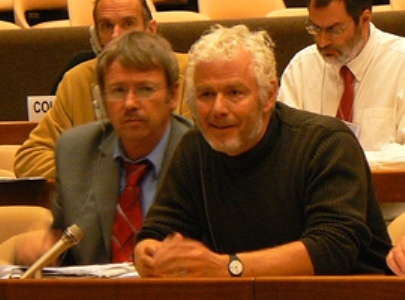
Swiss journalist Edward Girardet (photo, above), who specialises in in media, humanitarian aid and conflict issues, has been making this point for a long time.

As he has written: “Humanitarianism should not ‘belong’ to any one group. What the international aid industry urgently needs is more hard-nosed and independent reporting.”

That is unlikely to happen when individual journalists are too cosy with aid workers or their bosses.

Ed was at the Geneva Symposium this week, once again making a case for a viable media watchdog capable of reporting the real causes behind humanitarian predicaments, including how the international community responds.

Read my June 2007 blog post quoting Ed Girardet: Can the media tame the alms bazaar?

In one intervention, I suggested that the media can become the ‘conscience’ of the humanitarian industry – to ensure transparency and accountability of resources, decisions and conduct.

Partnerships between media and aid workers is fine, as long as the media remain somewhat aloof and detached.

And it’s not the global media who can or will stay with the stories as recovery takes months or years. We all saw in the aftermath of the Indian Ocean Tsunami how quickly the global media’s news interest went down.

In the long term, empowering the local journalists to ask the right questions and go in search of answers.

Read this blog post reproduced in Asia Media Forum


Read this blog post adapted in MediaHelpingMedia

Everyone has information ‘needs’ — and information ‘wants’ too!

banner.jpg

When the development community talks of people living in poverty (or ‘the poor’) they almost always talk about somebody else — it is not ‘us’ but a remote, often nameless ‘them’.

And when the humanitarian community talks of people affected by crises — disasters or conflict — that too almost always is about somebody else, typically in a poor country.

The well-meaning, do-good people in development and humanitarian communities are fond of talking about the information needs of the poor or crisis affected. These ‘needs’ are usually defined in terms of survival, sustenance or relief.

It’s as if people in poverty or crisis situations only have a simple set of information needs, but none of the information ‘wants’ that we, the privileged, have in abundance.

In Geneva this week, I have argued that everyone has a right to not only information needs, but also information ‘wants’. Development or emergency relief would become truly meaningful only when both these are met.

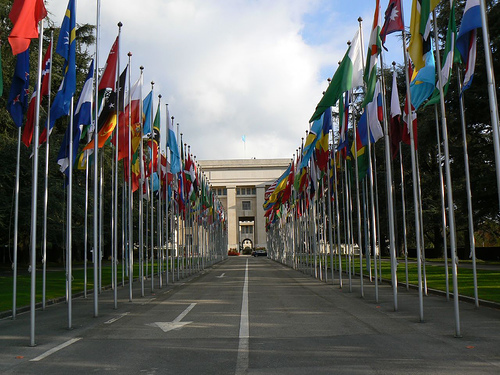
I’m participating in the Global Symposium+5 on ‘Information for Humanitarian Action’ organised by the United Nations Office for the Coordination of Humanitarian Affairs (UN-OCHA). The meeting, held from 22 – 26 October 2007 at the Palais des Nations, UN headquarters in Europe, brought together over 200 persons involved or interested in information and communication aspects of humanitarian work.

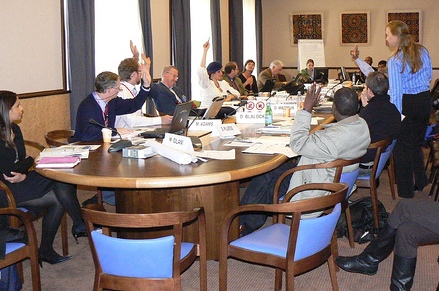
I was invited to be part of working group 5 on ‘Communicating with affected communities in crisis’. Members of this group were drawn from national and international humanitarian aid agencies, UN system, governments and the media.

global-symposium5-in-geneva-oct-2007.jpg

Our brief was to ‘look at the information needs of affected populations both during emergencies and in longer term recovery efforts’. We were to ‘evaluate the nature of these needs, to identify actions necessary to achieve operational reality, and to consider the strategies required to integrate beneficiary communications into the humanitarian response framework, particularly through the opportunities offered by the current reform process’.

Now that’s all well and good, and we did that part of our work in earnestly and seriously. The outcome was presented on Oct 25 to the plenary stimulating discussion and debate.

But I kept reminding our working group that we really have to think beyond the mere information needs of people, and address their information wants as well.

This basically means information related to cultural and social aspects. Humans don’t live on bread, water, clothing and shelter alone. We are complex and nuanced beings with a vast array of interests — and that’s equally true for the city stockbroker, village farmer and the aid worker wearing a UN cap.

Evidence of this is all around us if we only care to notice. For example:

* Tens of thousands of people driven to temporary shelters by disasters or wars followed the 2006 Football World Cup in Germany from their make-shift homes. Football mania didn’t stop at the periphery of a camp.

* Every time there is an important cricket match in South Asia, it unites the rich and poor, the sheltered and homeless, and those living normal or crisis disrupted lives.

The sooner we in the development and humanitarian sectors recognise this reality, the better.

1692836466_2c493ea8ec.jpg
Photo shows working group 5 in session: photo courtesy UN OCHA.

I made a similar point in an essay written in mid 2004 on using information and communication technologies (ICTs) for poverty reduction:
I cringe every time I hear remarks about the poor just needing survival or sustenance related information. The information needs and wants of the poor can be as diverse as everybody else’s. Sarvodaya – Sri Lanka’s largest development NGO — once surveyed the information needs of poor people in rural and semi-urban areas. Their findings included: health and nutrition information, as well as details on bank loans, foreign jobs and insurance policies. There was also interest in world affairs, national politics and cultural affairs…

Read my full essay in GKP Partners Newsletter (My essay is the last one, so keep scrolling down, down, down.)

Three years later I found myself making the same point to a different group, many of who are information specialists working in crisis and emergency situations.

This kind of perception will continue as long as we harbour the us-and-them divide.

1687780850_168f228e8a.jpg

Katie Couric: Faithfully her Master’s voice?

This is an interesting video, uploaded last month on to YouTube by media activists.

In September 2007, Katie Couric, anchorwoman of CBS Evening News reported live from Baghdad. But instead of using that opportunity to ask tough questions and dig for the truth, Couric asked soft questions and repeated a number of false Bush talking points.

As activists point out, the media’s failure to ask tough questions helped America get embroiled in Iraq in the first place.

It’s hard to believe that Couric currently occupies the slot that was long adorned by the likes of Walter Cronkite, anchorman for The CBS Evening News for 19 years (1962 – 1981). During the heyday of CBS News in the 1970s and 1980s, he was often cited in viewer opinion polls as “the most trusted man in America”, because of his professional experience and avuncular demeanor.

From Wikipedia

Media watchers cannot help comparing how Cronkite covered an earlier, equally controversial conflict that left America bruised and bleeding: the Vietnam War. Following Cronkite’s editorial report during the Tet Offensive that the Vietnam War was unwinnable, President Lyndon Johnson is reported to have said, “If I’ve lost Walter Cronkite, I’ve lost Middle America.”

How times have changed. Couric is the media lap-dog that every government and military would wish to have — her recent reportage from Iraq would probably be held up by some of them as ‘an example to every journalist covering a war’.

Incidentally, Cronkite provides the voiceover introduction to Couric’s CBS Evening News, which began on 5 September 2006.

And that’s the way it is.

YouTube video courtesy Moveon.org – Democracy in Action

Anita Roddick: We shall always remember you

Image courtesy Treehugger

“Remember me!”

That’s how Anita Roddick, who died on 10 September of brain haemorrhage, autographed for me a copy of her book Taking It Personally: How to make Conscious Choices to Change the World.

You’re hard to forget, I told her at the time. And suddenly, memories are all we are left with. And what vivid ones!

Dame Anita Roddick (1942 – 2007), founder of The Body Shop, is one of the most unforgettable persons I have met. And now that she has moved on, far too soon, her memory challenges us to persist with the social, humanitarian and environmental causes that she so passionately championed.

Media obituaries described her as the ‘Queen of Green’, but Anita was much more than just green. She stood for justice, fairness and equality in both business practices and her campaigns. From ethical sourcing of raw materials for her beauty products to agitating for human rights and humane globalization, she was one activist who walked the talk.

“I came out of the womb as an activist. I’m part of the 1960s; it’s in my DNA,” she wrote in Newsweek earlier this year. “So the idea of dying with loads of money doesn’t appeal to me at all.”

She added: “I want to use the last years I have to get my hands dirty working for civil change. I want to be able to see the positive difference that money can make by giving away what I have.”

It’s not immediately clear if she made much headway with that, but the recently set up Roddick Foundation is the latest of a long line of campaigns, social projects and charities that she founded, energised or supported.

Her business acumen and commitment to global justice have been eulogised for years. She was equally adept in using the media and communications to draw attention to a cause, issue or incident.

Without going to any business school, Anita built up a global business that had over 2,200 stores in 55 countries by the time she let go of the company in 2004. And without attending any communication school, she became one of the best communicators of our troubled times – speaking eloquently for her company’s ideals and various charitable causes.

It all came from the heart, and it was passion –- not cold facts or even colder logic -– that drove her to be a phenomenally successful communicator.

Anita loved to say: “The job of a citizen is to keep his mouth open.” And her advice to activists was: Get Informed. Get Inspired. Get Outraged. Get Active.

Never underestimate the power of one, she said. As she liked to put it:
If many little people
In many little places
Did many little deeds
They can change the face of the Earth

And like the Energizer bunny, but with lot more purpose, she kept going, going and going. She loved the Dorothy Sayers quote: “A woman in advancing old age is unstoppable by any earthly force”.

It was on one of her many world travels that our paths first crossed. In the summer of 1991, I was invited to give a workshop at Youthquake, a Canadian environmental conference building up momentum for the Earth Summit scheduled for the following year. It was here that I met two of my all-time favourite activists: geneticist-turned-TV presenter David Suzuki, and Anita Roddick. The celebrity guest was Mutang Tu’o, a representative from the Penan indigenous tribe from Sarawak, Malaysia, whose jungles were in imminent danger of being logged.

Youthquake was part conference, part youth jamboree and altogether a great deal of fun. Anita turned up with her youngest daughter Sam, and spent hours just telling real life stories in her inimitable way – full of laughter and making fun of power and pomposity. After all these years, I can’t remember anything about what I myself spoke, but I know Anita’s remarks had a lasting influence.

In those heady days before the Earth Summit, email and the global Internet, activists had an easier and simpler choice of adversaries — Uncle Sam and World Bank usually came up among the top five. When economic globalization gathered pace, things became more complex and nuanced. Ah, for the good old days!

Anita marched fearlessly into this new world where corporate fortunes are being made at the speed of light, governments are waging wars to the tune of media-entertainment industries, and certain development agencies have turned poverty reduction and HIV/AIDS into cottage industries.

Marshall all facts, get analysis right, take your firing positions and never give up the good struggle, she seemed to suggest: there’s a war out there, and it wasn’t just in Iraq and Afghanistan.

In fact, Taking It Personally was her rough guide on how to tame run-away globalization. For it, Anita invited the top thinkers in the struggle for humanitarian trade policies to weigh in on the problem, and to give citizens the tools and inspiration to do work for constructive solutions. Among its contributors were Vandana Shiva, Paul Hawken (Natural Capitalism), Naomi Klein (No Logo), and Ralph Nader.

When she autographed a copy for me, she added with a mischievous grin that the book’s US distributors had been coerced to withdraw it. She showed a possible reason: that famous photo of President George W Bush reading a book with a young child — while holding it upside down!

It’s this topsy turvy, cruel world that Anita Roddick tried to make slightly better in a thousand different ways. We fellow travellers will sorely miss her, but there is ‘no bloody alternative’ but to just slog on.

— Nalaka Gunawardene; Kathmandu 12 September 2007

Read my earlier post: Anita Roddick, Angkor Wat and the ‘Development Pill’

BBC Online: Dame Anita Roddick dies at 64

War Made Easy: Exposing the Spin Doctors of Death

As we mark the sixth anniversary of 9/11 terrorist attack on the World Trade Center in New York, attention is focused more and more on the role the media played in the days and months that followed.

The war in Iraq was justified as a retaliation against 9/11. The Pentagon marched on to the cheer-leading of American media, which barely asked the basic questions, let along challenge the military-political logic.

A new documentary probes how this shameless acquiescence took place in full public glare. WAR MADE EASY: How Presidents & Pundits Keep Spinning Us to Death, narrated by Sean Penn, features Normon Solomon, on whose 2005 book the film is largely based.

Here’s the trailer for the film:

And its synopsis:

War Made Easy reaches into the Orwellian memory hole to expose a 50-year pattern of government deception and media spin that has dragged the United States into one war after another from Vietnam to Iraq. Narrated by actor and activist Sean Penn, the film exhumes remarkable archival footage of official distortion and exaggeration from LBJ to George W. Bush, revealing in stunning detail how the American news media have uncritically disseminated the pro-war messages of successive presidential administrations.

War Made Easy gives special attention to parallels between the Vietnam war and the war in Iraq. Guided by media critic Norman Solomon’s meticulous research and tough-minded analysis, the film presents disturbing examples of propaganda and media complicity from the present alongside rare footage of political leaders and leading journalists from the past, including Lyndon Johnson, Richard Nixon, Defense Secretary Robert McNamara, dissident Senator Wayne Morse, and news correspondents Walter Cronkite and Morley Safer.

Norman Solomon’s work has been praised by the Los Angeles Times as “brutally persuasive” and essential “for those who would like greater context with their bitter morning coffee.” This film now offers a chance to see that context on the screen.

Approx. 72 minutes
English subtitles
Directed & Written by: Loretta Alper & Jeremy Earp
Produced by: Loretta Alper
Co-produced & Edited by: Andrew Killoy
Executive Producers: Jeremy Earp & Sut Jhally
Associate Producer: Jason Young
Sound: Peter Acker, Armadillo Media Group
Motion Graphics: Andrew Killoy & Sweet & Fizzy
Additional Music: John Van Eps & Leigh Philips
Narrated by: Sean Penn
Based on the book by Norman Solomon

Image courtesy War Made Easy website

I haven’t yet seen this film, but it’s certainly one I want to catch soon. Not the least because I live and work in a war-ravaged country – Sri Lanka – where the politicians and generals have engaged in their own (increasingly sophisticated) acts of spin doctoring. Most alarmingly, large sections of the Sri Lankan media find absolutely nothing wrong to play along, all in the name of patriotism….

Sounds familiar?

Read the full transcript of War Made Easy