Rule of the Gun in Sugarland: A film by Joey R B Lozano

In June 2007, I did a belated tribute to Joey R B Lozano, a courageous Filipino journalist who crusaded for human rights and social justice. Armed with his video camera and laptop, he was one of the early citizen journalists long before that term – and practice – became fashionable.

From Seeing is Believing

As I wrote:
Joey used his personal video camera to assert indigenous land rights, and to investigate corruption and environmental degradation in his native Philippines. Joey was an independent human rights activist and also one of the country’s leading investigative reporters.

He freelanced for the Philippine Daily Inquirer, covering Indigenous peoples’ rights and the environment, considered the two most dangerous beats in the Philippines. But years earlier, he had moved out of the capital Manila, and committed his life and career to stories and issues at the grassroots that many of his city-based colleagues had no time or patience in covering on an on-going basis.

Trained as a print journalist, Joey mastered new media and technologies whose potential he quickly realised. He moved into television and video media with ease, and later became an active blogger.

I have just tracked down on YouTube one of his documentaries, Rule of the Gun in Sugarland (2001; 9 minutes; English). It’s a powerful documentary that tells the story of Manobo villagers’ efforts to claim their ancestral land in the Philippines, and the abuse they endured because of their claim. It contains both graphic and heart wrenching scenes.

Here’s some background on indigenous people’s rights in the Philippines, as compiled by Witness – the human rights activist group with which Joey worked closely.

Source: Witness nomination of Joey R B Lozano as a Hero on Universalrights.net

The history of the Philippines is a history of colonization, resettlement and battles over who will rule the land.

First the Spanish, then the Americans, then the Japanese, and now multinational corporations have at one time or another dominated the Filipino landscape. Each wave of colonization has forced people off more land, creating a domino effect across the 7,000 islands. Resettlement in turn, has created even more pressure on successive islands as settlers move in, pushing even more people out.

Today, despite continued widespread poverty across the Philippines, Indigenous tribe members remain the most marginalized sector of Philippine society.

In a country of 76.5 million people, almost 20 per cent are Indigenous peoples. They belong to at least 32 different ethnolinguistic groups. More than half are on Mindanao, the largest southern island.

Over the last century, Indigenous peoples have lost their traditional lands, as the logging industry, ranchers and large plantations have forcibly taken over lands, piece by piece.

Much like in other parts of the world, the land was won parcel by parcel. Original verbal agreements were made and often respected between individual ranchers and Tribe leaders to “borrow” land from the Tribe. But the agreements were quickly forgotten when the rancher died. Over the years, the land was then resold without the Tribes’ consent.

From Rule of the Gun in Sugarland

And then, under the Marcos regime, Indigenous people suffered along with farmers, as massive tracts of land were appropriated for the dictator and his cronies. When Marcos was finally thrown out by a people’s revolt, and flown out on a U.S. helicopter, successive democratic governments introduced multiple land reforms intended to redistribute the land justly, but none of these reforms ever really worked.

On the ground level, corruption and misuse of power prevented the land from being rationed and made accessible to the people the reforms were intended to help.

Meanwhile, the land reforms were intended to help the peasants and the fact that many of the lands in question were Indigenous Ancestral domains was never addressed.

Mindanao is rich in natural resources – some of the world’s last ancient rainforests, fertile soils, underground treasures of gold, an abundancy of fish — all now under the threat of overdevelopment.

In 1997, the Indigenous Peoples Rights Act was signed into law. The law is explicit on the Indigenous peoples’ right to ancestral lands. But this has not become operational to date. This fact is exacerbated by the present government’s industrialization thrust and commitment to globalization. Tribal lands, thus, are being continually opened for extractive business.
For more information, check Seeing is Believing website

Sri Lanka: What killer waves united, killer humans divided again…

Today is the third anniversary of the Indian Ocean tsunami, which left a trail of destruction in many countries in South and Southeast Asia.

Today we remember those who perished and salute those who survived and endured enormous hardships.

We thank everyone everywhere who donated to help, and curse those who plundered or squandered the outcome of that generosity.

As I wrote in my only published verse, When the Waves Came, written on 28 December 2004 – when the disaster’s full impact was dawning on the world:

When the waves came
Roaring and moving mightily,
Unleashing the power of
A million bombs exploding at once,
They didn’t care
And just didn’t discern
Who or what was in their way.

My basic premise was that the killer waves had been a brutal ‘equaliser’ of all men and women. It no longer mattered on which side of law, morality, economics or social class they stood. This was particularly apt for Sri Lanka, a land divided for a quarter of a century by an armed separatist struggle that has hardened fundamentalist positions at both Sinhalese and Tamil ends of our ethnic spectrum. Towards the end of the verse, I noted:

As we in the aftermath tiptoe
Through endless depressing scenes
Of death and utter devastation
Can we tell the difference
Between Sinhala and Tamil,
Or Muslim and Burgher,
Or soldier and rebel
Or policeman and prisoner
Or rich and poor?

For a few days after the tsunami, there was a flicker of hope that the lashing from the seas might finally convince everyone of the complete futility of war. Political cartoonists in Sri Lankan newspapers were among the first to make this point. One cartoon, appearing two days after the disaster, showed a government soldier and Tiger rebel swimming together in the currents, struggling to save their lives. (Indeed, there were some reports of them helping each other in the hour of need.)

The cartoonists and other media commentators asked a common question: what happened to the land, and the dividing border that both sides had fought so hard and long for?

Alas, what Nature proposed we humans (Sri Lankans) disposed. While the tsunami helped usher in a negotiated settlement to the long-drawn armed struggle in Aceh, Indonesia, it only created a temporary lull in the Sri Lankan conflict. As soon as both sides recovered from Nature’s blow, they were back at each others’ throats again. (This contrast has been studied by various groups – see, for example, the summary of a Worldwatch Institute study Beyond Disasters: Creating Opportunities for Peace).

Looking back three years later, all I can say is that the land killer waves temporarily and forcibly united, killer human beings have managed to divide again for petty political, communal and personal gains.

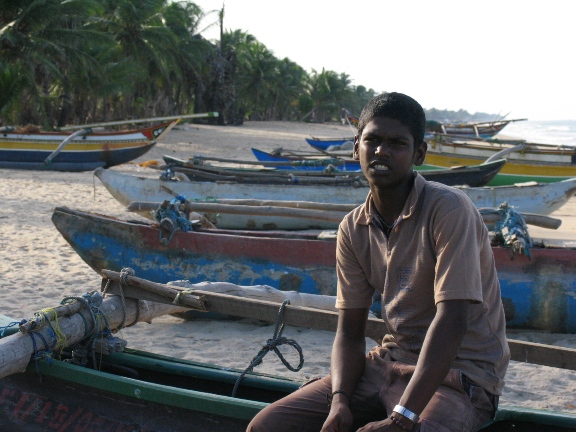
theeban-survived-the-tsunami-but-not-sri-lankas-conflict.jpg

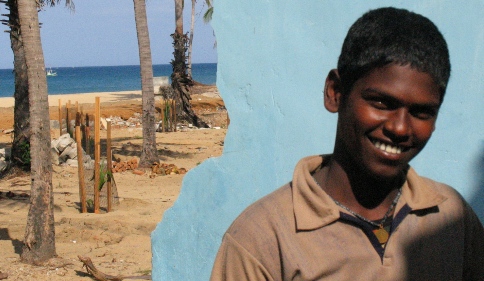
This boy, Thillainayagam Theeban, epitomizes that bigger tragedy. He survived the tsunami — but not the escalation of Sri Lanka’s ethnically driven civil war, which consumed his life in March 2007.

Theeban was one of eight surviving children – from India, Indonesia, Sri Lanka and Thailand – whose remaining families we tracked and filmed for a year in Children of Tsunami media project, a citizens’ media response to the Indian Ocean Tsunami.

Theeban was murdered by unidentified gunmen who stormed into his ‘temporary’ tsunami shelter on 3 March 2007. The death was linked to political violence that has engulfed Sri Lanka since 2006.

theeban.jpg

When the shocking news reached us three days later, our Sri Lankan camera team at Video Image and we at TVE Asia Pacific just couldn’t believe it. We were all in tears, and some of us were also angry. Theeban, who survived the killer waves 26 months earlier (but lost his mom and kid brother in the disaster) suffered many indignities in displacement. And now, he is gone.

We still don’t know who killed Theeban. He was abducted by an armed group sometime in 2006, from whom he escaped in early 2007. It is believed that Theeban was killed as a punishment for running away — and as a warning to all others.

He was 16 years at the time of his death. It is unlikely that his killers would ever face justice.

As I wrote in my personal tribute to Theeban in March 2007, published by UCLA’s Asia Media and MediaHelpingMedia, UK: “The disaster’s Sri Lankan death toll (close to 40,000 dead or missing) shocked the world when it happened within a few hours or days. Yet, at least twice as many people -– most of them unarmed and uninvolved civilians — have been killed in over a quarter century of fighting. That doesn’t always grab headlines.

“Thillainayagam Theeban has become another statistic in a ‘low-intensity conflict’ (as some researchers call it). And while this war lasts, it will continue to consume thousands of other young lives — a grim roll call of Sri Lanka’s Lost Generation.”

The third anniversary of the tsunami is a reminder – if any were needed – that man’s inhumanity to man is often worse than Nature’s fury.

March 2007 blog post: Remembering Theeban

April 2007 blog post: More memories of Theeban

Children of Tsunami: Documenting Asia’s Longest Year

Thillainayagam Theeban (1990 – 2007)

Protect journalists who fight for social and environmental justice!

In June 2007, I wrote about the late Joey R B Lozano, a courageous Filipino journalist and activist who fought for human rights and environmental justice at tremendous risk to his life.

For three decades, Joey survived dangerous missions to defend human rights using his video camera in the Philippines, a country known for one of the highest numbers of journalists killed in the line of duty. Joey went into hiding numerous times, and he dodged two assassination attempts.

Last week, a leading Filipino academic and social activist called for greater protection for local level journalists who cover social and environmental justice issues risking their life and limbs.

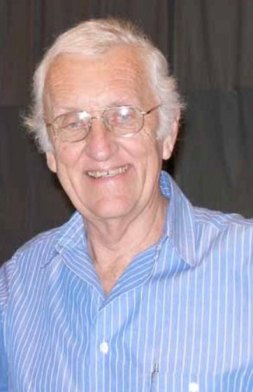
“Things are pretty savage at the grassroots level in some of our countries. Journalists who investigate and uncover the truth take enormous personal risks – the vested interests hire killers to eliminate such journalists,” said Professor Walden Bello, executive director of the Focus on the Global South (photo, below).

He was speaking at the Greenaccord Media Forum on 10 November 2007 in Frascati, Rome, where several dozen journalists covering environmental issues had gathered for a four-day meeting.

He delivered an insightful survey of social movements across Asia on environmental and public health issues
, where he questioned the role of elites in the global South in standing up for what is right and fair for all people.

During question time, I asked him how he saw the media playing a role in social movements that he’d just described. It varied from country to country, he said, and gave several examples.

zadie-neufville-from-jamaica-makes-a-point.jpg

In China, most environmental exposes in recent years have been made by ‘very brave journalists’. Their investigations have compelled the local and central authorities to address the massive incidents of pollution and environmental degradation resulting from China’s economic march forward.

In South Asia, the record is uneven. Indian publications like The Hindu newspaper and Frontline magazine are at the forefront in reporting and analysing ‘almost exhaustively’ on environmental struggles in the world’s largest democracy.

In contrast, Singapore and Malaysia have no critical mass media to turn the spotlight on excesses or lapses, he said. In these countries, journalists as well as activists have turned to the web to express themselves — but even they are under pressure from their governments.

In Thailand, the two English language newspapers The Nation and Bangkok Post have both have a long tradition of covering environmental issues and supporting mass movements. A number of Thai language newspapers also have sustained coverage.

In his native Philippines, Prof Bello singled out the Philippine Daily Enquirer for persisting with environmental coverage and exposing environment related scandals. But that comes with its own risks.

“At the local levels, journalists who take up these issues face many threats, including the very real risk of extra-judicial killings. The Philippines is one of the most dangerous countries in the world today for independent journalists and human rights activists,” he added.

Journalists living in the provinces and reporting from the grassroots are more vulnerable than those based in the cities. This is precisely why local journalists need greater support and protection to continue their good work.

The local elites and officials would much rather silence such journalists. International solidarity for such journalists could make a big difference, Prof Bello said.

He had a suggestion for his hosts, Greenaccord, which annually organises what is now the world’s largest annual gathering of journalists and activists concerned about the environment: Invite and involve more local level journalists in the future forums.

That will give them a voice, and strengthen their resolve to continue the very important work they do.

Read April 2007 blog post: Can journalists save the planet?


Meeting photos courtesy Adrian Gilardoni’s Flickr account

Katie Couric: Faithfully her Master’s voice?

This is an interesting video, uploaded last month on to YouTube by media activists.

In September 2007, Katie Couric, anchorwoman of CBS Evening News reported live from Baghdad. But instead of using that opportunity to ask tough questions and dig for the truth, Couric asked soft questions and repeated a number of false Bush talking points.

As activists point out, the media’s failure to ask tough questions helped America get embroiled in Iraq in the first place.

It’s hard to believe that Couric currently occupies the slot that was long adorned by the likes of Walter Cronkite, anchorman for The CBS Evening News for 19 years (1962 – 1981). During the heyday of CBS News in the 1970s and 1980s, he was often cited in viewer opinion polls as “the most trusted man in America”, because of his professional experience and avuncular demeanor.

From Wikipedia

Media watchers cannot help comparing how Cronkite covered an earlier, equally controversial conflict that left America bruised and bleeding: the Vietnam War. Following Cronkite’s editorial report during the Tet Offensive that the Vietnam War was unwinnable, President Lyndon Johnson is reported to have said, “If I’ve lost Walter Cronkite, I’ve lost Middle America.”

How times have changed. Couric is the media lap-dog that every government and military would wish to have — her recent reportage from Iraq would probably be held up by some of them as ‘an example to every journalist covering a war’.

Incidentally, Cronkite provides the voiceover introduction to Couric’s CBS Evening News, which began on 5 September 2006.

And that’s the way it is.

YouTube video courtesy Moveon.org – Democracy in Action

Stop that Traffick: ‘The Girl Next Door’ becomes ‘Trade’ the Movie

Image from Trade the Movie Image from Trade the Movie

When 13-year-old Adriana (played by Paulina Gaitan) is kidnapped by sex traffickers in Mexico City, her 17-year-old brother, Jorge (Cesar Ramos), sets off on a desperate mission to save her. Trapped by an underground network of international thugs who earn millions exploiting their human cargo, Adriana’s only friend throughout her ordeal is Veronica (Alicja Bachleda), a young Polish woman captured by the same criminal gang. As Jorge dodges overwhelming obstacles to track the girl’s abductors, he meets Ray (Kevin Kline), a Texas cop whose own family loss leads him to become an ally.

From the barrios of Mexico City and the treacherous Rio Grande border, to a secret internet sex slave auction and a tense confrontation at a stash house in suburban New Jersey, Ray and Jorge forge a close bond as they frantically pursue Adriana’s kidnappers before she is sold and disappears into a brutal underworld from which few victims ever return.

This is the synopsis of Trade, a feature film that opens across the United States on 28 September 2007.

Inspired by Peter Landesman’s chilling NY Times Magazine story on the U.S. sex trade, “The Girls Next Door,” (published in January 2004), TRADE is a thrilling story of courage and a devastating expose of one of the world’s most heinous crimes. The American debut of Marco Kreuzpaintner, one of Germany’s leading young directors, TRADE is produced by Roland Emmerich and Rosilyn Heller from a screenplay by Academy Award(R) nominee Jose Rivera (The Motorcycle Diaries).

Watch the trailer for Trade the movie

Image from Trade the Movie

Explaining the social context to this dramatised story, the movie’s website says:
“The practice of slavery in the US is something most people think ended with the 13th Amendment in 1865, but in recent years it has returned in an even more virulent form. Fueled by the collapse of the Soviet Union and other eastern European countries, new technologies like the internet, and sieve-like borders, the traffic in human beings has become an epidemic of colossal dimensions. The State Department estimates that as many as 800,000 people are trafficked over international frontiers each year, largely for sexual exploitation. Eighty percent are female and over fifty percent are minors. Many people in this country push this atrocity out of their minds, believing that it only occurs in faraway countries like Thailand, Cambodia, the Ukraine and Bosnia. The truth is that the United States has become a large-scale importer of sex slaves. Free the Slaves, America’s largest anti-slavery organization estimates that at least 10,000 people a year are smuggled or duped into this country by sex traffickers.”

Image courtesy Trade the Movie

The film’s makers, Roadside Attractions, says it will donate 5 per cent of the opening week box-office gross divided among four organisations participating in the release of the film; United Nations Office on Drugs and Crime (UNODC), Equality Now, International Justice Mission (IJM), and David Batstone’s Not For Sale Campaign.

On 19 September 2007, they held a benefit premiere at the United Nations headquarters in New York that included supper in the UN Delegates dining room. This marked the first film premiere event ever to take place at the United Nations, with the crusty UN officials mingling with film stars and artistes.

Read about the film-makers

Get involved in anti-traffick activism

Image courtesy Trade the movie

UN-ODC press release about Trade the movie

All images courtesy Trade the movie website

War Made Easy: Exposing the Spin Doctors of Death

As we mark the sixth anniversary of 9/11 terrorist attack on the World Trade Center in New York, attention is focused more and more on the role the media played in the days and months that followed.

The war in Iraq was justified as a retaliation against 9/11. The Pentagon marched on to the cheer-leading of American media, which barely asked the basic questions, let along challenge the military-political logic.

A new documentary probes how this shameless acquiescence took place in full public glare. WAR MADE EASY: How Presidents & Pundits Keep Spinning Us to Death, narrated by Sean Penn, features Normon Solomon, on whose 2005 book the film is largely based.

Here’s the trailer for the film:

And its synopsis:

War Made Easy reaches into the Orwellian memory hole to expose a 50-year pattern of government deception and media spin that has dragged the United States into one war after another from Vietnam to Iraq. Narrated by actor and activist Sean Penn, the film exhumes remarkable archival footage of official distortion and exaggeration from LBJ to George W. Bush, revealing in stunning detail how the American news media have uncritically disseminated the pro-war messages of successive presidential administrations.

War Made Easy gives special attention to parallels between the Vietnam war and the war in Iraq. Guided by media critic Norman Solomon’s meticulous research and tough-minded analysis, the film presents disturbing examples of propaganda and media complicity from the present alongside rare footage of political leaders and leading journalists from the past, including Lyndon Johnson, Richard Nixon, Defense Secretary Robert McNamara, dissident Senator Wayne Morse, and news correspondents Walter Cronkite and Morley Safer.

Norman Solomon’s work has been praised by the Los Angeles Times as “brutally persuasive” and essential “for those who would like greater context with their bitter morning coffee.” This film now offers a chance to see that context on the screen.

Approx. 72 minutes
English subtitles
Directed & Written by: Loretta Alper & Jeremy Earp
Produced by: Loretta Alper
Co-produced & Edited by: Andrew Killoy
Executive Producers: Jeremy Earp & Sut Jhally
Associate Producer: Jason Young
Sound: Peter Acker, Armadillo Media Group
Motion Graphics: Andrew Killoy & Sweet & Fizzy
Additional Music: John Van Eps & Leigh Philips
Narrated by: Sean Penn
Based on the book by Norman Solomon

Image courtesy War Made Easy website

I haven’t yet seen this film, but it’s certainly one I want to catch soon. Not the least because I live and work in a war-ravaged country – Sri Lanka – where the politicians and generals have engaged in their own (increasingly sophisticated) acts of spin doctoring. Most alarmingly, large sections of the Sri Lankan media find absolutely nothing wrong to play along, all in the name of patriotism….

Sounds familiar?

Read the full transcript of War Made Easy

Al Jazeera International: Looking hard for the promised difference

Image courtesy Al Jazeera

This is how Al Jazeera International (AJI), which started broadcasting on 15 November 2006, promoted itself.

In its own words, the 24/7 English language channel set out to ‘balance the information flow from (global) South to North, providing accurate, impartial and objective news for a global audience from a grass roots level, giving voice to different perspectives from under-reported regions around the world.’

Noble ideals, indeed — and we fervently hope they succeed. That’s what I said in my op ed, Ethical Newsgathering: Biggest Challenge for Al Jazeera, published online within days of the new channel going on the air.

I said: “In recent years, the self righteous arrogance and the not-so-subtle biases of BBC and CNN have become increasingly intolerable. But unless it’s very careful and thoughtful, AJI runs the risk of falling into the same cultural and commercial traps that its two older rivals are mired in.

“CNN can’t get out of its US-centric analysis even in its international broadcasts. And the BBC news team is like a hopelessly mixed up teenager: one moment they are deeply British or at least western European; the next moment they are more passionate about Africa than Africans themselves.

“Desperately seeking legitimacy and acceptance, these global channels have sometimes traded in their journalistic integrity for privileged access, exclusives or -– dare we say it? -– to be embedded.”

I admit that I haven’t been watching enough of AJI to come to any firm conclusions. One reason: the new channel is still not widely available in some countries that I visit and spend time in.

But going by what is on their YouTube channel, where some 1,300 video segments have been placed so far (as at 29 August 2007), I have a rough idea of AJI’s first few months of coverage.

I’m looking long and hard for the difference that they so emphatically promised. Instead, I find them a paler version of BBC World, at times trying oh-so-hard to be just like the BBC!

Take, for example, the coverage they have recently done on the bloody and protracted civil war in Sri Lanka. Being where I live and work, I take a particular interest in this topic.

In a 2-part edition of AJI’s People & Power programme, Juliana Ruhfus investigates the impact of Sri Lanka’s civil war.

People & Power: How the East was Won: Part 1 of 2

People & Power: How the East was Won: Part 2 of 2

I don’t have a problem with AJI’s analysis in this documentary, which tries hard to be balanced and fair in what I know is a very difficult subject to cover, with intolerant hardliners on both sides of the conflict.

But I have several issues with how it has been put together – the norms and ethics of their newsgathering.

* A white blond woman, so evidently a parachute journalist, is reporting and presenting the story. Why isn’t an Asian telling this story?

* She is repeatedly mispronouncing all the local names. Just like the BBC does as a matter of routine.

* She gestures, interviews and talks exactly like those know-all reporters from the BBC. At times I detect a faint condescension in her voice, but that may be my imagination.

* For part of the coverage, the intrepid AJI reporter becomes embedded with the Sri Lankan armed forces, and interviews civilians under the watchful eye of military men. This is hardly a credible way of eliciting any honest responses!

* More importantly, she shows little regard for the personal safety of some people she interviews. At one point, she asks three muslim men if the Eastern Province of Sri Lanka is now any safer than before it was ‘liberated’ by the government forces. The men are clearly uncomfortable with this question. Honest answers can cost them dearly. But why should she care? She persists, showing close-ups of these individuals.

* Even when she interviews people who had explicitly asked for concealment of their identity, she leaves tell-tale signs for those identities to be easily guessed. A woman whose teen-aged son has been coerced into joining a paramilitary group is filmed in silhouette — not a good enough cover. Real voices have not been altered through a synthesizer.

These and other observations blur the difference between BBC and AJI in my mind. With a few notable exceptions, most BBC reporters don’t care one bit about the hapless, distressed people whom they interview. All they want is to get a ‘good story’ with dramatic visuals.

AJI is desperately trying to outdo the BBC in all the latter’s wrong aspects. Otherwise why should Juliana Ruhfus try so hard to get a damning comment from an interviewee evidently ill-at-ease of being ambushed by this western woman?

I still want to have an open mind about AJI’s promised difference, and keep hoping that it will emerge sooner rather than later. But this kind of newsgathering and film-making don’t augur well.

If this is the ethical standard of journalism that AJI aspires to, we who had high hopes of their becoming a real alternative to the dominant two are going to be disappointed.

Read my earlier post: Wanted: Ethical sourcing of international TV News

Watch Al Jazeera on YouTube

AJI AJI

How short is short today? Packaging Nature for today’s television viewers

On 15 July 2007, I wrote about the award-winning natural history film-maker Neil Curry, based in South Africa, whom I last met during the Japan Wildlife Film Festival in Toyama in the summer of 2005.

Most recently, Neil made The Elephant, the Emperor and the Butterfly Tree, which has won several of the industry’s top awards.

I’ve since heard from him, and want to share some of his views on how best to package Nature and wildlife for today’s easily-distracted, attention-challenged audiences. He is responding to my post on 13 July 2007 titled Mine is shorter than yours, yipee!

neil-curry.jpg

He says:

‘Mine is shorter than yours….’ is one of the issues I’ve been going on about for years and I’m delighted that Friends of the Earth has now come up with a competition for one-minute films. This ridiculous thing of the ‘standard’ broadcast slot for bluechip wildlife programmes being 52-minute is, in my opinion, one of the main reasons why the public’s view of Nature has become so ‘warped’.

You can’t sustain a 52-minute wildlife film without drama – so we end up with this on-going emphasis on killing, sex, things that are supposedly deadly to humans (everything from snakes and great white sharks to mosquitoes), and dramatic confrontations between macho men – and women – and animals. By insisting on these long films, television itself has actually ‘created’ the audience for wildlife violence – and I’ve been told by more than one commissioning editor that audiences aren’t interested in “place” and “habitat” films any more, they want to see big animals doing exciting things.

In short, Dallas with animals – wildlife “reality-TV”.

Based on my own experience, that’s rubbish. Yes, audiences want a well-told story but they can be equally fascinated by quite prosaic things in the complex inter-relationships of nature, provided the story is told properly. They don’t need all this ‘red in tooth and claw’ stuff. The superb, The Queen of Trees that is currently doing the rounds is a good example – as is the on-going popularity of Attenborough and some of the BBC’s mega-series.

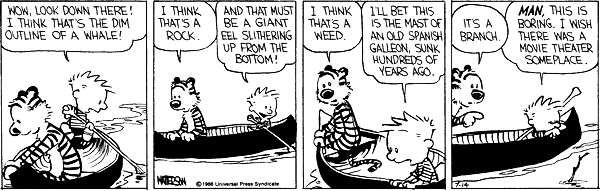
In fact, the over-dramatised programmes often give a quite distorted view of what wildlife is really like. Most creatures don’t spend all their time fighting and killing one another, or looking for human beings to threaten and attack. But if film makers, no matter how serious they are about telling the truth, want to eat, have somewhere to live, educate their kids and so on, they simply have to comply with what the programmers want – and thus, the cycle continues. Of course, it sometimes backfires. Some years ago – unfortunately I can’t remember the exact details now – research in the UK found that school children on field trips into the countryside were bored, because “nothing was happening”. Wildlife programmes on television had led them to expect nature to be full of continuous action and excitement. If children find real nature and the countryside “boring”, imagine how that will influence them when they grow up and find themselves in positions of authority where they may have to make decisions about siting roads, factories, quarries and so on in otherwise unspoilt but “boring” countryside.

nature-is-boring-have-a-movie.gif

If television would just take some of their hour-long wildlife slots and break of them into shorter segments of 30 or even 15 minutes, they would open up the screens to hundreds, perhaps even thousands of fascinating stories about some of the wonders of nature that are astonishing and intriguing, and that would grab audience attention – without any of the drama that is needed to sustain 52 minutes. In my own files I have dozens of stories like that – and so probably, do most other wildlife film makers – but we just never get the chance to tell them because there’s almost no market for short wildlife films on television.

Lord Reith, father of the BBC, said the job of broadcasting was to inform, educate and entertain – but nowadays unfortunately, much of wildlife programming seems to have got itself stuck solely in the entertainment category. It’s a pity because it means a lot of stuff that could give audiences a better understanding of the other life we share this planet with, is largely kept off our screens.

In the circumstances, it’s a miracle that The Elephant, the Emperor and the Butterfly Tree ever got made. It says a lot for the courage and acumen of Mike Gunton, who was commissioning editor on The Natural World at the time, that he was prepared to buck the trend and take it on. There’s no sex, no killing, no violent confrontations – just a boring old tree and a lot of small-scale interactions going on around it, plus a few examples of the dreaded Homo sapiens (who doesn’t even exist in Nature if lots of the wildlife TV programmes are to be believed).

Children of Men – the coming anarchy

“The Muslim community demands an end to the Army’s occupation of mosques.”

“The Homeland Security bill is ratified. After eight years, British borders will remain closed. The deportation of illegal immigrants will continue. Good morning. Our lead story…”

These and other disturbing news headlines are sprinkled throughout Children of Men, the 2006 dystopian British movie based on a 1992 novel by P D James.

It wasn’t a good idea to have watched this movie on my flight from Doha to London. I arrived to find London’s Heathrow Airport more crowded and chaotic than I’d ever seen in 15 years of arrivals. Is this a sign of things to come?

In all likelihood, it was just a routine Saturday, but the (fortunately well behaved) crowds made me think again of the coming chaos that Children of Men predicts will overwhelm Britain in just a generation.

As the movie’s official synopsis puts it:
The world’s youngest citizen has just died at 18, and humankind is facing the likelihood of its own extinction. Set in and around a dystopian London fractious with violence and warring nationalistic sects, Children of Men follows the unexpected discovery of a lone pregnant woman and the desperate journey to deliver her to safety and restore faith for a future beyond those presently on Earth.

And this is how a fan summed it up on Internet Movie Database (IMDB):

Set in 2027, when no child has been born for 18 years and science is at loss to explain the reason, African and East European societies collapse and their dwindling populations migrate to England and other wealthy nations. In a climate of nationalistic violence, a London peace activist turned bureaucrat Theo Faron, joins forces with his revolutionary ex-wife Julian in order to save mankind by protecting a woman who has mysteriously became pregnant.

When P D James wrote the original novel, she placed the story 35 years in her future. When Alfonso Cuarón directed its movie adaptation, starring Clive Owen, Sir Michael Caine, and Julianne Moore, the world had moved to just two decades within reach of 2027. And, ominously, the concerns of immigration, law and order and environmental degradation had all grown worse.

The movie portrays a dark and depressing near future for our species and the planet. This isn’t the imagination of writer and film-maker running amok: the ingredients of that dystopia are already evident, and we’re flirting with the sympoms while the trends evolve into status quo.

We have been warned.

Caught between mines and starvation

Today, April 4, is being observed worldwide as Mine Action Day.

The UN General Assembly declared the International Day for Mine Awareness and Assistance in Mine Action, which was first observed in 2006.

Mine Action says on its website:“Landmines and explosive remnants of war continue to kill or injure as many as 15,000 people a year. The overwhelming majority are civilians who trigger these devices years or even decades after a conflict ends. In some countries, such as Afghanistan, the majority of victims are under the age of 18.

Some progress has been made. Mine action programmes and the anti-personnel mine-ban treaty or “Ottawa Convention,” have contributed to a reduction in the annual number of casualties from an estimated 26,000 10 years ago to between 15,000 and 20,000 today.

But not nearly enough. I remember a short video film I watched during my first visit to Cambodia in mid 1996. After 30 years of civil war, Cambodia was left with a deadly legacy of between 4 and 6 million landmines – nobody knows quite how many. And progress has been slow to detect, deactivate and remove these millions of death-traps lying all around in this one of the poorest countries in Asia.

Our friends at the Women’s Media Centre of Cambodia, a media advocacy group run by women, showed me a campaign video they had made advocating mine action. Used for screenings at key UN meetings in Geneva and New York, it showed the plight of poor Cambodians, especially women and children, who have no choice but to live and work with landmine hazards.

Sorry, a decade later I can’t recall the title of this film. A Google search didn’t bring up any links either. But there was a sequence that I remember well.

In rural Cambodia, some women spoke their mind about the many hazards that surround them, small arms and landmines being just two of them.

What’s our choice here, one woman asked. “Everytime we step out of our homes and go to the fields, we can get blown up by a landmine. Yet if we stay at home, we will starve to death.”

She’s not alone. Millions of people – women, children and men – across the global South face this reality everyday. The men in suits in Geneva and New York, who issue lofty statements on mine action from the safety of their glasshouses, need to be aware of this stark choice.

Note: Women’s Media Centre in Cambodia does some good work. At the time we worked with them, they were running an FM radio station, producing lots of videos, and training Cambodian women to use media to support development and personal advancement.