Thailand’s people power gets a boost from satellite TV

Street protests in Bangkok - image from DayLife

Thailand, which had built up a reputation as a relatively stable country, has been under siege for much of this year. Confrontations between the coalition government, elected in December 2007, and the anti-government People’s Alliance for Democracy (PAD) have affected civil administration, law enforcement and economy, especially tourism.

On 10 September 2008, Thai prime minister Samak Sundaravej was forced to step down when a court found him guilty of accepting money from a TV station to host a popular cooking show. Bizarre as this reason was for his ouster, it has only added to the confusion that currently dominates Thai life.

Although I have been visiting Thailand regularly for the past 20 years, I don’t claim to understand the murky world of Thai politics. But until recently, Thais had somehow managed to keep their politics and business separate, allowing the latter to continue largely unaffected.


Pro-democracy struggles are not new to Thai people. But this time around, there is a new player involved: Asia Satellite Television (ASTV) a relatively new entrant into Thailand’s TV world which is dominated by commercial TV stations that offer a staple of light talk shows, soap operas and gossip programmes.

ASTV’s programmes, since May 2008, has consisted of speeches beamed from a stage set up at the site of a Bangkok protest rally, led by the PAD.

In early September 2008, around 200 PAD supporters banded together to guard the ASTV station and Manager newspaper offices on Phra Athit road amid rumours Prime Minister Samak Sundaravej was going to take the cable TV channel off the air.

In an interesting news analysis filed from Bangkok, Inter Press Service (IPS) noted on 5 September: “ASTV makes little effort to hide its political mission as the principle broadcaster of the PAD. After all, its founder, Sondhi Limthongkul, a fiery speaker, is one of the PAD’s leaders. His sustained attacks on the government and Thai democracy — that the prevailing elections system does not work, and the country needs a largely appointed parliament — have resonated with the thousands drawn to the PAD rallies after first hearing them on ASTV.”

Much of the PAD’s mass mobilisation has been possible due to ASTV’s reach, which is currently estimated at 20 million viewers. ‘’Our audience has doubled since 2006, when we had 10 million viewers, because we present the political side of the news that is not available on national TV,” the article quoted Chadaporn Lin, managing editor of the station’s English-language channel, as saying.

The Manager owns ASTV
Viewers who cannot access the station through a satellite dish or a provincial cable company turn to the website of ‘Manager,’ the newspaper produced by ASTV’s parent company. The site has seen the number of regular visitors rise and is now placed third among the top 10 Thai-language websites.

Read the full IPS article: THAILAND: Satellite TV Boosts Anti-Gov’t Protests By Marwaan Macan-Markar

To make sense of what’s going on, I turned to Pipope Panitchpakdi, a Thai friend who has worked in the broadcast media industry for many years:

Pipope Panitchpakdi, independent Thai journalist

He says: “It’s just too bad that the ideology behind the ASTV movement is identified by many as right-winged and nationalistic. For me, the movement itself is quite progressive in its post-modernistic use of everything that works to topple the existing government. In a way, it’s going back to the muckraking days of partisan journalism, which may be in need when mainstream media are no longer functioning during Thaksin/Samuk’s administration (with his equally keen media strategist team).”

Pipope adds: “Few mentioned that ASTV is self sponsoring through viewers’ subscriptions. That’s, to me, says a lot about the station. In my opinion what is unacceptable is when NBT (National Broadcasting Television) starts to give air time to government politician to bash the ASTV and to report heavily distorted news on the anti-government movement. They said it is the counter measure to what the ASTV is doing.”

He continues: “NBT, which is a free to air TV, funded by tax money and has a nation wide coverage, now becomes the state propaganda in the true sense of the word and by being such, there is no telling what kind of political fervor the NBT can stir.”

The argument of using NBT to project government view is a familiar one in other fragile or immature democracies across Asia. To understand it, we need to recall how rapidly broadcasting has changed in the past two decades.

In 1990, most Asian viewers had access to an average of 2.4 TV channels, all of them state owned. This has changed dramatically — first with the advent of satellite television over Asia in 1991, and then through the gradual (albeit partial) broadcast liberalisation during the 1990s. Asian audiences, at last freed from the unimaginative, propaganda-laden state channels, exercised their new-found choice and quickly migrated to privately owned, commercially operated channels. Soon, state owned TVs and radios found themselves with ever-shrinking audiences and declining revenue. For the past decade, most have survived only because governments infused them with massive amounts of tax payer money. Their public service remit is long forgotten.

In recent years, some governments have taken the view that since a growing number of private channels provide an outlet to political opposition and other dissenting views, the state channels are justified in peddling the ruling party (or ruling military junta) view – often exclusively. This convenient argument overlooks the fact that Pipope points out: state channels are funded mostly or wholly by tax payer money (as many lack the entrepreneurial skill to compete in a market environment). They have a moral and legal obligation to serve the public interest — and that does not coincide with the ruling party’s or junta’s self interest.

There are some who accuse ASTV of Thailand, and its equivalents such as courageous Geo TV of Pakistan (which stood up to the once mighty, now fallen general Musharaf), of being partisan. Perhaps they are, and in ASTV’s case it unashamedly and openly is. But in my view, they offer a much-needed counter balance to the disgusting excesses of state TV that prostitute the airwaves.

Supinya Klangnarong
Supinya Klangnarong

Supinya Klangnarong, deputy head of the Campaign for Popular Media Reform (CPMR), an independent local group lobbying for media rights, told IPS: “ASTV is offering knowledge and political information and new ideas that have never been seen on Thai TV. They have opened a new space for TV. There is 100 percent media freedom. You can say anything against the elected government and get away.’’

But she warned that while such a media agenda has tapped into an older audience that has felt left out by the dominant trends on the existing commercial stations, where youth is the focus, it is also creating a following that could become increasingly intolerant. “They are creating a culture of hate by the one-sided opinions being broadcast. They are promoting very conservative and very nationalistic ideas.’’

She added: “And if it attracts more people, ASTV may take over the role that has always been played by Thai newspapers of setting the political agenda for the country. That will be a win for those who say that Thailand has become too liberal, open and globalised… like my mother’s generation.’’

PAD protests hold Thai capital under siege - image from DayLife

Thailand’s TV chef PM ousted: Is this how to serve democracy?

Elected political leaders are driven out of office by various factors – ranging from military coup de’tat and popular revolt to corruption or sex scandals. But it’s not common for a head of government to lose his job for appearing on television.

But that’s just what happened on 9 September 2008 to Thailand’s prime minister…and the headline writers worldwide couldn’t resist every imaginable cooking cliche at his expense: “Cooking show lands Thai PM in hot water”, “Thai PM grilled over cooking show”, “Thai PM in a soup”, etc.

Prime Minister Samak Sundaravej was forced from office along with his Cabinet after Thailand’s Constitutional Court ruled that he had broken a conflict-of-interest law by hosting TV cooking shows while in office.

Samak Sundaravej has hosted Tasting and Complaining cooking show for years on Thai TV
Samak Sundaravej has hosted "Tasting and Complaining" cooking show for years on Thai TV

The court judgment, broadcast live on television and radio, was greeted with loud cheers and claps from Samak’s opponents who have occupied his office compound since Aug. 26 to demand his resignation. Some protesters wept with emotion.

The 73-year-old Samak, who has cooked for visiting leaders, hosted a popular television cooking show — “Tasting and Complaining” — for seven years before becoming prime minister in early 2008 after his his People Power Party (PPP) and five others won a general election. He returned Thailand to civilian rule after the army had captured power in September 2006, ousting the former populist prime minister Thaksin Shinawatra.

Some say this is the first time a professional chef has become prime minister anywhere. Samak had made several TV appearances after taking office, which the court held was breaking a constitutional prohibition on private employment while in office.

Tasting and Complaining on air
To serve the Kingdom of Thailand...medium rare?

The defiant PPP, whose government is facing stiff opposition by supporters of the People’s Alliance for Democracy (PAD), initially tried to renominate Samak as PM. But they dropped the idea like a hot potato in just a couple of days. Samak also bowed out as leader of the PPP.

As of this writing, the ruling coalition is trying to find a political leader who can form a government. The street demonstrators, one of whose main demands was the resignation of PM Samak, are watching developments with a sharp eye.

In recent weeks Samak’s government, though duly elected, has been under siege from PAD which draws its strength from among city dwellers and the elite. Although I have been visiting Thailand for 20 years, I don’t claim to understand the murky world of Thai politics. But until recently, Thais had somehow managed to keep their politics and business separate, allowing the latter to continue largely unaffected.

In the end, Samak lost his job not for any substantive lapses of governance – his opponents had lined up a long list of these – but on a legal technicality.

Samaks TV show branding
Samak's TV show branding
Samak has been involved in Thai politics for over 30 years, and since the 1990s has been promoting the art of Thai cooking on both radio and television. He started cooking at the age of 7, and his popular cookbook Chimpai Bonpai (“Tasting, Complaining”) is now in it’s 9th edition. One innovative Samak recipe: he makes pork leg stew with coca-cola.

Surely, Samak is not the first or last politician to sustain a parallel second career on television – the most dominant mass medium in most parts of Asia. Serving and aspiring leaders across Asia have deals with popular television networks that help boost their image and help their approval ratings. And in immature democracies, state-owned TV networks are grossly abused by politicians of ruling parties for outright propaganda.

Samak’s mistake was not so much continuing his TV career, but getting paid for it while holding public office. He should have just stuck to the publicity value. After all, with Thai cuisine among the most popular in the world, he could have gone far combining his culinary talents with hosting TV shows. Instead, he cooked up an avoidable storm…

Here’s the bright side: if Samak leaves politics, he has a choice of at least two lucrative careers.

Celebrity Thai chefs, anyone?

Watch the ousted Thai PM cooking in this news report on ITN News (UK):

Would the Samak cooking saga make a good film? Find out what the Guardian’s film blogger thinks!

Protect journalists who fight for social and environmental justice!

In June 2007, I wrote about the late Joey R B Lozano, a courageous Filipino journalist and activist who fought for human rights and environmental justice at tremendous risk to his life.

For three decades, Joey survived dangerous missions to defend human rights using his video camera in the Philippines, a country known for one of the highest numbers of journalists killed in the line of duty. Joey went into hiding numerous times, and he dodged two assassination attempts.

Last week, a leading Filipino academic and social activist called for greater protection for local level journalists who cover social and environmental justice issues risking their life and limbs.

“Things are pretty savage at the grassroots level in some of our countries. Journalists who investigate and uncover the truth take enormous personal risks – the vested interests hire killers to eliminate such journalists,” said Professor Walden Bello, executive director of the Focus on the Global South (photo, below).

He was speaking at the Greenaccord Media Forum on 10 November 2007 in Frascati, Rome, where several dozen journalists covering environmental issues had gathered for a four-day meeting.

He delivered an insightful survey of social movements across Asia on environmental and public health issues
, where he questioned the role of elites in the global South in standing up for what is right and fair for all people.

During question time, I asked him how he saw the media playing a role in social movements that he’d just described. It varied from country to country, he said, and gave several examples.

zadie-neufville-from-jamaica-makes-a-point.jpg

In China, most environmental exposes in recent years have been made by ‘very brave journalists’. Their investigations have compelled the local and central authorities to address the massive incidents of pollution and environmental degradation resulting from China’s economic march forward.

In South Asia, the record is uneven. Indian publications like The Hindu newspaper and Frontline magazine are at the forefront in reporting and analysing ‘almost exhaustively’ on environmental struggles in the world’s largest democracy.

In contrast, Singapore and Malaysia have no critical mass media to turn the spotlight on excesses or lapses, he said. In these countries, journalists as well as activists have turned to the web to express themselves — but even they are under pressure from their governments.

In Thailand, the two English language newspapers The Nation and Bangkok Post have both have a long tradition of covering environmental issues and supporting mass movements. A number of Thai language newspapers also have sustained coverage.

In his native Philippines, Prof Bello singled out the Philippine Daily Enquirer for persisting with environmental coverage and exposing environment related scandals. But that comes with its own risks.

“At the local levels, journalists who take up these issues face many threats, including the very real risk of extra-judicial killings. The Philippines is one of the most dangerous countries in the world today for independent journalists and human rights activists,” he added.

Journalists living in the provinces and reporting from the grassroots are more vulnerable than those based in the cities. This is precisely why local journalists need greater support and protection to continue their good work.

The local elites and officials would much rather silence such journalists. International solidarity for such journalists could make a big difference, Prof Bello said.

He had a suggestion for his hosts, Greenaccord, which annually organises what is now the world’s largest annual gathering of journalists and activists concerned about the environment: Invite and involve more local level journalists in the future forums.

That will give them a voice, and strengthen their resolve to continue the very important work they do.

Read April 2007 blog post: Can journalists save the planet?


Meeting photos courtesy Adrian Gilardoni’s Flickr account

True ‘People Power’ needed to fight climate change

Dealing with climate change – the biggest environmental threat faced by the planet today – requires building up a mass movement at the grassroots across the developing countries of the global South.

Such a movement might be unpopular not only with the Southern elite but also with sections of the urban-based middle class sectors that have been the main beneficiaries of the high-growth economic strategy that has been pursued since the early 1990s, a leading southern activist cautioned in Rome last week.

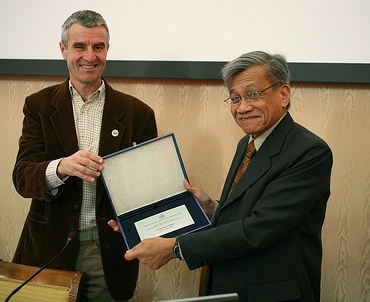
Speaking at the Greenaccord Media Forum on 10 November 2007, Walden Bello, Filipino academic and executive director of the Focus on the Global South (seen in photo below, on the right), dismissed the notion that Asian masses are inert elements that uncritically accept the environmentally damaging high-growth export-oriented industrialisation models promoted by their governing elites.

“It is increasingly clear to ordinary people throughout Asia that the model has wrecked agriculture, widened income inequalities, led to increased poverty after the Asian financial crises, and wreaked environmental damage everywhere,” he said.

prof-walden-bello-receives-plaque-from-andrea-masullo-of-greenaccord.jpg

People in the South are open to an alternative to a model of growth that has failed both the environment and society, he said. For instance, in Thailand, a country devastated by the Asian financial crisis of 1997 and wracked by environmental problems, globalization and export-oriented growth are now bad words.

He added: “Thais are more and more receptive to the idea of a ‘sufficiency economy‘ promoted by popular monarch King Bhumibol, which is an inward-looking strategy that stresses self-reliance at the grassroots and the creation of stronger ties among domestic economic networks, along with ‘moderately working with nature'”.

But the southern countries cannot and must not rely on their elite to provide leadership, he said. “What is clear is that in most other places in the South, one cannot depend on the elites and some sections of the middle class to decisively change course. At best, they will procrastinate.”

The fight against global warming will need to be propelled mainly by an alliance between progressive civil society in the North and mass-based citizens’ movements in the South.

Delivering the Lectio Magistralis to conclude the 4-day international gathering of journalists, activists and experts concerned about the environment, Prof Bello traced the evolution of social movements on environment and public health in East Asia, Southeast Asia and South Asia over the past few decades.

Read the test of a similar talk given by Walden Bello at the Trans National Institute in October 2007.

Prof Bello acknowledged that the environmental movements in the South and North have seen their ebbs and flows. “As with all social movements, it takes a particular conjunction of circumstances to bring an environmental movement to life after being quiescent for some time or to transform diverse local struggles into one nationwide movement.”

The challenge facing activists in the global North and the global South is to bring about those circumstances that will trigger the formation of a global mass movement that will decisively confront the most crucial challenge of our times.

And climate challenge is one among several challenges we confront today.

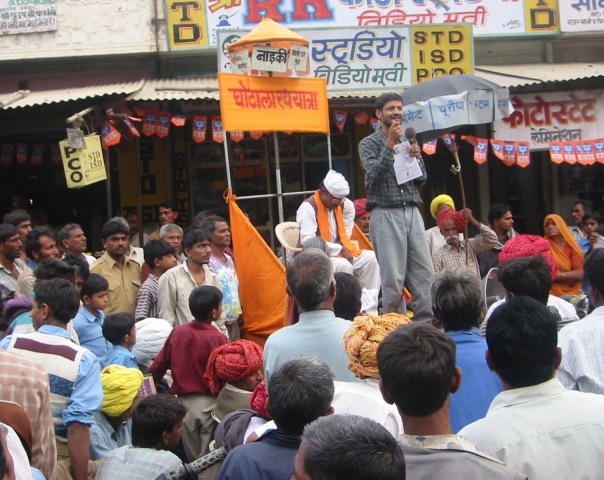
campaigning-for-clean-elections-in-rajastan-india.jpg


Meeting photos courtesy Adrian Gilardoni’s Flickr account

People power India photo courtesy TVEAP image archive

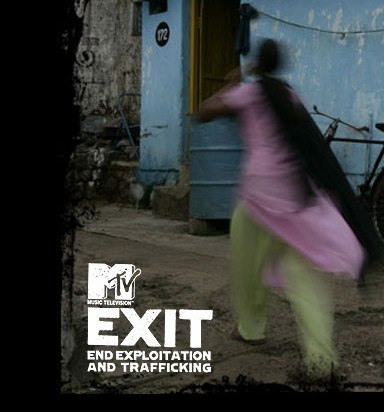
MTV Exit: Entertainment TV takes on human trafficking

mtv-exit.jpg

Television gets blamed for lots of things that go wrong in our world. This isn’t surprising, given it’s the world’s most powerful medium and the key role it plays in our cultural, social and political lives.

A sociological study some years ago said broadcast TV was partly responsible for the movement of millions of people from villages to cities in search of jobs, higher incomes and better living standards. The glitzy lifestyles dramatised on TV was creating illusions in the minds of rural women and men, especially the youth, it said.

Of course, such migrants soon discover a very different reality in the cities. But few want to go back to where they came from. As they hang on in the cities, some fall prey to human traffickers, always on the prowl for vulnerable people to trade in.

The United Nations estimates that the total market value of human trafficking is 32 billion dollars — one of the most lucrative illicit trades in the world. The International Labour Organisation (ILO) estimates that worldwide, about 2.5 million people are victims of trafficking.

If TV indirectly contributed to this human perversion, it can also help society stand up and fight against it. As Music Television (MTV) is now doing.

MTV, the most popular music channel in the Asia Pacific region, will be playing a different tune in the weeks to come. For half an hour at least, beginning 18 September 2007 for MTV Thailand, live and hip music will give way to the harrowing accounts of three victims of human trafficking. This is part of the MTV Exit campaign.

Trafficking of people in the region will be given a human face through the personal accounts of Anna, Eka and Min Aung. Anna was forced into prostitution in the Philippines, while Eka is an Indonesian who was an abused domestic worker in Singapore. Min Aung from Burma recounts his sad experiences working and being practically imprisoned in a factory in Thailand for two years.

Lynette Lee Corporal writing for Inter Press Service (IPS) quotes MTV Thailand campaign director Simon Goff as saying: “We worked with organisations and talked with experts to see what forms of trafficking we would focus on, the most prevalent forms that affect our audiences. We selected regions that would best represent the issue. Then, finally we brought in a production team, led by a Thai producer and a director from the UK.”

More extracts from her article:

Goff said that it took them six weeks of pre-production work, including research and sourcing, another six weeks to shoot the documentary, and six weeks more of post-production work. It took about four and a half months of “solid production,” he added.

Beyond the emotional and unsettling accounts of the trafficking survivors and the disturbing re-enactments of rape, beatings and abuse, the documentary also had interviews with a trafficker and a ‘client’ who openly admitted to the crime. In an interview with ‘The Chairman’, a Filipino recruiter who forces young girls into prostitution, revealed the horrific experiences young girls go through, and this was reinforced by what ‘Ama’ , a Chinese client who admitted to paying for sex with trafficked girls, narrated.

The challenge now, said Goff, is to break the people’s apathy and denial about human trafficking. “Ultimately, time will tell. We have launched the campaign and it’s already out there in the media. We hope that the show will make people realise that they are both a part of and a solution to the problem,” he said.

In Thailand’s case, he added that it is also important for Thais to realise that it is not just about Thai victims being trafficked abroad, but it’s also “necessary to look that we have other nationalities, such as Min Aung, who has been trafficked here”.

Read the full article on The Asian Eye website of IPS Asia Pacific

Watch or download the celebrity-presented MTV EXIT documentaries for Asia Pacific and South Asia

United Nations Office on Drugs and Crime website on human trafficking

More information on trafficking and how to fight it

AV against HIV: Recalling my own ‘Richard Gere moment’

The 8th International Conference on AIDS in Asia and the Pacific, or ICAAP8, opens in my home city of Colombo in a few days’ time. As I wrote in an earlier post, some of us have been blocked out of this important event by some arrogant members of the conference Secretariat. But our interest in HIV/AIDS advocacy will not be so easily deterred.

On a positive note, I have vivid memories of my active involvement in the XV International AIDS Conference, held in Bangkok, which attracted over 17,000 delegates to the Thai capital for a week full of events and activities. One of them was the official 2004 International AIDS Film Festival, which TVE Asia Pacific organised at the invitation of the Thai Ministry of Public Health and the International AIDS Society.

2004 AIDS Film Festival in Bangkok 2004 AIDS Film Festival in Bangkok 2004 AIDS Film Festival in Bangkok 2004 AIDS Film Festival in Bangkok

Over 4 days, we screened close to 50 TV and video films at three venues, drawing a total of more than 8,000 visitors. These films came from all over the world, in response to an open call that we had issued. We received a rich mix of genres: documentaries, docu-drama, current affairs programming, short television spots as well as entertainment formats — animation, dramas and reality television.

Films at this festival captured the kaleidoscope of emotions, challenges and contradictions presented by the AIDS pandemic. They were evidence of how TV and film professionals are covering HIV as a major development concern of our times.

That formidable task — which we summed up as ‘AV against HIV’ — received a boost when movie industry heavyweights joined in. We had documentaries narrated by Angelina Jolie, Will Smith and Glenn Close.

And while we were organising the festival, actor-activist Richard Gere sent the word saying he was interested in being associated with it. Of course we seized the offer, and had him open the film festival — hugely raising its profile in the Thai and international media.

2004 AIDS Film Festival banner by TVEAP Richard Gere arrives for 2004 AIDS Film Festival, Bangkok Richard Gere being welcomed by Thai children

After three years, I can still remember the moving speech that Richard Gere made at the opening ceremony in the Scala cinema in downtown Bangkok. Talking to an audience packed with diplomats, businessmen, journalists, activists and government officials, he said his experience with persons living with HIV had changed his life even more than his study of Tibetan Buddhism.

He recalled how he had lost a very close friend to HIV. “I don’t want anyone else to die like that,” he said, adding: “It (AIDS) has gone on too long, way too long.”

Then he did something simple yet very effective. He asked everyone who knew at least one person living with HIV to put their hands up. A few dozen hands went up in an audience of around 500.

Next, he said: hands up everyone who has lost at least one person to HIV. Some hands went down while three dozen remained held up.

I did not put my hands up for either call.

That was a moment of truth for myself. Until then, I hadn’t really, closely known anyone who was living with HIV (and disclosed that fact to me). I also had not lost anyone to HIV. Not knowingly anyway.

As the event progressed, I sat there asking myself:
• What kind of little comfort zone or cocoon am I living in?
• What kind of society do I live in, where very few people – if anyone – would dare to acknowledge they are living with HIV?
• And how can I remain authentic, communicating HIV from such a detached standpoint?

Richard Gere at XVI AIDS Conference in Toronto, 2006

I’ve been writing and speaking about HIV for almost two decades. In that time, I have touched on many aspects of HIV, including:
• The science of HIV/AIDS, as a science communicator;
• Public health aspects of the global pandemic as a feature writer;
• The human rights dimensions of HIV, as a development communicator; and
• Nexus between media and HIV, as a media watcher/researcher.

But I sat there in the Scala cinema wondering if it was sufficient for me to have done all that with the objectivity of a journalist, or the clinical detachment of a researcher.

I then realised that when it comes to HIV/AIDS, we have to suspend these ordinary frameworks and ‘conditioning’ of our training.

We have to:
• Stop thinking of it as someone else’s problem;
• Get away from the ‘us’ and ‘them’ mindset;
• Understand that no one is immune or buffered from the human immunodeficiency virus, HIV; and
• More than anything else — stop living in denial.

These apply to individuals, communities, society — and also governments.

That was my Richard Gere moment.

Read TVEAP news report on 2004 AiDS Film Festival

See more photos on 2004 AIDS Film Festival on TVEAP website

Photos by Jerome Ming and Indika Wanniarachchi for TVEAP

Love Thy Mangrove: A Greenbelt Report from Pra Thong island, Thailand

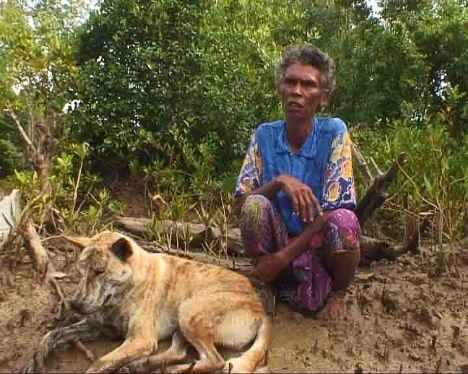
jureerat-pechsai-deun.jpg

This is Jureerat Pechsai, nicknamed Deun.

She is a member of the Moken community – indigenous people living on the coast and islands on Thailand’s southern coast. Their nomadic lifestyle has earned them the name Sea Gypsies. In Thai, they are called Chao Ley — or people of the sea.

They traditionally live on small boats and move from place to place. When the Monsoon rains make the seas rough, they set up temporary huts on islands – such as Pra Thong Island, where Deun lives.

Pra Thong is an hour’s boat ride from the mainland city of Phuket — some conservationists call it one of the “Jewels of the Andaman” for its biodiversity. It is also an important nesting beach for turtles.

It was on this island that my colleagues from TVE Asia Pacific met and filmed with her in late 2006 for our Asian TV series, The Greenbelt Reports.

The Asian Tsunami of December 2004 devastated the Moken way of life. Their temporary huts were destroyed, and many families lost loved ones. The losses would have been greater if not for the mangrove forest close to the Moken village.

“Moken loves the water, the forest and everything. And we love the mangrove forest the most. The mangrove forest is like a living creature that has helped the Moken people for years. It’s our most beloved place on the island,” says Khiab Pansuwan, an older woman who is a leader in Deun’s community.

After the Tsunami, some Moken felt that they could not return to their nomadic lives. They have chosen to live on the mainland where they feel safe from the waves. Others who remained on their island had new, permanent houses built for them. But the Moken are quick to abandon these whenever they hear rumours of more Tsunamis.

Watch The Greenbelt Reports: Love Thy Mangrove on YouTube:

The mangrove replanting work on Pra Thong island is led by two women, Khiab and Deun.

Deun has been a volunteer with conservation organisations. She learnt about ecosystems and how to protect mangroves and endangered species like sea turtles. She can see many changes in her environment after the tsunami.

“After the tsunami, there are a lot of changes. We didn’t have much grass before, but now weeds are everywhere. The weeds are now more than grass,” says Deun. “In the past, we used to have more and more beach every year. But now the sea has come so close…”

khiab-pansuwan.jpg

The Tsunami’s impact is not the only factor affecting the mangroves here. Dynamite fishing, oil from boats, foam from fish and oyster nets are all damaging this life-saving greenbelt. Some people also cut down mangrove trees.

But Khiab and Deun are determined to rally everyone around to replant and regenerate their mangroves.

Says Khiab: “The community forest is part of the Moken people. We don’t want to cut the trees or clear it. We want to replant the trees so the forest is like before. We don’t want anyone to cut down trees because the mangrove forest saved many Moken lives.”

The two women are determined to rally everyone around to replant and regenerate their mangroves.

Replanted mangroves will ensure not only protection from the waves, but also a continued supply of shell fish and crabs – the main source of income and food for the Moken.

The Moken have traditionally managed the mangroves sustainably. They fish in different areas of the forest during the year, giving time for fish stocks to regenerate. Logging for firewood is done only in moderation, in designated areas.

But these mangroves are now under threat from outsiders who see it as a source of firewood and shell fish. Only a few Moken are left in the village to protect the forest from these intrusions.

Khiab and Deun have much work to do.

NOTE: We are now looking for more stories like this to be featured in the second Asian TV series of The Greenbelt Reports. See TVEAP website news story calling for story ideas.

All images and video courtesy TVE Asia Pacific