This award is sponsored by TVE Asia Pacific (TVEAP) and is given to “an individual for excellence in environmental reporting that contributes to public awareness and understanding of environmental issues”.
Pierre was selected “for his insightful, analytical and fact finding stories focusing on diverse issues related to environment and climate change”.
I literally dashed from the Indira Gandhi International Airport to the India Habitat Centre in New Delhi to be part of the inaugural ceremony. Despite the best efforts by Delhi’s notorious traffic, I made it just in time to join Dr Farooq Abdullah, Union Minister of New and Renewable Energy, to present the TVEAP award to Pierre Fitter.
Pierre Fitter: TVEAP Environmental Journalist of the YearAarti Dhar of The Hindu newspaper was adjudged as the Best Environment Journalist Award (Print), while my good friend Krishnendu Bose received the prestigious CMS-UNEP Prithvi Ratna Award “for his sustained and concerted efforts towards enhancing people’s understanding and spreading awareness on diverse environmental issues through films and documentaries”. This is the highest honour for wildlife and environmental film making in India.
Pierre Fitter lives in Delhi where he reports on the environment and foreign affairs. He holds a Bachelor’s degree in Socio-Legal Sciences and is studying for a Masters in Political Sciences. Pierre spent a year and a half in China and Russia, where he worked for AIESEC, an international youth leadership development organisation. While with AIESEC, he developed a deep interest in sustainable development and international relations and continues to report on these issues to this day. He has a special interest in Environment and climate change in particular.
Watch Pierre Fitter interviewing Shyam Saran, the Indian Prime Minister’s special envoy on climate change on the current state of climate change in India in early October 2009:
Selection of award winners was based on regular monitoring of Indian news and current affairs TV channels and newspapers by the CMS MediaLab.
CMS VATAVARAN is India’s premier biennial competitive and traveling Environment and Wildlife Film Festival. It was initiated in 2002 towards raising awareness about environmental issues. The CMS Environment Forum and CMS VATAVARAN have ushered in a fresh green global consciousness on an extraordinary scale using environment forums and films. CMS VATAVARAN is an initiative of Centre for Media Studies.
Now she's green inside and out! I always thought Tinker Bell was a bit green — with envy, that is. Peter Pan’s faithful fairy sidekick was far too possessive of him: every time another female appeared to get close, Tink would try to chase her away. She typifies the Jealous Female.
The announcement came just prior to a screening at UN Headquarters in New York of the world premiere of the Walt Disney animated film, “Tinker Bell and the Lost Treasure.”
In the new movie, being released on DVD and BluRay on 27 October 2009, the feisty fairy first seen in 1953’s Peter Panclassic animation movie finally gets a makeover for her journey away from the magical land of Pixie Hollow.
The new and improved Tink looks more tomboyish: more of her body is covered in clothes, yet she still retains her curvy figure. “We wanted to make Tink as real as possible in Lost Treasure,” says director Klay Hall. “It made sense she was going to put on a jacket, leggings and boots. This is sort of a new phase for Tink, and the look brings her up to the current feeling we are trying to convey,” such as the belt she uses to carry items she needs.
“We’re delighted Tinker Bell has agreed to be our Honorary Ambassador of Green,” said Kiyo Akasaka, Under-Secretary-General for Communications and Public Information. “This beloved animated character can help us inspire kids and their parents to nurture nature and do what they can to take care of the environment.”
The UN event was intended to promote environmental awareness in the lead-up to the UN climate change conference in Copenhagen in December, where countries will aim to ‘seal the deal’ on a new global agreement to curb greenhouse gas emissions.
Protecting the environment is an underlying theme of the Tinker Bell movies, according to the UN Department of Public Information (DPI), which finds that the Walt Disney Company uses its storytelling to inspire a love of nature and spirit of conservation in its audience.
In the latest film, Tinker Bell’s greatest adventure takes place in autumn, as the fairies in Pixie Hollow are busy changing the colours of the leaves, tending to pumpkin patches and helping geese fly south for the winter. When Tinker Bell accidentally puts all of Pixie Hollow in jeopardy, she must venture out on a secret quest to set things right.
Tinker Bell Director Klay Hall, Producer Sean Lurie and cast members Mae Whitman (Tinker Bell) and Raven Symoné (Iridessa) were among those attending the premiere, hosted by DPI as part of the Secretary-General’s Creative Community Outreach Initiative.
The Initiative links the UN and producers, directors, writers and new media professionals seeking a working relationship with the world body with the goal of raising awareness of critical global issues.
Well, I can think of one Big Challenge for the creative community worldwide: find some way, any way, to ‘animate’ (i.e. bring to life!) the chronically dull and dour Ban Ki-Moon, Secretary General of the UN, who in his own admission is often invisible!
But hey, some feats are beyond even the most creative people! So just enjoy these two online videos…
TVE Asia Pacific (TVEAP) is once again proud to be associated with CMS VATAVARAN, India’s premier Environment and Wildlife Film festival, as a co-sponsor.
The festival runs at India Habitat Centre, New Delhi, from 27 to 31 October 2009. It will showcase the best of Indian and international films on environment and wildlife. The theme of the 2009 festival is ‘Climate Change and Sustainable Technologies’ and focus area is ‘Natural Heritage Conservation’.
I’m looking forward to a week of film watching and meeting film-makers and film lovers.
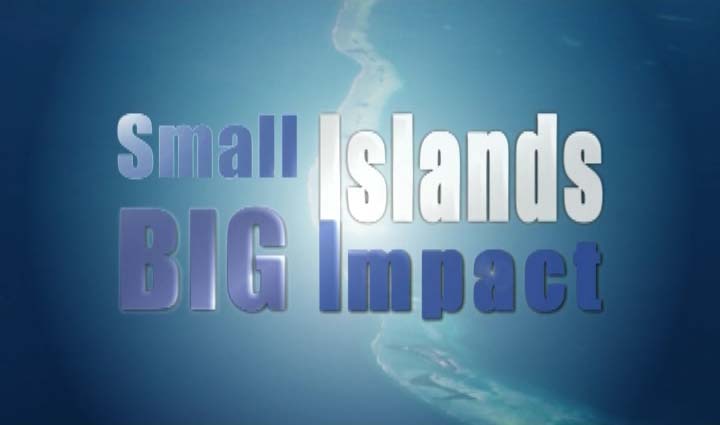
Some films, like certain books, are in the making for years or decades. My latest film, Small Islands, Big Impact, just released online by TVE Asia Pacific, is quite short: slightly under 6 minutes long. But it has been forming in my mind for the past 20 years.
As a science journalist, I have been covering its story since 1989: how the Indian Ocean archipelago of the Maldives – Asia’s smallest country by area and population – is on the ‘frontline’ of climate change impact.
The Maldives packs 325,000 people into a combined land area just under 300 square kilometres spread over 1,192 islands and islets. With an average ground level of 1.5 metres (5 feet) above sea level, it is also the lowest country on the planet. When I first visited the Maldives in late 1988, they were still recovering from a massive storm surge in 1987. Although the damage was limited, the experience showed how vulnerable the Maldives can be to even a small rise in sea levels – this prompted the then President Maumoon Abdul Gayoom to take up the issue internationally. (It was President Gayoom who took up climate crusading at statesman level, well before Al Gore turned up on the scene.)
Interestingly, my first encounter with President Gayoom had nothing to do with climate – it concerned a celestial phenomenon: the Maldives was witnessing an annual solar eclipse and the President wanted to observe it in the company of amateur astronomers from their nearest neighbour, Sri Lanka. So he invited a couple of us over (I was active in the Young Astronomers’ Association of Sri Lanka at the time.)
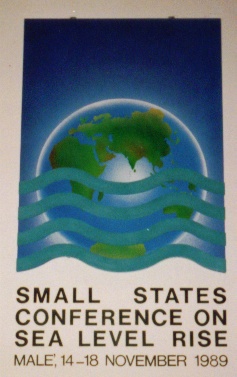
I returned to the Maldives in November 1989, that time as a member of the international media covering the first ever small states conference on sea level rise. Held at the Kurumba island resort, it was one of the earliest international gatherings on climate impacts on low lying states, a topic that was to gain public interest and momentum in the years to come. Among the participants were delegates from practically all the small states in different parts of the world (defined as those with less than 1 million population), and scientists from disciplines such as oceanography, climatology, meteorology and geology.
This was one of the first international scientific events that I covered as an eager young science journalist. I was a foreign correspondent for Asia Technology, a monthly magazine on Asian science and technology published from Hong Kong (now defunct), and freelancing for The Island daily newspaper in Sri Lanka. (There’s nothing online from that coverage as it was in the pre-web era!)
The conference had technical sessions where experts debated scenarios and implications, and a political segment where delegations made their official statements. In the end, they issued the Malé Declaration on Global Warming and Sea Level Rise, which urged for inter-governmental action on the issue.
Our Maldivian hosts knew that scientists and officials alone couldn’t send out a powerful message to the world on what climate change meant for low lying islands of the world – many of them mere specks on the world map, barely registering in media’s radar. So on the last day of the conference, we were taken to the Maldivian capital of Malé, where a demonstration and public rally were held by school children and ordinary people.
That turned out to be the most striking moment of the whole week. I had been listening to experts and officials talk about impacts, scenarios and mitigation measures for several days, on which I’d filed several stories. But unless I go back to my personal archives, I can no longer remember those details. My lingering memories of this event are in a few photos I took, showing school children telling delegates – and the world – what it means to be living on the front lines of climate change impact.
After 1989, I visited the Maldives on a couple of occasions for professional purposes during the 1990s. After I started working with TVE Asia Pacific in 1996, I was keen to return to the story of the Maldives and climate change – this time, in moving images – but I never had the chance until this year.
But I was covering the bigger story of climate change and its impact on the Asia Pacific from other locations. For example, in 2002, I commissioned and executive produced Voices from the Waves, the first-ever documentary on climate change in the South Pacific made by a native Pacific islander. Directed by Fijian film-maker Bernadette Masianini, the story revolved around two teenagers growing up on Fiji and Kiribati, each facing an uncertain future because of climate change.
In November 2007, the Maldives once again hosted representatives from small island states to discuss climate change. Eighteen years after the original meeting, the subject was no longer a fringe concern; it was now on everybody’s agenda. The meeting urged the the human dimension of global climate change to be included in the agenda of UN Climate Change Summit in Bali (December 2007), and sought the international community’s commitment “to protect people, planet and prosperity by taking urgent action to stabilize the global climate change”.
This time, the Male’ Declaration on the Human Dimension of Global Climate Change called for the UN High Commissioner for Human Rights to assess the human rights implications of climate change and “to conduct a study into the effects of climate change on the full enjoyment of human rights”. It also requested the UN Human Rights Council to convene a debate on human rights and climate change.
I wasn’t present at the 2007 meeting, but followed the process online. While climate change emerged as a major global concern, political change and reforms were underway in the Maldives. The country moved to a multi-party democracy, and in November 2008, the Maldivian Democratic Party‘s candidate Mohamed Nasheed won the presidential election.
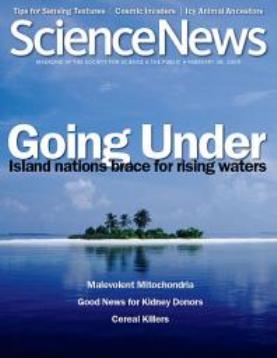
Science News cover - 28 Feb 2009President Nasheed continues the climate advocacy that President Gayoom had sustained for nearly a quarter of a century. President Nasheed has emerged as an outspoken and pragmatic voice speaking on behalf of his and other small island states, grouped under the Alliance of Small Island States (AOSIS).
In early 2009, President Nasheed announced that the Maldives would become the world’s first fully carbon-neutral nation within a decade. To accomplish this, they would vigorously pursue renewable energies and green energy sources to replace current dependence on fossil fuels.
The final inspiration for Small Islands, Big Impact came in February 2009, when Science News magazine in the United States carried a cover feature on the challenges faced by Kiribati and the Maldives because of climate change. Written by senior science writer Cristine Russell, the article noted: “The Maldives and Kiribati highlight a hidden challenge for coping with climate change. It’s not just about slowing the emissions of greenhouse gases. It’s also about figuring out what to do for localities threatened with the possibility of extinction from rising ocean waters.”
My original plan was to film interviews with President Anote Tong of Kiribati, and President Nasheed. While sharing the same overall concerns, the two leaders (and their governments) have adopted somewhat different responses to the challenges posed by climate change. Unfortunately, the interview with President Tong did not come through in time, even though I had a Kiribati TV crew standing by to film it. So I decided to go ahead with the film focusing solely on the Maldives.
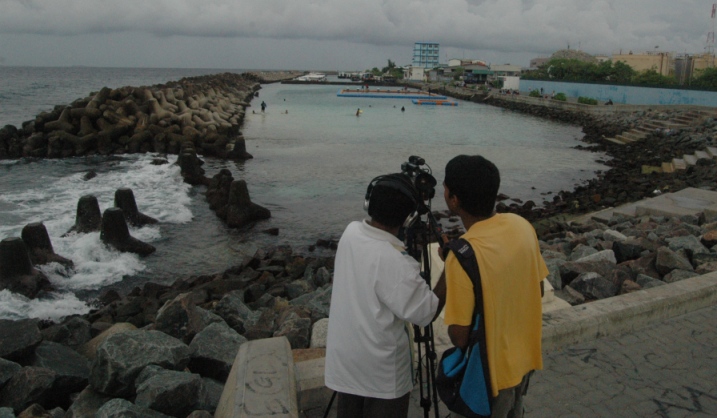
Location filming in Male - Hussein Makzoom (left) and Ibrahim Yasir As with all TVEAP films, I was keen to make it with a local crew. Mariam Niuma, an engaging young Maldivian woman who had worked for nearly two years with us as an intern, helped me find a very capable crew in Ibrahim Yasir and his colleague Hussein Makzoom.
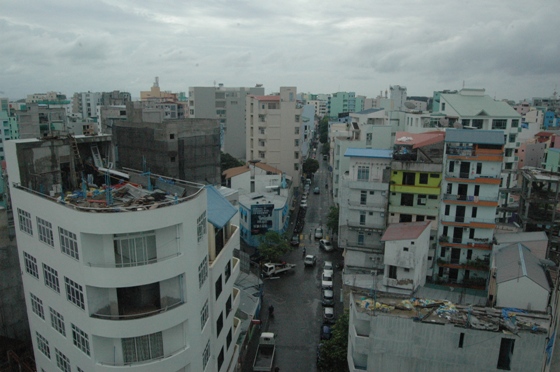
Niuma had been urging us to make a film about her country and was delighted that we were finally able to take it up. She helped us in numerous ways with local knowledge, introductions and advice. She also took time off her work with a local charity to show me around the Male’ island – which I was returning after a dozen years, in which time it had changed almost beyond recognition. (Male’ is one of the most crowded places on Earth – every one in four Maldivians lives on the tiny capital island.)
Small Islands, Big Impact was filmed on location over a few days in late August in Male’ and the nearby island of Vilingili. Our tiny production budget didn’t allow us to spend longer or venture further into the more remote islands and atolls (coral island formations, 26 of which make up the Maldives).
Overcrowded Malé, capital of the MaldivesThe timing wasn’t ideal either – the Monsoon was still active, and rain often interrupted our filming. There was some irony that a climate film was being shot in inclement weather. Sometimes we filmed in spite of the rain – one ferry ride we took from Male’ to Vilingili island had to cross very choppy seas that made me (a land lubber!) quite nervous. For our Maldivian crew, however, it was all in a day’s work…
President Nasheed’s media team had been quick and supportive in accommodating our interview request, but when actually filming it, we faced an unexpected challenge which I’ve described in an earlier blog post. (Clue: In addition to inclement weather, we had to deal with a nasty influenza virus). With the month-long Ramadan fast period about to begin, which would significantly affect the pace of work in the 100% islamic Maldives, we had no choice but to persist with our filming, improvising as we went along.
I returned to Colombo with five camera tapes rich in footage, one of which contained a 15-minute interview with the amiable and technocratic President Nasheed. Over the next few weeks, I worked with our editor Umesha Fernando in distilling this material into a short, compact film less than six minutes. It took a good deal of time and effort — especially since I chose not to have any narration and to let President Nasheed tell the story in his own voice, interspersed with text-supported transitions.
Because of this style, soundtrack mattered a great deal, and we agonised over custom-composing the music. As I put everything this together, I kept recalling the wise words of senior Australian film-maker Bruce Moir: “Film is a lousy medium to communicate information. It works best at the emotional level.”
I can’t judge my own film, but I have tried hard to strike a balance between its intellectual and emotional appeal. My team and I set out to tell a compelling story about a country on the frontlines of climate impact. No less a person than its dynamic head of state stars in our modest effort, made on an incredibly tiny budget.
Note: Small Islands, Big Impact was produced on an editorially independent basis by TVE Asia Pacific in collaboration with COM+ Alliance of Communicators for Sustainable Development. As with all other TVEAP productions, this series comes without license fees, where only copying and dispatch costs are payable. To order broadcast master tapes, please contact:
It may also be ordered in high resolution on DVD (without regional coding) from TVEAP’s e-shop.
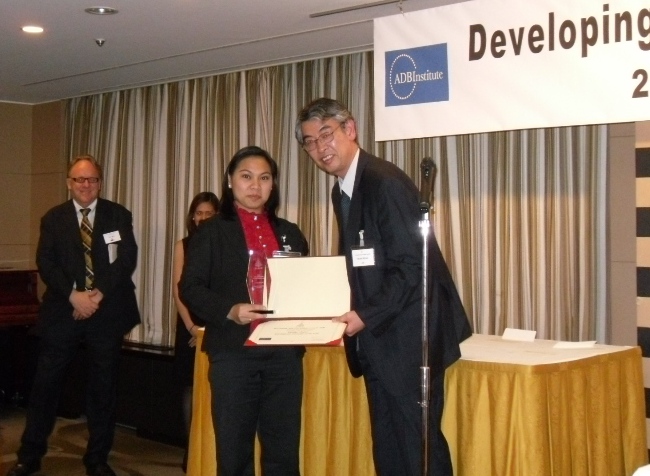
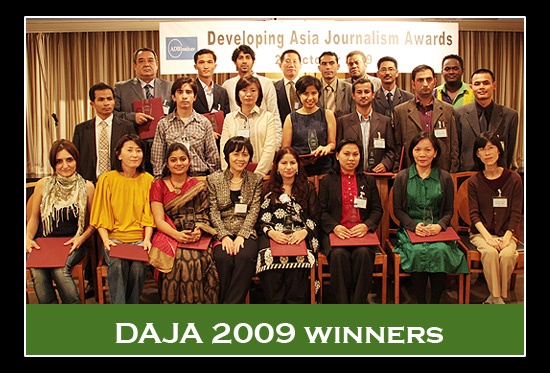
“We are all winners,” said Imelda at the Awards ceremony organized by the Asian Development Bank Institute (ADBI) at the Foreign Correspondents’ Club of Japan. “We should continue writing compelling stories to make a difference.”
Imelda Abano, whom I have known and admired for several years, won one of two special awards for her story titled “Scorched Earth”, published on 19 May 2009, in the Business Mirror newspaper in the Philippines.
“Among all the articles, the judges were very impressed with the way Abaño’s article presented the
complex issues on climate change. It was a comprehensive and extra-ordinary piece that was made simple for the readers to understand,” said Monzurul Huq, one of the four judges and the president of the Foreign Correspondents’ Club of Japan.
“We judges were each very impressed by the overall high quality of entries for this year. The awards were meant to recognize the efforts made by Asian and Pacific journalists who provide high-quality coverage of issues affecting growth and development in developing countries,” said Anthony Rowley, presiding judge of the 2009 ADBI awards.
Imelda Abano was honored last year by the United Nations as the Gold Prize Winner for excellence in reporting on humanitarian and development affairs. She was also this year’s recipient of the 10 Young Leaders Award in the Philippines given out by the Philippines Graphic magazine for her reporting on development and environmental issues. In 2002, she won the Asian category of the Global Awards on Environmental Reporting organized by Reuters and IUCN.
The Developing Asia Journalism Awards (DAJA) scheme was launched in 2004 by the Asian Development Bank Institute in Tokyo, for journalists covering development issues in the Asia Pacific. It received around 200 entries this year, of which 22 journalists from 17 ADB developing nations were selected as finalists.
Supriya Khandekar from India won Young Development Journalist of the Year Award. Other winners are Sithav An from Cambodia for the Poverty Impact of the Global Financial Crisis category, Raknish Wijewardene from Sri Lanka for the Government Responses to the Global Financial Crisis category, Zhu Yan from China for the Infrastructure Development category and Moffat Ghala Mamu from the Solomon Islands for the Climate Change Adaptation category. Full list of winners
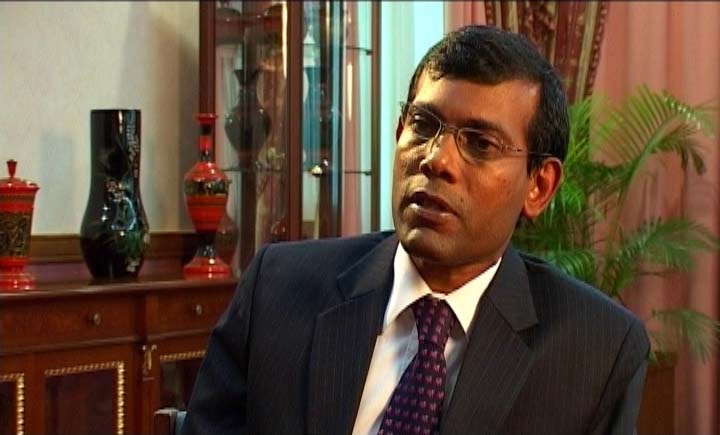
President Mohamed Nasheed: Stop pointing fingers!
It had taken many days to set up the interview, but in the end we got only 15 minutes of the promised 30. President Mohamed Nasheed turned up more than an hour late, lagging behind in his day’s schedule. While waiting, his staff had repeatedly asked me to cut down the interview as the President was already late for a state function. I had nodded half-heartedly.
President Nasheed (known among his people as ‘Anni’) walked in, beaming and apologising for keeping us waiting for over a day. We had set up our lights and video camera the previous day, only to find that the President had cancelled all his appointments that day to be with his young daughter hospitalised with the ‘flu. As a father myself, I could fully understand – even if it affected our filming plans.
I introduced myself and crew, and asked how his sick daughter was doing. She is not in any danger, he said, and should be home soon. That was a relief.
I ushered President Nasheed to the simple chair we’d chosen for him to occupy during our interview, being filmed in the stately room where the President normally receives high level state guests. As the crew pinned up the mic and adjusted the lights, I quickly explained who we were, and what the interview was for – a short film that would be globally distributed highlighting the vulnerability of his island nation to climate change impact.
There was not an air of pomposity around him. He exchanged a few words in Divehi with my Maldivian film crew – Ibrahim Yasir and Hussein Makzoom. As I would soon find out in the interview, he was also very well informed, articulate and passionate. (I remembered interviewing former President Maomoon Abdul Gayoom nearly 20 years ago when I covered the Small States Conference on Sea Level Rise he convened in Nov 1989. Gayoom was expressive in his own way but had an air of scholarly superiority about him.)
In the 15 minutes that we had, I asked a total of 10 questions. I had sent in advance a baker’s dozen questions to his media staff. I don’t know if they briefed him, but clearly President Nasheed was in his element. He didn’t have any notes, and yet answered my questions perceptively, genuinely and always eagerly. The one-time journalist and human rights activist was very media savvy.
He must have been asked some or most of these questions many times before. Yet with each answer, he found his comfort levels with me and by about the fifth minute, we were nicely chatting along. I had to keep reminding myself that I was really talking to one of Asia’s youngest heads of state. At that moment, he sounded every bit a chatty technocrat.
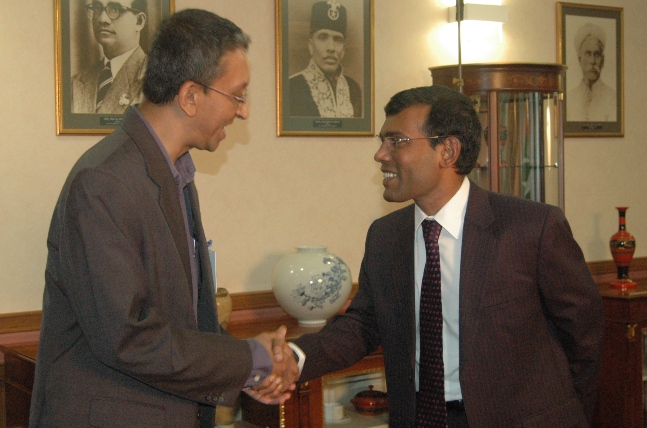
Nalaka Gunawardene (left) with President Mohamed Nasheed of the Maldives
President Nasheed had lot to say, and knew just how to say it. I had prepared for days, reading his recent speeches and op ed essays. I had figured out what to ask to elicit the kind of answers I was hoping for. He didn’t disappoint me. If his staff had not interrupted our interview, we could have easily gone on for half an hour or longer.
But I knew he had already given good ‘soundbites’ that we could excerpt in a short film. For example, how many heads of state would engage in plain talk like this when asked for his core message to the upcoming climate summit in Copenhagen: “In a nutshell, I’d like to say what has already been said: ‘Don’t be stupid!’. Going on and on about who did it is not going to save us. This is the time to realise that the deed is done. So let’s see how we may be able to proceed from here…”
Earlier in the interview, he sounded grave when he outlined the prospects for his nation, the lowest-lying country on the planet, now on the frontline of climate change impact. “We will die if this goes on, and therefore, we have a fundamental right for life. If that is challenged, we have to link it be a human rights issue, and not just an environmental issue.”
The next minute, his tone became more resolute when talking on coping with massive changes already unfolding as a result of global warming. He stressed the value of democracy, good governance and people’s right to information as vital elements in adaptation – the difficult task of living with climate change.
Responding to my questions, President Nasheed talked about plans to make the Maldives carbon-neutral within a decade, and said the ‘sovereign wealth fund’ he announced soon after his election was already saving money “so that we will have something when the going gets very bad….”.
Sinking slowly in the East?We also wanted to film President Nasheed at work, to establish him as an engaged political leader – the first democratically elected President of the Indian Ocean archipelago of 325,000 people. But there was no time. We then hoped to film his daily walk home after work. But the rain and delayed schedule meant he went home by car – and after dark. So we had to rely on stock footage instead.
The mix of democrat and technocrat in President Nasheed makes him an extraordinary personality and the world is taking note. The New York Times Magazine did a full length profile in May 2009 with the title ‘Wanted: A New Home for My Country’. A Hollywood film company is currently tracking the President as he travels the world, calling for urgent climate action that goes beyond mere words. (In fact, with my consent, they filmed me filming the President.)
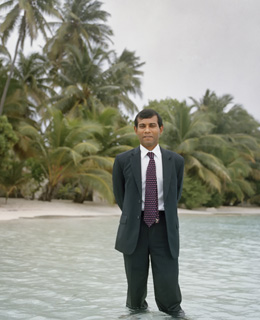
A month after my interview, TIME Magazine named him an Environmental Hero of 2009 – the only serving head of state so honoured this year. I was delighted to see this, but TIME’s chosen photograph made me very jealous. I had dearly wanted to shoot our interview outdoors, but a combination of bad weather and presidential schedule ruled that out. Evidently, TIME photographer Chiara Goia had better luck: President in full business suit standing about a foot deep in the calm, azure waters of the Maldives.
The same waters that he and his team are trying desperately hard to keep at bay, for as long as possible.
Nearly 4,000 events are planned in more than 160 countries for the International Day of Climate Action on 24 October 2009 — the most widespread day of political action in history.
It’s a call to action by the 350.org campaign: “On 24 October, we will stand together as one planet and call for a fair global climate treaty. United by a common call to action, we’ll make it clear: the world needs an international plan that meets the latest science and gets us back to safety.”
“Environmental journalism would be a whole lot better if it had more of the three Ss: science, substance and (good) stories. First and last, it has to be good journalism, and that requires accuracy, balance and credibility. Trying to save the world – as some environmental journalists claim to do – does not give them a license to indulge in sloppy journalism, or to peddle conspiracy theories or half-truths.”
This has been my view on environmental journalism for sometime. Several years ago, my good friend (and former editor, The Times of India) Darryl D’Monte quoted me as saying this in UNEP’s Our Planet magazine while surveying the environmental coverage in the media in developing countries.
I reiterated these views today in a talk given to an international group of environmental journalists. The occasion was the 18th APFEJ Congress of Environmental Journalists being held in Colombo, Sri Lanka, from 19 to 21 October 2009.
My topic was a familiar one: Changing climate and moving images. I used it as a spring board from which to explore some broader issues that concerns every journalist who cares for life on Earth.
I returned to the time-honoured core values of good journalism – Accuracy, Balance and Credibility – and suggested we need one more letter, E – for Empathy. Without this latter attribute, our reportage and analysis would remain clinically cold while the planet warms up, I cautioned.
I also reflected on what it means to be an ‘environmental journalist’ in our troubled times.
For several years, I proudly called myself an ‘environmental journalist’. But I now question whether the growth of environmental journalism as a media specialisation has, inadvertently, ghettoised environmental issues within the editorial considerations of media organisations.
This is not to argue against media professionals specialising in environment or other development sectors such as health, gender or human rights. As issues become more complicated, journalists require sufficient background knowledge, sustained interest and some specialisation to do their job well. But it’s poor strategy to leave sustainable development issues entirely in the hands of ‘environmental journalists’.
At best, they can only weave part of the much-nuanced, multi-faceted tapestry of sustainable development. To grasp that bigger picture, and to communicate it well, we need the informed and active participation of the entire media industry -– from reporters, feature writers and producers to editors, managers and media owners.
Climate change, rapidly emerging as the charismatic mega-issue of our troubled times, could become a rallying call to unify the media and communication industries for this purpose.
In this scenario, we urgently need more good journalism that covers sustainable development concerns as an integral part of the mainstream of human affairs. Noble intentions of saving endangered species or ecosystems do not give anyone the license to engage in shoddy journalism.
The pursuit of plain good journalism will make us:
• rigorous in our field investigations and amassing of facts;
• balanced in our analysis of issues, impacts, choices and alternatives;
• committed to staying with evolving, fast-moving stories; and
• adaptable to accommodating new perspectives and knowledge.
It will also give us the courage of our convictions to question conventional ‘wisdom’, challenge established notions and take unfashionable positions when we have to. April 2007 blog post: Can journalists save the planet?
Kathmandu to Copenhagen - in three minutes?The trend to make ever shorter films has been fuelled by the growth of online video, where the dominant value seems to be: less is certainly more! This is the premise, for example, of the current competition One Minute to Save the World.
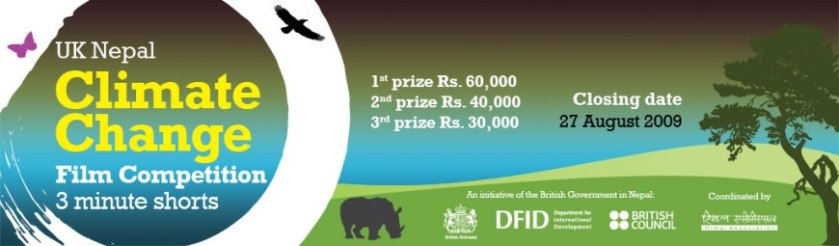
In Nepal, they were more generous — and allowed three minutes. I recently came across the winners of the UK Nepal Climate Change Film Competition, where Nepali film makers were invited to “make short, effective films of up to 3 minutes on the theme of Climate Change”. The submitted films had to be original in concept, innovative and highly motivational – no restrictions were set in terms of discipline or genre. It was organised by our friends at Himal Association, better known for sustaining Film South Asia festival for a decade.
The winning film, Act locally think globally, was directed by Santoshi Nepal and Ishu Lama:
First runner-up, Jeopardy, is an animation directed by Shiva Sharan Koirala:
Second runner-up, 3 Cs of Climate Change, directed by Binod K Dhami and Padam Raj Paneru:
The competition attracted an impressive 124 entries. Angelo D’Silva, an educationist and media critic in Kathmandu, recently reviewed the entries in Himal Southasian special issue on climate change. He wrote: “In cash-strapped times, these contests focusing on climate change prove to be a cost-effective strategy in generating content. With no funding directed to the filmmaker for production, and prize money amounting to NPR 130,000 (USD 1700) for the three winners, the climate-change film contest is a way to make a splash on the cheap.”
He added: “While the filmmakers, all of whom were Nepali, exhibited an impressive range and quality, it was a range obscured by the selection of some fairly typical public-service-announcement-type finalists. Hopefully, however, two sets among the entries will soon see the light of day: those documenting the effects of climate change on Nepali communities, and those exploring (and exploiting) anxieties and fears about the burgeoning climate crisis.”
Read full review here.
I have only seen the three winning entries that are available online, so it would be unfair to comment on other entries. But I found the three winners predictably text-bookish. For sure, simple awareness raising is always helpful, but much more is needed – and urgently so – to deal with climate change. Film can be a powerful force for changing lifestyles, and not all of them have to be feature film length in Al Gore style.
Copyright infringement – or piracy – in video, film and software is a highly contentious issue. I have good friends on both sides of the divide: film maker friends who insist on protecting all their rights to their creations, and open source advocates who want everything to be free and accessible in the public domain.
I can appreciate both points of view, but my own attitude to anyone copying any video films I have helped make or am distributing is: just sit back and enjoy it! After all, the kind of films I make and/or distribute through TVE Asia Pacific are all issue-based and in the public interest. If anyone pirates them, that can only peddle our content and messages to more people…
It’s a pragmatic response to a reality that I can do little to change anyway. Five of the world’s top 10 countries for video piracy are found in the Asia Pacific region, with China at No 2 and India at No 5. If you can’t beat ’em, cheer ’em — and even join ’em!
That’s just what I did in mid 1996, when we received first reports of a Chinese TV presenter making unauthorised use of environmental programming being broadcast on BBC World, the global TV channel. I was then the head of Asia Pacific programme for the non-profit foundation producing Earth Report series, which first aired on BBC and then offered to other TV channels and networks around the world.
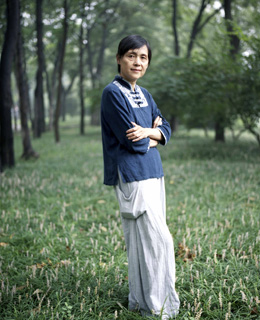
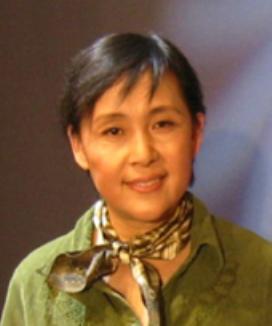
Further investigations revealed that the person involved was a woman named Sheri (Xiaoyi) Liao, a former researcher at the Chinese Academy of Social Sciences who had formed an environmental group called Global Village of Bejing, and was presenting a weekly TV show called ‘Time for Environment’. To bring environmental news and views from other parts of the world, she was using Chinese dubbed extracts of Earth Reports recorded straight off the BBC World satellite channel.
By happy coincidence, I was visiting Beijing – for the first time – for a few days in October 1996, to participate in an international conference of rocket scientists (not my usual orbit, but fortuitous in this instance!). I managed to contact Sheri Liao, and one evening I escaped from the conference to meet this woman who was fast becoming the environmental face of Chinese television.
L to R Dr Li Hao, Nalaka Gunawardene & Sheri Liao, Beijing Oct 1996 Sheri Liao came to meet me with Dr Li Hao, a Chinese biologist who had recently returned from Germany and teamed up with Global Village in its quest to raise environmental awareness in China.
In a long chat over drinks and dinner, I found out Sheri had been a visiting scholar on International Environmental Politics at the University of North Carolina, but returned to her homeland to found the Global Village of Beijing earlier that year. She was keen to introduce responsible environmental conduct by Chinese citizens at every level. And early on, she realised the massive power of broadcast television to reach China’s one billion plus people. She approached her work with an obsession bordering on missionary zeal: in that process, she was even willing to ‘pirate’ foreign TV content – all for a good cause.
Soon after that encounter, I negotiated for Sheri Liao to make authorised use of Earth Report films in China. Instead of catching it off the airwaves, she soon started receiving proper master tapes and scripts, so a more professional versioning into Chinese could be done. My then British colleagues, who were initially peeved that a Chinese woman was pirating their programmes, soon became her ardent supporters.
That was also the beginning of many years of my engagement with environmental education and communication work in China. (Li Hao later left Global Village to establish her own non-profit, Beijing Earthview Environment Education and Research Centre).
Sheri Liao: Greening the Airwaves of China...Chronicling her close association with China’s rising levels of environmental awareness and activism, TIME noted: “Liao was helped by the fact that the birth of GVB coincided with China’s economic takeoff in the mid-’90s. The group became active in Beijing neighborhoods, raising environmental awareness on the local level. But in recent years it has expanded its work across the country, and it is now involved in everything from promoting plastic-recycling to encouraging building managers to reduce electricity consumption.”
Our paths have crossed a few times since that first meeting in the Fall of 1996. We have been in workshops and conferences together, where I saw Sheri in action – always intense, with a sense of urgency and resolve.
She has been recognised before. In 2002, she was awarded one of the ‘Ten Outstanding Women in China’ by the magazine Chinese Women. She was also honored as the ‘Green Guide’ by China National Planting Tree Committee in 2003 and became one of the ‘Ten National Outstanding Women’ in 2004. In 2005, she won the ‘Annual Economic Figure Social Commonwealth Award’ by China Central Television (CCTV). In 2006, she was honored Green Chinese Annual Figure.
Sheri also continues to be an unofficial bridge between China and the rest of the world. She works with UN agencies, foreign universities and charities like the Clinton Global Initiative – which honoured her with one of its Global Citizen Awards 2008.
China’s road to environmental salvation is a long and hard one. As TIME noted, “Environmental groups continue to run afoul of the Chinese government, which is wary of any power not concentrated in the hands of the Communist Party. But Liao is well connected — she served as an environmental adviser on the Beijing Organizing Committee for the 2008 Olympic Games — and in China’s tricky political landscape, those who walk a prudent line often travel furthest.”



 “We’re delighted Tinker Bell has agreed to be our Honorary Ambassador of Green,” said Kiyo Akasaka, Under-Secretary-General for Communications and Public Information. “This beloved animated character can help us inspire kids and their parents to nurture nature and do what they can to take care of the environment.”
 I returned to the Maldives in November 1989, that time as a member of the international media covering the first ever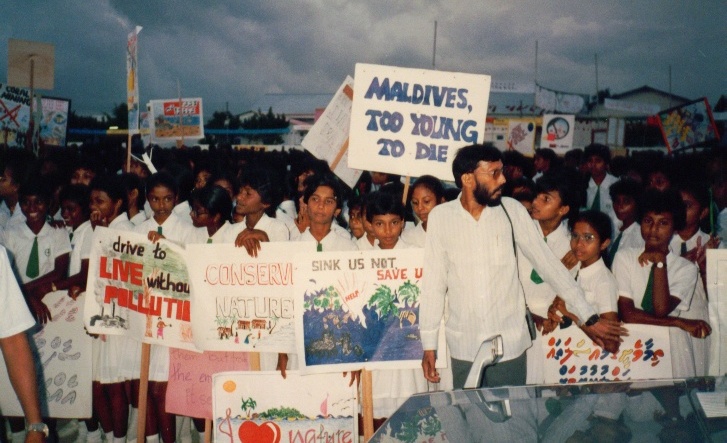



 Open Minds!