Not in my backyard: The last urban oasis under siege

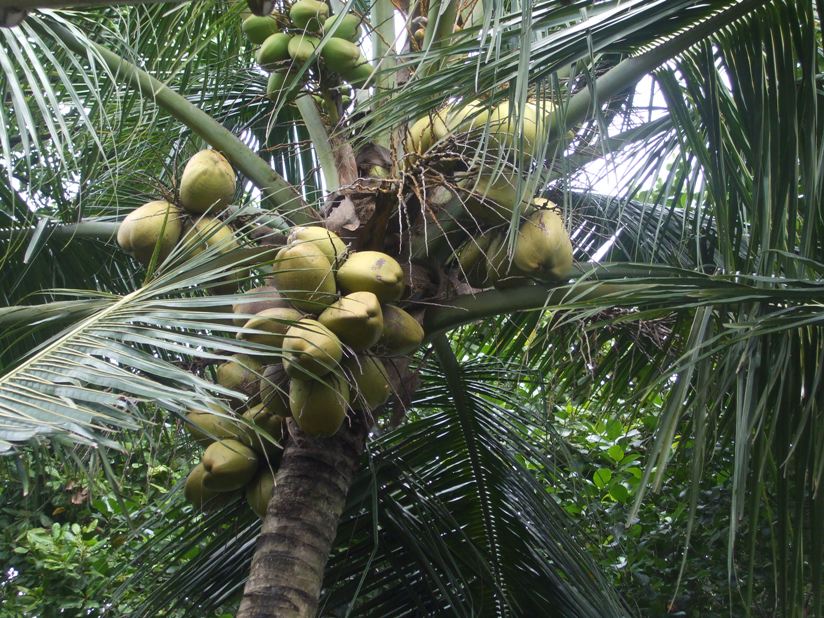
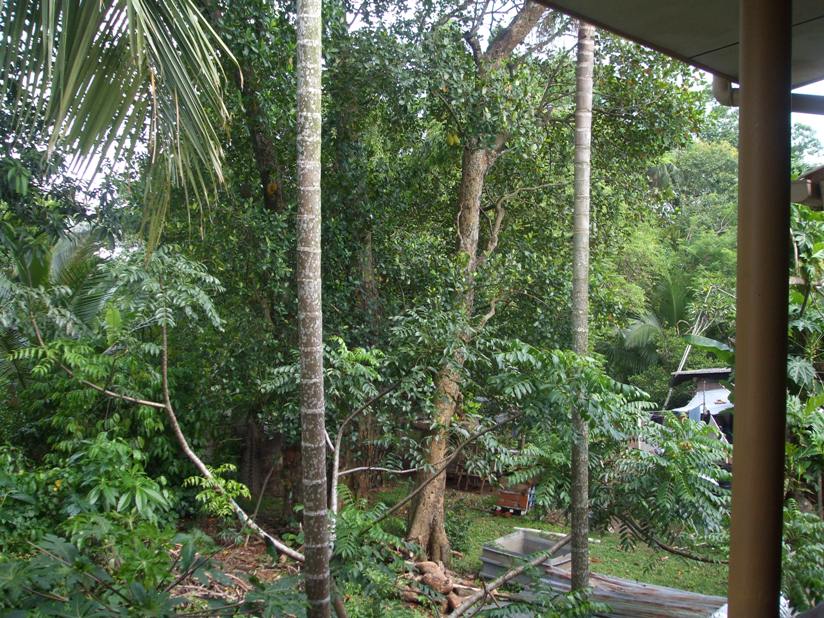
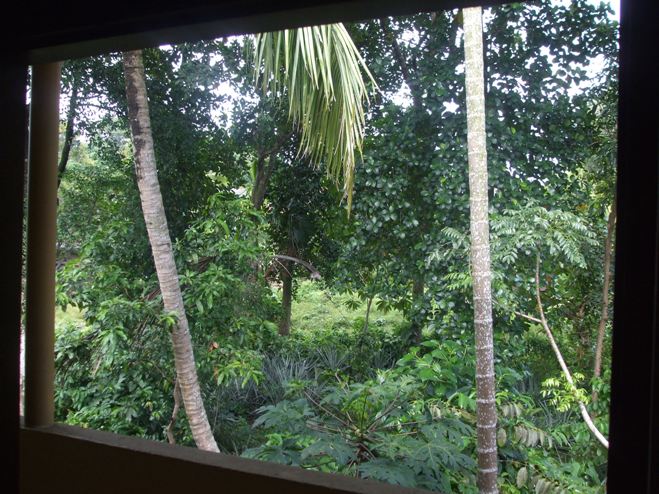
This is a view of what I see when I look out from the upstair back balcony of my home. And I’m so privileged to have this much of greenery in my backyard.

I live in Pagoda, Nugegoda, a suburb of Sri Lanka’s capital Colombo. This is a crowded, urbanised area, but there still are a few pockets of greenery left. Like this one, that I clicked with my daughter Dhara’s camera on June 5, World Environment Day.

All this greenery is packed into an area no more than a few hundred square metres in extent – it’s really small. But at the same time, it has a concentration of larger trees like coconut, jak fruit and arecanut as well as a good deal of shrubs and undergrowth. And it attracts creatures who are looking for an oasis in a neighbourhood that is increasingly built up.

Last Christmas, I gifted a small, inexpensive digital camera to Dhara, who just turned 12. She has been having lots of fun in the past few months, shooting people and what little of Nature that she can find in our corner of suburbia.

It’s no rainforest for sure, but she’s captured images of several species of birds, snails, a lone monkey and even a couple of rabbits (Okay – these are being raised by a neighbour and aren’t exactly in the wild! But 30 years ago, we did find rabits in the wild in this same area…)

But this level of biodiversity might not last too long. In recent weeks, the little patch of suburban jungle in my backyard has come under siege. Apparently a change of ownership has taken place, and the new owners are drawing up plans to clear the land and build one or more houses. Already, some of the larger trees have been felled (they didn’t seem to value the timber either – they just chopped the trees and carried them away – for dumping?).

So in the near future, as the march of ‘progress’ claims yet another bit of unbuilt land, these photos may be all we are left with.

By happy coincidence, the same week my friend and eminent scientist Ray Wijewardene emailed me this poem which I first read many years ago. I’m very grateful to Ray for sharing this in the same week that I was lamenting the imminent demise of my wonderfully green backyard.

TREES…
A poem by Joyce Kilmer

I think that I shall never see
A poem lovely as a tree

A tree whose hungry mouth is pressed
Against the earths sweet flowing breast

A tree that looks art God all day,
And lifts her leafy arms to pray.

A tree that may in summer wear
A nest of robins in her hair;

Upon whose bosom snow has lain;
Who intimately lives with rain.

Poems are made by fools like me,
But only God can make a tree.


Photos by Dhara and Nalaka Gunawardene

Adrees Latif wins Pulitzer: Captured a shot heard around the world

Photo courtesy Reuters

A wounded Japanese photographer, Kenji Nagai, lay before a Burmese soldier yesterday in Yangon, Myanmar, as troops attacked protesters. Mr. Nagai later died. Published 28 September 2007 (Adrees Latif, Reuters)

This dramatic photograph, one of the harrowing and yet enduring images of 2007, has just won its photographer a Pulitzer Prize, announced in New York on 7 April 2008.

Ironically, the last defiant act of one courageous photojournalist has landed one of journalism’s most prestigious awards for another of his kind. Adrees Latif, a Pakistan-born American, had concealed his identity by blending in with the crowd in Rangoon/Yangon, and captured Nagai’s killing on film.

Read my 30 Sep 2007 post: Kenji Nagai (1957-2007): Filming to the last moment

Here’s the official citation from Pulitzer jury:

For a distinguished example of breaking news photography in black and white or color, which may consist of a photograph or photographs, a sequence or an album, in print or online or both, Ten thousand dollars ($10,000).

Awarded to Adrees Latif of Reuters for his dramatic photograph of a Japanese videographer, sprawled on the pavement, fatally wounded during a street demonstration in Myanmar.

Adrees Latif, addressing meeting in Japan March 2008

Born in Lahore, Pakistan on July 21, 1973, Adrees Latif lived in Saudi Arabia before immigrating with his family to Texas in 1980. Latif worked as a staff photographer for The Houston Post from 1993 to 1996 before joining Reuters. Latif graduated from the University of Houston in 1999 with a Bachelor of Arts in Journalism. Latif has worked for Reuters in Houston, Los Angeles before moving to Bangkok in 2003 where he covers news across Asia.

Latif’s collection of photos from his days in Burma, “Myanmar Marooned,” recently won an award given by the prestigious Japanese photographic magazine Days Japan.

Reuters blog: Latif tells the story behind the Pulitzer photo

Japan Times, 11 March 2008: Witness recalls the day of Nagai shooting

Remembering Dith Pran, photojournalist – A ‘Pineapple’ in ‘The Killing Field’

Courtesy The New York Times

“You have to be a pineapple. You have to have a hundred eyes.”

That’s how Dith Pran, the Cambodian journalist and photographer who survived the Khmer Rouge’s genocide, summed up the challenge of a photojournalist.

Dith, who died on March 30 in New Jersey, USA, had both the talent and tenacity for his chosen profession. His experience as an interpreter for The New York Times, for which he later worked as a photographer after migrating to the US, and his ordeal surviving the Khmer Rouge became the basis of the Hollywood movie The Killing Fields (1984).

Watch the trailer for The Killing Fields here:

Here’s Dith’s story as summed up in his Wikipedia entry:
In 1975, Pran and New York Times reporter Sydney Schanberg stayed behind in Cambodia to cover the fall of the capital Phnom Penh to the communist Khmer Rouge forces. Schanberg and other foreign reporters were allowed to leave, but Pran was not permitted to leave the country. When Cambodians were forced to work in forced labor camps, Pran had to endure four years of starvation and torture before finally escaping to Thailand in 1979. He coined the phrase “killing fields” to refer to the clusters of corpses and skeletal remains of victims he encountered during his 40-mile escape. His three brothers were killed back in Cambodia.

“I’m a very lucky man to have had Pran as my reporting partner and even luckier that we came to call each other brother,” Schanberg was quoted in the New York Times tribute to Dith Pran. “His mission with me in Cambodia was to tell the world what suffering his people were going through in a war that was never necessary. It became my mission too. My reporting could not have been done without him.”

In another tribute to Dith, the executive editor of the New York Times, Bill Keller, said: “To all of us who have worked as foreign reporters in frightening places, Pran reminds us of a special category of journalistic heroism — the local partner, the stringer, the interpreter, the driver, the fixer, who knows the ropes, who makes your work possible, who often becomes your friend, who may save your life, who shares little of the glory, and who risks so much more than you do.”

This is a highly significant statement, coming from a major media house of the western world. Acknowledging – let alone celebrating – the contributions of unsung local counterparts is not yet a routine practice among many western media professionals covering the global South. More often then not, the fixers are used, paid and dismissed. They are lucky to get proper credit. And if things go wrong, the western media companies would bring in top lawyers and diplomatic pressures to get their own out of trouble; never mind what happens to the locals who are part of that same team.

Something like this happened to a Bangladeshi journalist friend Saleem Samad in November 2002. He was working with a TV crew from the UK’s Channel 4 doing an investigative documentary on the state of Bangladesh, when the whole crew was arrested (we won’t go into the rights and wrongs of their conduct here). I later heard from Saleem and other Bangladeshi friends how Channel 4’s main concern had been to get the British and Italian members of the crew out of jail and out of Bangladesh. Saleem’s fate was a secondary concern. Read ‘A Prisoner’s Tale’ by Saleem Samad in Time, 4 Feb 2003

Even after being released, Saleem Samad was hounded and harassed in his native country that he went into exile in Canada. Read his profile here, and connect to his blog.

This scenario keeps repeating with different names and in different southern locations all the time. In such a harsh, selfish world, Dith Pran was certainly fortunate to have worked with Sydney Schanberg who stood by and for his local colleague. When Schanberg returned to the US and was awarded a Pulitzer Prize for his reporting from Cambodia, he accepted it on behalf of Dith as well.

Schanberg continued to search for, and write about Dith in newspaper articles – one was in The New York Times Magazine, in a 1980 cover article titled “The Death and Life of Dith Pran., which later became a book by the same title in 1985. Dith’s story became the basis of The Killing Fields.

Haing Ngor, the Cambodian-American doctor who played Dith Pran in the movie, worked with Dith in real life to promote human rights in their native Cambodia and to prevent genocide everywhere. Ngor was shot dead in 1996 in Los Angeles.

As the New York Times noted, Dith’s greatest hope was to see leaders of the Khmer Rouge tried for war crimes against his native country; preparations for these trials are finally under way.

Courtesy The New York Times
A 1974 photo by Mr. Dith of the wife and mother of a government soldier as they learned of the soldier’s death in combat southwest of Phnom Penh. (Photo: Dith Pran/The New York Times)

Courtesy The New York Times
In 1979, Mr. Dith escaped over the Thai border. He returned to Cambodia in the summer of 1989, at the invitation of Prime Minister Hun Sen. At left, Mr. Dith visited an old army outpost in Siem Riep where skulls of Khmer Rouge victims were kept. (Photo: Steve McCurry/Magnum)

Courtesy The New York Times
Mr. Dith joined The Times in 1980 as a staff photographer. He photographed people rallying in Newark in support of the rights of immigrants on Sept. 4, 2006. (Photo: Michael Nagle/Getty Images)

Watch Dith Pran speak on NYT Video Feature

All photos linked to from the New York Times online

When citizens turn on journalists…

My latest op ed essay has just been published by Asia Media website of the University of California Los Angeles.

It’s titled: When citizens turn on journalists
Nalaka Gunawardene describes the disturbing trend of vigilantism against professional and citizen journalists

Once again I talk about the multiple pressures and risks faced by mainstream and citizen journalists alike when they try to cover matters of public interest in my native Sri Lanka. This is particularly so for photojournalists and videographers who simply must go out with tools of their profession.

Here are the few opening paras:

Friday, February 29, 2008

Colombo — For over two decades, Sri Lanka’s state-owned radio and television stations — located next to each other in residential Colombo — have been heavily guarded by police and army. This fortress-like arrangement is due to their being high on the list of targets for Tamil Tigers engaged in a bitter separatist war for a quarter century.

The joke is that the stations are just as likely to be attacked by outraged listeners or viewers. Considering the endless state propaganda they dish out day and night, that’s not as far-fetched as it sounds.

But shooting the messenger never solves any problem, as Sri Lanka’s deeply divided combatants — and their die hard supporters — need to be constantly reminded. Attacks on journalists and media organisations have increased several fold in the past two years, and the World Association of Newspapers ranked Sri Lanka as the third deadliest place for journalists (six killed in 2007) — behind only Iraq and Somalia.

As if this was not depressing enough, we have seen another disturbing trend emerge: authorities and citizens alike turning on reporters and photojournalists in public places, suspecting them to be agents of mayhem and terror.

Read the full essay on UCLA Asia Media

Fighting for our right to ‘shoot’: A struggle in New York…and Colombo!

Courtesy AP

Photojournalists usually bear witness to unfolding events, and then share it with the rest of us. It’s not everyday that they make the news themselves.

This photojournalist, Gemunu Amarasinghe working for Associated Press in Sri Lanka, just did. Earlier this week, he was detained, questioned and released by police — all for taking photographs near a well-known Colombo school.

According to news reports, Gemunu was apprehended by a group of parents who formed the school’s civil defence committee. They had handed him over to soldiers on duty near by, and he was briefly detained by the Narahenpita police. Sri Lanka’s Free Media Movement has already protested to the police chief on this – the latest in a series of worrying incidents.

This might seem a minor incident in the context of highly dangerous conditions in which Sri Lankan journalists operate today. It was only a few days earlier that the World Association of Newspapers ranked Sri Lanka as the third deadliest place for journalists (6 killed in 2007), behind only Iraq and Somalia.

In an op ed essay published today on the citizen journalism website Groundviews, I have discussed the far reaching implications of this latest trend – when misguided citizens turn on professional or citizen journalists simply taking photos in public places. That’s still not illegal in Sri Lanka, where many liberties have been curtailed in the name of anti-terrorism.

Read my full essay: Endangered – Our Right to ‘Shoot’ in Public

As I write: “Gemunu’s experience is highly significant for two reasons. Firstly, it is depressing that some members of the public have resorted to challenging and apprehending journalists lawfully practising their profession which responds to the public’s right to know. Battered and traumatised by a quarter century of conflict, Sri Lankan society has become paranoid. Everything seems to be ‘high S’: practically every city corner a high security place; every unknown person deemed highly suspicious; and everybody, highly strung.

Courtesy Daily Mirror - Sri Lanka Cartoon from Daily Mirror, Sri Lanka

“Secondly, far from being an isolated incident, this seems to be part of a disturbing new trend. Anyone with a still or video camera in a public place is suspected – and presumed guilty until proven otherwise. This endangers everyone’s basic right to click for personal or professional purposes.”

I mention some examples of this cameraphobia. In recent months, pedestrians who filmed public bomb attacks on their mobile phones have been confronted by the police. One citizen who passed on such footage to an independent TV channel was later vilified as a ‘traitor’. Overly suspicious (or jealous?) neighbours called the police about a friend who was running his video editing business from home in suburban Colombo.

None of these individuals had broken any known law. Yet each one had to protest their innocence.

It may not be illegal, but it sure has become difficult and hazardous to use a camera in public in Sri Lanka today. Forget political demonstrations or bomb attacks that attract media attention. Covering even the most innocuous, mundane aspects of daily life can be misconstrued as a ‘security threat’.

I stress the point that, unlike journalists working in the mainstream media, citizen journalists lack trade unions or pressure groups to safeguard their interests. The citizen journalist in Sri Lanka is very much a loner — and very vulnerable.

And it’s not just in war-torn Sri Lanka that the right to take photos or film video is under siege. I cite a recent example from what is supposed to be a more liberal democracy: in the US, where New York city officials last year proposed new regulations that could have forced tourists taking snapshots in Times Square and filmmakers capturing street scenes to obtain permits and $1 million in liability insurance. The plans were shelved only in the face of strong public protests, spearheaded by an Internet campaign that included an online petition signed by over 31,000 and a rap video that mocked the new rules. Photographers, film-makers and the New York Civil Liberties Union played a lead role in this campaign, which asked people to ‘picture New York without pictures of New York’.

Read my full essay: Endangered – Our Right to ‘Shoot’ in Public

Sep 2007 blog post: Kenji Nagai (1957 – 2007): Filming to the last moment

Dec 2007 blog post: Asian tsunami – A moving moment frozen in time

Asian Tsunami of December 2004: A moving moment frozen in time

An Indian woman mourns the death of a relative killed in the Asian Tsunami

An Indian woman mourns the death of a relative killed in the Asian tsunami. The picture was taken in Cuddalore, Tamil Nadu, on 28 December 2004 (REUTERS, Arko Datta)

From every disaster, conflict or tragedy emerges a single photograph that captures its essence in a way that becomes iconic. This image, showing the sheer haplessness of those who survived only just barely but lost everything they had, could well be that for the Asian tsunami of December 2004.

It was taken by Indian photojournalist Arko Datta, who won the 2004 World Press Photo Award for this image.

Indian journalist Max Martin (editor of indiadisasters.org) recently interviewed Arko Datta for a chapter in Communicating Disasters: An Asia Pacific Resource Book (co-edited by myself and Frederick Noronha, and just released). The chapter is titled ‘Stop All the Clocks! Beyond Text: Looking at the Pics’, which argues that disaster photography needs to break away from the constraints of time and space.

Excerpts from that interview:

On frames
I actually do not plan a frame. I am merely a messenger and do not try to bring in subjectivity or my priorities (in my photographs). I have to be very objective when I am covering any event. I leave the viewers to interpret the pictures according to their perspective. However, of course there are certain parameters I like to follow.

I do not like showing corpses or any (image of) morbidity unnecessarily. In natural disasters it is mostly unnecessary; however, in a war, one may need to show the victims as that may be the strongest way of making people aware of the fallout of wars.

In a natural disaster, the story is generally about the survivors — their struggle to cope with the loss of their near and dear ones, their struggle to get back to normalcy. It’s the story of their grit and determination to survive and live.

On emotions
The first viewer of my pictures is myself. When I am touched by a situation, I plan to capture it in my camera and show it to others too. So, definitely, as any other human being, I react to every situation too. However, while on work one has to control and restrain one’s emotions, as no productive work can emerge during an emotional state of mind.

Arko Datta
While covering an event, and covering several events over the years, these emotions keep getting suppressed and bottled up. One needs to know how to tackle this in the long run, or it can deeply effect one’s mind. And everyone has his or her own way of tackling it. I do so by talking to my family and very close friends about my experiences.

On interfacing with humanitarian workers
I feel, on the field, humanitarian workers have their own work to do and the press has its own. The humanitarian workers should not get concerned about the press, as definitely the victims will be their top priority. The press can surely manage on its own. In fact, the press should not come in the way of relief and rescue work.

Here’s his profile from World Press Photo:

Arko Datta started his professional photojournalistic career in an Indian dailies in Madras and Calcutta. He then worked at AFP, and joined Reuters in 2001. His awards include national photo competition prizes from the Indian government, a prize in the Canon International photo competition, a Publish Asia award in Malaysia, Best Photojournalist of the Year award from Asian Photography magazine in India, the Picture of the Year award in Bombay and awards in the General News and Daily Life categories of the Indian Express Photo Competition. His publications include “Lost Childhood”, a book on child labor sponsored by the International Labor Organization, and his pictures are featured in a coffee table book of the most memorable pictures of India in the last 100 years and in the Reuters picture book “On the Road”.

Download the full book chapter by Max Martin, titled: Stop All the Clocks! Beyond Text: Looking at the Pics

Read or download the full book’s contents at TVEAP website

Portraits of Commitment: New face of HIV/AIDS in Asia

Sabina Yeasmin Putul, photo by Shahidul Alam

Today, 1 December, is World AIDS Day — and this is the new face of HIV/AIDS in Asia.

Well, at least one of 50 faces that my friend Shahidul Alam captured during this year for a UNAIDS-published book titled ‘Portraits of Commitment: Why people become leaders in the AIDS response’.

It profiles men and women who are confronting HIV/AIDS in their lives, professions, work places and families in a variety of ways, each of them remarkable and courageous.

In August 2007, Shahidul held an exhibition in Colombo that featured the South Asians who were photographed for the book. Adorning the cover of the exhibition brochure was this 17-year-old Bangladeshi girl, Sabina Yeasmin Putul.

And this is what Karen Yap Lih Huey of Inter Press Service/TerraViva wrote about her and the exhibition:

Sabina Yeasmin Putul has a silent, determined look with her left fist clenched tight in front of her face – a vision of strength, grace, and resilience all in one.

The 17-year-old Bangladeshi has a lot going for her. Mature beyond her age, she had a good understanding of what she has been through, as a daughter of a sex worker, and of how society sees and judges her. And she probably doesn’t know this – that her struggles inspired respected Bangladeshi photographer, writer and activist Shahidul Alam.

“The way she tackles issues regarding her mother and the people around her is powerful. Of course, among other things, she did martial arts and I thought rather than showing child of a sex worker, I photographed her as this powerful woman who came across with powerful ideas,” said Alam, managing director and founder of the Dhaka-based Drik Photo Library.

Posters of her in a martial arts pose was the face for Shahidul’s photography exhibition, a project produced by a team from Pathshala, the South Asian Institute of Photography which is the education wing of the award-winning agency Drik.

Read the article in full on IPS/TerraViva

Read my Aug 2007 blog post on another Portrait of Courage: Rajiv Kafle of Nepal

Photograph by Shahidul Alam/Drik/Majorityworld

Beyond coffee and bananas: We need fair trade in international media!

Fair trade is gaining momentum worldwide. More products are coming within the scope of fair trade in more countries.

That’s certainly good news in a world full of exploitation, inequality and unfairness at various levels.

But are we, in the mass media whose business it is to gather and deliver news and information, yet part of this good news ourselves? In other words, isn’t it high time there was fair trade in international media products too?

This is the simple question I raised this week at the V Greenaccord International Media Forum on the Protection of Nature, held from 7 to 11 Novmeber 2007 at the historic Villa Mondragone in Frascati, some 20km southeast of Rome.

During the 3.5 day international gathering of journalists and scientists concerned about the environment, we had several speakers referring to fair trade in Europe and at a global level. As more consumers become aware of environmental and social justice considerations, they are doing something about it in their buying of goods that are fairly traded, we heard.

The Wikipedia describes fair trade as ‘an organised social movement and market-based model of international trade which promotes the payment of a fair price as well as social and environmental standards in areas related to the production of a wide variety of goods.’

The movement focuses in particular on exports from developing countries to developed countries, most notably handicrafts, coffee, cocoa, tea, bananas, honey, cotton, wine and fresh fruit.

Fair trade is all about creating opportunities for small scale producers in the developing countries to get organised and supply directly to consumers in different parts of the world. When they sell direct, with few or no intermediaries, they can earn three or four times more, and that money will enhance their incomes, living standards and societies.

Read more about fair trade at Oxfam website, Make Trade Fair

Fair trade is certainly a cherished ideal, but it’s mired in complex economic and political realities. The globalised march of capital, profit-maximising corporations and developed country farm subsidies are among many factors that make fair trade difficult to achieve.

Fair trade activists are well aware of these realities. Their success is built on connecting producers with individual consumers. The proliferation of new media – especially the Internet – has made it easier to sustain such communications.

But the fair trade movement is still largely rooted in goods, not services. In my view, this is necessary but not sufficient in a modern world economy where nearly two thirds of global GDP comes from the services sector. (The Wikipedia’s breakdown for global GDP is agriculture 4%; industry 32%; services 64%).

I can’t immediately find how much the print, broadcast and online media contribute to that 64%, but it must be significant in the media saturated world today. And certainly the flow of media products — text, audio, photographs, moving images, online content and derivatives of these — has become more globalised in the past two decades.

So why not begin to agitate for fair trade in media products when they cross borders? Why aren’t we practising fair trade in our own media industry even as we cover fair trade as a story in our editorial content?

I didn’t get a very clear answer from fair trade activists that I posed this question to this week. While agreeing with me that the same fair trade principles can be applied to the media sector, they acknowledged that each sector has its own dynamics and must develop realistic ways to accomplish fair trade.

So it’s up to us who produce, distribute and manage assorted media products to begin this transformation from within.

Let’s not kid ourselves about what we are taking on. As I wrote in a blog post in September 2007:

“In the media-rich, information societies that we are now evolving into, media and cultural products are an important part of our consumption — and therefore, more of these have to be produced. In the globalised world, more television and film content is being sourced from the majority world — or is being outsourced to some developing countries where the artistic and technical skills have reached global standards.

“But in a majority of these media production deals, the developing country film and TV professionals don’t enjoy any fair terms of trade or engagement. Their creativity and toil are being exploited by those who control the global flow of entertainment, news and information products.

“This is why the top talent in the global South become assistants, helpers and ‘fixers’ to producers or directors parachuting in to our countries to cover our own stories for the Global Village. Equitable payments and due credits are hardly ever given.”

In the same commentary, I added:
“Unfair trade in film and TV is also how the unsung, unknown creative geniuses contribute significantly to the development of new cartoon animation movies or TV series, as well as hip video games that enthrall the global market. Lacking the clout and skill to negotiate better terms, freelancers and small companies across the global South remain the little elves who toil through the night to produce miracles. They work for tiny margins and even tinier credit lines. Some don’t get acknowledged at all.”

Read my blog post: Wanted: Fair trade in film and television!
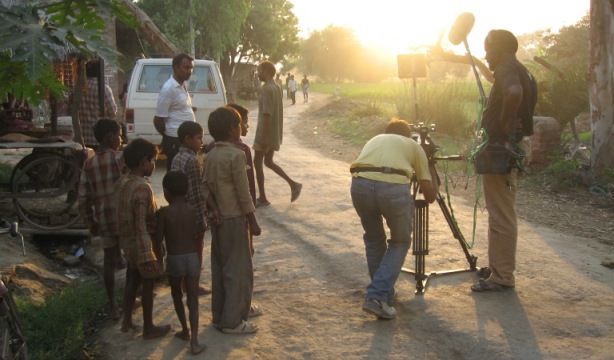
tveap-camera-crew-in-lucknow-india.jpg

Raising this amidst 60 journalists and producers from Africa, Asia, Europe, Latin America and the Caribbean attending the annual Greenaccord meeting, I pointed out that many of us were keen to contribute to media outlets beyond the countries where we are based. It gives us a chance to tell our stories to a bigger audience, and to have our voices heard about a range of issues and topics important to our communities.

And yes, the additional income that such work brings in is quite useful too, thank you.

Heads were nodding when I pointed out how hard it is for a talented, hard working journalist based in the majority world to break into the tightly controlled international media outlets. Even when they make an occasional breakthrough, they are often exploited by being paid lower professional fees for the same output and quality of work.

Or worse, majority world journalists are slighted and insulted for being where they are and who they are, rather than be judged on the merit of their work. As I wrote in a commentary published by SciDev.Net in November 2005: “Media gatekeepers in the North often dismiss the better-informed and equally competent Southern professionals — saying, insultingly, that ‘they don’t have the eye’! And for years, I have resisted the widespread practice of Northern broadcasters and filmmakers using the South’s top talent merely as ‘fixers’ and assistants.”
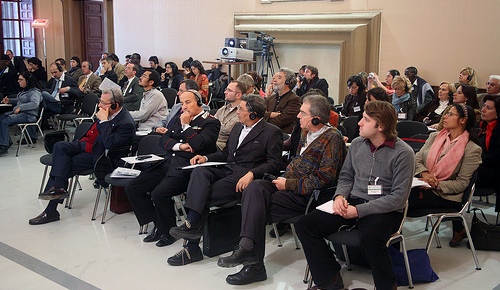
greenaccord-v-forum-in-progress-nov-2007.jpg

All this makes it imperative for us in the globalised media — in the developed North and developing South — to begin agitating for fair trade in media products and services. As in other products, we are not looking for charity or tokenism or a lowering of standards. We must strive for fairness and equality while working on building the capacity of southern journalists to generate world class media products.

And as my friend Darryl D’Monte — whom we missed dearly at this year’s Greenaccord forum — has been saying for years, publishing each other’s stories is one great step forward.

Mahatma Gandhi put it this way: we must be the change we wish to achieve.

Note: My own organisation, TVE Asia Pacific, practises what I preach here, and always engages local camera crews when we film TV stories across Asia. We will be taking up Fair Trade in Film and Television (FTinFT) as a campaign from 2008.

Read other related blog posts:

Images from the Majority World: Global South telling its own stories

Wanted: Fair trade in film and television!

Image of camera crews courtesy Pamudi Withanaarachchi of TVEAP.

Meeting photos courtesy Adrian Gilardoni’s Flickr account
No copyright on this planet – thank Heavens (and NASA) for that!

As the Space Age completes 50 years today, 4 October 2007, we have at least two generations of humans who take images like this one completely for granted.

Yet no one had the capability – and vantage point – to take such images until satellites were launched into orbit, and later astronauts followed.

Beginning in the 1960s, thousands of stunning images — showing our planet in space, as well as the Moon and other celestial bodies in our Solar System — have entered the public domain. These are now part of our popular culture and represent a major educational resource.

These images didn’t come for free. It has cost space agencies – primarily NASA, the American space agency – literally billions of dollars over the decades to capture and deliver these images that we happily, freely bandy around. Contrary to what some people believe, NASA is not a world space agency. It’s the national space agency of a single country, financed by tax payers of that country.

Yet, early on, NASA adopted a very far-sighted, public spirited policy that all its space images would be made available free of copyrights to anyone, anywhere on the planet. This is what enables me to use space images on my blog – and keeps tens of thousands of such images in the public domain.

This is what the NASA official website currently has to say about it:
NASA still images, audio files and video generally are not copyrighted. You may use NASA imagery, video and audio material for educational or informational purposes, including photo collections, textbooks, public exhibits and Internet Web pages. This general permission extends to personal Web pages.”

Significantly, this includes commercially produced and marketed products, even though NASA’s guidelines make it clear: “If the NASA material is to be used for commercial purposes, especially including advertisements, it must not explicitly or implicitly convey NASA’s endorsement of commercial goods or services…”

There are some reasonable restrictions on this fair use. Read the full NASA copyright policy.

I was curious to see what copyright policy the space agencies of other leading space-faring nations follow. This is what I found on the European Space Agency’s website:
“The contents of the ESA Web Portal are intended for the personal and non-commercial use of its users. ESA grants permission to users to visit the site, and to download and copy information, images, documents and materials from the website for users’ personal non-commercial use. ESA does not grant the right to resell or redistribute any information, documents, images or material from its website or to compile or create derivative works from material on its website. Use of material on the website is subject to the terms and conditions outlined below.”

As we can see, it’s a lot more restrictive than NASA’s. I haven’t been able to check the policy of Russian, Chinese or Japanese space agencies, and wonder how liberal or restrictive their copyright policies are.

On strict legal terms, I suppose, creators or finders can be keepers. Arguments can be made that space images obtained at tremendous cost to tax payers can be owned, copyrighted and managed by those agencies and nations footing the bill. This is what makes NASA’s open copyright policy so creditable. Our visual public media — broadcast television, video, DVD and the web — would all have been so much poorer if some nitpicking lawyer or bureaucrat had succeeded in persuading the early NASA management to be more restrictive.

While still on the subject of space images, I wonder why so many images of Earth from space show Africa. I had to search for some minutes to find an image that showed Asia – the largest continent – from space. Next to Africa, the one showing the Americas seems the most popular.

We have to remember that some images we find online are composite images, carefully assembled by combining the best attributes of many images taken over time. Photographing or video filming our planet is not as simple as just going to space, aiming a camera and shooting. It involves a great deal of skill, resources and effort.

And keeping the resulting images in the public domain and open to access takes foresight and public spirit. As the Space Age turns 50, we must acknowledge this aspect of space exploration, which allows compositions like this, found on YouTube, for all of us to enjoy.

Images from the Majority World: Global South telling its own stories

majority-world.jpg

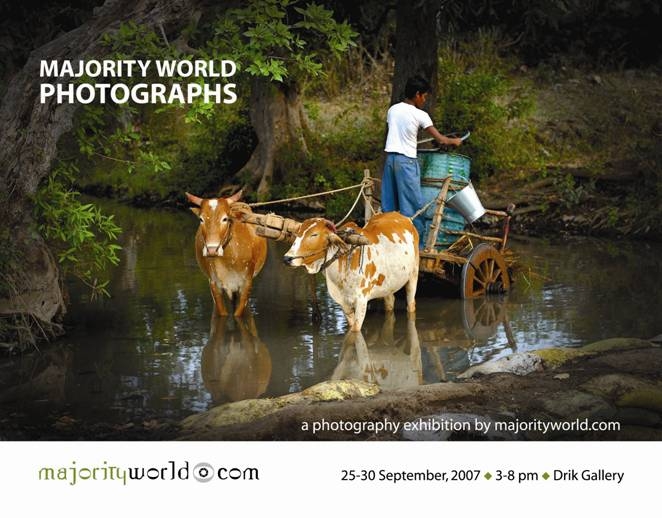
This image captures a typical scene in a South Asian village. The invitation arrived from Suchit Nanda, a talented Indian photographer who shoots men, women and scenes from different cultures and societies as he moves around Asia and elsewhere.

Suchit’s work is being marketed by MajorityWorld.com, a new global initiative founded through the collaboration of The Drik Picture Library of Bangladesh and KijijiVision in the UK to champion the cause of indigenous photographers from the developing world and the global South – the Majority World!

“Very few published images of the South are taken by local photographers. They are invisible and don’t get a fair deal. This is what kijiji*Vision is campaigning to change,” says Colin Hastings of kijiji*Vision, a co-founder of Majorityworld.com.

Read more about Majority World

By coincidence, just this week I’m involved in buying some photographs from Drik Picture Library to illustrate an Asia Pacific resource book on Communicating Disasters that TVE Asia Pacific is compiling. It is being co-authored by Frederick Noronha and myself, and due for a December 2007 release.

Whether in photography or videography, the global South – or Majority World – has to speak for itself. Our still images and moving images must tell our own story.

But try doing this in the commercial worlds of publishing or mass media, and suddenly we are competing in an extremely unfair and uneven playing field. Astonishingly, many development agencies – including the UN – don’t commission or acquire the work of talented Southern photographers or film-makers. Talk about not practising what they preach!

Read my recent blog post: Wanted – Fair Trade in Film and Television

In an essay titled Communication rights and communication wrongs written in November 2005, I criticised the globalised media for persistently using stereotyped images of the South — captured mostly by northern photographers and camera crews.

I quoted Shahidul Alam as saying: “Invariably, films about the plight of people in developing countries show how desperate and helpless they are… Wide-angle black and white shots and grainy, high-contrast images characterise the typical Third World helpless victim.”

I added: “Media gatekeepers in the North often dismiss the better-informed and equally competent Southern professionals — saying, insultingly, that ‘they don’t have the eye’! And for years, I have resisted the widespread practice of Northern broadcasters and film-makers using the South’s top talent merely as ‘fixers’ and assistants.”

Read my full essay on SciDev.Net, which published it after Panos Features – the original commissioners – declined to carry it. Apparently my views were too outspoken for Panos London, which claims to champion communication for development…

Experience the visual treats offered by Suchit Nanda:
Suchit Nanda

Support Majority World photographers by using their work

The Daily Star (Dhaka) reviews the exhibition