Encounter with Anpanman: A superman made of bread!

Anpanman is one of the most popular anime cartoon series in Japan

Last month, on my way to the Tokyo headquarters of NHK, Japan’s public broadcaster, I stopped at the Tokyo Tower for a bit of sight-seeing.

A communications tower located in Shiba Park, Minato, Tokyo, the Tokyo Tower is 332.6 meters (1,091 ft) tall – which makes it the tallest self-supporting steel structure in the world. Built in 1958, this Eiffel Tower-like structure supports an antenna that broadcasts television and radio signals for important Japanese media outlets including NHK, TBS and Fuji TV.

At the base of the tower, I had an unexpected encounter with an old friend. I know him as Gnana Katha Malliya, the name given to him in the Sinhalese adaptation that I watch on Sri Lankan television.

But everyone in Japan knows him by his original name: Anpanman. He is one of the most popular anime cartoon series (manga) in Japan. It is produced by Nippon Television Network Corporation.

Anpanman is the creation of Takashi Yanase, a Japanese writer of children’s stories. Each animated cartoon is approximately 24 minutes long, split into 2 episodes of approximately 12 minutes each.

Yanase has been writing Anpanman since 1968. He became inspired by the idea of Anpanman while struggling to survive as a soldier in World War II. He had frequently faced the prospect of starvation which made him dream about eating a bean-jam filled pastry called Anpan.

Anpanma is indeed a superman made by a baker. His head is a bun made by Jam Ojisan, a kind-hearted baker. He was created when a shooting star landed in Jam Ojisan’s oven while he was baking.

Anpanma’s name comes from the fact that he is a man with a head made of bread that is filled with bean jam called an anpan. His weakness is water or anything that makes his head dirty. He regains his health and strength when Jam Ojisan bakes him a new head and it is placed on his shoulders. Anpanman’s damaged head, with Xs in his eyes, flies off his shoulders once a new baked head lands.

The most endearing attribute of Anpanman is his sense of sacrifice. When he comes across a starving creature or person, he lets the unfortunate creature or person eat part of his head. Jam Ojisan has to keep baking an endless supply of heads for our hero.

And it gives a whole new meaning to the phrase ‘eat my head off’.

Baikinman is the villain in the stories. He comes from the “Germ World” and is the leader of the viruses. His name means “Germ Man”, and his ambition is to destroy Anpanman and turn the planet into another “Germ World”.

Read about other characters in Anpanma

Anpanman (R) and Baikinman at the Tokyo Tower

According to the Wikipedia, as of September 2006, Anpanman’s books had collectively sold over 50 million copies in Japan.

The Anpanman television series is called Soreike! Anpanman (meaning ‘Go! Anpanman’) – it has been on the air in Japan since 1988. More than 800 episodes have been made to date. There are also 18 cinematic films featuring the characters.

According to the Japanese toy company Bandai, Anpanma is the most popular fictional character from age 0 to 12 years in Japan.

As I found out, Anpanman is such a cultural icon in Japan that his images adorn railway carriages, and there is an Anpanman museum opened in Yokohama in 2007.

Anpanman is also popular in many countries across Asia. He has a large following in China and Korea, where the comics and TV series have been a popular Japanese cultural export for years.

And, as it turns out, I’d been enjoying his exploits on Sri Lankan television for years without even knowing his original Japanese name! This reinforces the point I made in Feb 2008, writing about another favourite character Madeline – originally French, but whom I encountered on a visit to Manila and Los Banos in January this year.

I wrote: “It’s becoming impossible to discern or define what is ‘local’ anymore in this rapidly globalising and integrating world. Sociologists and communication researchers who split hairs about preserving ‘local content’ have a romanticised notion that is hard to find in the real world.”


Read my Feb 2008 blog: What’s local in our mixed up, globalised world?


Watch a sample story: Anpanman to Hamigakiman

Why do Development Rip Van Winkles prefer ‘Aunties’ without eye-balls?

When I was growing up in suburban Colombo in the 1980s, we had a family friend who worked at the Sri Lanka Broadcasting Corporation (SLBC). When anyone asked him where he worked, he would simply reply: “I’m in broadcasting.”

That answer was perfectly adequate at the time, when the fully state-owned and government-controlled SLBC was the only domestic broadcaster. The FM radio band was eerily silent, and only die-hard enthusiasts would persist with shortwave crackle to listen to foreign broadcasts like BBC, Voice of America or Radio Veritas from thousands of kilometres away. We also had two state TV channels still learning the ropes.

Today, that kind of answer would mean nothing. Two dozen FM radio channels crowd the airwaves. In the western province, there are 15 free-to-air terrestrial TV channels – and counting.

Most of these are privately owned and commercially operated channels, all started after broadcasting was (partially) liberalised in 1992. They compete fiercely for a share of audience – and advertising revenue. While that can sometimes be a race to the bottom, it’s infinitely better than the bad old days when we had no choice but to tune into ruling party propaganda masquerading as public broadcasting.

The situation is broadly the same in many other countries in the Asia Pacific region. With a few exceptions, the state-owned, government-controlled broadcasters have seen their monopolies end – and as their long-suffering audiences might confirm, not a moment too soon. They now have to compete with younger, more dynamic and decidedly more interesting private channels.

And in every market, former monopolists have seen their audience share shrink, in some cases dramatically. The one-time lords of the airwaves have been reduced to minority players. Many are struggling to make ends meet, and some are kept alive only because governments keep pumping in large volumes of tax-payer funds.

Meanwhile, the eye-balls and advertising revenues have migrated to the privately owned, commercially operated TV stations. They entertain, amuse and sometimes titillate. But they also inform and occasionally educate their audiences.

And yes, many are making money too – and that’s neither illegal nor immoral in market economies.

Alas, the former monopolists haven’t yet stopped crying foul. They allege that the commercial stations are playing by a different set of rules, allowing the latter to play the market and maximise returns. In contrast, the government channels claim to have a ‘public service mandate’ that’s harder to fulfill and not always popular or populist.

Note that I have not used the term ‘public broadcaster’ to describe the government channels – because, whatever their founding documents might say, most of them are not serving the public interest. In developing Asia, which lacks sufficient checks and balances to ensure independence of state broadcasters, the only thing public about such channels is that they are often a drain on public money collected through taxes. Their service and loyalties are entirely to whichever political party, coalition or military dictator in government.

When the divide between governments and the public interest is growing, most ‘public’ channels find themselves on the wrong side. No wonder, then, that discerning views have abandoned them.

Interestingly, old habits and brand loyalty might explain why at least a minority audience still remains for state broadcasters. The state channels have been around for longer, and for years, they were the only show in town. Some of them occupy large swaths of the UHF and VHF spectrum, making their signals easier to catch.

But these advantages would diminish over time. For one thing, young people far outnumber older persons in most parts of developing Asia (almost 62 per cent of the world’s youth – aged between 15 and 24 – are in Asia: that was 716 million in 2005). For another thing, the more dynamic private competition is finding new pathways to reach youthful audiences.

State broadcasters may be venerable to some, but no one thinks of them as ‘cool’. Even the BBC – which is far better shielded from governmental manipulation than its Asian counterparts – has yet to shed its old nickname and image of “Auntie”, originating from its old-fashioned “Auntie knows best” attitude.

In Asia, now home to the world’s largest combined television audience, it’s more a case of grandma knows best. The other day, I asked a young Filipino film-maker and TV journalist about who watches her country’s National Broadcasting Network. “In my family, only grandma watches it,” she replied, adding that the only time others tune in to that channel is to watch lottery results.

This is not an isolated insight. Across Asia, FM radio and commercial TV have captured the markets of the young and young-at-heart.

Nobody grudges grandmas and grandpas being served by their favourite channels. But we have to ask how and why decades of public investments in broadcast infrastructure and institutions are not serving a wider spectrum of the population. Dishing out lottery results and pandering to Narcissistic politicians cannot quite pass as serving the public interest.

Meanwhile, in a welcome trend, the market-leading commercial broadcasters are increasingly turning their massive outreach and influence to serve the public interest. It goes against the conventional wisdom of ivory tower researchers and media activists who cry themselves hoarse accusing commercial broadcasters of reaping profits without returning something to the community. But it’s real.

In market after market, country after country all over the Asia Pacific, privately owned, commercially successful radio and TV channels are championing the public interest. They may not have a UNESCO-articulated grand agenda, but they see it as serving the needs and wants of their loyal audiences.

The services are as diverse as the needs themselves. Some channels are dispensing practical information and advice on all sorts of everyday matters from traffic congestion and vaccination to school admissions and crime prevention. Others have gone further, for example launching national campaigns against narcotic drugs or corruption, and advocating better care for persons living with HIV.

In covering these and other public interest or development issues, commercial channels bring in a healthy dose of creativity, dynamism and innovation. They don’t preach or pontificate. Instead they make it fun, hop and cool to do what we should be doing anyway in our self interest.

See, for example, my Sep 2007 blog post on MTV Exit: Entertainment TV takes on human trafficking

And I don’t mind if some of them laugh all the way to their banks at the end of each financial year. (In reality, many operate on thin margins and few make significant profits.)

A few commercial broadcasters go even further. On a visit to Manila last week, I heard how ABS-CBN – the country’s privately owned, market-leading broadcast group – is doing much for science popularisation and public education. These are done through charitable foundations that deliver public goods through private means.

While all this is happening, the development community seems trapped in a time warp – clinging on to an outdated notion that state broadcasters alone can serve the public interest (if you ask me, they never did). Perhaps out of habit, they keep turning to such channels with their ever-shrinking audiences.

A few weeks ago, a senior official at Sri Lanka’s largest development organisation Sarvodaya told me how hard it was for them to have their development films broadcast. The two state broadcasters had both demanded money for air time.

Strangely, he had not even considered engaging a commercial broadcaster. “After all, we want to be seen our national channels,” he explained.

This Rip Van Winkle attitude doesn’t help anyone, and least of all those communities that development agencies are trying to reach through media-based communication.

As I asked at a recent UNEP-convened meeting in Bangkok: “If in our technical work we are evidence-based, why can’t we be evidence-based in our communication strategies and decisions as well? We must define the priority audiences we want to reach, and find out their media preferences. We need to use independent audience ratings, and not personal perceptions or biases in choosing which stations we work with.”

Thus, if the development community is serious about engaging the broadcast media, they must first awake from their long slumber and quickly update themselves on current realities in Asian broadcasting.

It’s not who owns that decides the public spirited character of a radio or TV station. In today’s complex and nuanced media landscape, it’s the performance and delivery that count.

Aunties without eyeballs can trudge along on government’s crutches. The rest of us have miles to go before we can rest.


What’s local in our mixed up, globalised world?

I belong to what’s arguably the biggest club in the world, whose members number not in millions but billions. Everywhere I go, I meet fellow members and, sooner or later, conversation drifts to our shared membership in – parenthood.

Last weekend, I was absorbing the sights, sounds and smells of the Laguna province in the Philippines in the exalted company of academic colleagues from the College of Development Communications, University of Philippines Los Banos. At one point, we walked past some old houses designed in Spanish style – a reminder of the country’s strong Spanish legacy.

I heard how the Filipino language has absorbed or adapted hundreds of Spanish words, so much so that the younger generations don’t realise the Spanish origins of many words they use everyday.

One colleague related a story. Her daughter (now 16) had been a fan of ‘Madeline‘ – an animated series based on the popular children’s books by Ludwig Bemelmans, an American author of Austrian and German origins. Read more about Madeline animated TV series.

Happy coincidence: my daughter Dhara (still 11) and I are fans too of the smart and adventurous little French girl who lives with 11 other kids Miss Clavelle’s boarding school in Paris. Although the smallest girl, Madeline nevertheless manages to get herself into one predicament after another, giving her friends and teachers much to worry about. In the end, though, she always comes out all right.

Madeline is a good friend of the Spanish Ambassador’s son, Pepito. The young boy occasionally slips in a few Spanish words or phrases. This happened in one episode when Pepito was talking about sombreros.

The Filipino girl was excited. She exclaimed: “Mom, Pepito is talking in Filipino!”

It’s a small reminder of how delightfully mixed up our cultures are – and not just in language. Many of our metaphors, references and other expressions have been borrowed and adapted from other cultures and traditions in far corners of the planet. After a generation or two, few remember the origins.

It’s becoming impossible to discern or define what is ‘local’ anymore in this rapidly globalising and integrating world. Sociologists and communication researchers who split hairs about preserving ‘local content’ have a romanticised notion that is hard to find in the real world.

‘Content creation’ describes something that we journalists, as well as film-makers, writers and creative artistes have been doing for centuries. For much of that period, content was entirely local. It was only in recent decades that information and communications technologies (ICTs) enabled content to be swapped around the world at the speed of light.

And some ICT activists feel the need to make content more local again. No doubt an ideal. But I keep asking them: just what is local anymore in our rapidly integrating and hopelessly mixed up world?

Does it really matter anyway, except to the cultural purists who live in ivory towers?

Dewitt Wallace, the American founder of the Reader’s Digest magazine, was fond of pointing out how much his publication had become a part of the everyday lives of millions of people worldwide. One of his favourite anecdotes was about two children born and raised on a Caribbean island.

On their first visit to the United States, the kids were walking on the streets of New York, in the magazine’s home state of New York (Reader’s Digest is owned and published by The Reader’s Digest Association, a privately held company based in Chappaqua, New York, but the mailing address is actually Pleasantville, New York). On seeing the magazine on sale at newsstands, one of them exclaimed: “Look dad, they have the Reader’s Digest here too!”.

I personally think we should focus more on content that is locally relevant and locally useful. If it is also locally generated, that’s well and good — but does the point of origin matter too much in this knowledge society, when we are swapping electrons and ideas across political boundaries?

Rule of the Gun in Sugarland: A film by Joey R B Lozano

In June 2007, I did a belated tribute to Joey R B Lozano, a courageous Filipino journalist who crusaded for human rights and social justice. Armed with his video camera and laptop, he was one of the early citizen journalists long before that term – and practice – became fashionable.

From Seeing is Believing

As I wrote:
Joey used his personal video camera to assert indigenous land rights, and to investigate corruption and environmental degradation in his native Philippines. Joey was an independent human rights activist and also one of the country’s leading investigative reporters.

He freelanced for the Philippine Daily Inquirer, covering Indigenous peoples’ rights and the environment, considered the two most dangerous beats in the Philippines. But years earlier, he had moved out of the capital Manila, and committed his life and career to stories and issues at the grassroots that many of his city-based colleagues had no time or patience in covering on an on-going basis.

Trained as a print journalist, Joey mastered new media and technologies whose potential he quickly realised. He moved into television and video media with ease, and later became an active blogger.

I have just tracked down on YouTube one of his documentaries, Rule of the Gun in Sugarland (2001; 9 minutes; English). It’s a powerful documentary that tells the story of Manobo villagers’ efforts to claim their ancestral land in the Philippines, and the abuse they endured because of their claim. It contains both graphic and heart wrenching scenes.

Here’s some background on indigenous people’s rights in the Philippines, as compiled by Witness – the human rights activist group with which Joey worked closely.

Source: Witness nomination of Joey R B Lozano as a Hero on Universalrights.net

The history of the Philippines is a history of colonization, resettlement and battles over who will rule the land.

First the Spanish, then the Americans, then the Japanese, and now multinational corporations have at one time or another dominated the Filipino landscape. Each wave of colonization has forced people off more land, creating a domino effect across the 7,000 islands. Resettlement in turn, has created even more pressure on successive islands as settlers move in, pushing even more people out.

Today, despite continued widespread poverty across the Philippines, Indigenous tribe members remain the most marginalized sector of Philippine society.

In a country of 76.5 million people, almost 20 per cent are Indigenous peoples. They belong to at least 32 different ethnolinguistic groups. More than half are on Mindanao, the largest southern island.

Over the last century, Indigenous peoples have lost their traditional lands, as the logging industry, ranchers and large plantations have forcibly taken over lands, piece by piece.

Much like in other parts of the world, the land was won parcel by parcel. Original verbal agreements were made and often respected between individual ranchers and Tribe leaders to “borrow” land from the Tribe. But the agreements were quickly forgotten when the rancher died. Over the years, the land was then resold without the Tribes’ consent.

From Rule of the Gun in Sugarland

And then, under the Marcos regime, Indigenous people suffered along with farmers, as massive tracts of land were appropriated for the dictator and his cronies. When Marcos was finally thrown out by a people’s revolt, and flown out on a U.S. helicopter, successive democratic governments introduced multiple land reforms intended to redistribute the land justly, but none of these reforms ever really worked.

On the ground level, corruption and misuse of power prevented the land from being rationed and made accessible to the people the reforms were intended to help.

Meanwhile, the land reforms were intended to help the peasants and the fact that many of the lands in question were Indigenous Ancestral domains was never addressed.

Mindanao is rich in natural resources – some of the world’s last ancient rainforests, fertile soils, underground treasures of gold, an abundancy of fish — all now under the threat of overdevelopment.

In 1997, the Indigenous Peoples Rights Act was signed into law. The law is explicit on the Indigenous peoples’ right to ancestral lands. But this has not become operational to date. This fact is exacerbated by the present government’s industrialization thrust and commitment to globalization. Tribal lands, thus, are being continually opened for extractive business.

For more information, check Seeing is Believing website

Protect journalists who fight for social and environmental justice!

In June 2007, I wrote about the late Joey R B Lozano, a courageous Filipino journalist and activist who fought for human rights and environmental justice at tremendous risk to his life.

For three decades, Joey survived dangerous missions to defend human rights using his video camera in the Philippines, a country known for one of the highest numbers of journalists killed in the line of duty. Joey went into hiding numerous times, and he dodged two assassination attempts.

Last week, a leading Filipino academic and social activist called for greater protection for local level journalists who cover social and environmental justice issues risking their life and limbs.

“Things are pretty savage at the grassroots level in some of our countries. Journalists who investigate and uncover the truth take enormous personal risks – the vested interests hire killers to eliminate such journalists,” said Professor Walden Bello, executive director of the Focus on the Global South (photo, below).

He was speaking at the Greenaccord Media Forum on 10 November 2007 in Frascati, Rome, where several dozen journalists covering environmental issues had gathered for a four-day meeting.

He delivered an insightful survey of social movements across Asia on environmental and public health issues
, where he questioned the role of elites in the global South in standing up for what is right and fair for all people.

During question time, I asked him how he saw the media playing a role in social movements that he’d just described. It varied from country to country, he said, and gave several examples.

zadie-neufville-from-jamaica-makes-a-point.jpg

In China, most environmental exposes in recent years have been made by ‘very brave journalists’. Their investigations have compelled the local and central authorities to address the massive incidents of pollution and environmental degradation resulting from China’s economic march forward.

In South Asia, the record is uneven. Indian publications like The Hindu newspaper and Frontline magazine are at the forefront in reporting and analysing ‘almost exhaustively’ on environmental struggles in the world’s largest democracy.

In contrast, Singapore and Malaysia have no critical mass media to turn the spotlight on excesses or lapses, he said. In these countries, journalists as well as activists have turned to the web to express themselves — but even they are under pressure from their governments.

In Thailand, the two English language newspapers The Nation and Bangkok Post have both have a long tradition of covering environmental issues and supporting mass movements. A number of Thai language newspapers also have sustained coverage.

In his native Philippines, Prof Bello singled out the Philippine Daily Enquirer for persisting with environmental coverage and exposing environment related scandals. But that comes with its own risks.

“At the local levels, journalists who take up these issues face many threats, including the very real risk of extra-judicial killings. The Philippines is one of the most dangerous countries in the world today for independent journalists and human rights activists,” he added.

Journalists living in the provinces and reporting from the grassroots are more vulnerable than those based in the cities. This is precisely why local journalists need greater support and protection to continue their good work.

The local elites and officials would much rather silence such journalists. International solidarity for such journalists could make a big difference, Prof Bello said.

He had a suggestion for his hosts, Greenaccord, which annually organises what is now the world’s largest annual gathering of journalists and activists concerned about the environment: Invite and involve more local level journalists in the future forums.

That will give them a voice, and strengthen their resolve to continue the very important work they do.

Read April 2007 blog post: Can journalists save the planet?


Meeting photos courtesy Adrian Gilardoni’s Flickr account

Bretton Woods on fire: Hard times ahead for World Bank and IMF

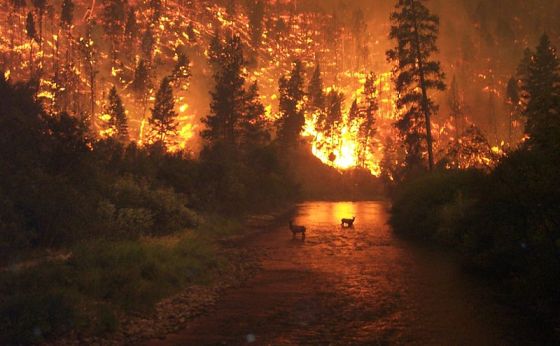
800px-deerfire_high_res.jpg

As the California forest fires raged over many days in October 2007, it dominated the US and some sections of the global media. Focus was on how the fires started and what factors contributed to their rapid spread.

Below the media’s radar, another kind of ‘fire’ has been building up over the past few months on the US East Coast. According to one leading intellectual-activist that I heard this week, this is a development whose reverberations will be felt right around the world, and for years to come.

The Bretton Woods are on fire. Actually, it’s the Bretton Woods institutions, namely the World Bank and International Monetary Fund (IMF).

Speaking at the Greenaccord Media Forum in Rome on 10 November 2007, Walden Bello, Filipino academic and executive director of the Focus on Global South, suggested that the World Bank and IMF are headed for turbulent times as countries in the global South (majority world) assert themselves economically.

Preparing to rebuild the international economic system as World War II was still raging, 730 delegates from all 44 Allied nations gathered at the Mount Washington Hotel in Bretton Woods, New Hampshire for the United Nations Monetary and Financial Conference. The delegates deliberated upon and signed the Bretton Woods Agreements during July 1944. That marked the birth of the World Bank and IMF.

The World Bank and IMF are essentially lenders of money to governments for development purposes. If these lending institutions run short of borrowers, they will be out of business.

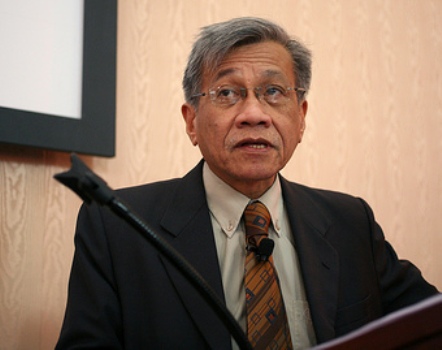
That hasn’t happened yet, but Bello (photo, below) identified several trends that must make the Bretton Woods duo worry about losing control.

professor-walden-bello.jpg

According to Bello, the resistance is led by countries of Latin America, a region where the twin lenders have long been controversial. In May 2007, Venezuela under President Hugo Chavez announced it would be leaving both the World Bank and IMF.

Venezuela has repaid its remaining debts to the World Bank five years ahead of schedule and paid off its debts to the IMF shortly after Mr Chavez first took office in 1999. Bello says the oil-rich country has sought to provide alternative forms of credit and financial support for countries in the region. One such project is the “Bank of the South”, which aims to financially help Latin American countries to pay off their IMF loans ahead of schedule.

In October 2007, Nobel prize-winning economist Joseph Stiglitz endorsed the Chávez plan to create a pan-regional bank for Latin America. Professor Stiglitz, a Washington insider and former World Bank chief economist, said the Bank of the South would benefit the region and give a welcome shakeup to western lending institutions.

Read March 2006 commentary by Mark Engler in Common Dreams: Latin America Unchained: Will the U.S. Lose its Influence Over Countries That Have Paid Off Their IMF Loans?

These trends, coupled with the rise of a new set of Southern countries willing and able to provide loans or grant aid to fellow countries of the South, are slowly but steadily eroding the domination and power the Bretton Woods twins have exercised for over half a century, Bello said.

Some of these alternative lenders are giving money with fewer conditions and restrictions. These include China, Saudi Arabia and Venezuela. This is what the editor of the influential US journal Foreign Policy called ‘rogue aid’ in an article he wrote in the journal’s March/April 2007 issue.

As the global South asserts itself and begins to exercise the power of their recent economic growth – which, ironically, is partly thanks to past borrowing from the Bretton Woods twins, the coming years will be crucial for the future World Bank and IMF.

The fire in the Bretton Woods is only just smouldering. But watch that smoke…

* * * * *

Walden Bello won the Right Livelihood Award (the Alternative Nobel) in 2003, for his decades of advocacy, activism and research. As the award foundation noted: “Walden Bello is one of the leading critics of the current model of economic globalisation, combining the roles of intellectual and activist. As a human rights and peace campaigner, academic, environmentalist and journalist, and through a combination of courage as a dissident, with an extraordinary breadth of published output and personal charisma, he has made a major contribution to the international case against corporate-driven globalisation.”

While campaigning on human rights he saw how the World Bank and IMF loans and grants were supporting the Marcos regime in power. To expose their role, he took the risk of breaking into the World Bank headquarters in Washington, and brought out 3,000 pages of confidential documents. These provided the material for his book Development Debacle (1982), which became an underground bestseller in the Philippines and contributed to expanding the citizen’s movement that eventually deposed Marcos in 1986.

Read full profile on Walden Bello on Right Livelihood Award website


Meeting photos courtesy Adrian Gilardoni’s Flickr account

Joey R B Lozano: The legacy continues…at Silverdocs

I met Joey R B Lozano only once, but he left a deep impression.

A small-made man with passionate zeal and tons of energy, he was every inch an activist-journalist-campaigner. We had invited him to a regional workshop of factual video producing and distributing partners from across Asia that we held in Singapore in November 2002.

We hadn’t worked with Joey earlier. He came recommended by our international partner Witness, which uses video-based advocacy and activism for promoting and safeguarding human rights worldwide.

Joey R B Lozano Joey R B Lozano Joey R B Lozano

Joey used his personal video camera to assert indigenous land rights, and to investigate corruption and environmental degradation in his native Philippines. Joey was an independent human rights activist and also one of the country’s leading investigative reporters.

He freelanced for the Philippine Daily Inquirer, covering Indigenous peoples’ rights and the environment, considered the two most dangerous beats in the Philippines. But years earlier, he had moved out of the capital Manila, and committed his life and career to stories and issues at the grassroots that many of his city-based colleagues had no time or patience in covering on an on-going basis.

Trained as a print journalist, Joey mastered new media and technologies whose potential he quickly realised. He moved into television and video media with ease, and later became an active blogger.

Joey’s TV investigations began in 1986, when he helped ABC’s 20/20 to uncover the “Tasaday hoax”, a highly successful fraud to pass off local tribespeople as a newly discovered Stone Age culture.

He soon embarked on his own investigations and started digging into illegal logging, gold mining and land-grabbing. In turn, his exposes quickly earned him repeated assassination and abduction attempts, in a country that is one of the more dangerous places to practice journalism.

When he came to Singapore, Joey had recently ‘starred’ in a major Canadian documentary titled Seeing is Believing: Human Rights, Handicams and The News, which looked at how committed, passionate individuals were using new communication technologies to change the world.

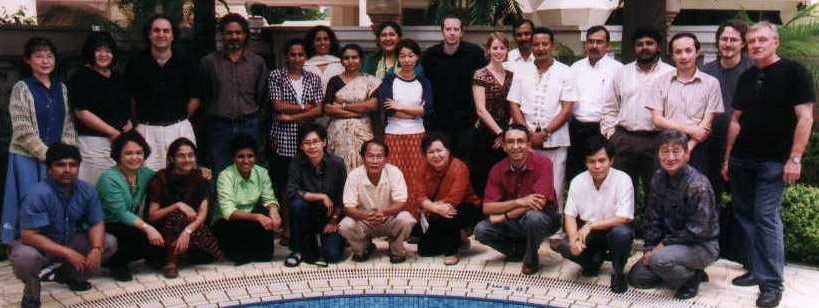
participants-at-tveap-partner-workshop-singapore-nov-2002.jpg

Photo of Singapore TVEAP workshop participants: Joey Lozano is 6th from left on the frontmost row

Follow Seeing is Believing storyboard on the film’s website

We screened the film, made by Katerina Cizek and Peter Wintonick, and heard first hand from Joey on what his struggles entailed. The film followed Joey as he delivers a new “Witness” donated video camera to Nakamata, a coalition of Indigenous groups in Central Bukidnon. Together, Nakamata and Joey begin documenting a dangerous land claims struggle, and it doesn’t take long for tragedy to unfold in front of the camera.

Watching the film and then listening to Joey — and his Witness colleague Sam Gregory — describe the on-going struggle, was one highlight of our week-long workshop. Some of us saw in Joey the activist-campaigner that we wanted to be, but were too scared or too polite to really become.

Not everyone shared that view. The cynicism — sometimes bordering on disdain — of a fellow Filipino from Metro Manila was palpable. No wonder Joey moved away from the city.

We at TVE Asia Pacific were extremely keen to distribute Seeing is Believing, for it held such a powerful and relevant message for our region, but it was not to be. Our enquiries showed that like most documentaries, it was tied up in too many copyrights restrictions and commercial distribution deals.

Following the Singapore workshop, I did keep a watchful eye on what Joey Lozano was up to. The film’s website provided occasional updates, and sometimes blog posts from Joey himself.

Our paths never crossed again. Almost three years after our single encounter came the news that Joey had passed away. It wasn’t the assorted goons who hated his guts that finally got him. His own body turned against him.

His tribute on the film’s website started as follows:

Joey Lozano defied the odds. For three decades, he survived dangerous missions to defend human rights using his video camera, in the Philippines, a country that ranks high, year after year, for most journalists killed. Joey went into hiding numerous times, and he dodged two assassination attempts. Once, bullets whizzed past his ear as he made his escape on motorbike.
But Joey couldn’t beat the odds of cancer. He died in his sleep on September 16, 2005 – at home and surrounded by his family.

Joey R B Lozano - image courtesy Seeing is Believing

The spirit and legacy of Joey R B Lozano live on. He inspired a large number of journalists and activists to stand up for what is right and just — and to be smart about it in using modern information and communication technologies, or ICTs.

Joey and other Witness activists were pioneers in different parts of the world who turned handicams away from weddings and birthday parties to capture less cheerful sights and sounds the world must see — and then act on. They were at it years before mobile phone cameras, YouTube and user-generated content in the mainstream media.

And now, Witness has established an award at the Silverdocs film festival. The WITNESS Award in Memory of Joey R.B. Lozano will be awarded to the qualifying SILVERDOCS filmmaker of a feature-length film who has produced a well-crafted and compelling documentary about a human rights violation or social justice issue. The winning filmmaker will also have a thoughtful, creative, and feasible outreach plan to use their film as a tool to raise awareness of the human rights or social justice issue explored in the film with a goal to bring about change.

The inaugural award was announced on June 17 — and has been won by “The Devil Came on Horseback” by Annie Sundberg and Ricki Stern.

Joey was a Witness partner and board member. He co-produced many films and collaborated on others that helped raise awareness about threats to indigenous people’s rights in the Philippines from corporations, and the complicity of the government in the abuses. Witness was founded in 1991 by musician peter Gabriel and the Lawyer’s Committee for Human Rights to put new technologies into the hands of local activists around the world.

Joey R B Lozano with his handycam

Read International Wildlife May 1999: Why Joey Lozano Is A Marked Man – investigative reporter works for the environment

Read about and watch Rule of the Gun in Sugarland