Can Rambo take on the Burmese junta? Not quite in 90 minutes…

Hollywood’s attempts to support progressive causes in movies continue with Rambo 4, starring Sylvester Stallone.

In the fourth and latest installment of the violent adventures of John Rambo, the Vietnam veteran takes on the Burmese junta who have held the Southeast Asian country in its crushing, ruthless grip since 1962.

Inter Press Service (IPS) journalist Lynette Lee Corporal has just written an interesting article where she talked to Burmese exiles and others involved in Burma issues. Excerpts:

“In his latest caper, a bored-looking Rambo ekes out a living catching cobras in the jungles of Mae Sot in Thailand, near the border with Burma. But the arrival of a group of Christian missionaries, whose idealism and naivete literally led them to a slaughterhouse, changes Rambo’s zombie-like existence and brings back the days of gore and bloodbath.

“The film is unapologetic in its use of cliches. It’s the same tired story: Everything is black and white, good and evil, with lots of do-or-die moments thrown in for good measure.

“‘Rambo IV’ – which started showing in Asian cinemas in January and is due to open in mid-March in Thailand — is replete with stereotypes, especially when it comes to pointing out differences between the east and the west, symbolically played out in the kindness, idealism and determination of the Caucasian missionaries and the uncouth, barbaric bad guys in the form of the Burmese pirates and military.”

She says that while reports of the cruelty of the Burmese junta have been well-documented, the depiction of these stereotypes glosses over much more complex issues too deep to dig up in a 90-minute action movie.

Her article quotes freelance Burmese journalist Phyo Win Latt as saying: “The Burmese army in the movie is different from real-life. The film is filled with exaggeration and inaccuracies. Army officers, for example, don’t wear sunglasses while engaged in battle and although there are rape cases in remote ethnic villages, I’ve never heard of such things like ethnic women being forced to dance in front of the soldiers.”

Exiled Burmese appear to have given it some positive feedback. According to a report by the Norway-based Democratic Voice of Burma (DVB), about 600 Burmese who watched the film in Singapore became very emotional, chanted slogans and distributed political leaflets at the screening.

The crowd “clapped non-stop for 80 seconds to show respect to the movie audience gathered there and to show unity” in their fight for democracy, DVB reported.

Read her full article on Asia Media Forum

I’ll just take Lynette’s word for all this, because I’m not going to see this film – I can’t take a killing every few seconds.

Watch Rambo 4 official trailer on YouTube:
Caution: Extreme violence – but then, what else do you expect in Rambo?

Rambo may have discovered Burma’s long-drawn suffering only recently, but activist film-makers have been using moving images for many years to sustain international attention on Burma’s human rights and humanitarian issues.

Almost five years ago, in May 2003, TVE Asia Pacific website ran a feature titled ‘Documentaries keep Burma issues alive‘. It was written by Indian film-maker and journalist Teena Amrit Gill, who at that time was based in Chiang Mai, Thailand — where many Burma activists are concentrated.

Excerpts:

“Long drawn internal conflicts are often overlooked or completely ignored by the global media that often chase the latest stories as they unfold. It often takes a few dedicated activists and committed film-makers to sustain focus on conflicts that no longer grab headlines – but continue to affect hundreds of thousands of people.

“As Burma and the struggle of its people, especially its ethnic minorities, against four decades of military dictatorship begin to fade from international attention, a number of new television documentaries are attempting to keep the issue alive.

“Some have been made by television professionals for international broadcast. Others have used amateur or activist footage and aim at mobilising public concern and supporting campaigns to maintain pressure on the regime.”

Teena reviewed three new films that had been produced in 2001-2002 about the plight of minority groups like the Karen, Shan and Karenni who live along Burma’s borders with Thailand, China and Laos. These minorities are the target of repressive policies of the ruling military junta in Rangoon.

Read the full article, Documentaries keep Burma issues alive

Sep 2007 blog post: Kenji Nagai (1957 – 2007): Filming to the last moment

Another point of view: Entertainment the Burmese military way, by Ye Thu on DVB website

Can Your Film Change the World? Find out on Pangea Day!

Here’s an extraordinary invitation to all who love to watch, create or critique moving images.

Either watch the above video, linked to PangeaDay YouTube channel, or (if your bandwidth does not allow easy playing of online video) read the text I have just transcribed off the video:

In this age
Images are powerful.
Powerful enough to divide…
…to spread fear…
…to remove hope.

Powerful enough to unite
to build trust, to inspire action.

Until now, images of the many
have been held in the hands of the few.

Finally, that is changing.

Millions of people around the world
are telling their own stories.

For the first time in history
we have a chance to see the world differently.
To see it through the eyes of each other.

Imagine if we could get inside
each other’s heads for a day!
What would we see?

We are about to find out.
A worldwide search has begun
to find films of unique power.

Films that provoke…
…entertain…
…inspire.

Films made by the world
for the world.

On May 10, 2008
millions of people across the globe
will gather to witness these films
in a spectacular event
broadcast live to the entire world.

Visionaries…
…and musicians
will join the celebration.

And it will continue afterwards in cyberspace
as a newly connected global community.

You can be part of it.

Pangea Day.

Here’s the blurb from the official website:

Pangea Day taps the power of film to strengthen tolerance and compassion while uniting millions of people to build a better future.

In a world where people are often divided by borders, difference, and conflict, it’s easy to lose sight of what we all have in common. Pangea Day seeks to overcome that – to help people see themselves in others – through the power of film.

On May 10, 2008 – Pangea Day – sites in Cairo, Dharamsala, Kigali, London, New York City, Ramallah, Rio de Janeiro, and Tel Aviv will be videoconferenced live to produce a 4-hour program of powerful films, visionary speakers, and uplifting music.

Lakshmi and Me: Filming an invisible superwoman

Seen but never noticed?
It’s so clichéd to say that behind every successful man stands a woman. With so many women being successful in so many spheres of activity on their own terms, this assertion is not particularly relevant or sensitive any longer.

But who stands behind some of these successful women? Writing in her regular Sunday column in The Hindu newspaper, my friend Kalpana Sharma suggests an answer: the unsung, unappreciated and often poorly paid housemaids or domestic workers.

Here’s how Kalpana opens her column, aptly titled ‘Invisible women’:

“They flit in and out of our homes like ghosts in the night. They sweep and swab, wash and cook, look after our children, care for the elderly. Yet we know little about them. Most of us just about know their first names. We don’t know where they ’re from, where they live, whether they are married, how many children they have, how many other homes they work in, what they earn — how they survive. They are virtually invisible.

“We usually wake up to their existence when they don’t turn up for work. And the first response is annoyance, because of the inconvenience caused to us. Many professional women don the title of being superwomen because they manage jobs and homes — work life balance. But in fact the real superwomen are these silent workers, without whom few professional women in India would be able to function. Yet, while those in formal employment get sick leave, casual leave, privileged leave and weekends, our domestic help is not entitled to any of this. If she rests too long, she’s lazy. If she doesn’t turn up for work, she’s a shirker. It would appear that these women don’t have the right to relax, to fall sick, to have some fun. And of course, no one acknowledges that when they’re done with our homes, they still have their own homes where they have to do the very same jobs, sweep and swab, wash clothes, cook and take care of children and elderly.

With this, Kalpana introduces a recently made Indian documentary, Lakshmi and Me (Nishtha Jain 59′, India, USA, Finland, Denmark, 2007), where the middle class film maker turns her camera on her 21-year-old part-time maid Lakshmi.

Superwoman at work...but who can see her?
As Kalpana says: “Nishtha Jain, a Mumbai-based documentary filmmaker has done what all of us need to do. She has not just acknowledged that this silent worker in her home has a name, but she’s followed her life so that we see the person behind the name — a person just like any of us. And instead of viewing the woman from a distance, the filmmaker has bravely placed herself in the frame, honestly dissecting her own relationship as an employer. “Lakshmi and Me” is a remarkably honest documentary about 21-year-old Lakshmi and the filmmaker, Nishtha.”

I haven’t yet seen the film, and after reading Kalpana’s review, I quite look forward to catching it. I hope it goes beyond the clichéd approach of offering glimpses of how the other half lives, which afflicts many documentaries of this kind made by well-meaning middle class film-makers who can’t quite break free from their own social framework.

Watch the trailer for Lakshmi and Me on IDFA festival website

About the film-makers: Nishtha Jain and Smriti Nevatia

Kalpana Sharma Column in The Hindu: 30 December 2007: Invisible Women

Director’s Note by Nishtha Jain, writer and director of Lakshmi and Me

Lakshmi and Me film website

Kalpana Sharma blog

Photos courtesy Lakshmi and Me film

Beyond coffee and bananas: We need fair trade in international media!

Fair trade is gaining momentum worldwide. More products are coming within the scope of fair trade in more countries.

That’s certainly good news in a world full of exploitation, inequality and unfairness at various levels.

But are we, in the mass media whose business it is to gather and deliver news and information, yet part of this good news ourselves? In other words, isn’t it high time there was fair trade in international media products too?

This is the simple question I raised this week at the V Greenaccord International Media Forum on the Protection of Nature, held from 7 to 11 Novmeber 2007 at the historic Villa Mondragone in Frascati, some 20km southeast of Rome.

During the 3.5 day international gathering of journalists and scientists concerned about the environment, we had several speakers referring to fair trade in Europe and at a global level. As more consumers become aware of environmental and social justice considerations, they are doing something about it in their buying of goods that are fairly traded, we heard.

The Wikipedia describes fair trade as ‘an organised social movement and market-based model of international trade which promotes the payment of a fair price as well as social and environmental standards in areas related to the production of a wide variety of goods.’

The movement focuses in particular on exports from developing countries to developed countries, most notably handicrafts, coffee, cocoa, tea, bananas, honey, cotton, wine and fresh fruit.

Fair trade is all about creating opportunities for small scale producers in the developing countries to get organised and supply directly to consumers in different parts of the world. When they sell direct, with few or no intermediaries, they can earn three or four times more, and that money will enhance their incomes, living standards and societies.

Read more about fair trade at Oxfam website, Make Trade Fair

Fair trade is certainly a cherished ideal, but it’s mired in complex economic and political realities. The globalised march of capital, profit-maximising corporations and developed country farm subsidies are among many factors that make fair trade difficult to achieve.

Fair trade activists are well aware of these realities. Their success is built on connecting producers with individual consumers. The proliferation of new media – especially the Internet – has made it easier to sustain such communications.

But the fair trade movement is still largely rooted in goods, not services. In my view, this is necessary but not sufficient in a modern world economy where nearly two thirds of global GDP comes from the services sector. (The Wikipedia’s breakdown for global GDP is agriculture 4%; industry 32%; services 64%).

I can’t immediately find how much the print, broadcast and online media contribute to that 64%, but it must be significant in the media saturated world today. And certainly the flow of media products — text, audio, photographs, moving images, online content and derivatives of these — has become more globalised in the past two decades.

So why not begin to agitate for fair trade in media products when they cross borders? Why aren’t we practising fair trade in our own media industry even as we cover fair trade as a story in our editorial content?

I didn’t get a very clear answer from fair trade activists that I posed this question to this week. While agreeing with me that the same fair trade principles can be applied to the media sector, they acknowledged that each sector has its own dynamics and must develop realistic ways to accomplish fair trade.

So it’s up to us who produce, distribute and manage assorted media products to begin this transformation from within.

Let’s not kid ourselves about what we are taking on. As I wrote in a blog post in September 2007:

“In the media-rich, information societies that we are now evolving into, media and cultural products are an important part of our consumption — and therefore, more of these have to be produced. In the globalised world, more television and film content is being sourced from the majority world — or is being outsourced to some developing countries where the artistic and technical skills have reached global standards.

“But in a majority of these media production deals, the developing country film and TV professionals don’t enjoy any fair terms of trade or engagement. Their creativity and toil are being exploited by those who control the global flow of entertainment, news and information products.

“This is why the top talent in the global South become assistants, helpers and ‘fixers’ to producers or directors parachuting in to our countries to cover our own stories for the Global Village. Equitable payments and due credits are hardly ever given.”

In the same commentary, I added:
“Unfair trade in film and TV is also how the unsung, unknown creative geniuses contribute significantly to the development of new cartoon animation movies or TV series, as well as hip video games that enthrall the global market. Lacking the clout and skill to negotiate better terms, freelancers and small companies across the global South remain the little elves who toil through the night to produce miracles. They work for tiny margins and even tinier credit lines. Some don’t get acknowledged at all.”

Read my blog post: Wanted: Fair trade in film and television!

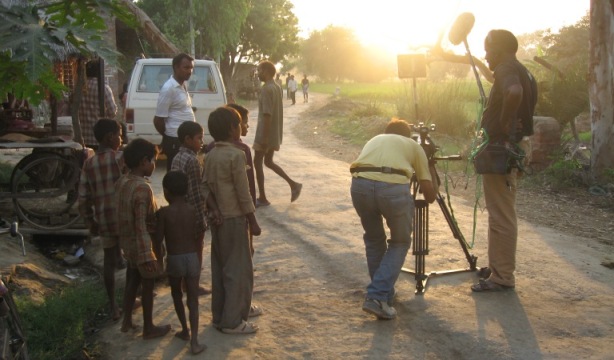
tveap-camera-crew-in-lucknow-india.jpg

Raising this amidst 60 journalists and producers from Africa, Asia, Europe, Latin America and the Caribbean attending the annual Greenaccord meeting, I pointed out that many of us were keen to contribute to media outlets beyond the countries where we are based. It gives us a chance to tell our stories to a bigger audience, and to have our voices heard about a range of issues and topics important to our communities.

And yes, the additional income that such work brings in is quite useful too, thank you.

Heads were nodding when I pointed out how hard it is for a talented, hard working journalist based in the majority world to break into the tightly controlled international media outlets. Even when they make an occasional breakthrough, they are often exploited by being paid lower professional fees for the same output and quality of work.

Or worse, majority world journalists are slighted and insulted for being where they are and who they are, rather than be judged on the merit of their work. As I wrote in a commentary published by SciDev.Net in November 2005: “Media gatekeepers in the North often dismiss the better-informed and equally competent Southern professionals — saying, insultingly, that ‘they don’t have the eye’! And for years, I have resisted the widespread practice of Northern broadcasters and filmmakers using the South’s top talent merely as ‘fixers’ and assistants.”

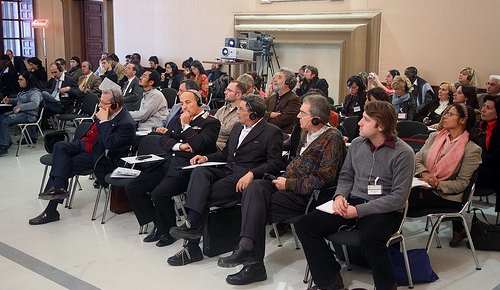
greenaccord-v-forum-in-progress-nov-2007.jpg

All this makes it imperative for us in the globalised media — in the developed North and developing South — to begin agitating for fair trade in media products and services. As in other products, we are not looking for charity or tokenism or a lowering of standards. We must strive for fairness and equality while working on building the capacity of southern journalists to generate world class media products.

And as my friend Darryl D’Monte — whom we missed dearly at this year’s Greenaccord forum — has been saying for years, publishing each other’s stories is one great step forward.

Mahatma Gandhi put it this way: we must be the change we wish to achieve.

Note: My own organisation, TVE Asia Pacific, practises what I preach here, and always engages local camera crews when we film TV stories across Asia. We will be taking up Fair Trade in Film and Television (FTinFT) as a campaign from 2008.

Read other related blog posts:

Images from the Majority World: Global South telling its own stories

Wanted: Fair trade in film and television!

Image of camera crews courtesy Pamudi Withanaarachchi of TVEAP.

Meeting photos courtesy Adrian Gilardoni’s Flickr account

Sputnik + 50: The beep that shook the world…

The Space Age was ushered in by the launch of a 83.6km metallic ball, named Sputnik 1, on 4 October 1957. When it happened exactly half a century ago, the course of history was changed forever.

‘Sputnik’ is Russian for travelling companion or satellite.

Here’s how a newsreel of Universal International News, screened at cinemas across the US, reported the development:

As one comment, posted by fromthesidelines said on YouTube:
This was one of the last weekly newsreels seen in movie theaters across the country (thanks to television)- this excerpt, from October of ’57, shows how much of an impact Russia’s “Sputnik” had on space and world affairs. Note that animated “simulations” were used, as Universal did NOT have access to any of the actual footage of “Sputnik” itself!

Sir Arthur C Clarke, author and inventor of the communications satellite, has just recalled personal memories of that momentous day in an interview with IEEE Spectrum:

“Although I had been writing and speaking about space travel for years, I still have vivid memories of exactly when I heard the news. I was in Barcelona for the 8th International Astronautical Congress. We had already retired to our hotel rooms after a busy day of presentations by the time the news broke. I was awakened by reporters seeking an authoritative comment on the Soviet achievement. Our theories and speculations had suddenly become reality!

“For the next few days, the Barcelona Congress became the scene of much animated discussion about what the United States could do to regain some of its scientific prestige. While manned spaceflight and Moon landings were widely speculated about, many still harboured doubts about an American lead in space. One delegate, noticing that there were 23 American and five Soviet papers at the Congress, remarked that while the Americans talked a lot about spaceflight, the Russians just went ahead and did it!”

And here is how Arthur C Clarke sums up the accomplishments of the first 50 years of space exploration:
On the whole, I think we have had remarkable accomplishments during the first 50 years of the Space Age. Some of us might have preferred things to happen in a different style or time frame, but when our dreams and aspirations are adjusted for reality, there is much we can look back on with satisfaction. (For example, in 1959 I took a bet that men would be landing on the Moon by June 1969, and lost only very narrowly.) And in the heady days of Apollo, we seemed to be on the verge of exploring the planets through manned missions. I could be forgiven for failing to anticipate all the distractions of the 1970s that wrecked our optimistic projections — though I did caution that the Solar System could be lost in the paddy fields of Vietnam. (It almost was.)”

Read the full Arthur C Clarke interview by Saswato R. Das in IEEE Spectrum

Read all of IEEE Spectrum’s coverage about Sputnik + 50

Stop that Traffick: ‘The Girl Next Door’ becomes ‘Trade’ the Movie

Image from Trade the Movie Image from Trade the Movie

When 13-year-old Adriana (played by Paulina Gaitan) is kidnapped by sex traffickers in Mexico City, her 17-year-old brother, Jorge (Cesar Ramos), sets off on a desperate mission to save her. Trapped by an underground network of international thugs who earn millions exploiting their human cargo, Adriana’s only friend throughout her ordeal is Veronica (Alicja Bachleda), a young Polish woman captured by the same criminal gang. As Jorge dodges overwhelming obstacles to track the girl’s abductors, he meets Ray (Kevin Kline), a Texas cop whose own family loss leads him to become an ally.

From the barrios of Mexico City and the treacherous Rio Grande border, to a secret internet sex slave auction and a tense confrontation at a stash house in suburban New Jersey, Ray and Jorge forge a close bond as they frantically pursue Adriana’s kidnappers before she is sold and disappears into a brutal underworld from which few victims ever return.

This is the synopsis of Trade, a feature film that opens across the United States on 28 September 2007.

Inspired by Peter Landesman’s chilling NY Times Magazine story on the U.S. sex trade, “The Girls Next Door,” (published in January 2004), TRADE is a thrilling story of courage and a devastating expose of one of the world’s most heinous crimes. The American debut of Marco Kreuzpaintner, one of Germany’s leading young directors, TRADE is produced by Roland Emmerich and Rosilyn Heller from a screenplay by Academy Award(R) nominee Jose Rivera (The Motorcycle Diaries).

Watch the trailer for Trade the movie

Image from Trade the Movie

Explaining the social context to this dramatised story, the movie’s website says:
“The practice of slavery in the US is something most people think ended with the 13th Amendment in 1865, but in recent years it has returned in an even more virulent form. Fueled by the collapse of the Soviet Union and other eastern European countries, new technologies like the internet, and sieve-like borders, the traffic in human beings has become an epidemic of colossal dimensions. The State Department estimates that as many as 800,000 people are trafficked over international frontiers each year, largely for sexual exploitation. Eighty percent are female and over fifty percent are minors. Many people in this country push this atrocity out of their minds, believing that it only occurs in faraway countries like Thailand, Cambodia, the Ukraine and Bosnia. The truth is that the United States has become a large-scale importer of sex slaves. Free the Slaves, America’s largest anti-slavery organization estimates that at least 10,000 people a year are smuggled or duped into this country by sex traffickers.”

Image courtesy Trade the Movie

The film’s makers, Roadside Attractions, says it will donate 5 per cent of the opening week box-office gross divided among four organisations participating in the release of the film; United Nations Office on Drugs and Crime (UNODC), Equality Now, International Justice Mission (IJM), and David Batstone’s Not For Sale Campaign.

On 19 September 2007, they held a benefit premiere at the United Nations headquarters in New York that included supper in the UN Delegates dining room. This marked the first film premiere event ever to take place at the United Nations, with the crusty UN officials mingling with film stars and artistes.

Read about the film-makers

Get involved in anti-traffick activism

Image courtesy Trade the movie

UN-ODC press release about Trade the movie

All images courtesy Trade the movie website

“If we don’t tell our stories, no one else will”

Image courtesy Maisha Labs

An unpretentious, matter-of-fact press release arrived in my email overnight from Maisha Film Lab in Kampala, Uganda. It started as follows:

“MAISHA, the annual training program for East African Filmmakers founded by director Mira Nair (Namesake, Mississippi Masala, Monsoon Wedding) is now in its third year of operation. Housed in Munyonyo, Kampala, the three-week lab (which takes place from July 21st to August 11th, 2007) is currently training 9 filmmakers, 3 sound mixers, 3 cinematographers, and 3 editors with world-renowned filmmaking professionals.”

The press release then listed Maisha’s 2007 mentors. Among them:
– Jason Filardi (Writer, Bringing Down The House)
– Joshua Marston (Writer/Director, Maria Full of Grace)
– Alison Maclean (Writer/Director, Jesus’ Son)
– David Keating (Writer/Director, Last of the High Kings)
– Drew Kunin (Production Sound Mixer, Crouching Tiger Hidden Dragon, Zodiac)
– Kerwin DeVonish (2nd Unit DP, Inside Man)
– Barry Alexander Brown (Editor, Inside Man, Malcolm X), and
– Fellipe Barbosa (Director, Salt Kiss)

Wow – Mira has succeeded in rounding up some of the best film industry talent in North America. All these professionals are donating their time, so that African film-makers can sharpen their skills in making better moving images.

But it’s the mission of Maisha that interests me most — because it so resonates with what we at TVE Asia Pacific have been advocating in Asia in our own small way: equipping and empowering local film-makers to tell their own stories to their people and the world.

Maisha’s tagline says it all: “If we don’t tell our stories, no one else will”

As their website explains: “Film is easily one of the most far-reaching mediums in the modern world, one that essentially validates a culture. In the entire African continent, there are few, if any, training programs for aspiring filmmakers.

“The few films that take place in East Africa are often made by foreigners without local crews, and generally focus on the political turmoil that plagues the region. While there is a flourishing and vital writing and theatre culture in the region, the bridge to convert this talent into screenplays and films has yet to be built.

MAISHA (meaning “life” in Kiswahili) provides new screenwriters and film directors from East Africa (Uganda, Kenya, Tanzania and Rwanda) and South Asia (India, Pakistan, Sri Lanka and Bangladesh) with access to the professional training and production resources necessary to articulate their visions.

Mira Nair image from Harvard University Gazette

Maisha aims to preserve, cultivate and unleash local voices from these regions, and to become one of the first targeted programs to offer structured and accessible resources to these emerging filmmakers. MAISHA is motivated by the belief that a film which explores the truths and idiosyncrasies of the specifically local often has the power to cross over and become significantly universal.

Read more about Maisha Filmmaker Lab

Maisha has selected three short films from this year’s participants’ submitted screenplays. These films are currently in production, crewed entirely by Maisha trainees. The cast is culled from the Kampala theater community. They are:

Must be a God-Fearing Christian Girl
Directed by Wanjiru Kairu, Kenya
John Webuye is a smart, successful man- living at home with his mother. After some failed attempts at internet dating, he finds love in the most unexpected of places.
Assistant director: Consodyne Buzabo, Production Manager: Victor Dimo Okello, Cinemtaographer: Ronald Kasirye, Sound Mixer: Richard Ndung’u, Editor: Risper Mbuthia.

The Trip
Directed by James Gayo, Tanzania
Pembe and Kaniki are two brothers on their way to interview for new jobs. Their bus breaks down along the way- and Kaniki’s wandering eye leads them in a different direction than they had anticipated.
Assistant Director: Jennifer Gatero, Production Manager: Kwezi Kaganda Runihda, Cinematographer: George Karugu, Sound Mixer: Theirry Dushimirimana, Editor: Zipporah Kimundu.

What Happened in Room 13
Directed by Dilman Dila, Uganda
Peter’s wife, Oliva, is pregnant and in the hospital, which gives her wayward husband an excuse to run off to a cheap motel with his best friend’s wife, Prossy. After their encounter leaves Prossy fatally injured, Peter tries desperately to cover his tracks.
Assistant Director: Ayuub Kasasa Mago, Production Manager: Anthony Njeru Thandi, Cinematographer: Nicholas Mtenga, Sound Mixer: Moses Hussain, Editor: Patrick Sekyaya.

Read: June 2004: Mira Nair Launches MAISHA, Film Laboratory for East Africans, South Asians

Read Mira Nair’s profile on Maisha website

Note: One of my claims to fame is that Mira Nair and I are both on the Board of Governors of Ujala TV, the South Asian educational broadcasting venture that I wrote about a few weeks ago. And last month, Mira’s latest film Namesake reduced me to tears in public.

Children of Men – the coming anarchy

“The Muslim community demands an end to the Army’s occupation of mosques.”

“The Homeland Security bill is ratified. After eight years, British borders will remain closed. The deportation of illegal immigrants will continue. Good morning. Our lead story…”

These and other disturbing news headlines are sprinkled throughout Children of Men, the 2006 dystopian British movie based on a 1992 novel by P D James.

It wasn’t a good idea to have watched this movie on my flight from Doha to London. I arrived to find London’s Heathrow Airport more crowded and chaotic than I’d ever seen in 15 years of arrivals. Is this a sign of things to come?

In all likelihood, it was just a routine Saturday, but the (fortunately well behaved) crowds made me think again of the coming chaos that Children of Men predicts will overwhelm Britain in just a generation.

As the movie’s official synopsis puts it:
The world’s youngest citizen has just died at 18, and humankind is facing the likelihood of its own extinction. Set in and around a dystopian London fractious with violence and warring nationalistic sects, Children of Men follows the unexpected discovery of a lone pregnant woman and the desperate journey to deliver her to safety and restore faith for a future beyond those presently on Earth.

And this is how a fan summed it up on Internet Movie Database (IMDB):

Set in 2027, when no child has been born for 18 years and science is at loss to explain the reason, African and East European societies collapse and their dwindling populations migrate to England and other wealthy nations. In a climate of nationalistic violence, a London peace activist turned bureaucrat Theo Faron, joins forces with his revolutionary ex-wife Julian in order to save mankind by protecting a woman who has mysteriously became pregnant.

When P D James wrote the original novel, she placed the story 35 years in her future. When Alfonso Cuarón directed its movie adaptation, starring Clive Owen, Sir Michael Caine, and Julianne Moore, the world had moved to just two decades within reach of 2027. And, ominously, the concerns of immigration, law and order and environmental degradation had all grown worse.

The movie portrays a dark and depressing near future for our species and the planet. This isn’t the imagination of writer and film-maker running amok: the ingredients of that dystopia are already evident, and we’re flirting with the sympoms while the trends evolve into status quo.

We have been warned.