Beyond coffee and bananas: We need fair trade in international media!

Fair trade is gaining momentum worldwide. More products are coming within the scope of fair trade in more countries.

That’s certainly good news in a world full of exploitation, inequality and unfairness at various levels.

But are we, in the mass media whose business it is to gather and deliver news and information, yet part of this good news ourselves? In other words, isn’t it high time there was fair trade in international media products too?

This is the simple question I raised this week at the V Greenaccord International Media Forum on the Protection of Nature, held from 7 to 11 Novmeber 2007 at the historic Villa Mondragone in Frascati, some 20km southeast of Rome.

During the 3.5 day international gathering of journalists and scientists concerned about the environment, we had several speakers referring to fair trade in Europe and at a global level. As more consumers become aware of environmental and social justice considerations, they are doing something about it in their buying of goods that are fairly traded, we heard.

The Wikipedia describes fair trade as ‘an organised social movement and market-based model of international trade which promotes the payment of a fair price as well as social and environmental standards in areas related to the production of a wide variety of goods.’

The movement focuses in particular on exports from developing countries to developed countries, most notably handicrafts, coffee, cocoa, tea, bananas, honey, cotton, wine and fresh fruit.

Fair trade is all about creating opportunities for small scale producers in the developing countries to get organised and supply directly to consumers in different parts of the world. When they sell direct, with few or no intermediaries, they can earn three or four times more, and that money will enhance their incomes, living standards and societies.

Read more about fair trade at Oxfam website, Make Trade Fair

Fair trade is certainly a cherished ideal, but it’s mired in complex economic and political realities. The globalised march of capital, profit-maximising corporations and developed country farm subsidies are among many factors that make fair trade difficult to achieve.

Fair trade activists are well aware of these realities. Their success is built on connecting producers with individual consumers. The proliferation of new media – especially the Internet – has made it easier to sustain such communications.

But the fair trade movement is still largely rooted in goods, not services. In my view, this is necessary but not sufficient in a modern world economy where nearly two thirds of global GDP comes from the services sector. (The Wikipedia’s breakdown for global GDP is agriculture 4%; industry 32%; services 64%).

I can’t immediately find how much the print, broadcast and online media contribute to that 64%, but it must be significant in the media saturated world today. And certainly the flow of media products — text, audio, photographs, moving images, online content and derivatives of these — has become more globalised in the past two decades.

So why not begin to agitate for fair trade in media products when they cross borders? Why aren’t we practising fair trade in our own media industry even as we cover fair trade as a story in our editorial content?

I didn’t get a very clear answer from fair trade activists that I posed this question to this week. While agreeing with me that the same fair trade principles can be applied to the media sector, they acknowledged that each sector has its own dynamics and must develop realistic ways to accomplish fair trade.

So it’s up to us who produce, distribute and manage assorted media products to begin this transformation from within.

Let’s not kid ourselves about what we are taking on. As I wrote in a blog post in September 2007:

“In the media-rich, information societies that we are now evolving into, media and cultural products are an important part of our consumption — and therefore, more of these have to be produced. In the globalised world, more television and film content is being sourced from the majority world — or is being outsourced to some developing countries where the artistic and technical skills have reached global standards.

“But in a majority of these media production deals, the developing country film and TV professionals don’t enjoy any fair terms of trade or engagement. Their creativity and toil are being exploited by those who control the global flow of entertainment, news and information products.

“This is why the top talent in the global South become assistants, helpers and ‘fixers’ to producers or directors parachuting in to our countries to cover our own stories for the Global Village. Equitable payments and due credits are hardly ever given.”

In the same commentary, I added:
“Unfair trade in film and TV is also how the unsung, unknown creative geniuses contribute significantly to the development of new cartoon animation movies or TV series, as well as hip video games that enthrall the global market. Lacking the clout and skill to negotiate better terms, freelancers and small companies across the global South remain the little elves who toil through the night to produce miracles. They work for tiny margins and even tinier credit lines. Some don’t get acknowledged at all.”

Read my blog post: Wanted: Fair trade in film and television!
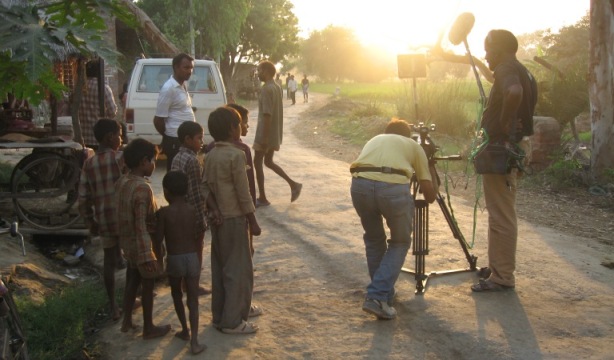
tveap-camera-crew-in-lucknow-india.jpg

Raising this amidst 60 journalists and producers from Africa, Asia, Europe, Latin America and the Caribbean attending the annual Greenaccord meeting, I pointed out that many of us were keen to contribute to media outlets beyond the countries where we are based. It gives us a chance to tell our stories to a bigger audience, and to have our voices heard about a range of issues and topics important to our communities.

And yes, the additional income that such work brings in is quite useful too, thank you.

Heads were nodding when I pointed out how hard it is for a talented, hard working journalist based in the majority world to break into the tightly controlled international media outlets. Even when they make an occasional breakthrough, they are often exploited by being paid lower professional fees for the same output and quality of work.

Or worse, majority world journalists are slighted and insulted for being where they are and who they are, rather than be judged on the merit of their work. As I wrote in a commentary published by SciDev.Net in November 2005: “Media gatekeepers in the North often dismiss the better-informed and equally competent Southern professionals — saying, insultingly, that ‘they don’t have the eye’! And for years, I have resisted the widespread practice of Northern broadcasters and filmmakers using the South’s top talent merely as ‘fixers’ and assistants.”
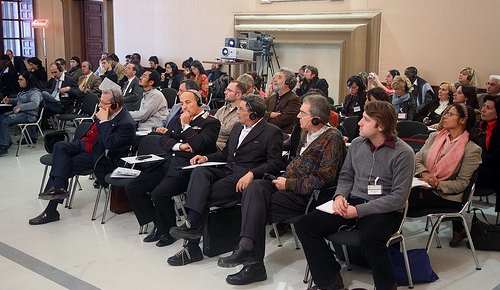
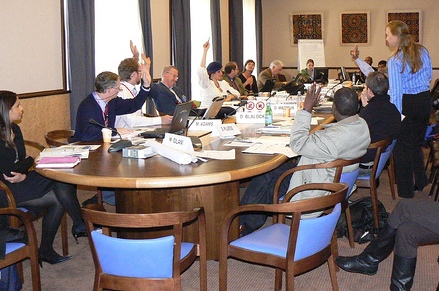
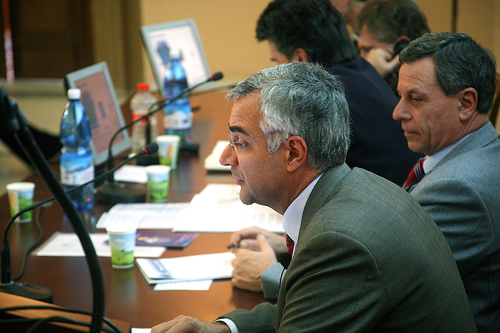
greenaccord-v-forum-in-progress-nov-2007.jpg

All this makes it imperative for us in the globalised media — in the developed North and developing South — to begin agitating for fair trade in media products and services. As in other products, we are not looking for charity or tokenism or a lowering of standards. We must strive for fairness and equality while working on building the capacity of southern journalists to generate world class media products.

And as my friend Darryl D’Monte — whom we missed dearly at this year’s Greenaccord forum — has been saying for years, publishing each other’s stories is one great step forward.

Mahatma Gandhi put it this way: we must be the change we wish to achieve.

Note: My own organisation, TVE Asia Pacific, practises what I preach here, and always engages local camera crews when we film TV stories across Asia. We will be taking up Fair Trade in Film and Television (FTinFT) as a campaign from 2008.

Read other related blog posts:

Images from the Majority World: Global South telling its own stories

Wanted: Fair trade in film and television!

Image of camera crews courtesy Pamudi Withanaarachchi of TVEAP.

Meeting photos courtesy Adrian Gilardoni’s Flickr account
Beyond press release journalism: Digging up an environmental business story

“Don’t reproduce press releases from companies, or accept their corporate PR. To get to the real stories, journalists have to dig deeper and work a bit harder.”

Paolo Pietrogrande
, Chairman of Atmos Holding, offered this piece of advice when talking to an international group of journalists at the V Greenaccord International Media Forum on the Protection of Nature, held from 7 to 11 Novmeber 2007 in Rome, Italy.

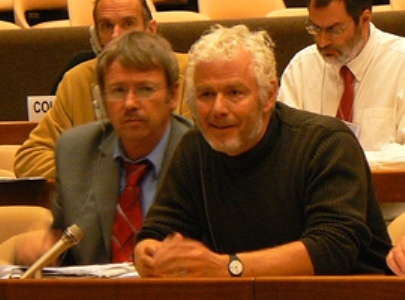
Pietrogrande (seen speaking in photo, below) was talking on ‘new investment scenarios in renewable energy sources’ during a session on sustainable economic mechanisms. A New York based Italian businessman with past experience in Ducati Motor, General Electric, Bain&Company and Ryanair, he suggested that many positive environmental business stories were being overlooked by the media.

paolo-pietrogrande-addressing-greenaccord-v-meeting-nov-2007.jpg

According to him, there are billions to be made in clean energy and clean technology sectors in the coming years — and venture capitalists and other investors have already recognised this potential. Real Money is now being invested in these sectors, often below the media’s radar and without any fanfare.

This is not corporate social responsibility (CSR), philanthropy or ‘greenwashing’ PR. These are hard-nosed investors who fully expect good and dependable returns on what they put in. They do due diligence and take expert advice before putting in their billions into such emerging sectors.

Yet, immersed in peddling doom and gloom stories – especially on climate change these days – most media outlets miss out on these stories which have significant business and environmental angles.

His advice to journalists included these tips:
* Don’t look at press/media sections on corporate websites, which is usually full of PR. Even CSR reports are carefully crafted to give a rosy picture. The real stories lie elsewhere.
* Instead, read the annual reports of companies, especially the CEO’s letter to shareholders. That’s a carefully crafted statement and analysis which contains a good deal of information.
* Stop replying on press releases, and certainly don’t get into the habit of recycling them in news stories. Instead, look at public disclosure documents of companies for leads and insights.

The environment has moved way beyond CSR and corporate PR, he said. More and more companies realise how environmental compliance increases their efficiency and thus profitability. Whole new business areas and opportunities are opening up for those working on clean energy and clean technologies. The impetus has come from concerns on global climate change.

greenaccord-v-forum-in-progress-nov-2007.jpg

If Pietrogrande sounded a bit like Carl Sagan – talking of billions and billions – that is understandable. He sees vast potential in clean energies and clean technologies that can help reduce carbon emissions causing global warming. Industry has traditionally made profit emitting carbon, and now there is money – and profit – to be made cleaning it up.

Investors are lining up with the money, but good ideas and projects are in short supply, he said.

Which reminded me of something that the American engineer, architect and visionary Buckminster Fuller once said: “There is no shortage of energy on this planet. There is, however, a serious shortage of intelligence”.


Meeting photos courtesy Adrian Gilardoni’s Flickr account

Journalists and scientists seeking Green Accord

Can journalists save the planet?

This was the question I raised in a blog post written in April 2007. Arguing that environmental journalists alone cannot adequately address the multitude of complex environmental challenges faced today, I wrote: “We urgently need more good journalism that covers sustainable development as an integral part of mainstream human affairs.”

For the past five years, an Italian non-profit cultural association named Greenaccord has been attempting just this. In the (northern hemisphere) Fall of each year, they invite and host 50 – 60 journalists and scientists from all over the world to discuss how the media can be an integral part of society’s response to today’s environmental crises. In fact, they believe the media must play a path-finder role in our search for solutions.

During this week, I have been attending the V Greenaccord International Media Forum on the Protection of Nature, held from 7 to 11 Novmeber 2007 at the historic Villa Mondragone in Frascati, some 20km south east of Rome.

It has been a time to meet old friends again and to make new ones. I have been part four of the five Greenaccord media forums since the first one was held in Rapolane Terme, in the Tuscany valley in northern Italy in 2002.

Greenaccord is the only regular (annual) meeting that I know of where practising journalists and media gatekeepers come together from all regions of the world to discuss the state of the planet and state of their profession.

Each year, we have some ‘regulars’ returning while new participants join the growing network. As some old hands noted this week, it is evolving into an extended family.

That family consists mainly of print and broadcast media journalists from Africa, Asia, Europe, Latin America and the Caribbean. Many are engaged in ‘deadline journalism’ of news and current affairs, while a few of us, like myself, have moved on to more reflective and analytical kind of journalism. We also have a few researchers, activists and public information officers among us, enriching our discussions with a diversity of perspectives.

To engage this group of participants over three and a half days, Greenaccord invites a dozen or so scientific or industry experts from different regions of the world and different disciplines. This year’s theme, ‘Capitalising on the Environment’, was explored by business leaders, fair trade activists, economists and a number of technical experts specialising in fields such as clean energy, clean technology and organic farming.

greenaccord-v-forum-in-progress-nov-2007.jpg

As with all meetings, some speakers were far more interesting than others. And some sessions were blessed with competent chairpersons who kept overenthusiastic speakers in check and allowed meaningful discussion and debate to happen.

Sitting through such meetings is a bit like gem mining. One has to sift through a lot of gravel to find a rare precious gem. When that happens, it’s well worth the hassle.

Well, I’ve had my share of gravel moments (zzzzzzzzzzzzzzzzz!) and precious moments (Eureka!) this week. I’ll write separate blog posts on some of the latter. They are indeed worth sharing.

The real stars (or gems if you like) in this whole exercise are the participants themselves. We come from such diverse backgrounds – the sessions are supported by simultaneous interpretation in English, Spanish and Italian, with an occasional remark in French – that we enrich each other by simply being there.

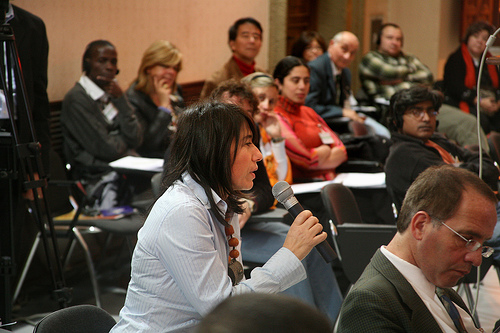
emanuela-gasbarroni-from-tve-med-intervenes.jpg

Some of us can barely contain our passion for what we do, and keep making comments or asking questions at every available opportunity. Others are more quiet during sessions but expressive during the many hours of networking and socialising over fine Italian wine, coffee and gastronomical treats. All these are part of Greenaccord’s cultural diversity that we contribute to, and then celebrate.

Even if we don’t take ourselves too seriously, we do discuss sobering issues. On the one hand, the planet is in peril, largely thanks to human bungling over generations. On the other, mass media itself is in crisis in many countries — under siege from oppressive governments, grappling with limitations of money and skills, and facing competition from new media platforms grabbing audiences and revenue.

For example, a colleague from Cameroon found the government closing down his privately owned FM radio station just a couple of days before he left for Rome. Others had worrying tales to share about official censorship, physical violence unleashed on media organisations and journalists, and the tension between media owners’ interests and the public interest.

We expressed solidarity and support for all Greenaccord colleagues currently experiencing difficulties of various kinds. The spirit of camaraderie in this network is strong – and keeps growing.

So is all this networking and meeting hopping a distraction from real work, which each one of us have to perform at our desks, or in our studios, on an individual basis? I don’t think so. Far from being a drag on my time, I find gatherings like Greenaccord inspiring and energising. They also remind me that I’m not alone in the daily struggle and drudgery of deadlines, government bureaucracies, funding crises and a never-ending race to keep up with new media technologies.

A planet in peril and a media in crisis need more platforms like this to connect and support many more of our kind who weren’t in Rome this week. Greenaccord isn’t perfect (we’re working on it), but it has lit more than a few candles against the looming darkness.

– Nalaka Gunawardene, Frascati, Rome: 10 November 2007

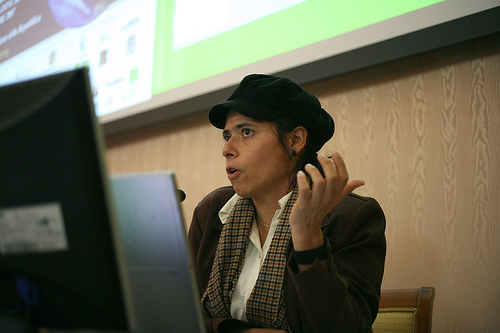
zilia-castrillon-speaking-at-greenaccord-v-nov-2007.jpg


Meeting photos courtesy Adrian Gilardoni’s Flickr account

‘Embedded’ or aloof: Media’s choice in covering emergencies

banner.jpg

In many disaster and conflict hot spots of the world, journalists and relief aid providers work closely together. There are times when journalists play good Samaritan and aid workers dabble as reporters. In the difficult field conditions of emergencies, this is understood and accepted.

But should journalists become ’embedded’ in humanitarian operations? If so, how impartial or independent would their coverage be?

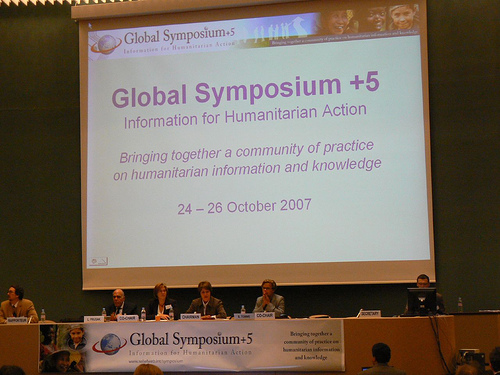
This issue kept coming up during the Global Symposium+5 on ‘Information for Humanitarian Action’ in Geneva this week (22 – 26 Oct 2007). The majority aid officials and handful of journalists present didn’t always agree.

UN agencies and other humanitarian organisations increasingly recognise the power of media, especially broadcast television, to raise public awareness on emergencies. This, in turn, influences political commitments, aid donations and relief operations themselves.

But how close can the media get to aid agencies before they lose their sense of perspective and independent analysis? If journalists becoming embedded with the military in conflicts is frowned upon, what about media’s de facto embedding with humanitarian missions?

There was no consensus on the issue, but a few of us stressed on the need for independent media — independent of governments, aid agencies and other vested interests — to take stock of crisis situations and report, reflect and analyse on what they find.

The presence of nosy reporters might be an occasional irritant to some aid agencies, especially if they have things to hush up, but at the big picture level it can serve everyone’s interest — especially those of affected groups.

Alain Modoux, a former red cross official who went on to become an assistant director general of UNESCO, reminded us how governments often stand in the way of free flow of information on emergency situations. The reasons for such suppression vary: some don’t want to admit failures on their watch, and others fear public discussion and debate, especially at international level, on what is happening in their own country.

Governments can — and often do — bring pressure upon aid agencies to fall in line (or risk being thrown out). In such situations, it’s only the independent media that can take stock of rapidly changing situations and highlight the unmet needs and any disparities in the emergency response.

Then there is the media’s traditional watchdog role. The humanitarian sector is now the world’s largest unregulated industry – billions of dollars flow through the sector every year, most of it public funds (direct donations or taxes collected by governments). Yes, the aid agencies all audit their accounts and the UN has stringent regulations on how they can spend money. But there’s nothing like a bit of media scrutiny to keep everybody clean and honest…

Follow the money! This is what journalists are taught and trained to do – and with good reason. In emergency situations following the money often brings up instances of waste, corruption and mismanagement that aid agencies would rather not talk about.

edward-giradet.jpg

Swiss journalist Edward Girardet (photo, above), who specialises in in media, humanitarian aid and conflict issues, has been making this point for a long time.

As he has written: “Humanitarianism should not ‘belong’ to any one group. What the international aid industry urgently needs is more hard-nosed and independent reporting.”

That is unlikely to happen when individual journalists are too cosy with aid workers or their bosses.

Ed was at the Geneva Symposium this week, once again making a case for a viable media watchdog capable of reporting the real causes behind humanitarian predicaments, including how the international community responds.

Read my June 2007 blog post quoting Ed Girardet: Can the media tame the alms bazaar?

In one intervention, I suggested that the media can become the ‘conscience’ of the humanitarian industry – to ensure transparency and accountability of resources, decisions and conduct.

Partnerships between media and aid workers is fine, as long as the media remain somewhat aloof and detached.

And it’s not the global media who can or will stay with the stories as recovery takes months or years. We all saw in the aftermath of the Indian Ocean Tsunami how quickly the global media’s news interest went down.

In the long term, empowering the local journalists to ask the right questions and go in search of answers.

Read this blog post reproduced in Asia Media Forum


Read this blog post adapted in MediaHelpingMedia

New media tsunami hits global humanitarian sector; rescue operations now on…

banner.jpg

Geneva, 25 October 2007 (MovingNews): The global humanitarian sector has been hit by a ‘new media’ tsunami, causing widespread damage and massive confusion in Geneva.

Giant waves — carrying blogs, wikis, YouTube and other new media products — have simultaneously swept over several aid capitals of the world, including London, New York and Tokyo.

United Nations and many other international relief organisations are among the worst affected. These aid agencies, usually among the first to arrive at the scene of major disasters or crises, found their information and communication capacities severely depleted.

“This is entirely a man-made calamity, and we just didn’t see it coming,” the UN spokesperson in Geneva said in a brief message released using the old-fashioned Morse code. “Our risk registers, log frame analyses and satellite technologies gave us no advance warning.”

Eye witness reports said some agencies were completely marooned on old media islands, saddled with very large numbers of completely unreadable documents going back to decades.

First casualties included assorted spin doctors carrying out propaganda for UN agencies. One perished while trying to sanitise the Wikipedia entry about his agency head.

Meanwhile, several dozen injured or badly bruised public information officers have been treated at a language clinic. Some will undergo trauma counselling.

“We have never been exposed to this level of open and two-way communication,” a survivor from UN OCHA said. “We were so used to always being in control, always telling others what to do and how to do it. I still don’t know what hit us!”

In a major show of solidarity, the world’s computer, telecommunications and media industries are rushing emergency teams to provide relief and recovery support.

“For decades, the UN, red cross and other aid agencies have responded to many and varied emergencies. In their hour of need, we have decided to come to their help,” a joint tele-com-media industry statement said.

Other survivors are being given first aid in simple, jargon-free public speaking. Those who respond well will be treated with basic courses in participatory communication methods.

The emergency coordinators have ordered that any spin doctors found alive be quarantined to prevent the spread of the fatal infection known as MDG.

As the recover process continues, ICT activists plan to conduct more advanced exercises — such as how to produce PowerPoint presentations with less than 20 words per slide.

“But we have to take things one step at a time,” a relief worker said. “These people have just had their entire frame of reference collapse all around them. They are in deep shock and disbelief. It will be a gradual process.”

It has now been established that a few alert officials had anticipated the new media tsunami well ahead of its dramatic arrival. But their warnings were ignored, as it now turns out, to everyone’s peril.

In Washington DC, the United States has just designated veteran broadcasters Walter Cronkite , Bill Moyers and Oprah Winfrey as their New Media Tsunami Relief Ambassadors. In the coming weeks, they will tour the decimated UN, red cross and other humanitarian aid agencies, taking stock of the global disaster and sharing their collective wisdom on telling the truth to the public simply and well.

You, dear reader, are now invited to continue building this unfolding scenario:

How soon and how well will the humanitarian sector raise its head from the new media tsunami?

Will they learn lessons from this disaster, or might they soon return to business as usual?

What would happen to the massive outpouring of goodwill, voluntary help and aid?

The many lives of PI: Crisis communication and spin doctors

banner.jpg

Where does public information (PI) work end and public communication (PC) work begin?

And how can we separate public information work, which is mostly institutional propaganda, from public communication of issues and knowledge directly relevant to saving lives or improving them?

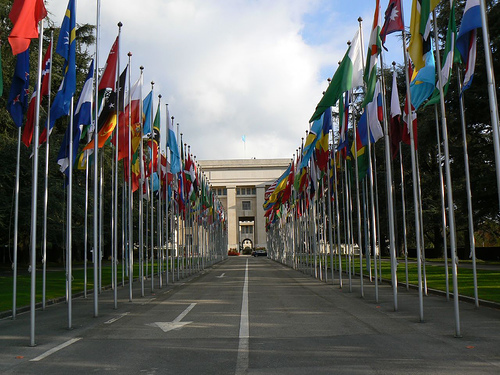
This is the question that we often grappled with this week in Geneva, during the Global Symposium+5 on ‘Information for Humanitarian Action’ organised by the United Nations Office for the Coordination of Humanitarian Affairs (UN-OCHA). The meeting, held from 22 – 26 October 2007 at the Palais des Nations, brought together over 200 persons involved or interested in information and communication aspects of humanitarian work. I was part of working group on ‘Communicating with affected communities in crisis’.

I raised the importance of separating PI from PC from the very beginning of our discussions. PI and public relations (PR) both have their place, I said, but it was not in the same league as communicating issues and knowledge.

Members of my working group – drawn from humanitarian organisations, UN agencies and the media – broadly agreed with this view. But many couldn’t help sliding back to their own agency’s PI/PR agendas during our discussions!

This is no accident. In this age of spin and soundbites, many development and humanitarian agencies are under pressure to raise their individual profiles in the public eye. In trying to do so, they give far higher priority – and resources – to PI/PR than to engaging in issue-based communication, or, to use one of their own favourite phrases, ‘evidence based advocacy’.

For public communication to assume its rightful place in the development process and humanitarian intervention, all key players will need to be more restrained with their PI/PR agenda. But looking around the massive UN complex in Geneva, where a dozen UN agencies are competing with each other for the public’s and media’s attention, I can’t quite see this happening soon.

I touch on this in an essay in August 2007 titled Cheque-book development corrupting the media. Here’s an extract:

As development organisations compete more intensely for external funding, they are increasingly adopting desperate strategies to gain higher media visibility for their names, logos and bosses.

“Communication officers in some leading development and humanitarian organisations have been reduced to publicists. When certain UN agency chiefs tour disaster or conflict zones, their spin doctors precede or follow them. Some top honchos now travel with their own ’embedded journalists’ – all at agency expense.

“In this publicity frenzy, these agencies’ communication products are less and less on the issues they stand for or reforms they passionately advocate. Instead, the printed material, online offerings and video films have become ‘logo delivery mechanisms’.

So the first step would be to deliver less logos and more real information.

Read my other relevant blog posts:

August 2007: Cheque-book Development: Paying public media to deliver development agency logos

April 2007: Say MDG and smile, will ya?

April 2007: MDG: A message from our spin doctors?

Everyone has information ‘needs’ — and information ‘wants’ too!

banner.jpg

When the development community talks of people living in poverty (or ‘the poor’) they almost always talk about somebody else — it is not ‘us’ but a remote, often nameless ‘them’.

And when the humanitarian community talks of people affected by crises — disasters or conflict — that too almost always is about somebody else, typically in a poor country.

The well-meaning, do-good people in development and humanitarian communities are fond of talking about the information needs of the poor or crisis affected. These ‘needs’ are usually defined in terms of survival, sustenance or relief.

It’s as if people in poverty or crisis situations only have a simple set of information needs, but none of the information ‘wants’ that we, the privileged, have in abundance.

In Geneva this week, I have argued that everyone has a right to not only information needs, but also information ‘wants’. Development or emergency relief would become truly meaningful only when both these are met.

I’m participating in the Global Symposium+5 on ‘Information for Humanitarian Action’ organised by the United Nations Office for the Coordination of Humanitarian Affairs (UN-OCHA). The meeting, held from 22 – 26 October 2007 at the Palais des Nations, UN headquarters in Europe, brought together over 200 persons involved or interested in information and communication aspects of humanitarian work.

I was invited to be part of working group 5 on ‘Communicating with affected communities in crisis’. Members of this group were drawn from national and international humanitarian aid agencies, UN system, governments and the media.

global-symposium5-in-geneva-oct-2007.jpg

Our brief was to ‘look at the information needs of affected populations both during emergencies and in longer term recovery efforts’. We were to ‘evaluate the nature of these needs, to identify actions necessary to achieve operational reality, and to consider the strategies required to integrate beneficiary communications into the humanitarian response framework, particularly through the opportunities offered by the current reform process’.

Now that’s all well and good, and we did that part of our work in earnestly and seriously. The outcome was presented on Oct 25 to the plenary stimulating discussion and debate.

But I kept reminding our working group that we really have to think beyond the mere information needs of people, and address their information wants as well.

This basically means information related to cultural and social aspects. Humans don’t live on bread, water, clothing and shelter alone. We are complex and nuanced beings with a vast array of interests — and that’s equally true for the city stockbroker, village farmer and the aid worker wearing a UN cap.

Evidence of this is all around us if we only care to notice. For example:

* Tens of thousands of people driven to temporary shelters by disasters or wars followed the 2006 Football World Cup in Germany from their make-shift homes. Football mania didn’t stop at the periphery of a camp.

* Every time there is an important cricket match in South Asia, it unites the rich and poor, the sheltered and homeless, and those living normal or crisis disrupted lives.

The sooner we in the development and humanitarian sectors recognise this reality, the better.

1692836466_2c493ea8ec.jpg
Photo shows working group 5 in session: photo courtesy UN OCHA.

I made a similar point in an essay written in mid 2004 on using information and communication technologies (ICTs) for poverty reduction:
I cringe every time I hear remarks about the poor just needing survival or sustenance related information. The information needs and wants of the poor can be as diverse as everybody else’s. Sarvodaya – Sri Lanka’s largest development NGO — once surveyed the information needs of poor people in rural and semi-urban areas. Their findings included: health and nutrition information, as well as details on bank loans, foreign jobs and insurance policies. There was also interest in world affairs, national politics and cultural affairs…

Read my full essay in GKP Partners Newsletter (My essay is the last one, so keep scrolling down, down, down.)

Three years later I found myself making the same point to a different group, many of who are information specialists working in crisis and emergency situations.

This kind of perception will continue as long as we harbour the us-and-them divide.

1687780850_168f228e8a.jpg

A million video cameras to change the world!

Something remarkable is happening with online public video sharing platforms: progressive non-profit groups worldwide are seizing their power to do good.

YouTube started off more like the people’s version of funniest home videos. But it’s no longer confined to that category. Activist and social groups are increasingly uploading their videos. As broadband Internet rolls out around the world, more people are actually able to watch these videos online.

In response, YouTube, owned by search giant Google, is creating a special section for nonprofits to air their videos and link them to its Google Checkout online payment system to receive funds directly.

“Nonprofits understand that online video isn’t just a way to broadcast public service announcements on a shrunken TV set,” Reuters quoted Steve Grove, head of news and politics at YouTube, as saying. “It’s a way to get people to do more than just absorb your message but to engage with their user generated content as well.”

Pure Digital, maker of the Flip video camera, has said it plans to give away a million video cameras to non-profit organizations around the world to capture images and moments in places traditional media outlets might not be able to reach.

“Video has power and media has power but the challenge is that the media is limited to telling stories that are controlled by a very small number of people,” Jonathan Kaplan, chief executive of Pure Digital, told Reuters. “This program along with YouTube and other sites will expand the media universe for learning what’s really going on in the world,” he said.

Visit FlipVideo website on support for non-profit groups

Reuters quotes the recent example of the impact of clips of the Myanmar army’s confrontations with local protesters which were posted on YouTube and other Web sites. Some of the clips made their way to mainstream news media, which were blocked out of entering or covering events in Burma.

See an example of a YouTube video on what’s happening in Burma:

Our friends at Witness, an activist group founded by the musician Peter Gabriel in 1992, has long specialised in raising awareness of such previously unseen events through video. Sam Gregory, programme director at Witness, says online distribution has made it easier to put videos in front of the right people such as decision makers and others with a personal connection to the cause.

“It’s not necessarily about the size of the audience it’s about placing targeted video and turning ‘watching’ into action,” said Gregory.

Read the Reuters story on 19 Oct 2007: Nonprofits turn to YouTube to raise awareness, funds

My blog post on 1 Oct 2007: Shoot on sight: Rights Alert on Burma

My blog post on 30 Sep 2007: Kenji Nagai: Filming to the last moment

TVE Asia Pacific News story March 2007: TVEAP films now on YouTube

What’s happening with online video has a parallel in how activist groups seized the potential of the hand-held video camera. The handicam was invented in 1985 by Sony. Intended originally for entertainment and domestic documentation purposes only (ranging from family vacations and weddings), it did not take long to find new uses for this revolutionary technology.

The Handicam Revolution in media began when a video camera captured police beating Rodney King on a Los Angeles highway. The shocking amateur footage was broadcast on TV around the world. The acquittal of the police officers after their first trial sparked outrage, and riots erupted in a 20 block section of Los Angeles, leaving 54 people dead and over 2,000 injured.

Ever since Rodney King, broadcasters have been using amateur video to provide images of events that their own camera people have not captured. And human rights activists have started relying on the power of video images to capture the attention of the broadcasters to expose acts of human rights abuse and violation.

Oz challenge to Japanese whaling – on YouTube!

Who said YouTube is only for activists and video enthusiasts to share their content?

The above appeal is by Australia’s Environment Minister Malcolm Turnbull, who’s using the popular new media platform to reach out to children and young adults in Japan in a campaign aimed at stopping Japan’s stubborn insistence on whaling.

The Australian Department of Environment has taken out a YouTube channel where this and several other videos are on offer.

This is very encouraging – to see a government putting aside diplomatic niceties and taking a campaign right to the heart of a society that is still culturally attached to whale meat. For sure, Australia is also active in inter-governmental negotiations to sustain the global ban on whaling, but addressing the issue from the demand side and future generation angle can make the anti-whaling positions stronger.

Here’s how Reuters reported the story this week:

CANBERRA, Oct 9 (Reuters) – Australia has taken its battle against Japanese whaling in the Antarctic to the Internet, with a new YouTube campaign unveiled on Tuesday that targets Japanese children.

“Can you imagine what life on Earth would be like without these magnificent creatures? Hundreds of years of whaling have nearly wiped them out,” Australia’s Environment Minister Malcolm Turnbull says in the video, subtitled in Japanese.

Japan plans for the first time to hunt 50 humpback whales in the Antarctic over the coming summer, with the endangered animals currently migrating south along the Australian coast. Japan also plans to hunt 935 minke whales for scientific research.

The Japanese whaling fleet, hampered by a fire on the factory processing ship Nisshin Maru last February which killed one crewman, was recently bolstered by the addition of a new chaser vessel.

Australia’s government, facing re-election in weeks, has dismissed as futile the opposition’s calls for legal action over Japanese whaling in Australia’s Antarctic Whale Sanctuary, which is not recognised by other nations.

Japan’s fisheries agency, confident its whaling rights will be confirmed, has challenged any country to take it to the International Court of Justice in The Hague

Turnbull said Canberra would fight in the court of public opinion.

Read the full story on Reuters AlertNet

Greenpeace anti-whaling website

Here’s an animated anti-whaling TV commercial I came across on YouTube that takes a different look at the same issue. It was produced by Saachi & Saachi Poland:

Geography lesson that saved many lives: The story of Tilly Smith and Asian Tsunami of 2004

ISDR image

Today, 10 October, is the International Day for Disaster Reduction. The theme this year is “Disaster Risk Reduction Begins at School”.

This year’s campaign, spearheaded by UN International Strategy for Disaster Risk Reduction aims “to inform and mobilize Governments, communities and individuals to ensure that disaster risk reduction is fully integrated into school curricula in high risk countries and that school buildings are built or retrofitted to withstand natural hazards.”

Buried beneath this development jargon that UN agencies are so fond of is something very important: sensitising the next generation about living with hazards can help make our societies better able to cope with disasters when they do happen.

And you never know when an informed and alert school kid could save the day — and many lives.

A good example came from Thailand when the Indian Ocean Tsunami arrived without any public warning on 26 December 2004.

ISDR BBC

Tilly Smith, an eleven-year-old British schoolgirl, was on holiday on Maikhao Beach in Thailand with her family when the tsunami hit. Just a few weeks earlier, she had studied tsunamis in school — and immediately recognized the signs of the receding sea as a sign of an impending disaster. She warned her parents, which led to all the hotel guests being rapidly moved from the beach.

This simple, timely action by a single schoolgirl saved the life of dozens of people. Tilly’s story highlights the critical importance of basic education in preventing the tragic impacts of natural disasters.

Watch her story on YouTube:

This 5 min video, produced by UN/ISDR in 2005, is available in English, French and Spanish. Watch the English version on their website, which is now hidden under all that bureaucratic babble:
Higher resolution WMV file – more suited for broadband Internet connections
Lower resolution WMV file – will play better on narrowband Internet connections

According to the Wikipedia, Tilly’s family have declined requests to be interviewed by commercial and national broadcasters, but Tilly has appeared at the United Nations in November 2005, meeting Bill Clinton the UN Special Envoy for Tsunami Relief, and at the first year anniversary in Phuket, as part of the campaign to highlight the importance of education.

In December 2005, Tilly was named “Child of the Year” by the French magazine Mon Quotidien. On the First Anniversary of the Official Tsunami Commemorations at Khao Lak, Thailand on December 26, 2005, she was given the honour of closing the ceremony with a speech to thousands of spectators which read in part:

National Geographic online: Tsunami Family saved by school girl’s geography lesson

BBC Online: Award for tsunami warning pupil