True ‘People Power’ needed to fight climate change

Dealing with climate change – the biggest environmental threat faced by the planet today – requires building up a mass movement at the grassroots across the developing countries of the global South.

Such a movement might be unpopular not only with the Southern elite but also with sections of the urban-based middle class sectors that have been the main beneficiaries of the high-growth economic strategy that has been pursued since the early 1990s, a leading southern activist cautioned in Rome last week.

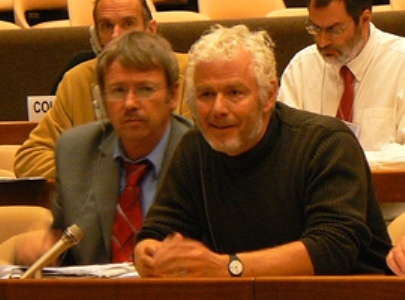
Speaking at the Greenaccord Media Forum on 10 November 2007, Walden Bello, Filipino academic and executive director of the Focus on the Global South (seen in photo below, on the right), dismissed the notion that Asian masses are inert elements that uncritically accept the environmentally damaging high-growth export-oriented industrialisation models promoted by their governing elites.

“It is increasingly clear to ordinary people throughout Asia that the model has wrecked agriculture, widened income inequalities, led to increased poverty after the Asian financial crises, and wreaked environmental damage everywhere,” he said.
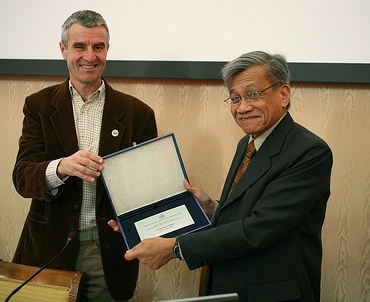
prof-walden-bello-receives-plaque-from-andrea-masullo-of-greenaccord.jpg

People in the South are open to an alternative to a model of growth that has failed both the environment and society, he said. For instance, in Thailand, a country devastated by the Asian financial crisis of 1997 and wracked by environmental problems, globalization and export-oriented growth are now bad words.

He added: “Thais are more and more receptive to the idea of a ‘sufficiency economy‘ promoted by popular monarch King Bhumibol, which is an inward-looking strategy that stresses self-reliance at the grassroots and the creation of stronger ties among domestic economic networks, along with ‘moderately working with nature'”.

But the southern countries cannot and must not rely on their elite to provide leadership, he said. “What is clear is that in most other places in the South, one cannot depend on the elites and some sections of the middle class to decisively change course. At best, they will procrastinate.”

The fight against global warming will need to be propelled mainly by an alliance between progressive civil society in the North and mass-based citizens’ movements in the South.

Delivering the Lectio Magistralis to conclude the 4-day international gathering of journalists, activists and experts concerned about the environment, Prof Bello traced the evolution of social movements on environment and public health in East Asia, Southeast Asia and South Asia over the past few decades.

Read the test of a similar talk given by Walden Bello at the Trans National Institute in October 2007.

Prof Bello acknowledged that the environmental movements in the South and North have seen their ebbs and flows. “As with all social movements, it takes a particular conjunction of circumstances to bring an environmental movement to life after being quiescent for some time or to transform diverse local struggles into one nationwide movement.”

The challenge facing activists in the global North and the global South is to bring about those circumstances that will trigger the formation of a global mass movement that will decisively confront the most crucial challenge of our times.

And climate challenge is one among several challenges we confront today.
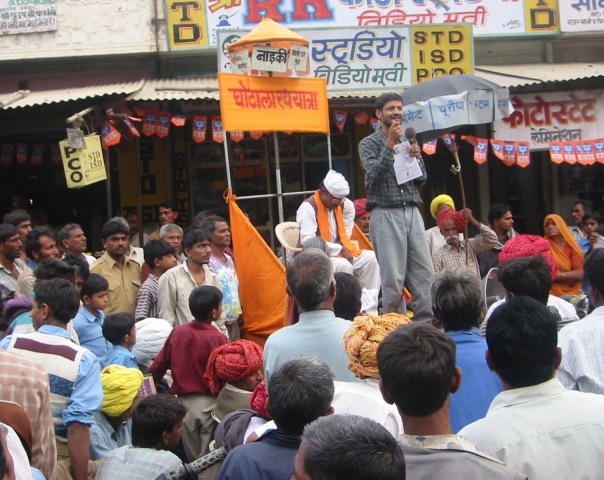
campaigning-for-clean-elections-in-rajastan-india.jpg


Meeting photos courtesy Adrian Gilardoni’s Flickr account

People power India photo courtesy TVEAP image archive

Bretton Woods on fire: Hard times ahead for World Bank and IMF

800px-deerfire_high_res.jpg

As the California forest fires raged over many days in October 2007, it dominated the US and some sections of the global media. Focus was on how the fires started and what factors contributed to their rapid spread.

Below the media’s radar, another kind of ‘fire’ has been building up over the past few months on the US East Coast. According to one leading intellectual-activist that I heard this week, this is a development whose reverberations will be felt right around the world, and for years to come.

The Bretton Woods are on fire. Actually, it’s the Bretton Woods institutions, namely the World Bank and International Monetary Fund (IMF).

Speaking at the Greenaccord Media Forum in Rome on 10 November 2007, Walden Bello, Filipino academic and executive director of the Focus on Global South, suggested that the World Bank and IMF are headed for turbulent times as countries in the global South (majority world) assert themselves economically.

Preparing to rebuild the international economic system as World War II was still raging, 730 delegates from all 44 Allied nations gathered at the Mount Washington Hotel in Bretton Woods, New Hampshire for the United Nations Monetary and Financial Conference. The delegates deliberated upon and signed the Bretton Woods Agreements during July 1944. That marked the birth of the World Bank and IMF.

The World Bank and IMF are essentially lenders of money to governments for development purposes. If these lending institutions run short of borrowers, they will be out of business.

That hasn’t happened yet, but Bello (photo, below) identified several trends that must make the Bretton Woods duo worry about losing control.

professor-walden-bello.jpg

According to Bello, the resistance is led by countries of Latin America, a region where the twin lenders have long been controversial. In May 2007, Venezuela under President Hugo Chavez announced it would be leaving both the World Bank and IMF.

Venezuela has repaid its remaining debts to the World Bank five years ahead of schedule and paid off its debts to the IMF shortly after Mr Chavez first took office in 1999. Bello says the oil-rich country has sought to provide alternative forms of credit and financial support for countries in the region. One such project is the “Bank of the South”, which aims to financially help Latin American countries to pay off their IMF loans ahead of schedule.

In October 2007, Nobel prize-winning economist Joseph Stiglitz endorsed the Chávez plan to create a pan-regional bank for Latin America. Professor Stiglitz, a Washington insider and former World Bank chief economist, said the Bank of the South would benefit the region and give a welcome shakeup to western lending institutions.

Read March 2006 commentary by Mark Engler in Common Dreams: Latin America Unchained: Will the U.S. Lose its Influence Over Countries That Have Paid Off Their IMF Loans?

These trends, coupled with the rise of a new set of Southern countries willing and able to provide loans or grant aid to fellow countries of the South, are slowly but steadily eroding the domination and power the Bretton Woods twins have exercised for over half a century, Bello said.

Some of these alternative lenders are giving money with fewer conditions and restrictions. These include China, Saudi Arabia and Venezuela. This is what the editor of the influential US journal Foreign Policy called ‘rogue aid’ in an article he wrote in the journal’s March/April 2007 issue.

As the global South asserts itself and begins to exercise the power of their recent economic growth – which, ironically, is partly thanks to past borrowing from the Bretton Woods twins, the coming years will be crucial for the future World Bank and IMF.

The fire in the Bretton Woods is only just smouldering. But watch that smoke…

* * * * *

Walden Bello won the Right Livelihood Award (the Alternative Nobel) in 2003, for his decades of advocacy, activism and research. As the award foundation noted: “Walden Bello is one of the leading critics of the current model of economic globalisation, combining the roles of intellectual and activist. As a human rights and peace campaigner, academic, environmentalist and journalist, and through a combination of courage as a dissident, with an extraordinary breadth of published output and personal charisma, he has made a major contribution to the international case against corporate-driven globalisation.”

While campaigning on human rights he saw how the World Bank and IMF loans and grants were supporting the Marcos regime in power. To expose their role, he took the risk of breaking into the World Bank headquarters in Washington, and brought out 3,000 pages of confidential documents. These provided the material for his book Development Debacle (1982), which became an underground bestseller in the Philippines and contributed to expanding the citizen’s movement that eventually deposed Marcos in 1986.

Read full profile on Walden Bello on Right Livelihood Award website


Meeting photos courtesy Adrian Gilardoni’s Flickr account

Can somebody please update ‘The Development Set’ by Ross Coggins?

At the UN European Headquarters in Geneva this week, while attending a conference of humanitarian aid workers from around the world, I heard two of them compare the flat-beds in business class of two international airlines.

The conversation was more than just a passing one. They were passionately discussing the relative merits of different business class seats and perks.

I almost felt like butting in and saying that Singapore Airlines – the world’s finest airline, no argument – has just created a new product that they can now lust after: personal cabin suites in the air.

Coincidentally this week, on 25 October 2007, Singapore Airlines began operating the first commercial flights of the new Airbus380 double-decker super-jumbo.

Here are two images from the airlines’s website:

From Singapore Airlines

I’m all for humanitarian aid workers being well paid, well protected and well cared for. After all, they risk life and limb for the rescue, relief and recovery of large numbers of people caught in disasters or conflicts.

Perhaps I’m being naive, but there’s something incongruent about aid workers aspiring to flat-beds and space beds in the air.

Which reminds me, it’s about time somebody updated the well known poem, The Development Set, by Ross Coggins. First published in “Adult Education and Development” September 1976, it’s now more than 30 years old — the luxuries both in the air and on the ground have evolved a bit in that time.

Graham Hancock’s book “Lords of Poverty: The Power, Prestige, and Corruption of the International Aid Business” gleefully reprinted this poem in the 1980s.

I’m no poet, but there’s a need to update this to include GPS, satellite phones, four-wheel drives, and yes, business class beds.

If you are not familiar with the original poem, here it is:

The Development Set
by Ross Coggins

Excuse me, friends, I must catch my jet
I’m off to join the Development Set;
My bags are packed, and I’ve had all my shots
I have traveller’s checks and pills for the trots!

The Development Set is bright and noble
Our thoughts are deep and our vision global;
Although we move with the better classes
Our thoughts are always with the masses.

In Sheraton Hotels in scattered nations
We damn multi-national corporations;
injustice seems easy to protest
In such seething hotbeds of social rest.

We discuss malnutrition over steaks
And plan hunger talks during coffee breaks.
Whether Asian floods or African drought,
We face each issue with open mouth.

We bring in consultants whose circumlocution
Raises difficulties for every solution —
Thus guaranteeing continued good eating
By showing the need for another meeting.

The language of the Development Set
Stretches the English alphabet;
We use swell words like “epigenetic”
“Micro”, “macro”, and “logarithmetic”

It pleasures us to be esoteric —
It’s so intellectually atmospheric!
And although establishments may be unmoved,
Our vocabularies are much improved.

When the talk gets deep and you’re feeling numb,
You can keep your shame to a minimum:
To show that you, too, are intelligent
Smugly ask, “Is it really development?”

Or say, “That’s fine in practice, but don’t you see:
It doesn’t work out in theory!”
A few may find this incomprehensible,
But most will admire you as deep and sensible.

Development set homes are extremely chic,
Full of carvings, curios, and draped with batik.
Eye-level photographs subtly assure
That your host is at home with the great and the poor.

Enough of these verses – on with the mission!
Our task is as broad as the human condition!
Just pray god the biblical promise is true:
The poor ye shall always have with you.

New media anarchy is good for you!

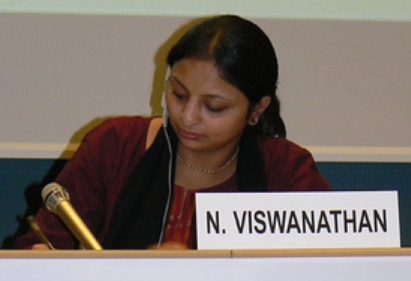
neha-viswanathan.jpg

“You people are too well mannered! I’ve never been to a conference where people are so properly dressed and so polite to each other!”

With these words, Neha Viswanathan made sure she had everyone’s attention. But it was not just a gimmick — she was contrasting the relatively more orderly, organised world of mainstream media (MSM) with the decidedly more anarchic world of new media — including blogs, wikis, YouTube and Second Life.

Neha, South Asia Editor of Global Voices, was speaking on a panel on ‘new media’ during the Global Symposium+5 on ‘Information for Humanitarian Action’ in Geneva this week (22 – 26 Oct 2007).

The panel topic itself showed the rapid change taking place in the humanitarian sector. As the panel premise said: “Within minutes of a disaster or conflict, the first images are seen on YouTube rather than CNN, and probably to a larger audience. YouTube, Flickr and blogging are bringing wars, disasters and their humanitarian consequences to the attention of the public, government and aid agencies more efficiently than ever. It’s now possible to keep watch on a Darfur village through satellite imagery, or take a virtual tour of a refugee camp.”

The panel was to discuss whether citizen journalism and new collaborative/ networking technologies are improving humanitarian response, and review how the humanitarian community is faring in this new environment.

My own views on this are found in another blog post: New media tsunami hits humanitarian sector – rescue operations now on!

Neha’s take was slightly different. She started reminding everyone that the new media activists were unruly and not always polite. The blogosphere is very much a contested and contentious space where arguments rage on. Not everything is moderate, balanced or ‘evidence-based’ (to use a new favourite phrase of the humanitarian community).

But in times of crisis or emergency – whether disasters or war – new media activists are increasingly the first responders. The anarchic nature actually provides them with an advantage: they are distributed, self-organising and motivated. There is no central newsroom or coordination point telling them what to do. In typical Nike style, they just do it.

As an example, she described World Wide Help, whose introduction reads: “Using the web to point help in the direction where it’s most needed”.

This blog was started by several founders and members of the SEA EAT (South East Asian Earthquake And Tsunami) blog, wiki and database, all of which gained worldwide attention at the time of the Indian Ocean earthquake and tsunami on 26 December 2004. The group, now calling themselves The World Wide Help Group, has since remobilised to aid in other relief efforts.

Read the whole story of the SEA EAT Blog: A Candle in My Window by Peter Griffin, one of its co-founders

As Sir Arthur C Clarke has also noted, the 2004 tsunami marked a turning point in how citizen journalists and other new media activists respond to emergencies. Since then, the power of new media has been unleashed on many public interest issues and humanitarian causes. As an example, Neha cited the online campaign against street sexual harassment in India.

In Neha’s view, new media can collate authentic testimonials of those directly affected by disasters or other crises, and keep the public attention (and thereby, political interest) on emergencies beyond the first few days.

Her advice to humanitarian aid agencies: keep looking at the new media, especially blogs, to find out what people at ground zero are saying about relief and recovery work.

“Bloggers are not objective – they talk openly, and express themselves freely,” she told the largely prim and proper Geneva audience, where some participants had referred to the meeting as ‘this august gathering’!

Finally, in situations where MSM (the formerly big media!) are shut down, restrained or intimidated into not carrying out their watchdog role, it’s the new media that fills the voice. Neha described the pro-democracy struggles in Nepal in 2005 – 2006 as an example where the people power struggles continued to be reported and commented on after the autocratic king clamped down on all print and broadcast media.

Read my August 2007 blog post: The Road from Citizen Kane to Citizen Journalist

‘Embedded’ or aloof: Media’s choice in covering emergencies

banner.jpg

In many disaster and conflict hot spots of the world, journalists and relief aid providers work closely together. There are times when journalists play good Samaritan and aid workers dabble as reporters. In the difficult field conditions of emergencies, this is understood and accepted.

But should journalists become ’embedded’ in humanitarian operations? If so, how impartial or independent would their coverage be?

This issue kept coming up during the Global Symposium+5 on ‘Information for Humanitarian Action’ in Geneva this week (22 – 26 Oct 2007). The majority aid officials and handful of journalists present didn’t always agree.

UN agencies and other humanitarian organisations increasingly recognise the power of media, especially broadcast television, to raise public awareness on emergencies. This, in turn, influences political commitments, aid donations and relief operations themselves.

But how close can the media get to aid agencies before they lose their sense of perspective and independent analysis? If journalists becoming embedded with the military in conflicts is frowned upon, what about media’s de facto embedding with humanitarian missions?

There was no consensus on the issue, but a few of us stressed on the need for independent media — independent of governments, aid agencies and other vested interests — to take stock of crisis situations and report, reflect and analyse on what they find.

The presence of nosy reporters might be an occasional irritant to some aid agencies, especially if they have things to hush up, but at the big picture level it can serve everyone’s interest — especially those of affected groups.

Alain Modoux, a former red cross official who went on to become an assistant director general of UNESCO, reminded us how governments often stand in the way of free flow of information on emergency situations. The reasons for such suppression vary: some don’t want to admit failures on their watch, and others fear public discussion and debate, especially at international level, on what is happening in their own country.

Governments can — and often do — bring pressure upon aid agencies to fall in line (or risk being thrown out). In such situations, it’s only the independent media that can take stock of rapidly changing situations and highlight the unmet needs and any disparities in the emergency response.

Then there is the media’s traditional watchdog role. The humanitarian sector is now the world’s largest unregulated industry – billions of dollars flow through the sector every year, most of it public funds (direct donations or taxes collected by governments). Yes, the aid agencies all audit their accounts and the UN has stringent regulations on how they can spend money. But there’s nothing like a bit of media scrutiny to keep everybody clean and honest…

Follow the money! This is what journalists are taught and trained to do – and with good reason. In emergency situations following the money often brings up instances of waste, corruption and mismanagement that aid agencies would rather not talk about.

edward-giradet.jpg

Swiss journalist Edward Girardet (photo, above), who specialises in in media, humanitarian aid and conflict issues, has been making this point for a long time.

As he has written: “Humanitarianism should not ‘belong’ to any one group. What the international aid industry urgently needs is more hard-nosed and independent reporting.”

That is unlikely to happen when individual journalists are too cosy with aid workers or their bosses.

Ed was at the Geneva Symposium this week, once again making a case for a viable media watchdog capable of reporting the real causes behind humanitarian predicaments, including how the international community responds.

Read my June 2007 blog post quoting Ed Girardet: Can the media tame the alms bazaar?

In one intervention, I suggested that the media can become the ‘conscience’ of the humanitarian industry – to ensure transparency and accountability of resources, decisions and conduct.

Partnerships between media and aid workers is fine, as long as the media remain somewhat aloof and detached.

And it’s not the global media who can or will stay with the stories as recovery takes months or years. We all saw in the aftermath of the Indian Ocean Tsunami how quickly the global media’s news interest went down.

In the long term, empowering the local journalists to ask the right questions and go in search of answers.

Read this blog post reproduced in Asia Media Forum


Read this blog post adapted in MediaHelpingMedia

War Made Easy: Exposing the Spin Doctors of Death

As we mark the sixth anniversary of 9/11 terrorist attack on the World Trade Center in New York, attention is focused more and more on the role the media played in the days and months that followed.

The war in Iraq was justified as a retaliation against 9/11. The Pentagon marched on to the cheer-leading of American media, which barely asked the basic questions, let along challenge the military-political logic.

A new documentary probes how this shameless acquiescence took place in full public glare. WAR MADE EASY: How Presidents & Pundits Keep Spinning Us to Death, narrated by Sean Penn, features Normon Solomon, on whose 2005 book the film is largely based.

Here’s the trailer for the film:

And its synopsis:

War Made Easy reaches into the Orwellian memory hole to expose a 50-year pattern of government deception and media spin that has dragged the United States into one war after another from Vietnam to Iraq. Narrated by actor and activist Sean Penn, the film exhumes remarkable archival footage of official distortion and exaggeration from LBJ to George W. Bush, revealing in stunning detail how the American news media have uncritically disseminated the pro-war messages of successive presidential administrations.

War Made Easy gives special attention to parallels between the Vietnam war and the war in Iraq. Guided by media critic Norman Solomon’s meticulous research and tough-minded analysis, the film presents disturbing examples of propaganda and media complicity from the present alongside rare footage of political leaders and leading journalists from the past, including Lyndon Johnson, Richard Nixon, Defense Secretary Robert McNamara, dissident Senator Wayne Morse, and news correspondents Walter Cronkite and Morley Safer.

Norman Solomon’s work has been praised by the Los Angeles Times as “brutally persuasive” and essential “for those who would like greater context with their bitter morning coffee.” This film now offers a chance to see that context on the screen.

Approx. 72 minutes
English subtitles
Directed & Written by: Loretta Alper & Jeremy Earp
Produced by: Loretta Alper
Co-produced & Edited by: Andrew Killoy
Executive Producers: Jeremy Earp & Sut Jhally
Associate Producer: Jason Young
Sound: Peter Acker, Armadillo Media Group
Motion Graphics: Andrew Killoy & Sweet & Fizzy
Additional Music: John Van Eps & Leigh Philips
Narrated by: Sean Penn
Based on the book by Norman Solomon

Image courtesy War Made Easy website

I haven’t yet seen this film, but it’s certainly one I want to catch soon. Not the least because I live and work in a war-ravaged country – Sri Lanka – where the politicians and generals have engaged in their own (increasingly sophisticated) acts of spin doctoring. Most alarmingly, large sections of the Sri Lankan media find absolutely nothing wrong to play along, all in the name of patriotism….

Sounds familiar?

Read the full transcript of War Made Easy

New Face of People Power: Social Accountability in action

In an earlier post, I wrote about how citizen groups are increasingly empowering themselves with information to demand greater accountability from their elected representatives in local, provincial and central governments.

This is collectively called Social Accountability – and it represents a significantly higher level of citizen engagement than merely changing governments at elections or taking to the streets for popular revolt (‘people power’).

In 2004, TVE Asia Pacific produced a half-hour international TV documentary titled People Power that profiled four Social Accountability projects in Africa (Malawi), Asia (India), Europe (Ireland) and Latin American (Brazil).

Watch the Brazil story on TVEAP’s YouTube channel:

The experiment with participatory budgeting in the municipality of Porto Alegre in Brazil is a long-running example that we filmed. This is one of the largest cities in Brazil, one of the most important cultural, political and economic centers of Southern Brazil.

The city is well known as the birth place of the World Social Forum. The first WSF was held there in January 2001.

Participatory budgeting goes back to a decade earlier. It was started in 1989 by the newly elected “Worker Party” (PT) to involve people in democratic resource management in an effort to provide greater levels of spending to poorer citizens and neighborhoods. It has since spread to over 80 municipalities and five states in Brazil.

Porto Alegre’s challenge was how to include the poorer people in this success. Housing was a major problem as rural people migrate to the city looking for work. In the past, people built temporary houses on whatever land they could find, and the city council kept on demolishing these unauthorised structures.

from-people-power-porto-allegre-story-2.jpg

As Brazil moved from a totalitarian to democratic form of government in the late 1980s, the newly elected city government adopted a program where the people participate in prioritising the City Budget.

The city is divided into sixteen regions and during each year, local neighbourhoods send representatives to people’s assemblies. In these assemblies, the neighbourhood representatives discuss priorities for the allocation of the city budget. They then elect their representatives from each region to form a budget council.

Over a year, from neighbourhood associations to people’s assemblies, up to 20,000 people have a direct say on how the city budget should be allocated.

This participation ensures democratic accountability and fairer distribution of tax revenue. It allows the poorest and the richest regions to have equal weight in the decision process.

After the introduction of participatory budgeting, an influential business journal nominated Porto Alegre as the Brazilian city with the ‘best quality in life’ for the 4th consecutive times. Statistics show that there has been significant improvement in quality of roads, access to water services, coverage of sewerage system, school enrollment and tax revenue collection.

from-people-power-porto-allegre-story.jpg

We interviewed Joao Verle (wearing pink shirt in photo above), the then Mayor of Porto Allegre, who said: “I believe in this project since i was one of those responsible for starting it fifteen years ago. The participatory budget is now part of the organic life of this city – people can change it any time they please. And this makes it more adaptive to the people’s needs.”

First broadcast on BBC World in February 2004, People Power documentary has since been widely distributed to broadcast, civil society and educational users in the global South. It is still available from TVEAP on DVD and VHS video.

Photos are all captured from People Power video film. Courtesy TVE Asia Pacific

Read my post about social accountability in the world’s largest democracy, India

People Power: Going beyond elections and revolutions

“At the bottom of all the tributes paid to democracy is the little man, walking into the little booth, with a little pencil, making a little cross on a little bit of paper.”

That’s how Sir Winston Churchill summed up democracy at work. Elections – at national and local levels – give ordinary people the chance to decide who would run their affairs for the next few years. At least in theory.

In the modern world, however, elections alone cannot ensure that people’s wishes prevail. Better models of engagement are needed…and are being developed across the globe.

Historically, people responded to bad governance by rejecting governments at elections, and occasionally by overthrowing corrupt and despotic regimes through mass agitation. In the past decade, this “people power” has toppled rulers in the Philippines, Nepal and Ukraine among others, and sent a strong signal to autocratic governments elsewhere.

Yet such people power has its own limits: in country after country where one political party – or indeed political system – was replaced with another through popular vote or revolt, people have been disappointed or dismayed at how quickly the new brooms lose their bristles. The solution must, therefore, lie in not just participating in elections or revolutions, but in constantly engaging governments and keeping the pressure on them to govern well – or else.

So what is to be done, as Lenin famously asked? One challenge is to find new approaches to promoting good governance.

from-people-power-documentary.jpg
Photo: An election awareness public rally in Rajastan, India (late 2003)

An example is Social Accountability practices – individuals or civil society groups getting together to demand accountability from different levels of government. This represents a significantly higher level of citizen engagement than merely changing governments at elections or taking to the streets.

It involves the careful gathering of data, their systematic analysis and knowledge-based engagement and negotiation with elected and other public officials. Crucial to this process is accessing and using critical information – about budgets, expenditures, excesses, corruption, performance, etc.

The new breed of citizen voice is about using information in a way that lead to positive change in government and society. People use knowledge as a pivotal tool to improve governance, better use of common property resources, and management of public funds collected through taxation or borrowed from international finance institutions.

The media can play multiple roles in such social accountability processes. At a basic level, media’s coverage of these processes adds momentum to citizen movements. At a higher level, some citizen groups are use media as an information tool or campaigning platform or both, optimising each other’s strengths.

Here’s an example from my own experience. In 2004, TVE Asia Pacific produced a half-hour international TV documentary titled People Power that profiled four Social Accountability projects in Africa (Malawi), Asia (India), Europe (Ireland) and Latin American (Brazil).

First broadcast on BBC World in February 2004, it has since been widely distributed to broadcast, civil society and educational users in the global South. It is still available from TVEAP on DVD and VHS video.

Hernando de Soto

We interviewed the Peruvian economist Hernando de Soto (photo, above) of the Institute for Liberty and Democracy in Lima, Peru, who said: “Supposedly in a democracy, if the majority of people are poor, then they set the criteria of what is right. Yet all those mechanisms that allow [society] to decide where the money goes — and that it is appropriately allocated — are not in place throughout the Third World. We take turns electing authoritarian governments. The country, therefore, is left to the [whims] of big-time interests, and whoever funded the elections or parties. We have no right of review or oversight. We have no way for the people’s voice to be heard — except for eight hours on election day.”

When the India story was being filmed, in late 2003, by coincidence several states were holding elections for the state legislatures. Our crew followed the election process in the northern Indian state of Rajastan to see how a citizen group was forcing social accountability for all standing for election.

Mazdoor Kisan Shakti Sangathan (MKSS) invited the people of Beawar, Rajastan, to a public meeting where the affidavits on the local candidates were made available to everyone. This process of social accountability and transparency extends beyond the political process to the village level where the MKSS has successfully lobbied for the right to information legislation to overcome the systemic corruption in the political and bureaucratic organisations.

from-people-power.jpg

MKSS’s struggles has led to laws to ensure people’s right to information across India.

“India is the largest functioning democracy in the world and it has significant strengths (but) it also has weaknesses,” says Dr Bela Bhatix (photographed wearing red saree), Associate Fellow of the Centre for the Study of Developing Societies, interviewed on our film. “Among the strengths is that we have been able to sustain our democracy…It’s no small matter to have regular elections and we usually have something like 60 per cent turnout — around 600 million people, or twice the size of America. But at the same time there are some very important weaknesses of our democracy which we really need to think about.”
dr-bela-bhatix-from-people-power.jpg

Social activist Aruna Roy, coordinator of MKSS (photographed below), says: “In 1996, the MKSS sat in a 40-day sit-in at Beawar and we were demanding the right to access records of the Panchayat, the smallest elected body in India. We involved the entire city and made it a people’s campaign. We involved people from all over India, and the national campaign for people’s right to information was born.”
aruna-roy.jpg

Watch India story from People Power on TVEAP’s YouTube channel:

All photos captured from People Power documentary, courtesy TVE Asia Pacific.

Read TVEAP website feature, People Power beyond elections and revolutions by Nalaka Gunawardene

‘Cheque-book Development’: Paying public media to deliver development agency logos

In their ceaseless efforts to keep their organisations in the media spotlight, spin doctors of development agencies are distorting news values and corrupting the media, turning issue-based communication products into ‘logo delivery mechanisms’.

This is the thrust of my latest op ed essay, titled ‘Cheque-book Development’ corrupting the media. It has just published by the popular media-watch website anchored in the US, MediaChannel.org

Image courtesy MediaChannel.org

In this essay, I draw on several years of first hand observations in development, humanitarian and broadcasting circles at Asian and global levels. I focus on a disturbing practice that more and more development/humanitarian agencies engage in: paying intermediaries for getting their stories on global news and current affairs TV channels.

This is nothing short of cash-for-media coverage.

Here’s an extract:

“As development organisations compete more intensely for external funding, they are increasingly adopting desperate strategies to gain higher media visibility for their names, logos and bosses.

“Communication officers in some leading development and humanitarian organisations have been reduced to publicists. When certain UN agency chiefs tour disaster or conflict zones, their spin doctors precede or follow them. Some top honchos now travel with their own ’embedded journalists’ – all at agency expense.

“In this publicity frenzy, these agencies’ communication products are less and less on the issues they stand for or reforms they passionately advocate. Instead, the printed material, online offerings and video films have become ‘logo delivery mechanisms’.

Image courtesy MediaChannel.org Cartoon courtesy Global Journalist

Some of these communication officers I write about have become friends over the years — I empathise with their pressures, but don’t approve of what their organistions do. As I write in the essay:

“This practice is wrong on two counts. One, allowing intermediaries to sell access to the airwaves is a form of corruption. Two, every time this happens, it siphons off tax-payer supported development funds intended for combating poverty and suffering in the majority world.

“It is the reverse of cheque-book journalism, where some media organisations pay celebrity or other sources for exclusive access to their stories. When development agencies are paying sections of the media to get promotional or favourable stories aired, we must call it ‘cheque-book development’.”

Make no mistake — this is a form of media corruption. It’s not just the development sector’s vanity that fuels this process. Many 24/7 news channels are struggling to fill their hours inexpensively. Some turn a blind eye to ethical sourcing as long as they can have a steady supply of subsidised content.

Read my full essay on MediaChannel.org

Note: Being a US-anchored outlet, MediaChannel.org spells ‘cheque-book’ as ‘check-book’, which is correct in American spelling of English! As I write in my essay, it appears that TV channels and networks on that side of the Atlantic seem a bit harder to corrupt. But then, what do I know?

Read my Nov 2006 essay on MediaChannel.org: Ethical News Gathering Challenge for Al Jazeera

I have been speaking about the growing threat of cheque-book development for some time. For instance, I referred to it during Communicating Disasters: An Asian Brainstorming organised by TVE Asia Pacific and UNDP in Bangkok in December 2006.

Essay republished on Asia Media Forum
asia-media-forum.gif

Science journalism, key to good governance

From Sydney, I have travelled to Melbourne to participate in the Fifth World Conference of Science Journalists, from 16 to 20 April 2007.

It’s the second time a science communication event brings me to this beautiful, multi-cultural Australian city. My first visit was in November 1996 to speak at SCICOMM ’96, the Fourth International Conference on the Public Understanding of Science and Technology, held at the University of Melbourne.

This week’s conference is promising to be interesting and engaging. The programme is full of talks, panels, debates and other activities. Several hundred fellow science journalists, and those researching or supporting science journalism, are expected to attend.

I’ll be kept busy being on two separate panels.

5th-world-conference-0f-science-journalists.jpg

David Dickson, Director of the Science and Development Network (SciDev.Net), has just written an editorial that provides an excellent backdrop to the conference. He argues that the work of science journalists needs greater recognition as an essential precondition for transparent, responsive and accountable government.

Excerpts:

Much will be heard and discussed about how science journalists can inform — and, frequently, entertain — people with stories about scientific and technological developments. Equally important is their role in stimulating public debate in areas where science and technology can impact directly on the social and natural worlds, from stem cell research to global warming.

At the heart of many of these issues lies the key contribution that journalism can make to good governance. The concept of the journalist as a defender of the public interest is usually applied to those writing about overtly political issues, since it is here that the need for — and indeed the challenges to — a free press are often greatest.

But a growing number of political decisions, from allocating medical resources to promoting economic growth, have a scientific and technological dimension to them. It is therefore important to recognise the extent to which science journalism forms an essential component of a well-functioning democracy.
Read the full editorial on SciDev.Net website

Unfortunately, David is not able to join us in person — he’s holed up in London, finalising the organisation’s new five-year strategy.

Note:
I’m flying twin flags at this conference – as the Director of TVE Asia Pacific, and as a Trustee of SciDev.Net

I plan to be posting on to this personal blog as well as to a collective blog by several colleagues from SciDev.Net who are in Melbourne.