සිවුමංසල කොලූගැටයා #60: රටට රුපියල් බිලියනයක් ඉතිරි කළ හැකි පැය බාගය

This is the Sinhala text of my Sunday column in Ravaya newspaper, 1 April 2012.

Facing an electricity generation crisis, Sri Lanka has embarked on a countrywide energy conservation drive — urging everyone to switch off all non-essential lights, and reduce other forms of power consumption.

The island nation will also join Earth Hour on the evening of today, 31 March 2012. The Ministry of Power and Energy has also launched a campaign called ‘Save Today for Tomorrow’.

Beyond these important yet token gestures, are there smart options that can save significant quantities of electricity, 85% of which is now generated in Sri Lanka using imported, costly fossil fuels?

Yes, there is one: advance the clock by half an hour. Faced with power crises in the past, governments did this in the 1990s — and with tangible results. This is evidence based policy and action. But a vocal minority in Lanka resented this progressive move all along, and in April 2006, they successfully lobbied the (current) government to revert Sri Lanka’s standard time to GMT+5:30 from GMT+6 which had been used since 1996.

I wrote about Sri Lanka giving up on Daylight Saving time in April 2006 in this SciDev.Net opinion essay: Science loses in Sri Lanka’s debate on standard time. As I noted: “In doing so, the government completely ignored expert views of scientists and intellectuals. It listened instead to a vocal minority of nationalists, astrologers and Buddhist monks who had lobbied the newly elected president to ‘restore the clock to original Sri Lankan time’.”

Earth Hour 2012 on 31 March 2012

මිහිතලය සඳහා පැයක් (Earth Hour) යන තේමාවෙන් 2012 මාර්තු 31 වන සෙනසුරාදා ලෝක ව්‍යාප්ත පාරිසරික එකමුතුවීමක් සිදු වනවා. එය පුද්ගල මට්ටමින් ක‍්‍රියාත්මක වුවත් ශ‍්‍රි ලංකාව මෙවර නිල (රාජ්‍ය) මට්ටමින් ද එයට සම්බන්ධ වනවා. එහි මුඛ්‍ය අරමුණ එදින සවස 8.30 සිට 9.30 දක්වා පැයක කාලය තුළ අත්‍යවශ්‍ය නොවන විදුලි බුබුළු නිවා දමා හැකි තාක් විදුලිබලය ඉතිරි කිරිමයි.

මෙය සංකේතාත්මක පියවරක්. ඉතා විශාල සංඛ්‍යාවක් ස්වෙච්ඡවෙන් මේ උත්සාහයට දායක වුවත් තනි පැයක් ඇතුළත ඉතිරි කළ හැකි විදුලය ප‍්‍රමාණය සීමිතයි. එහෙත් ඒ හරහා අපට දිනපතා විදුලිය පිරිමැසිමට ඇති හැකියාව ගැන දැනුවත් විමක් සිදු වනවා. 2007 සිට සෑම වසරක ම මාර්තුවේ අවසන් සෙනසුරාදා සවස පවත්වන මේ මිහිතල පැයට ගිය වසරේ රටවල් 135ක බිලියන් 1.8ක් පමණ දෙනා හවුල් වුනා.

අළුත් ම විදුලිබල ජනන තොරතුරුවලට අනුව දැනට මෙරට විදුලිබල අවශ්‍යතාවයයෙන් 85%ක් ම ජනනය කරන්නේ තාප බලාගාරවලින්. එනම් පෙට්‍රෝලියම් හෝ ගල් අගුරු ඉන්ධන ලෙස ගනිමින්. අපේ රටේ හමු නොවන මේ ඉන්ධන පිටරටින් මිළට ගැනිමට අතිවිශාල වියදමක් දරනවා. මේ ඉන්ධන දහනයේදී නිකුත්වන කාබන් ඩයොක්සයිඞ් වායුව මිහිතලය උණුසුම් කිරිමට දායක වනවා.

විදුලිබල අමාත්‍යවරයා ජනමාධ්‍යවලට මෑතදි පවසා ඇති අන්දමට අපේ රටේ ජනනය කරන විදුලිබලයෙන් හතරෙන් පංගුවක් ම අකාර්යකෂම භාවිතය නිසා අපතේ යනවා. මෙරට සමස්ත ජාතික ආදායමින් 12%ක් විදුලිබල ජනනය සඳහා ගල් අගුරු හා ඛනිජතෙල් පිටරටින් ගෙවිමට වැය කරන්නට සිදුව ඇති මේ අවස්ථාවේ මේ නාස්තිය අතිමහත් බව ඔහු අවධාරණය කරනවා (ද සන්ඬේ ටයිම්ස්, 2012 මාර්තු 18).

බලශක්ති අමාත්‍යාංශය දියත් කර තිබෙන හෙට වෙනුවෙන් අද නම් වූ බලශක්ති සුරැකීමේ ජාතික සත්කාරයෙන් හැම දිනෙක ම සවස 6.30 හා 9.30 අතර විදුලි බුබුලක් නිවා දමා විදුලිය ඉතිරි කරන්න යයි අමාත්‍යාංශය අප සැමගෙන් ඉල්ලා සිටිනවා.

මෙරට විදුලිබල පාරිභෝගිකයන් මිලියන 5න් මිලියන 4.6ක් ම ගෘහස්ත මට්ටමේ බවත්, සවස් කාලයේ වොට් 60ක විදුලි බුබුලක් පැය 3ක් නිවා තැබීම හරහා රටක් වශයෙන් සමස්තයක් ලෙස (cumulatively) සැළකිය යුතු විදුලිබල ප‍්‍රමාණයක් ඉතිරි කර ගත හැකි බවත් අමාත්‍යාංශය ගණන් බලා තිබෙනවා.

මිහිතලයේ පැය සංකේතාත්මක වශයෙනුත්, “හෙට වෙනුවෙන් අද” ප‍්‍රයත්නය ඊට වඩා ප‍්‍රායෝගික හා දිගුකාලීන ලෙසටත් විදුලිබල සංරක්ෂණයට කරන දායකත්වය ප‍්‍රශංසනීයයි.

එහෙත් විදුලිබල කප්පාදුවකින් තොරව දිගට ම සැපයුම ලබා දීමටත්, ඒ සඳහා යන අධික ජනන වියදම පිරිමසා ගැනීමටත් මීට අමතරව ගත හැකි තවත් වඩා සාර්ථක උපාය මාර්ගයක් (smart option) තිබේ ද?

මැදහත් විද්වතුන් වසර ගණනක සිට පෙන්වා දෙන එබදු උපාය මාර්ගයක් තිබෙනවා. එනම් අපේ රටේ සම්මත වේලාව ඔරලෝසුවේ පැය බාගයක් ඉදිරියට ගැනීමයි.

මෙයින් විදුලිබලය ඉතිරිකර ගැනිමේ හැකියාව තේරුම් ගන්නට නම් මුලින් ම අපේ විදුලිබල පරිභෝජනයේ දෛනික රටාව ගැන අවබෝධයක් ලද යුතුයි.

Sri Lanka Electricity Demand Load Curve

ශ‍්‍රී ලංකාවේ විදුලිබල පරිභෝජනය දවසේ පැය 24 පුරා එක ලෙස සිදු වන්නේ නැහැ. එහි වෙනස් වන දෛනික රටාවක් පැහැදිලිව හදුනාගෙන තිබෙනවා. ඒ අනුව දිවයිනේ සමස්ත විදුලබල පරිභෝජනය සැලකිය යුතු ලෙසින් ඉහළ යන (peak) කාල පරාසයන් දෙකක් තිබෙනවා. එයින් පළමුවැන්න දළ වශයෙන් උදේ 5.30 සිට 6.30 දක්වා කාලයේ.

වැඩිපුර ම ආලෝකය සඳහා කැරෙන මේ විදුලි භාවිතය උදාසන හිරු එළිය වැටිම සමග අඩු වනවා. දවසේ ඊළග උච්චවීම ඇරඹෙන්නේ හිරු බැස යාමත් සමග දළ වශයෙන් සවස 6.30ට පමණ. විදුලි ආලෝකය මෙන් ම ටෙලිවිෂන් නැරඹිම සඳහාත් විදුලිය භාව්තා කෙරෙන මේ උච්චවීම, රාත‍්‍රි 10.30 පමණ දක්වා පවතිනවා. ගෘහස්ථ විදුලි පරිභෝජනය වැඩිපුර ම සිදුවන්නේ මේ පැය හතර ඇතුළතයි.

ශ‍්‍රි ලංකාවේ සම්මත වේලාව දැන් පවතින වේලාවට වඩා පැය බාගයක් (විනාඩි 30ක්) ඉදිරියට ගත හොත් විදුලිබල පරිභෝජනය අඩු කර ගත හැක්කේ කෙසේ ද? මේ ගැන දැනට රටේ සිටින ප‍්‍රවීණතම විදුලි ඉංජිනේරුවකු හා බලශක්ති සැලසුම්කරුවෙකු වන ආචාර්ය තිලක් සියඹලාපිටියගෙන් මා විමසුවා. මේ ඔහු දුන් සරල විග‍්‍රහයයි.

සම්මත වේලාව ඉදිරියට ගැනිමෙන් විදුලිබල පරිභෝජනය අඩු කර ගැනිමට නම් සියළු දෛනික කාර්යයන් (පාසල් හා කාර්යාල අරඹන හා හමාර කරන වේලාවන් ආදිය) සිදු කරන වේලාවන්හි කිසිදු වෙනසක් නොකළ යුතුයි. එවා එසේ ම පවත්වා ගනිමින් සම්මත වේලාව පැය බාගයක් ඔරලෝසුවේ ඉදිරියට ගත විට හිරු උදාව (ආසන්න වශයෙන්) පැය බාගයක් ප‍්‍රමාද වී සිදු වනවා. එවිට උදයේ අපට ටිකක් වැඩි කලූවර කාලයක් අත් විදින්නටත්, ඒ සඳහා යම් තරමකට අමතර විදුලි එළියක් යොදා ගන්නටත් සිදු වනවා.

එහෙත් අපේ සමස්ථ විදුලි පරිභෝජනයේ උච්චවීම උදයේ දී අඩුයි; සවසට වැඩියි. සම්මත වේලාව පැය බාගයක් ඔරලෝසුවේ ඉදිරියට ගත් විට හිරු බැසීම ද පැය බාගයකින් ප‍්‍රමාද වී සිදුවනවා. එනම් අප වැඩ හමාර වී ගෙදර ආ පසු හිරු එළිය පවතින කාලය වැඩියි. එවිට අප විදුලි ආලෝක දල්වන්නේ වඩාත් ප‍්‍රමාද වී නිසා සවස් කාලයේ පරිභෝජන උච්චවීම තරමක් අඩු වනවා.

විදුලිබල ජනන සැළසුම්කරුවන් පරිගණක ආකෘති යොදා ගෙන සුක්‍ෂම ලෙස ගණන් බලා ඇති ආකාරයට සම්මත වෙලාව පැය බාගයක් ඉදිරියට ගෙන අන් සියලූ කටයුතු සුපුරුදු පරිදි කළහොත් සවස් කාලයේ ඉතිරි කර ගත හැකි විදුලිය ප‍්‍රමාණය උදේ කාලයේ අමතරව වැය වන විදුලිය මෙන් පස් (5) ගුණයක්. මෙය තනි ගෘහයකට මෙන් ම සමස්ත විදුලි ජනන පද්ධතියටත් වාසිදායක බව ආචාර්ය සියඹලාපිටිය පෙන්වා දෙනවා.

“විදුලි පරිභෝගිකයන් හැටියට විදුලි බිලේ යම් අඩුවක් ලද හැකියි. විදුලිය සපයන්නා හැටියට විදුලිබල මණ්ඩලයට තාප බලශක්ති ජනනයට වැය වන අතිමහත් වියදම යම් තරමකට අඩු කර ගත හැකියි. සමස්ත පද්ධතිය මත දිනපතා සන්ධ්‍යා කාලයට ඇති වන දැඩි ඉල්ලූම හා බැදුණු සම්පේ‍්‍රෂණ අපතේයාම් හා කාන්දුවීම් ද අඩු වන අතර (තාප බලාගාර ක‍්‍රියාකාරිත්වය තරමක් අඩු වන විට) එය පරිසරයට ද හිතකරයි,” ආචාර්ය සියඹලාපිටිය කියනවා.

ඔහු 2006දී අවසන් වරට ගණන් බැලූ අවස්ථාවේ සම්මත වේලාව පැය බාගයකින් ඉදිරියට ගැනිම හරහා මෙරට විදුලිජනන පද්ධතියට ලබා ගත හැකි ඉතිරිය (අරපිරිමැස්ම) සමස්ත විදුලි ජනනයෙන් සියයට බාගයක් (0.5%) වුනා. දැනට (2012) විදුලිජනන සංඛ්‍යා ලේඛණ අනුව බලන විට මෙයින් වසරකට ගිගාවොට් පැය 60ක් ඉතිරි කර ගැනිමේ විභවය තිබෙනවා. පවතින විදුලි ජනන වියදම්වලට ආදේශ කළ විට මේ ඉතිරිය රුපියල් මිලියන 900ක් පමණ වනවා.

මෙසේ විදුලිය ඉතිරි කර ගැනිමේ විභවය හරිහැටි තේරුම් ගන්නට මෙරට විදුලි පරිභෝජනයේ දෛනික රටාව පෙන්වන මේ ප‍්‍රස්තාරය ඉතා වැදගත්. මේ පරිභෝජන රටාව වසරේ බොහෝ දිනවලට අදාළ වන අතර, ඉඳහිට එය වෙනස් වන්නේ උත්සව සමයට හා ශ‍්‍රී ලංකාව තරග කරන ජාත්‍යන්තර ක‍්‍රිකට් තරගාවලි ටෙලිවිෂනයෙන් විකාශය කරන දිනවල පමණයි.

දැනට දිවයිනේ සම්මත වේලාව ලෝක සම්මත (ග‍්‍රිනිච්) වේලාවෙන් පැය පහ හමාරක් (5.30) ඉදිරියෙන් පවතිනවා. 1996 දැඩි විදුලිබල අර්බුදය මතු වූ අවස්ථාවේ එවක රජය සම්මත වේලාව පැයකින් ඉදිරියට ගත්තා (එනම් ගි‍්‍රනිච් වේලාව + 6.30). ඉන් මාස කිහිපයකට පසු එය යළිත් පැය බාගයක් පස්සට ගැනිමෙන් ග‍්‍රිනිච් වේලාවට පැය 6ක් ඉදිරියෙන් වසර ගණනක් පවත්වා ගෙන ගියා (1997-2006 කාලය).

එහෙත් දශක ගණනක් මෙරට පැවති, අපේ ඇත්තන් පුරුදු වී සිටි වේලාව නැවතත් ප‍්‍රතිස්ථානය කළ යුතු යයි ජ්‍යොතිෂවේදීන් ඇතුළු සුළුතරයක් දිගින් දිගට එල්ල කළ බලපෑම් හමුවේ, රජය 2006 අපේ‍්‍රල් මාසයේ මෙරට සම්මත වේලාව නැවතත් ග‍්‍රීනිච් +5.30 බවට වෙනස් කළා.

1996ට පෙර පැවතුණේ ද එකී සම්මත වේලාවයි. නමුත් මෙය ඓතිහාසිකව පැවත ආ සම්මතයක් නොවෙයි. මුළු ලෝකයේ ම අද භාවිත කරන සම්මත වේලාව පිළිබඳව එකගත්වයට එළඹුණේ 1884දී ලන්ඩනයේ පවත්වන ලද ජාත්‍යන්තර සම්මේලනයකදීයි. ඊට පෙර ලෝකයේ විවිධ රටවල් තමන්ට රිසි හා ආවේනික පරිදි වේලාවන් පවත්වා ගෙන ගියා. එහෙත් රටවල් අතර වෙළදාම, සංචරනය හා සන්නිවේදනය වැඩි වන විට වේලාව පිළිබඳ ලෝක සම්මුතියක් අත්‍යවශ්‍ය වුණා.

විදුලිබලය අරපිරිමැස්ම සඳහා සම්මත වේලාව පැය බාගයකින් ඉදිරියට ගැනීම මුල් වරට රජයට යෝජනා වූයේ 1983දී. එවකට සිටි ජනාධිපතිවරයා විද්වතුන්ගේ නිර්දේශය කැබිනට් මණ්ඩලයට ඉදිරිපත් කළත් කැබිනට් එකගතාවක් නොවූ නිසා ක‍්‍රියාත්මක කළේ නැහැ.

විදුලිබලය අරපිරිමැස්ම හරහා විදේශ විනිමය ඉතිරි කර ගන්නා අතර ම කාබන් ඩයොක්සයිඞ් මුදා හැරිම අඩු කර ගන්නටත් අපේ විදුලිබල අමාත්‍යාංශය දක්වන උනන්දුව මීටත් වඩා තීව‍්‍ර කර ගන්නට සම්මත වේලාවේ වෙනස දායක වනු ඇති.

එළඹෙන ඉන්ධන අර්බුදය හමුවේ අපේ දිනචර්යාවේ සුළු වෙනසක් කිරිම මගින් රටේ මෙන් ම ගෙදර ආර්ථිකයටත් වාසියක් ඉතිරියක් ළගා කර ගන්නට ඔබ කැමති ද?

එබදු දුරදර්ශී පියවරක් හරහා වසරකට රුපියල් බිලියනයකට ආසන්න ගණනක් ඉතිරි කර ගැනීමට රජය යොමු වුව හොත්, ඒ ගැන ලක් ජනතාවගේ ප‍්‍රතිචාරය කෙබදු වේවි ද?

එහෙත් ජ්‍යෙතිෂවේදීන්ගේ ග‍්‍රහණයට හසු වූ මෙරට ප‍්‍රතිපත්ති සම්පාදකයන්, තාක්ෂණික වශයෙන් ප‍්‍රශස්ත වන මේ ඉදිරි පියවර තැබිමට එඩිතර වෙයි ද?
සිවුමංසල කොලූගැටයා #59: වදකහ සුදියේ සිට ලෝක විනාශය දක්වා…

In this week’s Sunday column, published in Ravaya newspaper of 25 March 2012, I
return to take another critical look at the hype and hysteria surrounding the world ‘ending’ in December 2012.

Last week’s column elicited several reader responses online and offline. While many agreed with my rational reasoning, some were miffed by my puncturing their inflated obsession! A few challenged me to provide an assurance that there won’t be any major disasters in 2012 — we were NOT talking about random disasters, but a planetary scale one which qualifies as End of the World.

This week, we look at how certain environmentalists are linking global warming and 2012 world ending myth, adding to existing public confusion about climate change. I cite as an example of this green alarmism a highly distorted article Sinhala published by Practical Action Sri Lanka, a usually moderate and sensible development organisation. Its country director admits it was an ill-advised public outreach effort.

I also refer to a recent scientific analysis that probed whether highly destructive large-scale earthquakes in the past few years, in countries bordering the Pacific and Indian oceans, indicate an increased global risk of these deadly events. Its conclusion: there is no such evidence.

‘2012 ලෝක විනාශය’ ගැන ලෝක ව්‍යාප්ත මිථ්‍යාව විග‍්‍රහ කරමින් පසුගිය සතියේ මා ලියූ කොලමට ප‍්‍රතිචාර රැසක් ලැබුණා. එයින් බහුතරයක් මගේ විචාරශීලී ප‍්‍රවේශයත් සමග එකග වූ නමුත් ටික දෙනකු මට අභියෝග කළේ 2012දී කිසිදු ව්‍යසනයක් සිදු නොවන බවට සහතික විය හැකිදැයි විමසමින්.

අප කථා කළේ හැම වසරක ම ලොව තැනින් තැන සිදු වන ආපදා ගැන නොවෙයි. මුළු මහත් පෘථිවිය ම විනාශ වී යන, අඩු තරමින් මිහිපිට ජීවීන් හැම දෙනා ම හදිසි මරණයට පත් වන මට්ටමේ මහා විනාශයක් ගැනයි. එබන්දක් ඇති කිරිමට හැකි යයි ජනප‍්‍රිය විද්‍යා ප‍්‍රබන්ධ චිත‍්‍රපටවල යෝජිත සංසිද්ධීන්ගේ විය නොහැකියාව හෝ සම්භාවිතාවේ ඉතා අඩුවීමයි අප පැහැදිලි කළේ.

කොළම මගේ බ්ලොග් අඩවියේ පළ වූ පසු ඉන්ටර්නෙට් හරහා එය කියවන පාඨකයන් ඒ වටා සංවාදයක් ගොඩ නගමින් සිටිනවා. ඔවුන් අතරින් මුලින් අදහස් දැක් වූ ලිෂාන් පුවක්ඕවිට නම් පාඨකයා මතු කළ පැතිකඩ මීට පෙර මගේ අවධානයට ලක් වී තිබුණේ නැහැ: “මේ 2012 අනිසි බිය ගන මගේ මිතුරන් කිහිප දෙනෙකු ද බිය වී සිටිනවා. විවාහයට පත් වී දරුවන් ලබන්නට බිරිඳ කොතරම් කැමති වුවත් වෘත්තියෙන් අලෙවි විධායකයෙකු ලෙස සේවය කරන මා මිතුරා පවසා සිටින්නේ 2012 දෙසැ 22 පසුව ඒ ගැන කල්පනා කල යුතු බවත්, දැන් කල යුත්තේ මේ මහා විනාශයෙන් ගැලවීමට ක්‍රම සෙවීම බවත්!” http://tiny.cc/2012Boom

ලෝක විනාශය ගැන මහජනයා තුළ හට ගන්නා බිය අවස්ථාවාදී ලෙස තමන්ගේ අරමුණු සදහා හරවා ගන්නා නොයෙක් පුද්ගලයන් මෙන් ම කණ්ඩායම් ද සිටිනවා. මෙයින් වඩාත් සූක්‍ෂම හා සටකපට උත්සාහයන් අපට දැකිය හැක්කේ විවිධ ආගම්වලයි.

ඇතැම් අන්තවාදී ඇදහීම් (cults) මෙන් ම ප‍්‍රධාන පෙළේ ආගම් ද ලෝක විනාශය ගැන බියක් පතුරුවා තම අනුගාමික පිරිස වැඩි කරගන්නට උත්සාහ කරනවා. යම් දිනෙක ‘නියතව’ හට ගන්නා ලෝක විනාශයක් ගැන විස්තරාත්මක අනාවැකි කියා, ඇතැම් විට ඒවා විචිත‍්‍ර ලෙසින් සිතුවම්වලට නගා අනුගාමිකයන් බිය කරනවා. ඉන් පසු හීන්සීරුවේ ඔවුන්ට කියන්නේ තම ආගම තරයේ අදහන (එනම් පූජකයන් කියන දේ අවිචාරශීලීව කරන) අය පමණක් ආශ්චර්යමත් ලෙසින් බේරා ගනු ලබන බවයි! මුළු ලෝකය ම විනාශ වන විට ටික දෙනකු පමණක් දිවි ගලවා ගන්නේ කෙසේද? එය දන්නේ වරප‍්‍රසාදලාභී පූජකයන් කිහිප දෙනකු පමණයි.

ලෝක විනාශය සංකල්පයට මුවා වී බඩ වඩා ගන්නේ ආගම්වාදීන් පමණක් නොවෙයි. අද කාලයේ දේශපාලන ක‍්‍රියාකාරිකයන්, සමාජ ශෝධකයන් මෙන් ම පරිසරවේදීන් ද මේ අන්තගාමී ක‍්‍රමෝපායට නැඹුරු වී තිබෙනවා. අන් අය කෙසේ වෙතත් පරිසරවේදීන් ආවේගශීලීව හා අතිශයෝක්තියෙන් සන්නිවේදනය කිරීම මා අනුමත කරන්නේ නැහැ.

විවෘත ආර්ථික ක‍්‍රමයේ හා අදහස් ප‍්‍රකාශනයට නිදහස ඇති මේ ලෝකයේ, විවිධාකාර වෙළඳ ප‍්‍රචාර හෝ මතවාදයන් හෝ පැතිරවීමට ඉඩකඩ තිබෙනවා. මහජනයා මුලා කොට ඔවුන්ගෙන් මුදල් වංචා නොකරන තුරු, කැමති අය ස්වයංමුලාවකට පත් කිරීම නීති විරෝධී නැහැ. එහෙත් එය සදාචාර විරෝධීයි.

අතිශයෝක්තිය, සත්‍යය හා බොරුව මුසු කළ අර්ධ-ප‍්‍රබන්ධ ආදිය හරහා පෙරට එන්නේ අන්ධ භක්තිය හා අයාලේ දිවීමයි. බෙහෙත් තෙල් හා වාජීකරණ වෙළෙන්දන්ට වඩා වගකීමක් විද්වතුන්ගෙන් හා සමාජ ක‍්‍රියාකාරීන්ගෙන් අප බලාපොරොත්තු වනවා. එහෙත් අද ලෝකයේ මහා පාරිසරික ප‍්‍රශ්න හා අභියෝග ගැන ඇතැම් පරිසරවේදීන්ගේ ක‍්‍රියාකලාපය බලාගෙන ගියාම ආගම් ප‍්‍රචාරකවාදීන්ට දෙවැනි නැහැ.

දේශගුණ විපර්යාස උදාහරණයකට ගනිමු. මේ ප‍්‍රශ්නයට මුලල බලශක්ති ජනනය සඳහා පෙට්‍රෝලියම් හා ගල් අගුරු අධික ලෙස දහනය කිරීම නිසා වායුගෝලයේ කාබන්ඩයොක්සයිඞ් ප‍්‍රමාණය ඉහළ යාම හා ඒ මගින් හිරුගේ උණුසුම වැඩිපුර රඳවා ගැනීමයි. මිහිතලය රත් වීම නියත වශයෙන් ම සිදුවන බව විද්‍යාඥයන් අද පිළිගන්නවා. එය නිරීක්‍ෂණ රැසකින්ද සනාථ වෙනවා. එහෙත් මේ රත්වීමෙන් ඇති වන විපාක ගැන පූර්ණ අවබෝධයක් තවමත් නැහැ. අපට සිතා ගත හැකි ආකාරයට මෙන් ම නොසිතූ විරූ අන්දමින් ද මිහිතලය රත්වීම අපටත්, අනෙක් ජීවීන්ටත්, සමස්ත ග‍්‍රහලෝකයටත් බලපෑ හැකියි.

ආපදා උත්සන්න වීම, ආහාර හා ජල හිගයන් උග‍්‍රවීම මෙන් ම ඇතැම් පරිසර පද්ධති (උදා: කොරල්පර) සහමුලින් විනාශ වී යාම ද සිදු විය හැකියි. එහෙත් මේ විපාකවල කාල පරාසය හා සීඝ‍්‍රතාවය අප තවමත් හරිහැටි දන්නේ නැහැ. ලොව පුරා විද්‍යාඥයන් පර්යේෂණ කරමින් කරමින්, පරිගණක ආකෘති අධ්‍යයනය කරමින් වෙර දරන්නේ කෙමෙන් උණුසුම් වන ලෝකයක ගති සොබා තේරුම් ගන්නටයි.

මේ අතරට කඩා පනින සමහර පරිසරවේදීන් කියන්නෙ දැනටමත් අප ප‍්‍රමාද වැඩි බවයි. මොනවා කළත් – නොකළත් අප හැමදෙනාගේ ඉරණම දැනටමත් තීන්දු වී හමාර බවයි. සමහර පරිසරවේදීන් දැන් ලෝක විනාශ සංකල්පයත් එයට සම්බන්ධ කරනවා. මෙබදු අන්තගාමී මතයක එල්බ සිටින්නට ඔවුන්ට නිදහස ඇතත්, එබදු කථා කියමින් මහජනයා බියපත් කරන්නට ඉඩ දිය යුතු ද?

දේශගුණ විපර්යාස සුළු කොට තැකිය යුතු නැහැ. එහි කෙටි කාලීන හා දිගුකාලීන ප‍්‍රතිඵල භායානකයි. එහෙත් එය ලෝක විනාශයකට සම කිරීම පිළි ගත හැකි තර්කයක් නොවෙයි. ළිඳට වැටුණු මිනිසකු ළිං කටෙන් ගොඩ ආ යුතු සේ දේශගුණ විපර්යාසවලට තුඩු දුන් බලශක්ති ජනන ක‍්‍රමයන් හා සම්පත් පරිභෝජන රටා වෙනස් කර ගෙන ඒ මහා ප‍්‍රශ්නයෙඅපන් ටිකෙන් ටික අත්මිදිය හැකි ක‍්‍රම විද්වතුන් සොයමින් සිටිනවා.

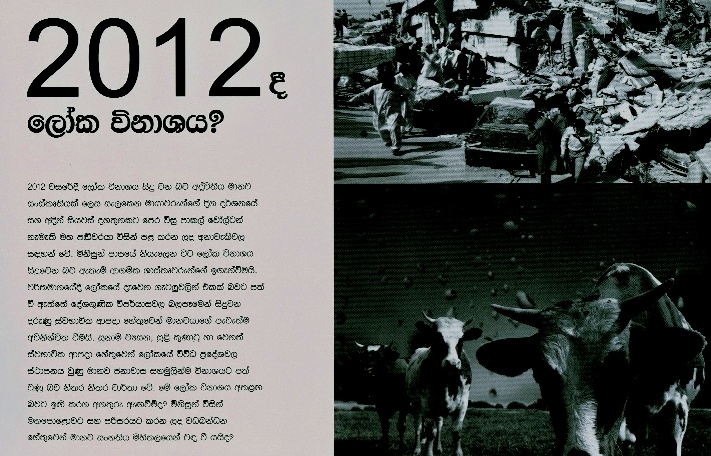
අවාසනාවකට ලොව පිළිගත් විද්වත් ආයතන පවා ඇතැම් විට අතිශයෝකිතියට හා ආවේගයන්ට නතු වනවා. විකල්ප සංවර්ධනයක් සඳහා අවංකව ම කැපවුණුල ප‍්‍රැක්ටිකල් ඇක්ෂන් (Practical Action) නම් ලෝක ව්‍යාප්ත සංවිධානයක් තිබෙනවා. ‘පුංචි නම් ලස්සනයි’ (Small is Beautiful) පොත ලියූ ජර්මන් ආර්ථික විද්‍යාඥ අර්න්ස්ට් ෂූමාකර් පිහිට වූ මේ ආයතනයේ ශ්‍රී ලංකා කාර්යාලය 2008දී නිකුත් කළ “ජන තාක්‍ෂණ පුවත්” නම් සිංහල වාරිකය (2 වෙලූම, 3 කලාපය) දැක මා කම්පාවට පත් වුණා.

Jana Thakshana Puwath 2008 Vol 2 No 3 - p13
දේශගුණ විපර්යාස ගැන තොරතුරු රැුගත් මේ සගරාවේ විග‍්‍රහයන් බොහෝ ආවේගශීලීයි. පාඨකයන් බියපත් කරවන වදන් හරඹයක් ඔවුන් කරනවා. 2012දී ලෝක විනාශය මැයෙන් 13 පිටුවේ මෙසෙ කියනවා:

“2012 වසරේදී ලෝක විනාශය සිදු ව බව අද්විතීය මානව සංස්කෘතියක් ලෙස සැලකෙන මායාවරුන්ගේ දින දර්ශනයේ සහ අදින් සියවස් දහතුනකට පෙර විසූ පාකල් වෝලටන් නැමැති මහ පඩිවරයා විසින් පළ කරන ලද අනාවැකිවල සඳහන් වේ. මිනිසුන් පාපයේ නියැලෙන විට ලෝක විනාශය සිදුවෙන බව ඇතැම් ආගමික ශාස්තෘවරුන්ගේ ඉගැන්විමයි. වර්තමානයේදී ලෝකයේ දැවෙන ගැටලූවලින් එකක් බවට පත් වී ඇත්තේ දේශගුණික විපර්යාසවල බලපෑමෙන් සිදුවන දරුණු ස්වභාවික අපදා හේතුවෙන් මානවයාගේ පැවැත්ම අවිනිශ්චිත වීමයි. සුනාමි ව්‍යසන, සුළි කුණාටු හා වෙනත් ස්වභාවික ආපදා හේතුවෙන් ලෝකයේ විවිධ ප‍්‍රදේශවල ස්ථාපනය වුණු මානව ජනාවාස සහමුලින්ම විනාශයට පත් වුණු බව නිතර නිතර වාර්තා වේ. මේ ලෝක විනාශය අතළග බවට ඉගි කරන අනතුරු ඇගවීම්ද? මිනිසුන් විසින් මහපොළොවට සහ පරිසරයට කරන ලද වධ බන්ධන හේතුවෙන් මානව සංහතිය මිහිතලයෙන් වඳ වී යයි ද?”

මේ ත‍්‍රාසජනක ප‍්‍රබන්ධයක පිටපතක් ද? මෙබදු සන්නිවේදන කරන්නට වගකිවයුතු ආයතන ඉඩ දෙන්නේ ඇයි?

ප‍්‍රැක්ටිකල් ඇක්ෂන් ශ්‍රී ලංකා අධ්‍යක්‍ෂවරිය වන ආචාර්ය විශාඛා හැදැල්ලගේ වෙතින් මා මේ ගැන විමසුවා. මනා සංස්කරණ අධීක්‍ෂණයකින් තොරව ජන සමාජයට ගිය මේ ප‍්‍රකාශනය පිළිබඳ මගේ විවේචනය ඇය පිළි ගත්තා. මෙය සිය ආයතනයේ නිල ස්ථාවරය නොවන බවත්, එය ලියූ නිදහස් ලේඛකයාගේ තනි අදහසක් බවත් ඇය කියනවා. (මේ ආයතනය පරිසර සංවිධානයක් ද නොවේ.)

ලෝක විනාශය හා දේශගුණ විපර්යාස එකට මිශ‍්‍ර කිරීම හැරුණු විට විද්‍යාත්මකව වැරදි තවත් කරුණු එම ප‍්‍රකාශනයේ තිබෙනවා. සැබෑ තත්ත්වය හතර පස් ගුණයකින් වැඩිකොට පැවසීම හා ලිවීම අපේ පරිසරවේදීන් අතර සුලභ පුරුද්දක්. ඇත්ත ඇති සැටියෙන් කීමට හා නොදන්නා දේ එසේ පිළිගැනීමට ඔවුන් මැලි ඇයි?

අභව්‍ය දේ ගැන අතිශයෝක්ති ගොතා මිනිසුන් බියපත් කර තමන්ගේ ඇදහිලිවලට ඇද ගන්නට තැත් කරන විවිධ ආගම්වාදීන් සහ මෙබදු පරිසරවේදීන් අතර එතරම් වෙනසක් නැහැ.මේ දෙපිරිසේ ම විශ්වසනීයත්වය පලූදු වී ඇති බව පැහැදිලියි. ඇරත් 2012 ලෝක විනාශය ඔවුන් කියන පරිදි සිදු නොවූ විට ඔවුන් යළිත් සමාජයට මුහුණ දෙන්නේ කෙසේ ද?

මින් පෙර නොවූ වීරූ අසාමාන්‍ය ගණයේ භූචලන ලෝකයේ සිදු වෙමින් පවතිනවා ද? නැතිනම් අද ඒ ගැන ජනමාධ්‍යවලින් කැරෙන වාර්තාකරණය තීව‍්‍ර වී ඇත් ද? ලෝකයේ ප‍්‍රමුඛ පෙළේ භූවිද්‍යාඥයන් කියන්නේ මිහිතලය උණුසුම් වීමෙන් පොළව මතුපිට යම් විපර්යාස සීඝ‍්‍ර වී ඇතත් පෘථිවි අභ්‍යන්තරයේ එබදු ප‍්‍රවණතාවක් තවමත් දැකිය නොහැකි බවයි.

එසේ නම් 2001-2011 කාලය තුළ ප‍්‍රබල භූමිකම්පා ගණනාවක් චීනය, චිලී, ජපානය හා ඉන්දුනීසියාව වැනි රටවලින් වාර්තා වූයේ ඇයි? 1900 සිට 2010 දක්වා භූකම්පන මානයේ අංක 7ට වඩා ඉහළින් සිදු වූ සියළු ම භූ චලනයන් විස්තරාත්මකව අධ්‍යයනය කළ අමෙරිකාවේ විද්‍යාඥ දෙපළක් 2011 අගදී කියා සිටියේ භූමිකම්පාවල ප‍්‍රබලත්වයේ උත්සන්න වීමක් සංඛ්‍යාත්මකව නොදකින බවයි.

අමෙරිකාවේ ස්ක‍්‍රිප්ස් සාගර විද්‍යා පර්යේෂණායතනයේ භූවිද්‍යාඥ පීටර් ෂියරර් හා කැලිෆෝනියා විශ්වවිද්‍යාලයේ (බර්ක්ලි) ෆිලිප් ස්ටාක් සිය විශ්ලේෂණය 2011 දෙසැම්බර් 19දා එරට විද්‍යා ඇකඩමියේ වෙබ් අඩවිය හරහා ප‍්‍රකාශයට පත් කළා. වසර 110ක භූමිකම්පා දත්ත පදනම් කර ගෙන නම් පෘථිවි අභ්‍යන්තරයේ ප‍්‍රචන්ඩත්වයේ වැඩිවීමක් දැකිය නොහැකි බවත්, එබන්දක් ගැන හරි හැටි කීමට ඊටත් වැඩි කාල පරාසයක දත්ත විමසා බැලිය යුතු බවත් ඔවුන් කියනවා. ඔවුන්ගේ අවසන් නිගමනය නම් මෑත වසරවල අත්දුටු මහා පරිමානයේ භූමිකම්පා එසේ කෙටි කලක් තුළ ඇති වීම හුදෙක් අහඹු සිදුවීමක් මිස පෘථිවි අභ්‍යන්තරයේ විපර්යාසයක ඉගියක් නොවන බවයි. http://tiny.cc/MegaQ

සිදු වන්නට හැකියාව ඉතා අඩු, වඩාත් ම බිහිසුණු සිදුවීම් ගැන මේ තරම් කලබලවීමක් හා භිතියක් ඇති කර ගන්නට අපේ ඇත්තන් නැඹුරු වන්නේ ඇයි? ස්වයංමුලාව හා ස්වයංභීතිය ඒ තරමට අපේ තනි හා සාමුහික චින්තනයට සමීප වෙලාද?

1955 ජුනි 20 වනදා අපේ දිවයිනට අවසාන වරට පූර්ණ සූර්යග‍්‍රහණයක් දිස් වූ අවස්ථාවේ ලස්සන වන්නට යයි සිතා ගෙන වදකහ බී රෝහල් ගත වූ කථාව අප අසා තිබෙනවා. අදට වඩා අධ්‍යාපන මට්ටම් අඩු වූ එවකට එබන්දකට හසු වූවත්, තොරතුරු සමාජයේ ඇලී ගැලී වාසය කරන වත්මන් ලාංකිකයන් 2012 ලෝක විනාශය ගැන මෙතරම් දැඩිව අදහන්නේ ඇයි? විචාරශීලිව හා තුලනාත්මකව යමක් විග‍්‍රහ කිරීමේ හැකියාව ඒ තරමට අප සමාජයේ මොට වී ගිහින් ද?

Cooling without warming: Cool Biz for a safer future?

Image courtesy - Paradise Island Resort, Maldives
Paradise, The Maldives. 10 May 2011

I’m sitting in Paradise – and freezing. This isn’t quite what I imagined it to be.

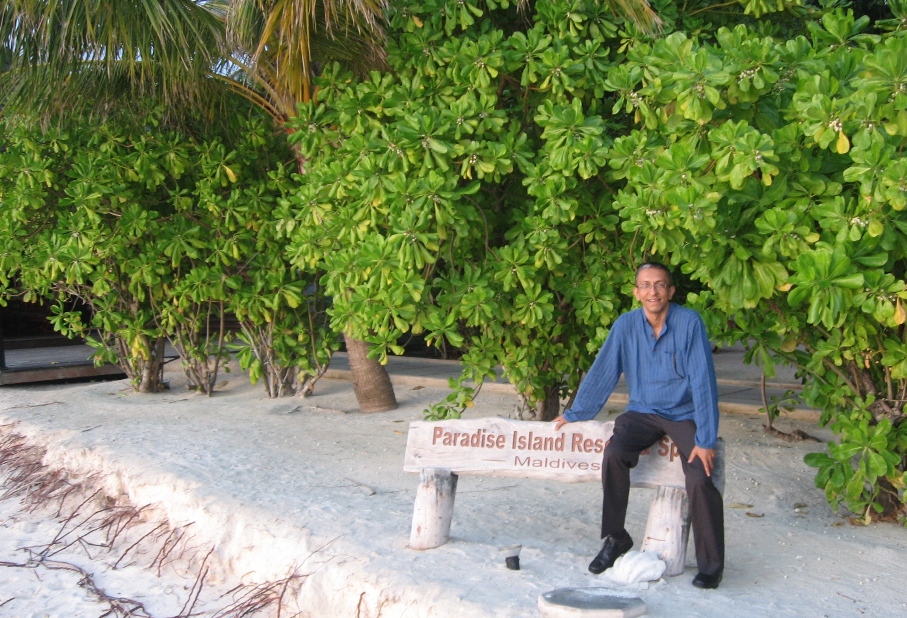
Well, actually I’m attending a serious inter-governmental meeting being held at the Paradise Island Resort and Spa in the Maldives.

The setting is exotic enough – I’m near some of the finest beaches and bluest seas in the world. It’s a cloudy day outside, with tropical sunshine interrupted by occasional showers. We’re just a few hundred kilometres north of the Equator.

But it’s whole different world inside the meeting room. We have no windows and are visually cut off from the scenery. And the air conditioning is too strong. Even the 50 or so people inside the room don’t emit enough body heat to counter the chill spilling out from the ceiling.

Paradise (resort) isn’t alone. Across tropical Asia, our public offices, hotels and shopping malls just love to freeze us out.

This habit has a particular irony at this meeting. Convened by the UN Environment Programme (UNEP), it’s discussing how to stay cool without killing the planet.

To be precise, how air conditioning and refrigeration industries can continue their business – and keep cooling people and goods – without damaging the ozone layer or warming the planet.

It’s the semi-annual meeting of government officials from across Asia who help implement the Montreal Protocol to control and phase out several dozen industrial chemicals that damage the ozone layer in the upper atmosphere.

A nitpicker in Paradise? Photo by Darryl D'Monte

Adopted in 1987 and now ratified by 196 countries, it is the world’s most successful environmental treaty. It has reversed a catastrophic loss of ozone high up in the Earth’s atmosphere, and prevented tens of thousands of cases of skin cancer and cataract.

A landmark was reached at the end of 2009, when it succeeded in totally phasing out the production and use of chlorofluorocarbons (CFCs) — chemicals that had helped the cooling industries for decades. Now, a bigger challenge remains: removing two other widely used gases known as HCFCs and HFCs.

Both were originally promoted as substitutes for CFCs in the early days of the Protocol. HCFCs are less ozone-damaging than CFCs, while HFCs are fully ozone-safe. However, both have a high global warming potential — up to 1,700 times that of Carbon dioxide — and therefore contribute to climate change.

It was only a few years ago that scientists and officials realized that there was little point in fixing one atmospheric problem if it aggravated another. So in 2007, the Montreal Protocol countries agreed to address the climate impacts of their work.

The Montreal Protocol now encourages the countries to promote the selection of alternatives to HCFCs that minimize environmental impacts, in particular impacts on climate change.

The air conditioning and refrigeration industries are being encouraged to switch from HCFC to substitutes ahead of the global phase-out deadline of 2030. Alternatives — including natural refrigerants such as ammonia, carbon dioxide, hydrocarbons — are entering the market for many applications.

Parallel to this, consumers are being encouraged to opt for newer appliances that are both ozone-safe and climate friendly.

It takes time and effort for this message to spread and take hold. Many users — especially in the developing countries — only consider the purchase price of appliances and not necessarily the long-term energy savings or planetary benefits.

Events like the first Asian Ozone2Climate Roadshow, held in the Maldivian capital Malé from 8 to 12 May 2011, are pushing for this clarity and awareness. It’s still an uphill task: too many people have to be won over on too many appliances using a wide range of chemicals and processes.

And sitting here at my freezing corner of Paradise, I feel we should add another message: conserving energy includes a more rational and sensible use of air conditioning.

Perhaps we should promote and adopt the Japanese practice of Cool Biz.

Introduced by the Japanese Ministry of Environment in the summer of 2005, the idea behind Cool Biz was simple: ensure the thermostat in all air conditioners stayed fixed at 28 degrees Centigrade.

CoolBiz Logo
That’s not exactly a very cool temperature (and certainly no freezing), but not unbearable either.

The Cool Biz dress code advised office workers to starch collars “so they stand up and to wear trousers made from materials that breathe and absorb moisture”. They were encouraged to wear short-sleeved shirts without jackets or ties.

A Cool Koizumi: Leading from the front...
Then Prime Minister Junichiro Koizumi himself set the tone, wearing informal attire. But then, he was already known for his unorthodox style.

Clothes designers and retailers chipped in, with clothes offering greater comfort at higher temperatures.

Cool Biz changed the Japanese work environment – and fast. I remember walking into a meeting at a government office in Tokyo a few weeks after the idea had been introduced, and finding I was the most formally dressed.

The Japanese like to count things. When the first season of Cool Biz ended, they calculated the countrywide campaign to have saved at least 460,000 tons of Carbon dioxide emissions (by avoided electricity use). That’s about the same emissions from a million Japanese households for a month.

The following year, an even more aggressive Cool Biz campaign helped save an estimated 1.14 million tons of Carbon dioxide – or two and half times more than in the first year.

The idea also traveled beyond Japan. In 2006, the South Korean Ministry of Environment and the British Trade Union Congress both endorsed the idea.

This summer, the seventh since Cool Biz started, there is an added reason for the Japanese to conserve energy. As the Asahi Shimbun reported on 28 April 2011: “In what has been dubbed the ‘power-conserving biz’ campaign, many companies plan to conserve energy during the peak summer period in light of expected power shortages caused by the crisis at the Fukushima No. 1 nuclear power plant.”

Meanwhile, the rest of us freeze-happy tropical Asians can evolve our own Cool Biz practices – we don’t need to wait for governments and industry to launch organized campaigns.

For a start, we – as consumers or patrons – can urge those who maintain public-access buildings to observe voluntary upper limits of cooling. Sensitive thermostats can automatically adjust air conditioner operations when temperatures rise above a pre-determined comfortable level.

It all depends on how many of us pause to think. Of course, we can also continue business as usual – and freeze ourselves today for a warmer tomorrow.

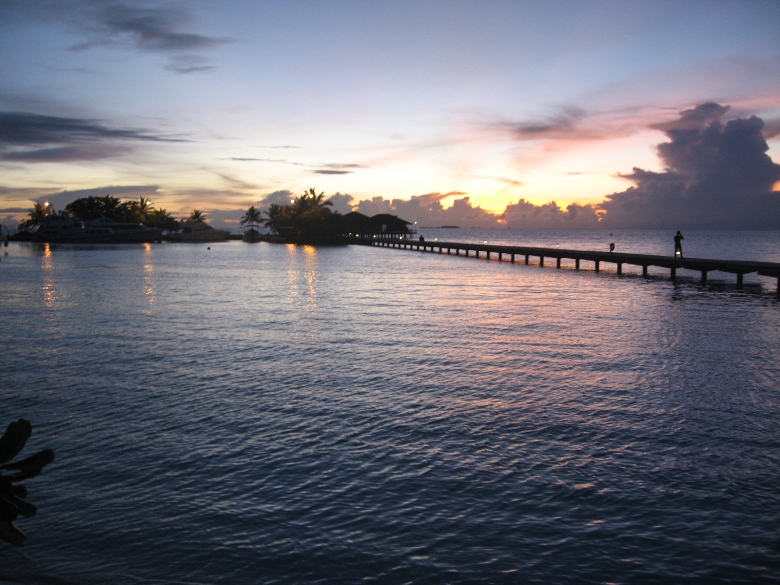
The sun sets in Paradise too - photo by Nalaka Gunawardene

Gasping for Fresh Air in Delhi and Colombo: Miles to go before we can breathe easily!

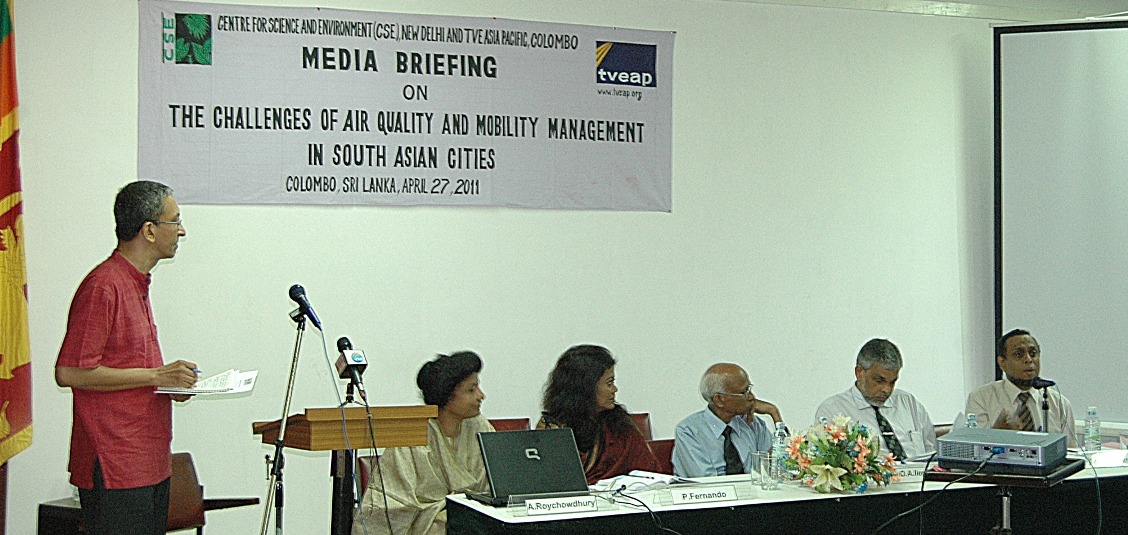
CSE TVEAP Media Briefing on Air Qualitry Issues in Colombo, 27 April 2011

Almost exactly four years ago, I wrote a blog post called Gasp! Asthma on the rise – and we made it all possible. I argued how we who suffer from Asthma — and our numbers keep increasing — are also contributing to making the bad problem worse.

So I write, speak and make films about clean air entirely with an enlightened self interest: I want to breathe more easily. This week, just a few days ahead of the annual World Asthma Day, I once again declared this as I opened a Media Briefing on the Challenges of Air Quality and Mobility Management in South Asian Cities organised in Colombo today by the Centre for Science and Environment (CSE), New Delhi and TVE Asia Pacific.

I held up my life-saving inhaler that I always carry around wherever I go, and am never more than a few feet away from. This is not theatrics, but drama in real life. Almost exactly a year ago, I was rushed to hospital at night for nebulisation. I don’t suffer such attacks too often, thank goodness, but I also don’t want to take chances — as I can never count on good air in my home city.

And I’m far from being alone. Wherever I go, I find increasing numbers of fellow asthma sufferers: we gripe and groan, but only a few among us realise that our lifestyles, choices and apathy contributes to the worsening quality of our air.

Almost every South Asian city today is reeling under severe air pollution and gridlocked urban traffic congestion. Colombo, a medium sized city by South Asian standards, has the (slight) advantage of the sea breeze flushing out part of its polluted air — but Greater Colombo is still struggling with polluting fuels, outdated vehicle technologies and rising numbers of private vehicles leading to massive congestion. Air quality levels vary considerably as we travel to the interior of the island, but some provincial cities now have mounting air pollution problems.

Finding the 'Common Air' in everybody's self interest...

This is why we collaborated with CSE, which has a long track record in knowledge-based advocacy for clean air in India and other countries of developing Asia, to organise this event. It was an open forum where air quality experts in Sri Lanka and India engaged Sri Lankan journalists and broadcasters on the status of Sri Lanka’s air quality and what it can learn from the neighbouring countries.

In my remarks, I said: “The quest for clean air in developing Asia is much more than a simple pollution story. It has many layers and complex links to government policies, regulation, industrial lobbies and technology options.

I added: “Our big challenge, as professional story-tellers, is to ask tough questions, seek clarity and then connect the dots for our audiences. At stake is our health, prosperity and indeed our very lives. Air pollution kills, slowly but surely!”

See my PowerPoint presentation:

Read more: Gasping for Fresh Air, Seeking More Liveable Cities in South Asia

No Pressure, Just Plain Stupidity: UK climate film scores ‘own goal’ for campaigners

Still from No Pressure film: We do live in The Age of Stupid!
Shock therapy is known to work, when handled carefully. We can sometimes shock people out of apathy or indifference, for sure — but the same shock, if overdone, can also numb people or turn them off completely.

That’s certainly the case with a new climate advocacy video film called No Pressure, released on 1 October 2010 by the by the climate mitigation campaign named 10:10.

Written by Richard Curtis and Franny Armstrong (who made the acclaimed 2009 climate documentary, The Age of Stupid) and directed by Dougal Wilson, the film is a tragi-comic attempt to ridicule those who don’t share the same level of concern on global climate change as the climate activists do.

The four-minute film consists of a series of short scenes in which groups of people are asked if they are interested in participating in the 10:10 project to reduce carbon emissions. Those failing to show sufficient enthusiasm for the cause, including two schoolchildren, are gruesomely executed by being blown to pieces.

Well, see for yourself. Caution: this video contains violent scenes that can be offensive to most sensible people:

The normally balanced UK’s Guardian newspaper, which got the online exclusive, introduced the video on 30 September 2010 calling it “attention grabbing” and “pretty edgy.” There were a few others who found artistic or creative merit in the film, which has got high production values — no basement production, this.

But where it fails miserably is in winning any new friends for the climate cause, or at lease to influence people to change their high carbon lifestyles.

Amdrew Revkin
As Andrew Revkin, who writes the Dot Earth blog for the New York Times, wrote on 1 October: “If the goal had been to convince people that environmental campaigners have lost their minds and to provide red meat (literally) to shock radio hosts and pundits fighting curbs on greenhouse gases, it worked like a charm.”

He isn’t alone. Bill McKibben, author, educator and environmentalist — who founded the serious climate group 350.org — wrote on the same day: “The climate skeptics can crow. It’s the kind of stupidity that hurts our side, reinforcing in people’s minds a series of preconceived notions, not the least of which is that we’re out-of-control and out of touch — not to mention off the wall, and also with completely misplaced sense of humor.”

His group, 350.org, issued a statement that emphatically said they had nothing to do with this misplaced British climate extremism. McKibben added, more reflectively: “What makes it so depressing is that it’s the precise opposite of what the people organizing around the world for October 10 are all about. In the first place, they’re as responsible as it’s possible to be: They’ll spend the day putting up windmills and solar panels, laying out bike paths and digging community gardens. And in the second place, they’re doing it because they realize kids are already dying from climate change, and that many many more are at risk as the century winds on. Killing people is, literally, the last thing we want.”

Bill McKibben
Now contrast such concern with the initial reaction from British film maker Franny Armstrong, who wrote a half-hearted, almost defiant apology on the 10:10 UK website, saying: “With climate change becoming increasingly threatening, and decreasingly talked about in the media, we wanted to find a way to bring this critical issue back into the headlines whilst making people laugh. We were therefore delighted when Britain’s leading comedy writer, Richard Curtis – writer of Blackadder, Four Weddings, Notting Hill and many others – agreed to write a short film for the 10:10 campaign. Many people found the resulting film extremely funny, but unfortunately some didn’t and we sincerely apologise to anybody we have offended.”

Adding gross insult to injury, Armstrong signed off saying: “As a result of these concerns we’ve taken it off our website. We won’t be making any attempt to censor or remove other versions currently in circulation on the internet.”

Both the 10:10 UK campaign and its sponsors Sony have been more unequivocal in their apologies in the days that followed. But that’s too little, too late. Enough damage done — climate activists and campaigners worldwide will take months, if not years, to live down this one.

And nothing really goes away on the web — this video will be lurking somewhere for a long time. YouTube currently carries the video in several places, with the warning: “This video or group may contain content that is inappropriate for some users, as flagged by YouTube’s user community.”

Andrew Revkins has posted comments from those who condemned as well as those who found some merit in the offensive climate video. Some of these comments take a dispassionate view, which is to be welcomed.

This incident teaches all of us engaged in environmental communication some important lessons. Environmentalists have over-stated their case before, and every time, that did them (and their causes) far more harm than good. Crying wolf, and ridiculing the non-believers, are never good tactics in winning friends or influencing people.

As Bill McKibben noted: “There’s no question that crap like this (video) will cast a shadow, for a time, over our efforts and everyone else who’s working on global warming. We’re hard at work, as always, but we’re doing it today with a sunk and sad feeling.”

One more thing: even in this age of globalised media, humour doesn’t travel well across cultures and borders. As mainstream corporate media companies have often found out, British humour sometimes doesn’t even cross the Atlantic very well — let alone to other parts of the world. Perhaps this is a key point that this all-British team of film makers and campaigners simply missed.

The world is a bit bigger — and more diverse — than your little island, Ms. Armstrong. By failing to grasp that, and with your crude display of insensitivity, you have really proved the premise of your good climate film.

We do live in the Age of Stupid.

PS: Marc Roberts says it all in this cartoon:

Et tu, Armstrong?

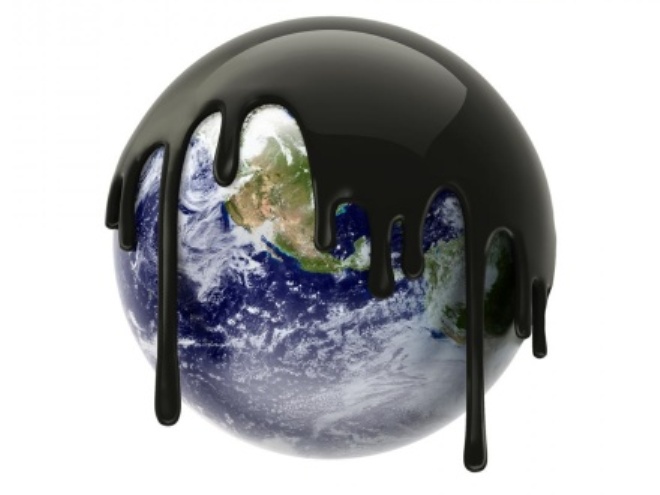
Beware: A planet drunk on oil, now ruining itself…

Who spilled our oil?

A monstrous oil spill is gushing as much as 2,500,000 gallons of crude a day into the Gulf of Mexico.

This disaster is expected to be catastrophic for the land and people in the gulf. The oil has already reached land, contaminating wildlife sanctuaries. Authorities are so concerned about the impacts of more oil reaching land that they are prefer to set the gulf on fire, burning as much of the oil as possible.

Meanwhile, the fossil fuel industry is raking in windfall profits. BP, which operated the sunken rig, more than doubled its first quarter profits in 2010 to $5.65 billion.

I’ve just signed an urgent petition at Avaaz.org urging U.S. law-makers to overturn plans to expand offshore drilling. As the latest massive oil spill shows, offshore drilling isn’t safe or clean. The world needs clean energy investment to tackle climate, not expansion of dangerous and dirty energy sources.

Addressed to President Obama and members of Congress, it reads, simply: “We urge you to permanently call off plans to open up more of the US coastline to dangerous offshore drilling. Instead, invest in a clean and safe energy future.”

As Avvaz.org notes, “Before the spill, U.S. President Obama and Congressional leaders were planning to ramp up offshore drilling. Now, with the spill, the politics have shifted — and an opportunity has opened for the world’s biggest historical climate polluter to shift away from oil and towards climate-safe energy sources. At a moment like this, when leaders are making up their minds, the world’s voices can help tip the balance.”

Let’s hope it works – but the world is so addicted to its oil, and the petro dollars are so powerful – don’t hold your breath on this…

Read my blog post from March 2009: Mixing oil and water: Media’s challenges in covering human security

BBC Analysis, 6 May 2010: Gulf oil spill washes up on political shores

‘Avatar’ unfolds in the Amazon: Find out the Real Price of Oil!

This is no Avatar: It's Real!
A few days ago, reviewing the blockbuster movie Avatar, I wrote: “Film critics and social commentators around the world have noticed the many layers of allegory in the film. Interestingly, depending on where you come from, the movie’s underlying ‘message’ can be different: anti-war, pro-environment, anti-Big Oil, anti-mining, pro-indigenous people, and finally, anti-colonial or anti-American. Or All of the Above…”

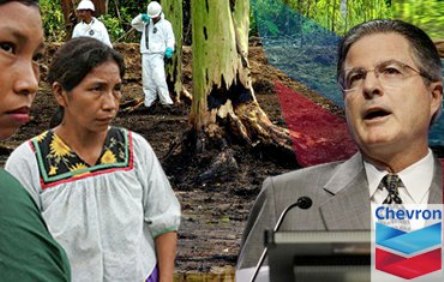
Indeed, an Avatar-like struggle is unfolding in the Amazon forest right now. The online campaigning group Avaaz have called it a ‘Chernobyl in the Amazon’. According to them: “Oil giant Chevron is facing defeat in a lawsuit by the people of the Ecuadorian Amazon, seeking redress for its dumping billions of gallons of poisonous waste in the rainforest.”

From 1964 to 1990, Avaaz claims, Chevron-owned Texaco deliberately dumped billions of gallons of toxic waste from their oil fields in Ecuador’s Amazon — then pulled out without properly cleaning up the pollution they caused.

In their call to action, they go on to say: “But the oil multinational has launched a last-ditch, dirty lobbying effort to derail the people’s case for holding polluters to account. Chevron’s new chief executive John Watson knows his brand is under fire – let’s turn up the global heat.”

Avaaz have an online petition urging Chevron to clean up their toxic legacy, which is to be delivered directly to the company´s headquarters, their shareholders and the US media. I have just signed it.

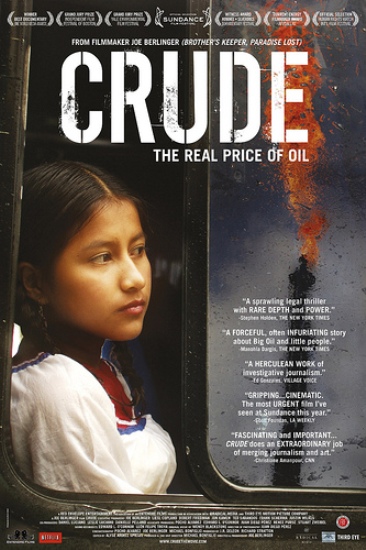
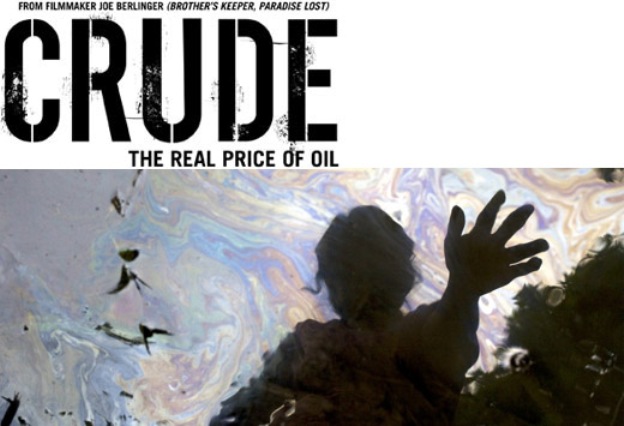
Others have been highlighting this real life struggle for many months. Chief among them is the documentary CRUDE: The Real Price of Oil, made by Joe Berlinger.

The award-winning film, which had its World Premiere at the 2009 Sundance Film Festival, chronicles the epic battle to hold oil giant Chevron (formerly Texaco) accountable for its systematic contamination of the Ecuadorian Amazon – an environmental tragedy that experts call “the Rainforest Chernobyl.”

Here’s the official blurb: Three years in the making, this cinéma-vérité feature from acclaimed filmmaker Joe Berlinger is the epic story of one of the largest and most controversial legal cases on the planet. An inside look at the infamous $27 billion Amazon Chernobyl case, CRUDE is a real-life high stakes legal drama set against a backdrop of the environmental movement, global politics, celebrity activism, human rights advocacy, the media, multinational corporate power, and rapidly-disappearing indigenous cultures. Presenting a complex situation from multiple viewpoints, the film subverts the conventions of advocacy filmmaking as it examines a complicated situation from all angles while bringing an important story of environmental peril and human suffering into focus.

Watch the official trailer of Crude: The Real Price of Oil

According to Amazon Watch website: “With key support from Amazon Watch and our Clean Up Ecuador campaign, people are coming together to promote (and see) this incredible film, and then provide ways for viewers to support the struggle highlighted so powerfully by the film.”

They go on to say: “A victory for the Ecuadorian plaintiffs in the lawsuit will send shock waves through corporate boardrooms around the world, invigorating communities fighting against injustice by oil companies. The success of our campaign can change how the oil industry operates by sending a clear signal that they will be held financially liable for their abuses.”

While Avatar‘s story unfolds in imaginary planet Pandora — conjured up by James Cameron’s imagination and created, to a large part, with astonishing special effects, the story of Crude is every bit real and right here on Earth. If one tenth of those who go to see Avatar end up also watching Crude, that should build up much awareness on the equally brutal and reckless conduct of Big Oil companies.

Civilisation's ultimate addiction?

Others have been making the same point. One of them is Erik Assadourian, a Senior Researcher at Worldwatch Institute, whom I met at the Greenaccord Forum in Viterbo, Italy, in November 2009.

He recently blogged: “The Ecuadorians aren’t 10-feet tall or blue, and cannot literally connect with the spirit of the Earth (Pachamama as Ecuadorians call this or Eywa as the Na’vi call the spirit that stems from their planet’s life) but they are as utterly dependent—both culturally and physically—on the forest ecosystem in which they live and are just as exploited by those that see the forest as only being valuable as a container for the resources stored beneath it.”

Erik continues: “Both movies were fantastic reminders of human short-sightedness, one as an epic myth in which one of the invading warriors awakens to his power, becomes champion of the exploited tribe and saves the planet from the oppressors; the other as a less exciting but highly detailed chronicle of the reality of modern battles—organizers, lawyers, and celebrities today have become the warriors, shamans, and chieftains of earlier times.”

Please Help the World: The call to Copenhagen climate conference

Earlier this week, United Nations Climate Change Conference 2009 (COP15) in Copenhagen opened with an apocalyptic video showing the world torn asunder from a variety of disasters.

As one reviewer wrote: “The portrayal sought to play up on the fears of the world should a worst case scenario develop from global warming. The entire video is reminiscent of the recent disaster movie blockbuster, 2012 that was released in movie theatres in recent months.

I haven’t yet seen 2012, now showing in a theatre close to me, so I can’t comment on the comparison. But here’s the video, now playing on COP15 channel on YouTube:

In the video, a child goes to sleep peacefully but wakes to find herself in a desert wasteland. As she sets out to explore, the very land on which she stands begins to crack open and she flees. The girl doesn’t make it far before she looks up to see the world’s largest tornado tearing a city apart and flood waters approaching. The child leaps to a tree branch as the waters overtake her and she screams. It is then that she wakes from what is only a dream and decides to make a home video saying, “Please help the world.”

Will the bickering and myopic leaders of the world heed this call? We shall know in the next few days.

Meanwhile, here are the credits for this film:
Director: Mikkel Blaabjerg Poulsen
Producers: Stefan Fjeldmark and Marie Peuliche
Cinematographer: Dan Laustsen
Production designer: Peter de Neergaard
Editor: Morten Giese
Composer: Davide Rossi
Sound design: Carl Plesner
Production company: Zentropa RamBuk
Advisory consultants: Mogens Holbøll, Bysted A/S and Christian Søndergaard, Attention Film ApS.

For some comparisons, here is the official trailer for 2012:

Small Islands, Big Impact: Film from the frontlines of climate change impact…

A short film, 20 years in the making...

Some films, like certain books, are in the making for years or decades. My latest film, Small Islands, Big Impact, just released online by TVE Asia Pacific, is quite short: slightly under 6 minutes long. But it has been forming in my mind for the past 20 years.

As a science journalist, I have been covering its story since 1989: how the Indian Ocean archipelago of the Maldives – Asia’s smallest country by area and population – is on the ‘frontline’ of climate change impact.

The Maldives packs 325,000 people into a combined land area just under 300 square kilometres spread over 1,192 islands and islets. With an average ground level of 1.5 metres (5 feet) above sea level, it is also the lowest country on the planet. When I first visited the Maldives in late 1988, they were still recovering from a massive storm surge in 1987. Although the damage was limited, the experience showed how vulnerable the Maldives can be to even a small rise in sea levels – this prompted the then President Maumoon Abdul Gayoom to take up the issue internationally. (It was President Gayoom who took up climate crusading at statesman level, well before Al Gore turned up on the scene.)

Interestingly, my first encounter with President Gayoom had nothing to do with climate – it concerned a celestial phenomenon: the Maldives was witnessing an annual solar eclipse and the President wanted to observe it in the company of amateur astronomers from their nearest neighbour, Sri Lanka. So he invited a couple of us over (I was active in the Young Astronomers’ Association of Sri Lanka at the time.)

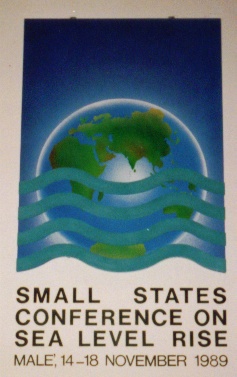
Small states conference on sea level rise logoI returned to the Maldives in November 1989, that time as a member of the international media covering the first ever small states conference on sea level rise. Held at the Kurumba island resort, it was one of the earliest international gatherings on climate impacts on low lying states, a topic that was to gain public interest and momentum in the years to come. Among the participants were delegates from practically all the small states in different parts of the world (defined as those with less than 1 million population), and scientists from disciplines such as oceanography, climatology, meteorology and geology.
This was one of the first international scientific events that I covered as an eager young science journalist. I was a foreign correspondent for Asia Technology, a monthly magazine on Asian science and technology published from Hong Kong (now defunct), and freelancing for The Island daily newspaper in Sri Lanka. (There’s nothing online from that coverage as it was in the pre-web era!)

The conference had technical sessions where experts debated scenarios and implications, and a political segment where delegations made their official statements. In the end, they issued the Malé Declaration on Global Warming and Sea Level Rise, which urged for inter-governmental action on the issue.

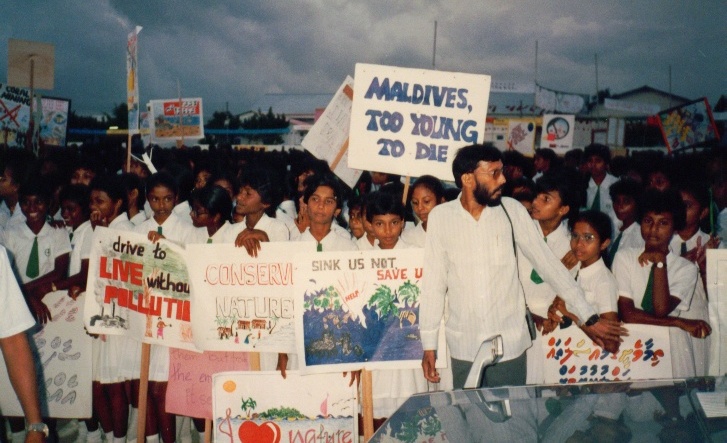
Our Maldivian hosts knew that scientists and officials alone couldn’t send out a powerful message to the world on what climate change meant for low lying islands of the world – many of them mere specks on the world map, barely registering in media’s radar. So on the last day of the conference, we were taken to the Maldivian capital of Malé, where a demonstration and public rally were held by school children and ordinary people.

That turned out to be the most striking moment of the whole week. I had been listening to experts and officials talk about impacts, scenarios and mitigation measures for several days, on which I’d filed several stories. But unless I go back to my personal archives, I can no longer remember those details. My lingering memories of this event are in a few photos I took, showing school children telling delegates – and the world – what it means to be living on the front lines of climate change impact.

This was the most striking photo – three more are found in an earlier blog post:

maldives-too-young-to-die-say-school-children-nov-1989.jpg

After 1989, I visited the Maldives on a couple of occasions for professional purposes during the 1990s. After I started working with TVE Asia Pacific in 1996, I was keen to return to the story of the Maldives and climate change – this time, in moving images – but I never had the chance until this year.

But I was covering the bigger story of climate change and its impact on the Asia Pacific from other locations. For example, in 2002, I commissioned and executive produced Voices from the Waves, the first-ever documentary on climate change in the South Pacific made by a native Pacific islander. Directed by Fijian film-maker Bernadette Masianini, the story revolved around two teenagers growing up on Fiji and Kiribati, each facing an uncertain future because of climate change.

In November 2007, the Maldives once again hosted representatives from small island states to discuss climate change. Eighteen years after the original meeting, the subject was no longer a fringe concern; it was now on everybody’s agenda. The meeting urged the the human dimension of global climate change to be included in the agenda of UN Climate Change Summit in Bali (December 2007), and sought the international community’s commitment “to protect people, planet and prosperity by taking urgent action to stabilize the global climate change”.

This time, the Male’ Declaration on the Human Dimension of Global Climate Change called for the UN High Commissioner for Human Rights to assess the human rights implications of climate change and “to conduct a study into the effects of climate change on the full enjoyment of human rights”. It also requested the UN Human Rights Council to convene a debate on human rights and climate change.

I wasn’t present at the 2007 meeting, but followed the process online. While climate change emerged as a major global concern, political change and reforms were underway in the Maldives. The country moved to a multi-party democracy, and in November 2008, the Maldivian Democratic Party‘s candidate Mohamed Nasheed won the presidential election.

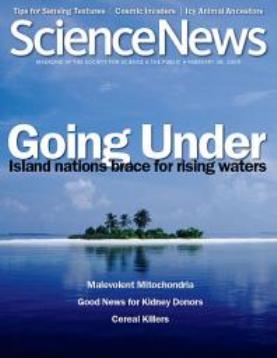
Science News cover - 28 Feb 2009
President Nasheed continues the climate advocacy that President Gayoom had sustained for nearly a quarter of a century. President Nasheed has emerged as an outspoken and pragmatic voice speaking on behalf of his and other small island states, grouped under the Alliance of Small Island States (AOSIS).

In early 2009, President Nasheed announced that the Maldives would become the world’s first fully carbon-neutral nation within a decade. To accomplish this, they would vigorously pursue renewable energies and green energy sources to replace current dependence on fossil fuels.

The final inspiration for Small Islands, Big Impact came in February 2009, when Science News magazine in the United States carried a cover feature on the challenges faced by Kiribati and the Maldives because of climate change. Written by senior science writer Cristine Russell, the article noted: “The Maldives and Kiribati highlight a hidden challenge for coping with climate change. It’s not just about slowing the emissions of greenhouse gases. It’s also about figuring out what to do for localities threatened with the possibility of extinction from rising ocean waters.”

My original plan was to film interviews with President Anote Tong of Kiribati, and President Nasheed. While sharing the same overall concerns, the two leaders (and their governments) have adopted somewhat different responses to the challenges posed by climate change. Unfortunately, the interview with President Tong did not come through in time, even though I had a Kiribati TV crew standing by to film it. So I decided to go ahead with the film focusing solely on the Maldives.

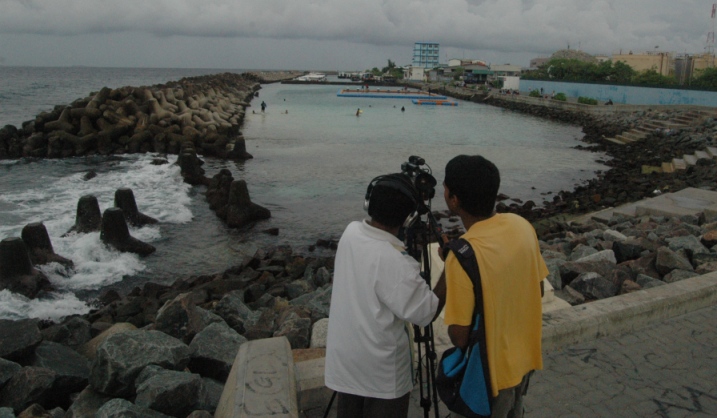
Location filming in Male - Hussein Makzoom (left) and Ibrahim Yasir

As with all TVEAP films, I was keen to make it with a local crew. Mariam Niuma, an engaging young Maldivian woman who had worked for nearly two years with us as an intern, helped me find a very capable crew in Ibrahim Yasir and his colleague Hussein Makzoom.

Niuma had been urging us to make a film about her country and was delighted that we were finally able to take it up. She helped us in numerous ways with local knowledge, introductions and advice. She also took time off her work with a local charity to show me around the Male’ island – which I was returning after a dozen years, in which time it had changed almost beyond recognition. (Male’ is one of the most crowded places on Earth – every one in four Maldivians lives on the tiny capital island.)

Small Islands, Big Impact was filmed on location over a few days in late August in Male’ and the nearby island of Vilingili. Our tiny production budget didn’t allow us to spend longer or venture further into the more remote islands and atolls (coral island formations, 26 of which make up the Maldives).

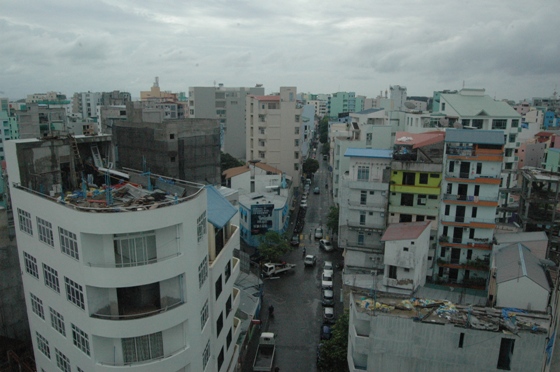
Overcrowded Malé, capital of the Maldives
The timing wasn’t ideal either – the Monsoon was still active, and rain often interrupted our filming. There was some irony that a climate film was being shot in inclement weather. Sometimes we filmed in spite of the rain – one ferry ride we took from Male’ to Vilingili island had to cross very choppy seas that made me (a land lubber!) quite nervous. For our Maldivian crew, however, it was all in a day’s work…

President Nasheed’s media team had been quick and supportive in accommodating our interview request, but when actually filming it, we faced an unexpected challenge which I’ve described in an earlier blog post. (Clue: In addition to inclement weather, we had to deal with a nasty influenza virus). With the month-long Ramadan fast period about to begin, which would significantly affect the pace of work in the 100% islamic Maldives, we had no choice but to persist with our filming, improvising as we went along.

I returned to Colombo with five camera tapes rich in footage, one of which contained a 15-minute interview with the amiable and technocratic President Nasheed. Over the next few weeks, I worked with our editor Umesha Fernando in distilling this material into a short, compact film less than six minutes. It took a good deal of time and effort — especially since I chose not to have any narration and to let President Nasheed tell the story in his own voice, interspersed with text-supported transitions.

Because of this style, soundtrack mattered a great deal, and we agonised over custom-composing the music. As I put everything this together, I kept recalling the wise words of senior Australian film-maker Bruce Moir: “Film is a lousy medium to communicate information. It works best at the emotional level.”

In the end, we barely met our self-imposed deadline: the film was released online just in time for the International Day of Climate Action. At the same time, I released the full interview (in text) on TVEAP website and the Groundviews citizen journalism website.

I can’t judge my own film, but I have tried hard to strike a balance between its intellectual and emotional appeal. My team and I set out to tell a compelling story about a country on the frontlines of climate impact. No less a person than its dynamic head of state stars in our modest effort, made on an incredibly tiny budget.

So here it is, a film that has been 20 years in the making – Small Islands, Big Impact!

Note: Small Islands, Big Impact was produced on an editorially independent basis by TVE Asia Pacific in collaboration with COM+ Alliance of Communicators for Sustainable Development. As with all other TVEAP productions, this series comes without license fees, where only copying and dispatch costs are payable. To order broadcast master tapes, please contact:

It may also be ordered in high resolution on DVD (without regional coding) from TVEAP’s e-shop.

UK Nepal Climate Change Film Competition: We’re toast in 3 minutes!

Tell a climate story in just 180 seconds...

In July 2007, we had an interesting discussion on this blog on the shrinking durations of Nature and environment films and TV programmes. The moving images community is divided on this, with some purists holding out that to pack complex, nuanced messages into a few minutes is akin to dumbing everything down. Noted film-makers like Neil Curry disagreed.

I revisited this topic in August 2008, saying: “But there’s no argument of the sheer power of well produced public service announcements (PSAs) to move people with a specific, short message. Nothing can beat them for the economy of time and efficacy of delivery.”

Kathmandu to Copenhagen - in three minutes?
The trend to make ever shorter films has been fuelled by the growth of online video, where the dominant value seems to be: less is certainly more! This is the premise, for example, of the current competition One Minute to Save the World.

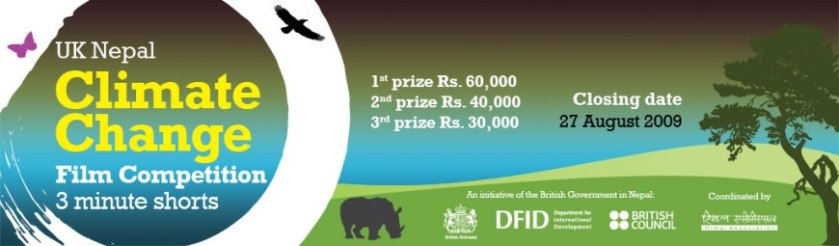
In Nepal, they were more generous — and allowed three minutes. I recently came across the winners of the UK Nepal Climate Change Film Competition, where Nepali film makers were invited to “make short, effective films of up to 3 minutes on the theme of Climate Change”. The submitted films had to be original in concept, innovative and highly motivational – no restrictions were set in terms of discipline or genre. It was organised by our friends at Himal Association, better known for sustaining Film South Asia festival for a decade.

The winning films were screened at an awards ceremony in September 2009 at the Regional Climate Change Conference in Kathmandu. They will also be screened at Kathmandu International Mountain Film Festival 2009 (10-14 December) and will be broadcast on television.

The winning film, Act locally think globally, was directed by Santoshi Nepal and Ishu Lama:

First runner-up, Jeopardy, is an animation directed by Shiva Sharan Koirala:

Second runner-up, 3 Cs of Climate Change, directed by Binod K Dhami and Padam Raj Paneru:

The competition attracted an impressive 124 entries. Angelo D’Silva, an educationist and media critic in Kathmandu, recently reviewed the entries in Himal Southasian special issue on climate change. He wrote: “In cash-strapped times, these contests focusing on climate change prove to be a cost-effective strategy in generating content. With no funding directed to the filmmaker for production, and prize money amounting to NPR 130,000 (USD 1700) for the three winners, the climate-change film contest is a way to make a splash on the cheap.”

He added: “While the filmmakers, all of whom were Nepali, exhibited an impressive range and quality, it was a range obscured by the selection of some fairly typical public-service-announcement-type finalists. Hopefully, however, two sets among the entries will soon see the light of day: those documenting the effects of climate change on Nepali communities, and those exploring (and exploiting) anxieties and fears about the burgeoning climate crisis.”

Read full review here.

I have only seen the three winning entries that are available online, so it would be unfair to comment on other entries. But I found the three winners predictably text-bookish. For sure, simple awareness raising is always helpful, but much more is needed – and urgently so – to deal with climate change. Film can be a powerful force for changing lifestyles, and not all of them have to be feature film length in Al Gore style.