Viterbo Memorandum by Greenaccord: Time to act on climate crisis is NOW!

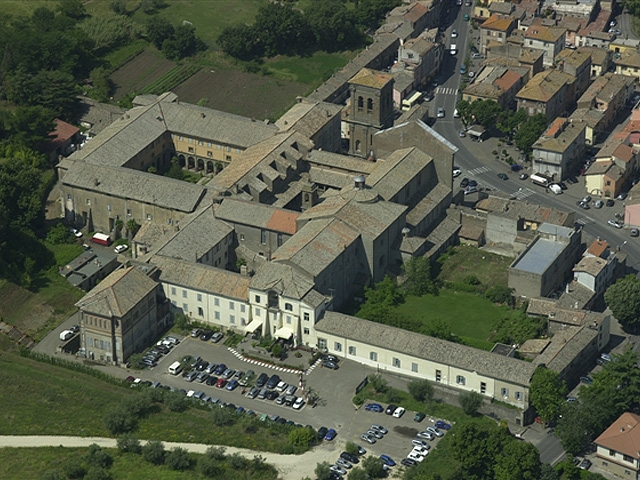
Renaissance period Domus La Quercia, venue of Greenaccord 2009 forum

“We know the climate is changing, probably as a result of humanity’s pollution; species are disappearing fast; deforestation is rampant; over-fishing is rife; water shortages are increasing; resource consumption is growing and so is the world’s population.

“…If this catastrophe unfolds, historians will look back and ask how that was allowed to happen with so little media debate. They may wonder what stories journalists were telling while the world was transformed around them.”

Those words are not new. In fact, they were part of the statement of concern issued at the end of the First International Media Forum organised by Greenaccord of Italy and held in Rapolano, Siena, Italy, in late 2003. I was one of 100+ journalists from all over the world who signed that original “Green Accord” for Journalists.

This year’s internationally acclaimed British climate film The Age of Stupid is based on a similar premise. This ambitious drama-documentary-animation hybrid features an old man living in the climate devastated world of 2055 AD, watching the ‘archive’ news footage from 2008 — and asking: “Why didn’t we stop climate change while we had the chance?”

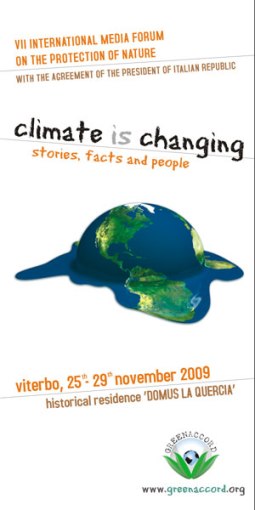
The 7th Greenaccord international forum, held in the central Italian city of Viterbo from 25 – 29 November 2009, has just ended calling upon world leaders to “draw a road map being a binding agreement for a total de-carbonization of world economy before 2050”.

Addressed to the UN climate conference opening in Copenhagen in a few days’ time, the forum’s final document – called the Viterbo Memorandum – urged that no more time be lost.

The Greenaccord forum’s theme this year was ‘Climate is changing: stories, facts and people’. Over five days, some 130 of us from 55 countries – drawn from all continents – stayed at the historic residence of Domus La Quercia in Viterbo, discussing and debating about the challenges faces by our warming planet, and how we as communicators can make a difference. It is what I recently called the Ultimate Race between education and catastrophe.

The Viterbo Memorandum pledged: “On their own side, they (journalists and scientists) vow to cooperate in order to spread correct information on the risk related to climate change and to make aware the public opinion on the need of individual contribution to the solution of problems by modifying their own life style.”
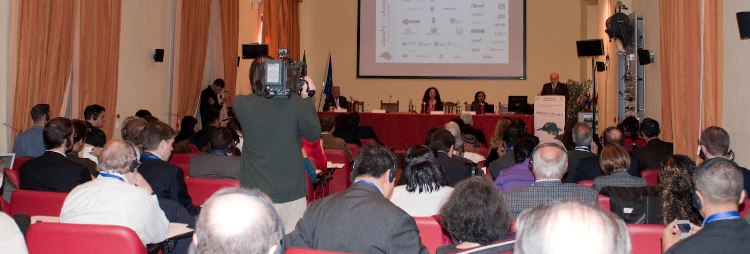
The Memorandum is to be delivered in early December 2009 to Dr Rajendra Pachauri, the Nobel Peace Prize winning Chairman of the UN’s climate panel, the IPCC.

Professor Andrea Masullo, President of Greenaccord’s Scientific Committee, said: “I don’t want our children and grandchildren, in 2050, finding themselves on a planet inhabited by more than 9 billion people and devastated by climate change, re-reading the scientific reports of today…to ask themselves what we were thinking and why we did not do anything when everything that was going to happen was clear.”

He added: ”In recent years the changes are progressing much faster than expected in the fourth IPCC report. Nevertheless, it seems that Copenhagen will not come again to a final agreement. Many governments feel they can take initiatives costly and complicated the current economic crisis. ”

Launched in 2003, the Greenaccord Forums have emerged as one of the largest annual gatherings of environmental journalists, broadcasters and activists at global level. As an organisation, Greenaccord aims to be an international “virtual table” open to all professionals in information and communication who want to deepen understanding about environment and its protection with their work.

I have been returning to Greenaccord’s annual forums the first one in 2003 – and always return with my knowledge updated and friendships renewed. This year was no exception.

Photos courtesy Yu-Tzu Chiu and Greenaccord
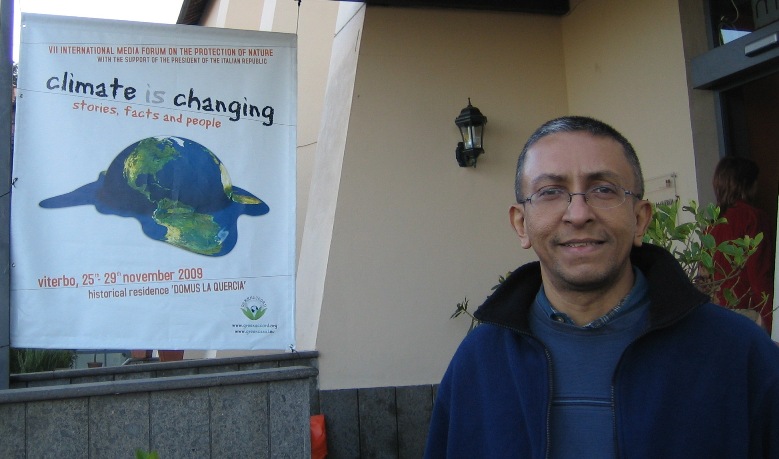
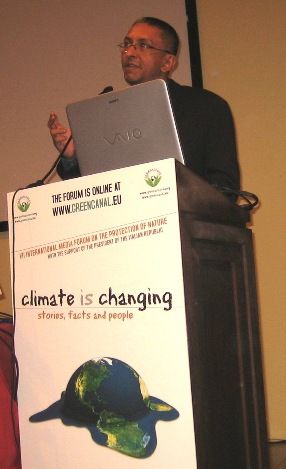
Nalaka Gunawardene at Greenaccord 2009 - Photo by Yu-Tzu Chiu

When it comes to climate change, we are all Maldivians!

It was Woody Allen who said ‘Ninety per cent of life is just showing up’. Well, part of the remaining 10 per cent must involve waving our hands and speaking out in this increasingly attention-challenged world.

My organisation, TVE Asia Pacific, lacks both a travel budget and a promotional budget. So I need to be both resourceful and persevering when showcasing our work in the vast Asia Pacific region and beyond. I attempt this by turning myself into a one-man cheering squad for our work in the public interest. (If this makes me something of a self-promoter, so be it!).

I was very grateful when our friends in Greenaccord accommodated my last minute request to screen our latest short film Small Islands – Big Impact at their 7th international media forum in Viterbo, Italy, today. This is what I recently made in the Maldives, one of the world’s most vulnerable countries to sea level rise.

I presented this at the end of the fourth day, soon after the gathering of 130 journalists and scientists from 55 countries had listened to 10 Climate Witnesses who travelled from far corners of the world to share their stories of ground level changes induced by climate change.

Here is what I said introducing the film:

Small and low lying island states are on the frontline of impact from climate change. That is why we made this film, so that we can highlight the plight of the Maldives in various climate related discussions around the world.

It is based on an exclusive interview that President Mohamed Nasheed of the Maldives gave me in August 2009. In this wide-ranging interview, he shared his concerns and visions for his island nation.

President Nasheed is an articulate, passionate climate witness on behalf of his endangered island nation of 325,000 people. The technocratic and amiable President is one of the youngest heads of state in the world today. Interestingly, he worked as a freelance journalist when he was in exile for several years, and remains very accessible to the international media.

As a journalist and broadcaster, I’ve been covering this story for over 20 years, from the late 1980s. I have seen how the vulnerability of small island states – like the Maldives – has risen up in the international discussions on climate. Sustained reporting by journalists has played a significant role in this process.

We have unfinished business. As President Nasheed says so emphatically, we are in this together. We need to work on coping and survival strategies.

When it comes to climate change, we are all Maldivians.

This is the second time a TVEAP film has been showcased at a Greenaccord event. In October 2006, the post-tsunami Asian environmental series The Greenbelt Reports was previewed at the 4th Greenaccord Forum.

Wanted, urgent: Next-Gen Jacque Cousteaus to be our tour guides to Planet Ocean!

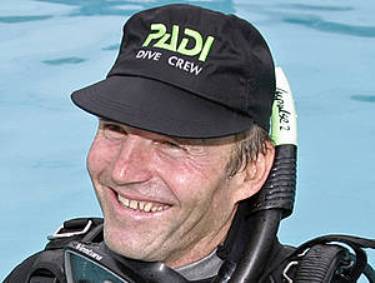
Tony Fontes

As my Australian diver friend Valerie used to say, the trouble with many of us land-lubbers is that we have ‘no idea what’s going on in the sea that covers three quarters of our planet’.

Yet what we do – and don’t do – affects the fate of the sea and all its creatures and systems. That’s a big problem.

Take, for example, roral reefs. Among the most biologically diverse ecosystems on our planet, they are sometimes called rainforests of the sea. And these rich and colourful habitats are now under siege from multiple pressures, ranging from indiscriminate fishing and tourism practices to global warming.

Yet, the coral reefs haven’t attracted the same kind of public concern and outcry as has the destruction of tropical rainforests. How come?

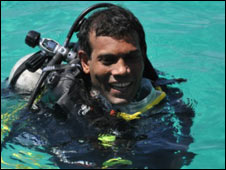
Is this a case of out of sight and out of mind for a majority of the world’s land-lubbers? This is what I asked Australian diver Tony Fontes, who has been a diver and dive instructor for 30 years, much of it at the largest reef of all – the Great Barrier Reef off the north-eastern coast of Australia.

“It sure is – and ideally, everyone should become a diver, so we can all see and feel the wonders of the reef,” he replied.

He added: “At a minimum, we have to do lots of awareness raising. This is why we need to bring back Jacques-Yves Cousteau!”

Tony was engaging journalists at the 7th Greenaccord International Media Forum on the Protection of Nature, held in Viterbo, Italy, from 25 – 29 November 2009.

This year’s theme is ‘Climate is changing: stories, facts and people’, and Tony was one of 10 Climate Witnesses who travelled to the central Italian city from far corners of the world to share their stories of ground level changes induced by climate change. Climate Witness is a global programme by WWF International to enable grassroots people to share their story of how climate change affects their lives and what they are doing to maintain a clean and healthy environment. All Climate Witness stories have been authenticated by independent scientists.

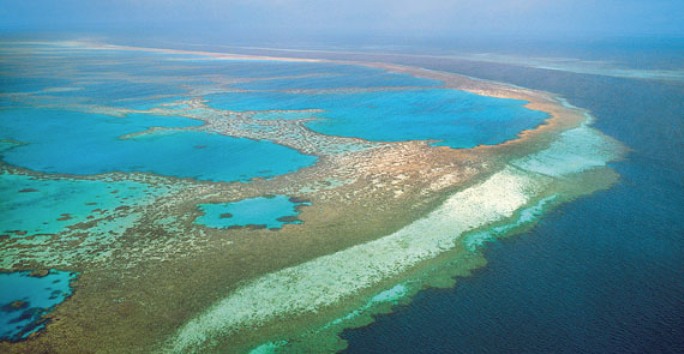
Great Barrier Reef: A planetary treasure under siege

Tony lives and works in Airlie Beach (Whitsundays) in Queensland, Australia. It’s a small seaside community right in the heart of the Great Barrier Reef. Most of his time is spent underwater on training dives – he has clocked over 10,000 hours of professional diving. He generally dives many of the same sites over and over again.

This long and deep immersion in the marine realm gives him uncommon insights into the state of the reef – and it’s not a healthy or pretty picture.

He says: “Through personal observations as well as those by other divers, I have noted changes to the (marine) environment hat are most likely climate induced.”

Increase in coral bleaching is the most noticeable change. From a rare occurrence in the 1980s, it went on to become a regular summer event by the mid 1990s. The past decade has witnessed the largest coral bleaching events on record. And unlike in the past, these have led to large scale coral death and decay.

“Many popular dive sites have lost their lustre due to coral bleaching,” he says, pointing out that the reefs need up to 10 years to fully recover.

He adds: “However, with more bleaching events occurring every year, I wonder if the reefs will ever recover. Without the postcard reef scenes, many visitors are disappointed in their reef experience and are not likely to return.”

It’s not just warmer seas that affects the Great Barrier Reef. Occasional outbreaks of crown-of-thorns starfish, marine pests who eat up the healthy reef, add pressure on the reef. In recent years, scientists have identified another threat – sediments, fertilisers and pesticides from agricultural run-off. This was investigated in Sally Ingleton’s 2003 film, Muddy Waters: Life and Death on the Great Barrier Reef.

Listening to Tony reminded me of Muddy Waters, which journeys to the sugarcane plantations of northern Queensland and into an underwater world to find out what’s killing the reef and what can be done to save it. I was on the international jury of Japan Wildlife Film Festival 2003 when we voted it for the Best Environment and Conservation Award.

“It’s hard to get farmers to change their ways,” says Tony, who works with three local initiatives aimed at reef conservation and related educational outreach. This includes Project AWARE, a non-profit environmental organisation that encourages divers to take action and protect the environment.

The clown fish who moved the world
Global warming now threatens to nullify all these efforts. “If the coral reefs of the world are to survive, we cannot afford the predicted 2 – 3 degree increase in ocean temperature. But we also need to…reduce all impacts on the Great Barrier Reef. This would include improving the water quality of the reef.”

Tony comes across as a man of few, carefully chosen words. His answers are brief and precise. But his passion for the reef and the ocean is clearly evident.

He had a simple, emphatic message to the world’s leaders and activists meeting soon in Copenhagen for the UN Climate Summit: “How are we going to explain to our children and their children that we lost the Great Barrier Reef?”

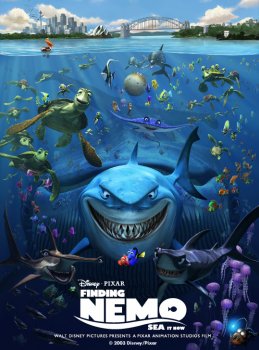
Perhaps we need not only the next generation of Jacques Cousteaus, but also every kind of communicator who can take the marine conservation messages through factual and entertainment media formats. It’s encouraging to note that Finding Nemo, the 2003 Disney-Pixar animation movie set in the Great Barrier Reef, is the highest selling DVD of all time – more than 40 million copies, and counting.

WWF Australia backgrounder on the Great Barrier Reef

‘Thank you for warming the planet (good for business)’ — Africa’s malaria mosquitoes

Nelly Damaris Chepkoskei: Voice of Hope
Malaria still claims over a million lives every year, most of them in Africa. This is not simply a public health statistic for Nelly Damaris Chepkoskei – she lost a daughter to the ancient scourge that continues to outsmart human attempts to control it.

“It was very sad when my daughter died of malaria at the age of four,” she recalls. What makes it especially tragic is the fact that malaria is a new arrival in her area.

Nelly, 51, is a farmer living in Kenya’s Kericho District. Located high in the mountains, Kericho’s cold weather has kept mosquitoes at bay for centuries. But not any longer: global warming has raised the area’s average temperature, and mosquitoes have appeared in recent years, bringing malaria with them.

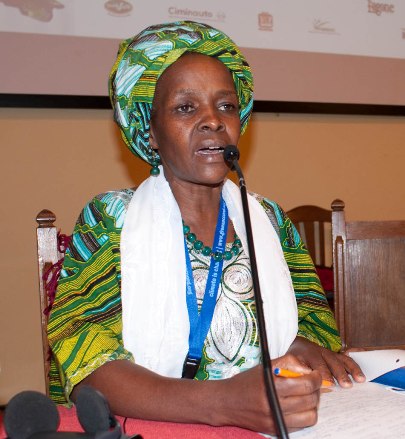
“I had never seen a mosquito until I was 20 years old. But now they are everywhere – people are even dying of malaria, something that was virtually unheard of 20 or 30 years ago,” Nelly told the 7th Greenaccord International Media Forum on the Protection of Nature, being held in Viterbo, Italy, 25 – 29 November 2009.

The theme this year is ‘Climate is changing: stories, facts and people’. Nelly Chepkoskei is one of 10 Climate Witnesses who travelled to the historic city from far corners of the world to share their stories of ground level changes induced by climate change.

Climate Witness is a global programme by WWF International to enable grassroots people to share their story of how climate change affects their lives and what they are doing to maintain a clean and healthy environment. All Climate Witness stories have been authenticated by independent scientists.

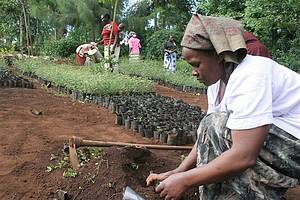
Married with five children, Nelly grows maize and tea, and keeps a few cows – the pride and joy of Kenyan farmers. Lacking faith in politicians and government, she is working with women in her community to pursue their own development.

Life was never easy, but climate change is making it even harder.

“Rainfall patterns have changed drastically in recent decades,” she says. “In the Kericho district, we used to have rain throughout the year. I remember clearly that my family celebrated Christmas when it was raining heavily. But today, Christmas is usually dry.”

Unlike 20 years ago, the dry season is now hotter, drying up all the grass. In the past, the grass would remain green throughout the year.

“This means there isn’t enough fodder for my cows, leading to a drop in milk production and my income,” she explains. “The soils are also left bare during the dry season, which means more erosion when rains come in.”

With higher temperatures, more pests have turned up to damage crops. This prompts farmers to use more pesticides, increasing production costs and polluting the environment with hazardous chemicals.

Nelly turned out to be the most outspoken Climate Witness in Viterbo. In a frank exchange with an audience of 130 journalists, activists and scientists drawn from 55 countries, she exclaimed: “Don’t talk to politicians – they are the same everywhere! I can’t understand why journalists always follow politicians and are so keen to talk to them!”

She continued: “There is so many good things happening in Africa, but we don’t see it reported in the local and international media. You only hear about fighting, famine and corruption. So we continue to be seen and known as the Dark Continent.”

In her view, what Africa needs more than anything else is education. She firmly believes that higher levels of literacy and education would reduce the incidence of conflict and plunder.

Nelly herself is a high school drop out, and places a very high value on education to empower all Africans, especially women.

“There is a big gap between Kenyan intellectuals and the ordinary people. Knowledge is not where and how it is needed,” she says.

I asked her what she thought of foreign aid to Kenya and rest of Africa. This elicited a passionate and emphatic response: “If you want to spoil and corrupt Africa more, then keep giving aid to our governments. Aid money mostly ends up in the wrong hands, or buying guns to fight each other.”

She added: “We do need help, but don’t give aid to our governments. Instead, support NGOs who are better in delivering to the grassroots.”

Nelly and her network of women are digitally empowered. They refer the web to find out information on what aid and opportunities are available and then pursue them with all available means. Armed with the latest data, they lobby local and provincial governments to ensure that aid pledged from international donors reach the intended communities.

Nelly may not be Wangari Maathai, the Kenyan environmentalist and women’s right activist, but she admits to being a Wangaari in spirit. And having listened to the first African woman to win the Nobel Peace Prize at a previous Greenaccord forum, I readily agree: women like Nelly are a beacon of hope not just for Africa, but to the entire Majority World.

If only the mosquitoes could spread their passion and concern for the land and people…

Read WWF report on climate change impacts in East Africa

Images courtesy Greenaccord and WWF

The Ultimate Race on a Warming Planet: Education vs. Catastrophe

Wells: Visionary and cautionary
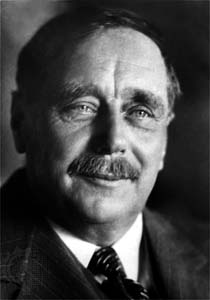
Human history becomes more and more a race between education and catastrophe,” said H G Wells, British writer and social activist (1866 – 1946).

This is one of my all time favourite quotes. With amazing economy of words, the author of science fiction classics such as The Time Machine and War of the Worlds has summed up the story of human civilisation.

For much of history, our race has managed to outrun and outsmart an assortment of perils – and sometimes winning with only a wafer thin margin. Individual civilisations that lost the race were doomed to extinction, and now live only in history books and archaeological ruins.

As a whole, however, our species has managed to outlive famines, plagues, ice ages and nuclear weapons. But how are we going to fare with the latest peril – global climate change?

Coping with this phenomenon may well be the Ultimate Race to save our species and our planet. To increase our chances, we need to invest more on education — in its broadest sense.

This is the point I’ve been making in recent weeks, when giving talks about the role of information, education and communication (IEC as its practitioners call it) in preparing communities and societies to live with inevitable climate change. I have addressed diverse groups – from academics and science students to science journalists and civil society activists. Often, my audiences have been multi-cultural and multi-disciplinary.

Fortunately, I didn’t find anyone disagreeing with me – but some were uncertain on methods and means to unleash education on an unprecedented scale.

There are no easy answers or quick fixes. Education for Sustainable Development is an attempt to strengthen humanity’s prospects in the Ultimate Race.

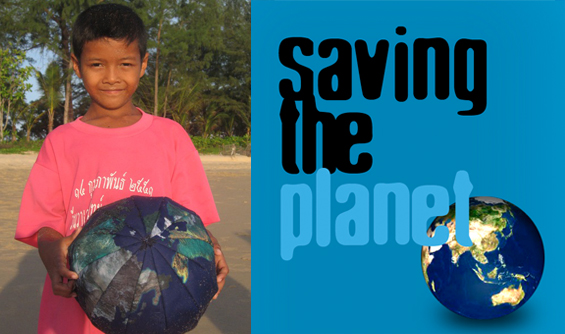
TVE Asia Pacific’s latest Asian TV series, modestly named Saving the Planet, brings some dispatches from the frontier of that race. It shows how some people are working quietly and relentlessly to spread knowledge, understanding and attitudes that inspire action to live in harmony with the planet.

Increase our winning chances in the Ultimate Race!

Taste the Waste: Uncovering a crime against humanity and Nature

Opening the lid...

“How can we explain the fact that one sixth of humanity goes to bed hungry every night, when the world already produces enough food for all?

“The short answer is that there are serious anomalies in the distribution of food. Capricious and uncaring market forces prevent millions of people from having at least one decent meal a day, while others have an abundance of it. For the first time in history, the number of severely malnourished persons now equals the number suffering from over-consumption: about a billion each!”

That was the opening of an article on the future of food, co-authored by Sir Arthur Clarke and myself in 2000. It was circulated by the UN Food and Agriculture Organisation (FAO) to mark World Food Day that year, and was reproduced in 2008 in The Hindu newspaper, India.

Nearly a decade after we wrote those words, the situation hasn’t really improved. There still are a billion people for whom chronic hunger is a grim fact of life. About 25,000 people die of hunger every day. Meanwhile, at the other end of the spectrum, the number of obese people has grown to 1.5 billion.

Talk about a world of contrast and disparity!

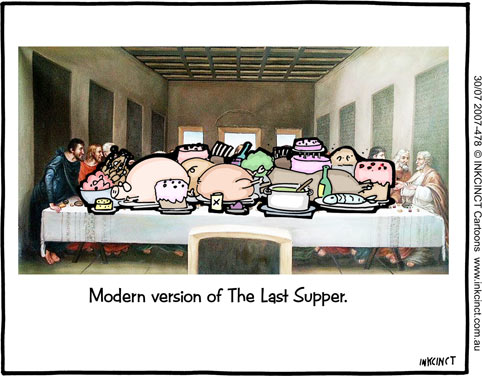
Here’s more shocking news: we routinely throw away half of all food produced in this world. Between plough and plate, or from farms to homes, we waste almost as much food as we eat.

Eyes Wide Shut?
Many countries don’t have the slightest idea how much is wasted. Britain made an effort to measure the waste pile and came to a staggering 15 million tons of food a year. This includes 484 million unopened tubs of yoghurt, 1.6 billion untouched apples, bananas worth £370 million and 2.6 billion slices of bread.

In his recent book Waste: Uncovering the Global Food Scandal, Tristram Stuart documented the extent of waste in the food industry worldwide.

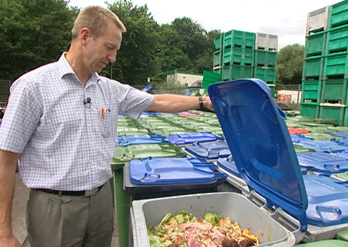
Taste the Waste is a new documentary film linked to an online campaign that shows us what is being thrown away: where, why, when and by whom.

The film maker turned campaigner, Valentin Thurn, has come up with one more reason why we should stem this callous waste: “Cutting food waste is an easy solution to reduce climate emissions and hunger,” he says.

Reducing food waste means a big opportunity to reduce greenhouse gas emissions – if we threw away only half of the avoidable waste, the consequences for the climate would be the same as taking one out of five cars off our roads.

It would also help the hungry, because they also depend on the global food cycle. Cash crops from all over the world are traded on the stock exchange. The agricultural resources on this planet are limited. The farmland taken up to produce the food that we throw away could instead be producing food for them.

Young activists protest against this situation by rescuing the wasted food. People eating rubbish – a habit that sounds disgusting until you see the loads of perfectly edible food in the bins of your supermarket or sandwich shop around the corner.

Thurn’s call to action: “We need your help! Go out, look around and tell us about the food in the bins where you live. Send texts, photos, videos, and help to reveal the huge scandal of how we are wasting food.”

Watch the film’s trailer on YouTube:


According to the latest FAO figures, there are more hungry people in the Asia Pacific (642 million) than all other regions combined. This is followed by Sub-Saharan Africa (265 million), Latin America and the Caribbean (53 million), and the Near East and North Africa (42 million). Sub-Saharan Africa has the highest percentages of people living in hunger, while the Middle East and North Africa saw the most rapid growth in the number of hungry people (13.5%) during 2008.

The UN’s definition of hunger is based on the number of calories consumed. Depending on the relative age and gender ratios of a given country, the cutoff varies between 1,600 and 2,000 calories a day.

Starting in 2008, activist groups worldwide observe 16 October as World Foodless Day. Their argument: World Food Day is a mockery and is much better named World Foodless Day.

It’s a day of global action on the crises that beleaguer the people. The objectives are to: “create public awareness and media attention on the root causes of the food crisis; provide policy recommendations and organize meetings with government officials, opinion makers and leaders; organise activities to raise our voices against neoliberal policies and their impact; and highlight people’s recommendations to respond to the world food crisis.”

Watch PAN-Asia Pacific’s video for World Foodless Day 2008:


Read an excellent review of Tristram Stuart’s book: Watching our wasteline, By Darryl D’Monte

The Toilet is still a luxury for 2.5 billion people worldwide…

No laughing matter, this...

It had to happen sooner or later: a world day dedicated to, ahem, toilets. When all sorts of public interest causes are claiming the 365 days of our year, it was only a matter of time.

19 November is World Toilet Day – a day to celebrate the humble, yet vitally important, toilet and to raise awareness of the global sanitation crisis. It was established in 2001 by the World Toilet Organization (the other WTO!), a global non- profit organization committed to improving toilet and sanitation conditions worldwide.

The World Toilet Day promotes the importance of toilet sanitation and each person’s right to a safe and hygienic sanitary environment.

Did you know, for instance:
* 2.5 billion people do not have somewhere safe, private or hygienic to go to the toilet?
* One gram of faeces can contain 10 million viruses, one million bacteria, 1,000 parasite cysts and 100 parasite eggs?

Here’s a cool viral video that WaterAid have produced to mark the event:

A third of the world’s population lacks any toilets. The rest of us who do have a toilet don’t always make the most efficient use of it – when we typically use 10 litres of water to flush away one litre of urine, that’s not very thrifty, is it?

On this day, I came across an interesting essay by Debra Shore, Commissioner, Metropolitan Water Reclamation District of Greater Chicago, in The Huffington Post. She writes: “Using freshwater in toilets is not smart and it is not sustainable. I believe the homes of the future will be designed to use “grey” water — the water from our washing machines and dishwashers, the water from our showers and from rain captured in barrels and cisterns — to flush our toilets. This kind of redesign of water use, both residential and industrial, will be one of the growth industries of coming decades.”

She adds: “So, on World Toilet Day, here is my plea: monitor your water use. Think about ways to conserve water. And consider how lucky we are.”

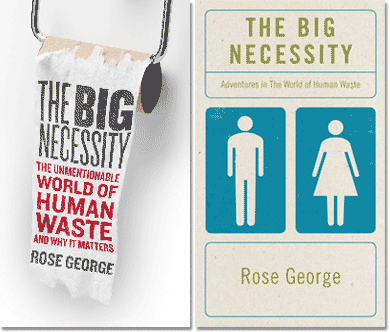
Rose George, author of The Big Necessity: The Unmentionable World of Human Waste and Why It Matters says toilets are a privilege that nearly half the world still lacks. At least 2.6 billion people around the planet have no access to a toilet — and that doesn’t just mean that they don’t have a nice, heated indoor bathroom. It means they have nothing — not a public toilet, not an outhouse, not even a bucket. They defecate in public, contaminating food and drinking water, and the disease toll due to unsanitized human waste is staggering. George notes that 80% of the world’s illnesses are caused by fecal matter.

Read more: Toilet Tales: Inside the World of Waste, by Bryan Walsh in TIME, Nov 2008

Calculate your water footprint

Blog post in July 2007: A Silent Emergency: More television sets than toilets!

Blog post in July 2007: Faecal Attraction: There’s no such thing as a convenient flush…

‘Small Islands – Big Impact’ film making waves in the world’s Biggest Polluter…

Dilrukshi Handunnetti
Dilrukshi Handunnetti: Making waves
My good friend Dilrukshi Handunnetti, a leading investigative journalist in Sri Lanka, is currently on a Jefferson Fellowship traveling in the United States. She is one of a dozen journalists from the Asia Pacific who have been competitively chosen to participate in this prestigious programme, which in 2009 is focusing on the theme, The Right Climate for Confronting Climate Change?

I finished my latest climate film, Small Islands – Big Impact, only the day before Dilrukshi left for Hawaii, her first stop in the multi-destination, intensive programme. Given her long standing coverage of the Maldivian political affairs as well as Asian/global environmental issues, I gave her a DVD of the film to take along.

I’m delighted to hear that she has been showing Small Islands – Big Impact in various presentations, often producing a…big impact wherever it was shared. It’s always good to have such feedback — here’s an excerpt from an email she has just sent me from Boulder, Colorado:

“I liked presenting your short film and the response it generated. The film generated a discussion on promoting the concept of (climate) adaptation as a human right – just as I felt it would be such a catch phrase here. I also had the (media coverage of) the underwater Cabinet meeting with me. So Maldives got a lot of attention despite not having a Maldivian here.

“Several wanted to know about the actual risk level of the Maldives and the possibility of the islands being submerged. They also asked about purchasing land elsewhere and whether the Maldives had the financial capability to do that. Others wanted to know about depleting fish catch President Nasheed spoke about as this was a common concern to Indonesia, Southern India and Vietnam.

President Nasheed
President Nasheed: Stop pointing fingers, extend a helping hand...
“Some queried whether President Nasheed was going to Copenhagen to state his case. Two others asked whether lobby groups were behind his thinking. Several found, including American, Chinese and Indian participants, that President Nasheed’s call to end the blame game should be heeded by all. There was collective agreement that others’ behaviour impacted on the likes of President Nasheed and vulnerable communities.

“Interestingly, everyone found his interview a STORY. Something that they would want to report on in their respective media. We continue to discuss the same on our tours and walkathons from venue to venue for various meetings. In fact, I had the American participant asking our resource persons (IPCC types, no less!) whether they were willing to acknowledge the concept of climate refugees directly in relation to the Maldives.

“I think the movie served a great purpose of awakening the minds of many to the threat level faced by some communities on low lying coastal nations – like the pacific Islands and the Maldives. A senior broadcaster from the Tonga Broadcasting Corporation personally thanked me for wanting to highlight their plight as a small island nation.”

You can watch Small Islands – Big Impact online here:

Read the full text of my interview with President Nasheed on TVEAP website

As with all TVEAP films, this one too is available free of license fees and copyright restrictions to broadcast, civil society and educational users anywhere in the world. It’s now a year since I wrote a widely reproduced op ed essay on Planet before profit for climate change films — I practise what I preach!

A journalist for over 17 years, Dilrukshi Handunnetti has extensively covered politics, the environment, culture, and history and gender issues. In her current role, she writes the parliamentary column for the newspaper in addition to writing and editing investigative stories carried in her publication. Dilrukshi has also covered the ethnic conflict from a non-military perspective and written extensively on issues of good governance, graft and corruption. Dilrukshi is the recipient of many national journalism awards in Sri Lanka, including: the Young Reporter of the Year 2001, Best Environment Reporter of the year 2002, Best Environment Reporter of the year 2003, Best English Journalist of the Year 2004 (Merit) Award and D B Dhanapala Award for the Best English Journalist of the Year 2005, all presented by the Editors’ Guild of Sri Lanka.

In this extract from our 2005 film Deep Divide, Dilrukshi talks about Sri Lanka’s coastal resource development challenges before and after the 2004 Asian Tsunami:

Satinder Bindra: It’s the message, stupid (and never mind the UN branding)!

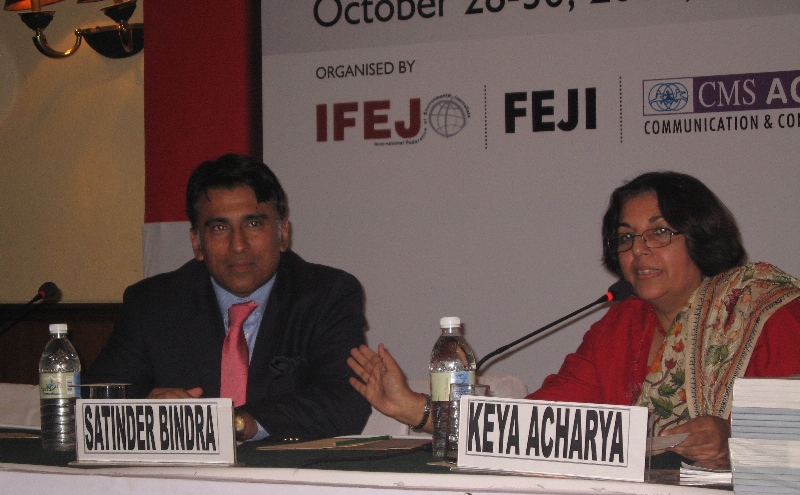
Satinder Bindra (left) and Keya Acharya
Satinder Bindra (left) and Keya Acharya at IFEJ 2009 Congress

Satinder Bindra left active journalism a couple of years ago when he joined the UN Environment Programme (UNEP) as its Director of the Division of Communications and Public Information (DCPI) based at UNEP Headquarters in Nairobi. But thank goodness he still thinks and acts like a journalist.

Satinder, whom I first met in Paris in the summer of 2008 soon after he took up the new post, gave a highly inspiring speech to the latest congress of the International Federation of Environmental Journalists (IFEJ), held at India Habitat Centre in New Delhi from 28 to 30 October 2009.

We have gone beyond the cautionary stage of climate change, and are now acting out ‘Part II’ where we have to focus on what people can do, he said. “Climate change is no longer in doubt, and if anything, the IPCC’s scenarios are turning out to be under-estimates.”

He was referring to the IFEJ congress theme, “Bridging North-South Differences in Reporting Climate Change: Journalists’ role in Reaching an Ambitious Agreement at COP15 in Copenhagen”.

Satinder sounded emphatic when he said: “We have a limited time in which to reach as many people as possible. Environment is the single biggest challenge we face in the world today, and we as journalists have a tremendous responsibility in providing the latest, accurate information to our audiences.”

He added: “There is still a debate among journalists on whether or not we should be advocates for the environment. We should not be scared to push the best science, even if we don’t choose to engage in advocacy journalism.”

Satinder mentioned the “Paris Declaration on Broadcast Media and Climate Change,” adopted by delegates at the first UNESCO Broadcast Media and Climate Change conference held in Paris on 4-5 September 2009. It resolved to “strengthen regional and international collaboration, and encourage production and dissemination of audiovisual content to give a voice to marginalized populations affected by climate change”.

Satinder, who was a familiar face on CNN as its South Asia bureau chief until 2007, acknowledged that the media landscape was evolving faster than ever before. “Thanks to the web and mobile media, our distribution modes and business models are changing. YouTube has emerged as a key platform. Viral is the name of the game.”

His message to broadcasters, in particular, was: “You may be rivals in your work, but when it comes to saving the planet, put those differences aside.”

Copy of Seal the Deal
A call to the whole planet...
Satinder is spearheading, on behalf of UNEP, the UN-wide Seal the Deal Campaign which aims to galvanize political will and public support for reaching a comprehensive global climate agreement in Copenhagen in December.

To me at least, the most important part of Satinder’s speech was when he said that he was not seeking to promote or position the UNEP or United Nations branding. His open offer to all journalists and broadcasters: “If you need to use the hundreds of UNEP films, or make use of our footage in your own work, go right ahead. We want you to make journalistic products. There’s no need or expectation to have the UN branding!”

Wow! This is such a refreshing change — and a significant departure — from most of his counterparts at the other UN agencies, who still think in very narrow, individual agency terms. They just can’t help boxing the lofty ideals of poverty reduction, disaster management, primary health care and everything else within the agenda setting and brand promotion needs of their own agencies.

I have serious concerns about this which I have shared on a number of occasions on this blog. See, for example:
May 2007: Feeding Oliver Twists of the world…and delivering UN logos with it!
August 2007: ‘Cheque-book Development’: Paying public media to deliver development agency logos
October 2007: The many lives of PI: Crisis communication and spin doctors
July 2009: Why can’t researchers just pay the media to cover their work?

In a widely reproduced op ed essay published originally on MediaChannel.org in August 2007, I wrote:

“As development organisations compete more intensely for external funding, they are increasingly adopting desperate strategies to gain higher media visibility for their names, logos and bosses.

“Communication officers in some leading development and humanitarian organisations have been reduced to publicists. When certain UN agency chiefs tour disaster or conflict zones, their spin doctors precede or follow them. Some top honchos now travel with their own ‘embedded journalists’ – all at agency expense.

“In this publicity frenzy, these agencies’ communication products are less and less on the issues they stand for or reforms they passionately advocate. Instead, the printed material, online offerings and video films have become ‘logo delivery mechanisms’.”

Let’s sincerely hope that the pragmatic and passionate Satinder Bindra will be able to shake up the communication chiefs and officers of the UN system, and finally get them to see beyond their noses and inflated egos. It’s about time somebody pointed out that vanity does not serve the best interests of international development.

See also April 2007 blog post: MDG: A message from our spin doctors?

Adrian Cowell and ‘The Decade of Destruction’: A film can make a difference!

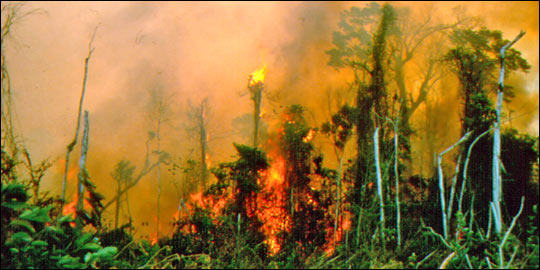
The Amazon burning
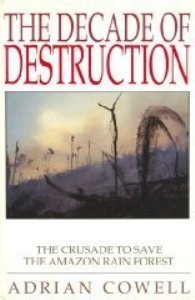
The Decade of Destruction A unique chronicle of the destruction of the Amazonian rainforest.

Whatever we might think about Al Gore’s film An Inconvenient Truth, I’m glad it has settled one question: can a single film make a difference in tipping public opinion about a matter of global importance? The answer, where climate change is concerned, is a resounding yes!

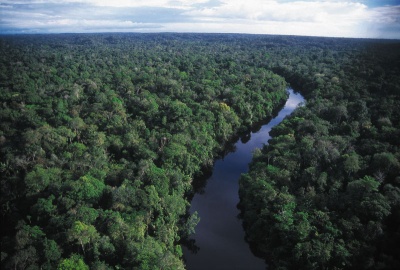
But years or decades before Al Gore, other film makers have had their own impact on other environmental issues. One of them is Adrian Cowell, the award-winning British film maker whose quest to tell the story of the destruction of the Amazon forest made politicians listen and the world take note.

According to the Centre for Social Media at the American University, “He catapulted the environmental movement to save the Amazonian rain forests through the television series The Decade of Destruction and Banking on Disaster.”

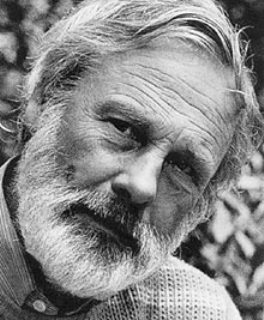
Adrian Cowell
Adrian Cowell
Adrian, whom I have had the pleasure of meeting and talking on several occasions, is a world acclaimed leader in our field. Born in Tongshan, China in 1934 and educated at Cambridge University, Adrian has been making films longer than I have been alive — and luckily for all of us, he is still at it.

He began filming his path-breaking series called The Decade of Destruction in 1980, when the Amazon was first opened up to settlers and developers. He has documented the systematic destruction of the rainforest there into late 1990 when, for the first time, there was an indication that the fires were being brought under control.

As the synopsis says: “Each episode follows the real life stories of people caught up in the frontier’s web of need and greed, stories of personal tragedy and great courage. The programs relate the individual’s struggle to the wider developments going on around them. Together they illustrate the principal issues of Amazonia during the 1980s – its decade of greatest destruction.”

The Chicago Tribune called it an epic, “a brilliantly told story of greed, death, politics, violence, heroism and environmental holocaust.”

I recently came across this brief account by Adrian Cowell himself, looking back at his long engagement with the Amazon:

“In January 1980 we started 10 years of recording the destruction of the Amazon forest. We began by filming colonists invading the territory of the then unknown, and very vulnerable, tribe, the Uru Eu Wau Wau, in the Brazilian state of Rondonia. Many colonists had received, free of charge from the government, plots of 40-50 hectares in the forest traditionally hunted by the Indians. Tragically, within a decade, this ‘colonisation’ process, called the Polonoroeste Project, would not only leave three-quarters of the Indians dead, but also prove a disaster for the colonists themselves. They had been given such poor soil that, within six years, 60% of the land they had so hopefully deforested would be abandoned.

Amazon: The last frontier?“So we were astounded when the World Bank moved in to lend nearly half a billion dollars to the project, and were even more astonished when we realised that what was being played out in front of our cameras was evidence of one of the most disastrous loans the Bank had ever made. Not unnaturally, I went to Washington to find out what could explain the Bank’s loan. And there I met three environmentalists, Bruce Rich, Barbara Bramble and Brent Blackwelder, respectively from the Environmental Defense Fund, the National Wildlife Federation and the Environmental Policy Institute. They were campaigning on how international economic development affected the environment. But by a remarkable coincidence they had decided to focus, not only on the World Bank, but on – of all its hundreds of loans all over the world – the very Polonoroeste Project that we were filming. They asked me to show our film in Congressional hearings and I telephoned José Lutzenberger – more or less the father of Brazilian environmentalism – to ask him to testify. By yet another happy coincidence, an American researcher, Brent Millikan, had written a report giving academic detail to the facts behind what we had filmed. And an American expert on Amazonia, Dr Philip Fearnside, added his authority to the diagnosis of what was going wrong.

“And so, some months later – after a complex chain of legislative and political developments – we were able to record Senator Robert Kasten, the chairman of the powerful Appropriation Committee’s subcommittee on foreign operations, cutting off 20% of the money the US donated annually to the World Bank. Nothing concentrates a banker’s attention more than the withdrawal of some of his money. Within a few months we were able to conclude our programme, Banking on Disaster, by filming World Bank president Barber Conable admitting, for the first time, that a Bank loan, specifically the Polonoroeste Project, had gone wrong. This was to be the beginning of a very slow and gradual greening of World Bank policies.

“Obviously, our television film had played a part in this political change. But though a film may sometimes be the most dramatic way to present a case, it is an illusion to think that it can be more than just one tool or facet of the very complex process behind international and environmental evolution.”

* * * * *

Here’s more biographical background about Adrian:

The Decade of Destruction - book cover
Book of the TV series
Adrian Cowell has been making documentary films for five decades. In 1955-56, he joined the Oxford and Cambridge Far Eastern Expedition, an experience which launched his film career and his interest in Burma. The following year, he made his first foray into the rain forest of Brazil, part of a joint Oxford-Cambridge expedition of young filmmakers. These early trips became the seeds of Cowell’s award-winning epic projects. His series Opium was filmed over an eight-year period (including nine months when he was trapped behind the lines in Burma). His ten-year chronicle of the destruction of the Brazilian rain forests during the 1980’s—broadcast as the television series The Decade of Destruction —stirred the world and contributed to the international debate on how the Amazon should be developed. In 1990, The Decade of Destruction was broadcast on Channel Four in Britain and on PBS FRONTLINE in the U.S. Adrian Cowell’s more recent British TV series include The Heroin Wars. It is a follow-up to The Opium Trail (1966), The Opium Warlords (1974) and Opium (1978).

Cowell is an environmental activist, co-founder of the Television Trust for the Environment and the author of two books on Brazilian Indians, The Heart of the Forest (Knopf) and The Tribe that Hides from Man (Stein and Day). He also wrote a companion book to the TV series The Decade of Destruction (Henry Holt and Company).

Read PBS interview with Adrian Cowell on another of his film series, on opium trade in Southeast Asia