News feature published in Ceylon Today newspaper on 4 Nov 2012:
Wanted: Young Lankans for Antarctica!
By Nalaka Gunawardene
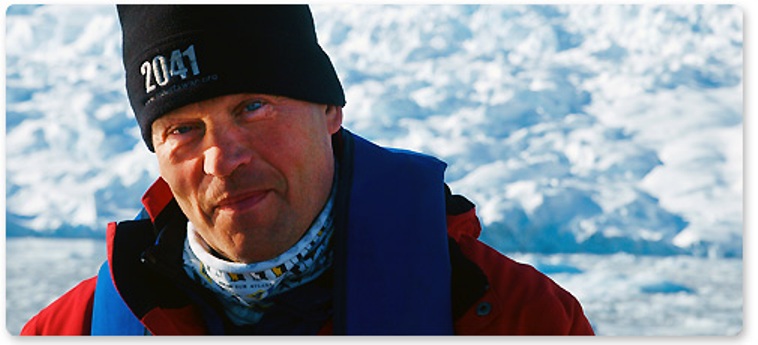
Sir Robert Swan, polar explorer
Environmentally inclined young Lankan men and women have a new opportunity to broaden their horizons: by joining an international youth expedition to the Antarctica!
This open invitation came from the polar explorer, environmental leader and motivational speaker Sir Robert Swan, who is in Sri Lanka on a short visit.
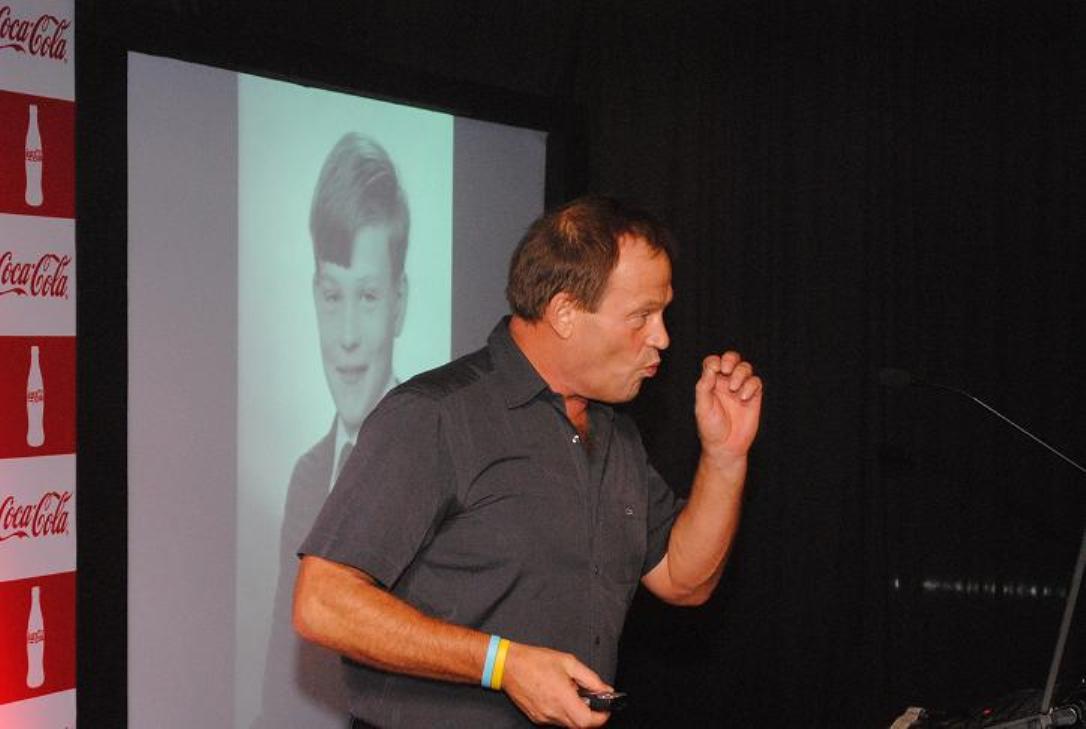
“Going to the Antarctica – the last great wilderness of the world, twice the size of Australia – is a life changing experience. We want more young people to experience it, and be transformed about what is happening to our environment, and what we can do about it,” he told a packed audience at the Galle Face Hotel on Saturday morning.
British born Swan, the first person in history to walk to both the North and South poles, has dedicated his life to the preservation of Antarctica by the promotion of recycling, renewable energy and sustainability to combat the effects of climate change.
His non-profit foundation, 2041 (www.2041.com), operates the world’s first educational base (E-Base) in Antarctica. Since 2008, it serves as a resource for teachers and an inspiration to young people around the world.
Swan introduced Imalka de Silva, said to be the first Lankan woman to visit Antarctica, who was part of an international team of youth who spent two and a half weeks at E-Base in early 2010.
“I want more young people to have that amazing experience, so that they too can champion the local environmental initiatives in a global context,” Imalka said.
She will soon be launching a new project that seeks to link the business community and environment conservation. Already, MAS Holdings (which organized the Robert Swan talk), Coca Cola (which sponsored his visit to Sri Lanka) and Millennium IT are interested in supporting competitively chosen young Lankans to visit the Antarctica, she revealed.
“Our concern for the environment needs to be broadened into a business opportunity, and only then will society change its ways,” she said.
Robert Swan, who has been spending time with selected youth groups working on environmental issues in Sri Lanka, added: “Sri Lanka can show regional leadership in motivating young people to act on environment and sustainability.”
Sir Robert Swan giving a talk in Sri Lanka – image by 2041.com
Animation films are hard to make all around. Even with digital technologies, the art and science of making entertaining and informative animations remains a challenge — and that’s why there are few good ones around.
I was thus happy to discover There’s No Tomorrow, a half-hour animated documentary about resource depletion, energy and the impossibility of infinite growth on a finite planet.
Inspired by the pro-capitalist cartoons of the 1940s, the film is an introduction to the energy dilemmas facing the world today. It is made by Incubate Pictures.
Their intro text says:
“The average American today has available the energy equivalent of 150 slaves, working 24 hours a day. Materials that store this energy for work are called fuels. Some fuels contain more energy than others. This is called energy density.”
“Economic expansion has resulted in increases in atmospheric nitrous oxide and methane, ozone depletion, increases in great floods, damage to ocean ecosystems, including nitrogen runoff, loss of rainforest and woodland, increases in domesticated land, and species extinctions.”
“The global food supply relies heavily on fossil fuels. Before WW1, all agriculture was Organic. Following the invention of fossil fuel derived fertilisers and pesticides there were massive improvements in food production, allowing for increases in human population.The use of artificial fertilisers has fed far more people than would have been possible with organic agriculture alone.”
This week’s Ravaya column (in Sinhala) is a preview of a key challenge being taken up at the UN Conference on Sustainable Development being held in Rio de Janeiro, Brazil, this month. I raise the question: how can Sri Lanka transform its economy into a green economy in pursuit of sustainable development?
This was the title of a talk I gave to Sri Lanka Rationalists’ Association (SLRA) in Colombo, Sri Lanka, on 7 June 2012 — two days after World Environment Day.
In this, I shared my observations on how attempts aimed at environmental conservation and sustainable resource use in Sri Lanka are often hindered by many misconceptions and myths about natural resources and our impact on them.
I invoked the words of George Monbiot, journalist/columnist, The Guardian, UK: “One of the most widespread human weaknesses is our readiness to accept claims that fit our beliefs and reject those that clash with them. We demand impossible standards of proof when confronted with something we don’t want to hear — but will believe any old cobblers if it confirms our prejudices…”
At the outset, I proposed a basic categorization of eco-myths as myths of the first, second and third kind – the last one being the most pervasive and harmful. Drawing on my 25 years of experience as a science writer and journalist, I cite several examples from air pollution, biodiversity and climate change.
There is also the mother of all eco-myths that Lankan nationalists never tire of repeating: romanticising the ‘good old days’ before modernisation and colonisation. Ah, if only real life were that simple…
I acknowledged that scientific knowledge and understanding on some ecological matters are evolving so have to keep an open, inquisitive mind: science does not have all the answers, but provides a framework in which to ask the right questions and to go in search of answers supported by evidence.
I also conceded that many individuals – and their societies – are not always rational. Governments (at least in democracies) take their cue from the people, and so…irrationality feeds on itself.
The bottomline: it’s a free world and individuals may cling on to any fantasy or belief. As long as it doesn’t harm others around the believer, and/or affects collective thinking. When it does, the good of the many must outweigh the good of one.
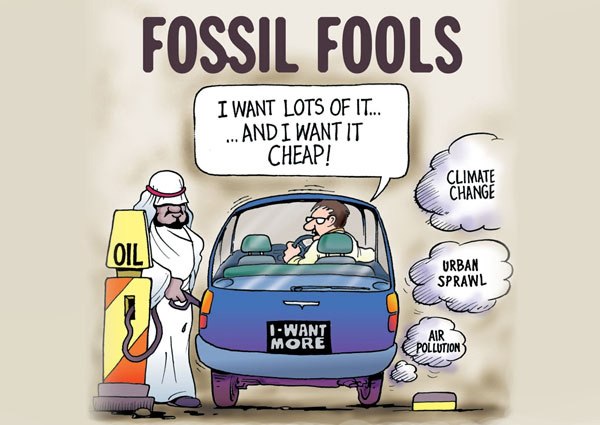
Cartoon courtesy Down to Earth magazine, CSE India
• To tackle enhanced global warming that leads to climate change, we need to better understand the global carbon cycle.
• Critical to this understanding is distinguishing between fossil carbon (coal and petroleum) and biotic carbon (photosynthetic biomass – living matter capable of absorbing atmospheric carbon).
• Biotic Carbon offers a ‘lifeboat’ to a world in search of solutions. Valuing biotic carbon can transform the role of farmers and rural communities currently sidelined in global climate change negotiations.
• Current methodologies of carbon trading have seriously warped both economics and ecology. What takes place today is more like carbon laundering.
These outspoken views are expressed in a new web video by Dr Ranil Senanayake, a globally experienced systems ecologist with four decades of experience across Asia, Africa and Latin America.
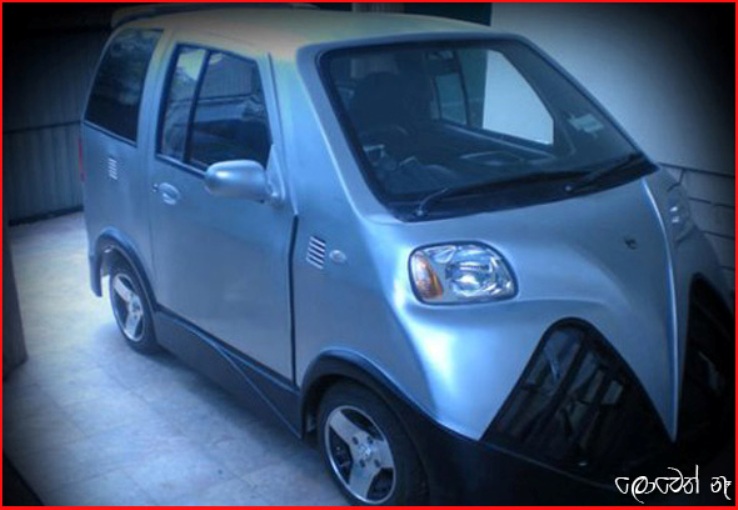
ELCA prototype built by Nilanga Senevirathne Epa 2012
Malima (New Directions in Innovation) is a Sinhala language TV series on science, technology and innovation. This episode was produced and first broadcast by Sri Lanka’s Rupavahini TV channel on 10 May 2012.
Produced by Suminda Thilakasena and hosted by science writer Nalaka Gunawardene, this episode features three stories:
• REVA meets ELCA! Indian-made compact electric car REVA has been on the market for a decade. Now, a young Lankan has made a home-grown version. Nilanga Senevirathne Epa’s ELCA (short for Electric Car) is a two-door, two-seater ideal for city and suburban running; it can reach speeds of up to 60 km per hour. Over 60% of the car is made locally but the motor and battery are imported from Japan. When fully charged, its lead-acid batteries can power the car for 80 to 100 km on — recharging can be done at home by connecting it to 5 Amp ordinary power outlet for 8 hours. Nilanga is now working with a leading company to mass produce ELCA for the local market. Next target: make batteries locally to sell them cheaper. If all goes well, ELCA should be running on Lankan roads before end 2013.
• Ride, pack and go! Nearly two centuries after the bicycle was invented, they are still innovating with it. We bring you an international story about a bicycle that can be folded up and carried in a case!
• Dengue mosquitoes, beware! An interview with school boy inventor G A Hirun Dhananjaya Gajasinghe, of Ruwanwella Rajasinghe Central School, who has designed a device with which gutters can be remotely turned upside down for easy cleaning. By emptying water and leaf debris collecting in gutters without having to climb to the roof, this invention can help in the battle against dengue-carrying mosquitoes – a formidable public enemy in many parts of Sri Lanka. This comes just in time for the rainy season!
This is the Sinhala text of my Sunday column in Ravaya newspaper, 1 April 2012.
Facing an electricity generation crisis, Sri Lanka has embarked on a countrywide energy conservation drive — urging everyone to switch off all non-essential lights, and reduce other forms of power consumption.
Beyond these important yet token gestures, are there smart options that can save significant quantities of electricity, 85% of which is now generated in Sri Lanka using imported, costly fossil fuels?
Yes, there is one: advance the clock by half an hour. Faced with power crises in the past, governments did this in the 1990s — and with tangible results. This is evidence based policy and action. But a vocal minority in Lanka resented this progressive move all along, and in April 2006, they successfully lobbied the (current) government to revert Sri Lanka’s standard time to GMT+5:30 from GMT+6 which had been used since 1996.
I wrote about Sri Lanka giving up on Daylight Saving time in April 2006 in this SciDev.Net opinion essay: Science loses in Sri Lanka’s debate on standard time. As I noted: “In doing so, the government completely ignored expert views of scientists and intellectuals. It listened instead to a vocal minority of nationalists, astrologers and Buddhist monks who had lobbied the newly elected president to ‘restore the clock to original Sri Lankan time’.”
Some geologists now believe that human activity has so irrevocably altered our planet that we have entered a new geological age.
A decade ago the Nobel Laureate Dutch chemist, Paul J Crutzen, coined a new term for it: the Anthropocene.
The proposed new epoch was discussed at a major conference held at the Geological Society in London in the summer of 2011.
A new short video explaining it in simple terms was released this week in connection with the Planet Under Pressure conference, London 26-29 March 2012.
As they say, it offers a “3-minute journey through the last 250 years of our history, from the start of the Industrial Revolution to the Rio+20 Summit”.
The film charts the growth of humanity into a global force on an equivalent scale to major geological processes.
The film is part of the world’s first educational webportal on the Anthropocene, commissioned by the Planet Under Pressure conference, and developed and sponsored by anthropocene.info
The setting is exotic enough – I’m near some of the finest beaches and bluest seas in the world. It’s a cloudy day outside, with tropical sunshine interrupted by occasional showers. We’re just a few hundred kilometres north of the Equator.
But it’s whole different world inside the meeting room. We have no windows and are visually cut off from the scenery. And the air conditioning is too strong. Even the 50 or so people inside the room don’t emit enough body heat to counter the chill spilling out from the ceiling.
Paradise (resort) isn’t alone. Across tropical Asia, our public offices, hotels and shopping malls just love to freeze us out.
This habit has a particular irony at this meeting. Convened by the UN Environment Programme (UNEP), it’s discussing how to stay cool without killing the planet.
To be precise, how air conditioning and refrigeration industries can continue their business – and keep cooling people and goods – without damaging the ozone layer or warming the planet.
It’s the semi-annual meeting of government officials from across Asia who help implement the Montreal Protocol to control and phase out several dozen industrial chemicals that damage the ozone layer in the upper atmosphere.
A nitpicker in Paradise? Photo by Darryl D'Monte
Adopted in 1987 and now ratified by 196 countries, it is the world’s most successful environmental treaty. It has reversed a catastrophic loss of ozone high up in the Earth’s atmosphere, and prevented tens of thousands of cases of skin cancer and cataract.
A landmark was reached at the end of 2009, when it succeeded in totally phasing out the production and use of chlorofluorocarbons (CFCs) — chemicals that had helped the cooling industries for decades. Now, a bigger challenge remains: removing two other widely used gases known as HCFCs and HFCs.
Both were originally promoted as substitutes for CFCs in the early days of the Protocol. HCFCs are less ozone-damaging than CFCs, while HFCs are fully ozone-safe. However, both have a high global warming potential — up to 1,700 times that of Carbon dioxide — and therefore contribute to climate change.
It was only a few years ago that scientists and officials realized that there was little point in fixing one atmospheric problem if it aggravated another. So in 2007, the Montreal Protocol countries agreed to address the climate impacts of their work.
The Montreal Protocol now encourages the countries to promote the selection of alternatives to HCFCs that minimize environmental impacts, in particular impacts on climate change.
The air conditioning and refrigeration industries are being encouraged to switch from HCFC to substitutes ahead of the global phase-out deadline of 2030. Alternatives — including natural refrigerants such as ammonia, carbon dioxide, hydrocarbons — are entering the market for many applications.
Parallel to this, consumers are being encouraged to opt for newer appliances that are both ozone-safe and climate friendly.
It takes time and effort for this message to spread and take hold. Many users — especially in the developing countries — only consider the purchase price of appliances and not necessarily the long-term energy savings or planetary benefits.
Events like the first Asian Ozone2Climate Roadshow, held in the Maldivian capital Malé from 8 to 12 May 2011, are pushing for this clarity and awareness. It’s still an uphill task: too many people have to be won over on too many appliances using a wide range of chemicals and processes.
And sitting here at my freezing corner of Paradise, I feel we should add another message: conserving energy includes a more rational and sensible use of air conditioning.
Perhaps we should promote and adopt the Japanese practice of Cool Biz.
Introduced by the Japanese Ministry of Environment in the summer of 2005, the idea behind Cool Biz was simple: ensure the thermostat in all air conditioners stayed fixed at 28 degrees Centigrade.
CoolBiz LogoThat’s not exactly a very cool temperature (and certainly no freezing), but not unbearable either.
The Cool Biz dress code advised office workers to starch collars “so they stand up and to wear trousers made from materials that breathe and absorb moisture”. They were encouraged to wear short-sleeved shirts without jackets or ties.
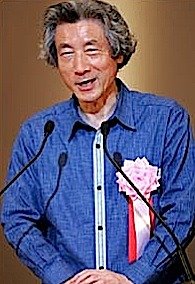
A Cool Koizumi: Leading from the front...Then Prime Minister Junichiro Koizumi himself set the tone, wearing informal attire. But then, he was already known for his unorthodox style.
Clothes designers and retailers chipped in, with clothes offering greater comfort at higher temperatures.
Cool Biz changed the Japanese work environment – and fast. I remember walking into a meeting at a government office in Tokyo a few weeks after the idea had been introduced, and finding I was the most formally dressed.
The Japanese like to count things. When the first season of Cool Biz ended, they calculated the countrywide campaign to have saved at least 460,000 tons of Carbon dioxide emissions (by avoided electricity use). That’s about the same emissions from a million Japanese households for a month.
The following year, an even more aggressive Cool Biz campaign helped save an estimated 1.14 million tons of Carbon dioxide – or two and half times more than in the first year.
The idea also traveled beyond Japan. In 2006, the South Korean Ministry of Environment and the British Trade Union Congress both endorsed the idea.
This summer, the seventh since Cool Biz started, there is an added reason for the Japanese to conserve energy. As the Asahi Shimbun reported on 28 April 2011: “In what has been dubbed the ‘power-conserving biz’ campaign, many companies plan to conserve energy during the peak summer period in light of expected power shortages caused by the crisis at the Fukushima No. 1 nuclear power plant.”
Meanwhile, the rest of us freeze-happy tropical Asians can evolve our own Cool Biz practices – we don’t need to wait for governments and industry to launch organized campaigns.
For a start, we – as consumers or patrons – can urge those who maintain public-access buildings to observe voluntary upper limits of cooling. Sensitive thermostats can automatically adjust air conditioner operations when temperatures rise above a pre-determined comfortable level.
It all depends on how many of us pause to think. Of course, we can also continue business as usual – and freeze ourselves today for a warmer tomorrow.
The sun sets in Paradise too - photo by Nalaka Gunawardene
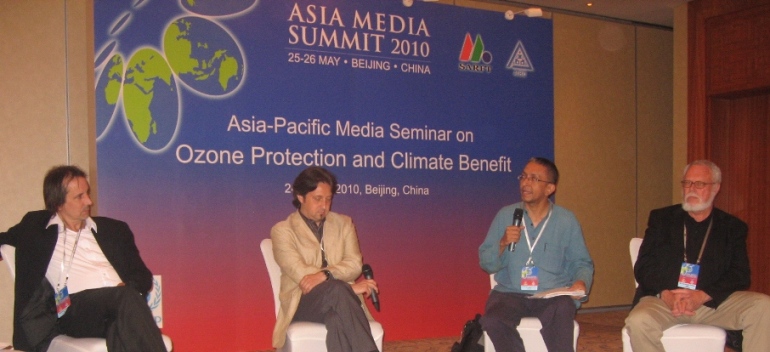
L to R: Sam Labudde (EIA); Eric Soulier (Canal France International); Nalaka Gunawardene (speaking); and Durwood Zaelke (IGSD)
Every year, a couple of weeks before Christmas, a big Climate Circus takes place. The venue city keeps changing, but the process is always the same: it attracts thousands of people – from government officials and scientists to activists and journalists – who huddle in various corners, chat endlessly and gripe often during two chaotic weeks. Then they disperse, rather unhappy with the process…only to return to more of the same a year later.
This is how I see the annual Conference of Parties (COP) of the UN Climate Convention, or UNFCCC. Their last big ‘circus’ was in Copenhagen, Denmark — when the world held its breath for a breakthrough in measures to reduce greenhouse gas emissions that warm up the planet. But, as with many previous conferences, Copenhagen over-promised and under-delivered.
The next COP is to take place in Cancún, Mexico, in December 2010. We can expect more of the same.
I’m not always this cynical. I’m certainly not a climate skeptic or climate change denialist. But I came to this conclusion after covering climate change stories for over 20 years, and having seen the kind of distraction the annual Climate Circus can produce on the media coverage and fellow journalists.
My contention: COPs were intended for treaty-signing governments to come together, bicker among themselves and make slow, painful and incremental progress on what needs to be done to address the massive problems of global climate change. While the core of these conferences remains just that, over the years they have gathered so much else — side events that now completely outweigh the political conference, and often overshadow it. I’m not convinced that this is where the real climate stories are, for discerning journalists.
I was on the last panel for the day, which looked at the next “hot” ozone and climate related stories. We were asked to give our views on: what are the great stories on the road to COP16 in Mexico at the end of the year?
Forget Cancun, I said. We already know how little it’s going to change the status quo. Why bother with that promises to be a non-event? Must we be this concerned with non-stories in our media coverage? In fact, I suggested: we should give the entire UNFCCC processes a couple of years of benign neglect. The real climate stories are not in the unmanageable chaos that the annual Climate Circuses have become. They are out there in the real world.
In the real world where frontline states and communities are already bearing the brunt of extreme weather…where green energy is making rapid advances…where communities and economies are trying to figure out how to live with climate change impacts even as they reduce their greenhouse gas emissions.
There are plenty of climate stories out there, covering the full range of journalistic interests: human interest, human enterprise, innovation, scientific research, community resilience and others. The challenge to journalists and other climate communicators is to go out there, unearth the untold stories, and bring them out in whatever media, forum or other platform.
I have nothing against climate COPs per se, and hope they can be restored to their original purpose of climate negotiations and working out acceptable, practical ways forward. (And this is certainly not a case of sour grapes: I’ve turned down all-expenses-paid invitations to COPs more than once.)
But we need to be concerned about the Climate Circus Effect on media, activist and educator groups, who seem to dissipate a good deal of their limited energies and resources in turning up at these mega-events. Copenhagen is said to have attracted over 17,000 persons (over 3,000 among them accredited journalists). How much of fruitful interaction and sharing can happen in such a setting? And when all the major news networks and wire services are covering the key negotiations and activities in considerable detail, what more can individual journalists capture and report to their home audiences?
Living as we do on a warming planet, we are challenged on many fronts to question old habits, and change our business-as-usual. The media pack has been running after the Climate Circus for over a dozen years. We need to pause, take stock and ask ourselves: is this the best way to cover the climate story?
And while at it, here’s something else for the UN, conveners of the annual Climate Circus. On World Environment Day 2008, whose theme was ‘CO2: Kick the Habit’, I asked the UN to kick its own CO2 habit. I suggested: “Adopt and strictly observe for a year or two a moratorium on all large UN gatherings (no matter what they are called – Summits, conferences, symposia, meetings, etc.) that involve more than 500 persons. In this day and age of advanced telecommunications, it is possible to consult widely without always bringing people physically together….Practising what you preach has a strong moral persuasive power — even if it goes against addictive habits formed for over 60 years of the UN’s history.”
PS: A global, comprehensive and legally-binding agreement on climate change is unlikely to be delivered at this year’s (Cancun) conference as well, the outgoing head of the UNFCCC, Yvo de Boer, was reported as saying on 27 May, just a few days after our Beijing seminar. See what I mean?








 Open Minds!