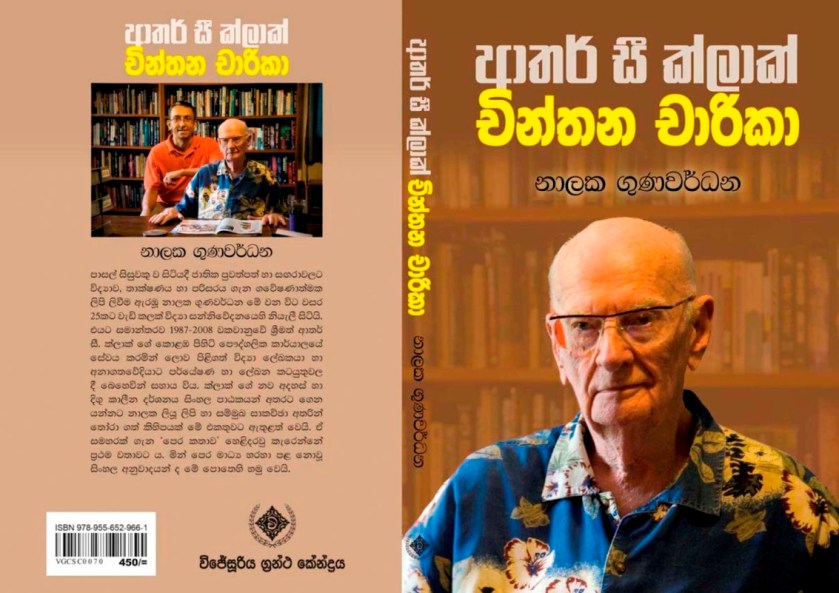
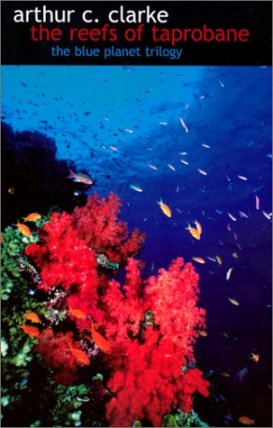
Arthur C Clarke Chintana Charika – Sinhala Book of essays and interviews by Nalaka Gunawardene (Wijesooriya Book Centre, Colombo, 2012). Cover photos by Shahidul Alam, Drik
In a literary career spanning over six decades, Sir Arthur C Clarke (1917 – 2008) wrote 100 books and more than 1,000 short stories and essays. He was the first to propose geostationary communications satellites, and inspired the World Wide Web.
To mark his 95th birth anniversary which falls this month, science writer Nalaka Gunawardene is releasing a new Sinhala book offering a quick tour of Clarke’s imagination, analyses and extrapolations on the world’s current challenges and our choice of futures.
Titled ‘Arthur C Clarke Chintana Charika’ (Mind Journeys with Arthur C Clarke), the book is a collection of Nalaka’s articles, media columns and interviews based on the late author and visionary’s formidable intellectual output. Some have appeared in Lankan newspapers or magazines during the past 25 years, while others are coming out in print for the first time.
“These are not translations, and most are not even adaptations. Instead, I have distilled Sir Arthur’s ideas and imagination and presented them in simple Sinhala,” says Nalaka, who worked with Clarke for 21 years as research associate at his personal office in Colombo.
Indicative of Clarke’s diverse career and interests, the book is divided into five sections: highlights of his illustrious life; astronomy and space travel; information and communications technology; futuristic visions; and his long association with Sri Lanka.
“Sir Arthur cheered and promoted Sri Lanka for half a century – in both good times and bad. The section on Sri Lanka captures his visions and hopes for his adopted homeland: on how we may overcome the burdens of evolution and history to create a truly peaceful and prosperous island for all,” says Nalaka.
The book contains Clarke’s advice on rebuilding Sri Lanka after the 2004 tsunami, the story of the first Sinhala feature film in colour (Ran Muthu Duwa, 1962) that Clarke financed, and the text of his 90th birthday video, which eventually became his public farewell.
Other essays focus on Clarke’s cautious optimism for information society and the future of artificial intelligence, his hopes of developing clean energy sources to end humanity’s addiction to fossil fuels, and his advocacy of a world free of nuclear weapons.
Nalaka reiterates that the best way to celebrate the legacy of Arthur C Clarke is to adapt his ideas for a better world based on knowledge, ethics, compassion and imagination.
The 280-page book, published by Wijesooriya Grantha Kendraya (Wijesooriya Book Centre), will be launched at 3 pm on Tuesday, 18 December 2012 at the National Library Services and Documentation Board, 14, Independence Avenue, Colombo 7. The main speaker will be Prof Rohan Samarajiva, Chair and CEO of LIRNEasia. Copies will be sold on discount at the launch.
Text of my ‘When Worlds Collide’ column published in Ceylon Today Sunday newspaper on 9 December 2012
Paul Hermann Müller (1899 – 1965) was a Swiss chemist. He won the 1948 Nobel Prize in physiology (medicine) for his 1939 discovery of DDT’s insecticidal qualities and its use in controlling disease carrying mosquitoes.
That knowledge was soon put to wide use. DDT was sprayed during the latter part of World War II to contain malaria and typhus among troops and civilians, and then adopted as an agricultural insecticide.
Christopher William Wijekoon (CWW) Kannangara (1884 – 1969) was a Lankan lawyer, legislator and effectively the country’s first minister of education during the pre-independence era. In the mid 1940s, he introduced far reaching reforms in that sector, enabling children from all levels of society to study from kindergarten to (and including) university level for free.
It’s unlikely that Müller and Kannangara ever met…
In this week’s Ravaya column (in Sinhala), I write about an Indian friend of mine: Moji Riba, filmmaker and cultural anthropologist, who lives and works in India’s north-eastern Arunachal Pradesh.
It’s an isolated remote and sparsely populated part of the country that is home to 26 major tribal communities,. Each one has its own distinctive dialect, lifestyle, faith, traditional practices and social mores. They live side by side with about 30 smaller communities.
A combination of economic development, improved communications, the exodus of the young and the gradual renunciation of animist beliefs for mainstream religions threatens Arunachal’s colourful traditions. “It is not my place to denounce this change or to counter it,” says Moji. “But, as the older generation holds the last link to the storehouse of indigenous knowledge systems, we are at risk of losing out on an entire value system, and very soon.”
For the past 15 years, he has been documenting it on video and photos. Read my English blogposts about him in Nov 2008 and Jan 2009.
I caught up with him in Delhi last week, which inspired this column.
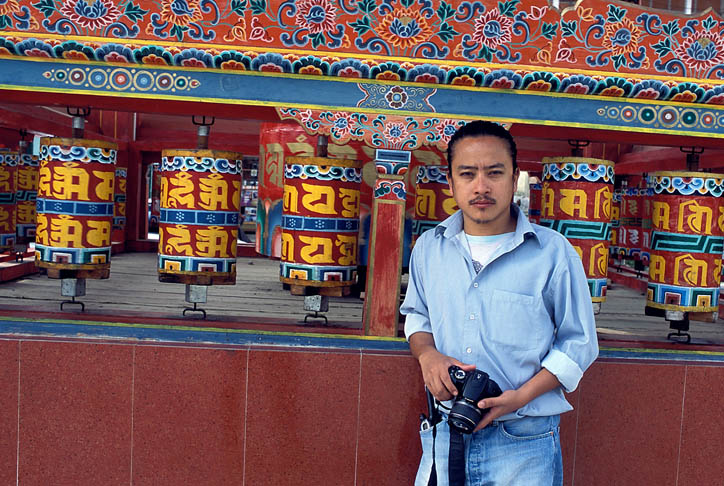
Moji Riba has been working since 1997 to document Arunachal Pradesh's rich cultural heritage. Image courtesy Rolex Awards
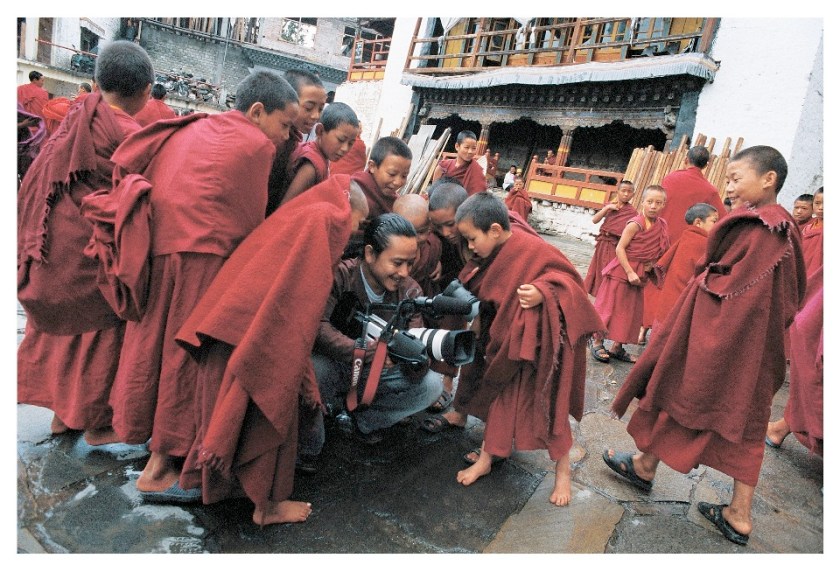
Surrounded by young monks, Moji Riba films rituals celebrating Buddha’s birth at Galden Namgyal Lhatse monastery. Tawang, Arunachal Pradesh, India, 2008 (Photo courtesy Rolex Awards)
සංස්කෘතික පර්යේෂණ හා ලේඛනගත කිරීමේ කේන්ද්රය (Centre for Cultural Research and Documentation, CCRD) අරඹමින් තවත් ඔහු වැනි ම කිහිප දෙනෙකු සමඟ ප්රාන්තයේ ජන සංස්කෘතිය ගැන වීඩියෝ වාර්තා චිත්රපට නිපදවීම ඇරඹුවා.
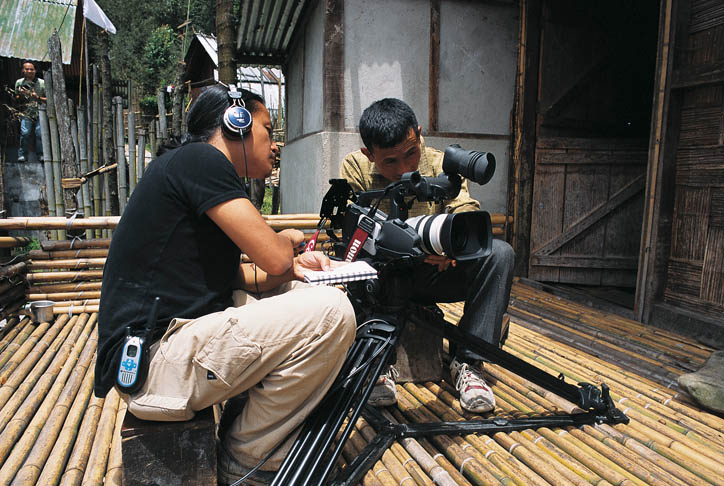
Riba teaches Hage Komo the basic camera skills that will allow the young Apatani to film an interview with his father and an animist priest, thus recording his tribe's oral history (Photo courtesy Rolex Awards)
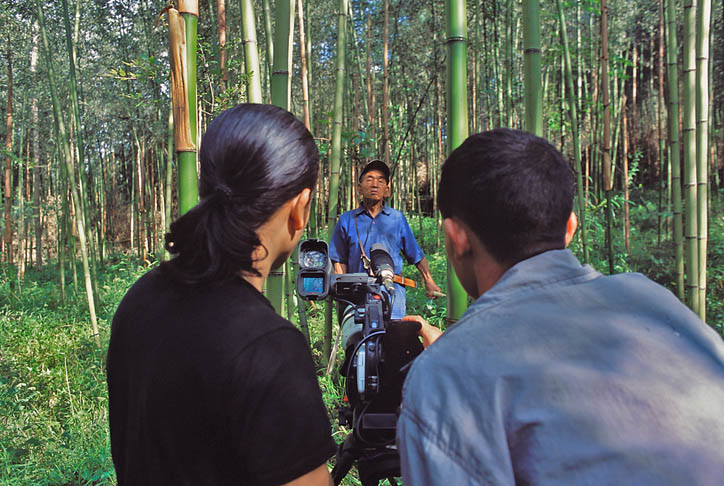
Hage Komo gets video instructions from Moji Riba, who is enlisting local young people to capture the oral histories, languages and rituals of their tribes for his project. Komo films his father gathering bamboo in a grove outside Hari Village. (Photo courtesy Rolex Awards)
Text of my ‘When Worlds Collide’ column published in Ceylon Today Sunday newspaper on 2 December 2012
Vaccines have been called ‘travel insurance for life’ – their life-saving and life-enhancing capability is second only to that of safe drinking water.
We have had modern vaccines only for a couple of centuries and now take their protection completely for granted. But not everyone is covered – some vaccines are still beyond the reach of millions in the developing world because of cost, or the logistics of getting it across.
Most vaccines are fragile bio products that need to be stored at a temperature of between 2 and 8 degrees centigrade, from the time they are made to the point of administration. Any disruption in this ‘cold chain’ can reduce efficacy or make them invalid.
Even as new vaccines are being introduced against various diseases, delivering them safely to those who need…
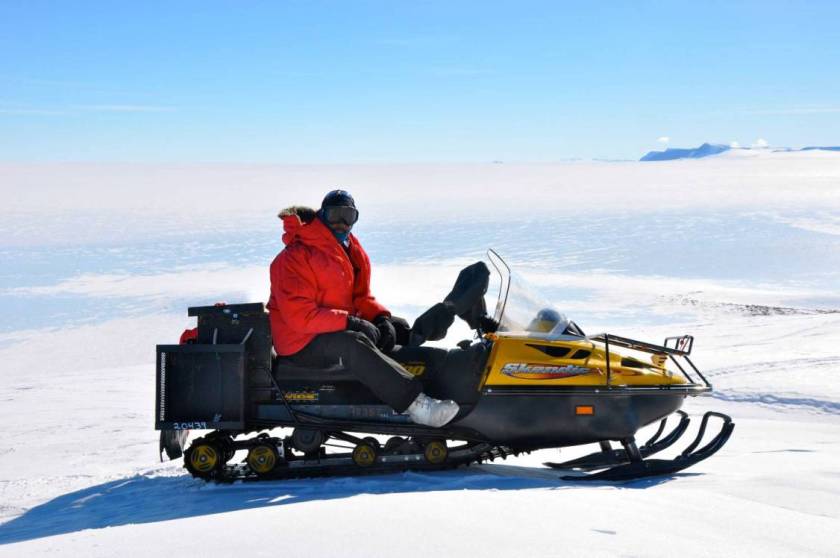
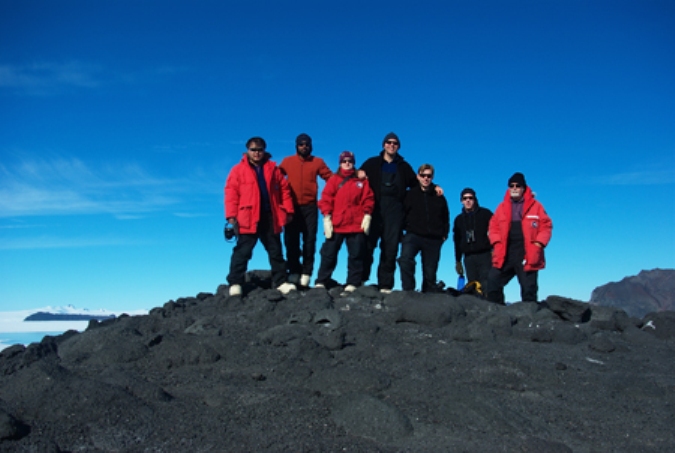
This week’s Ravaya column is a follow up to my initial one on Antarctica two weeks ago, සිවුමංසල කොලූගැටයා #92: ඇන්ටාක්ටිකාවට අත නොතබනු!. I had such a good response from readers, some of who wanted to know how many Lankans have been to Antarctica.
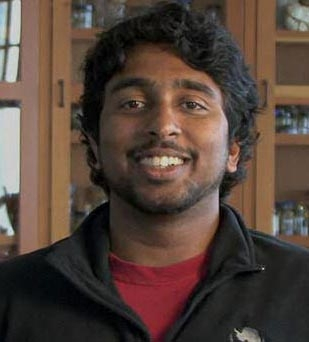
I asked around, and have found information on three: Marine biologist Dr Nishad Jayasundara (who visited in 2010), youth activist Imalka de Silva (also in 2010) and astronomer Dr Ray Jayawardhana (2010-11). This column is a summary of what they did. It also answers a question: did trail-blazing Lankan biochemist Dr Cyril Ponnamperuma (1924 – 1994), who studied Antarctic meteorites in the 1970s, ever visit the frozen continent himself?

 Open Minds!