Now on MediaChannel.org: Good communications to combat swine flu?

They turn the spotlight inwards...

MediaChannel.org has just published my latest op ed essay titled: Good communications to combat swine flu?

7 May 2009: New Age newspaper in Bangladesh has reprinted the essay

24 May 2009: The Hindu newspaper in India has reprinted the essay in its Sunday Magazine

In this essay, I have expanded some points originally made in two recent blog posts, on 30 April and 1 May 2009.

Here’s an excerpt:

“Flu shots, quarantine measures and hospital care alone cannot counter the current flu outbreak. While medical doctors and researchers spearhead the public health response, we need the mass media and other communicators to mount the public awareness response. Ideally, they should reinforce each other.

“For the first time in history, we now have the technological means to quickly reach out to most of humanity. More than four billion mobile phones are in use, a majority of them in the developing world. Nearly a quarter of the world population (over 1.5 billion people) have access to the web, even if at varying levels of bandwidth. Thousands of radio and TV channels saturate the airwaves – these still are the primary source of news and information for billions.

“Can these information and communication technologies (ICTs) help disseminate the right kind of flu awareness? How fast can we mobilise 24/7 media outlets and telecom networks to inspire preventive and curative action? What can the blogging, texting and twittering new media activists do in such efforts?”
Stop the virus, but not the news!
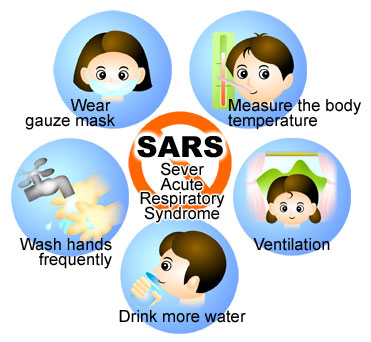
Looking for models of communicating against an infectious epidemic, I recall the Asian experience with Severe Acute Respiratory Syndrome (SARS) . I summarise in this essay the public interest roles played by Asian media during the SARS crisis, which has been studied and analysed in considerable detail.

I then return to one of my favourite points about communicating disasters and crises: the need for credible messages and credible messengers. This was a core theme in the Asian book on Communicating Disasters that I co-edited in 2007. I also highlighted it in this interview given to APC in early 2008.

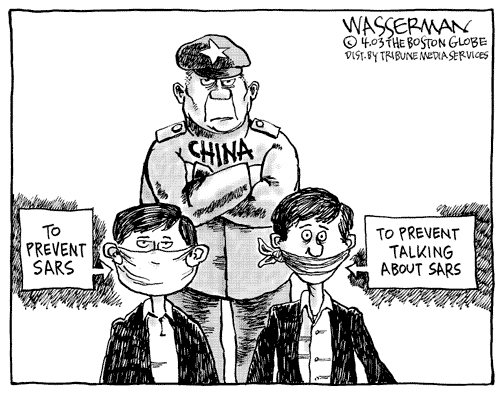
Here’s how my essay ends: “Whether it is SARS, HIV or tsunami, many Asian governments have suffered from a credibility gap in managing information about emergencies. For example, the initially slow and guarded media reporting on SARS allowed the virus to spread quickly in China, with devastating results. We cannot afford to repeat these mistakes with the latest flu pandemic.

“Nearly a century ago, British author H G Wells talked about human history being a race between education and catastrophe. In the coming weeks, we would find out if humanity has what it takes to outrun and outsmart a stubborn virus.

Read the full essay at MediaChannel.org

Read my op ed essay in SciDev.net in Dec 2005: A Long Last Mile: The lesson of the Asian tsunami

MediaChannel have published my op ed essays before. They were the first to publish, in June 2006, my global call for the broadcast industry to recognise poverty as a copyright free zone. And when Al Jazeera English channel was launched at the end of 2006, MediaChannel carried my essay on ethical news gathering as the biggest challenge for the new global TV network.

My latest essay is a humble birthday present to MediaChannel.org as it completes 10 years. Unique among websites, MediaChannel.org holds the rest of the media accountable with the best of the world’s media criticism and analysis — offering news, diverse global perspectives, and commentaries tracking international news flows. They cover breaking controversies, showcase change-makers, trends and cutting edge issues that you need to know about – produced by journalists for journalists and citizens.

MediaChannel’s co-founder Danny Schechter is one of my media heroes – he was Moving Images Person of the Year 2008.

“Our survival alone is a cause for celebration – a decade of growth and impact is impressive in ‘Internet years’,” wrote the website’s founders in a special 10th anniversary message. They added: “Over the past 10 years, we have survived financial crises and organized hack attacks. We have managed to remain relevant and on the cutting edge in a quickly evolving online landscape when many other sites and organizations have come… and gone.”

The team is making an urgent appeal for donations to keep this excellent service going. I’m very happy to amplify this – few services can deliver better value for money, and our troubled times and troubled media sure need the soul-searching constantly provided by MediaChannel.org


Ten years of kicking ass!

Pete Seeger turns 90 on World Press Freedom Day: Thank you for the protest music!

Pete Seeger: Still singing protest at 90...

Today, 3 May, is once again World Press Freedom Day. It is recognised by the UN, and observed by media professionals and media activists worldwide to ‘draw attention to the role of independent news and information in society, and how it is under attack’.

By happy coincidence, today also marks the 90th birthday of Pete Seeger, American folk singer and a pioneer of protest music. Since media freedom is inseparable from the democratic rights to dissent and protest, I will devote this blog post to salute Pete and his many decades of music for worthy causes — ranging from the American civil rights movement and opposing the Vietnam war to saving the environment and nuclear disarmament.

I won’t go over the basic biographical or career information, which is easily found online. Wikipedia has a good entry, and PBS shows a career timeline which has covered some of the most momentous events of the past century. There are approximately 200 songs (music and lyrics) that Pete wrote or with which he is associated – including “Guantanamera,” “Where Have All The Flowers Gone,” “If I Had A Hammer,” “Turn Turn Turn,” “Wimoweh,” “We Shall Overcome”.

Pete is a hero for at least three generations of music lovers and freedom lovers around the world who believe in human rights, human dignity and democratic freedoms. Armed with nothing more than his banjo and melodious voice, and driven by the courage of his conviction, this small, gentle man has stood up to mighty leaders, generals and officials.

Never underestimate the power of one determined man...
Pete is celebrated as much for his artistic and cultural achievements as for standing resolutely for his political beliefs and for lending his voice and music in support of causes be believed in. In 1955, he was called before the now infamous House Un-American Activities Committee, but refused to name personal and political associations on the grounds that this would violate his First Amendment rights. He said: “”I am not going to answer any questions as to my association, my philosophical or religious beliefs or my political beliefs, or how I voted in any election, or any of these private affairs. I think these are very improper questions for any American to be asked, especially under such compulsion as this.”

This defiance resulted in sustained harassment, persecution and professional isolation. As his recent PBS biography noted, “Standing strong for deeply-held beliefs, Seeger went from the top of the pop charts to the top of the blacklist and was banned from American commercial television for more than 17 years. This determined singer/songwriter made his voice heard and encouraged the people of the world to sing out along with him.”

‘If you love your country, you’ll find ways to somehow to speak out, to do what you think is right,” Pete says in this powerful documentary looking back at over half a century of activist singing and music.


Watch opening segment of PBS AMERICAN MASTERS series: Pete Seeger: The Power of Song, directed by Jim Brown and first aired in February 2008

Watch more PBS interviews with Pete Seeger and some of his archived performances from yesteryear

Having pleaded under the First Amendment during the communist witch days of the 1950s, Pete repeatedly paid tribute to the far-sighted American pioneers who introduced the First Amendment guaranteeing the freedom of speech.

“As some judge said, if there is any fixed star in our firmament, that is the First Amendment,” he says in a talk-cum-performance at the Ford Hall Forum. In this audio-only piece, he talks the privilege of living under the First Amendment. He recalls his experience being questioned by the House Unamerican Activities Committee, encounters with censorship, and his relationship with fellow singer Woody Guthrie. It runs for nearly an hour, but is worth every second.

For someone like Pete Seeger who sang alongside Dr Martin Luther King, Jr., and other civil rights movement leaders and activists, it must have been deeply moving to be able to sing at the concert to mark President Barack Obama’s inauguration on 20 January 2009 at the Lincoln Memorial.

Watch Bruce Springsteen sing along with Pete Seeger on Woody Guthrie’s “This Land Is Your Land”. As he often does, Pete invites the euphoric audience to sing along!

One of my favourite Pete Seeger songs is “Turn! Turn! Turn! (to Everything There is a Season)”, often abbreviated to “Turn! Turn! Turn!”. It’s a song adapted entirely from the the Book of Ecclesiastes in the Bible (with the exception of the last line) and composed to music by Pete Seeger in 1959. Seeger waited until 1962 to record it,

Pete Seeger tells how he came to write “Turn Turn Turn.”

I have always believed that we have to get creative and resourceful when the basic freedoms of conscience and freedom of expression are under siege from despotic rulers and fanatical extremists. When we are not allowed to express in factual prose, we must turn to creative prose. And when prose fails, we still have verse, lyrics, satire and drama — the possibilities are only limited by our imagination. This is why I celebrate activist artistes like Pete Seeger, and invoke the memory of activist-poets like Adrian Mitchell and Ken Saro-wiwa. When the barbarians are at our gates and we feel surrounded by the unrelenting forces of hatred, intolerance and tribalism, they remind us that Another World is Possible — but we have to believe in it, stay the course and find ways to sing, dance and laugh our way out of gloom.

And here’s Pete singing another one of my personal favourites, a song that powered the civil rights movement and has since inspired and sustained struggles for social justice around the world: We Shall Overcome.


New York Times editorial appreciation on 5 May 2009: Still Singing

TV playing nanny: How Asian broadcasters helped fight SARS

Media joined the public awareness campaign
Now that the World Health Organisation (WHO) has raised the swine flu level to Phase 5, the next to highest level in the worldwide alert system, everyone is talking about a global pandemic. On 30 April 2009, the UN’s top health agency referring to it as Influenza A(H1N1).

As I just wrote in another blog post, “While medical doctors and researchers spearhead the public health response, we need the mass media and all communications professionals to support the public awareness response. Flu shots and hospitals alone cannot win this battle.”

This is where Asian mass media – especially broadcast television – have some relevant and useful experiences. When Severe Acute Respiratory Syndrome (SARS) spread across much of East Asia and Southeast Asia, it wasn’t just the public health systems that took on the epidemic. The local, national and regional media joined the effort in the true spirit of public interest. There was no division between state-owned and privately-owned media. The airwaves were mobilised for preventing, containing and eventually beating the disease that wreaked havoc for several months.

The role played by Asian media during the SARS crisis has been studied and analysed in considerable detail. Lessons from that experience are worth recalling at this moment when the world is looking for ways to contain swine flu.

When SARS forced Chinese schools, universities and public offices to be closed for several weeks in the Spring and Summer of 2003, the country’s television broadcasters rose to the occasion. They started beaming a combination of entertainment and educational programming round the clock to over 400 million households across the country — now the largest national television audience in the world. The idea was to use the media to encourage more people to stay inside homes and minimise the spread of the virus through contact. China Educational Television (CETV) — the satellite distributed educational network — took on the role of substitute teacher by increasing its broadcasts.

Crisis? What crisis?
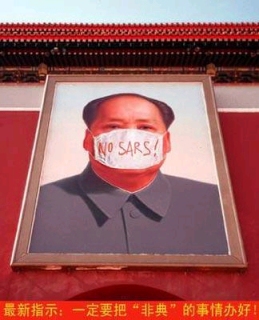
Of course, as the most likely place of origin of the SARS virus, China’s initial response to the epidemic was denial. Researchers have established how the slow or muted media reporting within China triggered more rapid disease transmission of the virus both within and beyond China. As the noted Asia watcher, columnist and journalism professor Tom Plate, wrote in 2008: “All the serious Chinese journalists were left holding their heads in shame. In effect, the institution of the mass-communication of news, because it was not allowed to do its job, contributed to the enormity of the SARS toll.”

Many researchers agree that it was the island republic of Singapore that best handled the SARS crisis. Dr Stewart Auyash, an Associate Professor in Health Promotion and Physical Education at Ithaca College in New York says: “Of the countries affected, the actions of Singapore’s government stand out as an example of how to deal not only with the biological elements of the disease but with the methods, style, tone, timing and breadth of its communicated messages.”

The Auyash study was titled ‘Communications as a Treatment for SARS in Singapore and its Lessons for Infectious Epidemics in Asia’, and appeared in Media Asia (Vol 32, No 4). Although the journal’s publishers restrict online access to subscribers, a copy can be freely downloaded from here.

Here’s how Tom Plate summarised its findings: “At the outset of the 2003 crisis, Singapore’s government and media authorities hammered out a clear plan to limit the syndrome’s spread among the populace. It adopted a containment policy that offered a major role for news media institutions. The media was asked to promote the idea of positive participation by all citizens to avoid furthering transmission.

Practising what we preach...
“Model citizens who followed World Health Organization guidelines with exceptional care were made proud subjects of newspaper feature stories. Top government officials, including high-profile members of the cabinet, were photographed or televised as submitting to the same mandatory preventive procedures as everyone else (for example, regular temperature checks). But citizens who fought the program by either resistance or even tepid nonchalance were portrayed scornfully, with the media publicly castigating them as ‘free riders’ who benefited from a safer health environment solely through the sacrifices of others.

“To make the media policy work, the government had to play things absolutely straight. When officials knew the answer to a scary question about SARS, they answered it quickly and completely; but when they had no answer, rather than making one up and putting their credibility at risk when this was later discovered, they flat out stated that they simply did not know but would try to find out.

“In Singapore, compliance with all kinds of government policies, not just health measures, is viewed as a personal and community responsibility. It is in the small city-state’s civic ethic that ‘individual rights and inconvenience may be infringed upon to protect the greater good of the public’s health,’ as Prof. Auyash put it. Even so, what seems both notable and possibly transportable to other countries is the cooperative role of the news media in a serious health crisis. Auyash points out that the role of the media is to emphasize symbols of positive compliance. Gestures and symbols, he says, ‘can galvanize a nation’s citizens to act. In short, symbols matter.'”

At the height of the crisis, Singapore even launched a dedicated SARS TV channel. The public service channel, which began in May 2003, was run jointly by Singapore’s three main broadcasters — Singapore Press Holdings, Media Corporation of Singapore and StarHub — and aimed to raise awareness about how to identify symptoms and prevent the spread of the disease.

Everyone was roped in, from educators to entertainers, in the all-out campaign against the invisible but formidable virus. The popular local sit-com Phua Chu Kang, which airs on Singapore’s Channel 5, came up with this hilarious rap video advising viewers the dos and don’ts of SARS.

As Prof Auyash concludes: “Singapore’s communication management around SARS can serve as a guide for future infectious disease control measure…There are major principles learned from SARS in Singapore from which other countries can learn…”

The US Centers for Disease Control (CDC) offered a similarly positive post-crisis judgment. This global defender against infectious diseases has praised Singapore’s aggressive and expansive policy of contact tracing and home quarantine during SARS.

“The bleakest projections about bird flu suggest that more than 300 million people could die from a global pandemic,” says Tom Plate. He adds: “Let us hope that such a number will never be realized simply because nations refuse to learn from the successes of others, simply out of pride, parochialism, ignorance or stubbornness. A pandemic of stupidity can kill people, too.”

A message from our...tormentors