“Hands up who is poor, speaks English – and looks good on TV!”

“Hands up who is poor, speaks English – and looks good on TV!”

With that title, I opened my panel remarks to the 8th Annual Symposium on Poverty Research in Sri Lanka on the morning of 30 November 2007.

Sri Lanka’s Centre for Poverty Analysis (CEPA) had invited me to speak during a session on ‘Taking it off the page: Alternative mediums of communication to influence change’. The theme of the overall symposium was ‘Communicating research and influencing change’.

Part of my talk was on challenges in using moving images to communicate development related research. The other part was on how most sections of the mainstream media covers stories of the poor — or those living at the bottom of the income pyramid.

I noted that as Asia’s billions strive for a better today and better tomorrow, there are millions of stories at the bottom of the pyramid. But most mainstream media manage to miss these stories due to their ignorance, or arrogance, or both.

But reporting from the bottom of the pyramid need not be all about doom, gloom and alarm. In fact, so much is happening there that a well informed story-teller won’t have much time to spend on negativity (while acknowledging a great deal of suffering that remains).

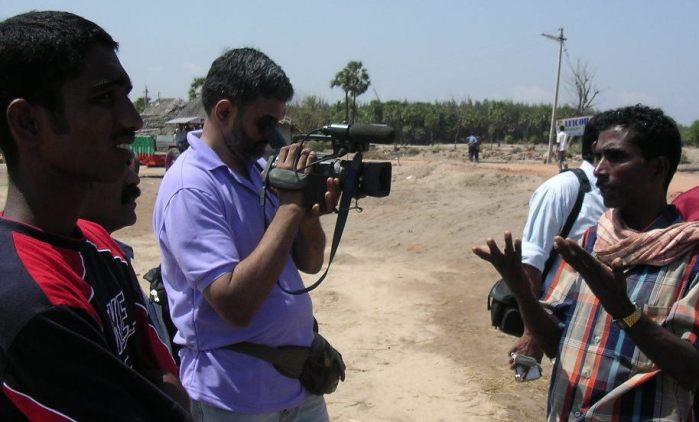
interviewing-tsunami-survivor-in-tamil-nadu-india.jpg

In my remarks, I emphasised that to discover these stories and tell them with empathy and accuracy, we as story-tellers need to recognise a few basic realities:
• The poor are not another species to be treated as if they were endangered! They are living and loving human beings as complex and nuanced as anyone in this room.
• Nor are the poor a ‘sub-human species’ with a simpler set of needs and aspirations. They have as many primary, secondary and tertiary needs – just like anyone else!
• When it comes to information, they have not only survival and practical information needs (which many development projects try to provide), but also what I call ‘information wants’ – cultural and social information – which many development projects completely ignore.
• The poor have opinions too — and are often more articulate and expressive when someone cares to listen and capture these.

So telling media stories from the Bottom of Pyramid needs the knowledge base, socio-cultural understanding and ethical framework in which to gather and process these stories. We at TVE Asia Pacific don’t claim to have got everything right, here are our basic rules of engagement:
• We treat the rich, middle class and poor alike – extending the same courtesy and respect (including obtaining personal clearances for interviews).
• We caption everyone on-screen by name and location, irrespective of their social and economic status.
• We film people – for interviews or generic footage – only with informed consent.
• Wherever possible, we take our the finished TV products back to where they were filmed and share with those who told us their stories. (We are not alone in this: I have written blog posts about Earthcare Films of India and the Brock Initiative of the UK who are also doing this.)

Our industry of broadcast TV is not always known for its class-less treatment of every human being with respect and dignity. In fact, the poor often become ‘Canon-fodder’ for camera crews looking for dramatic images of human suffering.

from-mediachannelorg.jpg from-mediachannelorg.jpg

The globalised media continue to use stereotyped images of the global South – captured mostly by northern photographers and camera crews. As my friend Shahidul Alam, founder of Drik Picture Library in Bangladesh, says: “Invariably, films about the plight of people in developing countries show how desperate and helpless they are…. Wide angle black and white shots, grainy, high contrast images characterise the typical third world helpless victim.”

This explained my title: “Hands up who is poor, speaks English and looks good on TV!” It’s a caricature of how some camera crews go looking for that convenient sound-bite with some doom-and-gloom visuals to match.

But it’s not just the northern media who sensationalise and oversimplify life at the bottom of the pyramid in the South. Many of our own media outlets, rooted in the cities and obsessed with middle class life styles, are also good (or bad) in this game!

And the media are not alone. When development agencies and ‘pro-poor’ activists presume – in their middle class arrogance – that the poor only need survival or sustenance related information, the latter is immediately reduced to sub-human status.

Nov 2005 op ed: Communication rights and communication wrongs


Nov 2006 op ed: Ethical news gathering: Al Jazeera’s biggest challenge

Aug 2007 blog post: Wanted: Ethical sourcing of international TV News

Moving images moving research…beyond academic circles!

Although I’ve dabbled in some media research at times, I don’t think of myself as a researcher. So when Sri Lanka’s Centre for Poverty Analysis (CEPA) invited me to speak at their 8th Annual Symposium on Poverty Research in Sri Lanka, I spoke on what I know a little bit about — communicating research using the audio-visual media.

My panel remarks, delivered on the morning of 30 November 2007, were on ‘alternative mediums of communication to influence change’. I opened with the provocative title “Hands up who is poor, speaks English – and looks good on TV!” (see separate blog post on media related aspects of my talk).

These days, so much of research in physical, biological and social sciences is justified in the name of poverty reduction. Yes, studying and understanding development problems is the essential first step of solving them. But without properly communicating this research, the results won’t help the poor — or anyone else.

We at TVE Asia Pacific are committed to covering Asia’s development issues using TV, video and web. Our small challenge is to capture the many and varied facets of how Asians are working for a better today and better tomorrow. Reducing and eventually eliminating poverty is a significant part of that process.

As Asia’s billions strive for better lives, there are millions of stories at the bottom of the income pyramid. But most mainstream media manage to miss these stories due to their ignorance, or arrogance, or both.

For us, one key source of information and analysis is researchers – people who study trends and conditions, and keep reflecting on how and why. Their knowledge and insights are invaluable for us to tell stories from and about the bottom of the pyramid.

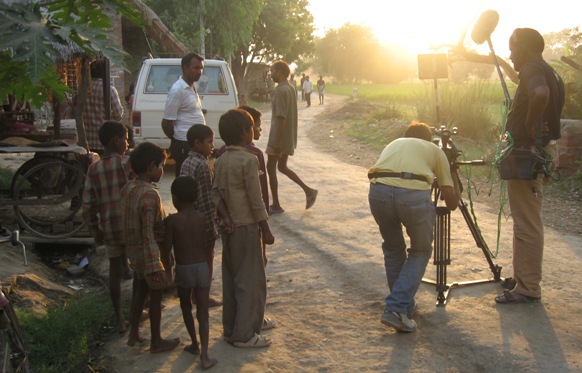
filming-living-labs-in-uttar-pradesh-india.jpg

As I told the researchers in my audience: “Part of our challenge is to know what you are studying — and then figure out the public interest and human interest angles of your work. As communicating research to those outside the scientific or research communities is more an art than a science.”

I cited three recent examples where we had produced engaging TV/video content to communicate research directly relevant or related to the poor.

Digits4Change
was our attempt to understand and document how information and communication technologies (ICTs) are changing the way Asians live, work and play. We covered technologies such as Internet, computers, mobile phones and satellite communications applied in education, healthcare and rural business development. The knowledge base for this 2006 series came from IDRC’s Pan Asia programme which supports action research that addresses specific problems.

Also in 2006, we produced The Greenbelt Reports to take a close look at the environmental lessons of the Indian Ocean tsunami. We visited a dozen locations in India, Indonesia, Sri Lanka and Thailand to find out how community and conservation interests can be balanced in relation to coral reefs, mangroves and sand dunes. In telling these stories, we worked with researchers from global agencies like IUCN the World Conservation Union and UNEP as well as national organisations like the M S Swaminathan Research Foundation in India.

The Greenbelt Reports

Living Labs is our most recent series, released in March 2007. Filmed in 9 countries in Africa, Asia, Europe and Latin America, it looked at how researchers are addressing different aspects of a major challenge in agriculture: how to grow more food with less water. We worked with a global action research project called the CGIAR Challenge Programme on Water and Food, which gave us exclusive access to their on-going field work and emerging findings in nine major river basins of the developing world.

living-labs-by-tveap.jpg

In telling these and other stories, we work within a certain framework we have defined for ourselves. Among its salient points:
• We don’t set out trying to communicate messages; we just want to tell good stories and development communication is a by-product.
• We look for under-reported/ignored development issues, or a less covered angle in a widely reported story.
• We don’t just talk to technical experts but to many other individuals involved or affected – women, men and children from all walks of life.
• We seek and accommodate different points of view, not allowing single-issue activists or one source to dominate/monopolise a story.
• Our finished products are informed by science but never immersed in science – we always keep in mind that our audience is non-specialsits.

All our stories cover real people dealing with real world issues and challenges. And since Asia has more people living in poverty than anywhere else in the world, most of the time our stories concern what’s happening at the bottom of the pyramid – or what can directly impact people living there.

And without exception, all these TV series and individuals films are available free of any license fees for broadcast, civil society and educational use. They are also available for online viewing at TVE Asia Pacific’s channel on YouTube.

Communicating research through moving images is not easy. Packing years of hard work into a few mins of engaging visuals and narration involves ruthless condensation which sometimes leaves some researcher egos bruised. When covering the work of large research organisations, we’ve also had deal with internal politics and hierarchies: for example, what to do when a junior researcher is more authentic and articulate than her supervisor?

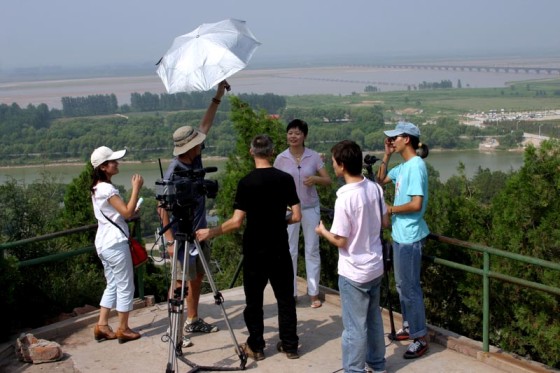
Producing Living Labs based on filming in 9 countries on 3 continents in just 5 months during 2006 was a challenge in both logistics and political negotiations. As editor-in-chief, I had to balance the public accessibility of our end product with researchers’ keenness to pack their stories with facts and figures.

living-labs-being-filmed-in-yellow-river-basin-china.jpg

We didn’t please everyone. One senior researcher told us that his multi-faceted, multi-year nad multi-million dollar was like an elephant — and we’d only glimpsed just one part of that big creature!

That’s just the point: we can never cover the whole elephant in a media product intended for non-specialists. So we choose which part of the elephant is most interesting and present it in a way that will make viewers realise — and hopefully, appreciate — that there’s a lot more that’s worth finding out.

Moving image products often act only as ‘teasers’ — communicating highlights of research, and directing those interested to online or offline sources that offer more information.

Because they act as a/v versions of executive summaries, these ‘teasers’ by themselves are a powerful way of reaching out those who are unlikely to look up the details: that includes many policy makers, government officials and business people.

Winston Churchill used to ask his staff to give him everything ‘on one page’. These days, he might have asked for everything to be summed up in a five minute video — as we often do.

Road to Bali: Beware of ‘Bad weather friends’!

unfcccnew-c.jpg

All the environmental roads — well, actually flights — seem to lead to Bali in the coming days.

The Indonesian ‘Island of the Gods’, famed as a tourist resort, will play host to the 13th United Nations Climate Change Conference from 3 to 14 December 2007.

The Conference, hosted by the Government of Indonesia, brings together representatives of over 180 countries together with observers from inter-governmental and non-governmental organizations, and the media. The two week period includes the sessions of the Conference of the Parties to the UN Framework Convention on Climate Change (UNFCCC), its subsidiary bodies as well as the Meeting of the Parties of the Kyoto Protocol.

The Bali meeting will be a turning point in the global response to climate change, an issue which has moved above and beyond being a simple ‘green’ concern to one with economic, security and social implications. The annual meeting returns to Asia after five years, since New Delhi, India, hosted the 8th meeting in November 2002.

In the build up to Bali, a new report released on 19 November 2007 says that without immediate action, global warming is set to reverse decades of social and economic progress across Asia, home to over 60 per cent of the world’s population.

Up in Smoke? Asia and the Pacific – with a foreword by Dr Rajendra K Pachauri, Chairman of the Nobel prize-winning Inter-governmental Panel on Climate Change (IPCC) – is the most extensive and concluding chapter of a unique, four-year long exercise by the Up in Smoke coalition, an alliance of the UK’s major environment and development groups.

The report shows “how the human drama of climate change will largely be played out in Asia, where almost two thirds of the world’s population live, effectively on the front line of climate change.”

When our friends at the International Institute for Environment and Development (IIED) in London sent me the press release about the report last week, something caught my eye. Among the several accompanying quotes was this one concerning the media:

“In many Asian countries climate change stories don’t make it into the media, so the public are left out of the debate. The challenge for decision-makers and the media is to stimulate interest in their work and translate the complex issues into stories that capture the public’s imagination. Climate change above all requires the engagement of everyone in creating the changes required.”

This sweeping statement is attributed to Rod Harbinson, Head of Environment, Panos London.

I know Panos London well, and am surprised to read an official remark of this nature emerging from that organisation which, until recently, has tried to relate to the majority world media as a friend and supporter. In fact, the first time I had one of my own pieces internationally syndicated was by Panos Features, back in 1989.

Come to think of it, the second article I wrote for Panos Features concerned how the low-lying, Indian Ocean island nation of Maldives was preparing for adverse impacts of climate change. That was years before the web, so there’s no link I can provide.

As a development writer and journalist who has covered global climate change among other issues for two decades, I have problems with Mr Harbinson’s remark.
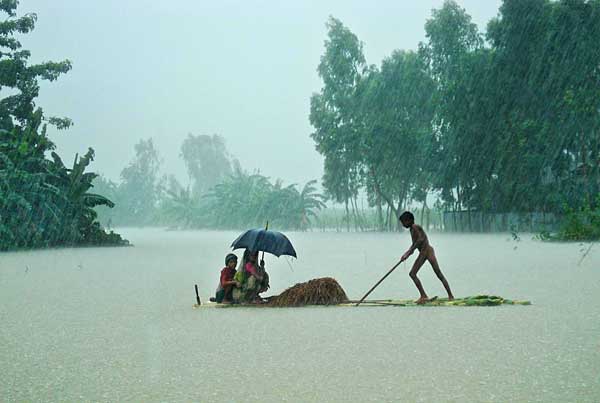
Drik/Majorityworld
Photo: A family looks for shelter using a raft made of banana trees during the last Monsoon: 31 July 2007: Gaibandha, Bangladesh © Quddus Alam/DrikNews Linked from Shahidul News

I’m in full agreement on the need to ‘translate the complex issues into stories that capture the public’s imagination’. There is also no argument that climate change requires the engagement of everyone.

But I would be very interested to know on what statistical or analytical basis he says “in many Asian countries climate change stories don’t make it into the media, so the public are left out of the debate’.

Asia, as Mr Harbinson should surely know, is not just China, India and Indonesia. It is large and highly diverse region, containing five sub-regions as defined by the UN. It is home to nearly two thirds of humanity, who live in over three dozen independent states or dependent territories.

Living in Asia and trying to work at regional level, I know how difficult it is to make any generalisations about this rich and constantly changing assortment of economies, cultures and societies branded as Asia (which, taken together with the small island nations of the South Pacific, is known as the Asia Pacific). In fact, it’s wise not to speak about Asia as a whole, for there is little in common, say, between Japan and Laos, or between China and Maldives.

The Asian media are as diverse as the region, and have been undergoing rapid change in recent years. Unshackled from the state’s crushing grip in most countries, the broadcast media (radio, TV) have proliferated and emerged as the primary source of information for a majority of Asians. New media – web, mobile devices and multimedia combinations – are now changing the way many Asia’s communicate and access information.

I have always been curious how Panos London, perched at its cosy home in London’s White Lion Street, assesses what goes on in the majority world. In this case, how much of Asia does Mr Harbinson know and is really familiar with? How many Asian media outlets has he or Panos monitored, assessed and sampled before coming to this sweeping and damning conclusion about the lack of climate change stories in the Asian media?

And how many of these outlets are radio and TV, and in languages other than English? I would really like to know.

If Panos London believes in evidence-based analysis, then it owes us in Asia an explanation as to on what basis its head of environment makes such statements about an entire continent, whose media output is predominantly in Asian languages, not English. And whose principal media are broadcast, not print.

And what constitutes a climate story? Tracking the endless array of inter-governmental babble in the name of working out some compromised partial solution to the major problem? Or reporting on campaigns to clean up polluting industries or sectors (such as transport) that generate most of the greenhouse gases? Or focusing on how humble communities in remote corners of the world are finding how their lifestyles and livelihoods are suddenly threatened by something they hardly understand?

To me, it’s all of the above — and a lot more. Climate change is akin to a prism through which many, many development issues and topics can be analysed. Just as HIV/AIDs long ago ceased to be a simple medical or health story, climate change has moved well beyond being an environmental story.

The more angles, perspectives and topics that are covered in the media, the better. And all of it need not be in that staid, cautiously balanced style of The Guardian or BBC that Panos London must be more familiar with.

Panos London, in its statement of beliefs, says ‘Freedom of information and media pluralism are essential attributes of sustainable development’. Surely, then, they realise that media pluralism includes speaking in a multitude of tongues, and analysing from many different perspectives — as happens in the Asian media 24/7, if Mr Harbinson and his colleagues care to spend more time in the region and keep their eyes and ears open.

But instead, they seem more like a group of well-meaning people with a solution in search of a problem. For the past many months, Panos London has been crying wolf about the allegedly poor coverage of climate issues in the majority world media.

That was the main thrust of a report they published in late 2005, titled Whatever the weather – media attitudes to reporting climate change.

According to Panos London website that I have accessed today, “…the survey found that there is little knowledge among journalists about these important choices and they are rarely discussed. The dramatic impacts of extreme weather events, for example, rarely feature in relation to climate change and the topic remains low on editors’ story sheets.”

The survey was based on ‘interviews conducted with journalists and media professionals in Honduras, Jamaica, Sri Lanka and Zambia’ and claimed to ‘give insights into the attitudes of journalists and the status of the media in these countries.’

Well, I was one of those majority world journalists covered by the survey — and I had major reservations about how they used my responses. Being cautious, I had used email (and not the phone) to respond to their survey questions – I therefore have a complete record of everything I said. When the draft report was shared on my request, I found some of my responses being distorted or taken out of context. I had to protest very strongly before some accuracy was restored. I later regretted having agreed to be part of this dubious survey.

It was flawed in many ways. The questionnaire was very poorly conceived and structured. I actually declined to answer some questions which were worded in such a way as to elicit just the kind of response that Panos London wanted — to make a case that journalists in the majority world are so incompetent that they need help.

A glaring omission in the final report was that it carried no list of journalists interviewed. I had to ask several times before I could even find out how many others participated in the survey (apparently some three dozen). But my requests for a list of other survey respondents were repeatedly declined by Panos London, who said it was privileged information. They later took the position that European data protection laws did not allow them to disclose this information!

In an email sent to Rod Harbinson on 22 Feb 2006, I said: “I would argue that Panos London had pre-conceived notions that it wanted to present in this report, and used superficial and largely unprofessional interview surveys with a few scattered journalists as a rubber-stamping exercise to publish what it wanted to say anyway. This is further borne out by the fact that some of my more outspoken responses have been completely ignored.”

I have seen or heard nothing since to change the above view. And the contents of Whatever the weather – media attitudes to reporting climate change are consistent with what Rod Harbinson says in the IIED press release that prompted me to make this comment.

Yes, climate change is the Big Issue of our times that needs everyone to rally around and search for ‘common but differentiated’ solutions and responses. But no issue or global threat is too big to warrant the willing suspension of time-honoured journalistic or academic values of honesty, integrity and balance. Issuing lop-sided ‘survey reports’ and making sweeping negative statements do not help the cause of improving public discussion and debate on climate change.

The road to Bali and beyond is going to be an arduous journey. On that treacherous road, we in the majority world need to beware of ‘bad weather friends’ who come bearing bad surveys and self-serving offers of ‘help’.

— Nalaka Gunawardene

Note: In the spirit of communication for development and media pluralism, I invite Panos London to respond to the above critique, and offer to publish their response in full.

I remain a critical cheer-leader of the global Panos family, and serve on the Board of Panos South Asia, an entirely independent entity that has excellent relations with Panos London. Like all families, we don’t always agree – and that’s part of media pluralism!

Related blog posts:

Nov 2007: True ‘People Power’ needed to fight climate change
Nov 2007: Beyond press release journalism: Digging up an environmental business story
Oct 2007: The Al and Pachy Show: Climate Change gains public momentum

Aug 2007: Arthur Clarke’s climate friendly advice: Don’t commute; communicate!
June 2007: Sex and the warming planet: A tip for climate reporters
April 2007: Can journalists save the planet?
April 2007: Beware of Vatican Condoms and global warming
April 2007: Pacific ‘Voices from the Waves’ on climate change
April 2007: Wanted – human face of climate change!
Protect journalists who fight for social and environmental justice!

In June 2007, I wrote about the late Joey R B Lozano, a courageous Filipino journalist and activist who fought for human rights and environmental justice at tremendous risk to his life.

For three decades, Joey survived dangerous missions to defend human rights using his video camera in the Philippines, a country known for one of the highest numbers of journalists killed in the line of duty. Joey went into hiding numerous times, and he dodged two assassination attempts.

Last week, a leading Filipino academic and social activist called for greater protection for local level journalists who cover social and environmental justice issues risking their life and limbs.

“Things are pretty savage at the grassroots level in some of our countries. Journalists who investigate and uncover the truth take enormous personal risks – the vested interests hire killers to eliminate such journalists,” said Professor Walden Bello, executive director of the Focus on the Global South (photo, below).

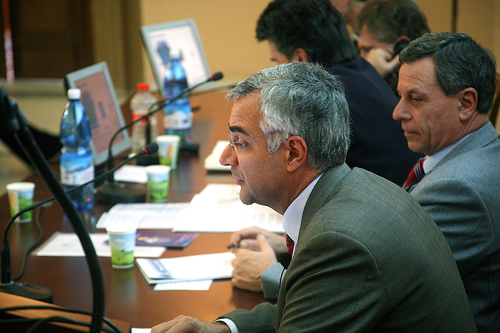
He was speaking at the Greenaccord Media Forum on 10 November 2007 in Frascati, Rome, where several dozen journalists covering environmental issues had gathered for a four-day meeting.

He delivered an insightful survey of social movements across Asia on environmental and public health issues
, where he questioned the role of elites in the global South in standing up for what is right and fair for all people.

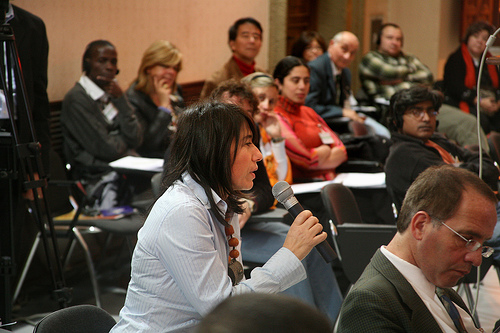
During question time, I asked him how he saw the media playing a role in social movements that he’d just described. It varied from country to country, he said, and gave several examples.

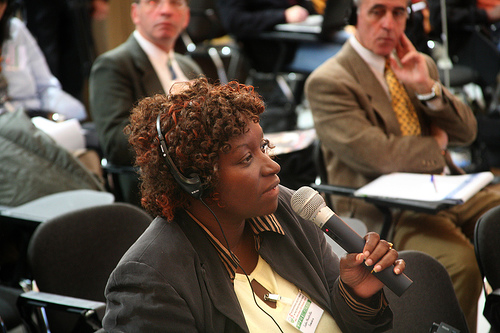
zadie-neufville-from-jamaica-makes-a-point.jpg

In China, most environmental exposes in recent years have been made by ‘very brave journalists’. Their investigations have compelled the local and central authorities to address the massive incidents of pollution and environmental degradation resulting from China’s economic march forward.

In South Asia, the record is uneven. Indian publications like The Hindu newspaper and Frontline magazine are at the forefront in reporting and analysing ‘almost exhaustively’ on environmental struggles in the world’s largest democracy.

In contrast, Singapore and Malaysia have no critical mass media to turn the spotlight on excesses or lapses, he said. In these countries, journalists as well as activists have turned to the web to express themselves — but even they are under pressure from their governments.

In Thailand, the two English language newspapers The Nation and Bangkok Post have both have a long tradition of covering environmental issues and supporting mass movements. A number of Thai language newspapers also have sustained coverage.

In his native Philippines, Prof Bello singled out the Philippine Daily Enquirer for persisting with environmental coverage and exposing environment related scandals. But that comes with its own risks.

“At the local levels, journalists who take up these issues face many threats, including the very real risk of extra-judicial killings. The Philippines is one of the most dangerous countries in the world today for independent journalists and human rights activists,” he added.

Journalists living in the provinces and reporting from the grassroots are more vulnerable than those based in the cities. This is precisely why local journalists need greater support and protection to continue their good work.

The local elites and officials would much rather silence such journalists. International solidarity for such journalists could make a big difference, Prof Bello said.

He had a suggestion for his hosts, Greenaccord, which annually organises what is now the world’s largest annual gathering of journalists and activists concerned about the environment: Invite and involve more local level journalists in the future forums.

That will give them a voice, and strengthen their resolve to continue the very important work they do.

Read April 2007 blog post: Can journalists save the planet?


Meeting photos courtesy Adrian Gilardoni’s Flickr account

True ‘People Power’ needed to fight climate change

Dealing with climate change – the biggest environmental threat faced by the planet today – requires building up a mass movement at the grassroots across the developing countries of the global South.

Such a movement might be unpopular not only with the Southern elite but also with sections of the urban-based middle class sectors that have been the main beneficiaries of the high-growth economic strategy that has been pursued since the early 1990s, a leading southern activist cautioned in Rome last week.

Speaking at the Greenaccord Media Forum on 10 November 2007, Walden Bello, Filipino academic and executive director of the Focus on the Global South (seen in photo below, on the right), dismissed the notion that Asian masses are inert elements that uncritically accept the environmentally damaging high-growth export-oriented industrialisation models promoted by their governing elites.

“It is increasingly clear to ordinary people throughout Asia that the model has wrecked agriculture, widened income inequalities, led to increased poverty after the Asian financial crises, and wreaked environmental damage everywhere,” he said.

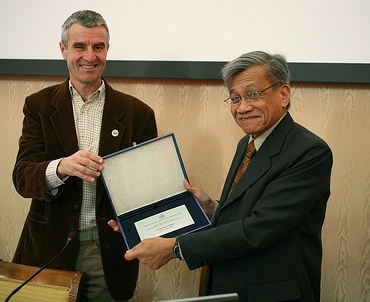
prof-walden-bello-receives-plaque-from-andrea-masullo-of-greenaccord.jpg

People in the South are open to an alternative to a model of growth that has failed both the environment and society, he said. For instance, in Thailand, a country devastated by the Asian financial crisis of 1997 and wracked by environmental problems, globalization and export-oriented growth are now bad words.

He added: “Thais are more and more receptive to the idea of a ‘sufficiency economy‘ promoted by popular monarch King Bhumibol, which is an inward-looking strategy that stresses self-reliance at the grassroots and the creation of stronger ties among domestic economic networks, along with ‘moderately working with nature'”.

But the southern countries cannot and must not rely on their elite to provide leadership, he said. “What is clear is that in most other places in the South, one cannot depend on the elites and some sections of the middle class to decisively change course. At best, they will procrastinate.”

The fight against global warming will need to be propelled mainly by an alliance between progressive civil society in the North and mass-based citizens’ movements in the South.

Delivering the Lectio Magistralis to conclude the 4-day international gathering of journalists, activists and experts concerned about the environment, Prof Bello traced the evolution of social movements on environment and public health in East Asia, Southeast Asia and South Asia over the past few decades.

Read the test of a similar talk given by Walden Bello at the Trans National Institute in October 2007.

Prof Bello acknowledged that the environmental movements in the South and North have seen their ebbs and flows. “As with all social movements, it takes a particular conjunction of circumstances to bring an environmental movement to life after being quiescent for some time or to transform diverse local struggles into one nationwide movement.”

The challenge facing activists in the global North and the global South is to bring about those circumstances that will trigger the formation of a global mass movement that will decisively confront the most crucial challenge of our times.

And climate challenge is one among several challenges we confront today.

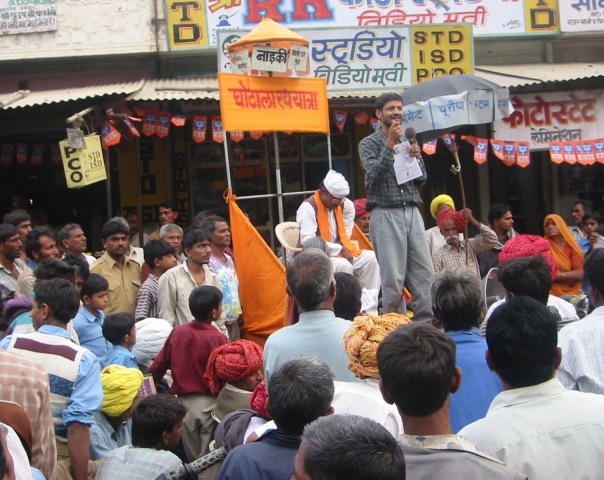
campaigning-for-clean-elections-in-rajastan-india.jpg


Meeting photos courtesy Adrian Gilardoni’s Flickr account

People power India photo courtesy TVEAP image archive

Bretton Woods on fire: Hard times ahead for World Bank and IMF

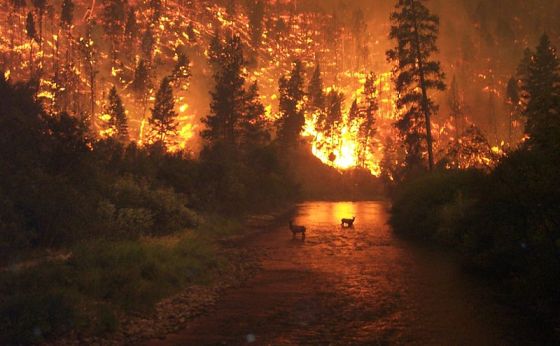
800px-deerfire_high_res.jpg

As the California forest fires raged over many days in October 2007, it dominated the US and some sections of the global media. Focus was on how the fires started and what factors contributed to their rapid spread.

Below the media’s radar, another kind of ‘fire’ has been building up over the past few months on the US East Coast. According to one leading intellectual-activist that I heard this week, this is a development whose reverberations will be felt right around the world, and for years to come.

The Bretton Woods are on fire. Actually, it’s the Bretton Woods institutions, namely the World Bank and International Monetary Fund (IMF).

Speaking at the Greenaccord Media Forum in Rome on 10 November 2007, Walden Bello, Filipino academic and executive director of the Focus on Global South, suggested that the World Bank and IMF are headed for turbulent times as countries in the global South (majority world) assert themselves economically.

Preparing to rebuild the international economic system as World War II was still raging, 730 delegates from all 44 Allied nations gathered at the Mount Washington Hotel in Bretton Woods, New Hampshire for the United Nations Monetary and Financial Conference. The delegates deliberated upon and signed the Bretton Woods Agreements during July 1944. That marked the birth of the World Bank and IMF.

The World Bank and IMF are essentially lenders of money to governments for development purposes. If these lending institutions run short of borrowers, they will be out of business.

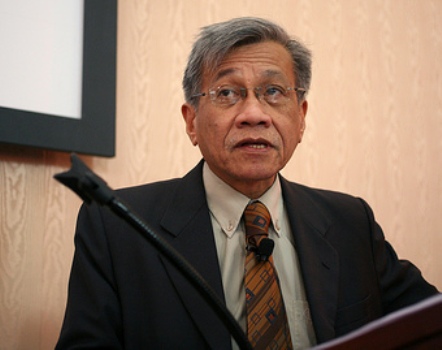
That hasn’t happened yet, but Bello (photo, below) identified several trends that must make the Bretton Woods duo worry about losing control.

professor-walden-bello.jpg

According to Bello, the resistance is led by countries of Latin America, a region where the twin lenders have long been controversial. In May 2007, Venezuela under President Hugo Chavez announced it would be leaving both the World Bank and IMF.

Venezuela has repaid its remaining debts to the World Bank five years ahead of schedule and paid off its debts to the IMF shortly after Mr Chavez first took office in 1999. Bello says the oil-rich country has sought to provide alternative forms of credit and financial support for countries in the region. One such project is the “Bank of the South”, which aims to financially help Latin American countries to pay off their IMF loans ahead of schedule.

In October 2007, Nobel prize-winning economist Joseph Stiglitz endorsed the Chávez plan to create a pan-regional bank for Latin America. Professor Stiglitz, a Washington insider and former World Bank chief economist, said the Bank of the South would benefit the region and give a welcome shakeup to western lending institutions.

Read March 2006 commentary by Mark Engler in Common Dreams: Latin America Unchained: Will the U.S. Lose its Influence Over Countries That Have Paid Off Their IMF Loans?

These trends, coupled with the rise of a new set of Southern countries willing and able to provide loans or grant aid to fellow countries of the South, are slowly but steadily eroding the domination and power the Bretton Woods twins have exercised for over half a century, Bello said.

Some of these alternative lenders are giving money with fewer conditions and restrictions. These include China, Saudi Arabia and Venezuela. This is what the editor of the influential US journal Foreign Policy called ‘rogue aid’ in an article he wrote in the journal’s March/April 2007 issue.

As the global South asserts itself and begins to exercise the power of their recent economic growth – which, ironically, is partly thanks to past borrowing from the Bretton Woods twins, the coming years will be crucial for the future World Bank and IMF.

The fire in the Bretton Woods is only just smouldering. But watch that smoke…

* * * * *

Walden Bello won the Right Livelihood Award (the Alternative Nobel) in 2003, for his decades of advocacy, activism and research. As the award foundation noted: “Walden Bello is one of the leading critics of the current model of economic globalisation, combining the roles of intellectual and activist. As a human rights and peace campaigner, academic, environmentalist and journalist, and through a combination of courage as a dissident, with an extraordinary breadth of published output and personal charisma, he has made a major contribution to the international case against corporate-driven globalisation.”

While campaigning on human rights he saw how the World Bank and IMF loans and grants were supporting the Marcos regime in power. To expose their role, he took the risk of breaking into the World Bank headquarters in Washington, and brought out 3,000 pages of confidential documents. These provided the material for his book Development Debacle (1982), which became an underground bestseller in the Philippines and contributed to expanding the citizen’s movement that eventually deposed Marcos in 1986.

Read full profile on Walden Bello on Right Livelihood Award website


Meeting photos courtesy Adrian Gilardoni’s Flickr account

Beyond press release journalism: Digging up an environmental business story

“Don’t reproduce press releases from companies, or accept their corporate PR. To get to the real stories, journalists have to dig deeper and work a bit harder.”

Paolo Pietrogrande
, Chairman of Atmos Holding, offered this piece of advice when talking to an international group of journalists at the V Greenaccord International Media Forum on the Protection of Nature, held from 7 to 11 Novmeber 2007 in Rome, Italy.

Pietrogrande (seen speaking in photo, below) was talking on ‘new investment scenarios in renewable energy sources’ during a session on sustainable economic mechanisms. A New York based Italian businessman with past experience in Ducati Motor, General Electric, Bain&Company and Ryanair, he suggested that many positive environmental business stories were being overlooked by the media.

paolo-pietrogrande-addressing-greenaccord-v-meeting-nov-2007.jpg

According to him, there are billions to be made in clean energy and clean technology sectors in the coming years — and venture capitalists and other investors have already recognised this potential. Real Money is now being invested in these sectors, often below the media’s radar and without any fanfare.

This is not corporate social responsibility (CSR), philanthropy or ‘greenwashing’ PR. These are hard-nosed investors who fully expect good and dependable returns on what they put in. They do due diligence and take expert advice before putting in their billions into such emerging sectors.

Yet, immersed in peddling doom and gloom stories – especially on climate change these days – most media outlets miss out on these stories which have significant business and environmental angles.

His advice to journalists included these tips:
* Don’t look at press/media sections on corporate websites, which is usually full of PR. Even CSR reports are carefully crafted to give a rosy picture. The real stories lie elsewhere.
* Instead, read the annual reports of companies, especially the CEO’s letter to shareholders. That’s a carefully crafted statement and analysis which contains a good deal of information.
* Stop replying on press releases, and certainly don’t get into the habit of recycling them in news stories. Instead, look at public disclosure documents of companies for leads and insights.

The environment has moved way beyond CSR and corporate PR, he said. More and more companies realise how environmental compliance increases their efficiency and thus profitability. Whole new business areas and opportunities are opening up for those working on clean energy and clean technologies. The impetus has come from concerns on global climate change.

greenaccord-v-forum-in-progress-nov-2007.jpg

If Pietrogrande sounded a bit like Carl Sagan – talking of billions and billions – that is understandable. He sees vast potential in clean energies and clean technologies that can help reduce carbon emissions causing global warming. Industry has traditionally made profit emitting carbon, and now there is money – and profit – to be made cleaning it up.

Investors are lining up with the money, but good ideas and projects are in short supply, he said.

Which reminded me of something that the American engineer, architect and visionary Buckminster Fuller once said: “There is no shortage of energy on this planet. There is, however, a serious shortage of intelligence”.


Meeting photos courtesy Adrian Gilardoni’s Flickr account

Journalists and scientists seeking Green Accord

Can journalists save the planet?

This was the question I raised in a blog post written in April 2007. Arguing that environmental journalists alone cannot adequately address the multitude of complex environmental challenges faced today, I wrote: “We urgently need more good journalism that covers sustainable development as an integral part of mainstream human affairs.”

For the past five years, an Italian non-profit cultural association named Greenaccord has been attempting just this. In the (northern hemisphere) Fall of each year, they invite and host 50 – 60 journalists and scientists from all over the world to discuss how the media can be an integral part of society’s response to today’s environmental crises. In fact, they believe the media must play a path-finder role in our search for solutions.

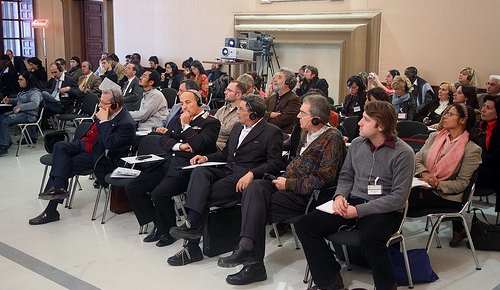
During this week, I have been attending the V Greenaccord International Media Forum on the Protection of Nature, held from 7 to 11 Novmeber 2007 at the historic Villa Mondragone in Frascati, some 20km south east of Rome.

It has been a time to meet old friends again and to make new ones. I have been part four of the five Greenaccord media forums since the first one was held in Rapolane Terme, in the Tuscany valley in northern Italy in 2002.

Greenaccord is the only regular (annual) meeting that I know of where practising journalists and media gatekeepers come together from all regions of the world to discuss the state of the planet and state of their profession.

Each year, we have some ‘regulars’ returning while new participants join the growing network. As some old hands noted this week, it is evolving into an extended family.

That family consists mainly of print and broadcast media journalists from Africa, Asia, Europe, Latin America and the Caribbean. Many are engaged in ‘deadline journalism’ of news and current affairs, while a few of us, like myself, have moved on to more reflective and analytical kind of journalism. We also have a few researchers, activists and public information officers among us, enriching our discussions with a diversity of perspectives.

To engage this group of participants over three and a half days, Greenaccord invites a dozen or so scientific or industry experts from different regions of the world and different disciplines. This year’s theme, ‘Capitalising on the Environment’, was explored by business leaders, fair trade activists, economists and a number of technical experts specialising in fields such as clean energy, clean technology and organic farming.

greenaccord-v-forum-in-progress-nov-2007.jpg

As with all meetings, some speakers were far more interesting than others. And some sessions were blessed with competent chairpersons who kept overenthusiastic speakers in check and allowed meaningful discussion and debate to happen.

Sitting through such meetings is a bit like gem mining. One has to sift through a lot of gravel to find a rare precious gem. When that happens, it’s well worth the hassle.

Well, I’ve had my share of gravel moments (zzzzzzzzzzzzzzzzz!) and precious moments (Eureka!) this week. I’ll write separate blog posts on some of the latter. They are indeed worth sharing.

The real stars (or gems if you like) in this whole exercise are the participants themselves. We come from such diverse backgrounds – the sessions are supported by simultaneous interpretation in English, Spanish and Italian, with an occasional remark in French – that we enrich each other by simply being there.

emanuela-gasbarroni-from-tve-med-intervenes.jpg

Some of us can barely contain our passion for what we do, and keep making comments or asking questions at every available opportunity. Others are more quiet during sessions but expressive during the many hours of networking and socialising over fine Italian wine, coffee and gastronomical treats. All these are part of Greenaccord’s cultural diversity that we contribute to, and then celebrate.

Even if we don’t take ourselves too seriously, we do discuss sobering issues. On the one hand, the planet is in peril, largely thanks to human bungling over generations. On the other, mass media itself is in crisis in many countries — under siege from oppressive governments, grappling with limitations of money and skills, and facing competition from new media platforms grabbing audiences and revenue.

For example, a colleague from Cameroon found the government closing down his privately owned FM radio station just a couple of days before he left for Rome. Others had worrying tales to share about official censorship, physical violence unleashed on media organisations and journalists, and the tension between media owners’ interests and the public interest.

We expressed solidarity and support for all Greenaccord colleagues currently experiencing difficulties of various kinds. The spirit of camaraderie in this network is strong – and keeps growing.

So is all this networking and meeting hopping a distraction from real work, which each one of us have to perform at our desks, or in our studios, on an individual basis? I don’t think so. Far from being a drag on my time, I find gatherings like Greenaccord inspiring and energising. They also remind me that I’m not alone in the daily struggle and drudgery of deadlines, government bureaucracies, funding crises and a never-ending race to keep up with new media technologies.

A planet in peril and a media in crisis need more platforms like this to connect and support many more of our kind who weren’t in Rome this week. Greenaccord isn’t perfect (we’re working on it), but it has lit more than a few candles against the looming darkness.

– Nalaka Gunawardene, Frascati, Rome: 10 November 2007

zilia-castrillon-speaking-at-greenaccord-v-nov-2007.jpg


Meeting photos courtesy Adrian Gilardoni’s Flickr account

Say ‘Mooooooooo’! Mixing grassroots and ICT in KL…

Remember the ‘Alphabet Soup’ made up of the endless acronyms and abbreviations (A&As) coined by the development and technology communities? (See July 2007 blog post: Who makes the best Alphabet Soup of all?)

Last week in Geneva, attending UN OCHA’s conference on information for humanitarian action, I realised that the humanitarian community has its own share of A&As, some more memorable than others. HIC, SPHERE and FAST stuck in mind.

In this strange jungle, nothing is quite what they seem. While still recovering from that overdose, I was hit by the latest in the field of ICT (that’s information and communication technologies for you): believe it or not, it’s called MOO.

Well, actually the correct spelling is MoO (the middle o is lower case). It’s described as “a place where people SEEK and OFFER expertise, experience, project support, ideas, solutions and other resources that leverage on knowledge and ICT to fulfil the needs of ‘Emerging People, Emerging Markets and Emerging Technologies’.”

Wow, that’s somehow sounds important. This is going to happen as part of a big platform of events called Global Knowledge 3, inevitably abbreviated as GK3, to be held in Kuala Lumpur (KL), Malaysia, from 11 to 13 December 2007.

According to the load of hype on the conference website, the will be a ‘Virtual MoO’ and the ‘Physical MoO’ and the anticipated 2,000 conference participants will be browsing both, “seeking an exchange”.

Ok, let me not prolong the suspense any longer. MoO stands for Marketplace of Opportunities, which GK3 is supposed to create or inspire for all those engaged in using ICT tools for meeting the real world’s needs — to reduce poverty, increase incomes, create safer communities, create sustainable societies and support youth enterprise, etc.

Of course, if we browse through the massive GK3 website, we will be overwhelmed with a whole heap of technicalities, self-important hype and knowledge made incomprehensible to all but those who are already within the charmed ICT circle.

For example, take a deep breath and read how the conference is introduced:
“GK3 will explore concrete solutions and possibilities within the interplay, interface and interweaving of issues related to the Knowledge for Development (K4D) and Information and Communication Technologies for Development (ICT4D) in the context of our globally evolving societies, economies and technologies worldwide.”

Aaaaaaaaaaaaah! Or, shall I just say: Mooooooooooooooooo!

PS: Despite this skepticism, I’m planning to be there – I can’t afford to miss this chance to meet fellow activists who are so concerned about welfare at the grassroots.

PPS: An informed little bird says GK3 has milked development donors well and truly for this 3-day extravaganza. I hope someone will calculate the cost of development aid dollars per ‘Mooo’…

The Al and Pachy Show: Climate Change gains public momentum

Compared to former US Vice President and climate campaigner Al Gore, the name Rajendra K Pachauri might not be as widely recognised. In fact, I wonder how many Americans can even pronounce the name correctly.

But Dr Pachauri is a scientific heavyweight himself, and is the other half of this year’s Nobel Peace Prize. He chairs the UN’s Inter-governmental Panel on Climate Change (IPCC), which was announced as joint and equal winner.

He may be less glamorous than Gore, but Pachauri is just as ardent an advocate for the world to seriously tackle global warming. It was Pachauri’s dedicated work ethic and “ability to build and inspire a team” that helped the IPCC to win the world’s most coveted prize.

Read Rajendra Pachauri’s first reaction to the Nobel Peace Prize announcement

In a profile of the Indian engineer turned scientist-diplomat, The Christian Science Monitor noted: “If Gore is the frontman of the crusade against global warming, then Pachauri runs the engine room.”

Like Gore, Pachauri is a global-warming pioneer. Since the late 1980s, the former industrial engineer has sought to use science to convince skeptics and CEOs of the need of reducing mankind’s atmospheric imprint. Now, he warns that if the problem is not addressed, developing nations will bear the brunt of the crisis, suffering for a situation they did not create because they have not the resources to mitigate it.

In their profile, The Christian Science Monitor quoted Tulsi Tanti, a friend and founder of Suzlon, Asia’s largest manufacturer of wind turbines, as saying: “He has been one of the pioneers and voices of reason in the field, not just calling attention to an environment in peril but creating solutions by bridging the gap between academia, business, policymakers, and the public.”

Read full profile from The Christian Science Monitor of 15 October 2007

I first met and interviewed Dr Pachauri in October 1990, during the Second World Climate Conference in Geneva. That was one of the first international scientific conferences that I covered as a journalist, and Pachauri was kind enough to grant me a long interview. We spoke less of climate and more about energy security and innovative energy solutions. At that time he was head of India’s Tata Energy Research Institute, which was later renamed as The Energy and Resources Institute, still abbreviated as TERI.

Our paths have occasionally crossed since, in different parts of the world, and Dr Pachauri has always remained accessible and articulate. I last met him in Rome in the fall of 2003, during the annual GreenAccord Media Forum on Protecting Nature organised by the Italian organisation GreenAccord.

Read Dr Rajendra Pachuri’s speech at GreenAccord 2003 meeting.

Pachauri was his characteristic modest when reacting to the news of the Nobel Prize. ”I was not expecting any awards for my efforts. I feel privileged to share it with Al Gore. I am only a symbolic recipient but it is the organisation which has been awarded,” he said.

He added: ”With this award to the committee, the issue of climate change will come to the fore. It places a larger responsibility on me and I will ensure that more will be done.”

In a phone call soon after the announcement, he reportedly told Al Gore: “This is Pachy. I am so delighted and so privileged to have the IPCC share with you. I will be your follower and you will be my leader.”

The IPCC set up in 1988 comprises 3,000 atmospheric scientists, oceanographers, ice specialists, economists and other experts and is the world’s top scientific authority on global warming and its impact.

Wikipedia on the IPCC and its track record

Wikipedia on Rajendra K Pachuri