This short feature was published in The Sunday Times(Sri Lanka) of 15 April 2012. However, for some reason, their web edition didn’t include it.
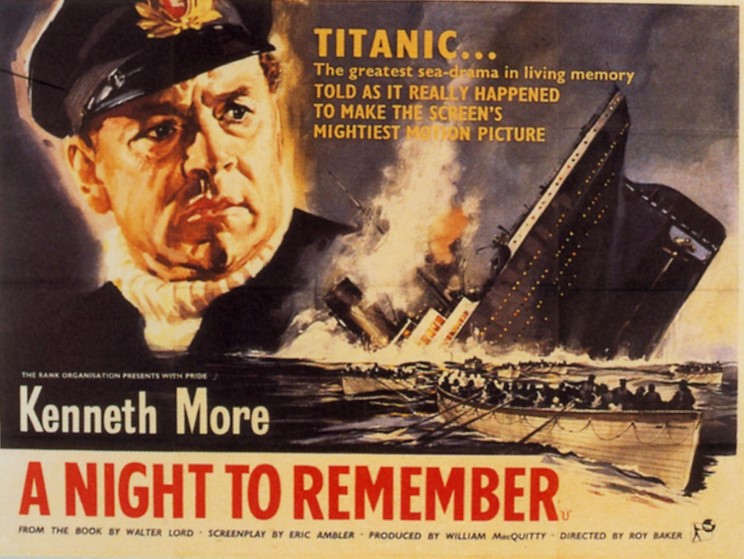
A poster for A Night to Remember, 1958
From Ceylon with Love: Tea for the Titanic?
by Nalaka Gunawardene
Many consider the 1958 British movie A Night to Remember as the most authentic Titanic film of all time. Directed by Roy Ward Baker, it was based on the 1955 book of the same name by Walter Lord, and made in consultation with many survivors.
One scene unfolds inside the turbine engine room soon after the crew realised their ship was doomed. The chief engineer discusses how to keep the lights going for as long as possible. “I’ll give the word when it’s time to go — and then it’s every man for himself,” he says.
His deputy tries to calm down the crewmen: “If any of you feel like praying, you’d better go ahead. The rest of you can join me for a cup of tea!”
Even in such dire circumstances, the quintessentially British habit kept them going. But what kind of tea was served on board the Titanic? Did some of it come from Ceylon? That is plausible, given the cosmopolitan nature of the floating city and diverse tastes of its wealthy passengers.
Harney & Sons Fine Teas, a tea blender in New York, recently launched RMS Titanic Tea Blend as “a commemorative tea to honour the 100th anniversary of those who perished when the Titanic sank”. Their website says: “Reflecting the quality of tea that was served on the Titanic, this blend includes Chinese Keemun, one of the last teas the British still consumed in 1912, as Britain had mostly switched to black teas from Assam, India and Ceylon.” (see http://tiny.cc/TiTea for more).
Perhaps an aficionado of tea could dig (dive?) deep for evidence. Interestingly, Sir Arthur C Clarke once wrote a science fiction thriller where Ceylon Tea was indeed on board the Titanic — albeit for a different purpose.
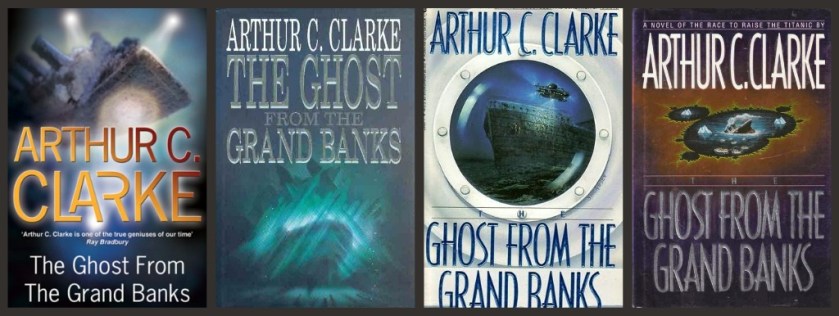
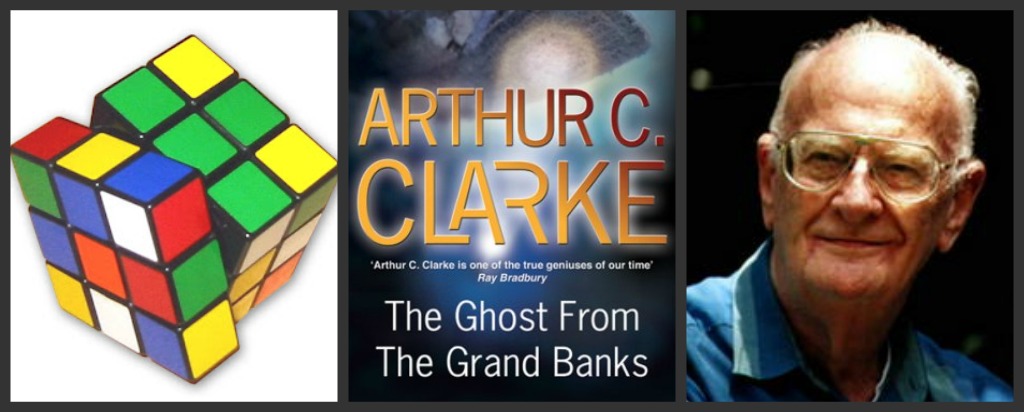
In his 1990 novel The Ghost from the Grand Banks — where British-American and Japanese teams are competing to raise the wreck in time for the centenary — he imagined how crates of Ceylon Tea were used as the perfect packing material for precious and fragile cargo.
“The Chinese had discovered centuries ago that their wares could travel safely the length of the Silk Road if they were packed in tea leaves. No one found anything better until polystyrene foam came along,” he wrote.
In Clarke’s story, which culminates in 2012, a wealthy English aristocrat travelling first class had carried exquisite glassware – Medici Goblets from Venice – packed in standard 80-pound Ceylon Tea chests. Nearly a century later, his great-grandson uses deep remote operating vehicles (ROVs) to recover some from the bottom of the Atlantic.
Clarke describes the first item that came up: “The chest still displayed, in stencilled lettering unfaded after a century in the abyss, a somewhat baffling inscription: BROKEN ORANGE PECKOE, UPPER GLENNCAIRN ESTATE, MATAKELLE.”
Despite journeying across (most of) the Atlantic and then sinking four kilometres to the bottom of the sea, the glassware is found intact – thanks to the ship’s designers or the tea producers (or both)…
William MacQuittyClarke was well known for plugging his adopted homeland whenever possible in his writing, public speaking and global TV shows. ‘Addicted’ to the brew, he once called himself a ‘machine that turned fine Ceylon Tea into science fiction’.
In his novel’s acknowledgements, Clarke highlights another link between the Titanic and Ceylon, this time for real. William MacQuitty (1905 – 2004), the Belfast-born writer, photographer and filmmaker who produced A Night to Remember, had been based in Ceylon in the 1930s working for the Standard Chartered Bank. He returned to the island in 1954 to produce Beachcomber, a British movie that was partly shot on location here.
Having drawn much inspiration and insights from A Night to Remember, Clarke dedicated his own novel as follows: “For my old friend Bill MacQuitty – who, as a boy, witnessed the launch of RMS Titanic, and, forty-five years later, sank her for the second time.”
The Ghost from the Grand Banks - many covers, one story
Writing the Foreword to the book on ‘Communicating Disasters‘ that I co-edited in 2007, Sir Arthur C Clarke said: “I was born five years after the biggest maritime disaster the world had known: the sinking of the ‘unsinkable’ RMS Titanic while on her maiden voyage. My home town Minehead, in Somerset, was not more than a couple of hundred kilometres from Southampton, from where the Titanic set off. All my life, I have been intrigued by the Titanic disaster.”
The Titanic — whose wreck not discovered at the time — made a cameo appearance in his 1976 novel, Imperial Earth. For the Quincentennial of the United States, the wreck is raised and carried to New York.
But he continued to be haunted by the mighty ship (as did, and do, many others). He finally had to write a whole novel to exorcise it from his mind.
One day in early 1989, Sir Arthur asked me: “Does ‘Ghost from the Grand Banks’ mean anything to you?”
It didn’t — but that wasn’t surprising as I’d been raised on the other side of the planet, in an entirely different generation.
The Grand Banks of Newfoundland are a group of underwater plateaus southeast of Newfoundland on the North American continental shelf. The cold Labrador Current mixes with the warm waters of the Gulf Stream here — making it one of the richest fishing grounds in the world.
It is also close to where the Titanic sank on the night of 14/15 April 1912, and has served as the launching point of various shipwreck expeditions.
That heralded the genesis of an entirely new Arthur C Clarke novel. For me, it was the beginning of an exhilarating journey across space and time, supporting the creative process of one of the finest science fiction writers of the 20th Century.
I was working as Sir Arthur’s research assistant at the time, two years into my fascinating association with the late author (which lasted 21 years).
Over the next few months, I was to research and/or cross-check all sorts of records, data and other nuggets of information, which Sir Arthur — the master weaver of narratives — then worked into an entirely new novel.
The novel, published in late 1990 as The Ghost from the Grand Banks, was an ocean-based thriller set in the (then) near future. It revolved around rival British-American and Japanese teams trying to raise the legendary ship’s wreck in time for the centenary in 2012. Both teams mobilise mega-bucks and cutting edge technology: while one team relies on 50 billion little glass balls, the other’s ambitious plan involves making the world’s largest ice cube…
Two weeks before the centenary of the Titanic‘s maiden voyage – and its tragic sinking – I re-read the novel. On the information society front, at least, I found that The Ghost from the Grand Banks stands up remarkably well in 2012.
Living as we do at the time when his story culminated, we can now compare Sir Arthur’s ‘extrapolations of the future’ – he carefully avoided labelling any of his ideas as ‘predictions’ – with what has become our reality.
Asia's Titanic - NatGeo poster for 2009 filmHow and where do you begin to tell the story of the biggest peace-time disaster at sea in modern times — where only 24 people survived and more than 4,000 perished within an hour or two?
That was the challenge that my Filipino filmmaker friend Baby Ruth Villarama and her colleagues faced, when they made an hour-long documentary, Asia’s Titanic, which National Geographic TV broadcast in mid 2009.
Former television journalist and now an independent TV producer, Baby Ruth Villarama specialises in story research and documentary producing. Runs her own production company, Voyage Film, based in Manila but active across Asia.
Ruth was the researcher and assistant producer of Asia’s Titanic, directed by award-winning Filipino director Yam Laranas.
A few days ago, I asked Ruth for her own memories and reflections. This is what she shared with me, in her own words — the moving story behind the moving images creation:
With the Doña Paz story, sharing their memories was the most difficult part of covering it as the tragedy is something they’d rather not talk about – and, if possible, forget.
I spent a year ‘off-the-record’ understanding the holes in their memories. I felt I had to retrace the steps of these 4,000 souls and learn the relationship of man and the sea.
They’ve lost their children, parents and comrades on Christmas eve over a sea mishap – drowning and burning in the quiet water. We can only imagine the pain they went through.
The tragedy is the peak of memory they have left of their loved ones too, so every Christmas, some relatives of the dead gather together to live the lives their loved ones would have wanted to continue.
I joined that gathering for about three Christmases in between my research efforts. It was then that I began to understand the rabbit holes in each one of them — and the rabbit hole I had in me for not knowing my mother personally.
We started sharing pains and the “what-could-have-beens” of those lost memories. That was the connection they were looking for: to be able to speak of the pain to a stranger, or worst, to a group of filmmakers who would broadcast their story to millions of households around the globe.
This documentary was initiated not just to tell their story but to attempt to fill a hole of justice to the many casualties and their families.
It was through them that we were able to speak to the remaining living survivors. We became part of that annual gathering. Despite the requirements of the studio and my director to deliver deadlines, we tried my best to balance their readiness to speak. Good thing NatGeo was willing to wait 3 – 5 years in the timeline…
I remember visiting a survivor in his sleepy town in the province of Samar sometime in 2005. He owns a small sari-sari (convenient) store then. He said that it took him a year to speak again after the tragedy — and another year before he could eat properly because he couldn’t swallow soups and liquids right.
He never really set foot outside his island again – always fearing for fire and water, including the air as he vividly remembers how it added fume to the fire on that fateful night at sea.
After a while, he started talking about the details of that trip. He stopped, wept and couldn’t carry on anymore. He couldn’t breathe and seemingly battled against the air.
A huge part of me personally felt wrong seeing him again but I know that if we do not tell this story, no one will — and the world will just forget about this huge ‘mistake’ in navigational history.
I’d like to think that the impact of the story outside the Philippines is to remind the world fact that Titanic is not the worst maritime disaster — that somewhere in South East Asia, there was a small ship that killed more than 4,000 lives. It created maritime talks in international forums and the fact that accidents in this magnitude didn’t occur anymore — I think people are more careful now.
It’s a shame that Doña Paz was not as celebrated as the Titanic. One big difference between the Titanic and Doña Paz, aside from its route and technical specifications, is the status of passengers.
The Titanic carried a large number of wealthy westerners. Those who boarded the Doña Paz were mostly average Filipinos — no names, no status in society, even in their own country.
Science fiction writer and futurist Sir Arthur C Clarke knew how closed economies and restrictive cultures stifled innovation. He once said the only memorable invention to emerge from Soviet-dominated Eastern Europe was the Rubik’s Cube!
Rubik’s Cube is a 3D mechanical puzzle invented in 1974 by Hungarian sculptor and professor of architecture, Ernő Rubik. Since then, its huge worldwide success has led to several variations.
I just came across an interesting suggestion for an enhanced Rubik’s Cube, by Arthur Clarke himself, while re-reading his 1990 novel The Ghost from the Grand Banks.
It was an ocean-based thriller set in the (then) near future. It revolved around British-American and Japanese teams competing to raise the Titanic‘s wreck in time for the centenary in April 2012.
In the novel, Sir Arthur talks about the Rubik’s Cube making a comeback 30 years after its first appearance — and in a far more deadly mutation.
As he describes: “Because it was a purely mechanical device, the original Cube had one weakness, for which its addicts were sincerely thankful. Unlike all their neighbours, the six centre squares on each face was fixed. The other forty-eight squares could orbit around them, to create a possible 43,252,003,274,489,856,000 distinct patterns.
“The Mark II had no such limitations; all the fifty-four squares were capable of movement, so there were no fixed centres to give reference to its maddened manipulators. Only the development of microchips and liquid crystal displays had made such a prodigy possible; nothing really moved, but the multicoloured squares could be dragged around the face of the Cube merely by touching them with a fingertip”.
A quick check on the official Rubik website, and a Google search, shows no such device being on the market.
This is the Sinhala text of my Ravaya Sunday column published in their issue for 8 April 2012. My theme this week is the Battle of Ceylon, or the Easter Sunday Japanese air raid of Ceylon that took place 70 years ago this week.
End note: While researching for my Sunday column, I stumbled upon two other interesting short video clips on this aspect of the Second World War. They are both computer-generated scenarios, but well made. Despite some minor historical inaccuracies, they illustrate the rich story-telling potential of this vignette of history, largely overlooked by mainstream movie makers.
Memories of Battle of Ceylon, April 1942While human memories fade and disappear, photographs and films help preserve moments of history – either as factual documentation, or as fictionalised stories.
The Battle of Ceylon, or the Easter Sunday Japanese air raid of Ceylon took place 70 years ago this week. There can’t be too many people who have personal memories of that eventful day, 5 April 1942.
The definitive feature film about this facet of WW2 remains to be made. This blog post explores what (little) that is available online.
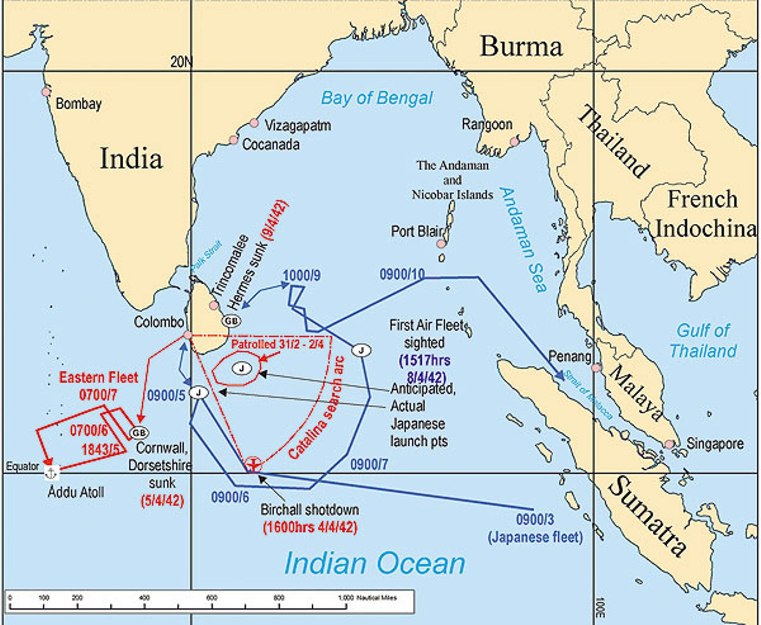
The attack on Colombo Harbour and the nearby Ratmalana Airport took place exactly 119 days after the Pearl Harbour attack in Hawaii. In that relatively short time, the Japanese military had advanced westwards in the Indian Ocean with astonishing speed and success.
When Singapore fell in February 1942, it was widely believed that the next Japanese target was Ceylon. Once their battleships, aircraft carriers and submarines were based in Ceylon, their domination over the Indian Ocean would be consolidated.
If the Allies read Japanese intentions correctly, they completely underestimated their adversary’s capabilities. Lack – or deliberate blocking – of information had characterised the build up of Japanese military capabilities for years.
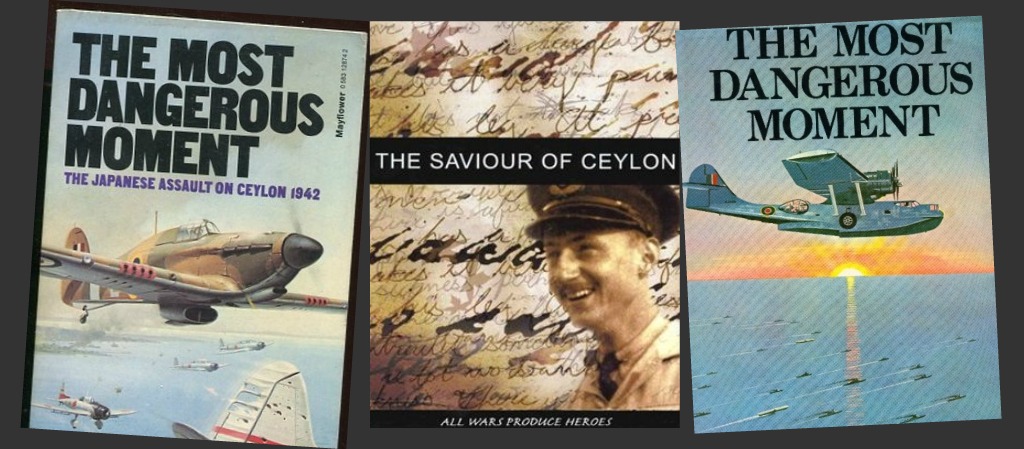
Michael Tomlinson, an Englishman who was posted in Ceylon with the Royal Air Force in 1942, later wrote the definitive book about those fateful days and weeks. Its title, The Most Dangerous Moment, was derived from a remark by British Prime Minister Sir Winston Churchill.
Looking back later, Churchill said the most dangerous moment of the Second World War, and the moment that caused him the most alarm, was when the formidable Japanese fleet was approaching Ceylon.
As it turned out, the Japanese fleet that mounted the air raid on Ceylon was under the command of Admiral Chuichi Nagumo, who, as commander of the First Air Fleet of the Imperial Japanese Navy, had earlier overseen the devastating attack on Pearl Harbour on 7 December 1941.
As Tomlinson has written, “True the [Pearl Harbour] attack was unleashed without a declaration of war and has thus been stamped as an act of infamy, though the Americans had very solid reasons for expecting it and the enormous surprise which the Japanese managed to achieve over the Americans was quite unexpected by their own flyers. Sadly enough when these same airmen, almost man for man the same, were to attack targets in Ceylon four months later, the British, though having extremely accurate and complete intelligence of the Japanese intentions and movements, were taken only a little less by surprise than were the Americans at Hawaii.”
Things didn’t start off that way. The island’s civilian administrators and British military high command had initiated preparations and precautions. These included building several new airstrips, and placing RAF squadrons on the island.
Operating from the Koggala lagoon, on the island’s southern top, Allied airmen conducted aerial patrols of the Indian Ocean using long-range Catalina aircraft – multipurpose ‘flying boats’.
With no satellites in orbit (the Space Age had not yet dawned), and radar still in its infancy, these ‘eyes in the air’ offered crucial surveillance. And the vigilance paid off.
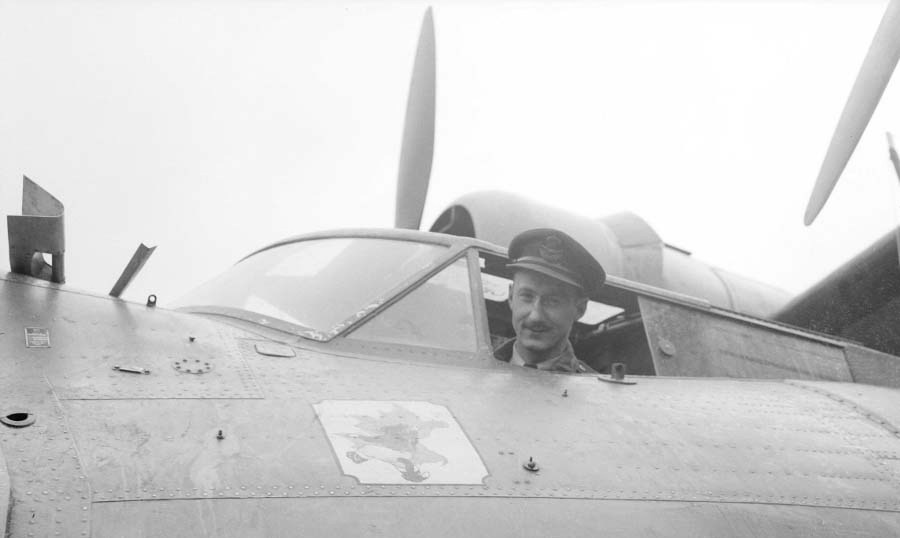
Sq Ldr Leonard Birchall, 'Saviour of Ceylon' aboard his Catalina aircraft
On the evening of 4 April 1942, just before dusk, one Catalina on patrol made a chance observation that changed the course of history. As they were about to turn back, Leonard Birchall, a young Squadron Leader of the Royal Canadian Air Force (RCAF), saw a ‘black speck’ in the Indian Ocean. Upon investigation, they discovered a Japanese aircraft carrier fleet, at the time 400 miles (640km) south of the island.
As the Catalina’s crew took a closer look, its radio operator radioed to Colombo the location, composition, course and estimated speed of the advancing fleet. Moments later, they were shot down by Zero fighters: Birchall and crew mates spent the rest of the War as Japanese prisoners.
The message reached Colombo “a little garbled but essential correct” and immediately passed on to all the Services. But what happened thereafter shows that an early warning by itself serves little purpose unless it is properly acted upon.
“Failure in communications all around was to bring tragic results in its wake,” says Tomlinson. “Afterwards, there was even talk about sabotage, but this cannot be taken seriously.”
The Easter Sunday Raid, or the Battle of Ceylon, is well documented. Much to the surprise and disappointment of the Japanese, the Allied naval fleet had been moved out of the Colombo harbour. Another Pearl Harbour was thus avoided.
The Colombo air raid lasted some 20 minutes, and the civilian casualties amounted to 85 dead and 77 injured. The British claimed destroying “27 enemy aircraft” that morning, but the Japanese admitted losing only five. Tomlinson speculates that some damaged aircraft never managed the long flight back.
According to him, only three Japanese planes fell on Ceylonese soil: one each in Horana, on the playground of St Thomas’s College in Mount Lavinia and at Pita Kotte junction.
Hailing from this last area, an eastern suburb of Colombo, I had family elders who actually witnessed the incident. As a schoolboy, I used to walk past that crash site every week day.
Close to a thousand Allied servicemen lost their lives defending Ceylon that week. But Leonard Birchall survived the notorious Japanese prison camps. Decorated and hailed as the ‘Saviour of Ceylon’, he died in September 2004 aged 89.
A few years ago, Norflicks Productions, a Toronto-based video company, produced a historical documentary about his life. Titled THE SAVIOUR OF CEYLON: The Story of Leonard Birchall (92 mins), it was directed by Marta Nielsen. Producer and Scriptwriter was Richard Nielsen.
See trailer online:
While Pearl Harbour attack and aftermath has been the basis of many documentaries and feature films, the Battle of Ceylon is still under-represented in moving images
While researching for my Sunday column, I stumbled upon two other interesting short video clips on this aspect the Second World War.
They are both evidently computer-generated scenarios, but seemingly well made. Despite some minor historical inaccuracies, they illustrate the rich story-telling potential of this vignette of history, largely overlooked by movie makers.
Easter Sunday Raid: The Battle of Ceylon. Prelude
Battle Of Ceylon
I recently tracked down their creator, Bob Baeyens, who goes by the online moniker Skinny. He says the two clips were made using IL-2 Sturmovik, a World War II combat flight simulator video game that focused on the air battles of the Eastern Front. Here is my brief email exchange with him a few days ago (slightly edited for clarity):
What made you choose the Battle of Ceylon?
We were always looking for (historical) scenarios to create multiplayer missions. Since the game is over 12 years old now, most theaters were covered pretty well, so I bumped in to this one searching for something new — and decided to try making a movie about it as it’s a rather compelling story.”
Do you have a personal link to Ceylon, WW2 or aviation?
No, no and a small one. I used to be a glider pilot.
Why hasn’t anything further happened with Battle of Ceylon film?
The whole jeep/battlefields things must have looked a little weird to you. That’s because its actually a critique and (an) inside joke. I couldn’t get my squad mates from battlefields (on UK dedicated server) to help out making that movie. I needed a couple of real pilots to fly some scenes, drive jeeps, etc. The a.i. in the game made it hard too to make them without human pilots. But I was getting no response or help, so I finally got frustrated and gave up.
I didn’t quite give up; I “finished” it with a parody and a jab! Hence the words, “Best IL2 movie never made”. See this also:
Do you make films for fun, or for a living?
Fun.
Finally, how may I describe you? Is there a website or blogsite or online intro that I can link to?
No need to describe me. If you want to refer to me, use my online
callsign “Skinny”.
Robert Paul Lamb (1952 – 2012): The Earth’s Reporter
Robert Paul Lamb (1952 – 2012) was a planetary scale story teller. He used simple words and well chosen moving images to show us how we are abusing the only habitable planet we have.
He excelled in the world’s most pervasive mass medium, television. He effectively turned the small screen into a ‘mirror’ that showed how humans are constantly living beyond our natural means…as if we have spare planets in store.
For nearly three decades, Robert Lamb reported about the Earth to people all over the Earth. He ‘zoomed in’ to far corners of the planet to get a closer look at what was going on. He regularly ‘zoomed out’ for the bigger picture. All his life he probed why, as the Brundtland Commission had memorably noted in its 1987 report, “The Earth is one but the world is not”.
In this quest, he interviewed some of the finest minds and most passionate activists on what needs to be done, and how to do it. He also showcased the work of researchers, innovators and entrepreneurs trying out solutions to our many problems of resource and energy use. He always cheered these pathfinders who are our best hopes in overcoming the current ecological and economic quagmires.
Robert’s work was not easily pigeonholeable, which confused many. He wasn’t making wildlife or natural history films, although he sometimes touched on the subject from a human interaction angle. Perhaps the best summing up of his line of work was given by Mahatma Gandhi, who, when asked for his views on Indian wildlife decades ago, replied: “Wildlife is decreasing in the jungles — but it is increasing in the towns!”
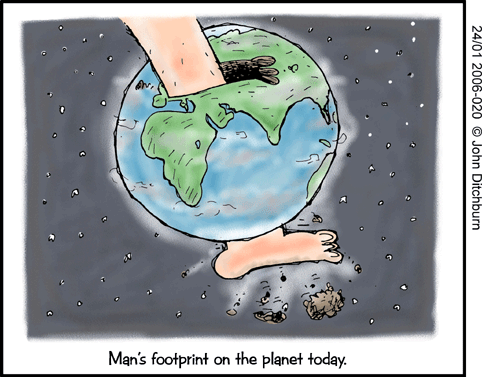
If this isn't wildlife, what is?Robert documented life going wild with far-reaching consequences. In the spectrum of factual TV programme production, he occupied a niche best described as scientifically based environmental films: those that explore the crushing ‘ecological footprint’ modern humans are having on the rest of Nature and ecosystems.
Robert was a journalist first and last. Although he later straddled the worlds of media and development, his outlook was firmly rooted in journalism where he started his career. He had a firm grasp of scientific, economic and political realities that shaped international development.
From 1984 to 2002, he was founder director of the UK-based media charity Television Trust for the Environment (TVE) from 1984 to 2002. TVE was set up to harness the potential of television and video to raise environmental awareness and catalyse sustainable development debates in the developing world.
Heading TVE for nearly two decades, Robert commissioned, produced or co-produced dozens of documentaries on a broad range of issues and topics.
Some were straightforward ones that ‘connected the dots’ for intelligent viewers. Others investigated complex — often contentious — causes and effects of environmental degradation or social exclusion.
These efforts dovetailed on-going discussions at the time on sustainable development. The Brundtland Commission had just defined it as a pattern of economic growth that “meets the needs of the present without compromising the ability of future generations to meet their own needs.”
Easier said than done in a world where many families could barely afford to think beyond their next meal while most governments chose not to see beyond the next election. Next generation thinking was rare then, as it is now. Only mavericks dare walk that path.
Besides, what exactly did that ideal mean for a subsistence farmer in Africa or a small entrepreneur in Asia? Did this long term view figure at all when politicians or bureaucrats struggled to balance their national budget or negotiate better terms of trade? How and where did women and children figure in these considerations?
Robert and his team followed the lofty intellectual debates and also tracked progress on the growing number of international treaties on specific environmental matters. They captured the essence of these through compelling moving image creations.
In doing so, this small band of individuals changed forever how environment was covered on TV. As he recalled in UNEP’s Our Planet magazine in 2000, “In the mid-1980s barely anyone had heard about the ozone layer or global warming. Natural history programming brought the wonders of plant and animal diversity into our living rooms but glossed over the complex causes of extinction.”
Robert was swimming against not one but several currents. As he wrote years later: “Television does not cope well with explaining the grey areas. Or rather it could — but the received wisdom is that it makes the viewer reach for the remote channel changer. Television prefers the black and white; the good guys versus the bad.”
He accomplished this through what I call the ‘triple-S formula’: mixing the right proportions of good Science and engaging Stories, told in Simple (but not simplistic) language.
He demystified jargon-ridden science and procedure-laden intergovernmental negotiations without losing their complexity or nuances. This is what public communication of science is all about.
We can only hope he isn’t our average TV viewer...but are we sure?Always look for what’s New, True and Interesting (the NTI Test), he used to tell us who followed the trail he blazed. All our efforts ultimately hinged on how we appealed to the viewer – and she held that all-powerful remote controller in hand!
Robert’s overarching advice: never underestimate your audience’s intelligence — or overestimate its interest levels.
“If we don’t engage our audiences in the first 60 to 90 seconds, they are gone,” Robert often told his producers. “Hook them – and make it worth their while to do so!”
Most people don’t carry good memories of school. When they sit down to watch TV – usually at the end of a long day – they just want something light and pleasant, and preferably not reminded of school…
Pervasive as TV was, the medium wasn’t a substitute for reading or a classroom. At best, we could only flag the highlights of an issue, and whet the appetite for viewers to go after more.
Sympathetic as he was to issues and concerns of the developing world, Robert applied the same rigorous editorial criteria on film makers based in the global South. He pointed out the latter’s sweeping generalizations, condescending elitist language or incoherent story telling. Some walked away grumbling, but realized years later that he was right…
Robert’s fast pace and no-nonsense demeanour probably won him as many admirers as detractors. Producers dreaded his piercing questions about evidence and coherence. Over time, staff got used to his sharp text editing, usually done with a thick-tipped pen.
He was most assertive in (video) edit rooms, where I have seen him in action only on a few occasions. While TV productions involve team work, editorial decisions have to be centralised. You can’t make films by committee. As series editor or executive editor, he was the master of all he surveyed. Conversely, he stood by his producers who’d done their homework.
A few days ago, I was deeply saddened to hear the news that my mentor and colleague Robert Lamb is no more. He lost his battle with cancer on 13 Feb 2012. He was 59.
Robert will be greatly missed. He was a visionary mentor and a strong supporter of our ideal of Asians telling their own stories using TV, video and web. This was what he set up TVE Asia Pacific (TVEAP) to do, back in 1996.
I was still in shock and grief when I wrote TVEAP’s official tribute, and a short statement of condolences. But Robert would have expected nothing less. The show must go on, he used to say, and getting the record right is very important.
Our statement opens: “Robert Lamb knew the power of moving images. For over three decades, he used them effectively to move people all over the world to reflect on how their daily actions impact their local environment and the planet.”
We also note how “Robert was very well informed, highly analytical yet kept an open mind for fresh angles and new perspectives. He inspired us without imposing his own views.”
Robert was an Englishman by birth, globalist in outlook and a planetary scale thinker and story teller. Unlike some activists and journalists, Robert practised Gandhi’s timeless advice: “Be the change you wish to see in the world”.
This is why I added this line to our statement: “He walked his talk, practising in personal life what he advocated in his films. If he breathed heavily in the edit room, he trod softly on the Earth.”
And that, more than any of his professional accomplishments in print, on TV and online, is how I shall always remember Robert Paul Lamb, on whose broad shoulders I continue to stand.
Nalaka G at a giant digital clock in Tokyo: Wandering everywhere with a sense of wonder...
This is the Sinhala text of my weekly column published in Ravaya newspaper for 5 February 2012. Here, I look back at one year of weekly columns and reflect on some reader feedback and their participation in my efforts to make sense of the world in turmoil that is all around me. I say ‘Thank You’ to the few writer friends and public intellectuals who have advised and guided me. I reaffirm my commitment to keep asking questions, connecting dots and following my own simple language style with none of the intellectual pretensions common in Sinhala newspaper writing.
Simple explanations are always the best - but not entertaining enough?
So 2012 is finally here! I’ve been waiting for you…
Citing various ancient lore, some say this year will see the end of the world — where have we heard that before?
The Wikipedia describes the ‘2012 phenomenon’ as comprising a range of eschatological beliefs according to which cataclysmic or transformative events will occur on 21 December 2012.
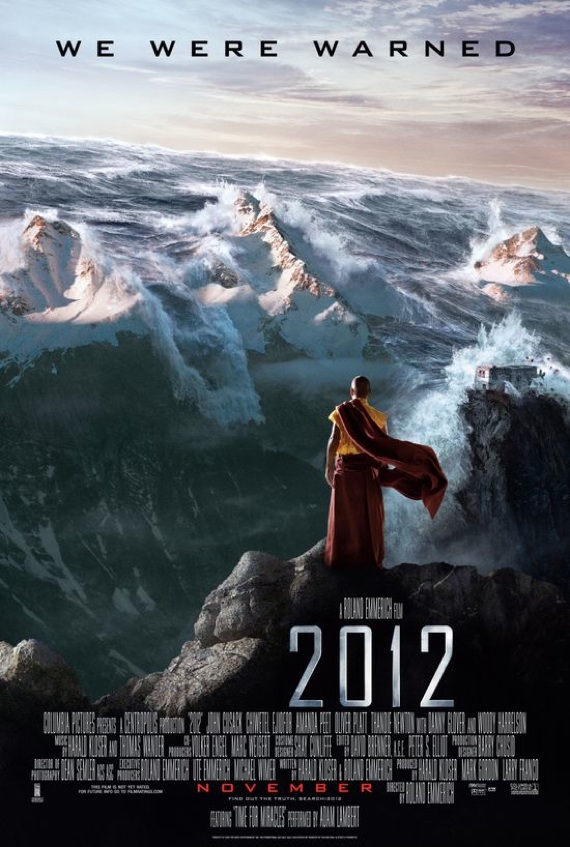
And to think that a blockbuster Hollywood movie, rather than any ancient prophecy, likely triggered this wave of public concern!
Wikipedia notes: “The 2009 disaster film 2012 was inspired by the phenomenon, and advance promotion prior to its release included a stealth marketing campaign in which TV spots and websites from the fictional ‘Institute for Human Continuity’ called on people to prepare for the end of the world. As these promotions did not mention the film itself, many viewers believed them to be real and contacted astronomers in panic.”
The campaign was heavily criticized by scientists, of course, but the public chose to believe the scary make-believe rather than the more sober reality.
Will life imitate art? Find out on 21 Dec 2012The film 2012 became one of the most successful of that year, grossing nearly $770 million worldwide. So the film’s producers were laughing all the way to their bank…
The US space agency NASA has stepped into the debate with sobering analysis. Its website says: “Impressive movie special effects aside, Dec. 21, 2012, won’t be the end of the world as we know. It will, however, be another winter solstice.”
Recalling the Year 2000 computer bug (Y2K problem) that didn’t quite materialise, it says: “Much like Y2K, 2012 has been analyzed and the science of the end of the Earth thoroughly studied. Contrary to some of the common beliefs out there, the science behind the end of the world quickly unravels when pinned down to the 2012 timeline.”
Meanwhile, a few weeks before 2012 started, Lankan astrophysicist Dr Kavan Ratnatunga issued a public challenge on prime time TV.
“I will give 10% of the value of any property to (its) legal owner who will write a deed of sale of their property to me, effective from 22 December 2012, after that owner is so confident the World was going to end on December 21st!”
So far, Kavan has had no takers.
But the hype continues, with the media stirring things up as much as they can: after all, if Hollywood made money from people’s gullibility, why not others?
So might End-of-the-World industries end this year? Not a chance. A sucker is born every minute, and this is one industry that will continue to thrive as long as there are credulous believers.
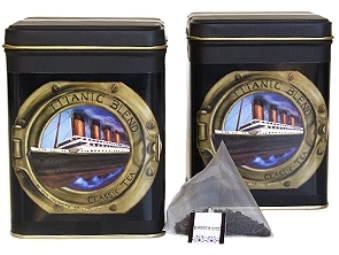 Harney & Sons Fine Teas, a tea blender in New York, recently launched RMS Titanic Tea Blend as “a commemorative tea to honour the 100th anniversary of those who perished when the Titanic sank”. Their website says: “Reflecting the quality of tea that was served on the Titanic, this blend includes Chinese Keemun, one of the last teas the British still consumed in 1912, as Britain had mostly switched to black teas from Assam, India and Ceylon.” (see http://tiny.cc/TiTea for more).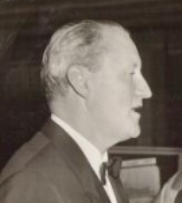





 Open Minds!