Joey R B Lozano: The legacy continues…at Silverdocs

I met Joey R B Lozano only once, but he left a deep impression.

A small-made man with passionate zeal and tons of energy, he was every inch an activist-journalist-campaigner. We had invited him to a regional workshop of factual video producing and distributing partners from across Asia that we held in Singapore in November 2002.

We hadn’t worked with Joey earlier. He came recommended by our international partner Witness, which uses video-based advocacy and activism for promoting and safeguarding human rights worldwide.

Joey R B Lozano Joey R B Lozano Joey R B Lozano

Joey used his personal video camera to assert indigenous land rights, and to investigate corruption and environmental degradation in his native Philippines. Joey was an independent human rights activist and also one of the country’s leading investigative reporters.

He freelanced for the Philippine Daily Inquirer, covering Indigenous peoples’ rights and the environment, considered the two most dangerous beats in the Philippines. But years earlier, he had moved out of the capital Manila, and committed his life and career to stories and issues at the grassroots that many of his city-based colleagues had no time or patience in covering on an on-going basis.

Trained as a print journalist, Joey mastered new media and technologies whose potential he quickly realised. He moved into television and video media with ease, and later became an active blogger.

Joey’s TV investigations began in 1986, when he helped ABC’s 20/20 to uncover the “Tasaday hoax”, a highly successful fraud to pass off local tribespeople as a newly discovered Stone Age culture.

He soon embarked on his own investigations and started digging into illegal logging, gold mining and land-grabbing. In turn, his exposes quickly earned him repeated assassination and abduction attempts, in a country that is one of the more dangerous places to practice journalism.

When he came to Singapore, Joey had recently ‘starred’ in a major Canadian documentary titled Seeing is Believing: Human Rights, Handicams and The News, which looked at how committed, passionate individuals were using new communication technologies to change the world.
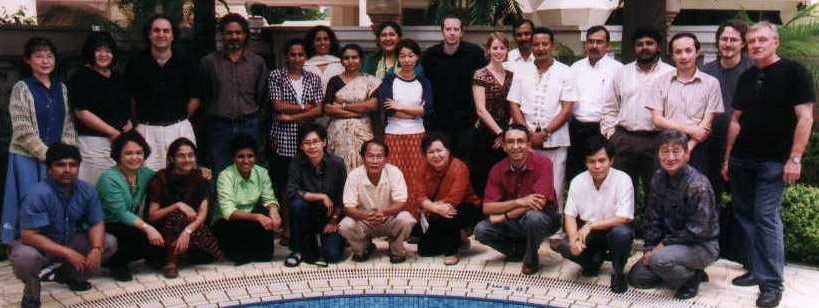
participants-at-tveap-partner-workshop-singapore-nov-2002.jpg

Photo of Singapore TVEAP workshop participants: Joey Lozano is 6th from left on the frontmost row

Follow Seeing is Believing storyboard on the film’s website

We screened the film, made by Katerina Cizek and Peter Wintonick, and heard first hand from Joey on what his struggles entailed. The film followed Joey as he delivers a new “Witness” donated video camera to Nakamata, a coalition of Indigenous groups in Central Bukidnon. Together, Nakamata and Joey begin documenting a dangerous land claims struggle, and it doesn’t take long for tragedy to unfold in front of the camera.

Watching the film and then listening to Joey — and his Witness colleague Sam Gregory — describe the on-going struggle, was one highlight of our week-long workshop. Some of us saw in Joey the activist-campaigner that we wanted to be, but were too scared or too polite to really become.

Not everyone shared that view. The cynicism — sometimes bordering on disdain — of a fellow Filipino from Metro Manila was palpable. No wonder Joey moved away from the city.

We at TVE Asia Pacific were extremely keen to distribute Seeing is Believing, for it held such a powerful and relevant message for our region, but it was not to be. Our enquiries showed that like most documentaries, it was tied up in too many copyrights restrictions and commercial distribution deals.

Following the Singapore workshop, I did keep a watchful eye on what Joey Lozano was up to. The film’s website provided occasional updates, and sometimes blog posts from Joey himself.

Our paths never crossed again. Almost three years after our single encounter came the news that Joey had passed away. It wasn’t the assorted goons who hated his guts that finally got him. His own body turned against him.

His tribute on the film’s website started as follows:

Joey Lozano defied the odds. For three decades, he survived dangerous missions to defend human rights using his video camera, in the Philippines, a country that ranks high, year after year, for most journalists killed. Joey went into hiding numerous times, and he dodged two assassination attempts. Once, bullets whizzed past his ear as he made his escape on motorbike.
But Joey couldn’t beat the odds of cancer. He died in his sleep on September 16, 2005 – at home and surrounded by his family.

Joey R B Lozano - image courtesy Seeing is Believing

The spirit and legacy of Joey R B Lozano live on. He inspired a large number of journalists and activists to stand up for what is right and just — and to be smart about it in using modern information and communication technologies, or ICTs.

Joey and other Witness activists were pioneers in different parts of the world who turned handicams away from weddings and birthday parties to capture less cheerful sights and sounds the world must see — and then act on. They were at it years before mobile phone cameras, YouTube and user-generated content in the mainstream media.

And now, Witness has established an award at the Silverdocs film festival. The WITNESS Award in Memory of Joey R.B. Lozano will be awarded to the qualifying SILVERDOCS filmmaker of a feature-length film who has produced a well-crafted and compelling documentary about a human rights violation or social justice issue. The winning filmmaker will also have a thoughtful, creative, and feasible outreach plan to use their film as a tool to raise awareness of the human rights or social justice issue explored in the film with a goal to bring about change.

The inaugural award was announced on June 17 — and has been won by “The Devil Came on Horseback” by Annie Sundberg and Ricki Stern.

Joey was a Witness partner and board member. He co-produced many films and collaborated on others that helped raise awareness about threats to indigenous people’s rights in the Philippines from corporations, and the complicity of the government in the abuses. Witness was founded in 1991 by musician peter Gabriel and the Lawyer’s Committee for Human Rights to put new technologies into the hands of local activists around the world.

Joey R B Lozano with his handycam

Read International Wildlife May 1999: Why Joey Lozano Is A Marked Man – investigative reporter works for the environment

Read about and watch Rule of the Gun in Sugarland

Radio Sagarmatha wins global award – now that’s real people’s radio!

On 23 May 2007, I wrote about Radio Sagarmatha (RS) of Nepal, South Asia’s first ever public radio station that completed 10 years on that day.

I called it Kathmandu’s beacon of hope. The pioneering radio station, entirely owned and operated by the journalists’ collective Nepal Forum of Environmental Journalists (NEFEJ), has stood by the people of Kathmandu valley — its listeners — through an eventful, sometimes turbulent decade.

And now, more recognition has come — this time in the form of an international award.

Last evening (June 14) in London’s Porchester Hall, the One World Broadcasting Trust (OWBT) presented its Special Award to Radio Sagarmatha.

I join Radio Sagarmatha’s friends and admirers worldwide in congratulating them on this latest honour.

RA Station manager, Mohan Bista, who accepted the award on behalf of his team, said: “We would like to dedicate this award to the Nepali people who fought for freedom of expression and democracy in the country, and thank them for their support through the good and bad times. We welcome the challenge and responsibility of the future.”

Announcing the selection, OWBT said:
“Based in the heart of the Kathmandu Valley, Radio Sagarmatha has irreversibly changed the landscape of broadcasting in the country. Originally built from water pipes and tested by staff driving around the streets of Kathmandu on motorbikes clutching radios, this bold venture gave momentum to the pro-democracy movement, which eventually led to the restoration of parliamentary democracy in April 2006.”

Earlier, Lord Young of Norwood Green, Chairman of OWBT, had said in a letter sent to Radio Sagarmatha: “The Trustees received a large number of nominations from as far apart as Guatemala, Zambia…. and it was inevitably a very difficult choice for them, but Radio Sagarmatha stood out because of its long-standing reputation as one of the first independent public-interest radio stations in South Asia, and the continued efforts to bring credible information to the audiences in an engaging and interactive way. The Trustees were unanimous in their choice.”

OWBT

OWBT’s official press release announcing the award said:
When Radio Sagarmatha launched in May 1997 – after five years of lobbying – it was a milestone not just for Nepal but for the whole of South Asia, marking the end of the government’s radio monopoly. The station blazed a trail for broadcasting in the country, and in its wake hundreds of commercial FM and community-based stations were set up.

When the King’s regime banned all independent broadcasters from carrying news in April 2005, the station continued its daily output. Seven months later, police raided the station, seizing all technical equipment and arresting five staff. But within days, public pressure led the Supreme Court of Nepal to issue an order to the government allowing Radio Sagarmatha to go live again.

RS employs 40 staff and 29 freelancers, and has recently gained government approval to double its transmitter capacity from 500 to 1,000 watts. RS has established a network of eight community radio stations across the country and offers technical support and in-house training for newcomers to Nepal’s radio sector. The station receives sponsorship from local organisations including Eco-Himal, as well as international agencies. It also runs a Friends of Radio Sagarmatha scheme which has so far raised over $10,000.

The One World Media Awards is one of the foremost Awards events in the UK encouraging excellence in media coverage that supports a greater understanding of the vital issues of international development. The awards recognise the unique role of journalists and film makers in bridging the divide between different societies, and communicating the breadth of social, political and cultural experiences across the globe. The 11 award categories cover television, radio, new media and print journalism.

Radio Sagarmatha is well and truly people’s radio. It’s not a government-controlled, donor-propped charade like Sri Lanka’s so-called community radio, about which I wrote earlier this month.

Full list of OWBT award winners 2007

One World Media Awards jury panels for 2007

Bill Moyers & Ammu Joseph: Journalists are beachcombers…

I had an ‘aha!’ moment last week during the session on ‘Reporting the world through a gender lens’ at Asia Media Summit 2007 in Kuala Lumpur, Malaysia.

Ammu Joseph, the passionate and articulate Indian journalist and women’s rights activist, was speaking on gender sensitivity in disaster related coverage in South Asian media. She always speaks drawing on her rich and varied experiences, and offers refreshing perspectives on oft-discussed topics.

At one point, she quoted one of my journalism heroes, Bill Moyers, as saying:
“We journalists are simply beachcombers on the shores of other people’s knowledge, other people’s experience, and other people’s wisdom. We tell their stories.”

How very true!

Bill MoyersAmmu Joseph

I researched where Bill Moyers said this, and it turns out it was part of his speech accepting Harvard Medical School’s Global Environment Citizen Award in December 2004. Read the full speech, which is highly inspiring.

Reading further, I came across another Bill Moyers gem:
“One challenge we journalists face – how to tell such a story without coming across as Cassandras, without turning off the people we most want to understand what’s happening, who must act on what they read and hear.”

That is more relevant today than when he first said it: with climate change becoming the latest worldwide scare, it is indeed a huge challenge for us to report, analyse and explore issues without crying wolf.

But crying wolf is what characterised a good part of the session on reporting climate change during the Asia Media Summit. It had some good speakers, who knew what they were talking about, but was very poorly moderated by a man who had no idea what he was taking on.

That’s when I so wished we could clone a few more Bill Moyers — this planet is seriously in need of more like him!

And we need more like Ammu Joseph to tell us jouralism and broadcasting are not just industries or professions; that they involve and require more. Here’s her short profile:

Ammu Joseph is an independent journalist and author based in Bangalore, and writing primarily on issues relating to gender, human development and the media. Her publications include five books: Whose News? The Media and Women’s Issues (Sage, 1994 and 2006 — revised edition, co-authored/edited with Kalpana Sharma), Women in Journalism: Making News (Konark, 2000 and Penguin India, 2005 — revised edition), Terror, Counter-Terror: Women Speak Out (Kali for Women, 2003, co-authored/edited with Kalpana Sharma), Storylines: Conversations with Women Writers, and Just Between Us: Women Speak about their Writing (Women’s World India/Asmita, 2003, co-authored/edited with Vasanth Kannabiran, Ritu Menon, Gouri Salvi and Volga).

Read Ammu Joseph detailed profile

Read some of Ammu Joseph’s recent writing on India Together

Community Broadcasting: A way forward in Asia

In an earlier post, I wrote about what I presented to the workshop on community broadcasting and ICTs during Asia Media Summit 2007 in Kuala Lumpur, Malaysia, last week.

The workshop on ‘Connecting Communities through Community Broadcasting and ICTs’ gave us a chance to clarify key issues and concerns, and to agree on a common understanding for future action.

On behalf of our workshop, dynamic young Manisha Aryal, broadcast activist from Nepal who currently works for InterNews in Pakistan, presented our recommendations to the Summit plenary.

manisha-aryal-at-asia-media-summit-2007.jpg

Here, for the record, are the recommendations. I don’t hold my breath on this, but it’s good to synthesize a long and hard day’s work — over nine hours of talking! — into a few short paras.

Connecting Communities Though Community Radios and ICT

Recognizing the importance of community media in economic, political and social development, in promoting good governance practices, and in empowering marginalized groups and communities in participating fully in society in urban, rural as well as remote areas; and

Understanding the importance of encouraging community media initiatives that are owned and managed by communities and with material produced predominantly by, for and about communities,

We, the participants at the workshop on Connecting Communities through Community Radios and ICTs at Asia Media Summit 2007:
• Advocate for the recognition of community radio and other community media as a distinct tier of legislation and regulation, alongside public service and commercial broadcasting, thus, contributing to the promotion of “air diversity”
• Advocate for the recognition of community media practitioners as valuable, professionally competent resources who can be involved in both peer training and training of other media professionals
• Organize awareness building and sensitization programs on community radio and other ICTs’ potential in development for legislators and community broadcasters
• Invite community media practitioners and include the topic of community broadcasting prominently in regional and global meetings (for example: a plenary session on community media at AMS 2008, World Electronic Media Forum later this year, etc.)
• Organize training and mentoring sessions for Community Broadcasting practitioners with special recognition of the role of younger generations on how community radio can capitalize on the development in the ICT sector, on new ways of addressing financial and organizational sustainability, etc.
• Include Community Media practitioners in the documentation and sharing of local and indigenous knowledge, as well as other discussions on global themes (for example the discussions on GM, MDGs, etc.)
• Look for ways to ground community media initiatives to initiatives in other sectors (health, agriculture, education, etc.)
• Facilitate partnerships between efforts to promote community broadcasting and efforts to promote newer ICTs among communities such as Community Multimedia Centers, etc.
• Recognize community broadcasting stations as an effective entry point to take ICTs to the grassroots both in rural as well as urban settings.
• Document and disseminate best-practices and learnings in community broadcasting

Photo courtesy Manori Wijesekera, TVEAP

Communities are not what they used to be…so let’s get real!

I like busting myths when I see them. That’s probably the result of my training as a journalist to be evidence-based, open-minded and always ask probing questions.

This makes me popular in some circles and very unwelcome in others!

I took a few shots at persistent development myths while speaking last week to a group of Asian broadcasters gathered in Kuala Lumpur, Malaysia, for a workshop on ‘Connecting Communities through Community Broadcasting and ICTs’ in the run-up to Asia Media Summit 2007.

I was speaking during a session on ‘ICTs – Bringing Added Value to Community Radio’. ICT stands for information and communication technologies.

The first myth I exposed was what I call the development community’s ‘rural romance’ — almost exclusive obsession with the rural poor to the exclusion of similar, or even more compelling, needs of the urban poor. I have already devoted an entire blog post to this topic, so won’t repeat it here.

The next myth I tackled was the popular notion of ‘communities’.

I told my audience of researchers, activists and broadcasters: Communities are not just rural and unspoilt as some of you might imagine.

Here’s the relevant excerpt from my remarks:

What does ‘community’ meant to many card-carrying members of the development community? For starters:
• To begin with, people must be remote and rural, and in a geographically confined location.
• They are invariably poor, under-developed and living on the edges of survival.
• If they also have unique cultural artefacts or performances, that would offer convenient photographic or videographic opportunities to the development workers travelling from the city bearing gifts.

You get the idea. Now I ask you to get real.

Yes, such idyllic, hapless and romanticised communities probably exist in some endangered form in a few locations. But in most parts of the Real World (at least in Asia), communities -– both urban and rural -– are undergoing rapid transformation:
• People are on the move in search of jobs and opportunities.
• Technologies are on the move — especially mobile phones that no development agency put their money on!
• People are discerning and demanding, not blissfully ignorant or willing to settle for any offering from the outside!

These may seriously shatter some of your visions of an idyllic and ideal community, but these are essentially positive changes.

And communities no longer need to be defined merely by geographic proximity.

Newer ICTs now allow individuals scattered over larger areas to be connected via the airwaves or the web. This enables the creation and sustaining of:
• communities of practice;
• communities of shared interest/need;
• single issue agitation such as rallying around for constitutional reform, or repeal of an unfriendly law; and
• clamouring for political or democratic reforms.

So please move away from your narrow understanding of communities. Members of any of the above kinds of communities can benefit from community broadcasting.

I added that broadcasting itself isn’t what it used to be. The days of centrally manufactured content being imposed upon a hapless audience are now over.

Interactivity and user-generated content are IN.

Pompous, know-all anchors and presenters are OUT.

My plea to all my colleagues was: Things have moved on in the media world. So must we!

Read full text of my remarks to the workshop (cleaned up after delivery)
ams-2007-connecting-people-via-icts-ng-remarks.pdf

Read my op ed on Media: Step-child of WSIS? published by OneWorld in Nov 2003

Promote AirDiversity, Asian broadcasters urged

Protect and promote AirDiversity!

Just like bio-diversity and cultural diversity, we need to value and support diversity on the airwaves. Not just government or corporate voices, but the fullest range of citizen and community voices must also be included in that diversity.

That was my call to a group of Asian broadcasters gathered in Kuala Lumpur, Malaysia, for a workshop on ‘Connecting Communities through Community Broadcasting and ICTs’ in the run-up to Asia Media Summit that opens on May 29.

I was speaking during the second session on ‘ICTs – Bringing Added Value to Community Radio’. ICT stands for information and communication technologies. As I reminded my fellow participants, radio broadcasting itself is very much an ICT – it is a more established form of ICT along with the telephone and television. Newer ICTs include computers, Internet, mobile phones and other hand-held data processing devices such as i-pods and PDAs.

For more details, see these blog posts:

The ‘rural romance’ lives on in the ICT age: Urban poor need not apply

Communities are not what they used to be…so let’s get real!

By the way, I think I have just made up that term – AirDiversity. I asked Google, which can’t track down any previous use…

Read post-delivery text of my remarks to the workshop:
ams-2007-connecting-people-via-icts-ng-remarks.pdf

Broadcasters: can you ‘future-proof’ your viewers?

I have just arrived in Kuala Lumpur, the Malaysian capital, to participate in and speak at Asia Media Summit 2007.

It’s Asia’s largest annual gathering of broadcast media’s movers and shakers — for the next few days, TV and radio network CEOs and managers will hobnob with programme producers, researchers and a few, carefully invited media activists. They will discuss many issues of common concern – from media freedom and copyrights to keeping up with new technologies.

TVE Asia Pacific is once again co-sponsoring the Summit, which is one of the most important events of our calendar. Among the development issues to be addressed in plenary sessions or pre-summit workshops are ICTs, community radio and effective communication of HIV/AIDS.

Here’s our promo advert for the event:

futureproof-your-viewers-tveap.jpg

TVE Asia Pacific to co-sponsor Asia Media Summit 2007

I will be reporting from AMS 2007 for the next few days.

Radio Sagarmatha: Kathmandu’s Beacon of hope on 102.4 MHz turns 10

Today, 23 May 2007 is a very special day for broadcasting in South Asia.

Radio Sagarmatha, the first independent community broadcasting station in South Asia, completes 10 years on the air today. It’s certainly a moment to reflect and rejoice for all of us concerned with broadcasting and the public interest in Asia.

Image courtesy Radio Sagarmatha

Here’s how the station introduces itself on its website:
Broadcasting daily from the center of the Kathmandu Valley on FM 102.4 MHz from 5 am to 11 pm, the pioneering radio station has earned a name as a free, independent and highly credible radio station in keeping with its objectives of producing a cadre of professional journalists, addressing the information needs of audiences, stimulating awareness and participation in public issues, and facilitating democratization and pluralism.

The Sagarmatha story is of particular interest to me personally.

Firstly, many involved in founding and running this station are good Nepali friends whose resolve and professionalism I salute on this 10th birthday.

Secondly, this radio station exposed to the whole world a persistent myth that was fabricated and distributed globally by Unesco and its local cronies: that community radio has been thriving in Sri Lanka from the early 1980s. I’ve lived all my life in Sri Lanka, and I’ve spent the past 20 years working in the media, but I have yet to find a single community radio station there — simply because no government has allowed any to be set up! I’ve been writing about this for years, but I’m a lone voice against Unesco’s well-funded ‘myth factory’ working overtime! Read my Panos Feature: Radio suffers as Colombo bosses callthe shots (October 2003).

But enough of that old hat. Today is Sagarmatha’s Day! Happy birthday to the courageous public radio station and everyone involved, past and present.

Recently, supporting the radio station’s nomination for an international media award (to be announced soon), I wrote a brief account about Sagarmatha. It has not been published until now, so here it is, with minor edits:

Kathmandu’s Silent Revolution

Almost a decade ago, a silent revolution started in the Nepali capital of Kathmandu. One day in May 1997, a senior official of the Ministry of Communications handed over a piece of paper to Raghu Mainali, representing a group of Nepali journalists and civil society organisations. It was the broadcast license permitting the first-ever citizen-owned, non-commercial, public interest radio broadcasting station anywhere in South Asia. Soon afterwards, Radio Sagarmatha (RS) was on the air, using the FM frequency 102.4 MHz.

The airwaves will never be the same again in the world’s most populous sub-region, where governments had a strict monopoly over broadcasting for decades.

The broadcast license did not come easily: it was under consideration for over four years, and entailed considerable lobbying by Nepali journalists and civil society groups. At the forefront in this quest was the Nepal Forum of Environmental Journalists (NEFEJ), a non-governmental organisation and a collective of journalists strongly committed to sustainable development, human rights and media freedom.

The senior and highly respected Nepali journalist Bharat Koirala provided advice and leadership for setting up RS, which was cited when he was awarded the Ramon Magsaysay Award — ‘Asia’s Nobel Prize’ — in 2002.

Read a brief history of Radio Sagarmatha on its website

As a long-standing partner of NEFEJ, we have had the opportunity to observe the evolution of RS from humble beginnings to what it is today. Remarkably, NEFEJ colleagues had laid the groundwork for the radio station in anticipation of the license: the hardware, manpower and institutional framework were ready to go on the air soon after official sanction. Beginning with an initial two hours of broadcasts, RS gradually increased its transmissions, providing a mix of music, news and current affairs, sports and cultural entertainment to the Kathmandu city and valley — home to nearly 2 million people. While broadcasting primarily in Nepali, it also carries programming in minority languages and English. In recent years, RS has also rebroadcast selected programmes from BBC World Service Nepali transmissions.

Image courtesy BBC Online Image courtesy Radio Sagarmatha

RS blazed a new trail in broadcasting in Nepal, and in its wake a large number of commercial FM stations and other community broadcasting stations have been set up. The Kathmandu valley’s hills are alive with a cacophony of voices, offering the people a greater choice than ever before. Across Nepal, RS has inspired a plethora of community-owned, community-based radio stations, who are enjoying different degrees of success. RS has also trained a significant number of radio professionals – from announcers and producers to technicians – some of who have moved on to employment with other channels. This commitment to capacity building continues.

In today’s multi-channel environment, RS retains its strong commitment to the public interest, good journalism and high production values. Among others, the following distinguishes this station:

• RS increases people’s participation in debating important day-to-day issues that directly affect their lives and jobs. Roaming producers talk to not just city dwellers but to people living in the most remote areas of Kathmandu.

• RS serves as a people’s forum to examine the merits and demerits of various development policies, efforts and approaches in Nepal, undertaken by government, development donors, civil society and others.

• RS has played its part to bridge Nepal’s digital divide. Suchana Prabidhi dot com (meaning ‘Information technology dot com’) is a popular programme that browses the Internet live on radio, connecting the unconnected radio listeners with information available online.

• In spite of being supported by a large number of development donors, including some UN agencies, RS has maintained its editorial independence, without allowing itself to become a propaganda outlet for any entity.

But it was in Nepal’s recent pro-democracy struggles that Radio Sagarmatha’s commitment to the public interest was truly tested and reaffirmed. The station joined human rights activists, progressive journalists and civil society groups in the mass movement for political reform, including the restoration of parliamentary democracy suspended by the King’s autocratic rule. The regime – seeking complete control over Nepalis’ access to information and independent opinions – imposed a blanket ban on private broadcasters carrying news. Soldiers were posted inside and around Radio Sagarmatha for eight days. Even after they withdrew, the spectre of absolute monarchy hung over all media for months.

Read BBC Online story: The Muzzling of Nepalese Radio (22 April 2005)

Read IPS story: Nepal plunged into the Dark Ages, cry dissidents

Soldier outside Radio Sagarmatha station - bad old days, now gone

That seige continued for much of 2005. On 27 November 2005, I was with some NEFEJ colleagues at a regional media workshop in Siem Reap, Cambodia, when the disturbing news reached us that RS had been forced off the air after police raided the station, seized its transmission equipment and arrested five journalists and technicians. The incident had happened while RS was relaying BBC Nepali Service live from London.

Fortunately, the judiciary intervened. Two days later, responding to a massive outcry from within and outside Nepal, the Supreme Court ordered the authorities to allow RS to continue its transmissions. The station started broadcasting news and current affairs again, and other stations soon found their courage.

The next few months leading to April 2006 were crucial for all associated with the pro-democracy movement. During this period, amidst various pressures, threats and obstacles, the managers and journalists at RS played a pivotal role in ensuring the free flow of information and plurality of views in Nepal. When broadcasting news was banned, RS resorted to innovative ways of getting information across while getting around the jack-boot of bureaucracy.

One method: singing the day’s news — as there was no restriction on broadcasting musical content!

The unwavering resolve of RS, other independent media and pro-democracy activists led to the restoration of parliamentary democracy in April 2006 and the subsequent marginalization of the monarchy. Now the pioneering radio station is working hard to ensure that Nepalis would make better use of their ‘second chance’ in democracy in less than two decades.

As Radio Sagarmatha now enters its second decade, there is much unfinished business: Nepal is one of the most impoverished countries in the world, held back by a decade of civil war. A free, independent and responsible media – epitomized by Radio Sagarmatha – will be essential for Nepal to break from the past and usher in a new era of peace, prosperity and equality.

Listen to Radio Sagarmatha Online

World Association of Community Broadcasters (AMARC) Asia Pacific website

Press freedom in the digital age: Seeing beyond our noses and tummies

See later post on 3 May 2008: Who is afraid of Citizen Journalists?

On 3 May 2007, we mark another World Press Freedom Day.

This day is meant to ‘raise awareness of the importance of freedom of the press and to remind governments of their duty to respect and uphold the right to freedom of expression enshrined under Article 19 of the Universal Declaration of Human Rights.’

Read more about the Day on the Wikipedia and World Association of Newspapers. (Ah yes, that cartel of governments called UNESCO also puts up a show every year to mark this day, but it’s no better than the mafia bosses coming together to pontificate about the rule of law and justice for all. So let’s completely ignore the irrelevant UN behemoth and its meaningless hot air.)

The essay I wrote two weeks ago about saving our (electro-magnetic) spectrum to safeguard media freedom and media pluralism has been widely reproduced on the web.

That’s precisely the kind of insidious, hidden dangers to media freedom that don’t receive sufficient attention at many events to mark World Press Freedom Day.

I found this out the hard way when the Editors Guild of Sri Lanka invited me to address their observance of the 2001 World Press Freedom Day in Colombo. In the audience were over 250 Sri Lankan journalists and editors, and my topic was global trends and challenges to press freedom.

I decided to talk about ICTs – information and communication technologies – and how they were impacting the profession and industry of journalism. I recalled how technologies like mobile phones and satellite television had completely revolutionised the nature of news gathering and dissemination during the 1990s. The Internet was once again turning the whole media world upside down, I said: sooner rather than later, the impact of these developments would be felt in little Sri Lanka.

I argued that by being well informed and prepared, we could adapt better to the new challenges posed by the Internet, and we will be able to seize the many opportunities the new medium offers to consolidate press freedom. I mentioned some examples from the Asia Pacific and elsewhere how social activists, indigenous people and political groups – including separatist organisations – are using the power of the Internet to disseminate information and opinions at a low cost to a worldwide audience, and how states and their censors were increasingly unable to control such flows across political borders.

Unfortunately, a section of the audience felt very strongly that I was talking ‘pie in the sky’ when journalists in Sri Lanka were grappling with much more urgent issues of survival – such as low salaries, poor working conditions, and threats of physical harm or even death in the line of duty.

I was told — firmly — not to talk about computers and Internet when some media organisations did not even provide sufficient seating or (book) library facilities for their journalists. “Internet is good for pampered western journalists. We have survival issues,” one ardent critic said.

Now, it’s far more interesting to talk to a room full of disagreeing people. I took these comments in that spirit.

In the ensuing discussion, I readily agreed that all immediate factors mentioned by my detractors were indeed major concerns. My point, simply, was that we could not afford to ignore the bigger trends and processes that shape our industry and redefine how we reach our audiences.

Cartoon courtesy WAN

Just as terrestrial television broadcasters had to adjust and reorient themselves when faced with challenges from satellite television in the 1990s, the entire media sector – print and broadcast – has to come to terms with the Internet and World Wide Web.

I added: It doesn’t do any good to bury our head in the sand and wish it to go away. The much better option, as Sir Arthur Clarke has suggested, is ‘cautious engagement of the new media, so that we can exploit the inevitable’

Exploiting the inevitable is precisely the pragmatic approach we need. The globalisation of economics, media and information is taking place regardless of our individual opinions and reactions. By positioning ourselves for cautious engagement and to take advantage of tools and opportunities ushered in by the digital age, we can promote both media freedom and media pluralism.

Three years later, I expanded these ideas into a semi-academic paper (that is, as academic as I can ever get!) presented to the Annual Conference of the Asian Media Information and Communication Centre (AMIC) held in Bangkok, Thailand, in July 2004. I titled it: Media Pluralism in the Digital Age: Seize the Moment

It was later published in AMIC’s quarterly journal, Media Asia. Here’s how I ended my paper:

Newer ICTs can strengthen the outreach, quality and inclusiveness of the mass media. The true potential of this change can only be tapped when all stake-holders of the media play their part. A particular challenge to the ICT4D community is advocating the policy and legislative reform agenda that will enable this process.

There is an interesting post script to my experience with the Sri Lankan media on World Press Freedom Day 2001 quoted at the beginning.

During the past three years, more journalists, producers and their gatekeepers have begun using the Internet as a tool, information resource or alternative medium for expression. The initial apprehensions that some professionals harboured about this new medium have been replaced with growing enthusiasm and a recognition of its utility.

The vindication of my initially disputed seminar remarks came sooner than I expected. My most vehement critic that day was a fire-breathing young reporter then working for a Sinhala newspaper. Less than a year later, this avowed sceptic of the Internet launched his own website to disseminate news and commentary on social, political and economic issues that he felt he could not freely cover in the mainstream print outlets. The fact that his initiative did not last more than a few issues is another matter; clearly, he has been converted.

He would be happy to hear that I have been among regular visitors to his website.

Related: Media Freedom Internet Cookbook

Media Helping Media website

Remembering Saneeya Hussain

20 April 2007: It’s exactly two years ago that Saneeya Hussain left us.

Saneeya was a journalist who took a special interest in environment and human rights issues. All her working life, she campaigned tirelessly for a cleaner, safer and more equitable society for everyone — not just in her native Pakistan, but everywhere.

Ironically, it was the urban nightmare that we have collectively created that finally snatched her away at the prime of her career. She was 51.

saneeya-hussain.jpg

I first met Saneeya when we both worked for the same global organisation – IUCN, The World Conservation Union. She headed IUCN Pakistan’s Communication Division while I started a similar division for IUCN in Sri Lanka in the early 1990s. In fact, the trails she and her team had blazed in Pakistan was a model and inspiration for us.

In 1998, Saneeya moved to Cape Town in South Africa to work with the World Commission on Dams, an independent group of experts that had a tough mandate: consult widely to resolve the controversial issues associated with large dams. When the Commission held its South Asia consultations in Colombo, Sri Lanka, Saneeya approached us at TVE Asia Pacific to handle all the media relations.

It was while working in Cape Town that Saneeya met Luis Ferraz, a Brazilian geographer, whom she married later.

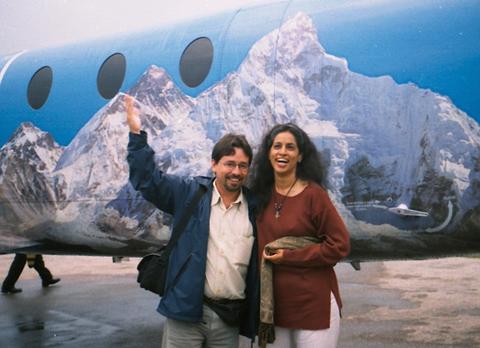
saneeya-and-luis-taking-an-everest-flight.jpg

In 2002, Saneeya became the Executive Director of Panos South Asia, a regional media organisation with its headquarters in Kathmandu, Nepal. As a Board member of Panos, I worked closely with Saneeya in a number of projects and activities.

Although everyone at Panos and in Kathmandu liked her, Saneeya’s stay there was cut short by what her successor at Panos, A S Panneerselvan, called her Siamese twin: asthma.

It was asthma that forced Saneeya to leave Nepal – and the Panos director’s job – as she just couldn’t cope with Kathmandu’s polluted air. As a fellow asthmatic, I fully empathised with her. She moved to Sao Paulo, where she set up what was to be her final home.

What happened in April 2005 has been written and discussed widely by Saneeya’s far-flung network of friends in the past two years. I can only reproduce the last few paras of a tribute I wrote in May 2005, which was privately circulated at the time:

When Saneeya suffered an acute attack of asthma in Sao Paulo on April 7, her husband Luis rushed her to hospital in his car. It was rush hour at 6.30 in the evening, and it took him 20 minutes to drive to the hospital only 2 kilometres away. Saneeya — who had walked to the car — stopped breathing five minutes into the journey. Luis drove as fast as the traffic would allow him, but as it turned out, not nearly fast enough.

Her brain suffered too much damage due to oxygen deprivation, and she never recovered.

As Luis was to remark later, it was not asthma but the traffic that killed Saneeya.

Similar tragic scenarios unfold on South Asia’s mean streets every day. Heart and stroke patients fail to reach help in time. Ambulences and fire engines, with their sirens blaring, only manage to proceed at a snail’s pace. It’s not uncommon for expectant mothers in labour to give birth on their way to hospitals. Then there is the slow, insidious poisoning that goes on 24/7.

So let us be forewarned. If the air pollution doesn’t get us, the traffic jams will. And if we survive both, our road accidents will wait for us. It’s only a matter of time.

Not one but several serial killers are out there.

And we unleashed them all.

beena-sarwar-left-and-saneeya-hussain-photo-courtesy-b-sarwar.jpg

Our mutual friend Beena Sarwar (in the photo above, with Saneeya) has made a 14-minute documentary called Celebrating Saneeya. It was screened at the 5th Karachi International Film Festival in December 2005.

See also my essay ‘Grappling with Asia’s Tsunami of the Air’ (December 2006).

All photos from Saneeya Yahoo Group that links her friends around the world.