Here’s a little mystery: why do most TV stations in tropical Asia dream of white Christmases?
Browse through the dozens (or hundreds) of channels that we Asians can now access on cable, and the chances are that many are displaying gently descending snow flakes, decorated evergreen coniferous trees, Santa Claus and other well known images of Christmas.
Nothing wrong with that – except that snowy Christmases aren’t very common close to the Equator — unless you climb to very high elevations. And for our friends in the southern hemisphere, this time of the year is actually summer! But hey, why let any of these facts get in the way of a nice fantasy?
Speaking of unusual or indigenous Christmases, I just came across this very funny version of ‘Jingle Bells‘ by A R Rachman, who won two Academy Awards for Best Original Music Score and Best Original Song at the 2009 Oscars for Slumdog Millionaire.
“Jingle Bells” is one of the best known and commonly sung winter songs in the world. It was written by James Lord Pierpont (1822–1893) and copyrighted under the title “One Horse Open Sleigh” on September 16, 1857. Despite being inextricably connected to Christmas, it is not specifically a Christmas song.
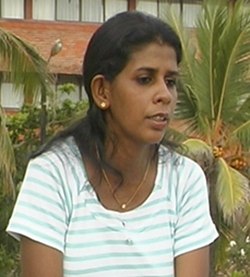
Dilrukshi Handunnetti in Deep Divide filmContrary to a popular belief, journalists don’t enjoy being able to say ‘I told you so!’. They much rather prefer if their investigative or analytical work in the public interest are heeded in time.
A few months before the Indian Ocean tsunami of December 2004, my friend and journalist Dilrukshi Handunnetti wrote an investigative story on how coastal zone management laws and regulations were openly flouted by developers. She cautioned that it was a ‘disaster waiting to happen’
She had no idea how forcefully her point will be driven home before that year ended.
“Little did anyone realise the price coastal communities would have to pay for the greed of a few dozen developers,” she said after the tsunami, interviewed for Deep Divide, a South Asian documentary on environmental justice that TVE Asia Pacific produced in 2005.
Sri Lanka’s economic activities are concentrated in coastal areas: 80 per cent of the tourist related activities are found there, along with one third of the population. Seeking to accelerate economic growth, the Sri Lankan government took measures to develop the island’s coastal regions. Shrimp and prawn farming was encouraged, while many incentives were provided for developing tourist resorts along the island’s scenic beaches.
As the shrimp exports grew and tourist arrivals increased, there was a ‘cost’ that only local residents and a few environmentalists cared about: mangrove forests were cleared, coral reefs were blasted, and the coastal environment was irreversibly changed.
Shrimp farming damaged mangroves, aggravated tsunami impactCoastal zone management regulations and guidelines were openly flouted by developers. Local communities were the last to benefit from this development boom — they watched silently as their fish catch dwindled and their coastal environment was pillaged. But little did anyone realise the price coastal communities would have to pay for the greed of a few dozen developers.
When the tsunami struck, there were very few natural barriers to minimise its impact. More than 40,000 people died or went missing, while hundreds of thousands lost their homes and livelihoods. It was the biggest single disaster in the island’s history.
Dilrukshi reflects: “Post-tsunami, people realised that the mangroves have protected these little, you know, landmass. And where you find a little bit of protected mangroves, you also find the landmass protected.”
She adds: “I think we have committed lot of excesses and we have been made to answer for those sins. Hereafter, we cannot afford to not do it right.”
Filmed on location in India, Nepal and Sri Lanka, Deep Divide explores the reality of environmental justice in South Asia — home to 500 million people living in absolute poverty, or 40 per cent of the world’s total poor. Everywhere, it finds environmental injustice. This investigative film builds on the work by three local journalists, who act as our guides to understanding the complexities and nuances of development amidst poverty and social disparities.
The origins of Deep Divide go back to 2002. Panos South Asia, a regionally operating non-profit organization analyzing development issues, awarded media fellowships to selected journalists from five South Asian countries to explore specific cases of environmental injustice in their countries. They were to investigate issues as varied as land degradation, food and water insecurity, rising pollution, and mismanaged development.
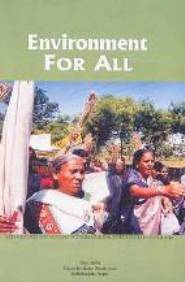
Their findings were initially published in the local media – in the newspapers or magazines they worked for. In 2004, Panos South Asia compiled the articles in a book titled Environment for All. Three stories from this book were adapted into the documentary, directed by Indian film maker Moji Riba.
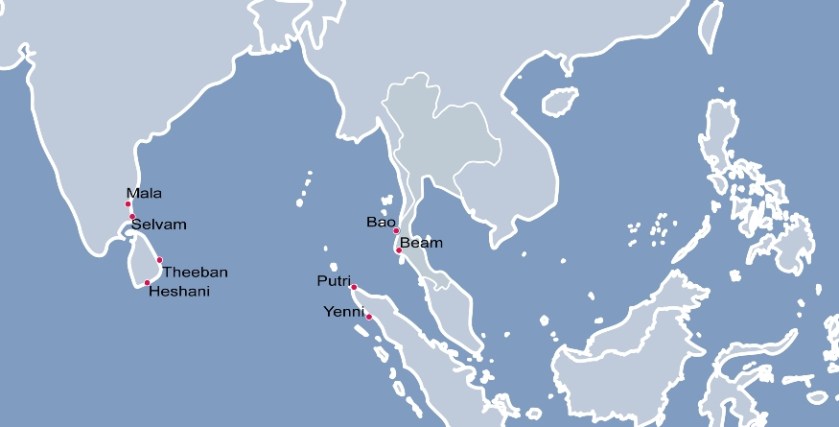
Four countries, eight locations: where Children of Tsunami stories were filmed for much of 2005 They have never met each other. Some have never travelled beyond their native village. On December 26 2004, the sea rose and rose and took everything they cherished.
Documented over the year, locally-based filmmakers returned to Asia’s battered coasts in India, Indonesia, Sri Lanka and Thailand to track the healing and the hurt through the eyes of children.
Asia’s recovery process from the tsunami is being captured through the stories of three girls and two boys aged 8 to 16 years.
Of different races, worshipping different Gods, they live on different shores in different countries. They are the tsunami generation, sharing the vulnerability of a child and the legacy of the tragic tides.
Young survivors of the Asian tsunami let us into their lives to personalise the mass of statistics, aid pledges and recovery plans. “Children of Tsunami” is a tapestry of intimate stories, woven by voices of individual and collective resilience, heroism and recovery.
Children of Tsunami: No More Tears – Part 1 of 3
Part 2 of 3
Part 3 of 3
Duration: 24 mins
Year of production: 2005
Countries filmed in: India, Indonesia, Sri Lanka, Thailand
In each country, a locally based production crew carried out filming for TVE Asia Pacific.
Say eeeeeeeeeee - and don't ask questions!The much-hyped e-Asia 2009 conference and exhibition opens in Colombo, Sri Lanka, today. It is organised by our good friends at the Centre for Science, Development and Media Studies (CSDMS) in India and the Sri Lankan government agency known as Information and Communication Technology Agency (ICTA).
According to the conference website, e-Asia 2009 is meant also to celebrate Sri Lanka’s Year of ICT and English, 2009. The event has been preceded by a massive advertising blitz in Sri Lanka’s print and broadcast media, while Colombo and suburbs have been plastered with promotional banners and posters.
The foreign delegates will be exposed to a great deal of sunshine stories from the ICTA which was originally set up as a sunset agency (but hey, the sun never sets on some people!). Sri Lankan delegates will be too embarrassed or well mannered to point out glaring gaps between the hype and reality. Few people want to rock the boat these days!
I am reminded of a popular Sri Lankan folk tale. It relates an incident that happened when we were ruled by hereditary kings, and concerns jaggery — a delicious sugar substitute we make from the sap of the coconut palm.
The King of Lanka, being the curious type, wanted to know how jaggery was made. He sent for the official jaggery supplier to the Palace, who claimed that it was being produced under the most hygienic conditions by people who had mastered the technique for decades.
Unlike today’s rulers, however, the kings of yore didn’t believe everything they were told. So one day the King went in disguise to investigate. Which was just as well — because the reality was completely different! The king found his jaggery being made in a rickety old shack, with none of the hygienic conditions!
A very angry king revealed who he was, and demanded an explanation. He was then told: “That’s the hype, Your Majesty, and this is the reality!”
For one thing, today’s heads of state – overexposed in the media – can hardly expect to go anywhere incognito (and if they tried, security officers and assorted sycophants would immediately prevent it!). All the same, it is an interesting thought experiment to wonder what the President of Sri Lanka might uncover if he were to probe beyond the glitzy (almost giddy) propaganda being unleashed by ICTA!
As I wrote in CSDMS’s own regional magazine i4d a couple of years ago, the gulf between the hype and reality in our ICT circles can be as wide as it is shocking. When an agency invests so much time, effort and money in publicity, we can always suspect that there is more than what meets the eye…
People want their needs met and problems solved, not fancy projects...
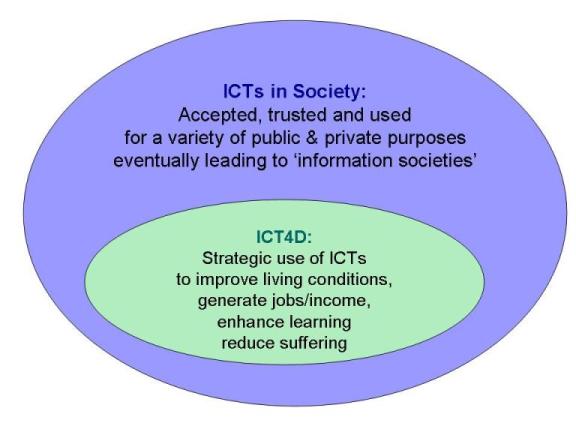
The proof of the ICT pudding is in the societal acceptance and integration of ICT tools, processes and services in the daily living, work and leisure of people. As I said in my i4d essay: “Tragically, the ICT Agency of Sri Lanka, which has the mandate and powers to address these issues, is instead dissipating its energy and resources on setting up rural tele-centres, a task that it should leave to better positioned and experienced groups. This glaring inability to set and pursue the right priorities has been a bane of Sri Lankan ICT sector for years.”
What I wrote a couple of years ago is still valid. Here’s another excerpt:
No amount of legislation, policy formulation and paid propaganda by the ICTA is going to mainstream ICTs in Sri Lankan society. ICTs have to prove their worth, and be accepted as adding value to living and working conditions of ordinary people.
We can assess the utility and relevance of any new technology by asking a few simple questions. Does the new technology or process:
– put more food on their table?
– add More money in people’s pockets?
– make interfacing with govt easier?
– save time and effort involved in commuting?
– support cultural and personal needs of individuals and groups?
– put a smile on users’ faces?
Finally, is it affordable, user-friendly and widely available, with minimum entry level barriers?
BigShot: Inspiration with every click?“Build a better mousetrap, and the world will beat a path to your door.” This remark is attributed to one of my favourite essayists and philosophers, Ralph Waldo Emerson.
That was probably true for the 19th century in which he lived and died, but it takes a bit more than a mousetrap to generate a buzz these days. But simple and elegant inventions are still the best. BigShot is one of these.
It’s still in testing stage, but already being hailed as “a camera that could improve the way children learn about science and one another”.
BigShot is an innovation by Indian-born Shree K. Nayar, now the T. C. Chang Professor of Computer Science at Columbia University in New York, USA.
As his university’s newspaper reports: “He came up with a prototype as sleek as an iPod and as tactile as a Lego set: the Bigshot digital camera. It comes as a kit, allowing children as young as eight to assemble a device as sophisticated as the kind grown-ups use—complete with a flash and standard, 3-D and panoramic lenses—only cooler. Its color palette is inspired by M&Ms, a hand crank provides power even when there are no batteries and a transparent back panel shows the camera’s inner workings.”
With the BigShot, Nayar wants to not only empower children and encourage their creative vision, but also get them excited about science. Each building block of the camera is designed to teach a basic concept of physics: why light bends when it passes through a transparent object, how mechanical energy is converted into electrical energy, how a gear train works.
Watch Professor Shree Nayar talk about the purpose and development of the Bigshot camera project.
Nayar would like to roll out the camera, now in prototype form, along the lines of the One Laptop Per Child campaign: For each one sold at the full price of around $100, several would be donated to underprivileged schools in the United States and abroad. He will soon begin looking for a partner—a company or nonprofit—to help put Bigshot into production.
Life inspires innovation...Wired magazine wrote in a recent review: “(It) is a super-simple digicam from the Computer Vision Lab at Columbia University. It comes in parts, ready to be assembled (by kids, but I can’t wait to get my hands on one), and teaches you along the way how these things work. It’s not quite the transparent view you get from making an old analog camera, where you can see how everything works, but it’s as close as you can get from a machine that uses circuit boards.”
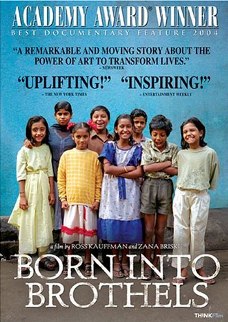
Interestingly, the initial inspiration for BigShot came from a documentary: Born into Brothels (85 mins, 2004), a film about the children of prostitutes in Sonagachi, Kolkata’s red light district. The widely acclaimed film, written and directed by Zana Briski and Ross Kauffman, won a string of accolades including the Academy Award for Documentary Feature made in 2004.
I saw that film during the AIDS Film Festival I helped organise in Bangkok in July 2004. In this film, the film maker, British photographer Zana Briski, gave 35 mm film cameras to eight children and watched as those cameras transformed their lives.
“The film reaffirmed something I’ve believed for a long time, which is that the camera, as a piece of technology, has a very special place in society,” says Nayar. “It allows us to express ourselves and to communicate with each other in a very powerful way.”
Watch an overview of Born into Brothels, featuring the film makers:
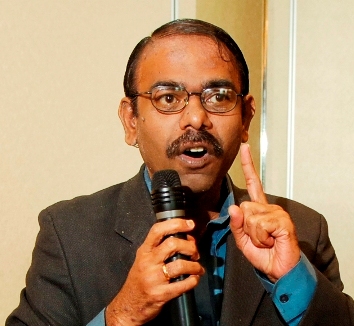
“There are no full-stops in good journalism, only commas,” he declared. He was referring to two of the most commonly used punctuation marks in modern writing.
This metaphor neatly sums up the nature of journalism, whose coverage of public affairs and society is often on-going, unfinished and open-ended. This prompted Phil Graham, the former publisher of the Washington Post, to describe journalism as the “first rough draft of history”. The reason is that journalists, in the performance of their duty often record important events, producing hurried written reports (in text, sound or pictures) often generated on short deadlines.
Panneer, who likes to call himself ‘a failed physicist and a failed journalist’, added that the intrinsic value of a journalist as one who tries to bring back the idea of commons — resources that are collectively owned, which can range from physical goods to artistic or creative products.
I always welcome occasions when his and my paths cross as we move in overlapping South Asian circles. Listening to him this time around, I recalled his clear, emphatic words on a previous occasion, at an Asian regional brainstorming on ‘Communicating Disasters: Building on the tsunami experience and responding to future challenges’ that I convened in December 2006 in Bangkok, Thailand.
He said the media is plural term, not a singular one. This implies that the media are not a monolith. Some are excellent; many are mediocre; some are downright bad. Some in the media are also indifferent to some issues but may be outstanding in addressing other issues.
He added that media is also very much a contested and contentious space where arguments rage on. Not everything is moderate, balanced or ‘evidence-based’.
Panneer’s day job is as the executive director of Panos South Asia. He was formerly the managing editor of Sun TV and bureau chief for Outlook magazine in India. Having been with the mainstream media for 20 years, he is now moving in that interesting overlap between media and development sectors. This gives him both insight and perspective.
Contributing a chapter to Communicating Disasters: An Asia Pacific Resource Book in 2007, Panneer wrote: “Development agencies rarely bring journalists into their universe at a stage which can be called ‘work-in-progress’. They usually just come to the media with a finished product. There is hardly any joint exploration. When presented with a finished product, there is just one alternative for a reporter — that is, to review the product that is already done.
“Imagine a scenario where journalists are brought into the process right from the word go. There would have been a series of stories, and when the final report of the development agencies is realised, that may well serve as the winding-up story tracking the entire trajectory.
“A journalist is expected to report and not just reproduce. Development agencies like their versions to be reproduced to a large extent. This becomes an assault on the journalists’ work-pride. He or she would like to do a field report, taking a cue or two from the work of the development agency. But, to merely reproduce a report is seen only as providing a free plug, an unpaid advertisement, and doing a stenographer’s job.”
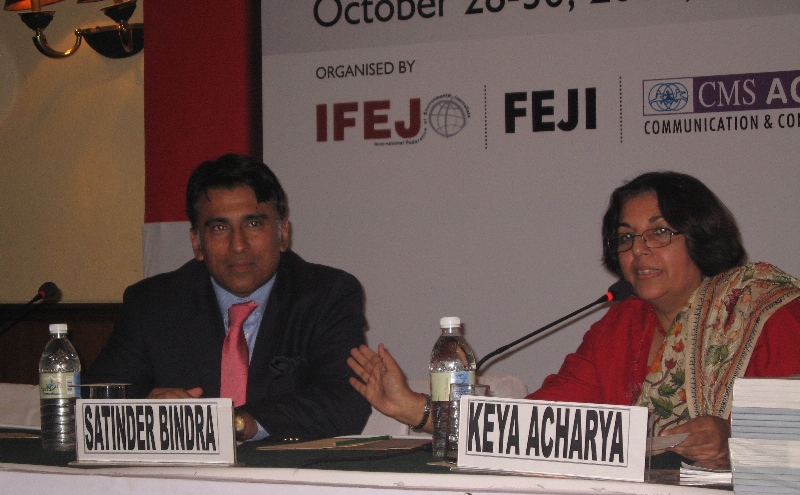
Satinder Bindra (left) and Keya Acharya at IFEJ 2009 Congress Satinder Bindra left active journalism a couple of years ago when he joined the UN Environment Programme (UNEP) as its Director of the Division of Communications and Public Information (DCPI) based at UNEP Headquarters in Nairobi. But thank goodness he still thinks and acts like a journalist.
We have gone beyond the cautionary stage of climate change, and are now acting out ‘Part II’ where we have to focus on what people can do, he said. “Climate change is no longer in doubt, and if anything, the IPCC’s scenarios are turning out to be under-estimates.”
He was referring to the IFEJ congress theme, “Bridging North-South Differences in Reporting Climate Change: Journalists’ role in Reaching an Ambitious Agreement at COP15 in Copenhagen”.
Satinder sounded emphatic when he said: “We have a limited time in which to reach as many people as possible. Environment is the single biggest challenge we face in the world today, and we as journalists have a tremendous responsibility in providing the latest, accurate information to our audiences.”
He added: “There is still a debate among journalists on whether or not we should be advocates for the environment. We should not be scared to push the best science, even if we don’t choose to engage in advocacy journalism.”
Satinder, who was a familiar face on CNN as its South Asia bureau chief until 2007, acknowledged that the media landscape was evolving faster than ever before. “Thanks to the web and mobile media, our distribution modes and business models are changing. YouTube has emerged as a key platform. Viral is the name of the game.”
His message to broadcasters, in particular, was: “You may be rivals in your work, but when it comes to saving the planet, put those differences aside.”
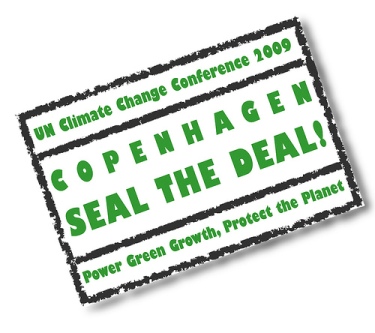
A call to the whole planet...Satinder is spearheading, on behalf of UNEP, the UN-wide Seal the Deal Campaign which aims to galvanize political will and public support for reaching a comprehensive global climate agreement in Copenhagen in December.
To me at least, the most important part of Satinder’s speech was when he said that he was not seeking to promote or position the UNEP or United Nations branding. His open offer to all journalists and broadcasters: “If you need to use the hundreds of UNEP films, or make use of our footage in your own work, go right ahead. We want you to make journalistic products. There’s no need or expectation to have the UN branding!”
Wow! This is such a refreshing change — and a significant departure — from most of his counterparts at the other UN agencies, who still think in very narrow, individual agency terms. They just can’t help boxing the lofty ideals of poverty reduction, disaster management, primary health care and everything else within the agenda setting and brand promotion needs of their own agencies.
“As development organisations compete more intensely for external funding, they are increasingly adopting desperate strategies to gain higher media visibility for their names, logos and bosses.
“Communication officers in some leading development and humanitarian organisations have been reduced to publicists. When certain UN agency chiefs tour disaster or conflict zones, their spin doctors precede or follow them. Some top honchos now travel with their own ‘embedded journalists’ – all at agency expense.
“In this publicity frenzy, these agencies’ communication products are less and less on the issues they stand for or reforms they passionately advocate. Instead, the printed material, online offerings and video films have become ‘logo delivery mechanisms’.”
Let’s sincerely hope that the pragmatic and passionate Satinder Bindra will be able to shake up the communication chiefs and officers of the UN system, and finally get them to see beyond their noses and inflated egos. It’s about time somebody pointed out that vanity does not serve the best interests of international development.
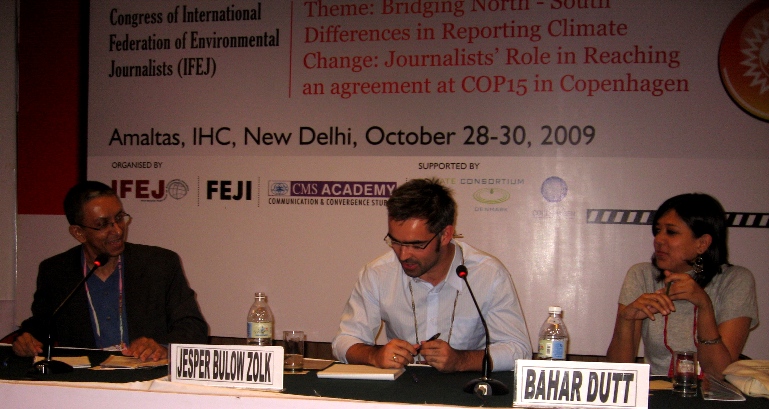
At IFEJ 2009 Congress on 28 Oct 2009: From L to R: Nalaka Gunawardene, Jesper Zolk and Bahar Dutt
I used to describe my job as one where I try to make sense of our topsy-turvy world. But I’d happily settle for the simpler description ‘connecting the dots’. This is what we as journalists covering development issues must do everyday in our work:
• link the macro with the micro; and
• find inter-relationships and inter-dependencies that aren’t always very self-evident.
This reminds of me a piece of advice given by the late Tarzie Vittachi (1921-1993), the Sri Lankan-born journalist and editor who was a pioneer in development journalism in the 1960s and 1970s. Long before climate change became an issue, he was speaking metaphorically to fellow journalists when he said: “Ordinary people live and work in the day-to -day weather. Most can’t relate to long-term climate. It’s our job, as journalists, to make those links clear.”
When Tarzie made this remark, some three decades ago, he was speaking metaphorically. Times have changed and now we are literally dealing with weather and climate issues.
Making those links is not always easy, especially if we want to avoid sensationalism, scare-mongering and other excesses that often characterize media coverage on climate change.
I made these observations when chairing a session on the North-South differences in the electronic media (television) coverage of climate change in New Delhi, India, this week. It was part of the latest international congress of the International Federation of Environmental Journalists (IFEJ), held at India Habitat Centre from 28 to 30 October 2009. Its theme was “Bridging North-South Differences in Reporting Climate Change: Journalists’ role in Reaching an Ambitious Agreement at COP15 in Copenhagen”.
Participants – over 100 journalists covering science and environmental issues, from all over the world – recognised how climate concerns have extended beyond strict environmental (or ‘green’) issues to mainstream political, business and even security coverage in the media.
Joining me on the TV panel were two experienced journalists from news and current affairs channels — Jesper Zolk, Climate Editor of TV2 News, Denmark, and Bahar Dutt, Environment Editor of CNN/IBN, India.
As it turned out, they were a great panel – they knew a lot, and being TV journalists, also knew how to say it well and concisely. This was the second time that Bahar – one of the best known faces on Indian television today – and I have been on a panel together: almost four years ago, at IFEJ Congress 2005, also in New Delhi, she joined me to discuss ‘Does TV do a better job on environmental reporting?’
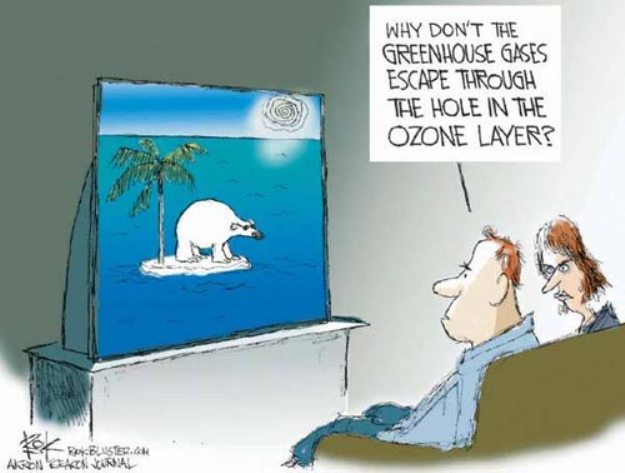
I opened my panel by showing this cartoon, one of my favourite when it comes to climate coverage in the media:
Can we blame him for the confusion?
We cannot assume much more knowledge and understanding in our average TV viewer than the confused guy in this cartoon, I said. So just how do we reach out and engage millions like him (and also the better informed viewers like his fellow viewer)? How do we tell this complex, still unfolding story within the time limits of 24/7 news television, I asked.
We didn’t find all the answers in 75 minutes of our session, but at least we clarified and agreed on a few points. Bahar Dutt’s observations were particularly relevant, especially since India now has over 500 news and current affairs TV channels broadcasting to a billion plus audience in over a dozen languages.
At a time when mainstream media elsewhere in the world are struggling to stay on in business, the Indian broadcast media remain ‘chaotic but robust’, she said. “But editorial filtering is not always very strong in some of our channels, which sees climate coverage ranging from no coverage at all to hysteria,” she added.
According to Bahar, much of the climate coverage in the Indian media overlooks the links with broader development issues. “Focus is often on climate treaty negotiations, or what individual experts or politicians say. These elements are only part of the bigger picture, and we need to look further and dig deeper.”
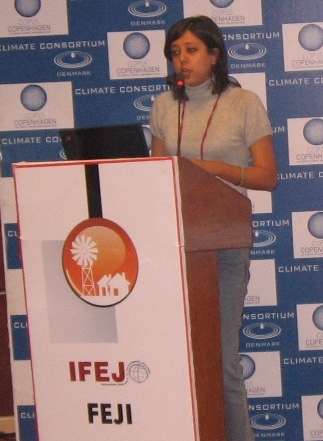
Bahar Dutt at IFEJ 2009“Environmental journalists are not green activists, and our role is to be watchdogs – keeping a sharp eye on government, industry and even civil society,” Bahar said. “But sometimes I find this watchdog role lacking in our media.”
Her advice to fellow journalists: stop seeing environment as simply a green and ‘cuddly’ sector, and move it into the political arena.
Jesper Zolk, Climate Editor of Denmark’s TV2 News, said his biggest challenge was how to get the pampered western viewers to change their lifestyles to be more climate friendly.
He urged journalists to focus not just on problems, but also on viable solutions. He expressed a concern that some journalists covering environmental issues sound more like green activists — a point that Bahar Dutt also agreed on.
She made another perceptive observation: people who have the least carbon footprint are the most keen to take action to mitigate climate change. That’s because they realise they are often the first to be impacted.
Our genial and erudite host Darryl D’Monte, chair of the Forum of Environmental Journalists of India (FEJI), had earlier asked participants to reflect on whether the media is part of the problem or the solution in the current crisis.
On the road to Copenhagen and beyond, we have our work cut out for us. As the Danish Ambassador to India, Ole Lønsmann Poulsen, quoted John F Kennedy in his opening remarks as saying: “The great enemy of the truth is very often not the lie, deliberate, contrived and dishonest, but the myth, persistent, persuasive and unrealistic.”
Life saving sand...This week marks the 10th anniversary of the deadly cyclone that hit India’s eastern state of Orissa.
The 1999 Orissa cyclone, also known as Cyclone 05B, and Paradip cyclone, was the deadliest Indian Ocean tropical cyclone since the 1991 Bangladesh cyclone, and deadliest Indian storm since 1971. The storm made landfall just weeks after a Category 4 storm hit the same general area.
A tropical depression formed over the Malay Peninsula on October 25. It moved to the northwest and became a tropical storm on October 26. It continued to strengthen into a cyclone on the 27th. On October 28, it became a severe cyclone with a peak of 160 mph (260 km/h) winds. It hit India the next day as a 155 mph (250 km/h) cyclone. It caused the deaths of over 10,000 people, and heavy to extreme damage in its path of destruction.
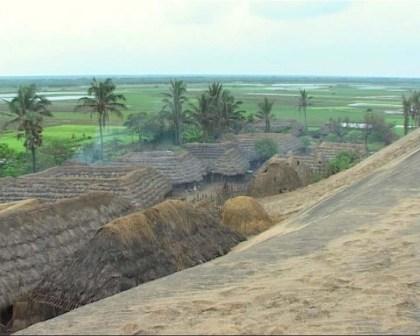
In 2006, during the production of TVE Asia Pacific‘s TV series The Greenbelt Reports, we visited the coastal village of Satabhaya, located on the edges of the Bhitara-kanika National Park in Orissa. A giant sand dune separates the village from the Indian Ocean.
The dune is the source of regular sand storms that force people to stay indoors for hours. Each storm can cover their houses with several inches of sand. Yet, they are not complaining. They remember the super cyclone of October 1999 – it was the natural sand dune that reduced the impact of that super-cyclone. The Satabhaya people know that it’s their only protection.
After the cyclone, they have devised traditional methods to trap the sand and create dunes to protect their village.
The Greenbelt Reportsseries It looks at how communities, researchers or environmental activists are trying to find a balance between conserving coastal greenbelts – coral reefs, mangroves and sand dunes – and deriving economic benefits for local people.
Watch The Greenbelt Reports: Surround Sand on YouTube:
This award is sponsored by TVE Asia Pacific (TVEAP) and is given to “an individual for excellence in environmental reporting that contributes to public awareness and understanding of environmental issues”.
Pierre was selected “for his insightful, analytical and fact finding stories focusing on diverse issues related to environment and climate change”.
I literally dashed from the Indira Gandhi International Airport to the India Habitat Centre in New Delhi to be part of the inaugural ceremony. Despite the best efforts by Delhi’s notorious traffic, I made it just in time to join Dr Farooq Abdullah, Union Minister of New and Renewable Energy, to present the TVEAP award to Pierre Fitter.
Pierre Fitter: TVEAP Environmental Journalist of the YearAarti Dhar of The Hindu newspaper was adjudged as the Best Environment Journalist Award (Print), while my good friend Krishnendu Bose received the prestigious CMS-UNEP Prithvi Ratna Award “for his sustained and concerted efforts towards enhancing people’s understanding and spreading awareness on diverse environmental issues through films and documentaries”. This is the highest honour for wildlife and environmental film making in India.
Pierre Fitter lives in Delhi where he reports on the environment and foreign affairs. He holds a Bachelor’s degree in Socio-Legal Sciences and is studying for a Masters in Political Sciences. Pierre spent a year and a half in China and Russia, where he worked for AIESEC, an international youth leadership development organisation. While with AIESEC, he developed a deep interest in sustainable development and international relations and continues to report on these issues to this day. He has a special interest in Environment and climate change in particular.
Watch Pierre Fitter interviewing Shyam Saran, the Indian Prime Minister’s special envoy on climate change on the current state of climate change in India in early October 2009:
Selection of award winners was based on regular monitoring of Indian news and current affairs TV channels and newspapers by the CMS MediaLab.
CMS VATAVARAN is India’s premier biennial competitive and traveling Environment and Wildlife Film Festival. It was initiated in 2002 towards raising awareness about environmental issues. The CMS Environment Forum and CMS VATAVARAN have ushered in a fresh green global consciousness on an extraordinary scale using environment forums and films. CMS VATAVARAN is an initiative of Centre for Media Studies.



 Open Minds!