The irony of the Climate Nobel: With love from oil-rich Norway…

The announcement from Oslo on 12 October held few surprises: the Nobel Peace Prize 2007 has been awarded to climate champion Al Gore and the UN’s IPCC, headed by Indian scientist Dr Rajendra Pachauri.

The selection committee, appointed by the Norwegian Parliament acting on the will of the late Alfred Nobel, said it wanted to bring into sharper focus the “increased danger of violent conflicts and wars, within and between states” posed by climate change.

Mr Gore, 59, was praised as “probably the single individual who has done most to create greater worldwide understanding of the measures that need to be adopted”, through his lectures, films and books.

The UN-IPCC (Intergovernmental Panel on Climate Change), established in 1988, is tasked with providing policymakers with neutral summaries of the latest expertise on climate change. The organisation involves hundreds of scientists working to collate and evaluate the work of thousands more.

In recent years, the usually secretive and conservative Nobel Peace Committee has been increasingly in tune with the changing realities of our world. Recent prizes to environmental activist Wangari Mathaai and microcredit champion Muhammad Yunus indicate that their traditional definition of peace and security – confined for nearly a century to peace-makers and humanitarian agencies – is being widened.

But the irony of the climate Nobel won’t be lost on the long-time champions of climate change action. Here we have oil-rich Norway, sometimes called the Kuwait of Europe, presenting the world’s best known award to an individual and organisation calling for the planet to kick its addiction to oil (and coal, too).

Notwithstanding all that, we join everyone in saluting Al Gore, Pachauri and everyone associated with the IPCC for their years of hard work in bringing climate change to the fore.

The real hard work is only just beginning.

Watch Al Gore press conference following the Nobel announcement:

Read blog post on Oct 21: Al and Pachy Show: Climate Change gains public momentum

Ozzy Ozone: The Little Molecule on a Big Mission

This is Ozzy Ozone. He is an energetic, cheerful little ozone molecule – part of the ozone layer in the upper atmosphere that prevents the Sun’s harmful ultra-violet rays from coming through.

Today, 16 September 2007, is a day to celebrate Ozzy Ozone. Because it’s the 20th anniversary since the nations of the world adopted the Montreal Protocol to phase out chemicals that harm the ozone layer.

It was a landmark international environmental treaty — one which has galvanized governments, industry and society into sustained action for two decades to give using close to a hundred chemicals, all of which – when released into the air – go up to damage the ozone layer.

Ozzy Ozone has been part of the many-faceted public education programme mounted by the UN Environment Programme (UNEP) to tell everyone how harmful UV rays are to our health, and how Ozzy and his fellow ozone molecules are literally protecting life on earth from being zapped out.

In this video, Ozzy Ozone and Alberta the Albatross take a voyage of discovery to find out exactly who and what is attacking the ozone layer and how children can play an important role in making a difference.

Watch Ozzy Ozone online:

Order Ozzy Ozone on video tape or DVD from TVE Asia Pacific

Ozzy himself is now 10 years old. He was created by a graphic artist in Barbados, as part of a government-supported campaign to raise public awareness on ozone layer thinning. This cartoon character served as a “mascot” and was very effective in raising awareness in Barbados. The cartoon series has been printed in the local newspapers on several occasions. Additionally, promotional items produced for local public awareness and education campaigns using the Ozzy graphic include posters, key rings, rulers, erasers, refrigerator magnets, mouse pads, pens, pencils, stickers, and envelopes.

The character was enduring and popular that UNEP struck a deal with Barbados to ‘globalize’ Ozzy. An animated video was produced, along with a dedicated website, comic strips and other media adaptations.

Read more about the origins of Ozzy Ozone

Ozzy Ozone website

Running the planet without a user-guide

There is a best-selling small book titled Everything Men Know About Women. It’s authored by Cindy Cashman, writing under the pseudonym Dr. Alan Francis.

The book is revealing as it’s simple: every page is completely blank.

I was reminded of this little book while listening to some of the world’s leading environmental scientists and conservationists speak this week during the 4th IUCN Asia Conservation Forum, held in the Nepali capital of Kathmandu, 10 – 13 September 2007.

Expert after expert admitted how limited our understanding still was of the planet’s intricate and inter-linked natural systems. Some processes — such as how climate change would impact different geographical regions, natural cycles and ecosystems — are only just beginning to be understood. We know more about the surface of the Moon than about the bottom of the oceans on our planet. We have only had a few recent glimpses into the large and complex world of micro organisms.

In short, many pages of our planet’s ‘operations manual’ or user guide are still completely blank!

Read related post: Talking Big Foot in YetiLand – Got a spare planet, mate?

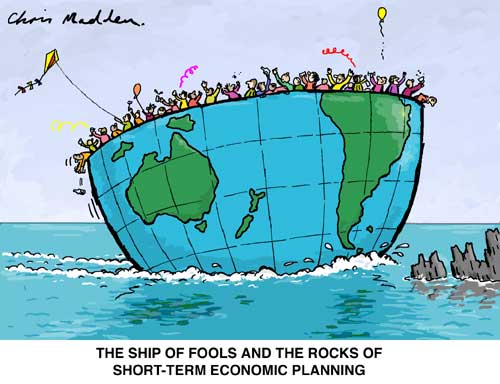
Yet the ecological threats are real, and they are here. The pressures we humans exert on our environment is increasing by the day. Deferring action until we have better knowledge and understanding is no longer an option.

Instead, we now have to use a combination of the best current knowledge, common sense and intuition to address a multitude of formidable environmental issues including the growing piles of our waste, intensification of disasters, march of desertification, changing climate as well as the poisoning of our freshwater, seas and the air. Some of these degradation factors feed on each other, producing more damage – and rude shocks – than each one could on their own.

ship-of-fools.jpg

In this scenario, the conservation community — in Asia and elsewhere — faces three major challenges:

First, they just have to doggedly persist in gathering new knowledge, and deriving understanding and insights on how our planet works. This is not research for its own sake, or mere academic theorising. It’s now a pre-requisite for survival.

Second, they have to find smart and strategic ways to fill up the ‘blank pages’ in our planet’s user-guide. In the 1970s, they used to say we have been handed over a planet without that manual and it seemed we had time to figure things out. The truth is, time is running out and we have to write that manual as we go along.

Third, it’s vital that the user-guide is widely shared using every available advocacy and dissemination method, tool and medium. Staying within comfort zones and talking to each other in technical jargon is not enough. This is the point I personally stressed at the meeting: use modern ICT tools to discuss, debate and engage everyone in changing their ways where needed.

The current conservation imperative reminds me of what H G Wells said: History is a race between education and catastrophe. Right now, it seems, we are just staying ahead to avoid disaster.

Thanks to initiatives like the Millennium Ecosystem Assessment, those blank pages in the Earth’s user guide are filling up.

Strange as it sounds, the book’s already filled pages have to be be peddled far and wide even as the other pages are being written.

Talk about a race between education and catastrophe!

Talking Big Foot in Yeti Land: Got a spare planet, mate?

The names Yeti and Meh-Teh are commonly used by the local people to describe the Abominable Snowman said to inhabit the deep Himalayan valleys of Nepal and Tibet. Most scientists consider this legendary ape to be part of cryptozoology – which searches for creatures said to exist but have never been documented.

But this does not take away from the allure of Yeti – it’s like the North American fascination with Big Foot.

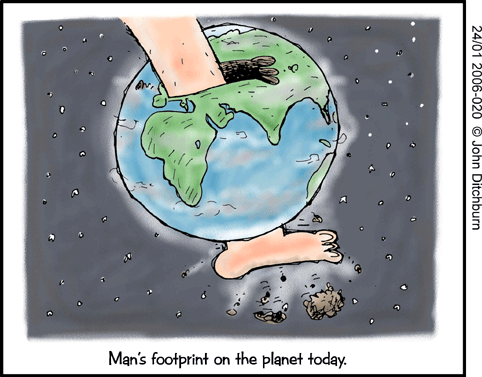
I’m spending the week at the 4th Asia Conservation Forum in Kathmandu, organised by IUCN, the World Conservation Union. Here, we have been talking about another kind of Big Foot, and the increasingly crushing footprint that this assertive creature stamps everywhere.

This, of course, is a reference to us Homo sapiens – and the growing ecological footprint (EF) that our species is generating.

EF quantifies our demand on Nature and natural systems. It measures the amount of biologically productive land and water required to meet our demands (for food, timber, shelter), and to absorb the pollution we generate.

Using this assessment, it is possible to estimate how many planet Earths it would take to support all of humanity if everybody lived a given lifestyle. For example, if everyone aspires to European lifestyles, we are going to need three planets. And for American way of life, four.

As of now, the Earth is the only naturally habitable planet that we know and have.

The term and concept of Ecological Footprint were proposed in 1992 by William Rees, a Canadian professor at the University of British Columbia.[1] In 1995, Rees and coauthor Mathis Wackernagel published Our Ecological Footprint: Reducing Human Impact on the Earth.

The Kathmandu meeting’s first substantive session, on the Future of Sustainability, heard how we are dangerously close to the Earth’s tipping point. Indian development thinker Ashok Khosla, UNEP’s regional director Surendra Shrestha and other leading analysts presented unmistakable indicators for this trend.

This resonates with a new report that came from WWF in late 2006, which concluded that our global footprint has already exceeded the earth’s bio-capacity by 25% in 2003. This meant that the Earth could no longer keep up with the demands being placed upon it.

2006-020-footprint-on-the-planet.gif

The WWF Report has presented this graphically by sorting countries as eco-creditors and eco-debtors. Much of Asia falls into the latter category (map, below, courtesy BBC Online):


So here’s the news headline from YetiLand: we have finally met Big Foot. And it is us.

Anita Roddick: We shall always remember you

Image courtesy Treehugger

“Remember me!”

That’s how Anita Roddick, who died on 10 September of brain haemorrhage, autographed for me a copy of her book Taking It Personally: How to make Conscious Choices to Change the World.

You’re hard to forget, I told her at the time. And suddenly, memories are all we are left with. And what vivid ones!

Dame Anita Roddick (1942 – 2007), founder of The Body Shop, is one of the most unforgettable persons I have met. And now that she has moved on, far too soon, her memory challenges us to persist with the social, humanitarian and environmental causes that she so passionately championed.

Media obituaries described her as the ‘Queen of Green’, but Anita was much more than just green. She stood for justice, fairness and equality in both business practices and her campaigns. From ethical sourcing of raw materials for her beauty products to agitating for human rights and humane globalization, she was one activist who walked the talk.

“I came out of the womb as an activist. I’m part of the 1960s; it’s in my DNA,” she wrote in Newsweek earlier this year. “So the idea of dying with loads of money doesn’t appeal to me at all.”

She added: “I want to use the last years I have to get my hands dirty working for civil change. I want to be able to see the positive difference that money can make by giving away what I have.”

It’s not immediately clear if she made much headway with that, but the recently set up Roddick Foundation is the latest of a long line of campaigns, social projects and charities that she founded, energised or supported.

Her business acumen and commitment to global justice have been eulogised for years. She was equally adept in using the media and communications to draw attention to a cause, issue or incident.

Without going to any business school, Anita built up a global business that had over 2,200 stores in 55 countries by the time she let go of the company in 2004. And without attending any communication school, she became one of the best communicators of our troubled times – speaking eloquently for her company’s ideals and various charitable causes.

It all came from the heart, and it was passion –- not cold facts or even colder logic -– that drove her to be a phenomenally successful communicator.

Anita loved to say: “The job of a citizen is to keep his mouth open.” And her advice to activists was: Get Informed. Get Inspired. Get Outraged. Get Active.

Never underestimate the power of one, she said. As she liked to put it:
If many little people
In many little places
Did many little deeds
They can change the face of the Earth

And like the Energizer bunny, but with lot more purpose, she kept going, going and going. She loved the Dorothy Sayers quote: “A woman in advancing old age is unstoppable by any earthly force”.

It was on one of her many world travels that our paths first crossed. In the summer of 1991, I was invited to give a workshop at Youthquake, a Canadian environmental conference building up momentum for the Earth Summit scheduled for the following year. It was here that I met two of my all-time favourite activists: geneticist-turned-TV presenter David Suzuki, and Anita Roddick. The celebrity guest was Mutang Tu’o, a representative from the Penan indigenous tribe from Sarawak, Malaysia, whose jungles were in imminent danger of being logged.

Youthquake was part conference, part youth jamboree and altogether a great deal of fun. Anita turned up with her youngest daughter Sam, and spent hours just telling real life stories in her inimitable way – full of laughter and making fun of power and pomposity. After all these years, I can’t remember anything about what I myself spoke, but I know Anita’s remarks had a lasting influence.

In those heady days before the Earth Summit, email and the global Internet, activists had an easier and simpler choice of adversaries — Uncle Sam and World Bank usually came up among the top five. When economic globalization gathered pace, things became more complex and nuanced. Ah, for the good old days!

Anita marched fearlessly into this new world where corporate fortunes are being made at the speed of light, governments are waging wars to the tune of media-entertainment industries, and certain development agencies have turned poverty reduction and HIV/AIDS into cottage industries.

Marshall all facts, get analysis right, take your firing positions and never give up the good struggle, she seemed to suggest: there’s a war out there, and it wasn’t just in Iraq and Afghanistan.

In fact, Taking It Personally was her rough guide on how to tame run-away globalization. For it, Anita invited the top thinkers in the struggle for humanitarian trade policies to weigh in on the problem, and to give citizens the tools and inspiration to do work for constructive solutions. Among its contributors were Vandana Shiva, Paul Hawken (Natural Capitalism), Naomi Klein (No Logo), and Ralph Nader.

When she autographed a copy for me, she added with a mischievous grin that the book’s US distributors had been coerced to withdraw it. She showed a possible reason: that famous photo of President George W Bush reading a book with a young child — while holding it upside down!

It’s this topsy turvy, cruel world that Anita Roddick tried to make slightly better in a thousand different ways. We fellow travellers will sorely miss her, but there is ‘no bloody alternative’ but to just slog on.

— Nalaka Gunawardene; Kathmandu 12 September 2007

Read my earlier post: Anita Roddick, Angkor Wat and the ‘Development Pill’

BBC Online: Dame Anita Roddick dies at 64

Look, no Kleenex: Way to blow our noses without blowing our planet

In the Fall of 2004, I was on a Cathay Pacific flight from Hong Kong to Toronto. The flight across the vast Pacific was 13 hours long, and half way into the flight my nose started playing up.

Being in cold placed for many hours sometimes triggers my catarrh, but I was prepared. I always carry one or more handkerchiefs with me, especially on flights. And also some anti-sneeze pills from my homeopathy doctor.

Blowing my nose and popping the small, sugary pills hardly ever draws anyone’s attention, but on this occasion it did. Our friendly flight stewardess was quite amused to see me using a hanky.

“Oh, Sir, you’re such a gentleman!” she exclaimed.

It took me a few seconds to figure out what she meant. Then she added, helpfully: “You still use a handkerchief. That’s so charming. No one uses them anymore…”

There wasn’t the faintest tone of sarcasm in her voice. She was genuinely impressed that I carried a hanky.

Image courtesy Boeing Co

I was reminded of this incident when reading Time magazine’s recent reflective essay on ten years after Princess Diana’s death.

At one point, it quotes Dickie Arbiter, a former press secretary to the Queen, Charles and Diana who was responsible for the media arrangements for Diana’s funeral: “The Queen was always going to pay tribute to Diana….There was a furor because she was at [the Scottish castle] Balmoral and not down with the sniveling mobs in London. [But] William and Harry needed her more than hundreds and thousands of people keeping Kleenex in business.”

Indeed, Kleenex and other tissue paper manufacturers must have done very nicely that week. A few days later, the death of Mother Teresa in Kolkata (formerly Calcutta) would have profited the Indian peddlers of the flimsy paper that more and more people seem to find indispensable.

Tissue paper vs. Handkerchiefs is an on-going debate that’s far from resolved. Both items have pros and cons; they also have their defenders and promoters. Some of them air their views on the Bottledguy blog

I have always been a handkerchief user, so I’m naturally biased in their favour. Yes, I have to be careful in using and storing them; yes, I have to wash, dry and keep track of them. And no, I don’t mind these chores at all.

And everything I read tells me it is more environmentally friendly to use hankies.

Here’s an interesting story from Pittsburgh Post-Gazette (3 Sep 2007): Can Australian sisters bring back hanky’s heyday?

It’s about two sisters in Australia, one in Sydney and the other in Brisbane (that I passed through only a few days ago) trying to revive the use of handkerchiefs.

They market them as “both useful accessories and as markers of the bonds between people.”

Image courtesy Hanky Schmanky

Their company is named Hanky Schmanky. I don’t know them, but applaud their initiative. They are trying to make hanky use ‘cool’ again.

We need many more people like Jennifer Moran and Angela Galgut – co-founders of this small company – to help us blow our noses without blowing the planet.

Hankymania page from Hanky Schmanky website


Nothing to Sneeze at: Umbrak Fisk gives environmental advice to all nose blowers at Grist.org

Faecal Attraction: There’s no such thing as a convenient flush…

Out of sight is out of mind.

That’s how it works for most of us. Especially when the subject is what we do in the privacy of our toilets and then just flush away.

But there is no such thing as a Convenient Flush — it’s all linked to how waste, including sewage, is disposed of. Or not.

And what goes around, even out of our sight, comes around — turning up in the least expected ways! Like faecal matter in our drinking water.

A new film produced by the New Delhi-based research and advocacy organisation Centre for Science and Environment (CSE) probes the link between sewage disposal and river water pollution in India — specifically, the River Yamuna, part of the massive Indo-Gangetic river system.

The film by Pradip Saha is titled Faecal Attraction: Political Economy of Defecation. It is accompanied CSE’s latest publication Sewage Canal: How to Clean the Yamuna.

The book and the film expose the political economy of defecation, where the rich are subsidised to defecate in convenience and the poor pay for pollution with their ill health because of dirty water.

It begins by asking two simple questions: Where does your water come from? What do you do with your shit?

Watch the answers – some amusing, others absurd – in this 3-min trailer on YouTube:

Backed by scientific data, CSE shows how India’s 14 major rivers, as well as 55 minor and many small rivers have all been reduced to sewers. They receive millions of litres of sewage, industrial residue and agricultural waste from the cities and towns through which they flow.

Delhi and Agra together account for 90 per cent of the pollution in the River Yamuna, a major tributary of the Ganges. Yamuna is one of the most polluted rivers in the world, especially around New Delhi, the capital of India, which dumps about 57% of its waste into the river.

When Yamuna flows by Delhi, the city extracts gallons of fresh water for drinking and irrigation. What is given in return to the river is only excreta – sewage, and industrial and agricultural waste. This sewage is (supposed to be) collected, transported, and assembled for treatment (cleaning), and then flown back to the river. In reality, what goes back is far from clean… The irony is that the city has 40 per cent of the entire sewage treatment infrastructure in the country with only five per cent of the country’s population! And still, Yamuna is unclean.

Cartoon courtesy CSE India

Though numerous attempts have been made to clean it, the efforts have proven to be futile. Although the government of India has spent nearly $500 million to clean up the river, the river continues to be polluted with garbage while most sewage treatment facilities are underfunded or malfunctioning.

“As these rivers die a slow death, the sole blame for their pathetic condition lies with human beings who have always treated these water bodies as their personal dumping zones,” says CSE.

Anil Agarwal, founder director of CSE, believed that a “society is known by the water it keeps”. “The health of a river…reflects the very health of the human society, its ability to live harmoniously with its environment,”, he said.

In that sense, things are very seriously wrong with not just the Yamuna, but river systems across India.

Read CSE Director Sunita Narain’s presentation on the River Yamuna pollution and clean up options

Read CSE Press release on river pollution

Love Thy Mangrove: A Greenbelt Report from Pra Thong island, Thailand

jureerat-pechsai-deun.jpg

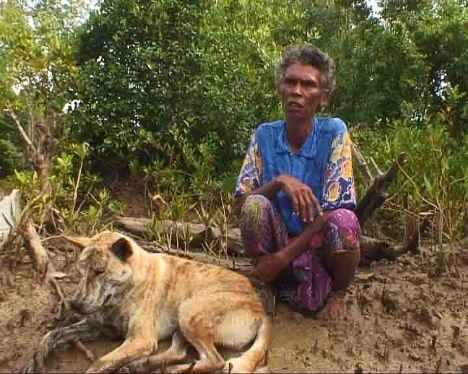
This is Jureerat Pechsai, nicknamed Deun.

She is a member of the Moken community – indigenous people living on the coast and islands on Thailand’s southern coast. Their nomadic lifestyle has earned them the name Sea Gypsies. In Thai, they are called Chao Ley — or people of the sea.

They traditionally live on small boats and move from place to place. When the Monsoon rains make the seas rough, they set up temporary huts on islands – such as Pra Thong Island, where Deun lives.

Pra Thong is an hour’s boat ride from the mainland city of Phuket — some conservationists call it one of the “Jewels of the Andaman” for its biodiversity. It is also an important nesting beach for turtles.

It was on this island that my colleagues from TVE Asia Pacific met and filmed with her in late 2006 for our Asian TV series, The Greenbelt Reports.

The Asian Tsunami of December 2004 devastated the Moken way of life. Their temporary huts were destroyed, and many families lost loved ones. The losses would have been greater if not for the mangrove forest close to the Moken village.

“Moken loves the water, the forest and everything. And we love the mangrove forest the most. The mangrove forest is like a living creature that has helped the Moken people for years. It’s our most beloved place on the island,” says Khiab Pansuwan, an older woman who is a leader in Deun’s community.

After the Tsunami, some Moken felt that they could not return to their nomadic lives. They have chosen to live on the mainland where they feel safe from the waves. Others who remained on their island had new, permanent houses built for them. But the Moken are quick to abandon these whenever they hear rumours of more Tsunamis.

Watch The Greenbelt Reports: Love Thy Mangrove on YouTube:

The mangrove replanting work on Pra Thong island is led by two women, Khiab and Deun.

Deun has been a volunteer with conservation organisations. She learnt about ecosystems and how to protect mangroves and endangered species like sea turtles. She can see many changes in her environment after the tsunami.

“After the tsunami, there are a lot of changes. We didn’t have much grass before, but now weeds are everywhere. The weeds are now more than grass,” says Deun. “In the past, we used to have more and more beach every year. But now the sea has come so close…”

khiab-pansuwan.jpg

The Tsunami’s impact is not the only factor affecting the mangroves here. Dynamite fishing, oil from boats, foam from fish and oyster nets are all damaging this life-saving greenbelt. Some people also cut down mangrove trees.

But Khiab and Deun are determined to rally everyone around to replant and regenerate their mangroves.

Says Khiab: “The community forest is part of the Moken people. We don’t want to cut the trees or clear it. We want to replant the trees so the forest is like before. We don’t want anyone to cut down trees because the mangrove forest saved many Moken lives.”

The two women are determined to rally everyone around to replant and regenerate their mangroves.

Replanted mangroves will ensure not only protection from the waves, but also a continued supply of shell fish and crabs – the main source of income and food for the Moken.

The Moken have traditionally managed the mangroves sustainably. They fish in different areas of the forest during the year, giving time for fish stocks to regenerate. Logging for firewood is done only in moderation, in designated areas.

But these mangroves are now under threat from outsiders who see it as a source of firewood and shell fish. Only a few Moken are left in the village to protect the forest from these intrusions.

Khiab and Deun have much work to do.

NOTE: We are now looking for more stories like this to be featured in the second Asian TV series of The Greenbelt Reports. See TVEAP website news story calling for story ideas.

All images and video courtesy TVE Asia Pacific

When will the next David Attenborough show up?

David Attenborough has done more to bring Nature and wildlife to the world’s television audiences than anybody else in the past half century.

Growing up in teh 1980s, I watched his pioneering series Life on Earth (1979) and The Living Planet. These series redefined how natural history documentaries were made, and inspired a whole new generation of film-makers and nature lovers.

Sir David Attenborough

Attenborough went on to make several more trail-blazing series, such as The Trials of Life (1990), The Life of Birds (1998) and The Life of Mammals (2002).

He has also produced a large number of stand-alone documentaries, and narrated an astonishing number of films and series, including the multi-award-winning Blue Planet (2001) and Planet Earth (2006).

Image courtesy Wikipedia Image courtesy Wikipedia Image courtesy Wikipedia

I have always been grateful for his inspiration. But Sir David earned my eternal respect when I read in his biography how he had given up British broadcasting’s most coveted post so he could concentrate on what he did best: making natural history films. From 1969 to 1972, he was BBC Television’s Director of Programmes (making him responsible overall for both BBC1 and BBC2), but turned down the offer to become Director General of the BBC. In 1972, he resigned his post and returned to programme making.

I recently came across the following news item, which reminds us that like all creatures big and small in the great Circle of Life that Sir David has so avidly told us about, he too is mortal. At 81, it’s time for the world to look for the next David Attenborough.

This item is from the latest newsletter of Film-makers for Conservation, a network organisation where my company, TVE Asia Pacific, has recently become a member.

New reality TV show to discover the next Attenborough

Join wildlife filmmaking finalist Bryan Grayson as he talks about his journey from engineer to wildlife film maker and discusses his hopes of being the next David Attenborough

David Attenborough, David Bellamy and Steve Irwin. All great men who have brought the wonder of nature to our front rooms. They have worked in some of the worlds most amazing and dangerous locations to show us the beauty, innocence and sometimes savagery of the animal kingdom.

Imagine filming rhinos in Africa, whales in the South Pacific or being within an arms reach of gorillas in the rainforest. Well now a unique new television project will follow six contestants as they embark on a demanding training course at the award-winning Shamwari Game Reserve in South Africa, where they will learn the essential skills and realities of creating a natural history documentary.

Thousands of people entered Animal Planet’s search for amateur film-makers to take part in a once-in-a-lifetime intensive filmmaking course with experts Andrew Barron and Lyndal Davies. The entrants, from across the globe, were filtered down to a final six and Bryon Grayson is the only UK finalist.

But exactly how do you cope with filming a charging herd of wildebeest, learn to track an elusive leopard and deal with stroppy presenters!? Here with the answers is the UK’s contestant, Bryan Grayson. He joins us to share some of his tricks of the trade and offers his advice to all other budding filmmakers.

Bryan Grayson joins us online at http://www.webchats.tv/webchat.php?ID=372 to discuss his hopes for being Animal Planet’s Unearthed wildlife filmmaker after taking part in this remarkable series.

Do you think you have what it takes to be a wildlife filmmaker? Enter here for your chance to appear in series two of UNEARTHED

Watch Unearthed promo video on Google Video

TVE Asia Pacific joins Film-makers for Conservation

Nepal’s Aankhijhyal is 500 — and counting!

Aankhijhyal is a Nepali word. It means window.

Aankhijhyal is today also a ‘brand name’ in Nepal. It’s Nepal’s most popular TV magazine programme on environment and social development, which recently produced its 500th edition.

Aankhijhyal logo NEFEJ logo

The half-hour programme has been produced regularly since May 1994. Now in its 13th year, it is one of developing Asia’s longest running television shows.

The landmark 500th edition was broadcast on 27 February 2007. In this special programme, its producers, the Nepal Forum of Environmental Journalists (NEFEJ), looked back at the interesting and challenging times they have chronicled and investigated.

And last night in Kathmandu, the Nepali capital, I sat down with a team of friends from NEFEJ to belatedly celebrate the occasion.

A dozen journalists, producers and film-makers joined us. We chatted away well into the night. There was no longer any worries about curfews and army check-points.

“We don’t often get together like this as one big group,” said Rabindra Pandey, head of Audio-Visual at NEFEJ. “Most of the time, we are too busy to socialise. We are chasing deadlines, or stories, or sponsors!”

There is much to cheer, both at micro and macro levels.

Sustaining a half-hour show on television is no mean feat in any part of the world, especially in a low income country like Nepal. Broadcasters here don’t put any money in programmes like Aankhijhyal . In fact, NEFEJ not only produces the show entirely at its own cost, but also pays for airtime on Nepal Television to get it out to the public! That’s the broadcast reality that many of our western colleagues are often unable to understand.

And the general feeling right now in Nepal is upbeat. After Nepal’s own People Power revolution of April 2006, people are hopeful that their ‘second chance in democracy’ can actually work better. While the streets of Nepal are as dusty and chaotic as ever, I can see far more tourists and far fewer soldiers on the roads now than on previous visits in recent years.

NEFEJ is a non-profit collective of journalists committed to communicating sustainable development issues. Foundecd 20 years ago, it has a much better record of democracy than Nepal itself: every year, office-bearers are democractically elected by its over 100 members. There is regular ‘change of guard’ at the top.

NEFEJ is also one of the oldest and strongest parters for us at TVE Asia Pacific.

Aankhijhyal is the organisation’s ‘crown jewel’. It’s the centrepiece of NEFEJ’s Audio Visual Department, and has been widely acclaimed for its investigative approach to sustainable development and social justice issues.

From land reform and agrochemical misuse to the conservation of heritage sites, and from the trafficking of women and children to HIV, Aankhijhyal has been covering a broad range of issues, concerns and controversies in the public interest. While remaining apolitical, the programme has also reflected the human, social and environmental costs of Nepal’s violent insurgency and pro-democracy struggle in recent years.

Filming Aankhijhyal - image courtesy NEFEJ

“Since its inception in 1993, we have come a long way and Aankhijhyal has managed to create awareness among the Nepalis on the issues related to environment and development,” says Rabindra. “Aankhijhyal still remains one of the most popular video magazines on Nepal Television.”

Aankhijhyal’s passing 500 editions is all the more significant because it has been sustained without a break by this non-profit cooperative of journalists. Whether or not external funding was available, NEFEJ has continued producing the programme – often using its own savings from other, better-funded projects.

And it was clear to me last night that they have no intention of resting on their laurels.

“There’s so much happening in Nepal today. We are living in a period of rapid change. We feel one half-hour show a week is not enough to capture the unfolding stories,” said NEFEJ’s current President, Sahaj Man Shrestha, himself a former CEO of a private TV channel in Nepal.

Image courtesy NEFEJ

Read TVE Asia Pacific news item: Nepal’s premier TV magazine Aankhijhyal is 500 (27 Feb 2007)

NEFEJ Aankhijhyal online archives

More about NEFEJ Audio-Visual Department

Read Indian magazine Down to Earth on Aankhijhyal

All images courtesy NEFEJ