True ‘People Power’ needed to fight climate change

Dealing with climate change – the biggest environmental threat faced by the planet today – requires building up a mass movement at the grassroots across the developing countries of the global South.

Such a movement might be unpopular not only with the Southern elite but also with sections of the urban-based middle class sectors that have been the main beneficiaries of the high-growth economic strategy that has been pursued since the early 1990s, a leading southern activist cautioned in Rome last week.

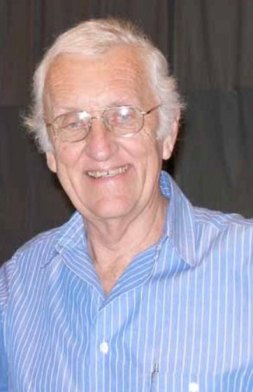
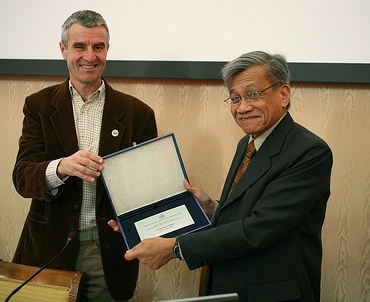
Speaking at the Greenaccord Media Forum on 10 November 2007, Walden Bello, Filipino academic and executive director of the Focus on the Global South (seen in photo below, on the right), dismissed the notion that Asian masses are inert elements that uncritically accept the environmentally damaging high-growth export-oriented industrialisation models promoted by their governing elites.

“It is increasingly clear to ordinary people throughout Asia that the model has wrecked agriculture, widened income inequalities, led to increased poverty after the Asian financial crises, and wreaked environmental damage everywhere,” he said.

prof-walden-bello-receives-plaque-from-andrea-masullo-of-greenaccord.jpg

People in the South are open to an alternative to a model of growth that has failed both the environment and society, he said. For instance, in Thailand, a country devastated by the Asian financial crisis of 1997 and wracked by environmental problems, globalization and export-oriented growth are now bad words.

He added: “Thais are more and more receptive to the idea of a ‘sufficiency economy‘ promoted by popular monarch King Bhumibol, which is an inward-looking strategy that stresses self-reliance at the grassroots and the creation of stronger ties among domestic economic networks, along with ‘moderately working with nature'”.

But the southern countries cannot and must not rely on their elite to provide leadership, he said. “What is clear is that in most other places in the South, one cannot depend on the elites and some sections of the middle class to decisively change course. At best, they will procrastinate.”

The fight against global warming will need to be propelled mainly by an alliance between progressive civil society in the North and mass-based citizens’ movements in the South.

Delivering the Lectio Magistralis to conclude the 4-day international gathering of journalists, activists and experts concerned about the environment, Prof Bello traced the evolution of social movements on environment and public health in East Asia, Southeast Asia and South Asia over the past few decades.

Read the test of a similar talk given by Walden Bello at the Trans National Institute in October 2007.

Prof Bello acknowledged that the environmental movements in the South and North have seen their ebbs and flows. “As with all social movements, it takes a particular conjunction of circumstances to bring an environmental movement to life after being quiescent for some time or to transform diverse local struggles into one nationwide movement.”

The challenge facing activists in the global North and the global South is to bring about those circumstances that will trigger the formation of a global mass movement that will decisively confront the most crucial challenge of our times.

And climate challenge is one among several challenges we confront today.

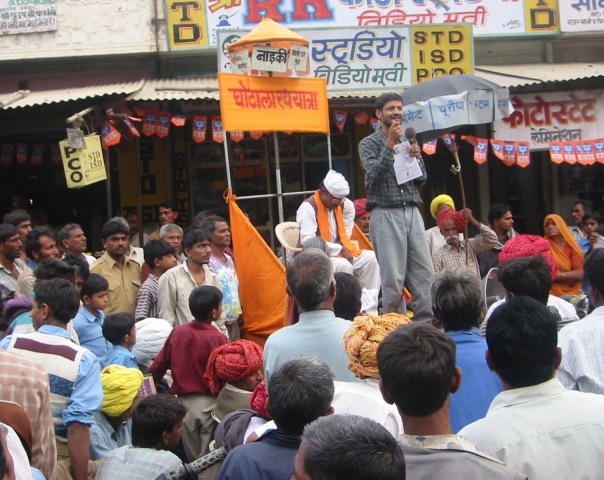
campaigning-for-clean-elections-in-rajastan-india.jpg


Meeting photos courtesy Adrian Gilardoni’s Flickr account

People power India photo courtesy TVEAP image archive

Oz challenge to Japanese whaling – on YouTube!

Who said YouTube is only for activists and video enthusiasts to share their content?

The above appeal is by Australia’s Environment Minister Malcolm Turnbull, who’s using the popular new media platform to reach out to children and young adults in Japan in a campaign aimed at stopping Japan’s stubborn insistence on whaling.

The Australian Department of Environment has taken out a YouTube channel where this and several other videos are on offer.

This is very encouraging – to see a government putting aside diplomatic niceties and taking a campaign right to the heart of a society that is still culturally attached to whale meat. For sure, Australia is also active in inter-governmental negotiations to sustain the global ban on whaling, but addressing the issue from the demand side and future generation angle can make the anti-whaling positions stronger.

Here’s how Reuters reported the story this week:

CANBERRA, Oct 9 (Reuters) – Australia has taken its battle against Japanese whaling in the Antarctic to the Internet, with a new YouTube campaign unveiled on Tuesday that targets Japanese children.

“Can you imagine what life on Earth would be like without these magnificent creatures? Hundreds of years of whaling have nearly wiped them out,” Australia’s Environment Minister Malcolm Turnbull says in the video, subtitled in Japanese.

Japan plans for the first time to hunt 50 humpback whales in the Antarctic over the coming summer, with the endangered animals currently migrating south along the Australian coast. Japan also plans to hunt 935 minke whales for scientific research.

The Japanese whaling fleet, hampered by a fire on the factory processing ship Nisshin Maru last February which killed one crewman, was recently bolstered by the addition of a new chaser vessel.

Australia’s government, facing re-election in weeks, has dismissed as futile the opposition’s calls for legal action over Japanese whaling in Australia’s Antarctic Whale Sanctuary, which is not recognised by other nations.

Japan’s fisheries agency, confident its whaling rights will be confirmed, has challenged any country to take it to the International Court of Justice in The Hague

Turnbull said Canberra would fight in the court of public opinion.

Read the full story on Reuters AlertNet

Greenpeace anti-whaling website

Here’s an animated anti-whaling TV commercial I came across on YouTube that takes a different look at the same issue. It was produced by Saachi & Saachi Poland:

Geography lesson that saved many lives: The story of Tilly Smith and Asian Tsunami of 2004

ISDR image

Today, 10 October, is the International Day for Disaster Reduction. The theme this year is “Disaster Risk Reduction Begins at School”.

This year’s campaign, spearheaded by UN International Strategy for Disaster Risk Reduction aims “to inform and mobilize Governments, communities and individuals to ensure that disaster risk reduction is fully integrated into school curricula in high risk countries and that school buildings are built or retrofitted to withstand natural hazards.”

Buried beneath this development jargon that UN agencies are so fond of is something very important: sensitising the next generation about living with hazards can help make our societies better able to cope with disasters when they do happen.

And you never know when an informed and alert school kid could save the day — and many lives.

A good example came from Thailand when the Indian Ocean Tsunami arrived without any public warning on 26 December 2004.

ISDR BBC

Tilly Smith, an eleven-year-old British schoolgirl, was on holiday on Maikhao Beach in Thailand with her family when the tsunami hit. Just a few weeks earlier, she had studied tsunamis in school — and immediately recognized the signs of the receding sea as a sign of an impending disaster. She warned her parents, which led to all the hotel guests being rapidly moved from the beach.

This simple, timely action by a single schoolgirl saved the life of dozens of people. Tilly’s story highlights the critical importance of basic education in preventing the tragic impacts of natural disasters.

Watch her story on YouTube:

This 5 min video, produced by UN/ISDR in 2005, is available in English, French and Spanish. Watch the English version on their website, which is now hidden under all that bureaucratic babble:
Higher resolution WMV file – more suited for broadband Internet connections
Lower resolution WMV file – will play better on narrowband Internet connections

According to the Wikipedia, Tilly’s family have declined requests to be interviewed by commercial and national broadcasters, but Tilly has appeared at the United Nations in November 2005, meeting Bill Clinton the UN Special Envoy for Tsunami Relief, and at the first year anniversary in Phuket, as part of the campaign to highlight the importance of education.

In December 2005, Tilly was named “Child of the Year” by the French magazine Mon Quotidien. On the First Anniversary of the Official Tsunami Commemorations at Khao Lak, Thailand on December 26, 2005, she was given the honour of closing the ceremony with a speech to thousands of spectators which read in part:

National Geographic online: Tsunami Family saved by school girl’s geography lesson

BBC Online: Award for tsunami warning pupil

Playing games on disasters: we do and we understand!

Today, 10 October, is the International Day for Disaster Reduction. So we’re going to talk about playing games on disasters.

Yes, that’s right: games. Disasters are serious phenomena, but there’s no reason why disaster awareness and preparedness have to be all dull and dreary.

There’s a old Chinese saying: “I hear and I forget; I see and I remember; I do and I understand.” Disaster preparedness and training are now moving more into the realm of understanding by doing — simulations or drills for community evacuation, and games that allow players to prevent or manage a disaster.

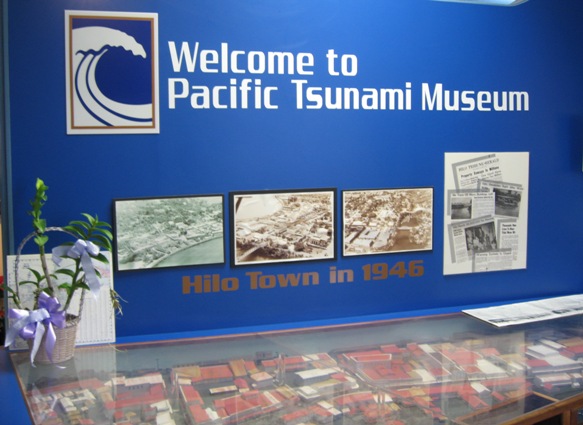
I first played such a game in January 2007 when, while in Honolulu for a conference, I took the day off and flew to Hilo where the Pacific Tsunami Museum is located. The volunteer-run museum, based in what is known as the tsunami capital of the world, engages local people and foreign visitors (including curious US mainlanders) on the science, history and sociology of tsunamis.

pacific-tsunami-museum-in-hilo-hawaii.jpg

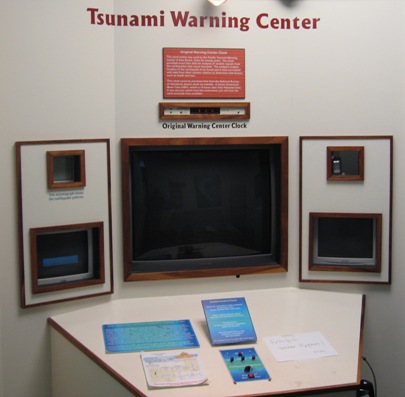
A basic game there allows a visitor to be play the role of Director of Pacific Tsunami Warning Centre (PTWC) , a US government institute that monitors seismic activity and has a mandate to issue alerts, watches or warnings to all countries in and around the Pacific Ocean. The game allows players to choose one of three locations where an earthquake happens — Alaska, Chile or Japan — and also decide on its magnitude from 6.0 to 8.5 on the Richter Scale.

In the real PTWC, five geophycisists are on duty round the clock. If the magnitude exceeds 7.5, the epicentre is located. If it’s in an area likely to cause a tsunami, a tsunami watch is sent to nearby coasts and a tsunami watch is set for areas with a travel time more than three hours away. Messages are sent to the tide observers for reports on the first wave, and telemetered water level gauges are checked. It’s by quickly assessing the seismic, sea level and historical data that scientists at PTWC decide if a warning is needed for areas already placed under a tsunami watch.

tsunami-warning-simulation-game-at-ptm-in-hilo.jpg

Since the system was set up in 1947, it has never missed warning of a damaging tsunami, but there have been a number of very expensive evacuations that turned out to be unnecessary. “These precautions are needed to ensure public safety, but scientists are working to minimise unnecessary warnings without ever missing a hazardous event,” the Tsunami Museum panel explained.

It’s revealing to play the role of a scientist who must quickly marshal lots of information and decide on whether or not to issue a warning. The cost of inaction can be high — but a false alarm doesn’t come cheap either.

I played the game three times, and each time erred on the side of caution — costing the hapless Hawaiian tax payers lots of money.

In real life, those who have their finger on the alert/warning button have to take many considerations into account. Repeated false alarms can erode public confidence in early warning systems. But suppressing a warning on a real breaking disaster — such as what happened in Thailand when the Indian Ocean Tsunami broke in December 2004 — can be truly devastating.

I don’t envy those who have to make this decision as part of their daily work. But after playing the game, I appreciate their challenges a great deal better.

Read my SciDev.Net essay (Dec 2005) The Long Last Mile on challenges in communicating early warnings on disasters

Read more about Tsuamis on Wikipedia

Taking it personally: Anita Roddick’s Arabian Nights

“I am overwhelmed by the potential of the web to link like-minded people and move them to mass-action,” the late Anita Roddick once wrote. “We are excited to experiment in other media too — perhaps subversive billboards, or a television program, or other print projects. As someone once said, we are only limited by our imaginations.”

In my personal tribute to Anita, written shortly after her untimely death on 10 September 2007, I touched on her extraordinary skills as an activist-communicator. It was in connection with a global television series that I last met Anita in person.

In the summer of 2003, I was invited to join a small group of people at Anita’s country home, Highfield House, in Arundel, Somerset, England. It was a one-day brainstorming on the future of Hands On, a global TV series that she’d been hosting for three years.

Hands On stood out as a beacon of hope amidst so much doom and gloom on television -– it featured environmentally-friendly technologies, business ideas and processes that have been tried out by someone, somewhere on the planet.

It covered a broad range of topics, from renewable energies, waste management and information technology to food processing and transport. The aim was to showcase good news and best practices so they could inspire others — entrepreneurs, communities or even governments — to try these out.

The series was first broadcast on BBC World and was redistributed to dozens of TV channels worldwide through my own organisation, TVE Asia Pacific, and others. It was backed by the reputed development agency Intermediate Technology (now called Practical Action).

Watch a typical Anita introduction of Hands On and a sample story in capsule form:

Anita brought her usual passion and dynamism to our discussion, energising the development and communications professionals enjoying her hospitality. Covering good news was already going against the media’s grain, but it was harder to keep at it year after year, especially when the media landscape was changing rapidly. It was a challenge to stay engaged and relevant to viewers across Africa, Asia Pacific, Latin America and Europe.

During the meeting, Anita asked me to sum up the World Summit on the Information Society (WSIS) which was coming up in a few months. Putting aside all the ‘developmentspeak’ of UN agencies, I described it as an attempt to put new information and communication technologies (ICTs) to work for the poor and disadvantaged of our world. Or get the geek tools to work for the meek. (I still think my phrase ‘Geek2Meek’ sounds better than the official ICT4D, where D stands for development.)

We agreed that civil society had to seize the opportunities offered by these new media tools. (A few months later, Anita presented two Hands On editions called ‘Communicating for Change’ on BBC World that profiled some initiatives doing just this.)

Always fond of analogies, I likened Hands On to Arabian Nights, which, according to legend, a young woman had spun from her rich imagination for 1,001 nights to save her life from an evil king. In Hands On, I suggested, we are telling stories to save not one life, but all life on Earth.

Read my July 2007 post: Telling stories to save ourselves…and the planet

Anita quite liked my analogy. She was always a good story teller, and had so many good stories to tell (A favourite opening line from her biography, Body and Soul: “There I was, with my panty down to my knees.” You’ll never guess why until you read that story…)

She challenged everyone at that meeting to make Hands On more interesting to younger viewers in different cultures. We recognised that offering one media product to a global audience was a tough sell: most people prefer a home-made, local story.

But then, she’d built the entire Body Shop chain with a largely common product offering, even if raw materials were sourced from different parts of the globe. She never imposed the Body Shop experience on our meeting, but it was sometimes instructive to look at how a globally available product could still be localised.

hands-on-in-asia.jpg hands-on-in-asia.jpg

This is just what we did in the months and years following the Arundel brainstorming. We rolled out the ‘Localising Hands On in Asia’ project, which saw several dozen Hands On stories being versioned into local languages and distributed through broadcast and narrowcast means in Cambodia, India, Laos and Nepal. The two-year project, generously supported by Toyota, was hugely successful in delivering the Hands On stories to millions of people who would never have been exposed to it in original English.

We were thrilled when our localising work inspired similar local TV shows in three countries (Cambodia, Nepal and Laos). Yet it was the narrowcast outreach that was more rewarding.

Read about one narrowcast experience in my April 2007 blog post: Anita Roddick, Angkor Wat and the development pill

Coming soon: Who killed Hands On, one of the most successful multimedia initiatives in recent years to communicate development?

Ozzy Ozone: The Little Molecule on a Big Mission

This is Ozzy Ozone. He is an energetic, cheerful little ozone molecule – part of the ozone layer in the upper atmosphere that prevents the Sun’s harmful ultra-violet rays from coming through.

Today, 16 September 2007, is a day to celebrate Ozzy Ozone. Because it’s the 20th anniversary since the nations of the world adopted the Montreal Protocol to phase out chemicals that harm the ozone layer.

It was a landmark international environmental treaty — one which has galvanized governments, industry and society into sustained action for two decades to give using close to a hundred chemicals, all of which – when released into the air – go up to damage the ozone layer.

Ozzy Ozone has been part of the many-faceted public education programme mounted by the UN Environment Programme (UNEP) to tell everyone how harmful UV rays are to our health, and how Ozzy and his fellow ozone molecules are literally protecting life on earth from being zapped out.

In this video, Ozzy Ozone and Alberta the Albatross take a voyage of discovery to find out exactly who and what is attacking the ozone layer and how children can play an important role in making a difference.

Watch Ozzy Ozone online:

Order Ozzy Ozone on video tape or DVD from TVE Asia Pacific

Ozzy himself is now 10 years old. He was created by a graphic artist in Barbados, as part of a government-supported campaign to raise public awareness on ozone layer thinning. This cartoon character served as a “mascot” and was very effective in raising awareness in Barbados. The cartoon series has been printed in the local newspapers on several occasions. Additionally, promotional items produced for local public awareness and education campaigns using the Ozzy graphic include posters, key rings, rulers, erasers, refrigerator magnets, mouse pads, pens, pencils, stickers, and envelopes.

The character was enduring and popular that UNEP struck a deal with Barbados to ‘globalize’ Ozzy. An animated video was produced, along with a dedicated website, comic strips and other media adaptations.

Read more about the origins of Ozzy Ozone

Ozzy Ozone website

Running the planet without a user-guide

There is a best-selling small book titled Everything Men Know About Women. It’s authored by Cindy Cashman, writing under the pseudonym Dr. Alan Francis.

The book is revealing as it’s simple: every page is completely blank.

I was reminded of this little book while listening to some of the world’s leading environmental scientists and conservationists speak this week during the 4th IUCN Asia Conservation Forum, held in the Nepali capital of Kathmandu, 10 – 13 September 2007.

Expert after expert admitted how limited our understanding still was of the planet’s intricate and inter-linked natural systems. Some processes — such as how climate change would impact different geographical regions, natural cycles and ecosystems — are only just beginning to be understood. We know more about the surface of the Moon than about the bottom of the oceans on our planet. We have only had a few recent glimpses into the large and complex world of micro organisms.

In short, many pages of our planet’s ‘operations manual’ or user guide are still completely blank!

Read related post: Talking Big Foot in YetiLand – Got a spare planet, mate?

Yet the ecological threats are real, and they are here. The pressures we humans exert on our environment is increasing by the day. Deferring action until we have better knowledge and understanding is no longer an option.

Instead, we now have to use a combination of the best current knowledge, common sense and intuition to address a multitude of formidable environmental issues including the growing piles of our waste, intensification of disasters, march of desertification, changing climate as well as the poisoning of our freshwater, seas and the air. Some of these degradation factors feed on each other, producing more damage – and rude shocks – than each one could on their own.

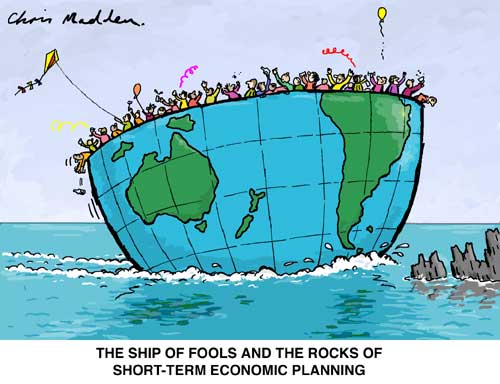
ship-of-fools.jpg

In this scenario, the conservation community — in Asia and elsewhere — faces three major challenges:

First, they just have to doggedly persist in gathering new knowledge, and deriving understanding and insights on how our planet works. This is not research for its own sake, or mere academic theorising. It’s now a pre-requisite for survival.

Second, they have to find smart and strategic ways to fill up the ‘blank pages’ in our planet’s user-guide. In the 1970s, they used to say we have been handed over a planet without that manual and it seemed we had time to figure things out. The truth is, time is running out and we have to write that manual as we go along.

Third, it’s vital that the user-guide is widely shared using every available advocacy and dissemination method, tool and medium. Staying within comfort zones and talking to each other in technical jargon is not enough. This is the point I personally stressed at the meeting: use modern ICT tools to discuss, debate and engage everyone in changing their ways where needed.

The current conservation imperative reminds me of what H G Wells said: History is a race between education and catastrophe. Right now, it seems, we are just staying ahead to avoid disaster.

Thanks to initiatives like the Millennium Ecosystem Assessment, those blank pages in the Earth’s user guide are filling up.

Strange as it sounds, the book’s already filled pages have to be be peddled far and wide even as the other pages are being written.

Talk about a race between education and catastrophe!

Crossing the other Digital Divide: Challenge to conservation community

Digital Divide refers to the gap between those who have regular, easy access to modern information and communication technologies (ICTs) and those who don’t. In the past decade, the IT industry and development community have launched various initiatives to bridge this divide. The One Laptop Per Child project is among the better known examples.

As digital technologies and media gain momentum and wider coverage than ever before, another kind of digital divide has emerged. This week in Kathmandu, during the Fourth Asian Conservation Forum, some of us have been talking about this new divide — between the Digital Natives and Digital Immigrants.

This latter divide is mainly a product of age, not socio-economics. Market research and sociological studies now confirm that today’s younger people – raised on a diet of mobile phones, video games and mp3 (music) players – have radically different ways of accessing, receiving and coping with information.

Recognising this new Digital Divide is vital for communication and advocacy work of conservation groups, such as IUCN – The World Conservation Union, conveners of the Kathmandu forum.

For nearly 60 years, IUCN has been an effective platform for knowledge-based advocacy. Using scientific evidence and reasoning, it has influenced conservation policies, laws and practices at country and global levels. The world would be a worse place to live in if not for this sustained advocacy work by thousands of experts and activists who were mobilised by IUCN.

Much of that work has been accomplished through the classical advocacy tools: scientific papers, books, conferences and, in recent years, ‘policy dialogues’ — meetings where experts and activists would sit down and talk things through with those who make policy in governments and industry.

IUCN continues to pursue all these methods, with creditable impact. IUCN’s Red List of Threatened Species, whose latest edition is being released today (12 September 2007), is among the best known examples of how the Union’s work informs and inspires urgent action for saving the world’s animals and plants driven to the edge by human activity.

To remain similarly effective in the coming years, IUCN — and the rest of the conservation community — need to evolve and adapt to changing realities in human society. One such reality is the proliferation of ICTs in the past two decades.

The International Telecommunications Union (ITU) announced recently that the world’s telephone connections had passed four billion. Largely thanks to the explosion of mobile phones in the majority world, the total number of telephones (fixed and mobile) had quadrupled in the past decade.

While exact figures are hard to come by, it is estimated that around 1.17 billion people (almost 1 in 6 persons) have access to the Internet, even though varying levels of quality.

These are the more widely quoted figures, but the media mix keeps diversifying even as the size of the overall ‘ICT pie’ keeps increasing. For example, the 1990s saw a channel explosion in both FM radio and television across much of Africa, Asia Pacific and Latin America, hugely increasing viewers’ choice and enhancing the outreach of broadcasting. The popularity of video games (and now, online games) has spawned trans-boundary subcultures that were inconceivable even a decade ago.

It is this bewilderingly media-enriched world that IUCN’s members and experts are trying to engage, hoping to persuade everyone — from governments and industry to communities and individuals — to live and work as if the planet mattered.

In Kathmandu this week, I argued that scientific merit and rational (and often very articulate) reasoning alone won’t win them enough new converts to achieve significant changes in lifestyles, attitudes and practices. To be heard and heeded in the real world outside the charmed development and conservation circles, we need to employ a multitude of platforms, media and ICT tools. And we have to talk in the language of popular culture.

We have come a long way since the 1980s, with the new ICTs evolving parallel to our own understanding of sustainability.

When we were involved in processes leading up to the Earth Summit in Rio de Janeiro, back in 1992, most of us were still using fax and snailmail to exchange information. Email was confined to academic circles and the web was not even conceived.

By the time Johannesburg Summit was held a decade later, email had come into wide use and static websites were being used to disseminate information and opinions. E-commerce and music file sharing were gaining momentum.

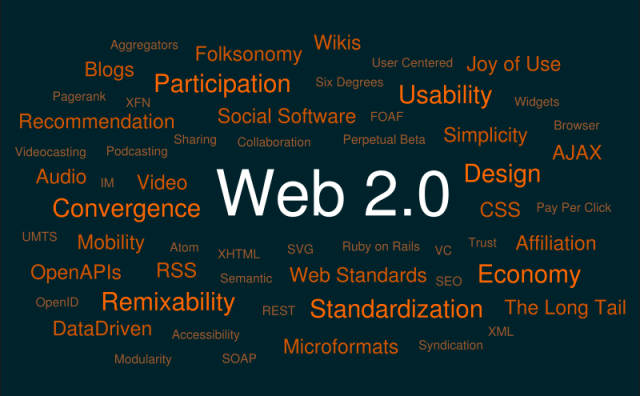
Just five years on, the rapidly evolving web 2.0 offers us more tools and platforms to not just engage in one-way dissemination, but to truly communicate with a two-way flow. Wikis allow participatory document drafting. Web logs or blogs enable faster, easier expression and discussion. YouTube and other platforms have suddenly made sharing of moving images much simpler (assuming we have sufficient bandwidth).

In fact, connectivity is improving in many parts of the world, though there still are many gaps, frustrations and cost issues to be resolved. Young people, under 25 years, are leading the charge in entering and ‘colonising’ the new media. Social networking platforms such as MySpace and FaceBook are only the tip of this cyber iceberg. And virtual worlds — such as Second Life, with over 8 million online members — are moving in from the periphery to occupy a clear niche in our new digital world.
800px-web_20_mapsvg.png

Every indication is that these trends will continue. IUCN and other conservationists, with their rigorous scientific analysis expressed in technical papers, print publications and the occasional op ed article in a broadsheet newspaper, have to navigate in this whirlpool — and it’s not easy. But their choice is between engagement and marginalisation. The planet cannot afford the latter.

I’m not suggesting that conservation scientists and organisations must drop their traditional advocacy methods and rush to embrace the new ICT tools. But they need to survey the new media landscape with an open mind and identify opportunities to join the myriad global conversations.

A good part of that is what intellectuals might see as chatter, or tabloid culture. It’s precisely this mass tabloid audience that needs to be engaged for conservation.

There are inspiring examples of how other sections of the development spectrum are seizing new media opportunities:

* Some humanitarian groups now use Google Earth online satellite maps for their information management and advocacy work, for example in Darfur, Sudan, and the Central African Republic.

* In an attempt to name and shame offenders, human rights activists are using YouTube to post incriminating video evidence of human rights abuses worldwide. The influential Foreign Affairs journal recently called this the YouTube Effect.

Fortunately, at least a few Asian conservation leaders already appreciate this enormous new media potential. In Kathmandu, Surendra Shrestha, UNEP’s regional director for Asia Pacific, echoed my views.

“My young kids spend several hours each weekend in virtual worlds. We need to get in there and engage them with our content,” he said. “To do that, we have to get inside their minds, and speak their language.”

Shrestha mentioned how UNEP in Asia is attempting this with ICT-based projects for youth, such as e-generation which, according to him, has involved half a million young people.

Such initiatives are beginning to happen, thanks to a few conservationists who are pragmatic enough to exploit the inevitable. But much more needs to be done to make conservation ‘cool’ and hip for Asia’s youthful population, half of them under 35, and many of them Digital Natives.

For sustainability measures to have a chance of success, these upwardly mobile, spend-happy youth have to be reached, touched and persuaded. If it takes tabloid tactics to achieve this, so be it.

And given Asia’s growing economic clout and ecological impact – with China and India leading the way – the fate of the planet will be decided by what is done, or not done, in our region.

While they debate the finer points of conservation strategies and activities in Kathmandu, Bangkok and other cities across our massive region, Asia’s conservation community must quickly cross the new Digital Divide that currently separates them from Digital Natives.

Declaration of interest: I was part of IUCN Sri Lanka Secretariat (1992-1994), where I started its communication division, and have been a member of IUCN Commission on Education and Communication since 1991.

Read my April 2007 post: Do ICTs make a difference?
Talking Big Foot in Yeti Land: Got a spare planet, mate?

The names Yeti and Meh-Teh are commonly used by the local people to describe the Abominable Snowman said to inhabit the deep Himalayan valleys of Nepal and Tibet. Most scientists consider this legendary ape to be part of cryptozoology – which searches for creatures said to exist but have never been documented.

But this does not take away from the allure of Yeti – it’s like the North American fascination with Big Foot.

I’m spending the week at the 4th Asia Conservation Forum in Kathmandu, organised by IUCN, the World Conservation Union. Here, we have been talking about another kind of Big Foot, and the increasingly crushing footprint that this assertive creature stamps everywhere.

This, of course, is a reference to us Homo sapiens – and the growing ecological footprint (EF) that our species is generating.

EF quantifies our demand on Nature and natural systems. It measures the amount of biologically productive land and water required to meet our demands (for food, timber, shelter), and to absorb the pollution we generate.

Using this assessment, it is possible to estimate how many planet Earths it would take to support all of humanity if everybody lived a given lifestyle. For example, if everyone aspires to European lifestyles, we are going to need three planets. And for American way of life, four.

As of now, the Earth is the only naturally habitable planet that we know and have.

The term and concept of Ecological Footprint were proposed in 1992 by William Rees, a Canadian professor at the University of British Columbia.[1] In 1995, Rees and coauthor Mathis Wackernagel published Our Ecological Footprint: Reducing Human Impact on the Earth.

The Kathmandu meeting’s first substantive session, on the Future of Sustainability, heard how we are dangerously close to the Earth’s tipping point. Indian development thinker Ashok Khosla, UNEP’s regional director Surendra Shrestha and other leading analysts presented unmistakable indicators for this trend.

This resonates with a new report that came from WWF in late 2006, which concluded that our global footprint has already exceeded the earth’s bio-capacity by 25% in 2003. This meant that the Earth could no longer keep up with the demands being placed upon it.

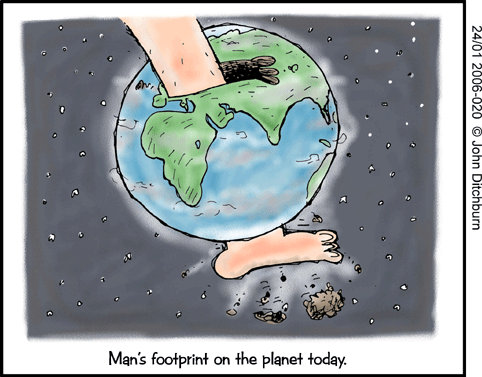
2006-020-footprint-on-the-planet.gif

The WWF Report has presented this graphically by sorting countries as eco-creditors and eco-debtors. Much of Asia falls into the latter category (map, below, courtesy BBC Online):


So here’s the news headline from YetiLand: we have finally met Big Foot. And it is us.

How short is short today? Packaging Nature for today’s television viewers

On 15 July 2007, I wrote about the award-winning natural history film-maker Neil Curry, based in South Africa, whom I last met during the Japan Wildlife Film Festival in Toyama in the summer of 2005.

Most recently, Neil made The Elephant, the Emperor and the Butterfly Tree, which has won several of the industry’s top awards.

I’ve since heard from him, and want to share some of his views on how best to package Nature and wildlife for today’s easily-distracted, attention-challenged audiences. He is responding to my post on 13 July 2007 titled Mine is shorter than yours, yipee!

neil-curry.jpg

He says:

‘Mine is shorter than yours….’ is one of the issues I’ve been going on about for years and I’m delighted that Friends of the Earth has now come up with a competition for one-minute films. This ridiculous thing of the ‘standard’ broadcast slot for bluechip wildlife programmes being 52-minute is, in my opinion, one of the main reasons why the public’s view of Nature has become so ‘warped’.

You can’t sustain a 52-minute wildlife film without drama – so we end up with this on-going emphasis on killing, sex, things that are supposedly deadly to humans (everything from snakes and great white sharks to mosquitoes), and dramatic confrontations between macho men – and women – and animals. By insisting on these long films, television itself has actually ‘created’ the audience for wildlife violence – and I’ve been told by more than one commissioning editor that audiences aren’t interested in “place” and “habitat” films any more, they want to see big animals doing exciting things.

In short, Dallas with animals – wildlife “reality-TV”.

Based on my own experience, that’s rubbish. Yes, audiences want a well-told story but they can be equally fascinated by quite prosaic things in the complex inter-relationships of nature, provided the story is told properly. They don’t need all this ‘red in tooth and claw’ stuff. The superb, The Queen of Trees that is currently doing the rounds is a good example – as is the on-going popularity of Attenborough and some of the BBC’s mega-series.

In fact, the over-dramatised programmes often give a quite distorted view of what wildlife is really like. Most creatures don’t spend all their time fighting and killing one another, or looking for human beings to threaten and attack. But if film makers, no matter how serious they are about telling the truth, want to eat, have somewhere to live, educate their kids and so on, they simply have to comply with what the programmers want – and thus, the cycle continues. Of course, it sometimes backfires. Some years ago – unfortunately I can’t remember the exact details now – research in the UK found that school children on field trips into the countryside were bored, because “nothing was happening”. Wildlife programmes on television had led them to expect nature to be full of continuous action and excitement. If children find real nature and the countryside “boring”, imagine how that will influence them when they grow up and find themselves in positions of authority where they may have to make decisions about siting roads, factories, quarries and so on in otherwise unspoilt but “boring” countryside.

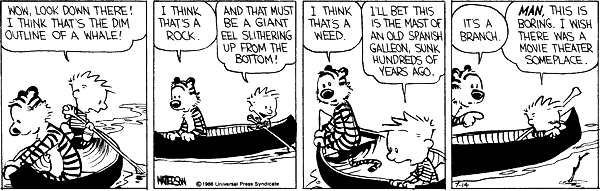
nature-is-boring-have-a-movie.gif

If television would just take some of their hour-long wildlife slots and break of them into shorter segments of 30 or even 15 minutes, they would open up the screens to hundreds, perhaps even thousands of fascinating stories about some of the wonders of nature that are astonishing and intriguing, and that would grab audience attention – without any of the drama that is needed to sustain 52 minutes. In my own files I have dozens of stories like that – and so probably, do most other wildlife film makers – but we just never get the chance to tell them because there’s almost no market for short wildlife films on television.

Lord Reith, father of the BBC, said the job of broadcasting was to inform, educate and entertain – but nowadays unfortunately, much of wildlife programming seems to have got itself stuck solely in the entertainment category. It’s a pity because it means a lot of stuff that could give audiences a better understanding of the other life we share this planet with, is largely kept off our screens.

In the circumstances, it’s a miracle that The Elephant, the Emperor and the Butterfly Tree ever got made. It says a lot for the courage and acumen of Mike Gunton, who was commissioning editor on The Natural World at the time, that he was prepared to buck the trend and take it on. There’s no sex, no killing, no violent confrontations – just a boring old tree and a lot of small-scale interactions going on around it, plus a few examples of the dreaded Homo sapiens (who doesn’t even exist in Nature if lots of the wildlife TV programmes are to be believed).