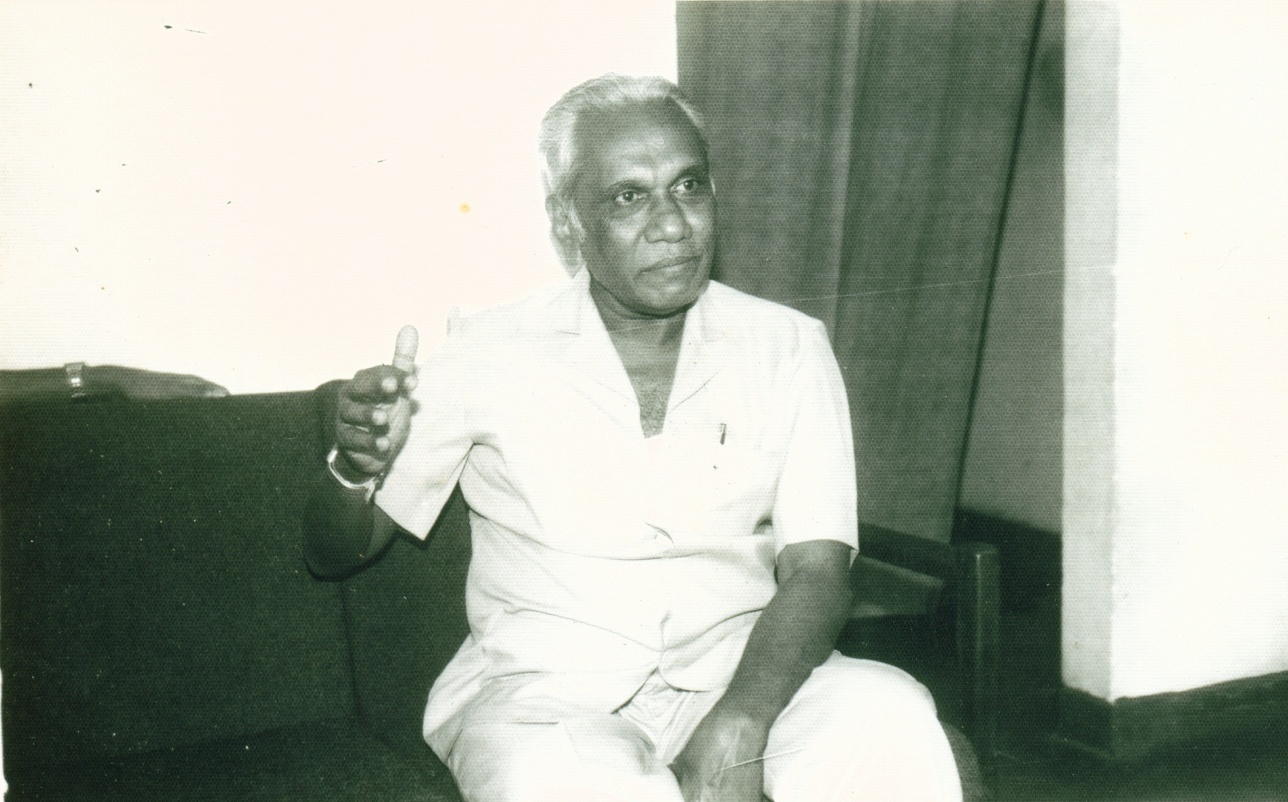
Edwin Ariyadasa photographed by Nalaka Gunawardene in 1986 during their first interview
Edwin Ariyadasa, who completed 91 years on 3 December 2013, is one of two grand old men of Lankan journalism still practising their craft (the other being D F Kariyakarawana, also 91).
The veteran journalist has been active in his profession for nearly all of Sri Lanka’s post-independence years. During that time, he has played a variety of complementary roles: feature writer, newspaper editor, columnist, radio and TV host, journalist trainer, author and translator among others. He continues to juggle many of these and has no retirement plans.
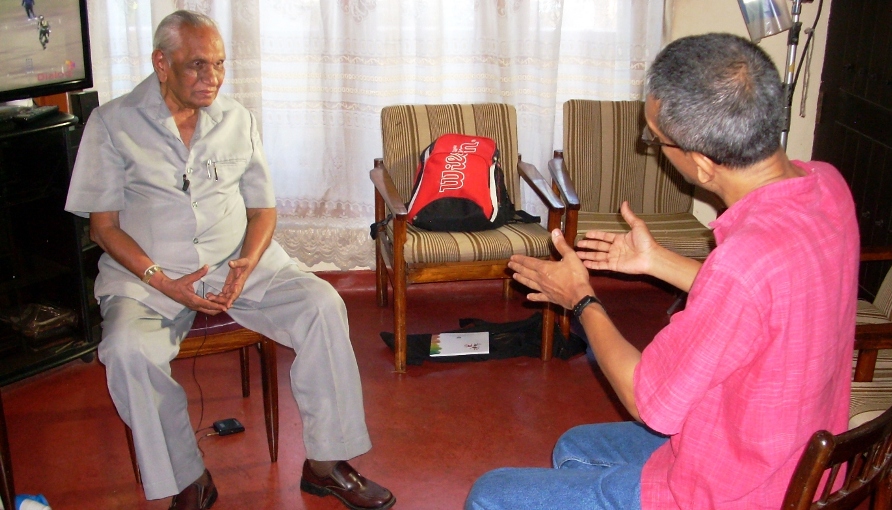
In October 2012, I filmed a wide ranging interview with Ariyadasa as he was heading to his 90th birthday. Having grown up reading his output in Lankan newspapers in Sinhala and English, and then having collaborated with him in various public media activities for much of my own media career, I was keen to capture his memories and reflections.
It took me over a year to get the long interview edited into three video segments, and also to have it transcribed, but it’s finally done. Groundviews.org has just published it:
Nalaka Gunawardene in conversation with Edwin Ariyadasa
As I note in my introduction:
In this interview, the nonagenarian looks back at journalism and broadcasting in Sri Lanka for over half a century. His reminiscences are significant for several reasons. He recalls a time, only a generation ago, when newspapers produced by highly committed editors and journalists commanded readers’ respect as a trusted source of public information and commentary. Having played a central role in pioneering mass media education and television broadcasting in Sri Lanka, he wonders what went wrong along the way to arrive at the banality and superficiality that dominates much of the Lankan media today despite advanced technologies for production and distribution.
In that sense, this is more than mere nostalgia of an individual or the simple bewilderment of an earlier generation. Introspection from a media guru like Ariyadasa can provide the impetus for much-needed reflection for the media industry which often hesitates to turn the spotlight upon itself.
Ravaya, Sri Lanka’s only newspaper owned by its journalists and editors, has embarked on a process to modernise itself — and sparked off a debate on how new investments should be raised. Some loyal readers are concerned what might happen to the newspaper’s editorial independence when private capital comes in.
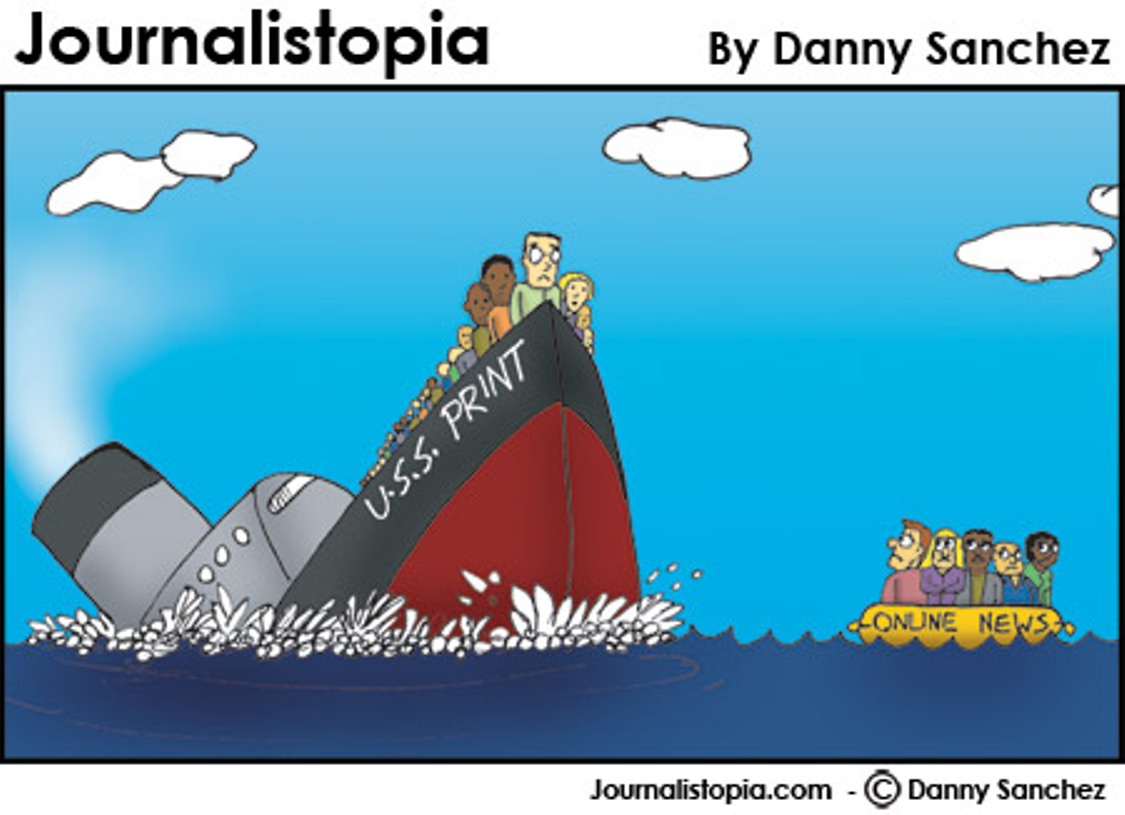
In this week’s Ravaya column, I place this debate in the context of economic survival challenges of the newspaper industry worldwide. I take the experience of the Guardian (UK) and the New York Times to explore what changes in strategy and funding they have adopted, and with what degree of success.
The biggest challenge, I argue, is that the newspaper industry must find how to engage the web as a central part of its content creation, dissemination and archiving.
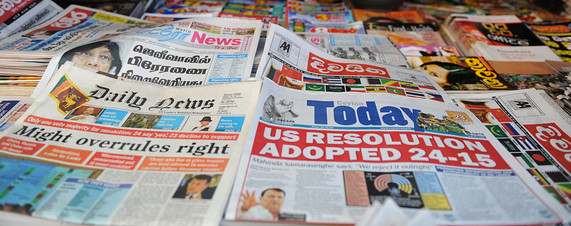
“Sri Lanka’s newspaper history dates back to Colombo Journal (1832) which apparently had a short but feisty life before it invoked the ire of the British Raj. Nearly two centuries and hundreds of titles later, the long march of printer’s ink — laced with courage and passion – continues.
“How long can this last?
Print journalism’s business models are crumbling in many parts of the world, with decades old publications closing down or going entirely online. This trend is less pronounced in Asia, which industry analysts say is enjoying history’s last newspaper boom. Yet, as I speculated three years ago when talking to a group of press barons, we’ll be lucky to have a decade to prepare for the inevitable…”
These are excerpts from a short essay I originally wrote last week to mark the first anniversary of Ceylon Today newspaper, where I’m a Sunday columnist. It was printed in their first anniversary supplement on 18 Nov 2012.
Groundviews.org has just republished it today, making it easily available to a much wider audience. Read full essay:
Another excerpt: “In the coming years, waves of technology, demographics and economics can sweep away some venerable old media along with much of the deadwood that deserves extinction. The adaptive and nimble players who win audience trust will be the ones left to write tomorrow’s first drafts of history.”
This is the Sinhala text of my Ravaya column published on 13 Nov 2011, where I continue my discussion on the future of newspapers. I look at the last newspaper boom currently on in Asia, and caution that good times won’t last for long: take advantage of it to prepare for the coming (and assured) turbulence in the mainstream media!
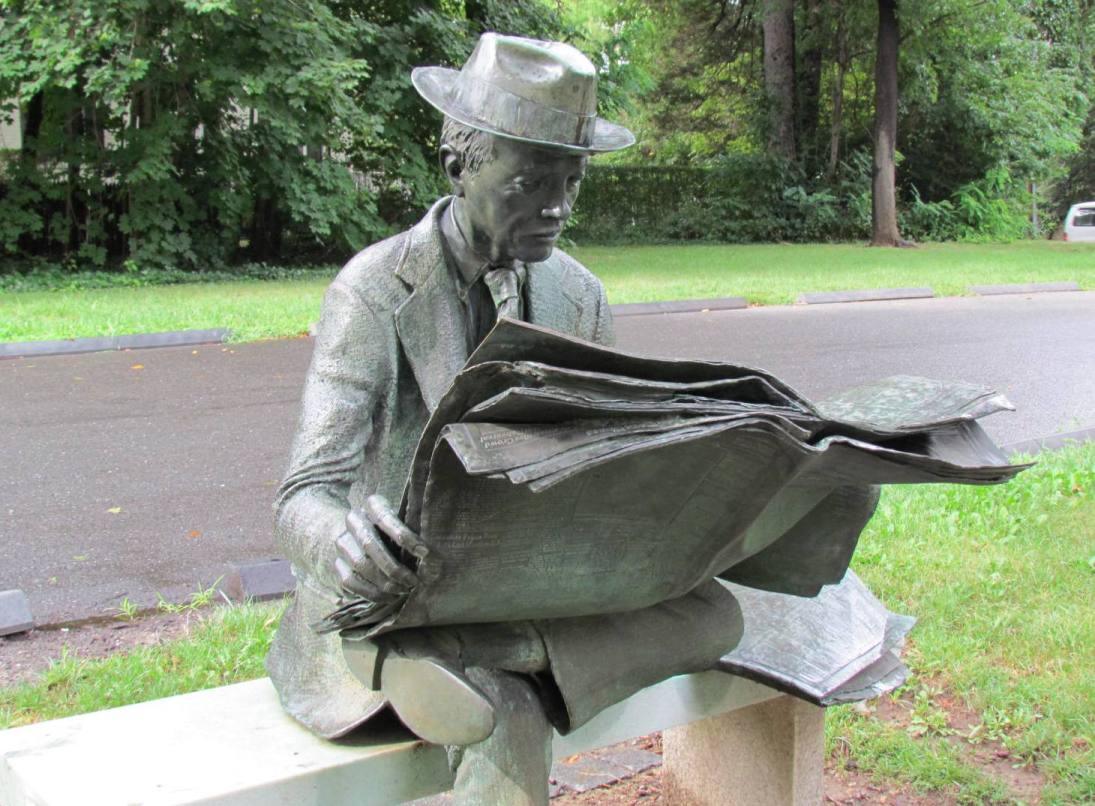
J Seward Johnson's statue of Newspaper Reader - at Princeton University garden
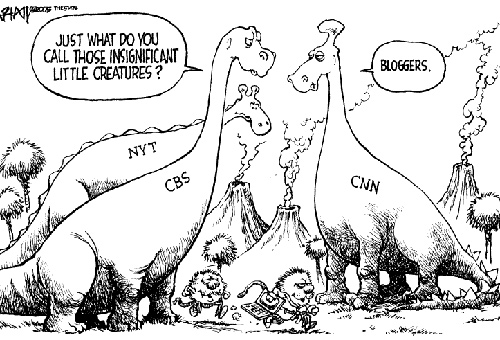
This is the Sinhala text of my weekend column in Ravaya, published on 6 Nov 2011. To mark the newspapers’s 25th anniversary that falls this month, I begin some reflections on the future of newspapers. In this first piece, I discuss how science fiction and thriller writer Michael Crichton (1942-2008) once foresaw the fate of what he called ‘Mediasaurus’.




 Open Minds!