Ahead of tsunami, journalist foresaw coastal disaster in Sri Lanka: “A Catastrophe Waiting to Happen”

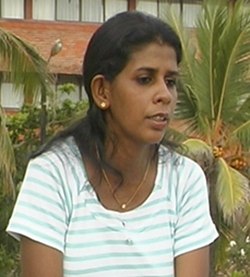
Dilrukshi Handunnetti in Deep Divide film
Contrary to a popular belief, journalists don’t enjoy being able to say ‘I told you so!’. They much rather prefer if their investigative or analytical work in the public interest are heeded in time.

A few months before the Indian Ocean tsunami of December 2004, my friend and journalist Dilrukshi Handunnetti wrote an investigative story on how coastal zone management laws and regulations were openly flouted by developers. She cautioned that it was a ‘disaster waiting to happen’

She had no idea how forcefully her point will be driven home before that year ended.

“Little did anyone realise the price coastal communities would have to pay for the greed of a few dozen developers,” she said after the tsunami, interviewed for Deep Divide, a South Asian documentary on environmental justice that TVE Asia Pacific produced in 2005.

Watch Deep Divide – story from Sri Lanka:

Here’s the blurb I wrote at the time to promote the story:

Sri Lanka’s economic activities are concentrated in coastal areas: 80 per cent of the tourist related activities are found there, along with one third of the population. Seeking to accelerate economic growth, the Sri Lankan government took measures to develop the island’s coastal regions. Shrimp and prawn farming was encouraged, while many incentives were provided for developing tourist resorts along the island’s scenic beaches.

As the shrimp exports grew and tourist arrivals increased, there was a ‘cost’ that only local residents and a few environmentalists cared about: mangrove forests were cleared, coral reefs were blasted, and the coastal environment was irreversibly changed.

Shrimp farming damaged mangroves, aggravated tsunami impactCoastal zone management regulations and guidelines were openly flouted by developers. Local communities were the last to benefit from this development boom — they watched silently as their fish catch dwindled and their coastal environment was pillaged. But little did anyone realise the price coastal communities would have to pay for the greed of a few dozen developers.

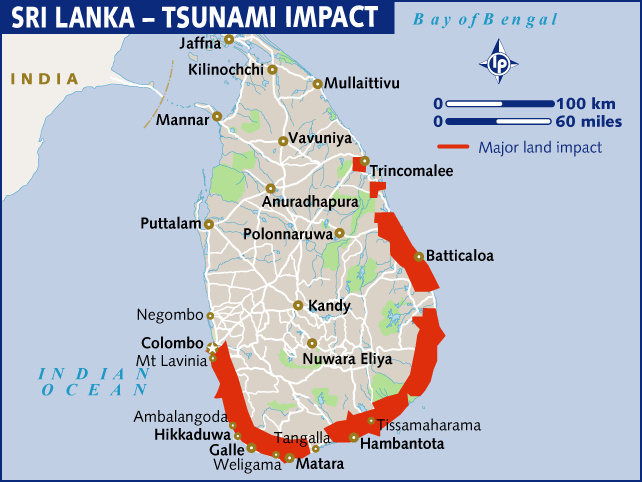
When the tsunami struck, there were very few natural barriers to minimise its impact. More than 40,000 people died or went missing, while hundreds of thousands lost their homes and livelihoods. It was the biggest single disaster in the island’s history.

Dilrukshi reflects: “Post-tsunami, people realised that the mangroves have protected these little, you know, landmass. And where you find a little bit of protected mangroves, you also find the landmass protected.”

She adds: “I think we have committed lot of excesses and we have been made to answer for those sins. Hereafter, we cannot afford to not do it right.”

Filmed on location in India, Nepal and Sri Lanka, Deep Divide explores the reality of environmental justice in South Asia — home to 500 million people living in absolute poverty, or 40 per cent of the world’s total poor. Everywhere, it finds environmental injustice. This investigative film builds on the work by three local journalists, who act as our guides to understanding the complexities and nuances of development amidst poverty and social disparities.
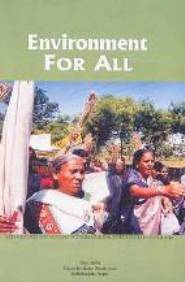
Environment For All book coverThe origins of Deep Divide go back to 2002. Panos South Asia, a regionally operating non-profit organization analyzing development issues, awarded media fellowships to selected journalists from five South Asian countries to explore specific cases of environmental injustice in their countries. They were to investigate issues as varied as land degradation, food and water insecurity, rising pollution, and mismanaged development.

Their findings were initially published in the local media – in the newspapers or magazines they worked for. In 2004, Panos South Asia compiled the articles in a book titled Environment for All. Three stories from this book were adapted into the documentary, directed by Indian film maker Moji Riba.

Children of Tsunami: No More Tears…

where Children of Tsunami stories were filmed for much of 2005
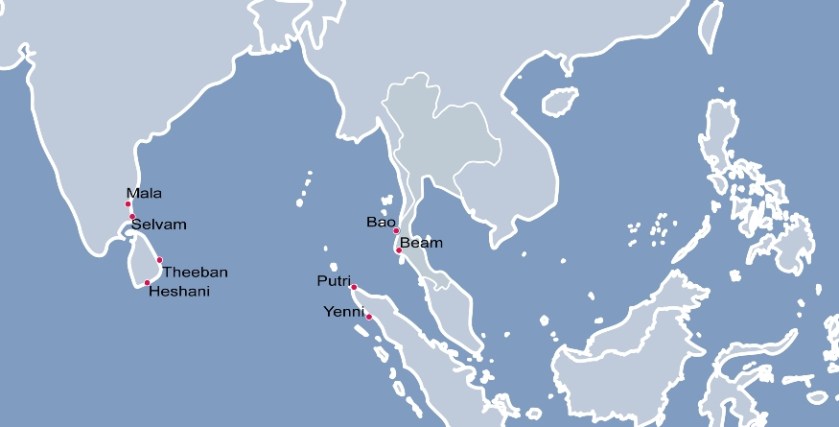
Four countries, eight locations: where Children of Tsunami stories were filmed for much of 2005

They have never met each other. Some have never travelled beyond their native village. On December 26 2004, the sea rose and rose and took everything they cherished.

Documented over the year, locally-based filmmakers returned to Asia’s battered coasts in India, Indonesia, Sri Lanka and Thailand to track the healing and the hurt through the eyes of children.

Asia’s recovery process from the tsunami is being captured through the stories of three girls and two boys aged 8 to 16 years.

Of different races, worshipping different Gods, they live on different shores in different countries. They are the tsunami generation, sharing the vulnerability of a child and the legacy of the tragic tides.

Young survivors of the Asian tsunami let us into their lives to personalise the mass of statistics, aid pledges and recovery plans. “Children of Tsunami” is a tapestry of intimate stories, woven by voices of individual and collective resilience, heroism and recovery.

Children of Tsunami: No More Tears – Part 1 of 3

Part 2 of 3

Part 3 of 3

Duration: 24 mins
Year of production: 2005
Countries filmed in: India, Indonesia, Sri Lanka, Thailand
In each country, a locally based production crew carried out filming for TVE Asia Pacific.

Regional Production Team
Supervising Producer: Bruce Moir
Production Assistant: Yohan Abeynaike
Production Manager: Manori Wijesekera
Executive Producers: Joanne Teoh Kheng Yau and Nalaka Gunawardene

Co-Produced by: Channel News Asia, Singapore
In partnership with TVE Asia Pacific

Broadcast Asia-wide on the first anniversary of the Asian Tsunami, 26 Dec 2005

For more information, visit: www.childrenoftsunami.info

See also: Channel News Asia – Making of a pan-Asian news channel

A Lasting Wave: Looking back at Indian Ocean Tsunami of December 2004

The undersea quake that triggered the Indian Ocean tsunami on 26 December 2004 was so powerful that it was felt around the globe, as far away as Alaska. Likewise, the killer waves that hammered the coasts of South and Southeast Asia left such a trail of destruction that it was like a lasting, unceasing wave.

On the eve of the mega-disaster’s fifth anniversary, I’ve been busy writing, talking and reflecting on what it meant for me personally, and my media profession and fellow Asians in general. I recently filmed an interview for Thai Public Television (TPBS), where my friend Pipope Panitchpakdi is doing a tsunami+5 documentary.

And I’ve just been talking to Andrew Bast of Newsweek who has written a personalised look-back titled A Lasting Wave.

He was in Sri Lanka at the time of the tsunami, and spent two weeks working as a freelance reporter covering the aftermath for the western media. His piece sums up the mixed bag of lessons and recovery efforts that Sri Lanka, one of the hardest hit countries, has accomplished in the half decade this that momentous day.

An excerpt: “Five years later, life in the affected countries has resumed, and the world has learned immensely valuable lessons about responding to catastrophe. But as with any human endeavor, some opportunities have also been lost.”

Read full text:
A Lasting Wave: Five years after the Indian Ocean tsunami, reflections on what was lost and what was learned. By Andrew Bast, Newsweek

Media melee at Copenhagen: Chasing a hazy story in a crazy conference?

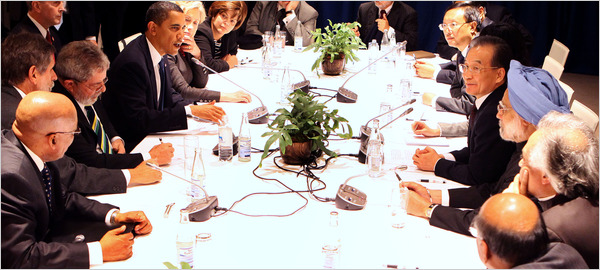
Polite or dodgy? Did anything more than this happen in Copenhagen?

What happens when over 3,500 journalists from all over the world roam around a two-week long UN conference that saw plenty of loud bickering and hot air in the name of saving the planet from global warming? Well, the media pack adds to the noise levels and hot air, for sure — and they are not above bickering themselves.

At least, that’s the report from Copenhagen, where the UN climate conference COP15 ended on Dec 18 with a watered down, disappointing something called the Copenhagen Accord.

Darryl D'Monte
I’ve just read an interesting report filed from the Ground Zero of that half-event by my Indian friend (and senior journalist turned climate columnist) Darryl D’Monte.

He says: “The media in Copenhagen has been an unmanageable and unruly lot. There are some 3,500 of us covering the summit, most having come this week, and journalists – once again, the electronic media – don’t think twice about carrying on conversations at the loudest decibel levels, turning the room into a virtual Tower of Babel. The TV crews in particular are like packs of wolves. They station themselves at every available nook and corner where some VIP may enter and exit and try to get that exclusive byte as he or she makes an appearance“.

Read the full story at InfoChange India:
Media melee at Copenhagen, By Darryl D’Monte

Was it a non-event, half event or what?

Remembering Dr Cyril Ponnamperuma: Inspirational maverick of Sri Lankan science

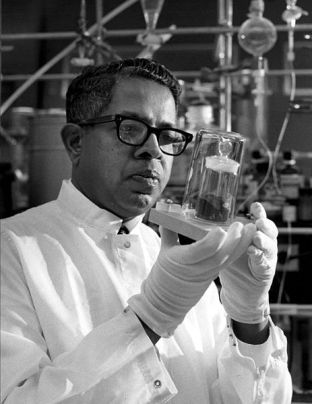
Dr Cyril Ponnamperuma: erudite, cultured and articulate

On 20 December 2009, we mark the 15th death anniversary of Professor Cyril Ponnamperuma, one of the best known scientists produced by Sri Lanka during the Twentieth Century.

I grew up reading about him in school text books as a living icon of modern science: a developing country scientist whose brilliance and hard work took him to the highest echelons of global science, and one who was respected in the West and East.

He was both an internationally recognised researcher on the origins of life on Earth, and an early promoter of science and technology for development. His interests and involvements transcended his own discipline and homeland. He worked closely with the Pakistani Nobel laureate Dr Abdus Salam to promote science and infrastructural facilities in developing countries.

I focus on the few years from 1984 to 1990, when he served as science and technology advisor to two Presidents of Sri Lanka. Concurrently, he served as director of the Institute of Fundamental Sciences (IFS) from 1984 to 1990, and was also founder director of the Arthur C Clarke Centre for Modern Technologies (ACCCMT) from 1984 to 1986. In these positions, he worked simultaneously on several fronts covering science policy, institutional building, fund raising, capacity building and public engagement.

Dr Cyril Ponnamperuma analyzing a moon sample at NASA
I’ve just written a tribute, recalling my own interactions with him in the last 1980s, when he was dividing time between Sri Lanka and the US. It’s published online at Groundviews website.

As I note: “Erudite, cultured and articulate, Ponnamperuma was a journalist’s dream: he could sum up complex issues in simple and engaging terms and metaphors — but these were more than mere soundbites. He was full of insights and anecdotes that humanised both science and its practitioners.”

After looking back at his accomplishments and failures of his Sri Lanka years, I contend: “His biggest accomplishment — and lasting legacy — was not so much buildings, laboratories or institutions, but sparking off the interest in science among thousands of young people. That is much harder to achieve, and also impossible to quantify in Rupee or Dollar terms…”

In this essay, I recall both his accomplishments and failures. I ask why his passion for public science was not shared by many fellow scientists in Sri Lanka, who wanted to remain aloof of non-scientists and the community. Ponnamperuma’s tried to bridge this gap, and for this sin he was harassed and driven out of Sri Lanka and back to the United States where he returned to his research and teaching to the very end of his life.

“Chemistry is the ‘other woman’ in my life,” Ponnamperuma used to joke. It was while working at his university office in the US that he suffered cardiac arrest and rushed to a Washington hospital, where he passed away on 20 December 1994. He was 71. His sudden death came as a shock to all those whose lives and careers were touched, influenced and inspired by him.

Read my full essay:
Dr. Cyril Ponnamperuma (1923-1994): A Passionate Champion of Public Science

Have they dropped the ball (Earth) in Copenhagen?

The news from Copenhagen, on the last day of the UN climate conference, has been a bit confusing. Have they got a climate deal, or have they simply agreed to meet again and talk more while the planet warms up?

As one news item put it: “Representatives of 192 countries quibbled over every word through the night as a weak political declaration started to emerge out of the climate summit once scheduled to finalise a treaty that would tackle global warming.”

The declaration remains “weak” and “wishy washy” in the absence of agreement over the main sticking points dogging this December 7-18 UN Framework Convention of Climate Change (UNFCCC) conference – the refusal by industrialised countries to commit more emission reductions and their unwillingness to put on the table money to help poor countries cope with climate change effects.

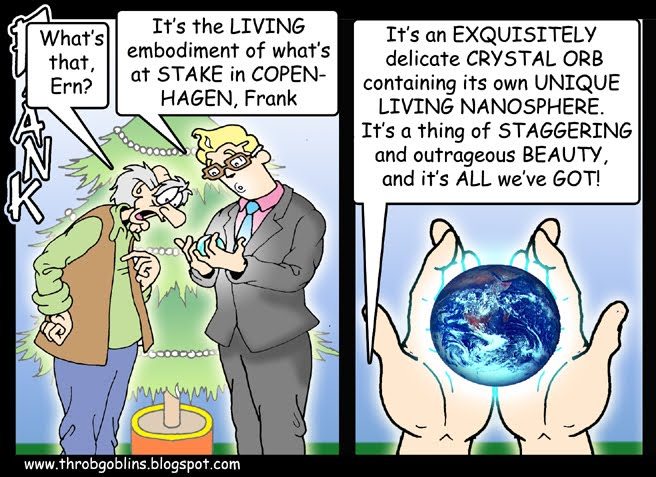
So, less than one week to go for Christmas, have the men (and few women) in suits dropped the ball (read: Earth) in Copenhagen? Clarity and interpretations will soon flow. I still hope it won’t come to what cartoonist Marc Roberts envisaged in this cartoon, originally drawn a year ago:

THROBGOBLINS INTERNATIONAL brings dark green humour to brighten your day

Dance for the Climate: dance your anger and joys to a U2 tune!

Hopenhagen?
As the UN climate conference culminates today in Copenhagen, there seem to be lots of angry people in the Danish capital. Many civil society and environmental activists, and some journalists, have been frustrated by the inter-governmental bickering process and the occasionally tough crowd control measures by the Danish police.

As author and activist Naomi Klein wrote at the end of the first week: “By the end, around 1,100 people had been arrested. That’s just nuts. Saturday’s march of roughly 100,000 people came at a crucial juncture in the climate negotiations, a time when all signs point either to break down or a dangerously weak deal. The march was festive and peaceful but also tough. ‘The Climate Doesn’t Negotiate’ was the message, and Western negotiators need to head it.”

I’m not in Copenhagen for uptodate news, but the 5,000+ journalists and over 10,000 activists are keeping us well informed on what’s happening (or not happening). Perhaps part of their anger can be dissipated by heeding a creative call to Dance for the Climate.

It’s an alternative way of demonstration, made into an inspiring and hopeful video clip by award winning Belgian film director Nic Balthazar. It shows 12 000 people on a Belgium beach in a truly spectacular simultaneous choreography dancing to the U2 hit single ‘Magnificent’. Bono and his band graciously gave the rights to their music. The message of the clip to politicians in Copenhagen is to ‘start moving, together, before it’s too late. The time is now to change climate change’.

In a recent email, Seppe Verbist, handling international distribution of “Dance for the Climate” clip, wrote: “We believe that the chances of success of the UN Conference are influenced by the clear signals from ordinary people to their politicians. The ‘Dance for the Climate-clip’ wants to contribute to this, and we sincerely hope we can count on your support!”

According to her, the clip has been released three weeks ago and they are now trying to spread it worldwide. In Europe the distribution goes pretty well as the European Broadcasters Network (EBU) offered the clip to all her members. They are picking up the offer and integrating the clip into their Copenhagen content. In Canada weather forecasters from different broadcast networks are organizing an imitation of Dance For The Climate, and the clip will be shown 24/7 at the World Expo 2010 in Shanghai in the Meteo World Pavilion. They’re expecting 100 000 visitors every day for six months. The Al Gore Climate Project also supported the clip and shared it with their network. It’s been on TV in Brazil and Mexico as well.

Dancing can be a powerful way to express not just joy, but a range of emotions. One of my favourite calls to action came from Ken Saro-Wiwa, the Nigerian poet, author, environmentalist and minority rights activist (for his Ogoni people) who was executed by Nigeria’s military on 10 November 1995. While in jail facing an uncertain future, he wrote these momentous words:
“Dance your anger and your joys,
Dance the military guns to silence,
Dance oppression and injustice to death,
Dance my people,
For we have seen tomorrow
And there is an Ogoni star in the sky.”

And today, we must also dance for saving our climate.

Climate cartoons: When less is definitely more!

While politicians, scientists and activists were jostling in Copenhagen at the crucial climate conference, I spent a few hours this week laughing my head off about climate change.

That’s when I judged the Sri Lanka entries for the cartoon contest on climate change, organised by the British Council and the Ken Sprague Fund of UK.

Joining me on this enjoyable challenge were professional cartoonist Wasantha Siriwardena and environmentalist Nimal Perera. We started off with close to 150 entries – many of them good, and some excellent – and ended up with a shortlist or 30 or so of the best.

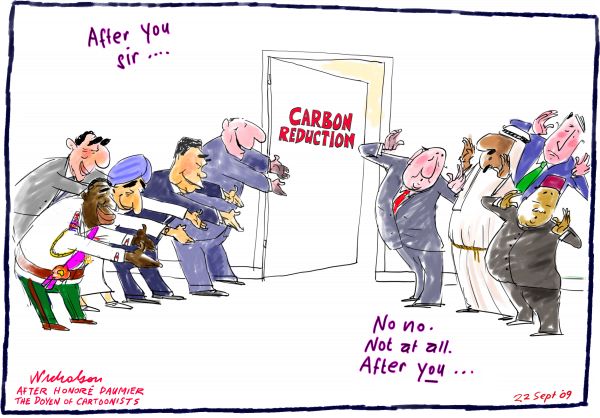
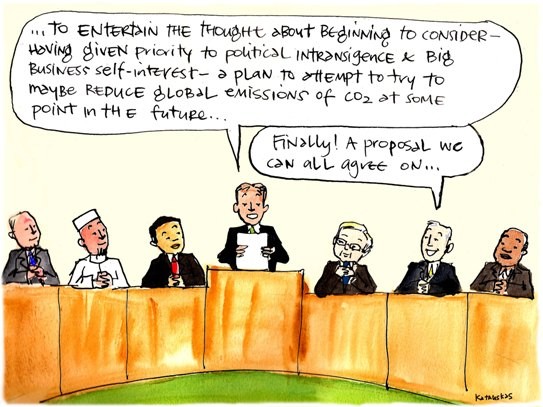
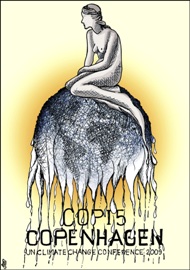
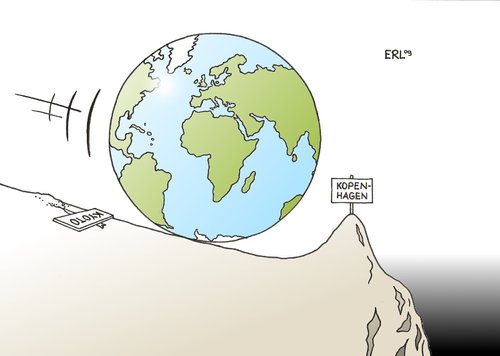
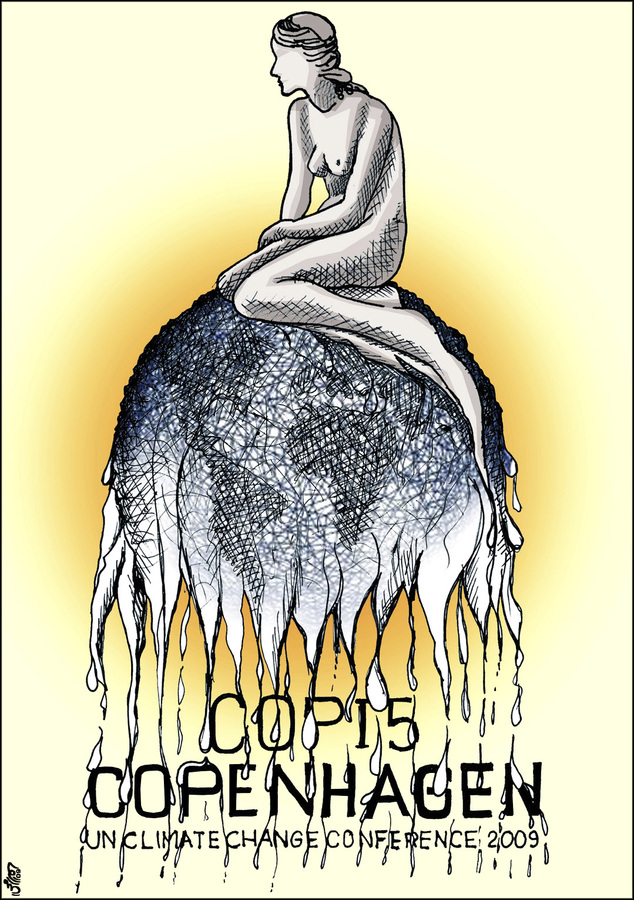
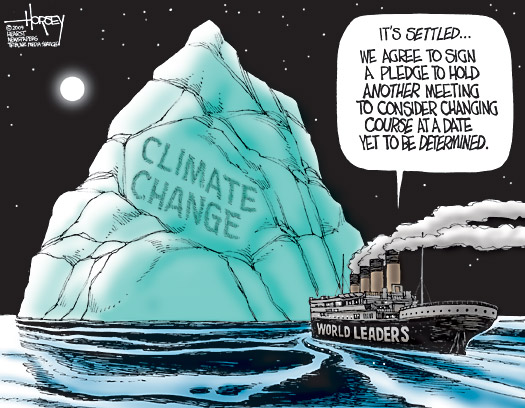
That’s all I can say about it for now, since the final selection of winners will only be made in January 2010. In the meantime, I’ve been looking at many climate related cartoons inspired by the Copenhagen conference. Here are some that particularly appealed to me…

Last chance, by Erl
CLIMATE SUMMIT OF COPENHAGEN! by ismail dogan
copenhagen 09 logo - by samir abdl-fatah ramahi
by David Horsey
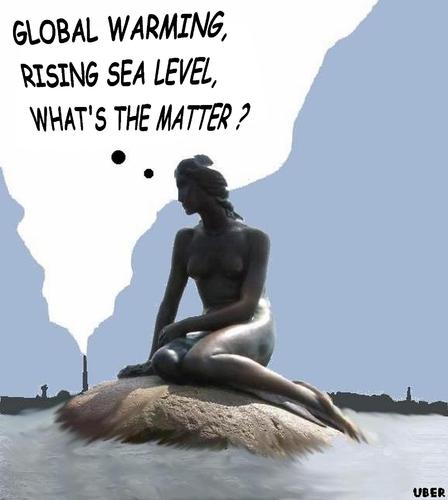
by uber

Flowers for Sir Arthur Clarke on his 92nd birth anniversary…

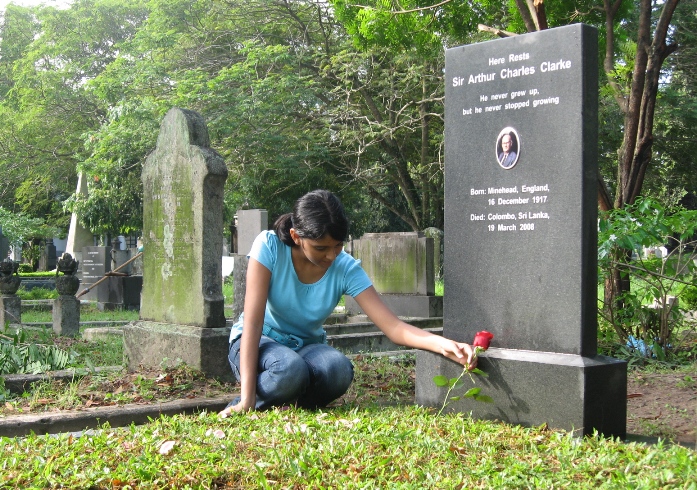
Dhara at Sir Arthur Clarke's grave, morning of 16 Dec 2009
“Whether you like flowers or not, they will eventually grow on you!”

Sir Arthur Clarke used to say this when my daughter Dhara and I presented him flowers every year on his birthday, 16 December. Dhara has grown up carrying flowers to Uncle Arthur all her life.

Had Sir Arthur been alive, he would have been 92 today. It now becomes his 92nd birth anniversary.

Although Sir Arthur has headed for the stars, Dhara and I still continue our annual tradition. We now take him flowers not to Leslie’s House, Sir Arthur’s Colombo home for over 35 years, but to his grave at Colombo’s general cemetery.

With a few red and pink roses in hand, we walked through the cemetery’s narrow pathways this morning. Last December, when we first made this journey, Sir Arthur’s grave was as yet unmarked, and could be located only if we looked for the graves of the departed Ekanayakes, members of his adopted Lankan family.

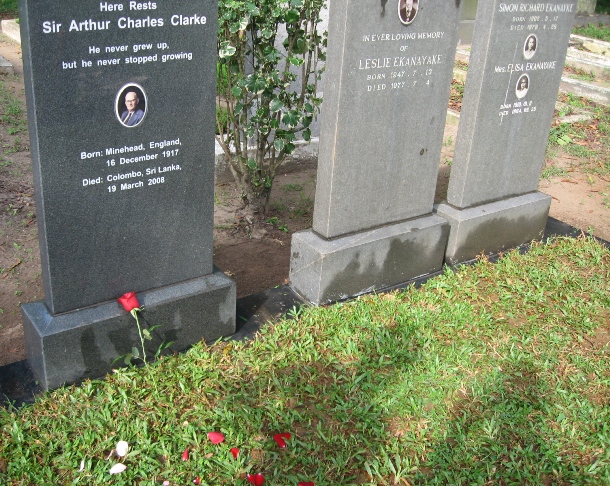
But now Sir Arthur has his own tombstone, with the epitaph of his choice:
‘Here rests Sir Arthur Charles Clarke.
He never grew up,
but he never stopped growing’

And unlike last year, when the gravesite had only a concrete surface, some grass is now growing there. We broke up the roses and sprinkled the petals on the grass. We left the last red rose in tact, nestled against the tombstone.

In the weeks and months following Sir Arthur’s death, so many have asked me what kind of monument is being planned in his memory. We live in a land where people love to put up ostentatious and perfectly useless structures to honour the departed. I simply keep quoting Sir Arthur’s own reply, when a journalist once asked him that very question: “Go to any well-stocked library, and look around…”

Those who leave behind such living legacies don’t really need monuments of brick and mortar. And as I told a recent meeting of the Rationalists Association of Sri Lanka to mark the birth anniversary, the legacy also continues in us who carry his flame and ideals…

Sir Arthur Clarke tombstone, on his 92nd birth anniversary