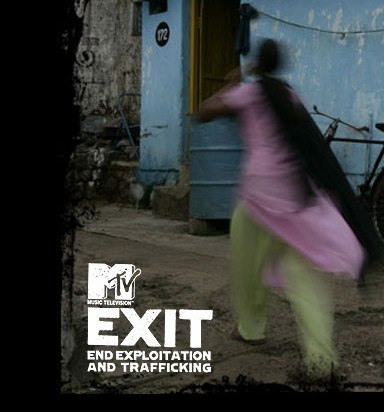
MTV Exit: Entertainment TV takes on human trafficking

mtv-exit.jpg

Television gets blamed for lots of things that go wrong in our world. This isn’t surprising, given it’s the world’s most powerful medium and the key role it plays in our cultural, social and political lives.

A sociological study some years ago said broadcast TV was partly responsible for the movement of millions of people from villages to cities in search of jobs, higher incomes and better living standards. The glitzy lifestyles dramatised on TV was creating illusions in the minds of rural women and men, especially the youth, it said.

Of course, such migrants soon discover a very different reality in the cities. But few want to go back to where they came from. As they hang on in the cities, some fall prey to human traffickers, always on the prowl for vulnerable people to trade in.

The United Nations estimates that the total market value of human trafficking is 32 billion dollars — one of the most lucrative illicit trades in the world. The International Labour Organisation (ILO) estimates that worldwide, about 2.5 million people are victims of trafficking.

If TV indirectly contributed to this human perversion, it can also help society stand up and fight against it. As Music Television (MTV) is now doing.

MTV, the most popular music channel in the Asia Pacific region, will be playing a different tune in the weeks to come. For half an hour at least, beginning 18 September 2007 for MTV Thailand, live and hip music will give way to the harrowing accounts of three victims of human trafficking. This is part of the MTV Exit campaign.

Trafficking of people in the region will be given a human face through the personal accounts of Anna, Eka and Min Aung. Anna was forced into prostitution in the Philippines, while Eka is an Indonesian who was an abused domestic worker in Singapore. Min Aung from Burma recounts his sad experiences working and being practically imprisoned in a factory in Thailand for two years.

Lynette Lee Corporal writing for Inter Press Service (IPS) quotes MTV Thailand campaign director Simon Goff as saying: “We worked with organisations and talked with experts to see what forms of trafficking we would focus on, the most prevalent forms that affect our audiences. We selected regions that would best represent the issue. Then, finally we brought in a production team, led by a Thai producer and a director from the UK.”

More extracts from her article:

Goff said that it took them six weeks of pre-production work, including research and sourcing, another six weeks to shoot the documentary, and six weeks more of post-production work. It took about four and a half months of “solid production,” he added.

Beyond the emotional and unsettling accounts of the trafficking survivors and the disturbing re-enactments of rape, beatings and abuse, the documentary also had interviews with a trafficker and a ‘client’ who openly admitted to the crime. In an interview with ‘The Chairman’, a Filipino recruiter who forces young girls into prostitution, revealed the horrific experiences young girls go through, and this was reinforced by what ‘Ama’ , a Chinese client who admitted to paying for sex with trafficked girls, narrated.

The challenge now, said Goff, is to break the people’s apathy and denial about human trafficking. “Ultimately, time will tell. We have launched the campaign and it’s already out there in the media. We hope that the show will make people realise that they are both a part of and a solution to the problem,” he said.

In Thailand’s case, he added that it is also important for Thais to realise that it is not just about Thai victims being trafficked abroad, but it’s also “necessary to look that we have other nationalities, such as Min Aung, who has been trafficked here”.

Read the full article on The Asian Eye website of IPS Asia Pacific

Watch or download the celebrity-presented MTV EXIT documentaries for Asia Pacific and South Asia

United Nations Office on Drugs and Crime website on human trafficking
More information on trafficking and how to fight it

Images from the Majority World: Global South telling its own stories

majority-world.jpg

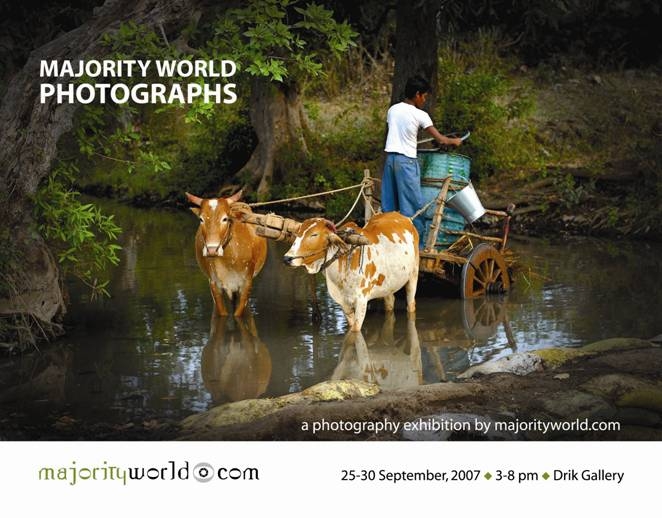
This image captures a typical scene in a South Asian village. The invitation arrived from Suchit Nanda, a talented Indian photographer who shoots men, women and scenes from different cultures and societies as he moves around Asia and elsewhere.

Suchit’s work is being marketed by MajorityWorld.com, a new global initiative founded through the collaboration of The Drik Picture Library of Bangladesh and KijijiVision in the UK to champion the cause of indigenous photographers from the developing world and the global South – the Majority World!

“Very few published images of the South are taken by local photographers. They are invisible and don’t get a fair deal. This is what kijiji*Vision is campaigning to change,” says Colin Hastings of kijiji*Vision, a co-founder of Majorityworld.com.

Read more about Majority World

By coincidence, just this week I’m involved in buying some photographs from Drik Picture Library to illustrate an Asia Pacific resource book on Communicating Disasters that TVE Asia Pacific is compiling. It is being co-authored by Frederick Noronha and myself, and due for a December 2007 release.

Whether in photography or videography, the global South – or Majority World – has to speak for itself. Our still images and moving images must tell our own story.

But try doing this in the commercial worlds of publishing or mass media, and suddenly we are competing in an extremely unfair and uneven playing field. Astonishingly, many development agencies – including the UN – don’t commission or acquire the work of talented Southern photographers or film-makers. Talk about not practising what they preach!

Read my recent blog post: Wanted – Fair Trade in Film and Television

In an essay titled Communication rights and communication wrongs written in November 2005, I criticised the globalised media for persistently using stereotyped images of the South — captured mostly by northern photographers and camera crews.

I quoted Shahidul Alam as saying: “Invariably, films about the plight of people in developing countries show how desperate and helpless they are… Wide-angle black and white shots and grainy, high-contrast images characterise the typical Third World helpless victim.”

I added: “Media gatekeepers in the North often dismiss the better-informed and equally competent Southern professionals — saying, insultingly, that ‘they don’t have the eye’! And for years, I have resisted the widespread practice of Northern broadcasters and film-makers using the South’s top talent merely as ‘fixers’ and assistants.”

Read my full essay on SciDev.Net, which published it after Panos Features – the original commissioners – declined to carry it. Apparently my views were too outspoken for Panos London, which claims to champion communication for development…

Experience the visual treats offered by Suchit Nanda:
Suchit Nanda

Support Majority World photographers by using their work

The Daily Star (Dhaka) reviews the exhibition

Wanted: Fair Trade in Film and Television!

This short film, Fair Trade: The Story (8 mins) has been produced by Eq.tv (Equilibrium Television).

It’s very well made, with great use of images and sound, and powerfully sums up the complex issues around fair trade in an accessible manner. The best part: we don’t feel it’s an activist film, even though fair trade is, by definition, progressive and activist.

What is your power as a consumer? The film, produced in association with TransFair USA and TinCan Productions, begins with this question.

It then tells us: “Fair Trade combines stringent environmental criteria with the highest income and labour standards of any product certification. Fair Trade ensures a fair price for farmers, fair wages for workers, safe working conditions, direct marketing access, community development, democratic decision making, sustainable farming methods, environmental protection.”

Chris White of TransFair USA quips: “Fair trade isn’t a product. Fair trade isn’t a brand. Fair trade is a story.”

Fair trade is all about creating opportunities for small scale producers in the developing countries to get organised and supply directly to consumers in different parts of the world. When they sell direct, with few or no intermediaries, they can earn three or four times more, and that money will enhance their incomes, living standards and societies.

Read more about fair trade at Oxfam website, Make Trade Fair

Fair trade is certainly a cherished ideal, but it’s mired in complex economic and political realities. The globalised march of capital, profit-maximising multinational corporations and developed country farm subsidies are three among many factors that made fair trade difficult to achieve in the real world.

Difficult, but not impossible. Determined producers and consumers have shown over the years that they can connect to each other, ensuring greater fairness and justice in transaction. That’s the power of the consumer.

Now here’s another kind of fair trade that I have been advocating for a long time: Fair Trade in Film and Television (FTinFT for short). It’s high time we started promoting this as another plank in fair trade activism.

Let me explain. In the media-rich, information societies that we are now evolving into, media and cultural products are an important part of our consumption — and therefore, more of these have to be produced. In the globalised world, more television and film content is being sourced from the majority world — or is being outsourced to some developing countries where the artistic and technical skills have reached global standards.

But in a majority of these media production deals, the developing country film and TV professionals don’t enjoy any fair terms of trade or engagement. Their creativity and toil are being exploited by those who control the global flow of entertainment, news and information products.

This is why the top talent in the global South become assistants, helpers and ‘fixers’ to producers or directors parachuting in to our countries to cover our own stories for the Global Village. Equitable payments and due credits are hardly ever given.

I personally know many award winning film-makers in developing countries across the Asia Pacific who have been engaged on such unfair, uneven terms. Lacking sufficient market opportunities and trade unions in their own countries, these professionals have little choice but accept the occasional assignment that comes their way from BBC, CNN, AJI or other global players.

Remember, film-makers have families to feed too.

Unfair trade in film and TV is also how the unsung, unknown creative geniuses contribute significantly to the development of new cartoon animation movies or TV series, as well as hip video games that enthrall the global market. Lacking the clout and skill to negotiate better terms, freelancers and small companies across the global South remain the little elves who toil through the night to produce miracles. They work for tiny margins and even tinier credit lines. Some don’t get acknowledged at all.

If you think this is inevitable in the big bad world of profit-making business, hear this. I also know some western charities that champion global justice who are equally guilty of repeatedly exploiting southern film-makers — sometimes, ironically, to produce documentaries about social justice issues!

Even as they cover stories about fair trade practices in coffee or cotton, these entities practise unfair trade in their own industry.

I can cite many examples. Last year, the London-based Panos Institute approached me for recommendations for development-sensitive film-makers in two Asian countries where they wanted to implement some training programmes. I asked if the professionals I can gladly recommend – whose skills are on par with any western counterpart – would be paid international rates. Panos backed out saying they can only pay a local rate, which they felt was good enough.

Then there are UN agencies who always haggle with local film-makers over rates and fees. The same agencies that happily commission PR media agencies from Madison Avenue for hundreds of thousands of US Dollars would ask southern film-makers to donate their time, or work at a reduced fee, for the United Nations causes!

Local rates for local talent is simply not good enough if their work contributes to an international media effort. Southern film-makers and photographers, who lack opportunities to roam the planet looking for stories and work, should be engaged on fair, international rates in any media venture whose products will be consumed globally.

I’m proud to say that TVE Asia Pacific practises what I preach here. We are small time commissioners of southern film-making talent, but we always pay international rates, and engage local talent in every country we work in. And they get due, proper credit in all our productions.

This, then, is the essence of Fair Trade in Film and Television that we must advocate and agitate for. As long as the story tellers of the global struggles for social justice are themselves excluded from the story, there can be no fair trade, or true global justice.

There is now an urgency to address FTinFT because Media Process Outsourcing (MPO) is emerging as a growth industry. May 2007 news: India’s InfoSys and TV18 set up MPO firm.

Let me return to the question frequently posed by fair trade activists: What is your power as a consumer?

Now ask that question as a consumer of media products on TV, video, DVD, web and mobile devices. Don’t take anything for granted. Don’t accept the lofty PR claims of big time (or even small time) producers and peddlers of media content on how ethically they have sourced or made this content.

For a start, look carefully at where stories have been made, and whether local film and TV professionals get proper, on-screen credit. And write to the big players – 24/7 news channels, cartoon corporations and others – demanding to know their fair trade policies and practices in content creation and sourcing.

Make the same demands on the United Nations agencies peddling media products on their social causes. See how many of them will stand a simple test: do they engage southern film-makers to tell stories of development and social justice in the South? If not, why not?

And if you are in a position to decide on commissioning a new film, TV or video product, please consider engaging local talent — but pay them international rates if your product is going to cross borders (these days it very likely will).

We have a long way to go to achieve Fair Trade in Film and Television. Let’s get moving!

Read my call for ethical sourcing of international TV news

Photos from TVE Asia Pacific image archives

Shimu: Bangladesh’s real life ‘Meena’ enthralls millions on TV

Meena’s uncle has arranged for his daughter Rita to marry Babu, a shopkeeper’s son. But Rita is only 15 and has not yet finished school. With Meena’s help, it comes to light that Babu, who is studying to be a doctor, does not want to get married yet, especially since he knows it is unsafe for young girls to become mothers. To everyone’s satisfaction, the marriage is postponed until Rita is 18 and has completed her education.

That’s the storyline in Meena: Too Young to Marry, which is part of the hugely successful cartoon animation series Meena, which Unicef produced with leading animation houses in South Asia during the 1990s. It was part of the Meena Communication Initiative.

Its central character is Meena: a spirited, nine-year-old girl, living in a typical South Asian village, facing all the usual challenges of growing up — whether in her efforts to go to school, or having enough to eat, or in fighting the stigma surrounding HIV/AIDS in her village. In a sub-region where many families still favour boys over girls, life is not easy for Meena, but she finds ways to not just cope but flourish.

Now comes the news of a real life Meena in Bangladesh.

Shimu - photo courtesy Washington Post

Alo Amar Alo is the name of a live action television drama series that promotes girls’ education in Bangladesh. Launched in July 2007, it is currently running on Bangladesh Television, BTV.

Alo Amar Alo (“Light My Light”) centers around a girl named ‘Alo’ who stops going to school when she completes Class V. Throughout 26 episodes, the story follows Alo as she struggles to overcome life’s challenges through the support and friendship of a renowned actress.

Playing the role of Alo is 13-year-old Shimu, who suddenly finds herself the star of the country’s most popular television series.

In an article profiling her, The Washington Post wrote on 14 September 2007: “Shimu, a youthful Bangladeshi version of Winona Ryder, is recognized across the country for her moving role as the spunky 11-year-old heroine Alo. On Wednesday nights, more than 10 million viewers tune in after the 8 p.m. news to see her character put through the gantlet of family entanglements and financial strains that afflict many of the young girls in this desperately poor, densely populated South Asian nation. Alo must fight to stay in the fifth grade while her uncle demands that she work in a garment factory and other family members urge her to marry so they will have one less mouth to feed.”

“Teachers say that Shimu’s photograph hangs in classrooms across the country on posters advertising the show and that her story has become a symbol of the struggle to keep girls in school.”

Elsewhere, the article notes:
“As in Latin America’s telenovelas and many African and South Asian TV dramas, story lines in Bangladeshi programs are often infused with messages decrying social ills such as child labor, domestic violence and early marriage. Many of the shows are low-budget productions funded by nonprofit organizations or the government. Shimu’s show…is funded by the Education Ministry and UNICEF; actors receive modest stipends.

Being a TV star has not changed Shimu’s life, says Washington Post writer Emily Wax. Even though Shimu is on television, her family does not own a TV set. She and her friends watch the show at the theater group’s center.

Her grandfather, Mohamed Siddiq, 61, is quoted saying he wants Shimu to stay in school but is worried that she may end up marrying or working, since their family is being evicted in a month and has no savings.

“We are illiterate. I really want Shimu to stay in classes,” Siddiq said. “It’s just so hard to survive here.”

Read the full article about Shimu in The Washington Post online

The Alo Amar Alo series is funded by Unicef and the Ministry of Education in Bangladesh. It’s part of a communication strategy which includes interactive popular theatre shows, folksong performances, wall paintings and Meena Communication Initiatives.

“These have been extremely effective in raising awareness on the value of education as well as reaching the remote corners of the country through the mass media. Parents have shown more willingness to send girls to school. The increase in the enrollment of girls has also been the impact of multiple awareness raising campaigns,” says Unicef Bangladesh.

But big challenges remain. The Washington Post article draws parallels between the character Alo and child actor Shimu.

“Sometimes I feel she should support me,” Shimu’s grandmother, Ayesha, 49, who was herself married at 12, is quoted as saying. “Boys want to marry her. They are always harassing her. Even though she is known for her acting, it’s very hard to make a living here. If she were married, we wouldn’t have to worry about feeding her.”

To which Shimu says, simply: “It’s better to stay in learning for the future. I want to try.”

One concern is I have why Unicef is exploiting a child actor without adequate pay. The article refers to actors receiving ‘modest stipends’. If Shimu was paid better for her natural talent as well as considerable time she doubtless spends on acting in Alo Amar Alo, surely that can make a difference in one child’s life? Or is that not statistically significant for Unicef?

Photo of Shimu courtesy The Washington Post

Meena image courtesy Unicef

Ozzy Ozone: The Little Molecule on a Big Mission

This is Ozzy Ozone. He is an energetic, cheerful little ozone molecule – part of the ozone layer in the upper atmosphere that prevents the Sun’s harmful ultra-violet rays from coming through.

Today, 16 September 2007, is a day to celebrate Ozzy Ozone. Because it’s the 20th anniversary since the nations of the world adopted the Montreal Protocol to phase out chemicals that harm the ozone layer.

It was a landmark international environmental treaty — one which has galvanized governments, industry and society into sustained action for two decades to give using close to a hundred chemicals, all of which – when released into the air – go up to damage the ozone layer.

Ozzy Ozone has been part of the many-faceted public education programme mounted by the UN Environment Programme (UNEP) to tell everyone how harmful UV rays are to our health, and how Ozzy and his fellow ozone molecules are literally protecting life on earth from being zapped out.

In this video, Ozzy Ozone and Alberta the Albatross take a voyage of discovery to find out exactly who and what is attacking the ozone layer and how children can play an important role in making a difference.

Watch Ozzy Ozone online:

Order Ozzy Ozone on video tape or DVD from TVE Asia Pacific

Ozzy himself is now 10 years old. He was created by a graphic artist in Barbados, as part of a government-supported campaign to raise public awareness on ozone layer thinning. This cartoon character served as a “mascot” and was very effective in raising awareness in Barbados. The cartoon series has been printed in the local newspapers on several occasions. Additionally, promotional items produced for local public awareness and education campaigns using the Ozzy graphic include posters, key rings, rulers, erasers, refrigerator magnets, mouse pads, pens, pencils, stickers, and envelopes.

The character was enduring and popular that UNEP struck a deal with Barbados to ‘globalize’ Ozzy. An animated video was produced, along with a dedicated website, comic strips and other media adaptations.

Read more about the origins of Ozzy Ozone

Ozzy Ozone website

‘Cheque-book Development’: Paying public media to deliver development agency logos

In their ceaseless efforts to keep their organisations in the media spotlight, spin doctors of development agencies are distorting news values and corrupting the media, turning issue-based communication products into ‘logo delivery mechanisms’.

This is the thrust of my latest op ed essay, titled ‘Cheque-book Development’ corrupting the media. It has just published by the popular media-watch website anchored in the US, MediaChannel.org

Image courtesy MediaChannel.org

In this essay, I draw on several years of first hand observations in development, humanitarian and broadcasting circles at Asian and global levels. I focus on a disturbing practice that more and more development/humanitarian agencies engage in: paying intermediaries for getting their stories on global news and current affairs TV channels.

This is nothing short of cash-for-media coverage.

Here’s an extract:

“As development organisations compete more intensely for external funding, they are increasingly adopting desperate strategies to gain higher media visibility for their names, logos and bosses.

“Communication officers in some leading development and humanitarian organisations have been reduced to publicists. When certain UN agency chiefs tour disaster or conflict zones, their spin doctors precede or follow them. Some top honchos now travel with their own ’embedded journalists’ – all at agency expense.

“In this publicity frenzy, these agencies’ communication products are less and less on the issues they stand for or reforms they passionately advocate. Instead, the printed material, online offerings and video films have become ‘logo delivery mechanisms’.

Image courtesy MediaChannel.org Cartoon courtesy Global Journalist

Some of these communication officers I write about have become friends over the years — I empathise with their pressures, but don’t approve of what their organistions do. As I write in the essay:

“This practice is wrong on two counts. One, allowing intermediaries to sell access to the airwaves is a form of corruption. Two, every time this happens, it siphons off tax-payer supported development funds intended for combating poverty and suffering in the majority world.

“It is the reverse of cheque-book journalism, where some media organisations pay celebrity or other sources for exclusive access to their stories. When development agencies are paying sections of the media to get promotional or favourable stories aired, we must call it ‘cheque-book development’.”

Make no mistake — this is a form of media corruption. It’s not just the development sector’s vanity that fuels this process. Many 24/7 news channels are struggling to fill their hours inexpensively. Some turn a blind eye to ethical sourcing as long as they can have a steady supply of subsidised content.

Read my full essay on MediaChannel.org

Note: Being a US-anchored outlet, MediaChannel.org spells ‘cheque-book’ as ‘check-book’, which is correct in American spelling of English! As I write in my essay, it appears that TV channels and networks on that side of the Atlantic seem a bit harder to corrupt. But then, what do I know?

Read my Nov 2006 essay on MediaChannel.org: Ethical News Gathering Challenge for Al Jazeera

I have been speaking about the growing threat of cheque-book development for some time. For instance, I referred to it during Communicating Disasters: An Asian Brainstorming organised by TVE Asia Pacific and UNDP in Bangkok in December 2006.

Essay republished on Asia Media Forum
asia-media-forum.gif

UNESCO playing spoil-sport in new Seven Wonders

UNESCO is playing spoil-sport again…this time about the new Seven Wonders of the world.

The crusty, officious UN agency — not my favourite, as regular readers know — is sadly trapped in its own ideological rhetoric of the 1980s. Somebody should kick them hard to enter the 21st century!

The new Seven Wonders of the World is an attempt to create a modern-day alternative to historical lists of the Seven Wonders of the World. Based on a worldwide online poll organised by the private, Swiss-based, non-profit New Open World Corporation (NOWC), the final list was announced on 7 July 2007 in Lisbon, Portugal.

The winners were selected from among dozens of initial nominations. The new Seven Wonders of the world are: The Great Wall of China; Petra of Jordan; Christ the Redeemer statue in Rio de Janeiro, Brazil; Machu Piccu ruins of Peru; Chichen Itza archaeological site in Mexico; The Colosseum of Rome, Italy; and the Taj Mahal of India.

Read more in the NOWC description or Wikipedia description

Image from n7w image courtesy n7w image from n7wimage from n7w

This campaign was launched in 2000 as a private initiative by the Swiss philanthropist, adventurer and film-maker Bernard Weber – his idea was to encourage citizens around the world to select seven new wonders of the world by popular vote.

And he turned to the Internet as a mass medium for people to express their preferences.

This is what seems to have irked UNESCO the most — allowing ordinary people to have their say about the common heritage of humankind.

After the new Seven Wonders were announced on 7 July 2007, two UNESCO spokespersons ridiculed the whole idea. Their contempt for the (rival?) process was palpable. This is not how any media spokespersons should behave. Read a widely reproduced media report: UNESCO slams new seven wonders

Earlier, in an official statement full of pomposity and self-importance, UNESCO had distanced itself from the initiative (even if the former UNESCO director general, Frederico Mayor of Spain, is heading the expert panel advising the new Seven Wonders selection process). Here’s an extract:
“There is no comparison between Mr Weber’s mediatised campaign and the scientific and educational work resulting from the inscription of sites on UNESCO’s World Heritage List. The list of the ‘7 New Wonders of the World’ will be the result of a private undertaking, reflecting only the opinions of those with access to the internet and not the entire world. This initiative cannot, in any significant and sustainable manner, contribute to the preservation of sites elected by this public.”

Note the word ‘mediatised’ — which I suppose means media-based and web-driven. This piques me the most. What is wrong in using the mass media, including the web, to generate new levels of interest and enthusiasm about cultural heritage, as the New Seven Wonders initiative has succeeded in doing.

Ironically, UNESCO has an entire division on Communication and Information, which says it promotes the use of media in socio-cultural development. They claim to work with both the conventional media (TV, radio, print) as well as the new media (web, mobile devices and other ICTs).

Is it that UNESCO is such a multi-headed, mixed-up creature that its World Heritage division can publicly condemn the use of media in the public interest while another division upholds it?

Or, could it be that when UNESCO talks about media in development and democracy, it expects the poor, suffering people in the Majority World to just stick to the issues of bread and butter, livestock and water? Does UNESCO expect the ordinary people and private citizens to stay away from the lofty issues of cultural heritage? Are those only discussed by diplomats and experts, many of them as crusty and officious as UNESCO itself?

And can somebody please explain to me how a process involving 100 million online votes is less valid than the ‘scientific and educational work’ of UNESCO in selecting World Heritage sites — involving no more than a few hundred persons at the most (all government officials and academics)?

image from n7w image from n7w image from n7w

The grand old lady of Paris should realise that she can’t have it both ways. If UNESCO sincerely advocates the free flow of information, media freedom and the promotion of ICTs in development, then it must be prepared for the resulting public engagement of issues in the media — ranging from the frivolous to lofty, and everything in between. It cannot and must not set the agenda, or expect certain issues to be left aside to boffins who claim to know more than the rest of us.

Whether UNESCO likes or not, the web has truly let the genie out of the bottle. Gone — hopefully forever, and not a moment too soon! — are the days when a handful of men in suits (it’s usually graying men, with very few women involved) could decide matters of global public interest behind closed doors.

By its aloofness, UNESCO made itself irrelevant in the seven wonders selection process. The smarter option would have been to stay engaged and use the massive popular interest to draw attention to the need to invest more time, effort and resources to conserve cultural heritage everywhere. A great opportunity was missed.

But thankfully, other arms of the UN were a bit more pragmatic. For example, the United Nations Office for Partnerships recognised the value of new Seven Wonders.

The stark choice for UNESCO is to rethink its intellectual arrogance, or risk being sidelined — and seen as the biggest hypocrite in the entire UN family.

At a minimum, UNESCO must heed the timeless advice of Rabindranath Tagore:
If you can lead, lead.
If you cannot, then follow.
If you cannot lead or follow, get out of the way!


Now, nominate your natural Seven Wonders of the world — new online poll now underway! Never mind what UNESCO has to say about it!

Who makes the best ‘Alphabet Soup’ of all?

Image courtesy Wikipedia

Take a close look. This is the original Alphabet Soup.

It’s is a kind of soup containing noodles shaped like the letters of the Latin alphabet. According to the ever-helpful Wikipedia, it comes as a prepared, canned vegetable soup with letter-shaped noodles. Read full Wikipedia entry

Metaphorically, alphabet soup means “an abundance of abbreviations or acronyms”. In this sense, the term goes back at least as far as President Franklin D. Roosevelt’s alphabet agencies of the New Deal (1933-38). In the United States, the Federal Government is described as an ‘alphabet soup’ on account of the multitude of agencies that it has spawned, including the NSA, CIA, FBI, USSS, BATF, DEA and INS.

But Uncle Sam’s expertise in making alphabet soups has been challenged by another entity – the United Nations. (Interestingly, Roosevelt was an architect of the UN, and coined the term with Winston Churchill). The UN’s propensity for enriching the alphabet soup has few parallels.

In the early 1990s, when I was earning a living as a UN consultant in Asia, I had to wade through the sea of acronyms and abbreviations as part of my daily bread. Funnily enough, some high-level peddlers of arconyms no longer even remembered what they stood for!

The UN has enriched the alphabet soup even more in the years since. MDG is a current favourite – it stands for Millennium Development Goals, a blue print for achieving basic socio-economic development by 2015.

It’s not just the UN, but the entire development community that is in love with coining abbreviations and then liberally bandying them about. Some are manageable. Others are unpronounceable tongue-twisters. PLWHA comes to mind – that stands for Persons Living with HIV/AIDS.

And then there are too many meanings or expansions for the same abbreviation, causing confusion to those who don’t know the context. ICT is a good example. We in media and development circles use it to mean Information and Communications Technologies. But the Wikipedia shows at least another two dozen meanings for the same three letter combination!

Journalism taught me to explain every technical term and abbreviation when introducing it. I still do, but on the whole I avoid abbreviations if we can help it.

But I have to watch out. A colleague reminded me recently that I’ve been happily coining inhouse acronyms myself. Examples:
GBR – The Greenbelt Reports (Asian TV series)
STP – Saving the Planet (Asian regional project and upcoming TV series)
D4C – Digits4Change (Asian TV series)

Does this make me a minor chef in expanding the Alphabet Soup?

Maybe it does! If I can’t beat ’em, I’ll join ’em….

‘Toxic Trail’ continues its trail across Asia

mongkon-tianponkrang.jpg mongkon-tianponkrang-of-tef.jpg
Meet Mongkon (Mong) Tianponkrang.

He is a Programme Coordinator with the Thai Education Foundation (TEF), a non-profit organisation working to improve education in Thailand at all levels, especially using non-formal methods.

I met Mong earlier this month during our regional workshop on communication capacity building under TVE Asia Pacific‘s Saving the Planet project.

TEF’s School and Community Farmland Biodiversity Conservation project is one of six stories that was chosen from among dozens of public nominations to be featured in the Asian regional TV series we are working on, titled Saving the Planet.

Saving the Planet will feature remarkable initiatives from South and Southeast Asia by educational, civil society and community groups engaged in Education for Sustainable Development (ESD).

Mong was a live wire during our 5-day workshop in Khao Lak, Thailand. We encouraged everyone to share experiences in communicating with their respective audiences, using whatever communication methods and means (media or non-media).

At one point, Mong started describing how he and his team have been using a video film called Toxic Trail that takes a critical look at the use of pesticides in crop cultivation in Thailand and neighbouring countries.

He described how they’d found the film’s Thai version very useful in their work with farmers, housewives and other community members.

This was a fine coincidence: he didn’t know until then that we at TVE Asia Pacific had been involved in versioning Toxic Trails, originally produced in English, into half a dozen Asian languages including Thai. That was back in 2002.

Toxic Trail is a two part documentary that was produced in early 2001, directed by a long-time friend and colleague Janet Boston (who today heads the Thomson Foundation, which has a 40-year track record in training journalists in the developing world). It was first broadcast on BBC World in April 2001.


Image courtesy Community IPM website

It followed Russell Dilts, an expert working with the United Nations Food and Agriculture Organisation (FAO) as he investigated the pesticide industry in South East Asia. The trail begins in Thailand, moving to Cambodia and ending in Indonesia. The main focus, however, is on Cambodia, where Dilts uncovers major problems in the misuse of pesticides.

Dilts makes stark and horrifying findings: the mass use of pesticides is progressively destroying delicate local ecosystems, as well as causing many health problems to farmers and their families involved. Eventually, everybody is affected by consuming agricultural produce with high levels of pesticide residues.

Read TVEAP website feature on Toxic Trail (Aug 2002).

Read key issues raised by Toxic Trail films

Image courtesy Toxic Trail website

Interesting things happened following the release of Toxic Trail in 2001. First, the FAO came under intense pressure from pesticide companies for having supported an investigative film that probed the reality of product stewardship that these companies claimed existed.

Stated simply, Product Stewardship is when companies take the responsibility for their products. It includes the monitoring of the distribution of products with regard to choice of outlet and method of sale. Toxic Trail questioned how this concept was being practised in developing countries such as Thailand and Cambodia.

Clearly, the companies didn’t like what was disclosed with tangible, visual evidence. In the weeks that followed the film’s release, and its high profile broadcast on BBC World, at least three heads rolled at FAO’s Integrated Pest Management (IPM) programme for Asia.

But by then the genie was out of the bottle. The BBC broadcast may have been watched by a handful of officials, diplomats and businessmen who walk the corridors of power. But a much larger Asian audience was reached by our versioning the films into Bahasa Indonesia, Hindi, Khmer, Mandarin, Sinhala and Thai — which, between them, are spoken by close to two billion people. These versions have been broadcast and narrowcast through numerous outlets ever since.

And as Mong reminded us earlier this month, the films are still in good use, several years after their production and versioning.

One clear lesson: it’s not just enough to produce a good TV film. How much it is seen and used depends on the amount of promotion, local adaptation and subsidised or free distribution that goes with it.

In the case of Toxic Trail, there was a network of promoters for IPM and sustainable agriculture who picked it up and ran with it — and continue to spread the word.

Meanwhile, we should be releasing more such ‘genies’ out of their bottles…

Visit Community IPM website

Look up more online resources on integrated pest management

Photos of Mongkon Tianponkrang by Indika Wanniarachchi of TVEAP
Other images courtesy Toxic Trail website

Can media tame the global ‘alms bazaar’?

The Asian Tsunami of December 2004 inspired dozens of cartoons in newspapers and websites all over the world. To me, this was one of the most heart rending Tsunami cartoons.

Without a single word, it said so much about the humanitarian sector’s conduct and priorities. It showed how Asia’s massive disaster drained much needed support from other unfolding emergencies in the world.

This week in Geneva – arguably the humanitarian capital of the world – a leading Swiss journalist once again raised the crucial issue: how best can humanitarian agencies respond to multiple crises without everyone ending up in a needless frenzy?

Edward Girardet, who specialises in in media, humanitarian aid and conflict issues, was speaking at a media workshop on tracking climate change that his non-profit organisation, Media21, organised this week in conjunction with the Global Platform on Disaster Risk Reduction in Geneva (5 – 7 June 2007).

The platform, organised by the UN International Strategy for Disaster Reduction (UN-ISDR), brought together several hundred disaster managers, researchers and activists for three days of discussion and debate on key issues and challenges they face.

Ed was outspoken in his critique of the humanitarian sector (which, someone suggested during the week, is the largest unregulated industry in the world).

“Much of the emergency response to the Indian Ocean tsunami in late 2004 was not required, but hundreds of organizations still insisted on being seen, often at the cost of rechanneling humanitarian resources from vital operations elsewhere in the world, bringing some to virtual collapse, notably in Africa.”

Writing an op ed piece in the Christian Science Monitor this week, Ed has expanded on his views. He says:

“What this amounts to is a blatant abuse of public confidence. As one International Committee of the Red Cross representative admitted, if the donating public knew how often personal egos or vested interests call the shots, they might prove less forthcoming in their support.”

Edward Girardet, Swiss journalist

Here is how he ends his essay:

Humanitarianism, however, should not “belong” to any one group. What the international aid industry urgently needs is more hard-nosed and independent reporting.

Current initiatives such as IRIN, the UN’s humanitarian news service, and the World Disaster Report of the International Red Cross are excellent in many ways but widely perceived as beholden to their organizations.

Another question is whether one can expect real criticism of the international aid industry if such ventures are themselves cofunded by governments.

The best solution would be the creation of a viable media watchdog capable of reporting the real causes behind humanitarian predicaments, including how the international community responds.

Most mainstream news organizations are unlikely to cover the global aid business on a consistent basis.

On the other hand, a pooling of media, corporate, and foundation support for a specialized reporting entity could prove to be the answer. Any other approach that does not guarantee complete independence would be a waste of time and money.

Read his full op ed in Christian Science Monitor online (8 June 2007 issue).

Read the full report of TVE Asia Pacific’s Roundable meeting on Communicating Disasters, held in Bangkok, December 2006