Playing games on disasters: we do and we understand!

Today, 10 October, is the International Day for Disaster Reduction. So we’re going to talk about playing games on disasters.

Yes, that’s right: games. Disasters are serious phenomena, but there’s no reason why disaster awareness and preparedness have to be all dull and dreary.

There’s a old Chinese saying: “I hear and I forget; I see and I remember; I do and I understand.” Disaster preparedness and training are now moving more into the realm of understanding by doing — simulations or drills for community evacuation, and games that allow players to prevent or manage a disaster.

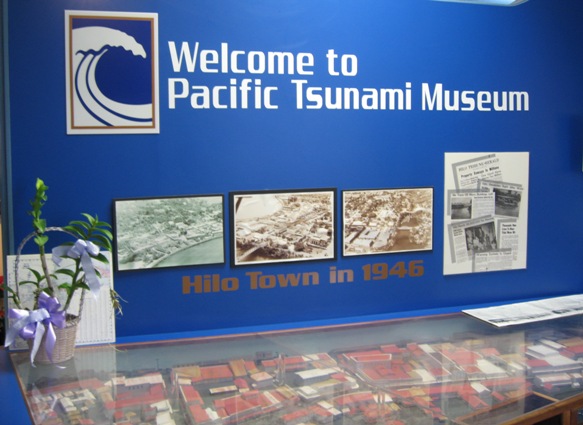
I first played such a game in January 2007 when, while in Honolulu for a conference, I took the day off and flew to Hilo where the Pacific Tsunami Museum is located. The volunteer-run museum, based in what is known as the tsunami capital of the world, engages local people and foreign visitors (including curious US mainlanders) on the science, history and sociology of tsunamis.

pacific-tsunami-museum-in-hilo-hawaii.jpg

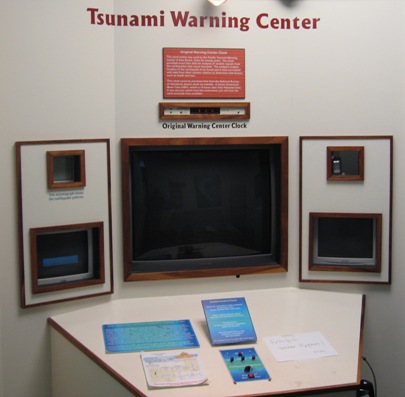
A basic game there allows a visitor to be play the role of Director of Pacific Tsunami Warning Centre (PTWC) , a US government institute that monitors seismic activity and has a mandate to issue alerts, watches or warnings to all countries in and around the Pacific Ocean. The game allows players to choose one of three locations where an earthquake happens — Alaska, Chile or Japan — and also decide on its magnitude from 6.0 to 8.5 on the Richter Scale.

In the real PTWC, five geophycisists are on duty round the clock. If the magnitude exceeds 7.5, the epicentre is located. If it’s in an area likely to cause a tsunami, a tsunami watch is sent to nearby coasts and a tsunami watch is set for areas with a travel time more than three hours away. Messages are sent to the tide observers for reports on the first wave, and telemetered water level gauges are checked. It’s by quickly assessing the seismic, sea level and historical data that scientists at PTWC decide if a warning is needed for areas already placed under a tsunami watch.

tsunami-warning-simulation-game-at-ptm-in-hilo.jpg

Since the system was set up in 1947, it has never missed warning of a damaging tsunami, but there have been a number of very expensive evacuations that turned out to be unnecessary. “These precautions are needed to ensure public safety, but scientists are working to minimise unnecessary warnings without ever missing a hazardous event,” the Tsunami Museum panel explained.

It’s revealing to play the role of a scientist who must quickly marshal lots of information and decide on whether or not to issue a warning. The cost of inaction can be high — but a false alarm doesn’t come cheap either.

I played the game three times, and each time erred on the side of caution — costing the hapless Hawaiian tax payers lots of money.

In real life, those who have their finger on the alert/warning button have to take many considerations into account. Repeated false alarms can erode public confidence in early warning systems. But suppressing a warning on a real breaking disaster — such as what happened in Thailand when the Indian Ocean Tsunami broke in December 2004 — can be truly devastating.

I don’t envy those who have to make this decision as part of their daily work. But after playing the game, I appreciate their challenges a great deal better.

Read my SciDev.Net essay (Dec 2005) The Long Last Mile on challenges in communicating early warnings on disasters

Read more about Tsuamis on Wikipedia

No copyright on this planet – thank Heavens (and NASA) for that!

As the Space Age completes 50 years today, 4 October 2007, we have at least two generations of humans who take images like this one completely for granted.

Yet no one had the capability – and vantage point – to take such images until satellites were launched into orbit, and later astronauts followed.

Beginning in the 1960s, thousands of stunning images — showing our planet in space, as well as the Moon and other celestial bodies in our Solar System — have entered the public domain. These are now part of our popular culture and represent a major educational resource.

These images didn’t come for free. It has cost space agencies – primarily NASA, the American space agency – literally billions of dollars over the decades to capture and deliver these images that we happily, freely bandy around. Contrary to what some people believe, NASA is not a world space agency. It’s the national space agency of a single country, financed by tax payers of that country.

Yet, early on, NASA adopted a very far-sighted, public spirited policy that all its space images would be made available free of copyrights to anyone, anywhere on the planet. This is what enables me to use space images on my blog – and keeps tens of thousands of such images in the public domain.

This is what the NASA official website currently has to say about it:
NASA still images, audio files and video generally are not copyrighted. You may use NASA imagery, video and audio material for educational or informational purposes, including photo collections, textbooks, public exhibits and Internet Web pages. This general permission extends to personal Web pages.”

Significantly, this includes commercially produced and marketed products, even though NASA’s guidelines make it clear: “If the NASA material is to be used for commercial purposes, especially including advertisements, it must not explicitly or implicitly convey NASA’s endorsement of commercial goods or services…”

There are some reasonable restrictions on this fair use. Read the full NASA copyright policy.

I was curious to see what copyright policy the space agencies of other leading space-faring nations follow. This is what I found on the European Space Agency’s website:
“The contents of the ESA Web Portal are intended for the personal and non-commercial use of its users. ESA grants permission to users to visit the site, and to download and copy information, images, documents and materials from the website for users’ personal non-commercial use. ESA does not grant the right to resell or redistribute any information, documents, images or material from its website or to compile or create derivative works from material on its website. Use of material on the website is subject to the terms and conditions outlined below.”

As we can see, it’s a lot more restrictive than NASA’s. I haven’t been able to check the policy of Russian, Chinese or Japanese space agencies, and wonder how liberal or restrictive their copyright policies are.

On strict legal terms, I suppose, creators or finders can be keepers. Arguments can be made that space images obtained at tremendous cost to tax payers can be owned, copyrighted and managed by those agencies and nations footing the bill. This is what makes NASA’s open copyright policy so creditable. Our visual public media — broadcast television, video, DVD and the web — would all have been so much poorer if some nitpicking lawyer or bureaucrat had succeeded in persuading the early NASA management to be more restrictive.

While still on the subject of space images, I wonder why so many images of Earth from space show Africa. I had to search for some minutes to find an image that showed Asia – the largest continent – from space. Next to Africa, the one showing the Americas seems the most popular.

We have to remember that some images we find online are composite images, carefully assembled by combining the best attributes of many images taken over time. Photographing or video filming our planet is not as simple as just going to space, aiming a camera and shooting. It involves a great deal of skill, resources and effort.

And keeping the resulting images in the public domain and open to access takes foresight and public spirit. As the Space Age turns 50, we must acknowledge this aspect of space exploration, which allows compositions like this, found on YouTube, for all of us to enjoy.

Crossing the other Digital Divide: Challenge to conservation community

Digital Divide refers to the gap between those who have regular, easy access to modern information and communication technologies (ICTs) and those who don’t. In the past decade, the IT industry and development community have launched various initiatives to bridge this divide. The One Laptop Per Child project is among the better known examples.

As digital technologies and media gain momentum and wider coverage than ever before, another kind of digital divide has emerged. This week in Kathmandu, during the Fourth Asian Conservation Forum, some of us have been talking about this new divide — between the Digital Natives and Digital Immigrants.

This latter divide is mainly a product of age, not socio-economics. Market research and sociological studies now confirm that today’s younger people – raised on a diet of mobile phones, video games and mp3 (music) players – have radically different ways of accessing, receiving and coping with information.

Recognising this new Digital Divide is vital for communication and advocacy work of conservation groups, such as IUCN – The World Conservation Union, conveners of the Kathmandu forum.

For nearly 60 years, IUCN has been an effective platform for knowledge-based advocacy. Using scientific evidence and reasoning, it has influenced conservation policies, laws and practices at country and global levels. The world would be a worse place to live in if not for this sustained advocacy work by thousands of experts and activists who were mobilised by IUCN.

Much of that work has been accomplished through the classical advocacy tools: scientific papers, books, conferences and, in recent years, ‘policy dialogues’ — meetings where experts and activists would sit down and talk things through with those who make policy in governments and industry.

IUCN continues to pursue all these methods, with creditable impact. IUCN’s Red List of Threatened Species, whose latest edition is being released today (12 September 2007), is among the best known examples of how the Union’s work informs and inspires urgent action for saving the world’s animals and plants driven to the edge by human activity.

To remain similarly effective in the coming years, IUCN — and the rest of the conservation community — need to evolve and adapt to changing realities in human society. One such reality is the proliferation of ICTs in the past two decades.

The International Telecommunications Union (ITU) announced recently that the world’s telephone connections had passed four billion. Largely thanks to the explosion of mobile phones in the majority world, the total number of telephones (fixed and mobile) had quadrupled in the past decade.

While exact figures are hard to come by, it is estimated that around 1.17 billion people (almost 1 in 6 persons) have access to the Internet, even though varying levels of quality.

These are the more widely quoted figures, but the media mix keeps diversifying even as the size of the overall ‘ICT pie’ keeps increasing. For example, the 1990s saw a channel explosion in both FM radio and television across much of Africa, Asia Pacific and Latin America, hugely increasing viewers’ choice and enhancing the outreach of broadcasting. The popularity of video games (and now, online games) has spawned trans-boundary subcultures that were inconceivable even a decade ago.

It is this bewilderingly media-enriched world that IUCN’s members and experts are trying to engage, hoping to persuade everyone — from governments and industry to communities and individuals — to live and work as if the planet mattered.

In Kathmandu this week, I argued that scientific merit and rational (and often very articulate) reasoning alone won’t win them enough new converts to achieve significant changes in lifestyles, attitudes and practices. To be heard and heeded in the real world outside the charmed development and conservation circles, we need to employ a multitude of platforms, media and ICT tools. And we have to talk in the language of popular culture.

We have come a long way since the 1980s, with the new ICTs evolving parallel to our own understanding of sustainability.

When we were involved in processes leading up to the Earth Summit in Rio de Janeiro, back in 1992, most of us were still using fax and snailmail to exchange information. Email was confined to academic circles and the web was not even conceived.

By the time Johannesburg Summit was held a decade later, email had come into wide use and static websites were being used to disseminate information and opinions. E-commerce and music file sharing were gaining momentum.

Just five years on, the rapidly evolving web 2.0 offers us more tools and platforms to not just engage in one-way dissemination, but to truly communicate with a two-way flow. Wikis allow participatory document drafting. Web logs or blogs enable faster, easier expression and discussion. YouTube and other platforms have suddenly made sharing of moving images much simpler (assuming we have sufficient bandwidth).

In fact, connectivity is improving in many parts of the world, though there still are many gaps, frustrations and cost issues to be resolved. Young people, under 25 years, are leading the charge in entering and ‘colonising’ the new media. Social networking platforms such as MySpace and FaceBook are only the tip of this cyber iceberg. And virtual worlds — such as Second Life, with over 8 million online members — are moving in from the periphery to occupy a clear niche in our new digital world.

800px-web_20_mapsvg.png

Every indication is that these trends will continue. IUCN and other conservationists, with their rigorous scientific analysis expressed in technical papers, print publications and the occasional op ed article in a broadsheet newspaper, have to navigate in this whirlpool — and it’s not easy. But their choice is between engagement and marginalisation. The planet cannot afford the latter.

I’m not suggesting that conservation scientists and organisations must drop their traditional advocacy methods and rush to embrace the new ICT tools. But they need to survey the new media landscape with an open mind and identify opportunities to join the myriad global conversations.

A good part of that is what intellectuals might see as chatter, or tabloid culture. It’s precisely this mass tabloid audience that needs to be engaged for conservation.

There are inspiring examples of how other sections of the development spectrum are seizing new media opportunities:

* Some humanitarian groups now use Google Earth online satellite maps for their information management and advocacy work, for example in Darfur, Sudan, and the Central African Republic.

* In an attempt to name and shame offenders, human rights activists are using YouTube to post incriminating video evidence of human rights abuses worldwide. The influential Foreign Affairs journal recently called this the YouTube Effect.

Fortunately, at least a few Asian conservation leaders already appreciate this enormous new media potential. In Kathmandu, Surendra Shrestha, UNEP’s regional director for Asia Pacific, echoed my views.

“My young kids spend several hours each weekend in virtual worlds. We need to get in there and engage them with our content,” he said. “To do that, we have to get inside their minds, and speak their language.”

Shrestha mentioned how UNEP in Asia is attempting this with ICT-based projects for youth, such as e-generation which, according to him, has involved half a million young people.

Such initiatives are beginning to happen, thanks to a few conservationists who are pragmatic enough to exploit the inevitable. But much more needs to be done to make conservation ‘cool’ and hip for Asia’s youthful population, half of them under 35, and many of them Digital Natives.

For sustainability measures to have a chance of success, these upwardly mobile, spend-happy youth have to be reached, touched and persuaded. If it takes tabloid tactics to achieve this, so be it.

And given Asia’s growing economic clout and ecological impact – with China and India leading the way – the fate of the planet will be decided by what is done, or not done, in our region.

While they debate the finer points of conservation strategies and activities in Kathmandu, Bangkok and other cities across our massive region, Asia’s conservation community must quickly cross the new Digital Divide that currently separates them from Digital Natives.

Declaration of interest: I was part of IUCN Sri Lanka Secretariat (1992-1994), where I started its communication division, and have been a member of IUCN Commission on Education and Communication since 1991.

Read my April 2007 post: Do ICTs make a difference?
A science journalist among whales…meeting our giant cousins

Last April in Melbourne, I listened avidly to the doyen of Australian science journalists Robyn Williams compare science journalists to whales as he opened the Fifth World Conference of Science Journalists.

As I paraphrased Robyn in my blog post on 18 April 2007:
They both respond to lots of free drinks and eats. In fact, they like to drink vast amounts (though not necessarily the same liquids!). There is evidence to suggest they are both intelligent species. They are both endangered too – there are some nasty people out to get them. Both are free spirits – don’t like being trapped or hounded.

Back in Australia on a short private visit, I finally manged to catch up with these marvelous creatures that I have admired, written and spoken about for a quarter of a century. Today, I went whale watching in Hervey Bay, north of Brisbane in Queensland.

It was an awe inspiring experience. Here are some photographic highlights. I’ll write more about it when I have caught my breath again.

A humpback whale leaps in joy, having sighted me at last:
humpback-whale-leaps-with-joy-having-seen-nalaka-at-last-30-aug-2007.jpg

Is this the world’s largest tail? Oh boy, what a tale to tell!

the-worlds-largest-tail.jpg

Who is watching whom? Take a closer look at these strange creatures who come on noisy vessels:

human-watching-humpback-whale-style.jpg

Your mouse-clicks at work: thanks to the steady income from this blog, I’ve got my own yacht at last (just kidding!):

finally-my-own-yacht.jpg

Is UK’s Channel 4 the latest ‘Fossil Fool’?

Even as climate change gathers momentum as a worldwide concern, more media organisations are ending up with egg on their face about their coverage of the issue.

Last month, I quoted British environmentalist George Monbiot about the BBC’s appalling track record on this: see ‘The BBC as a Fossil Fool’, 7 April 2007.

And now, UK’s Channel Four can make its own claims to be a Fossil Fool.

The Independent on 8 May 2007 reported that the makers of a Channel 4 documentary which claimed that global warming is a swindle have been accused of fabricating data by one of the scientists who participated in the film.

The Great Global Warming Swindle was broadcast on 8 March and has been criticised by leading scientists for errors, distortions and misrepresentations.

Image courtesy Channel 4

The article reads:

The film has also been referred to the UK regulatory watchdog OFCOM which is considering a complaint from 37 senior scientists that the programme breached the broadcasting code on the misrepresentation of views and facts.

Now even a climate sceptic whose dissenting views were used by the film-makers to bolster their claims about the “lies” and “swindles” of global warming has accused the documentary of promulgating falsehoods.

Eigil Friis-Christensen, director of the Danish National Space Centre, has issued a statement accusing the film-makers of fabricating data based on his work looking at the links between solar activity and global temperatures.

The scientists who have written to Ofcom include Sir John Houghton, the former chief executive of the Met Office, Lord May of Oxford, a former government chief scientist and past-president of the Royal Society, and Professor Chris Rapley, director of the British Antarctic Survey in Cambridge. In a letter to Mr Durkin they call for changes to the programme before the DVD version is released, even though DVDs are not covered by the Ofcom Broadcasting Code.

“So serious and fundamental are the misrepresentations that the distribution of the DVD without their removal amounts to nothing more than an exercise in misleading the public,” they say.

Image courtesy the film's website

Commenting on the documentary on 13 March 2007, George Monbiot wrote in The Guardian:

The problem with The Great Global Warming Swindle…is that to make its case it relies not on future visionaries, but on people whose findings have already been proved wrong. The implications could not be graver. Just as the government launches its climate change bill and Gordon Brown and David Cameron start jostling to establish their green credentials, thousands have been misled into believing there is no problem to address.

The film’s main contention is that the current increase in global temperatures is caused not by rising greenhouse gases, but by changes in the activity of the sun. It is built around the discovery in 1991 by the Danish atmospheric physicist Dr Eigil Friis-Christensen that recent temperature variations on Earth are in “strikingly good agreement” with the length of the cycle of sunspots. Unfortunately, he found nothing of the kind.

Read full commentary by George Monbiot in The Guardian 13 March 2007

Read the full article by Steve Connor in The Independent online on 8 May 2007

The Great Global Warming Swindle website

Profile of film’s director, Martin Durkin

Patrick Moore: 50 years of Sky at Night on the air

The first ever book on astronomy I owned, a pocket guide to the night sky, was written by an Englishman called Patrick Moore.

Armed with the tattered book, I joined night sky observation sessions of the Young Astronomers’ Association. That was more than 20 years ago.

Hormones-on-legs that we all were at the time, we were interested in heavenly bodies at both ends of a telescope. But we couldn’t have had a better guide to the celestial wonders than Patrick Moore.

The same Patrick Moore reached a milestone in the history of broadcasting this month: he has hosted the same show on television for 50 long years, more than anyone else on any subject anywhere on this planet.

The show is The Sky at Night, which started on BBC Television in April 1957.

Sir Patrick Moore Patrick Moore presenting an early Sky at Night programme

The Space Age had not even begun, and television broadcasting was still in its formative days, when a much younger Patrick Moore presented the first Sky at Night in April 1957. But as if on cue, the Soviet Union launched Sputnik One just six months later, triggering the Space Race. Thus Patrick Moore has been our able, dependable and colourful guide to the most fascinating journey in the history of humankind – our species finally venturing beyond its ‘cradle’, the Earth.

But as another populariser of space and astronomy, Sir Arthur Clarke, notes: “Sky at Night has not been just a gee-whiz show of rockets, satellites and other expensive toys deployed by rich nations trying to outsmart each other. At its most basic, it’s a show about exploring that great laboratory within easy access to anyone, anywhere on the planet: the night sky.”

Sir Arthur adds in a special tribute to his long-standing friend:
“By the time the Space Age dawned, Patrick was well on his way to becoming the best known public astronomer in the world. The Sky at Night only consolidated a reputation that was well earned through endless nights of star-gazing, and many hours of relentlessly typing an astonishing volume of books, papers and popular science articles.”

In the 50th anniversary programme, broadcast this month, Patrick Moore traveled back in time to see the first recording of The Sky at Night . He talked to his earlier self about astronomy back in 1957, and discussed how things have changed in half a century. He then time traveled to 2057 where the ‘virtual’ Patrick, saved in the BBC computer, is celebrating 100 years of making The Sky at Night and talks to Dr Brian May about the discovery of life on Mars.

Sir Patrick Moore

Thank you, Sir Patrick, for being our affable guide to the night sky and space travel for half a century. We hope you don’t consider retirement anytime soon.

Read Patrick Moore’s brief history of The Sky at Night

BBC’s 45th anniversary multimedia tribute

BBC Online interview with Sir Patrick Moore

Sir Arthur Clarke’s tribute to The Sky at Night at 50

Science journalists and whales: much in common?

Science journalists have been called many names, some more memorable than others.

Speaking at the inauguration of the 5th World Conference of Science Journalists, Robyn Williams — the doyen of science broadcasting in Australia — suggested a new analogy: they are like whales in many ways.

To paraphrase his witty opening remarks, whales and science journalists have some things in common (my comments in brackets):

They both respond to lots of free drinks and eats.

In fact, they like to drink vast amounts (though not necessarily the same liquids!).

There is evidence to suggest they are both intelligent species.

They are both endangered too – there are some nasty people out to get them.

Both are free spirits – don’t like being trapped or hounded.

And they are known for occasional mass strandings – in the case of science journalists, it first happened in Tokyo (which choice whales might not approve!), followed by Budapest, Sao Paulo, Montreal and now – Melbourne.

These are the cities that have hosted World Conferences of Science Journalists, beginning in 1992.

It’s an event that happens approxiatemly every three years — or as soon as the next host can line up the massive logistics involved in receiving, feeding and keeping the several hundreds whales – sorry, science journalists – happy.

Robyn Williams, image courtesy ABC

Robyn is not just a very entertaining broadcaster, but has has written more than 10 books — one of them a novel, 2007: A True Story Waiting to Happen.

By coincidence, the story involves whales – one of his favourite species – and its action starts in April 2007!

Here’s the blurb promoting the book, first published in 2001:

It is the year 2007. The weather is now wreaking turmoil on the planet. Hurricanes, cyclones, tsunamis, floods, fires, droughts and diseases are sweeping the world with increasing frequency and severity. The poor countries are worst hit, but even the rich ones are no longer immune from major disruption. Big business is worried.

In April 2007, the animals take matters into their own hands. An enormous pod of whales sinks a whale-killing submarine. Massive flocks of pelicans close airports around the world. Huge herds of cattle bring freeways everywhere to a halt, burying cars under mountains of steaming dung.

Desperate to find a solution to the global chaos, the President of the United States calls on the world’s top scientists to explain what it happening and how to stop it. One man, his daughter and her dog hold the key, but before things can get better, they have to get a great deal worse.

Hmmm. Robyn is known and admired for many talents, but perhaps the world hasn’t yet appreciated his powers of prescience.

Having blazed new trails in taking science to the public, Robyn now presents The Science Show on ABC radio.

Related links:

The Science Show story on whale DNA

Robyn Williams interview on ‘scientific whaling’

Science journalism, key to good governance

From Sydney, I have travelled to Melbourne to participate in the Fifth World Conference of Science Journalists, from 16 to 20 April 2007.

It’s the second time a science communication event brings me to this beautiful, multi-cultural Australian city. My first visit was in November 1996 to speak at SCICOMM ’96, the Fourth International Conference on the Public Understanding of Science and Technology, held at the University of Melbourne.

This week’s conference is promising to be interesting and engaging. The programme is full of talks, panels, debates and other activities. Several hundred fellow science journalists, and those researching or supporting science journalism, are expected to attend.

I’ll be kept busy being on two separate panels.

5th-world-conference-0f-science-journalists.jpg

David Dickson, Director of the Science and Development Network (SciDev.Net), has just written an editorial that provides an excellent backdrop to the conference. He argues that the work of science journalists needs greater recognition as an essential precondition for transparent, responsive and accountable government.

Excerpts:

Much will be heard and discussed about how science journalists can inform — and, frequently, entertain — people with stories about scientific and technological developments. Equally important is their role in stimulating public debate in areas where science and technology can impact directly on the social and natural worlds, from stem cell research to global warming.

At the heart of many of these issues lies the key contribution that journalism can make to good governance. The concept of the journalist as a defender of the public interest is usually applied to those writing about overtly political issues, since it is here that the need for — and indeed the challenges to — a free press are often greatest.

But a growing number of political decisions, from allocating medical resources to promoting economic growth, have a scientific and technological dimension to them. It is therefore important to recognise the extent to which science journalism forms an essential component of a well-functioning democracy.
Read the full editorial on SciDev.Net website

Unfortunately, David is not able to join us in person — he’s holed up in London, finalising the organisation’s new five-year strategy.

Note:
I’m flying twin flags at this conference – as the Director of TVE Asia Pacific, and as a Trustee of SciDev.Net

I plan to be posting on to this personal blog as well as to a collective blog by several colleagues from SciDev.Net who are in Melbourne.

Grow, grow, grow your reef…

Coral reefs are sometimes called the rainforests of the sea. They are biologically rich and diverse.

But all over the tropical seas, coral reefs are under many pressures – from bad fishing practices to naturally occurring phenomena like the El Nino. Reefs are being damaged and destroyed faster than their natural recovery rate.

Unless a helping hand can be given, many coral reefs would soon be lost forever.

Giving Nature a helping hand is just what a Sri Lankan group of divers have been doing at the Rumassala coral reef on the island’s south coast.

coral-bleaching-a-major-concern.jpg generic6.jpg

TVE Asia Pacific’s international TV series, The Greenbelt Reports, has featured this effort in one episode. Watch it on TVEAP channel on YouTube

Read the story on TVEAP website: Regeneration – a new chance for coral reefs?

Photos courtesy TVE Asia Pacific, from The Greenbelt Reports TV series

Wanted – Human face of climate change!

Now that scientists have spoken, loud and clear, things are beginning to happen on climate change — and not a moment too soon.

Venture capitalists, policy wonks, technology geeks, security analysts and social activists are all joining the conversation — thanks largely to the media’s increased coverage of the issue.

The threat of climate change is being taken seriously. The past few weeks have seen evidence of this. For example:

The latest report from the Inter-governmental Panel on Climate Change, released on April 6, said greenhouse gas emissions are at least partly responsible for the warmer climate, which will pose a host of environmental and health challenges, ranging from more diseases to floods and droughts.

– In March 2007, an international panel of scientists presented the United Nations with a sweeping, detailed plan to combat climate change, warning that failure would produce a turbulent 21st century of weather extremes, spreading drought and disease, expanding oceans and displacing coastal populations.

And for the first time ever, the U.N. Security Council will discuss potential threats to international security from climate change.

These conversations will be richer and more meaningful if the ordinary people — who are most at direct risk from climate change’s multiple impacts — were heard in the corridors of power, money and deal-making.

We in the media must see beyond the important scientific projections, policy debates and UN talks — we must look for the human faces, voices and dimensions of climate change.

That’s the point I made in a recent essay published on TVE Asia Pacific website a few weeks ago. Here’s an extract:

A healthy mix of rational thinking and emotional appeal will stand a better chance of moving people to kick their addition to oil.

Allowing real people to tell their own personal experiences can also be very effective. I realised this five years ago, when we commissioned the first-ever documentary on climate change and the South Pacific, made by a native Pacific islander. Voices from the Waves, directed and produced by Bernadette Masianini of Fiji, was narrated by two teenagers growing up on two islands, each facing an uncertain future.

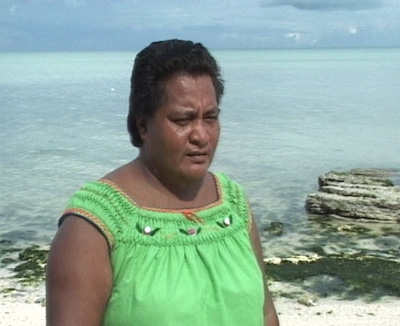
At one point we meet Mrs Saipolua, an ordinary woman who lives on the island of Kiribati, where no place is higher than a few feet above the sea. She is distressed having had to move her home twice in a past decade due to the receding shoreline.
For Kiribati’s 82,000 inhabitants, climate change is not theory; it’s already lashing on their beaches.

“Our house used to be in that spot,” Mrs Saipolua points to a place that’s now permanently submerged. “This is where we relocated to the second time.”

mrs-saipolua.jpg

She points to several tombstones that are on the verge of being washed away. “Even the final resting places of our loved ones are not spared…..The sea action had cracked the gravestones.”

I’ve covered climate change for years as a science writer. But it was Mrs Saipolua who made me realise the impact climate change is having on millions of ordinary people who have never heard that term.

Related links:

Pacific ‘Voices from the Waves’ on climate change

Read the full essay, Changing Climate and Moving Images on TVEAP website

Watch a video clip from Voices from the Waves on TVEAP’s YouTube Channel:

Video and DVD copies of Voices from the Waves can be ordered from TVE Asia Pacific’s online e-shop.

UN Climate Change Impact Report: Poor Will Suffer Most