The Step-children of Tsunami: Overlooked and forgotten

india-malas-family-lost-their-home-jobs.jpg

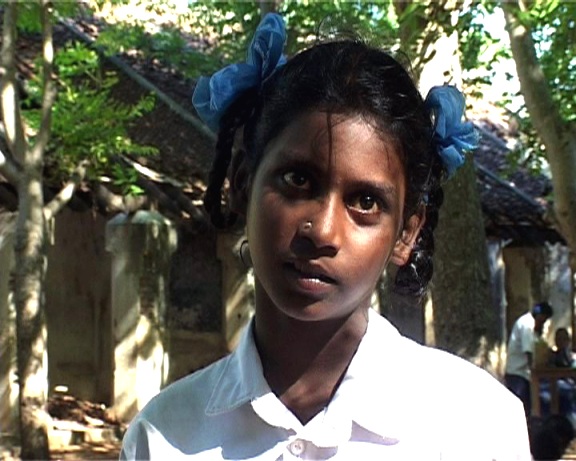
Meet Mala. She lives in in Kottaikkadu village in Kancheepuram District in India’s southern Tamil Nadu state.

She was 11 years old when, in December 2004, the Asian Tsunami crashed into village without warning. This made her very poor family desperate and destitute.

The disaster didn’t kill anyone in her village, but caused considerable property damage. In her case, the waves that rolled in spared their small hut, but her fisherman father was nearly drowned: he survived with some injuries.

But the family’s fishing boat and gear were gone. That was a mighty blow.

After the waves had retreated, they returned to their house and started rebuilding their lives. They thought the world’s generosity in responding to the Asian Tsunami will somehow bring some help.

They were wrong.

When the Tsunami triggered massive aid donations, all affected countries pledged to distribute it in a fair, equitable and transparent manner. But as the aid trickled down layers of government and charities, various biases and distortions crept in.

What happened in Mala’s village was an example. We came across the situation when tracking Mala’s family for a whole year (2005) after the Tsunami, documenting their long road to recovery as part of our Children of Tsunami media project.

We tracked two affected families each in India, Indonesia, Sri Lanka and Thailand, filming their progress — or the lack of it — every month and producing video reports that were uploaded to a dedicated website.

Follow Mala’s story through monthly video reports on our website

The most striking example of aid disparity came from India. Even months after the disaster, Mala’s family — or anyone else in her village — received absolutely no relief or recovery assistance.

Officially, it was because ‘no one was killed’ in her village. But everybody in Kottaikkadu village knew the real reason: in the Indian social hierarchy, they occupy the lowest level, known as ‘Dalits’.

Apparently, that was why both government agencies and charities stayed clear of the village.

Our India production team, led by senior journalist and film-maker Satya Sivaraman (with video camera in the photo, below), investigated further. They compared Kottaikadu with its adjoining village of Alambara. Both had suffered similar damage during the Tsunami: people lost their boats and nets, but there were no deaths.

Image from Children of Tsunami website

Yet the people of Alambara – who belong to a supposedly higher caste of fishermen — received food items, boats and fishing nets from various outside sources.

In fact, they felt quite sorry for their neighbours in Kottaikkadu. “On the day of the tsunami we ran over 15 kilometers,” said Kuppuraj, a resident of Alambara. “Kottaikadu villagers, who live just 600 meters away…ran with us — but nobody has helped them to recover.”

There was another incident that showed up the caste-based discrimination, which my colleague Manori Wijesekera, production manager of Children of Tsunami, has just reminded me.

In March 2005, our India film crew found Mala’s father seriously ill with a lung infection (triggered by his near-drowning during the Tsunami) and his family so helpless that they were unable to even seek medical attention.

So the crew put their filming gear aside, and became good Samaritans: they rushed the sick man to a nearby government-run hospital. But once there, doctors refused to admit or treat him — all due to the patient’s supposedly low caste!

It was only when Satya and crew threatened to film the entire sorry episode, and have it broadcast on television later that day, that medical attention was finally provided. Discarding their production plans, our crew stayed with Mala’s family at the hospital through the night and next day to ensure the doctors gave her father the correct medical attention. The family believes that the production team saved her father’s life that day.

Read more about what happened at Children of Tsunami website

Watch the March 2005 video report that covered the hospitalisation incident
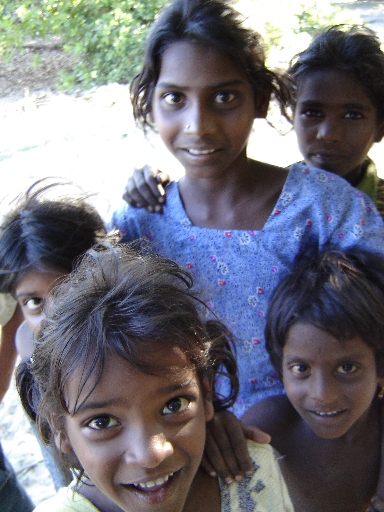
mala-with-her-neighbours.jpg

While their father was recovering, Mala’s mother toiled as a labourer to keep the home fires burning. Mala has one younger sister and two younger brothers.

Children of Tsunami: Rebuilding the Future was TVE Asia Pacific’s response to largely superficial media coverage of the Indian Ocean Tsunami of December 2004. It tracked on TV, video and web the personal recovery stories of eight affected families in India, Indonesia, Sri Lanka and Thailand for a year after the disaster. Its many media products — distributed on broadcast, narrowcast and online platforms -– inspired public discussion on aid management and optimum rehabilitation choices.

As we discovered along the way, some of the affected could be better described as Step-children of Tsunami.

In one of my early blog posts, I paid a tribute to the most extreme example of such a child, Thillainayagam Theeban.

The Tsunami has become yesterday’s news, but there are thousands of affected children, women and men who are still living on the edge of survival.

Related links:

Children of Tsunami: Documenting Asia’s longest year

Children of Tsunami revisited two years later

All images courtesy Children of Tsunami media project, TVE Asia Pacific

Remembering Diana, the world’s first Princess of Television

Today, 31 August 2007, is the tenth anniversary of Princess Diana’s tragic death in a road accident in Paris.

A decade on, I can still remember exactly where and how I first heard the news. This experience is widely shared: to many in my generation — born in the 1960s and raised through 1970s and 1980s (just like Diana was) — this was an unforgettable moment. Perhaps just like the assassination of John F Kennedy was to a previous generation.

The analogy between Di and JFK goes further. Both had charismatic personalities that appealed far beyond their home country. Both epitomised the vibrancy of youth and the potential for change in the institutions they joined (Diana the British Royal family, and JFK the American government). Both lives were snuffed out before they could fulfill that promise, but they left enduring legacies — and thriving cottage industries of conspiracy theories (‘Who killed JFK?’ has now been joined by ‘Who killed Diana?’).

Here’s another similarity: JFK and Diana were both iconic images of the era of television.

If JFK turned up just in time to charm the first generation of American TV viewers, Diana’s arrival on world stage coincided neatly with the worldwide roll out of satellite television, especially the all-news channels. And thanks to the advances in global broadcasting, Diana commanded a far bigger global audience than JFK did (though the comparisons must end there).

I would like to remember Diana as the first Princess of Television of our media-rich age.

Looking back, we can see how satellite television started and evolved almost in parallel to Diana’s own life. Diana had just celebrated her first birthday, when the world’s first trans-Atlantic satellite television signal was relayed from Europe to the Telstar satellite over North America on 23 July 1962. (By coincidence, JFK was to have participated in the event, but could not owing to a technical delay.)

Over the next two decades, as Diana grew up and matured into a young lady who would soon capture the world’s imagination, satellite TV’s technology, outreach and mass following evolved to cover more channels, territories and eyeballs.

A turning point came when the US entrepreneur Ted Turner took a daring step for that time by launching the Cable News Network (CNN), the world’s first 24 hour news channel. CNN went on the air on 1 June 1980 amidst many skeptics asking: who would possibly want to watch news all the time?

Who indeed! Until then, conventional wisdom had confined news to a regular evening slot, anchored by larger-than-life newscasters. The routine was broken only when there was some earth-shattering development.

Turner’s CNN, ridiculed in the early days as the ‘chicken noodle network’, changed all that, and paved the way for dozens of 24/7 news channels.

As it turned out, CNN arrived just in time. The engagement between Diana and Charles, the Prince of Wales, was announced a few months later, in February 1981.

Their Royal Wedding on 29 July 1981 was watched by a combined television audience of over 750 million worldwide. That broke records as the highest audience for a live broadcast, surpassing the Apollo XI Moon landing a dozen years earlier (seen by an estimated 500 million).

The rest is recent history. Television newsgatherers could never have enough of Diana — apparently their audiences kept asking for more. That may be a debatable point, but Diana was quick to learn the art of exploiting the inevitable: when she realised it was a stark fact of life, she started using it to her personal advantage.

Diana used television as much as television used Diana. Her famous BBC Panorama interview with Martin Bashir was one among many instances when she lived her personal life under the glare of public television (photo below).

Image from BBC Image courtesy BBC

But Diana’s clever use of television was not just for advancing her personal agenda. When she became a big time charity supporter in the 1990s, she used the power of moving images to demystify and humanise global issues from caring for people living with HIV/AIDS to banishing the scourge of landmines. These ensured that Diana became the People’s Princess in the last years of her life.

Image courtesy Daily Telegraph

Early on in her marriage to Charles, a leading newsman told Diana: when you married him, we came as part of the package deal. If she was initially stressed by that revelation, she later made the best use of that inevitable trapping of her celebrity.

And when she died young and tragically, on 31 August 1997, her premature departure became the biggest news story of the year.

The BBC (domestic) announces Princess Diana’s death:

BBC World TV announces Diana’s death in Paris:

Diana’s funeral on 6 September 1997 had a larger global satellite TV audience than did her wedding. Of course, by then there were more people and more television sets on this planet.

Elton John sings a special version of ‘Candle in the Wind’ at Princess Diana’s funeral:

So we salute the legacy of the world’s first Princess of Television. One who moved our hearts with moving images of her personal life and those of the worthy causes she championed. One who showed how moving images can move people.

PS: There was a time when the unforgettable television moments were gone after their broadcasts (unless recorded on tape). But now we have YouTube, where the world’s visual memory lives on. All news and current affairs coverage I have linked to in this post were found on YouTube by simply searching for Princess Diana. There is much more where these came from.

Read BBC Online’s timeline of the life of Princess Diana

Wanted: Ethical sourcing of international TV news

In recent years, consumer pressure has built up against products made using child labour and blood diamonds. If these are no longer internationally acceptable, neither should the world tolerate moving images whose origins are ethically suspect.

This is a point I have been making for sometime. I feel very strongly about it, because to me, what goes on behind the cameras is as important as what is in front of the cameras — and is therefore seen by millions of television viewers.

Many media researchers and media-watchers don’t pay enough attention to this aspect. Volumes of content analysis are produced on what is broadcast, but do we probe how that content gets on the air in the first place?

My recent blog post, and international op ed essay, on cheque-book development corrupting the broadcast media reiterates this point.

from-mediachannelorg.jpg from-mediachannelorg.jpg

When Al Jazeeera launched its English language international news and current affairs channel in November 2006, I wrote an op ed essay called ‘Ethical Newsgathering: Al Jazeera’s Biggest Challenge’. This was published by media-watch websites on both sides of the Atlantic: MediaChannel.org managed from New York, USA, and MediaHelpingMedia managed from London, UK.

I looked at the track record of the two leading international news channels, BBC World and CNN International, and noted:

“They have increasingly come to epitomise a disturbing trend in international news and current affairs journalism: the end justifies the means.

“Take, for example, a major news story that broke in my part of the world two years ago: the Asian Tsunami of December 2004.

“In a few dreadful hours, the disaster killed, injured or otherwise shattered the lives of millions. The ‘media tsunami’ that followed added insult to injury by turning the plight of affected people into a global circus. The right to privacy and dignity of thousands of affected people was repeatedly violated. The visual media, in particular, had no qualms about showing the dead, injured and orphaned: the story was gory.

One CNN reporter later wrote a whole book recounting those few momentous days, when his team apparently managed to get stories before anyone else. Seemingly because they threw more money, equipment and diplomatic clout than others. The ‘gung-ho’ tone in that book is revolting yet revealing.

“Such journalists’ only operating guideline seems to be: get the story, no matter what — or who gets hurt in that process.”

Read the essay: Ethical Newsgathering: Al Jazeera’s Biggest Challenge, by Nalaka Gunawardene, on MediaChannel.org

Read an earlier essay, Communication Rights and Communication Wrongs, by Nalaka Gunawardene, on SciDev.Net

tv-influence-on-print-media.jpg

In the corporate media world, we the viewers are ‘consumers’ of what the multiple news channels peddle 24/7. Few of us see beyond what comes up on our screens, and even fewer bother about how those images are sourced.

If we want ethical sourcing of TV news content, that pressure must come from us, the consumers. We should react not only to the carefully packaged moving images and soundbytes dished out to us, but also demand to know if these have been acquired in an ethically acceptable manner.

Good journalism is not just a mix of accuracy, balance and credibility (the A, B and C we are taught in journalism school). There is also D (Discernment) and E (Ethical sourcing).

– Nalaka Gunawardene

‘Cheque-book Development’: Paying public media to deliver development agency logos

In their ceaseless efforts to keep their organisations in the media spotlight, spin doctors of development agencies are distorting news values and corrupting the media, turning issue-based communication products into ‘logo delivery mechanisms’.

This is the thrust of my latest op ed essay, titled ‘Cheque-book Development’ corrupting the media. It has just published by the popular media-watch website anchored in the US, MediaChannel.org

Image courtesy MediaChannel.org

In this essay, I draw on several years of first hand observations in development, humanitarian and broadcasting circles at Asian and global levels. I focus on a disturbing practice that more and more development/humanitarian agencies engage in: paying intermediaries for getting their stories on global news and current affairs TV channels.

This is nothing short of cash-for-media coverage.

Here’s an extract:

“As development organisations compete more intensely for external funding, they are increasingly adopting desperate strategies to gain higher media visibility for their names, logos and bosses.

“Communication officers in some leading development and humanitarian organisations have been reduced to publicists. When certain UN agency chiefs tour disaster or conflict zones, their spin doctors precede or follow them. Some top honchos now travel with their own ’embedded journalists’ – all at agency expense.

“In this publicity frenzy, these agencies’ communication products are less and less on the issues they stand for or reforms they passionately advocate. Instead, the printed material, online offerings and video films have become ‘logo delivery mechanisms’.

Image courtesy MediaChannel.org Cartoon courtesy Global Journalist

Some of these communication officers I write about have become friends over the years — I empathise with their pressures, but don’t approve of what their organistions do. As I write in the essay:

“This practice is wrong on two counts. One, allowing intermediaries to sell access to the airwaves is a form of corruption. Two, every time this happens, it siphons off tax-payer supported development funds intended for combating poverty and suffering in the majority world.

“It is the reverse of cheque-book journalism, where some media organisations pay celebrity or other sources for exclusive access to their stories. When development agencies are paying sections of the media to get promotional or favourable stories aired, we must call it ‘cheque-book development’.”

Make no mistake — this is a form of media corruption. It’s not just the development sector’s vanity that fuels this process. Many 24/7 news channels are struggling to fill their hours inexpensively. Some turn a blind eye to ethical sourcing as long as they can have a steady supply of subsidised content.

Read my full essay on MediaChannel.org

Note: Being a US-anchored outlet, MediaChannel.org spells ‘cheque-book’ as ‘check-book’, which is correct in American spelling of English! As I write in my essay, it appears that TV channels and networks on that side of the Atlantic seem a bit harder to corrupt. But then, what do I know?

Read my Nov 2006 essay on MediaChannel.org: Ethical News Gathering Challenge for Al Jazeera

I have been speaking about the growing threat of cheque-book development for some time. For instance, I referred to it during Communicating Disasters: An Asian Brainstorming organised by TVE Asia Pacific and UNDP in Bangkok in December 2006.

Essay republished on Asia Media Forum
asia-media-forum.gif

All Online Data Lost after Internet Crash…

This report has just come in, from my favourite news source, Onion News Network….enjoy!

I wonder what I would do if all my blog posts were suddenly lost….irrevocably? Agh — perish the thought!

And this reliable news report confirms something I’ve suspected all along — when it comes to e-commerce, Nigeria’s is the southern economy that is best developed: I receive evidence of that in my email practically everyday…

Joey R B Lozano: The legacy continues…at Silverdocs

I met Joey R B Lozano only once, but he left a deep impression.

A small-made man with passionate zeal and tons of energy, he was every inch an activist-journalist-campaigner. We had invited him to a regional workshop of factual video producing and distributing partners from across Asia that we held in Singapore in November 2002.

We hadn’t worked with Joey earlier. He came recommended by our international partner Witness, which uses video-based advocacy and activism for promoting and safeguarding human rights worldwide.

Joey R B Lozano Joey R B Lozano Joey R B Lozano

Joey used his personal video camera to assert indigenous land rights, and to investigate corruption and environmental degradation in his native Philippines. Joey was an independent human rights activist and also one of the country’s leading investigative reporters.

He freelanced for the Philippine Daily Inquirer, covering Indigenous peoples’ rights and the environment, considered the two most dangerous beats in the Philippines. But years earlier, he had moved out of the capital Manila, and committed his life and career to stories and issues at the grassroots that many of his city-based colleagues had no time or patience in covering on an on-going basis.

Trained as a print journalist, Joey mastered new media and technologies whose potential he quickly realised. He moved into television and video media with ease, and later became an active blogger.

Joey’s TV investigations began in 1986, when he helped ABC’s 20/20 to uncover the “Tasaday hoax”, a highly successful fraud to pass off local tribespeople as a newly discovered Stone Age culture.

He soon embarked on his own investigations and started digging into illegal logging, gold mining and land-grabbing. In turn, his exposes quickly earned him repeated assassination and abduction attempts, in a country that is one of the more dangerous places to practice journalism.

When he came to Singapore, Joey had recently ‘starred’ in a major Canadian documentary titled Seeing is Believing: Human Rights, Handicams and The News, which looked at how committed, passionate individuals were using new communication technologies to change the world.

participants-at-tveap-partner-workshop-singapore-nov-2002.jpg

Photo of Singapore TVEAP workshop participants: Joey Lozano is 6th from left on the frontmost row

Follow Seeing is Believing storyboard on the film’s website

We screened the film, made by Katerina Cizek and Peter Wintonick, and heard first hand from Joey on what his struggles entailed. The film followed Joey as he delivers a new “Witness” donated video camera to Nakamata, a coalition of Indigenous groups in Central Bukidnon. Together, Nakamata and Joey begin documenting a dangerous land claims struggle, and it doesn’t take long for tragedy to unfold in front of the camera.

Watching the film and then listening to Joey — and his Witness colleague Sam Gregory — describe the on-going struggle, was one highlight of our week-long workshop. Some of us saw in Joey the activist-campaigner that we wanted to be, but were too scared or too polite to really become.

Not everyone shared that view. The cynicism — sometimes bordering on disdain — of a fellow Filipino from Metro Manila was palpable. No wonder Joey moved away from the city.

We at TVE Asia Pacific were extremely keen to distribute Seeing is Believing, for it held such a powerful and relevant message for our region, but it was not to be. Our enquiries showed that like most documentaries, it was tied up in too many copyrights restrictions and commercial distribution deals.

Following the Singapore workshop, I did keep a watchful eye on what Joey Lozano was up to. The film’s website provided occasional updates, and sometimes blog posts from Joey himself.

Our paths never crossed again. Almost three years after our single encounter came the news that Joey had passed away. It wasn’t the assorted goons who hated his guts that finally got him. His own body turned against him.

His tribute on the film’s website started as follows:

Joey Lozano defied the odds. For three decades, he survived dangerous missions to defend human rights using his video camera, in the Philippines, a country that ranks high, year after year, for most journalists killed. Joey went into hiding numerous times, and he dodged two assassination attempts. Once, bullets whizzed past his ear as he made his escape on motorbike.
But Joey couldn’t beat the odds of cancer. He died in his sleep on September 16, 2005 – at home and surrounded by his family.

Joey R B Lozano - image courtesy Seeing is Believing

The spirit and legacy of Joey R B Lozano live on. He inspired a large number of journalists and activists to stand up for what is right and just — and to be smart about it in using modern information and communication technologies, or ICTs.

Joey and other Witness activists were pioneers in different parts of the world who turned handicams away from weddings and birthday parties to capture less cheerful sights and sounds the world must see — and then act on. They were at it years before mobile phone cameras, YouTube and user-generated content in the mainstream media.

And now, Witness has established an award at the Silverdocs film festival. The WITNESS Award in Memory of Joey R.B. Lozano will be awarded to the qualifying SILVERDOCS filmmaker of a feature-length film who has produced a well-crafted and compelling documentary about a human rights violation or social justice issue. The winning filmmaker will also have a thoughtful, creative, and feasible outreach plan to use their film as a tool to raise awareness of the human rights or social justice issue explored in the film with a goal to bring about change.

The inaugural award was announced on June 17 — and has been won by “The Devil Came on Horseback” by Annie Sundberg and Ricki Stern.

Joey was a Witness partner and board member. He co-produced many films and collaborated on others that helped raise awareness about threats to indigenous people’s rights in the Philippines from corporations, and the complicity of the government in the abuses. Witness was founded in 1991 by musician peter Gabriel and the Lawyer’s Committee for Human Rights to put new technologies into the hands of local activists around the world.

Joey R B Lozano with his handycam

Read International Wildlife May 1999: Why Joey Lozano Is A Marked Man – investigative reporter works for the environment

Read about and watch Rule of the Gun in Sugarland

Baby 81: The Asian Tsunami’s big ‘non-story’

When many journalists chase the same unfolding story, it’s common for them to acquire the ‘herd mentality’. This ‘media pack’ can sometimes lose sense of direction, perspective — and even the truth.

A good example is the story of a Sri Lankan baby who grabbed world media attention for a few days as a “celebrated” Tsunami orphan.

The four-month-old boy, Abhilash Jeyarajah, was picked up by a neighbor who found him under a pile of garbage soon after giant waves lashed Kalmunai on 26 December 2004. The man handed over the child to the Kalmunai hospital. The parents, who also survived the waves, later found their child.

That should have been the happy ending for that family — but it was not to be.

Newspapers, television and news agencies reported how squabbling broke out among several couples over “Baby 81” — as he was dubbed by hospital authorities in Kalmunai, going by the admission number. As many as nine couples who lost their infants in the tsunami all claimed he was theirs — or so the story was spread by the news-hungry media who had descended on tsunami-hit Sri Lanka in their hundreds.

Photo courtesy Reuters

Even the usually cautious New York Times carried the story, referring to him as a “celebrated orphan”.

The story assumed a momentum of its own. One leading American TV network invited the baby and his parents to visit the US to be their studio guests and tell their ‘story’.

It was only many weeks later that the truth began to emerge.

Police denied nine couples had claimed him as their own. Kalmunai hospital authorities confirmed that only one couple had come forward to claim the baby. The man who handed over the child to hospital told police that he had known the child was that of his neighbors — there was no dispute about the parentage.

“Because it had a miraculous escape, a lot of people showed interest in the child, but they never said they were the parents,” chief inspector W. C. Wijetilleka was quoted as saying. “Only one couple claimed the child. No one else has come forward to make a legal claim.”

“As far as the police and the courts are concerned, only one couple is claiming the child,” inspector Wijetilleka said. “We have reported the facts to court and the judge ordered the hospital to release the child to the parents.”

The story was fuelled by the hospital’s initial reluctance to release the boy until he was well enough. The couple then petitioned the court, which ordered on 12 January 2005 that the baby be given to them. DNA tests, presented to court on 14 February 2005 confirmed their claim as biological parents.


Read Lanka Business Online account of what happened: Baby 81 – the story with nine or more lies

Read Reuters AlertNet guest blogger Glenda Cooper’s recent update on the Baby 81 saga

This non-story was discussed during the Asian regional brainstorming on Communicating Disasters that TVE Asia Pacific and UNDP organised in Bangkok, Thailand, in December 2006.

“The young couple was at the centre of endless media coverage for several weeks,” Asoka Dias, Station Director of MTV/MBC Network, Sri Lanka, told our meeting.

He added: “This created public impression that they also received a great deal of money and other help, which was not the case. They have had to relocate to a new neighbourhood, and are struggling to lead normal lives.”

Read the meeting report of Communicating Disasters

Radio Sagarmatha wins global award – now that’s real people’s radio!

On 23 May 2007, I wrote about Radio Sagarmatha (RS) of Nepal, South Asia’s first ever public radio station that completed 10 years on that day.

I called it Kathmandu’s beacon of hope. The pioneering radio station, entirely owned and operated by the journalists’ collective Nepal Forum of Environmental Journalists (NEFEJ), has stood by the people of Kathmandu valley — its listeners — through an eventful, sometimes turbulent decade.

And now, more recognition has come — this time in the form of an international award.

Last evening (June 14) in London’s Porchester Hall, the One World Broadcasting Trust (OWBT) presented its Special Award to Radio Sagarmatha.

I join Radio Sagarmatha’s friends and admirers worldwide in congratulating them on this latest honour.

RA Station manager, Mohan Bista, who accepted the award on behalf of his team, said: “We would like to dedicate this award to the Nepali people who fought for freedom of expression and democracy in the country, and thank them for their support through the good and bad times. We welcome the challenge and responsibility of the future.”

Announcing the selection, OWBT said:
“Based in the heart of the Kathmandu Valley, Radio Sagarmatha has irreversibly changed the landscape of broadcasting in the country. Originally built from water pipes and tested by staff driving around the streets of Kathmandu on motorbikes clutching radios, this bold venture gave momentum to the pro-democracy movement, which eventually led to the restoration of parliamentary democracy in April 2006.”

Earlier, Lord Young of Norwood Green, Chairman of OWBT, had said in a letter sent to Radio Sagarmatha: “The Trustees received a large number of nominations from as far apart as Guatemala, Zambia…. and it was inevitably a very difficult choice for them, but Radio Sagarmatha stood out because of its long-standing reputation as one of the first independent public-interest radio stations in South Asia, and the continued efforts to bring credible information to the audiences in an engaging and interactive way. The Trustees were unanimous in their choice.”

OWBT

OWBT’s official press release announcing the award said:
When Radio Sagarmatha launched in May 1997 – after five years of lobbying – it was a milestone not just for Nepal but for the whole of South Asia, marking the end of the government’s radio monopoly. The station blazed a trail for broadcasting in the country, and in its wake hundreds of commercial FM and community-based stations were set up.

When the King’s regime banned all independent broadcasters from carrying news in April 2005, the station continued its daily output. Seven months later, police raided the station, seizing all technical equipment and arresting five staff. But within days, public pressure led the Supreme Court of Nepal to issue an order to the government allowing Radio Sagarmatha to go live again.

RS employs 40 staff and 29 freelancers, and has recently gained government approval to double its transmitter capacity from 500 to 1,000 watts. RS has established a network of eight community radio stations across the country and offers technical support and in-house training for newcomers to Nepal’s radio sector. The station receives sponsorship from local organisations including Eco-Himal, as well as international agencies. It also runs a Friends of Radio Sagarmatha scheme which has so far raised over $10,000.

The One World Media Awards is one of the foremost Awards events in the UK encouraging excellence in media coverage that supports a greater understanding of the vital issues of international development. The awards recognise the unique role of journalists and film makers in bridging the divide between different societies, and communicating the breadth of social, political and cultural experiences across the globe. The 11 award categories cover television, radio, new media and print journalism.

Radio Sagarmatha is well and truly people’s radio. It’s not a government-controlled, donor-propped charade like Sri Lanka’s so-called community radio, about which I wrote earlier this month.

Full list of OWBT award winners 2007

One World Media Awards jury panels for 2007

Has Al Jazeera left the building?

Where is Wadah Khanfar?

This is the question that everyone kept asking as Asia Media Summit 2007 started off with what turned out to be a feeble and lop-sided panel on participatory media.

Khanfar, listed on the programme as Director General of the Al Jazeera Network, had confirmed participation and a seat was kept reserved for him on stage even as the opening panel kicked off.

The amiable moderator, Jennifer Lewis from Singapore, kept on asking for Khanfar to please come on stage. He never did.

The seat assigned for him remained empty all through the inaugural session. Some speculated if that was due to the recent reshuffle at Al Jazeera, which some interpreted as a pro-US coup in what until recently was regarded as the world’s most outspoken broadcast media network from the majority world.

I myself have been a cautious cheer-leader for Al Jazeera International. For example, on 18 April 2007, I wrote about AJI placing its content on YouTube to enable US-based viewers to watch the channel that was blocked out of many US cable networks.

AJI has been on the air for only six months, so we must reserve judgement on its performance for a while longer.

Many of us media-watchers were optimistic and hopeful that AJI would offer a much-needed counter to the blatantly one-sided and self-righteous coverage of the dominant international news channels, BBC World and CNN International.

AJI set out with a lofty agenda, saying it wants to ‘balance the information flow from South to North, providing accurate, impartial and objective news for a global audience from a grass roots level, giving voice to different perspectives from under-reported regions around the world.’

It also wanted to revolutionise English language TV in the same way it turned Arabic TV upside down, ending the monopoly of the airwaves by state broadcasters and governments.

Writing an op ed within days of AJI starting its broadcasts on 15 November 2006, I reacted to these stated ideals as follows:

“Noble ideals, indeed — and we fervently hope it succeeds, but unless it’s very careful and thoughtful, AJI runs the risk of falling into the same cultural and commercial traps that its two rivals are completely mired in.

“While CNN can’t get out of its US-centric analysis even in its international broadcasts, the BBC news team is more like a hopelessly mixed up teenager: one moment they are deeply British or at least western European; the next moment they are more passionate about Africa than Africans themselves.

“Desperately seeking legitimacy and acceptance in wide and varied circles, these two global channels have sometimes traded in their journalistic integrity for privileged access, exclusives or – dare we say it? – to be embedded.

“They have increasingly come to epitomise a disturbing trend in international news and current affairs journalism: the end justifies the means.”


Read my full essay in Media Helping Media (UK)

al-jazeera.jpg

I argued in my essay that the end does not justify the means of gathering news.

“If products of child labour and blood diamonds are no longer internationally acceptable, neither should the world tolerate moving images whose origins are ethically suspect.

So that’s the real challenge to Al Jazeera: to usher in real change, it needs to transform not just how television news is presented and analysed, but also how it is gathered.”

We have been watching — whenever we can catch it, that is — how AJI is covering the complex and nuanced world we live in. So far, the impressions are not encouraging. We have to look long and hard to tell the difference between BBC World, CNN International and AJI.

We will keep watching, and give the new kid on the block a bit more time to prove itself.

And we look at not just what’s shown on AJI, but how those pictures get there.

Read earlier post: Banned in the USA, Al Jazeera now on YouTube

Breaking News from Onion News Network: They know it all!

Some journalists and media organisations never allow the truth to get in the way of a good story.

Now, as broadcast television trades more substance for style, on-screen graphics is everything. Unless a news story is supported with gimmicky, flashy graphics, the networks seem to think, it won’t be news anymore.

This ONION TV News Parody shows how getting the graphics right is more important to TV networks than getting the meaning right. The story keeps shifting but the anchor remains authoritative — without knowing what the news is all about.


Breaking News: Something Happening In Haiti

According to their self introduction: The Onion News Network (ONN) has set the standard for globe-encompassing 24-hour television news since it was founded in December, 1892. The network boasts channels in 171 languages and can be viewed in 4.2 billion households in 811 countries. Now get the only news you need on the web and from our esteemed media partners.

Onion News Network Promo

Earlier post: Jib-Jab Video: What we call the news