HIV/AIDS as a growth industry?

The 8th International Conference on AIDS in Asia and the Pacific, or ICAAP8, is currently being held in my home city Colombo, Sri Lanka, and runs from 19 to 23 August 2007.

As I wrote earlier, some of us who have a track record of communicating on HIV/AIDS have been excluded from this conference by the arrogance of its organisers. And having just read the biography of Sri Lanka’s best known HIV/AIDS activist, I now understand why.

Good books help us experience a range of emotions. A Life in the Round: Desamanya Kamalika, The Girl from Giruwa Pattuwa by Hilary Abeyaratne (WHT Publications, Colombo, 2006) made me outraged and deeply ashamed of the kind of sick society I live in.

Here are some depressing ‘lowlights’ from the book:
* Some medical professionals and para-medics simply refused to treat one of their own kind who was accidentally infected with HIV (fearing infection from casual contact!).
* A leading government hospital carelessly stocked and peddled blood contaminated with HIV. When discovered, it was quickly covered up, and the official investigation was suppressed.
* Some NGOs and charities have turned HIV activism into a self-serving, lucrative industry. There are fierce ‘turf wars’ to claim persons living with HIV as their institutional ‘property’.
* The public health system mandated to care for those living with HIV reinforces stigma and discrimination against such persons.

Image courtesy YouandAIDS Image courtesy YouandAIDS

That’s just for starters. The book packs more shocking details on mass-scale ignorance about basic facts, bureaucratic apathy and a nation in staunch denial about the human immunodeficiency virus.

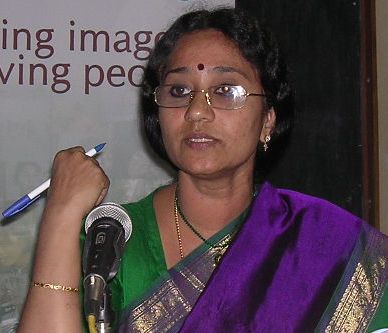
And we understand why the merchants of misery detested Dr Mrs Kamalika Abeyaratne, who stood up and spoke out for the rights of those living with HIV in Sri Lanka.

She was an extraordinary Sri Lankan woman and a dedicated physician, and the book is her life’s story told by her family and friends. As the cover blurb says: “This is a sad but inspiring account of the joys, sorrows, achievements and disappointments in an all-too-brief but beautiful life, cut short by tragedy and a courageous battle with HIV.”

In 1994, Dr Kamalika was involved in a serious road accident while heading to a rural location where she was to conduct a free medical clinic. While being treated at a government hospital, she was administered HIV-contaminated blood. Media investigations later revealed how intravenous drug users had routinely sold their blood to this hospital, which had few checks in place. This created a major scandal in the public health system — ironically, the very system that she had served for many years.

Dr Kamalika (Kami to her friends) was one of the very few Sri Lankans who openly acknowledged their HIV status. She paid a dear price for this admission: she was shunned and maligned by many members of her own medical community. Undaunted, she spent the last few years of life as an activist campaigning for the rights of persons living with HIV. She waged an almost lone battle for access to anti retroviral (ARV) treatment.

As Sonam Yangchen Rana of UNDP’s Regional HIV and Devlopment Programme has noted: “As a champion for the rights of people living with HIV/AIDS, she had become an icon for PLWHA in the region. Spreading awareness about issues surrounding the epidemic had become the mission of her life. She campaigned vigorously against stigma and discrimination faced by people living with HIV/AIDS and exemplified that PLWHA can lead productive and meaningful lives. productive and meaningful lives.”

And here’s a revealing extract from her biography:
“Paediatrician turned activist, here is the story of Kami’s involvement in the HIV/AIDS campaign. A story that suggests rather wryly that it is not only about People Living with HIV/AIDS (PLWHA), but also about those who have been called People Living off HIV/AIDS (PLOHA). Kami’s own statement on this issue was that the known number of both groups was about the same, with some of the latter, representing some non-governmental organisations (NGOs) or other, living in five-star hotels, driving around in Toyota Land Cruisers, and using up sixty percent of their resources on ‘administrative costs’.”

So now we know why some organisers of ICAAP8 were so defensive and protective of ‘their’ virus: after all, it is their horn of plenty that they cannot share with anyone else. These PLOHA are the mandarins of HIV/AIDS, Incorporated.

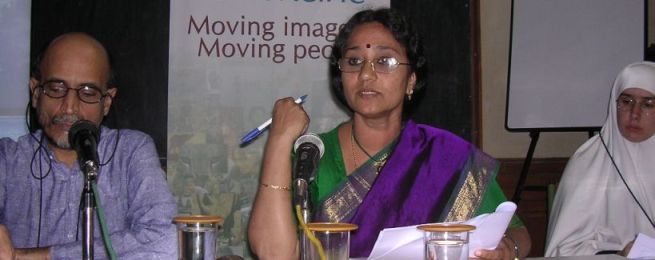
On a personal note, I always admired Dr Kamalika but never got to meet her. Our paths almost crossed once in July 2000, when I had helped Panos South Asia to organise a media gatekeepers’ meeting on HIV which she addressed. But the night before, I was struck down by influenza, and didn’t get to participate in what had been a stimulating meeting.

Read Dr Kamalika Abeyaratne: A Profile of Courage, written by my friend Manori Wijesekera in 2003:
dr-kamalika-abeyratne-by-manori-wijesekera.pdf

Read InterPress Service profile on Dr Kamalika Abeyaratne

The Sunday Times (Sri Lanka) review of Kamalika Abeyaratne biography (March 2007)

Read The Sunday Times (Sri Lanka) tribute to Dr Kamalika Abeyaratne, 19 June 2005

Read journalistic coverage of ICAAP8 by Inter Press Service:
IPS Terraviva

‘Cheque-book Development’: Paying public media to deliver development agency logos

In their ceaseless efforts to keep their organisations in the media spotlight, spin doctors of development agencies are distorting news values and corrupting the media, turning issue-based communication products into ‘logo delivery mechanisms’.

This is the thrust of my latest op ed essay, titled ‘Cheque-book Development’ corrupting the media. It has just published by the popular media-watch website anchored in the US, MediaChannel.org

Image courtesy MediaChannel.org

In this essay, I draw on several years of first hand observations in development, humanitarian and broadcasting circles at Asian and global levels. I focus on a disturbing practice that more and more development/humanitarian agencies engage in: paying intermediaries for getting their stories on global news and current affairs TV channels.

This is nothing short of cash-for-media coverage.

Here’s an extract:

“As development organisations compete more intensely for external funding, they are increasingly adopting desperate strategies to gain higher media visibility for their names, logos and bosses.

“Communication officers in some leading development and humanitarian organisations have been reduced to publicists. When certain UN agency chiefs tour disaster or conflict zones, their spin doctors precede or follow them. Some top honchos now travel with their own ’embedded journalists’ – all at agency expense.

“In this publicity frenzy, these agencies’ communication products are less and less on the issues they stand for or reforms they passionately advocate. Instead, the printed material, online offerings and video films have become ‘logo delivery mechanisms’.

Image courtesy MediaChannel.org Cartoon courtesy Global Journalist

Some of these communication officers I write about have become friends over the years — I empathise with their pressures, but don’t approve of what their organistions do. As I write in the essay:

“This practice is wrong on two counts. One, allowing intermediaries to sell access to the airwaves is a form of corruption. Two, every time this happens, it siphons off tax-payer supported development funds intended for combating poverty and suffering in the majority world.

“It is the reverse of cheque-book journalism, where some media organisations pay celebrity or other sources for exclusive access to their stories. When development agencies are paying sections of the media to get promotional or favourable stories aired, we must call it ‘cheque-book development’.”

Make no mistake — this is a form of media corruption. It’s not just the development sector’s vanity that fuels this process. Many 24/7 news channels are struggling to fill their hours inexpensively. Some turn a blind eye to ethical sourcing as long as they can have a steady supply of subsidised content.

Read my full essay on MediaChannel.org

Note: Being a US-anchored outlet, MediaChannel.org spells ‘cheque-book’ as ‘check-book’, which is correct in American spelling of English! As I write in my essay, it appears that TV channels and networks on that side of the Atlantic seem a bit harder to corrupt. But then, what do I know?

Read my Nov 2006 essay on MediaChannel.org: Ethical News Gathering Challenge for Al Jazeera

I have been speaking about the growing threat of cheque-book development for some time. For instance, I referred to it during Communicating Disasters: An Asian Brainstorming organised by TVE Asia Pacific and UNDP in Bangkok in December 2006.

Essay republished on Asia Media Forum
asia-media-forum.gif

“HIV is our virus; go find one of your own!”

“HIV is our virus; go find one of your own!”

Well, the nice lady on the phone didn’t actually say that. But that message was heard loud and clear.

And she is one at the forefront of fighting HIV/AIDS in my native Sri Lanka. My organisation had gone with an offer of help, in our own small way, to augment their good fight. But for reasons best known to her, she chose to brush us off.

It happens in the context of the 8th International Conference on AIDS in Asia and the Pacific, or ICAAP8. The year’s most important regional event on HIV is scheduled to be held in Colombo, Sri Lanka, from 19 to 23 August 2007. Several hundred members of our region’s HIV community — from activists and researchers to development aid officials and persons living with HIV — are expected to turn up.

HIV virus

TVE Asia Pacific has been involved in communicating about HIV for a few years. One highlight was when, at the invitation of the International AIDS Society and the Thai Ministry of Public Health, we organised the 2004 AIDS Film Festival in Bangkok. That was part of the XV International AIDS Conference.

We also distribute across Asia some outstanding factual films on HIV/AIDS produced in different parts of the world. Among them is the highly acclaimed Scenarios from Africa.

With these and other credentials, we had hoped that we could share our experience in using audio-visual media for communicating the HIV message in all its nuances and complexity.

Earlier this year, we responded to a call for skills building activities appearing on the Conference website. We didn’t know anyone involved, but we submitted a proposal to the website, outlining our offer to conduct a ‘Skills Building Workshop on Strategic use of moving images for HIV/AIDS Advocacy’. We didn’t ask for any money – our offer was to do it entirely at our cost. We planned to involve some Asian communicators who are regional leaders in this area.

A few weeks later we had a phone and email exchange with a Sri Lankan member of the secretariat
about our proposal. We don’t know this lady at all, but relating to her was not a pleasant experience. In fact, she was very dismissive and almost rude. She found fault with us for submitting our proposal late, when in fact we’d done so well within deadline!

We felt rebuffed and put off by her attitude. Although she said she was going to get back to us, it never happened. Evidently, our offer had touched on somebody’s raw nerve.

We still don’t know what irked this lady — it’s possible that my outspoken public views on HIV/AIDS in Sri Lanka may have been taken personally by a small mind. This is the problem with some people: they take evidence-based criticism personally.

Whatever was responsible, we won’t be at ICAAP8. Our friends who are part of the media team at the conference belatedly tried to involve us. But by then, our spirits were shattered.

A missed opportunity. And there’s some irony that while the Thai Ministry of Health invited us to run an entire film festival in their capital, the Sri Lankan Health Ministry (organisers of ICAAP8) would actually keep us out of this event!

Such are the politics of HIV, which I’m only just beginning to understand. And I thought we needed to unite against the common, invisible enemy…

Read my other blog posts on HIV:

HIV: Stigma a bigger killer than the virus?

Three Amigos: Funny condoms with a serious mission

Beware of Vatican condoms!

50? In South African terms, you’re probably dead!

Ratomate’s best cup of tea

A girl named Nan-nan

A Silent Emergency: More television sets than toilets!

Read a later blog post: Faecal Attraction: There’s no such thing as a convenient flush…

It was September 2004. My daughter Dhara, eight years at the time (or ‘eight plus’ as she insisted on saying), had a complaint.

The toilets in her school were not clean enough. She was finding it squeamish to use them. So she was doing her best to avoid going to the loo: she’d drink less, and try to ‘hold back’ until she could rush home.

Like many sheltered middle class kids, she was still coming to terms with the wider world outside her home. And she attends a well endowed private school where, I am told, toilets are cleaned regularly by janitors engaged by the school.

Now we cut to eleven-year-old Susheela, a girl growing up in neighbouring India. I’ve never met her in person, but this sentence summed up her tragic story:
“I was always first in the class. I am very much interested in studies. I want to become a lawyer. But my mother stopped me from going to school after Class V as the middle school I was attending, 5 km from my house, had no toilet. Can someone help me?”

This was the opening of an article on water and sanitation written by Indian journalist Dr Asha Krishnakumar and published in the news magazine Frontline (part of The Hindu group) at the end of 2003. It was titled: A Silent Emergency.

dr-asha-krishnakumar.jpg Image courtesy WSSCC

It was several months later that I actually read Asha’s article. By coincidence, my daughter was having her own ‘toilet issue’ at the time — and the contrast was striking.

Asha’s article continued:
Susheela’s anguish is shared by a large number of girls in India who drop out of school for what sounds like an absurd reason: want of a toilet in school. “Sanitation is closely linked to female literacy in India,” says a United Nations Children’s Fund (UNICEF) study. According to V. Balakrishnan, convener of the Tamil Nadu Primary Schools Improvement Campaign, the lack of proper toilet facilities in schools has a definite and significant bearing on the drop-out rate of girls, particularly around the time they reach Class VIII. In 2000, barely 10 per cent of Tamil Nadu’s 40,000 government schools had usable toilets; the figure is much lower for the country as a whole.

I’d been covering development issues in the media for over 15 years, but this stark reality had not occurred to me. In some developing countries, girls face a greater struggle in enrolling in school and staying on. There are cultural, social and economic factors working against educating girls.

And as Asha’s article revealed, there are other, less known factors adding to this burden.

I shouldn’t have been surprised. Indian census data had revealed in 2001 that, some parts of the country had more television sets than toilets.

Asha’s was one of three dozen excellent media articles on water and sanitation that I read that month as a judge in an international award scheme to recognise the best media reporting on the issue. Organised by the Water Supply and Sanitation Collaborative Council (WSSCC), it was meant to to encourage broader media coverage of water supply, sanitation and hygiene (WASH) issues in the developing world.

The initiative, first launched in 2002, is open to journalists from developing countries, who write or broadcast original investigative reports on WASH issues. The Collaborative Council seeks to use the WASH Media Awards as part of the broader goals of fostering sustainable relations with journalists in developing nations, and increasing media coverage of WASH issues.

WASH has recently announced the next media awards, covering print and broadcast media coverage from 1 July 2007 to 30 April 2008. This time around, it also involves the Stockholm International Water Institute (SIWI).

Winning entries will be presented at the World Water Week in Stockholm , Sweden in August 2008. Deadline for the submission of entries is on or before May 15, 2008. Read the announcement

In 2004, the recipient of the first WASH Media Award was Nadia El-Awady from Egypt for her outstanding article “The Nile and its People”. It illustrated the impacts of industrial pollution, sewage and solid waste management on people’s health and dignity along the River Nile.

We evaluated a large number of high quality entries and decided to give special recognition and Certificates of Appreciation to several other journalists. Asha was one of them.

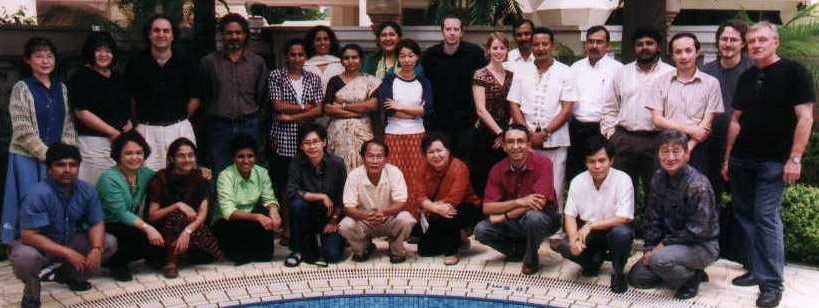
A few months later, it was my privilege to meet Asha in person at a workshop on media and sustainable development that TVE Asia Pacific organised as part of the Education for a Sustainable Future conference in Ahmedabad, India, in January 2005. The photo shows Asha addressing our workshop while Darryl D’Monte, fellow judge in WASH media awards looks on.

l-to-r-darryl-dmonte-asha-krishnakumar-and-nadia-el-awady.jpg

By another coincidence, the lady on the right is Nadia El-Awady who was overall winner of the WASH media award. At the time she was the Health and Science Page Editor of IslamOnline.net. She has since been promoted.

Either the world is smaller than we think, or our networks are larger than we imagine.

But I will always be grateful to Asha for opening my eyes on a silent emergency. One that I have since explained to my daughter. She no longer complains.

Read the WASH press release on 2004 media award winners

Read the publication on WASH Media Awards 2004

Read WASH media guide on The Biggest Scandal of the last 50 Years

Photos by Janaka Sri Jayalath, TVE Asia Pacific

Himal – 20 years of celebrating South Asian diversity

copy-2-of-southasian-map-by-himal.jpg

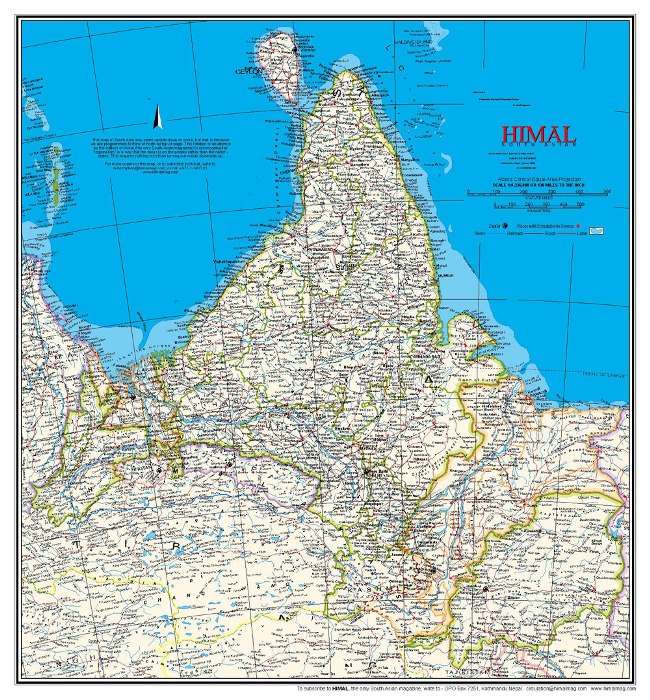
This is a map of South Asia, the sub-region where I live — along with over 1.5 billion other people, a quarter of humanity.

For sure it’s different: things look as if they have been turned upside down. But are they?

This map was published by Himal Southasian, our region’s one and only publication that really thinks and acts in genuinely South Asian terms.

Himal is celebrating 20 years of publication this month, and I join its many friends worldwide in congratulating and saluting this courageous, persistent citizen effort to evolve a regional mentality and identity for the currently divided and fragmented South Asia.

A note on their website reads:
“A friend just told us we had turned twenty. And so we counted the years and indeed it has been two decades since Himal began in 1987. That was the start of our Himalayan phase, and it has been ten years since Himal went Southasian. During the period, some of us have gone from black to grey, others grey to silver.”

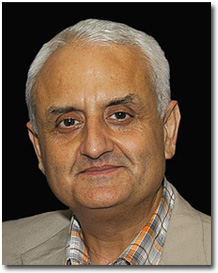
That sounds characteristic of Himal’s founder, editor in chief and publisher, Kanak Mani Dixit — one of the most senior journalists in South Asia. He and his journalist brother Kunda Dixit have kept Himal going for two decades.

Kanak Mani Dixit

As with the map, Himal has offered a different, sometimes defiant, perspective on issues of public and topical interest. Staying within the basic principles of journalism, it has challenged assorted tyrants and monopolies; questioned middle class complacency and lampooned South Asian idiosyncrasies.

Except for a short period when its soul was (temporarily) possessed by crusty intellectuals (my favourite definition: people educated beyond their intelligence), Himal has remained readable, passionate and credible — virtues that are not that common in a region that has an abundance of periodicals in English and many other local languages.

Before I get carried away, let me declare that:
1. I’m privileged to count Kanak and Kunda among my friends
2. I occasionally contribute articles to Himal that they are kind enough to print. In that respect, I’m part of the ‘Himal mafia’ and my praise is anything but objective!

But hey, who wants to peddle that cold and clinically detached objectivity that journalism schools continue to advocate? Himal is living proof that one can take a stand, vehemently if needed, and still do good journalism.

As Himal comes of age, I hope it will continue to kick ass, puncture inflated egos and remain outside the ‘mainstream’ for a long time to come. Never give up, guys — too much is at stake!

PS: On the ‘right side map’ itself, Himal explained:
This map of South Asia may seem upside down to some, but that is because we are programmed to think of north as top of page. This rotation is an attempt by the editors of Himal (the only South Asian magazine) to reconceptualise ‘regionalism’ in a way that the focus is on the people rather than the nation-states. This requires nothing less than turning our minds downside-up.

Read greetings to Himal from friends and fans all over the world!

Bill Moyers and the Yes Men: The ultimate media merger?

On 20 July 2007, the Bill Moyers Journal on PBS opened with these words by the inimitable Bill Moyers:

“Here with me now are two partners of Triglyceride Investments, a private equity fund that recently announced its intention of combining the assets of all the hedge funds on Wall Street in order to bring under a single canopy of ownership every media outlet in America. Their prospectus contends that the handful of big media companies that control most of what you see, hear, and read cannot possibly produce maximum return on investment as long as each has to field its own army of lobbyists in Washington.

“If only one holding company instead of four or five controlled all the country’s radio and television stations and all of its cable, newspaper, and Internet outlets, eliminating the need for the competitive purchase of politicians, the savings on campaign contributions alone would increase the bottom line tenfold.

“Not the least of their argument is that since our present media system and Washington so closely mirror each others’ interests, it could even be possible to close down the government altogether and have the country run by Wall Street, saving huge sums of money now spent on perpetuating an impression to the contrary. Joining me are Andy Bichlbaum, the chairman of Triglyceride Investments, and his partner, Mike Bonanno, chief executive of their offshore subsidiary, Tsetse Media Inc., with headquarters in the Marianas Islands.

Bill talks with the two ‘money men’ very seriously for a couple of minutes — before letting on that it’s all a big joke. The two men are not from Wall Street – they’re the ‘Yes Men’ and “they serve up satirical humor laced with lunacy to call the media’s attention to serious issues”.

Read the full transcript of the 21-minute interview

Watch the full interview on PBS Online

The Yes Men are Andy Bichlbaum and Mike Bonanno, two impersonators who use satire to bring media attention to issues that otherwise might be overlooked.

Their premise, from their website, is:
Small-time criminals impersonate honest people in order to steal their money. Targets are ordinary folks whose ID numbers fell into the wrong hands. Honest people impersonate big-time criminals in order to publicly humiliate them. Targets are leaders and big corporations who put profits ahead of everything else.

It all started some years ago when they set up a parody of the World Trade Organization’s website. Somebody mistook it for the real thing and they got a serious invitation to speak as experts at an international conference in Austria.

“We actually see this as a form of journalism. Or perhaps more precisely, the form of collaboration of journalists,” explains Bichlbaum in his interview with Bill Moyers.

“A lot of the issues that we address journalists want to cover. But…in many situations, editorial control won’t let them unless there’s a good little hook behind it. And so, we’ve found a way to create funny spectacles that give journalists the excuse to cover issues.”

To me, their best prank was when they managed to fool BBC World TV in front of a global audience. In December 2004, on the 20th anniversary of the Bhopal gas disaster, “Dow representative” “Jude Finisterra” went on BBC World TV to announce that the company was finally going to compensate the victims with US$ 12 billion, and clean up the mess in Bhopal. The story shot around the world, much to the chagrin of Dow, who briefly disavowed any responsibility. And the BBC was left with egg all over its smug face.

Watch how the mighty news giant fell for a prank by two determined men:

After this, would you ever trust BBC World when it claims to give us the bigger picture?

And here’s the UK Channel Four’s gleeful documentation of how the BBC and other news media fell for the Yes Men:

The Yes Men have also impersonated representatives from Halliburton, Exxon and others, giving public presentations aimed at exposing what they believe to be discrepancies between how these groups want to be seen and how they really act. They call this process, “identity correction.”

While some criticize them for deception and call their hijinx unethical, they argue “these kinds of [corporate and political] wrongdoings are at such a scale – they’re so vast compared to our white lies that we think it’s ethical.”

Take the PBS Online Poll: Do you think the Yes Men’s methods are an acceptable form of social activism?

Mike and Andy released their first film in 2004 entitled, “The Yes Men,” as well as a book, The Yes Men: The True Story of the End of the World Trade Organisation. They are planning on releasing a new film shortly.

If I ever meet them, I’ll have just one question: just how do you suppress the giggles as you fool the gullible?

Who makes the best ‘Alphabet Soup’ of all?

Image courtesy Wikipedia

Take a close look. This is the original Alphabet Soup.

It’s is a kind of soup containing noodles shaped like the letters of the Latin alphabet. According to the ever-helpful Wikipedia, it comes as a prepared, canned vegetable soup with letter-shaped noodles. Read full Wikipedia entry

Metaphorically, alphabet soup means “an abundance of abbreviations or acronyms”. In this sense, the term goes back at least as far as President Franklin D. Roosevelt’s alphabet agencies of the New Deal (1933-38). In the United States, the Federal Government is described as an ‘alphabet soup’ on account of the multitude of agencies that it has spawned, including the NSA, CIA, FBI, USSS, BATF, DEA and INS.

But Uncle Sam’s expertise in making alphabet soups has been challenged by another entity – the United Nations. (Interestingly, Roosevelt was an architect of the UN, and coined the term with Winston Churchill). The UN’s propensity for enriching the alphabet soup has few parallels.

In the early 1990s, when I was earning a living as a UN consultant in Asia, I had to wade through the sea of acronyms and abbreviations as part of my daily bread. Funnily enough, some high-level peddlers of arconyms no longer even remembered what they stood for!

The UN has enriched the alphabet soup even more in the years since. MDG is a current favourite – it stands for Millennium Development Goals, a blue print for achieving basic socio-economic development by 2015.

It’s not just the UN, but the entire development community that is in love with coining abbreviations and then liberally bandying them about. Some are manageable. Others are unpronounceable tongue-twisters. PLWHA comes to mind – that stands for Persons Living with HIV/AIDS.

And then there are too many meanings or expansions for the same abbreviation, causing confusion to those who don’t know the context. ICT is a good example. We in media and development circles use it to mean Information and Communications Technologies. But the Wikipedia shows at least another two dozen meanings for the same three letter combination!

Journalism taught me to explain every technical term and abbreviation when introducing it. I still do, but on the whole I avoid abbreviations if we can help it.

But I have to watch out. A colleague reminded me recently that I’ve been happily coining inhouse acronyms myself. Examples:
GBR – The Greenbelt Reports (Asian TV series)
STP – Saving the Planet (Asian regional project and upcoming TV series)
D4C – Digits4Change (Asian TV series)

Does this make me a minor chef in expanding the Alphabet Soup?

Maybe it does! If I can’t beat ’em, I’ll join ’em….

End this callous waste…open up broadcast archives for combating poverty and ignorance!

Image courtesy Boeing

This is the new Boeing 787 aircraft that was unveiled a few days ago — described as more fuel-efficient, and therefore more climate friendly. Not to mention being a more comfortable plane to fly on.

Now just imagine if one of these new aircraft were to be used for a single return flight — let’s say Singapore to London and back — and then relegating it to a hanger for the rest of its lifetime!

What a callous waste that would be. Now who would do that, and will that be tolerated?

Yet something like this happens in the moving images industry quite frequently….and not too many seem to be bothered.

Every year, many new TV films and documentaries are produced with considerable investment of time, effort and money. After one or few broadcasts, they are confined to broadcast archives. Trapped in copyright restrictions, they languish there even though they can be a vital resource for teachers, students, civil society groups and trainers worldwide.

To me, this is as much a criminal waste as throwing away a Jumbo jet after a single journey.

In fact, I’ve been writing and talking about it whenever I can. Here’s an extract from my speech to Asia Media Summit 2007 held in late May 2007 in Kuala Lumpur:

Every year, excellent TV programmes are made on different development topics. Public and private funds are spent in making these programmes, which draw in the creativity and hard work of committed professionals.

Many channels broadcast these programmes. They are typically aired a few times and then end up in the archives. Few may be exploited for their multimedia potential.

Yet many of these programmes have a longer shelf-life – and outside the broadcast sphere. They can be extremely useful in education, awareness raising, advocacy and training.

Alas, copyrights restrictions are often too tight for that to happen. Even where the film-makers or producers themselves are keen for their creations to be used beyond broadcasts, the copyright policies stand in the way. In large broadcast organisations, it is lawyers and accountants –- not journalists or producers -– who now seem to decide on what kind of content is produced, and how it is distributed under what restrictions.

Read the full text of my speech here

copy-of-copy-of-ams-ad2-low-res.jpg copy-of-copy-of-ams-ad2-low-res.jpg

This is why we at TVE Asia Pacific have been calling for poverty and development to be recognised as a copyrights-free zone. So that the crushing (and completely meaningless) grip of copyrights can be loosened up.

I first made this proposal in mid 2006, in an op ed essay published online at MediaChannel.org. I then reiterated it at the UN Headquarters in New York in September 2006, when addressing the 59th annual UN NGO Conference.

The idea has been well received in education and civil society circles. But predictably enough, the broadcast community itself has been less enthusiastic.

We just have to keep on at it.

Joey R B Lozano: The legacy continues…at Silverdocs

I met Joey R B Lozano only once, but he left a deep impression.

A small-made man with passionate zeal and tons of energy, he was every inch an activist-journalist-campaigner. We had invited him to a regional workshop of factual video producing and distributing partners from across Asia that we held in Singapore in November 2002.

We hadn’t worked with Joey earlier. He came recommended by our international partner Witness, which uses video-based advocacy and activism for promoting and safeguarding human rights worldwide.

Joey R B Lozano Joey R B Lozano Joey R B Lozano

Joey used his personal video camera to assert indigenous land rights, and to investigate corruption and environmental degradation in his native Philippines. Joey was an independent human rights activist and also one of the country’s leading investigative reporters.

He freelanced for the Philippine Daily Inquirer, covering Indigenous peoples’ rights and the environment, considered the two most dangerous beats in the Philippines. But years earlier, he had moved out of the capital Manila, and committed his life and career to stories and issues at the grassroots that many of his city-based colleagues had no time or patience in covering on an on-going basis.

Trained as a print journalist, Joey mastered new media and technologies whose potential he quickly realised. He moved into television and video media with ease, and later became an active blogger.

Joey’s TV investigations began in 1986, when he helped ABC’s 20/20 to uncover the “Tasaday hoax”, a highly successful fraud to pass off local tribespeople as a newly discovered Stone Age culture.

He soon embarked on his own investigations and started digging into illegal logging, gold mining and land-grabbing. In turn, his exposes quickly earned him repeated assassination and abduction attempts, in a country that is one of the more dangerous places to practice journalism.

When he came to Singapore, Joey had recently ‘starred’ in a major Canadian documentary titled Seeing is Believing: Human Rights, Handicams and The News, which looked at how committed, passionate individuals were using new communication technologies to change the world.

participants-at-tveap-partner-workshop-singapore-nov-2002.jpg

Photo of Singapore TVEAP workshop participants: Joey Lozano is 6th from left on the frontmost row

Follow Seeing is Believing storyboard on the film’s website

We screened the film, made by Katerina Cizek and Peter Wintonick, and heard first hand from Joey on what his struggles entailed. The film followed Joey as he delivers a new “Witness” donated video camera to Nakamata, a coalition of Indigenous groups in Central Bukidnon. Together, Nakamata and Joey begin documenting a dangerous land claims struggle, and it doesn’t take long for tragedy to unfold in front of the camera.

Watching the film and then listening to Joey — and his Witness colleague Sam Gregory — describe the on-going struggle, was one highlight of our week-long workshop. Some of us saw in Joey the activist-campaigner that we wanted to be, but were too scared or too polite to really become.

Not everyone shared that view. The cynicism — sometimes bordering on disdain — of a fellow Filipino from Metro Manila was palpable. No wonder Joey moved away from the city.

We at TVE Asia Pacific were extremely keen to distribute Seeing is Believing, for it held such a powerful and relevant message for our region, but it was not to be. Our enquiries showed that like most documentaries, it was tied up in too many copyrights restrictions and commercial distribution deals.

Following the Singapore workshop, I did keep a watchful eye on what Joey Lozano was up to. The film’s website provided occasional updates, and sometimes blog posts from Joey himself.

Our paths never crossed again. Almost three years after our single encounter came the news that Joey had passed away. It wasn’t the assorted goons who hated his guts that finally got him. His own body turned against him.

His tribute on the film’s website started as follows:

Joey Lozano defied the odds. For three decades, he survived dangerous missions to defend human rights using his video camera, in the Philippines, a country that ranks high, year after year, for most journalists killed. Joey went into hiding numerous times, and he dodged two assassination attempts. Once, bullets whizzed past his ear as he made his escape on motorbike.
But Joey couldn’t beat the odds of cancer. He died in his sleep on September 16, 2005 – at home and surrounded by his family.

Joey R B Lozano - image courtesy Seeing is Believing

The spirit and legacy of Joey R B Lozano live on. He inspired a large number of journalists and activists to stand up for what is right and just — and to be smart about it in using modern information and communication technologies, or ICTs.

Joey and other Witness activists were pioneers in different parts of the world who turned handicams away from weddings and birthday parties to capture less cheerful sights and sounds the world must see — and then act on. They were at it years before mobile phone cameras, YouTube and user-generated content in the mainstream media.

And now, Witness has established an award at the Silverdocs film festival. The WITNESS Award in Memory of Joey R.B. Lozano will be awarded to the qualifying SILVERDOCS filmmaker of a feature-length film who has produced a well-crafted and compelling documentary about a human rights violation or social justice issue. The winning filmmaker will also have a thoughtful, creative, and feasible outreach plan to use their film as a tool to raise awareness of the human rights or social justice issue explored in the film with a goal to bring about change.

The inaugural award was announced on June 17 — and has been won by “The Devil Came on Horseback” by Annie Sundberg and Ricki Stern.

Joey was a Witness partner and board member. He co-produced many films and collaborated on others that helped raise awareness about threats to indigenous people’s rights in the Philippines from corporations, and the complicity of the government in the abuses. Witness was founded in 1991 by musician peter Gabriel and the Lawyer’s Committee for Human Rights to put new technologies into the hands of local activists around the world.

Joey R B Lozano with his handycam

Read International Wildlife May 1999: Why Joey Lozano Is A Marked Man – investigative reporter works for the environment

Read about and watch Rule of the Gun in Sugarland

Baby 81: The Asian Tsunami’s big ‘non-story’

When many journalists chase the same unfolding story, it’s common for them to acquire the ‘herd mentality’. This ‘media pack’ can sometimes lose sense of direction, perspective — and even the truth.

A good example is the story of a Sri Lankan baby who grabbed world media attention for a few days as a “celebrated” Tsunami orphan.

The four-month-old boy, Abhilash Jeyarajah, was picked up by a neighbor who found him under a pile of garbage soon after giant waves lashed Kalmunai on 26 December 2004. The man handed over the child to the Kalmunai hospital. The parents, who also survived the waves, later found their child.

That should have been the happy ending for that family — but it was not to be.

Newspapers, television and news agencies reported how squabbling broke out among several couples over “Baby 81” — as he was dubbed by hospital authorities in Kalmunai, going by the admission number. As many as nine couples who lost their infants in the tsunami all claimed he was theirs — or so the story was spread by the news-hungry media who had descended on tsunami-hit Sri Lanka in their hundreds.

Photo courtesy Reuters

Even the usually cautious New York Times carried the story, referring to him as a “celebrated orphan”.

The story assumed a momentum of its own. One leading American TV network invited the baby and his parents to visit the US to be their studio guests and tell their ‘story’.

It was only many weeks later that the truth began to emerge.

Police denied nine couples had claimed him as their own. Kalmunai hospital authorities confirmed that only one couple had come forward to claim the baby. The man who handed over the child to hospital told police that he had known the child was that of his neighbors — there was no dispute about the parentage.

“Because it had a miraculous escape, a lot of people showed interest in the child, but they never said they were the parents,” chief inspector W. C. Wijetilleka was quoted as saying. “Only one couple claimed the child. No one else has come forward to make a legal claim.”

“As far as the police and the courts are concerned, only one couple is claiming the child,” inspector Wijetilleka said. “We have reported the facts to court and the judge ordered the hospital to release the child to the parents.”

The story was fuelled by the hospital’s initial reluctance to release the boy until he was well enough. The couple then petitioned the court, which ordered on 12 January 2005 that the baby be given to them. DNA tests, presented to court on 14 February 2005 confirmed their claim as biological parents.


Read Lanka Business Online account of what happened: Baby 81 – the story with nine or more lies

Read Reuters AlertNet guest blogger Glenda Cooper’s recent update on the Baby 81 saga

This non-story was discussed during the Asian regional brainstorming on Communicating Disasters that TVE Asia Pacific and UNDP organised in Bangkok, Thailand, in December 2006.

“The young couple was at the centre of endless media coverage for several weeks,” Asoka Dias, Station Director of MTV/MBC Network, Sri Lanka, told our meeting.

He added: “This created public impression that they also received a great deal of money and other help, which was not the case. They have had to relocate to a new neighbourhood, and are struggling to lead normal lives.”

Read the meeting report of Communicating Disasters