Talking Big Foot in Yeti Land: Got a spare planet, mate?

The names Yeti and Meh-Teh are commonly used by the local people to describe the Abominable Snowman said to inhabit the deep Himalayan valleys of Nepal and Tibet. Most scientists consider this legendary ape to be part of cryptozoology – which searches for creatures said to exist but have never been documented.

But this does not take away from the allure of Yeti – it’s like the North American fascination with Big Foot.

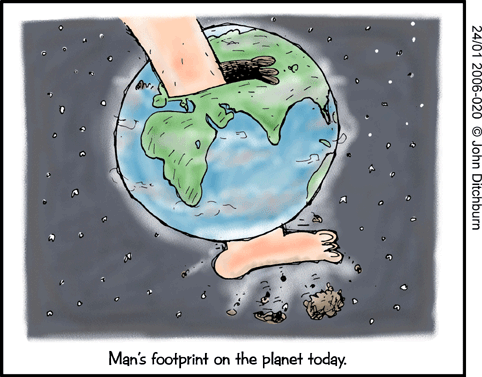
I’m spending the week at the 4th Asia Conservation Forum in Kathmandu, organised by IUCN, the World Conservation Union. Here, we have been talking about another kind of Big Foot, and the increasingly crushing footprint that this assertive creature stamps everywhere.

This, of course, is a reference to us Homo sapiens – and the growing ecological footprint (EF) that our species is generating.

EF quantifies our demand on Nature and natural systems. It measures the amount of biologically productive land and water required to meet our demands (for food, timber, shelter), and to absorb the pollution we generate.

Using this assessment, it is possible to estimate how many planet Earths it would take to support all of humanity if everybody lived a given lifestyle. For example, if everyone aspires to European lifestyles, we are going to need three planets. And for American way of life, four.

As of now, the Earth is the only naturally habitable planet that we know and have.

The term and concept of Ecological Footprint were proposed in 1992 by William Rees, a Canadian professor at the University of British Columbia.[1] In 1995, Rees and coauthor Mathis Wackernagel published Our Ecological Footprint: Reducing Human Impact on the Earth.

The Kathmandu meeting’s first substantive session, on the Future of Sustainability, heard how we are dangerously close to the Earth’s tipping point. Indian development thinker Ashok Khosla, UNEP’s regional director Surendra Shrestha and other leading analysts presented unmistakable indicators for this trend.

This resonates with a new report that came from WWF in late 2006, which concluded that our global footprint has already exceeded the earth’s bio-capacity by 25% in 2003. This meant that the Earth could no longer keep up with the demands being placed upon it.

2006-020-footprint-on-the-planet.gif

The WWF Report has presented this graphically by sorting countries as eco-creditors and eco-debtors. Much of Asia falls into the latter category (map, below, courtesy BBC Online):


So here’s the news headline from YetiLand: we have finally met Big Foot. And it is us.

Anita Roddick: We shall always remember you

Image courtesy Treehugger

“Remember me!”

That’s how Anita Roddick, who died on 10 September of brain haemorrhage, autographed for me a copy of her book Taking It Personally: How to make Conscious Choices to Change the World.

You’re hard to forget, I told her at the time. And suddenly, memories are all we are left with. And what vivid ones!

Dame Anita Roddick (1942 – 2007), founder of The Body Shop, is one of the most unforgettable persons I have met. And now that she has moved on, far too soon, her memory challenges us to persist with the social, humanitarian and environmental causes that she so passionately championed.

Media obituaries described her as the ‘Queen of Green’, but Anita was much more than just green. She stood for justice, fairness and equality in both business practices and her campaigns. From ethical sourcing of raw materials for her beauty products to agitating for human rights and humane globalization, she was one activist who walked the talk.

“I came out of the womb as an activist. I’m part of the 1960s; it’s in my DNA,” she wrote in Newsweek earlier this year. “So the idea of dying with loads of money doesn’t appeal to me at all.”

She added: “I want to use the last years I have to get my hands dirty working for civil change. I want to be able to see the positive difference that money can make by giving away what I have.”

It’s not immediately clear if she made much headway with that, but the recently set up Roddick Foundation is the latest of a long line of campaigns, social projects and charities that she founded, energised or supported.

Her business acumen and commitment to global justice have been eulogised for years. She was equally adept in using the media and communications to draw attention to a cause, issue or incident.

Without going to any business school, Anita built up a global business that had over 2,200 stores in 55 countries by the time she let go of the company in 2004. And without attending any communication school, she became one of the best communicators of our troubled times – speaking eloquently for her company’s ideals and various charitable causes.

It all came from the heart, and it was passion –- not cold facts or even colder logic -– that drove her to be a phenomenally successful communicator.

Anita loved to say: “The job of a citizen is to keep his mouth open.” And her advice to activists was: Get Informed. Get Inspired. Get Outraged. Get Active.

Never underestimate the power of one, she said. As she liked to put it:
If many little people
In many little places
Did many little deeds
They can change the face of the Earth

And like the Energizer bunny, but with lot more purpose, she kept going, going and going. She loved the Dorothy Sayers quote: “A woman in advancing old age is unstoppable by any earthly force”.

It was on one of her many world travels that our paths first crossed. In the summer of 1991, I was invited to give a workshop at Youthquake, a Canadian environmental conference building up momentum for the Earth Summit scheduled for the following year. It was here that I met two of my all-time favourite activists: geneticist-turned-TV presenter David Suzuki, and Anita Roddick. The celebrity guest was Mutang Tu’o, a representative from the Penan indigenous tribe from Sarawak, Malaysia, whose jungles were in imminent danger of being logged.

Youthquake was part conference, part youth jamboree and altogether a great deal of fun. Anita turned up with her youngest daughter Sam, and spent hours just telling real life stories in her inimitable way – full of laughter and making fun of power and pomposity. After all these years, I can’t remember anything about what I myself spoke, but I know Anita’s remarks had a lasting influence.

In those heady days before the Earth Summit, email and the global Internet, activists had an easier and simpler choice of adversaries — Uncle Sam and World Bank usually came up among the top five. When economic globalization gathered pace, things became more complex and nuanced. Ah, for the good old days!

Anita marched fearlessly into this new world where corporate fortunes are being made at the speed of light, governments are waging wars to the tune of media-entertainment industries, and certain development agencies have turned poverty reduction and HIV/AIDS into cottage industries.

Marshall all facts, get analysis right, take your firing positions and never give up the good struggle, she seemed to suggest: there’s a war out there, and it wasn’t just in Iraq and Afghanistan.

In fact, Taking It Personally was her rough guide on how to tame run-away globalization. For it, Anita invited the top thinkers in the struggle for humanitarian trade policies to weigh in on the problem, and to give citizens the tools and inspiration to do work for constructive solutions. Among its contributors were Vandana Shiva, Paul Hawken (Natural Capitalism), Naomi Klein (No Logo), and Ralph Nader.

When she autographed a copy for me, she added with a mischievous grin that the book’s US distributors had been coerced to withdraw it. She showed a possible reason: that famous photo of President George W Bush reading a book with a young child — while holding it upside down!

It’s this topsy turvy, cruel world that Anita Roddick tried to make slightly better in a thousand different ways. We fellow travellers will sorely miss her, but there is ‘no bloody alternative’ but to just slog on.

— Nalaka Gunawardene; Kathmandu 12 September 2007

Read my earlier post: Anita Roddick, Angkor Wat and the ‘Development Pill’

BBC Online: Dame Anita Roddick dies at 64

War Made Easy: Exposing the Spin Doctors of Death

As we mark the sixth anniversary of 9/11 terrorist attack on the World Trade Center in New York, attention is focused more and more on the role the media played in the days and months that followed.

The war in Iraq was justified as a retaliation against 9/11. The Pentagon marched on to the cheer-leading of American media, which barely asked the basic questions, let along challenge the military-political logic.

A new documentary probes how this shameless acquiescence took place in full public glare. WAR MADE EASY: How Presidents & Pundits Keep Spinning Us to Death, narrated by Sean Penn, features Normon Solomon, on whose 2005 book the film is largely based.

Here’s the trailer for the film:

And its synopsis:

War Made Easy reaches into the Orwellian memory hole to expose a 50-year pattern of government deception and media spin that has dragged the United States into one war after another from Vietnam to Iraq. Narrated by actor and activist Sean Penn, the film exhumes remarkable archival footage of official distortion and exaggeration from LBJ to George W. Bush, revealing in stunning detail how the American news media have uncritically disseminated the pro-war messages of successive presidential administrations.

War Made Easy gives special attention to parallels between the Vietnam war and the war in Iraq. Guided by media critic Norman Solomon’s meticulous research and tough-minded analysis, the film presents disturbing examples of propaganda and media complicity from the present alongside rare footage of political leaders and leading journalists from the past, including Lyndon Johnson, Richard Nixon, Defense Secretary Robert McNamara, dissident Senator Wayne Morse, and news correspondents Walter Cronkite and Morley Safer.

Norman Solomon’s work has been praised by the Los Angeles Times as “brutally persuasive” and essential “for those who would like greater context with their bitter morning coffee.” This film now offers a chance to see that context on the screen.

Approx. 72 minutes
English subtitles
Directed & Written by: Loretta Alper & Jeremy Earp
Produced by: Loretta Alper
Co-produced & Edited by: Andrew Killoy
Executive Producers: Jeremy Earp & Sut Jhally
Associate Producer: Jason Young
Sound: Peter Acker, Armadillo Media Group
Motion Graphics: Andrew Killoy & Sweet & Fizzy
Additional Music: John Van Eps & Leigh Philips
Narrated by: Sean Penn
Based on the book by Norman Solomon

Image courtesy War Made Easy website

I haven’t yet seen this film, but it’s certainly one I want to catch soon. Not the least because I live and work in a war-ravaged country – Sri Lanka – where the politicians and generals have engaged in their own (increasingly sophisticated) acts of spin doctoring. Most alarmingly, large sections of the Sri Lankan media find absolutely nothing wrong to play along, all in the name of patriotism….

Sounds familiar?

Read the full transcript of War Made Easy

Internet People: Can you spot who everyone is?

This is an amusing and clever video I’ve just come across on YouTube: Internet People. As its creators say “it’s an animated tribute to the internet people of the world, wherever you may be.”

It celebrates those ordinary people who found expression — and sometimes, fame — on YouTube before political campaign managers and corporate spin doctors realised its potential.

Animated by Dan Meth, with music by Dan Meth and Micah Frank, Internet People captures and celebrates our shared Internet experiences over the last half-decade with cartoon caricatures that are somehow funnier than the original footage.

“I dare you to watch it just once—or to get all the references after even three viewings,” says animator Meth.

Dan Meth is about to have his own cartoon series – the Meth Minute 39 – on Channel Federator. So watch out!

Look, no Kleenex: Way to blow our noses without blowing our planet

In the Fall of 2004, I was on a Cathay Pacific flight from Hong Kong to Toronto. The flight across the vast Pacific was 13 hours long, and half way into the flight my nose started playing up.

Being in cold placed for many hours sometimes triggers my catarrh, but I was prepared. I always carry one or more handkerchiefs with me, especially on flights. And also some anti-sneeze pills from my homeopathy doctor.

Blowing my nose and popping the small, sugary pills hardly ever draws anyone’s attention, but on this occasion it did. Our friendly flight stewardess was quite amused to see me using a hanky.

“Oh, Sir, you’re such a gentleman!” she exclaimed.

It took me a few seconds to figure out what she meant. Then she added, helpfully: “You still use a handkerchief. That’s so charming. No one uses them anymore…”

There wasn’t the faintest tone of sarcasm in her voice. She was genuinely impressed that I carried a hanky.

Image courtesy Boeing Co

I was reminded of this incident when reading Time magazine’s recent reflective essay on ten years after Princess Diana’s death.

At one point, it quotes Dickie Arbiter, a former press secretary to the Queen, Charles and Diana who was responsible for the media arrangements for Diana’s funeral: “The Queen was always going to pay tribute to Diana….There was a furor because she was at [the Scottish castle] Balmoral and not down with the sniveling mobs in London. [But] William and Harry needed her more than hundreds and thousands of people keeping Kleenex in business.”

Indeed, Kleenex and other tissue paper manufacturers must have done very nicely that week. A few days later, the death of Mother Teresa in Kolkata (formerly Calcutta) would have profited the Indian peddlers of the flimsy paper that more and more people seem to find indispensable.

Tissue paper vs. Handkerchiefs is an on-going debate that’s far from resolved. Both items have pros and cons; they also have their defenders and promoters. Some of them air their views on the Bottledguy blog

I have always been a handkerchief user, so I’m naturally biased in their favour. Yes, I have to be careful in using and storing them; yes, I have to wash, dry and keep track of them. And no, I don’t mind these chores at all.

And everything I read tells me it is more environmentally friendly to use hankies.

Here’s an interesting story from Pittsburgh Post-Gazette (3 Sep 2007): Can Australian sisters bring back hanky’s heyday?

It’s about two sisters in Australia, one in Sydney and the other in Brisbane (that I passed through only a few days ago) trying to revive the use of handkerchiefs.

They market them as “both useful accessories and as markers of the bonds between people.”

Image courtesy Hanky Schmanky

Their company is named Hanky Schmanky. I don’t know them, but applaud their initiative. They are trying to make hanky use ‘cool’ again.

We need many more people like Jennifer Moran and Angela Galgut – co-founders of this small company – to help us blow our noses without blowing the planet.

Hankymania page from Hanky Schmanky website


Nothing to Sneeze at: Umbrak Fisk gives environmental advice to all nose blowers at Grist.org

“Can you help us to film a child’s leg being broken?”

“Can you help us to film a child’s leg being broken?”

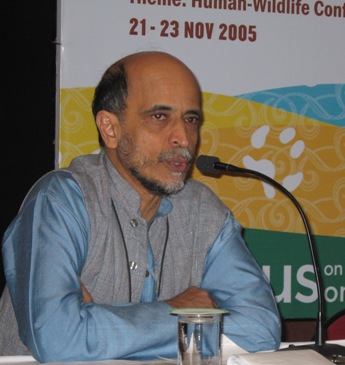
This question, posed by a visiting Canadian TV crew in the 1970s, startled my good friend Darryl D’Monte, one of the most senior journalists in India and former editor of the Times of India.

Darryl was having a chat with the crew, giving them some insights on the extent of poverty in his home city of Bombay, since renamed as Mumbai. It is routine for visiting journalists to have such chats with their local counterparts to get context and advice.

It was when the conversation turned to beggars, that this western TV crew asked if they could film the intentional breaking of a poor child’s leg — a brutal practice that was believed to exist so that maimed children could be employed as beggars. A disabled child would evoke more sympathy, and consequently, more alms.

darryl-dmonte-speaking-at-ifej-2005-congress.jpg

The articulate Darryl must have expressed his exasperation in strong terms. But even he couldn’t have anticipated the response.

“It’s going to happen anyway,” was how the film crew rationalised their bizarre request.

So why not be there, capture it on film, and get a great story out of it — which can be packaged as the brutal side of India’s poverty! This must have been the crew’s line of reasoning. Maybe their editors had exerted pressure to come back with something out of the ordinary.

I quoted this incident in my essay, Ethical newsgathering challenge for Al Jazeera International, published in November 2006. It was a plea for the newest entrant to international TV newsgathering to play by a different, and more ethical, set of rules.

These and worse practices are certainly not confined to India, or to TV crews originating from any single country. And sadly, these have not been abandoned after the 1970s. In fact, the emergence of 24/7 satellite news channels since the 1980s has inspired much more competition in the TV newsgathering industry, creating an alarming race to the bottom.

Such journalists’ only operating guideline seems to be: get the story, no matter what — or who gets hurt in that process.

In filming wildlife documentaries, film-makers sometimes have to make a choice: do they interfere in the processes of Nature, such as a predator setting on a hapless prey? There is an unwritten rule that things must be allowed to happen, with humans only capturing actuality on film.

But when it comes to filming wild life of our species in our cities and villages, the ethical dilemmas are not so easily resolved. This is why all journalists and film-makers, especially those in newsgathering, need a strong ethical framework for their work.

Journalists represent the public’s right to know, which is extremely important. Media coverage and exposes can trigger much needed aid, reform or public outcry on certain issues. But that is not a justification for getting the story by any means.

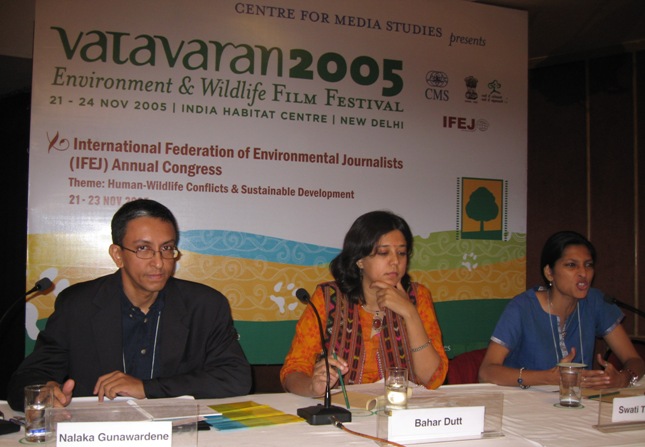
Darryl D’Monte shared the above story at panel discussion on ‘Does TV do a better job on environmental reporting?’ which I chaired during the annual congress of the International Federation of Environmental Journalists (IFEJ), held in New Delhi, India, in November 2005. That year it was part of the Vatavaran 2005, the national environmental film festival of India.

panel-discussion-at-ifej-2005-congress-new-delhi.jpg

I was reminded of this story because the 4th CMS Vatavaran film festival is round the corner: it will be in New Delhi from 12 to 16 September 2007. I won’t be there in person; my colleague Manori Wijesekera is representing TVEAP this time.

TVE Asia Pacific News: Environmental film-makers call for ethical framework

Read official report of IFEJ Congress in 2005

Related blog posts:

Al Jazeera: Looking hard for the promised difference

Wanted: Ethical sourcing of international TV news

Cheque-book Development: Paying public media to deliver development agency logos

The Step-children of Tsunami: Overlooked and forgotten

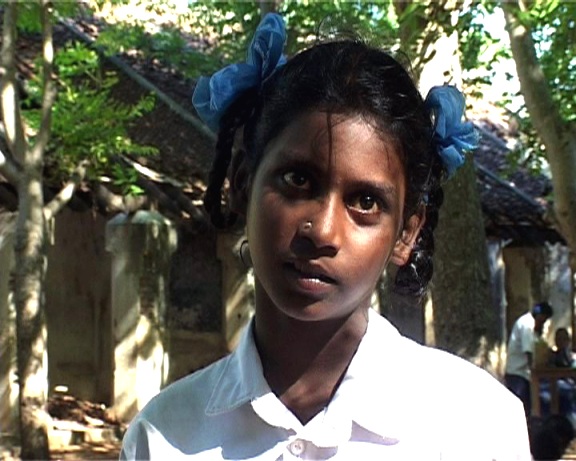
india-malas-family-lost-their-home-jobs.jpg

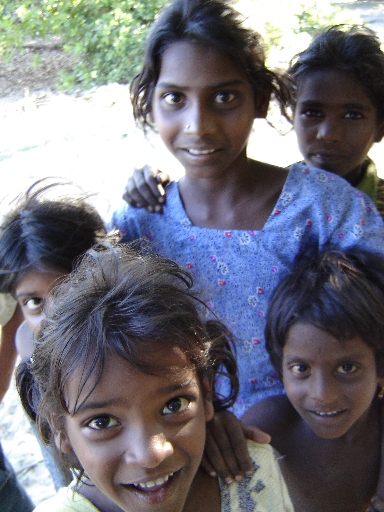
Meet Mala. She lives in in Kottaikkadu village in Kancheepuram District in India’s southern Tamil Nadu state.

She was 11 years old when, in December 2004, the Asian Tsunami crashed into village without warning. This made her very poor family desperate and destitute.

The disaster didn’t kill anyone in her village, but caused considerable property damage. In her case, the waves that rolled in spared their small hut, but her fisherman father was nearly drowned: he survived with some injuries.

But the family’s fishing boat and gear were gone. That was a mighty blow.

After the waves had retreated, they returned to their house and started rebuilding their lives. They thought the world’s generosity in responding to the Asian Tsunami will somehow bring some help.

They were wrong.

When the Tsunami triggered massive aid donations, all affected countries pledged to distribute it in a fair, equitable and transparent manner. But as the aid trickled down layers of government and charities, various biases and distortions crept in.

What happened in Mala’s village was an example. We came across the situation when tracking Mala’s family for a whole year (2005) after the Tsunami, documenting their long road to recovery as part of our Children of Tsunami media project.

We tracked two affected families each in India, Indonesia, Sri Lanka and Thailand, filming their progress — or the lack of it — every month and producing video reports that were uploaded to a dedicated website.

Follow Mala’s story through monthly video reports on our website

The most striking example of aid disparity came from India. Even months after the disaster, Mala’s family — or anyone else in her village — received absolutely no relief or recovery assistance.

Officially, it was because ‘no one was killed’ in her village. But everybody in Kottaikkadu village knew the real reason: in the Indian social hierarchy, they occupy the lowest level, known as ‘Dalits’.

Apparently, that was why both government agencies and charities stayed clear of the village.

Our India production team, led by senior journalist and film-maker Satya Sivaraman (with video camera in the photo, below), investigated further. They compared Kottaikadu with its adjoining village of Alambara. Both had suffered similar damage during the Tsunami: people lost their boats and nets, but there were no deaths.

Image from Children of Tsunami website

Yet the people of Alambara – who belong to a supposedly higher caste of fishermen — received food items, boats and fishing nets from various outside sources.

In fact, they felt quite sorry for their neighbours in Kottaikkadu. “On the day of the tsunami we ran over 15 kilometers,” said Kuppuraj, a resident of Alambara. “Kottaikadu villagers, who live just 600 meters away…ran with us — but nobody has helped them to recover.”

There was another incident that showed up the caste-based discrimination, which my colleague Manori Wijesekera, production manager of Children of Tsunami, has just reminded me.

In March 2005, our India film crew found Mala’s father seriously ill with a lung infection (triggered by his near-drowning during the Tsunami) and his family so helpless that they were unable to even seek medical attention.

So the crew put their filming gear aside, and became good Samaritans: they rushed the sick man to a nearby government-run hospital. But once there, doctors refused to admit or treat him — all due to the patient’s supposedly low caste!

It was only when Satya and crew threatened to film the entire sorry episode, and have it broadcast on television later that day, that medical attention was finally provided. Discarding their production plans, our crew stayed with Mala’s family at the hospital through the night and next day to ensure the doctors gave her father the correct medical attention. The family believes that the production team saved her father’s life that day.

Read more about what happened at Children of Tsunami website

Watch the March 2005 video report that covered the hospitalisation incident

mala-with-her-neighbours.jpg

While their father was recovering, Mala’s mother toiled as a labourer to keep the home fires burning. Mala has one younger sister and two younger brothers.

Children of Tsunami: Rebuilding the Future was TVE Asia Pacific’s response to largely superficial media coverage of the Indian Ocean Tsunami of December 2004. It tracked on TV, video and web the personal recovery stories of eight affected families in India, Indonesia, Sri Lanka and Thailand for a year after the disaster. Its many media products — distributed on broadcast, narrowcast and online platforms -– inspired public discussion on aid management and optimum rehabilitation choices.

As we discovered along the way, some of the affected could be better described as Step-children of Tsunami.

In one of my early blog posts, I paid a tribute to the most extreme example of such a child, Thillainayagam Theeban.

The Tsunami has become yesterday’s news, but there are thousands of affected children, women and men who are still living on the edge of survival.

Related links:

Children of Tsunami: Documenting Asia’s longest year

Children of Tsunami revisited two years later

All images courtesy Children of Tsunami media project, TVE Asia Pacific