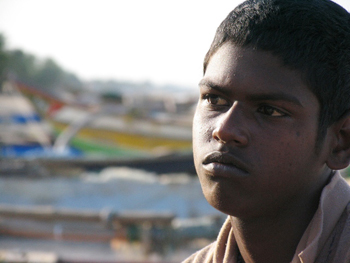
‘Embedded’ or aloof: Media’s choice in covering emergencies

banner.jpg

In many disaster and conflict hot spots of the world, journalists and relief aid providers work closely together. There are times when journalists play good Samaritan and aid workers dabble as reporters. In the difficult field conditions of emergencies, this is understood and accepted.

But should journalists become ’embedded’ in humanitarian operations? If so, how impartial or independent would their coverage be?

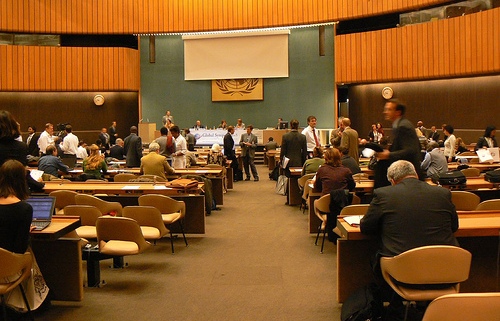
This issue kept coming up during the Global Symposium+5 on ‘Information for Humanitarian Action’ in Geneva this week (22 – 26 Oct 2007). The majority aid officials and handful of journalists present didn’t always agree.

UN agencies and other humanitarian organisations increasingly recognise the power of media, especially broadcast television, to raise public awareness on emergencies. This, in turn, influences political commitments, aid donations and relief operations themselves.

But how close can the media get to aid agencies before they lose their sense of perspective and independent analysis? If journalists becoming embedded with the military in conflicts is frowned upon, what about media’s de facto embedding with humanitarian missions?

There was no consensus on the issue, but a few of us stressed on the need for independent media — independent of governments, aid agencies and other vested interests — to take stock of crisis situations and report, reflect and analyse on what they find.

The presence of nosy reporters might be an occasional irritant to some aid agencies, especially if they have things to hush up, but at the big picture level it can serve everyone’s interest — especially those of affected groups.

Alain Modoux, a former red cross official who went on to become an assistant director general of UNESCO, reminded us how governments often stand in the way of free flow of information on emergency situations. The reasons for such suppression vary: some don’t want to admit failures on their watch, and others fear public discussion and debate, especially at international level, on what is happening in their own country.

Governments can — and often do — bring pressure upon aid agencies to fall in line (or risk being thrown out). In such situations, it’s only the independent media that can take stock of rapidly changing situations and highlight the unmet needs and any disparities in the emergency response.

Then there is the media’s traditional watchdog role. The humanitarian sector is now the world’s largest unregulated industry – billions of dollars flow through the sector every year, most of it public funds (direct donations or taxes collected by governments). Yes, the aid agencies all audit their accounts and the UN has stringent regulations on how they can spend money. But there’s nothing like a bit of media scrutiny to keep everybody clean and honest…

Follow the money! This is what journalists are taught and trained to do – and with good reason. In emergency situations following the money often brings up instances of waste, corruption and mismanagement that aid agencies would rather not talk about.
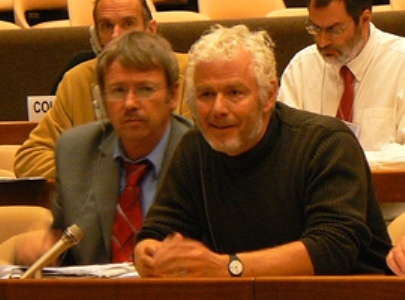
edward-giradet.jpg

Swiss journalist Edward Girardet (photo, above), who specialises in in media, humanitarian aid and conflict issues, has been making this point for a long time.

As he has written: “Humanitarianism should not ‘belong’ to any one group. What the international aid industry urgently needs is more hard-nosed and independent reporting.”

That is unlikely to happen when individual journalists are too cosy with aid workers or their bosses.

Ed was at the Geneva Symposium this week, once again making a case for a viable media watchdog capable of reporting the real causes behind humanitarian predicaments, including how the international community responds.

Read my June 2007 blog post quoting Ed Girardet: Can the media tame the alms bazaar?

In one intervention, I suggested that the media can become the ‘conscience’ of the humanitarian industry – to ensure transparency and accountability of resources, decisions and conduct.

Partnerships between media and aid workers is fine, as long as the media remain somewhat aloof and detached.

And it’s not the global media who can or will stay with the stories as recovery takes months or years. We all saw in the aftermath of the Indian Ocean Tsunami how quickly the global media’s news interest went down.

In the long term, empowering the local journalists to ask the right questions and go in search of answers.

Read this blog post reproduced in Asia Media Forum


Read this blog post adapted in MediaHelpingMedia

New media tsunami hits global humanitarian sector; rescue operations now on…

banner.jpg

Geneva, 25 October 2007 (MovingNews): The global humanitarian sector has been hit by a ‘new media’ tsunami, causing widespread damage and massive confusion in Geneva.

Giant waves — carrying blogs, wikis, YouTube and other new media products — have simultaneously swept over several aid capitals of the world, including London, New York and Tokyo.

United Nations and many other international relief organisations are among the worst affected. These aid agencies, usually among the first to arrive at the scene of major disasters or crises, found their information and communication capacities severely depleted.

“This is entirely a man-made calamity, and we just didn’t see it coming,” the UN spokesperson in Geneva said in a brief message released using the old-fashioned Morse code. “Our risk registers, log frame analyses and satellite technologies gave us no advance warning.”

Eye witness reports said some agencies were completely marooned on old media islands, saddled with very large numbers of completely unreadable documents going back to decades.

First casualties included assorted spin doctors carrying out propaganda for UN agencies. One perished while trying to sanitise the Wikipedia entry about his agency head.

Meanwhile, several dozen injured or badly bruised public information officers have been treated at a language clinic. Some will undergo trauma counselling.

“We have never been exposed to this level of open and two-way communication,” a survivor from UN OCHA said. “We were so used to always being in control, always telling others what to do and how to do it. I still don’t know what hit us!”

In a major show of solidarity, the world’s computer, telecommunications and media industries are rushing emergency teams to provide relief and recovery support.

“For decades, the UN, red cross and other aid agencies have responded to many and varied emergencies. In their hour of need, we have decided to come to their help,” a joint tele-com-media industry statement said.

Other survivors are being given first aid in simple, jargon-free public speaking. Those who respond well will be treated with basic courses in participatory communication methods.

The emergency coordinators have ordered that any spin doctors found alive be quarantined to prevent the spread of the fatal infection known as MDG.

As the recover process continues, ICT activists plan to conduct more advanced exercises — such as how to produce PowerPoint presentations with less than 20 words per slide.

“But we have to take things one step at a time,” a relief worker said. “These people have just had their entire frame of reference collapse all around them. They are in deep shock and disbelief. It will be a gradual process.”

It has now been established that a few alert officials had anticipated the new media tsunami well ahead of its dramatic arrival. But their warnings were ignored, as it now turns out, to everyone’s peril.

In Washington DC, the United States has just designated veteran broadcasters Walter Cronkite , Bill Moyers and Oprah Winfrey as their New Media Tsunami Relief Ambassadors. In the coming weeks, they will tour the decimated UN, red cross and other humanitarian aid agencies, taking stock of the global disaster and sharing their collective wisdom on telling the truth to the public simply and well.

You, dear reader, are now invited to continue building this unfolding scenario:

How soon and how well will the humanitarian sector raise its head from the new media tsunami?

Will they learn lessons from this disaster, or might they soon return to business as usual?

What would happen to the massive outpouring of goodwill, voluntary help and aid?

Share (information) if you really care: Challenge to humanitarian community

banner.jpg

Why can’t we humanitarian workers talk to each other in the field?

Why must we, instead, badger and harass people affected by a disaster or war, asking them for the same information over and over again?

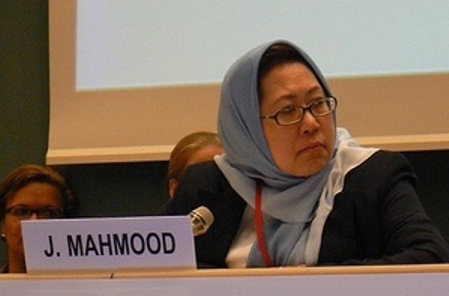
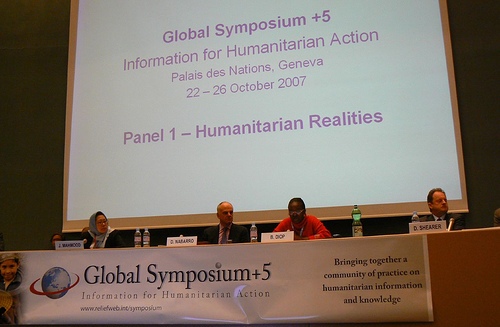
With these simple yet important questions, Dr Jemilah Mahmood, President of MERCY Malaysia, started off the first panel discussion on humanitarian realities at the Global Symposium+5 on ‘Information for Humanitarian Action’ organised by the United Nations Office for the Coordination of Humanitarian Affairs (UN-OCHA). The meeting, held in Geneva from 22 – 26 October 2007 at the Palais des Nations, has brought together over 200 persons involved or interested in information and communication aspects of humanitarian work.

I was nearly dozing off on a surfeit of humanitarian jargon and acronyms when Jemilah started her reality check. The medical doctor turned humanitarian leader spoke from her heart, and spoke such common sense that sometimes seemed to elude the self-important UN types.

Jemilah argued that there was a greater need for community based information gathering and communication, rather than just data mining that often takes place in crisis or emergency situations.

“Communication with affected communities needs to be a genuinely two-way process,” she said, echoing the discussions at my own working group on ‘Communicating with affected communities in crisis’.

dr-jemilah-mahmood-mercy-malaysia.jpg

She talked of people in Aceh, Indonesia, and elsewhere who survived the tsunami — and then faced a barrage of questions and questionnaires from an endless stream of aid workers, many of who asked the same questions again and again! Why couldn’t the first group/s who surveyed survivors not have shared the information they gathered, she wondered.

“I sometimes see how humanitarian agencies are fighting with each other to keep field information to themselves,” she revealed.

There is also a need for humanitarian workers to be more sensitive to and respectful of affected people’s culture and social norms. For example, it is inappropriate to go to predominantly muslim communities and ask about their sexual habits or probe incidents of rape — even though gathering such information would be relevant in some situations. “The humanitarian workers need to find the right ways to tackle these and other challenges,” she said.

Sometimes well meaning aid workers inadvertently overstep their boundaries. In the aftermath of the Pakistan earthquake of October 2005, community meetings were scheduled at times when the people had to break their day-time fasting.

Today’s crisis affected people are becoming better informed and more empowered. Jemilah recalled how mobile phones are increasingly spreading news and information among crisis affected people on the arrival of new food or medicinal stocks. Once in Aceh, the news of vaccine stock arrival spread within hours through mobile texting or SMS, prompting thousands of people to turn up asking for this service.

The humanitarian community needs to combine technology, common sense and human considerations to deliver better services and benefits, she argued. “Technology alone won’t do this for us, but it offers us useful tools,” she said.

She added: “There are huge opportunities to use modern communication technologies to plan better, reduce disaster risks and have a well coordinated response in times of disasters.”

In short, we need locally relevant, low-cost solutions to improve information gathering, information sharing and communication all around, she argued.

1729202869_7825dbdc5b.jpg

MERCY Malaysia is an internationally recognised medical and humanitarian relief organisation. “MERCY Malaysia is not just a response organisation,” says its president Dr Jemilah Mahmood. This realisation came during the Afghanistan crisis (in October, 2001), when members decided it would be more prudent to look towards providing Total Disaster Risk Management (TDRM) to ensure that affected communities become more resilient after a disaster.

Since its inception, MERCY Malaysia has served hundreds of thousands of victims of natural and complex humanitarian disasters from Kosova, Indonesia, India, Turkey, Cambodia, Afghanistan, Sri Lanka, Iraq, Iran and Sudan. Hundreds of volunteers, both from the medical and non-medical field, have been trained and deployed to these areas. Dr. Jemilah Mahmood herself has led most of these missions at home and abroad, in particular to Kosova, Indonesia, Cambodia, Afghanistan, Iraq and most recently to Palestine.

Read The Star newspaper (Malaysia) article on MERCY Malaysia on 12 October 2007

panel-1-humanitarian-realities.jpg

All Geneva photos courtesy UN-OCHA Flickr on Global Symposium+5

Playing games on disasters: we do and we understand!

Today, 10 October, is the International Day for Disaster Reduction. So we’re going to talk about playing games on disasters.

Yes, that’s right: games. Disasters are serious phenomena, but there’s no reason why disaster awareness and preparedness have to be all dull and dreary.

There’s a old Chinese saying: “I hear and I forget; I see and I remember; I do and I understand.” Disaster preparedness and training are now moving more into the realm of understanding by doing — simulations or drills for community evacuation, and games that allow players to prevent or manage a disaster.

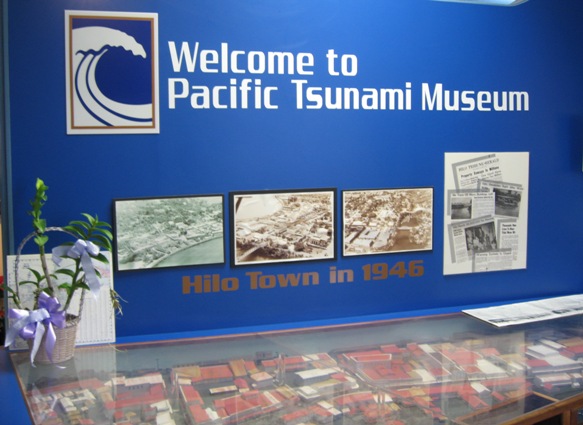
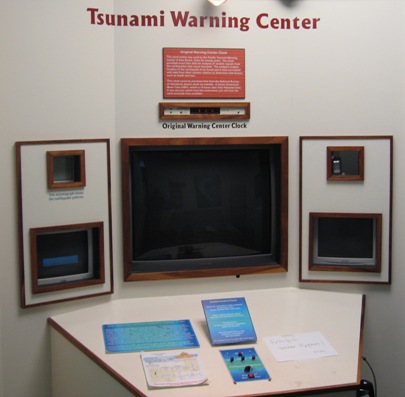
I first played such a game in January 2007 when, while in Honolulu for a conference, I took the day off and flew to Hilo where the Pacific Tsunami Museum is located. The volunteer-run museum, based in what is known as the tsunami capital of the world, engages local people and foreign visitors (including curious US mainlanders) on the science, history and sociology of tsunamis.

pacific-tsunami-museum-in-hilo-hawaii.jpg

A basic game there allows a visitor to be play the role of Director of Pacific Tsunami Warning Centre (PTWC) , a US government institute that monitors seismic activity and has a mandate to issue alerts, watches or warnings to all countries in and around the Pacific Ocean. The game allows players to choose one of three locations where an earthquake happens — Alaska, Chile or Japan — and also decide on its magnitude from 6.0 to 8.5 on the Richter Scale.

In the real PTWC, five geophycisists are on duty round the clock. If the magnitude exceeds 7.5, the epicentre is located. If it’s in an area likely to cause a tsunami, a tsunami watch is sent to nearby coasts and a tsunami watch is set for areas with a travel time more than three hours away. Messages are sent to the tide observers for reports on the first wave, and telemetered water level gauges are checked. It’s by quickly assessing the seismic, sea level and historical data that scientists at PTWC decide if a warning is needed for areas already placed under a tsunami watch.

tsunami-warning-simulation-game-at-ptm-in-hilo.jpg

Since the system was set up in 1947, it has never missed warning of a damaging tsunami, but there have been a number of very expensive evacuations that turned out to be unnecessary. “These precautions are needed to ensure public safety, but scientists are working to minimise unnecessary warnings without ever missing a hazardous event,” the Tsunami Museum panel explained.

It’s revealing to play the role of a scientist who must quickly marshal lots of information and decide on whether or not to issue a warning. The cost of inaction can be high — but a false alarm doesn’t come cheap either.

I played the game three times, and each time erred on the side of caution — costing the hapless Hawaiian tax payers lots of money.

In real life, those who have their finger on the alert/warning button have to take many considerations into account. Repeated false alarms can erode public confidence in early warning systems. But suppressing a warning on a real breaking disaster — such as what happened in Thailand when the Indian Ocean Tsunami broke in December 2004 — can be truly devastating.

I don’t envy those who have to make this decision as part of their daily work. But after playing the game, I appreciate their challenges a great deal better.

Read my SciDev.Net essay (Dec 2005) The Long Last Mile on challenges in communicating early warnings on disasters

Read more about Tsuamis on Wikipedia

Love Thy Mangrove: A Greenbelt Report from Pra Thong island, Thailand

jureerat-pechsai-deun.jpg

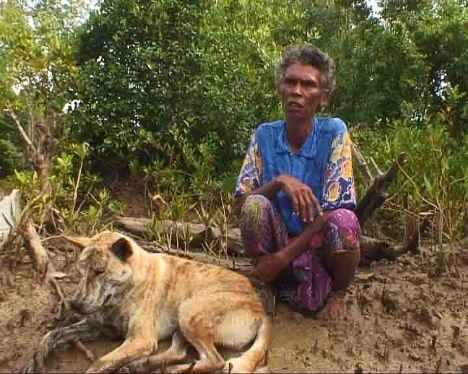
This is Jureerat Pechsai, nicknamed Deun.

She is a member of the Moken community – indigenous people living on the coast and islands on Thailand’s southern coast. Their nomadic lifestyle has earned them the name Sea Gypsies. In Thai, they are called Chao Ley — or people of the sea.

They traditionally live on small boats and move from place to place. When the Monsoon rains make the seas rough, they set up temporary huts on islands – such as Pra Thong Island, where Deun lives.

Pra Thong is an hour’s boat ride from the mainland city of Phuket — some conservationists call it one of the “Jewels of the Andaman” for its biodiversity. It is also an important nesting beach for turtles.

It was on this island that my colleagues from TVE Asia Pacific met and filmed with her in late 2006 for our Asian TV series, The Greenbelt Reports.

The Asian Tsunami of December 2004 devastated the Moken way of life. Their temporary huts were destroyed, and many families lost loved ones. The losses would have been greater if not for the mangrove forest close to the Moken village.

“Moken loves the water, the forest and everything. And we love the mangrove forest the most. The mangrove forest is like a living creature that has helped the Moken people for years. It’s our most beloved place on the island,” says Khiab Pansuwan, an older woman who is a leader in Deun’s community.

After the Tsunami, some Moken felt that they could not return to their nomadic lives. They have chosen to live on the mainland where they feel safe from the waves. Others who remained on their island had new, permanent houses built for them. But the Moken are quick to abandon these whenever they hear rumours of more Tsunamis.

Watch The Greenbelt Reports: Love Thy Mangrove on YouTube:

The mangrove replanting work on Pra Thong island is led by two women, Khiab and Deun.

Deun has been a volunteer with conservation organisations. She learnt about ecosystems and how to protect mangroves and endangered species like sea turtles. She can see many changes in her environment after the tsunami.

“After the tsunami, there are a lot of changes. We didn’t have much grass before, but now weeds are everywhere. The weeds are now more than grass,” says Deun. “In the past, we used to have more and more beach every year. But now the sea has come so close…”

khiab-pansuwan.jpg

The Tsunami’s impact is not the only factor affecting the mangroves here. Dynamite fishing, oil from boats, foam from fish and oyster nets are all damaging this life-saving greenbelt. Some people also cut down mangrove trees.

But Khiab and Deun are determined to rally everyone around to replant and regenerate their mangroves.

Says Khiab: “The community forest is part of the Moken people. We don’t want to cut the trees or clear it. We want to replant the trees so the forest is like before. We don’t want anyone to cut down trees because the mangrove forest saved many Moken lives.”

The two women are determined to rally everyone around to replant and regenerate their mangroves.

Replanted mangroves will ensure not only protection from the waves, but also a continued supply of shell fish and crabs – the main source of income and food for the Moken.

The Moken have traditionally managed the mangroves sustainably. They fish in different areas of the forest during the year, giving time for fish stocks to regenerate. Logging for firewood is done only in moderation, in designated areas.

But these mangroves are now under threat from outsiders who see it as a source of firewood and shell fish. Only a few Moken are left in the village to protect the forest from these intrusions.

Khiab and Deun have much work to do.

NOTE: We are now looking for more stories like this to be featured in the second Asian TV series of The Greenbelt Reports. See TVEAP website news story calling for story ideas.

All images and video courtesy TVE Asia Pacific

Joey R B Lozano: The legacy continues…at Silverdocs

I met Joey R B Lozano only once, but he left a deep impression.

A small-made man with passionate zeal and tons of energy, he was every inch an activist-journalist-campaigner. We had invited him to a regional workshop of factual video producing and distributing partners from across Asia that we held in Singapore in November 2002.

We hadn’t worked with Joey earlier. He came recommended by our international partner Witness, which uses video-based advocacy and activism for promoting and safeguarding human rights worldwide.

Joey R B Lozano Joey R B Lozano Joey R B Lozano

Joey used his personal video camera to assert indigenous land rights, and to investigate corruption and environmental degradation in his native Philippines. Joey was an independent human rights activist and also one of the country’s leading investigative reporters.

He freelanced for the Philippine Daily Inquirer, covering Indigenous peoples’ rights and the environment, considered the two most dangerous beats in the Philippines. But years earlier, he had moved out of the capital Manila, and committed his life and career to stories and issues at the grassroots that many of his city-based colleagues had no time or patience in covering on an on-going basis.

Trained as a print journalist, Joey mastered new media and technologies whose potential he quickly realised. He moved into television and video media with ease, and later became an active blogger.

Joey’s TV investigations began in 1986, when he helped ABC’s 20/20 to uncover the “Tasaday hoax”, a highly successful fraud to pass off local tribespeople as a newly discovered Stone Age culture.

He soon embarked on his own investigations and started digging into illegal logging, gold mining and land-grabbing. In turn, his exposes quickly earned him repeated assassination and abduction attempts, in a country that is one of the more dangerous places to practice journalism.

When he came to Singapore, Joey had recently ‘starred’ in a major Canadian documentary titled Seeing is Believing: Human Rights, Handicams and The News, which looked at how committed, passionate individuals were using new communication technologies to change the world.

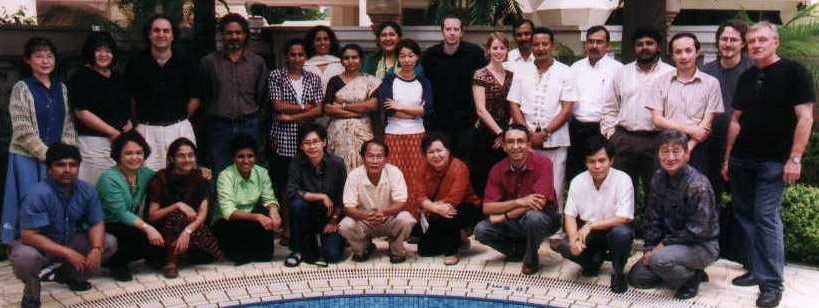
participants-at-tveap-partner-workshop-singapore-nov-2002.jpg

Photo of Singapore TVEAP workshop participants: Joey Lozano is 6th from left on the frontmost row

Follow Seeing is Believing storyboard on the film’s website

We screened the film, made by Katerina Cizek and Peter Wintonick, and heard first hand from Joey on what his struggles entailed. The film followed Joey as he delivers a new “Witness” donated video camera to Nakamata, a coalition of Indigenous groups in Central Bukidnon. Together, Nakamata and Joey begin documenting a dangerous land claims struggle, and it doesn’t take long for tragedy to unfold in front of the camera.

Watching the film and then listening to Joey — and his Witness colleague Sam Gregory — describe the on-going struggle, was one highlight of our week-long workshop. Some of us saw in Joey the activist-campaigner that we wanted to be, but were too scared or too polite to really become.

Not everyone shared that view. The cynicism — sometimes bordering on disdain — of a fellow Filipino from Metro Manila was palpable. No wonder Joey moved away from the city.

We at TVE Asia Pacific were extremely keen to distribute Seeing is Believing, for it held such a powerful and relevant message for our region, but it was not to be. Our enquiries showed that like most documentaries, it was tied up in too many copyrights restrictions and commercial distribution deals.

Following the Singapore workshop, I did keep a watchful eye on what Joey Lozano was up to. The film’s website provided occasional updates, and sometimes blog posts from Joey himself.

Our paths never crossed again. Almost three years after our single encounter came the news that Joey had passed away. It wasn’t the assorted goons who hated his guts that finally got him. His own body turned against him.

His tribute on the film’s website started as follows:

Joey Lozano defied the odds. For three decades, he survived dangerous missions to defend human rights using his video camera, in the Philippines, a country that ranks high, year after year, for most journalists killed. Joey went into hiding numerous times, and he dodged two assassination attempts. Once, bullets whizzed past his ear as he made his escape on motorbike.
But Joey couldn’t beat the odds of cancer. He died in his sleep on September 16, 2005 – at home and surrounded by his family.

Joey R B Lozano - image courtesy Seeing is Believing

The spirit and legacy of Joey R B Lozano live on. He inspired a large number of journalists and activists to stand up for what is right and just — and to be smart about it in using modern information and communication technologies, or ICTs.

Joey and other Witness activists were pioneers in different parts of the world who turned handicams away from weddings and birthday parties to capture less cheerful sights and sounds the world must see — and then act on. They were at it years before mobile phone cameras, YouTube and user-generated content in the mainstream media.

And now, Witness has established an award at the Silverdocs film festival. The WITNESS Award in Memory of Joey R.B. Lozano will be awarded to the qualifying SILVERDOCS filmmaker of a feature-length film who has produced a well-crafted and compelling documentary about a human rights violation or social justice issue. The winning filmmaker will also have a thoughtful, creative, and feasible outreach plan to use their film as a tool to raise awareness of the human rights or social justice issue explored in the film with a goal to bring about change.

The inaugural award was announced on June 17 — and has been won by “The Devil Came on Horseback” by Annie Sundberg and Ricki Stern.

Joey was a Witness partner and board member. He co-produced many films and collaborated on others that helped raise awareness about threats to indigenous people’s rights in the Philippines from corporations, and the complicity of the government in the abuses. Witness was founded in 1991 by musician peter Gabriel and the Lawyer’s Committee for Human Rights to put new technologies into the hands of local activists around the world.

Joey R B Lozano with his handycam

Read International Wildlife May 1999: Why Joey Lozano Is A Marked Man – investigative reporter works for the environment

Read about and watch Rule of the Gun in Sugarland

Baby 81: The Asian Tsunami’s big ‘non-story’

When many journalists chase the same unfolding story, it’s common for them to acquire the ‘herd mentality’. This ‘media pack’ can sometimes lose sense of direction, perspective — and even the truth.

A good example is the story of a Sri Lankan baby who grabbed world media attention for a few days as a “celebrated” Tsunami orphan.

The four-month-old boy, Abhilash Jeyarajah, was picked up by a neighbor who found him under a pile of garbage soon after giant waves lashed Kalmunai on 26 December 2004. The man handed over the child to the Kalmunai hospital. The parents, who also survived the waves, later found their child.

That should have been the happy ending for that family — but it was not to be.

Newspapers, television and news agencies reported how squabbling broke out among several couples over “Baby 81” — as he was dubbed by hospital authorities in Kalmunai, going by the admission number. As many as nine couples who lost their infants in the tsunami all claimed he was theirs — or so the story was spread by the news-hungry media who had descended on tsunami-hit Sri Lanka in their hundreds.

Photo courtesy Reuters

Even the usually cautious New York Times carried the story, referring to him as a “celebrated orphan”.

The story assumed a momentum of its own. One leading American TV network invited the baby and his parents to visit the US to be their studio guests and tell their ‘story’.

It was only many weeks later that the truth began to emerge.

Police denied nine couples had claimed him as their own. Kalmunai hospital authorities confirmed that only one couple had come forward to claim the baby. The man who handed over the child to hospital told police that he had known the child was that of his neighbors — there was no dispute about the parentage.

“Because it had a miraculous escape, a lot of people showed interest in the child, but they never said they were the parents,” chief inspector W. C. Wijetilleka was quoted as saying. “Only one couple claimed the child. No one else has come forward to make a legal claim.”

“As far as the police and the courts are concerned, only one couple is claiming the child,” inspector Wijetilleka said. “We have reported the facts to court and the judge ordered the hospital to release the child to the parents.”

The story was fuelled by the hospital’s initial reluctance to release the boy until he was well enough. The couple then petitioned the court, which ordered on 12 January 2005 that the baby be given to them. DNA tests, presented to court on 14 February 2005 confirmed their claim as biological parents.


Read Lanka Business Online account of what happened: Baby 81 – the story with nine or more lies

Read Reuters AlertNet guest blogger Glenda Cooper’s recent update on the Baby 81 saga

This non-story was discussed during the Asian regional brainstorming on Communicating Disasters that TVE Asia Pacific and UNDP organised in Bangkok, Thailand, in December 2006.

“The young couple was at the centre of endless media coverage for several weeks,” Asoka Dias, Station Director of MTV/MBC Network, Sri Lanka, told our meeting.

He added: “This created public impression that they also received a great deal of money and other help, which was not the case. They have had to relocate to a new neighbourhood, and are struggling to lead normal lives.”

Read the meeting report of Communicating Disasters

Can media tame the global ‘alms bazaar’?

The Asian Tsunami of December 2004 inspired dozens of cartoons in newspapers and websites all over the world. To me, this was one of the most heart rending Tsunami cartoons.

Without a single word, it said so much about the humanitarian sector’s conduct and priorities. It showed how Asia’s massive disaster drained much needed support from other unfolding emergencies in the world.

This week in Geneva – arguably the humanitarian capital of the world – a leading Swiss journalist once again raised the crucial issue: how best can humanitarian agencies respond to multiple crises without everyone ending up in a needless frenzy?

Edward Girardet, who specialises in in media, humanitarian aid and conflict issues, was speaking at a media workshop on tracking climate change that his non-profit organisation, Media21, organised this week in conjunction with the Global Platform on Disaster Risk Reduction in Geneva (5 – 7 June 2007).

The platform, organised by the UN International Strategy for Disaster Reduction (UN-ISDR), brought together several hundred disaster managers, researchers and activists for three days of discussion and debate on key issues and challenges they face.

Ed was outspoken in his critique of the humanitarian sector (which, someone suggested during the week, is the largest unregulated industry in the world).

“Much of the emergency response to the Indian Ocean tsunami in late 2004 was not required, but hundreds of organizations still insisted on being seen, often at the cost of rechanneling humanitarian resources from vital operations elsewhere in the world, bringing some to virtual collapse, notably in Africa.”

Writing an op ed piece in the Christian Science Monitor this week, Ed has expanded on his views. He says:

“What this amounts to is a blatant abuse of public confidence. As one International Committee of the Red Cross representative admitted, if the donating public knew how often personal egos or vested interests call the shots, they might prove less forthcoming in their support.”

Edward Girardet, Swiss journalist

Here is how he ends his essay:

Humanitarianism, however, should not “belong” to any one group. What the international aid industry urgently needs is more hard-nosed and independent reporting.

Current initiatives such as IRIN, the UN’s humanitarian news service, and the World Disaster Report of the International Red Cross are excellent in many ways but widely perceived as beholden to their organizations.

Another question is whether one can expect real criticism of the international aid industry if such ventures are themselves cofunded by governments.

The best solution would be the creation of a viable media watchdog capable of reporting the real causes behind humanitarian predicaments, including how the international community responds.

Most mainstream news organizations are unlikely to cover the global aid business on a consistent basis.

On the other hand, a pooling of media, corporate, and foundation support for a specialized reporting entity could prove to be the answer. Any other approach that does not guarantee complete independence would be a waste of time and money.

Read his full op ed in Christian Science Monitor online (8 June 2007 issue).

Read the full report of TVE Asia Pacific’s Roundable meeting on Communicating Disasters, held in Bangkok, December 2006

More memories of Theeban…

On March 17, I wrote about introducing our Children of Tsunami documentary at the DC Environmental Film Festival, and and how I dedicated the screening to Theeban – the Sri Lankan boy who survived the Asian Tsunami, but was killed in the island nation’s political violence on 3 March 2007.

My personal tribute to Theeban has been widely circulated online. Edited versions have appeared on MediaHelpingMedia (UK) and Asia Media from University of California Los Angeles (USA).
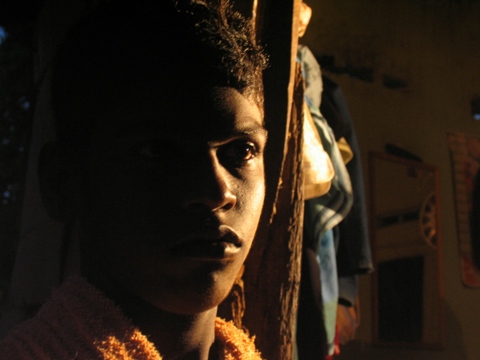
It appears that my tribute has moved many readers. I’ve heard from several by email – encouragingly, all supportive and sympathetic. Among those who wrote was young journalist Chathuri Dissanayake, who worked as a researcher for Video Image, the Sri Lankan production company we (TVE Asia Pacific) engaged to film Theeban’s unfolding story for most of 2005.

With her permission, I want to share her recollections and views:

It’s a very nice piece about Theeban. It captures what we had grown to love in the boy. The picture you have of him taken on I think our first visit brings back a lot of memories.

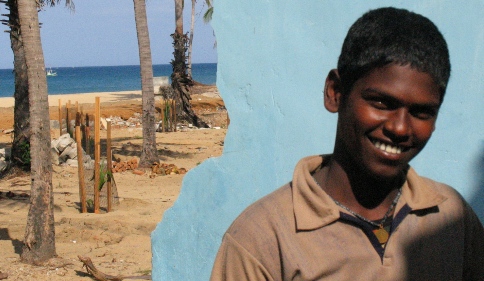
theeban.jpg

When he was abducted (in late 2006), I always thought at least he is alive, now I’m still trying to come to terms with the fact that he is no more. The best memory I have of him is his wide smile. The pictures you have chosen bears ample testimony as to how beautiful that is. Even though he couldn’t communicate with us coz of the language barrier his smile and eyes were so expressive. When I first met him at the camp what struck me most was his unspoilt innocence. I wish I had taken a bit more trouble to help him out after the filming ended.

Theeban gave life to harsh realities of the conflict in the country that I have lived all my life with. Before meeting Theeban and visiting his village, I only knew what media told me of the east but Theeban brought it closer to me. Earlier, when ever I heard of the violence in the north or the east, it was just news to me as it was to many living in the “right side of the country”. But the Children of Tsunami project opened up the other side of the story, and as a young journalist, I gained a lot of experience.

To me, Theeban was real and he represented many youngsters in the area. His scattered dreams and hopes were real and it is a tragedy that help doesn’t reach them. Nothing substantial was done to help him and many others like him to rebuild their lives. Theeban was too young for any sort of vocational training that was available, and he didn’t have the right qualifications. My dilemma of what would happen to Theeban and many like him whose futures were washed away in the Tsunami grew as all the options of vocational training I checked out for Theeban turned out that applicants needed at least (GCE) Ordinary Level. Theeban was forced to leave school and it looked as if it never struck to any authority that someone needs to look after the youths like Theeban.

theeban-photocredit-video-imagetveap.jpg

To me Theeban, like many others was another victim of forces that he had no control over. It was not his fault that a tidal wave destroyed his family but he paid for it dearly, gave up his education and took the responsibilities of the bread winner of the family on to his shoulders. When the Tsunami struck he was still hopeful he wanted to earn money and take care of his brothers. He missed his mother dearly but found a bit of comfort in his grandma. But the violence that sprang up in the area had no mercy on him. Theeban’s story ended in tragedy coz the forces that were against him were too strong for him to fight back. The hope I saw in his eyes still haunts me. But I take comfort in knowing that at least he tried to fight back. No matter what his shy smile and shining eyes will remain with me.

That is how I remember Theban best. A youth who managed to smile and have a hope for the future in spite of the trauma that he went through when many grown up men around him gave up on life.

Remembering Thillainayagam Theeban (1990 – 2007)

Thillainayagam Theeban (1990 – 2007)
Since we started Children of Tsunami media project in early 2005, as a citizen media response to the Indian Ocean Tsunami, I have introduced it to dozens of audiences of many and varied kinds in different parts of the world. But presenting our documentary, Children of Tsunami: The Journey Continues to the 15th DC Environmental Film Festival at the World Bank headquarters yesterday (16 March 2007) was perhaps the most difficult of all.

No, this was not a cynical audience – far from it, they turned out to be a very appreciative one, as I describe in my other post. But this was the first public introduction I had to make after we lost Theeban, the Sri Lankan boy who was one of eight children whose recovery story we tracked and filmed for much of 2005.

Theeban was murdered by unidentified gunmen who stormed into his ‘temporary’ tsunami shelter on 3 March 2007. The death is linked to spiralling political violence that is once again sweeping across Sri Lanka.

When the shocking news reached us three days later, our Sri Lankan camera team at Video Image and we at TVE Asia Pacific just couldn’t believe it. We were all in tears, and some of us were also angry. Theeban, who survived the killer waves 26 months ago (but lost his mom and kid brother in the disaster) suffered many indignities in displacement. And now, he is gone. 

It’s now two weeks since Theeban was killed, but I still can’t speak about it without a lump in my throat.

That’s why I was nervous in introducing the film yesterday at the festival: I knew I was just seconds away from being stuck for words, and overcome with emotion.

My friends in the audience later said I had managed reasonably well. This is what I said as I ended my brief introduction:

“We ran out of funds to sustain our monthly filming beyond end 2005. By then we found that our film crews and we ourselves had become attached to our participating families, and especially the children who worked so closely with our film crews. We remain interested in their personal progress, even if we can no longer publish their stories.

Earlier this month, we received the devastatingly sad news that the Sri Lankan boy we filmed has been murdered –- by unidentified gunmen, right at the ‘temporary’ camp in Eastern Sri Lanka.

Thillainayagam Theeban survived the killer Tsunami waves and endured 26 months of extreme hardship in displacement — only to be swept away by the wave of political violence currently sweeping Sri Lanka.

We still don’t know who killed Theeban, and for what reasons. He was abducted by an armed group a few months ago, from whom he escaped earlier this year. It is believed that Theeban was killed as a punishment — and as a warning to all others.

He was 16 years at the time of his death. We don’t know if his killers would ever face justice.

I want to dedicate this screening to Theeban — and thousands of young people like him who are still languishing in temporary shelters, struggling to rebuild their futures.”

After the screening, there was some sympathy and empathy in the audience about Theeban. But on the whole this particular development didn’t inspire too many questions or remarks. The predominantly American audience seemed more intrigued by our journalistic documentation of how evangelical Christian groups rushed to tsunami-struck Asia, offering relief support coupled with religious conversion. (Find out more about this by watching the film online.)

Ah well, everyone takes away something different from a film like Children of Tsunami. It has so many facets and elements mixed together.

We set out asking lots of questions, and found only a few answers. We still have lots of questions in search of answers…and new ones emerging.

Thillainayagam Theeban (1990 – 2007)

TVE Asia Pacific official statement on Theeban’s death

My personal tribute to Theeban, published by MediaHelpingMedia, UK

My tribute to Theeban, published by UCLA Asia Media