Joey R B Lozano: The legacy continues…at Silverdocs

I met Joey R B Lozano only once, but he left a deep impression.

A small-made man with passionate zeal and tons of energy, he was every inch an activist-journalist-campaigner. We had invited him to a regional workshop of factual video producing and distributing partners from across Asia that we held in Singapore in November 2002.

We hadn’t worked with Joey earlier. He came recommended by our international partner Witness, which uses video-based advocacy and activism for promoting and safeguarding human rights worldwide.

Joey R B Lozano Joey R B Lozano Joey R B Lozano

Joey used his personal video camera to assert indigenous land rights, and to investigate corruption and environmental degradation in his native Philippines. Joey was an independent human rights activist and also one of the country’s leading investigative reporters.

He freelanced for the Philippine Daily Inquirer, covering Indigenous peoples’ rights and the environment, considered the two most dangerous beats in the Philippines. But years earlier, he had moved out of the capital Manila, and committed his life and career to stories and issues at the grassroots that many of his city-based colleagues had no time or patience in covering on an on-going basis.

Trained as a print journalist, Joey mastered new media and technologies whose potential he quickly realised. He moved into television and video media with ease, and later became an active blogger.

Joey’s TV investigations began in 1986, when he helped ABC’s 20/20 to uncover the “Tasaday hoax”, a highly successful fraud to pass off local tribespeople as a newly discovered Stone Age culture.

He soon embarked on his own investigations and started digging into illegal logging, gold mining and land-grabbing. In turn, his exposes quickly earned him repeated assassination and abduction attempts, in a country that is one of the more dangerous places to practice journalism.

When he came to Singapore, Joey had recently ‘starred’ in a major Canadian documentary titled Seeing is Believing: Human Rights, Handicams and The News, which looked at how committed, passionate individuals were using new communication technologies to change the world.
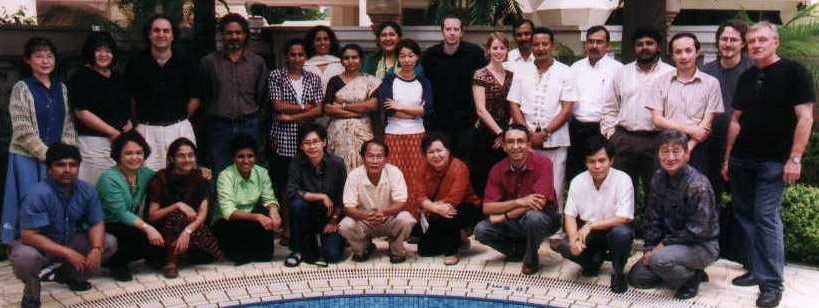
participants-at-tveap-partner-workshop-singapore-nov-2002.jpg

Photo of Singapore TVEAP workshop participants: Joey Lozano is 6th from left on the frontmost row

Follow Seeing is Believing storyboard on the film’s website

We screened the film, made by Katerina Cizek and Peter Wintonick, and heard first hand from Joey on what his struggles entailed. The film followed Joey as he delivers a new “Witness” donated video camera to Nakamata, a coalition of Indigenous groups in Central Bukidnon. Together, Nakamata and Joey begin documenting a dangerous land claims struggle, and it doesn’t take long for tragedy to unfold in front of the camera.

Watching the film and then listening to Joey — and his Witness colleague Sam Gregory — describe the on-going struggle, was one highlight of our week-long workshop. Some of us saw in Joey the activist-campaigner that we wanted to be, but were too scared or too polite to really become.

Not everyone shared that view. The cynicism — sometimes bordering on disdain — of a fellow Filipino from Metro Manila was palpable. No wonder Joey moved away from the city.

We at TVE Asia Pacific were extremely keen to distribute Seeing is Believing, for it held such a powerful and relevant message for our region, but it was not to be. Our enquiries showed that like most documentaries, it was tied up in too many copyrights restrictions and commercial distribution deals.

Following the Singapore workshop, I did keep a watchful eye on what Joey Lozano was up to. The film’s website provided occasional updates, and sometimes blog posts from Joey himself.

Our paths never crossed again. Almost three years after our single encounter came the news that Joey had passed away. It wasn’t the assorted goons who hated his guts that finally got him. His own body turned against him.

His tribute on the film’s website started as follows:

Joey Lozano defied the odds. For three decades, he survived dangerous missions to defend human rights using his video camera, in the Philippines, a country that ranks high, year after year, for most journalists killed. Joey went into hiding numerous times, and he dodged two assassination attempts. Once, bullets whizzed past his ear as he made his escape on motorbike.
But Joey couldn’t beat the odds of cancer. He died in his sleep on September 16, 2005 – at home and surrounded by his family.

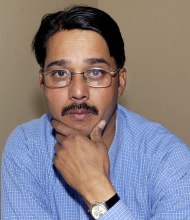
Joey R B Lozano - image courtesy Seeing is Believing

The spirit and legacy of Joey R B Lozano live on. He inspired a large number of journalists and activists to stand up for what is right and just — and to be smart about it in using modern information and communication technologies, or ICTs.

Joey and other Witness activists were pioneers in different parts of the world who turned handicams away from weddings and birthday parties to capture less cheerful sights and sounds the world must see — and then act on. They were at it years before mobile phone cameras, YouTube and user-generated content in the mainstream media.

And now, Witness has established an award at the Silverdocs film festival. The WITNESS Award in Memory of Joey R.B. Lozano will be awarded to the qualifying SILVERDOCS filmmaker of a feature-length film who has produced a well-crafted and compelling documentary about a human rights violation or social justice issue. The winning filmmaker will also have a thoughtful, creative, and feasible outreach plan to use their film as a tool to raise awareness of the human rights or social justice issue explored in the film with a goal to bring about change.

The inaugural award was announced on June 17 — and has been won by “The Devil Came on Horseback” by Annie Sundberg and Ricki Stern.

Joey was a Witness partner and board member. He co-produced many films and collaborated on others that helped raise awareness about threats to indigenous people’s rights in the Philippines from corporations, and the complicity of the government in the abuses. Witness was founded in 1991 by musician peter Gabriel and the Lawyer’s Committee for Human Rights to put new technologies into the hands of local activists around the world.

Joey R B Lozano with his handycam

Read International Wildlife May 1999: Why Joey Lozano Is A Marked Man – investigative reporter works for the environment

Read about and watch Rule of the Gun in Sugarland

The ‘Rural Romance’ lives on in the ICT Age: Urban poor need not apply

Poor rice farmers running up laptops in paddy fields.

Fishermen navigating their ramshackle vessels using satellite-guided global positioning systems (GPS).

A wide-eyed girl child seated in front of a computer screen, looking completely awe-struck.

A saffron-robed Buddhist monk gleefully chatting away on a mobile phone.

Do these images sound a bit familiar to you? That’s because you keep seeing them on magazine covers, posters and various other items produced and distributed to show how modern-day communication gadgets are making a difference in the majority world.

The majority world is where a majority of people live in poverty or hover close to it.

Some influential members of the development community – which includes aid giving nations, UN agencies, researchers and assorted charities working on humanitarian and development issues – now try to fix poverty with gadgets. Or, to use the proper term, unleash information and communication technologies (ICTs) to help combat poverty.

Photo courtesy SciAm Image courtesy Panos Image courtesy Panos

ICT is a basket term that includes the well established services like radio, television and fixed phones as well as newer technologies such as computers, Internet and mobile phones.

Can ICTs help developing countries overcome the current income, social and other disparities? In an editorial written for the Global Knowledge Partnership (GKP) three years ago, I answered this question as a conditional ‘yes’ — with the caution that ICTs are not a panacea that can fix deep-rooted ills.

Read my full essay in GKP Partners Newsletter (My essay is the last one, so keep scrolling down, down, down.)

I said:
ICTs cannot turn bad development into good development; they can only make good development, better. However, when used strategically and as part of a wider development process, ICTs can offer substantial value addition.

But that presumes there is a rigorous assessment of the needs and rational investment of the limited resources. What happens when experts and activists act on their perceptions and prejudices, and not on evidence?

The development community’s obsession with everything rural is one key factor creating such distortions. Sharad Shankardass, Spokesperson for the United Nations Human Settlements Programme (UN-HABITAT), once described this as the development community’s ‘rural romance’.

In 2003 – 2004, Sharad joined us at TVE Asia Pacific in running two regional workshops for training Asian TV journalists in covering sustainability related issues. As the UN agency that chronicles humanity’s urbanization, his agency has all the facts and figures to draw evidence-based conclusions.

The amiable and articulate Sharad summed it up well: more than half the world’s population – including significant numbers of its poor – now live in cities or semi-urban areas. Yet, most members of the development community continue to think of poverty and under-development as an exclusively rural phenomenon.

In other words, they are hooked on a romanticised notion of the rural poor and cannot see (or choose to ignore) a more multi-faceted reality.

Image courtesy UN HABITAT Image courtesy TVE Asia Pacific

Here’s the blurb for State of the World’s Cities 2006/2007 report, published by UN-HABITAT:
“It is generally assumed that urban populations are healthier, more literate and more prosperous than rural populations. However, UN-HABITAT’s State of the World’s Cities Report 2006/7 has broken new ground by showing that the urban poor suffer from an urban penalty: Slum dwellers in developing countries are as badly off if not worse off than their rural relatives.”

Read State of the World’s Cities 2006/2007 online, as pdf chapters

This kind of evidence is being ignored by researchers, activists and UN officials who have fallen (or sleep-walked) into a ‘rural romance trap’. To them, the unmet needs of millions of urban poor are not a concern, or at least not a priority.

In their strange logic, it’s not just a low income level and deprivation of basic human amenities that qualify someone for support under various poverty reduction efforts. That person must also live in an idyllic village, away from major signs of civilization, and preferably in a mud hut surrounded by starving children and emaciated cattle.

That’s picture perfect poverty for you. Urban poor, living in the shadow of highrise buildings and skytrains, rather spoil this pristine image!

Last week while visiting Kuala Lumpur, Malaysia, for Asia Media Summit 2007, I had two separate encounters related to this rural romance.

First was a pre-summit workshop on Connecting Communities through Community Broadcasting and ICTs that brought together some 25 – 30 participants, mostly activists and researchers. In my remarks to the workshop (where I spoke and chaired a session), I urged everyone not to romanticize either communities or broadcasting.

“Communities in need are no longer rural and idyllic as some of you might imagine,” I cautioned. “And broadcasting isn’t what it used to be either. Things have moved on. So must we.”

During question time, a communications advisor from UNESCO New Delhi took me to task for saying this. “We are working with 45 years of solid experience behind us,” she reminded me and everyone else. “You can’t just dismiss this body of work.”

She seemed affected by my questioning the strong or exclusive focus that community radio promoters have on rural areas and rural poor in particular.

I didn’t want to split hairs on this when bigger issues were at stake. I just said that what had worked in the first century of radio will not work in that same form in the medium’s second century that we have now entered. New thinking based on a century’s experience was needed.

Why are organizations like UNESCO so resistant to change and new thinking? Why do they go around spreading development myths that actually do more harm than good?

Read my 2004 essay that exposes the UNESCO-sponsored myth of ‘community radio’ in my native Sri Lanka

And they are not alone. Other UN agencies and development practitioners still plan and deliver development aid and support based on a reality that prevailed in the 1980s or earlier.

My Malaysian friend Chong Sheau Ching, whom I met last week after two years, told me a recent experience that corroborates it.

Chong Sheau Ching, photo courtesy IDRC e-homemakers

Sheau Ching is a remarkable woman. She combines many roles – social entrepreneur, columnist and single mom among them. She is a leading voice in Southeast Asia for using modern ICTs to help women – especially single moms — to find work that they can do from home yet earn decent incomes.

She is founder and head of e-homemakers, a non-profit organisation that networks over 13,000 Malaysian women who are home workers, home-based entrepreneurs and home-makers. These women live and work in cities or towns, and now take advantage of Malaysia’s well-developed telecommunications infrastructure.

Sheau Ching was an invited speaker at Asia Telecentre Forum held in the Malaysian capital on 6 – 8 February 2007. In her presentation, she had spoken about the ICT needs and uses of urban women, including the poor women living in cities. She had questioned why the tele-centre movement was focusing almost entirely on rural areas.

Guess what? The organisers didn’t like such outspokenness at all – she had been reprimanded in public during the rest of the session as well as ‘scolded’ in private after it ended. So much for plurality of views!

Sheau Ching is full of such stories, even if some of them make us feel outraged at the stupidity of people or institutions involved.

Here’s another one, recounting an experience at the World Summit on the Information Society in Tunis, Tunisia in November 2005:

At WSIS Tunis, I gave a short presentation to a small group of bankers from developing countries on using low cost ICT4D innovations for urban poor women to generate income. One politely said to me as he handed out dinner invitations, “We are interested in big projects for youth and the rural people.” I was the only woman in the group, the only one from the civil society, and needless to say, the only one who was not invited to the fancy dinner in a five-star hotel in North Tunis.
Read her full essay, Unsexy and voiceless!!

Next time when UN agencies and other bleeding-heart do-gooders turn on their rhetoric about busting poverty, ask a simple question: Are they fighting poverty no matter where it exists, or is it only poverty in rural, idyllic settings where they like to visit and take photographs?

Like those images I mentioned at the beginning.

Read IDRC profile on Chong Sheau Ching

Saved by the ‘soaps’ – Asia Media Summit picks up momentum

Asia Media Summit 2007’s first day — which started with old media mandarins dismissing new media — ended on a good note, thanks to an interesting, focused session on soap operas and reality TV shows.

Is reality TV a transient fad? With media convergence and lowered barriers to mass media, what new forms and formats of programming and delivery will emerge? These were some questions posed to three panelists drawn from the India, South Africa and the UK.

The most interesting presentation, for me, came from India: Yvonne MacPherson, Project Director of BBC World Service Trust (India) — the BBC’s charitable arm — spoke about their work in India using entertainment TV formats to communicate socially relevant messages.

She shared highlights of BBC-WST’s experiences in using the long-format drama serials and reality based dramas on Indian television.

These are part of what BBC-WST website calls ‘one of the world’s biggest mass media projects to achieve HIV and AIDS awareness and prevention’.

HIV positive detective Jasoos Vijay - courtesy BBC WST Jasoos Vijay transformed Indian attitudes about HIV Haath se Haath Milaa music video wins top India TV awards

First broadcast in July 2002, ‘Jasoos Vijay’ (which means Detective Vijay) is a long-running detective serial on India television. It features Vijay — who is living with HIV — and has messaging about HIV and AIDS awareness and prevention woven in to the plot and dialogue. It not only provided basic facts and figures, but also debunked popular misconceptions about HIV.

After four years on the air, the series entered the Top Ten among Indian TV programmes in August 2006. According the industry-wide TAM audience figures, it then drew a weekly audience reach of almost 16 million viewers.

The series is filmed entirely on location. It is made in Hindi and dubbed into seven other languages. The detective serial is broadcast on peak viewing time on Sunday evening on India’s Doordarshan National channel.

“Long format drama series is the best way to attract a countrywide mass audience,” MacPherson said. “Reality show format, on the other hand, better suits urban and semi-urban audiences.”

In the latter category is BBC-WST’s celebrity and reality programme on HIV awareness, ‘Haath se Haath Milaa’, which means ‘Let’s Join Hands’. It is aimed at younger viewers in urban areas.

Both series were delivered in partnership with India’s national broadcaster, Doordarshan and the Indian National Aids Control Organisation (NACO). Whatever services that were mentioned in the programmes — whether on voluntary HIV testing or anti retroviral drugs — the creators ensured that it was already available through the official healthcare system.

Key to the success of these media initiatives was substantial volumes of research and pre-testing, MacPherson said.

Studies have highlighted how television plays such a significant role in the lifestyle and family choices in India.

She disclosed that BBC-WST is now planning to apply the same entertainment format to another social issue in India: the wide-spread practice of aborting girls after the sex of an unborn child is found out from tests.

“There have been various TV advertisements appealing viewers to love girls, but that doesn’t seem to work — because they don’t address why girls and women are devalued in society.”

Vasanthi Rao, Director of India’s Centre for Media Studies (CMS), was less enthusiastic about reality shows on Indian television. “They don’t really capture reality. It’s more a moderated reality.”

She asked about the kind of budgets that BBC-WST worked with in India, a question that Yvonne MacPherson chose to ignore. This was interesting by itself, given how BBC-WST is increasingly seen as competing for scarce development communication funds with national and local organisations in the very developing countries that it seeks to serve.

In recent years, the BBC-WST has raised millions of pounds and dollars worth grants which come from overseas aid budgets of the UK government and from charitable foundations such as the Bill and Melinda Gates Foundation. Notwithstanding the high degree of professionalism and creativity the Trust has brought into all its media projects in India and elsewhere, questions need to be asked on its cost-benefits ratio — and whether it distorts the market for others.

Jacky Sutton, a communications advisor with Unesco in Afghanistan, noted how soap operas can complement the media’s news agenda. “Media is not all about confronting politicians or exposing corruption. It is also about giving people the right information and more choices in their daily lives.”

She noted how UN-sponsored development films on worthy issues are just that – worthy. “They are not particularly interesting — I have made a few myself!”. She agreed that entertainment formats are the most suitable to engage the mass audience.

Dali Mpofu, Group CEO of South African Broadcasting Corporation, offered very sound advice to the so-called public service broadcasters or PSBs (a misnomer that I no longer believe in). In his own words: “The biggest mistake that PSBs is to compete with the (commercial) mainstream, trying to be more like them. Instead, we should do very well what we are mandated to do. It is the duty of PSBs to push the envelope.”

He described how SABC has taken risks: some paid off, others didn’t. That’s all part of the game.

If only other ‘public’ broadcasters of the world were as enterprising.

Feeding Oliver Twists of the world…and delivering UN logos with it!

“Please, Sir: I want some more!”

These simple yet evocative words were etched into our memories by Charles Dickens, who created the story of Oliver Twist (1838), the poor orphan struggling – and suffering – in 19th century England.

Dickens mocks the hypocrisies of the time by surrounding the novel’s serious themes with sarcasm and dark humour. The novel may have been inspired by the story of Robert Blincoe, an orphan whose account of his hardships as a child laborer in a cotton mill was widely read in the 1830s.

Image courtesy Wikipedia

The world has seen unprecedented creation of wealth since those dark and miserable days 180 years ago. But sadly, there still are hundreds of millions of children who share young Oliver plight — or worse: many go to bed entirely hungry in a world that does not have an overall shortage of food anymore.

Fighting Hunger 2007

Today, 13 May, thousands of people in different parts of the world will walk wherever they can as part of a global campaign in support of ending hunger – one lingering great shame of our time.


Fight Hunger: Walk the World
is a global fundraising and awareness event that takes place every year in all times zones with one sole purpose – to call for an end to child hunger.

Fighting hunger website tells us:

Hunger is more than having an empty stomach. Hunger means not getting the necessary daily nutrition to lead a fully active, productive and healthy life.

Hunger affects more than 800 million people around the world. A child dies every 5 seconds because he or she is hungry.

This year, the organisers – led by the UN World Food Programme – had a viral video contest. It asked anyone, anywhere to do a short video promoting the event – and the issue of hunger – and upload. Some interesting videos have been received — even if some are blatantly in-your-face propaganda for the UN WFP.

That’s my big, long-lasting complaint about the UN family of agencies addressing and tackling the world’s ills. After a while, they allow their worthy issues to be eclipsed by their own self-promotion, public relations and spin. I wrote last month about how the entire MDG campaign has been subsumed by needless volumes of spin.

If only the World Food Programme and its sister agencies can resist their temptation to see every campaign, issue and programme as a logo-delivery mechanism, they will do a whole lot more good.

For that reason, while I will privately walk and think of those in hunger today, I will not contribute any money to the bloated bureaucracy of the United Nations World Food Programme. I would also ask that they go before a mirror today just before they step out to go walking with the world — and sincerely ask: do you see part of the problem or part of the solution?

Thank you, WFP, for delivering food to tens of millions of people worldwide who would not otherwise be fed, or fed adequately. But try and deliver a little less of your image and your logo, if you can. (We saw so much of this happen in the days and weeks that followed the Asian Tsunami disaster, and it was simply disgusting.)

Both hunger and hypocricy thrive nearly two centuries after Dickens and Oliver Twist. We must walk today to end not just one, but both!

Happy walking, everyone.

Watch the winning and commended videos in Fighting Hunger online video contest

Read UN WFP fact sheet about hunger worldwide

John Pilger: Being a journalist is a privilege

Towards the end of our week’s stay in Sydney for OUR Media 6 Conference, the organisers gifted us copies of The Australian Photojournalist, which is the journal of the Australian Photojournalists’ Association.

The June 2006 issue I received is a handsome volume and makes fascinating reading. On the inside front cover, I came across these words by John Pilger, the courageous and outspoken Australian journalist and film-maker hailing from Sydney.

John Pilger

“The best journalism is about looking behind facades and pretensions. It is never accepting the status quo; it is always questioning and remaining sceptical of the pronouncements and actions of those in authority, especially authority that is not accountable.

“The best journalism is following the dictum, wry but true: Never believe anything until it is officially denied. It is seeing the world from ground up, where ordinary people are, not from the top down, where the powerful reside. In many respects, the best journalists are the agents of ordinary people, not of those who preside over them.

“By looking at the world this way, from the standpoint of humanity not its would-be controllers, journalists will find themselves closer to the truth about all manner of things than they will ever be, following the manuals of establishment thinking.

“And by journalists, I mean photographers, too. The finest photographers produce images that ought to achieve mor than a gut reaction but help us make sense of events, great and small.

“Speaking personally, being a journalist is a privilege.”

Indeed. And few people bear that title with greater responsibility and passion than John Pilger.

I had the privilege of listening to John Pilger early on in my career, during one of the first international media conferences I attended in Sweden in the late 1980s. Of the three dozen speakers who spoke there, the only ones who have withstood the gradual erosion of memory are Pilger and Norwegian academic Johan Galtung.

Years later, I read Pilger’s book The New Rulers of the World — which was also the title of 2002 documentary film he wrote, produced and presented on the consequences of globalisation, taking Indonesia as the primary example of the serious problems with the new globalization.

And thank heavens, he shows no signs of slowing down — or mellowing.

The War on Democracy is John Pilger’s first major film for the cinema. Set in Latin America and the US, it explores the historic and current relationship of Washington with countries such as Venezuela, Bolivia and Chile. Two years in the making, The War on Democracy is due to be released in cinemas in the UK on 15 June 2007.

He has produced more than 55 TV documentaries. Links to two of his more recent ones available online:

Breaking the Silence: Truth and Justice in the War on Terror (2004) on Google Video (51 mins)

Stealing a Nation (2004) on Google Video

Noam Chomsky on John Pilger

Images courtesy www.johnpilger.com

Ratomate’s best cup of tea

In another post earlier today, I quoted a doctor turned film-maker in India saying people affected by HIV are dying more from the social stigma attached to the disease than by the disease itself.

Social stigma is a wide-spread problem that confronts people living with HIV in all parts of the world.

But occasionally, we hear some good news: how community has overcome its prejudices and accepted those infected with HIV with affection and care. Usually, it happens after going through the knee-jerk reactions.

It would be very worthwhile for some research to be done on how and when community attitude changes: what are the triggers? what is the tipping point?

Five years ago, we had first hand experience of this through a film that we at TVE Asia Pacific commissioned under our Truth Talking documentary series.

The film, titled Love for a Longer Life (26 mins, 2002) was directed by leading Nepali documentary film-maker Dhurba Basnet.
dhurba-basnet.jpg

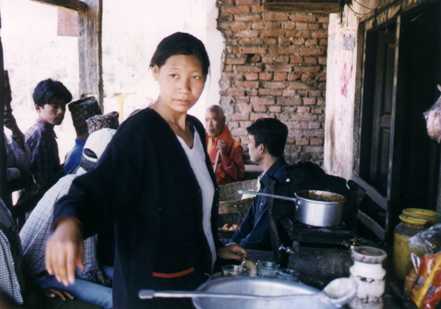
The best cup of tea in the Ratomate village, in central Nepal, is made by a woman called Laxmi Lama. She works in a tea shop owned by her father. “People tell me my father does not know how to make good tea,” she says. “They want me to make tea. The men like their tea strong. When I give my customers strong tea they say one cup is enough for the whole day.”

This is nothing unusual – except that Laxmi is living with HIV. A few years ago, no one in her village would have come near her, let along clamour for a cup of tea she makes.

Born into a very poor family, Laxmi was sold off to a Bombay brothel at the age of 14, and worked as a commercial sex worker for nearly three years before returning to Nepal. She married a man from her village and had settled down to a peaceful routine when a health worker tested her blood and found her positive for HIV. That changed everything dramatically: her husband fled, never to return, and everybody shunned her. The pregnant woman sought refuge in her parents’ house.

That was the fate of most Nepalis living with HIV – abandoned by friends, ostracised by community and left to their own devices. But thanks to the perseverance of a few courageous people – many HIV positive themselves – community attitudes have changed slowly, and have come almost full circle: being reassured that HIV does not spread through casual physical contact, they have accepted her back into their fold.

lakshmi-lama.JPG The moment of truth is when she makes Ratomate’s favourite cups of tea with her bare hands, and men and women flock to taste it. Such a major transformation of community attitudes captured in such a simple, elegant sequence.

Laxmi’s neighbour Kumari Shrestha sums it all up: “We have to give her love. If we do that, she will live longer.”

It would be wonderful if we can discern how and when this change happens. So that it can be induced in thousands of other villages and communites where persons living with HIV are currently battling the virus within, and stigma without.

View a clip from the film here.
Order the film from TVEAP e-shop

HIV: Stigma a bigger killer than the virus?

A doctor turned film-maker in India says people affected by HIV are dying more from the social stigma attached to the disease than by the disease itself.

Dr Jorge Guillermo Caravotta’s AIDS documentary Second Life was released recently. Goa-based journalist Fred Noronha’s story about this film has appeared on several websites.


An extract from the article:

India has 5.1 million HIV positive people, second only to South Africa. However, the stigma and discrimination associated with this disease are the real enemies, said Mumbai-based Caravotta, an Italian doctor of Argentine origin.

“My source of inspiration was Kamal, the first PLHA (person living with HIV/AIDS) to be my colleague,” he said.

Kamal discovered her HIV/AIDS status six months into marriage. After her husband’s death and daughter’s birth, she completed her medical studies to “live for positive people like her”, says Caravotta’s film.

“I never thought of making a documentary film about HIV/AIDS before. But after listening to her during a trip to Delhi, I found in her story a lot of courage to empower PLHAs,” Caravotta told IANS.

“India acted as an alarm clock for my film-making creativity, boosting my potential,” he added. “I would like the message of the documentary film spread all over this country with the same velocity as the virus.”

Read full article here: Doctor’s AIDS Documentary Focus on Stigma and Discrimination