Safe Bottle Lamp: Life-saving bright idea wins World Challenge 2009

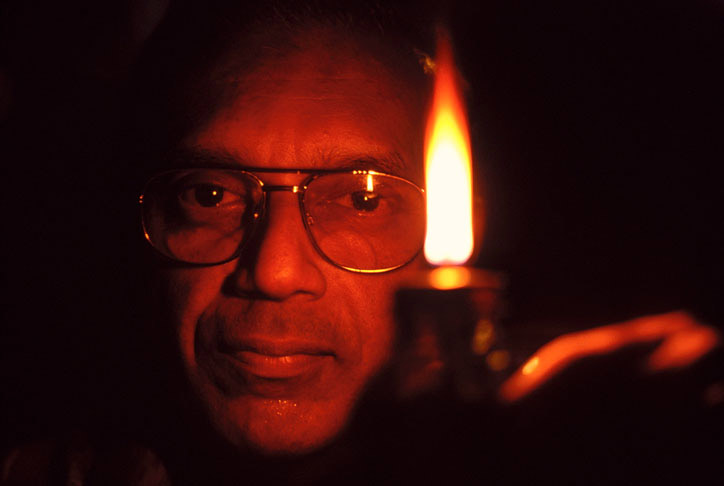
Dr Wijaya Godakumbura holding his invention - Photo courtesy Rolex Awards/Tomas Bertelsen

It’s easy to curse the darkness, and many among us regularly do. Only a few actually try to light even a small candle to fight it. Dr Wijaya Godakumbura of Sri Lanka is one of them – he literally lights lamps, thousands of them, against the darkness of ignorance and poverty.

But his lamps are different, and a great deal safer compared to normal lamps and kerosene, which can start fires risking life and property of users. The design is simple yet effective, inspired in part by the Marmite bottle known the world over: it’s small and squat, with two flat sides – equipped with a safe metal screw cap to hold the wick. It’s quite stable and hard to topple.

Surgeon turned inventor and social activist, Dr Godakumbura founded and runs the Safe Bottle Lamp Foundation which distributes safe, virtually unbreakable kerosene lamps to those who can’t afford electricity. For these untiring efforts that have saved hundreds of lives, the good doctor and his organisation have just been selected the overall global winner in the 5th annual World Challenge awards conducted jointly by BBC World News and Newsweek, together with Shell.

The Safe Bottle Lamp Foundation received a $20,000 grant from Shell to invest in the future of the project. The winner and runners-up were felicitated at an awards ceremony in the City of The Hague on 1 December 2009.

Now in its fifth year, World Challenge 2009 is a global competition aimed at finding projects or small businesses from around the world that have shown enterprise and innovation at a grass roots level. World Challenge is brought to you by BBC World News and Newsweek, in association with Shell, and is about championing and rewarding projects and business which really make a difference.

A record breaking 900 plus nominations were received this year and from these, twelve finalists were chosen by a panel of expert judges. BBC World News viewers and Newsweek readers then selected their favourite from these dozen unique and inspiring entries by casting more than 127,800 votes at http://www.theworldchallenge.co.uk.

Watch short film featuring the Safe Bottle Lamp when it emerged a finalist this year:

Dr Godakumbura and his foundation have been recognised many times before. Notable among these honours is the Rolex Award for Enterprise in 1998. Read Rolex profile about him and his continuing work.

BBC/Shell World Challenge series producer is my former colleague Robert Lamb, who has blazed many new trails in broadcast television and development communication. He specialises in telling complex environmental stories in engaging terms using moving images, and now runs his own independent film production company One Planet Pictures in the UK.

At the beginning of the World Challenge 2009 process, Robert wrote in the producer’s blog: “World Challenge is now in its fifth year. Over that time we have received thousands of nominations. Sadly, we have only been able to film a small selection. But it’s enough to know that there are millions of points of light out there. Watching the news is easy to forget that the vast majority of people go about their lives peacefully and productively.

“Our aim In World Challenge is briefly to bring stories of modest scale sustainable enterprise to the screens. Every year has thrown up big surprises. The diverse ways that ordinary people go about making a living without taxing the Earth’s resources is uplifting. This year we feature the most diverse crop of stories yet…And the really good news is that they are still going strong and proving that ‘sustainable’ is a term with a lot of meaning.”

Read Dr Wiyaya Godakumbura biography
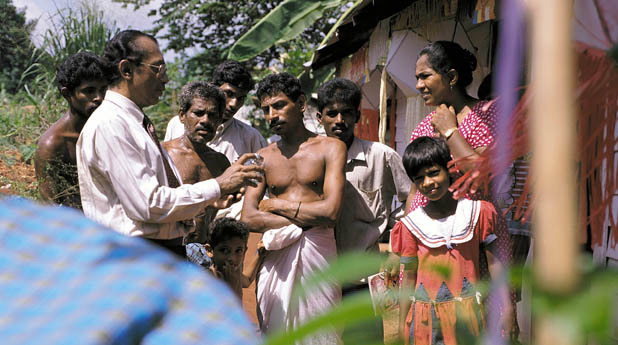
Inventor Godakumbura promotes his safe bottle lamp

Viterbo Memorandum by Greenaccord: Time to act on climate crisis is NOW!

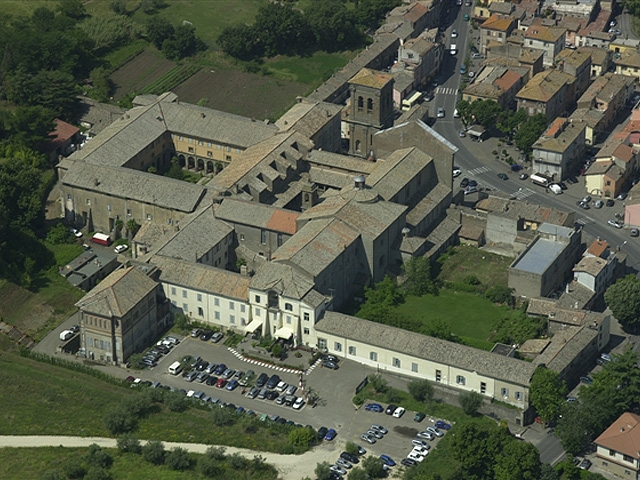
Renaissance period Domus La Quercia, venue of Greenaccord 2009 forum

“We know the climate is changing, probably as a result of humanity’s pollution; species are disappearing fast; deforestation is rampant; over-fishing is rife; water shortages are increasing; resource consumption is growing and so is the world’s population.

“…If this catastrophe unfolds, historians will look back and ask how that was allowed to happen with so little media debate. They may wonder what stories journalists were telling while the world was transformed around them.”

Those words are not new. In fact, they were part of the statement of concern issued at the end of the First International Media Forum organised by Greenaccord of Italy and held in Rapolano, Siena, Italy, in late 2003. I was one of 100+ journalists from all over the world who signed that original “Green Accord” for Journalists.

This year’s internationally acclaimed British climate film The Age of Stupid is based on a similar premise. This ambitious drama-documentary-animation hybrid features an old man living in the climate devastated world of 2055 AD, watching the ‘archive’ news footage from 2008 — and asking: “Why didn’t we stop climate change while we had the chance?”

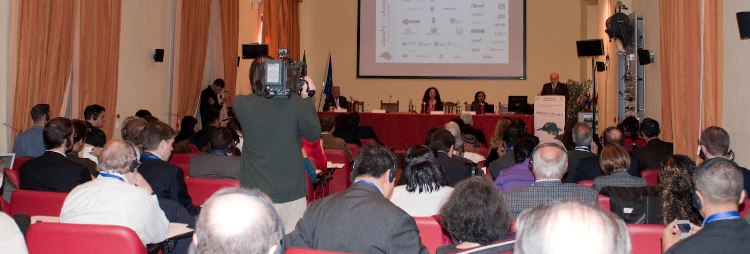
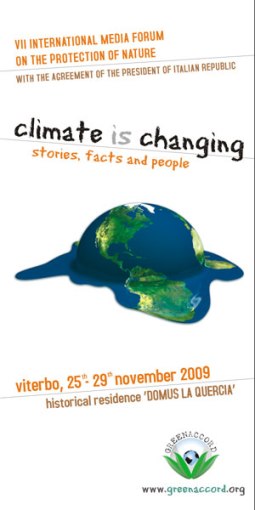
The 7th Greenaccord international forum, held in the central Italian city of Viterbo from 25 – 29 November 2009, has just ended calling upon world leaders to “draw a road map being a binding agreement for a total de-carbonization of world economy before 2050”.

Addressed to the UN climate conference opening in Copenhagen in a few days’ time, the forum’s final document – called the Viterbo Memorandum – urged that no more time be lost.

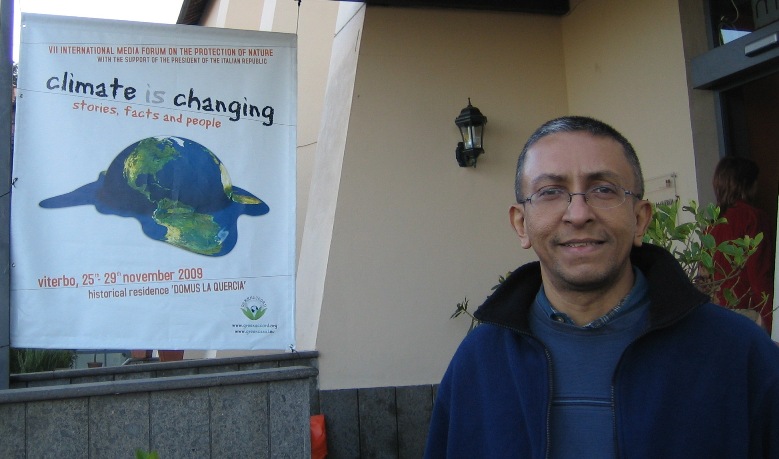
The Greenaccord forum’s theme this year was ‘Climate is changing: stories, facts and people’. Over five days, some 130 of us from 55 countries – drawn from all continents – stayed at the historic residence of Domus La Quercia in Viterbo, discussing and debating about the challenges faces by our warming planet, and how we as communicators can make a difference. It is what I recently called the Ultimate Race between education and catastrophe.

The Viterbo Memorandum pledged: “On their own side, they (journalists and scientists) vow to cooperate in order to spread correct information on the risk related to climate change and to make aware the public opinion on the need of individual contribution to the solution of problems by modifying their own life style.”

The Memorandum is to be delivered in early December 2009 to Dr Rajendra Pachauri, the Nobel Peace Prize winning Chairman of the UN’s climate panel, the IPCC.

Professor Andrea Masullo, President of Greenaccord’s Scientific Committee, said: “I don’t want our children and grandchildren, in 2050, finding themselves on a planet inhabited by more than 9 billion people and devastated by climate change, re-reading the scientific reports of today…to ask themselves what we were thinking and why we did not do anything when everything that was going to happen was clear.”

He added: ”In recent years the changes are progressing much faster than expected in the fourth IPCC report. Nevertheless, it seems that Copenhagen will not come again to a final agreement. Many governments feel they can take initiatives costly and complicated the current economic crisis. ”

Launched in 2003, the Greenaccord Forums have emerged as one of the largest annual gatherings of environmental journalists, broadcasters and activists at global level. As an organisation, Greenaccord aims to be an international “virtual table” open to all professionals in information and communication who want to deepen understanding about environment and its protection with their work.

I have been returning to Greenaccord’s annual forums the first one in 2003 – and always return with my knowledge updated and friendships renewed. This year was no exception.

Photos courtesy Yu-Tzu Chiu and Greenaccord

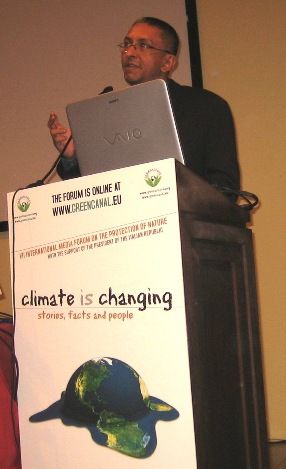
Nalaka Gunawardene at Greenaccord 2009 - Photo by Yu-Tzu Chiu

When it comes to climate change, we are all Maldivians!

It was Woody Allen who said ‘Ninety per cent of life is just showing up’. Well, part of the remaining 10 per cent must involve waving our hands and speaking out in this increasingly attention-challenged world.

My organisation, TVE Asia Pacific, lacks both a travel budget and a promotional budget. So I need to be both resourceful and persevering when showcasing our work in the vast Asia Pacific region and beyond. I attempt this by turning myself into a one-man cheering squad for our work in the public interest. (If this makes me something of a self-promoter, so be it!).

I was very grateful when our friends in Greenaccord accommodated my last minute request to screen our latest short film Small Islands – Big Impact at their 7th international media forum in Viterbo, Italy, today. This is what I recently made in the Maldives, one of the world’s most vulnerable countries to sea level rise.

I presented this at the end of the fourth day, soon after the gathering of 130 journalists and scientists from 55 countries had listened to 10 Climate Witnesses who travelled from far corners of the world to share their stories of ground level changes induced by climate change.

Here is what I said introducing the film:

Small and low lying island states are on the frontline of impact from climate change. That is why we made this film, so that we can highlight the plight of the Maldives in various climate related discussions around the world.

It is based on an exclusive interview that President Mohamed Nasheed of the Maldives gave me in August 2009. In this wide-ranging interview, he shared his concerns and visions for his island nation.

President Nasheed is an articulate, passionate climate witness on behalf of his endangered island nation of 325,000 people. The technocratic and amiable President is one of the youngest heads of state in the world today. Interestingly, he worked as a freelance journalist when he was in exile for several years, and remains very accessible to the international media.

As a journalist and broadcaster, I’ve been covering this story for over 20 years, from the late 1980s. I have seen how the vulnerability of small island states – like the Maldives – has risen up in the international discussions on climate. Sustained reporting by journalists has played a significant role in this process.

We have unfinished business. As President Nasheed says so emphatically, we are in this together. We need to work on coping and survival strategies.

When it comes to climate change, we are all Maldivians.

This is the second time a TVEAP film has been showcased at a Greenaccord event. In October 2006, the post-tsunami Asian environmental series The Greenbelt Reports was previewed at the 4th Greenaccord Forum.

‘Thank you for warming the planet (good for business)’ — Africa’s malaria mosquitoes

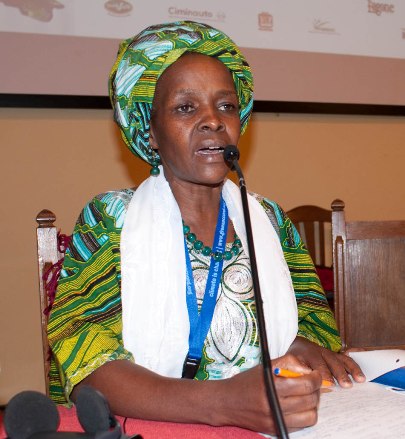
Nelly Damaris Chepkoskei: Voice of Hope
Malaria still claims over a million lives every year, most of them in Africa. This is not simply a public health statistic for Nelly Damaris Chepkoskei – she lost a daughter to the ancient scourge that continues to outsmart human attempts to control it.

“It was very sad when my daughter died of malaria at the age of four,” she recalls. What makes it especially tragic is the fact that malaria is a new arrival in her area.

Nelly, 51, is a farmer living in Kenya’s Kericho District. Located high in the mountains, Kericho’s cold weather has kept mosquitoes at bay for centuries. But not any longer: global warming has raised the area’s average temperature, and mosquitoes have appeared in recent years, bringing malaria with them.

“I had never seen a mosquito until I was 20 years old. But now they are everywhere – people are even dying of malaria, something that was virtually unheard of 20 or 30 years ago,” Nelly told the 7th Greenaccord International Media Forum on the Protection of Nature, being held in Viterbo, Italy, 25 – 29 November 2009.

The theme this year is ‘Climate is changing: stories, facts and people’. Nelly Chepkoskei is one of 10 Climate Witnesses who travelled to the historic city from far corners of the world to share their stories of ground level changes induced by climate change.

Climate Witness is a global programme by WWF International to enable grassroots people to share their story of how climate change affects their lives and what they are doing to maintain a clean and healthy environment. All Climate Witness stories have been authenticated by independent scientists.

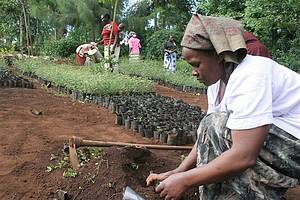
Married with five children, Nelly grows maize and tea, and keeps a few cows – the pride and joy of Kenyan farmers. Lacking faith in politicians and government, she is working with women in her community to pursue their own development.

Life was never easy, but climate change is making it even harder.

“Rainfall patterns have changed drastically in recent decades,” she says. “In the Kericho district, we used to have rain throughout the year. I remember clearly that my family celebrated Christmas when it was raining heavily. But today, Christmas is usually dry.”

Unlike 20 years ago, the dry season is now hotter, drying up all the grass. In the past, the grass would remain green throughout the year.

“This means there isn’t enough fodder for my cows, leading to a drop in milk production and my income,” she explains. “The soils are also left bare during the dry season, which means more erosion when rains come in.”

With higher temperatures, more pests have turned up to damage crops. This prompts farmers to use more pesticides, increasing production costs and polluting the environment with hazardous chemicals.

Nelly turned out to be the most outspoken Climate Witness in Viterbo. In a frank exchange with an audience of 130 journalists, activists and scientists drawn from 55 countries, she exclaimed: “Don’t talk to politicians – they are the same everywhere! I can’t understand why journalists always follow politicians and are so keen to talk to them!”

She continued: “There is so many good things happening in Africa, but we don’t see it reported in the local and international media. You only hear about fighting, famine and corruption. So we continue to be seen and known as the Dark Continent.”

In her view, what Africa needs more than anything else is education. She firmly believes that higher levels of literacy and education would reduce the incidence of conflict and plunder.

Nelly herself is a high school drop out, and places a very high value on education to empower all Africans, especially women.

“There is a big gap between Kenyan intellectuals and the ordinary people. Knowledge is not where and how it is needed,” she says.

I asked her what she thought of foreign aid to Kenya and rest of Africa. This elicited a passionate and emphatic response: “If you want to spoil and corrupt Africa more, then keep giving aid to our governments. Aid money mostly ends up in the wrong hands, or buying guns to fight each other.”

She added: “We do need help, but don’t give aid to our governments. Instead, support NGOs who are better in delivering to the grassroots.”

Nelly and her network of women are digitally empowered. They refer the web to find out information on what aid and opportunities are available and then pursue them with all available means. Armed with the latest data, they lobby local and provincial governments to ensure that aid pledged from international donors reach the intended communities.

Nelly may not be Wangari Maathai, the Kenyan environmentalist and women’s right activist, but she admits to being a Wangaari in spirit. And having listened to the first African woman to win the Nobel Peace Prize at a previous Greenaccord forum, I readily agree: women like Nelly are a beacon of hope not just for Africa, but to the entire Majority World.

If only the mosquitoes could spread their passion and concern for the land and people…

Read WWF report on climate change impacts in East Africa

Images courtesy Greenaccord and WWF

Taste the Waste: Uncovering a crime against humanity and Nature

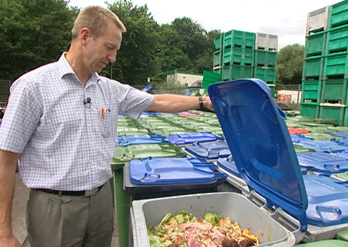
Opening the lid...

“How can we explain the fact that one sixth of humanity goes to bed hungry every night, when the world already produces enough food for all?

“The short answer is that there are serious anomalies in the distribution of food. Capricious and uncaring market forces prevent millions of people from having at least one decent meal a day, while others have an abundance of it. For the first time in history, the number of severely malnourished persons now equals the number suffering from over-consumption: about a billion each!”

That was the opening of an article on the future of food, co-authored by Sir Arthur Clarke and myself in 2000. It was circulated by the UN Food and Agriculture Organisation (FAO) to mark World Food Day that year, and was reproduced in 2008 in The Hindu newspaper, India.

Nearly a decade after we wrote those words, the situation hasn’t really improved. There still are a billion people for whom chronic hunger is a grim fact of life. About 25,000 people die of hunger every day. Meanwhile, at the other end of the spectrum, the number of obese people has grown to 1.5 billion.

Talk about a world of contrast and disparity!

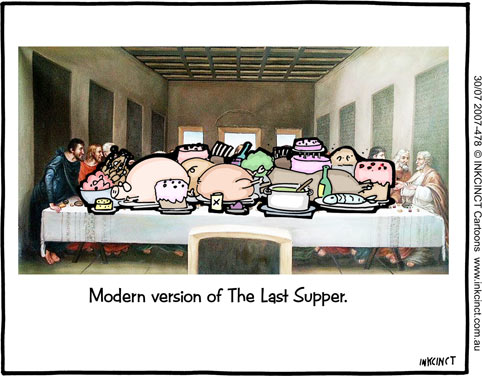
Here’s more shocking news: we routinely throw away half of all food produced in this world. Between plough and plate, or from farms to homes, we waste almost as much food as we eat.

Eyes Wide Shut?
Many countries don’t have the slightest idea how much is wasted. Britain made an effort to measure the waste pile and came to a staggering 15 million tons of food a year. This includes 484 million unopened tubs of yoghurt, 1.6 billion untouched apples, bananas worth £370 million and 2.6 billion slices of bread.

In his recent book Waste: Uncovering the Global Food Scandal, Tristram Stuart documented the extent of waste in the food industry worldwide.

Taste the Waste is a new documentary film linked to an online campaign that shows us what is being thrown away: where, why, when and by whom.

The film maker turned campaigner, Valentin Thurn, has come up with one more reason why we should stem this callous waste: “Cutting food waste is an easy solution to reduce climate emissions and hunger,” he says.

Reducing food waste means a big opportunity to reduce greenhouse gas emissions – if we threw away only half of the avoidable waste, the consequences for the climate would be the same as taking one out of five cars off our roads.

It would also help the hungry, because they also depend on the global food cycle. Cash crops from all over the world are traded on the stock exchange. The agricultural resources on this planet are limited. The farmland taken up to produce the food that we throw away could instead be producing food for them.

Young activists protest against this situation by rescuing the wasted food. People eating rubbish – a habit that sounds disgusting until you see the loads of perfectly edible food in the bins of your supermarket or sandwich shop around the corner.

Thurn’s call to action: “We need your help! Go out, look around and tell us about the food in the bins where you live. Send texts, photos, videos, and help to reveal the huge scandal of how we are wasting food.”

Watch the film’s trailer on YouTube:


According to the latest FAO figures, there are more hungry people in the Asia Pacific (642 million) than all other regions combined. This is followed by Sub-Saharan Africa (265 million), Latin America and the Caribbean (53 million), and the Near East and North Africa (42 million). Sub-Saharan Africa has the highest percentages of people living in hunger, while the Middle East and North Africa saw the most rapid growth in the number of hungry people (13.5%) during 2008.

The UN’s definition of hunger is based on the number of calories consumed. Depending on the relative age and gender ratios of a given country, the cutoff varies between 1,600 and 2,000 calories a day.

Starting in 2008, activist groups worldwide observe 16 October as World Foodless Day. Their argument: World Food Day is a mockery and is much better named World Foodless Day.

It’s a day of global action on the crises that beleaguer the people. The objectives are to: “create public awareness and media attention on the root causes of the food crisis; provide policy recommendations and organize meetings with government officials, opinion makers and leaders; organise activities to raise our voices against neoliberal policies and their impact; and highlight people’s recommendations to respond to the world food crisis.”

Watch PAN-Asia Pacific’s video for World Foodless Day 2008:


Read an excellent review of Tristram Stuart’s book: Watching our wasteline, By Darryl D’Monte

No full-stops (periods) in good journalism, only commas…

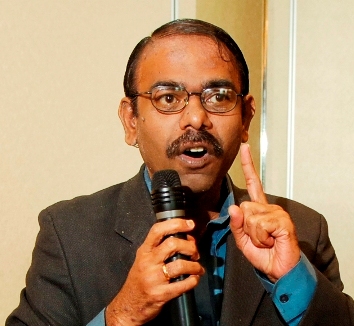
A S Panneerselvan
In any meeting, we can count on Indian journalist A S Panneerselvan to liven up the discussion. He didn’t let us down when a two dozen South Asians came together last weekend in New Delhi at a Symposium on Science, Environment and Media: Discussing Experiences in South Asia.

“There are no full-stops in good journalism, only commas,” he declared. He was referring to two of the most commonly used punctuation marks in modern writing.

This metaphor neatly sums up the nature of journalism, whose coverage of public affairs and society is often on-going, unfinished and open-ended. This prompted Phil Graham, the former publisher of the Washington Post, to describe journalism as the “first rough draft of history”. The reason is that journalists, in the performance of their duty often record important events, producing hurried written reports (in text, sound or pictures) often generated on short deadlines.

Panneer, who likes to call himself ‘a failed physicist and a failed journalist’, added that the intrinsic value of a journalist as one who tries to bring back the idea of commons — resources that are collectively owned, which can range from physical goods to artistic or creative products.

Panneer was speaking to the journalists, broadcasters, academics and activists brought together by Panos South Asia, IIT Delhi, and Centre for Studies in Science Policy, Jawaharlal Nehru University, for the two-day symposium on 15 – 16 November 2009.

I always welcome occasions when his and my paths cross as we move in overlapping South Asian circles. Listening to him this time around, I recalled his clear, emphatic words on a previous occasion, at an Asian regional brainstorming on ‘Communicating Disasters: Building on the tsunami experience and responding to future challenges’ that I convened in December 2006 in Bangkok, Thailand.

He said the media is plural term, not a singular one. This implies that the media are not a monolith. Some are excellent; many are mediocre; some are downright bad. Some in the media are also indifferent to some issues but may be outstanding in addressing other issues.

He added that media is also very much a contested and contentious space where arguments rage on. Not everything is moderate, balanced or ‘evidence-based’.

Panneer’s day job is as the executive director of Panos South Asia. He was formerly the managing editor of Sun TV and bureau chief for Outlook magazine in India. Having been with the mainstream media for 20 years, he is now moving in that interesting overlap between media and development sectors. This gives him both insight and perspective.

Contributing a chapter to Communicating Disasters: An Asia Pacific Resource Book in 2007, Panneer wrote: “Development agencies rarely bring journalists into their universe at a stage which can be called ‘work-in-progress’. They usually just come to the media with a finished product. There is hardly any joint exploration. When presented with a finished product, there is just one alternative for a reporter — that is, to review the product that is already done.

“Imagine a scenario where journalists are brought into the process right from the word go. There would have been a series of stories, and when the final report of the development agencies is realised, that may well serve as the winding-up story tracking the entire trajectory.

“A journalist is expected to report and not just reproduce. Development agencies like their versions to be reproduced to a large extent. This becomes an assault on the journalists’ work-pride. He or she would like to do a field report, taking a cue or two from the work of the development agency. But, to merely reproduce a report is seen only as providing a free plug, an unpaid advertisement, and doing a stenographer’s job.”

Read his full chapter online: Engaging the Media: A Rough Guide by A S Panneerselvan

Earth Journalism Awards: Vote online for your favourite climate story!

Earth Journalism Awards banner
Journalism as if the planet mattered...

Who speaks for the Earth?

Thirty years ago, public astronomer Carl Sagan posed this question in his trail-blazing television series Cosmos: A Personal Voyage. And this is how he answered it:

“Our loyalties are to the species and to the planet. We speak for earth. Our obligation to survive and flourish is owed not just to ourselves, but also to that cosmos ancient and vast from which we spring!”

While we all can – and must – speak for our home planet, journalists covering environmental issues do that everyday as part of their job. And now, the rest of the world can vote for the year’s best efforts in this line of work.

Fifteen winners of the inaugural Earth Journalism Awards were announced this week in Paris. The organisers — Internews, an international NGO that works to empower local media worldwide — have opened the online public voting to find the winner of a 16th prize.

The finalists were selected out of some 900 journalists, bloggers and young creatives from 148 countries who registered to send in their best climate change reports from 2009 in the lead up to the United Nations Climate Change Conference in Copenhagen next month.

earth-journalism_awards“The Earth Journalism Awards were established to boost climate change coverage in this critical year leading up to Copenhagen, and to highlight the efforts of journalists reporting on this challenging subject around the world,” says James Fahn, Internews’ Global Director of Environmental Program. “We were overwhelmed by the tremendous response we received, and would like to thank the hundreds of journalists who entered their stories for participating.”
Winning stories include: a compelling account from Pakistan of how a small coastal community is responding to the multiple challenges that climate change is already posing them; a multi-media investigation on the use and effects of fire in the Amazon; and a business report from East Africa on how Kenyan companies are missing out on the growing global carbon credits market.

They were chosen through a process involving a globe-spanning, independent jury that involved over 100 media and climate change experts. I was part of that process.

The 15 winning stories are available online, and the public now has the opportunity to vote on the Awards website, Twitter, and Facebook for the Global Public Prize – the one story or series that they think should have the attention of the negotiators in the closing days of the negotiations. Voting closes on 9 December 2009.

Watch video announcing the Earth Journalism Awards 2009:

Internews is inviting the winners of the Earth Journalism Awards to cover the negotiations at the United Nations Climate Change Conference in Copenhagen, (COP15) December 7-18. There they will receive support from Internews to report on the negotiations to their media organizations back home. They will also attend a high profile awards ceremony, to be co-hosted by Nobel Peace Prize Winner Dr. Rajendra K. Pachauri, at the Danish Radio Hall on December 14, the eve of the final high-level negotiations. Each of the fifteen winners will receive one of the coveted regional or thematic awards as determined by the independent juries.

The Earth Journalism Awards is being implemented by Internews in association with partners that include the Government of Denmark, hosts of the negotiations; The World Bank; MTV International, the leading global broadcaster and youth brand; The Government of Italy, The V. Kann Rasmussen Foundation and the Edgerton Family Fund; Flip Video Spotlight; the Open Society Network, WWF International, The Global Canopy Programme and the Tcktcktck campaign, part of the GCCA, the international alliance of campaigning NGOs that includes Oxfam, WWF, and Greenpeace, Global Forum for Media Development and IMS.

Satinder Bindra: It’s the message, stupid (and never mind the UN branding)!

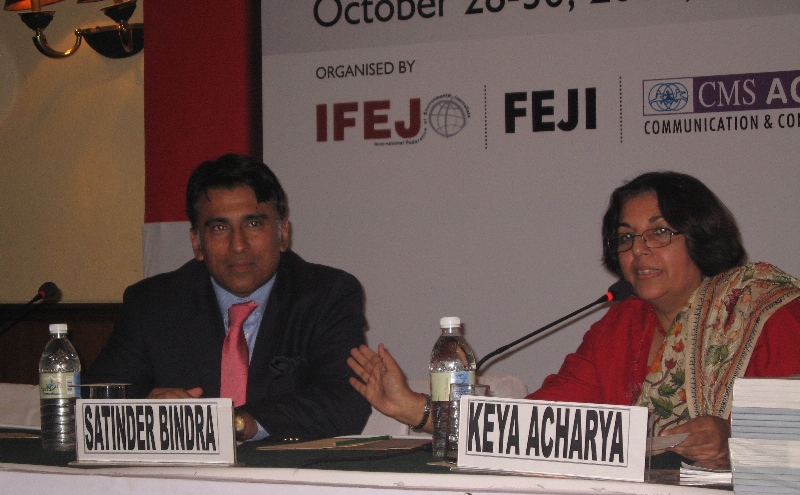
Satinder Bindra (left) and Keya Acharya
Satinder Bindra (left) and Keya Acharya at IFEJ 2009 Congress

Satinder Bindra left active journalism a couple of years ago when he joined the UN Environment Programme (UNEP) as its Director of the Division of Communications and Public Information (DCPI) based at UNEP Headquarters in Nairobi. But thank goodness he still thinks and acts like a journalist.

Satinder, whom I first met in Paris in the summer of 2008 soon after he took up the new post, gave a highly inspiring speech to the latest congress of the International Federation of Environmental Journalists (IFEJ), held at India Habitat Centre in New Delhi from 28 to 30 October 2009.

We have gone beyond the cautionary stage of climate change, and are now acting out ‘Part II’ where we have to focus on what people can do, he said. “Climate change is no longer in doubt, and if anything, the IPCC’s scenarios are turning out to be under-estimates.”

He was referring to the IFEJ congress theme, “Bridging North-South Differences in Reporting Climate Change: Journalists’ role in Reaching an Ambitious Agreement at COP15 in Copenhagen”.

Satinder sounded emphatic when he said: “We have a limited time in which to reach as many people as possible. Environment is the single biggest challenge we face in the world today, and we as journalists have a tremendous responsibility in providing the latest, accurate information to our audiences.”

He added: “There is still a debate among journalists on whether or not we should be advocates for the environment. We should not be scared to push the best science, even if we don’t choose to engage in advocacy journalism.”

Satinder mentioned the “Paris Declaration on Broadcast Media and Climate Change,” adopted by delegates at the first UNESCO Broadcast Media and Climate Change conference held in Paris on 4-5 September 2009. It resolved to “strengthen regional and international collaboration, and encourage production and dissemination of audiovisual content to give a voice to marginalized populations affected by climate change”.

Satinder, who was a familiar face on CNN as its South Asia bureau chief until 2007, acknowledged that the media landscape was evolving faster than ever before. “Thanks to the web and mobile media, our distribution modes and business models are changing. YouTube has emerged as a key platform. Viral is the name of the game.”

His message to broadcasters, in particular, was: “You may be rivals in your work, but when it comes to saving the planet, put those differences aside.”

Copy of Seal the Deal
A call to the whole planet...
Satinder is spearheading, on behalf of UNEP, the UN-wide Seal the Deal Campaign which aims to galvanize political will and public support for reaching a comprehensive global climate agreement in Copenhagen in December.

To me at least, the most important part of Satinder’s speech was when he said that he was not seeking to promote or position the UNEP or United Nations branding. His open offer to all journalists and broadcasters: “If you need to use the hundreds of UNEP films, or make use of our footage in your own work, go right ahead. We want you to make journalistic products. There’s no need or expectation to have the UN branding!”

Wow! This is such a refreshing change — and a significant departure — from most of his counterparts at the other UN agencies, who still think in very narrow, individual agency terms. They just can’t help boxing the lofty ideals of poverty reduction, disaster management, primary health care and everything else within the agenda setting and brand promotion needs of their own agencies.

I have serious concerns about this which I have shared on a number of occasions on this blog. See, for example:
May 2007: Feeding Oliver Twists of the world…and delivering UN logos with it!
August 2007: ‘Cheque-book Development’: Paying public media to deliver development agency logos
October 2007: The many lives of PI: Crisis communication and spin doctors
July 2009: Why can’t researchers just pay the media to cover their work?

In a widely reproduced op ed essay published originally on MediaChannel.org in August 2007, I wrote:

“As development organisations compete more intensely for external funding, they are increasingly adopting desperate strategies to gain higher media visibility for their names, logos and bosses.

“Communication officers in some leading development and humanitarian organisations have been reduced to publicists. When certain UN agency chiefs tour disaster or conflict zones, their spin doctors precede or follow them. Some top honchos now travel with their own ‘embedded journalists’ – all at agency expense.

“In this publicity frenzy, these agencies’ communication products are less and less on the issues they stand for or reforms they passionately advocate. Instead, the printed material, online offerings and video films have become ‘logo delivery mechanisms’.”

Let’s sincerely hope that the pragmatic and passionate Satinder Bindra will be able to shake up the communication chiefs and officers of the UN system, and finally get them to see beyond their noses and inflated egos. It’s about time somebody pointed out that vanity does not serve the best interests of international development.

See also April 2007 blog post: MDG: A message from our spin doctors?

Adrian Cowell and ‘The Decade of Destruction’: A film can make a difference!

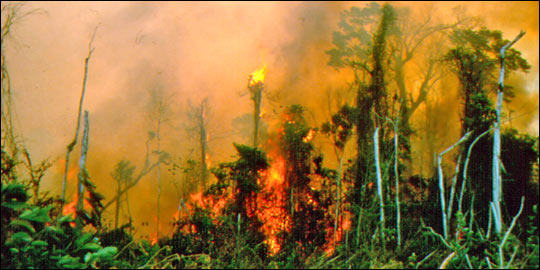
The Amazon burning
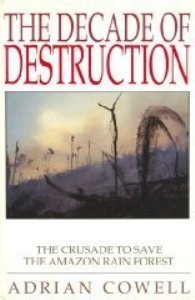
The Decade of Destruction A unique chronicle of the destruction of the Amazonian rainforest.

Whatever we might think about Al Gore’s film An Inconvenient Truth, I’m glad it has settled one question: can a single film make a difference in tipping public opinion about a matter of global importance? The answer, where climate change is concerned, is a resounding yes!

But years or decades before Al Gore, other film makers have had their own impact on other environmental issues. One of them is Adrian Cowell, the award-winning British film maker whose quest to tell the story of the destruction of the Amazon forest made politicians listen and the world take note.

According to the Centre for Social Media at the American University, “He catapulted the environmental movement to save the Amazonian rain forests through the television series The Decade of Destruction and Banking on Disaster.”

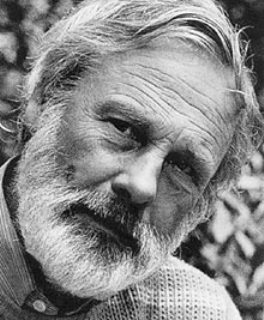
Adrian Cowell
Adrian Cowell
Adrian, whom I have had the pleasure of meeting and talking on several occasions, is a world acclaimed leader in our field. Born in Tongshan, China in 1934 and educated at Cambridge University, Adrian has been making films longer than I have been alive — and luckily for all of us, he is still at it.

He began filming his path-breaking series called The Decade of Destruction in 1980, when the Amazon was first opened up to settlers and developers. He has documented the systematic destruction of the rainforest there into late 1990 when, for the first time, there was an indication that the fires were being brought under control.

As the synopsis says: “Each episode follows the real life stories of people caught up in the frontier’s web of need and greed, stories of personal tragedy and great courage. The programs relate the individual’s struggle to the wider developments going on around them. Together they illustrate the principal issues of Amazonia during the 1980s – its decade of greatest destruction.”

The Chicago Tribune called it an epic, “a brilliantly told story of greed, death, politics, violence, heroism and environmental holocaust.”

I recently came across this brief account by Adrian Cowell himself, looking back at his long engagement with the Amazon:

“In January 1980 we started 10 years of recording the destruction of the Amazon forest. We began by filming colonists invading the territory of the then unknown, and very vulnerable, tribe, the Uru Eu Wau Wau, in the Brazilian state of Rondonia. Many colonists had received, free of charge from the government, plots of 40-50 hectares in the forest traditionally hunted by the Indians. Tragically, within a decade, this ‘colonisation’ process, called the Polonoroeste Project, would not only leave three-quarters of the Indians dead, but also prove a disaster for the colonists themselves. They had been given such poor soil that, within six years, 60% of the land they had so hopefully deforested would be abandoned.

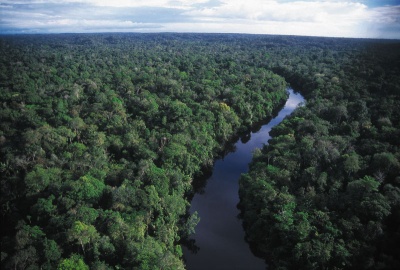
Amazon: The last frontier?“So we were astounded when the World Bank moved in to lend nearly half a billion dollars to the project, and were even more astonished when we realised that what was being played out in front of our cameras was evidence of one of the most disastrous loans the Bank had ever made. Not unnaturally, I went to Washington to find out what could explain the Bank’s loan. And there I met three environmentalists, Bruce Rich, Barbara Bramble and Brent Blackwelder, respectively from the Environmental Defense Fund, the National Wildlife Federation and the Environmental Policy Institute. They were campaigning on how international economic development affected the environment. But by a remarkable coincidence they had decided to focus, not only on the World Bank, but on – of all its hundreds of loans all over the world – the very Polonoroeste Project that we were filming. They asked me to show our film in Congressional hearings and I telephoned José Lutzenberger – more or less the father of Brazilian environmentalism – to ask him to testify. By yet another happy coincidence, an American researcher, Brent Millikan, had written a report giving academic detail to the facts behind what we had filmed. And an American expert on Amazonia, Dr Philip Fearnside, added his authority to the diagnosis of what was going wrong.

“And so, some months later – after a complex chain of legislative and political developments – we were able to record Senator Robert Kasten, the chairman of the powerful Appropriation Committee’s subcommittee on foreign operations, cutting off 20% of the money the US donated annually to the World Bank. Nothing concentrates a banker’s attention more than the withdrawal of some of his money. Within a few months we were able to conclude our programme, Banking on Disaster, by filming World Bank president Barber Conable admitting, for the first time, that a Bank loan, specifically the Polonoroeste Project, had gone wrong. This was to be the beginning of a very slow and gradual greening of World Bank policies.

“Obviously, our television film had played a part in this political change. But though a film may sometimes be the most dramatic way to present a case, it is an illusion to think that it can be more than just one tool or facet of the very complex process behind international and environmental evolution.”

* * * * *

Here’s more biographical background about Adrian:

The Decade of Destruction - book cover
Book of the TV series
Adrian Cowell has been making documentary films for five decades. In 1955-56, he joined the Oxford and Cambridge Far Eastern Expedition, an experience which launched his film career and his interest in Burma. The following year, he made his first foray into the rain forest of Brazil, part of a joint Oxford-Cambridge expedition of young filmmakers. These early trips became the seeds of Cowell’s award-winning epic projects. His series Opium was filmed over an eight-year period (including nine months when he was trapped behind the lines in Burma). His ten-year chronicle of the destruction of the Brazilian rain forests during the 1980’s—broadcast as the television series The Decade of Destruction —stirred the world and contributed to the international debate on how the Amazon should be developed. In 1990, The Decade of Destruction was broadcast on Channel Four in Britain and on PBS FRONTLINE in the U.S. Adrian Cowell’s more recent British TV series include The Heroin Wars. It is a follow-up to The Opium Trail (1966), The Opium Warlords (1974) and Opium (1978).

Cowell is an environmental activist, co-founder of the Television Trust for the Environment and the author of two books on Brazilian Indians, The Heart of the Forest (Knopf) and The Tribe that Hides from Man (Stein and Day). He also wrote a companion book to the TV series The Decade of Destruction (Henry Holt and Company).

Read PBS interview with Adrian Cowell on another of his film series, on opium trade in Southeast Asia

A, B, C and E of good journalism: Reporting as if the planet and people mattered

Candid weather reporting?

“Environmental journalism would be a whole lot better if it had more of the three Ss: science, substance and (good) stories. First and last, it has to be good journalism, and that requires accuracy, balance and credibility. Trying to save the world – as some environmental journalists claim to do – does not give them a license to indulge in sloppy journalism, or to peddle conspiracy theories or half-truths.”

This has been my view on environmental journalism for sometime. Several years ago, my good friend (and former editor, The Times of India) Darryl D’Monte quoted me as saying this in UNEP’s Our Planet magazine while surveying the environmental coverage in the media in developing countries.

I reiterated these views today in a talk given to an international group of environmental journalists. The occasion was the 18th APFEJ Congress of Environmental Journalists being held in Colombo, Sri Lanka, from 19 to 21 October 2009.

My topic was a familiar one: Changing climate and moving images. I used it as a spring board from which to explore some broader issues that concerns every journalist who cares for life on Earth.

I returned to the time-honoured core values of good journalism – Accuracy, Balance and Credibility – and suggested we need one more letter, E – for Empathy. Without this latter attribute, our reportage and analysis would remain clinically cold while the planet warms up, I cautioned.

I also reflected on what it means to be an ‘environmental journalist’ in our troubled times.

For several years, I proudly called myself an ‘environmental journalist’. But I now question whether the growth of environmental journalism as a media specialisation has, inadvertently, ghettoised environmental issues within the editorial considerations of media organisations.

This is not to argue against media professionals specialising in environment or other development sectors such as health, gender or human rights. As issues become more complicated, journalists require sufficient background knowledge, sustained interest and some specialisation to do their job well. But it’s poor strategy to leave sustainable development issues entirely in the hands of ‘environmental journalists’.

At best, they can only weave part of the much-nuanced, multi-faceted tapestry of sustainable development. To grasp that bigger picture, and to communicate it well, we need the informed and active participation of the entire media industry -– from reporters, feature writers and producers to editors, managers and media owners.

Climate change, rapidly emerging as the charismatic mega-issue of our troubled times, could become a rallying call to unify the media and communication industries for this purpose.

Already, there is recognition of climate change’s far-reaching impacts. the UN’s Inter-governmental Panel on Climate Change urged a couple of years ago for the global issue to be ‘re-branded’ as a development problem rather than an environmental one.

In this scenario, we urgently need more good journalism that covers sustainable development concerns as an integral part of the mainstream of human affairs. Noble intentions of saving endangered species or ecosystems do not give anyone the license to engage in shoddy journalism.

The pursuit of plain good journalism will make us:
• rigorous in our field investigations and amassing of facts;
• balanced in our analysis of issues, impacts, choices and alternatives;
• committed to staying with evolving, fast-moving stories; and
• adaptable to accommodating new perspectives and knowledge.

It will also give us the courage of our convictions to question conventional ‘wisdom’, challenge established notions and take unfashionable positions when we have to.

April 2007 blog post: Can journalists save the planet?