Protect journalists who fight for social and environmental justice!

In June 2007, I wrote about the late Joey R B Lozano, a courageous Filipino journalist and activist who fought for human rights and environmental justice at tremendous risk to his life.

For three decades, Joey survived dangerous missions to defend human rights using his video camera in the Philippines, a country known for one of the highest numbers of journalists killed in the line of duty. Joey went into hiding numerous times, and he dodged two assassination attempts.

Last week, a leading Filipino academic and social activist called for greater protection for local level journalists who cover social and environmental justice issues risking their life and limbs.

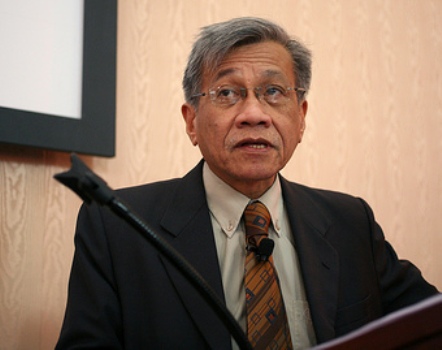
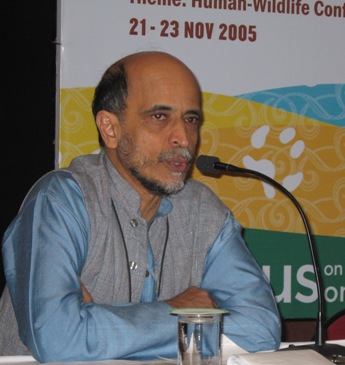
“Things are pretty savage at the grassroots level in some of our countries. Journalists who investigate and uncover the truth take enormous personal risks – the vested interests hire killers to eliminate such journalists,” said Professor Walden Bello, executive director of the Focus on the Global South (photo, below).

He was speaking at the Greenaccord Media Forum on 10 November 2007 in Frascati, Rome, where several dozen journalists covering environmental issues had gathered for a four-day meeting.

He delivered an insightful survey of social movements across Asia on environmental and public health issues
, where he questioned the role of elites in the global South in standing up for what is right and fair for all people.

During question time, I asked him how he saw the media playing a role in social movements that he’d just described. It varied from country to country, he said, and gave several examples.

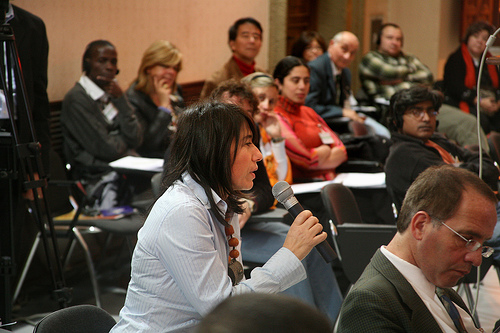
zadie-neufville-from-jamaica-makes-a-point.jpg

In China, most environmental exposes in recent years have been made by ‘very brave journalists’. Their investigations have compelled the local and central authorities to address the massive incidents of pollution and environmental degradation resulting from China’s economic march forward.

In South Asia, the record is uneven. Indian publications like The Hindu newspaper and Frontline magazine are at the forefront in reporting and analysing ‘almost exhaustively’ on environmental struggles in the world’s largest democracy.

In contrast, Singapore and Malaysia have no critical mass media to turn the spotlight on excesses or lapses, he said. In these countries, journalists as well as activists have turned to the web to express themselves — but even they are under pressure from their governments.

In Thailand, the two English language newspapers The Nation and Bangkok Post have both have a long tradition of covering environmental issues and supporting mass movements. A number of Thai language newspapers also have sustained coverage.

In his native Philippines, Prof Bello singled out the Philippine Daily Enquirer for persisting with environmental coverage and exposing environment related scandals. But that comes with its own risks.

“At the local levels, journalists who take up these issues face many threats, including the very real risk of extra-judicial killings. The Philippines is one of the most dangerous countries in the world today for independent journalists and human rights activists,” he added.

Journalists living in the provinces and reporting from the grassroots are more vulnerable than those based in the cities. This is precisely why local journalists need greater support and protection to continue their good work.

The local elites and officials would much rather silence such journalists. International solidarity for such journalists could make a big difference, Prof Bello said.

He had a suggestion for his hosts, Greenaccord, which annually organises what is now the world’s largest annual gathering of journalists and activists concerned about the environment: Invite and involve more local level journalists in the future forums.

That will give them a voice, and strengthen their resolve to continue the very important work they do.

Read April 2007 blog post: Can journalists save the planet?


Meeting photos courtesy Adrian Gilardoni’s Flickr account

True ‘People Power’ needed to fight climate change

Dealing with climate change – the biggest environmental threat faced by the planet today – requires building up a mass movement at the grassroots across the developing countries of the global South.

Such a movement might be unpopular not only with the Southern elite but also with sections of the urban-based middle class sectors that have been the main beneficiaries of the high-growth economic strategy that has been pursued since the early 1990s, a leading southern activist cautioned in Rome last week.

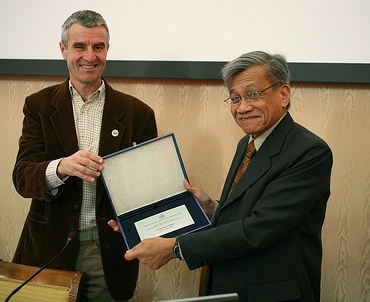
Speaking at the Greenaccord Media Forum on 10 November 2007, Walden Bello, Filipino academic and executive director of the Focus on the Global South (seen in photo below, on the right), dismissed the notion that Asian masses are inert elements that uncritically accept the environmentally damaging high-growth export-oriented industrialisation models promoted by their governing elites.

“It is increasingly clear to ordinary people throughout Asia that the model has wrecked agriculture, widened income inequalities, led to increased poverty after the Asian financial crises, and wreaked environmental damage everywhere,” he said.

prof-walden-bello-receives-plaque-from-andrea-masullo-of-greenaccord.jpg

People in the South are open to an alternative to a model of growth that has failed both the environment and society, he said. For instance, in Thailand, a country devastated by the Asian financial crisis of 1997 and wracked by environmental problems, globalization and export-oriented growth are now bad words.

He added: “Thais are more and more receptive to the idea of a ‘sufficiency economy‘ promoted by popular monarch King Bhumibol, which is an inward-looking strategy that stresses self-reliance at the grassroots and the creation of stronger ties among domestic economic networks, along with ‘moderately working with nature'”.

But the southern countries cannot and must not rely on their elite to provide leadership, he said. “What is clear is that in most other places in the South, one cannot depend on the elites and some sections of the middle class to decisively change course. At best, they will procrastinate.”

The fight against global warming will need to be propelled mainly by an alliance between progressive civil society in the North and mass-based citizens’ movements in the South.

Delivering the Lectio Magistralis to conclude the 4-day international gathering of journalists, activists and experts concerned about the environment, Prof Bello traced the evolution of social movements on environment and public health in East Asia, Southeast Asia and South Asia over the past few decades.

Read the test of a similar talk given by Walden Bello at the Trans National Institute in October 2007.

Prof Bello acknowledged that the environmental movements in the South and North have seen their ebbs and flows. “As with all social movements, it takes a particular conjunction of circumstances to bring an environmental movement to life after being quiescent for some time or to transform diverse local struggles into one nationwide movement.”

The challenge facing activists in the global North and the global South is to bring about those circumstances that will trigger the formation of a global mass movement that will decisively confront the most crucial challenge of our times.

And climate challenge is one among several challenges we confront today.

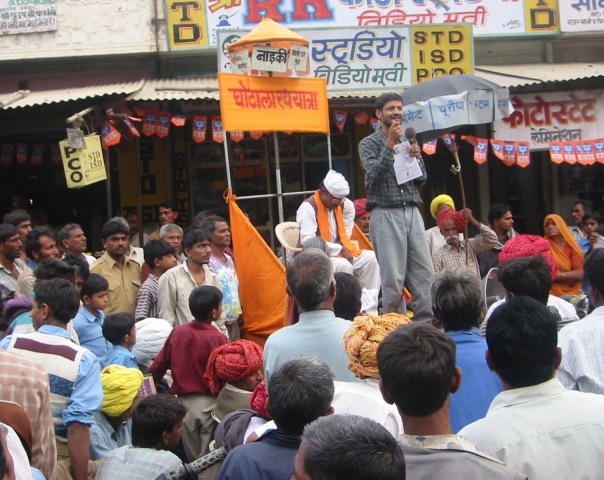
campaigning-for-clean-elections-in-rajastan-india.jpg


Meeting photos courtesy Adrian Gilardoni’s Flickr account

People power India photo courtesy TVEAP image archive

Bretton Woods on fire: Hard times ahead for World Bank and IMF

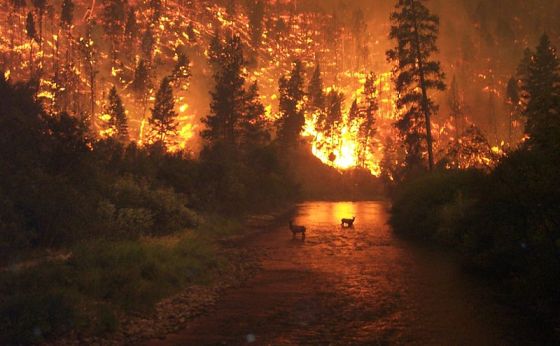
800px-deerfire_high_res.jpg

As the California forest fires raged over many days in October 2007, it dominated the US and some sections of the global media. Focus was on how the fires started and what factors contributed to their rapid spread.

Below the media’s radar, another kind of ‘fire’ has been building up over the past few months on the US East Coast. According to one leading intellectual-activist that I heard this week, this is a development whose reverberations will be felt right around the world, and for years to come.

The Bretton Woods are on fire. Actually, it’s the Bretton Woods institutions, namely the World Bank and International Monetary Fund (IMF).

Speaking at the Greenaccord Media Forum in Rome on 10 November 2007, Walden Bello, Filipino academic and executive director of the Focus on Global South, suggested that the World Bank and IMF are headed for turbulent times as countries in the global South (majority world) assert themselves economically.

Preparing to rebuild the international economic system as World War II was still raging, 730 delegates from all 44 Allied nations gathered at the Mount Washington Hotel in Bretton Woods, New Hampshire for the United Nations Monetary and Financial Conference. The delegates deliberated upon and signed the Bretton Woods Agreements during July 1944. That marked the birth of the World Bank and IMF.

The World Bank and IMF are essentially lenders of money to governments for development purposes. If these lending institutions run short of borrowers, they will be out of business.

That hasn’t happened yet, but Bello (photo, below) identified several trends that must make the Bretton Woods duo worry about losing control.

professor-walden-bello.jpg

According to Bello, the resistance is led by countries of Latin America, a region where the twin lenders have long been controversial. In May 2007, Venezuela under President Hugo Chavez announced it would be leaving both the World Bank and IMF.

Venezuela has repaid its remaining debts to the World Bank five years ahead of schedule and paid off its debts to the IMF shortly after Mr Chavez first took office in 1999. Bello says the oil-rich country has sought to provide alternative forms of credit and financial support for countries in the region. One such project is the “Bank of the South”, which aims to financially help Latin American countries to pay off their IMF loans ahead of schedule.

In October 2007, Nobel prize-winning economist Joseph Stiglitz endorsed the Chávez plan to create a pan-regional bank for Latin America. Professor Stiglitz, a Washington insider and former World Bank chief economist, said the Bank of the South would benefit the region and give a welcome shakeup to western lending institutions.

Read March 2006 commentary by Mark Engler in Common Dreams: Latin America Unchained: Will the U.S. Lose its Influence Over Countries That Have Paid Off Their IMF Loans?

These trends, coupled with the rise of a new set of Southern countries willing and able to provide loans or grant aid to fellow countries of the South, are slowly but steadily eroding the domination and power the Bretton Woods twins have exercised for over half a century, Bello said.

Some of these alternative lenders are giving money with fewer conditions and restrictions. These include China, Saudi Arabia and Venezuela. This is what the editor of the influential US journal Foreign Policy called ‘rogue aid’ in an article he wrote in the journal’s March/April 2007 issue.

As the global South asserts itself and begins to exercise the power of their recent economic growth – which, ironically, is partly thanks to past borrowing from the Bretton Woods twins, the coming years will be crucial for the future World Bank and IMF.

The fire in the Bretton Woods is only just smouldering. But watch that smoke…

* * * * *

Walden Bello won the Right Livelihood Award (the Alternative Nobel) in 2003, for his decades of advocacy, activism and research. As the award foundation noted: “Walden Bello is one of the leading critics of the current model of economic globalisation, combining the roles of intellectual and activist. As a human rights and peace campaigner, academic, environmentalist and journalist, and through a combination of courage as a dissident, with an extraordinary breadth of published output and personal charisma, he has made a major contribution to the international case against corporate-driven globalisation.”

While campaigning on human rights he saw how the World Bank and IMF loans and grants were supporting the Marcos regime in power. To expose their role, he took the risk of breaking into the World Bank headquarters in Washington, and brought out 3,000 pages of confidential documents. These provided the material for his book Development Debacle (1982), which became an underground bestseller in the Philippines and contributed to expanding the citizen’s movement that eventually deposed Marcos in 1986.

Read full profile on Walden Bello on Right Livelihood Award website


Meeting photos courtesy Adrian Gilardoni’s Flickr account

Beyond coffee and bananas: We need fair trade in international media!

Fair trade is gaining momentum worldwide. More products are coming within the scope of fair trade in more countries.

That’s certainly good news in a world full of exploitation, inequality and unfairness at various levels.

But are we, in the mass media whose business it is to gather and deliver news and information, yet part of this good news ourselves? In other words, isn’t it high time there was fair trade in international media products too?

This is the simple question I raised this week at the V Greenaccord International Media Forum on the Protection of Nature, held from 7 to 11 Novmeber 2007 at the historic Villa Mondragone in Frascati, some 20km southeast of Rome.

During the 3.5 day international gathering of journalists and scientists concerned about the environment, we had several speakers referring to fair trade in Europe and at a global level. As more consumers become aware of environmental and social justice considerations, they are doing something about it in their buying of goods that are fairly traded, we heard.

The Wikipedia describes fair trade as ‘an organised social movement and market-based model of international trade which promotes the payment of a fair price as well as social and environmental standards in areas related to the production of a wide variety of goods.’

The movement focuses in particular on exports from developing countries to developed countries, most notably handicrafts, coffee, cocoa, tea, bananas, honey, cotton, wine and fresh fruit.

Fair trade is all about creating opportunities for small scale producers in the developing countries to get organised and supply directly to consumers in different parts of the world. When they sell direct, with few or no intermediaries, they can earn three or four times more, and that money will enhance their incomes, living standards and societies.

Read more about fair trade at Oxfam website, Make Trade Fair

Fair trade is certainly a cherished ideal, but it’s mired in complex economic and political realities. The globalised march of capital, profit-maximising corporations and developed country farm subsidies are among many factors that make fair trade difficult to achieve.

Fair trade activists are well aware of these realities. Their success is built on connecting producers with individual consumers. The proliferation of new media – especially the Internet – has made it easier to sustain such communications.

But the fair trade movement is still largely rooted in goods, not services. In my view, this is necessary but not sufficient in a modern world economy where nearly two thirds of global GDP comes from the services sector. (The Wikipedia’s breakdown for global GDP is agriculture 4%; industry 32%; services 64%).

I can’t immediately find how much the print, broadcast and online media contribute to that 64%, but it must be significant in the media saturated world today. And certainly the flow of media products — text, audio, photographs, moving images, online content and derivatives of these — has become more globalised in the past two decades.

So why not begin to agitate for fair trade in media products when they cross borders? Why aren’t we practising fair trade in our own media industry even as we cover fair trade as a story in our editorial content?

I didn’t get a very clear answer from fair trade activists that I posed this question to this week. While agreeing with me that the same fair trade principles can be applied to the media sector, they acknowledged that each sector has its own dynamics and must develop realistic ways to accomplish fair trade.

So it’s up to us who produce, distribute and manage assorted media products to begin this transformation from within.

Let’s not kid ourselves about what we are taking on. As I wrote in a blog post in September 2007:

“In the media-rich, information societies that we are now evolving into, media and cultural products are an important part of our consumption — and therefore, more of these have to be produced. In the globalised world, more television and film content is being sourced from the majority world — or is being outsourced to some developing countries where the artistic and technical skills have reached global standards.

“But in a majority of these media production deals, the developing country film and TV professionals don’t enjoy any fair terms of trade or engagement. Their creativity and toil are being exploited by those who control the global flow of entertainment, news and information products.

“This is why the top talent in the global South become assistants, helpers and ‘fixers’ to producers or directors parachuting in to our countries to cover our own stories for the Global Village. Equitable payments and due credits are hardly ever given.”

In the same commentary, I added:
“Unfair trade in film and TV is also how the unsung, unknown creative geniuses contribute significantly to the development of new cartoon animation movies or TV series, as well as hip video games that enthrall the global market. Lacking the clout and skill to negotiate better terms, freelancers and small companies across the global South remain the little elves who toil through the night to produce miracles. They work for tiny margins and even tinier credit lines. Some don’t get acknowledged at all.”

Read my blog post: Wanted: Fair trade in film and television!
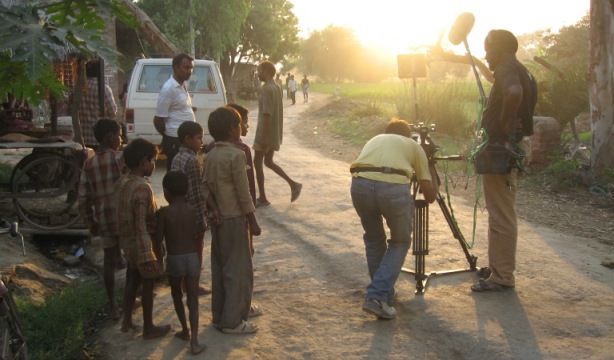
tveap-camera-crew-in-lucknow-india.jpg

Raising this amidst 60 journalists and producers from Africa, Asia, Europe, Latin America and the Caribbean attending the annual Greenaccord meeting, I pointed out that many of us were keen to contribute to media outlets beyond the countries where we are based. It gives us a chance to tell our stories to a bigger audience, and to have our voices heard about a range of issues and topics important to our communities.

And yes, the additional income that such work brings in is quite useful too, thank you.

Heads were nodding when I pointed out how hard it is for a talented, hard working journalist based in the majority world to break into the tightly controlled international media outlets. Even when they make an occasional breakthrough, they are often exploited by being paid lower professional fees for the same output and quality of work.

Or worse, majority world journalists are slighted and insulted for being where they are and who they are, rather than be judged on the merit of their work. As I wrote in a commentary published by SciDev.Net in November 2005: “Media gatekeepers in the North often dismiss the better-informed and equally competent Southern professionals — saying, insultingly, that ‘they don’t have the eye’! And for years, I have resisted the widespread practice of Northern broadcasters and filmmakers using the South’s top talent merely as ‘fixers’ and assistants.”
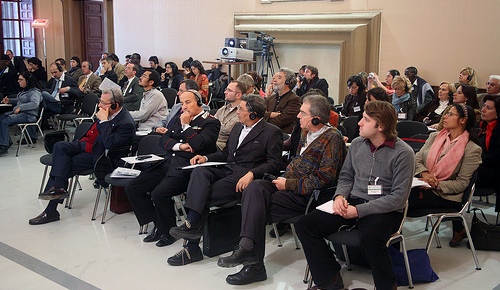
greenaccord-v-forum-in-progress-nov-2007.jpg

All this makes it imperative for us in the globalised media — in the developed North and developing South — to begin agitating for fair trade in media products and services. As in other products, we are not looking for charity or tokenism or a lowering of standards. We must strive for fairness and equality while working on building the capacity of southern journalists to generate world class media products.

And as my friend Darryl D’Monte — whom we missed dearly at this year’s Greenaccord forum — has been saying for years, publishing each other’s stories is one great step forward.

Mahatma Gandhi put it this way: we must be the change we wish to achieve.

Note: My own organisation, TVE Asia Pacific, practises what I preach here, and always engages local camera crews when we film TV stories across Asia. We will be taking up Fair Trade in Film and Television (FTinFT) as a campaign from 2008.

Read other related blog posts:

Images from the Majority World: Global South telling its own stories

Wanted: Fair trade in film and television!

Image of camera crews courtesy Pamudi Withanaarachchi of TVEAP.

Meeting photos courtesy Adrian Gilardoni’s Flickr account

Journalists and scientists seeking Green Accord

Can journalists save the planet?

This was the question I raised in a blog post written in April 2007. Arguing that environmental journalists alone cannot adequately address the multitude of complex environmental challenges faced today, I wrote: “We urgently need more good journalism that covers sustainable development as an integral part of mainstream human affairs.”

For the past five years, an Italian non-profit cultural association named Greenaccord has been attempting just this. In the (northern hemisphere) Fall of each year, they invite and host 50 – 60 journalists and scientists from all over the world to discuss how the media can be an integral part of society’s response to today’s environmental crises. In fact, they believe the media must play a path-finder role in our search for solutions.

During this week, I have been attending the V Greenaccord International Media Forum on the Protection of Nature, held from 7 to 11 Novmeber 2007 at the historic Villa Mondragone in Frascati, some 20km south east of Rome.

It has been a time to meet old friends again and to make new ones. I have been part four of the five Greenaccord media forums since the first one was held in Rapolane Terme, in the Tuscany valley in northern Italy in 2002.

Greenaccord is the only regular (annual) meeting that I know of where practising journalists and media gatekeepers come together from all regions of the world to discuss the state of the planet and state of their profession.

Each year, we have some ‘regulars’ returning while new participants join the growing network. As some old hands noted this week, it is evolving into an extended family.

That family consists mainly of print and broadcast media journalists from Africa, Asia, Europe, Latin America and the Caribbean. Many are engaged in ‘deadline journalism’ of news and current affairs, while a few of us, like myself, have moved on to more reflective and analytical kind of journalism. We also have a few researchers, activists and public information officers among us, enriching our discussions with a diversity of perspectives.

To engage this group of participants over three and a half days, Greenaccord invites a dozen or so scientific or industry experts from different regions of the world and different disciplines. This year’s theme, ‘Capitalising on the Environment’, was explored by business leaders, fair trade activists, economists and a number of technical experts specialising in fields such as clean energy, clean technology and organic farming.

greenaccord-v-forum-in-progress-nov-2007.jpg

As with all meetings, some speakers were far more interesting than others. And some sessions were blessed with competent chairpersons who kept overenthusiastic speakers in check and allowed meaningful discussion and debate to happen.

Sitting through such meetings is a bit like gem mining. One has to sift through a lot of gravel to find a rare precious gem. When that happens, it’s well worth the hassle.

Well, I’ve had my share of gravel moments (zzzzzzzzzzzzzzzzz!) and precious moments (Eureka!) this week. I’ll write separate blog posts on some of the latter. They are indeed worth sharing.

The real stars (or gems if you like) in this whole exercise are the participants themselves. We come from such diverse backgrounds – the sessions are supported by simultaneous interpretation in English, Spanish and Italian, with an occasional remark in French – that we enrich each other by simply being there.

emanuela-gasbarroni-from-tve-med-intervenes.jpg

Some of us can barely contain our passion for what we do, and keep making comments or asking questions at every available opportunity. Others are more quiet during sessions but expressive during the many hours of networking and socialising over fine Italian wine, coffee and gastronomical treats. All these are part of Greenaccord’s cultural diversity that we contribute to, and then celebrate.

Even if we don’t take ourselves too seriously, we do discuss sobering issues. On the one hand, the planet is in peril, largely thanks to human bungling over generations. On the other, mass media itself is in crisis in many countries — under siege from oppressive governments, grappling with limitations of money and skills, and facing competition from new media platforms grabbing audiences and revenue.

For example, a colleague from Cameroon found the government closing down his privately owned FM radio station just a couple of days before he left for Rome. Others had worrying tales to share about official censorship, physical violence unleashed on media organisations and journalists, and the tension between media owners’ interests and the public interest.

We expressed solidarity and support for all Greenaccord colleagues currently experiencing difficulties of various kinds. The spirit of camaraderie in this network is strong – and keeps growing.

So is all this networking and meeting hopping a distraction from real work, which each one of us have to perform at our desks, or in our studios, on an individual basis? I don’t think so. Far from being a drag on my time, I find gatherings like Greenaccord inspiring and energising. They also remind me that I’m not alone in the daily struggle and drudgery of deadlines, government bureaucracies, funding crises and a never-ending race to keep up with new media technologies.

A planet in peril and a media in crisis need more platforms like this to connect and support many more of our kind who weren’t in Rome this week. Greenaccord isn’t perfect (we’re working on it), but it has lit more than a few candles against the looming darkness.

– Nalaka Gunawardene, Frascati, Rome: 10 November 2007

zilia-castrillon-speaking-at-greenaccord-v-nov-2007.jpg


Meeting photos courtesy Adrian Gilardoni’s Flickr account
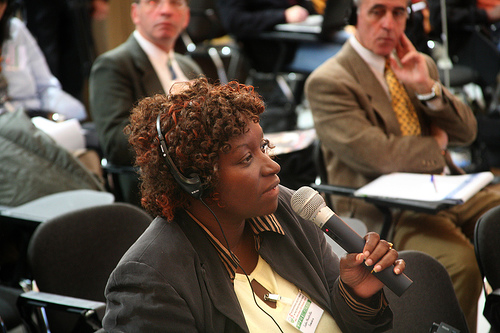
Can somebody please update ‘The Development Set’ by Ross Coggins?

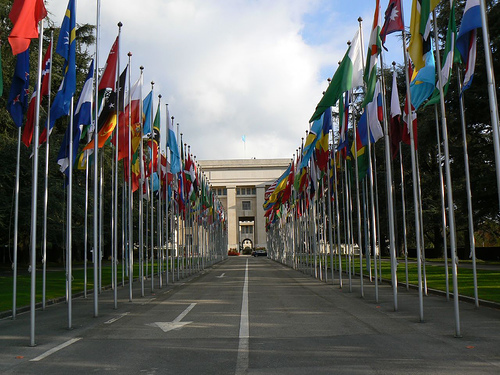
At the UN European Headquarters in Geneva this week, while attending a conference of humanitarian aid workers from around the world, I heard two of them compare the flat-beds in business class of two international airlines.

The conversation was more than just a passing one. They were passionately discussing the relative merits of different business class seats and perks.

I almost felt like butting in and saying that Singapore Airlines – the world’s finest airline, no argument – has just created a new product that they can now lust after: personal cabin suites in the air.

Coincidentally this week, on 25 October 2007, Singapore Airlines began operating the first commercial flights of the new Airbus380 double-decker super-jumbo.

Here are two images from the airlines’s website:

From Singapore Airlines

I’m all for humanitarian aid workers being well paid, well protected and well cared for. After all, they risk life and limb for the rescue, relief and recovery of large numbers of people caught in disasters or conflicts.

Perhaps I’m being naive, but there’s something incongruent about aid workers aspiring to flat-beds and space beds in the air.

Which reminds me, it’s about time somebody updated the well known poem, The Development Set, by Ross Coggins. First published in “Adult Education and Development” September 1976, it’s now more than 30 years old — the luxuries both in the air and on the ground have evolved a bit in that time.

Graham Hancock’s book “Lords of Poverty: The Power, Prestige, and Corruption of the International Aid Business” gleefully reprinted this poem in the 1980s.

I’m no poet, but there’s a need to update this to include GPS, satellite phones, four-wheel drives, and yes, business class beds.

If you are not familiar with the original poem, here it is:

The Development Set
by Ross Coggins

Excuse me, friends, I must catch my jet
I’m off to join the Development Set;
My bags are packed, and I’ve had all my shots
I have traveller’s checks and pills for the trots!

The Development Set is bright and noble
Our thoughts are deep and our vision global;
Although we move with the better classes
Our thoughts are always with the masses.

In Sheraton Hotels in scattered nations
We damn multi-national corporations;
injustice seems easy to protest
In such seething hotbeds of social rest.

We discuss malnutrition over steaks
And plan hunger talks during coffee breaks.
Whether Asian floods or African drought,
We face each issue with open mouth.

We bring in consultants whose circumlocution
Raises difficulties for every solution —
Thus guaranteeing continued good eating
By showing the need for another meeting.

The language of the Development Set
Stretches the English alphabet;
We use swell words like “epigenetic”
“Micro”, “macro”, and “logarithmetic”

It pleasures us to be esoteric —
It’s so intellectually atmospheric!
And although establishments may be unmoved,
Our vocabularies are much improved.

When the talk gets deep and you’re feeling numb,
You can keep your shame to a minimum:
To show that you, too, are intelligent
Smugly ask, “Is it really development?”

Or say, “That’s fine in practice, but don’t you see:
It doesn’t work out in theory!”
A few may find this incomprehensible,
But most will admire you as deep and sensible.

Development set homes are extremely chic,
Full of carvings, curios, and draped with batik.
Eye-level photographs subtly assure
That your host is at home with the great and the poor.

Enough of these verses – on with the mission!
Our task is as broad as the human condition!
Just pray god the biblical promise is true:
The poor ye shall always have with you.

Everyone has information ‘needs’ — and information ‘wants’ too!

banner.jpg

When the development community talks of people living in poverty (or ‘the poor’) they almost always talk about somebody else — it is not ‘us’ but a remote, often nameless ‘them’.

And when the humanitarian community talks of people affected by crises — disasters or conflict — that too almost always is about somebody else, typically in a poor country.

The well-meaning, do-good people in development and humanitarian communities are fond of talking about the information needs of the poor or crisis affected. These ‘needs’ are usually defined in terms of survival, sustenance or relief.

It’s as if people in poverty or crisis situations only have a simple set of information needs, but none of the information ‘wants’ that we, the privileged, have in abundance.

In Geneva this week, I have argued that everyone has a right to not only information needs, but also information ‘wants’. Development or emergency relief would become truly meaningful only when both these are met.

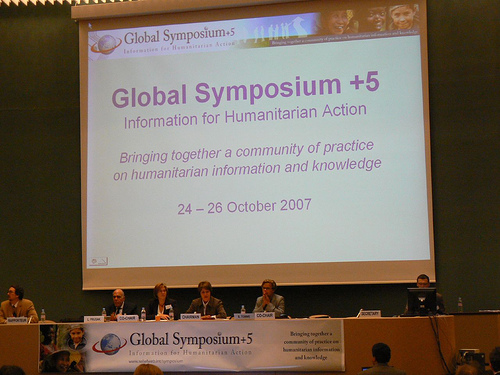
I’m participating in the Global Symposium+5 on ‘Information for Humanitarian Action’ organised by the United Nations Office for the Coordination of Humanitarian Affairs (UN-OCHA). The meeting, held from 22 – 26 October 2007 at the Palais des Nations, UN headquarters in Europe, brought together over 200 persons involved or interested in information and communication aspects of humanitarian work.

I was invited to be part of working group 5 on ‘Communicating with affected communities in crisis’. Members of this group were drawn from national and international humanitarian aid agencies, UN system, governments and the media.

global-symposium5-in-geneva-oct-2007.jpg

Our brief was to ‘look at the information needs of affected populations both during emergencies and in longer term recovery efforts’. We were to ‘evaluate the nature of these needs, to identify actions necessary to achieve operational reality, and to consider the strategies required to integrate beneficiary communications into the humanitarian response framework, particularly through the opportunities offered by the current reform process’.

Now that’s all well and good, and we did that part of our work in earnestly and seriously. The outcome was presented on Oct 25 to the plenary stimulating discussion and debate.

But I kept reminding our working group that we really have to think beyond the mere information needs of people, and address their information wants as well.

This basically means information related to cultural and social aspects. Humans don’t live on bread, water, clothing and shelter alone. We are complex and nuanced beings with a vast array of interests — and that’s equally true for the city stockbroker, village farmer and the aid worker wearing a UN cap.

Evidence of this is all around us if we only care to notice. For example:

* Tens of thousands of people driven to temporary shelters by disasters or wars followed the 2006 Football World Cup in Germany from their make-shift homes. Football mania didn’t stop at the periphery of a camp.

* Every time there is an important cricket match in South Asia, it unites the rich and poor, the sheltered and homeless, and those living normal or crisis disrupted lives.

The sooner we in the development and humanitarian sectors recognise this reality, the better.

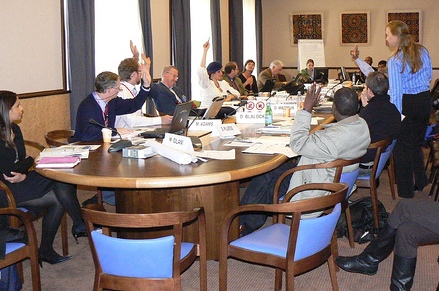
1692836466_2c493ea8ec.jpg
Photo shows working group 5 in session: photo courtesy UN OCHA.

I made a similar point in an essay written in mid 2004 on using information and communication technologies (ICTs) for poverty reduction:
I cringe every time I hear remarks about the poor just needing survival or sustenance related information. The information needs and wants of the poor can be as diverse as everybody else’s. Sarvodaya – Sri Lanka’s largest development NGO — once surveyed the information needs of poor people in rural and semi-urban areas. Their findings included: health and nutrition information, as well as details on bank loans, foreign jobs and insurance policies. There was also interest in world affairs, national politics and cultural affairs…

Read my full essay in GKP Partners Newsletter (My essay is the last one, so keep scrolling down, down, down.)

Three years later I found myself making the same point to a different group, many of who are information specialists working in crisis and emergency situations.

This kind of perception will continue as long as we harbour the us-and-them divide.

1687780850_168f228e8a.jpg

Images from the Majority World: Global South telling its own stories

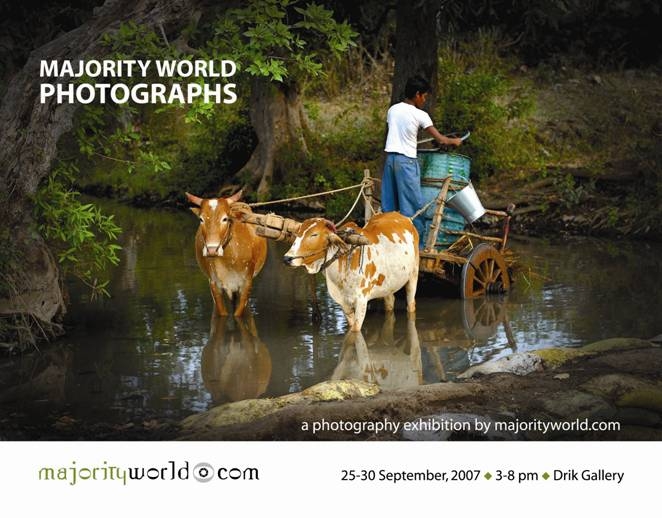
majority-world.jpg

This image captures a typical scene in a South Asian village. The invitation arrived from Suchit Nanda, a talented Indian photographer who shoots men, women and scenes from different cultures and societies as he moves around Asia and elsewhere.

Suchit’s work is being marketed by MajorityWorld.com, a new global initiative founded through the collaboration of The Drik Picture Library of Bangladesh and KijijiVision in the UK to champion the cause of indigenous photographers from the developing world and the global South – the Majority World!

“Very few published images of the South are taken by local photographers. They are invisible and don’t get a fair deal. This is what kijiji*Vision is campaigning to change,” says Colin Hastings of kijiji*Vision, a co-founder of Majorityworld.com.

Read more about Majority World

By coincidence, just this week I’m involved in buying some photographs from Drik Picture Library to illustrate an Asia Pacific resource book on Communicating Disasters that TVE Asia Pacific is compiling. It is being co-authored by Frederick Noronha and myself, and due for a December 2007 release.

Whether in photography or videography, the global South – or Majority World – has to speak for itself. Our still images and moving images must tell our own story.

But try doing this in the commercial worlds of publishing or mass media, and suddenly we are competing in an extremely unfair and uneven playing field. Astonishingly, many development agencies – including the UN – don’t commission or acquire the work of talented Southern photographers or film-makers. Talk about not practising what they preach!

Read my recent blog post: Wanted – Fair Trade in Film and Television

In an essay titled Communication rights and communication wrongs written in November 2005, I criticised the globalised media for persistently using stereotyped images of the South — captured mostly by northern photographers and camera crews.

I quoted Shahidul Alam as saying: “Invariably, films about the plight of people in developing countries show how desperate and helpless they are… Wide-angle black and white shots and grainy, high-contrast images characterise the typical Third World helpless victim.”

I added: “Media gatekeepers in the North often dismiss the better-informed and equally competent Southern professionals — saying, insultingly, that ‘they don’t have the eye’! And for years, I have resisted the widespread practice of Northern broadcasters and film-makers using the South’s top talent merely as ‘fixers’ and assistants.”

Read my full essay on SciDev.Net, which published it after Panos Features – the original commissioners – declined to carry it. Apparently my views were too outspoken for Panos London, which claims to champion communication for development…

Experience the visual treats offered by Suchit Nanda:
Suchit Nanda

Support Majority World photographers by using their work

The Daily Star (Dhaka) reviews the exhibition

Anita Roddick: We shall always remember you

Image courtesy Treehugger

“Remember me!”

That’s how Anita Roddick, who died on 10 September of brain haemorrhage, autographed for me a copy of her book Taking It Personally: How to make Conscious Choices to Change the World.

You’re hard to forget, I told her at the time. And suddenly, memories are all we are left with. And what vivid ones!

Dame Anita Roddick (1942 – 2007), founder of The Body Shop, is one of the most unforgettable persons I have met. And now that she has moved on, far too soon, her memory challenges us to persist with the social, humanitarian and environmental causes that she so passionately championed.

Media obituaries described her as the ‘Queen of Green’, but Anita was much more than just green. She stood for justice, fairness and equality in both business practices and her campaigns. From ethical sourcing of raw materials for her beauty products to agitating for human rights and humane globalization, she was one activist who walked the talk.

“I came out of the womb as an activist. I’m part of the 1960s; it’s in my DNA,” she wrote in Newsweek earlier this year. “So the idea of dying with loads of money doesn’t appeal to me at all.”

She added: “I want to use the last years I have to get my hands dirty working for civil change. I want to be able to see the positive difference that money can make by giving away what I have.”

It’s not immediately clear if she made much headway with that, but the recently set up Roddick Foundation is the latest of a long line of campaigns, social projects and charities that she founded, energised or supported.

Her business acumen and commitment to global justice have been eulogised for years. She was equally adept in using the media and communications to draw attention to a cause, issue or incident.

Without going to any business school, Anita built up a global business that had over 2,200 stores in 55 countries by the time she let go of the company in 2004. And without attending any communication school, she became one of the best communicators of our troubled times – speaking eloquently for her company’s ideals and various charitable causes.

It all came from the heart, and it was passion –- not cold facts or even colder logic -– that drove her to be a phenomenally successful communicator.

Anita loved to say: “The job of a citizen is to keep his mouth open.” And her advice to activists was: Get Informed. Get Inspired. Get Outraged. Get Active.

Never underestimate the power of one, she said. As she liked to put it:
If many little people
In many little places
Did many little deeds
They can change the face of the Earth

And like the Energizer bunny, but with lot more purpose, she kept going, going and going. She loved the Dorothy Sayers quote: “A woman in advancing old age is unstoppable by any earthly force”.

It was on one of her many world travels that our paths first crossed. In the summer of 1991, I was invited to give a workshop at Youthquake, a Canadian environmental conference building up momentum for the Earth Summit scheduled for the following year. It was here that I met two of my all-time favourite activists: geneticist-turned-TV presenter David Suzuki, and Anita Roddick. The celebrity guest was Mutang Tu’o, a representative from the Penan indigenous tribe from Sarawak, Malaysia, whose jungles were in imminent danger of being logged.

Youthquake was part conference, part youth jamboree and altogether a great deal of fun. Anita turned up with her youngest daughter Sam, and spent hours just telling real life stories in her inimitable way – full of laughter and making fun of power and pomposity. After all these years, I can’t remember anything about what I myself spoke, but I know Anita’s remarks had a lasting influence.

In those heady days before the Earth Summit, email and the global Internet, activists had an easier and simpler choice of adversaries — Uncle Sam and World Bank usually came up among the top five. When economic globalization gathered pace, things became more complex and nuanced. Ah, for the good old days!

Anita marched fearlessly into this new world where corporate fortunes are being made at the speed of light, governments are waging wars to the tune of media-entertainment industries, and certain development agencies have turned poverty reduction and HIV/AIDS into cottage industries.

Marshall all facts, get analysis right, take your firing positions and never give up the good struggle, she seemed to suggest: there’s a war out there, and it wasn’t just in Iraq and Afghanistan.

In fact, Taking It Personally was her rough guide on how to tame run-away globalization. For it, Anita invited the top thinkers in the struggle for humanitarian trade policies to weigh in on the problem, and to give citizens the tools and inspiration to do work for constructive solutions. Among its contributors were Vandana Shiva, Paul Hawken (Natural Capitalism), Naomi Klein (No Logo), and Ralph Nader.

When she autographed a copy for me, she added with a mischievous grin that the book’s US distributors had been coerced to withdraw it. She showed a possible reason: that famous photo of President George W Bush reading a book with a young child — while holding it upside down!

It’s this topsy turvy, cruel world that Anita Roddick tried to make slightly better in a thousand different ways. We fellow travellers will sorely miss her, but there is ‘no bloody alternative’ but to just slog on.

— Nalaka Gunawardene; Kathmandu 12 September 2007

Read my earlier post: Anita Roddick, Angkor Wat and the ‘Development Pill’

BBC Online: Dame Anita Roddick dies at 64

“Can you help us to film a child’s leg being broken?”

“Can you help us to film a child’s leg being broken?”

This question, posed by a visiting Canadian TV crew in the 1970s, startled my good friend Darryl D’Monte, one of the most senior journalists in India and former editor of the Times of India.

Darryl was having a chat with the crew, giving them some insights on the extent of poverty in his home city of Bombay, since renamed as Mumbai. It is routine for visiting journalists to have such chats with their local counterparts to get context and advice.

It was when the conversation turned to beggars, that this western TV crew asked if they could film the intentional breaking of a poor child’s leg — a brutal practice that was believed to exist so that maimed children could be employed as beggars. A disabled child would evoke more sympathy, and consequently, more alms.

darryl-dmonte-speaking-at-ifej-2005-congress.jpg

The articulate Darryl must have expressed his exasperation in strong terms. But even he couldn’t have anticipated the response.

“It’s going to happen anyway,” was how the film crew rationalised their bizarre request.

So why not be there, capture it on film, and get a great story out of it — which can be packaged as the brutal side of India’s poverty! This must have been the crew’s line of reasoning. Maybe their editors had exerted pressure to come back with something out of the ordinary.

I quoted this incident in my essay, Ethical newsgathering challenge for Al Jazeera International, published in November 2006. It was a plea for the newest entrant to international TV newsgathering to play by a different, and more ethical, set of rules.

These and worse practices are certainly not confined to India, or to TV crews originating from any single country. And sadly, these have not been abandoned after the 1970s. In fact, the emergence of 24/7 satellite news channels since the 1980s has inspired much more competition in the TV newsgathering industry, creating an alarming race to the bottom.

Such journalists’ only operating guideline seems to be: get the story, no matter what — or who gets hurt in that process.

In filming wildlife documentaries, film-makers sometimes have to make a choice: do they interfere in the processes of Nature, such as a predator setting on a hapless prey? There is an unwritten rule that things must be allowed to happen, with humans only capturing actuality on film.

But when it comes to filming wild life of our species in our cities and villages, the ethical dilemmas are not so easily resolved. This is why all journalists and film-makers, especially those in newsgathering, need a strong ethical framework for their work.

Journalists represent the public’s right to know, which is extremely important. Media coverage and exposes can trigger much needed aid, reform or public outcry on certain issues. But that is not a justification for getting the story by any means.

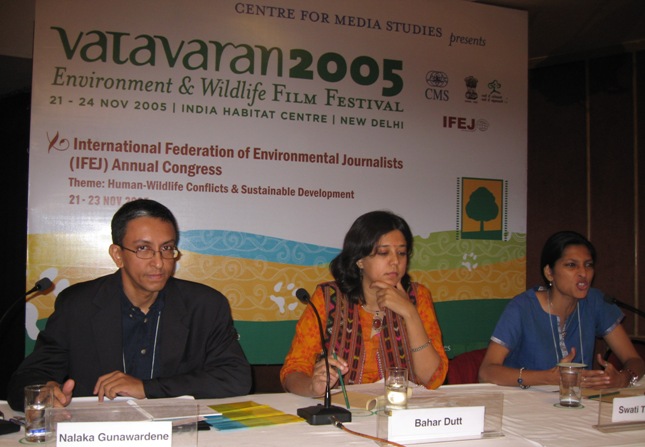
Darryl D’Monte shared the above story at panel discussion on ‘Does TV do a better job on environmental reporting?’ which I chaired during the annual congress of the International Federation of Environmental Journalists (IFEJ), held in New Delhi, India, in November 2005. That year it was part of the Vatavaran 2005, the national environmental film festival of India.

panel-discussion-at-ifej-2005-congress-new-delhi.jpg

I was reminded of this story because the 4th CMS Vatavaran film festival is round the corner: it will be in New Delhi from 12 to 16 September 2007. I won’t be there in person; my colleague Manori Wijesekera is representing TVEAP this time.

TVE Asia Pacific News: Environmental film-makers call for ethical framework

Read official report of IFEJ Congress in 2005

Related blog posts:

Al Jazeera: Looking hard for the promised difference

Wanted: Ethical sourcing of international TV news

Cheque-book Development: Paying public media to deliver development agency logos