Arthur C Clarke 90th Birthday reflections released on YouTube!

We have just uploaded on to TVEAP Films channel on YouTube a new short video, capturing the 90th birthday reflections of Sir Arthur C Clarke.

The world’s best known writer of science fiction, Sir Arthur C Clarke turns 90 on 16 December 2007. Scientific, literary and media communities around the world plan to mark this event.

In this 9 minute video, the visionary writer, explorer and science populariser looks back at his illustrious career spanning nearly 70 years and notes: “Growing up in the 1920s and 1930s, I never expected to see so much happen in the span of a few decades.”

He offers a quick assessment of two sectors where he has left his mark: space travel and communications technology. Ever the optimist, he believes that the best is yet to come in both areas.

“I still can’t quite believe that we’ve just marked the 50th anniversary of the Space Age,” Sir Arthur says. “We’ve accomplished a great deal in that time, but the ‘Golden Age of Space’ is only just beginning.”

Noting that good communications are necessary, but not sufficient, for human progress, he makes a strong plea for tolerance and compassion to achieve greater understanding between peoples and nations. To him, true globalization would require overcoming “our tribal divisions and begin to think and act as if we were one family”.

In the video, which we recorded in Colombo in the first week of December, Sir Arthur mentions three personal wishes – proof of life outside the Earth, clean energy to overcome global warming, and peace in Sri Lanka, his adopted country.

He ends the message indicating his preferred legacy: “I want to be remembered most as a writer – one who entertained readers, and, hopefully, stretched their imagination as well.”

In a technical paper written in 1945, Clarke was the first to propose the idea of communications satellites, which have today become a global industry supporting broadcast and telecommunications needs. One of his short stories inspired the World Wide Web, while another was later expanded to make the movie 2001: A Space Odyssey, which he co-wrote with director Stanley Kubrick. He has lived in Sri Lanka since 1956.

The video was filmed by Video Image (Private) Limited, in collaboration with the non-profit educational media foundation TVE Asia Pacific (TVEAP) — both of which donated their services to this effort.

Read the full text of Sir Arthur’s birthday reflections on TVEAP website

Good communications necessary, but not sufficient, says Arthur C Clarke

Arthur C Clarke’s 90th birthday reflections on TVEAP’s YouTube channel

Road to Bali: Beware of ‘Bad weather friends’!

unfcccnew-c.jpg

All the environmental roads — well, actually flights — seem to lead to Bali in the coming days.

The Indonesian ‘Island of the Gods’, famed as a tourist resort, will play host to the 13th United Nations Climate Change Conference from 3 to 14 December 2007.

The Conference, hosted by the Government of Indonesia, brings together representatives of over 180 countries together with observers from inter-governmental and non-governmental organizations, and the media. The two week period includes the sessions of the Conference of the Parties to the UN Framework Convention on Climate Change (UNFCCC), its subsidiary bodies as well as the Meeting of the Parties of the Kyoto Protocol.

The Bali meeting will be a turning point in the global response to climate change, an issue which has moved above and beyond being a simple ‘green’ concern to one with economic, security and social implications. The annual meeting returns to Asia after five years, since New Delhi, India, hosted the 8th meeting in November 2002.

In the build up to Bali, a new report released on 19 November 2007 says that without immediate action, global warming is set to reverse decades of social and economic progress across Asia, home to over 60 per cent of the world’s population.

Up in Smoke? Asia and the Pacific – with a foreword by Dr Rajendra K Pachauri, Chairman of the Nobel prize-winning Inter-governmental Panel on Climate Change (IPCC) – is the most extensive and concluding chapter of a unique, four-year long exercise by the Up in Smoke coalition, an alliance of the UK’s major environment and development groups.

The report shows “how the human drama of climate change will largely be played out in Asia, where almost two thirds of the world’s population live, effectively on the front line of climate change.”

When our friends at the International Institute for Environment and Development (IIED) in London sent me the press release about the report last week, something caught my eye. Among the several accompanying quotes was this one concerning the media:

“In many Asian countries climate change stories don’t make it into the media, so the public are left out of the debate. The challenge for decision-makers and the media is to stimulate interest in their work and translate the complex issues into stories that capture the public’s imagination. Climate change above all requires the engagement of everyone in creating the changes required.”

This sweeping statement is attributed to Rod Harbinson, Head of Environment, Panos London.

I know Panos London well, and am surprised to read an official remark of this nature emerging from that organisation which, until recently, has tried to relate to the majority world media as a friend and supporter. In fact, the first time I had one of my own pieces internationally syndicated was by Panos Features, back in 1989.

Come to think of it, the second article I wrote for Panos Features concerned how the low-lying, Indian Ocean island nation of Maldives was preparing for adverse impacts of climate change. That was years before the web, so there’s no link I can provide.

As a development writer and journalist who has covered global climate change among other issues for two decades, I have problems with Mr Harbinson’s remark.
Drik/Majorityworld
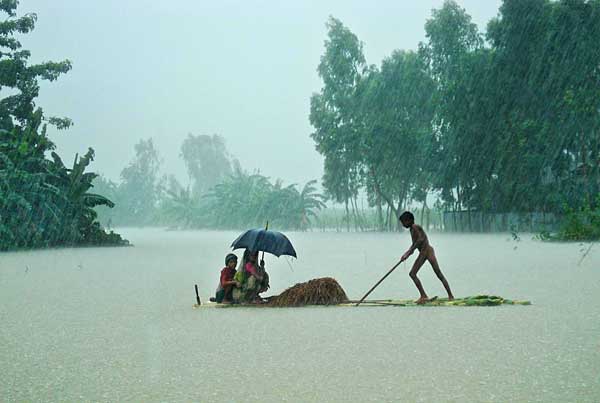
Photo: A family looks for shelter using a raft made of banana trees during the last Monsoon: 31 July 2007: Gaibandha, Bangladesh © Quddus Alam/DrikNews Linked from Shahidul News

I’m in full agreement on the need to ‘translate the complex issues into stories that capture the public’s imagination’. There is also no argument that climate change requires the engagement of everyone.

But I would be very interested to know on what statistical or analytical basis he says “in many Asian countries climate change stories don’t make it into the media, so the public are left out of the debate’.

Asia, as Mr Harbinson should surely know, is not just China, India and Indonesia. It is large and highly diverse region, containing five sub-regions as defined by the UN. It is home to nearly two thirds of humanity, who live in over three dozen independent states or dependent territories.

Living in Asia and trying to work at regional level, I know how difficult it is to make any generalisations about this rich and constantly changing assortment of economies, cultures and societies branded as Asia (which, taken together with the small island nations of the South Pacific, is known as the Asia Pacific). In fact, it’s wise not to speak about Asia as a whole, for there is little in common, say, between Japan and Laos, or between China and Maldives.

The Asian media are as diverse as the region, and have been undergoing rapid change in recent years. Unshackled from the state’s crushing grip in most countries, the broadcast media (radio, TV) have proliferated and emerged as the primary source of information for a majority of Asians. New media – web, mobile devices and multimedia combinations – are now changing the way many Asia’s communicate and access information.

I have always been curious how Panos London, perched at its cosy home in London’s White Lion Street, assesses what goes on in the majority world. In this case, how much of Asia does Mr Harbinson know and is really familiar with? How many Asian media outlets has he or Panos monitored, assessed and sampled before coming to this sweeping and damning conclusion about the lack of climate change stories in the Asian media?

And how many of these outlets are radio and TV, and in languages other than English? I would really like to know.

If Panos London believes in evidence-based analysis, then it owes us in Asia an explanation as to on what basis its head of environment makes such statements about an entire continent, whose media output is predominantly in Asian languages, not English. And whose principal media are broadcast, not print.

And what constitutes a climate story? Tracking the endless array of inter-governmental babble in the name of working out some compromised partial solution to the major problem? Or reporting on campaigns to clean up polluting industries or sectors (such as transport) that generate most of the greenhouse gases? Or focusing on how humble communities in remote corners of the world are finding how their lifestyles and livelihoods are suddenly threatened by something they hardly understand?

To me, it’s all of the above — and a lot more. Climate change is akin to a prism through which many, many development issues and topics can be analysed. Just as HIV/AIDs long ago ceased to be a simple medical or health story, climate change has moved well beyond being an environmental story.

The more angles, perspectives and topics that are covered in the media, the better. And all of it need not be in that staid, cautiously balanced style of The Guardian or BBC that Panos London must be more familiar with.

Panos London, in its statement of beliefs, says ‘Freedom of information and media pluralism are essential attributes of sustainable development’. Surely, then, they realise that media pluralism includes speaking in a multitude of tongues, and analysing from many different perspectives — as happens in the Asian media 24/7, if Mr Harbinson and his colleagues care to spend more time in the region and keep their eyes and ears open.

But instead, they seem more like a group of well-meaning people with a solution in search of a problem. For the past many months, Panos London has been crying wolf about the allegedly poor coverage of climate issues in the majority world media.

That was the main thrust of a report they published in late 2005, titled Whatever the weather – media attitudes to reporting climate change.

According to Panos London website that I have accessed today, “…the survey found that there is little knowledge among journalists about these important choices and they are rarely discussed. The dramatic impacts of extreme weather events, for example, rarely feature in relation to climate change and the topic remains low on editors’ story sheets.”

The survey was based on ‘interviews conducted with journalists and media professionals in Honduras, Jamaica, Sri Lanka and Zambia’ and claimed to ‘give insights into the attitudes of journalists and the status of the media in these countries.’

Well, I was one of those majority world journalists covered by the survey — and I had major reservations about how they used my responses. Being cautious, I had used email (and not the phone) to respond to their survey questions – I therefore have a complete record of everything I said. When the draft report was shared on my request, I found some of my responses being distorted or taken out of context. I had to protest very strongly before some accuracy was restored. I later regretted having agreed to be part of this dubious survey.

It was flawed in many ways. The questionnaire was very poorly conceived and structured. I actually declined to answer some questions which were worded in such a way as to elicit just the kind of response that Panos London wanted — to make a case that journalists in the majority world are so incompetent that they need help.

A glaring omission in the final report was that it carried no list of journalists interviewed. I had to ask several times before I could even find out how many others participated in the survey (apparently some three dozen). But my requests for a list of other survey respondents were repeatedly declined by Panos London, who said it was privileged information. They later took the position that European data protection laws did not allow them to disclose this information!

In an email sent to Rod Harbinson on 22 Feb 2006, I said: “I would argue that Panos London had pre-conceived notions that it wanted to present in this report, and used superficial and largely unprofessional interview surveys with a few scattered journalists as a rubber-stamping exercise to publish what it wanted to say anyway. This is further borne out by the fact that some of my more outspoken responses have been completely ignored.”

I have seen or heard nothing since to change the above view. And the contents of Whatever the weather – media attitudes to reporting climate change are consistent with what Rod Harbinson says in the IIED press release that prompted me to make this comment.

Yes, climate change is the Big Issue of our times that needs everyone to rally around and search for ‘common but differentiated’ solutions and responses. But no issue or global threat is too big to warrant the willing suspension of time-honoured journalistic or academic values of honesty, integrity and balance. Issuing lop-sided ‘survey reports’ and making sweeping negative statements do not help the cause of improving public discussion and debate on climate change.

The road to Bali and beyond is going to be an arduous journey. On that treacherous road, we in the majority world need to beware of ‘bad weather friends’ who come bearing bad surveys and self-serving offers of ‘help’.

— Nalaka Gunawardene

Note: In the spirit of communication for development and media pluralism, I invite Panos London to respond to the above critique, and offer to publish their response in full.

I remain a critical cheer-leader of the global Panos family, and serve on the Board of Panos South Asia, an entirely independent entity that has excellent relations with Panos London. Like all families, we don’t always agree – and that’s part of media pluralism!

Related blog posts:

Nov 2007: True ‘People Power’ needed to fight climate change
Nov 2007: Beyond press release journalism: Digging up an environmental business story
Oct 2007: The Al and Pachy Show: Climate Change gains public momentum

Aug 2007: Arthur Clarke’s climate friendly advice: Don’t commute; communicate!
June 2007: Sex and the warming planet: A tip for climate reporters
April 2007: Can journalists save the planet?
April 2007: Beware of Vatican Condoms and global warming
April 2007: Pacific ‘Voices from the Waves’ on climate change
April 2007: Wanted – human face of climate change!
Beyond press release journalism: Digging up an environmental business story

“Don’t reproduce press releases from companies, or accept their corporate PR. To get to the real stories, journalists have to dig deeper and work a bit harder.”

Paolo Pietrogrande
, Chairman of Atmos Holding, offered this piece of advice when talking to an international group of journalists at the V Greenaccord International Media Forum on the Protection of Nature, held from 7 to 11 Novmeber 2007 in Rome, Italy.

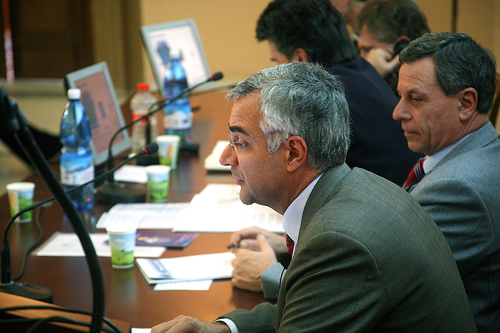
Pietrogrande (seen speaking in photo, below) was talking on ‘new investment scenarios in renewable energy sources’ during a session on sustainable economic mechanisms. A New York based Italian businessman with past experience in Ducati Motor, General Electric, Bain&Company and Ryanair, he suggested that many positive environmental business stories were being overlooked by the media.

paolo-pietrogrande-addressing-greenaccord-v-meeting-nov-2007.jpg

According to him, there are billions to be made in clean energy and clean technology sectors in the coming years — and venture capitalists and other investors have already recognised this potential. Real Money is now being invested in these sectors, often below the media’s radar and without any fanfare.

This is not corporate social responsibility (CSR), philanthropy or ‘greenwashing’ PR. These are hard-nosed investors who fully expect good and dependable returns on what they put in. They do due diligence and take expert advice before putting in their billions into such emerging sectors.

Yet, immersed in peddling doom and gloom stories – especially on climate change these days – most media outlets miss out on these stories which have significant business and environmental angles.

His advice to journalists included these tips:
* Don’t look at press/media sections on corporate websites, which is usually full of PR. Even CSR reports are carefully crafted to give a rosy picture. The real stories lie elsewhere.
* Instead, read the annual reports of companies, especially the CEO’s letter to shareholders. That’s a carefully crafted statement and analysis which contains a good deal of information.
* Stop replying on press releases, and certainly don’t get into the habit of recycling them in news stories. Instead, look at public disclosure documents of companies for leads and insights.

The environment has moved way beyond CSR and corporate PR, he said. More and more companies realise how environmental compliance increases their efficiency and thus profitability. Whole new business areas and opportunities are opening up for those working on clean energy and clean technologies. The impetus has come from concerns on global climate change.

greenaccord-v-forum-in-progress-nov-2007.jpg

If Pietrogrande sounded a bit like Carl Sagan – talking of billions and billions – that is understandable. He sees vast potential in clean energies and clean technologies that can help reduce carbon emissions causing global warming. Industry has traditionally made profit emitting carbon, and now there is money – and profit – to be made cleaning it up.

Investors are lining up with the money, but good ideas and projects are in short supply, he said.

Which reminded me of something that the American engineer, architect and visionary Buckminster Fuller once said: “There is no shortage of energy on this planet. There is, however, a serious shortage of intelligence”.


Meeting photos courtesy Adrian Gilardoni’s Flickr account

The irony of the Climate Nobel: With love from oil-rich Norway…

The announcement from Oslo on 12 October held few surprises: the Nobel Peace Prize 2007 has been awarded to climate champion Al Gore and the UN’s IPCC, headed by Indian scientist Dr Rajendra Pachauri.

The selection committee, appointed by the Norwegian Parliament acting on the will of the late Alfred Nobel, said it wanted to bring into sharper focus the “increased danger of violent conflicts and wars, within and between states” posed by climate change.

Mr Gore, 59, was praised as “probably the single individual who has done most to create greater worldwide understanding of the measures that need to be adopted”, through his lectures, films and books.

The UN-IPCC (Intergovernmental Panel on Climate Change), established in 1988, is tasked with providing policymakers with neutral summaries of the latest expertise on climate change. The organisation involves hundreds of scientists working to collate and evaluate the work of thousands more.

In recent years, the usually secretive and conservative Nobel Peace Committee has been increasingly in tune with the changing realities of our world. Recent prizes to environmental activist Wangari Mathaai and microcredit champion Muhammad Yunus indicate that their traditional definition of peace and security – confined for nearly a century to peace-makers and humanitarian agencies – is being widened.

But the irony of the climate Nobel won’t be lost on the long-time champions of climate change action. Here we have oil-rich Norway, sometimes called the Kuwait of Europe, presenting the world’s best known award to an individual and organisation calling for the planet to kick its addiction to oil (and coal, too).

Notwithstanding all that, we join everyone in saluting Al Gore, Pachauri and everyone associated with the IPCC for their years of hard work in bringing climate change to the fore.

The real hard work is only just beginning.

Watch Al Gore press conference following the Nobel announcement:

Read blog post on Oct 21: Al and Pachy Show: Climate Change gains public momentum

Arthur Clarke’s climate friendly advice: Don’t commute; communicate!

This week I’m working from home, as I nurse a cold that came from nowhere and knocked me down.

I have to take plenty of rest as my body battles the virus. So I alternate between bed and desk, keeping up with at least some of my work.

And that’s not as difficult as it once was, thanks to my home ADSL connection. (For sure, its day-time speeds make it more like ‘fraudband’ and not the broadband that it’s marketed as, but hey, at least I’m connected to the world.)

So this week I have practised a slogan that Sir Arthur C Clarke — inventor of the communications satellite and inspiration for the World Wide Web — suggested over some four decades ago: Don’t commute; communicate!

Well, that’s old hat — probably older than myself. But that assumes a new significance with the current concerns about climate change and how we may adapt our lifestyles to be more climate friendly, i.e. emit less carbon dioxide and other gases that trap the sun’s heat and warm up the planet.

sir-arthur-clarke-by-shahidul-alam.jpg

Trust Sir Arthur to make that link ahead of many others. In a short essay written for the UK’s Climate Group in 2005, included as part of a global exhibit on climate issues, he noted:

In 1973, when OPEC started to multiply oil prices, I rashly predicted: ‘The age of cheap power is over – the age of free power is still 50 years ahead.’

Three decades on, there are promising signs that we may soon get close to that ideal. There is a real possibility that the most important event of the early 21st century will be the advent of unlimited amounts of clean energy. Does it really matter whether hydrogen or nuclear fusion or another technology will finally liberate us from our current addiction to fossil fuels? Meanwhile, other technologies enable us to adjust our work and lifestyles. For example, mobile phones and the Internet have already cut down a lot of unnecessary travel – and this is only the beginning. We should revive a slogan I coined in the 1960s: ‘Don’t commute – communicate!’”

Self evident as this might seem, it’s not a point that is appreciated widely enough.

On 30 October 2006, the UK government published a 579-page report on the economics of climate change by Sir Nicholas Stern, a former chief economist at the World Bank. Despite the massive size, scope and authority of the report, the Stern Report had no reference to the role that the ICT sector could play in helping to reduce energy demand, mitigate CO2 emissions and help to save the planet.

Fortunately, others are taking note. Among them is the European Telecommunications Network Operators’ Association (ETNO), which issued a report — incidentally, in the same month as the Stern Report — titled Saving the climate @ the speed of light: ICT for CO2 reductions.

It was a joint publication with the World Wide Fund for Nature, WWF. Its introduction read: “A wider usage of ICT-based solutions can play an important role in reducing CO2 emissions. This joint WWF-ETNO road map proposes a concrete way forward for a better consideration and inclusion of ICT’s in EU and national strategies to combat climate change.

Read the full report here.

Image courtesy ETNO and WWF

And guess what, there is already a movement: ICT for carbon dioxide reduction, inevitably abbreviated as ICT4CO2R!

Read Sir Arthur Clarke’s full essay: Hydrocarbon Anonymous

Sir Arthur Clarke photo by Shahidul Alam, taken in January 2007

PS: I must admit that my carbon emission savings by working from home are pretty modest. I live about a kilometre from my office, so my personal commuting to and from work does not entail much of fossil fuel burning. On a good day, I can walk to work…

Is UK’s Channel 4 the latest ‘Fossil Fool’?

Even as climate change gathers momentum as a worldwide concern, more media organisations are ending up with egg on their face about their coverage of the issue.

Last month, I quoted British environmentalist George Monbiot about the BBC’s appalling track record on this: see ‘The BBC as a Fossil Fool’, 7 April 2007.

And now, UK’s Channel Four can make its own claims to be a Fossil Fool.

The Independent on 8 May 2007 reported that the makers of a Channel 4 documentary which claimed that global warming is a swindle have been accused of fabricating data by one of the scientists who participated in the film.

The Great Global Warming Swindle was broadcast on 8 March and has been criticised by leading scientists for errors, distortions and misrepresentations.

Image courtesy Channel 4

The article reads:

The film has also been referred to the UK regulatory watchdog OFCOM which is considering a complaint from 37 senior scientists that the programme breached the broadcasting code on the misrepresentation of views and facts.

Now even a climate sceptic whose dissenting views were used by the film-makers to bolster their claims about the “lies” and “swindles” of global warming has accused the documentary of promulgating falsehoods.

Eigil Friis-Christensen, director of the Danish National Space Centre, has issued a statement accusing the film-makers of fabricating data based on his work looking at the links between solar activity and global temperatures.

The scientists who have written to Ofcom include Sir John Houghton, the former chief executive of the Met Office, Lord May of Oxford, a former government chief scientist and past-president of the Royal Society, and Professor Chris Rapley, director of the British Antarctic Survey in Cambridge. In a letter to Mr Durkin they call for changes to the programme before the DVD version is released, even though DVDs are not covered by the Ofcom Broadcasting Code.

“So serious and fundamental are the misrepresentations that the distribution of the DVD without their removal amounts to nothing more than an exercise in misleading the public,” they say.

Image courtesy the film's website

Commenting on the documentary on 13 March 2007, George Monbiot wrote in The Guardian:

The problem with The Great Global Warming Swindle…is that to make its case it relies not on future visionaries, but on people whose findings have already been proved wrong. The implications could not be graver. Just as the government launches its climate change bill and Gordon Brown and David Cameron start jostling to establish their green credentials, thousands have been misled into believing there is no problem to address.

The film’s main contention is that the current increase in global temperatures is caused not by rising greenhouse gases, but by changes in the activity of the sun. It is built around the discovery in 1991 by the Danish atmospheric physicist Dr Eigil Friis-Christensen that recent temperature variations on Earth are in “strikingly good agreement” with the length of the cycle of sunspots. Unfortunately, he found nothing of the kind.

Read full commentary by George Monbiot in The Guardian 13 March 2007

Read the full article by Steve Connor in The Independent online on 8 May 2007

The Great Global Warming Swindle website

Profile of film’s director, Martin Durkin

The BBC as a Fossil Fool?

The BBC is running a Climate Season once again. Like many arms of the media, they have jumped the climate change bandwagon.

And that’s a good thing.

BBC World’s blurb reads:
As part of BBC World’s extensive coverage of one of the key challenges facing humanity, the Climate Watch season throughout April will feature a host of special documentaries and factual programmes plus news and
business reports from its global correspondents.

This is only to be applauded. But it wasn’t too ago that the BBC – with other sections of the mainstream media – was still insisting on “balancing” its coverage of climate change.

Even a couple of years ago, the BBC appeared to be incapable of running an item on the subject without inviting a skeptic to comment on it.

Of course, the BBC is entitled to change its mind like everyone else. (As a certain Boutros Boutros-Gali once famously remarked, only fools don’t change their mind.)

George Monbiot wrote a column in The Guardian (UK) on 27 April 2004 commenting on this. It was titled: “Beware the Fossil Fools: The Dismissal of Climate Change by Journalistic Nincompoops is a Danger to us All”.

Here’s an extract from that article, published less than 1,000 days ago:

Picture a situation in which most of the media, despite the overwhelming weight of medical opinion, refused to accept that there was a connection between smoking and lung cancer. Imagine that every time new evidence emerged, they asked someone with no medical qualifications to write a piece dismissing the evidence and claiming that there was no consensus on the issue.

Imagine that the BBC, in the interests of “debate”, wheeled out one of the tiny number of scientists who says that smoking and cancer aren’t linked, or that giving up isn’t worth the trouble, every time the issue of cancer was raised.

Imagine that, as a result, next to nothing was done about the problem, to the delight of the tobacco industry and the detriment of millions of smokers. We would surely describe the newspapers and the BBC as grossly irresponsible.

Now stop imagining it, and take a look at what’s happening. The issue is not smoking, but climate change. The scientific consensus is just as robust, the misreporting just as widespread, the consequences even graver.

Monbiot ended the article by asking:

But isn’t it time that the BBC stopped behaving like the public relations arm of the fossil fuel lobby?

How times have changed! But hey, better late than never…

Related:

Monbiot.com
World’s richest environmental prize goes to the BBC

Fossil fuels and fossil fools in India

‘‘People in India, unlike the West, don’t understand the seriousness of climate change….They think global warming is a fantasy. Indians are using fossil fuel like never before. We have constructed oven-like buildings and spend enormous energy cooling them.’’

I came across these words by the well known Indian environmental film-maker Mike Pandey in an article in NewIndPress that surveyed how Indian documentary film-makers are rising to the challenge of communicating climate change.

The article, ‘Meltdown on Film’ published on 15 March 2007 highlights the formidable task of raising awareness in India, now one of the fastest growing economies in the world, consuming larger volumes of fossil fuels every year.

Mike knows what he’s talking about: his film Global Warming went largely unnoticed when it was released in India three years ago.

And he is one of India’s top notch film makers on environment, wildlife and natural history. He has won three Panda Awards — also known as the ‘Green Oscar’ — at the Wildscreen Film Festival held every other year in Bristol, UK — and considered to be the most important festival of its kind in the world. (Modest cough: I was on the jury of Wildscreen 2000, when we gave Mike one of his three Green Oscars.)

Viewer apathy is not the only problem that India’s environmental film-makers have to contend with. Here’s an extract from the article:

Like any environmentalist, our documentary filmmakers are “concerned” about issues like global warming. But the lacklustre reactions of research agencies (who ‘‘support” the cause but don’t really come forward to fund documentaries), zero interest from broadcasters who, according to one filmmaker, prefer ‘‘sexy environmental stories’’, together with viewer apathy, are the reasons why the few impressive documentary films on climate change vanish after a few screenings at festivals. Take the Public Service Broadcast Trust’s (PSBT) Open Frame, for instance, the annual documentary film festival held in Delhi. Or the roving environmental and wildlife film festival CMS Vatavaran, where open discussions are held after every screening. Barely a couple of films are chosen by the public broadcaster Doordarshan after they are screened at these two festivals, which is why most of the documentaries don’t ever reach the masses.

‘‘Public interest stories and documentaries are the last thing broadcasters want to show,’’ quips Pandey. ‘‘People like me are lucky to have found space on DD. Value-based programmes are nudged out so easily by broadcasters these days.”

The article continues:

A few years ago, when Mike Pandey returned to his favourite spot in Austria to capture a snowcap for one of his films, he was shocked to see it had melted. He says, ‘‘I had seen the ice cap the previous year. I had to go deeper into the area to get my shots. It’s common in Austria to see ice caps vanishing. You see blossoms and splendid crops in many areas.’’ After Earth Matters, which is being shown on Doordarshan, Pandey is coming up with a series of six films on global warming, which will talk about ‘‘using alternative energy for the future.’’

Whenever out for shoots at Lakshwadeep, Kochi and Gujarat, Mike has been noticing ‘‘visible changes’’ in ‘‘ocean ferocity’’ and where the sea neighbours the land. ‘‘The water has come in a bit more into the land over the years,’’ he observes.

‘‘You don’t have to be a scientist to notice these changes; you can see it all happening now. Unfortunately, people living along the Indian coastline will be the first ones to face any kind of major impact,’’ he adds.

On my visit to Hyderabad last week, I was told that there are now close to 50 TV channels that cover news and current affairs on a 24/7 basis (in English and other Indian languages). Yet this kind of news hardly seems to make the headlines….it’s probably moving too slowly.

Mike Pandey and other environmental film-makers have their work cut out for them.

“If (Indian cricketer) Sachin Tendulkar or (Bollywood star) Shah Rukh Khan loses his cell phone, the news will reach every nook and corner of the country, but the fact that iodine is essential for the human body is still not known widely,” Mike told India’s Frontline news magazine in 2004. Read full article: Nature’s film-maker in Frontline of 18-31 Dec 2004

Read TVE Asia Pacific website feature on Mike Pandey’s 2003 film on the whale shark in India

Changing climate and moving images

Climate change is suddenly popping out of everywhere. Media outlets that couldn’t discern climate from weather not too long ago are covering the politics, technology, economics — and sometimes, science — of climate change.

We have to thank Al Gore and his Oscar-award winning film, An Inconvenient Truth, for helping climate change to reach that tipping point. For sure, it has been building up for years, but it took moving images to really push it up the agenda.

While the political stature of its ‘star’ — and now, the Oscar – takes this film to a league of its own, it’s not the only global documentary about this important topic. In recent years, a number of factual and make-belief films have been made with climate change as their principal theme.

No wonder Hollywood is attracted to this subject – it offers the ultimate planetary disaster, even if it unfolds slowly over decades. That’s not a major constraint in the land of make-belief: in The Day After Tomorrow (2004), director Roland Emmerich just accelerated natural climatic processes to happen within weeks – with dramatic results for his story (and box office).

It may be convenient to take such liberties with the truth in fiction, but delivering factual and credible content involves bigger challenges. That requires balancing facts, opinions and interpretations while engaging today’s easily distracted audiences. The task becomes harder when the subject is as technical as climate change.

I recently wrote a review of two major climate change documentaries, both released last year: An Inconvenient Truth, and The Great Warming.

Read the full review on TVE Asia Pacific website

Kicking the oil addiction: Miles to go…

On Saturday 17 March, over 10,000 people coming from all over the United States marched on the Pentagon in Washington DC protesting the fourth anniversary of the war in Iraq.

They braved freezing temperatures – and lots of rain, sleet and snow. I could only admire the resolve of these people, some of whom I saw on my way to the Smithsonian National Museum of Natural History for an afternoon of film screenings.

As The Washington Post reported on Sunday: “The march, part of a weekend of protests that included smaller demonstrations in other U.S. cities and abroad, comes as the Bush administration sends more troops to Iraq in an attempt to regain control of Baghdad and Congress considers measures to bring U.S. troops home.”

Meanwhile, the DC Environmental Film Festival was taking a closer look at one major reason why the US went to war in Iraq: oil.

Addicted to Oil is the title of a new documentary on Discovery Channel. This one-hour documentary, reported by Pulitzer Prize-winning foreign affairs columnist Thomas L. Friedman of the New York Times, explores his ideas for a “geo-green alternative” — a multi-layered strategy for tackling a host of problems, from the funding of terrorist supporters through America’s gasoline purchases, to strengthening US economy through innovative technology.

See interview extracts on Discovery website

Watch the first few minutes of Addicted to Oil:

I missed his panel discussion because of exceedingly cold and damp weather on Friday evening. But this is a topic that will continue to dominate the environmental and security agendas for years to come.

And it’s something that I myself have written about. When the US and its ‘Coalition of the Willing’ were about to move into Iraq in March 2003, I wrote an op ed essay titled “Oil, Iraq & Water: Will The Media Get This Big Story?”. It was globally syndicated by Panos Features, and appeared in quite a number of newspapers, magazines and websites at the time.

The full essay is found online on, of all places, the Sri Lankan government’s official website! Here’s a short extract:

It’s not just the United States that is addicted to oil – we all are. Addicts tend to lose sight of the cost of their dependence, as we have. On 24 March 1989, the oil tanker Exxon Valdez ran aground on in Prince William Sound in Alaska and a fifth of its 1.2 million barrels of oil spilled into the sea, causing massive damage to over 3,800 km of shoreline. Investigations implicated its captain for grossly neglecting duty. Shortly afterwards, Greenpeace ran a major advertising campaign with the headline: ‘It wasn’t his driving that caused the Alaskan oil spill. It was yours.’

Greenpeace continued: ‘It would be easy to blame the Valdez oil spill on one man. Or one company. Or even one industry. Too easy. Because the truth is, the spill was caused by a nation drunk on oil. And a government asleep at the wheel.’

A nation drunk on oil is waging a war that has more to do with oil than anything else. Our news media are behaving just like cheer-leaders.

Read the full essay here.