Copyright, copyleft and film-makers in the digital age

In my post on 1 April, Have you made your million dollars yet?, I wrote:

Many development film-makers like to decry our society’s obsession with money, consumerism and greed. Some would make films that passionately promote sharing ideas and resources at community level, and advocate common property resources over private ownership.

But when it comes to rights of their own film/s, these very film-makers would become extremely possessive: they want to restrict it in every conceivable way.

This came up during a session at the OUR Media 6 conference in Sydney yesterday.

Andrew Lowenthal, from EngageMedia in Australia, talked on ‘Online video for social action’ and presented what his non-profit organisation is doing.

As their website says:
EngageMedia is a website and a network for distributing social justice and environmental video from South East Asia, Australia and the Pacific. It is a space for critical documentary, fiction, artistic and experimental works that challenge the one-way communication model of the mainstream media.

Andrew said they currently host around 120 videos online, all offered for free public access at the moment. They are keen to add more titles to this collection, to build an online, engaged community of film makers and film viewers.

But as we discussed, many film makers aren’t yet ready or willing to give their films to be placed online.

“Some of them freak out at the very mention of being placed online. They ask how their copyright can be safeguarded, and how they can make money,” Andrew noted.

Fred Noronha, who has campaigned for a long time for Indian documentary makers to open up and share their films, agreed. “Many film-makers are apprehensive. They aren’t broadcasting, or webcasting their productions. They just show it at a few film festivals. Many films don’t go out to the wider public.”

At TVE Asia Pacific, we come across this all the time. As a non-commercial, non-exclusive distributor, we ask film-makers to share distribution rights while copyright stays firmly with them. Even then, many are not convinced.

Of course, each creative professional is entitled to the full returns of their investment of time, effort and creativity. But let’s not forget: many films, especially those on development issues (which covers health, education, environment, ICT, science in development and human rights, among others), are made with development funding or philanthropic grants. Which means the production costs are largely or entirely paid for.

Yet when such films are made, their creators would rather hang on to them than let them go. Copyright is one concern they cite. ‘Returns on investment’ is another. (Hmmm…if a film has been paid for by public/donor funds, returns to whom?)

Creative Commons offers a good way forward, and we had a presentation from CC Australia on this during the session. More about that later.

Go to:
Engage Media
Creative Commons

Moving images moving heart first, mind next

“Film is a lousy medium to communicate information. It works best at the emotional level.”

Bruce Moir, one of Australia’s seniormost film professionals made this remark soon after I had presented TVE Asia Pacific’s Children of Tsunami experience to OUR Media 6 conference in Sydney last afternoon.

After more than 35 years in documentary and feature film production for both cinematic and broadcast industries, in different parts of the English speaking world, Bruce knows a thing or two about moving people with moving images.

I was delighted and privileged to have Bruce join my presentation. He’d come at my invitation to the conference happening in his city.

“We’ve got to remember that film appeals to people’s hearts more than their minds,” Bruce explained. “The way to people’s heads is through their hearts, from the chest upwards — and not the other way round.”

I hope this was an ‘Aha!’ moment to at least some in our audience. I’ve personally heard Bruce say this before, but it bears repetition – because many film professionals tend to overlook this. Especially those who are trying to ‘communicate messages’.

Even a few weeks ago, I quoted him in a review as saying: “Our fundamental job is to tell a story – one that holds an audience’s interest and moves their heart, regardless of language, cultural context or subject….I have always believed that film achieves its optimal impact by aiming to ‘get at the audience’s head via their heart’ rather than the other way around.”

Bruce Moir

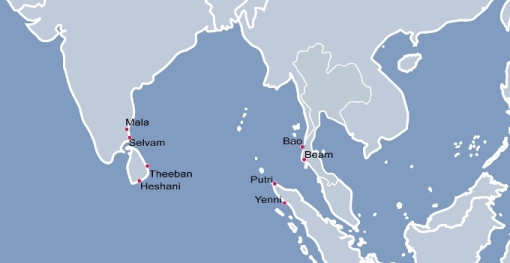
Without Bruce’s involvement, Children of Tsunami would have turned out to be very different. He was our Supervising Producer for the entire effort, advising and guiding our national film production teams tracking the progress of Tsunami survivor families in India, Indonesia, Sri Lanka and Thailand for one year afer the Asian Tsunami.

As Bruce recalled, the four teams came with different backgrounds, skill levels and film-making traditions of their own – ranging from television news and current affairs to development film-making, the type usually commissioned by UN agencies. Bringing them to be ‘on the same page’ was no easy task.

Film-makers are not particularly known for their patience or people-skills. Many I know have a ‘just-get-on-with-it-never-mind-the-niceties’ attitude. Bruce is one of the most patient persons I know: he would spend days and weeks relating to our production teams – usually by email or phone – gently nudging them in certain directions.

For sure, there’s no one right way to make a film. But there are some tried and tested principles in good story telling, which is what Bruce excels in. And which he willingly shares with others.

The year-long, 4-country and 8-location Children of Tsunami project was the biggest logistical operation TVE Asia Pacific has mounted in its 11 years of existence. (We’re in no great hurry to top that one!). Our production teams – operating from Bangkok, Colombo, Ubud (Indonesia) and Chennai – related to our regional production team based in two cities: Colombo, where TVEAP office is currently anchored, and Sydney, where Bruce lives.

We only came together face to face just once, in Bangkok, early on in the process. That meeting agreed on styles and formats, and also helped build the human relationships.

The rest of the time it was all through communications technologies. As you can imagine, lots of tapes moved around, as did many Gigabytes of video over the web. (DHL should have become a sponsor – they had lots of business from us!)

children-of-tsunami-locations.jpg

As I explained in my talk, Children of Tsunami was not just a film project. We published a monthly video report online on each of the eight families we were tracking, plus maintained a dedicated website with growing volumes of text, images and links. The monthly videos were edited and post-produced in the countries of filming, by our production teams themselves. It was distributed film-making, even if everyone worked to a common format.

With all that frenzy now behind us, the products of Children of Tsunami continue to be distributed, showcased and discussed at film festivals and conferences like OUR Media.

As I said yesterday to my predominantly academic audience: we’ve got a story telling and journalistic practice, and we now need a theory for it.

Related links:

Children of Tsunami: Documenting Asia’s longest year

Children of Tsunami revisited two years later

Grow, grow, grow your reef…

Coral reefs are sometimes called the rainforests of the sea. They are biologically rich and diverse.

But all over the tropical seas, coral reefs are under many pressures – from bad fishing practices to naturally occurring phenomena like the El Nino. Reefs are being damaged and destroyed faster than their natural recovery rate.

Unless a helping hand can be given, many coral reefs would soon be lost forever.

Giving Nature a helping hand is just what a Sri Lankan group of divers have been doing at the Rumassala coral reef on the island’s south coast.

coral-bleaching-a-major-concern.jpg generic6.jpg

TVE Asia Pacific’s international TV series, The Greenbelt Reports, has featured this effort in one episode. Watch it on TVEAP channel on YouTube

Read the story on TVEAP website: Regeneration – a new chance for coral reefs?

Photos courtesy TVE Asia Pacific, from The Greenbelt Reports TV series

Pacific ‘Voices from the Waves’ on climate change

Some of you have asked to share more information on Truth Talking: Voices from the Waves, the half-hour documentary on climate change and its impact on the South Pacific people that we produced in 2002.

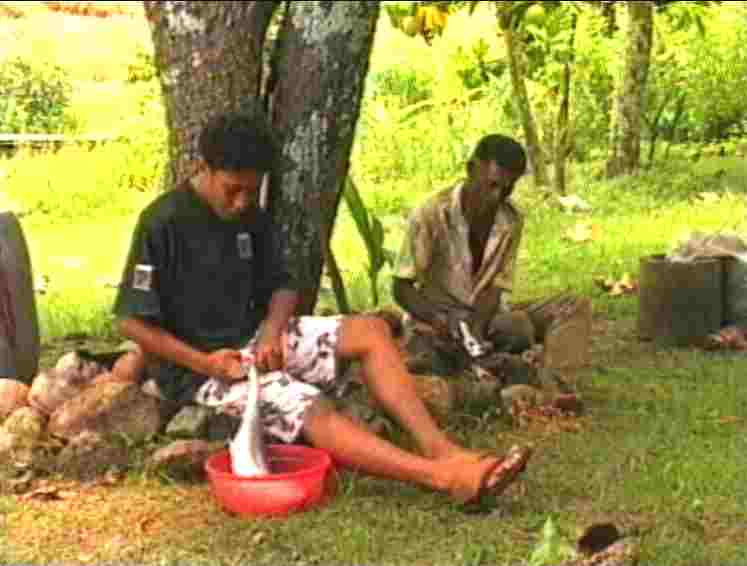
It was the first-ever documentary on climate change and the South Pacific, made by a native Pacific islander (all films till then had been made by visiting foreign film crews). Directed and produced by Bernadette Masianini of Fiji (photo on extreme right below), its story was based on the experience and impressions of two teenagers growing up on two islands, a girl and boy, both facing uncertain futures.

Here’s what I wrote for the Truth Talking book that accompanied the film series.

gutting-fish.jpg fish-trap.jpg ttplogofin.jpg copy-of-berni.jpg

Dilagi loves her village. Her parents and grandparents, and generations before them, were born and raised in this village. Her family has lived here for centuries, but by the time Dilagi has children of her own, her village might no longer exist.

In Fiji, where Dilagi lives, traditions and cultures are rooted in the home; the village is an integral part of a person’s identity. Like most of the eight million people who live in the Pacific island states, Dilagi’s village is located close to the sea. The bounty of the ocean has long sustained the islanders, but now the same waters have begun to threaten their future. Every year, the shoreline seems to move a little inland, and the beach gets a bit smaller. Before the current century ends, according to scientific projections, many low-lying Pacific islands will go under the rising seas either in part or full – and their histories, traditions and unique cultures will be lost forever.

Dilagi is somewhat aware of this perilous future, but can do nothing about it. The changes in global climate that are causing sea levels to rise and triggering severe storms and cyclones are the result of pollution and environmental degradation generated thousands of miles away in the industrialised world. Says Dilagi: “The villagers cannot understand why the waves are coming on to shore. They think these are signs that the end of the world is near.”

The Pacific contains 22 states, made up of thousands of small islands, with a multitude of cultures and traditions. Diverse as they are, they all share Dilagi and her neighbours’ concerns about the future.

Two thousand and five hundred kilometres north-east of Fiji, sitting on the island of Kiribati, Bernard stares at the same ocean that seems to be lashing out at his tiny island nation with increasing force every year. One of the lowest lying islands in the world, no place on Kiribati is higher than four metres (13 feet).

Building sea walls has provided only a temporary respite against the waves. Not even the grave yards or tombstones are spared. Bernard visits Mrs Saipolua’s house, which she has had to move twice to escape from rising seas. In her backyard, the gravestones of ancestors are being constantly battered by the waves. “Even the final resting places of our loved ones are not spared…the sea action had cracked the gravestones,” she says.

“With our islands being so small, the sea is our biggest resource,” says Bernard. “Over the years, the generations have perfected the ways to use the oceans respectfully for our survival. Ironically, it is the very ocean on which we depend that now threatens us.”

All Pacific islands – including Kiribati and Fiji — have their own unique culture and traditions. They may share the world’s largest ocean and sometimes common ethnicity, but no two island cultures are the same. From the way they collect their food to how they celebrate festivals, their traditions revolve around the geography and natural resources of the islands and the sea.

voices-from-the-waves-image1.jpg

In this intricate tapestry weaving islands with humans, everything has a place and purpose. For example, the traditional dances entertain and also record the people’s history. Costumes for these dances are produced from plants unique to the Pacific and decorative garlands are made from the brightly coloured flowers. Extreme weather events and climate anomalies that now threaten the environment of these islands may soon drive many plants and animals into extinction. As Bernard asks, “If changes to the climate affect our environment, how long will these aspects of our culture survive?”

For a majority of Pacific island people, climate change is a very real concern that is already impacting them; it’s not a doomsday scenario sometime in the future. Closely linked as they are to their islands and the sea, they just cannot accept relocation in a far away land as a survival option.

“Everything I need in my life is here on this island — my elders, my parents, my friends,” says Bernard. “I cannot imagine life anywhere else, and I cannot imagine that I might have to go and live in another country if my islands are no longer habitable….”

From across the sea, Dilagi agrees: “Our villagers have lived here for hundreds of years. Their traditions and cultures are rooted in this area. They cannot imagine life anywhere else.”

Order this film on DVD or VHS from TVEAP e-shop

Fossil fuels and fossil fools in India

‘‘People in India, unlike the West, don’t understand the seriousness of climate change….They think global warming is a fantasy. Indians are using fossil fuel like never before. We have constructed oven-like buildings and spend enormous energy cooling them.’’

I came across these words by the well known Indian environmental film-maker Mike Pandey in an article in NewIndPress that surveyed how Indian documentary film-makers are rising to the challenge of communicating climate change.

The article, ‘Meltdown on Film’ published on 15 March 2007 highlights the formidable task of raising awareness in India, now one of the fastest growing economies in the world, consuming larger volumes of fossil fuels every year.

Mike knows what he’s talking about: his film Global Warming went largely unnoticed when it was released in India three years ago.

And he is one of India’s top notch film makers on environment, wildlife and natural history. He has won three Panda Awards — also known as the ‘Green Oscar’ — at the Wildscreen Film Festival held every other year in Bristol, UK — and considered to be the most important festival of its kind in the world. (Modest cough: I was on the jury of Wildscreen 2000, when we gave Mike one of his three Green Oscars.)

Viewer apathy is not the only problem that India’s environmental film-makers have to contend with. Here’s an extract from the article:

Like any environmentalist, our documentary filmmakers are “concerned” about issues like global warming. But the lacklustre reactions of research agencies (who ‘‘support” the cause but don’t really come forward to fund documentaries), zero interest from broadcasters who, according to one filmmaker, prefer ‘‘sexy environmental stories’’, together with viewer apathy, are the reasons why the few impressive documentary films on climate change vanish after a few screenings at festivals. Take the Public Service Broadcast Trust’s (PSBT) Open Frame, for instance, the annual documentary film festival held in Delhi. Or the roving environmental and wildlife film festival CMS Vatavaran, where open discussions are held after every screening. Barely a couple of films are chosen by the public broadcaster Doordarshan after they are screened at these two festivals, which is why most of the documentaries don’t ever reach the masses.

‘‘Public interest stories and documentaries are the last thing broadcasters want to show,’’ quips Pandey. ‘‘People like me are lucky to have found space on DD. Value-based programmes are nudged out so easily by broadcasters these days.”

The article continues:

A few years ago, when Mike Pandey returned to his favourite spot in Austria to capture a snowcap for one of his films, he was shocked to see it had melted. He says, ‘‘I had seen the ice cap the previous year. I had to go deeper into the area to get my shots. It’s common in Austria to see ice caps vanishing. You see blossoms and splendid crops in many areas.’’ After Earth Matters, which is being shown on Doordarshan, Pandey is coming up with a series of six films on global warming, which will talk about ‘‘using alternative energy for the future.’’

Whenever out for shoots at Lakshwadeep, Kochi and Gujarat, Mike has been noticing ‘‘visible changes’’ in ‘‘ocean ferocity’’ and where the sea neighbours the land. ‘‘The water has come in a bit more into the land over the years,’’ he observes.

‘‘You don’t have to be a scientist to notice these changes; you can see it all happening now. Unfortunately, people living along the Indian coastline will be the first ones to face any kind of major impact,’’ he adds.

On my visit to Hyderabad last week, I was told that there are now close to 50 TV channels that cover news and current affairs on a 24/7 basis (in English and other Indian languages). Yet this kind of news hardly seems to make the headlines….it’s probably moving too slowly.

Mike Pandey and other environmental film-makers have their work cut out for them.

“If (Indian cricketer) Sachin Tendulkar or (Bollywood star) Shah Rukh Khan loses his cell phone, the news will reach every nook and corner of the country, but the fact that iodine is essential for the human body is still not known widely,” Mike told India’s Frontline news magazine in 2004. Read full article: Nature’s film-maker in Frontline of 18-31 Dec 2004

Read TVE Asia Pacific website feature on Mike Pandey’s 2003 film on the whale shark in India

Changing climate and moving images

Climate change is suddenly popping out of everywhere. Media outlets that couldn’t discern climate from weather not too long ago are covering the politics, technology, economics — and sometimes, science — of climate change.

We have to thank Al Gore and his Oscar-award winning film, An Inconvenient Truth, for helping climate change to reach that tipping point. For sure, it has been building up for years, but it took moving images to really push it up the agenda.

While the political stature of its ‘star’ — and now, the Oscar – takes this film to a league of its own, it’s not the only global documentary about this important topic. In recent years, a number of factual and make-belief films have been made with climate change as their principal theme.

No wonder Hollywood is attracted to this subject – it offers the ultimate planetary disaster, even if it unfolds slowly over decades. That’s not a major constraint in the land of make-belief: in The Day After Tomorrow (2004), director Roland Emmerich just accelerated natural climatic processes to happen within weeks – with dramatic results for his story (and box office).

It may be convenient to take such liberties with the truth in fiction, but delivering factual and credible content involves bigger challenges. That requires balancing facts, opinions and interpretations while engaging today’s easily distracted audiences. The task becomes harder when the subject is as technical as climate change.

I recently wrote a review of two major climate change documentaries, both released last year: An Inconvenient Truth, and The Great Warming.

Read the full review on TVE Asia Pacific website

One Planet’s Climate Challenge on BBC World

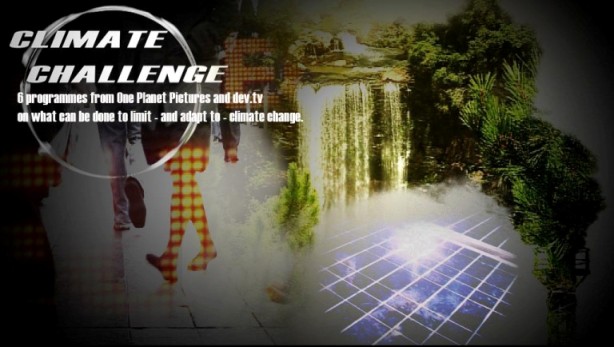
Climate Challenge is a new, weekly, 6-part series coproduced by our Geneva-based partner
dev.tv and UK partner, One Planet Pictures. It begins broadcasting on BBC World from Wednesday, 4 April 2007.

The series goes local and global to find here-and-now answers to climate change. It makes the point: in the fight against global warming, developed and developing countries must work hand-in-hand to find viable solutions for all.

climate-challenge.jpg

Here’s the blurb from One Planet Pictures website:

So it’s official. Even President Bush in his latest State of the Union Report has acknowledged that global warming is happening. The scientists of the UN’s Intergovernmental Panel on Climate Change say that only swingeing cuts in the release of greenhouse gases can save our planet from becoming a Venusian hothouse.

But how can that be achieved when even the modest Kyoto targets are not being met by most rich countries? And when the world’s most populous countries are expanding their energy requirements at an unprecedented rate? What can be done to head off a catastrophe?

In Climate Challenge, One Planet Pictures’ film-makers focus on some of the most promising approaches to turning down the global thermostat. Climate Challenge goes local and global in search for solutions that won’t put a break on economic growth

The series will be distributed by TVE Asia Pacific after its initial run on BBC World.

For broadcast times, see dev.tv website or checkout BBC World programme schedule

BBC World is the commercially-operated international broadcasting arm of the BBC.

More memories of Theeban…

On March 17, I wrote about introducing our Children of Tsunami documentary at the DC Environmental Film Festival, and and how I dedicated the screening to Theeban – the Sri Lankan boy who survived the Asian Tsunami, but was killed in the island nation’s political violence on 3 March 2007.

My personal tribute to Theeban has been widely circulated online. Edited versions have appeared on MediaHelpingMedia (UK) and Asia Media from University of California Los Angeles (USA).

It appears that my tribute has moved many readers. I’ve heard from several by email – encouragingly, all supportive and sympathetic. Among those who wrote was young journalist Chathuri Dissanayake, who worked as a researcher for Video Image, the Sri Lankan production company we (TVE Asia Pacific) engaged to film Theeban’s unfolding story for most of 2005.

With her permission, I want to share her recollections and views:

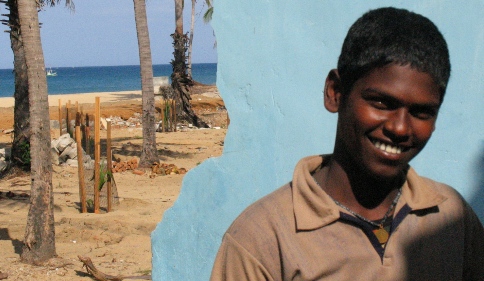
It’s a very nice piece about Theeban. It captures what we had grown to love in the boy. The picture you have of him taken on I think our first visit brings back a lot of memories.

theeban.jpg

When he was abducted (in late 2006), I always thought at least he is alive, now I’m still trying to come to terms with the fact that he is no more. The best memory I have of him is his wide smile. The pictures you have chosen bears ample testimony as to how beautiful that is. Even though he couldn’t communicate with us coz of the language barrier his smile and eyes were so expressive. When I first met him at the camp what struck me most was his unspoilt innocence. I wish I had taken a bit more trouble to help him out after the filming ended.

Theeban gave life to harsh realities of the conflict in the country that I have lived all my life with. Before meeting Theeban and visiting his village, I only knew what media told me of the east but Theeban brought it closer to me. Earlier, when ever I heard of the violence in the north or the east, it was just news to me as it was to many living in the “right side of the country”. But the Children of Tsunami project opened up the other side of the story, and as a young journalist, I gained a lot of experience.

To me, Theeban was real and he represented many youngsters in the area. His scattered dreams and hopes were real and it is a tragedy that help doesn’t reach them. Nothing substantial was done to help him and many others like him to rebuild their lives. Theeban was too young for any sort of vocational training that was available, and he didn’t have the right qualifications. My dilemma of what would happen to Theeban and many like him whose futures were washed away in the Tsunami grew as all the options of vocational training I checked out for Theeban turned out that applicants needed at least (GCE) Ordinary Level. Theeban was forced to leave school and it looked as if it never struck to any authority that someone needs to look after the youths like Theeban.

theeban-photocredit-video-imagetveap.jpg

To me Theeban, like many others was another victim of forces that he had no control over. It was not his fault that a tidal wave destroyed his family but he paid for it dearly, gave up his education and took the responsibilities of the bread winner of the family on to his shoulders. When the Tsunami struck he was still hopeful he wanted to earn money and take care of his brothers. He missed his mother dearly but found a bit of comfort in his grandma. But the violence that sprang up in the area had no mercy on him. Theeban’s story ended in tragedy coz the forces that were against him were too strong for him to fight back. The hope I saw in his eyes still haunts me. But I take comfort in knowing that at least he tried to fight back. No matter what his shy smile and shining eyes will remain with me.

That is how I remember Theban best. A youth who managed to smile and have a hope for the future in spite of the trauma that he went through when many grown up men around him gave up on life.

Have you made your million dollars yet?

Money, money, money!

Many development film-makers like to decry our society’s obsession with money, consumerism and greed. Some would make films that passionately promote sharing ideas and resources at community level, and advocate common property resources over private ownership.

But when it comes to rights of their own film/s, these very film-makers would become extremely possessive: they want to restrict it in every conceivable way.

They feel justified in such sentiment and action: after all, they have invested a great deal of time, effort, creativity and hard-won resoures to make their films. They must now seek a ‘return on investment’ like everyone else (it’s a material world!). Film-makers too have families to feed.

No argument on that last one. But it would be interesting to find out how many – or how few – development films deliver any appreciable ‘returns on investment’ to their makers. Certainly in developing Asia, development film-makers will be seriously endangered species if they had to rely on license fees or royalties for their survival.
https://i0.wp.com/www.hcn.org/allimages/1996/oct28/graphics/961028.001.gif
After a dozen years of extensive networking with environment, wildlife and development film-makers across Asia Pacific, I have yet to come across a single film-maker who made his or her million dollars from a film.

Yet, many continue to cling on to the traditional notion of copyright in film, perhaps hoping that sooner or later, that cherished million bucks would come calling.

And in the meantime, they continue to approach every known funding source – and many unknown and unlikely ones – for supporting their next film. At TVE Asia Pacific, we receive our fair share of these requests every month – and we are not even a funding source for independent films! These requests are accompanied by impressive CVs or filmographies, listing past films produced.

Produced, yes. But how many are circulating? How many have been seen outside film festival circuits, or beyond a one-off broadcast (or two)? How many films are available for educational, advocacy, training or activist purposes at affordable cost of duplication and dispatch?

The answer is depressing: precious few.

Because our film-makers are waiting for their million dollar deal or sale, and won’t let go of their creations. Even if many have been made using development donor (i.e. public) funding, these films are not in the public domain.

That, to me, is incongruent with the lofty ideals that many development films proclaim: sharing ideas and resources at community level, and advocating common property resources.

We have to walk our talk, or we risk joining the already burgeoning ranks of hypocrites in our societies.

The time has come for documentary film-makers, especially those covering development topics, to take a fresh look at copyright. That doesn’t mean abandoning all our rights to be known and acknowledged as creators of our films.

For a start, I strongly recommend an interesting and insightful essay, “Shoot, Share and Create: Looking beyond copyright makes sense in film“, written by a young Indian lawyer-activist specialising in intellectual property. Lawrence Liang is a Bangalore-based lawyer who works at the Alternative Law Forum. I had the opportunity of meeting the dynamic and articulate Lawrence at the Asia Commons meeting in Bangkok in June 2005 – he’s certainly a man to watch in this rapidly evolving field of managing our digital commons and how to safeguard the public interest in the bewildering era of digital media.
Lawrence Liang

Here’s how he starts his essay, which he wrote as an open letter addressed to Indian documentary filmmakers:

When I was in law school, I had great aspirations of wanting to be a filmmaker, and an FTII-type (Film and TV Institute of India, a prominent school for film-making) friend told me the best place to start was to watch a lot of foreign films and documentaries. So I did that rather dutifully and spent many hours when I should have been reading corporate law, watching documentaries.

My fondest memory of my placement in Mumbai with a law firm was when we took off to the Tata Institute of Social Sciences (TISS) and watched Anjali Monteiro and K P Jayashankar’s film on the Yerawada prison in Pune.

I gave up on the idea of becoming a filmmaker after we finally did do a documentary on law school. But by then the bug had bitten and I had fallen in love with cinema and the documentary form as well. I think watching documentaries has also made me a better lawyer than I would have been if I read Ramiaya on the Indian Companies Act. So if I have written this rather longish argument about why documentary filmmakers should start thinking about open content licenses, it is with a sense of repaying a debt.

Read the full essay at Alternative Law Forum website

Read my own call for recognising poverty as a copyright free zone

Ratomate’s best cup of tea

In another post earlier today, I quoted a doctor turned film-maker in India saying people affected by HIV are dying more from the social stigma attached to the disease than by the disease itself.

Social stigma is a wide-spread problem that confronts people living with HIV in all parts of the world.

But occasionally, we hear some good news: how community has overcome its prejudices and accepted those infected with HIV with affection and care. Usually, it happens after going through the knee-jerk reactions.

It would be very worthwhile for some research to be done on how and when community attitude changes: what are the triggers? what is the tipping point?

Five years ago, we had first hand experience of this through a film that we at TVE Asia Pacific commissioned under our Truth Talking documentary series.

The film, titled Love for a Longer Life (26 mins, 2002) was directed by leading Nepali documentary film-maker Dhurba Basnet.
dhurba-basnet.jpg

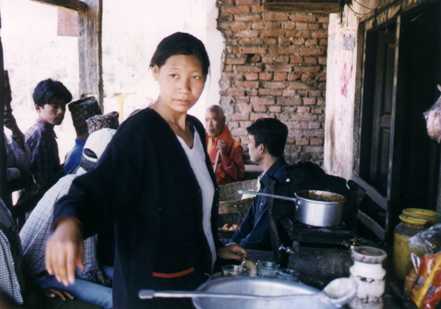
The best cup of tea in the Ratomate village, in central Nepal, is made by a woman called Laxmi Lama. She works in a tea shop owned by her father. “People tell me my father does not know how to make good tea,” she says. “They want me to make tea. The men like their tea strong. When I give my customers strong tea they say one cup is enough for the whole day.”

This is nothing unusual – except that Laxmi is living with HIV. A few years ago, no one in her village would have come near her, let along clamour for a cup of tea she makes.

Born into a very poor family, Laxmi was sold off to a Bombay brothel at the age of 14, and worked as a commercial sex worker for nearly three years before returning to Nepal. She married a man from her village and had settled down to a peaceful routine when a health worker tested her blood and found her positive for HIV. That changed everything dramatically: her husband fled, never to return, and everybody shunned her. The pregnant woman sought refuge in her parents’ house.

That was the fate of most Nepalis living with HIV – abandoned by friends, ostracised by community and left to their own devices. But thanks to the perseverance of a few courageous people – many HIV positive themselves – community attitudes have changed slowly, and have come almost full circle: being reassured that HIV does not spread through casual physical contact, they have accepted her back into their fold.

lakshmi-lama.JPG The moment of truth is when she makes Ratomate’s favourite cups of tea with her bare hands, and men and women flock to taste it. Such a major transformation of community attitudes captured in such a simple, elegant sequence.

Laxmi’s neighbour Kumari Shrestha sums it all up: “We have to give her love. If we do that, she will live longer.”

It would be wonderful if we can discern how and when this change happens. So that it can be induced in thousands of other villages and communites where persons living with HIV are currently battling the virus within, and stigma without.

View a clip from the film here.
Order the film from TVEAP e-shop