Al Jazeera International: Looking hard for the promised difference

Image courtesy Al Jazeera

This is how Al Jazeera International (AJI), which started broadcasting on 15 November 2006, promoted itself.

In its own words, the 24/7 English language channel set out to ‘balance the information flow from (global) South to North, providing accurate, impartial and objective news for a global audience from a grass roots level, giving voice to different perspectives from under-reported regions around the world.’

Noble ideals, indeed — and we fervently hope they succeed. That’s what I said in my op ed, Ethical Newsgathering: Biggest Challenge for Al Jazeera, published online within days of the new channel going on the air.

I said: “In recent years, the self righteous arrogance and the not-so-subtle biases of BBC and CNN have become increasingly intolerable. But unless it’s very careful and thoughtful, AJI runs the risk of falling into the same cultural and commercial traps that its two older rivals are mired in.

“CNN can’t get out of its US-centric analysis even in its international broadcasts. And the BBC news team is like a hopelessly mixed up teenager: one moment they are deeply British or at least western European; the next moment they are more passionate about Africa than Africans themselves.

“Desperately seeking legitimacy and acceptance, these global channels have sometimes traded in their journalistic integrity for privileged access, exclusives or -– dare we say it? -– to be embedded.”

I admit that I haven’t been watching enough of AJI to come to any firm conclusions. One reason: the new channel is still not widely available in some countries that I visit and spend time in.

But going by what is on their YouTube channel, where some 1,300 video segments have been placed so far (as at 29 August 2007), I have a rough idea of AJI’s first few months of coverage.

I’m looking long and hard for the difference that they so emphatically promised. Instead, I find them a paler version of BBC World, at times trying oh-so-hard to be just like the BBC!

Take, for example, the coverage they have recently done on the bloody and protracted civil war in Sri Lanka. Being where I live and work, I take a particular interest in this topic.

In a 2-part edition of AJI’s People & Power programme, Juliana Ruhfus investigates the impact of Sri Lanka’s civil war.

People & Power: How the East was Won: Part 1 of 2

People & Power: How the East was Won: Part 2 of 2

I don’t have a problem with AJI’s analysis in this documentary, which tries hard to be balanced and fair in what I know is a very difficult subject to cover, with intolerant hardliners on both sides of the conflict.

But I have several issues with how it has been put together – the norms and ethics of their newsgathering.

* A white blond woman, so evidently a parachute journalist, is reporting and presenting the story. Why isn’t an Asian telling this story?

* She is repeatedly mispronouncing all the local names. Just like the BBC does as a matter of routine.

* She gestures, interviews and talks exactly like those know-all reporters from the BBC. At times I detect a faint condescension in her voice, but that may be my imagination.

* For part of the coverage, the intrepid AJI reporter becomes embedded with the Sri Lankan armed forces, and interviews civilians under the watchful eye of military men. This is hardly a credible way of eliciting any honest responses!

* More importantly, she shows little regard for the personal safety of some people she interviews. At one point, she asks three muslim men if the Eastern Province of Sri Lanka is now any safer than before it was ‘liberated’ by the government forces. The men are clearly uncomfortable with this question. Honest answers can cost them dearly. But why should she care? She persists, showing close-ups of these individuals.

* Even when she interviews people who had explicitly asked for concealment of their identity, she leaves tell-tale signs for those identities to be easily guessed. A woman whose teen-aged son has been coerced into joining a paramilitary group is filmed in silhouette — not a good enough cover. Real voices have not been altered through a synthesizer.

These and other observations blur the difference between BBC and AJI in my mind. With a few notable exceptions, most BBC reporters don’t care one bit about the hapless, distressed people whom they interview. All they want is to get a ‘good story’ with dramatic visuals.

AJI is desperately trying to outdo the BBC in all the latter’s wrong aspects. Otherwise why should Juliana Ruhfus try so hard to get a damning comment from an interviewee evidently ill-at-ease of being ambushed by this western woman?

I still want to have an open mind about AJI’s promised difference, and keep hoping that it will emerge sooner rather than later. But this kind of newsgathering and film-making don’t augur well.

If this is the ethical standard of journalism that AJI aspires to, we who had high hopes of their becoming a real alternative to the dominant two are going to be disappointed.

Read my earlier post: Wanted: Ethical sourcing of international TV News

Watch Al Jazeera on YouTube

AJI AJI

People Power: Going beyond elections and revolutions

“At the bottom of all the tributes paid to democracy is the little man, walking into the little booth, with a little pencil, making a little cross on a little bit of paper.”

That’s how Sir Winston Churchill summed up democracy at work. Elections – at national and local levels – give ordinary people the chance to decide who would run their affairs for the next few years. At least in theory.

In the modern world, however, elections alone cannot ensure that people’s wishes prevail. Better models of engagement are needed…and are being developed across the globe.

Historically, people responded to bad governance by rejecting governments at elections, and occasionally by overthrowing corrupt and despotic regimes through mass agitation. In the past decade, this “people power” has toppled rulers in the Philippines, Nepal and Ukraine among others, and sent a strong signal to autocratic governments elsewhere.

Yet such people power has its own limits: in country after country where one political party – or indeed political system – was replaced with another through popular vote or revolt, people have been disappointed or dismayed at how quickly the new brooms lose their bristles. The solution must, therefore, lie in not just participating in elections or revolutions, but in constantly engaging governments and keeping the pressure on them to govern well – or else.

So what is to be done, as Lenin famously asked? One challenge is to find new approaches to promoting good governance.

from-people-power-documentary.jpg
Photo: An election awareness public rally in Rajastan, India (late 2003)

An example is Social Accountability practices – individuals or civil society groups getting together to demand accountability from different levels of government. This represents a significantly higher level of citizen engagement than merely changing governments at elections or taking to the streets.

It involves the careful gathering of data, their systematic analysis and knowledge-based engagement and negotiation with elected and other public officials. Crucial to this process is accessing and using critical information – about budgets, expenditures, excesses, corruption, performance, etc.

The new breed of citizen voice is about using information in a way that lead to positive change in government and society. People use knowledge as a pivotal tool to improve governance, better use of common property resources, and management of public funds collected through taxation or borrowed from international finance institutions.

The media can play multiple roles in such social accountability processes. At a basic level, media’s coverage of these processes adds momentum to citizen movements. At a higher level, some citizen groups are use media as an information tool or campaigning platform or both, optimising each other’s strengths.

Here’s an example from my own experience. In 2004, TVE Asia Pacific produced a half-hour international TV documentary titled People Power that profiled four Social Accountability projects in Africa (Malawi), Asia (India), Europe (Ireland) and Latin American (Brazil).

First broadcast on BBC World in February 2004, it has since been widely distributed to broadcast, civil society and educational users in the global South. It is still available from TVEAP on DVD and VHS video.

Hernando de Soto

We interviewed the Peruvian economist Hernando de Soto (photo, above) of the Institute for Liberty and Democracy in Lima, Peru, who said: “Supposedly in a democracy, if the majority of people are poor, then they set the criteria of what is right. Yet all those mechanisms that allow [society] to decide where the money goes — and that it is appropriately allocated — are not in place throughout the Third World. We take turns electing authoritarian governments. The country, therefore, is left to the [whims] of big-time interests, and whoever funded the elections or parties. We have no right of review or oversight. We have no way for the people’s voice to be heard — except for eight hours on election day.”

When the India story was being filmed, in late 2003, by coincidence several states were holding elections for the state legislatures. Our crew followed the election process in the northern Indian state of Rajastan to see how a citizen group was forcing social accountability for all standing for election.

Mazdoor Kisan Shakti Sangathan (MKSS) invited the people of Beawar, Rajastan, to a public meeting where the affidavits on the local candidates were made available to everyone. This process of social accountability and transparency extends beyond the political process to the village level where the MKSS has successfully lobbied for the right to information legislation to overcome the systemic corruption in the political and bureaucratic organisations.

from-people-power.jpg

MKSS’s struggles has led to laws to ensure people’s right to information across India.

“India is the largest functioning democracy in the world and it has significant strengths (but) it also has weaknesses,” says Dr Bela Bhatix (photographed wearing red saree), Associate Fellow of the Centre for the Study of Developing Societies, interviewed on our film. “Among the strengths is that we have been able to sustain our democracy…It’s no small matter to have regular elections and we usually have something like 60 per cent turnout — around 600 million people, or twice the size of America. But at the same time there are some very important weaknesses of our democracy which we really need to think about.”
dr-bela-bhatix-from-people-power.jpg

Social activist Aruna Roy, coordinator of MKSS (photographed below), says: “In 1996, the MKSS sat in a 40-day sit-in at Beawar and we were demanding the right to access records of the Panchayat, the smallest elected body in India. We involved the entire city and made it a people’s campaign. We involved people from all over India, and the national campaign for people’s right to information was born.”
aruna-roy.jpg

Watch India story from People Power on TVEAP’s YouTube channel:

All photos captured from People Power documentary, courtesy TVE Asia Pacific.

Read TVEAP website feature, People Power beyond elections and revolutions by Nalaka Gunawardene

Memories of Toyama: Japan Wildlife Film Festival

Image courtesy JWFF

The Japan Wildlife Film Festival opens today – 23 August 2007 – in Toyama, in eastern Japan.

As their website says: “Established in 1993, the Festival is held biennially. It started in the hope that by screening moving images of the wonders of wildlife and the co-existence of nature and people, we could help to increase understanding and awareness of the urgent need to protect and care for the natural world.”

The last Festival, in August 2005, received 331 film entries from 35 countries and some 30,000 people, including many school children, attended the public screenings staged throughout the Toyama region. This level of public participation is exceptional for an international film festival — and shows how well the organisers, the Nature Film Network, have engaged the local people.

International film-makers and broadcasters now know the Festival as one of the biggest of its kind in Asia.

I’m missing Toyama this year. I participated in the last two festivals and have fond memories — of watching great films, having excellent company and enjoying outstanding Japanese hospitality in the salubrious holiday city of Toyama.

In 2003, I was part of the festival’s international jury. Then at the 2005 festival, I was invited to give a talk about our Children of Tsunami media project, which at the time was documenting the personal recovery stories of eight families affected by the Asian Tsunami in India, Indonesia, Sri Lanka and Thailand.

In both years, a highlight of my experience was the opening evening reception, held at a traditional Japanese farm house restored by NFN and located a half-hour’s drive outside the city. There, the local people hosted us to food and beverages prepared at home. An evening of simple, unpretentious cultural exchange — with nothing ‘official’ about it!

That’s the character of NFN chairman Hirohisa Ota: a man of few words who leads by example and brings together a small but dynamic team of staff and volunteers to run the 4-day festival with clockwork precision.

The photo below shows international participants at JWFF 2005.

Photo from JWFF website

Image from JWFF website

List of finalist films competing in JWFF 2007

Read my earlier post on Toyama 2005: Lawyers who locked up the Butterfly Tree

Rajiv Kafle: A ‘Portrait of Commitment’ against HIV

Photo by Shahidul Alam, Drik/Majority World

It was good to see Rajiv Kafle again — even if only in this photograph, where he is the grown up surrounded by children. This was taken by my friend Shahidul Alam, whose latest photo exhibition, Portraits of Commitment, I’ve just seen.

I immediately recognised Rajiv because he was a key character in a documentary film we at TVE Asia Pacific commissioned five years ago, in 2002. Love for a Longer Life, directed by Nepali film-maker Dhurba Basnet, was part of a package of Truth Talking films that probed how Asia Pacific societies were coping with rapid change or crises.

At that time, there were 50,000 Nepalis living with HIV. But Rajiv was the very first among them to publicly announce that he had HIV — it created ripples in the conservative Nepali society.

He is a former injecting drug user who contracted HIV through unsafe needles.

“I injected drugs for two years. I got infected with HIV when I used a contaminated syringe belonging to one of my friends. He was HIV positive and I used his syringe without sterilising it properly,” Rajiv described his case history on our film.

After coming to terms with his own HIV status, Rajiv turned activist. For the past few years, he has been a crusader to educate Nepalese youth to prevent them from contracting HIV through ignorance. He gives talks at schools and colleges about his experiences of living with HIV.

It has not been easy: his revelation shook the conservative Nepali society, where most people are still reluctant to talk about HIV, associating it directly with illicit sex.

“Stigma, discrimination — then death.” That’s the bleak future that many HIV positive people in Nepal face according to Rajiv. “There is a great deal of stigma and discrimination against HIV/AIDS sufferers. Because there is so much negative publicity, an HIV-positive person finds it difficult to reveal his condition. He will have heard only about stigma, discrimination and death.”

“If we create a favourable environment, people will definitely come out and let others know,” he says, adding: “It took me a couple of years before I was able to publicly announce that I was HIV positive.”

Change was happening even five years ago when the camera crew from Nepal Forum of Environmental Journalists (NEFEJ) followed him across Kathmandul Valley as he gave talks at schools and other public places.

“Now I see a change. Lots of young people understand the problem and are getting involved. The media and public are now more interested in this subject and they want to interact with people who have been through this.”

film-maker-dhurba-basnet.jpg

It wasn’t easy to produce Love for a Longer Life. As Dhurba Basnet (photo, above) reported at the time: “The major problem we faced during shooting, however, was that it was very difficult to get people living with HIV to talk naturally on camera. We had to first win their trust. This we achieved by behaving with them as normally as possible.”

After some shooting had been completed, Rajiv Kafle fell ill. “Since he was a major character in the film we had to wait a whole month while he recovered.”

Read more about Truth Talking films from across Asia Pacific

Shahidul Alam’s blog post on Portraits of Commitment photo exhibition featuring individuals making a difference in South Asia’s battle against HIV

Read my earlier blog post on HIV in Nepal: Ratomate’s best cup of tea (29 March 2007)

Rajiv Kafle photo by Shahidul Alam, Drik/Majority World

AV against HIV: Recalling my own ‘Richard Gere moment’

The 8th International Conference on AIDS in Asia and the Pacific, or ICAAP8, opens in my home city of Colombo in a few days’ time. As I wrote in an earlier post, some of us have been blocked out of this important event by some arrogant members of the conference Secretariat. But our interest in HIV/AIDS advocacy will not be so easily deterred.

On a positive note, I have vivid memories of my active involvement in the XV International AIDS Conference, held in Bangkok, which attracted over 17,000 delegates to the Thai capital for a week full of events and activities. One of them was the official 2004 International AIDS Film Festival, which TVE Asia Pacific organised at the invitation of the Thai Ministry of Public Health and the International AIDS Society.

2004 AIDS Film Festival in Bangkok 2004 AIDS Film Festival in Bangkok 2004 AIDS Film Festival in Bangkok 2004 AIDS Film Festival in Bangkok

Over 4 days, we screened close to 50 TV and video films at three venues, drawing a total of more than 8,000 visitors. These films came from all over the world, in response to an open call that we had issued. We received a rich mix of genres: documentaries, docu-drama, current affairs programming, short television spots as well as entertainment formats — animation, dramas and reality television.

Films at this festival captured the kaleidoscope of emotions, challenges and contradictions presented by the AIDS pandemic. They were evidence of how TV and film professionals are covering HIV as a major development concern of our times.

That formidable task — which we summed up as ‘AV against HIV’ — received a boost when movie industry heavyweights joined in. We had documentaries narrated by Angelina Jolie, Will Smith and Glenn Close.

And while we were organising the festival, actor-activist Richard Gere sent the word saying he was interested in being associated with it. Of course we seized the offer, and had him open the film festival — hugely raising its profile in the Thai and international media.

2004 AIDS Film Festival banner by TVEAP Richard Gere arrives for 2004 AIDS Film Festival, Bangkok Richard Gere being welcomed by Thai children

After three years, I can still remember the moving speech that Richard Gere made at the opening ceremony in the Scala cinema in downtown Bangkok. Talking to an audience packed with diplomats, businessmen, journalists, activists and government officials, he said his experience with persons living with HIV had changed his life even more than his study of Tibetan Buddhism.

He recalled how he had lost a very close friend to HIV. “I don’t want anyone else to die like that,” he said, adding: “It (AIDS) has gone on too long, way too long.”

Then he did something simple yet very effective. He asked everyone who knew at least one person living with HIV to put their hands up. A few dozen hands went up in an audience of around 500.

Next, he said: hands up everyone who has lost at least one person to HIV. Some hands went down while three dozen remained held up.

I did not put my hands up for either call.

That was a moment of truth for myself. Until then, I hadn’t really, closely known anyone who was living with HIV (and disclosed that fact to me). I also had not lost anyone to HIV. Not knowingly anyway.

As the event progressed, I sat there asking myself:
• What kind of little comfort zone or cocoon am I living in?
• What kind of society do I live in, where very few people – if anyone – would dare to acknowledge they are living with HIV?
• And how can I remain authentic, communicating HIV from such a detached standpoint?

Richard Gere at XVI AIDS Conference in Toronto, 2006

I’ve been writing and speaking about HIV for almost two decades. In that time, I have touched on many aspects of HIV, including:
• The science of HIV/AIDS, as a science communicator;
• Public health aspects of the global pandemic as a feature writer;
• The human rights dimensions of HIV, as a development communicator; and
• Nexus between media and HIV, as a media watcher/researcher.

But I sat there in the Scala cinema wondering if it was sufficient for me to have done all that with the objectivity of a journalist, or the clinical detachment of a researcher.

I then realised that when it comes to HIV/AIDS, we have to suspend these ordinary frameworks and ‘conditioning’ of our training.

We have to:
• Stop thinking of it as someone else’s problem;
• Get away from the ‘us’ and ‘them’ mindset;
• Understand that no one is immune or buffered from the human immunodeficiency virus, HIV; and
• More than anything else — stop living in denial.

These apply to individuals, communities, society — and also governments.

That was my Richard Gere moment.

Read TVEAP news report on 2004 AiDS Film Festival

See more photos on 2004 AIDS Film Festival on TVEAP website

Photos by Jerome Ming and Indika Wanniarachchi for TVEAP

Earthcare Outreach: taking moving images to the grassroots

On 19 July 2007, I wrote about the need for natural history and environment film-makers to take their films back to the locations and communities where they filmed.

I cited the specific example of the Brock Initiative, started by ex BBC Natural History producer Richard Brock, which is supporting projects in several countries in Africa and Asia.

In today’s mail, I received the DVD of Tiger – the death chronicles, the latest documentary by the award-winning Indian film-maker Krishnendu Bose. I’m going to watch and write about it separately, but this reminded me of the outreach work he and his company, Earthcare Films, have been doing for years.

After working for a dozen years with factual film-makers from across Asia, my experience is that not many are really interested in any outreach besides a high profile broadcast. For sure, broadcasts help draw attention to a film and its creator/s. But as we have discussed in recent blog posts, broadcast television is not an ideal platform to get a discussion going on issues and concerns. In fact, many film makers are finding it harder to get their serious films broadcast at times with better audience ratings.

Still, surprisingly few film-makers have time or patience for serious narrowcast outreach. Yes, it is a time consuming, tedious process. The logistics can be demanding and expensive. And there is not much glamour (or ‘arty and intellectual feel’) in going to a small town or remote village and playing back your film to a few dozen people living on the edge of survival.

Image courtesy Earthcare Films website

But as exceptional film-makers like Krishnendu (in photo above, taken from Earthcare Films website) know well, it can be an enormously enriching and satisfying experience for a film-maker. People like him watch the audience while they watch the film.

Films are a greatly underused communication form. Serious communication usually is at most limited to awareness building,” says Earthcare Films website in its section on outreach.

That’s why EarthCare Outreach wants to explore beyond. “Films could be tools for social change and empowerment. Participatory film-making by sharing skills and capacities could take the ‘use’ of films to a different level. Not that it has not been tried and practised, but we want to take it forward and try and push the boundaries.

Krishnendu and colleagues have set up the EarthCare Outreach Trust specifically for this purpose. The objective is “to create ownership and stake in the process and the product of a documentary film of the people whose lives we document. In the process we strive to empower young people and rural communities to make them stakeholders in decision-making and in planning for natural resource management.”

For the past several years, Earthcare Outreach has been active on these fronts, organising mobile film screenings or traveling film festivals in rural and urban areas in different parts of India. The website talks about how they have held community and citizenry exchanges between selected locations, evolving film-making skill-share across these groups.

Read more about Earthcare Outreach activities.

Contact Earthcare Films for more information and involvement

On a personal note, I’m trying to recall when I first met Krishnendu. It must be at least a decade ago — I had seen some of his work before I met the man behind them. We were together as guests of the Earth Vision Tokyo Global Environmental Film Festival in 2001 — where his film, Harvesting Hunger, (image below shows it being filmed) won a special jury award.

Image courtesy Earthcare Films

Faecal Attraction: There’s no such thing as a convenient flush…

Out of sight is out of mind.

That’s how it works for most of us. Especially when the subject is what we do in the privacy of our toilets and then just flush away.

But there is no such thing as a Convenient Flush — it’s all linked to how waste, including sewage, is disposed of. Or not.

And what goes around, even out of our sight, comes around — turning up in the least expected ways! Like faecal matter in our drinking water.

A new film produced by the New Delhi-based research and advocacy organisation Centre for Science and Environment (CSE) probes the link between sewage disposal and river water pollution in India — specifically, the River Yamuna, part of the massive Indo-Gangetic river system.

The film by Pradip Saha is titled Faecal Attraction: Political Economy of Defecation. It is accompanied CSE’s latest publication Sewage Canal: How to Clean the Yamuna.

The book and the film expose the political economy of defecation, where the rich are subsidised to defecate in convenience and the poor pay for pollution with their ill health because of dirty water.

It begins by asking two simple questions: Where does your water come from? What do you do with your shit?

Watch the answers – some amusing, others absurd – in this 3-min trailer on YouTube:

Backed by scientific data, CSE shows how India’s 14 major rivers, as well as 55 minor and many small rivers have all been reduced to sewers. They receive millions of litres of sewage, industrial residue and agricultural waste from the cities and towns through which they flow.

Delhi and Agra together account for 90 per cent of the pollution in the River Yamuna, a major tributary of the Ganges. Yamuna is one of the most polluted rivers in the world, especially around New Delhi, the capital of India, which dumps about 57% of its waste into the river.

When Yamuna flows by Delhi, the city extracts gallons of fresh water for drinking and irrigation. What is given in return to the river is only excreta – sewage, and industrial and agricultural waste. This sewage is (supposed to be) collected, transported, and assembled for treatment (cleaning), and then flown back to the river. In reality, what goes back is far from clean… The irony is that the city has 40 per cent of the entire sewage treatment infrastructure in the country with only five per cent of the country’s population! And still, Yamuna is unclean.

Cartoon courtesy CSE India

Though numerous attempts have been made to clean it, the efforts have proven to be futile. Although the government of India has spent nearly $500 million to clean up the river, the river continues to be polluted with garbage while most sewage treatment facilities are underfunded or malfunctioning.

“As these rivers die a slow death, the sole blame for their pathetic condition lies with human beings who have always treated these water bodies as their personal dumping zones,” says CSE.

Anil Agarwal, founder director of CSE, believed that a “society is known by the water it keeps”. “The health of a river…reflects the very health of the human society, its ability to live harmoniously with its environment,”, he said.

In that sense, things are very seriously wrong with not just the Yamuna, but river systems across India.

Read CSE Director Sunita Narain’s presentation on the River Yamuna pollution and clean up options

Read CSE Press release on river pollution

Love Thy Mangrove: A Greenbelt Report from Pra Thong island, Thailand

jureerat-pechsai-deun.jpg

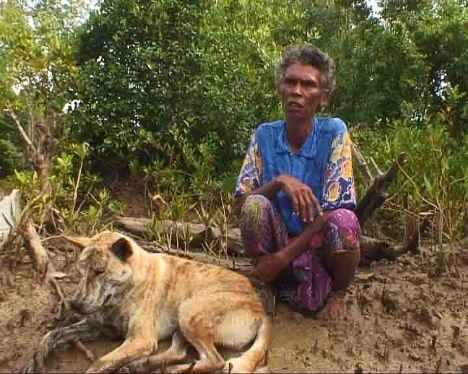
This is Jureerat Pechsai, nicknamed Deun.

She is a member of the Moken community – indigenous people living on the coast and islands on Thailand’s southern coast. Their nomadic lifestyle has earned them the name Sea Gypsies. In Thai, they are called Chao Ley — or people of the sea.

They traditionally live on small boats and move from place to place. When the Monsoon rains make the seas rough, they set up temporary huts on islands – such as Pra Thong Island, where Deun lives.

Pra Thong is an hour’s boat ride from the mainland city of Phuket — some conservationists call it one of the “Jewels of the Andaman” for its biodiversity. It is also an important nesting beach for turtles.

It was on this island that my colleagues from TVE Asia Pacific met and filmed with her in late 2006 for our Asian TV series, The Greenbelt Reports.

The Asian Tsunami of December 2004 devastated the Moken way of life. Their temporary huts were destroyed, and many families lost loved ones. The losses would have been greater if not for the mangrove forest close to the Moken village.

“Moken loves the water, the forest and everything. And we love the mangrove forest the most. The mangrove forest is like a living creature that has helped the Moken people for years. It’s our most beloved place on the island,” says Khiab Pansuwan, an older woman who is a leader in Deun’s community.

After the Tsunami, some Moken felt that they could not return to their nomadic lives. They have chosen to live on the mainland where they feel safe from the waves. Others who remained on their island had new, permanent houses built for them. But the Moken are quick to abandon these whenever they hear rumours of more Tsunamis.

Watch The Greenbelt Reports: Love Thy Mangrove on YouTube:

The mangrove replanting work on Pra Thong island is led by two women, Khiab and Deun.

Deun has been a volunteer with conservation organisations. She learnt about ecosystems and how to protect mangroves and endangered species like sea turtles. She can see many changes in her environment after the tsunami.

“After the tsunami, there are a lot of changes. We didn’t have much grass before, but now weeds are everywhere. The weeds are now more than grass,” says Deun. “In the past, we used to have more and more beach every year. But now the sea has come so close…”

khiab-pansuwan.jpg

The Tsunami’s impact is not the only factor affecting the mangroves here. Dynamite fishing, oil from boats, foam from fish and oyster nets are all damaging this life-saving greenbelt. Some people also cut down mangrove trees.

But Khiab and Deun are determined to rally everyone around to replant and regenerate their mangroves.

Says Khiab: “The community forest is part of the Moken people. We don’t want to cut the trees or clear it. We want to replant the trees so the forest is like before. We don’t want anyone to cut down trees because the mangrove forest saved many Moken lives.”

The two women are determined to rally everyone around to replant and regenerate their mangroves.

Replanted mangroves will ensure not only protection from the waves, but also a continued supply of shell fish and crabs – the main source of income and food for the Moken.

The Moken have traditionally managed the mangroves sustainably. They fish in different areas of the forest during the year, giving time for fish stocks to regenerate. Logging for firewood is done only in moderation, in designated areas.

But these mangroves are now under threat from outsiders who see it as a source of firewood and shell fish. Only a few Moken are left in the village to protect the forest from these intrusions.

Khiab and Deun have much work to do.

NOTE: We are now looking for more stories like this to be featured in the second Asian TV series of The Greenbelt Reports. See TVEAP website news story calling for story ideas.

All images and video courtesy TVE Asia Pacific

How short is short today? Packaging Nature for today’s television viewers

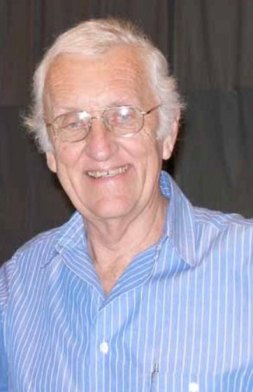
On 15 July 2007, I wrote about the award-winning natural history film-maker Neil Curry, based in South Africa, whom I last met during the Japan Wildlife Film Festival in Toyama in the summer of 2005.

Most recently, Neil made The Elephant, the Emperor and the Butterfly Tree, which has won several of the industry’s top awards.

I’ve since heard from him, and want to share some of his views on how best to package Nature and wildlife for today’s easily-distracted, attention-challenged audiences. He is responding to my post on 13 July 2007 titled Mine is shorter than yours, yipee!

neil-curry.jpg

He says:

‘Mine is shorter than yours….’ is one of the issues I’ve been going on about for years and I’m delighted that Friends of the Earth has now come up with a competition for one-minute films. This ridiculous thing of the ‘standard’ broadcast slot for bluechip wildlife programmes being 52-minute is, in my opinion, one of the main reasons why the public’s view of Nature has become so ‘warped’.

You can’t sustain a 52-minute wildlife film without drama – so we end up with this on-going emphasis on killing, sex, things that are supposedly deadly to humans (everything from snakes and great white sharks to mosquitoes), and dramatic confrontations between macho men – and women – and animals. By insisting on these long films, television itself has actually ‘created’ the audience for wildlife violence – and I’ve been told by more than one commissioning editor that audiences aren’t interested in “place” and “habitat” films any more, they want to see big animals doing exciting things.

In short, Dallas with animals – wildlife “reality-TV”.

Based on my own experience, that’s rubbish. Yes, audiences want a well-told story but they can be equally fascinated by quite prosaic things in the complex inter-relationships of nature, provided the story is told properly. They don’t need all this ‘red in tooth and claw’ stuff. The superb, The Queen of Trees that is currently doing the rounds is a good example – as is the on-going popularity of Attenborough and some of the BBC’s mega-series.

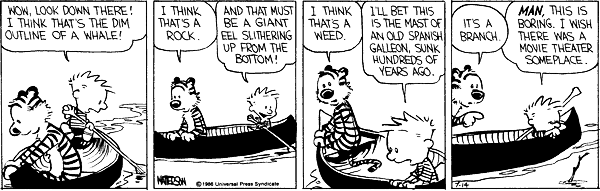
In fact, the over-dramatised programmes often give a quite distorted view of what wildlife is really like. Most creatures don’t spend all their time fighting and killing one another, or looking for human beings to threaten and attack. But if film makers, no matter how serious they are about telling the truth, want to eat, have somewhere to live, educate their kids and so on, they simply have to comply with what the programmers want – and thus, the cycle continues. Of course, it sometimes backfires. Some years ago – unfortunately I can’t remember the exact details now – research in the UK found that school children on field trips into the countryside were bored, because “nothing was happening”. Wildlife programmes on television had led them to expect nature to be full of continuous action and excitement. If children find real nature and the countryside “boring”, imagine how that will influence them when they grow up and find themselves in positions of authority where they may have to make decisions about siting roads, factories, quarries and so on in otherwise unspoilt but “boring” countryside.

nature-is-boring-have-a-movie.gif

If television would just take some of their hour-long wildlife slots and break of them into shorter segments of 30 or even 15 minutes, they would open up the screens to hundreds, perhaps even thousands of fascinating stories about some of the wonders of nature that are astonishing and intriguing, and that would grab audience attention – without any of the drama that is needed to sustain 52 minutes. In my own files I have dozens of stories like that – and so probably, do most other wildlife film makers – but we just never get the chance to tell them because there’s almost no market for short wildlife films on television.

Lord Reith, father of the BBC, said the job of broadcasting was to inform, educate and entertain – but nowadays unfortunately, much of wildlife programming seems to have got itself stuck solely in the entertainment category. It’s a pity because it means a lot of stuff that could give audiences a better understanding of the other life we share this planet with, is largely kept off our screens.

In the circumstances, it’s a miracle that The Elephant, the Emperor and the Butterfly Tree ever got made. It says a lot for the courage and acumen of Mike Gunton, who was commissioning editor on The Natural World at the time, that he was prepared to buck the trend and take it on. There’s no sex, no killing, no violent confrontations – just a boring old tree and a lot of small-scale interactions going on around it, plus a few examples of the dreaded Homo sapiens (who doesn’t even exist in Nature if lots of the wildlife TV programmes are to be believed).

Bill Moyers and the Yes Men: The ultimate media merger?

On 20 July 2007, the Bill Moyers Journal on PBS opened with these words by the inimitable Bill Moyers:

“Here with me now are two partners of Triglyceride Investments, a private equity fund that recently announced its intention of combining the assets of all the hedge funds on Wall Street in order to bring under a single canopy of ownership every media outlet in America. Their prospectus contends that the handful of big media companies that control most of what you see, hear, and read cannot possibly produce maximum return on investment as long as each has to field its own army of lobbyists in Washington.

“If only one holding company instead of four or five controlled all the country’s radio and television stations and all of its cable, newspaper, and Internet outlets, eliminating the need for the competitive purchase of politicians, the savings on campaign contributions alone would increase the bottom line tenfold.

“Not the least of their argument is that since our present media system and Washington so closely mirror each others’ interests, it could even be possible to close down the government altogether and have the country run by Wall Street, saving huge sums of money now spent on perpetuating an impression to the contrary. Joining me are Andy Bichlbaum, the chairman of Triglyceride Investments, and his partner, Mike Bonanno, chief executive of their offshore subsidiary, Tsetse Media Inc., with headquarters in the Marianas Islands.

Bill talks with the two ‘money men’ very seriously for a couple of minutes — before letting on that it’s all a big joke. The two men are not from Wall Street – they’re the ‘Yes Men’ and “they serve up satirical humor laced with lunacy to call the media’s attention to serious issues”.

Read the full transcript of the 21-minute interview

Watch the full interview on PBS Online

The Yes Men are Andy Bichlbaum and Mike Bonanno, two impersonators who use satire to bring media attention to issues that otherwise might be overlooked.

Their premise, from their website, is:
Small-time criminals impersonate honest people in order to steal their money. Targets are ordinary folks whose ID numbers fell into the wrong hands. Honest people impersonate big-time criminals in order to publicly humiliate them. Targets are leaders and big corporations who put profits ahead of everything else.

It all started some years ago when they set up a parody of the World Trade Organization’s website. Somebody mistook it for the real thing and they got a serious invitation to speak as experts at an international conference in Austria.

“We actually see this as a form of journalism. Or perhaps more precisely, the form of collaboration of journalists,” explains Bichlbaum in his interview with Bill Moyers.

“A lot of the issues that we address journalists want to cover. But…in many situations, editorial control won’t let them unless there’s a good little hook behind it. And so, we’ve found a way to create funny spectacles that give journalists the excuse to cover issues.”

To me, their best prank was when they managed to fool BBC World TV in front of a global audience. In December 2004, on the 20th anniversary of the Bhopal gas disaster, “Dow representative” “Jude Finisterra” went on BBC World TV to announce that the company was finally going to compensate the victims with US$ 12 billion, and clean up the mess in Bhopal. The story shot around the world, much to the chagrin of Dow, who briefly disavowed any responsibility. And the BBC was left with egg all over its smug face.

Watch how the mighty news giant fell for a prank by two determined men:

After this, would you ever trust BBC World when it claims to give us the bigger picture?

And here’s the UK Channel Four’s gleeful documentation of how the BBC and other news media fell for the Yes Men:

The Yes Men have also impersonated representatives from Halliburton, Exxon and others, giving public presentations aimed at exposing what they believe to be discrepancies between how these groups want to be seen and how they really act. They call this process, “identity correction.”

While some criticize them for deception and call their hijinx unethical, they argue “these kinds of [corporate and political] wrongdoings are at such a scale – they’re so vast compared to our white lies that we think it’s ethical.”

Take the PBS Online Poll: Do you think the Yes Men’s methods are an acceptable form of social activism?

Mike and Andy released their first film in 2004 entitled, “The Yes Men,” as well as a book, The Yes Men: The True Story of the End of the World Trade Organisation. They are planning on releasing a new film shortly.

If I ever meet them, I’ll have just one question: just how do you suppress the giggles as you fool the gullible?