Changing Climate and Changing Minds: Challenges of Communicating Climate Change

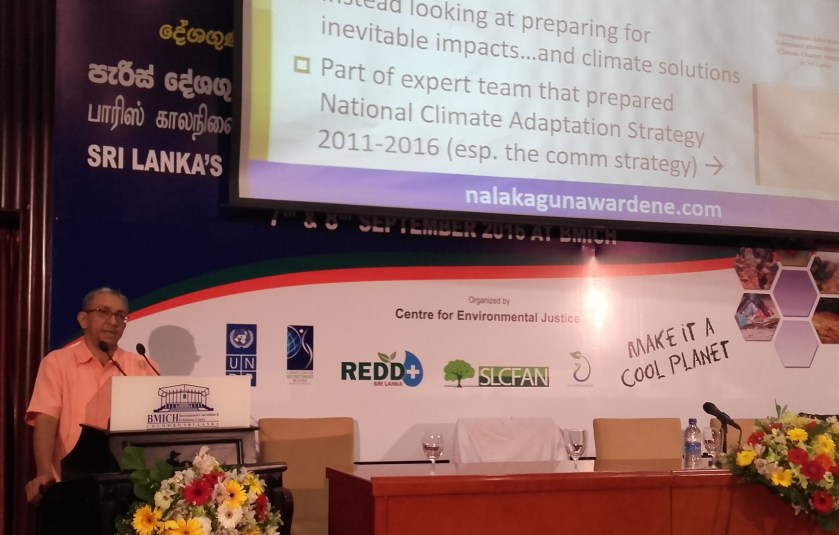
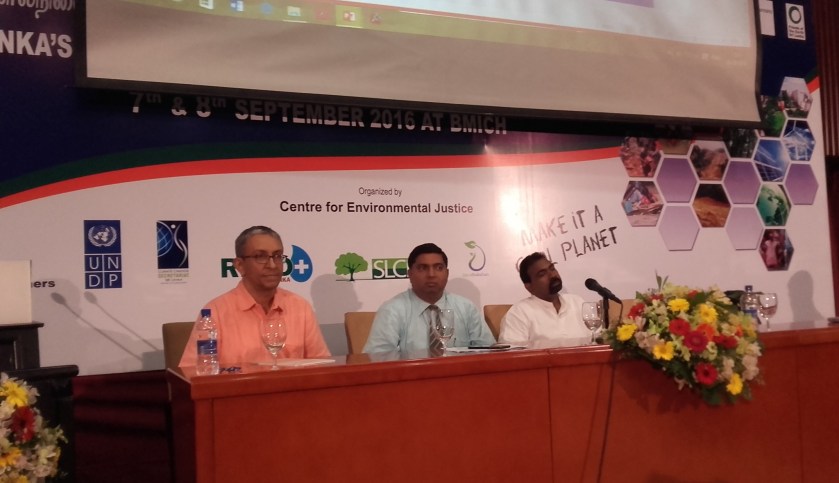
Nalaka Gunawardene speaks at national conference on Sri Lanka's readiness for implementing the Paris Agreement. BMICH Colombo, 8 September 2016
Nalaka Gunawardene speaks at national conference on Sri Lanka’s readiness for implementing the Paris Agreement. BMICH Colombo, 8 September 2016

Climate change COP21 in December 2015 adopted the Paris Agreement to avoid, mitigate and adapt to climate change. Among many other solutions, Sri Lanka’s “intended nationally determined contribution” (INDC) has agreed to reduce 7% emissions from energy and transport and 23% conditional reductions by 2030.

Sri Lanka’s Centre for Environmental Justice in collaboration with the government’s Climate Change Secretariat, UNDP and Janathakshan held a national conference on “SRI LANKA’S READINESS FOR IMPLEMENTING PARIS CLIMATE AGREEMENT” on 7 and 8 September 2016 in Colombo. It was attended by over 200 representatives from government, civil society and corporate sectors.

I was asked to speak in Session 5: Climate Solutions, on “Climate communication and Behaviour changes”. This is a summary of what I said, and the PowerPoint presentation used.

L to R: Nalaka Gunawardene; Nalin Munasinghe, National Programme Manager at Sri Lanka UN-REDD Programme, and Uchita de Zoysa

As climate change impacts are felt more widely, the imperative for action is greater than ever. Telling the climate story in accurate and accessible ways should be an essential part of our climate response.

That response is currently organised around two ‘planks’: mitigation and adaptation. Climate communication can be the ‘third plank’ that strengthens the first two.

Encouragingly, more journalists, broadcasters, researchers and advocacy groups are taking up this challenge. They urgently need more media and public spaces — as well as greater resources — to sustain public engagement.

Sri Lanka’s Information, Education and Communication (IEC) Strategy for Climate Change Adaptation, which I was principally involved in preparing in 2010-11, has recognized how “IEC action can lead to better informed decisions and enlightened choices in both climate change mitigation and adaptation”.

The United Nations Framework Convention on Climate Change (UNFCCC), which Sri Lanka has signed and ratified, recognizes the importance of IEC. It calls for “improving awareness and understanding of climate change, and creating solutions to facilitate access to information on a changing climate” to winning public support for climate related policies.

The UNFCCC, through its Article 6, and its Kyoto Protocol, through its Article 10 (e), call on governments “to educate, empower and engage all stakeholders and major groups on policies relating to climate change”.

When strategically carried out, IEC can be a powerful force for change on both the ‘supply’ and ‘demand’ sides of climate adaptation and climate related public information. In this analogy:

  • ‘supply’ involves providing authentic, relevant and timely information to all those who need it, in languages and formats they can readily use; and
  • ‘demand’ means inspiring more individuals and entities to look for specific knowledge and skills that can help make themselves more climate resilient.

These two sides of the equation can positively reinforce each other, contributing significantly to Sri Lanka’s fight against climate change.

To be effective, climate communication also needs to strike a balance between alarmism and complacence. We have to place climate concerns within wider development and social justice debates. We must also localise and personalise as much as possible.

Dr M Sanjayan, vice president of development and communications strategy at Conservation International, a leading advocacy group, says environmentalists and scientists have failed to build sufficient urgency for action on climate change. He feels we need new communication approaches.

The Lankan-born science communicator wrote in 2013: “By focusing on strong narratives about peoples’ lives in the present rather than the future; by keeping stories local and action-oriented (solvable); and by harnessing the power of narrative and emotion, we have a better chance to build widespread public support for solutions.”

[Op-ed] Scientific Literacy: ‘Mind Vaccine’ Sri Lanka Urgently Needs

This op-ed essay was published in Daily FT newspaper, Sri Lanka, on 7 September 2016.

Scientific Literacy: ‘Mind Vaccine’ Sri Lanka Urgently Needs

By Nalaka Gunawardene


STS Forum Sri Lanka
STS Forum Sri Lanka

Sri Lanka’s first Science and Technology for Society (STS) Forum will take place from 7 to 10 September in Colombo. Organized by the Prime Minister’s Office and the Ministry of Science, Technology and Research, it is one of the largest gatherings of its kind to be hosted by Sri Lanka.

Modelled on Japan’s well known annual STS forums, this event will be attended by over 750 participants coming from 24 countries – among them will be local and foreign scientists, inventors, science managers, science communicators and students.

untitled-614What sets STS Forums apart is that they are not merely events where scientists talk to each other.  That surely will happen, but there will be many more voices and, hopefully, much broader conversations.

As a member of the content planning team for this event, my particular focus has been on the strand called “citizen science” – interpreted, in this instance, as activities that enhance the public understanding of science and technology.

Under this strand, there will be four sessions that explore: community involvement in science and research; informal science education for the 21st century; communicating science, technology and innovation; and using social media for discussing science.

At first glance, these topics don’t seem as exciting as nanotechnology, robotics and space technology that are being covered in other sessions. But I would argue that public engagement is the most decisive factor if science and technology are to play a significant role in the economic development and future prosperity of Sri Lanka.

Wanted: Mind Vaccines!

Public engagement of science goes well beyond teaching science and technology subjects in schools or universities. It is also bigger than (state or private sector driven) science centres, exhibitions or science content in the media. All these elements help, but at its most basic, what we need to promote is a way of thinking known as scientific literacy.

Scientific literacy is defined as “the knowledge and understanding of scientific concepts and processes required for personal decision making, participation in civic and cultural affairs, and economic productivity”.

Indeed, some basic scientific knowledge and technical skills have become essential for survival in the 21st century. But scientific literacy provides more than just utility benefits.

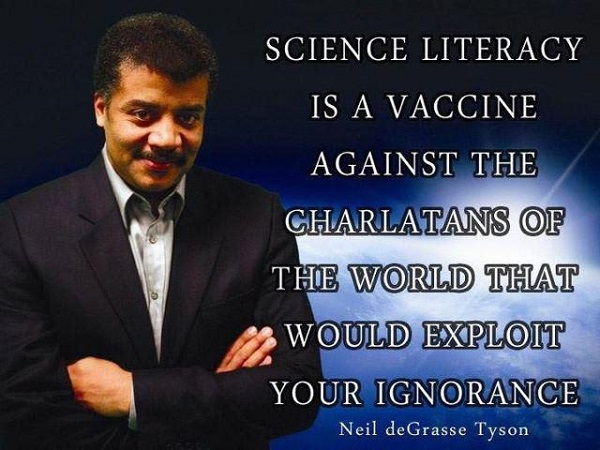
As Dr Neil deGrasse Tyson, American astrophysicist, cosmologist and science communicator, says, “Scientific literacy is an intellectual vaccine against the claims of charlatans who would exploit ignorance.”

Dr Neil deGrasse Tyson: One man worth cloning if that were feasible...
Dr Neil deGrasse Tyson: One man worth cloning if that were feasible…

Sri Lanka takes justified pride in its high literacy levels and equally high coverage of vaccination against infectious diseases. But we cannot claim to have a high level of scientific literacy.

If we did, it would not be so easy for far-fetched conspiracy theories to spread rapidly even among educated persons. For example, claims of an ‘infertility plot’ to make majority ethnic group lose its ability to reproduce. Or tales of miracle waters and ‘cosmic forces’ healing those terminally ill. Or alien spacecraft (allegedly) threatening national security…

It is customary to temporarily suspend our disbelief to enjoy films, novels and other creative art forms. But most of us don’t confuse fiction with fact, even with highly plausible scenarios.

Yet when it comes to real life, as opposed to art, has ‘suspended disbelief’ become a permanent, default setting for many Lankans today? Is our society more gullible and paranoid now than it was a generation or two ago? If so, how come?

These inconvenient questions are worth asking, if only to make us pause and think.

Sleepwalking Nation?

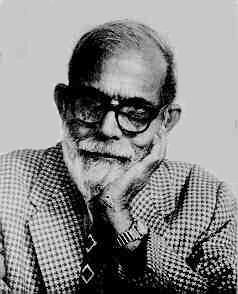
Dr Abraham Thomas Kovoor (1898 – 1978): Myth-buster who feared none

Half a century ago, a Kerala-born science teacher named Dr Abraham Thomas Kovoor (1898 – 1978) settled down in newly independent Ceylon. After retirement, he took to investigating so-called supernatural phenomena and paranormal practices. He found adequate physical or psychological explanations for almost all of them. In that process, he exposed many ‘god men’ who were thriving on people’s ignorance, gullibility and insecurities.

Dr Kovoor, who founded Ceylon Rationalist Association in 1960, summed it up in these words: “He who does not allow his miracles to be investigated is a crook; he who does not have the courage to investigate a miracle is gullible; and he who is prepared to believe without verification is a fool.”

Most Lankans would fall into one of these three categories – and the minority with open minds are under ‘peer pressure’ to assimilate!

Progress of science and technology since the 1960s has given us many gadgets and media tools, but the more information we have, the less we seem to be able to think for ourselves.  Thus, we have broadband alongside narrow minds, a poor juxtaposition!

This has been building up for some years. In an op-ed titled ‘Can Rationalists Awaken the Sleep-walking Lankan Nation?’ published in Groundviews.org in January 2012, I wrote: “Paradoxically, we now have far more communication channels and technologies yet decidedly fewer opportunities and platforms for dispassionate public debate. Today’s Lankan society welcomes and blindly follows Malayalis who claim to know more about our personal pasts and futures than we’d ever know ourselves. And when we see how our political and business elite patronize Sai Baba, Sri Chinmoy and other gurus so uncritically, we must wonder if there is any intelligent life in Colombo…”

Not every source of mass hallucination is imported, of course. As I noted four years ago, “Sacred cows, it seems, have multiplied faster than humans in the past half century. Our cacophonous airwaves and multi-colour Sunday newspapers are bustling with an embarrassment of choice for salvation, wealth, matrimony, retribution and various other ‘quick fixes’ for this life and (imagined) next ones. Embarrassment, indeed!”

Science for All

So what is to be done?

The proliferation of smartphones and other digital tools have not necessarily opened our minds, or made us Lankans any less gullible to charlatans or zealots. This is a huge conundrum of our times.

stiThat is because mastery over gadgets does not necessarily give us scientific literacy. It involves a rational thought process that entails questioning, observing physical reality, testing, hypothesizing, analyzing and then discussing (not always in that order).

A healthy dose of scepticism is essential to safeguard ourselves from superstitions, political claims and increasingly sophisticated – but often dishonest – product advertising. That’s what scientific literacy builds inside our minds.

Unless we make scientific literacy an integral part of everyone’s lives, ambitious state policies and programmes to modernize the nation could well be jeopardized. Progress can be undermined — or even reversed — by extremist forces of tribalism, feudalism and ultra-nationalism that thrive in a society that lacks the ability to think critically.

A sporting analogy can illustrate what is needed. Cricket is undisputedly our national passion. It is played professionally only by a handful of men (and even fewer women) who make up the national teams and pools. But most of the 21 million Lankans know enough about cricket to follow and appreciate this very English game.

Similarly, there are only a few thousand Lankans engaged in researching or teaching different branches of science and technology – they are the ‘professionals’ who do it for a living. But in today’s world, the rest of society also needs to know at least the basic concepts of science.

Cricket didn’t has become part of our socio-cultural landscape overnight. It took years of innovation and persistence, especially by trail-blazing radio cricket commentators in Sinhala and Tamil. By the time we achieved Test status in 1981, all levels of our society were familiar with cricket’s rules and nuances.

Giving everyone a minimum dose of scientific literacy requires a similar marshalling of forces – including civil society mobilization, media collaboration, creative innovation and social marketing.

‘Science for All’ acquires true meaning only when every citizen – irrespective of education, profession or income level – gets enough skepticism to avoid being exploited by various scams or misled by conspiracy theorists.

Are we ready to embark on this intellectual vaccination process?

Award-winning science writer Nalaka Gunawardene counts over 25 years of national and international media experience. He blogs at https://nalakagunawardene.com and is active on Twitter as @NalakaG

සිවුමංසල කොලුගැටයා #282: ඇනුම් බැනුම් මැද මහ බරක් දරන අපේ සෞඛ්‍ය සේවය

ඇනුම් බැනුම් මැද මහ බරක් දරන සෞඛ්‍ය සේවය. http://ravaya.lk/?p=17269
ඇනුම් බැනුම් මැද මහ බරක් දරන සෞඛ්‍ය සේවය.
http://ravaya.lk/?p=17269

The South-East Asia Region of the World Health Organization (WHO-SEARO) held its 69th Regional Committee meeting in Colombo from 5 to 9 September 2016. The meeting of 15 ministers of health from the region took a close look at Sri Lanka’s public health system – which has been able to provide substantial value over the decades.

Yet, the public health system rares gets the credit it deserves: the media and citizens alike often highlight its shortcomings without acknowledging what it delivers, year after year.

In this week’s Ravaya column (in Sinhala, appearing in the print issue of 4 Sep 2016), I salute the public health system of Sri Lanka that has accomplished much amidst various challenges.

Sri Lanka’s public hospitals and related field programmes – like public health inspectors, family health workers and specific disease control efforts — provide a broad range of preventive and curative services. In most cases, these are provided free to recipients, irrespective of their ability to pay.

This is sustained by taxes: Sri Lanka’s public health sector annually receives allocations equal to around 2% of the country’s GDP.

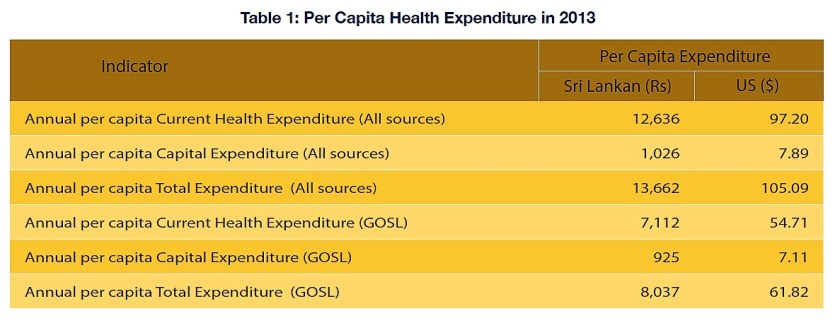
I quote from the recently released Sri Lanka National Health Accounts (2013) report. Its data analysis shows that the Government of Sri Lanka accounts for 55% of the total health care provision of the country. Considering all financial sources (public and private), the per capita current health expenditure of Sri Lanka in 2013 amounted to LKR 12,636 (97.2 US$).

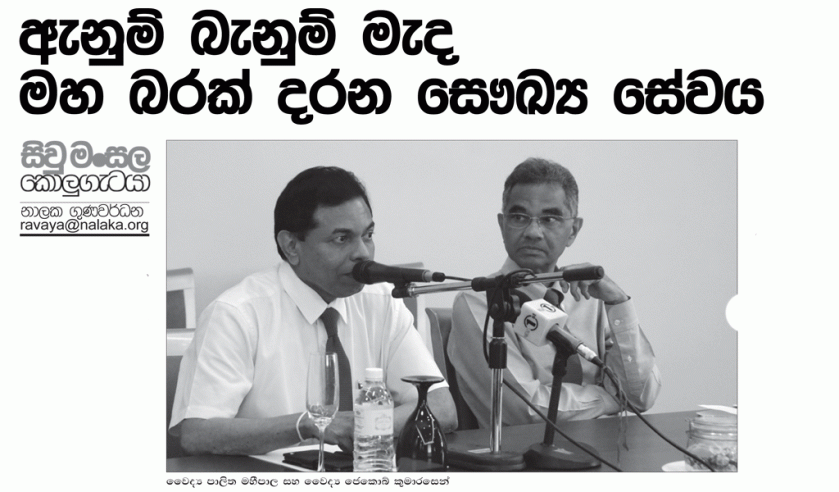
L to R - Dr Palitha Mahipala, Director General of Health Services, and Dr Jacob Kumaresan, WHO Representative to Sri lanka [WHO Photo]
L to R – Dr Palitha Mahipala, Director General of Health Services, and Dr Jacob Kumaresan, WHO Representative to Sri lanka [WHO Photo]
කොතරම් කළත් ලෙහෙසියෙන් හොඳක් නොඅසන රාජ්‍ය ක්ෂේත්‍රයන් තිබෙනවා. එයින් එකක් තමයි අපේ මහජන සෞඛ්‍ය සේවාව.

බැනුම් අසමින්, පම්පෝරිවලින් තොරව නිහඬව ලොකු වැඩ කරන මේ සේවය එළඹෙන සතියේ ආසියානු කලාපීය අවධානයට හා ඇගැයීමට ලක් වනවා. ඒ ලෝක සෞඛ්‍ය සංවිධානයේ (WHO) අග්නිදිග ආසියාතික කලාපයේ රටවල් 11ක සෞඛ්‍ය අමාත්‍යවරුන් සැප්තැම්බර් 5-9 දිනවල ඔවුන්ගේ වාර්ෂික රැස්වීම කොළඹදී පවත්වන නිසයි.

ලක් රජය සාමාජිකත්වය දරන අන්තර් රාජ්‍ය සංවිධානයක් වන WHO මෙරට ක්‍රියාත්මකවීම ඇරඹුණේ 1952දී. එනම් අප එක්සත් ජාතීන්ගේ සාමාජිකත්වය ලබන්නටත් වසර තුනකට පෙර.

වසර 65ක පමණ කාලයක් තිස්සේ මෙරට සෞඛ්‍ය සේවා නගා සිටුවීමට තාක්ෂණික උපදෙස් දෙන මේ ආයතනයේ මෙරටින් බිහිවූ වෛද්‍ය විශේෂඥයන් ගණනාවක්ද සේවය කරනවා.

ආදර්ශමත් සෞඛ්‍ය සේවයක් ලෙස WHO අප රට හඳුනා ගන්නේ ඇයි?

ශ්‍රී ලංකාවේ දේශීය වෙදකම් හා ප්‍රතිකාරවලට දිගු ඉතිහාසයක් තිබෙනවා. මේ ගැන සංක්ෂිප්ත විස්තරයක් වෛද්‍ය සී. ජී. ඌරගොඩ 1987දී ලියූ ශ්‍රී ලංකාවේ වෛද්‍ය විද්‍යාවේ ඉතිහාසය නම් පොතෙහි හමු වනවා. goo.gl/qBwMP6

එම මූලාශ්‍රයට අනුව නූතන, බටහිර වෛද්‍ය විද්‍යාව මෙරට ස්ථාපිත වන්නේ ලන්දේසි හා බ්‍රිතාන්‍ය පාලන යුගවලයි. ස්වදේශිකයන්ට ක්‍රමවත් මහජන සෞඛ්‍ය සේවාවක් ලබා දීමේ ප්‍රතිපත්තිමය තීරණ රැසක් ගනු ලැබුවේ බ්‍රිතාන්‍ය පාලකයන් විසින්.

වෛද්‍ය පර්යේෂණ විධිමත් ලෙස ඇරඹුණේද 1800න් පසුවයි. සිවිල් වෛද්‍ය දෙපාර්තමේන්තුව ලෙස 1801දී ඇරඹි රාජ්‍ය ආයතනය සෞඛ්‍ය දෙපාර්තමේන්තුවේ පූර්වගාමියා ලෙස දැකිය හැකියි. වසූරියට එරෙහිව එන්නත් කිරීම 1802දී ඇරඹුනා.

ප්‍රාථමික සෞඛ්‍ය කටයුතු සඳහා සෞඛ්‍ය ඒකක පිහිටුවීම ඇරඹුණේ 1926දී කළුතරින්. අද වන විට සෞඛ්‍ය නිලධාරී හෙවත් MOH කාර්යාල බවට පරිණාමය වී ඇත්තේ මේවායි.

මහජන සෞඛ්‍ය සේවාව යනු විවිධ වෘත්තිකයන් හා සේවකයන් රාශියකින් සමන්විත, දැවැන්ත ආයතනික ව්‍යුහයක්. වෛද්‍යවරුන්, හෙද සේවකයන්, රසායනාගාර තාක්ෂණවේදීන්, පරිපාලකයන්, පවුල් සෞඛ්‍ය සේවිකාවන්, සහකාර වෛද්‍ය සේවා, විශේෂිත බෝවන රෝග මර්දන එකක (මැලේරියා, ඩෙංගු. HIV ආදී) වැනි බොහොමයක් එයට අයත්.

ලක් සමාජය නිරෝගීව පවත්වා ගන්නට සෞඛ්‍ය සේවාව ප්‍රතිකාර මට්ටමින් (curative) හා වළක්වා ගැනීමේ මට්ටමින් (preventive) දිවා රාත්‍රී කරන මහා ව්‍යායාමයට ඇති තරම් අගය කිරීමක් නොලැබෙන බව මගේ අදහසයි.

එසේම මේ සද්දන්තයාගේ ක්‍රියාකාරීත්වය ගැන ඇතුළත දැක්මකින් සමාජයට තතු හෙළි කරන පිරිස ද අල්පයි. කලක් සෞඛ්‍ය සේවයේ සිට විශ්‍රාමික වෛද්‍ය ආරියසේන යූ. ගමගේ ලියන පුවත්පත් ලිපි හා පොත් හරහා අපට යම් ඉඟියක් ලද හැකියි.

රටේ ආදායම් මට්ටමට වඩා ඉහළ සෞඛ්‍ය සේවා දර්ශකයන් ලබා ගැනීමට සියවස් දෙකකට වැඩි කාලයක් ලද රාජ්‍ය අනුග්‍රහය හා ප්‍රමුඛතාව දායක වී තිබෙනවා.

උදාහරණයකට 2012 වන විට අපේ රටේ වයස අවුරුද්දට අඩු ළදරු මරණ අනුපාතිකය සජීව උපත් 1,000කට 8යි.  වයස 5ට අඩු ළමා මරණ අනුපාතිකය 12යි (2012). දරුවන් ලැබීම ආශ්‍රිතව සිදුවන මාතෘ මරණ සංඛ්‍යාව සජීව දරු උපත් ලක්ෂයකට 30යි.

මේ වන විට අපේ රටේ උපතේ දී අපේක්ෂා කළ හැකි ආයු කාලය පිරිමින්ට වසර 72ක්ද, ගැහැනුන්ට වසර 78.6ක්ද වනවා.

මෙකී නොකී මානව සංවර්ධන සාධක අතින් ශ්‍රී ලංකාව සිටින්නේ අපට වඩා වැඩි දළ ජාතික ආදායමක් ඇති බොහෝ රටවලට ඉදිරියෙන්.

එහෙත් සෞඛ්‍ය ක්ෂේත්‍රයේ අභියෝග කාලයත් සමග වෙනස් වනවා.

සමාජයක් ලෙස අපට තිබෙන ලොකු සෞඛ්‍ය අභියෝගයක් නම් ජීවත් වන කාලය තුළ හැකි තාක් දෙනෙකුට හැකි තාක් සෞඛ්‍යසම්පන්න, ඵලදායක ජීවන මට්ටම් ලබා දීමයි. වයස්ගත වීමේදී යම් අබල දුබලවීම් සිදුවීම ස්වාභාවික වුවත් නිදන්ගත රෝග හට ගැනීම අවම කර ගත යුතුව තිබෙනවා.

මෑතදී කොළඹ පැවති මාධ්‍ය හමුවකදී සෞඛ්‍ය සේවා අධ්‍යක්ෂ ජනරාල් වෛද්‍ය පාලිත මහීපාල අද ලක් සමාජය මුහුණදෙන සෞඛ්‍ය අභියෝග ගැන මනා විග්‍රහයක් කළා.

ඔහු කීවේ වත්මන් ශ්‍රී ලංකාව සංක්‍රාන්තීන් ගණනාවකට මැදිව සිටින බවයි.

  • ජන විකාසමය සංක්‍රාන්තිය (demographic transition)( අති බහුතරයක් ළමයින් හා තරුණ තරුණියන්ගෙන් සමන්විතව තිබූ ජනසංයුතියක සිට අප කෙමෙන් මැදිවියේ හා වයස 60 ඉක්මවූවන් බහුතරයක් සිටින ජන සංයුතියකට යොමු වෙමින් සිටිනවා. 2012දී වයස 60ට වැඩි ප්‍රතිශතය 5%යි. 2031 වන විට මෙය 25%ක් වීමට ප්‍රක්ෂේපිතයිග මේ අයට බෝනොවන රෝග ඇතිවීමේ ප්‍රවණතාව වැඩියි.
  • රෝග තත්ත්ව සංක්‍රාන්තිය (epidemiological transition)( බහුතරයක් රෝග තත්ත්ව (හා මරණ) බෝවන රෝග නිසා හට ගත් යුගයේ සිට සමාජය කෙමෙන් ගමන් කරන්නේ බහුතරයක් බෝ නොවන රෝග හටගැනීමටයි.
  • පෝෂණ විද්‍යාත්මක සංක්‍රාන්තිය (nutritional transition)( කලකට පෙර වඩාත් සිරුරට හිතකර හා සමබර ආහාර ගත් අපේ ජනයාගේ ආහාර පරිභෝජන රටා ශීඝ්‍රයෙන් වෙනස් වෙමින් තිබෙනවා. දුවන ගමන් ගන්නා බොහෝ ආහාර දිගු කාලීනව අහිතකරයි. මේවා බෝ නොවන රෝගවලට දායක වනවා.
  • ආර්ථීක සංක්‍රාන්තිය (economic transition): අඩු ආදායම්ලාභී රටක සිට මධ්‍යම ආදායම් ලබන රටක තත්ත්වයට අප පිවිස සිටිනවා. දුප්පත්කම මුළුමනින් තුරන් කර නැතත් මීට වසර 20කට පෙර තිබුණාට වඩා අද රටේ ජනයා අත මුදල් ගැවසෙනවා.
  • ඩිජිටල් සංක්‍රාන්තිය (digital transition)( රටේ සමස්ත ජන සංඛ්‍යාව ඉක්මවා යන ජංගම දුරකතන සක්‍රිය ගිණුම් තිබෙනවා. විද්‍යුත් මාධ්‍ය විහිදයාමත් පුළුල්. මින් පෙර නොතිබූ ලෙස තොරතුරු ගලා යාමේ මාර්ග තිබෙනවා. ලෙඩරෝග හා ප්‍රතිකාර ගැන වැඩියෙන් දැන ගැනීම හරහා වඩාත් ඉහළ මට්ටමේ සෞඛ්‍ය සේවාවක් පුරවැසියෝ ඉල්ලා සිටිනවා.

මේ විග්‍රහයට මා මුළුමනින් එකඟයි. එයට තවත් එක් සංක්‍රාන්තියක් මා එකතු කරනවා. එනම් ජන ආකල්පමය සංක්‍රාන්තියයි (attitudinal transition).

දේශපාලකයන් හා නිලධාරීන් කියන දේ දොහොත් මුදුන් දී පිළිගෙන අනුගමනය කිරීමට අද  පරපුර සූදානම් නැහැ. පෙරට වඩා බෙහෙවින් සංවාදශීලී සමහර විට ආවේගශීලී පොදු අවකාශයක් බිහි වෙමින් තිබෙනවා.

තවමත් දියුණු වෙමින් පවතින ශ්‍රී ලංකාව වැනි රටවල් මුහුණ දෙන ප්‍රධාන සෞඛ්‍ය සේවා අභියෝගයක් ද්විත්ව බර ඉසිලීමක් හෙවත් Double Burden ලෙස හැඳින් වෙනවා.

එහි සරල අරුත නම් නැතිබැරිකම් නිසා වැඩිපුරම හට ගන්නා, වළක්වා ගත හැකි බෝවන රෝග එක් පසෙකිනුත්, සාපේක්ෂව වඩාත් ඉසුරුබර ජීවන රටා නිසා හට ගන්නා බෝ නොවන රෝග තවත් පසෙකිනුත් එක වර දරා ගන්නට සෞඛ්‍ය සේවයට සිදු වීමයි.

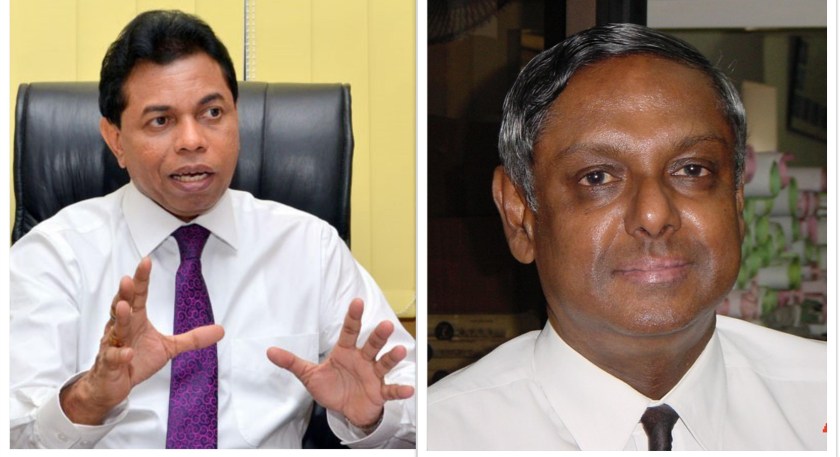
Dr Palitha Mahipala (left) and Prof Ravindra Fernando

බෝ නොවන රෝග වර්ග (Non-communicable Diseases, NCD) මූලික වශයෙන් ප්‍රභේද හතරක් තිබෙනවා: හෘදය රෝග හෙවත් කන්තු‍-වාහිනී ආබාධ (cardiovascular diseases) මුල් තැන ගන්නවා. ඊළඟට පිළිකා රෝගත්, ඉන් පසුව ශ්වසනාබාධ හා දියවැඩියාවත් මිලියන ගණන් ජනයාගේ සෞඛ්‍ය තත්ත්වය දුර්වල කරනවා. අකාලයේ මිය යෑමට හේතු වනවා.

මේ ද්විත්ව බර ගැන මා මුල් වරට විද්‍යා ලිපියක සාකච්ඡා කළේ 1999දී. (Sri Lanka’s Double Burden kills Rich and Poor Alike, May1999). ඒ සඳහා මා උපුටා දැක්වූ එක් විද්වතකු වූයේ ධූලකවේදය පිළිබඳ මහාචාර්ය වෛද්‍ය රවීන්ද්‍ර ප්‍රනාන්දුයි.

1990 දශකයේ සෞඛ්‍ය සංඛ්‍යා ලේඛන විග්‍රහ කරමින් ඔහු කීවේ ප්‍රජා සෞඛ්‍ය සේවා සඳහා එවකට වියදම් කරනු ලැබුවේ සමස්ත සෞඛ්‍ය ප්‍රතිපාදනවලින් 17%ක් පමණක් බවයි. එහෙත් බෝවන රෝග මෙන්ම බෝ නොවන රෝග ද වළක්වා ගැනීමේ ලොකුම විභවය ඇත්තේ ප්‍රජා මට්ටමින් ජනයා දැනුවත් කිරීම හරහායි.

‘ශ්‍රී ලංකාවේ අපේක්ෂා කළ හැකි ආයු කාලයන් දිගු වීම සෞඛ්‍ය සේවාවන්හි දිගු කාලීන ප්‍රතිඵලයක්. එහෙත් ප්‍රමාද වී මරණයට පත් වීම සැබෑ ජයග්‍රහණයක් වන්නේ ජීවත් වන කාලයේ යහපත් සෞඛ්‍යයෙන් සිටියහොත් පමණයි’ ඔහු පැහැදිලි කළා.

ජීවන රටා හා නොයෙක් පුරුදු හරහා දිගු කාලීනව හට ගන්නා බෝ නොවන නිදන්ගත රෝගාබාධ මතුවීමේ ඉඩකඩ වැඩියෙන් ඇත්තේ වයස්ගත වන විටයි. එහෙත් සමහර බෝ නොවන රෝග දැන් තරුණයන්ට හා ළමුන්ටද හට ගැනීම නිසා සෞඛ්‍ය සේවාවන්ට ලොකු පීඩනයක් ඇති කරනවා.

2016දීද අපේ සෞඛ්‍ය සේවාවට ද්විත්ව බර තවමත් බලපාන බව වෛද්‍ය මහීපාල කියනවා. එහෙත් ඒ බර දරමින්ම මහජන සෞඛ්‍ය ජයග්‍රහණයන් ලබා ගෙන තිබෙනවා.

සෞඛ්‍ය ක්ෂේත්‍රයේ නිතිපතා දත්ත කන්දරාවක් එකතු කැරෙනවා. වාර්ෂිකව සෞඛ්‍ය දත්ත වාර්තාවක් නිකුත් කරනවා. සෞඛ්‍ය අමාත්‍යාංශයේ වෙබ් අඩවියෙන් එය ලද හැකියි.

Sri Lanka Annual Health Bulletins http://www.health.gov.lk/moh_final/english/others.php?pid=110

එයට අමතරව සෞඛ්‍ය සේවා වියහියදම් විශ්ලේෂණය කරන ජාතික සෞඛ්‍ය මූල්‍ය වාර්තාවක්ද සම්පාදනය කරනවා : (Sri Lanka National Health Accounts).

Sri Lanka's Per Capita Health Expenditure 2013 – Source: National Health Accounts 2013
Sri Lanka’s Per Capita Health Expenditure 2013 – Source: National Health Accounts 2013

මෑතදී නිකුත් වූ 2013 සෞඛ්‍ය මූල්‍ය වාර්තාවට අනුව එම වසරේ සෞඛ්‍ය ක්ෂේත්‍රය වෙනුවෙන් මෙරට වියදම් කරන ලද සමස්ත මුදල රුපියල් බිලියන් 281ක්. (ප්‍රාග්ධන ආයෝජන බිලියන් 21ක් හා පුනරාවර්තන වියදම් බිලියන් 260ක් ඇතුළත්.) මේ සමස්තය රටේ දළ ජාතික නිෂ්පාදිතයෙන් 3.2%ක් වනවා.

මේ කතා කරන්නේ රටේ සමස්ත සෞඛ්‍ය වියදම් ගැනයි. එයට රාජ්‍ය හා පෞද්ගලික දෙඅංශයේම සෞඛ්‍ය සේවා ඇතුළත්.

පුනරාවර්තන සෞඛ්‍ය වියදම් රු. බිලියන් 260න් සියයට 55%ක් රජය (එනම් මහජනයාගෙන්ම එකතු කර ගත් බදු මුදල්වලින්) දරන ලද අතර ඉතිරි 45% රක්ෂන ක්‍රම මගින්, සේව්‍යයන් විසින්, පුන්‍යායතන හරහා හෝ පුරවැසියන් ඍජුවම ගෙවා තිබෙනවා.

2013දී බෝ නොවන රෝග සඳහා සමස්ත සෞඛ්‍ය වියදමින් 35%ක් යොමු වී තිබෙනවා. බෝවන රෝග මර්දනයට හා ප්‍රතිකාරවලට 22%ක් වැය වුණා.

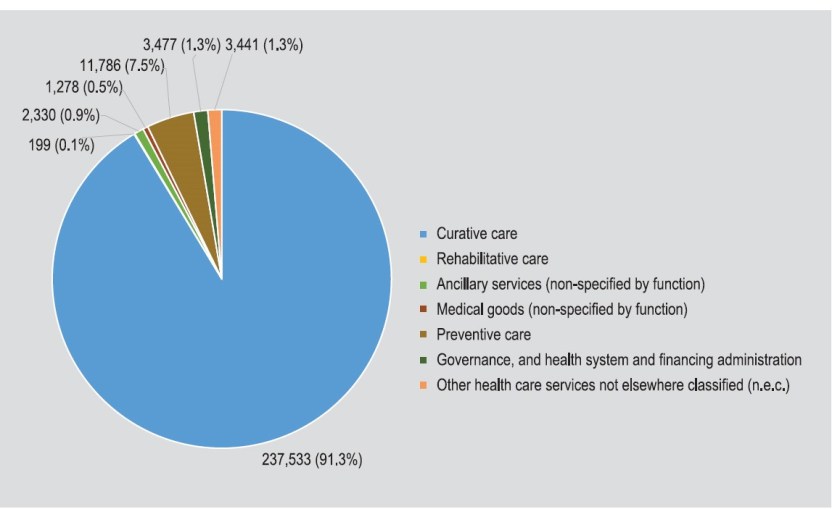
සාම්ප්‍රදායික හා විකල්ප ප්‍රතිකාර ක්‍රමවලට වැය කර ඇත්තේ බිලියන් 2.3ක් පමණයි. බහුතරයක් ප්‍රතිපාදන ලැබූ බටහිර වෛද්‍ය ක්‍රමයේ වුවද 91%ක් රෝග ප්‍රතිකාර සඳහා වැයවූ අතර වළක්වා ගැනීමට වැය කළේ 4.5%ක් පමණයි.

සෞඛ්‍ය සේවා සඳහා රජය වැය කරන ප්‍රමාණය දළ ජාතික නිෂ්පාදනයෙන් 2%ක් පමණ වනවා. මෙය ඉදිරි දෙවසර තුළ 3% දක්වා වැඩි කිරීමට රජයට වුවමනා බව වෛද්‍ය මහීපාල කියනවා.

Distribution of Sri Lanka's current health expenditure 2013 by Broader Categories of illnesses (LKR million, %) – Source: National Health Accounts 2013
Distribution of Sri Lanka’s current health expenditure 2013 by Broader Categories of illnesses (LKR million, %) – Source: National Health Accounts 2013

2005-2016 අතර දශකය තුළ සෞඛ්‍ය ප්‍රතිපාදන 9 ගුණයකින් ඉහළ ගොස් ඇති බවත්, මහජන සෞඛ්‍ය සේවයේ ගුණාත්මක බව නැංවීම ප්‍රධාන ඉලක්කයක් බවත් ඔහු සඳහන් කළා.

සෞඛ්‍ය සේවාවේ අඩුපාඩු දකින්නෝ එහි ඵලදායීතාව ඇති තරම් නොදැකීම කනගාටුවට කරුණක්.

සෞඛ්‍යයට කරන සමස්ත වියදම සුවිසල් සේ පෙනුණත් 2013දී එක් පුරවැසියකුට කරන ලද සාමාන්‍ය වියදම රු. 12,636යි. අපට සමාන සෞඛ්‍ය දර්ශක ලබාගැනීම සඳහා වෙනත් බොහෝ රටවල මීට වඩා බෙහෙවින් වියදම් කරන බව වෛද්‍ය මහීපාල පෙන්වා දෙනවා.

රටේ පුනරාවර්තන සෞඛ්‍ය වියදමින් 24%ක්ම බෙහෙත්වලට වැය වීම අවධානයට ලක් විය යුත්තක්ග අත්‍යවශ්‍ය බෙහෙත් ප්‍රතිපත්තිය නිසි ලෙස ක්‍රියාත්මක කිරීමෙන් මෙය සීමා කර ගත හැකියි.

එසේම ඉදිරි වසරවලදී අධ්‍යාපනයට හා මහජන දැනුවත් කිරීම්වලට වැඩි ප්‍රමුඛත්වයක් දීම අවශ්‍යයි.

වැඩියෙන් රෝහල් ඉදි කර, නව තාක්ෂණය භාවිතයට ගත්තාට පමණක් මදි. ශාරීරික හා මානසික සුවතාවය රටේ සැමට ලබා දීමට තව කළ යුතු බොහෝ දේ තිබෙනවා. රජය හා සමාජය මේ වෙනුවන් අත්වැල් බැද ගත යුතුයි.

Distribution of CHE 2013 according to different Health Care Functions (LKR millions, %) – Source: National Health Accounts 2013

සිවුමංසල කොලුගැටයා #281: සූර්යබල සංග්‍රාමය සාර්ථක වීමට නම්….

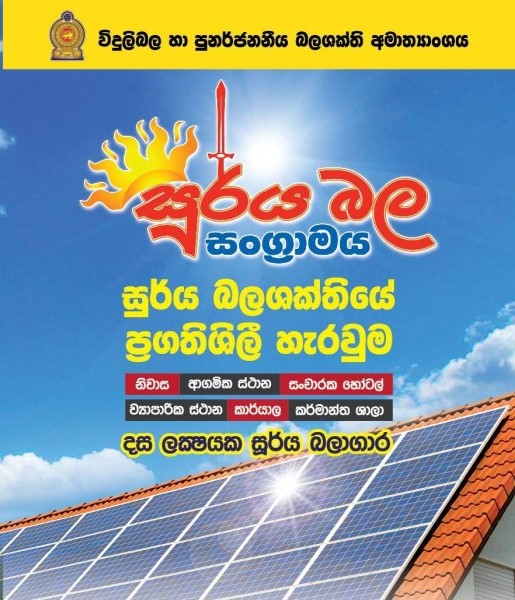
Soorya Bala Sangramaya - සූර්යබල සංග්‍රාමය Image courtesy Ministry of Power and Renewable Energy, Sri Lanka
Soorya Bala Sangramaya – සූර්යබල සංග්‍රාමය Image courtesy Ministry of Power and Renewable Energy, Sri Lanka

In this week’s Ravaya column (in Sinhala, appearing in the print issue of 28 August 2016), I applaud the Sri Lanka government’s new solar power generation programme, and suggest ways in which it can be made more effective in securing energy independence of the nation.

The global trend, especially for domestic and small scale electricity users, is towards decentralized and distributed energy systems. In this scenario, users generate power on site, tapping into renewable sources available locally.

How can our tropical island plug into the sun, wind, trees and the ocean to meet more of our energy needs? Why don’t renewable energies produce a larger share of our energy mix? Who or what are the bottlenecks? I discuss these and other related issues in the column this week.

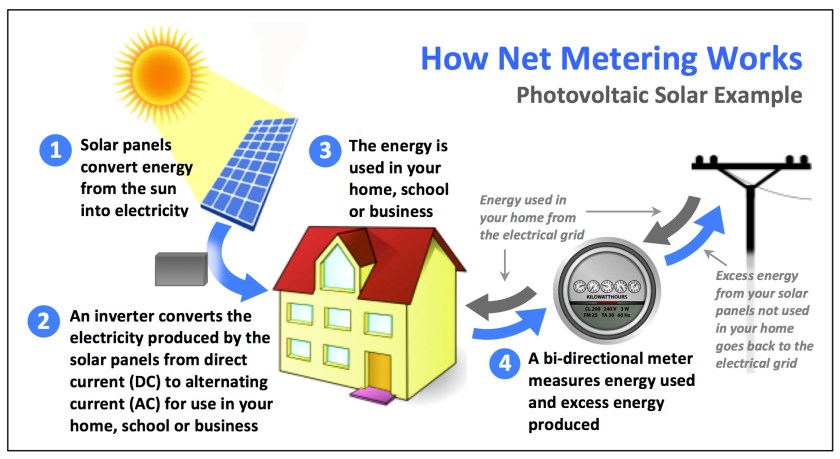
Self-generating electricity from renewables is slowly picking up, partly encouraged by the introduction in 2009 of net metering. This allows private individuals or companies to “sell” their surplus power to the national grid (the transaction happens in kind, not cash). A two-way electricity meter enables this process.

In August 2016, the Cabinet approved a community based solar power generation programme. Known as “Soorya Bala Sangramaya” (Battle for Solar Energy), it is expected to make at least 20% of electricity consumers to also generate electricity using solar panels – they will be able to sell their excess to the national grid under a guaranteed tariff.

Announcing the Cabinet decision, the government said: “Currently 50% of electricity production in Sri Lanka is done by renewable energy sources and it is expected to increase this percentage to 60% in 2020 and to 70% in 2030. Accordingly, it is required to build wind power plants of 600 MW and solar power plants of 3,000 MW within the next 10 years. It is expected to join consumers in power generation and to promote small solar power plants established on the roof of their houses by the project called ‘Soorya Bala Sangramaya’. It is expected to make at least 20% of consumers to produce electricity and it is expected pay for the excess electricity generated by the consumer.”
Read government document: Implementation of a community based power generation program “Soorya Bala Sangramaya” (Battle for Solar energy) to purchase electricity generated by the electricity customers

සූර්යබල සංග්‍රාමය සාර්ථක වීමට නම්.... http://ravaya.lk/?p=16851
සූර්යබල සංග්‍රාමය සාර්ථක වීමට නම්…. http://ravaya.lk/?p=16851

ජාතික රජයේ හැම ප්‍රතිපත්තියක්ම මා විවේචනය කරනවාදැයි මගේ පාඨකයෙක් ගිය සතියේ ඇසුවා. පොදු උන්නතිය වෙනුවෙන් බොහෝ දේ ප්‍රශ්න කළත් වැරදි සොයා ගෙන යාම මගේ අරමුණ නොවෙයි.

රජයට වසරක් පිරීම නිමිත්තෙන් මගේ අදහස් විමසූ එක් මාධ්‍ය ආයතනයකට මා කීවේ යහපත් ප්‍රතිපත්ති හා ක්‍රියාමාර්ග රැසක් කෙටි කලක් මේ රජය තුළ ගෙන ඇතත් ඒවා රටට සන්නිවේදනය කිරීම දුර්වල බවයි.

වන්දිභට්ටකරණය වෙනුවට තර්කානූකූලව හා නිර්මාණශීලීව සමාජය හා බෙදා ගත හැකි බොහෝ තොරතුරු රාජ්‍ය ආයතන තුළ සැඟවී තිබෙනවා.

රටේ බලශක්ති ප්‍රතිපත්තිය හා ප්‍රවේශය නවීකරණය කිරීම මෙවන් යහ ප්‍රවනතාවක්. පිටරටින් ගෙනෙන ඛණිජ තෙල් හා ගල් අඟුරු මත දැඩි ලෙස යැපීම වෙනුවට බලශක්ති ප්‍රභව විවිධාංගීකරණයකට යොමු වෙමින් තිබෙනවා. මෙය දිරිමත් කළ යුතුයි.

විදුලිබල හා පුනර්ජනනීය බලශක්ති අමාත්‍යංශය සූර්යබල සංග්‍රාමය නම් ව්‍යාපෘතියක් දියත් කොට තිබෙනවා. රටේ නිවාස දස ලක්ෂයකට සූර්ය බලය හරහා විදුලි ජනනය කිරීමේ හැකියාව ලබා දීම මෙහි අරමුණයි.

මේ ගැන 2016 අගෝස්තු 16 වනදා කැබිනට් තීරණ පිළිබඳ මාධ්‍ය ප්‍රකාශනයේ මෙසේ සඳහන් වූණා.

දැනට ශ්‍රී ලංකාවේ විදුලිබල නිෂ්පාදනයෙන් 50%ක පමණ ප්‍රමාණයක් පුනර්ජනනීය බලශක්ති ප්‍රභව මඟින් නිෂ්පාදනය කෙරෙන අතර, එම ප්‍රමාණය 2020 වන විට 60%ක් දක්වාද, 2030 පමණ වන විට 70%ක් දක්වාද වැඩි කිරීම රජයේ අපේක්ෂාවයි. මේ අනුව ඉදිරි වසර 10 ඇතුළත මෙගාවොට් 600ක පමණ සුළං බලාගාරද, මෙගාවොට් 3,000ක පමණ සූර්ය බලාගාරද ඉදි කිරීම අවශ්‍ය වේ.

 “මෙහිදී විදුලි පාරිභෝගිකයන්ද විදුලි නිෂ්පාදකයින් වශයෙන් විදුලි ජනන ක්‍රියාවලියට සම්බන්ධ කර ගනිමින් විශේෂයෙන්ම තම නිවෙස්වල වහල මත ඉදි කෙරෙන කුඩා සූර්ය බලාගාර ප්‍රවර්ධනය කිරීමේ වැඩසටහනක් සූර්ය බල සංග්‍රාමයනමින් ක්‍රියාවට නැංවීමට සැලසුම් කර ඇත.

 “මේ යටතේ විදුලි පාරිභෝගිකයින්ගේ 20%ක්වත් විදුලි නිෂ්පාදකයින් බවට පත් කිරීමට අපේක්ෂිත අතර, නිෂ්පාදනය කරනු ලබන අතිරික්ත විදුලිය සඳහා ගෙවීම් කිරීමටද නියමිතය.

බලශක්ති සන්සදය කියන හැටියට නිවෙස් මට්ටමේ සූර්ය බලය භාවිත කරන නිවාස ලක්ෂයකට වඩා දැනටමත් මෙරට තිබෙනවා.

1980 දශකය මැද පටන් මෙරට සූර්ය තාක්ෂණය ප්‍රවර්ධනය කරනු ලැබුවේ එවකට ජාතික විදුලි ජාලය අහලකටවත් නොපැමිණි දුර බැහැර ප්‍රදේශවල ජනයාට යම් මට්ටමක (ආලෝකයට මූලික වූ) විදුලිබලයක් ලබාදීමටයි. අද යථාර්ථය මීට වෙනස්.

විදුලිය නැති නිවෙසකට එය ලබා දෙන්නට සූර්ය කෝෂවලට හැකි වුවත් ධාරිතාවේ සීමා තිබෙනවා. විදුලි බල්බ, ටෙලිවිෂන්, රේඩියෝ ක්‍රියා කරන්න සෑහුනද ඉස්තිරික්කල ශීතකරන ආදියට කුඩා සූර්ය ඒකකවලින් ලැබෙන විදුලිය මදි. එහෙත් එයට ඉහළ ධාරිතාවේ, වැඩි මිළැති සූර්ය බල පද්ධති අද තිබෙනවා.

සූර්ය බලය නිවෙසක සවි කිරීමට යන වියදම එහි ධාරිතාව මත වෙනස් වනවා. වායුසමන යන්ත්‍ර ඇතුලුව වැඩි විදුලිය බලයකින් ක්‍රියා කරන උපකරණ පවා බල ගැන්විය හැකි තරම් ඉහල සූර්ය පුවරු පද්ධති (solar panel systems) අද තිබෙනවා. ඒත් මූලික පිරිවැය අධිකයි. මා දන්නා මධ්‍යම පාන්තික නිවෙසක විදුලි ඒකක 350-400ක් ජනනයට අවැසි තරම් සූර්ය පුවරු සවි කොට ගෙන තිබෙනවා.

බලශක්ති අමාත්‍යංශයේ වෙබ් අඩවියට අනුව සූර්ය කෝෂ වහලය මත සවි කර ගන්නා නිවාසවලට එයට යන මූලික වියදමට බැංකු ණය නිර්දේශ කිරීමට නියමිතයි. එසේම තම අවශ්‍යතාව ඉක්මවා විදුලිය ජනනය වන අවස්ථාවල එය ජාතික විදුලිබල ජාලයට සැපයීමේ පහසුකමද හිමිවනවා.

මෙයට පදනම 2010 දී මෙරට හඳුන්වා දුන් ශුද්ධ මනුකරණ (Net Metering) නම් ක්‍රමවේදයයි. මේ යටතේ නිවසේ විදුලිබල මීටරය ඉදිරියට මෙන්ම ආපස්සටත් යා හැකියි. මෙහිදී පාරිභෝගිකයා ජාතික විදුලි ජාලය බලශක්ති “ගබඩාවක්” ලෙස භාවිත කරනවා.

How Net Metering works

පාරිභෝගිකයා නිවසේ වහලය මත සවි කර ගන්නා සුර්ය බලශක්ති පැනල මගින් දිවා කාලයේ නිපදවන විදුලි අතිරික්තය, ජාතික විදුලිබල ජාලයට ලබා දෙනවා. වැඩිපුර විදුලිබල පාවිච්චි වන සන්ධ්‍යා හා රාත්‍රී කාලයේ තම පරිභෝජනය සදහා ජාලයෙන් විදුලිය ලබා ගන්නවා. මාසය අවසානයේ මුදල් ගෙවිය යුත්තේ තමන් වැඩිපුර භාවිත කර ඇති ඒකක ගණන සදහා පමණයි.

ශුද්ධ මනුකරණ සංකල්පය මෙරට පිළිගැනීමෙන් පසු විදුලිබල මණ්ඩලය CEB මෙන්ම සමහර නාගරික ප්‍රදේශවලට විදුලිය බෙදන LECO සමාගම ද යම් කොන්දේසිවලට යටත්ව මෙය ක්‍රියාත්මක කරනවා.

එහෙත් ජාලයට දුන් විදුලි ඒකක ගණනට වඩා අඩුවෙන් පාරිභෝගිකයා එයින් විදුලිය යළි ගත හොත් ඒ සදහා පාරිභෝගිකයාට මුදල් නොගෙවයි. (එම ඒකක ගණන ඉදිරි මාසවලදී පරිභෝජනයට ගත හැකියි.)

දැනට ක්‍රියාත්මක වන ශුද්ධ මනුකරණ ක්‍රමවේදය විදුලි ඒකක 200කට වඩා පරිභෝජනය කරන ඕනෑම විදුලි පාරිභෝගිකයකුට වාසිදායකයි.

එහෙත් මේ වසරේ සිට හදුන්වා දෙන නෙට් එකවුන්ටින් (Net Accounting) නව ක්‍රමයේදී පාරිභෝගිකයා වැඩිපුර නිපදවන විදුලි ඒකක සදහා

CEB/LECO ගෙවීමටද නියමිතයි. එම ක්‍රමය මගින් අඩු විදුලි ඒකක සංඛ්‍යාවක් භාවිත කරන විදුලි පාරිභෝගිකයන්ට අමතර ආදායමක් උපයා ගැනීමට හැකි වනවා.

අලුතින් එකතු වන තවත් ක්‍රමවේදයක් නම් Net Plus. එනම් වහල මත සූර්ය බලශක්තියෙන් විදුලිය නිෂ්පාදනය කරන නිවාස, එසේ ජනනය කරන සමස්ත විදුලි ඒකක ගණන ජාතික විදුලි ජාලයට ලබා දුන් විට එයට යම් සම්මත මිළක් ගෙවීම.

මෙහිදී ශුද්ධ මනුකරණ ක්‍රමය යටතේ මෙන් නොව පාරිභෝගිකයාගේ ජනනය, විදුලි පරිභෝජනයෙන් නිදහස්. ඒ අනුව පාරිභෝගිකයා තම පරිභෝජනයට පවතින ගාස්තු ක්‍රමය යටතේ විදුලි ගාස්තු ගෙවිය යුතු අතර ඔහුගේ මුළු විදුලි ජනනයම CEB/LECO විසින් යම් ගණන්වලට මිළයට ගන්නවා.

සූර්යබල සංග්‍රාමය නිසි ලෙස ක්‍රියාත්මක වූ විට රටේ නිවාස දස ලක්ෂයක් කුඩා විදුලිබලාගාර බවට පත් වන බවයි බලශක්ති අමාත්‍යවරයා හා නියෝජ්‍ය අමාත්‍යවරයා කියන්නේ.

එසේම සමහරක් මේ නිවාසවලට තමන්ගේ සමස්ත විදුලි පරිභෝජනයට වඩා සූර්ය බලශක්තිය නිපදවා ජාතික ජාලයට සපයා අමතර ආදායමක් ලද හැකි යයි ඔවුන් කියනවා.

ආර්ථීකයටත්, ජන සමාජයටත් එක සේ වැදගත් මේ ව්‍යාපෘතිය නිලධාරිවාදයට යට වීමට ඉඩ නොදී නිසි ලෙස සන්නිවේදනය කොට ක්‍රියාත්මක කිරීම අත්‍යවශ්‍යයි.

පාරිභෝගිකයන් ලෙස අප සැවොම සොයන්නේ ආරක්ෂිත, පිරිසිදු, දිගටම ලැබෙන හා ලාබදායක බලශක්තියයි. මේ අවශ්‍යතා පිරිමසන හොඳම ශක්ති විශේෂය නම් විදුලි බලයයි.

2015 සැප්තැම්බර් වන විට රටේ දිස්ත්‍රික්ක 4ක් (මඩකලපුව, මන්නාරම, කිලිනොච්චි හා මුලතිව්) හැර අන් සියල්ලේම 90%කට වැඩි විදුලිබල ආවරණයක් තිබූ බව බලශක්ති අමාත්‍යංශ වෙබ් අඩවිය කියනවා.

2012 ජන සංගණනයට අනුව රටේ නිවාස ඒකකවලින් 87%ක් ආලෝකය සඳහා විදුලිබලය යොදා ගත් අතර භූමිතෙල් 12.2%ක්, සූර්ය බලය 0.6% ක් හා අනෙකුත් ප්‍රභවයන් 0.2% ක් වාර්තා වුණා.

මෑත දශකවල විදුලිබල ජාතික ජාලයේ ආවරණය බෙහෙවින් පුළුල් වූවත් විදුලිබලය තව දුරටත් ලාබදායක නැහැ. ගමට ලයිට් ආවත් එය භූක්ති විඳින්නට අවශ්‍ය මූලික ආයෝජනය හා මාසික වියදම දැරීමට නොහැකි පවුල් එමට සිිටිනවා.

අනෙක් අතට වැඩි වන විදුලිබල ඉල්ලුමට සරිලන සැපයුමක් ජනනය කිරීම රජයට ලොකු අභියෝගයක්. ඉතා හොඳ වර්ෂාපතනයක් ලබන වසරකදී වුවත් සමස්ත ඉල්ලුමෙන් 40%කට වඩා ජල විදුලි බලාගාරවලින් ජනනය කරන ගත නොහැකියි.

ඉතිරියෙන් බහුතරයක් ජනනය කැරෙන්නේ ඛණිජතෙල් හා ගල් අඟුරු යොදා ගෙනයි. මේවා දේශීයව හමු නොවන නිසා විදේශයන්ගෙන් මිළට ගත යුතුයි. ඒවා දහනයෙන් පිට වන කාබන්ඩයොක්සයිඩ් වායුව ගෝලීය උණුසුම්වීමට දායක වනවා.

ටිකෙන් ටික හෝ මේ ඛණිජතෙල් හා ගල් අඟුරු මත යැපීම අඩු කළ යුතු බව කලෙක සිටම සමහර විද්වතුන් පෙන්වා දී තිබෙනවා. අපට දේශීයව සම්පාදනය කර ගත හැකි පූනර්ජනනීය හෙවත් සුනිත්‍ය බලශක්ති ප්‍රභවයන් (renewable energy sources) දියුණු කර ගැනීම ගැන 1970 ගණන්වල පටන් කථා කළත් ප්‍රගතිය සීමිතයි.

මෙයට හේතු රැසක් තිබෙනවා. ජල විදුලිය හැරුණු කොට අනෙකුත් සුනිත්‍ය බලශක්ති සඳහා තාක්ෂණය ප්‍රචලිත  නොවීම හා මිළ අධිකව පැවතීම එකක්. (මෙය පසුගිය දශකයේ බෙහෙවින් වෙනස් වී තිබෙනවා.)

තව ප්‍රධාන හේතුවක් නම් විදුලි බල මණ්ඩලයට සුනිත්‍ය ප්‍රභවයන් ගැන සැබෑ උනන්දුවක් නොතිබීමයි.

මහා පරිමාණ, මධ්‍යගත බලශක්ති ජනනයේ මානසිකත්වයට මුළුමනින්ම නතු වූ විදුලිබල මණ්ඩලය විකල්ප බල ශක්ති ගැන කවදත් දැරුවේ අවඥා සහගත ආකල්පයක්. මෙය වෙනස් කිරීමට බොහෝ බලශක්ති අමාත්‍යවරුන්ට පවා හැකි වූයේ නැහැ.

මෙයින් ඔබ්බට යන දිගු කාලීන වූත්, වඩාත් පරිසර හිතකාමී වූත් බලශක්ති පිළිවෙතකට සංක්‍රමණය වීමේ පෙර නිමිති තිබෙනවා. සූර්යබල සංග්‍රාමය එැන්නක්.

එහෙත් මාධ්‍ය ප්‍රචාරණයෙන් ඔබ්බට ගිය තාක්ෂණික උපදෙස් හා මූල්‍ය පහසුකම් නිලධාරිවාදයෙන් තොරව සපයන ව්‍යාපෘති කළමනාකරණයක් එහි සාර්ථකත්වයට අවශ්‍යයි. යහපත් සංකල්ප අසංවේදී හෝ සංකීර්ණ හෝ ක්‍රමවේදයන් හරහා ක්‍රියාත්මක කිරීමට ගොස් අසාර්ථක වීමේ අත්දැකීම් මෙරට විවිධ ෙක්ෂත්‍රවල අපට හමු වනවා.

සූර්ය බලශක්ති ප්‍රවර්ධනයට අදාළ සමාජ විද්‍යාත්මක හා ආර්ථීක විද්‍යාත්මක සාධක තිබෙනවා. සූර්ය තාක්ෂණය සංකීර්ණ එකක් නොවූවත් යම් නඩත්තු කිරීමක් හා තාක්ෂණික දැනුමක් අවශ්‍යයි.

Cartoon by Ron Tandberg

සූර්ය බලය ගෘහස්ත මට්ටමින් විදුලිබල ජනනයට යොදා ගැනීමේ වසර 30කට ආසන්න අත්දැකීම් මෙරට තිබෙනවා. මේ අත්දැකීම් ලැබුවේ එම ක්ෂේත්‍රයේ පුරෝගාමී වූ පෞද්ගලික සමාගම්  හා රාජ්‍ය නොවන සංවිධාන විසින්. (මේ ඉතිහාසය ඉදිරි තීරු ලිපියක සැකෙවින් විස්තර කිරීමට මා අදහස් කරනවා.)

සර්වෝදය, සෝලංකා, පවර් ඇන්ඩ් සන්, Solar Electric Light Fund ආදී දෙස් විදෙස් ආයතන මෙරට නිවාස මට්ටමේ සූර්ය බලශක්ති ප්‍රවර්ධනයේ පුරෝගාමීන්. ඔවුන් උගත් පාඩම්වලින් අද ප්‍රතිපත්ති සම්පාදකයන්ට හා නිලධාරීන්ට ප්‍රයෝජන ගත හැකියි.

සූර්ය කෝෂ හා සම්බන්ධිත තාක්ෂණය මෙරටම නිපදවා ගන්නවාද? නැත්නම් චීන, ජර්මන් හෝ වෙනත් සැපයුම් කරුවන්ගෙන් ලබා ගන්නවා ද? මෙරට සූර්ය තාක්ෂණයට අත හිත දීමට අපේ බැංකු කොතරම් උත්සුක වේද? සමස්ත සුනිත්‍ය බලශක්ති ක්ෂේත්‍රය නිසි නියාමනයට හා විමර්ශනයට ලක් කිරීමට මහජන උපයෝගිතා කොමිසමට (PUCSL) හැකි ද?

ගතවූ වසර 25කට අධික කාලය තුළ සුනිත්‍ය බලශක්ති ගැන මා විවිධ මාධ්‍යවලින් මෙවැනි ප්‍රශ්න මතු කොට තිබෙනවා. මේ ප්‍රශ්න අසන්නේ කිසිවකු අපහසුතාවට පත් කිරීමට නොව යහපත් ප්‍රතිපත්ති ප්‍රශස්තව ක්‍රියාත්මක වනු දැක්මේ පොදු අරමුණින්.

Read also: සූර්ය බලයෙන් ඔබේ විදුලි බිල සුන් කල හැකිද? ඔබ දැන ගත යුතු කරුණු 9ක්

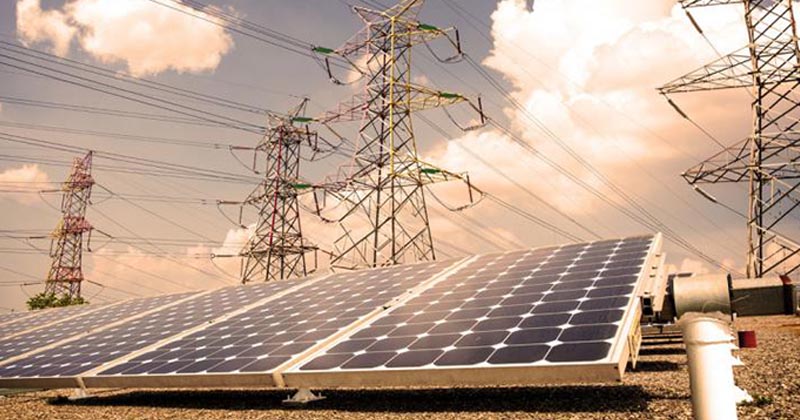
Image courtesy Aniwa.lk Image source - www.aniwa.lkwp-contentuploads201609SolarPower-05.jpg
Image courtesy Aniwa.lk
Image source – http://www.aniwa.lkwp-contentuploads201609SolarPower-05.jpg