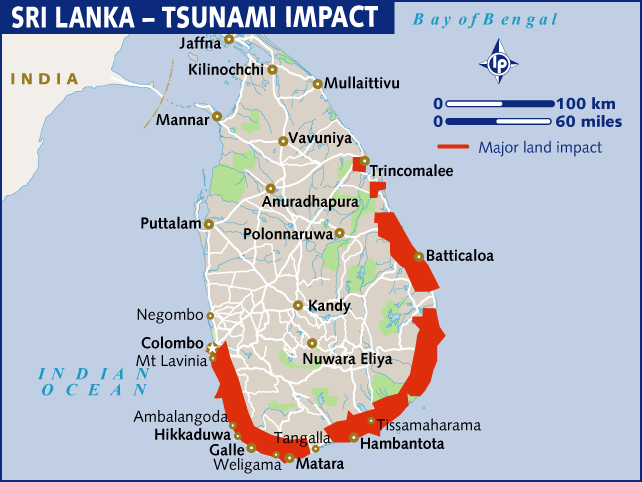
The undersea quake that triggered the Indian Ocean tsunami on 26 December 2004 was so powerful that it was felt around the globe, as far away as Alaska. Likewise, the killer waves that hammered the coasts of South and Southeast Asia left such a trail of destruction that it was like a lasting, unceasing wave.
On the eve of the mega-disaster’s fifth anniversary, I’ve been busy writing, talking and reflecting on what it meant for me personally, and my media profession and fellow Asians in general. I recently filmed an interview for Thai Public Television (TPBS), where my friend Pipope Panitchpakdi is doing a tsunami+5 documentary.
He was in Sri Lanka at the time of the tsunami, and spent two weeks working as a freelance reporter covering the aftermath for the western media. His piece sums up the mixed bag of lessons and recovery efforts that Sri Lanka, one of the hardest hit countries, has accomplished in the half decade this that momentous day.
An excerpt: “Five years later, life in the affected countries has resumed, and the world has learned immensely valuable lessons about responding to catastrophe. But as with any human endeavor, some opportunities have also been lost.”
Polite or dodgy? Did anything more than this happen in Copenhagen?
What happens when over 3,500 journalists from all over the world roam around a two-week long UN conference that saw plenty of loud bickering and hot air in the name of saving the planet from global warming? Well, the media pack adds to the noise levels and hot air, for sure — and they are not above bickering themselves.
At least, that’s the report from Copenhagen, where the UN climate conference COP15 ended on Dec 18 with a watered down, disappointing something called the Copenhagen Accord.
Darryl D'MonteI’ve just read an interesting report filed from the Ground Zero of that half-event by my Indian friend (and senior journalist turned climate columnist) Darryl D’Monte.
He says: “The media in Copenhagen has been an unmanageable and unruly lot. There are some 3,500 of us covering the summit, most having come this week, and journalists – once again, the electronic media – don’t think twice about carrying on conversations at the loudest decibel levels, turning the room into a virtual Tower of Babel. The TV crews in particular are like packs of wolves. They station themselves at every available nook and corner where some VIP may enter and exit and try to get that exclusive byte as he or she makes an appearance“.
Dr Cyril Ponnamperuma: erudite, cultured and articulate
On 20 December 2009, we mark the 15th death anniversary of Professor Cyril Ponnamperuma, one of the best known scientists produced by Sri Lanka during the Twentieth Century.
I grew up reading about him in school text books as a living icon of modern science: a developing country scientist whose brilliance and hard work took him to the highest echelons of global science, and one who was respected in the West and East.
He was both an internationally recognised researcher on the origins of life on Earth, and an early promoter of science and technology for development. His interests and involvements transcended his own discipline and homeland. He worked closely with the Pakistani Nobel laureate Dr Abdus Salam to promote science and infrastructural facilities in developing countries.
I focus on the few years from 1984 to 1990, when he served as science and technology advisor to two Presidents of Sri Lanka. Concurrently, he served as director of the Institute of Fundamental Sciences (IFS) from 1984 to 1990, and was also founder director of the Arthur C Clarke Centre for Modern Technologies (ACCCMT) from 1984 to 1986. In these positions, he worked simultaneously on several fronts covering science policy, institutional building, fund raising, capacity building and public engagement.
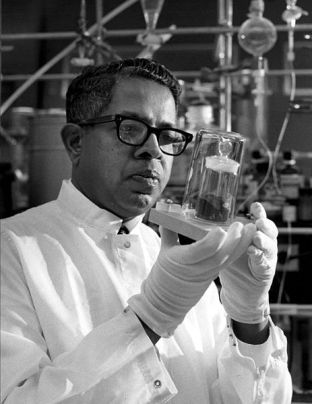
Dr Cyril Ponnamperuma analyzing a moon sample at NASAI’ve just written a tribute, recalling my own interactions with him in the last 1980s, when he was dividing time between Sri Lanka and the US. It’s published online at Groundviews website.
As I note: “Erudite, cultured and articulate, Ponnamperuma was a journalist’s dream: he could sum up complex issues in simple and engaging terms and metaphors — but these were more than mere soundbites. He was full of insights and anecdotes that humanised both science and its practitioners.”
After looking back at his accomplishments and failures of his Sri Lanka years, I contend: “His biggest accomplishment — and lasting legacy — was not so much buildings, laboratories or institutions, but sparking off the interest in science among thousands of young people. That is much harder to achieve, and also impossible to quantify in Rupee or Dollar terms…”
In this essay, I recall both his accomplishments and failures. I ask why his passion for public science was not shared by many fellow scientists in Sri Lanka, who wanted to remain aloof of non-scientists and the community. Ponnamperuma’s tried to bridge this gap, and for this sin he was harassed and driven out of Sri Lanka and back to the United States where he returned to his research and teaching to the very end of his life.
“Chemistry is the ‘other woman’ in my life,” Ponnamperuma used to joke. It was while working at his university office in the US that he suffered cardiac arrest and rushed to a Washington hospital, where he passed away on 20 December 1994. He was 71. His sudden death came as a shock to all those whose lives and careers were touched, influenced and inspired by him.
The news from Copenhagen, on the last day of the UN climate conference, has been a bit confusing. Have they got a climate deal, or have they simply agreed to meet again and talk more while the planet warms up?
As one news item put it: “Representatives of 192 countries quibbled over every word through the night as a weak political declaration started to emerge out of the climate summit once scheduled to finalise a treaty that would tackle global warming.”
The declaration remains “weak” and “wishy washy” in the absence of agreement over the main sticking points dogging this December 7-18 UN Framework Convention of Climate Change (UNFCCC) conference – the refusal by industrialised countries to commit more emission reductions and their unwillingness to put on the table money to help poor countries cope with climate change effects.
So, less than one week to go for Christmas, have the men (and few women) in suits dropped the ball (read: Earth) in Copenhagen? Clarity and interpretations will soon flow. I still hope it won’t come to what cartoonist Marc Roberts envisaged in this cartoon, originally drawn a year ago:
Hopenhagen?As the UN climate conference culminates today in Copenhagen, there seem to be lots of angry people in the Danish capital. Many civil society and environmental activists, and some journalists, have been frustrated by the inter-governmental bickering process and the occasionally tough crowd control measures by the Danish police.
As author and activist Naomi Klein wrote at the end of the first week: “By the end, around 1,100 people had been arrested. That’s just nuts. Saturday’s march of roughly 100,000 people came at a crucial juncture in the climate negotiations, a time when all signs point either to break down or a dangerously weak deal. The march was festive and peaceful but also tough. ‘The Climate Doesn’t Negotiate’ was the message, and Western negotiators need to head it.”
I’m not in Copenhagen for uptodate news, but the 5,000+ journalists and over 10,000 activists are keeping us well informed on what’s happening (or not happening). Perhaps part of their anger can be dissipated by heeding a creative call to Dance for the Climate.
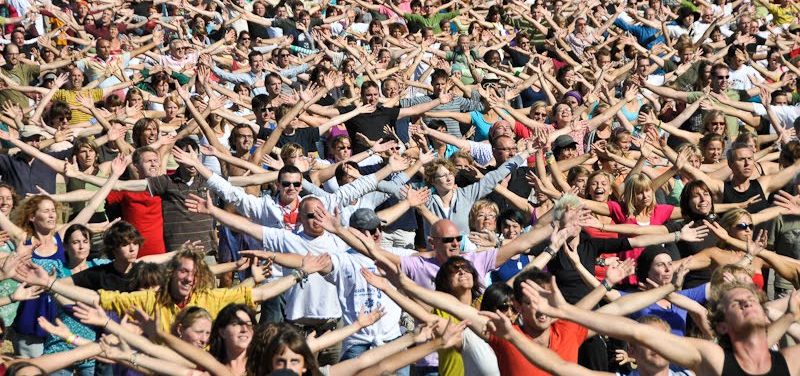
It’s an alternative way of demonstration, made into an inspiring and hopeful video clip by award winning Belgian film director Nic Balthazar. It shows 12 000 people on a Belgium beach in a truly spectacular simultaneous choreography dancing to the U2 hit single ‘Magnificent’. Bono and his band graciously gave the rights to their music. The message of the clip to politicians in Copenhagen is to ‘start moving, together, before it’s too late. The time is now to change climate change’.
In a recent email, Seppe Verbist, handling international distribution of “Dance for the Climate” clip, wrote: “We believe that the chances of success of the UN Conference are influenced by the clear signals from ordinary people to their politicians. The ‘Dance for the Climate-clip’ wants to contribute to this, and we sincerely hope we can count on your support!”
According to her, the clip has been released three weeks ago and they are now trying to spread it worldwide. In Europe the distribution goes pretty well as the European Broadcasters Network (EBU) offered the clip to all her members. They are picking up the offer and integrating the clip into their Copenhagen content. In Canada weather forecasters from different broadcast networks are organizing an imitation of Dance For The Climate, and the clip will be shown 24/7 at the World Expo 2010 in Shanghai in the Meteo World Pavilion. They’re expecting 100 000 visitors every day for six months. The Al Gore Climate Project also supported the clip and shared it with their network. It’s been on TV in Brazil and Mexico as well.
Dancing can be a powerful way to express not just joy, but a range of emotions. One of my favourite calls to action came from Ken Saro-Wiwa, the Nigerian poet, author, environmentalist and minority rights activist (for his Ogoni people) who was executed by Nigeria’s military on 10 November 1995. While in jail facing an uncertain future, he wrote these momentous words: “Dance your anger and your joys,
Dance the military guns to silence,
Dance oppression and injustice to death,
Dance my people,
For we have seen tomorrow
And there is an Ogoni star in the sky.”
And today, we must also dance for saving our climate.
While politicians, scientists and activists were jostling in Copenhagen at the crucial climate conference, I spent a few hours this week laughing my head off about climate change.
Joining me on this enjoyable challenge were professional cartoonist Wasantha Siriwardena and environmentalist Nimal Perera. We started off with close to 150 entries – many of them good, and some excellent – and ended up with a shortlist or 30 or so of the best.
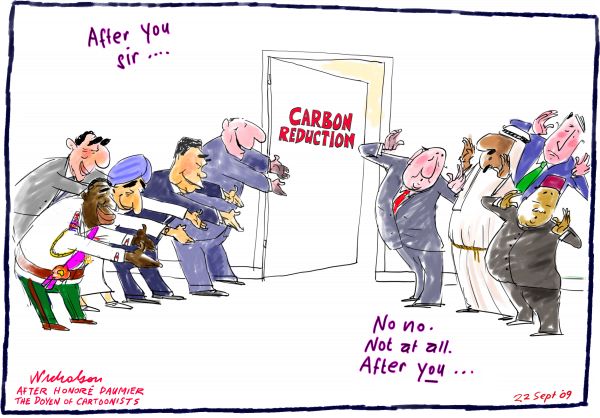
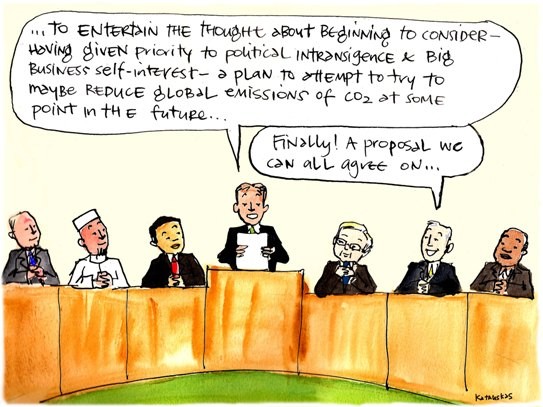
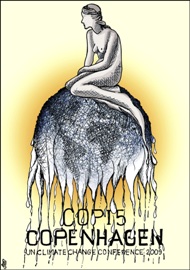
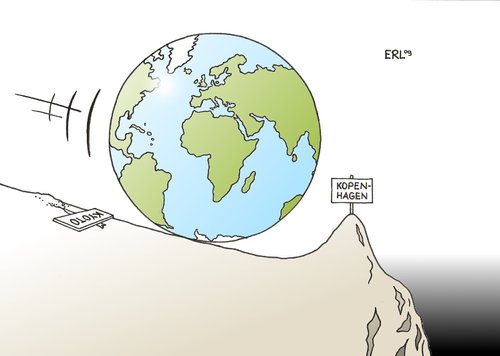
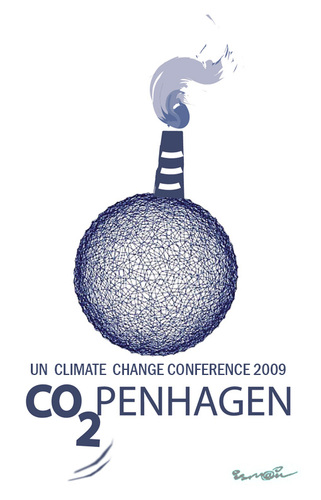
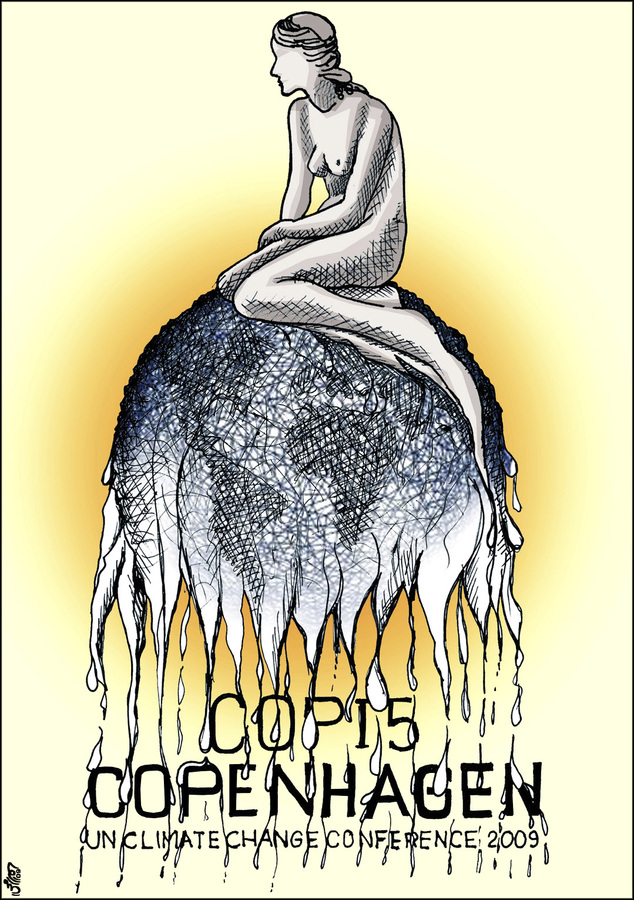
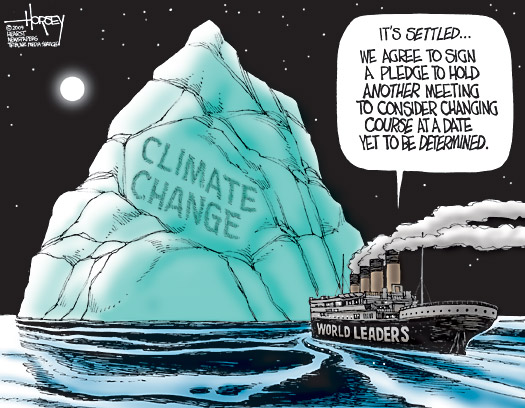
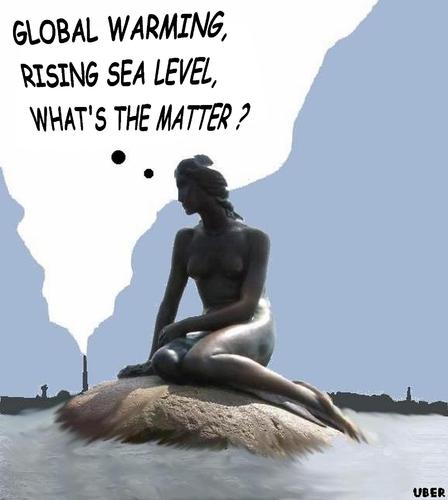
That’s all I can say about it for now, since the final selection of winners will only be made in January 2010. In the meantime, I’ve been looking at many climate related cartoons inspired by the Copenhagen conference. Here are some that particularly appealed to me…
Last chance, by ErlCLIMATE SUMMIT OF COPENHAGEN! by ismail dogan copenhagen 09 logo - by samir abdl-fatah ramahiby David Horseyby uber
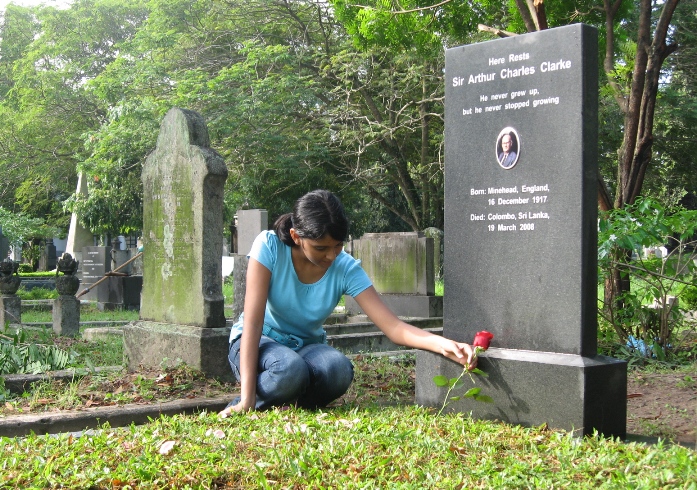
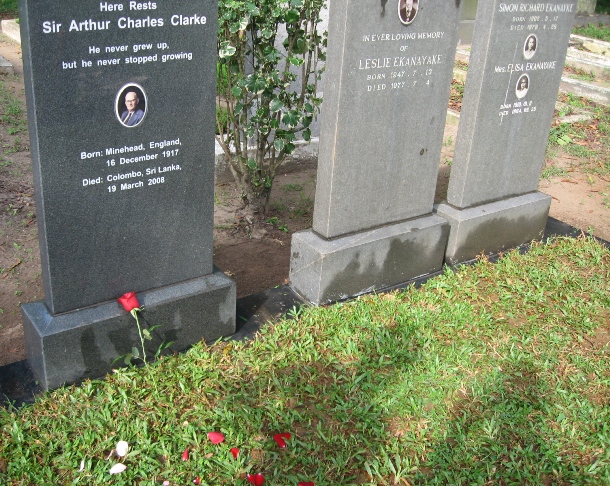
Dhara at Sir Arthur Clarke's grave, morning of 16 Dec 2009“Whether you like flowers or not, they will eventually grow on you!”
Sir Arthur Clarke used to say this when my daughter Dhara and I presented him flowers every year on his birthday, 16 December. Dhara has grown up carrying flowers to Uncle Arthur all her life.
Had Sir Arthur been alive, he would have been 92 today. It now becomes his 92nd birth anniversary.
Although Sir Arthur has headed for the stars, Dhara and I still continue our annual tradition. We now take him flowers not to Leslie’s House, Sir Arthur’s Colombo home for over 35 years, but to his grave at Colombo’s general cemetery.
With a few red and pink roses in hand, we walked through the cemetery’s narrow pathways this morning. Last December, when we first made this journey, Sir Arthur’s grave was as yet unmarked, and could be located only if we looked for the graves of the departed Ekanayakes, members of his adopted Lankan family.
But now Sir Arthur has his own tombstone, with the epitaph of his choice: ‘Here rests Sir Arthur Charles Clarke.
He never grew up,
but he never stopped growing’
And unlike last year, when the gravesite had only a concrete surface, some grass is now growing there. We broke up the roses and sprinkled the petals on the grass. We left the last red rose in tact, nestled against the tombstone.
In the weeks and months following Sir Arthur’s death, so many have asked me what kind of monument is being planned in his memory. We live in a land where people love to put up ostentatious and perfectly useless structures to honour the departed. I simply keep quoting Sir Arthur’s own reply, when a journalist once asked him that very question: “Go to any well-stocked library, and look around…”
Those who leave behind such living legacies don’t really need monuments of brick and mortar. And as I told a recent meeting of the Rationalists Association of Sri Lanka to mark the birth anniversary, the legacy also continues in us who carry his flame and ideals…
Sir Arthur Clarke tombstone, on his 92nd birth anniversary
We must love one another or die... Our planet is one, but our world speaks and sings in a myriad tongues — and that’s part of our cherished cultural diversity. Once in a while, however, it’s good to see that cacophony morph into a symphony when the world shares a few moments — in awe, horror, love or happiness.
It happened last week when the world sang for an extremely good cause. On 7 December 2009 at 1:30pm GMT, Starbucks invited musicians from all over the world to sing together at the same time to raise awareness for HIV/AIDS in Africa. In one breathtaking moment, musicians from 156 countries played “All You Need is Love” together. The live participation of most nations together to sing this song became a Guinness world record.
Watch now, as musicians from all around the world come together and share a song.
My former colleague Buddhini Ekanayake joined this global production by coordinating the input from Sri Lanka. “Personally, I am really glad to take part in this event together with my team, on behalf of Watermelon Creatives,” she says on her blog, where she shares some info and images.
You can still join in by lending your own voice to the Starbucks Love Project.. Watch streaming video from countries around the world and then join in by singing All You Need is Love yourself. For each video submitted, Starbucks will make a contribution to the Global Fund to help fight against AIDS in Africa. You can also help increase the Starbucks contribution to the Global Fund by submitting a drawing to the Love Gallery.
The global sing-along is part of our continuing efforts to help fight AIDS in Africa. In just one year in partnership with (RED), Starbucks has generated money equivalent to more than 7 million days of medicine to help those living with HIV in Africa.
“All You Need Is Love” is a song written by John Lennon and credited to Lennon/McCartney. It has been associated with path-breaking initiatives before. It was first performed by The Beatles on Our World, the first live global television link. Watched by 400 million in 26 countries, the programme was broadcast via satellite on 25 June 1967.
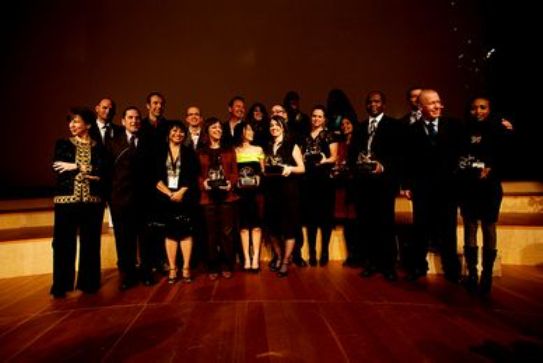
Earth Journalism 2009 Award winners “If we are to have any hope of reversing the effects of climate change, then we have a monumental task of educating the six billion people on our planet about how climate change works and what they can do to help. The media is critical in this effort, since just one reporter has the ability to reach thousands, even millions, of people. These awards help to expand and honour these vitally important efforts.”
So said Dr Rajendra Pachauri, 2007 Nobel Peace Prize co-winner and head of the UN climate panel (IPCC) at the gala ceremony in Copenhagen tonight to present the inaugural Earth Journalism Awards.
Among the other presenters were key figures on climate and environmental issues, including Mary Robinson, the former President of Ireland; Marina Silva, the former environment minister of Brazil; and award-winning Chinese movie star Li Bingbing, who is also the Global Ambassador for WWF’s Earth Hour.
Nearly 1,000 journalists, bloggers and citizen reporters from 148 countries participated in the competition by submitting their work. The 15 winners were selected through a process involving a globe-spanning, independent jury with over 100 media and climate change experts. The winning reports included a Kenyan group who spread environmental information to their peers in the Nairobi slums through a hip hop video filmed atop mountains of trash, a compelling account of a small Pakistani community adapting to climate change, and an investigative report on disturbing business practices in Papua New Guinea’s carbon market.
Full list of winning entries and winners found on Earth Journalism website.
The Global Public Award, determined by thousands of online votes, went to “The Route of Smoke,” a multimedia report by Brazilian journalists Andreia Fanzeres and Cristiane Prizibisczki, who documented how customary farming practices that contribute to the country’s emissions are clashing with new methods for responsible agriculture.
“Our reporting showed how complex this issue of burning forests in the Amazon really is,” Fanzeres said. “It’s not about ‘good guys’ versus ‘bad guys.’ If you understand the complexities of climate change, you can start to solve the problem.”
James Fahn, Internews’ Global Director of Environmental Programs, said: “The Earth Journalism Awards were established to boost climate change coverage in this critical year leading up to Copenhagen, and to highlight the efforts of journalists reporting on this challenging subject around the world.”




 Open Minds!