The Step-children of Tsunami: Overlooked and forgotten

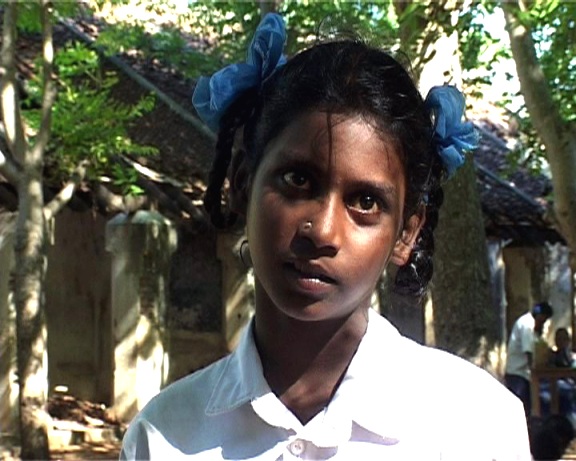
india-malas-family-lost-their-home-jobs.jpg

Meet Mala. She lives in in Kottaikkadu village in Kancheepuram District in India’s southern Tamil Nadu state.

She was 11 years old when, in December 2004, the Asian Tsunami crashed into village without warning. This made her very poor family desperate and destitute.

The disaster didn’t kill anyone in her village, but caused considerable property damage. In her case, the waves that rolled in spared their small hut, but her fisherman father was nearly drowned: he survived with some injuries.

But the family’s fishing boat and gear were gone. That was a mighty blow.

After the waves had retreated, they returned to their house and started rebuilding their lives. They thought the world’s generosity in responding to the Asian Tsunami will somehow bring some help.

They were wrong.

When the Tsunami triggered massive aid donations, all affected countries pledged to distribute it in a fair, equitable and transparent manner. But as the aid trickled down layers of government and charities, various biases and distortions crept in.

What happened in Mala’s village was an example. We came across the situation when tracking Mala’s family for a whole year (2005) after the Tsunami, documenting their long road to recovery as part of our Children of Tsunami media project.

We tracked two affected families each in India, Indonesia, Sri Lanka and Thailand, filming their progress — or the lack of it — every month and producing video reports that were uploaded to a dedicated website.

Follow Mala’s story through monthly video reports on our website

The most striking example of aid disparity came from India. Even months after the disaster, Mala’s family — or anyone else in her village — received absolutely no relief or recovery assistance.

Officially, it was because ‘no one was killed’ in her village. But everybody in Kottaikkadu village knew the real reason: in the Indian social hierarchy, they occupy the lowest level, known as ‘Dalits’.

Apparently, that was why both government agencies and charities stayed clear of the village.

Our India production team, led by senior journalist and film-maker Satya Sivaraman (with video camera in the photo, below), investigated further. They compared Kottaikadu with its adjoining village of Alambara. Both had suffered similar damage during the Tsunami: people lost their boats and nets, but there were no deaths.

Image from Children of Tsunami website

Yet the people of Alambara – who belong to a supposedly higher caste of fishermen — received food items, boats and fishing nets from various outside sources.

In fact, they felt quite sorry for their neighbours in Kottaikkadu. “On the day of the tsunami we ran over 15 kilometers,” said Kuppuraj, a resident of Alambara. “Kottaikadu villagers, who live just 600 meters away…ran with us — but nobody has helped them to recover.”

There was another incident that showed up the caste-based discrimination, which my colleague Manori Wijesekera, production manager of Children of Tsunami, has just reminded me.

In March 2005, our India film crew found Mala’s father seriously ill with a lung infection (triggered by his near-drowning during the Tsunami) and his family so helpless that they were unable to even seek medical attention.

So the crew put their filming gear aside, and became good Samaritans: they rushed the sick man to a nearby government-run hospital. But once there, doctors refused to admit or treat him — all due to the patient’s supposedly low caste!

It was only when Satya and crew threatened to film the entire sorry episode, and have it broadcast on television later that day, that medical attention was finally provided. Discarding their production plans, our crew stayed with Mala’s family at the hospital through the night and next day to ensure the doctors gave her father the correct medical attention. The family believes that the production team saved her father’s life that day.

Read more about what happened at Children of Tsunami website

Watch the March 2005 video report that covered the hospitalisation incident
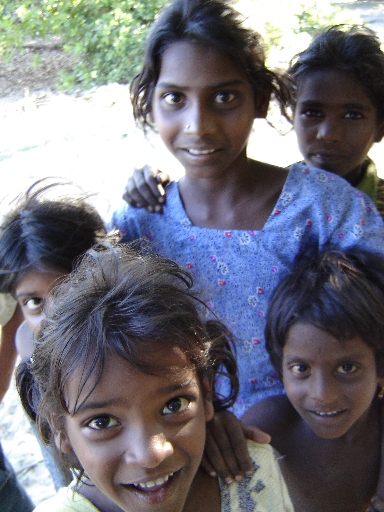
mala-with-her-neighbours.jpg

While their father was recovering, Mala’s mother toiled as a labourer to keep the home fires burning. Mala has one younger sister and two younger brothers.

Children of Tsunami: Rebuilding the Future was TVE Asia Pacific’s response to largely superficial media coverage of the Indian Ocean Tsunami of December 2004. It tracked on TV, video and web the personal recovery stories of eight affected families in India, Indonesia, Sri Lanka and Thailand for a year after the disaster. Its many media products — distributed on broadcast, narrowcast and online platforms -– inspired public discussion on aid management and optimum rehabilitation choices.

As we discovered along the way, some of the affected could be better described as Step-children of Tsunami.

In one of my early blog posts, I paid a tribute to the most extreme example of such a child, Thillainayagam Theeban.

The Tsunami has become yesterday’s news, but there are thousands of affected children, women and men who are still living on the edge of survival.

Related links:

Children of Tsunami: Documenting Asia’s longest year

Children of Tsunami revisited two years later

All images courtesy Children of Tsunami media project, TVE Asia Pacific

New Face of People Power: Social Accountability in action

In an earlier post, I wrote about how citizen groups are increasingly empowering themselves with information to demand greater accountability from their elected representatives in local, provincial and central governments.

This is collectively called Social Accountability – and it represents a significantly higher level of citizen engagement than merely changing governments at elections or taking to the streets for popular revolt (‘people power’).

In 2004, TVE Asia Pacific produced a half-hour international TV documentary titled People Power that profiled four Social Accountability projects in Africa (Malawi), Asia (India), Europe (Ireland) and Latin American (Brazil).

Watch the Brazil story on TVEAP’s YouTube channel:

The experiment with participatory budgeting in the municipality of Porto Alegre in Brazil is a long-running example that we filmed. This is one of the largest cities in Brazil, one of the most important cultural, political and economic centers of Southern Brazil.

The city is well known as the birth place of the World Social Forum. The first WSF was held there in January 2001.

Participatory budgeting goes back to a decade earlier. It was started in 1989 by the newly elected “Worker Party” (PT) to involve people in democratic resource management in an effort to provide greater levels of spending to poorer citizens and neighborhoods. It has since spread to over 80 municipalities and five states in Brazil.

Porto Alegre’s challenge was how to include the poorer people in this success. Housing was a major problem as rural people migrate to the city looking for work. In the past, people built temporary houses on whatever land they could find, and the city council kept on demolishing these unauthorised structures.

from-people-power-porto-allegre-story-2.jpg

As Brazil moved from a totalitarian to democratic form of government in the late 1980s, the newly elected city government adopted a program where the people participate in prioritising the City Budget.

The city is divided into sixteen regions and during each year, local neighbourhoods send representatives to people’s assemblies. In these assemblies, the neighbourhood representatives discuss priorities for the allocation of the city budget. They then elect their representatives from each region to form a budget council.

Over a year, from neighbourhood associations to people’s assemblies, up to 20,000 people have a direct say on how the city budget should be allocated.

This participation ensures democratic accountability and fairer distribution of tax revenue. It allows the poorest and the richest regions to have equal weight in the decision process.

After the introduction of participatory budgeting, an influential business journal nominated Porto Alegre as the Brazilian city with the ‘best quality in life’ for the 4th consecutive times. Statistics show that there has been significant improvement in quality of roads, access to water services, coverage of sewerage system, school enrollment and tax revenue collection.

from-people-power-porto-allegre-story.jpg

We interviewed Joao Verle (wearing pink shirt in photo above), the then Mayor of Porto Allegre, who said: “I believe in this project since i was one of those responsible for starting it fifteen years ago. The participatory budget is now part of the organic life of this city – people can change it any time they please. And this makes it more adaptive to the people’s needs.”

First broadcast on BBC World in February 2004, People Power documentary has since been widely distributed to broadcast, civil society and educational users in the global South. It is still available from TVEAP on DVD and VHS video.

Photos are all captured from People Power video film. Courtesy TVE Asia Pacific

Read my post about social accountability in the world’s largest democracy, India

‘Cheque-book Development’: Paying public media to deliver development agency logos

In their ceaseless efforts to keep their organisations in the media spotlight, spin doctors of development agencies are distorting news values and corrupting the media, turning issue-based communication products into ‘logo delivery mechanisms’.

This is the thrust of my latest op ed essay, titled ‘Cheque-book Development’ corrupting the media. It has just published by the popular media-watch website anchored in the US, MediaChannel.org

Image courtesy MediaChannel.org

In this essay, I draw on several years of first hand observations in development, humanitarian and broadcasting circles at Asian and global levels. I focus on a disturbing practice that more and more development/humanitarian agencies engage in: paying intermediaries for getting their stories on global news and current affairs TV channels.

This is nothing short of cash-for-media coverage.

Here’s an extract:

“As development organisations compete more intensely for external funding, they are increasingly adopting desperate strategies to gain higher media visibility for their names, logos and bosses.

“Communication officers in some leading development and humanitarian organisations have been reduced to publicists. When certain UN agency chiefs tour disaster or conflict zones, their spin doctors precede or follow them. Some top honchos now travel with their own ’embedded journalists’ – all at agency expense.

“In this publicity frenzy, these agencies’ communication products are less and less on the issues they stand for or reforms they passionately advocate. Instead, the printed material, online offerings and video films have become ‘logo delivery mechanisms’.

Image courtesy MediaChannel.org Cartoon courtesy Global Journalist

Some of these communication officers I write about have become friends over the years — I empathise with their pressures, but don’t approve of what their organistions do. As I write in the essay:

“This practice is wrong on two counts. One, allowing intermediaries to sell access to the airwaves is a form of corruption. Two, every time this happens, it siphons off tax-payer supported development funds intended for combating poverty and suffering in the majority world.

“It is the reverse of cheque-book journalism, where some media organisations pay celebrity or other sources for exclusive access to their stories. When development agencies are paying sections of the media to get promotional or favourable stories aired, we must call it ‘cheque-book development’.”

Make no mistake — this is a form of media corruption. It’s not just the development sector’s vanity that fuels this process. Many 24/7 news channels are struggling to fill their hours inexpensively. Some turn a blind eye to ethical sourcing as long as they can have a steady supply of subsidised content.

Read my full essay on MediaChannel.org

Note: Being a US-anchored outlet, MediaChannel.org spells ‘cheque-book’ as ‘check-book’, which is correct in American spelling of English! As I write in my essay, it appears that TV channels and networks on that side of the Atlantic seem a bit harder to corrupt. But then, what do I know?

Read my Nov 2006 essay on MediaChannel.org: Ethical News Gathering Challenge for Al Jazeera

I have been speaking about the growing threat of cheque-book development for some time. For instance, I referred to it during Communicating Disasters: An Asian Brainstorming organised by TVE Asia Pacific and UNDP in Bangkok in December 2006.

Essay republished on Asia Media Forum
asia-media-forum.gif

Faecal Attraction: There’s no such thing as a convenient flush…

Out of sight is out of mind.

That’s how it works for most of us. Especially when the subject is what we do in the privacy of our toilets and then just flush away.

But there is no such thing as a Convenient Flush — it’s all linked to how waste, including sewage, is disposed of. Or not.

And what goes around, even out of our sight, comes around — turning up in the least expected ways! Like faecal matter in our drinking water.

A new film produced by the New Delhi-based research and advocacy organisation Centre for Science and Environment (CSE) probes the link between sewage disposal and river water pollution in India — specifically, the River Yamuna, part of the massive Indo-Gangetic river system.

The film by Pradip Saha is titled Faecal Attraction: Political Economy of Defecation. It is accompanied CSE’s latest publication Sewage Canal: How to Clean the Yamuna.

The book and the film expose the political economy of defecation, where the rich are subsidised to defecate in convenience and the poor pay for pollution with their ill health because of dirty water.

It begins by asking two simple questions: Where does your water come from? What do you do with your shit?

Watch the answers – some amusing, others absurd – in this 3-min trailer on YouTube:

Backed by scientific data, CSE shows how India’s 14 major rivers, as well as 55 minor and many small rivers have all been reduced to sewers. They receive millions of litres of sewage, industrial residue and agricultural waste from the cities and towns through which they flow.

Delhi and Agra together account for 90 per cent of the pollution in the River Yamuna, a major tributary of the Ganges. Yamuna is one of the most polluted rivers in the world, especially around New Delhi, the capital of India, which dumps about 57% of its waste into the river.

When Yamuna flows by Delhi, the city extracts gallons of fresh water for drinking and irrigation. What is given in return to the river is only excreta – sewage, and industrial and agricultural waste. This sewage is (supposed to be) collected, transported, and assembled for treatment (cleaning), and then flown back to the river. In reality, what goes back is far from clean… The irony is that the city has 40 per cent of the entire sewage treatment infrastructure in the country with only five per cent of the country’s population! And still, Yamuna is unclean.

Cartoon courtesy CSE India

Though numerous attempts have been made to clean it, the efforts have proven to be futile. Although the government of India has spent nearly $500 million to clean up the river, the river continues to be polluted with garbage while most sewage treatment facilities are underfunded or malfunctioning.

“As these rivers die a slow death, the sole blame for their pathetic condition lies with human beings who have always treated these water bodies as their personal dumping zones,” says CSE.

Anil Agarwal, founder director of CSE, believed that a “society is known by the water it keeps”. “The health of a river…reflects the very health of the human society, its ability to live harmoniously with its environment,”, he said.

In that sense, things are very seriously wrong with not just the Yamuna, but river systems across India.

Read CSE Director Sunita Narain’s presentation on the River Yamuna pollution and clean up options

Read CSE Press release on river pollution

A Silent Emergency: More television sets than toilets!

Read a later blog post: Faecal Attraction: There’s no such thing as a convenient flush…

It was September 2004. My daughter Dhara, eight years at the time (or ‘eight plus’ as she insisted on saying), had a complaint.

The toilets in her school were not clean enough. She was finding it squeamish to use them. So she was doing her best to avoid going to the loo: she’d drink less, and try to ‘hold back’ until she could rush home.

Like many sheltered middle class kids, she was still coming to terms with the wider world outside her home. And she attends a well endowed private school where, I am told, toilets are cleaned regularly by janitors engaged by the school.

Now we cut to eleven-year-old Susheela, a girl growing up in neighbouring India. I’ve never met her in person, but this sentence summed up her tragic story:
“I was always first in the class. I am very much interested in studies. I want to become a lawyer. But my mother stopped me from going to school after Class V as the middle school I was attending, 5 km from my house, had no toilet. Can someone help me?”

This was the opening of an article on water and sanitation written by Indian journalist Dr Asha Krishnakumar and published in the news magazine Frontline (part of The Hindu group) at the end of 2003. It was titled: A Silent Emergency.

dr-asha-krishnakumar.jpg Image courtesy WSSCC

It was several months later that I actually read Asha’s article. By coincidence, my daughter was having her own ‘toilet issue’ at the time — and the contrast was striking.

Asha’s article continued:
Susheela’s anguish is shared by a large number of girls in India who drop out of school for what sounds like an absurd reason: want of a toilet in school. “Sanitation is closely linked to female literacy in India,” says a United Nations Children’s Fund (UNICEF) study. According to V. Balakrishnan, convener of the Tamil Nadu Primary Schools Improvement Campaign, the lack of proper toilet facilities in schools has a definite and significant bearing on the drop-out rate of girls, particularly around the time they reach Class VIII. In 2000, barely 10 per cent of Tamil Nadu’s 40,000 government schools had usable toilets; the figure is much lower for the country as a whole.

I’d been covering development issues in the media for over 15 years, but this stark reality had not occurred to me. In some developing countries, girls face a greater struggle in enrolling in school and staying on. There are cultural, social and economic factors working against educating girls.

And as Asha’s article revealed, there are other, less known factors adding to this burden.

I shouldn’t have been surprised. Indian census data had revealed in 2001 that, some parts of the country had more television sets than toilets.

Asha’s was one of three dozen excellent media articles on water and sanitation that I read that month as a judge in an international award scheme to recognise the best media reporting on the issue. Organised by the Water Supply and Sanitation Collaborative Council (WSSCC), it was meant to to encourage broader media coverage of water supply, sanitation and hygiene (WASH) issues in the developing world.

The initiative, first launched in 2002, is open to journalists from developing countries, who write or broadcast original investigative reports on WASH issues. The Collaborative Council seeks to use the WASH Media Awards as part of the broader goals of fostering sustainable relations with journalists in developing nations, and increasing media coverage of WASH issues.

WASH has recently announced the next media awards, covering print and broadcast media coverage from 1 July 2007 to 30 April 2008. This time around, it also involves the Stockholm International Water Institute (SIWI).

Winning entries will be presented at the World Water Week in Stockholm , Sweden in August 2008. Deadline for the submission of entries is on or before May 15, 2008. Read the announcement

In 2004, the recipient of the first WASH Media Award was Nadia El-Awady from Egypt for her outstanding article “The Nile and its People”. It illustrated the impacts of industrial pollution, sewage and solid waste management on people’s health and dignity along the River Nile.

We evaluated a large number of high quality entries and decided to give special recognition and Certificates of Appreciation to several other journalists. Asha was one of them.

A few months later, it was my privilege to meet Asha in person at a workshop on media and sustainable development that TVE Asia Pacific organised as part of the Education for a Sustainable Future conference in Ahmedabad, India, in January 2005. The photo shows Asha addressing our workshop while Darryl D’Monte, fellow judge in WASH media awards looks on.

l-to-r-darryl-dmonte-asha-krishnakumar-and-nadia-el-awady.jpg

By another coincidence, the lady on the right is Nadia El-Awady who was overall winner of the WASH media award. At the time she was the Health and Science Page Editor of IslamOnline.net. She has since been promoted.

Either the world is smaller than we think, or our networks are larger than we imagine.

But I will always be grateful to Asha for opening my eyes on a silent emergency. One that I have since explained to my daughter. She no longer complains.

Read the WASH press release on 2004 media award winners

Read the publication on WASH Media Awards 2004

Read WASH media guide on The Biggest Scandal of the last 50 Years

Photos by Janaka Sri Jayalath, TVE Asia Pacific

UNESCO playing spoil-sport in new Seven Wonders

UNESCO is playing spoil-sport again…this time about the new Seven Wonders of the world.

The crusty, officious UN agency — not my favourite, as regular readers know — is sadly trapped in its own ideological rhetoric of the 1980s. Somebody should kick them hard to enter the 21st century!

The new Seven Wonders of the World is an attempt to create a modern-day alternative to historical lists of the Seven Wonders of the World. Based on a worldwide online poll organised by the private, Swiss-based, non-profit New Open World Corporation (NOWC), the final list was announced on 7 July 2007 in Lisbon, Portugal.

The winners were selected from among dozens of initial nominations. The new Seven Wonders of the world are: The Great Wall of China; Petra of Jordan; Christ the Redeemer statue in Rio de Janeiro, Brazil; Machu Piccu ruins of Peru; Chichen Itza archaeological site in Mexico; The Colosseum of Rome, Italy; and the Taj Mahal of India.

Read more in the NOWC description or Wikipedia description

Image from n7w image courtesy n7w image from n7wimage from n7w

This campaign was launched in 2000 as a private initiative by the Swiss philanthropist, adventurer and film-maker Bernard Weber – his idea was to encourage citizens around the world to select seven new wonders of the world by popular vote.

And he turned to the Internet as a mass medium for people to express their preferences.

This is what seems to have irked UNESCO the most — allowing ordinary people to have their say about the common heritage of humankind.

After the new Seven Wonders were announced on 7 July 2007, two UNESCO spokespersons ridiculed the whole idea. Their contempt for the (rival?) process was palpable. This is not how any media spokespersons should behave. Read a widely reproduced media report: UNESCO slams new seven wonders

Earlier, in an official statement full of pomposity and self-importance, UNESCO had distanced itself from the initiative (even if the former UNESCO director general, Frederico Mayor of Spain, is heading the expert panel advising the new Seven Wonders selection process). Here’s an extract:
“There is no comparison between Mr Weber’s mediatised campaign and the scientific and educational work resulting from the inscription of sites on UNESCO’s World Heritage List. The list of the ‘7 New Wonders of the World’ will be the result of a private undertaking, reflecting only the opinions of those with access to the internet and not the entire world. This initiative cannot, in any significant and sustainable manner, contribute to the preservation of sites elected by this public.”

Note the word ‘mediatised’ — which I suppose means media-based and web-driven. This piques me the most. What is wrong in using the mass media, including the web, to generate new levels of interest and enthusiasm about cultural heritage, as the New Seven Wonders initiative has succeeded in doing.

Ironically, UNESCO has an entire division on Communication and Information, which says it promotes the use of media in socio-cultural development. They claim to work with both the conventional media (TV, radio, print) as well as the new media (web, mobile devices and other ICTs).

Is it that UNESCO is such a multi-headed, mixed-up creature that its World Heritage division can publicly condemn the use of media in the public interest while another division upholds it?

Or, could it be that when UNESCO talks about media in development and democracy, it expects the poor, suffering people in the Majority World to just stick to the issues of bread and butter, livestock and water? Does UNESCO expect the ordinary people and private citizens to stay away from the lofty issues of cultural heritage? Are those only discussed by diplomats and experts, many of them as crusty and officious as UNESCO itself?

And can somebody please explain to me how a process involving 100 million online votes is less valid than the ‘scientific and educational work’ of UNESCO in selecting World Heritage sites — involving no more than a few hundred persons at the most (all government officials and academics)?

image from n7w image from n7w image from n7w

The grand old lady of Paris should realise that she can’t have it both ways. If UNESCO sincerely advocates the free flow of information, media freedom and the promotion of ICTs in development, then it must be prepared for the resulting public engagement of issues in the media — ranging from the frivolous to lofty, and everything in between. It cannot and must not set the agenda, or expect certain issues to be left aside to boffins who claim to know more than the rest of us.

Whether UNESCO likes or not, the web has truly let the genie out of the bottle. Gone — hopefully forever, and not a moment too soon! — are the days when a handful of men in suits (it’s usually graying men, with very few women involved) could decide matters of global public interest behind closed doors.

By its aloofness, UNESCO made itself irrelevant in the seven wonders selection process. The smarter option would have been to stay engaged and use the massive popular interest to draw attention to the need to invest more time, effort and resources to conserve cultural heritage everywhere. A great opportunity was missed.

But thankfully, other arms of the UN were a bit more pragmatic. For example, the United Nations Office for Partnerships recognised the value of new Seven Wonders.

The stark choice for UNESCO is to rethink its intellectual arrogance, or risk being sidelined — and seen as the biggest hypocrite in the entire UN family.

At a minimum, UNESCO must heed the timeless advice of Rabindranath Tagore:
If you can lead, lead.
If you cannot, then follow.
If you cannot lead or follow, get out of the way!


Now, nominate your natural Seven Wonders of the world — new online poll now underway! Never mind what UNESCO has to say about it!

End this callous waste…open up broadcast archives for combating poverty and ignorance!

Image courtesy Boeing

This is the new Boeing 787 aircraft that was unveiled a few days ago — described as more fuel-efficient, and therefore more climate friendly. Not to mention being a more comfortable plane to fly on.

Now just imagine if one of these new aircraft were to be used for a single return flight — let’s say Singapore to London and back — and then relegating it to a hanger for the rest of its lifetime!

What a callous waste that would be. Now who would do that, and will that be tolerated?

Yet something like this happens in the moving images industry quite frequently….and not too many seem to be bothered.

Every year, many new TV films and documentaries are produced with considerable investment of time, effort and money. After one or few broadcasts, they are confined to broadcast archives. Trapped in copyright restrictions, they languish there even though they can be a vital resource for teachers, students, civil society groups and trainers worldwide.

To me, this is as much a criminal waste as throwing away a Jumbo jet after a single journey.

In fact, I’ve been writing and talking about it whenever I can. Here’s an extract from my speech to Asia Media Summit 2007 held in late May 2007 in Kuala Lumpur:

Every year, excellent TV programmes are made on different development topics. Public and private funds are spent in making these programmes, which draw in the creativity and hard work of committed professionals.

Many channels broadcast these programmes. They are typically aired a few times and then end up in the archives. Few may be exploited for their multimedia potential.

Yet many of these programmes have a longer shelf-life – and outside the broadcast sphere. They can be extremely useful in education, awareness raising, advocacy and training.

Alas, copyrights restrictions are often too tight for that to happen. Even where the film-makers or producers themselves are keen for their creations to be used beyond broadcasts, the copyright policies stand in the way. In large broadcast organisations, it is lawyers and accountants –- not journalists or producers -– who now seem to decide on what kind of content is produced, and how it is distributed under what restrictions.

Read the full text of my speech here

copy-of-copy-of-ams-ad2-low-res.jpg copy-of-copy-of-ams-ad2-low-res.jpg

This is why we at TVE Asia Pacific have been calling for poverty and development to be recognised as a copyrights-free zone. So that the crushing (and completely meaningless) grip of copyrights can be loosened up.

I first made this proposal in mid 2006, in an op ed essay published online at MediaChannel.org. I then reiterated it at the UN Headquarters in New York in September 2006, when addressing the 59th annual UN NGO Conference.

The idea has been well received in education and civil society circles. But predictably enough, the broadcast community itself has been less enthusiastic.

We just have to keep on at it.

The ‘Rural Romance’ lives on in the ICT Age: Urban poor need not apply

Poor rice farmers running up laptops in paddy fields.

Fishermen navigating their ramshackle vessels using satellite-guided global positioning systems (GPS).

A wide-eyed girl child seated in front of a computer screen, looking completely awe-struck.

A saffron-robed Buddhist monk gleefully chatting away on a mobile phone.

Do these images sound a bit familiar to you? That’s because you keep seeing them on magazine covers, posters and various other items produced and distributed to show how modern-day communication gadgets are making a difference in the majority world.

The majority world is where a majority of people live in poverty or hover close to it.

Some influential members of the development community – which includes aid giving nations, UN agencies, researchers and assorted charities working on humanitarian and development issues – now try to fix poverty with gadgets. Or, to use the proper term, unleash information and communication technologies (ICTs) to help combat poverty.

Photo courtesy SciAm Image courtesy Panos Image courtesy Panos

ICT is a basket term that includes the well established services like radio, television and fixed phones as well as newer technologies such as computers, Internet and mobile phones.

Can ICTs help developing countries overcome the current income, social and other disparities? In an editorial written for the Global Knowledge Partnership (GKP) three years ago, I answered this question as a conditional ‘yes’ — with the caution that ICTs are not a panacea that can fix deep-rooted ills.

Read my full essay in GKP Partners Newsletter (My essay is the last one, so keep scrolling down, down, down.)

I said:
ICTs cannot turn bad development into good development; they can only make good development, better. However, when used strategically and as part of a wider development process, ICTs can offer substantial value addition.

But that presumes there is a rigorous assessment of the needs and rational investment of the limited resources. What happens when experts and activists act on their perceptions and prejudices, and not on evidence?

The development community’s obsession with everything rural is one key factor creating such distortions. Sharad Shankardass, Spokesperson for the United Nations Human Settlements Programme (UN-HABITAT), once described this as the development community’s ‘rural romance’.

In 2003 – 2004, Sharad joined us at TVE Asia Pacific in running two regional workshops for training Asian TV journalists in covering sustainability related issues. As the UN agency that chronicles humanity’s urbanization, his agency has all the facts and figures to draw evidence-based conclusions.

The amiable and articulate Sharad summed it up well: more than half the world’s population – including significant numbers of its poor – now live in cities or semi-urban areas. Yet, most members of the development community continue to think of poverty and under-development as an exclusively rural phenomenon.

In other words, they are hooked on a romanticised notion of the rural poor and cannot see (or choose to ignore) a more multi-faceted reality.

Image courtesy UN HABITAT Image courtesy TVE Asia Pacific

Here’s the blurb for State of the World’s Cities 2006/2007 report, published by UN-HABITAT:
“It is generally assumed that urban populations are healthier, more literate and more prosperous than rural populations. However, UN-HABITAT’s State of the World’s Cities Report 2006/7 has broken new ground by showing that the urban poor suffer from an urban penalty: Slum dwellers in developing countries are as badly off if not worse off than their rural relatives.”

Read State of the World’s Cities 2006/2007 online, as pdf chapters

This kind of evidence is being ignored by researchers, activists and UN officials who have fallen (or sleep-walked) into a ‘rural romance trap’. To them, the unmet needs of millions of urban poor are not a concern, or at least not a priority.

In their strange logic, it’s not just a low income level and deprivation of basic human amenities that qualify someone for support under various poverty reduction efforts. That person must also live in an idyllic village, away from major signs of civilization, and preferably in a mud hut surrounded by starving children and emaciated cattle.

That’s picture perfect poverty for you. Urban poor, living in the shadow of highrise buildings and skytrains, rather spoil this pristine image!

Last week while visiting Kuala Lumpur, Malaysia, for Asia Media Summit 2007, I had two separate encounters related to this rural romance.

First was a pre-summit workshop on Connecting Communities through Community Broadcasting and ICTs that brought together some 25 – 30 participants, mostly activists and researchers. In my remarks to the workshop (where I spoke and chaired a session), I urged everyone not to romanticize either communities or broadcasting.

“Communities in need are no longer rural and idyllic as some of you might imagine,” I cautioned. “And broadcasting isn’t what it used to be either. Things have moved on. So must we.”

During question time, a communications advisor from UNESCO New Delhi took me to task for saying this. “We are working with 45 years of solid experience behind us,” she reminded me and everyone else. “You can’t just dismiss this body of work.”

She seemed affected by my questioning the strong or exclusive focus that community radio promoters have on rural areas and rural poor in particular.

I didn’t want to split hairs on this when bigger issues were at stake. I just said that what had worked in the first century of radio will not work in that same form in the medium’s second century that we have now entered. New thinking based on a century’s experience was needed.

Why are organizations like UNESCO so resistant to change and new thinking? Why do they go around spreading development myths that actually do more harm than good?

Read my 2004 essay that exposes the UNESCO-sponsored myth of ‘community radio’ in my native Sri Lanka

And they are not alone. Other UN agencies and development practitioners still plan and deliver development aid and support based on a reality that prevailed in the 1980s or earlier.

My Malaysian friend Chong Sheau Ching, whom I met last week after two years, told me a recent experience that corroborates it.

Chong Sheau Ching, photo courtesy IDRC e-homemakers

Sheau Ching is a remarkable woman. She combines many roles – social entrepreneur, columnist and single mom among them. She is a leading voice in Southeast Asia for using modern ICTs to help women – especially single moms — to find work that they can do from home yet earn decent incomes.

She is founder and head of e-homemakers, a non-profit organisation that networks over 13,000 Malaysian women who are home workers, home-based entrepreneurs and home-makers. These women live and work in cities or towns, and now take advantage of Malaysia’s well-developed telecommunications infrastructure.

Sheau Ching was an invited speaker at Asia Telecentre Forum held in the Malaysian capital on 6 – 8 February 2007. In her presentation, she had spoken about the ICT needs and uses of urban women, including the poor women living in cities. She had questioned why the tele-centre movement was focusing almost entirely on rural areas.

Guess what? The organisers didn’t like such outspokenness at all – she had been reprimanded in public during the rest of the session as well as ‘scolded’ in private after it ended. So much for plurality of views!

Sheau Ching is full of such stories, even if some of them make us feel outraged at the stupidity of people or institutions involved.

Here’s another one, recounting an experience at the World Summit on the Information Society in Tunis, Tunisia in November 2005:

At WSIS Tunis, I gave a short presentation to a small group of bankers from developing countries on using low cost ICT4D innovations for urban poor women to generate income. One politely said to me as he handed out dinner invitations, “We are interested in big projects for youth and the rural people.” I was the only woman in the group, the only one from the civil society, and needless to say, the only one who was not invited to the fancy dinner in a five-star hotel in North Tunis.
Read her full essay, Unsexy and voiceless!!

Next time when UN agencies and other bleeding-heart do-gooders turn on their rhetoric about busting poverty, ask a simple question: Are they fighting poverty no matter where it exists, or is it only poverty in rural, idyllic settings where they like to visit and take photographs?

Like those images I mentioned at the beginning.

Read IDRC profile on Chong Sheau Ching

Asian broadcasters: Make poverty a copyrights free zone!

Today was the second day at Asia Media Summit 2007 in the Malaysian capital of Kuala Lumpur. Among the topics taken up today were gender, poverty reduction and climate change — all discussed from the perspective of broadcasters.

I was part of the plenary session on ‘Mobilising airwaves against poverty’ held this morning. Among the other speakers were Walter Fust, director general of Swiss Development and Cooperation agency (SDC) and Stephen King, Director of BBC World Service Trust.

As speakers, we were asked to address these among other questions: How can we generate in media real interest in development issues such as poverty? How can we secure more airtime in educating and bringing about better ways to fight poverty? How can media put the poorest of the poor at the center of attention?

panel-on-mobilising-airwaves-against-poverty-at-ams-2007.jpg

In my remarks, I called for an on-air/off-air combined ‘assault’ on poverty, ignorance, corruption and other scourges of our time. Powerful as they are, broadcasts alone cannot accomplish this massive task, I pointed out.

Here’s an extract from my remarks:

We all know the power of moving images. Used strategically, moving images can move people to change lifestyles, attitudes and behaviour.

Indeed, the right kind of information -– whether about microcredit, contraception, home gardening or immunisation — can vastly improve the quality of life, and even save lives that are needlessly lost.

But this is not something that one-off or even repeat broadcasts alone can accomplish. We need a mix of broadcast and narrowcast approaches.

Communicating for social change is a slow, incremental process that involves learning, understanding, participation and sharing.

At TVE Asia Pacific, we work equally with broadcast, educational and civil society users of moving images. Our experience for over a decade shows that narrowcast work can reinforce and build on the initial broadcast outreach.

But that’s easier said than done. Every year, excellent TV programmes are made on different development topics. Public and private funds are spent in making these programmes, which draw in the creativity and hard work of committed professionals. Many TV channels willingly broadcast these programmes. After a few transmissions, these end up in broadcast archives. A few are adapted for multimedia use. That’s the nature of this industry.

Yet, as I pointed out, most of these programmes have a longer shelf-life. They can be extremely useful in education, awareness raising, advocacy and training. But unfortunately, copyrights restrictions are often too tight for that to happen. Even when the film-makers and producers themselves are keen for their creations to be used beyond broadcasts, the copyright restrictions stand in the way.

I said: “Broadcasters need to let go of development related TV content after initial broadcasts. They must also allow educational and civil society users greater access to vast visual archives, gathered from all over the world.”

I then repeated a proposal I first made last year, which I have since presented at the UN Headquarters and other forums: make poverty a ‘copyrights free zone’.

The idea is to have broadcasters and other electronic publishers release copyrights on TV, video and online content relating to poverty and development issues -– at least until (MDG target year of) 2015.

Read my original essay on poverty as a copyrights free zone, published in June 2006

There was a mixed reaction from the predominantly broadcast audience. I knew it wasn’t going to be an easy sell: this industry is so closely tied to copyrights and licensing in not just commercial but also emotional terms. Letting go of these rights, even in a limited way for a highly worthy cause, is a quantum leap for broadcast managers raised on strict rights regimes.

More about the reaction in a later post.

Meanwhile, here’s the full text of my remarks:

nalaka-gunawardene-speech-to-ams-2007-final.pdf

Photo courtesy Manori Wijesekera, TVEAP

Outsourcing with a heart: Cambodia’s success story

Today, 16 May 2007, was observed worldwide as World Information Society Day – it marks the establishment of the International Telecommunications Union (ITU) in 1865 and used to be called the World Telecommunication Day.

The UN-sponsored day was dedicated this year to making available the benefits of the digital revolution to young people everywhere. As the ITU noted in its media release:

The World Summit on the Information Society (WSIS) recognized the young as the future workforce and the earliest adopters of ICT, and called for their empowerment as key contributors to building an inclusive Information Society. World leaders stated their commitment at the Summit in Tunis to actively engage youth in innovative ICT-based development programmes and widen opportunities for them.

Yesterday I wrote about a TV service in Pasadena, California, outsourcing some of its reporting work to journalists in India.

Outsourcing is a worldwide trend, fuelled by the rolling out of Internet access and encouraged – at least in part – by the lower salaries that equally skilled persons still command in the less developed parts of the world. So much has been written and spoken about outsourcing in the IT industry, which has created multi-million dollar businesses in recipient countries such as India.

The outsourcing industry employs tens of thousands of young women and men in developing countries, especially in Asia, which receive the outsourced work. Most of them are from urban backgrounds with English-speaking ability and reasonable levels of education.

But this business-driven process can also benefit young people who haven’t had such advantages in life.

digits4change.jpg

A story in TVE Asia Pacific’s Digits4Change series illustrates this potential. It came from Cambodia, and we called it Compassionate Data.

digits4change-tv-series-cambodia.jpg

We went to Cambodia in late 2005 to find out how business process outsourcing (BPO) is benefiting one of the poorest countries in the world.

Emerging from decades of conflict, Cambodians are now trying to find their place in the global village. But lacking in English and computer skills, many find their opportunities limited.

Digital Divide Data is a non-profit organisation run like a business. Started in 2001, they outsource data processing work from the west.

As the world goes digital, thousands of old, paper-based documents need to be digitised. These tasks take time, effort and quality control. Digital Divide Data (DDD) provides this value added service.

Among its clients are universities, companies and organisations in North America.

But what’s special about DDD is their staff. They employ young men and women from disadvantaged backgrounds – orphans, those with disabilities, or from very poor, rural backgrounds. A few have been trafficked for the sex trade.

Sith Sophary Nhev, DDD’s then Cambodia manager told us: “Many companies outsource this kind of service to international clients by using educated and skillful people, but DDD use disadvantaged people who have low skill and low education but we still provide like a good service, quality, time turnaround and a competitive price for the clients.”

Young people come to DDD with a basic education and virtually no skills. The company trains them in computers and English. In fact, all staff are required to continue their education. The company provides scholarships – and pays them an above average salary.

In the hard-nosed ICT industry that’s usually driven by financial bottomlines, DDD has demonstrated that it is indeed possible to do well and do good at the same time. They are a social enterprise, a growing trend worldwide.

digits4change-compassionate-data.jpg

[

]

Watch the full story on TVEAP’s YouTube Channel

Digits4Change TV series website

Digital Divide Data website