Earthcare Outreach: taking moving images to the grassroots

On 19 July 2007, I wrote about the need for natural history and environment film-makers to take their films back to the locations and communities where they filmed.

I cited the specific example of the Brock Initiative, started by ex BBC Natural History producer Richard Brock, which is supporting projects in several countries in Africa and Asia.

In today’s mail, I received the DVD of Tiger – the death chronicles, the latest documentary by the award-winning Indian film-maker Krishnendu Bose. I’m going to watch and write about it separately, but this reminded me of the outreach work he and his company, Earthcare Films, have been doing for years.

After working for a dozen years with factual film-makers from across Asia, my experience is that not many are really interested in any outreach besides a high profile broadcast. For sure, broadcasts help draw attention to a film and its creator/s. But as we have discussed in recent blog posts, broadcast television is not an ideal platform to get a discussion going on issues and concerns. In fact, many film makers are finding it harder to get their serious films broadcast at times with better audience ratings.

Still, surprisingly few film-makers have time or patience for serious narrowcast outreach. Yes, it is a time consuming, tedious process. The logistics can be demanding and expensive. And there is not much glamour (or ‘arty and intellectual feel’) in going to a small town or remote village and playing back your film to a few dozen people living on the edge of survival.

Image courtesy Earthcare Films website

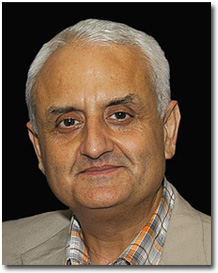
But as exceptional film-makers like Krishnendu (in photo above, taken from Earthcare Films website) know well, it can be an enormously enriching and satisfying experience for a film-maker. People like him watch the audience while they watch the film.

Films are a greatly underused communication form. Serious communication usually is at most limited to awareness building,” says Earthcare Films website in its section on outreach.

That’s why EarthCare Outreach wants to explore beyond. “Films could be tools for social change and empowerment. Participatory film-making by sharing skills and capacities could take the ‘use’ of films to a different level. Not that it has not been tried and practised, but we want to take it forward and try and push the boundaries.

Krishnendu and colleagues have set up the EarthCare Outreach Trust specifically for this purpose. The objective is “to create ownership and stake in the process and the product of a documentary film of the people whose lives we document. In the process we strive to empower young people and rural communities to make them stakeholders in decision-making and in planning for natural resource management.”

For the past several years, Earthcare Outreach has been active on these fronts, organising mobile film screenings or traveling film festivals in rural and urban areas in different parts of India. The website talks about how they have held community and citizenry exchanges between selected locations, evolving film-making skill-share across these groups.

Read more about Earthcare Outreach activities.

Contact Earthcare Films for more information and involvement

On a personal note, I’m trying to recall when I first met Krishnendu. It must be at least a decade ago — I had seen some of his work before I met the man behind them. We were together as guests of the Earth Vision Tokyo Global Environmental Film Festival in 2001 — where his film, Harvesting Hunger, (image below shows it being filmed) won a special jury award.

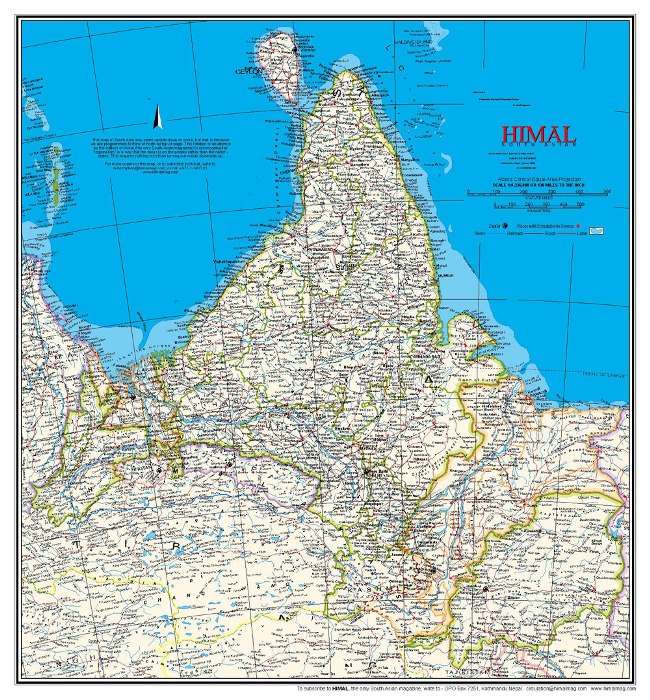
Image courtesy Earthcare Films

Himal – 20 years of celebrating South Asian diversity

copy-2-of-southasian-map-by-himal.jpg

This is a map of South Asia, the sub-region where I live — along with over 1.5 billion other people, a quarter of humanity.

For sure it’s different: things look as if they have been turned upside down. But are they?

This map was published by Himal Southasian, our region’s one and only publication that really thinks and acts in genuinely South Asian terms.

Himal is celebrating 20 years of publication this month, and I join its many friends worldwide in congratulating and saluting this courageous, persistent citizen effort to evolve a regional mentality and identity for the currently divided and fragmented South Asia.

A note on their website reads:
“A friend just told us we had turned twenty. And so we counted the years and indeed it has been two decades since Himal began in 1987. That was the start of our Himalayan phase, and it has been ten years since Himal went Southasian. During the period, some of us have gone from black to grey, others grey to silver.”

That sounds characteristic of Himal’s founder, editor in chief and publisher, Kanak Mani Dixit — one of the most senior journalists in South Asia. He and his journalist brother Kunda Dixit have kept Himal going for two decades.

Kanak Mani Dixit

As with the map, Himal has offered a different, sometimes defiant, perspective on issues of public and topical interest. Staying within the basic principles of journalism, it has challenged assorted tyrants and monopolies; questioned middle class complacency and lampooned South Asian idiosyncrasies.

Except for a short period when its soul was (temporarily) possessed by crusty intellectuals (my favourite definition: people educated beyond their intelligence), Himal has remained readable, passionate and credible — virtues that are not that common in a region that has an abundance of periodicals in English and many other local languages.

Before I get carried away, let me declare that:
1. I’m privileged to count Kanak and Kunda among my friends
2. I occasionally contribute articles to Himal that they are kind enough to print. In that respect, I’m part of the ‘Himal mafia’ and my praise is anything but objective!

But hey, who wants to peddle that cold and clinically detached objectivity that journalism schools continue to advocate? Himal is living proof that one can take a stand, vehemently if needed, and still do good journalism.

As Himal comes of age, I hope it will continue to kick ass, puncture inflated egos and remain outside the ‘mainstream’ for a long time to come. Never give up, guys — too much is at stake!

PS: On the ‘right side map’ itself, Himal explained:
This map of South Asia may seem upside down to some, but that is because we are programmed to think of north as top of page. This rotation is an attempt by the editors of Himal (the only South Asian magazine) to reconceptualise ‘regionalism’ in a way that the focus is on the people rather than the nation-states. This requires nothing less than turning our minds downside-up.

Read greetings to Himal from friends and fans all over the world!

The Three Amigos: Funny Condoms with a serious mission

For some reason, my blog post with the highest number of daily hits for the past few days has been what I wrote in mid April: ‘Beware of Vatican Condoms – and global warming’.

I’m not sure if the interest is really in condoms, the Vatican or global warming, but since we must be demand-driven, here’s a new condom story! It concerns the three funniest condoms I’ve met.

Image courtesy Three Amigos website

They are called The Three Amigos – they are three differently shaped and coloured condoms, each with distinctive personality. They go places — certainly more than your average condom — to airports, forests, football games, recording studios, even television talk shows!

They are funny, amiable and out to have a good time. Occasionally they are also fallible and gullible — just like many humans are.

And like many of us, they grapple with hard choices in life – for example, between caution and temptation, or between right and wrong.

So far there are 20 adventures of The Three Amigos — each no longer than a minute: in those precious few seconds, a compact story is told with stunning effect. Talk about packing a punch.

Wherever they go, and whatever they do, the three friends have one mission: to remind us of many ways in which we can help stop the spread of HIV/AIDS.

The Three Amigos is a series of twenty Public Service Announcements (PSAs) in the form of short comedic sketches, featuring three animated, talking condoms. Some 80 volunteers in Canada, India and South Africa have created this ground-breaking behaviour modification programme to stop the spread of HIV/AIDS.

It is a multi-award winning series that has been endorsed by Bishop Desmond Tutu of South Africa, who believes these PSAs are a powerful communicating tool to encourage people to change their behaviour.
Read Desmond Tutu letter here
See testimonials from all over.

The Three Amigos The Three Amigos The Three Amigos The Three Amigos

The Three Amigos is a north-south joint production. Its producers are Brent Quinn of South Africa and Firdaus Kharas of Canada. They are jointly responsible for the project and its contents.

Firdaus Kharas, who was also the Director of the series, is Ottawa-based and specializes in the creation of television programmes, feature films and animation. Most of the productions are international in creation and on international themes such as children’s rights.

We met Firdaus in person when TVE Asia Pacific organised the International AIDS Film Festival 2004 in Bangkok, as part of the XV International AIDS Conference held in the Thai capital.

We screened The Three Amigos every day, always to a packed house. Amidst the often depressing, long-format documentaries dealing with the death and misery unleashed by HIV (very much part of the HIV story), the animated cartoons livened up the audience — and showed that discussing HIV on television can be funny yet serious at the same time.

Producer Firdaus Kharas at TVEAP's AIDS Film Festival 2004 Producers Brent Quinn (L) and Firdaus Kharas

Earlier this month, July 2007, I showed a dozen of The Three Amigos PSAs as part of my presentation on ‘Who is afraid of Moving Images?’ at the regional communication capacity building workshop under our Saving the Planet project, held in Khao Lak, Thailand.

Our participants, all engaged in non-formal education through civil society organisations from South and Southeast Asia, had interesting things to say about The Three Amigos. In conservative Philippines that extends the Vatican’s dictates, for example, our friends can’t go very far — and it was uncertain if they could go on the air at all.

In conservative yet secular India, some of it could get on broadcast television – but not the more explicit ones. Clearly, making fun of sex, sexuality and sexual habits is a very delicate task, and such humour does not always travel across cultures.

In Thailand itself, The Three Amigos will have no problems of media and public acceptance. After all, condom use has been popularised by the well known Senator Mechai Viravaidya, better known as Mr Condom.

Read what Senator (Mr Condom) Viravaidya and actor Richard Gere said at our AIDS Film Festival 2004 in Bangkok.

As Asia grapples with an increasing incidence of HIV, countries will have to make some hard choices on confronting the epidemic. One choice is how to make the best use of tried and tested, existing public educational materials like The Three Amigos, all too willing to traverse Asia spreading their message: use condoms to stop AIDS.

Watch The Three Amigos online at their website

How to order tapes of The Three Amigos

PS: The website is careful to stress this:
“These PSA’s should be used as one component only in a comprehensive HIV/AIDS prevention programme. The PSA’s will not be appropriate in all settings and in all cultures and careful evalualtion of the appropriateness of each PSA should be made.”

The lawyers who locked up the Butterfly Tree

nalaka-with-neil-and-brenda-curry-at-jwf-2005-awards-night-aug-2005.jpg
This photo was taken in August 2005 in Toyama, Japan, which is some 200km east of Tokyo. The occasion was during the Japan Wildlife Film Festival, held in Toyama every other summer since 1993.

I am seen with Brenda and Neil Curry, my film-maker friends from South Africa. That was a memorable night for Neil, whose remarkable film, The Elephant, the Emperor and the Butterfly Tree, won the festival’s highest award.

The 50-min film captures the delicate relationship between the elephant, the Emperor Moth and the Mopane Tree (scientific name: Colophospermum mopane). It was produced by Oxford Scientific Films for BBC Natural World, bringing together the creative talents of Neil Curry, Alastair and Mark MacEwen, and Sean Morris.

Here’s the full official synopsis of the film:
Mopane woodland has been symbolic of African bush for centuries but its ecology is often misunderstood. Its importance to the fragile ecosystem is paramount. In this programme we show the delicate relationship between the elephant, the emperor moth and the incredible mopane tree. We also show the vital impact this ecosystem has on a local family who depend upon the delicious harvest of mopane worms to supplement their diet, and the precious resources the mopane tree provides in order to survive in the mopane woodland of Botswana.

Foreign delegates, staff and volunteers of JWF2005 Neil Curry accepting the Best of JWF2005 award on behalf of his team

I was in Toyama as a guest speaker, talking about TVE Asia Pacific‘s Children of Tsunami media project, which was then in progress.

Brenda and Neil, originally from the UK, now live in wine country off Cape Town. Neil is the quintessential natural history film-maker: meticulous in his approach to a story, passionate in what he covers, and with tons of patience.

Most natural history film-makers go for animal subjects. It’s much harder to do an interesting film about a plant or tree that stays in one place and does not have an annual breeding cycle like animals.

That’s just one of many reasons why The Elephant, the Emperor and the Butterfly Tree is outstanding. It tells a complex story of an ecosystem that is inter-dependent and in balance.

The film, made in 2004, also won the top award at WildScreen (Bristol, UK), considered to be the oscar awards in wildlife and natural history film-making.

A stand of Mopane laden with seed pods - image courtesy Africa Hunter Image courtesy Tourism Botswana

Now here’s the rest of the story, which is not as upbeat. Neil spent many months in Botswana filming this story, and wanted to take the finished film back to the communities where it was shot. The wildlife parks and schools in the area, he knew, could make good use of the film to educate the local kids, adults and visitors.

What would be simpler than that? Get a VHS or DVD copy and pass it on to them, right?

Wrong. When I met Neil in the summer of 2005, it was more than 18 months since the film was made. For much of that time, he had been trying to obtain permission from the BBC to share a non-broadcast copy of his film with the people in Botswana. His request was passed from person to person, and from division to division, with no clear decision made, and no permission granted.

The BBC had invested funds in making the film, and had a legal right to decide how and where it was to be used. Focused on ‘revenue optimisation’ and ‘returns on investment’, its bean-counters could not care less whether the film-maker wished to share his creation with the local people whose reality he had captured.

This is not an isolated incident. In fact, it is alarmingly wide-spread: every year, excellent environmental documentaries and development films are produced, most of them using public funds (who pays the BBC license fee? The British public!). Yet these films are locked up in complex copyrights that prevent them from being used by anyone outside broadcast circles.

As I said in my recent speech to Asia Media Summit 2007:
Even where the film-makers or producers themselves are keen for their creations to be used beyond broadcasts, the copyright policies stand in the way. In large broadcast organisations, it is lawyers and accountants –- not journalists or producers -– who now seem to decide on what kind of content is produced, and how it is distributed under what restrictions.

I don’t know if Neil Curry ever cleared the rights to screen the film to small groups of people in Botswana or elsewhere in Africa. But I think of this every time BBC World cries its heart out for the poor and suffering in Africa.

This is one global broadcaster that does not put its money where its mouth is.

In fact, the BBC’s accountants must be laughing all the way to their bank.

Read my related posts: End this callous waste: Open up broadcast archives for combating poverty and ignorance!

Public funds, private rights: Big mismatch in development film-making

27 July 2007 – Neil Curry responds to my views on optimum duration of natural history documentaries

Joey R B Lozano: The legacy continues…at Silverdocs

I met Joey R B Lozano only once, but he left a deep impression.

A small-made man with passionate zeal and tons of energy, he was every inch an activist-journalist-campaigner. We had invited him to a regional workshop of factual video producing and distributing partners from across Asia that we held in Singapore in November 2002.

We hadn’t worked with Joey earlier. He came recommended by our international partner Witness, which uses video-based advocacy and activism for promoting and safeguarding human rights worldwide.

Joey R B Lozano Joey R B Lozano Joey R B Lozano

Joey used his personal video camera to assert indigenous land rights, and to investigate corruption and environmental degradation in his native Philippines. Joey was an independent human rights activist and also one of the country’s leading investigative reporters.

He freelanced for the Philippine Daily Inquirer, covering Indigenous peoples’ rights and the environment, considered the two most dangerous beats in the Philippines. But years earlier, he had moved out of the capital Manila, and committed his life and career to stories and issues at the grassroots that many of his city-based colleagues had no time or patience in covering on an on-going basis.

Trained as a print journalist, Joey mastered new media and technologies whose potential he quickly realised. He moved into television and video media with ease, and later became an active blogger.

Joey’s TV investigations began in 1986, when he helped ABC’s 20/20 to uncover the “Tasaday hoax”, a highly successful fraud to pass off local tribespeople as a newly discovered Stone Age culture.

He soon embarked on his own investigations and started digging into illegal logging, gold mining and land-grabbing. In turn, his exposes quickly earned him repeated assassination and abduction attempts, in a country that is one of the more dangerous places to practice journalism.

When he came to Singapore, Joey had recently ‘starred’ in a major Canadian documentary titled Seeing is Believing: Human Rights, Handicams and The News, which looked at how committed, passionate individuals were using new communication technologies to change the world.

participants-at-tveap-partner-workshop-singapore-nov-2002.jpg

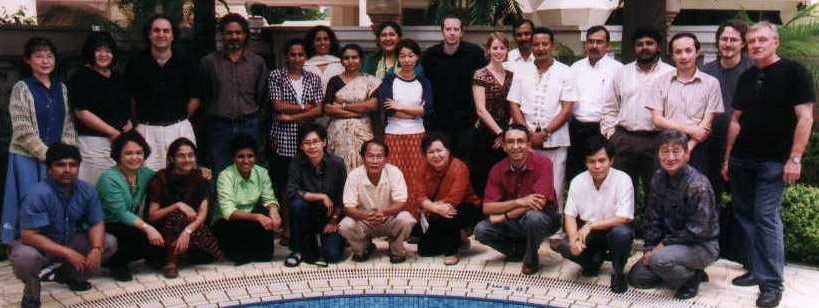
Photo of Singapore TVEAP workshop participants: Joey Lozano is 6th from left on the frontmost row

Follow Seeing is Believing storyboard on the film’s website

We screened the film, made by Katerina Cizek and Peter Wintonick, and heard first hand from Joey on what his struggles entailed. The film followed Joey as he delivers a new “Witness” donated video camera to Nakamata, a coalition of Indigenous groups in Central Bukidnon. Together, Nakamata and Joey begin documenting a dangerous land claims struggle, and it doesn’t take long for tragedy to unfold in front of the camera.

Watching the film and then listening to Joey — and his Witness colleague Sam Gregory — describe the on-going struggle, was one highlight of our week-long workshop. Some of us saw in Joey the activist-campaigner that we wanted to be, but were too scared or too polite to really become.

Not everyone shared that view. The cynicism — sometimes bordering on disdain — of a fellow Filipino from Metro Manila was palpable. No wonder Joey moved away from the city.

We at TVE Asia Pacific were extremely keen to distribute Seeing is Believing, for it held such a powerful and relevant message for our region, but it was not to be. Our enquiries showed that like most documentaries, it was tied up in too many copyrights restrictions and commercial distribution deals.

Following the Singapore workshop, I did keep a watchful eye on what Joey Lozano was up to. The film’s website provided occasional updates, and sometimes blog posts from Joey himself.

Our paths never crossed again. Almost three years after our single encounter came the news that Joey had passed away. It wasn’t the assorted goons who hated his guts that finally got him. His own body turned against him.

His tribute on the film’s website started as follows:

Joey Lozano defied the odds. For three decades, he survived dangerous missions to defend human rights using his video camera, in the Philippines, a country that ranks high, year after year, for most journalists killed. Joey went into hiding numerous times, and he dodged two assassination attempts. Once, bullets whizzed past his ear as he made his escape on motorbike.
But Joey couldn’t beat the odds of cancer. He died in his sleep on September 16, 2005 – at home and surrounded by his family.

Joey R B Lozano - image courtesy Seeing is Believing

The spirit and legacy of Joey R B Lozano live on. He inspired a large number of journalists and activists to stand up for what is right and just — and to be smart about it in using modern information and communication technologies, or ICTs.

Joey and other Witness activists were pioneers in different parts of the world who turned handicams away from weddings and birthday parties to capture less cheerful sights and sounds the world must see — and then act on. They were at it years before mobile phone cameras, YouTube and user-generated content in the mainstream media.

And now, Witness has established an award at the Silverdocs film festival. The WITNESS Award in Memory of Joey R.B. Lozano will be awarded to the qualifying SILVERDOCS filmmaker of a feature-length film who has produced a well-crafted and compelling documentary about a human rights violation or social justice issue. The winning filmmaker will also have a thoughtful, creative, and feasible outreach plan to use their film as a tool to raise awareness of the human rights or social justice issue explored in the film with a goal to bring about change.

The inaugural award was announced on June 17 — and has been won by “The Devil Came on Horseback” by Annie Sundberg and Ricki Stern.

Joey was a Witness partner and board member. He co-produced many films and collaborated on others that helped raise awareness about threats to indigenous people’s rights in the Philippines from corporations, and the complicity of the government in the abuses. Witness was founded in 1991 by musician peter Gabriel and the Lawyer’s Committee for Human Rights to put new technologies into the hands of local activists around the world.

Joey R B Lozano with his handycam

Read International Wildlife May 1999: Why Joey Lozano Is A Marked Man – investigative reporter works for the environment

Read about and watch Rule of the Gun in Sugarland

A hummingbird calls out to the world

Earth Day was observed worldwide on Sunday, April 22.

Among the many activities that took place that day was the premiere of a new documentary film, Call of the Hummingbird, at Toronto’s Hot Docs film festival.

Its promotional material says the film picks up from where An Inconvenient Truth (Al Gore’s Oscar-award winning film on climate change) left off: the film raises questions about what we need to change even about the way we make change.

The film, made by Alice Klein, a magazine editor and documentary filmmaker in Toronto, tracks the 13 days when some 1,000 teachers, eco-activists, farmers, Mayans, Rastafarians, holistic health-workers, non-governmental organisation executives and student leaders from all over Latin America and a few from Europe and North America camped out together in central Brazil in 2005.

call-of-the-hummingbird-promo-image.jpg

Their purpose was to live on the land and co-create a temporary peace eco-village in harmony with nature and each other. It wasn’t easy or harmonious. There were problems with garbage, sanitation and, not surprisingly given the diversity of their backgrounds, simply getting along with each other.

According to the film’s website:

It turns out that this is no easy task. Welcome to Survivor for social change addicts.

This verite journey documented in autumn 2005, in the wake of Hurricane Katrina, by a small crew of three Canadians, two Americans and one Mexican, was propelled by a sense of urgency that almost anyone reading the news feels these days.

In a story datelined 21 April 2007 filed from Toronto, Inter Press Service quoted Alice Klein as saying:
“This world is ending; we need to lay the foundations for a new world. We have a great opportunity to make a better world.”

The report added:
“There is very little training or study in our formal education systems about conflict resolution and how to get along with each other,” says Klein, noting that, instead, we are constantly exposed to violent and conflict-ridden programming in our media.

Watch clips from Call of the Hummingbird

Read Earth Day press release for Call of the Hummingbird

Money is not an issue: ‘No budget’ films have their own festival

After over a decade working in television and film, most of that time commissioning new content from independent producers or creating content ourselves, I have yet to come across a film-maker who had enough budget.

We’re are all used to getting by with less than ideal budgets.

Some more than others, though: there are low budget films, and then there are ‘no budget’ films.

A few idealists among us still believe money is not an issue in cultural expression.

They now have their own festival, unashamedly for just that kind of films: No Budget VideoFilmfestival, Heilbronn / Weimar & Tour 2007
No budget video film festival

Their self-intro reads:

In 2007 the „Geld spielt keine Rolle“ (“money is not an issue””it’s only money”) VideoFilmfestival will start a series of events during an independent art-, film- and musicfestival in Heilbronn. From the 8th to 10th of June 2007 it will be in Heilbronn, and thereafter will be ample opportunity to screen the films in Weimar (at the Lichthaus Kino in summer 2007), Magdeburg, London and other cities. The previous festival was carried by the faculty of media of the Bauhaus- University Weimar and took place in Weimar in May 2006.

Filmmakers characterized by creativity and idealism get the opportunity to present their films to a wide audience.
For the audience this promises good films which possibly fall through the cracks of commerce.

Remember: deadline for entries is 1 May 2007.

The festival is being organised by a group of German film enthusiasists calling themselves the film sharing community.

Under the topic GELD SPIELT KEINE ROLLE (Money is no issue) the film sharing community wants to provide a platform for productions of moderate means achieving remarkable outputs and meaningful films on a shoestring.

May their tribe increase!

Mark Pesce: In the company of a hypermind

Oops – I didn’t immediately realise that I was sharing a panel with a digerati – a highly accomplished pioneer and visionary of the digital world. And did he get us to think outside the idiot box!

His name is Mark Pesce. He is one of the early pioneers in Virtual Reality.
The co-inventor of VRML, he is the author of five books and numerous papers on the future of technology. Now based on Sydney, Australia, he is a writer, researcher and teacher.

Mark Pesce, courtesy Wikipedia

During the OUR Media 6 panel discussing how to safeguard community interests in the era of digital broadcasting, he was emphatic that broadcasting as we know it is doomed.

“The mass mind is not going to last. The sooner broadcasters recognise this, the better,” he said.

The broadcast model of one-way, point-to-multipoint, passive distribution of content is endangered by the digital revolution. The age of hyperdistribution has already dawned, and that is going to wipe out conventional distribution models sooner than later.

Hyperdistribution is audience-driven distribution of films and television programmes. The economics of production and distribution of media have changed radically – can film-makers adapt to the new rules? This is the question that Mark posed in talk given at the Sydney International Film Festival in Jube 2006 – listen to audio recording of his talk.

The near future of content distribution is in Internet-enabled, user-driven and often mobile devices. Already, two billion people – almost a third of humanity – walks around with mobile phones. These will provide new pathways to peddle new types of content to more audiences than ever before.

The film-making and TV-producing communities need to wake up to these new realities, Mark said.

His blog, Hyperpeople, is full of fascinating insights and extrapolations. Here’s one short extract:
Television producers are about to learn the same lessons that film studios and the recording industry learned before them: what the audience wants, it gets. Take your clips off of YouTube, and watch as someone else – quite illegally – creates another hyperdistribution system for them. Attack that system, and watch as it fades into invisibility. Those attacks will force it to evolve into ever-more-undetectable forms. That’s the lesson of music-sharing site Napster, and the lesson of torrent-sharing site Supernova. When you attack the hyperdistribution system, you always make the problem worse.

In May 2005, he wrote in an article titled Piracy is good? How Battlestar Galactica killed broadcast TV:
Television broadcasters owe their existence to the absence of substantially effective competition. When you’re dealing with real-world materials that are in naturally short supply – whether diamonds, oil, or broadcasting spectrum — a cartel can maintain and enforce its oligopoly. But when you’re working with media, which exist today as digital ephemera, bits that can be copied and reproduced endlessly at nearly zero cost, broadcast oligopolies are susceptible to a form of “digital arbitrage,” which can hollow-out their empires in an afternoon. Hyperdistribution techniques are more efficient than broadcast networks for television program distribution.

Read my other post on the OUR Media Forum on the community use of digital spectrum

Mark Pesce website

Mark Pesce blog, Hyperpeople

Copyright, copyleft and film-makers in the digital age

In my post on 1 April, Have you made your million dollars yet?, I wrote:

Many development film-makers like to decry our society’s obsession with money, consumerism and greed. Some would make films that passionately promote sharing ideas and resources at community level, and advocate common property resources over private ownership.

But when it comes to rights of their own film/s, these very film-makers would become extremely possessive: they want to restrict it in every conceivable way.

This came up during a session at the OUR Media 6 conference in Sydney yesterday.

Andrew Lowenthal, from EngageMedia in Australia, talked on ‘Online video for social action’ and presented what his non-profit organisation is doing.

As their website says:
EngageMedia is a website and a network for distributing social justice and environmental video from South East Asia, Australia and the Pacific. It is a space for critical documentary, fiction, artistic and experimental works that challenge the one-way communication model of the mainstream media.

Andrew said they currently host around 120 videos online, all offered for free public access at the moment. They are keen to add more titles to this collection, to build an online, engaged community of film makers and film viewers.

But as we discussed, many film makers aren’t yet ready or willing to give their films to be placed online.

“Some of them freak out at the very mention of being placed online. They ask how their copyright can be safeguarded, and how they can make money,” Andrew noted.

Fred Noronha, who has campaigned for a long time for Indian documentary makers to open up and share their films, agreed. “Many film-makers are apprehensive. They aren’t broadcasting, or webcasting their productions. They just show it at a few film festivals. Many films don’t go out to the wider public.”

At TVE Asia Pacific, we come across this all the time. As a non-commercial, non-exclusive distributor, we ask film-makers to share distribution rights while copyright stays firmly with them. Even then, many are not convinced.

Of course, each creative professional is entitled to the full returns of their investment of time, effort and creativity. But let’s not forget: many films, especially those on development issues (which covers health, education, environment, ICT, science in development and human rights, among others), are made with development funding or philanthropic grants. Which means the production costs are largely or entirely paid for.

Yet when such films are made, their creators would rather hang on to them than let them go. Copyright is one concern they cite. ‘Returns on investment’ is another. (Hmmm…if a film has been paid for by public/donor funds, returns to whom?)

Creative Commons offers a good way forward, and we had a presentation from CC Australia on this during the session. More about that later.

Go to:
Engage Media
Creative Commons

Moving images moving heart first, mind next

“Film is a lousy medium to communicate information. It works best at the emotional level.”

Bruce Moir, one of Australia’s seniormost film professionals made this remark soon after I had presented TVE Asia Pacific’s Children of Tsunami experience to OUR Media 6 conference in Sydney last afternoon.

After more than 35 years in documentary and feature film production for both cinematic and broadcast industries, in different parts of the English speaking world, Bruce knows a thing or two about moving people with moving images.

I was delighted and privileged to have Bruce join my presentation. He’d come at my invitation to the conference happening in his city.

“We’ve got to remember that film appeals to people’s hearts more than their minds,” Bruce explained. “The way to people’s heads is through their hearts, from the chest upwards — and not the other way round.”

I hope this was an ‘Aha!’ moment to at least some in our audience. I’ve personally heard Bruce say this before, but it bears repetition – because many film professionals tend to overlook this. Especially those who are trying to ‘communicate messages’.

Even a few weeks ago, I quoted him in a review as saying: “Our fundamental job is to tell a story – one that holds an audience’s interest and moves their heart, regardless of language, cultural context or subject….I have always believed that film achieves its optimal impact by aiming to ‘get at the audience’s head via their heart’ rather than the other way around.”

Bruce Moir

Without Bruce’s involvement, Children of Tsunami would have turned out to be very different. He was our Supervising Producer for the entire effort, advising and guiding our national film production teams tracking the progress of Tsunami survivor families in India, Indonesia, Sri Lanka and Thailand for one year afer the Asian Tsunami.

As Bruce recalled, the four teams came with different backgrounds, skill levels and film-making traditions of their own – ranging from television news and current affairs to development film-making, the type usually commissioned by UN agencies. Bringing them to be ‘on the same page’ was no easy task.

Film-makers are not particularly known for their patience or people-skills. Many I know have a ‘just-get-on-with-it-never-mind-the-niceties’ attitude. Bruce is one of the most patient persons I know: he would spend days and weeks relating to our production teams – usually by email or phone – gently nudging them in certain directions.

For sure, there’s no one right way to make a film. But there are some tried and tested principles in good story telling, which is what Bruce excels in. And which he willingly shares with others.

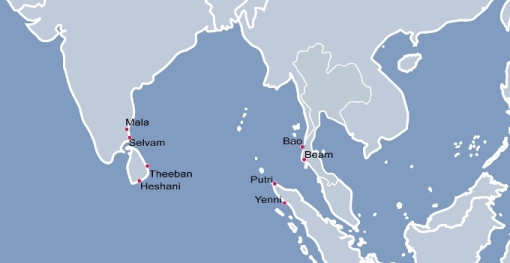
The year-long, 4-country and 8-location Children of Tsunami project was the biggest logistical operation TVE Asia Pacific has mounted in its 11 years of existence. (We’re in no great hurry to top that one!). Our production teams – operating from Bangkok, Colombo, Ubud (Indonesia) and Chennai – related to our regional production team based in two cities: Colombo, where TVEAP office is currently anchored, and Sydney, where Bruce lives.

We only came together face to face just once, in Bangkok, early on in the process. That meeting agreed on styles and formats, and also helped build the human relationships.

The rest of the time it was all through communications technologies. As you can imagine, lots of tapes moved around, as did many Gigabytes of video over the web. (DHL should have become a sponsor – they had lots of business from us!)

children-of-tsunami-locations.jpg

As I explained in my talk, Children of Tsunami was not just a film project. We published a monthly video report online on each of the eight families we were tracking, plus maintained a dedicated website with growing volumes of text, images and links. The monthly videos were edited and post-produced in the countries of filming, by our production teams themselves. It was distributed film-making, even if everyone worked to a common format.

With all that frenzy now behind us, the products of Children of Tsunami continue to be distributed, showcased and discussed at film festivals and conferences like OUR Media.

As I said yesterday to my predominantly academic audience: we’ve got a story telling and journalistic practice, and we now need a theory for it.

Related links:

Children of Tsunami: Documenting Asia’s longest year

Children of Tsunami revisited two years later